Views and experiences of involuntary civil commitment of people who use drugs in Massachusetts (Section 35)
Joseph Silcox
Sabrina S Rapisarda
Jaclyn MW Hughto
Stephanie Vento
Patricia Case
SimpleOriginal

Summary

Qualitative interviews with 42 MA drug users find Section 35 civil commitment can disrupt MOUD, feel carceral, prompt evasion, and increase post-release use/overdose risk; reforms should ensure MOUD and reduce criminalization.

2024

Views and experiences of involuntary civil commitment of people who use drugs in Massachusetts (Section 35)

Keywords Involuntary Civil Commitment; Section 35; Opioid Use; Criminalization; Policy

Abstract

Background: Involuntary civil commitment (ICC) is a court-mandated process to place people who use drugs (PWUD) into substance use treatment. Research on ICC effectiveness is mixed, but suggests that coercive drug treatment like ICC is harmful and can produce a number of adverse outcomes. We qualitatively examined the experiences and outcomes of ICC among PWUD in Massachusetts.

Methods: Data for this analysis were collected between 2017 and 2023 as part of a mixed-methods study of Massachusetts residents who disclosed illicit drug use in the past 30-days. We examined the transcripts of 42 participants who completed in-depth interviews and self-reported ICC. Transcripts were coded and thematically analysed using inductive and deductive approaches to understand the diversity of ICC experiences.

Results: Participants were predominantly male (57 %), white (71 %), age 31–40 (50 %), and stably housed (67 %). All participants experienced ICC at least once; half reported multiple ICCs. Participants highlighted perceptions of ICC for substance use treatment in Massachusetts. Themes surrounding ICC experience included: positive and negative treatment experience’s, strategies for evading ICC, disrupting access to medications for opioid use disorder (MOUD), and contributing to continued substance use and risk following release.

Conclusions: PWUD experience farther-reaching health and social consequences beyond the immediate outcomes of an ICC. Findings suggest opportunities to amend ICC to facilitate more positive outcomes and experiences, such as providing sufficient access to MOUD and de-criminalizing the ICC processes. Policymakers, public health, and criminal justice professionals should consider possible unintended consequences of ICC on PWUD.

1. Introduction

Involuntary civil commitment (ICC) for substance use treatment is legal and used by 38 U.S. states and the District of Columbia (Christopher et al., 2020a; Evans et al., 2020). Massachusetts’ statute for ICC is defined under General Law 123 as “Section 35,” indicating that a qualified person may request a court order for ICC for an alcohol or substance use disorder (SUD) (Massachusetts General Laws ch. 123, § 35, 2023). Petitions for ICC under Section 35 are executed in district courts and can be initiated by police officers, court officials, physicians, family members, guardians, or oneself.1 More recently, ICC has been used to combat challenges related to fentanyl entering the drug supply and has been used as a tool in post-overdose outreach programs for overdose survivors or their families to initiate petitions and facilitate entry into treatment (Carroll et al., 2023; Christopher et al., 2018; Tori et al., 2022). ICC is granted by the court if there is a likelihood of serious harm to oneself or others as a result of their SUD (Commonwealth of Massachusetts, 2019). Section 35 warrants further empirical investigation, as it has been frequently applied in Massachusetts (Christopher et al., 2015; Evans et al., 2020; Walt et al., 2022) despite mixed evidence on its effectiveness in improving treatment, reducing substance use or overdose mortality, and exacerbating feelings of psychological distress (Chau et al., 2021; Christopher et al., 2018; Lamoureux et al., 2017; Werb et al., 2016).

Several U.S and international studies suggest that ICC is a coercive process to those subjected to it through violations of individual autonomy and freedom (Chieze et al., 2021; Shozi et al., 2023; Silva et al., 2023). Diminished perceptions of autonomy often result in resistance to treatment processes, which has been demonstrated to reduce treatment effectiveness (Udwadia and Illes, 2020). Other major challenges arise with respect to legal coercion into treatment due to ethical and motivational concerns and the ongoing tension between the legal system and treatment providers (Mackain and Lecci, 2010). Research in the U.S. on ICC identifies a number of adverse outcomes, such as return to use, recidivism, fatal and non-fatal overdose, and feelings of psychological distress (Gowan and Whetstone, 2012; Lamoureux et al., 2017; Werb et al., 2016). Internationally, ICC is often framed as compulsory commitment to care or compulsory care (Israelsson, 2011; Israelsson et al., 2015; Mfoafo-M’Carthy and Williams, 2010). Much like the U.S., international programs often differ with respect to what societal challenges that civil commitment is used to address. For instance, some international compulsory programs focus specifically on drug use (Parker et al., 2022; Rafful et al., 2020) while others emphasis mental health (Mfoafo-M’Carthy and Williams, 2010; Shozi et al., 2023). Research internationally has also shown a range of negative outcomes for people placed in involuntary treatment, with some highlighting adverse effects like non-fatal overdose and risk of exposure to violence (Hall et al., 2015; Moghanibashi-Mansourieh et al., 2018; Rafful et al., 2018).

In Massachusetts, ICC facilities are overseen by the Department of Public Health (DPH), the Department of Mental Health (DMH), and the Department of Corrections (DOC) (Commonwealth of Massachusetts, 2019, 2023). DOC-run facilities may more closely resemble carceral settings rather than traditional treatment programs (Walt et al., 2022). Some research finds that people in SUD treatment view ICC as a better alternative to prison or overdose, while providers report ICC eases a family’s concerns about a loved one’s SUD, and forces needed screening and care initiation, even if ICC acts as an extension of the criminal justice system (Evans et al., 2020; Gowan and Whetstone, 2012). Limited research has been conducted with out-of-treatment populations who have recently experienced ICC; individuals in recovery and providers from healthcare institutions able to commit or receive committed patients may present biased views on ICC.

This study aims to contribute to the literature on ICC by qualitatively investigating the self-reported experiences and outcomes of a sample of people who use drugs (PWUD) subjected to the Massachusetts Section 35 court-ordered process, placement, and treatment.

2. Methods

2.1. Setting and design

The current study represents a secondary analysis of the Massachusetts Section 35 statute by utilizing qualitative data collected from a sequential mixed-methods rapid assessment study of PWUD conducted between 2017 and 2023 (Hughto et al., 2023; Shrestha et al., 2021, 2024). Individuals in our parent study were purposively and conveniently sampled through street-based recruitment and partnerships with community-based organizations (Benrubi et al., 2023; Hughto et al., 2022). Our recruitment process was comprehensive and involved environmental scans, including reviewing public health and surveillance data, conducting ethnographic observations, and meeting with community partners to identify recruitment locations. Strategies differed by study location, but all employed purposive sampling to recruit participants from high drug use, arrest, and overdose areas (Hughto et al., 2022). Following recruitment, prospective participants were screened for eligibility prior to providing verbal consent to participate. Eligible participants were: (1) 18 years old or older; (2) resided in one of fifteen high-risk overdose communities in Massachusetts, including Boston, Chicopee, “Cape Cod” (Barnstable, Dennis, Falmouth, Mashpee, Orleans, Truro), Greenfield, Lawrence, Lowell, New Bedford, “North Shore” (Beverly, Lynn, Peabody, Salem), Fitchburg, Salisbury, Quincy, and Springfield, and (3) had used an illicit drug in the last 30 days.

All enrolled participants completed a one-time survey. Following completion of the survey, about one-third of all participants were offered and consented to participation in a semi-structured interview with trained research staff if they demonstrated (via their survey responses) a willingness to discuss personal experiences pertaining to illicit drug use, treatment, housing and other related experiences. In the broader parent study, 303 participants completed a qualitative interview that explored questions related to participants’ substance use history and related experiences, unique or extensive substance use patterns, experiences of witnessed or personal overdose, experiences accessing harm reduction and treatment services, experiences with the criminal-legal system, and more. The current study focused specifically on a subset of interview questions within the larger interview guide that aimed at understanding participants’ perspectives and experiences with ICC through Section 35. If participants disclosed during the survey that they had ever been placed on a Section 35, they were then asked a variety of follow-up questions during the interview. For instance, participants were asked to elaborate on their ICC experience, such as: “What happened after you left the Section 35 facility?”, “What was your drug use like afterwards?” and “Has the Section 35 experience changed how you react in an overdose situation?” (See Appendix).

Interviews from the parent study spanned approximately 45 minutes, were audio-recorded, and professionally transcribed. Most interviews were conducted in English with few conducted in Spanish. Participants were compensated with gift cards or cash for their time and expertise, and the study was approved by the Institutional Review Boards of Boston University Medical Campus and Brandeis University. During interviews, study participants were informed they could take breaks as needed, refuse to answer specific questions if uncomfortable, and to opt-out at any point in the interview without retaliation for any reason. Our study follows the standards for reporting qualitative research (SRQR) to provide transparency across our data collection and analysis (O’Brien et al., 2014).

2.2. Analysis

All interview transcripts were imported into NVivo 20 (QSR, International, Version 20), and analyzed using inductive and deductive approaches. Prior to analysis, a codebook was created that mirrored core areas of investigation covered in the interview guide. Through discussion at weekly team meetings, codes were then inductively added to the codebook over time as new thematic areas emerged (Hughto et al., 2022). The initial coding was conducted using a rapid, first-cycle approach (Wicks, 2017). Following this, approximately 25 % of transcripts were double-coded by the research team to ensure consistency.

In the current study, we conducted a secondary analysis focused on understanding ICC experiences through the parent code “Section 35”. As mentioned above, if participants disclosed during the survey that they had ever experienced an ICC through Section 35, interviewers were instructed to probe further about the participants’ perceptions of said experience(s). Data from the aggregate Section 35 parent code were revisited within the existing NVivo data file. The first and second author implemented memo-writing, open coding, and focused secondary coding to inductively identify and parcel out subcodes relating to participants’ views and experiences of ICC within the broader Section 35 parent code (Cascio et al., 2019; Charmaz, 2006; Charmaz and Belgrave, 2015). Our coding approach was iterative whereby emergent themes were identified by both coders and refined for consensus throughout the coding process. Coders met weekly to reconcile discrepancies, discuss subthemes, reflect on their biases, positionality and to further conceptualize the data through intercoder consensus (Cascio et al., 2019).

2.3. Sample

Of 303 interviews conducted between 2017 and 2023, fifty-three met the initial criteria (self-reported experiences with Section 35) for inclusion in this analysis. Upon further review of transcripts, eleven participants were removed due to (1) lack of personal experiences of ICC or (2) conflating Section 12 (Mental Health ICC) experience with a Section 35 experience (Massachusetts General Laws ch. 123, § 12, 2023). Our final qualitative sample included 42 participants who experienced ICC through Section 35.

3. Results

Table 1 details the demographic characteristics of the sample. Participants were predominantly male (57 %), white (71 %), between the ages of 31 and 40 (50 %), and had stable housing (67 %). All participants experienced ICC at least once, and half disclosed multiple ICC experiences. These demographics provide a snapshot of the people in our sample who experienced ICC in Massachusetts (Table 1).

Table 1.

Self-reported socio-demographic characteristics of 42 interview participants with histories of involuntary civil commitment (ICC) in the state of Massachusetts, 2017–2023.
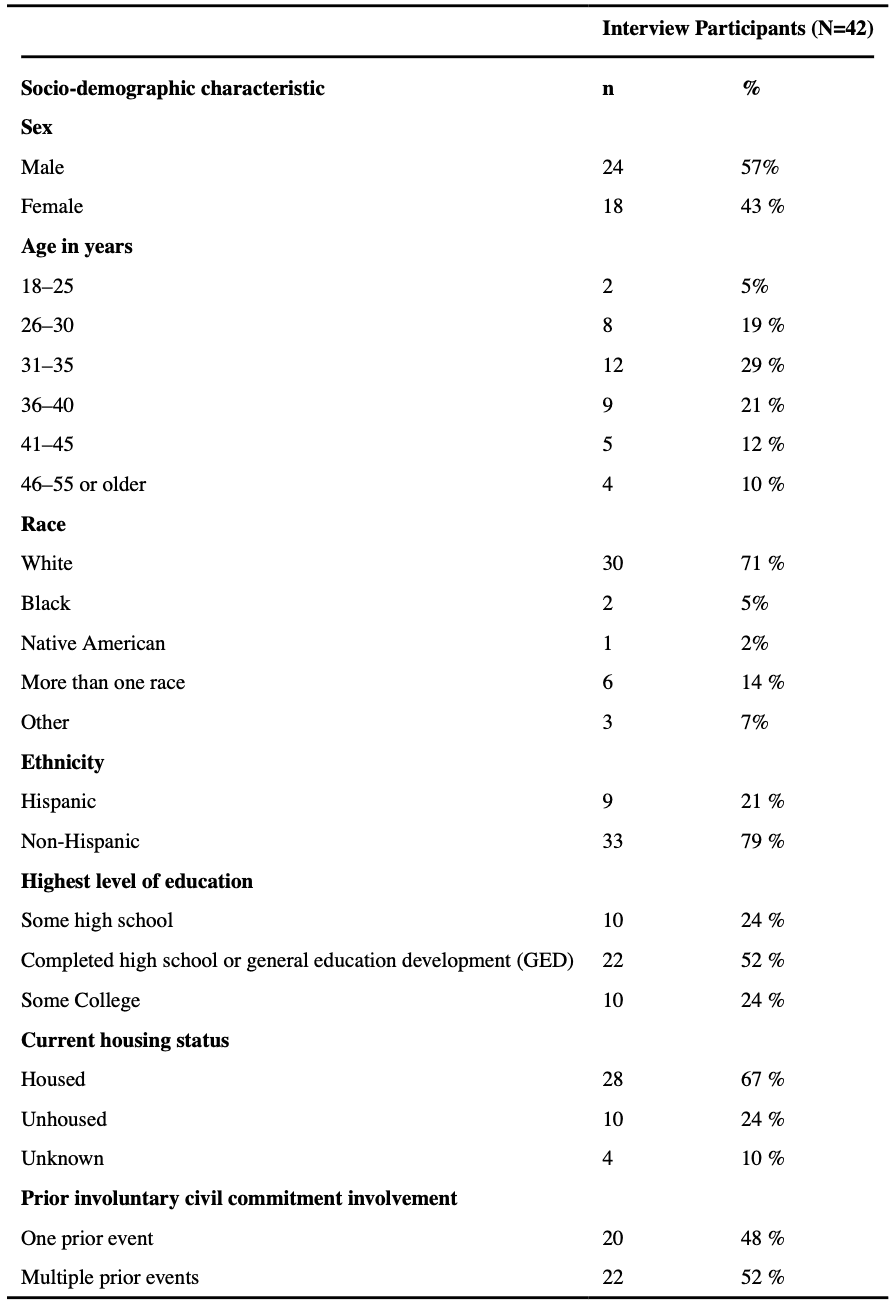
Table 1

3.1. ICC experiences

Interviews with participants demonstrated diverse attitudes and experiences of ICC through their perceptions and knowledge of the ICC process in Massachusetts.

3.1.1. Positive experiences

Although most participants described ICC as coercive and harmful, a subset of participants described positive experiences. For instance, some participants identified the informal peer support they gained as a factor that helped them to engage in treatment while in ICC facilities. One participant shared:

I don’t think it was the facility. I think it was the fact that I found my peers. It was more peer support. I found people like me willing to give it a shot. – Male, Fitchburg

Some participants connected positive ICC experiences to the accessibility of fundamental basic needs such as food, personal freedoms like being able to smoke cigarettes, and ethical medical care like the ability to access medications for opioid use disorder (MOUD) or other comfort medications to aid in detoxification from opioids. One participant recalled how her ICC experience improved her health:

It [DPH ICC facility] was awesome. We were able to smoke. I still got my methadone and I felt awesome there. I gained weight. You know? I feel much better. I felt like death before. – Female, New Bedford

Those who described positive experiences often highlighted the availability of mental health and SUD programming such as groups, counseling, and education in the facility. When comparing multiple ICC treatment experiences at a DPH-run ICC facility with that of a DOC-run ICC facility, one participant explained:

It [DPH ICC facility] was better run…organized groups, everything organized. I mean, you weren’t walking around with your jumpsuit on. Everything was better. The options, halfway houses, treatment plans afterwards, and, you’d meet with your counselor once every couple of days. It was more helpful. I mean, it wasn’t great, but it was a good, decent place. – Male, Mashpee

A subset of participants reported that they had self-initiated an ICC. They indicated that self-initiating ICC was typically used as a last resort when they felt constrained with no other option to receive care. For example, some participants described a lack of detoxification and SUD treatment availability in their community and indicated that they initiated ICC themselves to obtain services:

I had tried to go to the hospital and couldn’t get a bed and all, so that’s how I ended up [in ICC], I’m like I know how to get a bed, let me [ICC]. – Female, New Bedford

Relatedly, several participants reported self-initiated ICC as an effective means of avoiding incarceration, especially because detox during incarceration in Massachusetts would most likely occur without the aid of MOUD or tailored care, as noted by the following participant:

I did it [self-initiated ICC] because I knew I wasn’t getting out of jail, and I didn’t want to kick the dope in jail. I’d rather go, come off of it with nothing or on Suboxone [buprenorphine] or whatever then be feeling better and able to go to jail. – Male, Quincy

3.1.2. Negative experiences

Although some participants noted positive factors relating to ICC, frequently participants discussed negative ICC experiences, with some facility types being more problematic than others. Notably, participants emphasized concerns with medication access across sites and the stigmatizing effect of being placed in a carceral facility for SUD treatment as contributors to their overall negative experience.

3.1.3. Medication access

One major limitation cited by participants was the provision of MOUD during ICC, and this was not specific to the type of ICC facility experience (i.e., DOC- or non-DOC run). While some spoke positively about MOUD access, others described being given an insufficient dosage or denied MOUD entirely, causing disruptions to previously established medication regimens:

They’re [ICC facilities] starting to give people their methadone. If they’re on methadone, they’ll give you the methadone, but they’re not going to give you the full dose. If you’re on 200 milligrams, they’re gonna cut it and make it less. So yeah, they need to continue doing that, cause it’s clogging the system up… It’s clogging their infirmaries up…It’s making them work harder than people that are doing time that aren’t getting the medical care that they need. – Male, Lynn

Similarly, participants discussed challenges with medication access more broadly, citing that ICC facilities lacked the medications that would typically be provided to treat clients who primarily use substances other than opioids, such as alcohol or benzodiazepines. In these instances, participants noted that denying access to these medications resulted in severe health consequences, such as seizures:

They [ICC facilities] don’t care. I mean, you could be with people they’re withdrawing and if you withdraw from benzos or alcohol, you can have seizures and die coming off it and they’re not medicating people properly. So, people would have seizures. A kid actually had a seizure from them not medicating him, not being medicated properly, fell over and split his head open and got 15 staples in his head because they weren’t medicating him the right way. – Male, Boston

These concerns suggest that there are gaps in the medical treatment and a discontinuity of MOUD care that are created and exacerbated by the experience of ICC.

3.1.4. Criminalization

In addition to issues around medication access, some participants attributed their negative experiences to the similarities between their DOC-run ICC facilities and jail or prison. During the timespan of our study there were three DOC-run ICC sites in operation, and judges - not clinicians - decided upon placement there. Participants reflected on their experiences at these locations and listed comparable institutional processes to that of jail or prison, such as the requirement to wear correctional uniforms or pay for telephone calls:

They take you to a [DOC ICC facility], which is a prison and they lock you up in the Department of Corrections jail uniforms and it’s like jail. You have a canteen. You’re locked in there. There’s a razor wire fence around it. There are correctional officers. I got beat up by a correctional officer last time I was in there. It’s jail. – Male, Lowell

Further, many participants discussed insufficient access to mental health and SUD treatment at the DOC facility where they were placed for ICC. This disconnect contributed to the impression that they were being incarcerated for their substance use rather than being treated for a chronic condition during their ICC. One participant who was involuntarily committed multiple times explained:

It’s the worst experience [DOC ICC facility]. It’s not a treatment facility at all. They did absolutely nothing there for me. I sat there pretty much all the way for 40 days. I think, I’d seen my counselor twice the whole time I was there and food’s terrible, the staff were very rude and it was terrible. It wasn’t a level of care at all. Really, they just hold you there and they just release you at this, because they have to hold you for a certain amount of time and they just release you after you’re done. – Male, Salisbury

Notably, no participants from DPH or DMH-run facilities described comparable perceptions, treatment, or experiences of criminalization.

3.2. ICC outcomes

Participants linked several different outcomes to the experience of ICC, highlighting instances where coercive treatment was either ineffective in changing the participants’ circumstances, ineffective in reducing substance use, or was believed to elevate physical or social risk.

3.2.1. Ineffective treatment

Participants described being less invested in their treatment following ICC experience(s) and criticized the idea of forcing someone into treatment before they were ready, as noted by a participant from the North Shore area of Massachusetts:

Forcing somebody to get clean that doesn’t wanna get clean, you’re not helping anybody. You think you are but you’re not helping that person, you’re not…You’re just making it easier for them to overdose in three weeks when they get out, because they’re not ready to get clean. If you had to put them in handcuffs and shackles, and forcibly bring them into a treatment program, they clearly don’t wanna go, you know what I mean? So, I mean, they’re still ready to get high when they get out. - Male, Salem

Relatedly, participants noted that their readiness to receive treatment impacted the effectiveness of their experience. Several participants explained that, while their ICC petitioners may have been ready for them to engage with treatment, the participants themselves were not yet ready to do so. As a consequence, they did not fully maximize the resources and wraparound services available. One participant explained her perspective and detailed the ineffectiveness of her ICC:

At the time I wasn’t ready to stay clean so I didn’t use all their options that they were giving me. So, I’m sure that somebody that really does end up wanting help over there they can get a lot out of it. – Female, Lawrence

These statements reinforce that outcomes associated with ICC are dependent on a person’s willingness to engage with treatment and that coerced treatment like ICC may not be an effective alternative to voluntary treatment.

3.2.2. Increased use and overdose risk

In discussions about abstinence or substance use following release from an ICC facility, most participants felt it was common to return to using substances immediately after discharge. Some participants believed that experiencing ICC resulted in increased risks:

They’re so quick to section [ICC] people and shove them through a door and lock them up. Once they get out, these people just want to come out and use again, but heavier. Next thing you know it, you’ve got another fucking body. – Male, Lowell

Participants drew similar conclusions about overdose risk following ICC, linking their ICC experience with lowered tolerance and thus resulting in higher risk of overdose. One participant described how he felt that any potential benefit of ICC was eclipsed by the more dangerous outcomes following release:

I think it’s wrong [ICC]. It doesn’t help anybody. If anything, it brings you closer to fuckin’ killing yourself. It’s more hurtful than helpful I think for heroin addicts. I don’t know how, with booze…Like, if you’re not ready to get help, forcing somebody into a program isn’t doing anything but lowering their tolerance so they can come out and kill themselves unintentionally – Male, Lynn

Still, some participants described being abstinent from substances following their ICC experience(s). They noted in some cases, that it was the trauma of their ICC experience rather than a supportive treatment environment that motivated them to remain abstinent.

You know what the crazy thing is? Because I went through that awful, horrific thing [ICC], I stayed sober for like three years. So, sometimes, again, here’s the paradox, that like, sometimes that’s the best thing for an addict, is to sit through a living hell for three weeks or whatever it is and then maybe that pain is what keeps us sober. – Male, Mashpee

The increased risk of adverse outcomes post ICC as described by participants likely influenced perceptions of ICC as dangerous and ineffective.

3.2.3. Strategies for evading ICC

A prominent theme in participants’ discussions of the consequences of their ICC experiences was highlighted through participants descriptions of evading actors who enforced ICC. Participants described how knowledge of ICC shaped their decision-making processes, like avoiding contact with the police or leaving the state to circumvent an ICC. One participant detailed what he believed to be common knowledge of how to avoid the process. He stated:

Everybody knows, to beat a section [ICC], all you got to do is skip town for 72-hours. You know? That’s if you find out. You’ve got to have somebody on the inside. You’ve got to have a mole. – Male, Barnstable

Similarly, another participant discussed her ability to evade ICC following her pregnancy:

It [ICC] was right after I had my daughter, and they sectioned [involuntarily committed] me…I had been living in a family shelter while I was pregnant, because I got sober while I was pregnant, I did really good. And, then I had a huge incident during my pregnancy, but, after my daughter came, I ended up relapsing. But, I ran from it [ICC]…I was home by the end of the night. – Female, Boston

Participants also spoke about their hesitation in seeking help in an emergency because of fears associated with interacting with police. Police may wield ICC either in these instances or as part of post-overdose outreach visits to overdose survivors and their family. Because many police conduct post-overdose outreach in Massachusetts, they can petition the court to initiate ICC, and also are charged with enforcing ICC processes (e.g., civil arrest, transportation to facilities), participants linked ICC with an increased fear and avoidance of police. A participant explained his apprehension:

It used to be that people didn’t mind talking to the cops because it wasn’t like they were going to get in trouble for it, but now that everybody is so scared of [ICC]. I don’t even want to talk to the cops. Literally, if I overdosed, I would try to stay away from them for as long as it took for themfor the [ICC] to run out. So, if I overdosed, I’d disappear for a week. I’d leave town for a week because I wouldn’t want to get picked up on an [ICC]. – Male, Lowell

In turn, the fear of ICC as a consequence of substance use as described by participants served to facilitate opportunities to learn how to evade these processes.

4. Discussion

We documented varied experiences of ICC among PWUD in Massachusetts and examined how these experiences can inform future ICC adaptions and policies. For instance, some participants spoke about learning to evade an ICC entirely due to fear of the carceral system, while others referenced using ICC to their advantage to receive treatment on demand. These findings expand on prior ICC research (Christopher et al., 2018; Slocum et al., 2023) with diverse populations and provide more context on experiences and outcomes of ICC among PWUD in Massachusetts (Slocum et al., 2023). Results can inform policies and practices within the scope of licensed ICC treatment services in Massachusetts and beyond.

Our research identified several facilitators of positive ICC treatment experiences. Some participants spoke about peer support and new social bonds established within ICC facilities as motivating factors to engage with treatment and cited flexible policies as facilitating more pleasant experiences. Research finds that the development of therapeutic communities through communal group work and the establishment of social bonds with peers can be an effective means of cultivating an effective treatment atmosphere (Vanderplasschen et al., 2013). When site policies were more strictly enforced, the internalized stigma of drug use and trauma of a coercive environment amplified the negativity of the ICC experiences. Flexible policies and ethical care provision give participants autonomy in their day-to-day experiences, which increases readiness for and retention in treatment. Additionally, the experience of individuals who self-initiated ICC appeared to be different from those whose path was more fundamentally involuntary. This phenomenon supports the need for more readily available, on-demand, and low-barrier treatment options, instead of using ICC to access treatment.

The involuntary aspect of ICC, compounded by the carceral facilities into which participants in Massachusetts were randomly placed, are trauma-inducing, not trauma-informed approaches. PWUD often have traumatic histories with the criminal justice system (McKim, 2017; Walt et al., 2022) and may avoid processes like ICC as a means of preventing further exposure to psychological trauma (Baigent, 2012; Santucci, 2012). Continued research is needed to further examine the ethical considerations of coercive treatment as well as its ability to effect longitudinal treatment outcomes and mortality risk reductions to PWUD who are involuntarily placed into treatment (Christopher et al., 2020b; Coffey et al., 2021; Evans et al., 2020; Mackain and Lecci, 2010).

ICC disrupts established health and substance use patterns that may be risk-neutral or protective. Participants shared that ICC abruptly halted their substance use, which can change tolerance, increase risk of return to use, and cause fatal overdose following release from ICC. Other research from Massachusetts detected similar patterns of return to use (Christopher et al., 2018) and indicates that people completing involuntary treatment may be more likely to overdose than those who complete voluntary treatment (Messinger et al., 2022; Commonwealth of Massachusetts, 2019). This is consistent with international literature finding that there is greater risk of overdose following compulsory treatment experiences (Hall et al., 2015; Rafful et al., 2018). By extension, an individual’s engagement with risk reduction services and access to preventative supplies (e.g., naloxone, sterile syringes) known to prevent morbidity and mortality (National Commission on Correctional Health Care, 2020) may also be disrupted by ICC. None of our participants described utilization of post-ICC discharge supports or harm reduction supply provision.

The common use of ICC in Massachusetts confirmed several known impacts of this process on public health and uncovered additional areas of concern. Participants who had distressing ICC experiences spoke to their disinterest in treatment and recovery programming, as prior research has also found (Klag et al., 2005). For some, fears of coercion through ICC—initiated by family or institutions like hospitals or police—made them less likely to seek help, call 911 in an emergency like overdose, and, as others have documented, to obtain treatment voluntarily (Christopher et al., 2018; Jain et al., 2018; Mackain and Lecci, 2010). In Massachusetts, as in many other states, an emergency call for overdose triggers a post-overdose outreach visit by a clinician or police-led team that may wield court-ordered ICC as an actionable resource (Carroll et al., 2023). The role of ICC in post-overdose outreach programming and, more fundamentally, of police in initiating and enforcing ICC for vulnerable populations like PWUD should be reconsidered, if the goals are to reduce overdose risk and encourage help seeking. Our findings highlight the continued need to improve the processes associated with ICC treatment, while also removing the pervasive fear of criminalizing or punishing people for their substance use. In removing the police and other aspects of the criminal justice system like the DOC from the ICC process, states like Massachusetts and countries that incorporate punitive mechanisms can transform ICC to a medicalized process. For instance, utilizing peer specialists, a model already in place for ICC related to mental health, could be adapted to facilitate substance use treatment (Rowe, 2013).

ICC facilities have documented challenges with accessibility to MOUD (Connery, 2015; Messinger et al., 2022), despite that it is guaranteed under Massachusetts law (Massachusetts General Laws ch. 123, § 35, 2023). Our findings further indicate that even when accessible, concerns regarding the quality of treatment persist. Our findings question the adequacy of ICC facilities to medically treat withdrawal from other substances like alcohol or benzodiazepines, which can cause serious health challenges. Standard, detoxification programs and emergency departments regularly treat withdrawal (Thornton et al., 2021; Wolf et al., 2020) and, in some countries and at least one U.S. state, community pharmacies may oversee withdrawal supports (Green et al., 2024; Haber et al., 2021). Taken together, the documented challenges call for changes in the ICC continuum: from screening and assessment of individuals at entry, to how treatment medications are prescribed and delivered within ICC facilities, to how individuals are equipped with referrals and harm reduction supplies to keep safe and promote ongoing treatment goals (Messinger et al., 2022). Revisions to existing policies are necessary to promote long-term benefits following ICC and mitigate potential harms of ICC.

This analysis has several limitations. While questions regarding ICC were posed, it was not the parent study’s sole focus; thus, some interview data were richer than others. Our sample was also recruited through community partner referrals and street-based outreach and only represents a portion of people who experienced ICC. Since our data are cross-sectional and enrollment in the study required participants to disclose active drug use, we only spoke with people who were still using substances following their ICC. Therefore, missing from our sample are people who experienced ICC who no longer actively use substances. This may be one reason why we heard more about negative ICC experiences in our analysis. Additionally, this was a secondary analysis that focused on Massachusetts and may not generalize to other jurisdictions or countries. Nuances of existing and newly updated ICC laws across U.S. states and territories are actively being catalogued (The Action Lab, 2024); expansion of these laws suggest that the experiences of PWUD may be of continued relevance. We also note that self-reported ICC experiences are subject to recall and social-desirability bias. Data were collected over five years and reflect lived experience at one point in time. Nonetheless, the major themes persisted throughout the period of inquiry and warrant consideration.

5. Conclusions

PWUD experience far-reaching health and social consequences beyond the immediate ICC effects. Areas of improvement and adaptation for ICC facilities, should they continue to exist in Massachusetts, include both ICC alternatives and changes to ICC initiation, orientation, operations, services provided, and safety policies. More research is needed with respect to self-initiation of, the ethics, and the setting of ICC, especially when facilities emulate carceral settings and may exacerbate previous traumas with incarceration.

Open Article as PDF

Abstract

Background: Involuntary civil commitment (ICC) is a court-mandated process to place people who use drugs (PWUD) into substance use treatment. Research on ICC effectiveness is mixed, but suggests that coercive drug treatment like ICC is harmful and can produce a number of adverse outcomes. We qualitatively examined the experiences and outcomes of ICC among PWUD in Massachusetts.

Methods: Data for this analysis were collected between 2017 and 2023 as part of a mixed-methods study of Massachusetts residents who disclosed illicit drug use in the past 30-days. We examined the transcripts of 42 participants who completed in-depth interviews and self-reported ICC. Transcripts were coded and thematically analysed using inductive and deductive approaches to understand the diversity of ICC experiences.

Results: Participants were predominantly male (57 %), white (71 %), age 31–40 (50 %), and stably housed (67 %). All participants experienced ICC at least once; half reported multiple ICCs. Participants highlighted perceptions of ICC for substance use treatment in Massachusetts. Themes surrounding ICC experience included: positive and negative treatment experience’s, strategies for evading ICC, disrupting access to medications for opioid use disorder (MOUD), and contributing to continued substance use and risk following release.

Conclusions: PWUD experience farther-reaching health and social consequences beyond the immediate outcomes of an ICC. Findings suggest opportunities to amend ICC to facilitate more positive outcomes and experiences, such as providing sufficient access to MOUD and de-criminalizing the ICC processes. Policymakers, public health, and criminal justice professionals should consider possible unintended consequences of ICC on PWUD.

Introduction

Involuntary civil commitment (ICC) for substance use treatment is a legal process utilized in 38 U.S. states and the District of Columbia. In Massachusetts, this process is known as “Section 35,” which allows a qualified individual to petition a court for the involuntary commitment of someone with an alcohol or substance use disorder. Such petitions are handled in district courts and can be initiated by various parties, including law enforcement, court officials, doctors, family members, guardians, or the individual themselves. Recently, ICC has been applied to address challenges related to fentanyl in the drug supply and integrated into post-overdose outreach programs, where survivors or their families may initiate petitions to facilitate treatment entry. A court grants ICC if a person's substance use disorder poses a serious risk of harm to themselves or others. Section 35 warrants further study due to its frequent application in Massachusetts, despite mixed evidence regarding its effectiveness in improving treatment outcomes, reducing substance use or overdose deaths, and potential for increasing psychological distress.

Studies in the U.S. and internationally suggest that ICC can be a coercive process, infringing on individual autonomy and freedom. Reduced feelings of autonomy often lead to resistance to treatment, which can lessen treatment effectiveness. Significant challenges also arise from legally coerced treatment due to ethical and motivational concerns, as well as ongoing tensions between the legal system and treatment providers. Research on ICC in the U.S. identifies negative outcomes such as a return to substance use, repeated legal issues, fatal and non-fatal overdoses, and heightened psychological distress. Internationally, similar programs, often called compulsory commitment to care, also report negative effects like non-fatal overdose and an increased risk of exposure to violence for individuals placed in involuntary treatment.

In Massachusetts, facilities providing ICC are overseen by the Department of Public Health (DPH), the Department of Mental Health (DMH), and the Department of Corrections (DOC). DOC-run facilities may resemble correctional settings more closely than traditional treatment programs. Some research indicates that people undergoing substance use disorder treatment may view ICC as a better alternative to prison or overdose. Providers, on the other hand, report that ICC can alleviate family concerns about a loved one's substance use disorder and prompt necessary screenings and care, even if it functions as an extension of the criminal justice system. Research involving individuals recently released from ICC and not currently in treatment is limited; current views on ICC from individuals in recovery and healthcare providers might be influenced by their specific experiences. This study aims to contribute to the understanding of ICC by qualitatively exploring the self-reported experiences and outcomes of individuals who have undergone Massachusetts' Section 35 court-ordered process, placement, and treatment.

Methods

This study involved a secondary analysis of qualitative data concerning the Massachusetts Section 35 statute. The data were gathered from a larger sequential mixed-methods rapid assessment study of individuals who use drugs, conducted between 2017 and 2023. Participants in the main study were recruited through street outreach and partnerships with community-based organizations, using purposive and convenient sampling methods. The recruitment process was thorough, involving environmental scans, public health data review, ethnographic observations, and meetings with community partners to pinpoint recruitment locations. Strategies varied by study site, but all used purposive sampling to enlist participants from areas with high rates of drug use, arrests, and overdoses. Before participating, prospective individuals were screened for eligibility and provided verbal consent. Participants needed to be 18 years or older, live in one of fifteen high-risk overdose communities in Massachusetts, and have used an illicit drug within the past 30 days.

All enrolled participants completed an initial survey. Following this, about one-third of participants were invited and agreed to a semi-structured interview with trained research staff, if their survey responses indicated a willingness to discuss personal experiences related to illicit drug use, treatment, housing, and other relevant topics. In the broader study, 303 participants completed a qualitative interview covering their substance use history, patterns, overdose experiences, access to harm reduction and treatment services, and interactions with the criminal-legal system. This specific study focused on a subset of interview questions designed to understand participants' perspectives and experiences with ICC through Section 35. If participants reported having been placed under Section 35 in the survey, they were asked follow-up questions during the interview to elaborate on their ICC experience, including what happened after leaving the facility, their drug use patterns afterward, and how the experience changed their response to overdose situations.

Interviews from the parent study lasted approximately 45 minutes, were audio-recorded, and professionally transcribed. Most interviews were conducted in English, with a few in Spanish. Participants received gift cards or cash for their time. The Institutional Review Boards of Boston University Medical Campus and Brandeis University approved the study. Participants were informed they could take breaks, decline to answer questions, or withdraw from the interview at any point without repercussions. The study adhered to standards for reporting qualitative research to ensure transparency in data collection and analysis.

All interview transcripts were imported into NVivo 20 and analyzed using both inductive and deductive methods. Before analysis, a codebook was developed based on the core areas of investigation in the interview guide. Additional codes were added inductively over time as new themes emerged during weekly team meetings. Initial coding used a rapid, first-cycle approach. Approximately 25% of transcripts were double-coded by the research team to ensure consistency. This study conducted a secondary analysis specifically focusing on ICC experiences, using the parent code "Section 35." As noted, if participants reported prior ICC experiences through Section 35 in the survey, interviewers explored their perceptions in detail. Data from the Section 35 parent code were re-examined within the existing NVivo file. The first and second authors used memo-writing, open coding, and focused secondary coding to identify subcodes related to participants' views and experiences of ICC within the broader Section 35 category. The coding process was iterative, with emergent themes identified and refined for consensus by both coders. Coders met weekly to resolve discrepancies, discuss subthemes, reflect on their biases, and further conceptualize the data through intercoder agreement.

Out of 303 interviews, 53 initially met the criteria for inclusion, reporting experiences with Section 35. After a closer review of transcripts, 11 participants were removed because they lacked personal ICC experiences or confused Section 12 (Mental Health ICC) with Section 35. The final qualitative sample included 42 participants who had experienced ICC through Section 35.

Results

The sample's demographic characteristics showed that participants were mostly male (57%), white (71%), aged 31 to 40 (50%), and had stable housing (67%). All participants had experienced ICC at least once, with half reporting multiple ICC experiences. This demographic information provides a snapshot of the individuals in the sample who underwent ICC in Massachusetts.

Experiences with Involuntary Civil Commitment

Interviews revealed varied attitudes and experiences regarding ICC, reflecting participants' perceptions and understanding of the process in Massachusetts.

While many participants described ICC as coercive and harmful, a subset reported positive experiences. Some individuals highlighted the informal peer support they found within ICC facilities as a factor that helped them engage in treatment. For example, one male participant from Fitchburg noted that the facility itself was less important than finding peers who were "willing to give it a shot." Other participants linked positive ICC experiences to access to basic needs like food, personal freedoms such as smoking cigarettes, and ethical medical care, including access to medications for opioid use disorder (MOUD) or other comfort medications for detoxification. One female participant from New Bedford recalled that her DPH ICC facility experience improved her health, stating, "I still got my methadone and I felt awesome there. I gained weight... I felt like death before."

Those who reported positive experiences often emphasized the availability of mental health and substance use disorder programming, such as group sessions, counseling, and education within the facility. When comparing multiple ICC treatment experiences between a DPH-run facility and a DOC-run facility, one male participant from Mashpee explained that the DPH facility was "better run... organized groups, everything organized." He added that it offered "more helpful" options, including access to halfway houses and treatment plans, and regular meetings with a counselor. A small group of participants indicated that they had self-initiated an ICC, typically as a last resort when they felt they had no other options for care. For instance, some described a lack of available detoxification and SUD treatment in their communities, leading them to initiate ICC to access services. One female participant from New Bedford stated, "I had tried to go to the hospital and couldn’t get a bed... so that’s how I ended up [in ICC]." Similarly, some participants reported self-initiating ICC as an effective way to avoid incarceration, especially given that detox in Massachusetts jails would likely occur without MOUD or specialized care. A male participant from Quincy explained, "I did it because I knew I wasn’t getting out of jail, and I didn’t want to kick the dope in jail."

Despite some positive accounts, participants frequently discussed negative ICC experiences, particularly with certain types of facilities. Key concerns included inconsistent access to medication across sites and the stigmatizing impact of being placed in a carceral setting for substance use disorder treatment, both contributing to an overall negative perception.

One significant limitation cited by participants was the provision of MOUD during ICC, an issue not limited to a specific type of ICC facility (e.g., DOC- or non-DOC run). While some individuals spoke positively about MOUD access, others reported receiving insufficient dosages or being denied MOUD entirely, which disrupted their existing medication regimens. A male participant from Lynn noted that while facilities are starting to provide methadone, they often "cut it and make it less" if someone is on a high dose, which "clogs the system up" and increases the workload on infirmaries. Participants also discussed broader challenges with medication access, stating that ICC facilities often lacked appropriate medications for individuals withdrawing from substances other than opioids, such as alcohol or benzodiazepines. In these cases, participants reported that denying access to necessary medications led to severe health consequences, including seizures. A male participant from Boston described a situation where a young person had a seizure and split their head open due to insufficient medication for withdrawal. These concerns suggest significant gaps in medical treatment and a lack of continuous MOUD care, problems exacerbated by the ICC experience.

Beyond issues with medication access, some participants linked their negative experiences to the similarities between DOC-run ICC facilities and jails or prisons. During the study period, three DOC-run ICC sites were operational, with judges, not clinicians, determining placements. Participants reflected on their time at these locations, noting institutional practices comparable to those in jail or prison, such as the requirement to wear correctional uniforms or pay for phone calls. A male participant from Lowell described a DOC facility as "a prison" where individuals are "locked up in the Department of Corrections jail uniforms" with "razor wire fence around it" and "correctional officers." Furthermore, many participants reported inadequate access to mental health and substance use disorder treatment at the DOC facilities where they were placed for ICC. This disconnect fostered the impression that they were being incarcerated for their substance use rather than receiving treatment for a chronic condition. One male participant from Salisbury, who had been involuntarily committed multiple times, called the DOC ICC facility "the worst experience," stating, "It’s not a treatment facility at all. They did absolutely nothing there for me." Notably, no participants from DPH or DMH-run facilities reported similar perceptions, treatment, or experiences of criminalization.

Outcomes of Involuntary Civil Commitment

Participants linked several different outcomes to their ICC experiences, pointing to instances where coercive treatment was either ineffective in changing their circumstances, failed to reduce substance use, or was perceived to increase physical or social risks.

Participants reported being less invested in treatment after ICC experiences and criticized the idea of forcing someone into treatment before they were ready. A male participant from Salem argued that "forcing somebody to get clean that doesn’t wanna get clean" does not help and instead "makes it easier for them to overdose in three weeks when they get out." Relatedly, participants noted that their readiness to receive treatment significantly influenced its effectiveness. Several explained that while their ICC petitioners might have been ready for them to engage with treatment, the participants themselves were not yet prepared. As a result, they did not fully utilize the available resources and support services. A female participant from Lawrence explained, "At the time I wasn’t ready to stay clean so I didn’t use all their options that they were giving me." These statements underscore that ICC outcomes depend on an individual's willingness to engage with treatment, suggesting that coerced treatment may not be an effective alternative to voluntary engagement.

In discussions about abstinence or substance use after release from an ICC facility, most participants felt it was common to return to substance use immediately after discharge. Some believed that experiencing ICC led to increased risks. A male participant from Lowell stated, "They’re so quick to section people and shove them through a door and lock them up. Once they get out, these people just want to come out and use again, but heavier." Participants drew similar conclusions about overdose risk following ICC, linking their experience with reduced tolerance and a higher risk of overdose. One male participant from Lynn felt that any potential benefit of ICC was outweighed by more dangerous outcomes post-release, explaining, "It’s more hurtful than helpful... If you’re not ready to get help, forcing somebody into a program isn’t doing anything but lowering their tolerance so they can come out and kill themselves unintentionally." Still, some participants reported abstinence from substances after their ICC experience. In some cases, they noted that the trauma of the ICC experience, rather than a supportive treatment environment, motivated their abstinence. A male participant from Mashpee observed, "Because I went through that awful, horrific thing, I stayed sober for like three years. So, sometimes... that’s the best thing for an addict, is to sit through a living hell." The increased risk of adverse outcomes after ICC, as described by participants, likely influenced their perceptions of ICC as dangerous and ineffective.

A prominent theme in participants' discussions of ICC consequences was the development of strategies to evade those who enforced ICC. Participants described how their knowledge of ICC influenced their decisions, such as avoiding contact with the police or leaving the state to circumvent commitment. One male participant from Barnstable detailed what he believed to be common knowledge on how to avoid the process: "Everybody knows, to beat a section, all you got to do is skip town for 72-hours." Similarly, another female participant from Boston discussed her ability to evade ICC after her pregnancy: "I ran from it... I was home by the end of the night." Participants also expressed hesitation in seeking emergency help due to fears of interacting with the police. Since many police officers in Massachusetts conduct post-overdose outreach, they can petition the court to initiate ICC and are also responsible for enforcing ICC processes (e.g., civil arrest, transportation). This led participants to associate ICC with increased fear and avoidance of police. A male participant from Lowell explained his apprehension: "It used to be that people didn’t mind talking to the cops... but now that everybody is so scared of [ICC]... if I overdosed, I’d disappear for a week... because I wouldn’t want to get picked up on an [ICC]." This fear of ICC as a consequence of substance use, as described by participants, fostered opportunities to learn how to evade these processes.

Discussion

This study documented diverse experiences of ICC among individuals who use drugs in Massachusetts and examined how these experiences can inform future ICC adaptations and policies. For example, some participants learned to avoid ICC altogether due to fear of the carceral system, while others used ICC to their advantage to access immediate treatment. These findings build on previous ICC research with various populations, providing more context on the experiences and outcomes of ICC among individuals who use drugs in Massachusetts. The results can inform policies and practices within licensed ICC treatment services in Massachusetts and beyond.

The research identified several factors that facilitate positive ICC treatment experiences. Some participants spoke about peer support and new social connections formed within ICC facilities as motivating factors for treatment engagement, noting that flexible policies contributed to more pleasant experiences. Research indicates that developing therapeutic communities through group work and building social bonds with peers can foster an effective treatment environment. When facility policies were enforced more strictly, the internalized stigma of drug use and the trauma of a coercive environment intensified the negative aspects of ICC. Flexible policies and ethical care provision offer participants autonomy in their daily experiences, which increases readiness for and retention in treatment. Additionally, individuals who self-initiated ICC appeared to have different experiences compared to those whose commitment was entirely involuntary. This phenomenon supports the need for more readily available, on-demand, and low-barrier treatment options, rather than relying on ICC as a means to access care.

The involuntary nature of ICC, particularly when compounded by placement in carceral facilities—as participants in Massachusetts described—can be trauma-inducing, rather than trauma-informed. Individuals who use drugs often have histories of trauma related to the criminal justice system and may avoid processes like ICC to prevent further psychological trauma. Continued research is needed to further examine the ethical considerations of coercive treatment and its ability to achieve long-term treatment outcomes and reduce mortality risk for individuals who are involuntarily placed into treatment.

ICC disrupts established health and substance use patterns that may be risk-neutral or even protective. Participants reported that ICC abruptly halted their substance use, which can alter tolerance, increase the risk of returning to use, and lead to fatal overdose after release. Other research from Massachusetts has observed similar patterns of returning to use and suggests that individuals completing involuntary treatment may be more likely to overdose than those who complete voluntary treatment. This aligns with international literature showing a greater risk of overdose following compulsory treatment experiences. Furthermore, an individual's engagement with risk reduction services and access to preventive supplies (such as naloxone or sterile syringes), known to prevent illness and death, may also be disrupted by ICC. None of the study participants described utilizing post-ICC discharge supports or harm reduction supply provision.

The widespread use of ICC in Massachusetts confirmed several known public health impacts of this process and revealed additional areas of concern. Participants who had distressing ICC experiences expressed disinterest in treatment and recovery programs, consistent with prior research. For some, fears of coercion through ICC—initiated by family, hospitals, or police—made them less likely to seek help, call 911 during an emergency like an overdose, or pursue voluntary treatment. In Massachusetts, as in many other states, an emergency call for overdose can trigger a post-overdose outreach visit by a clinician or police-led team, which may use court-ordered ICC as an available resource. The role of ICC in post-overdose outreach programs, and more broadly, the involvement of police in initiating and enforcing ICC for vulnerable populations like individuals who use drugs, should be reevaluated if the goals are to reduce overdose risk and encourage help-seeking. The findings highlight an ongoing need to improve ICC treatment processes while also eliminating the pervasive fear of criminalizing or punishing individuals for their substance use. By removing the police and other aspects of the criminal justice system, such as the DOC, from the ICC process, states like Massachusetts and countries that incorporate punitive mechanisms could transform ICC into a medicalized process. For instance, adapting the peer specialist model, already used for mental health-related ICC, could facilitate substance use treatment.

ICC facilities have documented challenges with MOUD accessibility, despite it being guaranteed under Massachusetts law. The findings further indicate that even when accessible, concerns about the quality of treatment persist. The study also questions the adequacy of ICC facilities to medically treat withdrawal from other substances like alcohol or benzodiazepines, which can pose serious health risks. Standard detoxification programs and emergency departments routinely treat withdrawal, and in some countries and at least one U.S. state, community pharmacies may oversee withdrawal support. Collectively, the documented challenges necessitate changes throughout the ICC continuum: from the screening and assessment of individuals at entry, to how treatment medications are prescribed and delivered within ICC facilities, and to how individuals are provided with referrals and harm reduction supplies to ensure safety and support ongoing treatment goals. Revisions to existing policies are essential to promote long-term benefits following ICC and to mitigate its potential harms.

Conclusions

Individuals who use drugs experience far-reaching health and social consequences beyond the immediate effects of ICC. Should ICC facilities continue to operate in Massachusetts, areas for improvement and adaptation include developing ICC alternatives and making changes to ICC initiation, orientation, operations, services provided, and safety policies. More research is needed on self-initiation of ICC, its ethical implications, and the settings in which it occurs, especially when facilities resemble carceral environments and may exacerbate previous traumas associated with incarceration.

Open Article as PDF

Abstract

Background: Involuntary civil commitment (ICC) is a court-mandated process to place people who use drugs (PWUD) into substance use treatment. Research on ICC effectiveness is mixed, but suggests that coercive drug treatment like ICC is harmful and can produce a number of adverse outcomes. We qualitatively examined the experiences and outcomes of ICC among PWUD in Massachusetts.

Methods: Data for this analysis were collected between 2017 and 2023 as part of a mixed-methods study of Massachusetts residents who disclosed illicit drug use in the past 30-days. We examined the transcripts of 42 participants who completed in-depth interviews and self-reported ICC. Transcripts were coded and thematically analysed using inductive and deductive approaches to understand the diversity of ICC experiences.

Results: Participants were predominantly male (57 %), white (71 %), age 31–40 (50 %), and stably housed (67 %). All participants experienced ICC at least once; half reported multiple ICCs. Participants highlighted perceptions of ICC for substance use treatment in Massachusetts. Themes surrounding ICC experience included: positive and negative treatment experience’s, strategies for evading ICC, disrupting access to medications for opioid use disorder (MOUD), and contributing to continued substance use and risk following release.

Conclusions: PWUD experience farther-reaching health and social consequences beyond the immediate outcomes of an ICC. Findings suggest opportunities to amend ICC to facilitate more positive outcomes and experiences, such as providing sufficient access to MOUD and de-criminalizing the ICC processes. Policymakers, public health, and criminal justice professionals should consider possible unintended consequences of ICC on PWUD.

Introduction

Involuntary civil commitment (ICC) for substance use treatment is a legal practice used in 38 U.S. states and the District of Columbia. In Massachusetts, this law is known as “Section 35.” It allows a qualified person to ask a court for an order to send someone with an alcohol or substance use disorder (SUD) to treatment. Police officers, court officials, doctors, family members, guardians, or even the individual themselves can start a Section 35 request. Recently, ICC has been used to address challenges from fentanyl in the drug supply and is part of outreach programs for overdose survivors or their families to help people get into treatment. A court grants ICC if a person's SUD creates a high risk of serious harm to themselves or others. Section 35 needs more study because it is often used in Massachusetts, even though there is mixed evidence about its success in improving treatment, reducing drug use or overdose deaths, or easing mental distress.

Some studies from the U.S. and other countries suggest that ICC is a forced process, as it can take away a person's control over their own choices and freedom. When people feel they have less control, they often resist treatment, which can make the treatment less effective. Other major problems with forced treatment arise from ethical concerns, issues with motivation, and the ongoing disagreement between the legal system and treatment providers. Research in the U.S. on ICC shows several negative results, such as people returning to drug use, repeating past behaviors, having fatal and non-fatal overdoses, and experiencing mental distress. In other countries, ICC is often called compulsory commitment or compulsory care. Similar to the U.S., these programs may focus on different societal issues. For example, some international forced programs specifically target drug use, while others focus on mental health. International research has also shown a range of negative outcomes for people in involuntary treatment, including adverse effects like non-fatal overdose and exposure to violence.

In Massachusetts, facilities providing ICC are overseen by the Department of Public Health (DPH), the Department of Mental Health (DMH), and the Department of Corrections (DOC). Facilities run by the DOC may feel more like prisons than traditional treatment programs. Some research indicates that people in SUD treatment see ICC as a better option than prison or overdose. Providers, on the other hand, report that ICC eases a family's worries about a loved one's SUD and starts necessary health screenings and care, even if ICC acts like an extension of the justice system. Limited research has been done with people who are not currently in treatment but have recently experienced ICC. Individuals in recovery and providers from healthcare institutions that can commit or receive committed patients may have biased views on ICC.

This study aims to add to the understanding of ICC by exploring the self-reported experiences and outcomes of people who use drugs (PWUD) in Massachusetts who underwent the Section 35 court-ordered process, placement, and treatment.

Methods

Setting and Design

This study involved a new analysis of existing data related to the Massachusetts Section 35 law. It used qualitative information collected from a previous study of people who use drugs between 2017 and 2023. Participants in the original study were chosen intentionally and based on who was easily available through street outreach and partnerships with community organizations. The process for finding participants was thorough, including reviewing public health data, observing people in their environment, and meeting with community partners to find recruitment locations. While strategies varied by location, all efforts focused on recruiting participants from areas known for high drug use, arrests, and overdoses. After being found, potential participants were checked to see if they met the study requirements before they verbally agreed to take part. Eligible participants were: (1) 18 years or older; (2) lived in one of fifteen high-risk overdose communities in Massachusetts; and (3) had used an illegal drug in the last 30 days.

All participants who enrolled completed a one-time survey. After the survey, about one-third of participants were offered and agreed to a semi-structured interview with trained research staff. This occurred if their survey answers showed they were willing to discuss personal experiences related to illegal drug use, treatment, housing, and other similar topics. In the larger study, 303 participants completed a qualitative interview that covered their history of substance use and related experiences, unique drug use patterns, personal or witnessed overdoses, experiences getting harm reduction and treatment services, and interactions with the justice system. This current study specifically looked at a subset of interview questions designed to understand participants' views and experiences with ICC through Section 35. If participants reported in the survey that they had ever been placed on a Section 35, they were then asked various follow-up questions during the interview. For example, participants were asked to explain their ICC experience, such as: "What happened after you left the Section 35 facility?", "What was your drug use like afterwards?", and "Has the Section 35 experience changed how you react in an overdose situation?" Interviews lasted about 45 minutes, were audio-recorded, and professionally written down. Most interviews were in English, with a few in Spanish. Participants received gift cards or cash for their time and expertise. The Institutional Review Boards of Boston University Medical Campus and Brandeis University approved the study. During interviews, participants were told they could take breaks, refuse to answer questions, and leave the interview at any time without penalty. This study followed standards for reporting qualitative research to ensure transparency in data collection and analysis.

Analysis

All interview records were put into NVivo 20 software and analyzed using both existing ideas and new ideas that emerged. Before analysis, a codebook was created that matched the main areas of investigation covered in the interview guide. Through discussions at weekly team meetings, new codes were added to the codebook as new themes appeared. The initial coding was done using a quick, first round approach. After this, about 25% of the records were coded by two members of the research team to ensure consistency.

In this study, a secondary analysis focused on understanding ICC experiences through the main code “Section 35.” As mentioned, if participants shared during the survey that they had experienced ICC through Section 35, interviewers were instructed to ask more about their perceptions of these experiences. Data from the main Section 35 code were re-examined within the existing NVivo file. The first and second authors used memo-writing, open coding, and focused secondary coding to identify and group subcodes related to participants' views and experiences of ICC within the broader Section 35 code. This coding approach was done repeatedly, where emerging themes were identified by both coders and refined for agreement throughout the coding process. Coders met weekly to resolve differences, discuss subthemes, reflect on their biases, and better understand the data through team agreement.

Sample

Out of 303 interviews conducted between 2017 and 2023, fifty-three met the first requirement (self-reported experiences with Section 35) for inclusion in this analysis. After reviewing the interview records more closely, eleven participants were removed because they either (1) lacked personal experiences with ICC or (2) confused a Section 12 (Mental Health ICC) experience with a Section 35 experience. The final qualitative sample included 42 participants who had experienced ICC through Section 35.

Results

Table 1 shows the background characteristics of the participants. Most participants were male (57%), white (71%), between 31 and 40 years old (50%), and had stable housing (67%). All participants had experienced ICC at least once, and half reported multiple ICC experiences. These details give an overview of the people in the sample who experienced ICC in Massachusetts (Table 1).

ICC Experiences

Interviews with participants showed various attitudes and experiences with ICC through their understanding of the process in Massachusetts. While most participants described ICC as forced and harmful, some shared positive experiences. For example, some participants found the informal peer support they received helped them engage in treatment at ICC facilities. One person noted that their positive ICC experience was linked to getting basic needs like food, personal freedoms such as being able to smoke, and proper medical care, including access to medications for opioid use disorder (MOUD) or other comfort medications for withdrawal. A subset of participants reported initiating ICC themselves, often as a last resort when they felt they had no other way to get care, such as when detox beds were unavailable. Some also self-initiated ICC to avoid jail, preferring to withdraw with medical support rather than without it in a correctional setting.

Despite some positive accounts, participants frequently discussed negative ICC experiences, especially with certain types of facilities. A major concern was the availability of MOUD during ICC, as some reported insufficient doses or complete denial, disrupting their established medication plans. Challenges with broader medication access were also cited, with facilities lacking drugs to treat withdrawal from substances other than opioids, like alcohol or benzodiazepines, sometimes leading to severe health issues such as seizures. Participants also attributed negative experiences to the similarities between DOC-run ICC facilities and jails or prisons. They noted prison-like aspects such as correctional uniforms, fees for phone calls, razor-wire fences, and guards. This contributed to the feeling of being punished for substance use rather than receiving treatment for a chronic condition. No participants from DPH or DMH-run facilities reported similar experiences of criminalization.

ICC Outcomes

Participants linked several outcomes to ICC experiences, highlighting times when forced treatment was ineffective in changing their circumstances, reducing substance use, or even increasing physical or social risks. Many participants felt less committed to treatment after ICC and questioned the idea of forcing someone into treatment before they were ready. They argued that forcing someone into a program who is not ready can make them more likely to overdose when they get out due to lowered tolerance. Many participants felt it was common to return to substance use immediately after release, sometimes heavier than before, increasing overdose risk. However, some participants did report staying abstinent after their ICC experiences, attributing it to the trauma of the experience itself rather than a supportive treatment environment.

A common theme was participants describing how they learned to avoid ICC. Knowledge of ICC influenced their decisions, leading them to avoid police or leave the state to escape an ICC order. Participants also expressed hesitation in seeking emergency help due to fears of police involvement and potential ICC. Since police often conduct post-overdose outreach in Massachusetts and can initiate ICC petitions, participants linked ICC with increased fear and avoidance of law enforcement. This fear, in turn, led individuals to develop strategies to evade the ICC process.

Discussion

This study revealed diverse experiences with ICC among people who use drugs in Massachusetts and showed how these experiences can help shape future ICC adjustments and policies. For instance, some participants learned to completely avoid ICC due to fear of the justice system, while others used ICC to their advantage to receive treatment when needed. These findings add to existing ICC research by providing more context on the experiences and outcomes of ICC among people who use drugs in Massachusetts. The results can help inform policies and practices within ICC treatment services in Massachusetts and beyond.

The research identified several factors that contributed to positive ICC treatment experiences. Some participants mentioned peer support and new social connections in ICC facilities as motivations for engaging in treatment. They also cited flexible policies as leading to more pleasant experiences. Studies show that therapeutic communities, built through group work and social bonds with peers, can create an effective treatment atmosphere. When facility policies were too strict, the internal shame of drug use and the trauma of a forced environment worsened the negative aspects of ICC experiences. Flexible policies and ethical care give participants control over their daily lives, which increases their readiness for and likelihood of staying in treatment. Additionally, people who initiated ICC themselves seemed to have different experiences than those whose commitment was entirely involuntary. This suggests a need for more readily available, on-demand, and easily accessible treatment options, rather than using ICC as a primary way to access care.

The involuntary nature of ICC, along with participants being randomly placed in jail-like facilities in Massachusetts, creates trauma rather than using trauma-informed approaches. People who use drugs often have histories of trauma related to the justice system and may avoid processes like ICC to prevent further psychological distress. More research is needed to examine the ethical issues of forced treatment and its ability to improve long-term treatment outcomes and reduce death risk for people who use drugs who are involuntarily placed in treatment.

ICC disrupts established health and substance use patterns that may be neutral or even helpful. Participants shared that ICC abruptly stopped their substance use, which can change their tolerance, increase the risk of returning to use, and cause fatal overdose after release. Other research in Massachusetts has found similar patterns of returning to use and indicates that people completing involuntary treatment may be more likely to overdose than those who complete voluntary treatment. This aligns with international studies finding a greater risk of overdose after forced treatment experiences. Furthermore, ICC may disrupt a person's access to harm reduction services and supplies (like naloxone or clean syringes) that are known to prevent illness and death. None of the participants mentioned receiving post-ICC discharge support or harm reduction supplies.

The common use of ICC in Massachusetts confirmed some known public health impacts of this process and uncovered additional areas of concern. Participants who had upsetting ICC experiences expressed a lack of interest in treatment and recovery programs, a finding consistent with previous research. For some, the widespread fear of being forced into treatment by family, hospitals, or police made them less likely to seek help, call 911 in an emergency like an overdose, or voluntarily seek treatment. In Massachusetts, as in many other states, an emergency call for an overdose triggers a post-overdose outreach visit by a clinician or police team, which may use court-ordered ICC as an option. The role of ICC in post-overdose outreach programs and, more importantly, the role of police in starting and enforcing ICC for vulnerable populations like people who use drugs, should be re-evaluated if the goals are to reduce overdose risk and encourage people to seek help. Our findings highlight the continued need to improve the processes associated with ICC treatment, while also removing the widespread fear of treating people as criminals or punishing them for their substance use. By removing police and other aspects of the justice system, such as the DOC, from the ICC process, states like Massachusetts and other countries that include punitive measures can transform ICC into a medical treatment process. For example, using peer specialists, a model already in place for mental health-related ICC, could be adapted for substance use treatment.

ICC facilities have documented challenges with access to MOUD, even though it is guaranteed under Massachusetts law. Our findings also indicate that even when MOUD is available, concerns about the quality of treatment persist. Our findings question whether ICC facilities are adequately equipped to medically treat withdrawal from other substances like alcohol or benzodiazepines, which can cause serious health problems. Standard detox programs and emergency departments regularly treat withdrawal, and in some countries and at least one U.S. state, community pharmacies may oversee withdrawal support. Together, the documented challenges call for changes in the entire ICC process: from screening and assessment upon entry, to how treatment medications are prescribed and delivered within ICC facilities, to how individuals are provided with referrals and harm reduction supplies to stay safe and support ongoing treatment goals. Revisions to existing policies are necessary to promote long-term benefits after ICC and reduce potential harms.

This analysis has several limitations. While questions about ICC were asked, it was not the main focus of the original study; therefore, some interview data were more detailed than others. The sample was recruited through community partner referrals and street outreach and represents only a portion of people who experienced ICC. Since the data were collected at one point in time and required participants to report active drug use, the study only included people who were still using substances after their ICC. Therefore, people who experienced ICC and no longer actively use substances are not included in the sample. This might be why the analysis showed more negative ICC experiences. Additionally, this was a secondary analysis focused on Massachusetts and might not apply to other regions or countries. The subtle differences in existing and newly updated ICC laws across U.S. states and territories are actively being tracked; the expansion of these laws suggests that the experiences of people who use drugs will continue to be important. It is also noted that self-reported ICC experiences can be affected by memory and the tendency to answer questions in a way that is seen favorably by others. Data were collected over five years and reflect experiences at one point in time. Nevertheless, the main themes remained consistent throughout the study period and deserve consideration.

Conclusions

People who use drugs experience broad health and social effects beyond the immediate impacts of ICC. If ICC facilities continue to exist in Massachusetts, areas for improvement and adaptation include both alternatives to ICC and changes to how ICC is started, how people are introduced to the process, how facilities operate, the services provided, and safety policies. More research is needed on self-initiated ICC, its ethical considerations, and the settings where it occurs, especially when facilities resemble prisons and may worsen past traumas related to incarceration.

Open Article as PDF

Abstract

Background: Involuntary civil commitment (ICC) is a court-mandated process to place people who use drugs (PWUD) into substance use treatment. Research on ICC effectiveness is mixed, but suggests that coercive drug treatment like ICC is harmful and can produce a number of adverse outcomes. We qualitatively examined the experiences and outcomes of ICC among PWUD in Massachusetts.

Methods: Data for this analysis were collected between 2017 and 2023 as part of a mixed-methods study of Massachusetts residents who disclosed illicit drug use in the past 30-days. We examined the transcripts of 42 participants who completed in-depth interviews and self-reported ICC. Transcripts were coded and thematically analysed using inductive and deductive approaches to understand the diversity of ICC experiences.

Results: Participants were predominantly male (57 %), white (71 %), age 31–40 (50 %), and stably housed (67 %). All participants experienced ICC at least once; half reported multiple ICCs. Participants highlighted perceptions of ICC for substance use treatment in Massachusetts. Themes surrounding ICC experience included: positive and negative treatment experience’s, strategies for evading ICC, disrupting access to medications for opioid use disorder (MOUD), and contributing to continued substance use and risk following release.

Conclusions: PWUD experience farther-reaching health and social consequences beyond the immediate outcomes of an ICC. Findings suggest opportunities to amend ICC to facilitate more positive outcomes and experiences, such as providing sufficient access to MOUD and de-criminalizing the ICC processes. Policymakers, public health, and criminal justice professionals should consider possible unintended consequences of ICC on PWUD.

Introduction

Forced treatment for drug use problems is legal and happens in 38 U.S. states and Washington D.C. In Massachusetts, this process is called "Section 35." It allows a court to order someone into treatment for alcohol or drug use problems. Police officers, court officials, doctors, family members, guardians, or even the individual themselves can ask a court to start this process. Recently, Section 35 has been used more often to deal with fentanyl in the drug supply and as a tool for outreach after overdoses. Courts grant these orders if a person's drug use is likely to cause serious harm to themselves or others. This practice is common in Massachusetts, but studies show mixed results about its effectiveness in helping people, reducing drug use or overdoses, or if it makes psychological distress worse.

Many studies, both in the U.S. and internationally, suggest that forced treatment takes away a person's control and freedom. When people feel they have no say, they often resist treatment, which can make it less effective. Other problems arise from forcing people into treatment, including ethical concerns and tension between the legal system and treatment providers. Research in the U.S. has linked forced treatment to negative outcomes such as returning to drug use, repeated arrests, fatal and non-fatal overdoses, and feelings of distress. Around the world, similar programs also show various negative effects, including overdose and a higher risk of violence.

In Massachusetts, facilities that provide forced treatment are overseen by different state departments, including Public Health, Mental Health, and Corrections. Facilities run by the Department of Corrections (DOC) can feel more like jails than actual treatment centers. Some research indicates that people in drug treatment might see forced treatment as better than prison or an overdose. However, there is limited research from people who have recently experienced forced treatment and are still using drugs. This study aims to understand the personal experiences and outcomes of people who use drugs who have gone through the Massachusetts Section 35 court-ordered process.

Methods

Setting and Design

This study looked at existing information from a larger research project that studied people who use drugs in Massachusetts between 2017 and 2023. Participants were found on the street and through community groups in high-risk overdose areas across 15 Massachusetts communities. To be part of the study, individuals had to be at least 18 years old, live in one of the selected high-risk areas, and have used an illegal drug within the last 30 days. After a survey, about one-third of participants were also asked to take part in a guided interview where they discussed their drug use, treatment, housing, and other related experiences. This study focused specifically on a part of those interviews that explored experiences with forced treatment under Section 35.

Analysis

All interviews were recorded, then typed out. Researchers used different methods to analyze the transcripts, identifying main ideas and themes related to Section 35. A codebook was created, and new themes were added as they appeared. To ensure consistency, about a quarter of the transcripts were reviewed by two researchers. For this specific study, researchers looked closely at the "Section 35" data, using memo-writing and focused coding to find specific sub-themes about people's views and experiences with forced treatment. The researchers met weekly to discuss their findings and make sure their interpretations were consistent.

Sample

Out of 303 interviews conducted, 53 initially mentioned experiences with Section 35. After reviewing these transcripts, 11 participants were removed because they either did not have personal experience with Section 35 or confused it with a mental health commitment. The final study included 42 participants who had personally experienced forced treatment through Section 35.

Results

Table 1

The people in the study were mostly male (57%), white (71%), between 31 and 40 years old (50%), and had stable housing (67%). All participants had experienced forced treatment at least once, and half reported multiple experiences. These details give a general picture of the people in the study who had gone through forced treatment in Massachusetts.

ICC Experiences

Participants shared a range of feelings and experiences regarding forced treatment, showing varied understanding of the process.

Some participants reported positive experiences. For example, they mentioned finding support from other people like them, which helped them engage in treatment at the facilities. Others found positive aspects related to getting basic needs met, such as food and the ability to smoke cigarettes, or having access to important medical care, like medications for opioid use disorder (MOUD) or other comfort medicines to help with withdrawal. Some participants even said their forced treatment improved their health. Those with positive experiences often highlighted helpful programs, counseling, and education at the facilities. A small number of participants reported starting the forced treatment process themselves. They usually did this as a last option when they felt they had no other way to get care, especially if local detox or treatment beds were unavailable, or to avoid going to jail.

However, many participants shared negative experiences. A significant problem mentioned was the limited access to needed medications. While some spoke positively about MOUD access, others said they were given too low a dose or denied MOUD entirely, disrupting their regular medication plans. Participants also noted that facilities often lacked medications for withdrawal from substances other than opioids, like alcohol or benzodiazepines. Denying these medications sometimes led to severe health issues, such as seizures.

These negative experiences were often linked to criminalization, particularly in facilities run by the Department of Corrections (DOC). Participants felt these places were very similar to jails or prisons, noting requirements to wear correctional uniforms and pay for phone calls. Many also said there was not enough mental health or drug use treatment at DOC facilities. This made them feel like they were being punished for their drug use rather than receiving treatment for a health condition. No participants in facilities run by the Department of Public Health (DPH) or Department of Mental Health (DMH) described similar feelings or experiences of criminalization.

ICC Outcomes

Participants connected various outcomes to their forced treatment experiences, often highlighting situations where forced treatment either failed to change their situation, did not reduce drug use, or seemed to increase their physical or social risks.

Many participants felt that forced treatment was ineffective. They were less committed to treatment after their experience and criticized the idea of forcing someone into treatment before they were ready. They believed that if someone had to be forced into a program, they likely weren't ready to stop using drugs and would just return to using after release. Participants also noted that their own readiness for treatment greatly affected its success. They explained that even if others wanted them to get help, if they weren't ready, they wouldn't fully use the available resources.

Discussions about drug use after release showed that most participants believed it was common to return to using drugs immediately. Some felt that forced treatment actually led to increased use and overdose risk. They suggested that being forced into treatment and then released often resulted in people using more heavily, which could lead to fatal overdoses because their tolerance had lowered. However, some participants did report staying sober after their forced treatment. In these cases, they sometimes credited the trauma of the experience, rather than a supportive treatment environment, as their motivation to remain sober.

A major theme among participants was developing strategies for evading ICC. Their experiences shaped their decisions, such as avoiding police or leaving the state to get around a forced treatment order. One participant described it as common knowledge that one could avoid the process by leaving town for a few days. The fear of forced treatment, often started by police or as part of post-overdose outreach, made many people hesitant to seek help in emergencies. This fear led them to avoid police contact, even if it meant disappearing for a week after an overdose to avoid being picked up for forced treatment.

Discussion

This study revealed diverse experiences with forced treatment among people who use drugs in Massachusetts and showed how these experiences can help improve future policies. For example, some participants learned to avoid forced treatment entirely due to fear of the justice system, while others used it to their advantage to access treatment quickly. These findings add to previous research and offer more insight into the experiences and results of forced treatment for people who use drugs in Massachusetts. The findings can help guide policies and practices for licensed forced treatment services in the state and beyond.

The research identified several factors that contributed to positive forced treatment experiences. Some participants spoke about the peer support they found and new social connections made in facilities as reasons they engaged with treatment. They also mentioned that flexible rules helped create more pleasant experiences. When facility rules were too strict, the feelings of shame about drug use and the trauma of being forced into treatment made the experience worse. Flexible policies and ethical care give people a sense of control, which can make them more willing to stay in and benefit from treatment. Also, the experiences of individuals who started the forced treatment process themselves were different from those who were fully committed against their will. This suggests a greater need for easily accessible, voluntary treatment options, rather than using forced treatment as the primary way to get care.

The involuntary nature of forced treatment, especially when it involves being placed in jail-like facilities in Massachusetts, can cause trauma instead of being sensitive to past trauma. People who use drugs often have traumatic histories with the criminal justice system and may avoid processes like forced treatment to prevent more psychological trauma. More research is needed to look at the ethical concerns of forced treatment and its ability to lead to lasting positive treatment outcomes and reduce death rates for people forced into treatment.

Forced treatment disrupts established health and drug use patterns that might be neutral or even protective. Participants explained that forced treatment suddenly stopped their drug use, which can change tolerance levels and increase the risk of returning to drug use and fatal overdose after release. Other research in Massachusetts has found similar patterns of returning to drug use and indicates that people who complete forced treatment may be more likely to overdose than those who complete voluntary treatment. This aligns with international studies that also show a higher risk of overdose after compulsory treatment. Additionally, forced treatment might disrupt a person's access to services that reduce harm and supplies (like naloxone or clean syringes) that are known to prevent illness and death. None of the participants in this study mentioned receiving support or harm reduction supplies after leaving forced treatment.

The widespread use of forced treatment in Massachusetts confirmed some known effects on public health and revealed other concerns. Participants who had upsetting experiences with forced treatment showed little interest in treatment and recovery programs, which aligns with earlier research. For some, the fear of being forced into treatment—by family, hospitals, or police—made them less likely to seek help, call 911 in an emergency like an overdose, or willingly seek treatment. In Massachusetts, emergency overdose calls often lead to outreach visits by clinicians or police who can use court-ordered forced treatment. The role of forced treatment in post-overdose outreach programs, and specifically the involvement of police in starting and enforcing forced treatment for vulnerable groups like people who use drugs, should be re-evaluated if the goal is to reduce overdose risk and encourage people to seek help. These findings highlight the ongoing need to improve forced treatment processes and remove the fear of criminalizing or punishing people for their drug use. By removing police and other aspects of the criminal justice system, like the DOC, from the forced treatment process, states like Massachusetts could turn forced treatment into a medical process. For example, using peer specialists, a model already used for mental health commitments, could be adapted for drug use treatment.

Forced treatment facilities have documented issues with providing medications for opioid use disorder (MOUD), even though it is guaranteed by Massachusetts law. This study's findings further show that even when MOUD is available, concerns about the quality of treatment remain. The findings also question whether forced treatment facilities are adequately equipped to medically manage withdrawal from other substances like alcohol or benzodiazepines, which can cause serious health problems. Standard detox programs and emergency departments regularly treat withdrawal, and in some places, community pharmacies can help with withdrawal support. These documented challenges call for changes in the entire forced treatment process: from how individuals are screened and assessed upon entry, to how treatment medications are prescribed and given within facilities, and how individuals are given referrals and harm reduction supplies to stay safe and support their ongoing treatment goals. Revisions to current policies are needed to promote long-term benefits after forced treatment and lessen its potential harms.

This study has some limitations. While questions about forced treatment were asked, it was not the main focus of the original study, so some interview data were more detailed than others. The participants were found through community referrals and street outreach, representing only a part of those who have experienced forced treatment. Since participation required individuals to be actively using drugs, the study did not include people who experienced forced treatment and then stopped using drugs. This might explain why more negative experiences were heard in the analysis. Also, this was a study based on existing data and focused on Massachusetts, so the findings might not apply to other areas or countries. The self-reported experiences are also subject to memory issues and social desirability bias. Data was collected over five years and reflects experiences at different times. However, the main themes remained consistent throughout the study period and deserve careful consideration.

Conclusions

People who use drugs experience many health and social consequences that go beyond the immediate effects of forced treatment. If forced treatment facilities continue to exist in Massachusetts, areas for improvement include alternatives to forced treatment, as well as changes to how forced treatment is started, what services are provided, and safety policies. More research is needed on self-initiated forced treatment, its ethics, and the types of facilities used, especially when they resemble jails and might worsen past traumas related to incarceration.

Open Article as PDF

Abstract

Background: Involuntary civil commitment (ICC) is a court-mandated process to place people who use drugs (PWUD) into substance use treatment. Research on ICC effectiveness is mixed, but suggests that coercive drug treatment like ICC is harmful and can produce a number of adverse outcomes. We qualitatively examined the experiences and outcomes of ICC among PWUD in Massachusetts.

Methods: Data for this analysis were collected between 2017 and 2023 as part of a mixed-methods study of Massachusetts residents who disclosed illicit drug use in the past 30-days. We examined the transcripts of 42 participants who completed in-depth interviews and self-reported ICC. Transcripts were coded and thematically analysed using inductive and deductive approaches to understand the diversity of ICC experiences.

Results: Participants were predominantly male (57 %), white (71 %), age 31–40 (50 %), and stably housed (67 %). All participants experienced ICC at least once; half reported multiple ICCs. Participants highlighted perceptions of ICC for substance use treatment in Massachusetts. Themes surrounding ICC experience included: positive and negative treatment experience’s, strategies for evading ICC, disrupting access to medications for opioid use disorder (MOUD), and contributing to continued substance use and risk following release.

Conclusions: PWUD experience farther-reaching health and social consequences beyond the immediate outcomes of an ICC. Findings suggest opportunities to amend ICC to facilitate more positive outcomes and experiences, such as providing sufficient access to MOUD and de-criminalizing the ICC processes. Policymakers, public health, and criminal justice professionals should consider possible unintended consequences of ICC on PWUD.

Introduction

In many parts of the United States, it is legal to make someone get treatment for a substance use disorder, even if they do not want to go. This is called involuntary civil commitment, or ICC. In Massachusetts, this law is known as "Section 35." Under this law, a court can order someone to get treatment for alcohol or drug problems.

Police, court workers, doctors, or family members can ask a court for an ICC order. People can also ask for it for themselves. This law is often used to help people who are at risk of serious harm to themselves or others because of their drug use. Sometimes, it is used after someone has an overdose.

Studies on ICC show different results. Some research suggests it does not always help people get better or reduce drug use. It can even make people feel more stressed. Many studies, both in the U.S. and other countries, say that forced treatment can feel like a loss of freedom.

When people are forced into treatment, they may not want to take part, which can make the treatment less helpful. It can also lead to bad outcomes like going back to drug use or overdosing again.

In Massachusetts, places where people go for ICC are run by health groups or even by the Department of Corrections, which is like a jail. Some people see ICC as a better choice than prison or overdose. Others, though, worry that these places are too much like jail. This study looked at what people who have been through Massachusetts' Section 35 program said about their experiences and what happened afterward.

Methods

This study looked at information from an earlier study that took place from 2017 to 2023. That larger study gathered information from people who use drugs in Massachusetts. Researchers found these people in different communities, especially in areas with high rates of drug use and overdose. To join the study, people had to be at least 18 years old, live in certain high-risk Massachusetts towns, and have used illegal drugs in the last 30 days.

Everyone who joined the original study completed a survey. Some people were also asked to do an interview if they were willing to talk about their experiences with drug use, treatment, and other life events. In total, 303 people were interviewed. For this study, researchers focused on questions about involuntary civil commitment (Section 35).

If someone said they had been put into a Section 35 program, they were asked more questions during the interview about what happened, what their drug use was like afterward, and if the experience changed how they acted during an overdose. The interviews lasted about 45 minutes, were recorded, and written down. Most were in English. Participants received gift cards or cash for their time. Researchers made sure to protect the participants' rights and privacy.

All the written interviews were put into a computer program to be studied. Researchers looked for main ideas and patterns in what people said. They started with a plan for what to look for and also added new ideas as they read through the interviews. Two researchers looked at some of the interviews to make sure they were finding the same things.

For this study, researchers looked specifically at the interviews from people who had experienced Section 35. Out of 303 interviews, 53 people said they had experiences with Section 35. After looking more closely, 11 of these people were removed because they either did not have direct experience with Section 35 or mixed it up with a different type of mental health commitment. This means the final study included 42 people who had gone through Section 35 in Massachusetts.

Results

The people in the study were mostly male (57%) and white (71%). Half of them were between 31 and 40 years old, and most (67%) had a steady home. All 42 people had been placed in involuntary treatment at least once, and half of them had been placed multiple times.

Experiences with Forced Treatment

People had different feelings and experiences about forced treatment. Some said they had good experiences. They found support from others in the treatment centers who were also trying to get better. They felt it was helpful to meet people like them who wanted to try to recover.

Some people also liked that they could get basic needs met, like food. They also liked having some freedoms, like being able to smoke cigarettes. Some felt they got good medical care, including medicines to help with withdrawal from opioids. One person said a health-focused treatment center helped them feel much better and gain weight. These people also liked when treatment centers had useful programs, like group talks and counseling.

However, many people had bad experiences. They often felt treatment centers did not give them enough medicine, or sometimes no medicine at all, to help with withdrawal. This was true for different types of centers. Some said their usual doses of medicine were cut, or they could not get medicines for withdrawal from alcohol or other drugs. This could lead to serious health problems, like seizures.

A big concern for many was that some treatment centers felt too much like jail. These centers were run by the Department of Corrections (DOC). People had to wear jail uniforms, had razor wire fences, and were guarded by correctional officers. They felt they were being punished for drug use, not treated for a health problem. They also said these DOC centers did not offer much treatment or counseling.

Outcomes of Forced Treatment

People also talked about what happened after they left forced treatment. Many felt that being forced into treatment did not help them change. They said that if someone is not ready to stop using drugs, forcing them into treatment won't work. One person said it just makes it easier for them to overdose later because their body is not used to the drugs anymore.

Many people believed it was common to start using drugs again right after leaving forced treatment, and often used more heavily. They worried this increased their risk of overdose because their body’s tolerance to drugs had gone down. Some people, though, said the bad experience of forced treatment was so traumatic that it motivated them to stay clean for a long time.

Some people learned ways to avoid forced treatment. They would try to stay away from police or even leave the state if they knew they might be forced into treatment. They said this was because they feared going to jail-like facilities or did not want to be forced into something. This fear also made some people less likely to call for help in an emergency, like an overdose, because they worried police might then force them into treatment.

Discussion

This study shows that people in Massachusetts have many different experiences with forced treatment. Some learn how to avoid it because they fear parts of the legal system. Others use it when they need help quickly. These findings add to what is already known about forced treatment and can help make future programs better in Massachusetts and other places.

Good experiences often involved support from other people in treatment and centers with flexible rules. People who chose to go into forced treatment themselves seemed to have better experiences. This suggests there is a need for more easy-to-access treatment options that people can choose for themselves, rather than being forced.

Forcing someone into treatment, especially in jail-like places, can be upsetting and feel like a punishment. People who use drugs often have bad past experiences with the legal system, which makes them avoid forced treatment. Forced treatment can also stop drug use suddenly, which is dangerous because it lowers a person's tolerance. When they leave, they might use drugs again at the same amount as before, which can lead to overdose. Studies show that people leaving forced treatment are more likely to overdose than those who choose treatment. Programs also often do not give people ways to stay safe after they leave, like supplies to prevent overdose.

This study shows that forced treatment can make people not want help. Fear of being forced into treatment by police or family can stop people from calling for help during an overdose. If the goal is to reduce overdoses and encourage people to get help, then involving police and jail-like facilities in this process should be rethought. Health experts or people who have recovered from drug use could lead these efforts instead.

There are also problems with getting proper medicines in forced treatment centers. Even though Massachusetts law says people should get these medicines, this study found issues with getting enough medicine or any at all, especially for withdrawal from alcohol or other drugs. Better medical care is needed in these centers, from when people arrive to making sure they get the right medicines and support when they leave. This study has some limits, such as only including people still using drugs, meaning it might show more negative experiences. Also, it was only in Massachusetts, so the findings might not apply everywhere.

Conclusions

People who use drugs face many health and social challenges after forced treatment. If these programs continue in Massachusetts, they need to be improved. This means finding other ways to help people besides forcing them into treatment. It also means changing how forced treatment starts, how centers are run, what services they offer, and what safety rules they have. More study is needed on when people choose to enter forced treatment themselves, if forced treatment is fair, and how the places that offer it are set up. This is especially true when centers feel like jails and can bring back bad memories of being in prison.

Open Article as PDF

Footnotes and Citation

Cite

Silcox, J., Rapisarda, S. S., Hughto, J. M. W., Vento, S., Case, P., Palacios, W. R., Zaragoza, S., Shrestha, S., Stopka, T. J., & Green, T. C. (2024). Views and experiences of involuntary civil commitment of people who use drugs in Massachusetts (Section 35). Drug and alcohol dependence, 263, 112391. https://doi.org/10.1016/j.drugalcdep.2024.112391

    Highlights