Understanding and Treating Unwanted Trauma Memories in Posttraumatic Stress Disorder
Anke Ehlers
SimpleOriginal

Summary

Intrusive memories are common after trauma and usually fade. In PTSD, they persist due to how memories are triggered, interpreted, and managed through thoughts and behaviors.

2010

Understanding and Treating Unwanted Trauma Memories in Posttraumatic Stress Disorder

Keywords PTSD; intrusive memories; trauma; cognition; memory processes

Abstract

Distressing and intrusive reexperiencing of the trauma is a hallmark symptom of posttraumatic stress disorder (PTSD; American Psychiatric Association, 1994). However, unwanted memories of trauma are not a sign of pathology per se. In the initial weeks after a traumatic experience, intrusive memories are common. For most trauma survivors, intrusions become less frequent and distressing over time. A central question for understanding and treating patients with PTSD is therefore what maintains distressing intrusive reexperiencing in these people. Three factors appear to be important: (1) memory processes responsible for the easy triggering of intrusive memories, (2) the individuals’ interpretations of their trauma memories, and (3) their cognitive and behavioral responses to trauma memories.

Characteristics of Reexperiencing in PTSD

Clues about the memory processes underlying reexperiencing symptoms in PTSD can be drawn from their phenomenological characteristics. Note that unlike the convention in DSM-IV (American Psychiatric Association, 1994), which classifies ruminative thoughts about the trauma such as “Why did it happen to me” or “If only I had …” as a part of reexperiencing, the author distinguishes between intrusive memories and rumination about the trauma (Ehlers & Clark, 2000; Ehlers & Steil, 1995). Evidence is accumulating that these cognitions are phenomenologically and functionally distinct (e.g., Evans, Ehlers, Mezey, & Clark, 2007b; Speckens, Ehlers, Hackmann, Ruths, & Clark, 2007).

Systematic comparisons of intrusive trauma memories in people with and without PTSD pointed to many important similarities. The intrusions most commonly take the form of relatively brief, vivid sensory impressions such as images, sounds, body sensations, tastes, or smells (e.g., Ehlers et al., 2002; Michael, Ehlers, & Halligan, 2005a). Yet, there are also a number of differences between the intrusions in people with and without PTSD. These have been shown to predict chronic PTSD, over and above what can be predicted from the frequency of early intrusions, and shown to change with successful therapy (Hackmann, Ehlers, Speckens, & Clark, 2004; Michael, Ehlers, Halligan, & Clark, 2005b; Speckens, Ehlers, Hackmann, & Clark, 2006).

(1) Nowness: Trauma survivors with PTSD describe to a greater extent that their intrusive memories appear to happen in the here and now than those without PTSD (Michael et al., 2005b). Most dramatically, in a posttraumatic flashback people lose all contact with current reality and respond as if the trauma was happening at that moment (see, e.g., Ehlers, Hackmann, & Michael, 2004). To a lesser degree, this sense of nowness is also characteristic of other intrusive trauma memories in PTSD (Michael et al., 2005b). Furthermore, people with PTSD may also show affect without recollection (Ehlers & Clark, 2000), that is, emotions and behavior from the trauma without having a conscious memory of the trauma (e.g., collapsing in a fetal position when seeing someone who resembles the assailant). Thus, some of the reexperiencing symptoms lack the autonoetic awareness which is a defining feature of episodic memories (Tulving, 2002).

(2) Lack of context: Intrusive memories in PTSD lack contextual information and appeardisjointed from other relevant autobiographical information (Ehlers et al., 2004; Michael et al., 2005b). People with PTSD keep reexperiencing moments of the trauma and the corresponding emotions (e.g., when they believed they would never see their children again), even if they know the predicted outcome did not occur. Thus, during intrusive trauma memories, people with PTSD have difficulties retrieving other information that corrected their original impressions and predictions during these moments or their meanings.

(3) Ease of triggering by matching cues: In PTSD, a wide range of situations can trigger intrusive memories, including those that do not have an obvious meaningful connection with the trauma and those that the individual does not recognize as triggers. This has the effect that intrusions may appear to come “out of the blue.” Closer analysis of these situations shows that triggers often have sensory similarities with stimuli present shortly before or during the trauma (e.g., similar color, shape, smell, or body sensation; Ehlers et al., 2002).

(4) Distress: Trauma survivors with PTSD describe their intrusive memories as more distressing than those without PTSD (e.g., Michael et al., 2005b).

What Is Reexperienced?

Many things happen during a traumatic event. What determines what is later reexperienced? Patients with PTSD reported in systematic interviews that they reexperienced brief moments from the trauma such as “hearing footsteps behind me” or “seeing the perpetrator stand before me with a knife” (Ehlers et al., 2002). Further analysis of these intrusions indicated that they represented sensory impressions that signaled the onset of the trauma or the onset of its worst moments. Ehlers et al. (2002) therefore suggested that the intrusions had functional significance in that they represented stimuli that predicted the worst moments of trauma and had thus acquired the status of warning signals, consistent with modern associative learning models that highlight the information value of conditioned stimuli (CS) in predicting the unconditioned stimuli (UCS) (Rescorla, 1988). Thus, in Pavlovian conditioning terms, it appears that people with PTSD reexperience the CS rather than the UCS after trauma. Evidence for this hypothesis comes from studies of PTSD patients and violent offenders who had intrusive memories of their crime (Evans, Ehlers, Mezey, & Clark, 2007a; Hackmann et al., 2004).

Ehlers et al.’s (2002) emphasis that the sensory impressions that are later reexperienced preceded the trauma or its worst moments has been interpreted by some authors (e.g., Berntsen & Rubin, 2008) as meaning that they needed to be finished before trauma onset (Possibility A in Figure 1 ). However, consistent with what is known about CS in Pavlovian conditioning (Rescorla, 1988), the hypothesis concerns sensory impressions that started just before the worst moment and thus had predictive information value. They may well have still been present during the worst moment (this includes possibilities B to D in Figure 1). Furthermore, it is important to note that the worst moments of the trauma are defined subjectively in Ehlers et al. (2002), from the perspective of the individual with PTSD, not from the perspective of what other people may find most distressing. Furthermore, it is important to note that in prolonged trauma, there are usually several moments when the meaning of the event changed for the worse, and each of them may be represented in reexperiencing.
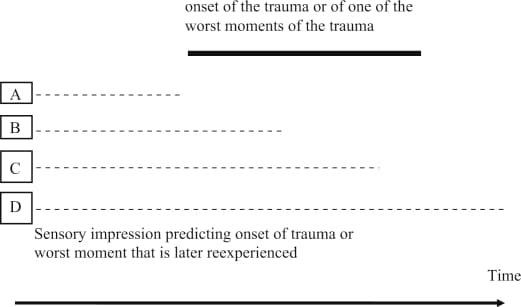
Figure 1. Warning signal hypothesis of intrusive memories (Ehlers et al., 2002). Possible temporal relationships between content of intrusion and worst moments of the trauma.

Hypothesized Memory Mechanisms Underlying Reexperiencing

Ehlers and Clark (2000) suggested that reexperiencing and the ease with which it is triggered in PTSD can be explained by a combination of three memory processes, namely strong perceptual priming, strong associative learning, and poor memory elaboration (binding with other information in autobiographical memory). Experimental evidence for the role of each of these processes in reexperiencing is emerging (e.g., priming: Ehlers, Michael, Chen, Payne, & Shan, 2006; Michael & Ehlers, 2007; Michael et al., 2005a; associative learning: Sündermann, Ehlers, Böllinghaus, Gamer, & Glucksman, 2010; Wessa & Flor, 2007; poor binding with other autobiographical information: Kleim, Wallott, & Ehlers, 2008).

The description of phenomenological characteristics of reexperiencing and intentional trauma recall in PTSD by Ehlers and Clark (2000) has been interpreted by some theorists (Berntsen, 2009) as an argument for special mechanisms that are unique to trauma memories. This is incorrect. The Ehlers and Clark (2000) model proposes that the phenomenology of reexperiencing can be explained by the above three basic memory processes. One important difference between the Ehlers and Clark (2000) model and other approaches that aim to explain involuntary memories of trauma by general memory mechanisms (Berntsen, 2009; Rubin, Boals, & Berntsen, 2008) is the range of memory phenomena under consideration. Whereas Ehlers and Clark’s (2000) model was developed to explain the full range of intrusive reexperiencing in PTSD, including those that lack autonoetic awareness, Berntsen (2009) and Rubin et al. (2008) only include the involuntary retrieval of memory content that is recognized by the individual as a trauma memory. Berntsen (2009) explicitly excludes involuntary auditory and visual imagery that is not deemed autobiographical and “phenomena in which the involuntary mental contents overrule reality more or less completely” (p. 15). Thus, many of the phenomena that the Ehlers and Clark (2000) theory aims to explain (such as flashbacks where patients lose all contact with current reality, other intrusions that are not recognized by the individual as a memory, reexperiencing strong emotions, physiological reactions, or behavior from the trauma without recollection of the trauma), are excluded from consideration. However, these phenomena are important for understanding PTSD and for developing effective treatments. The wider range of reexperiencing symptoms under consideration explains why the Ehlers and Clark (2000)model emphasizes memory processes that facilitate cue-driven reexperiencing, namely priming and associative learning.

Are There Deficits in the Intentional Recall of Trauma Memories?

Several theorists suggest that compromised cognitive processing during the trauma leads to deficits in intentional recall of the trauma. Different hypotheses about the nature of this deficit have been suggested in the literature, for example, a deficit in memory representations that facilitate intentional recall (Brewin, Dalgleish, & Joseph, 1996) or highly fragmented memories (e.g., Foa & Rothbaum, 1998; van der Kolk & Fisler, 1995). Building on the work on transfer-appropriate processing (for a review see Roediger, 1990), Ehlers and Clark (2000) suggested that data-driven processing during trauma (i.e., the predominant processing the sensory impressions) will facilitate strong perceptual priming for accompanying stimuli and (in combination with a lack of self-referent processing) will lead to relatively weaker intentional recall of the worst moments of the trauma.

Other theorists (Berntsen, 2009; Rubin et al., 2008) predict the opposite and hypothesize that trauma memories are highly accessible so that intentional and unintentional retrieval is enhanced. Empirical tests of these hypotheses in clinical populations are sparse (for reviews see Ehlers et al., 2004; McNally, 2003). There is very little evidence for complete psychogenic amnesia (Evans et al., 2009; McNally, 2003, but also see Markowitsch et al., 1998). Unless there are organic causes for poor memory (e.g., head injury or drugs), trauma survivors usually remember most of what happened. There is evidence, however, for more subtle problems with intentional recall. People with PTSD may be confused about the order of events, have small gaps in memory, or may fail to remember details that are important for the meaning of especially distressing parts of the event (e.g., a rape survivor who blamed herself for not fighting the perpetrator did not remember that he had threatened her with a knife beforehand). Trauma survivors with PTSD give more disorganized narratives of traumatic events than those without PTSD (e.g., Halligan, Michael, Clark, & Ehlers, 2003;Harvey & Bryant, 1999).

In the author’s view, the controversy about deficient versus enhanced intentional recall of trauma in PTSD can be resolved by considering the trauma as a series of events rather than one event (Ehlers et al., 2004). Earlier work defines the traumatic event from an external point of view and refers to the memory for this externally defined event as “the trauma memory.” The author believes that this is misleading. From the trauma survivors’ perspective, the traumatic experience may have several distinct parts that are not necessarily remembered as one integrated event. For example, Ehlers and Clark (2000) described a patient with PTSD who had intrusive memories that contradicted each other and stemmed from different parts of the (prolonged) traumatic event. Furthermore, it is important to bear in mind that only some moments from the traumatic event are later reexperienced. Thus, the proposed problems in intentional retrieval may mainly apply to the memory for these moments. In line with this argument, Evans et al. (2007a) found that narratives of the moments that were reexperienced were more disorganized than other segments of the trauma narrative that were not; furthermore in 23% of the cases these moments were not included in the narrative at all.

Further clarity is needed about the exact nature of the problems in voluntary recall of parts of the trauma memory in PTSD and the pathways by which they contribute to the persistence of PTSD. Ehlers et al. (2004) suggested that the disjointedness of the memories of the worst moments during the trauma from other relevant autobiographical information is particularly relevant in PTSD. Kleim et al. (2008) found experimental support for this hypothesis. Disjointedness has the effect that when the individual remembers the worst moments, they have difficulty accessing other information that puts the meaning of these moments into perspective. This maintains a sense of current threat (Ehlers & Clark, 2000). Furthermore, poor memory elaboration is thought to contribute to reexperiencing as it leads to poor inhibition of cue-driven retrieval. Note that this would only be expected to lead to distressing reexperiencing symptoms if there is also strong priming for potential triggers and strong associations between the triggers and emotional responses as (Ehlers & Clark, 2000; Ehlers et al., 2004).

Nontrauma Autobiographical Memories in PTSD

People with and without PTSD also differ in how they remember other events in their lives. Like people with depression, those with PTSD have difficulty remembering specific autobiographical events (see Moore & Zoellner, 2007, for a review). This effect is not due to differences in verbal intelligence (Schönfeld & Ehlers, 2006). Low autobiographical memory specificity at 2 weeks after trauma predicts chronic PTSD (Kleim & Ehlers, 2008).

Relationship Between Memory and Appraisals in PTSD

An important predictor of chronic PTSD is how people interpret their memories of the trauma. Ehlers and Steil (1995) suggested that people with PTSD show negative idiosyncratic interpretations of intrusive trauma memories such as “I am going crazy,” which lead to a sense of ongoing threat and distress, and motivate dysfunctional control strategies such as rumination, memory suppression, and excessive safety-seeking behaviors that maintain PTSD. Prospective longitudinal studies of trauma survivors supported this suggestion (e.g., Dunmore, Clark, & Ehlers, 2001; Ehlers, Mayou, & Bryant, 1998; Ehring, Ehlers, & Glucksman, 2008; Halligan, Michael, Clark, & Ehlers, 2003; Michael, Halligan, Clark, & Ehlers, 2007; Murray, Ehlers, & Mayou, 2002; Steil & Ehlers, 2000).

Similarly, Ehlers and Clark (2000) suggested that negative interpretations of problems in intentional recall such as memory gaps or difficulties in remembering the exact order of events (e.g., “I must have a brain damage” and “Something even worse and unbearable must have happened”) contribute to the maintenance of PTSD. Studies by Dunmore et al. (2001)and Halligan et al. (2003) supported this suggestion.

Furthermore, what is remembered can contribute to problematic appraisals of the trauma. Problems in remembering the order of events can contribute to self-blame for the event (Ehlers & Clark, 2000). Low autobiographical memory specificity contributes to appraisals of being permanently changed (Schönfeld, Ehlers, Böllinghaus, & Rief, 2007).

Clinical Implications

The above analysis of memory processes in PTSD and their link with problematic appraisals and behaviors that maintain PTSD has led to the development of specific theory-guided treatment procedures for this condition (Ehlers & Clark, 2000; Ehlers, Clark, Hackmann, McManus, & Fennell, 2005).

The Updating Trauma Memories procedure addresses the disjointedness of memories of the worst moments of the trauma from information that gives them a less threatening meaning. This procedure includes (1) identifying the moments during the trauma that create the greatest distress and sense of “nowness” (“hotspots”) through imaginal reliving or writing a narrative, and identification of the patient’s intrusive memories, (2) identifying the personal meanings of these moments, and (3) identifying “updating” information that puts the impressions the patient had at the time or the problematic meanings into perspective. This information can be either relevant details from the course, circumstances, and outcome of the trauma or the result of cognitive restructuring of the highly idiosyncratic meanings of the trauma, and (4) actively linking the updating information to the hotspots in memory, for example, by bringing the hotspot vividly to mind and simultaneously using verbal reminders, images, incompatible actions, or incompatible sensations to remind the patient of the new meanings.

Stimulus discrimination training addresses the easy triggering of intrusive memories by matching sensory cues. Patients learn to identify the subtle sensory triggers of reexperiencing and learn to realize that they are responding to a memory. They learn to pay close attention to the differences between the harmless trigger and its present context (“now”) and the stimulus configuration that occurred in the context of trauma (“then”).

Reclaiming your life homework assignments address appraisals of permanent change and problems in retrieving specific memories of the patient’s life before the trauma. These assignments involve doing things that the patient has given up since the trauma, for example, resuming social contacts, sports, or other leisure activities. These activities provide retrieval cues for specific memories of themselves before the trauma.

Negative interpretations of intrusive memories and problems in intentional recall are addressed through information, cognitive restructuring, and behavioral experiments. The patient is encouraged to experiment with dropping dysfunctional behaviors such as rumination, hypervigilance, and excessive precautions.

The treatment program (Cognitive Therapy for PTSD) has been shown to be highly effective and acceptable to patients with PTSD after a range of traumas in randomized controlled trials and effectiveness studies (Duffy, Gillespie, & Clark, 2007; Ehlers et al., 2003, 2005; Gillespie, Duffy, Hackmann, & Clark, 2002; Smith et al., 2007).

Open Article as PDF

Abstract

Distressing and intrusive reexperiencing of the trauma is a hallmark symptom of posttraumatic stress disorder (PTSD; American Psychiatric Association, 1994). However, unwanted memories of trauma are not a sign of pathology per se. In the initial weeks after a traumatic experience, intrusive memories are common. For most trauma survivors, intrusions become less frequent and distressing over time. A central question for understanding and treating patients with PTSD is therefore what maintains distressing intrusive reexperiencing in these people. Three factors appear to be important: (1) memory processes responsible for the easy triggering of intrusive memories, (2) the individuals’ interpretations of their trauma memories, and (3) their cognitive and behavioral responses to trauma memories.

Reexperiencing in PTSD

The reexperiencing symptoms of Post-Traumatic Stress Disorder (PTSD) provide insights into how memory works in this condition. It is important to distinguish between intrusive memories and rumination about the trauma, such as thoughts about "why it happened" or "if only I had acted differently." These types of thoughts are distinct in how they appear and function.

Intrusive trauma memories in individuals with and without PTSD share many characteristics. These intrusions often manifest as vivid, brief sensory experiences like images, sounds, bodily sensations, tastes, or smells. However, there are also key differences in intrusive memories between these groups. These differences can predict long-term PTSD and change with successful therapy.

Specific characteristics of reexperiencing in PTSD include:

  • Nowness: Individuals with PTSD report that intrusive memories feel as if they are happening in the present moment more often than those without PTSD. In severe cases, like flashbacks, individuals lose touch with current reality and react as if the trauma is unfolding. Even less intense intrusions often have this sense of "nowness." Sometimes, individuals with PTSD experience emotions and behaviors from the trauma without a conscious memory of the event itself. This suggests that some reexperiencing symptoms lack the sense of personal reliving typically associated with episodic memories.

  • Lack of Context: Intrusive memories in PTSD often lack surrounding information and feel disconnected from other life memories. Individuals may repeatedly relive intense moments and associated emotions, even when they intellectually know that the feared outcome did not occur. This indicates difficulty in retrieving information that would correct initial impressions or predictions made during the traumatic event.

  • Easy Triggering by Matching Cues: A wide range of situations can trigger intrusive memories in PTSD, even those without obvious links to the trauma or those not recognized as triggers by the individual. While these intrusions may seem to appear "out of the blue," closer examination often reveals that triggers share sensory similarities with stimuli present during or just before the trauma (e.g., similar colors, shapes, smells, or body sensations).

  • Distress: Individuals with PTSD describe their intrusive memories as more distressing compared to those without PTSD.

What Is Reexperienced?

During a traumatic event, many things can occur. The question arises as to what specific elements are later reexperienced. Interviews with PTSD patients reveal they reexperience brief moments, such as "hearing footsteps behind me" or "seeing the perpetrator with a knife." Further analysis suggests these are sensory impressions that signaled the start of the trauma or its most severe moments. It is proposed that these intrusions have functional importance as they represent warning signals that predicted the worst parts of the trauma. This aligns with learning models where certain stimuli gain significance by predicting adverse events. In essence, individuals with PTSD may reexperience the warning signs rather than the full traumatic event itself. This idea is supported by studies involving PTSD patients and violent offenders who had intrusive memories of their crimes.

The emphasis is on sensory impressions that preceded the trauma or its most severe moments, carrying predictive information. These impressions may have also been present during the worst moments. Importantly, "worst moments" are defined subjectively by the individual with PTSD, not by external criteria. In cases of prolonged trauma, there may be multiple points where the event's meaning changed for the worse, and each of these moments could be represented in reexperiencing.

Hypothesized Memory Mechanisms Underlying Reexperiencing

Reexperiencing and its easy triggering in PTSD are thought to be explained by strong perceptual priming, strong associative learning, and poor memory elaboration (integrating memories with other life information). Experimental evidence supports the role of each of these processes in reexperiencing.

The description of reexperiencing in PTSD is not meant to suggest special memory mechanisms unique to trauma. Instead, it proposes that the characteristics of reexperiencing can be explained by these three basic memory processes. A key distinction between this model and others that explain involuntary trauma memories by general mechanisms is the scope of phenomena considered. This model aims to explain the full range of intrusive reexperiencing in PTSD, including experiences without conscious awareness, such as flashbacks where reality is completely lost, or reexperiencing emotions, physical reactions, or behaviors without a clear memory of the trauma. Other theories often exclude such phenomena. The broader scope of symptoms considered in this model explains its emphasis on memory processes that facilitate cue-driven reexperiencing, specifically priming and associative learning.

Deficits in Intentional Recall of Trauma Memories

Some theories suggest that impaired cognitive processing during trauma leads to difficulties in intentionally recalling the trauma. Different ideas about this deficit exist, such as problems with memory structures that aid intentional recall or highly fragmented memories. It is also proposed that the type of processing during trauma (focusing on sensory impressions) leads to strong perceptual priming for related stimuli and, due to a lack of self-focused processing, weaker intentional recall of the most severe moments of the trauma.

Other theories predict the opposite, suggesting that trauma memories are highly accessible, leading to enhanced intentional and unintentional retrieval. Clinical research on these ideas is limited. There is little evidence for complete memory loss due to psychological reasons; individuals usually remember most of what happened unless there are physical causes for memory problems. However, more subtle issues with intentional recall exist. People with PTSD may struggle with the order of events, have small memory gaps, or forget details crucial to understanding distressing parts of the event. Narratives of traumatic events from individuals with PTSD tend to be more disorganized than those from individuals without PTSD.

The debate about whether intentional recall of trauma is deficient or enhanced can be clarified by viewing trauma as a series of events rather than a single one. Defining "the trauma memory" from an external perspective can be misleading. From an individual's viewpoint, the traumatic experience may have distinct parts that are not necessarily remembered as a single, integrated event. For example, intrusive memories might contradict each other and come from different parts of a prolonged trauma. Also, only certain moments from the traumatic event are later reexperienced. Therefore, problems with intentional retrieval may primarily affect memories of these specific moments. Research supports this, showing that narratives of reexperienced moments are more disorganized and sometimes omitted entirely from the overall trauma narrative.

Further understanding is needed regarding the precise nature of problems in voluntarily recalling parts of trauma memories in PTSD and how these contribute to its persistence. The disjointedness of memories of the worst moments of trauma from other relevant life information is considered particularly significant in PTSD. This disjointedness means that when individuals remember these severe moments, they struggle to access other information that would provide a less threatening perspective, thereby maintaining a sense of current threat. Additionally, poor memory elaboration is thought to contribute to reexperiencing by weakening the inhibition of cue-driven memory retrieval. This would only lead to distressing reexperiencing if there are also strong priming effects for potential triggers and strong links between triggers and emotional responses.

Nontrauma Autobiographical Memories in PTSD

Individuals with PTSD also differ from those without the condition in how they recall other life events. Similar to individuals with depression, those with PTSD often have difficulty remembering specific autobiographical events. This is not due to differences in verbal intelligence. Low specificity in autobiographical memory two weeks after trauma can predict chronic PTSD.

Relationship Between Memory and Appraisals in PTSD

A significant predictor of chronic PTSD is how individuals interpret their trauma memories. Individuals with PTSD often develop negative and unique interpretations of intrusive trauma memories, such as "I am going crazy." These interpretations lead to a sense of ongoing threat and distress, prompting unhelpful coping strategies like rumination, suppressing memories, and excessive safety behaviors, all of which maintain PTSD. Longitudinal studies of trauma survivors support this idea.

Similarly, negative interpretations of issues with intentional recall, such as memory gaps or difficulty remembering the exact sequence of events (e.g., "I must have brain damage" or "Something even worse and unbearable must have happened"), are thought to contribute to the persistence of PTSD. Studies have supported this suggestion.

Furthermore, the nature of what is remembered can fuel problematic interpretations of the trauma. Difficulty remembering the order of events can contribute to self-blame for the incident. Low specificity in autobiographical memory can lead to the belief that one is permanently changed by the trauma.

Clinical Implications

The understanding of memory processes in PTSD and their connection to problematic interpretations and behaviors that maintain the condition has led to the development of specific, theory-guided treatment procedures.

The "Updating Trauma Memories" procedure addresses the disjointedness of memories of the worst moments of trauma from information that gives them a less threatening meaning. This procedure involves:

  1. Identifying the moments during the trauma that cause the most distress and sense of "nowness" (known as "hotspots") through methods like imaginal reliving or writing a narrative, and identifying the patient's intrusive memories.

  2. Determining the personal meanings associated with these moments.

  3. Identifying "updating" information that contextualizes the impressions or problematic meanings the patient had at the time. This information can be relevant details from the trauma's course, circumstances, and outcome, or the result of reevaluating highly personal meanings of the trauma.

  4. Actively linking this updating information to the memory hotspots, for instance, by vividly recalling the hotspot while simultaneously using verbal reminders, images, actions, or sensations that support the new meanings.

Stimulus discrimination training targets the easy triggering of intrusive memories by matching sensory cues. Patients learn to identify the subtle sensory triggers of reexperiencing and recognize that they are reacting to a memory. They are taught to focus on the differences between a harmless trigger in the present moment ("now") and the stimulus configuration that occurred during the trauma ("then").

"Reclaiming your life" homework assignments address beliefs of permanent change and difficulties in retrieving specific memories from the patient's life before the trauma. These assignments involve engaging in activities that the patient has stopped doing since the trauma, such as social contacts, sports, or other hobbies. These activities serve as cues to retrieve specific memories of themselves before the traumatic event.

Negative interpretations of intrusive memories and difficulties in intentional recall are addressed through education, cognitive restructuring, and behavioral experiments. Patients are encouraged to experiment with discontinuing unhelpful behaviors like rumination, hypervigilance, and excessive precautions.

This treatment program, known as Cognitive Therapy for PTSD, has proven highly effective and acceptable to patients with PTSD resulting from various traumas, as demonstrated in randomized controlled trials and effectiveness studies.

Open Article as PDF

Abstract

Distressing and intrusive reexperiencing of the trauma is a hallmark symptom of posttraumatic stress disorder (PTSD; American Psychiatric Association, 1994). However, unwanted memories of trauma are not a sign of pathology per se. In the initial weeks after a traumatic experience, intrusive memories are common. For most trauma survivors, intrusions become less frequent and distressing over time. A central question for understanding and treating patients with PTSD is therefore what maintains distressing intrusive reexperiencing in these people. Three factors appear to be important: (1) memory processes responsible for the easy triggering of intrusive memories, (2) the individuals’ interpretations of their trauma memories, and (3) their cognitive and behavioral responses to trauma memories.

Characteristics of Reexperiencing in PTSD

Insights into the memory processes behind reexperiencing symptoms in Post-Traumatic Stress Disorder (PTSD) can be gained by examining their observable features. It is important to differentiate between intrusive memories and rumination about the trauma. Rumination includes thoughts like "Why did this happen?" or "If only I had..." Research indicates that these types of thoughts are distinct from intrusive memories in their nature and function.

Comparisons of intrusive trauma memories in individuals with and without PTSD reveal many similarities. These intrusions often present as brief, vivid sensory experiences such as images, sounds, body sensations, tastes, or smells. However, there are also notable differences in the intrusions experienced by individuals with and without PTSD. These differences can predict the development of chronic PTSD, even beyond the frequency of early intrusions, and have been observed to change with successful therapy.

Specific characteristics of reexperiencing in PTSD include:

  1. Nowness: Individuals with PTSD often describe their intrusive memories as happening "in the here and now" to a greater extent than those without PTSD. In severe cases, like flashbacks, individuals may lose touch with current reality and act as if the trauma is recurring. A lesser degree of this "nowness" also characterizes other intrusive trauma memories in PTSD. Additionally, individuals with PTSD may experience emotions or behaviors from the trauma without a conscious memory of the event itself. This suggests that some reexperiencing symptoms lack the conscious awareness typical of episodic memories.

  2. Lack of Context: Intrusive memories in PTSD often lack surrounding information and appear disconnected from other relevant personal memories. Individuals with PTSD may repeatedly experience moments of trauma and associated emotions, even when they know the negative outcome they once feared did not occur. During these intrusive memories, individuals with PTSD struggle to access information that corrected their initial perceptions or predictions from the traumatic event.

  3. Ease of Triggering by Matching Cues: In PTSD, a wide range of situations can trigger intrusive memories, even those without an obvious or recognized connection to the trauma. This can make intrusions seem to appear "out of the blue." A closer look reveals that these triggers often share sensory similarities with stimuli present just before or during the trauma, such as a similar color, shape, smell, or body sensation.

  4. Distress: Individuals with PTSD typically describe their intrusive memories as more distressing than those without PTSD.

What Is Reexperienced?

Many things occur during a traumatic event, but what determines what is later reexperienced? Individuals with PTSD often report reexperiencing brief moments from the trauma, such as "hearing footsteps behind me" or "seeing the perpetrator with a knife." Further analysis suggests these intrusions represent sensory impressions that signaled the start of the trauma or its worst moments. These intrusions appear to have a functional significance as warning signals, consistent with learning models where certain stimuli predict unpleasant events. In simpler terms, individuals with PTSD seem to reexperience the warning signs rather than the traumatic event itself. This hypothesis is supported by studies of PTSD patients and violent offenders with intrusive memories of their crimes.

The emphasis on sensory impressions that preceded the trauma or its worst moments does not mean they had to be completely finished before the trauma began. Consistent with understanding how cues work in learning, the hypothesis focuses on sensory impressions that started just before the worst moment and therefore had predictive value. These impressions could still have been present during the worst moment. Furthermore, the "worst moments" of trauma are defined subjectively from the individual's perspective, not by what others might find most distressing. In prolonged trauma, there are often multiple moments when the event's meaning changed for the worse, and each of these may be represented in reexperiencing.

Hypothesized Memory Mechanisms Underlying Reexperiencing

The ease with which reexperiencing is triggered in PTSD may be explained by three memory processes: strong perceptual priming, strong associative learning, and poor memory elaboration (integrating memories with other personal information). Experimental evidence supports the role of each of these processes in reexperiencing.

Some theories suggest that the characteristics of reexperiencing and intentional trauma recall in PTSD point to "special mechanisms" unique to trauma memories. However, this is not the case. The proposed model suggests that the nature of reexperiencing can be explained by these three basic memory processes. A key difference between this model and other approaches explaining involuntary trauma memories is the range of memory phenomena considered. While the current model aims to explain the full scope of intrusive reexperiencing in PTSD, including experiences without conscious awareness, other theories may exclude phenomena like involuntary sensory experiences not recognized as autobiographical or when mental content overrides reality. Many critical phenomena for understanding PTSD and developing effective treatments, such as flashbacks where individuals lose touch with reality or reexperiencing emotions or behaviors without memory of the trauma, are considered by this model. The broader range of symptoms addressed explains why the model highlights memory processes that facilitate cue-driven reexperiencing, specifically priming and associative learning.

Deficits in the Intentional Recall of Trauma Memories

Some theories propose that impaired cognitive processing during trauma leads to problems with the intentional recall of the trauma. Various ideas exist about the nature of this deficit, such as issues with memory representations that aid intentional recall or highly fragmented memories. Building on research about how memory retrieval is influenced by the way information was processed, it has been suggested that processing sensory impressions during trauma will lead to strong perceptual priming for related stimuli. Combined with a lack of self-referential processing, this may result in weaker intentional recall of the most distressing moments of the trauma.

Other theories suggest the opposite, hypothesizing that trauma memories are highly accessible, leading to enhanced intentional and unintentional retrieval. Empirical studies in clinical populations testing these hypotheses are limited. There is little evidence for complete memory loss related to psychological trauma, unless there are organic causes like head injury or drug use. Trauma survivors typically remember most of what happened. However, more subtle problems with intentional recall do exist. Individuals with PTSD may be confused about the order of events, have small memory gaps, or fail to recall details crucial to understanding especially distressing parts of the event. For example, a survivor who blames herself for not fighting back may not remember being threatened with a knife. Trauma survivors with PTSD also tend to give more disorganized accounts of traumatic events than those without PTSD.

The disagreement regarding deficient versus enhanced intentional recall of trauma in PTSD may be resolved by viewing trauma as a series of events rather than a single one. Defining the traumatic event from an external viewpoint and referring to the memory for this as "the trauma memory" can be misleading. From the survivor's perspective, the traumatic experience may involve several distinct parts not necessarily remembered as a single, integrated event. For instance, a patient with PTSD might have contradictory intrusive memories stemming from different parts of a prolonged traumatic event. It is also important to remember that only some moments from the traumatic event are later reexperienced. Therefore, proposed problems in intentional retrieval may primarily apply to the memory of these specific moments. Supporting this, studies have found that narratives of reexperienced moments were more disorganized than other parts of the trauma narrative; in some cases, these moments were not included in the narrative at all.

Further clarity is needed regarding the precise nature of problems in voluntarily recalling parts of trauma memory in PTSD and how these contribute to the persistence of the disorder. The disjointedness of memories of the worst moments of trauma from other relevant personal information is particularly relevant in PTSD. This disjointedness means that when an individual remembers these worst moments, they struggle to access other information that could put the meaning of these moments into perspective, thus maintaining a sense of ongoing threat. Furthermore, poor memory elaboration is thought to contribute to reexperiencing as it hinders the inhibition of cue-driven retrieval. This would only be expected to lead to distressing reexperiencing symptoms if there is also strong priming for potential triggers and strong associations between triggers and emotional responses.

Nontrauma Autobiographical Memories in PTSD

Individuals with PTSD also differ from those without the condition in how they recall other events in their lives. Similar to individuals with depression, those with PTSD often have difficulty remembering specific personal events. This effect is not due to differences in verbal intelligence. A low specificity in autobiographical memory two weeks after trauma can predict chronic PTSD.

Relationship Between Memory and Appraisals in PTSD

A significant predictor of chronic PTSD is how individuals interpret their memories of the trauma. Individuals with PTSD often develop negative, unique interpretations of intrusive trauma memories, such as "I am going crazy." These interpretations lead to a sense of ongoing threat and distress, motivating unhelpful control strategies like rumination, suppressing memories, and excessive safety behaviors, which maintain PTSD. Long-term studies of trauma survivors support this idea.

Similarly, negative interpretations of problems with intentional recall, such as memory gaps or difficulty remembering the exact order of events, are believed to contribute to the persistence of PTSD. Examples include thoughts like "I must have brain damage" or "Something even worse and unbearable must have happened." Research supports this suggestion.

Furthermore, the nature of what is remembered can contribute to problematic interpretations of the trauma. Difficulties in recalling the order of events can lead to self-blame for the incident. Low specificity in autobiographical memory contributes to beliefs of being permanently changed by the trauma.

Clinical Implications

The analysis of memory processes in PTSD and their connection to problematic interpretations and behaviors that maintain the disorder has led to the development of specific, theory-guided treatment procedures.

The "Updating Trauma Memories" procedure addresses the disjointedness of memories of the worst moments of trauma from information that could give them a less threatening meaning. This procedure involves: (1) identifying the most distressing moments and those that create a sense of "nowness" (called "hotspots") through imaginal reliving or writing a narrative, and identifying intrusive memories; (2) determining the personal meanings of these moments; (3) identifying "updating" information that puts the individual's impressions at the time or problematic meanings into perspective. This information can include relevant details from the trauma's course, circumstances, and outcome, or the result of re-evaluating highly unique meanings of the trauma; and (4) actively linking this updating information to the hotspots in memory. This can be done by vividly recalling the hotspot and simultaneously using verbal reminders, images, incompatible actions, or sensations to reinforce the new meanings.

"Stimulus discrimination training" targets the easy triggering of intrusive memories by matching sensory cues. Individuals learn to identify subtle sensory triggers of reexperiencing and recognize that they are reacting to a memory. They learn to pay close attention to the differences between the harmless trigger and its current context ("now") versus the stimulus configuration that occurred during the trauma ("then").

"Reclaiming your life" homework assignments address beliefs of permanent change and difficulties in retrieving specific memories of the individual's life before the trauma. These assignments involve re-engaging in activities given up since the trauma, such as resuming social contacts, sports, or other leisure activities. These activities serve as cues for retrieving specific memories of themselves before the trauma.

Negative interpretations of intrusive memories and problems with intentional recall are addressed through information, cognitive restructuring, and behavioral experiments. Individuals are encouraged to experiment with discontinuing unhelpful behaviors like rumination, hypervigilance, and excessive precautions.

This treatment program, known as Cognitive Therapy for PTSD, has proven highly effective and acceptable to individuals with PTSD following various traumas in randomized controlled trials and effectiveness studies.

Open Article as PDF

Abstract

Distressing and intrusive reexperiencing of the trauma is a hallmark symptom of posttraumatic stress disorder (PTSD; American Psychiatric Association, 1994). However, unwanted memories of trauma are not a sign of pathology per se. In the initial weeks after a traumatic experience, intrusive memories are common. For most trauma survivors, intrusions become less frequent and distressing over time. A central question for understanding and treating patients with PTSD is therefore what maintains distressing intrusive reexperiencing in these people. Three factors appear to be important: (1) memory processes responsible for the easy triggering of intrusive memories, (2) the individuals’ interpretations of their trauma memories, and (3) their cognitive and behavioral responses to trauma memories.

Characteristics of Reexperiencing in PTSD

The way memories work in Post-Traumatic Stress Disorder (PTSD) can be understood by looking at how reexperiencing symptoms show up. It is important to note that intrusive memories and thinking a lot about the trauma are different. For example, thinking "Why did this happen to me?" is different from having a sudden, unwanted memory. Research shows these thoughts and memories are distinct.

Intrusive trauma memories in people with and without PTSD share many similarities. These intrusions are usually short, vivid sensory experiences like images, sounds, body feelings, tastes, or smells. However, there are also key differences in these intrusions between those with and without PTSD. These differences can predict long-term PTSD and improve with successful therapy.

Some key characteristics of reexperiencing in PTSD include:

  1. Feeling of "Nowness": People with PTSD often describe their intrusive memories as if they are happening in the present moment more intensely than those without PTSD. In the most extreme cases, a flashback makes a person feel like the trauma is happening again, losing touch with current reality. Even less intense intrusive memories in PTSD can carry this feeling of "nowness." Sometimes, a person might experience emotions or behaviors from the trauma without consciously remembering the event itself, such as collapsing into a fetal position when seeing something that reminds them of an attacker. This suggests that some reexperiencing symptoms lack the conscious awareness typical of regular memories.

  2. Lack of Context: Intrusive memories in PTSD often lack surrounding information and feel disconnected from other life memories. Individuals with PTSD might repeatedly experience moments and emotions from the trauma, even if they know the feared outcome did not occur. This means that during these intrusive memories, they struggle to access other information that could correct their initial feelings or predictions from those traumatic moments.

  3. Easy Triggering: In PTSD, many situations can trigger intrusive memories, even those that do not seem obviously related to the trauma or are not recognized as triggers. This can make intrusions feel like they come "out of the blue." A closer look reveals that triggers often share sensory qualities with things present just before or during the trauma, like a similar color, shape, smell, or body sensation.

  4. Distress: People with PTSD find their intrusive memories more distressing than those without PTSD.

What Is Reexperienced?

Many things happen during a traumatic event, but what determines which parts are reexperienced later? Individuals with PTSD often report reexperiencing brief moments, such as "hearing footsteps behind me" or "seeing the perpetrator with a knife." Further study showed these intrusions were sensory impressions that indicated the start of the trauma or its worst moments. These intrusions seem to serve as warning signals, similar to how conditioned stimuli predict negative outcomes in learning models. This suggests people with PTSD reexperience these warning signals rather than the full traumatic event itself. This idea is supported by studies of PTSD patients and violent offenders who had intrusive memories of their crimes.

The sensory impressions that are reexperienced typically preceded the trauma or its worst moments. This means they are sensory cues that started just before the most distressing part and thus had predictive value, even if they were still present during that worst moment. It is also important that "worst moments" are defined by the individual with PTSD, not by what others might find most upsetting. In long-lasting trauma, there can be several moments when the event's meaning became worse, and each of these might show up in reexperiencing.

Hypothesized Memory Mechanisms Underlying Reexperiencing

Reexperiencing and how easily it is triggered in PTSD might be explained by a combination of three memory processes: strong perceptual priming (being easily cued by sensory input), strong associative learning (forming strong links between cues and responses), and poor memory elaboration (not connecting memories well with other life information). Research provides evidence for each of these processes playing a role in reexperiencing.

Some believe that the way reexperiencing and intentional trauma recall are described suggests unique mechanisms for trauma memories. However, the proposed model explains reexperiencing using these basic memory processes. A key difference from other theories is the range of memory experiences considered. The proposed model explains the full range of intrusive reexperiencing in PTSD, including those without conscious awareness. Other theories only include conscious, recognized trauma memories, excluding flashbacks where reality is lost, or emotions and behaviors from trauma without memory. These excluded experiences are important for understanding PTSD and developing effective treatments. The broader scope of reexperiencing symptoms helps explain why the model emphasizes memory processes that drive cue-based reexperiencing, such as priming and associative learning.

Are There Deficits in the Intentional Recall of Trauma Memories?

Some experts suggest that difficulties in processing information during a trauma lead to problems with intentionally recalling the event later. There are different ideas about what this problem might be, such as issues with memory structures needed for recall or memories being highly fragmented. One theory suggests that because processing during trauma focuses heavily on sensory details, it leads to strong automatic responses to related stimuli but weaker intentional recall of the worst parts of the trauma, partly due to a lack of self-focused processing.

Other theories predict the opposite, suggesting trauma memories are highly accessible, making both intentional and unintentional recall stronger. There is not much research to test these ideas in people with PTSD. While complete memory loss due to psychological reasons is rare, individuals with PTSD often remember most of what happened unless there are physical causes. However, there is evidence for more subtle problems with intentional recall. People with PTSD might be confused about the order of events, have small memory gaps, or forget details crucial to understanding particularly distressing parts of the event. For instance, a person who experienced sexual assault might blame themselves for not fighting back, forgetting a knife threat that occurred beforehand. Narratives of traumatic events from individuals with PTSD tend to be more disorganized than those from people without PTSD.

This debate about whether intentional recall is poor or enhanced in PTSD can be understood by viewing trauma as a series of events, not just one. Defining "the trauma memory" from an outside perspective can be misleading. From the survivor's viewpoint, the traumatic experience might have several distinct parts that are not necessarily remembered as a single, connected event. For example, a patient might have contradictory intrusive memories from different parts of a prolonged trauma. Also, only some moments from the traumatic event are reexperienced. Therefore, any problems with intentional retrieval might mainly apply to the memories of those reexperienced moments. Studies support this, showing that narratives of reexperienced moments are more disorganized and sometimes not included in the story at all.

More clarity is needed on the exact nature of these problems in voluntary recall of trauma memories in PTSD and how they contribute to the condition lasting. The disconnection of memories of the worst traumatic moments from other relevant life information is particularly important in PTSD. This disconnection means that when individuals remember these worst moments, they struggle to access other information that could change how threatening those moments feel, maintaining a sense of ongoing danger. Additionally, poor memory integration is thought to contribute to reexperiencing by making it harder to stop cue-driven recall. This would only lead to distressing reexperiencing if there are also strong triggers and strong connections between those triggers and emotional responses.

Nontrauma Autobiographical Memories in PTSD

Individuals with PTSD also remember other life events differently from those without the condition. Similar to people with depression, those with PTSD often struggle to recall specific events from their lives. This is not due to differences in intelligence. Having low specificity in autobiographical memory two weeks after a trauma can predict long-term PTSD.

Relationship Between Memory and Appraisals in PTSD

How people interpret their trauma memories is a significant factor in predicting long-term PTSD. People with PTSD often have negative and unique interpretations of intrusive trauma memories, such as "I am going crazy." These interpretations create a feeling of ongoing threat and distress, leading to coping strategies like rumination, suppressing memories, and excessive safety behaviors, all of which keep PTSD going. Studies over time of trauma survivors support this idea.

Similarly, negative interpretations of problems with intentional recall, such as memory gaps or difficulty remembering the exact order of events (e.g., "I must have brain damage" or "Something even worse and unbearable must have happened"), are thought to contribute to PTSD lasting. Research also supports this suggestion.

Furthermore, what is remembered can influence problematic evaluations of the trauma. Difficulty remembering the sequence of events can lead to self-blame for what happened. A lack of specific autobiographical memories can contribute to beliefs of being permanently changed by the trauma.

Clinical Implications

The understanding of memory processes in PTSD and their connection to problematic interpretations and behaviors that maintain the condition has led to specific, theory-guided treatments.

The "Updating Trauma Memories" procedure addresses the disconnection of memories of the worst traumatic moments from information that could make them less threatening. This procedure involves:

  1. Identifying the most distressing moments that feel like they are happening "now" (called "hotspots") through imagining the event or writing about it, and identifying intrusive memories.

  2. Understanding the personal meanings of these moments.

  3. Identifying "updating" information that can put the original impressions or problematic meanings into perspective. This information might be details about the trauma's course, circumstances, and outcome, or a new understanding of the highly personal meanings of the trauma.

  4. Actively connecting this updating information to the "hotspots" in memory. This could involve vividly recalling the hotspot while simultaneously using verbal reminders, images, or actions that contradict the old meaning to reinforce the new understanding.

"Stimulus discrimination training" helps with the easy triggering of intrusive memories by sensory cues. Patients learn to identify the subtle sensory triggers of reexperiencing and realize they are responding to a memory. They learn to pay close attention to the differences between the harmless trigger in its current context ("now") and the situation that occurred during the trauma ("then").

"Reclaiming your life" homework assignments address beliefs of permanent change and difficulties recalling specific memories from before the trauma. These tasks involve doing activities that the patient has stopped since the trauma, like resuming social contacts, sports, or other hobbies. These activities provide cues that help retrieve specific memories of themselves before the trauma.

Negative interpretations of intrusive memories and problems with intentional recall are addressed through information, cognitive restructuring, and behavioral experiments. Patients are encouraged to try stopping unhelpful behaviors such as rumination, being overly watchful, and taking excessive precautions.

This treatment program, known as Cognitive Therapy for PTSD, has been proven highly effective and acceptable to patients with PTSD resulting from various traumas in controlled studies.

Open Article as PDF

Abstract

Distressing and intrusive reexperiencing of the trauma is a hallmark symptom of posttraumatic stress disorder (PTSD; American Psychiatric Association, 1994). However, unwanted memories of trauma are not a sign of pathology per se. In the initial weeks after a traumatic experience, intrusive memories are common. For most trauma survivors, intrusions become less frequent and distressing over time. A central question for understanding and treating patients with PTSD is therefore what maintains distressing intrusive reexperiencing in these people. Three factors appear to be important: (1) memory processes responsible for the easy triggering of intrusive memories, (2) the individuals’ interpretations of their trauma memories, and (3) their cognitive and behavioral responses to trauma memories.

How PTSD Causes People to Relive Bad Memories

When someone has PTSD, they often relive their trauma. This means they experience parts of the bad event again as if it is happening now. These are called intrusive memories. They are different from just thinking about the trauma, like wondering why it happened.

People with and without PTSD can have these intrusive memories. But there are important differences for those with PTSD. These differences can help tell if someone will have PTSD for a long time. They can also get better with the right help.

What Re-Experiencing Feels Like in PTSD

  1. Feeling it now: People with PTSD often feel like the bad memory is happening right now. During a flashback, they might completely lose touch with what is real and act as if the trauma is happening again. Even with other intrusive memories, there is a strong feeling of "now." Sometimes, they might feel emotions or act certain ways from the trauma without remembering the actual event. For example, someone might curl up on the floor if they see someone who looks like their attacker, even if they don't remember why.

  2. Missing details: Intrusive memories in PTSD often lack other important details. They can feel separate from other memories of their life. Someone might keep reliving a scary moment, even if they know later that the bad thing they thought would happen didn't. It is hard for them to remember other information that would make the memory less scary.

  3. Easy to trigger: Many things can make intrusive memories pop up. Sometimes, the person doesn't even know what caused it. Often, these triggers are small sensory things that were present during or just before the trauma, like a certain color, smell, or body feeling.

  4. Very upsetting: People with PTSD say their intrusive memories are much more upsetting than those without PTSD.

What Gets Re-Experienced?

Many things can happen during a traumatic event. The parts that are later relived are often short moments from the trauma, like "hearing footsteps behind me." These are usually sensory things that happened just before or during the worst parts of the trauma. They become like warning signals. So, people with PTSD often relive these warning signals, not just the very worst part of the trauma itself.

It is important to know that the "worst moments" are what felt worst to the person, not what others might think is worst. Also, in long traumas, there can be many moments that felt very bad, and each of these might be relived.

How Memory Works in Re-Experiencing

Scientists think that three things together explain why people with PTSD relive memories and why it happens so easily:

  1. Strong sensory memory: Certain sights, sounds, or feelings from the trauma are very easily brought back.

  2. Strong connections: The brain makes strong connections between triggers and the bad feelings or reactions from the trauma.

  3. Poor memory details: The memories are not well connected with other information about the person's life.

These memory processes are not special only to trauma. They are basic ways memory works. But they help explain why re-experiencing in PTSD includes many different kinds of feelings and actions, even those without a clear memory of the trauma itself.

Problems Remembering Trauma on Purpose

Some experts think that stress during trauma makes it hard to remember the event clearly when someone tries to. For example, they might think the memories are broken into small pieces. However, most trauma survivors do remember most of what happened unless there was a brain injury or drugs involved.

But there can be smaller problems with remembering on purpose. People with PTSD might get the order of events wrong, have small memory gaps, or forget details that would make sense of the scary parts. Their stories about the trauma can be more mixed up.

It helps to think of trauma not as one event but as a series of events. A person might have intrusive memories that seem to disagree with each other because they come from different parts of a long trauma. The problems with remembering on purpose might mainly affect these specific, re-experienced moments. When these bad moments are relived, it can be hard to remember other information that would make them less threatening. This can make the person still feel in danger.

Other Memories in PTSD

People with PTSD also remember other parts of their lives differently. Like people with sadness, they may have trouble remembering specific past events. This problem can even predict if someone will have long-lasting PTSD after a trauma.

How Thoughts and Memories Connect in PTSD

How people understand their trauma memories is a big sign of whether they will have PTSD for a long time. People with PTSD often have negative thoughts about their intrusive memories, like "I'm going crazy." These thoughts make them feel unsafe and cause them to try to control their memories in ways that actually keep PTSD going, such as thinking about the trauma over and over or trying to push memories away.

Negative thoughts about not being able to remember everything, like "I must have brain damage," can also keep PTSD going. What someone remembers can also lead to bad thoughts. Forgetting the order of events can make someone blame themselves. Not remembering specific life events can make someone feel like they are changed forever.

Helping People with PTSD

Understanding how memory and thoughts work in PTSD has led to new ways to help people get better.

One method is called Updating Trauma Memories. This helps with memories that feel separate from other helpful information. It involves:

  1. Finding the most upsetting parts of the trauma that feel like they are happening "now."

  2. Understanding what these moments mean to the person.

  3. Finding new information that changes the scary meaning of these moments. This can be details about what really happened or new ways of thinking about the event.

  4. Actively connecting this new information with the scary moments in their memory.

Another method is Stimulus Discrimination Training. This helps when small things easily trigger intrusive memories. People learn to spot these triggers and realize they are responding to a memory, not something happening now. They learn to see the difference between the harmless trigger now and what happened during the trauma.

Reclaiming your life homework helps with feelings of being changed forever and problems remembering specific life memories. People do things they stopped doing after the trauma, like seeing friends or playing sports. These activities help them remember who they were before the trauma.

Negative thoughts about intrusive memories and problems with remembering are also helped through learning new ways of thinking and by trying out new behaviors, like stopping the constant worrying or being overly careful.

This special type of talk therapy for PTSD has been shown to work very well for many people after different kinds of trauma.

Open Article as PDF

Footnotes and Citation

Cite

Ehlers, A. (2010). Understanding and Treating Unwanted Trauma Memories in Posttraumatic Stress Disorder. Zeitschrift Für Psychologie / Journal of Psychology, 218(2), 141–145. https://doi.org/10.1027/0044-3409/a000021

    Highlights