Trauma and Remembering: From Neuronal Circuits to Molecules
Szabolcs Kéri
SimpleOriginal

Summary

PTSD reflects disrupted learning and memory, with altered fear processing, context encoding, and neural networks; therapies—like psychedelic-assisted—may destabilize and reshape traumatic memories (engrams) during reconsolidation.

Trauma and Remembering: From Neuronal Circuits to Molecules

Keywords trauma; memory; learning; posttraumatic stress disorder; PTSD; amygdala; engram; MDMA; psychedelics

Abstract

Individuals with posttraumatic stress disorder (PTSD) experience intrusions of vivid traumatic memories, heightened arousal, and display avoidance behavior. Disorders in identity, emotion regulation, and interpersonal relationships are also common. The cornerstone of PTSD is altered learning, memory, and remembering, regulated by a complex neuronal and molecular network. We propose that the essential feature of successful treatment is the modification of engrams in their unstable state during retrieval. During psychedelic psychotherapy, engrams may show a pronounced instability, which enhances modification. In this narrative review, we outline the clinical characteristics of PTSD, its multifaceted neuroanatomy, and the molecular pathways that regulate memory destabilization and reconsolidation. We propose that psychedelics, acting by serotonin-glutamate interactions, destabilize trauma-related engrams and open the door to change them during psychotherapy.

1. Introduction

Posttraumatic stress disorder (PTSD) is one of the most researched and controversial topics in contemporary psychiatry. In a significant proportion of people with repeated and severe trauma, transient or subclinical PTSD-like symptoms appear, but the complete syndrome is diagnosed in a relatively small proportion of the affected population [1]. It is noteworthy that more than half of PTSD patients also have severe comorbidities, such as addictions or major somatic illnesses [2,3]. Given the limited effectiveness of therapeutic options, understanding the pathophysiological underpinnings of PTSD is essential.

In this narrative review, we highlight memory alterations associated with PTSD. The core concept of the paper is that PTSD is a disorder of learning, memory, and remembering. We will then examine the neural basis and molecular mechanisms that regulate engram (dynamic memory trace) destabilization and consolidation. We argue that the key effect of psychedelic psychotherapy, which has received increasing attention in the treatment of PTSD, is to transform engrams and reorganize autobiographical memory.

2. The History and Diagnosis of PTSD

The roots of PTSD date back to the “father of history,” Herodotus, who described the case of Epizelus, a soldier who had dissociative blindness due to combat trauma in the Battle of Marathon (490 BCE) [4]. During the middle age, the ethos and morals of knighthood and self-sacrifice were deep sources of trauma and loss (Livre de chevalerie, 1315), which became more prevalent in the violent wars of the 18th–20th century in Europe and America. During the seven-year war (1756–1763), the Austrian physician Josef Leopold Auenbrugger reported a severe mental condition characterized by fear, terror, anxiety, and a melancholic strive of nostalgia and homesickness. It was similar to Da Costa’s soldiers’ heart, which was based on the detailed medical history of 300 members of the military personnel involved in the American Civil War (1861–1865). In addition to the mental problems, these people complained of chest pain, fatigue, and shortness of breath. In the First World War (1914–1918), approximately 10 percent of soldiers presented the symptoms of shell shock (anxiety, dizziness, tremor, and enhanced sensitivity to sensory stimuli), a similar rate to battle fatigue and battle neurosis in the Second World War (1939–1945) [4,5,6].

From a psychiatric point of view, the critical event was the Vietnam War (1955–1975), which eventually led to the birth of the nosological category of PTSD in the 3rd edition of the Diagnostic and Statistical Manual of Mental Disorders (DSM-III) in 1980 [7]. After decades of dispute on the reliability and validity of PTSD, the DSM-5 did not provide relief for the clinician [2]. With the introduction of the new dimension of “negative alterations in mood and cognition” and the dissociative subtype of PTSD, we have 636,120 symptom combinations to establish the diagnosis [8]. Moreover, the 11th edition of the International Classification of Diseases (ICD-11), but not the DSM-5, introduced the new category of complex PTSD characterized by disorders in identity, interpersonal relationships, and affective regulation [9]. Therefore, it is not surprising that the diagnostic systems have a moderate degree of agreement [2].

The prevalence of PTSD (World Mental Health Survey cross-national lifetime prevalence in the total population: 3.9%; among trauma-exposed individuals: 5.6%) depends on trauma type (e.g., higher risk for cumulative exposure, rape, physical assault), age, sex, socioeconomic status, and pre-trauma health status [1]. Given that traumatic events are quite common (70–90% in a given population) relative to the prevalence of PTSD, the majority of individuals in a community possess various coping mechanisms and resilience to deal with the psychological and physical consequences of severe adverse life events [3,10,11,12].

The interactions among genetic vulnerability (PTSD heritability: 30–40%), socioeconomic status, social support, trauma, and physiological changes in PTSD (e.g., low-grade peripheral inflammation) are complex and multifaceted [11,13]. However, it seems that polygenic components correlate with low socioeconomic status, a common mediator for the likelihood of trauma, lack of social support, physiological changes, and the development of PTSD [13].

3. Clinical Manifestation

According to DSM-5, individuals with PTSD directly experience or witness actual or threatened death, serious injury, or sexual violence [14]. Later, they reexperience the traumatic event in the form of intrusive, sensorial, and emotional memories, flashbacks, and nightmares filled with fear, horror, and intensive autonomic reactions (e.g., palpitation, sweating, and shortness of breath). These intrusive experiences result in multiple forms of active and passive avoidance, including thought and memory suppression and avoiding places and activities that may remind the patient of the traumatic event. The third classic symptom dimension of PTSD is heightened arousal (hypervigilance, sleep disorder, and enhanced startle responses) [14].

The DSM-5 separately underlines the importance of negative cognitions and mood, which comprises general signs and symptoms of weak memory formation, negative beliefs and expectations, cognitive distortions leading to abnormal blaming and feelings of threat, and negative emotionality (fear, anger, shame, guilt, diminished interest, and lack of positive feelings) [14,15]. In addition, the DSM-5 offers further specifications regarding dissociative symptoms. The patient may feel depersonalization (feeling detached from one’s mental processes) and derealization (feeling of unreality of surroundings) [14].

In complex PTSD, an exclusive ICD-11 diagnosis, individuals survive frequent early, persistent, and severe trauma. In addition to the classic PTSD phenomena, additional symptoms of disordered self-concept (e.g., poor self-esteem, acceptance, and commitment), impaired affective regulation (emotional numbing or over-reactivity), and hassle with interpersonal relationships are also present in complex PTSD. Recent data suggest that 1–8% of the population has complex PTSD, and in mental health facilities, even 50% of the patients can have this diagnosis [9].

4. Learning and Memory in PTSD: From Experiencing to Neuronal Circuits

From our perspective, it is critical how patients with PTSD learn and remember. A vast amount of research shows that individuals with PTSD are susceptible to fear learning (aversive associative conditioning), overgeneralization of fear memories to neutral contexts (e.g., expecting an explosion of a bomb in a peaceful village), and lessened extinction (diminishing of aversive memories during repetitions over time without negative consequences) [16,17,18,19,20].

By definition, PTSD patients experience vivid, emotional, and intrusive memories of the trauma [14]. However, they often report poor attention, inability to remember specific details of events (dissociative amnesia), and inefficient learning related to latent avoidance [21,22,23]. Fighting with intrusive memories, rumination, internal avoidance, and impaired attentional control leads to reduced autobiographical memory specificity: the discrete time, location, and distinctive emotional/social characteristics of internal representations of places, people, and events are diminished [17,24]. Multiple mechanisms may contribute to decreased autobiographic memory specificity, including rumination, functional avoidance, and executive dysfunctions. The greying out of autobiographical memory has a definitive impact on social functioning, planning, problem-solving (prospective memory), emotion regulation, and quality of life [24].

Interestingly, there is a definitive overlap between the neuronal representation of autobiographical memory specificity and PTSD [24]. The hippocampal formation and its main gateway to the cortex (cuneus, precuneus, posterior cingulum) regulate the self-relevant physical and social details of events in an appropriate space–time context by delineating distinct engrams (pattern separation). The medial prefrontal cortex is crucial for self-referential processing and emotional salience regulation. Finally, the dorsal prefrontal cortex serves executive functions, memory retrieval, and engram reconstruction [24] (Figure 1).

Figure 1.
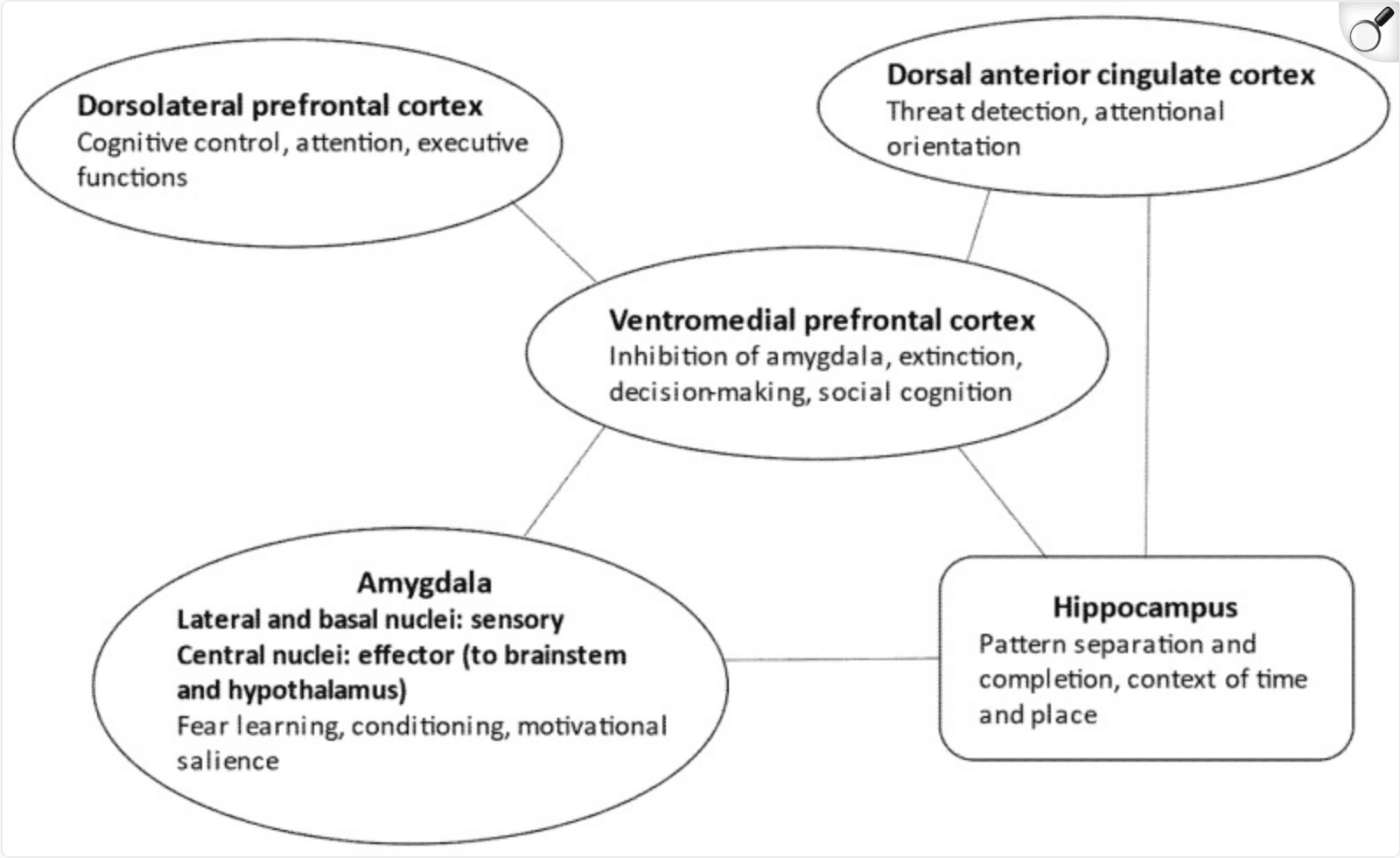
Figure 1

Neural circuits in PTSD.

5. Large-Scale Neuronal Networks in PTSD

It is essential to underline that a widespread neuronal network, well beyond the classic fear learning circuit, is responsible for altered learning and memory in PTSD [19,25,26,27,28] (Figure 1). Sensory input coding the unconditioned and conditioned stimuli (i.e., the traumatic event and the associated environmental cues) reaches the lateral and basal parts of the amygdala before cortical processing [29,30]. However, neuronal activity is relatively short in these areas, and input from the dorsal anterior cingulate cortex is necessary to maintain threat-related information processing. The dorsal anterior cingulate cortex also activates the striatum in the basal ganglia, contributing to threat-related behavioral actions [26,31]. On the other hand, the central nucleus of the amygdala, receiving information from the basolateral amygdala regions implicated in associative conditioning of aversive and neutral stimuli, sends fibers to the brainstem (e.g., the periaqueductal grey matter) and hypothalamic centers, eliciting trauma- and stress-related physiological responses [32].

How can the brain regulate the cingulate–amygdala fear system? Three critical networks maintain the balance and counter-regulate stress-related responses. First, the ventromedial prefrontal cortex inhibits the amygdala and the dorsal anterior cingulate cortex [16,32,33,34,35]. This is essential for extinction, which is not a mere forgetting because it requires the emergence of new engrams of safety memory. The safety memory then inhibits engrams of threat memory [32].

Second, the hippocampal formation is essential for establishing and maintaining an appropriate context of time and location for memories [32,36] (Figure 1). For example, the traumatic event that happened several months ago in a distant town is bound to this context, and hence could not be experienced as happening here and now. The failure of hippocampal coding of the spatiotemporal context is a possible mechanism of the intrusive reexperiencing of traumatic episodes in PTSD, together with a failure to effectively encode new events [36].

General models of hippocampus-dependent associative learning focus on cue–context links. In these models, the primary role of hippocampal associative learning is bridging foreground cues and background context to obtain a nuanced representation of an event. Many facets of memory alterations in PTSD can be attributed to the impaired integration of cue (e.g., injured people) and context (e.g., a city landscape), resulting in inappropriate representations of what, where, and when something happened [37,38].

The hippocampal formation is a hub in large-scale neuronal networks. It is responsible for self-referential processing and salience attribution via the recruitment of autobiographical memories and their emotional content, comprising a complex architecture of cues and contexts [39,40]. In addition to decreased hippocampal volume, patients with PTSD often show poor performance and weakened hippocampal activity during fear renewal and extinction recall tasks [41]. Moreover, the functional integration of the hippocampal formation into default mode and salience networks is also disrupted, contributing to higher-level social dysfunctions in PTSD [41].

The beliefs and expectations of the patients are also linked to hippocampal functioning [42]. A combination of computational modeling and functional neuroimaging suggests that patients with PTSD rely on their beliefs to control hippocampal activity during memory suppression [43]. Furthermore, error signals between the expectations/beliefs and actual events (prediction errors) were associated with the emergence of unwanted intrusions and avoidance behavior [43,44].

The third central system implicated in PTSD is the dorsolateral prefrontal executive network that mediates cognitive control to redirect attention from threat-related cues and thoughts to other positive and salient events [26,39,40] (Figure 1). Neurochemical and synaptic alterations are the opposite in prefrontal and limbic areas: in the prefrontal cortex, glutamatergic changes lead to decreased synaptic connectivity, whereas in the amygdala, monoaminergic mechanisms induce synaptic hyperplasticity and hyperconnectivity [45]. From a large-scale neural network perspective, decreased activity and connectivity were detected in the central executive network (attentional regulation, cognitive deficits) and default mode network (dissociation, avoidance, and intrusive thoughts). In contrast, there is increased activity and connectivity in the salience network (heightened threat detection and impaired regulation of the central executive and default mode network) [39,40,45].

Recent evidence suggests an intriguing epigenetic alteration in the prefrontal-amygdala circuit, resulting in over-consolidating fear memories in PTSD [46]. Specifically, the downregulation of a histone methyltransferase in the prefrontal cortex promoted fear expression by enhancing memory consolidation. Genes implicated in synaptogenesis showed increased expression in the prefrontal-basolateral amygdala circuit following the epigenetic changes, which may be a critical cellular factor in altered learning and memory [46].

Genome-wide association studies also suggested altered gene expression in the anterior cingulate-prefrontal system, behaviorally linked to a general mood-anxiety-neuroticism factor in PTSD [47]. Genetically regulated transcriptomic changes indicated two genes that consistently showed altered expression in the prefrontal, cingulate, cortical, and limbic regions: DND1P1 and ARL17A. The DND1P1 gene encodes a protein binding to microRNA-targeting sequences of mRNAs, and inhibits the microRNA-mediated repression of translation. This mechanism may be implicated in the regulation of genes participating in synaptic plasticity. ARL17A (ADP Ribosylation Factor Like GTPase 17A) encodes a GTP binding protein that regulates the functioning of several neurotransmitter receptors and cellular trafficking [47].

In summary, traumatic remembering includes multiple factors and mechanisms: enhanced associative learning of fear-related cues, impaired encoding of spatiotemporal context, over-generalization and enhanced consolidation of fear memories, and weak extinction. In addition to the traumatic event, genetic and epigenetic changes contribute to the abnormal formation of fear memories.

6. Reconsolidation of Fear Memories: A Potential Mechanism of Action for Psychedelic Substances in PTSD

Following a large body of anecdotal reports on the use of psychedelic-associated psychotherapy in the treatment of PTSD [48,49], Mitchell et al., (2021) demonstrated the effectiveness of this treatment in a randomized, double-blind, placebo-controlled, phase 3 trial [50]. They investigated 90 patients with severe PTSD to explore the efficacy and safety of 3,4-methylenedioxymethamphetamine (MDMA, ecstasy)-assisted psychotherapy. They found significantly decreased PTSD symptoms in the MDMA group relative to the placebo, with a vast, clinically unusual effect size (d = 0.91) [50]. Mitchell et al. (2021) concluded that MDMA-assisted therapy is a potential breakthrough treatment for severe PTSD with multiple comorbidities. However, the mechanism of the robust therapeutic effect of psychedelics is not precisely known [51]. One possible solution lies in the reconsolidation of retrieved engrams, which are dynamic assemblies of neuronal networks serving memory traces [20,32,52].

In fear learning, the new engram consisting of a fear-provoking unconditioned stimulus (e.g., an explosion) and the conditioned context (e.g., the place where it happened and the people around the explosion) form a new active engram that consolidates into an allocated inactive engram via amygdala-hippocampal-cortical interactions [19,29,34,53]. During retrieval, the engram is destabilized, and there is a chance to modify it, for example, by extinction or reconstructing the content [54,55]. The fundamental principle of the reconsolidation hypothesis is that, during remembering, engrams turn into a destabilized state. Therefore, via psychological and pharmacological modulation, the engram can be changed. Then, this modified content will reconsolidate into an altered engram serving an adaptive behavior instead of fear, intrusive reexperiencing, and avoidance [32]. In popular terms, journalists often write about “erasing” and “creating” memories.

In an animal model, Hake et al. (2019) demonstrated that MDMA administered specifically during the reconsolidation phase reduced conditioned fear [56]. However, MDMA did not affect extinction. The authors concluded that MDMA augments psychotherapy by modifying the reconsolidation of fear memories in PTSD [56,57]. Interestingly, the same effect was found for another psychedelic, N,N-dimethyltryptamine (DMT, Ayahuasca) [58] but not for psilocybin [59].

MDMA and other psychedelic drugs have multiple mechanisms that may counteract PTSD-related pathophysiological changes and profoundly impact memory reconsolidation [60]. MDMA, psilocybin, and ketamine possess immunosuppressive and anti-inflammatory effects by reducing cytokine secretion and immune cell activation, which may impact memory formation, reconsolidation, and the specificity of autobiographical memories [61,62,63,64]. Enhanced peripheral inflammation and altered immune responses are cardinal features of PTSD as a general evolutionary response to threat and danger [62,65,66]. Data from animal studies suggest that the administration of Tumor Necrosis Factor-α (TNFα), a first-line cytokine secreted by macrophages, into the dorsal hippocampus disrupted the retrieval of contextual fear memory, decreased freezing responses, and impaired the retrieval and reconsolidation of spatial memory [67]. In addition, hippocampal TNFα applied before retrieval ceased c-fos early intermediate gene expression. Therefore, TNFα inhibits the reconsolidation of engrams in the hippocampal formation [67].

Second, MDMA induces rapid secretion of cortisol and other hormones (e.g., oxytocin) and may facilitate the downregulation of hypersensitive cortisol receptors [68]. Inhibiting cortisol synthesis during early morning sleep improves reactivated memories, which indicates that enhanced glucocorticoid signals disrupt reconsolidation [69]. It is widely believed that hypersensitivity of the hypothalamic-pituitary-adrenal gland (HPA) axis is a crucial feature of PTSD [70]. The normalization of cortisol receptor hyperactivity may also contribute to changes in memory reconsolidation, improved context processing, and volume changes in hippocampal formation. Astil Wright et al., (2021) concluded that hydrocortisone, Reconsolidation of Traumatic Memories therapy, and cognitive task interference during memory reactivation of intrusive contents were effective in treating PTSD [52]. This suggests that unstable engrams can similarly be modified by cognitive interventions (attentional distraction and sensory interference) and by stimulating glucocorticoid receptors.

7. Reconsolidation of Engrams and the Cellular Mechanism of Psychedelics

From a theoretical and clinical point of view, it is indispensable to understand how psychedelics and other similar substances modify the reconsolidation of engrams at the intracellular level [53,71]. MDMA is a potent monoamine reuptake inhibitor. In addition to blocking the serotonin, norepinephrine, and dopamine transporter in the presynaptic terminal, MDMA also inhibits type 2 vesicular monoamine transporter (VMAT-2), resulting in a marked increase of monoamine concentration in the synaptic cleft. In the postsynaptic membrane, MDMA activates type 1A and 2A serotonin receptors (5-HT1A, 5-HT2A) [53,72,73]. 5-HT2A agonism is a common mechanism of serotonergic psychedelics, including psilocybin (“magic mushroom”, 4-phosphoryloxy-N, N-dimethyltryptamine) and Ayahuasca (N,N-dimethyltryptamine, DMT) [60]. Lysergic acid diethylamide (LSD) is only a partial agonist on 5-HT2A, promoting beta-arrestin activation and slow receptor desensitization, but a full agonist at 5-HT1A and several dopamine receptors (D1, D2, and D4) [53,74].

Although ketamine, an antagonist of N-methyl-D-aspartate (NMDA) glutamate receptors and an indirect stimulator of α-amino-3-hydroxy-5-methyl-4-isoxazolepropionic acid (AMPA) glutamate receptors, has a different mechanism of action, the sigma-receptor may form a bridge with serotonergic psychedelics [53,75]. Sigma receptors, previously considered opioid receptors, are abundant cell surface proteins with multiple actions on neuronal and peripheral tissue functions [76]. Sigma-1 receptors modulate NMDA-mediated synaptic plasticity via a calcium-dependent potassium channel when stimulated by the serotonin-related DMT [77,78]. DMT-sigma 1 activation blocks voltage-gated sodium currents in neurons, induces hypermobility in mice, and may contribute to pleiotropic effects, including neuronal protection, plasticity, and the modulation of inflammation and immunity. Surprisingly, MDMA also activates sigma-1 receptors with a behavioral effect similar to DMT in animal models [79]. In conclusion, serotonergic and dissociative (NMDA-antagonist) psychedelics act in cooperation at the cellular level [74]. These mechanisms are highly relevant in PTSD.

How are these molecular mechanisms related to memory modulation? There are two major intracellular pathways: The first is for memory reconsolidation, including the synthesis of new proteins and structural synaptic plasticity. The second route is memory destabilization during retrieval, involving proteasomes at which scaffolding protein degradation occurs [53]. The memory reconsolidation route is dominantly activated by the PI3K (Phosphoinositide 3-kinases)—mTOR (mammalian target of rapamycin)—p70S6K (ribosomal protein S6 kinase beta-1) intracellular pathway, together with the Wnt/beta-catenin system [80,81]. In addition, both metabotropic glutamate and 5-HT2A receptors activate PI3K [82].

Moreover, 5-HT2A receptors form dimers with type 2 metabotropic glutamate receptors (mGlu2), together with other G-protein coupled receptors [82] (Figure 2). The serotonin-glutamate receptor complex induces the phosphorylation of the mGlu2 receptor on a serine residue (Ser843) when 5-HT2A is stimulated by psychedelics [74]. This receptor crosstalk represents a direct interaction between the serotonin and glutamate systems to boost the synthesis of new proteins in the synapses and enhance memory reconsolidation.

Figure 2.
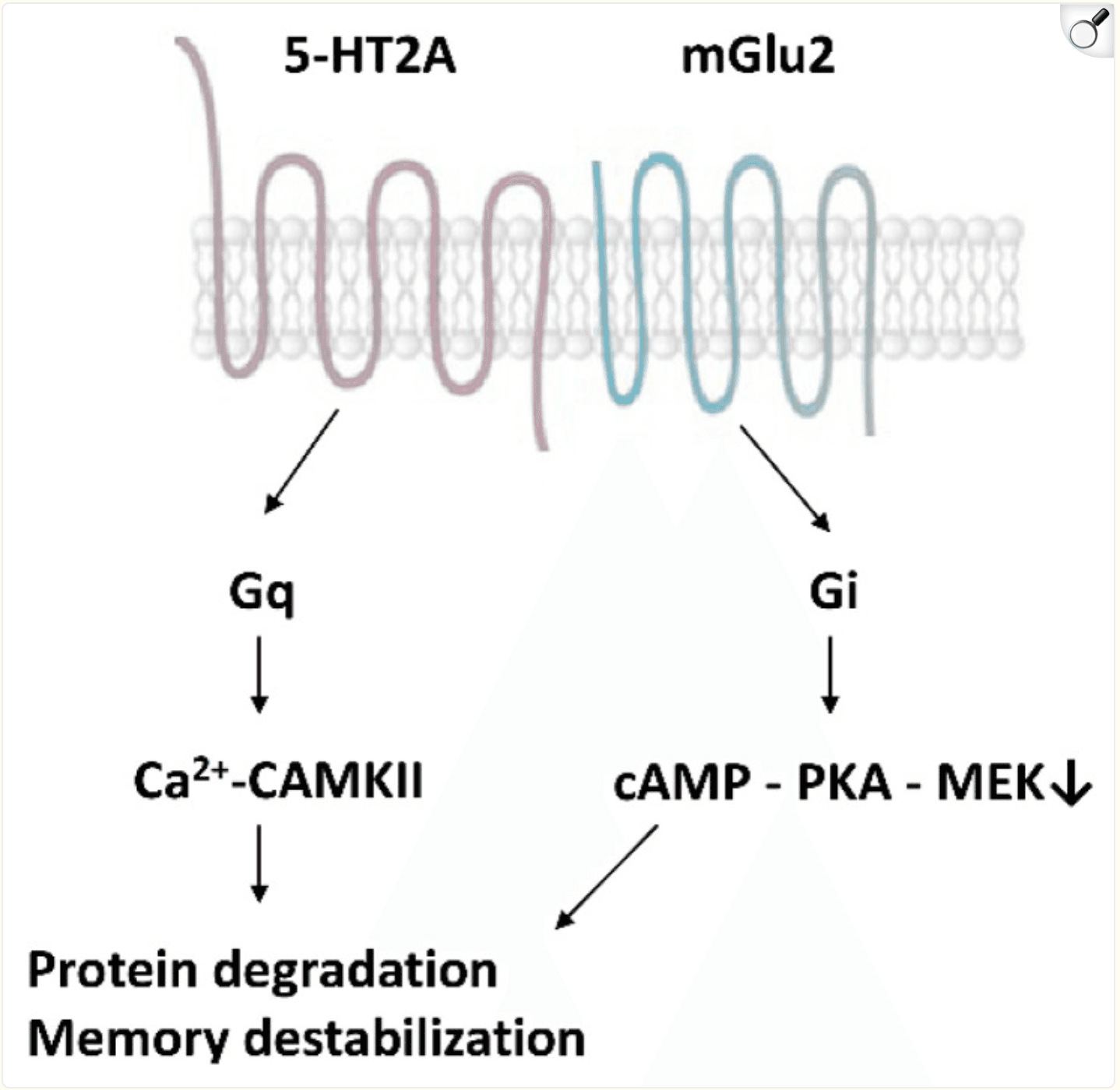
Figure 2

Heterodimers of serotonin (5-HT2A) and glutamate (mGlu2) receptors [53,74].

P70S6K is one of the terminal factors in activating ribosomes, where new proteins are synthesized during synaptic plasticity [83]. Intriguingly, in individuals with PTSD, we found a profoundly decreased expression of the S6 kinase gene, which interacted with the effect of hyperactive cortisol receptors (FKBP5 regulation) on memory, hippocampal structure, and response to cognitive-behavioral therapy [84,85]. Furthermore, the cortisol receptor hypersensitivity tended to normalize during the treatment, whereas p70S6K expression did not exhibit significant changes [84,85].

The other main activating route of the memory reconsolidation molecular pathway is the cAMP-PKA (protein kinase A) and calcium-PKC (protein kinase C) system. Both converge on the MEK (mitogen-activated protein kinase kinase)—ERK kinase (extracellular signal-regulated kinases) cascade resulting in the phosphorylation and activation of the transcription factor CREB (cAMP response element-binding protein) [53,86]. The resulting expression of Zif268, a zinc-finger protein, is a cornerstone of synaptic protein synthesis, hippocampal long-term potentiation, and memory formation [87]. Moreover, Zif268 controls the maturation and assembly of hippocampal neurons into functional networks serving memory engrams [88]. Recently, it has been shown that hippocampal Zif268 is necessary for reconsolidating recognition memory [89]. Psychedelics activate the cAMP-PKA pathway via 5-HT1A receptors, whereas 5-HT2A receptors recruit the calcium-PKC in concert with the NMDA receptors [53].

The second, less known molecular cascade leads to scaffolding protein degradation and memory destabilization (Figure 2). The primary extracellular activator of this pathway is the slow decay GluN2B subunit of the NMDA receptor, acting separately from other receptor subtypes [53,90]. In this pathway, ubiquitin–proteosome degrading synaptic scaffolding proteins are mainly inflected by the calcium/calmodulin-dependent protein kinase II (CAMKII) [91]. It has been demonstrated that proteasome activity is elevated in the amygdala following the retrieval of contextual fear memory, suggesting synaptic protein degradation and engram destabilization. The inhibition of CAMKIII eliminated proteasome activation [91]. According to Milton et al. (2013), there is an intricate molecular balance between the destabilization and restabilization of engrams [92]. The NMDA subunit GluN2B regulates destabilization, whereas the GluN2A subunit performs restabilization [92]. CAMKII directly binds to the GluN2B subunit and regulates synaptic plasticity [93].

Early studies indicated that in rats, MDMA prevented the increased expression of the GluN1 subunit of the NMDA receptor during learning, together with a weak availability of CAMKII in the membrane [94]. Moreover, at the behavioral level, passive avoidance was diminished in the same animal model. There is now abundant evidence that psychedelics acting via 5-HT2A agonism impact CAMKII that also forms a bridge with the ERK—CREB system, and enhances the widespread expression of neuronal plasticity genes in the neocortex and hippocampus, the so-called “rapid psychoplastogenic changes” [95].

We propose that serotonin–glutamate receptor heterodimers, with a particular reference to 5-HT2A- mGlu2, have an intricate role in the mechanism of psychedelics’ action concerning memory modulation. These dimers operate via both Gq and Gi proteins. 5-HT—glutamate activations enhance CAMPKII via Gq proteins, whereas they inhibit cAMP—PKA via Gi proteins. Both mechanisms contribute to the activation of scaffolding protein degradation at the proteasomes and the consequent destabilization of engrams.

8. Conclusions

The success of MDMA-assisted psychotherapy in treating PTSD could be explained by the profound destabilization of retrieved traumatic engrams, and the reconsolidation of newly modified engrams with a more positive emotional valence. This effect requires the coordinated activity of serotonergic and glutamatergic mechanisms, converging on a complex network of intracellular molecular pathways. From an anatomical point of view, these processes impact the functional and microstructural reorganization of a large-scale neuronal network, including various amygdala nuclei, ventromedial and dorsolateral prefrontal cortex, anterior cingulate cortex, and the hippocampal formation. In addition, at the neurocognitive and affective level, attention to threat, associative aversive conditioning, implicit and intentional emotion regulation flexibility, and memory cue–context modulation may all be engaged.

The pharmacological adjustment of engram dynamics opens the door to receiving, processing, and incorporating new information during the psychotherapeutic session, enhancing bonding and the corrective emotional–interpersonal experience. Patients receiving psychedelic-associated therapy often report heightened openness, increased trust toward the therapist, less fear and internal avoidance, and a better ability to extinct, reframe and integrate traumatic memories.

Pharmacological modulation of the brain networks that receive information during psychotherapy is a substantial challenge for the therapeutic community. An adequately controlled and skilled psychological intervention can achieve a remarkable therapeutic effect, whereas inappropriate therapeutic processes increase the likelihood of iatrogenic effects and re-traumatization.

We must bear in mind that the application of psychedelics is not without danger on both the psychological and biological levels. First, although MDMA and other similar substances are considered entactogens and empathogens, promoting positive social emotions, negative feelings may also be experienced, and the mental status of individuals with previous psychiatric history may decline. Second, the robust effect on the endocrine system should be considered. Increased oxytocin levels might promote treatment effects by enhancing trust and cooperation, but increased cortisol and testosterone levels may contribute to the stress response and weakened impulse control. Finally, following the administration of MDMA, during the rebound and recovery phase, users can experience depressive symptoms. However, under controlled clinical conditions, the adverse effects can be minimized. The core conclusion is that: “This highlights the importance for clinicians and therapists to keep to the highest safety and ethical standards. It is imperative not to be overzealous and to ensure balanced media reporting to avoid future controversies, so that much needed research can continue."

Open Article as PDF

Abstract

Individuals with posttraumatic stress disorder (PTSD) experience intrusions of vivid traumatic memories, heightened arousal, and display avoidance behavior. Disorders in identity, emotion regulation, and interpersonal relationships are also common. The cornerstone of PTSD is altered learning, memory, and remembering, regulated by a complex neuronal and molecular network. We propose that the essential feature of successful treatment is the modification of engrams in their unstable state during retrieval. During psychedelic psychotherapy, engrams may show a pronounced instability, which enhances modification. In this narrative review, we outline the clinical characteristics of PTSD, its multifaceted neuroanatomy, and the molecular pathways that regulate memory destabilization and reconsolidation. We propose that psychedelics, acting by serotonin-glutamate interactions, destabilize trauma-related engrams and open the door to change them during psychotherapy.

Introduction

Post-traumatic stress disorder (PTSD) is a complex condition that has been extensively studied in psychiatry. Many individuals who experience repeated severe trauma show temporary or mild PTSD-like symptoms, but only a smaller number receive a full diagnosis. It is important to note that over half of those with PTSD also experience other serious health issues, such as addiction or major physical illnesses. Given the limited success of current treatments, it is crucial to understand the biological and psychological reasons behind PTSD.

This review focuses on how PTSD affects memory. A central idea is that PTSD is a disorder involving how people learn, remember, and recall events. The paper will then explore the brain's role and the chemical processes that control how memories (engrams) are formed and change. It is suggested that psychedelic psychotherapy, which is gaining attention for treating PTSD, works by altering these memory traces and reshaping a person's life story.

The History and Diagnosis of PTSD

The understanding of PTSD goes back to ancient times, with early descriptions of soldiers experiencing mental distress after battle. Historical accounts from various wars, including the Seven Years' War, the American Civil War, and the World Wars, document conditions characterized by fear, anxiety, and physical symptoms among soldiers. These conditions were known by different names, such as "soldiers' heart" or "shell shock."

The Vietnam War was a key event that led to the formal recognition of PTSD as a diagnostic category in 1980 in the Diagnostic and Statistical Manual of Mental Disorders (DSM-III). However, the diagnostic criteria have evolved and remain a subject of discussion, with the DSM-5 introducing new dimensions and subtypes, making the diagnosis quite complex. The International Classification of Diseases (ICD-11) also introduced "complex PTSD," which includes additional symptoms related to identity, relationships, and emotional regulation, leading to moderate agreement between diagnostic systems.

The occurrence of PTSD varies, with about 3.9% of the general population and 5.6% of trauma-exposed individuals experiencing it. This prevalence depends on factors such as the type of trauma, age, sex, economic status, and health before the trauma. While traumatic events are common, most people develop ways to cope and recover.

The development of PTSD is influenced by a combination of genetic factors, socioeconomic status, social support, the trauma itself, and biological changes like inflammation. Genetic predispositions often interact with lower socioeconomic status, which can increase the likelihood of trauma, reduce social support, and contribute to physiological changes that may lead to PTSD.

Clinical Manifestation

According to the DSM-5, individuals with PTSD have either directly experienced or witnessed events involving actual or threatened death, serious injury, or sexual violence. Following such events, they often re-experience the trauma through intrusive memories, flashbacks, and nightmares, accompanied by fear, horror, and strong physical reactions like a racing heart, sweating, and shortness of breath. These intense experiences lead to active and passive avoidance behaviors, such as suppressing thoughts or memories and avoiding places or activities associated with the trauma. Another common symptom is heightened arousal, which includes being overly alert, having sleep problems, and exaggerated startle responses.

The DSM-5 also emphasizes negative changes in thinking and mood, such as difficulty forming memories, negative beliefs about oneself and the world, distorted thoughts that lead to self-blame, and persistent negative emotions like fear, anger, shame, and guilt, along with a loss of interest and positive feelings. Additionally, the DSM-5 notes dissociative symptoms, where individuals may feel detached from their own mental processes (depersonalization) or feel that their surroundings are unreal (derealization).

Complex PTSD, a diagnosis specific to the ICD-11, occurs in individuals who have survived frequent, early, and severe trauma. In addition to the classic PTSD symptoms, individuals with complex PTSD also experience difficulties with their self-identity, challenges in interpersonal relationships, and problems with emotional control, such as emotional numbness or over-reactivity. Recent data suggest that complex PTSD affects 1–8% of the general population and up to 50% of patients in mental health settings.

Learning and Memory in PTSD: From Experiencing to Neuronal Circuits

A key aspect of PTSD involves how individuals learn and remember. Research indicates that those with PTSD are more prone to fear learning, where they associate neutral cues with danger. They also tend to overgeneralize fear to new, safe situations and have difficulty diminishing fearful memories over time, even when negative outcomes do not occur.

By definition, individuals with PTSD experience vivid, emotional, and intrusive memories of traumatic events. However, they may also report problems with attention, an inability to recall specific details of events (dissociative amnesia), and inefficient learning due to avoidance behaviors. The effort to suppress intrusive memories, ruminate, and avoid internal thoughts, combined with impaired attentional control, leads to a reduced specificity of autobiographical memory. This means the distinct time, location, and emotional details of personal experiences become less clear. This "greying out" of autobiographical memory significantly affects social functioning, planning, problem-solving, emotional regulation, and overall quality of life.

The brain regions involved in specific autobiographical memory overlap with those affected in PTSD. The hippocampus and its connections to the cortex (cuneus, precuneus, posterior cingulum) help organize the physical and social details of events in the correct time and place, distinguishing different memory traces (engrams). The medial prefrontal cortex is crucial for self-referential processing and regulating emotional importance, while the dorsal prefrontal cortex handles executive functions, memory retrieval, and the reconstruction of memories.

Large-Scale Neuronal Networks in PTSD

It is important to emphasize that altered learning and memory in PTSD involve a wide network of brain regions, extending beyond the classic fear learning circuit. Sensory information about a traumatic event and related environmental cues first reaches the amygdala before being processed by the cortex. However, neural activity in these areas is relatively brief, and input from the dorsal anterior cingulate cortex is needed to sustain threat-related processing. This area also activates the striatum, which contributes to threat-related actions. Meanwhile, the central amygdala, receiving information from regions involved in associating fear with stimuli, sends signals to the brainstem and hypothalamus, triggering the body's physiological stress responses.

The brain regulates this fear system through several critical networks. The ventromedial prefrontal cortex helps inhibit the amygdala and dorsal anterior cingulate cortex, which is vital for extinction—a process not of forgetting, but of creating new "safety memories" that suppress threat memories.

The hippocampus is essential for placing memories in the correct time and location. For example, a traumatic event from months ago in a distant place should be recognized as such, not experienced as happening in the present. A failure in the hippocampus to properly encode the context of events may explain the intrusive re-experiencing of trauma in PTSD, as well as difficulty encoding new events. Models of hippocampal learning suggest its main role is to link specific cues with their broader context to form detailed event representations. Many memory problems in PTSD, such as inappropriate responses, can stem from poor integration of cues (e.g., injured people) and context (e.g., a city landscape), leading to unclear memories of what, where, and when something occurred.

The hippocampus is a central hub in large brain networks, managing self-referential processing and assigning importance by retrieving autobiographical memories and their emotional content. Individuals with PTSD often show reduced hippocampal volume, poorer performance, and weaker hippocampal activity during tasks involving fear renewal and extinction recall. The hippocampus's functional connection to networks involved in self-reflection and salience is also disrupted, contributing to social difficulties in PTSD.

Patient beliefs and expectations are also linked to hippocampal function. Research combining computational modeling and brain imaging suggests that individuals with PTSD use their beliefs to control hippocampal activity during memory suppression. Furthermore, discrepancies between expectations and actual events (prediction errors) are associated with intrusive thoughts and avoidance behaviors.

The dorsolateral prefrontal executive network is a third key system in PTSD, mediating cognitive control to redirect attention from threat-related cues and thoughts towards positive events. Neurochemical and synaptic changes in PTSD are often opposite in the prefrontal and limbic areas: decreased synaptic connections in the prefrontal cortex due to glutamatergic changes, and increased synaptic connections in the amygdala due to monoaminergic mechanisms. From a network perspective, there is reduced activity in the central executive network (affecting attention and cognition) and the default mode network (related to dissociation and intrusive thoughts), while the salience network (involved in threat detection) shows increased activity.

Recent findings point to epigenetic changes in the prefrontal-amygdala circuit that may lead to the over-consolidation of fear memories in PTSD. Specifically, a decrease in a specific histone methyltransferase in the prefrontal cortex appears to enhance fear expression by strengthening memory consolidation. Genes involved in forming new synapses show increased expression in the prefrontal-basolateral amygdala circuit after these epigenetic changes, which could be a critical factor in altered learning and memory.

Genetic studies have also indicated changes in gene expression within the anterior cingulate-prefrontal system, linked to a general mood-anxiety factor in PTSD. Transcriptomic changes driven by genetics highlighted two genes, DND1P1 and ARL17A, with consistently altered expression in prefrontal, cingulate, cortical, and limbic regions. DND1P1 encodes a protein that affects synaptic plasticity by inhibiting microRNA-mediated gene repression, while ARL17A encodes a protein that regulates neurotransmitter receptors and cellular transport.

In summary, traumatic remembering in PTSD involves multiple factors: heightened associative learning of fear cues, poor encoding of event context, over-generalization and stronger consolidation of fear memories, and weak extinction. Genetic and epigenetic changes, alongside the traumatic event, contribute to the abnormal formation of these fear memories.

Reconsolidation of Fear Memories: A Potential Mechanism of Action for Psychedelic Substances in PTSD

Following many reports on psychedelic-assisted psychotherapy for PTSD, a Phase 3 clinical trial demonstrated the effectiveness of MDMA-assisted psychotherapy. This study found a significant reduction in PTSD symptoms in the MDMA group compared to placebo, indicating a powerful therapeutic effect. While the exact mechanism of psychedelics is not fully understood, one possibility involves the reconsolidation of retrieved memories (engrams), which are dynamic neural networks that store memory traces.

In fear learning, a new memory of a fear-inducing event and its context forms an active engram that solidifies into an inactive memory through interactions between the amygdala, hippocampus, and cortex. When a memory is retrieved, the engram becomes unstable, offering an opportunity for modification through processes like extinction or content reconstruction. The reconsolidation hypothesis suggests that during recall, engrams enter an unstable state, making them susceptible to change through psychological or pharmacological interventions. This modified content then reconsolidates into an altered memory, promoting adaptive behavior instead of fear, intrusive re-experiencing, and avoidance.

In animal models, MDMA administered during the reconsolidation phase reduced conditioned fear, though it did not affect extinction. This suggests that MDMA enhances psychotherapy by modifying the reconsolidation of fear memories in PTSD. Similar effects have been observed with DMT (Ayahuasca), but not psilocybin.

MDMA and other psychedelics have several mechanisms that may counteract PTSD-related changes and significantly influence memory reconsolidation. These substances, including MDMA, psilocybin, and ketamine, have anti-inflammatory effects by reducing cytokine secretion and immune cell activation. This might affect how memories are formed, reconsolidated, and the specificity of autobiographical memories. Elevated inflammation and altered immune responses are key features of PTSD. Animal studies show that a cytokine called TNF-α, when administered to the hippocampus, disrupts contextual fear memory retrieval, reduces freezing responses, and impairs spatial memory reconsolidation. TNF-α also inhibits the reconsolidation of memories in the hippocampus.

Secondly, MDMA rapidly increases levels of cortisol and other hormones, such as oxytocin, and may help reduce the hypersensitivity of cortisol receptors. Inhibiting cortisol synthesis during early morning sleep improves reactivated memories, suggesting that increased stress hormone signals disrupt reconsolidation. Hypersensitivity of the HPA axis is considered a crucial aspect of PTSD. Normalizing cortisol receptor activity might contribute to changes in memory reconsolidation, improved context processing, and changes in hippocampal volume. Research indicates that hydrocortisone, Reconsolidation of Traumatic Memories therapy, and cognitive tasks during memory reactivation are effective in treating PTSD, implying that unstable memories can be modified through both cognitive interventions and by stimulating glucocorticoid receptors.

Reconsolidation of Engrams and the Cellular Mechanism of Psychedelics

Understanding how psychedelics modify memory reconsolidation at the cellular level is crucial for both theoretical and clinical purposes. MDMA is a strong inhibitor of monoamine reuptake, blocking the transporters for serotonin, norepinephrine, and dopamine, and also inhibiting the vesicular monoamine transporter 2 (VMAT-2). This leads to a significant increase in monoamine concentrations in the synapse. At the postsynaptic membrane, MDMA activates serotonin receptors 5-HT1A and 5-HT2A. Activation of 5-HT2A is a common mechanism for serotonergic psychedelics like psilocybin and DMT. LSD acts as a partial agonist on 5-HT2A and a full agonist on 5-HT1A and several dopamine receptors.

Ketamine, an NMDA glutamate receptor antagonist and indirect AMPA glutamate receptor stimulator, has a different primary mechanism, but sigma receptors may connect its action with serotonergic psychedelics. Sigma receptors are abundant cell surface proteins with diverse effects. Sigma-1 receptors, when stimulated by DMT, modulate NMDA-mediated synaptic plasticity via a calcium-dependent potassium channel. DMT-sigma 1 activation blocks sodium currents in neurons, increases mobility in mice, and may contribute to neuroprotection, plasticity, and inflammation modulation. Interestingly, MDMA also activates sigma-1 receptors, producing similar behavioral effects to DMT in animal models. This suggests a cooperative action between serotonergic and dissociative psychedelics at the cellular level, which is highly relevant to PTSD.

These molecular mechanisms are linked to memory modulation through two main intracellular pathways. The first, for memory reconsolidation, involves synthesizing new proteins and structural changes at synapses. The second, for memory destabilization during retrieval, involves the degradation of scaffolding proteins by proteasomes. The reconsolidation pathway is primarily activated by the PI3K-mTOR-p70S6K pathway and the Wnt/beta-catenin system. Both metabotropic glutamate and 5-HT2A receptors activate PI3K.

Moreover, 5-HT2A receptors can form dimers with type 2 metabotropic glutamate receptors (mGlu2), as well as with other G-protein coupled receptors. When 5-HT2A is stimulated by psychedelics, this serotonin-glutamate receptor complex leads to the phosphorylation of the mGlu2 receptor. This interaction between serotonin and glutamate systems directly boosts the synthesis of new proteins at synapses and enhances memory reconsolidation.

P70S6K is a final factor in activating ribosomes, where new proteins are synthesized during synaptic plasticity. Intriguingly, individuals with PTSD show a significantly decreased expression of the S6 kinase gene, which interacted with the effects of overactive cortisol receptors on memory, hippocampal structure, and response to therapy. While cortisol receptor hypersensitivity tended to normalize with treatment, p70S6K expression did not change significantly.

Another major pathway activating memory reconsolidation is the cAMP-PKA and calcium-PKC system. Both converge on the MEK-ERK cascade, leading to the activation of the transcription factor CREB. The resulting expression of Zif268, a zinc-finger protein, is fundamental for synaptic protein synthesis, long-term potentiation in the hippocampus, and memory formation. Zif268 also controls the maturation of hippocampal neurons into functional memory networks. Recent research shows that hippocampal Zif268 is necessary for reconsolidating recognition memory. Psychedelics activate the cAMP-PKA pathway via 5-HT1A receptors, while 5-HT2A receptors recruit the calcium-PKC system in conjunction with NMDA receptors.

The second, less understood molecular cascade leads to the degradation of scaffolding proteins and memory destabilization. The primary activator of this pathway is the slow-decay GluN2B subunit of the NMDA receptor. In this pathway, ubiquitin–proteasome systems degrade synaptic scaffolding proteins, mainly influenced by calcium/calmodulin-dependent protein kinase II (CAMKII). Proteasome activity is elevated in the amygdala after contextual fear memory retrieval, suggesting synaptic protein degradation and memory destabilization. Inhibiting CAMKIII eliminated proteasome activation. There is a complex molecular balance between the destabilization and re-stabilization of memories, with the NMDA subunit GluN2B regulating destabilization and GluN2A performing re-stabilization. CAMKII directly binds to the GluN2B subunit and regulates synaptic plasticity.

Early studies showed that in rats, MDMA prevented increased expression of the GluN1 subunit of the NMDA receptor during learning and reduced CAMKII availability in the membrane, also diminishing passive avoidance behavior. There is now extensive evidence that psychedelics, through 5-HT2A agonism, impact CAMKII, link with the ERK-CREB system, and enhance the widespread expression of neuronal plasticity genes in the neocortex and hippocampus, leading to "rapid psychoplastogenic changes."

It is proposed that serotonin–glutamate receptor heterodimers, especially 5-HT2A-mGlu2, play a complex role in how psychedelics modulate memory. These dimers operate via both Gq and Gi proteins. Serotonin-glutamate activations enhance CAMKII through Gq proteins while inhibiting cAMP-PKA through Gi proteins. Both mechanisms contribute to the degradation of scaffolding proteins at proteasomes and the subsequent destabilization of memories.

Conclusions

The success of MDMA-assisted psychotherapy for PTSD can be attributed to the deep destabilization of retrieved traumatic memories, followed by the reconsolidation of newly modified memories with a more positive emotional tone. This process requires the coordinated action of serotonergic and glutamaterergic systems, converging on complex intracellular molecular pathways. Anatomically, these processes lead to functional and structural reorganization in a broad network of brain regions, including various amygdala nuclei, the ventromedial and dorsolateral prefrontal cortex, the anterior cingulate cortex, and the hippocampus. At a neurocognitive and emotional level, this may involve changes in attention to threat, associative fear conditioning, flexibility in emotional regulation, and how memories are linked to their cues and contexts.

The ability to pharmacologically adjust memory dynamics creates an opportunity to receive, process, and integrate new information during psychotherapy, fostering stronger bonds and a corrective emotional and interpersonal experience. Patients undergoing psychedelic-assisted therapy often report increased openness, greater trust in the therapist, less fear and internal avoidance, and an improved capacity to extinguish, reframe, and integrate traumatic memories.

Managing the pharmacological modulation of brain networks during psychotherapy is a significant challenge for healthcare professionals. Properly controlled and skilled psychological intervention can achieve remarkable therapeutic effects, whereas inadequate therapeutic processes risk adverse outcomes and re-traumatization.

It is crucial to remember that using psychedelics carries psychological and biological risks. While MDMA and similar substances are known to promote positive social emotions, negative feelings can also occur, and mental health may worsen in individuals with prior psychiatric conditions. The strong effects on the endocrine system must also be considered. Increased oxytocin levels may enhance treatment effects by promoting trust, but elevated cortisol and testosterone levels could contribute to stress responses and impaired impulse control. Furthermore, users may experience depressive symptoms during the rebound phase after MDMA administration. However, under controlled clinical settings, adverse effects can be minimized. The key takeaway is that clinicians and therapists must uphold the highest safety and ethical standards. It is essential to avoid excessive enthusiasm and ensure balanced media reporting to prevent future controversies, allowing much-needed research to continue.

Open Article as PDF

Abstract

Individuals with posttraumatic stress disorder (PTSD) experience intrusions of vivid traumatic memories, heightened arousal, and display avoidance behavior. Disorders in identity, emotion regulation, and interpersonal relationships are also common. The cornerstone of PTSD is altered learning, memory, and remembering, regulated by a complex neuronal and molecular network. We propose that the essential feature of successful treatment is the modification of engrams in their unstable state during retrieval. During psychedelic psychotherapy, engrams may show a pronounced instability, which enhances modification. In this narrative review, we outline the clinical characteristics of PTSD, its multifaceted neuroanatomy, and the molecular pathways that regulate memory destabilization and reconsolidation. We propose that psychedelics, acting by serotonin-glutamate interactions, destabilize trauma-related engrams and open the door to change them during psychotherapy.

Introduction

Posttraumatic stress disorder (PTSD) is a significant area of research in modern psychiatry. Many individuals who experience repeated and severe trauma show symptoms similar to PTSD, but a full diagnosis is given to a smaller group. More than half of those diagnosed with PTSD also experience other serious health issues, such as addiction or major physical illnesses. Given that current treatments have limited success, understanding the biological and psychological basis of PTSD is crucial.

This review focuses on how memory changes in people with PTSD, presenting the idea that PTSD is a disorder affecting learning, memory, and the act of remembering. The discussion then explores the brain structures and molecular processes that control how memories, or "engrams," become unstable and then solidify. A key argument is that psychedelic psychotherapy, which is gaining attention for treating PTSD, works by changing these engrams and reorganizing a person's life story memories.

The History and Diagnosis of PTSD

The understanding of PTSD has a long history, with early descriptions dating back to ancient Greece. For example, Herodotus wrote about a soldier who experienced dissociative blindness after combat. In later centuries, particularly during major wars, similar conditions were described, such as "soldiers' heart" during the American Civil War and "shell shock" during World War I, with symptoms like anxiety, dizziness, tremors, and heightened sensory sensitivity.

The Vietnam War played a critical role in formally recognizing PTSD. This led to its inclusion as a diagnostic category in the Diagnostic and Statistical Manual of Mental Disorders (DSM-III) in 1980. The latest version, DSM-5, introduced new dimensions like "negative alterations in mood and cognition" and a dissociative subtype, leading to a large number of possible symptom combinations for diagnosis. The International Classification of Diseases (ICD-11) also introduced "complex PTSD," which includes additional symptoms related to identity, relationships, and emotional regulation, a category not present in DSM-5. These differences highlight the ongoing challenges in diagnostic agreement.

The occurrence of PTSD varies, with a global lifetime prevalence of about 3.9% in the general population and 5.6% among those exposed to trauma. This prevalence is influenced by factors like the type and number of traumatic events, age, gender, socioeconomic status, and health before the trauma. While traumatic events are common, most people develop coping mechanisms and resilience.

The interplay of genetic predisposition, socioeconomic status, social support, trauma, and physiological changes (like low-grade inflammation) in PTSD is complex. It appears that multiple genetic factors correlate with lower socioeconomic status, which can increase the likelihood of trauma, reduce social support, lead to physiological changes, and contribute to the development of PTSD.

Clinical Manifestation

According to DSM-5, individuals with PTSD have either directly experienced or witnessed events involving actual or threatened death, serious injury, or sexual violence. Afterward, they re-experience the traumatic event through vivid, intrusive memories, flashbacks, and nightmares, often accompanied by intense fear, horror, and physical reactions like a racing heart, sweating, and shortness of breath. These intrusive experiences lead to various forms of avoidance, such as suppressing thoughts and memories or staying away from places and activities that remind them of the trauma. A third common symptom of PTSD is heightened arousal, including being overly watchful, having sleep problems, and exaggerated startle responses.

The DSM-5 also emphasizes negative changes in thinking and mood. These include difficulties with memory formation, negative beliefs and expectations, distorted thoughts that lead to excessive blame or feelings of threat, and negative emotions such as fear, anger, shame, guilt, a loss of interest, and a lack of positive feelings. Additionally, the DSM-5 notes dissociative symptoms, where a person may feel detached from their own mental processes (depersonalization) or feel that their surroundings are unreal (derealization).

Complex PTSD, a diagnosis found only in ICD-11, occurs in individuals who have experienced frequent, early, and severe trauma. Beyond the typical PTSD symptoms, people with complex PTSD also show problems with their self-concept (e.g., low self-esteem), difficulty regulating emotions (either emotional numbness or over-reactivity), and challenges in interpersonal relationships. Recent data suggest that complex PTSD affects 1–8% of the general population, and up to 50% of patients in mental health settings may receive this diagnosis.

Learning and Memory in PTSD: From Experiencing to Neuronal Circuits

A key aspect of PTSD involves how individuals learn and remember. Extensive research indicates that those with PTSD are more prone to fear learning, where they overly generalize fearful memories to neutral situations, such as expecting danger in a peaceful environment. They also have difficulty with extinction, which is the process of reducing fearful memories over time when there are no negative outcomes.

By definition, people with PTSD experience vivid, emotional, and intrusive memories of their trauma. However, they often report poor attention, difficulty recalling specific details of events (dissociative amnesia), and problems with learning due to subconscious avoidance. The struggle with intrusive memories, rumination, internal avoidance, and poor attentional control leads to a reduced specificity of autobiographical memory. This means the distinct time, location, and unique emotional or social characteristics of personal memories become less clear. This "graying out" of autobiographical memory significantly affects social functioning, planning, problem-solving, emotional regulation, and overall quality of life.

Interestingly, there is a clear overlap between the brain areas involved in specific autobiographical memory and PTSD. The hippocampus and its connections to areas like the cuneus, precuneus, and posterior cingulum help to organize the physical and social details of events within a proper space-time context by creating distinct memory traces (engrams). The medial prefrontal cortex is crucial for processing self-related information and regulating emotional importance. The dorsal prefrontal cortex supports executive functions, memory retrieval, and the reconstruction of engrams.

Large-Scale Neuronal Networks in PTSD

A broad network of brain regions, extending beyond the typical fear learning circuit, influences changes in learning and memory in PTSD. Sensory information about threatening and associated neutral stimuli first reaches the lateral and basal parts of the amygdala before being processed by the cortex. However, neural activity in these areas is relatively short-lived; input from the dorsal anterior cingulate cortex is needed to sustain threat-related information processing. This dorsal anterior cingulate cortex also activates the striatum, which is involved in threat-related actions. Conversely, the central nucleus of the amygdala, which receives information from areas involved in associating threatening and neutral stimuli, sends signals to brainstem and hypothalamic centers, triggering physiological responses related to trauma and stress.

The brain regulates this fear system through three important networks. First, the ventromedial prefrontal cortex inhibits the amygdala and the dorsal anterior cingulate cortex. This inhibition is crucial for extinction, which involves forming new "safety memories" that can suppress threat memories, rather than simply forgetting.

Second, the hippocampus is essential for establishing and maintaining the correct time and location context for memories. For example, a traumatic event from months ago in a distant place should be remembered in that context, not as if it is happening in the present. The hippocampus's failure to correctly encode this space-time context, along with problems in encoding new events, may explain the intrusive re-experiencing of traumatic episodes in PTSD. Models of hippocampus-dependent learning highlight its role in linking specific cues with broader contexts to create detailed event representations. Many memory problems in PTSD arise from impaired integration of cues (e.g., injured people) and context (e.g., a city landscape), leading to unclear memories of what, where, and when something happened. The hippocampus is a central hub in large brain networks, crucial for self-related processing and assigning importance to autobiographical memories and their emotional content. In individuals with PTSD, decreased hippocampal volume and reduced activity are often observed during tasks involving fear renewal and extinction recall. Furthermore, the hippocampus's integration into other brain networks is disrupted, contributing to social difficulties in PTSD.

Patient beliefs and expectations are also linked to hippocampal function. Research suggests that those with PTSD use their beliefs to control hippocampal activity during memory suppression. Additionally, discrepancies between expectations and actual events (prediction errors) are associated with unwanted intrusive thoughts and avoidance behaviors.

Third, the dorsolateral prefrontal executive network helps with cognitive control, redirecting attention from threatening cues and thoughts to more positive and relevant events. In this network, neurochemical and synaptic changes are opposite in the prefrontal and limbic areas: the prefrontal cortex shows decreased synaptic connections due to changes in glutamate, while the amygdala exhibits increased synaptic plasticity and connectivity due to monoamines. From a broader perspective, individuals with PTSD show reduced activity and connectivity in the central executive network (affecting attention and cognition) and the default mode network (related to dissociation, avoidance, and intrusive thoughts). In contrast, there is increased activity and connectivity in the salience network, leading to heightened threat detection and impaired regulation of the other two networks.

Recent findings point to epigenetic changes in the prefrontal-amygdala circuit that may lead to an excessive strengthening of fear memories in PTSD. Specifically, a reduction in a histone methyltransferase in the prefrontal cortex increases fear expression by enhancing memory consolidation. Genes involved in forming new synapses show increased expression in this circuit after epigenetic changes, which could be a key factor in altered learning and memory.

Studies of the entire human genome also indicate altered gene expression in the anterior cingulate-prefrontal system, linked to a general mood-anxiety-neuroticism factor in PTSD. Genetically regulated changes in gene activity identified two genes, DND1P1 and ARL17A, with consistently altered expression in prefrontal, cingulate, cortical, and limbic regions. DND1P1 codes for a protein that influences how microRNAs control gene expression, potentially affecting synaptic plasticity. ARL17A encodes a protein that regulates various neurotransmitter receptors and cellular transport.

In summary, traumatic remembering involves several factors: heightened associative learning of fear-related cues, poor encoding of space and time context, over-generalization and stronger consolidation of fear memories, and weak extinction. Alongside the traumatic event itself, genetic and epigenetic factors contribute to the abnormal formation of fear memories.

Reconsolidation of Fear Memories: A Potential Mechanism of Action for Psychedelic Substances in PTSD

Following many unofficial reports about psychedelic-assisted psychotherapy for PTSD, a randomized, double-blind, placebo-controlled study showed the effectiveness of MDMA-assisted psychotherapy. The study, involving 90 patients with severe PTSD, found a significant reduction in PTSD symptoms in the MDMA group compared to the placebo group, with a notably large effect. The researchers concluded that MDMA-assisted therapy could be a breakthrough treatment for severe PTSD with multiple co-occurring conditions. However, the exact mechanism behind the powerful therapeutic effect of psychedelics is not fully understood. One potential explanation lies in the reconsolidation of retrieved memory traces, known as engrams, which are dynamic networks of neurons.

In fear learning, a new engram forms, connecting a fearful stimulus (e.g., an explosion) with its context (e.g., the location and people present). This active engram then solidifies into an inactive one through interactions between the amygdala, hippocampus, and cortex. When this engram is retrieved, it becomes unstable, offering an opportunity to modify it, for instance, through extinction or by restructuring its content. The core idea of the reconsolidation hypothesis is that during remembering, engrams enter an unstable state. This allows for psychological and pharmacological changes to the engram. The modified content then reconsolidates into an altered engram that supports adaptive behavior, replacing fear, intrusive re-experiencing, and avoidance. In simpler terms, this process is sometimes described as "erasing" or "creating" memories.

Animal studies have shown that MDMA, when given specifically during the memory reconsolidation phase, reduced conditioned fear. However, MDMA did not affect memory extinction. Researchers suggest that MDMA enhances psychotherapy by altering the reconsolidation of fear memories in PTSD. Similar effects have been observed with another psychedelic, N,N-dimethyltryptamine (DMT, Ayahuasca), but not with psilocybin.

MDMA and other psychedelic drugs have several mechanisms that may counteract the changes seen in PTSD and significantly impact memory reconsolidation. MDMA, psilocybin, and ketamine have immunosuppressive and anti-inflammatory properties, reducing the release of signaling molecules (cytokines) and immune cell activation. These effects could influence memory formation, reconsolidation, and the specificity of autobiographical memories. Increased inflammation and altered immune responses are key characteristics of PTSD, reflecting an evolutionary response to threat. Animal studies indicate that administering Tumor Necrosis Factor-α (TNFα), an inflammatory cytokine, into the dorsal hippocampus disrupted the retrieval of fear memory, reduced freezing behaviors, and impaired the retrieval and reconsolidation of spatial memory. TNFα also inhibited the expression of a gene involved in neuronal activity, suggesting that it prevents the reconsolidation of engrams in the hippocampus.

Second, MDMA rapidly releases cortisol and other hormones, like oxytocin, and may help reduce the sensitivity of cortisol receptors. Inhibiting cortisol production during early morning sleep improves reactivated memories, suggesting that increased stress hormone signals disrupt reconsolidation. Hypersensitivity of the stress response system (hypothalamic-pituitary-adrenal or HPA axis) is believed to be a crucial feature of PTSD. Normalizing this cortisol receptor hyperactivity could contribute to changes in memory reconsolidation, improved context processing, and changes in hippocampal volume. Research suggests that treatments like hydrocortisone, Reconsolidation of Traumatic Memories therapy, and cognitive tasks during memory reactivation are effective for PTSD. This indicates that unstable engrams can be modified through cognitive interventions (like distraction and sensory interference) and by stimulating glucocorticoid receptors.

Reconsolidation of Engrams and the Cellular Mechanism of Psychedelics

From a scientific and clinical standpoint, understanding how psychedelics and similar substances modify engram reconsolidation at the cellular level is crucial. MDMA is a strong inhibitor of monoamine reuptake, blocking the transporters for serotonin, norepinephrine, and dopamine at the presynaptic terminal. It also inhibits the vesicular monoamine transporter type 2 (VMAT-2), leading to a significant increase in monoamine concentrations in the synapse. On the postsynaptic membrane, MDMA activates serotonin receptors 5-HT1A and 5-HT2A. Activation of the 5-HT2A receptor is a common mechanism for serotonergic psychedelics like psilocybin and Ayahuasca. Lysergic acid diethylamide (LSD) is a partial agonist at 5-HT2A but a full agonist at 5-HT1A and several dopamine receptors.

Although ketamine, which blocks N-methyl-D-aspartate (NMDA) glutamate receptors and indirectly stimulates α-amino-3-hydroxy-5-methyl-4-isoxazolepropionic acid (AMPA) glutamate receptors, has a different mechanism, the sigma receptor may link it with serotonergic psychedelics. Sigma receptors are abundant cell surface proteins with diverse effects on neural and peripheral tissues. Sigma-1 receptors modulate NMDA-related synaptic plasticity through a calcium-dependent potassium channel when activated by serotonin-related DMT. DMT-sigma 1 activation blocks sodium currents in neurons, causes increased movement in mice, and may contribute to various effects including neuronal protection, plasticity, and immune modulation. MDMA also activates sigma-1 receptors, producing similar behavioral effects to DMT in animal models. This suggests that serotonergic and dissociative psychedelics work together at the cellular level, which is highly relevant in PTSD.

How do these molecular mechanisms relate to memory modulation? There are two main intracellular pathways. The first is for memory reconsolidation, involving the creation of new proteins and changes in synaptic structure. The second pathway leads to memory destabilization during retrieval, which involves the breakdown of scaffolding proteins by proteasomes. The memory reconsolidation pathway is primarily activated by the PI3K-mTOR-p70S6K pathway and the Wnt/beta-catenin system. Both metabotropic glutamate and 5-HT2A receptors activate PI3K.

Furthermore, 5-HT2A receptors form pairs (dimers) with type 2 metabotropic glutamate receptors (mGlu2) and other G-protein coupled receptors. When 5-HT2A is stimulated by psychedelics, this serotonin-glutamate receptor complex causes the mGlu2 receptor to be modified (phosphorylated). This interaction between serotonin and glutamate systems directly boosts the creation of new proteins at synapses and enhances memory reconsolidation.

P70S6K is a key factor in activating ribosomes, where new proteins are made during synaptic plasticity. Interestingly, in people with PTSD, there is a significantly reduced expression of the S6 kinase gene, which interacts with the effects of overactive cortisol receptors on memory, hippocampal structure, and response to therapy. While cortisol receptor hypersensitivity tended to normalize during treatment, p70S6K expression did not show significant changes.

The other major pathway activating molecular memory reconsolidation involves the cAMP-PKA and calcium-PKC systems. Both converge on the MEK-ERK cascade, leading to the activation of the transcription factor CREB. This results in the expression of Zif268, a protein crucial for synaptic protein synthesis, long-term potentiation in the hippocampus, and memory formation. Zif268 also controls the development of hippocampal neurons into functional memory networks. Recent studies show that hippocampal Zif268 is necessary for the reconsolidation of recognition memory. Psychedelics activate the cAMP-PKA pathway via 5-HT1A receptors, while 5-HT2A receptors, in conjunction with NMDA receptors, activate the calcium-PKC pathway.

A second, less understood molecular cascade causes the breakdown of scaffolding proteins and memory destabilization. The main trigger for this pathway from outside the cell is the slow-decay GluN2B subunit of the NMDA receptor, acting independently of other receptor subtypes. In this pathway, the ubiquitin–proteasome system, which degrades synaptic scaffolding proteins, is largely influenced by calcium/calmodulin-dependent protein kinase II (CAMKII). Proteasome activity is elevated in the amygdala after the retrieval of contextual fear memory, suggesting the degradation of synaptic proteins and destabilization of engrams. Inhibiting CAMKIII eliminated proteasome activation. There is a complex molecular balance between the destabilization and re-stabilization of engrams, with the NMDA subunit GluN2B regulating destabilization and GluN2A performing re-stabilization. CAMKII directly binds to the GluN2B subunit and regulates synaptic plasticity.

Early studies in rats indicated that MDMA prevented the increased expression of the GluN1 subunit of the NMDA receptor during learning and reduced CAMKII availability in the membrane. Behaviorally, passive avoidance was reduced in the same animal model. There is now considerable evidence that psychedelics, through 5-HT2A agonism, impact CAMKII, which also connects with the ERK-CREB system, and enhance widespread expression of neuronal plasticity genes in the neocortex and hippocampus, leading to "rapid psychoplastogenic changes."

It is suggested that serotonin–glutamate receptor heterodimers, especially the 5-HT2A-mGlu2 pair, play a complex role in how psychedelics affect memory. These dimers operate through both Gq and Gi proteins. Serotonin-glutamate activations increase CAMKII via Gq proteins while inhibiting cAMP-PKA via Gi proteins. Both mechanisms contribute to the degradation of scaffolding proteins at the proteasomes and the subsequent destabilization of engrams.

Conclusions

The success of MDMA-assisted psychotherapy for PTSD may be due to its ability to deeply destabilize retrieved traumatic memories (engrams) and then allow these memories to reconsolidate with a more positive emotional meaning. This process requires the combined action of serotonin and glutamate systems, which influence a complex network of molecular pathways within cells. From a brain structure perspective, these processes lead to functional and structural reorganization across a large network of brain regions, including different parts of the amygdala, prefrontal cortex, anterior cingulate cortex, and the hippocampus. At the mental and emotional level, this treatment can affect attention to threat, fear learning, how emotions are regulated, and how memories are linked to their context.

Adjusting how the brain's memory networks function during psychotherapy offers a significant opportunity for treatment. This allows for receiving, processing, and integrating new information during therapy sessions, strengthening the therapeutic bond and leading to positive emotional and interpersonal experiences. Patients who receive psychedelic-assisted therapy often report increased openness, greater trust in their therapist, less fear and internal avoidance, and an improved ability to overcome, reframe, and integrate traumatic memories.

However, the pharmacological modification of brain networks during psychotherapy presents a considerable challenge for the therapeutic community. While properly controlled and skilled psychological intervention can achieve remarkable therapeutic effects, inappropriate therapeutic processes increase the risk of harm and re-traumatization.

It is important to remember that using psychedelics carries both psychological and biological risks. While MDMA and similar substances are known for promoting positive social emotions, negative feelings can also arise, and the mental state of individuals with a history of psychiatric conditions may worsen. Furthermore, the strong effects on the endocrine system must be considered. While increased oxytocin levels might enhance treatment by promoting trust and cooperation, elevated cortisol and testosterone levels could contribute to stress responses and reduced impulse control. Finally, after MDMA administration, individuals may experience depressive symptoms during the rebound and recovery phase. However, under controlled clinical conditions, adverse effects can be minimized. The main conclusion is that clinicians and therapists must maintain the highest safety and ethical standards. It is crucial to avoid overzealous approaches and ensure balanced media reporting to prevent future controversies, allowing much-needed research to continue.

Open Article as PDF

Abstract

Individuals with posttraumatic stress disorder (PTSD) experience intrusions of vivid traumatic memories, heightened arousal, and display avoidance behavior. Disorders in identity, emotion regulation, and interpersonal relationships are also common. The cornerstone of PTSD is altered learning, memory, and remembering, regulated by a complex neuronal and molecular network. We propose that the essential feature of successful treatment is the modification of engrams in their unstable state during retrieval. During psychedelic psychotherapy, engrams may show a pronounced instability, which enhances modification. In this narrative review, we outline the clinical characteristics of PTSD, its multifaceted neuroanatomy, and the molecular pathways that regulate memory destabilization and reconsolidation. We propose that psychedelics, acting by serotonin-glutamate interactions, destabilize trauma-related engrams and open the door to change them during psychotherapy.

Introduction

Posttraumatic stress disorder (PTSD) is a complex mental health condition that researchers and medical professionals continue to study. Many people who experience severe and repeated trauma develop temporary or mild PTSD-like symptoms. However, only a smaller group of affected individuals receive a full diagnosis. More than half of those with PTSD also experience other serious health problems, such as addictions or major physical illnesses. Since current treatments have limited success, understanding the biological causes of PTSD is very important.

This review focuses on how PTSD changes memory. The main idea is that PTSD is a disorder affecting how people learn, remember, and recall events. The discussion will explore the brain's role and the chemical processes that control how memory traces, called engrams, become unstable and then solidify. A key point is that psychedelic therapy, which is gaining attention for treating PTSD, appears to work by changing these engrams and reorganizing a person's life memories.

The History and Diagnosis of PTSD

The understanding of PTSD goes back centuries, with early descriptions of soldiers experiencing mental distress from combat. Over time, similar conditions were noted in different wars, known by terms like "soldiers' heart" or "shell shock," with symptoms including anxiety, dizziness, tremors, and heightened sensitivity.

The Vietnam War was a crucial period that led to the official recognition of PTSD in the medical community in 1980. However, even with updates to diagnostic manuals, diagnosing PTSD can be complicated due to many possible symptom combinations. The International Classification of Diseases (ICD-11) also introduced "complex PTSD," which includes problems with identity, relationships, and emotional regulation, unlike the criteria in some other diagnostic guides. This difference in definitions means that diagnostic systems do not always agree perfectly.

The number of people with PTSD varies, depending on factors like the type of trauma, age, gender, social status, and health before the trauma. While many people experience traumatic events, most individuals have ways to cope and recover from severe stressful life events without developing PTSD.

The development of PTSD is influenced by a complex mix of genetic factors (with about 30-40% of cases having a genetic link), social and economic status, social support, the trauma itself, and physical changes like low-grade inflammation. It seems that genetic predispositions can be linked to lower social and economic status, which then increases the chances of experiencing trauma, lacking social support, having physical changes, and ultimately developing PTSD.

Clinical Manifestation

According to current diagnostic criteria, individuals with PTSD have either directly experienced or witnessed a traumatic event involving actual or threatened death, serious injury, or sexual violence. Later, they re-experience the trauma through vivid, emotional, and intrusive memories, flashbacks, and nightmares, often accompanied by strong fear, horror, and physical reactions like a racing heart, sweating, and shortness of breath. These intense experiences lead to various ways of avoiding reminders of the trauma, such as trying to suppress thoughts and memories or staying away from places and activities that bring the event to mind. A third key symptom of PTSD is increased alertness, including being overly watchful, having trouble sleeping, and an exaggerated startle response.

Diagnostic criteria also emphasize negative changes in thoughts and mood. These include problems with memory formation, negative beliefs about oneself and the world, distorted thoughts that lead to excessive blame or feelings of threat, and negative emotions such as fear, anger, shame, and guilt. People may also lose interest in activities and struggle to feel positive emotions. Additionally, some individuals with PTSD may experience dissociative symptoms, like feeling detached from their own mind or body (depersonalization) or feeling that their surroundings are unreal (derealization).

Complex PTSD, a diagnosis found in the ICD-11, occurs in individuals who have survived frequent, prolonged, and severe trauma, often starting early in life. Beyond the typical PTSD symptoms, individuals with complex PTSD also show problems with their self-identity (such as low self-esteem or difficulty accepting themselves), trouble regulating their emotions (either feeling numb or overly reactive), and difficulties in relationships. Recent data suggest that between 1% and 8% of the general population may have complex PTSD, and this number can be as high as 50% in mental health treatment settings.

Learning and Memory in PTSD: From Experiencing to Neuronal Circuits

The way individuals with PTSD learn and remember is very important. Much research shows that those with PTSD are more likely to develop fear responses through learning, tend to apply fear memories to situations that are not actually dangerous, and have difficulty reducing these fear memories over time, even when there are no negative consequences.

By definition, people with PTSD have clear, emotional, and intrusive memories of their trauma. However, they often report poor attention, an inability to remember specific details of events (known as dissociative amnesia), and inefficient learning due to unconscious avoidance behaviors. The constant struggle with intrusive memories, repetitive negative thoughts, internal avoidance, and poor attentional control leads to less specific autobiographical memories. This means the distinct time, place, and unique emotional or social details of their memories of places, people, and events become blurred. This lack of clear autobiographical memory significantly impacts social functioning, planning, problem-solving, emotion regulation, and overall quality of life.

Interestingly, the brain areas involved in specific autobiographical memory overlap with those affected by PTSD. The hippocampus and its connections to other brain regions play a role in organizing the details of personal and social events within the correct time and place, helping to create distinct memory traces or engrams. The medial prefrontal cortex is important for self-awareness and managing emotional relevance. The dorsal prefrontal cortex handles executive functions, memory retrieval, and the reconstruction of engrams.

Large-Scale Neuronal Networks in PTSD

It is crucial to understand that changes in learning and memory in PTSD involve a wide network of brain areas, not just the known fear circuit. When a traumatic event and its associated cues (like sights or sounds) occur, sensory information first reaches parts of the amygdala before being processed by the outer brain layers. However, brain activity in these areas is relatively short-lived. Sustained processing of threat-related information requires input from the dorsal anterior cingulate cortex, which also activates the striatum in the basal ganglia, contributing to threat-related actions. Meanwhile, the central nucleus of the amygdala, which receives information from other amygdala regions involved in linking fearful and neutral stimuli, sends signals to the brainstem and hypothalamus. These signals trigger the physical responses related to trauma and stress.

The brain has three important networks that help control and balance the fear response from the cingulate-amygdala system. First, the ventromedial prefrontal cortex reduces activity in the amygdala and dorsal anterior cingulate cortex. This is vital for the process of extinction, where new memories of safety are formed, which then suppress memories of threat.

Second, the hippocampal formation is essential for placing memories in the correct time and location. For instance, a traumatic event from months ago in a distant city should be remembered as such, not as if it is happening right now. A failure of the hippocampus to correctly encode this time and place context is a possible reason for the intrusive re-experiencing of traumatic events in PTSD, along with difficulty forming new memories.

General models of learning linked to the hippocampus focus on how cues and contexts are connected. In these models, the hippocampus's main role in learning is to link specific cues (like injured people) with the broader environment (like a city landscape) to form a detailed memory of an event. Many memory problems in PTSD can be traced to a failure in connecting these cues and contexts, leading to inaccurate memories of what, where, and when something happened.

The hippocampal formation is a central part of large brain networks. It helps with self-referential processing and determining the importance of things by bringing up autobiographical memories and their emotional content, which involves a complex structure of cues and contexts. In addition to a smaller hippocampal volume, individuals with PTSD often perform poorly and show less hippocampal activity during tasks that involve recalling fear and extinction. Furthermore, the way the hippocampus integrates into default mode and salience networks is disrupted, contributing to higher-level social problems in PTSD.

Individuals' beliefs and expectations are also linked to how the hippocampus functions. Studies using brain imaging and computer models suggest that those with PTSD use their beliefs to control hippocampal activity when trying to suppress memories. Moreover, differences between expectations and actual events were linked to unwanted intrusive thoughts and avoidance behaviors.

The third important system in PTSD is the executive network in the dorsolateral prefrontal cortex. This network helps control thinking and attention, allowing individuals to shift focus from threatening cues and thoughts to more positive and important events. In this area, chemical changes in the brain lead to weaker connections between brain cells, while in the amygdala, other chemical processes cause an increase in connections. From a broader brain network perspective, there is reduced activity and connectivity in the central executive network (affecting attention and cognitive abilities) and the default mode network (contributing to dissociation, avoidance, and intrusive thoughts). In contrast, there is increased activity and connectivity in the salience network, leading to heightened threat detection and poor regulation of the other two networks.

Recent findings suggest intriguing genetic changes in the brain circuits connecting the prefrontal cortex and the amygdala, which may lead to an over-strengthening of fear memories in PTSD. Specifically, a reduction in a certain protein that modifies DNA in the prefrontal cortex appears to enhance fear responses by strengthening memory consolidation. Genes involved in forming new connections between brain cells showed increased activity in this circuit after these genetic changes, potentially playing a critical role in altered learning and memory.

Studies of the entire human genome also point to altered gene activity in the anterior cingulate and prefrontal systems, which is related to a general mood-anxiety-neuroticism factor in PTSD. Genetic data indicated two specific genes, DND1P1 and ARL17A, that consistently showed altered activity in the prefrontal, cingulate, cortical, and limbic regions. The DND1P1 gene creates a protein that affects how other genetic material influences the creation of new proteins, possibly impacting the flexibility of brain connections. ARL17A encodes a protein that helps regulate various brain chemical receptors and cell processes.

In summary, remembering trauma involves many factors: increased learning of fear-related cues, difficulty encoding the time and place of events, overgeneralization and strengthened consolidation of fear memories, and poor extinction of these memories. In addition to the traumatic event itself, genetic and epigenetic changes contribute to the abnormal formation of fear memories.

Reconsolidation of Fear Memories: A Potential Mechanism of Action for Psychedelic Substances in PTSD

Following many reports of successful psychedelic-assisted psychotherapy for PTSD, a large study in 2021 showed how effective this treatment can be. The study involved 90 patients with severe PTSD and found that MDMA-assisted psychotherapy significantly reduced PTSD symptoms compared to a placebo, with a remarkably strong therapeutic effect. Researchers concluded that MDMA-assisted therapy could be a groundbreaking treatment for severe PTSD, even when other health issues are present. However, the exact way psychedelics achieve this strong effect is not fully understood. One possible explanation involves the reconsolidation of retrieved engrams, which are dynamic groups of brain cells forming memory traces.

In fear learning, a new engram forms, combining a frightening event (like an explosion) with the surrounding context (the location and people involved). This new engram then solidifies into an inactive memory trace through interactions between the amygdala, hippocampus, and cortex. When this engram is recalled, it becomes unstable, offering an opportunity to change it, for example, by reducing the fear or reorganizing its content. The main idea of the reconsolidation hypothesis is that memories become unstable when remembered. This instability allows for psychological and pharmacological changes to the engram. The modified memory then solidifies into an altered engram that supports adaptive behavior instead of fear, intrusive re-experiencing, and avoidance. In simple terms, this process is sometimes described as "erasing" or "creating" memories.

In animal studies, it was shown that MDMA, given specifically during the memory reconsolidation phase, reduced learned fear. However, MDMA did not affect the process of extinction. The researchers concluded that MDMA enhances psychotherapy by modifying the reconsolidation of fear memories in PTSD. A similar effect was observed with another psychedelic, DMT, but not with psilocybin.

MDMA and other psychedelic drugs have multiple ways of working that may counteract the changes seen in PTSD and strongly influence memory reconsolidation. MDMA, psilocybin, and ketamine have anti-inflammatory effects, reducing certain immune responses, which might impact memory formation, reconsolidation, and the specificity of autobiographical memories. Increased body-wide inflammation and altered immune responses are key features of PTSD, seen as a general evolutionary response to threat. Animal studies suggest that introducing a specific immune protein (TNFα) into the hippocampus disrupted the recall of fearful memories, reduced freezing behaviors, and impaired the recall and reconsolidation of spatial memory. This indicates that TNFα can inhibit the reconsolidation of memory traces in the hippocampus.

Secondly, MDMA rapidly increases the release of cortisol and other hormones, like oxytocin, and may help reduce the sensitivity of cortisol receptors. Preventing cortisol production during early morning sleep improves reactivated memories, suggesting that strong glucocorticoid signals disrupt reconsolidation. It is widely believed that overactivity of the body's stress response system is a key feature of PTSD. Normalizing the overactivity of cortisol receptors might also contribute to changes in memory reconsolidation, improved processing of memory context, and changes in the size of the hippocampus. Research has found that hydrocortisone, certain trauma therapies, and distracting cognitive tasks during memory recall were effective in treating PTSD. This implies that unstable memory traces can be modified by both cognitive methods (like distraction) and by stimulating glucocorticoid receptors.

Reconsolidation of Engrams and the Cellular Mechanism of Psychedelics

From a scientific and clinical standpoint, it is essential to understand how psychedelics and similar substances change memory reconsolidation at a cellular level. MDMA prevents the reabsorption of monoamines (serotonin, norepinephrine, and dopamine) in the brain, and also stops a specific transporter, leading to a significant increase in these chemicals between nerve cells. On the receiving nerve cell, MDMA activates certain serotonin receptors (5-HT1A and 5-HT2A). Activating the 5-HT2A receptor is a common way that serotonergic psychedelics like psilocybin and DMT work. LSD is a partial activator of 5-HT2A but fully activates 5-HT1A and several dopamine receptors.

While ketamine, which blocks NMDA glutamate receptors and indirectly stimulates AMPA glutamate receptors, works differently, a connection might exist through sigma receptors. Sigma receptors are abundant proteins on cell surfaces with various roles in brain and body functions. Sigma-1 receptors, when stimulated by DMT, influence NMDA-related brain cell activity through a calcium-dependent potassium channel. DMT activating sigma-1 blocks certain electrical currents in nerve cells, causes increased movement in mice, and may contribute to broader effects, including protecting nerve cells, promoting brain flexibility, and affecting inflammation and immunity. Surprisingly, MDMA also activates sigma-1 receptors, producing similar behavioral effects to DMT in animal studies. This suggests that both serotonergic and dissociative (NMDA-blocking) psychedelics work together at a cellular level, which is highly relevant for PTSD.

How do these molecular processes relate to memory? There are two main cellular pathways. The first is for memory reconsolidation, involving the creation of new proteins and changes in the connections between nerve cells. The second is for memory destabilization during recall, which involves the breakdown of certain proteins. The reconsolidation pathway is primarily activated by the PI3K-mTOR-p70S6K pathway, along with the Wnt/beta-catenin system. Both metabotropic glutamate receptors and 5-HT2A receptors activate PI3K.

Moreover, 5-HT2A receptors form pairs with type 2 metabotropic glutamate receptors (mGlu2), along with other receptor types. When 5-HT2A is stimulated by psychedelics, this serotonin-glutamate receptor complex causes the mGlu2 receptor to be modified. This interaction between serotonin and glutamate systems directly boosts the creation of new proteins at nerve cell connections and enhances memory reconsolidation.

P70S6K is a final factor in activating ribosomes, where new proteins are made during the strengthening of brain connections. Interestingly, in people with PTSD, there was a significantly reduced activity of the S6 kinase gene, which influenced how overactive cortisol receptors affected memory, brain structure, and response to therapy. Furthermore, while the oversensitivity of cortisol receptors tended to normalize during treatment, p70S6K activity did not show significant changes.

The other main pathway activating memory reconsolidation involves the cAMP-PKA and calcium-PKC systems. Both pathways lead to the MEK-ERK cascade, which then activates a protein called CREB. The resulting creation of Zif268, a protein crucial for creating new proteins at nerve connections, strengthening memory in the hippocampus, and forming memories. Additionally, Zif268 helps hippocampal nerve cells develop and organize into functional networks that form memory traces. Recently, it has been shown that Zif268 in the hippocampus is necessary for reconsolidating recognition memory. Psychedelics activate the cAMP-PKA pathway via 5-HT1A receptors, while 5-HT2A receptors engage the calcium-PKC system in conjunction with NMDA receptors.

A lesser-known molecular pathway leads to the breakdown of scaffolding proteins and memory destabilization. The main trigger for this pathway from outside the cell is a specific subunit of the NMDA receptor, GluN2B, which acts independently of other receptor types. In this pathway, the calcium/calmodulin-dependent protein kinase II (CAMKII) primarily influences the breakdown of synaptic scaffolding proteins by the ubiquitin-proteosome system. Studies have shown that proteasome activity increases in the amygdala after recalling fearful memories, suggesting the breakdown of synaptic proteins and the destabilization of memory traces. Blocking CAMKII eliminated this proteasome activation. There is a delicate molecular balance between the destabilization and re-stabilization of memory traces. The GluN2B subunit of NMDA receptors regulates destabilization, while the GluN2A subunit handles re-stabilization. CAMKII directly binds to the GluN2B subunit and regulates brain cell connection changes.

Early studies in rats indicated that MDMA prevented the increased presence of the GluN1 subunit of the NMDA receptor during learning, along with reduced availability of CAMKII in the cell membrane. At the behavioral level, passive avoidance was reduced in the same animal model. There is now extensive evidence that psychedelics, by activating the 5-HT2A receptor, influence CAMKII, which also connects with the ERK-CREB system. This enhances the widespread expression of genes related to brain plasticity in the neocortex and hippocampus, leading to what are called "rapid psychoplastogenic changes."

It is proposed that serotonin-glutamate receptor pairs, particularly the 5-HT2A-mGlu2 combination, play a complex role in how psychedelics affect memory. These pairs work through both Gq and Gi proteins. Serotonin-glutamate activation enhances CAMKII via Gq proteins, while inhibiting cAMP-PKA via Gi proteins. Both mechanisms contribute to the breakdown of scaffolding proteins at proteasomes and the resulting destabilization of memory traces.

Conclusions

The success of MDMA-assisted psychotherapy in treating PTSD may be due to its ability to deeply destabilize recalled traumatic memories and then allow for the reconsolidation of these memories with a more positive emotional meaning. This process requires the coordinated action of serotonin and glutamate systems, which converge on a complex network of internal cellular pathways. From a brain anatomy perspective, these processes affect the functional and structural reorganization of a large-scale brain network, including various parts of the amygdala, prefrontal cortex, anterior cingulate cortex, and hippocampus. Additionally, at the cognitive and emotional level, this treatment may influence attention to threat, fear conditioning, emotional regulation, and how memories are linked to their context.

Pharmacological adjustment of how memories are formed and changed opens opportunities to receive, process, and integrate new information during psychotherapy, improving the connection between therapist and patient and leading to corrective emotional and interpersonal experiences. Patients undergoing psychedelic-assisted therapy often report feeling more open, trusting their therapist more, experiencing less fear and internal avoidance, and having a better ability to diminish, reframe, and integrate traumatic memories.

Managing how brain networks respond to information during psychotherapy is a significant challenge for the therapeutic community. While a carefully controlled and skilled psychological intervention can lead to remarkable healing, inappropriate therapeutic processes increase the risk of harm and re-traumatization.

It is important to remember that using psychedelics is not without psychological and biological risks. While substances like MDMA are known to promote positive social emotions and empathy, negative feelings can also occur, and the mental health of individuals with a history of psychiatric conditions may worsen. Secondly, the strong effects on the endocrine system must be considered. Increased oxytocin levels might enhance treatment by fostering trust and cooperation, but increased cortisol and testosterone levels could contribute to stress responses and reduced impulse control. Finally, after MDMA use, individuals may experience depressive symptoms during the rebound and recovery phase. However, under controlled clinical conditions, these adverse effects can be minimized. The main takeaway is that clinicians and therapists must maintain the highest safety and ethical standards. It is essential to avoid being overly enthusiastic and to ensure balanced media reporting to prevent future controversies, so that much-needed research can continue.

Open Article as PDF

Abstract

Individuals with posttraumatic stress disorder (PTSD) experience intrusions of vivid traumatic memories, heightened arousal, and display avoidance behavior. Disorders in identity, emotion regulation, and interpersonal relationships are also common. The cornerstone of PTSD is altered learning, memory, and remembering, regulated by a complex neuronal and molecular network. We propose that the essential feature of successful treatment is the modification of engrams in their unstable state during retrieval. During psychedelic psychotherapy, engrams may show a pronounced instability, which enhances modification. In this narrative review, we outline the clinical characteristics of PTSD, its multifaceted neuroanatomy, and the molecular pathways that regulate memory destabilization and reconsolidation. We propose that psychedelics, acting by serotonin-glutamate interactions, destabilize trauma-related engrams and open the door to change them during psychotherapy.

Summary

Post-traumatic stress disorder (PTSD) is a mental health problem that can happen after someone goes through a very scary or shocking event. Many people have short-term symptoms after a bad event, but fewer people are diagnosed with full PTSD. More than half of people with PTSD also have other serious health problems, like addiction. We need to better understand PTSD to find better ways to help people.

This paper looks at how PTSD changes a person's memory. The main idea is that PTSD affects how people learn, remember, and recall events. It also explores how the brain changes and what happens at a tiny level in the brain cells. The paper suggests that special therapy using psychedelic drugs, which is getting more attention, helps change how these memories are stored and reshape a person's life story.

The History and Diagnosis of PTSD

PTSD has a long history, with early mentions of soldiers suffering from trauma as far back as ancient Greece. Over time, doctors saw similar problems in soldiers from many wars, like the American Civil War and World War I and II. They called it "soldier's heart" or "shell shock."

The term PTSD officially appeared in 1980, after the Vietnam War. Today, doctors use different guidebooks to diagnose PTSD, which can sometimes make it hard to agree on a diagnosis because there are so many possible symptoms. Also, a different type of PTSD called "complex PTSD" has been added, which includes problems with a person's sense of self and relationships.

About 4 out of 100 people in the world have PTSD, and about 6 out of 100 people who have been through a trauma get it. The chance of getting PTSD depends on the type of trauma, age, gender, social standing, and health before the event. Most people who experience bad events (70-90%) are strong enough to deal with the mental and physical effects.

How likely someone is to get PTSD is also linked to their genes, social standing, support from others, the trauma itself, and physical changes in the body. It seems that a person's genes and low social standing can make them more likely to experience trauma, lack support, have physical changes, and develop PTSD.

How PTSD Shows Up

People with PTSD have either gone through or seen a very bad event, like threatened death, serious injury, or sexual violence. Later, they relive the event through strong, upsetting memories, flashbacks, and nightmares that cause fear and panic. These memories make them try to avoid anything that reminds them of the event, like certain thoughts, memories, places, or activities. Another main sign of PTSD is being on high alert, meaning they are easily startled, have trouble sleeping, and are always watchful.

The diagnosis for PTSD also focuses on how a person's thoughts and feelings change. This includes having trouble remembering things, having negative thoughts about themselves and others, blaming themselves or others unfairly, and feeling bad emotions like fear, anger, shame, and guilt. They might also lose interest in things they once enjoyed and struggle to feel happy. Some people with PTSD also feel detached from their own mind or from their surroundings, as if things are not real.

With complex PTSD, which is a different diagnosis, people have often survived many harsh or long-lasting traumas early in life. Besides the usual PTSD signs, they also struggle with their self-worth, managing their emotions, and having healthy relationships. Research shows that 1 to 8 out of 100 people may have complex PTSD, and in mental health clinics, up to half of patients could have this diagnosis.

Learning and Memory in PTSD

How people with PTSD learn and remember is very important. Studies show that people with PTSD are more likely to learn to fear things (even things that are not truly dangerous) and have trouble forgetting these fears over time. For example, they might expect a bomb to explode in a peaceful town.

People with PTSD often have clear, emotional, and upsetting memories of the trauma. However, they may also have trouble paying attention, cannot remember specific details of events (a type of memory loss), and find it hard to learn new things because they try to avoid painful memories. Trying to stop upsetting thoughts and avoiding things in their mind makes it harder to remember personal events clearly. This means they cannot recall the exact time, place, and feelings of past events as well. This loss of clear personal memories affects how they act in social situations, plan for the future, solve problems, manage their emotions, and enjoy life.

Interestingly, the parts of the brain that handle clear personal memories are the same ones affected in PTSD. Specific brain areas, like the hippocampus, help sort out memories so they are tied to the right time and place. Another part, the medial prefrontal cortex, helps with self-awareness and how important emotions feel. The dorsal prefrontal cortex helps with thinking skills, recalling memories, and rebuilding them.

Brain Networks in PTSD

Many brain areas work together, not just the parts usually linked to fear, to change how people with PTSD learn and remember. When someone experiences a scary event, the senses first send signals to parts of the brain called the amygdala. This happens even before the brain fully processes what is going on. However, these signals do not last long. Another brain area, the dorsal anterior cingulate cortex, helps keep threat information active and also makes the body react to danger. Another part of the amygdala sends signals to other brain areas, causing the body's physical responses to stress.

The brain has ways to balance this fear system. One key area is the ventromedial prefrontal cortex, which can calm down the amygdala and the dorsal anterior cingulate cortex. This is important for "extinction," which means learning that something is no longer dangerous. It's not just forgetting; it's creating new memories of safety that can quiet the fear memories.

Another important brain area is the hippocampus, which helps put memories in the right time and place. For example, a bad event that happened long ago in a faraway place should not feel like it is happening right now. In PTSD, the hippocampus may not work correctly, leading to upsetting memories feeling like they are happening again in the present. This also makes it hard to remember new events.

Our beliefs and what we expect to happen also affect how the hippocampus works. Studies suggest that people with PTSD use their beliefs to try to control the hippocampus when they try to push away bad memories. When what they expect is different from what actually happens, it can lead to unwanted memories and avoidance behaviors.

A third important brain system in PTSD is the dorsolateral prefrontal network, which helps a person control their thoughts and attention. This network helps shift focus away from scary thoughts and towards more positive things. In people with PTSD, this part of the brain may have less activity and connection, making it harder to pay attention and think clearly. At the same time, other parts of the brain that are highly sensitive to threats become more active, making it harder for the thinking parts of the brain to work well.

Recent studies show that changes in how genes work in the brain's prefrontal and amygdala areas might make fear memories stronger in PTSD. Specifically, changes in certain genes can make it easier for fear memories to stick. Also, other genes that help brain cells connect show increased activity, which might be a reason for altered learning and memory.

In short, traumatic remembering in PTSD involves many things: being too sensitive to fear, having trouble placing memories in the right time and place, making fear memories too strong, and having difficulty letting go of fears. Both past traumatic events and changes in genes play a part in creating these abnormal fear memories.

Changing Fear Memories: How Psychedelic Drugs Might Help in PTSD

Many stories have been told about how therapy with psychedelic drugs helps people with PTSD. A major study found that a type of therapy using MDMA (also known as ecstasy) greatly reduced PTSD symptoms in people with severe PTSD. Researchers believe MDMA-assisted therapy could be a big step forward in treating severe PTSD. We are still learning how these powerful drugs work. One idea is that they help change how old, scary memories are stored in the brain when someone remembers them.

When a scary memory is created, like from an explosion and the place it happened, it forms a memory trace that gets stored in the brain. When that memory is brought back up, it can become unstable. This is a chance to change it, maybe by learning that it's not so scary anymore or by rethinking what happened. The idea of "reconsolidation" means that when a memory becomes unstable during recall, therapy or medicine can change it. Then, this changed memory is stored again, but in a way that helps the person instead of causing fear and avoidance. Some people might describe this as "erasing" or "creating" memories, but it's more about changing them.

One animal study showed that MDMA given when fear memories were being remembered made the fear less strong. The researchers believe MDMA helps therapy by changing how these fear memories are stored again in the brain. Other similar drugs, like DMT, showed the same effect, but psilocybin did not.

MDMA and other psychedelic drugs have several ways they might help with PTSD. They can lower swelling and calm down the immune system, which can affect how memories are formed and changed. Swelling in the body and changes in the immune system are common in PTSD. Studies in animals suggest that certain substances that cause swelling can stop the brain from properly storing fear memories.

Second, MDMA causes the body to release hormones like cortisol and oxytocin. It might also help reset the body's response to cortisol. High cortisol levels can make it harder to change memories. Many believe that an overactive stress system in the body is a key part of PTSD. Getting the cortisol system back to normal might help change memories, improve how the brain handles situations, and even change the size of the hippocampus. Some studies show that calming the stress response and using special memory therapy can help treat PTSD. This means that memories that are not stable can be changed by both mental exercises and by affecting stress hormones.

Changing Memories at the Cell Level

It is important to understand how psychedelic drugs change memories at a very tiny level inside brain cells. MDMA affects certain chemicals in the brain, like serotonin, dopamine, and norepinephrine, by making more of them available. It also activates specific serotonin receptors in the brain. This activation of serotonin receptors is a common way many psychedelic drugs, like psilocybin and DMT, work. Other drugs, like LSD, also affect serotonin and dopamine receptors.

Ketamine works differently, mainly by blocking certain glutamate receptors. However, it also connects with a type of receptor called sigma-1, which can link it to the effects of serotonin-based psychedelics. Sigma-1 receptors are found all over the body and brain and affect many functions, including how brain cells connect, protection, and swelling. For example, DMT activating sigma-1 receptors can block certain signals in brain cells and may help protect brain cells and reduce swelling. MDMA also activates these sigma-1 receptors. This shows that different types of psychedelics can work together at the cell level, which is important for understanding how they help with PTSD.

How do these changes in brain cells affect memory? There are two main paths. One path helps store new memories and rebuild brain cell connections. The other path helps break down old brain cell connections, making memories unstable when they are recalled. The path for strengthening memories is mainly driven by certain signals inside cells. Both certain glutamate receptors and the serotonin receptors activated by psychedelics can start this path.

Also, serotonin and glutamate receptors can connect and work together. When psychedelics activate serotonin receptors, this connection helps new proteins form in brain connections and strengthens memories. A certain protein, p70S6K, is key for building these new proteins. Interestingly, in people with PTSD, this protein often has lower levels, and this is connected to how their bodies react to stress and how they respond to therapy. While stress hormone levels may get better with treatment, p70S6K levels often do not change much.

Another way memories are strengthened involves different signals inside cells that lead to the creation of a protein called Zif268. This protein is very important for forming strong memories and helps brain cells form working networks for memories. Recently, it was found that Zif268 is needed to properly re-store memories. Psychedelics activate these cell signals, leading to Zif268 production.

The second, less understood path leads to the breakdown of proteins that hold brain cell connections together, making memories unstable. This path is activated by a specific part of a glutamate receptor. In this path, certain enzymes break down proteins, and this process is higher in the amygdala (a brain area linked to fear) after a scary memory is recalled. This suggests that connections are being broken down, making the memory unstable. There is a delicate balance between making memories unstable and making them stable again.

Early studies in animals showed that MDMA stopped the increase of a certain glutamate receptor part during learning and changed how another important enzyme worked. This also reduced fear behaviors in the animals. There is growing evidence that psychedelics, by activating certain serotonin receptors, affect this enzyme and lead to wide-ranging changes in how brain cells connect and grow in memory areas.

We believe that the way serotonin and glutamate receptors connect and work together plays a key role in how psychedelics change memories. These connections can both boost the enzyme that breaks down proteins and calm another pathway, both of which help make memories unstable.

Final Thoughts

The success of MDMA-assisted therapy for PTSD might be because it greatly loosens up traumatic memories when they are recalled. Then, it helps store these memories again in a new, more positive way. This happens through the combined work of serotonin and glutamate in the brain, which affects many processes inside brain cells. In terms of brain parts, these changes affect how different areas, like the amygdala, prefrontal cortex, and hippocampus, work and connect. At a thinking and feeling level, this can improve how a person pays attention to threats, how they learn to fear things, how they handle emotions, and how they connect cues to memory.

Changing how memories work with drugs opens up new ways for therapy to help people take in new information, build better relationships, and have healing emotional experiences. People who get psychedelic-assisted therapy often say they feel more open, trust their therapist more, have less fear, avoid things less, and can better let go of, rethink, and come to terms with traumatic memories.

It is a big challenge for therapists to use drugs to change brain networks during therapy. Good therapy, done by trained professionals, can have a strong healing effect. But if not done correctly, it can cause more harm and make the trauma worse.

It is important to remember that using psychedelics is not without risks, both for the mind and body. While MDMA and similar drugs can create positive social feelings, people can also have negative feelings, and those with past mental health problems might get worse. The strong effects on hormones should also be considered. While more oxytocin might help build trust, increased cortisol and testosterone could add to stress and reduce self-control. Also, after MDMA wears off, some users might feel sad or depressed. However, when used in a controlled clinical setting, these bad effects can be kept to a minimum. The main point is that doctors and therapists must follow the highest safety and ethics to avoid problems in the future, so this important research can continue.

Open Article as PDF

Highlights