The neuroscience of dissociative amnesia and repressed memory: Premature conclusions and unanswered questions
Henry Otgaar
Mark L. Howe
Lawrence Patihis
Ivan Mangiulli
Olivier Dodier
SimpleOriginal

Summary

Neuroscience does not support reliable biomarkers for dissociative amnesia or repressed memory; findings are inconsistent, methodologically flawed, and explained by alternative mechanisms like forgetting, suppression, or malingering.

2025

The neuroscience of dissociative amnesia and repressed memory: Premature conclusions and unanswered questions

Keywords Traumatic experiences; traumatic memories; repressed memory; dissociative amnesia; neuroscience; memory loss; psychological complaints; legal systems; neuroscientific studies; memory wars

Abstract

Purpose: A heated debate exists on whether traumatic memories can be dissociated or repressed. One way in which researchers have attempted to prove the existence of dissociative amnesia or repressed memory is to examine whether claims of amnesia for traumatic events are associated with specific neural markers.

Methods: Here, we will argue that such neuroscientific examinations do not tell us whether traumatic memories can be unconsciously repressed or dissociated from consciousness, respectively.

Results: We discuss neuroscientific studies on dissociative amnesia and repressed memory and show that there are no reliable biological markers for dissociative amnesia and that the alleged involved brain areas are heterogenous among studies. Furthermore, we will demonstrate that it is unclear whether these studies truly involved patients with dissociative amnesia and that alternative explanations of dissociative amnesia were often not ruled out (e.g. malingering, organic amnesia). Moreover, we will make the case that the discussed patients in the studies do not meet the DSM-5 criteria for dissociative amnesia.

Conclusions: Taken together, neuroscientific research into dissociative amnesia does not present a convincing case for a biological basis of the purported memory loss.

INTRODUCTION

There is widespread interest in how traumatic experiences are remembered. Knowledge on this topic is relevant for the clinical field as an aid in the diagnosis and treatment of those who have developed psychological complaints as a result of experiencing traumatic events (Phelps & Hofmann, 2019). In legal systems, victims, witnesses and defendants oftentimes provide testimony about traumatic events that they allegedly experienced (Otgaar et al., 2022). In therapy, knowing whether traumatic memories are accurate and refer to experienced events is not actually treated as a priority or considered necessary—but accuracy is crucially important in legal contexts. That is, truth seeking is the cornerstone of the legal arena and hence, it is pivotal to know how (accurate) traumatic experiences are recollected.

For many years, there has been a debate about whether traumatic memories can be repressed or dissociated from consciousness and accurately recovered many years later (Loftus, 1994; Otgaar et al., 2019). Some clinicians assert that traumatic memories can be unconsciously repressed or dissociated from consciousness1 and lie dormant for many years, to be exhumed in therapy in their original unaltered form (e.g. van der Kolk & Fisler, 1995). However, other clinicians and memory scientists have argued that therapeutic interventions used to ostensibly unlock memories can be suggestive and may lead to the creation of false autobiographical memories (Loftus & Ketcham, 1991; Piper et al., 2008). Also, empirical memory research has shown that plausible alternative explanations exist for claims of repressed memory loss (e.g. ordinary forgetting including childhood amnesia) and that memories recovered spontaneously are likely to be the result of ordinary memory mechanisms (e.g. ordinary forgetting). This contentious debate regarding whether or not traumatic memories can be repressed or dissociated or not has also been termed the memory wars (Crews, 1995; Loftus, 1994; Lynn et al., 2023).

In past years, some authors have claimed that there is neuroscientific evidence in favour of the idea that traumatic experiences can be unconsciously repressed or dissociated from consciousness. Specifically, some researchers have investigated the neural correlates of claims of dissociative amnesia which is a disorder analogous to repressed memory, but is also used as a diagnostic criterion of posttraumatic stress disorder (PTSD) or dissociative identity disorder (DID; for example Staniloiu & Markowitsch, 2012a). As we will explain, the diagnostic criteria of the disorder dissociative amnesia are strikingly similar to the tenets of the concept of repressed memory in which the core idea is that traumatic memories can be completely abolished from consciousness and retrieved in original form (Otgaar et al., 2021; Pope Jr et al., 2022).

In the current article, we will provide a critical discussion of what such neuroscientific studies can and cannot tell us about whether traumatic memories can be unconsciously repressed or dissociated. Specifically, we provide a critical discussion of neuroscientific studies on dissociative amnesia. We will first provide a general overview of these neuroscientific studies and critically review the observed key findings. That is, we will present a literature search on these neuroscientific studies and first examine which brain regions are allegedly associated with the claimed traumatic memory loss. Second, we will provide several critical comments on whether neuroscientific research on dissociative amnesia and repressed memory actually included participants with dissociative amnesia. Third, we will discuss methodological and conceptual problems and argue that the key claims of neuroscientific research on dissociative amnesia and repressed memory are seemingly in contrast with the tenets of dissociative amnesia. Finally, we will provide recommendations for this relatively young field with a strong focus on advocating open science practices.

THE NEUROSCIENCE OF REPRESSED MEMORY AND DISSOCIATIVE AMNESIA

The kernel of the concepts of repressed memory and dissociative amnesia is that when people experience severe traumatic events such as childhood sexual abuse, defence mechanisms need to be applied to deal with the overwhelming nature of the psychological trauma. Purported underlying mechanisms are, for example: (1) repression whereby automatically and unconsciously traumatic memories are processed or (2) dissociation which is regarded as an ‘unconscious, automatic, defensive coping response to highly aversive events’ (Lynn et al., 2022, p. 22.3; but see also Ross, 2022 for a discussion on the conceptualization of repression and dissociation). For example, instead of the term repressed memory, the term dissociative amnesia is often used to designate traumatic memory loss (Mangiulli et al., 2022; McNally, 2023). When examining the criteria of dissociative amnesia in the DSM-5 (American Psychiatric Association, 2013), they are strikingly similar to the tenets of repressed memory (see McNally, 2023; Otgaar et al., 2019). Both conceptualizations include the idea that memory loss is due to a coping response needed to deal with the trauma, that the memory becomes inaccessible to retrieval and that it can be accurately recalled in its original form at a later point in time.

For several years, studies have examined the neural markers of dissociative amnesia that might provide clues regarding the mechanisms underlying the memory loss for trauma. For example, Kikuchi et al. (2009) had two patients with purported dissociative amnesia and control participants undergo fMRI and concluded that ‘memory repression in dissociative amnesia is associated with an altered pattern of neural activity’ (p. 620). Such a statement strongly implies that dissociative amnesia can be readily identified using brain imaging tools.

WHICH MEMORY SYSTEMS AND BRAIN AREAS ARE INVOLVED?

We conducted a literature search to identify relevant papers examining the different brain areas that scholars have claimed to be involved in cases of dissociative amnesia and repressed memory. The search was conducted on September 22 and October 12 and 26, 2022. We attempted to find all relevant papers published prior to 2022. We inspected the Web of Science database using several search terms (see https://osf.io/zkwhj). Our search identified 207 hits. After removing duplicates, screening (i.e. looking at the title and abstract) and assessing papers for eligibility, 29 papers remained. Four extra papers were identified from Mangiulli et al.'s (2022) critical review on case studies of dissociative amnesia leading to a final set of 33 papers (see Figure 1; see also https://osf.io/wkph9/). Specifically, we only included papers in which researchers used brain imaging tools to examine the neural correlates of repressed memory and dissociative amnesia and review papers in which researchers proposed brain regions involved in dissociative amnesia and repressed memory.

FIGURE 1
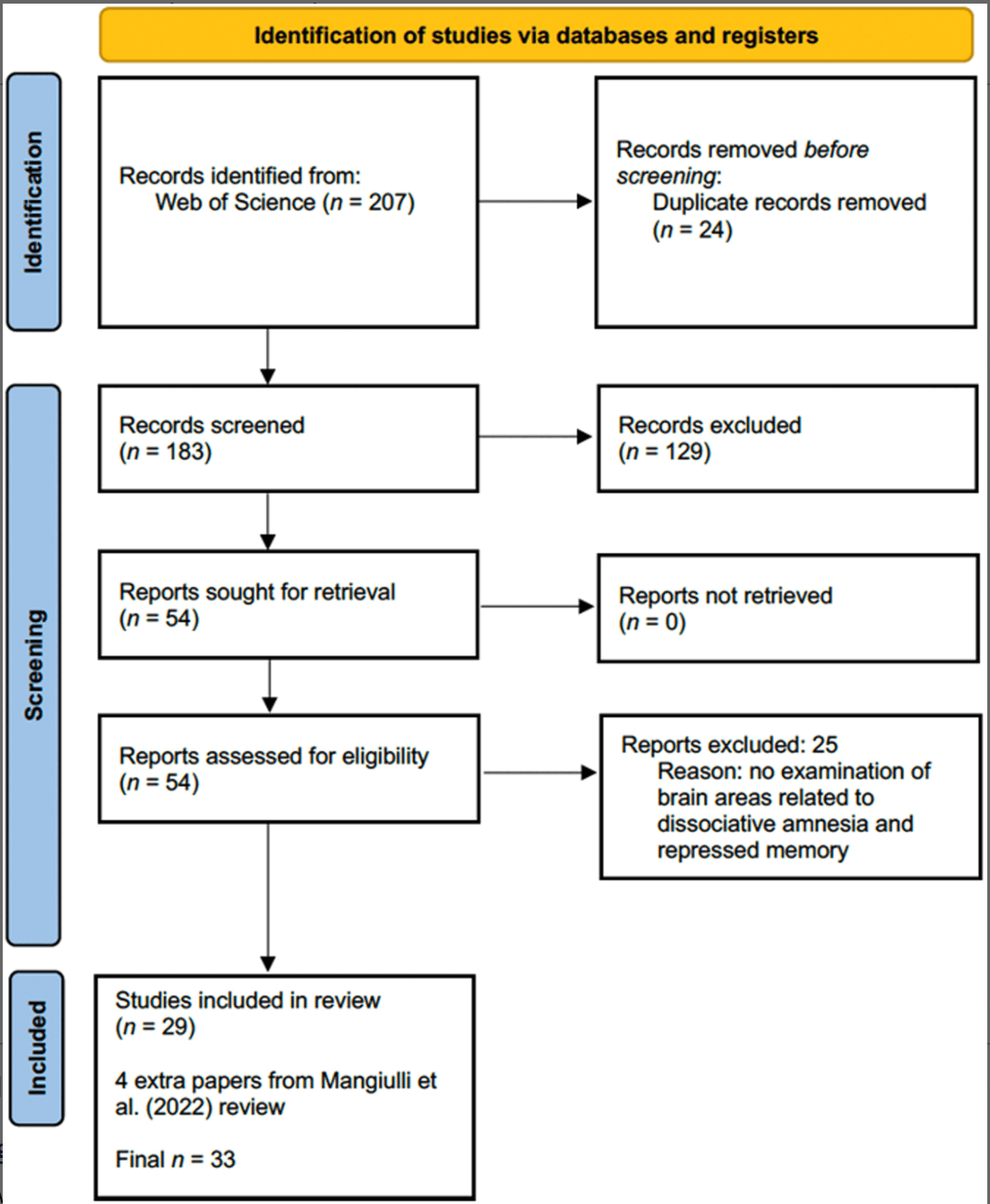
Figure 1

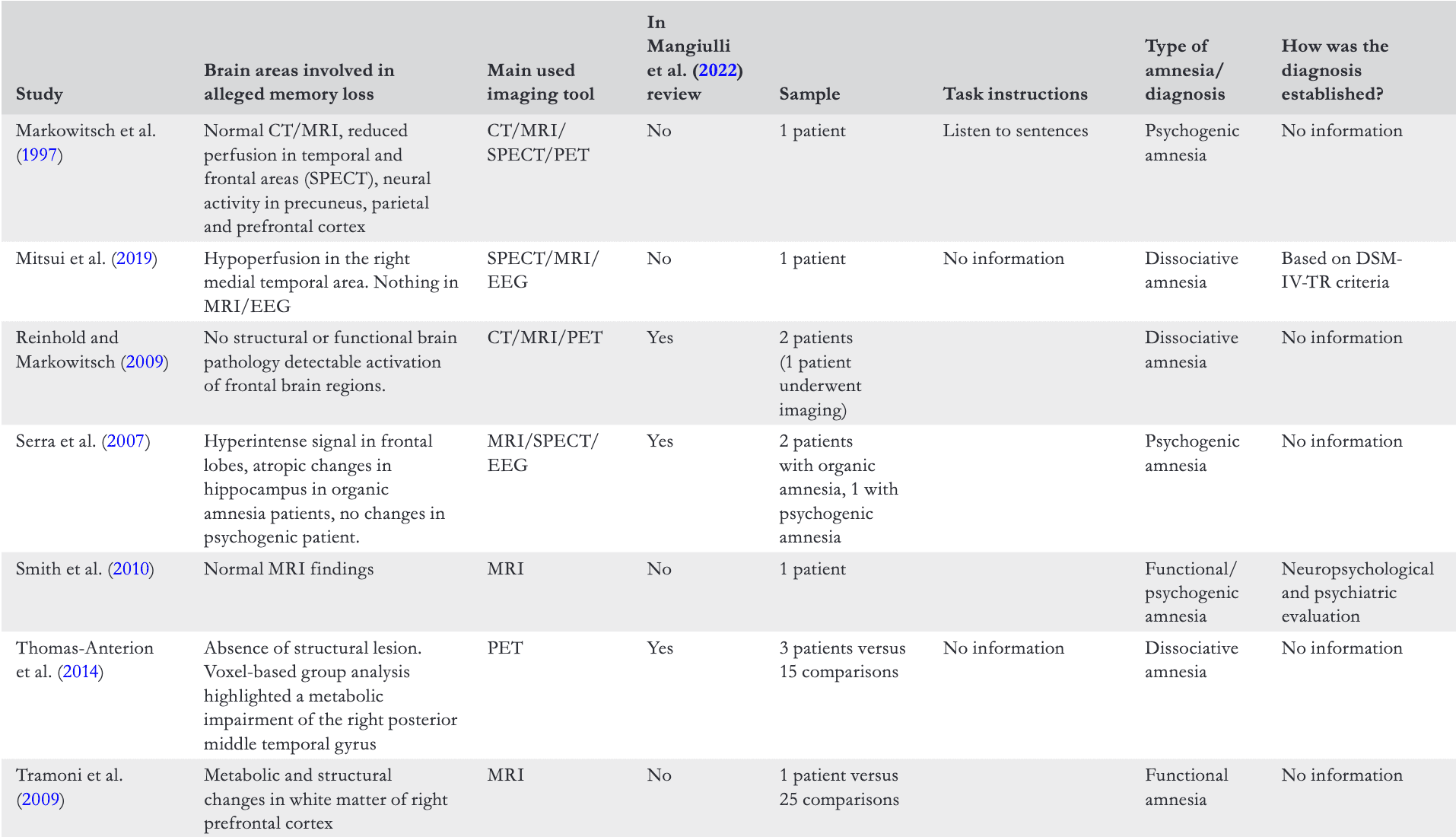
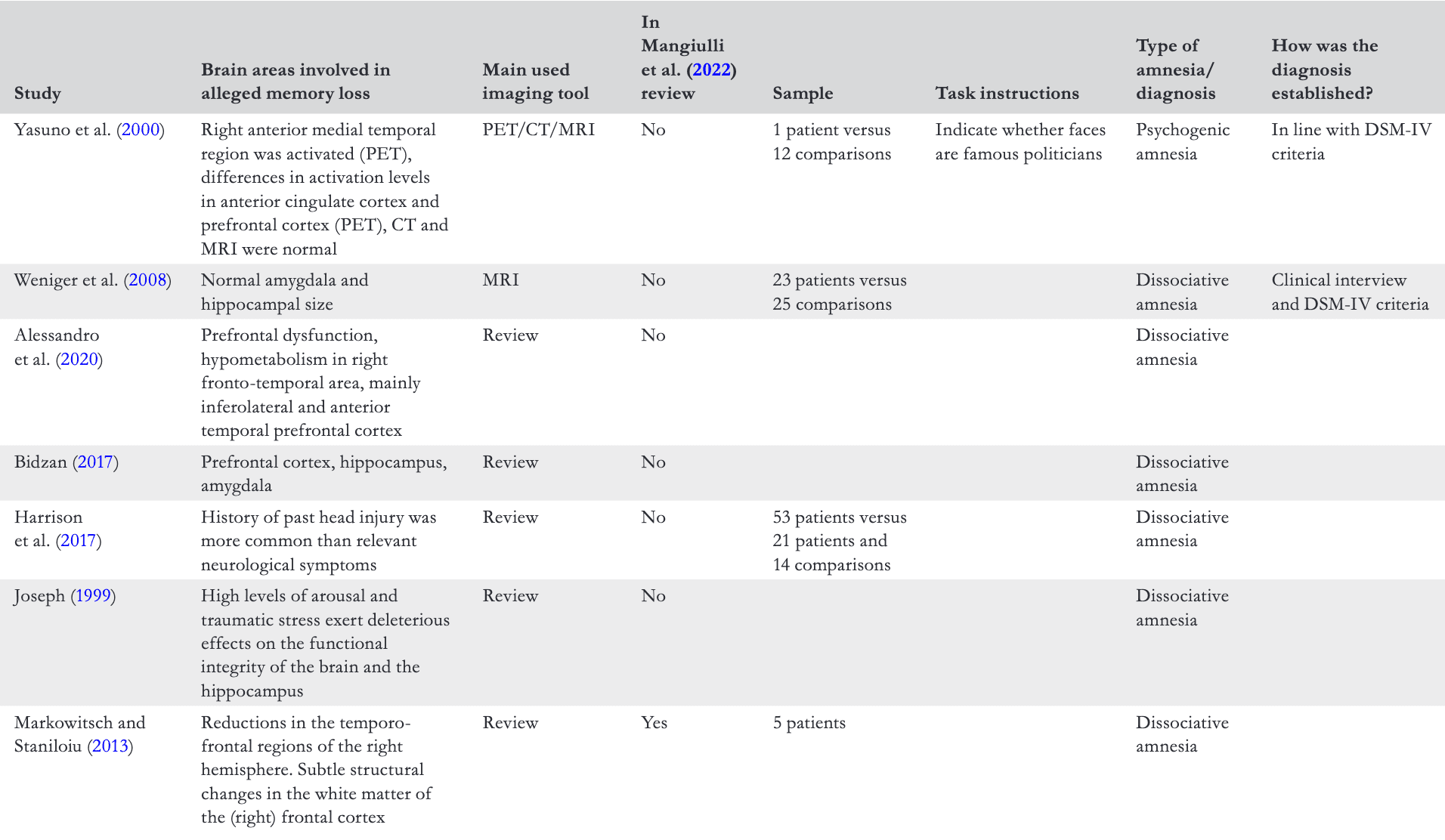
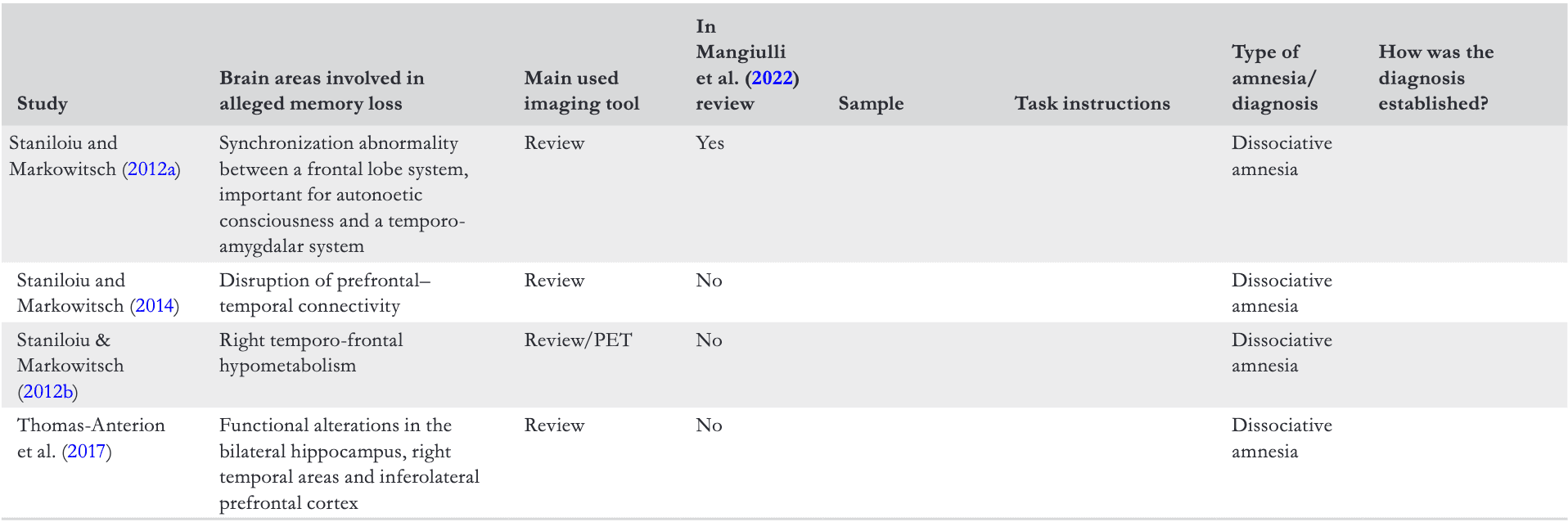
TABLE 1. Overview of papers on the neuroscience of dissociative amnesia and repressed memory.
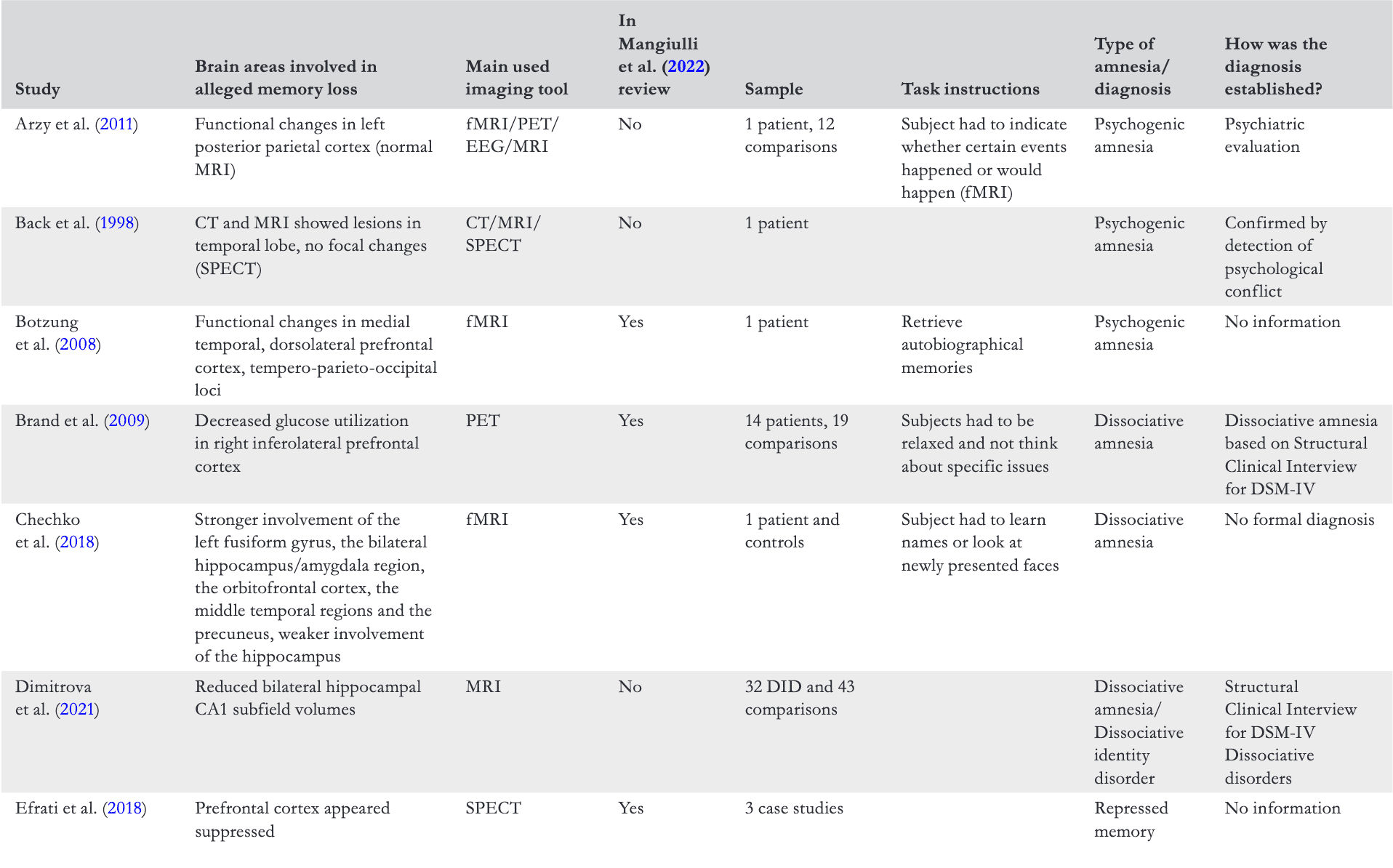
Table 1Table 1 (Continued)Table 1 (continued 2)Table 1 (Continued 3)Table (Continued 4)

Note: The Efrati et al. (2018) specifically mentioned repressed memory in their study while others specifically stated dissociative amnesia; The instructions category were only added for studies using functional imaging tools and refers to the instructions that the subjects received during imaging. Review papers are added at the end of the Table. All studies including comparison groups used healthy control participants except for the paper by Harrison et al. (2017) and the paper by Serra et al. (2007).Note: The Efrati et al. (2018) specifically mentioned repressed memory in their study while others specifically stated dissociative amnesia; The instructions category were only added for studies using functional imaging tools and refers to the instructions that the subjects received during imaging. Review papers are added at the end of the Table. All studies including comparison groups used healthy control participants except for the paper by Harrison et al. (2017) and the paper by Serra et al. (2007).

A key result from our search was the great variability of brain regions found to be involved in reports of dissociative amnesia. Specifically, across papers, a bit over half of them (n = 19; 58%) noted that the (pre)frontal cortex was associated with the dissociative memory loss. However, which specific area of the prefrontal cortex (e.g. dorsolateral, orbitofrontal) was involved varied as well across studies. There was also much variation in other involved brain areas with papers mentioning areas such as left fusiform gyrus (1 paper; 3%), hippocampus (6 papers; 18%), temporal cortex (14 papers; 42%), parietal cortex (4 papers; 12%) and the precuneus (2 papers; 6%). Many of these brain areas are involved in the function of memory (e.g. Lundstrom et al., 2005), but it is remarkable that no clear and consistent pattern emerged in terms of which brain areas are associated with dissociative amnesia. Of course, this outcome might also be due to the use of different tasks that subjects performed during functional imaging (see Table 1) and the use of structural versus functional methods.

Another result from our search is that in most functional imaging studies, the tasks used or the instructions to participants during imaging were not specified or did not tap into dissociative amnesia for autobiographical events, but rather other memory systems or no memory systems at all. For example, in a study by Brand et al. (2009), participants were only instructed to be relaxed and to not think about specific issues (i.e. resting state). Other studies have included tasks as varied as classifying words as real words versus non-words, listening to rare tones and sentences. Unless in the context of DID, where patients may report deficits in other memory systems, these tasks and instructions are not related to the dissociative amnesia for autobiographical life events as defined in the DSM-5 dissociative amnesia criteria.

However, even within and among the use of these methods, there was large variation. To give some examples, Chechko et al. (2018) used fMRI in a patient with dissociative amnesia. They found that although the patient could not recognize the faces of friends and relatives, there was increased activity in the hippocampus. This finding is in stark contrast to Kikuchi et al. (2009) who also used fMRI and reported reduced activity in the hippocampus. To further complicate matters, Glisky et al. (2004) noted that there were not many differences in brain activations between patients and control participants. These inconsistencies also emerged when structural imaging methods (MRI) were used. For example, whereas MacDonald and MacDonald (2009) and Reinhold and Markowitsch (2009) found no brain structure abnormalities in their patients with dissociative amnesia, Tramoni et al. (2009) found structural changes in the prefrontal cortex.

This latter finding is interesting as it is reminiscent of discussions regarding whether traumatic stress can cause smaller hippocampal volumes in people with PTSD (e.g. Bremner, 1999, 2002). However, Jelicic and Merckelbach (2004) argued that most of these studies contained several methodological flaws (e.g. use of cross-sectional studies), and therefore, any causal relation between traumatic stress and reduced hippocampus could not be established. In fact, longitudinal MRI research on hippocampal volumes in trauma survivors showed that survivors who developed PTSD 6 months after exposure to a traumatic event did not have smaller hippocampal volume than survivors who did not develop PTSD (Bonne et al., 2001). Also, there is research suggesting that smaller hippocampal volumes are not a consequence, but a risk factor for developing PTSD that questions the direction of the causal relation, if any (see for a review Szeszko et al., 2018).

Taken together, the papers examining the brain areas associated with reported dissociative amnesia provide a far from consistent picture concerning its neural underpinnings. Although myriad reasons might be related to this heterogeneity, we now draw attention to what we believe is especially imperative in discussions of dissociative amnesia. That is, did the included papers really involve people with dissociative amnesia?

DID THESE CASES REALLY ASSESS DISSOCIATIVE AMNESIA?

A central issue when examining the neural correlates of dissociative amnesia (and repressed memory) is to know with a degree of certainty that patients who were tested did indeed suffer from dissociative amnesia. Mangiulli et al. (2022) reviewed 128 case studies on apparent dissociative amnesia that were published over the past 20 years (2000–2020). Their analysis showed that although all cases involved reported autobiographical memory loss, none was fully in line with the DSM-5 criteria for dissociative amnesia. For example, in a quarter of cases, no psychological trauma was reported to explain the claimed memory loss. Also, most case studies did not rule out alternative, but plausible explanations for the purported memory loss such as malingering or ordinary forgetting. In addition, in some cases it was not established that the traumatic events were actually inaccessible for a time, or in others whether the traumatic events were encoded initially and therefore available (i.e. recoverable) (see DSM-5 criteria for dissociative amnesia).

In the selected papers in Table 1, 45% (n = 15) were also included in the critical review conducted by Mangiulli et al. (2022). Arguably, the authors of these 15 papers did not truly examine patients with dissociative amnesia that met DSM-5 criteria, but perhaps something different such as malingering, amnesia with an organic cause and so on. Hence, any detected brain region might have nothing to do with dissociative amnesia but could be related to other reasons such as faking memory loss, organic amnesia or the co-occurrence of another psychological disorder.

A case in point on whether dissociative amnesia was truly involved in the tested patients is the study by Dimitrova et al. (2021). In that study, possible neurostructural markers of dissociative amnesia were examined using MRI. One problem with this study is that dissociative amnesia was measured using a subjective index of dissociative amnesia comprised of self-report scores on the dissociative amnesia scale of the Dissociative Experiences Scale (DES; self-report instrument). The DES amnesic subscale does not measure dissociative amnesia as defined in the DSM-5 but instead measures individual's self-reported experience of gaps in memory—and centrally problematic to this is both the subjective nature of the measure and the fact that all people experience gaps in memory through normal memory mechanisms. Hence, what they measured was subjective amnesia and not objective amnesia (i.e. the inability to retrieve information). This distinction is crucial, as the latter can only be measured by including a task that objectively indexes memory functioning rather than the DES. In the context of DID, a whole series of studies has indicated that once objective tasks are included to test subjective amnesia, the results indicate there is actually transfer of information between identities in DID, both on explicit and implicit memory tasks, neutral and trauma-related as well as autobiographical and other self-relevant material (e.g. as an example see Huntjens et al., 2012 and Marsh et al., 2018).

Subjective reports of dissociative amnesia may be explained by specific dissociation-related dysfunctional metamemory beliefs (i.e. metacognitive beliefs about one's own memory functioning). These include positive beliefs about amnesia (e.g. ‘I believe it is better to forget the painful events that I experienced in life’), fear of losing control (e.g. ‘I believe I would lose control of my life if I allowed myself to remember painful things that happened to me’), beliefs about fragmentation (e.g. ‘I believe I can remember distressing events in parts, but not as a whole’) and lack of self-reference (e.g. ‘I believe the bad things that I sometimes remember happening in my life actually didn't happen’). A recent study has indicated that patients with DID score high on a scale developed to index these dysfunctional beliefs and in the general population, these beliefs correlate strongly with scores on the DES (Huntjens et al., 2022).

Other examples similarly illustrate the possible misdiagnosis of dissociative amnesia. Fukuzako et al. (1999) examined the P300 amplitude with participants they labelled as having dissociative amnesia. Although the authors stated that they also examined malingering in their patients, it is unclear what they exactly did and which tests were used to detect feigning behaviour. Also, Fukuzako et al. reported which events might have caused the traumatic loss. Interestingly, at first sight, some of these events do not appear to meet the DSM-5 criterion for traumatic stress (i.e. actual or threatened death, serious injury or sexual violence) and are more related to ‘ordinary’ stress such as experiencing ‘trouble in love affairs’. Also, some of the patients might have tried to forget these distressing events, which is not the same as dissociative amnesia. Finally, Mitsui et al. (2019) describe a man who was diagnosed with dissociative amnesia, but they do not mention the specific psychological traumatic event that purportedly precipitated the alleged memory loss.

To obtain a more precise assessment of whether the cases in Table 1 reflected dissociative amnesia, we adopted the coding scheme as was used in Mangiulli et al. (2022) to code the studies in our table that were not mentioned in Mangiulli et al.'s review. Specifically, the case studies were coded on the following features: (1) was the person given a diagnosis of amnesia, (2) differential diagnosis (did the case descriptions differentiate between dissociative amnesia and other related conditions), (3) malingering, (4) alternative mechanisms and (5) diagnostic features (for a more detailed explanation, see https://osf.io/8hp2t; to view the coding, see https://osf.io/n87qa and https://osf.io/srpuk). The first and fourth author coded the features with interrater reliability agreements (Krippendorff's alpha) ranging from .70 to 1 (see https://osf.io/kch8n).

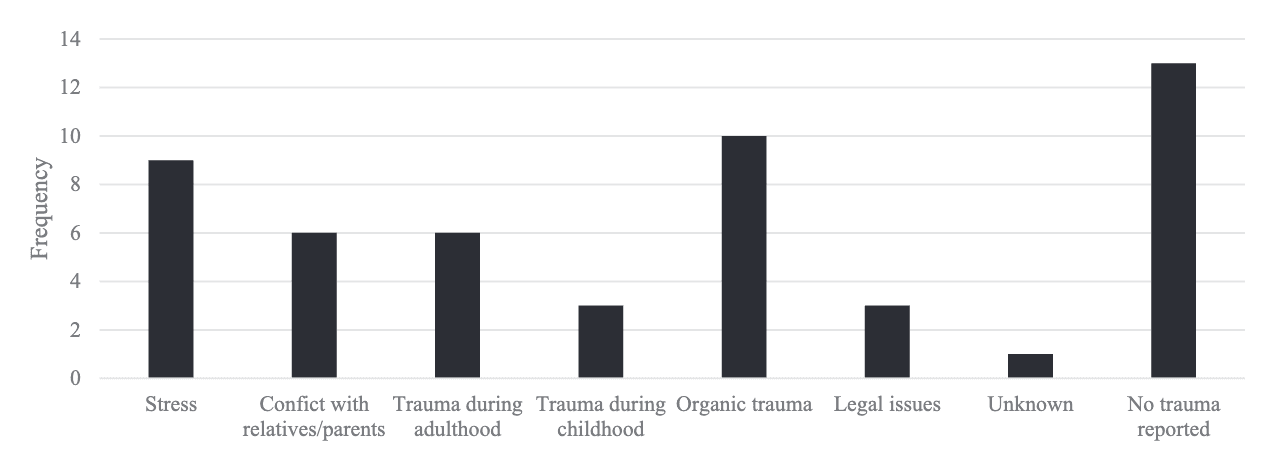
Following this coding, we examined all case studies (n = 51); including the ones included in Mangiulli et al. (2022) (see Table 1) and found the following. First, although in 38 cases (75%; for similar results see Taïb et al., 2023), the authors mentioned the presence of trauma, 10 cases (26%) were related to organic trauma. This is noteworthy as to qualify for a diagnosis of dissociative amnesia; memory non-reporting must not be the result of an organic cause. Second, we examined whether the case studies met the diagnostic features of the DSM-5. Only two cases (3.9%) met all diagnostic features of dissociative amnesia (i.e. mentioning of trauma, not due to substances, mentioning of type of dissociative amnesia, mentioning of duration of amnesic period and mentioning of impairment in functioning). However, even these two case studies were not convincing examples of dissociative amnesia because in one a car accident was mentioned as trauma indicating that an organic cause cannot be ruled out. In the other case, losing a job was regarded as the traumatic cause and it was unclear whether malingering could be fully ruled out. Equally interesting, in 13 cases (26%), no mention was even made of a possible traumatic cause (see Figure 2; https://osf.io/wkph9/).

FIGURE 2

Figure 2

Frequencies of type of alleged traumatic cause.

Collectively, case studies of dissociative amnesia are frequently hampered by the fact that it is not certain whether the diagnostic criteria for dissociative amnesia are met. Therefore, it is imperative that alternative explanations for amnesia be ruled out before the label of dissociative amnesia is warranted (Mangiulli et al., 2022).

ALTERNATIVE EXPLANATIONS

We next consider the important issue to discuss of whether neuroscientific studies on dissociative amnesia can be explained by alternative, more plausible explanations for patient reports of memory loss. For example, Mangiulli et al. (2022) found that organic brain damage, instead of psychological coping mechanisms for trauma, could explain many of the cases of reported autobiographical memory loss. In the reviewed studies (Table 1), Harrison et al. (2017) also shared this view. They reviewed 53 patients with purported dissociative amnesia and the authors found that ‘a history of past head injury was actually more common’ (p. 2498). Thus, it might well be the case that their autobiographical memory loss did not have a psychological origin but was caused by, for example, head injury.

Another alternative explanation for the neural correlates found in some dissociative amnesia cases is that the detected regions are actually related to other cognitive mechanisms. We already mentioned the possibility of metamemory beliefs explaining reports of dissociative amnesia (Huntjens et al., 2022). As another example, functional MRI research on motivated forgetting has shown that similar brain areas are recruited during such forgetting (i.e. prefrontal cortex) as the areas observed in the reviewed papers (Anderson & Hanslmayr, 2014). Thus, 21 (64%) of the identified papers mentioned involvements of the prefrontal cortex and some (or all) of them might have nothing to do with dissociative amnesia but instead be linked to motivated forgetting. Put another way, these areas may involve the conscious suppression of events people do not want to recall.

FMRI studies have shown that the prefrontal cortex is involved in memory suppression (Anderson & Hanslmayr, 2014). Although there is debate on the robustness of the memory suppression effect (e.g. Bulevich et al., 2006; Wessel et al., 2020) and the motivated forgetting effect (Patihis & Place, 2018), there is a possibility that the observed brain areas in the reviewed studies are not related to dissociative amnesia but instead to active memory suppression or cognitive control more generally. It is important to stress here that memory suppression is different from dissociative amnesia as the latter purportedly involve unconscious forms of memory loss whereas suppression is an intentional act to forget memories. Also, research shows that people who have experienced trauma frequently try to forget the trauma (McNally, 2005) and therefore, some neuroscientific studies on dissociative amnesia might actually involve cases of memory suppression or cognitive control.

The claimed involvement of the prefrontal cortex in dissociative amnesia might also be indicative of deception in some cases (e.g. malingering). Specifically, investigations into brain areas involved in deception have revealed the prefrontal cortex to play a chief role (e.g. Abe, 2011). This perspective fits well with concerns that some cases of autobiographical memory loss might be due to deceitful attempts to claim amnesia (Jelicic, 2018; Mangiulli et al., 2022). To recap, although the reviewed papers sometimes reported that the prefrontal cortex might be related to dissociative amnesia, we argue that memory suppression might equally apply as an alternative explanation.

To examine whether the authors of the included studies considered alternative explanations, we coded all case studies in terms of whether or not the authors ruled out the possibility that the claimed memory loss was due to normal forgetting, encoding failure or malingering. Importantly, the alternative explanations of normal forgetting and encoding failure can only be coded for case studies in which the amnesia was localized (memory loss for a specific period) or selective (remembrance of some aspects of an event but not all; American Psychiatric Association, 2013) (see Mangiulli et al., 2022). For these case studies, none mentioned that the memory loss might be attributable to normal forgetting or encoding failures. Regarding malingering, only 37% (n = 19) of the case studies mentioned this as a possible alternative explanation. However, of these 19 cases, most did not elaborate on potential malingering and, for example, did not refer to the context in which malingering might be a plausible explanation (e.g. criminal context, n = 17; 90%) or did not state how malingering was tested (n = 13; 68%). In short, only limited information was present in the case studies concerning alternative explanations of the claimed memory loss.

CONCEPTUAL AND METHODOLOGICAL PROBLEMS

In this final section, we concentrate on several conceptual and methodological problems that underlie neuroscientific investigations concerning dissociative amnesia and repressed memory. First, the aim to find a structural biomarker of dissociative amnesia is incompatible with the nature of the phenomenon (e.g. Dimitrova et al., 2021; Li et al., 2021; see Huntjens et al., 2022 for a critical commentary on this issue). The DSM-5 definition is that dissociative amnesia is always potentially reversible due to successful storage of the memory. It is for this reason that some neuroscientific investigations have attempted to exclude structural brain damage when diagnosing dissociative amnesia (e.g. Brand et al., 2009).
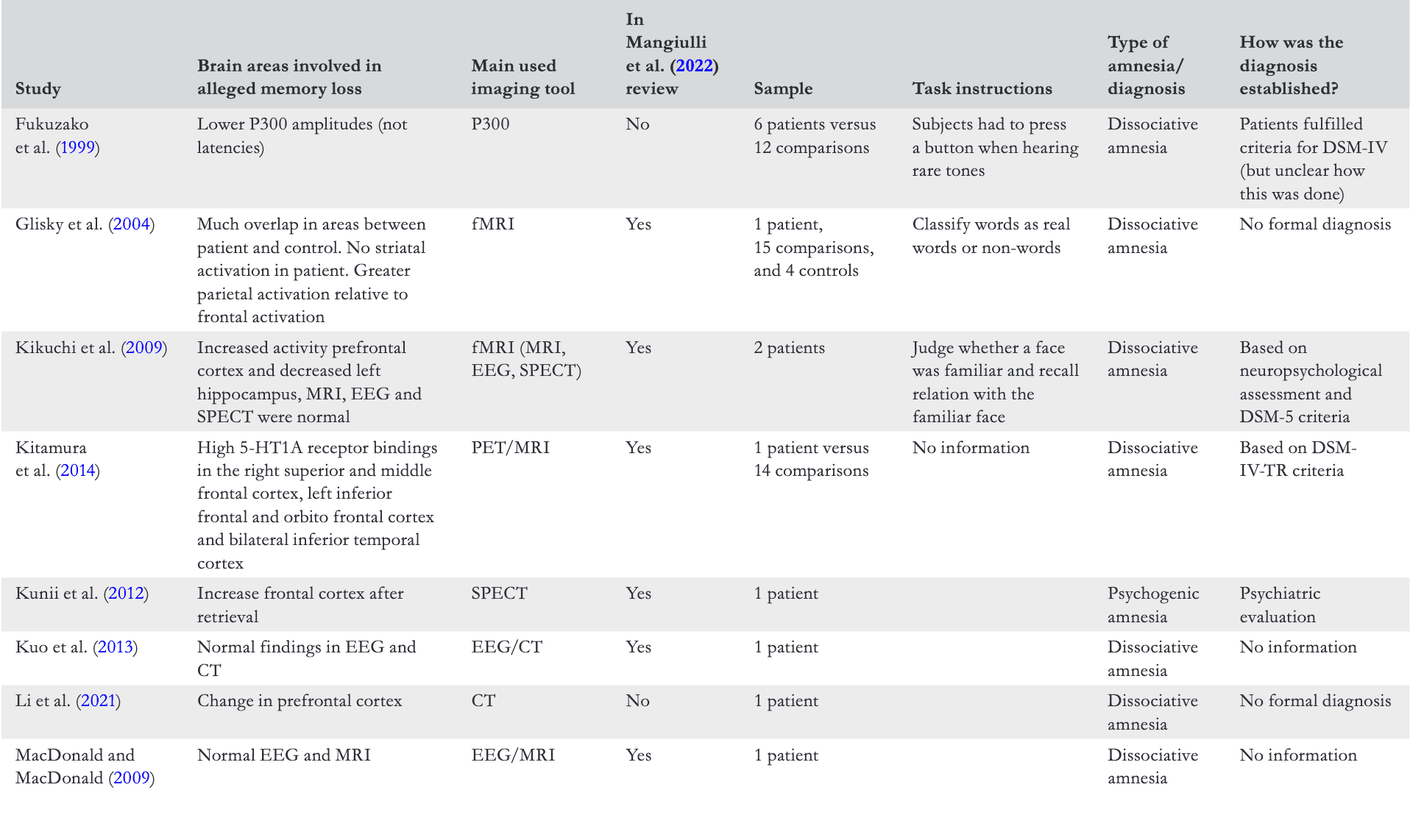
Second, neuroscientific studies on dissociative amnesia and repressed memory suffer from other methodological limitations such as small sample size and lack of comparison groups. For example, a minority of studies included comparison groups (n = 11; 33%). Furthermore, as can be seen in Table 1, it is not uncommon that only a few patients were tested and that conclusions were based on small sample sizes. Nonetheless, the small samples are understandable given the alleged low prevalence of the disorder and the difficulty in recruiting these patients who suffer great impairment in daily functioning. However, recent work has suggested that published studies on biomarkers for psychological phenomena might yield erroneous conclusions as many more participants are needed in such studies to obtain reliable results (Marek et al., 2022). This possibility is echoed by recent work conducted by Mertens et al. (2022) on the neural correlates of posttraumatic dissociation. The authors stressed that small sample sizes in this area limited the interpretation of neuroscientific research into dissociation. Their research contained the largest sample size using fMRI to identify neural regions of dissociation and they did not observe any reliable neural marker of dissociation. Moreover, most studies did not include corrections for multiple testing or make use of alternatives like robust testing, further compounding these problems (Huntjens et al., 2022).

Additionally, the extant research (1) usually did not entail structural clinical interviews in the diagnostic procedure, (2) did not consistently examine the role of comorbid psychopathology as a determinant of outcomes secured or as a source of variability across studies; (3) did not consistently include control groups of individuals matched for general psychopathology, distress, arousal and/or negative affect who do not report dissociative amnesia (Lynn et al., 2019, 2022); and (4) was not based on longitudinal studies that ascertain whether patterns of brain structure, activation or anomalies implicated in dissociative amnesia are present prior to the onset of amnesia or traumatic events. Moreover, what a biomarker is versus a correlate of dissociative amnesia is rarely defined and specified, and as stated, the study designs sometimes lacked (clinical) comparison groups (e.g. PTSD present/dissociative amnesia absent group) necessary to rule out confounds that may have accounted for the detected neurobiological patterns.

Finally, even if these conceptual and methodological limitations were remedied, the aforementioned investigations speak to relative differences in the magnitude of brain structures or activity in people with and without dissociative amnesia, but they do not suggest empirically based cut-off specifications needed to verify of dissociative amnesia, thereby showing limited utility in legal and clinical arenas. The correlations researchers report are generally so weak that they cannot be used for diagnostic purposes (see Huntjens et al., 2022)—in essence they are not biomarkers to the same extent that medicine has reliable biomarkers for diseases (e.g. blood tests for diabetes). To summarize, conceptual and methodological issues strongly limit the interpretation of neuroscientific investigations of dissociative amnesia and repressed memory.
CONCLUSIONS AND RECOMMENDATIONS

Debate continues regarding whether traumatic memories can be unconsciously repressed (Brewin et al., 2019; Otgaar et al., 2019). To investigate the potential mechanisms underpinning dissociative amnesia and repressed memory, researchers have examined the neural correlates of dissociative amnesia and repressed memory. We provided a critical discussion of these neurobiological studies on dissociative amnesia and repressed memory. Our main conclusion is that these studies fall short on many different levels (e.g. conceptual and methodological). Therefore, we argue that at present, these neuroscientific studies tell us little about whether traumatic memories can be unconsciously blocked. Importantly, none of these proposed biomarkers are sufficiently reliable for diagnosis in clinics or legal arenas. We will briefly summarize the main problems and we will then end with several recommendations for future research.
First, we have shown that neuroscientific studies have revealed a large number of brain regions potentially involved in dissociative amnesia and repressed memory. This heterogeneity makes it difficult to pinpoint whether any specific regions are involved in the purported traumatic memory loss. Second, it is questionable whether the reviewed case studies really are genuine dissociative amnesia cases—frequently they did not match the DSM-5 criteria. Third, alternative explanations involving ordinary mechanisms can oftentimes better explain traumatic memory loss, compared to the extraordinary mechanisms proposed by the dissociative amnesia concept. This criticism is crucial because explanations such as malingering, metamemory beliefs and/or cognitive control might be candidates for the observed brains regions claimed to be involved in dissociative amnesia. Finally, it can be said that many of the neurobiological studies are plagued by methodological flaws such as small sample sizes. All in all, the research on the purported neurological markers that underpin dissociative amnesia and repressed memory is poorly developed.

To improve the status of neuroscientific research in this area, we offer several recommendations. To begin with, considering the uncertain cause of the alleged memory loss, one might wonder why the term ‘dissociative’ is needed to describe this form of amnesia. Mangiulli et al. (2022) proposed to use the term ‘amnesia of uncertain etiology’ to describe extreme forgetting with no organic cause. We concur with this suggestion, and we have seen that researchers are already slowly using this terminology when describing unique case studies concerning unclear autobiographical memory loss (Basagni et al., 2022). Furthermore, using such a more neutral term would also benefit interpretating the possible causes of the traumatic loss. That is, at present, discussions of dissociative amnesia often gravitate to whether it has an organic, feigned or dissociative aetiology. According to Kopelman (2000), such dichotomies might be too simplistic as case studies on extreme forgetting might be due to an amalgam of organic, faked and other reasons (see also Mangiulli et al., 2022). Second, because we have noticed that neuroscientific studies on dissociative amnesia and repressed memory are plagued by small sample sizes, we believe it is imperative that investment be made in team science in this area (Forscher et al., 2022). That is, since cases of alleged traumatic memory loss are exceptional, working together with other teams worldwide would increase the amount of cases in one particular study thereby increasing statistical power and obtaining more reliable results.

Finally and relatedly, the field of dissociative amnesia (and repressed memory) would benefit from more transparency and adherence to open science practices. Future neuroscientific research on dissociative amnesia should include preregistration of research protocols that stipulate in advance (a-priori) hypotheses, sample size, details of the methodology, planned analyses and cut-offs for ascertaining a biological marker. Additionally, post-research implementation should make data available for other interested researchers to inspect, re-analyse and verify. Doing so is important because, as we have seen, in research in this area, many of these essential steps are not taken and multiple analyses are often conducted on the same data set, which might inflate false positive results (see Huntjens et al., 2022 for a detailed discussion). Preregistration might increase research transparency regarding which analyses were planned and which were done post-hoc in an exploratory fashion.

To conclude, we critically discussed neuroscientific research on dissociative amnesia and repressed memory and argued that this research must be interpreted with great caution and numerous caveats. Considering the fact that this area has been the subject of a controversial debate regarding whether traumatic memories can be blocked and accurately surface after many years, it is vital that neuroscientific research in this field is sound. At this time, there are no consistent or reliable biomarkers of dissociative amnesia. Accordingly, biomarkers cannot be used in diagnosis, and even the existence of the concept as a disease category still remains in doubt. Therefore, we encourage researchers to collaborate in order to critically examine the factors that underlie claims of extreme forgetting.

Open Article as PDF

Abstract

Purpose: A heated debate exists on whether traumatic memories can be dissociated or repressed. One way in which researchers have attempted to prove the existence of dissociative amnesia or repressed memory is to examine whether claims of amnesia for traumatic events are associated with specific neural markers.

Methods: Here, we will argue that such neuroscientific examinations do not tell us whether traumatic memories can be unconsciously repressed or dissociated from consciousness, respectively.

Results: We discuss neuroscientific studies on dissociative amnesia and repressed memory and show that there are no reliable biological markers for dissociative amnesia and that the alleged involved brain areas are heterogenous among studies. Furthermore, we will demonstrate that it is unclear whether these studies truly involved patients with dissociative amnesia and that alternative explanations of dissociative amnesia were often not ruled out (e.g. malingering, organic amnesia). Moreover, we will make the case that the discussed patients in the studies do not meet the DSM-5 criteria for dissociative amnesia.

Conclusions: Taken together, neuroscientific research into dissociative amnesia does not present a convincing case for a biological basis of the purported memory loss.

Introduction

Many people are interested in how traumatic experiences are remembered. Understanding this topic helps doctors diagnose and treat people who have mental health problems after trauma. In legal cases, victims, witnesses, and defendants often talk about traumatic events they say they experienced. While therapy may not prioritize the exact accuracy of these memories, accuracy is very important in legal settings. The legal system seeks the truth, so it is crucial to understand how accurately traumatic experiences are recalled.

For many years, there has been a debate about whether traumatic memories can be pushed out of consciousness, or "repressed," and then accurately remembered much later. Some therapists believe that traumatic memories can be repressed or disconnected from consciousness and remain hidden for many years, only to be recovered unchanged during therapy. However, other therapists and memory experts argue that therapeutic methods used to "unlock" memories can be suggestive and might create false memories of past events. Also, scientific memory research shows that there are other reasonable explanations for claims of forgotten memories, such as normal forgetting, including not remembering early childhood. Memories that come back on their own are likely due to normal memory processes. This disagreement about repressed or disconnected traumatic memories has been called "the memory wars."

In the past, some authors have claimed that scientific evidence from brain studies supports the idea that traumatic experiences can be unconsciously repressed or disconnected from consciousness. Specifically, some researchers have looked at brain activity related to claims of dissociative amnesia. This is a condition similar to repressed memory and is also a symptom of post-traumatic stress disorder (PTSD) or dissociative identity disorder (DID). The symptoms of dissociative amnesia are very similar to the idea of repressed memory, where the main idea is that traumatic memories can be completely erased from consciousness and later brought back in their original form.

This article will critically discuss what these brain studies can and cannot tell us about whether traumatic memories can be unconsciously repressed or disconnected. The focus will be on brain studies of dissociative amnesia. The discussion will first give an overview of these studies and critically review their key findings. This involves looking at existing research to see which brain regions are said to be linked to reported traumatic memory loss. Second, there will be critical comments on whether brain research on dissociative amnesia and repressed memory actually included participants with true dissociative amnesia. Third, methodological and conceptual problems will be discussed, arguing that the main claims of brain research on dissociative amnesia and repressed memory seem to conflict with the core ideas of dissociative amnesia. Finally, recommendations will be provided for this relatively new field, emphasizing open science practices.

The Neuroscience of Repressed Memory and Dissociative Amnesia

The core idea of repressed memory and dissociative amnesia is that when people experience very severe traumatic events, like childhood sexual abuse, they use defense mechanisms to cope with the overwhelming psychological trauma. Possible underlying mechanisms include: (1) repression, where traumatic memories are processed automatically and unconsciously, or (2) dissociation, which is seen as an "unconscious, automatic, defensive coping response to highly unpleasant events." For example, the term dissociative amnesia is often used instead of repressed memory to describe traumatic memory loss. When looking at the criteria for dissociative amnesia in the DSM-5, they are remarkably similar to the ideas of repressed memory. Both concepts include the idea that memory loss is a coping response to trauma, that the memory becomes impossible to retrieve, and that it can be accurately recalled in its original form later.

For several years, studies have looked for brain markers of dissociative amnesia that might reveal the mechanisms behind traumatic memory loss. For example, one study with two patients who reportedly had dissociative amnesia and control participants used fMRI and concluded that "memory repression in dissociative amnesia is associated with an altered pattern of neural activity." This statement strongly suggests that dissociative amnesia can be easily identified using brain imaging.

Which Memory Systems and Brain Areas Are Involved?

A literature search was conducted to find relevant papers examining the different brain areas that researchers have claimed are involved in cases of dissociative amnesia and repressed memory. The search aimed to find all relevant papers published before 2022. The search identified 207 results. After removing duplicates and screening papers, 29 remained. Four additional papers were found from another critical review, leading to a final set of 33 papers. Only papers were included where researchers used brain imaging tools to examine the brain correlates of repressed memory and dissociative amnesia, and review papers that proposed brain regions involved in these conditions.

A key finding from this search was the wide variety of brain regions reportedly involved in dissociative amnesia. Specifically, across papers, a bit over half (58%) noted that the prefrontal cortex was associated with the memory loss. However, the specific area of the prefrontal cortex involved also varied across studies. There was also much variation in other involved brain areas, with papers mentioning regions such as the left fusiform gyrus (3%), hippocampus (18%), temporal cortex (42%), parietal cortex (12%), and precuneus (6%). Many of these brain areas are involved in memory function, but it is notable that no clear and consistent pattern emerged regarding which brain areas are associated with dissociative amnesia. This outcome might also be due to the use of different tasks participants performed during brain imaging and the use of structural versus functional imaging methods.

Another result from the search is that in most functional imaging studies, the tasks used or the instructions given to participants during imaging were not specified, or they did not specifically address dissociative amnesia for personal events. Instead, they tapped into other memory systems or no memory systems at all. For example, in one study, participants were only told to relax and not think about specific issues (i.e., resting state). Other studies included tasks as varied as classifying words, listening to tones, and listening to sentences. Unless in the context of DID, where patients may report problems with other memory systems, these tasks and instructions are not related to dissociative amnesia for personal life events as defined by diagnostic criteria.

However, even within and among these methods, there was large variation. For instance, one fMRI study of a patient with dissociative amnesia found increased activity in the hippocampus, even though the patient could not recognize faces of friends and relatives. This finding sharply contrasts with another fMRI study that reported reduced activity in the hippocampus. To complicate matters further, some research noted few differences in brain activity between patients and control participants. These inconsistencies also appeared when structural imaging methods were used. For example, some studies found no brain structure abnormalities in patients with dissociative amnesia, while others found structural changes in the prefrontal cortex.

This latter finding is interesting because it brings up discussions about whether traumatic stress can cause smaller hippocampal volumes in people with PTSD. However, some researchers have argued that most of these studies had several methodological flaws, such as using cross-sectional studies, making it impossible to establish a direct link between traumatic stress and reduced hippocampus size. In fact, long-term MRI research on hippocampal volumes in trauma survivors showed that survivors who developed PTSD did not have smaller hippocampal volumes than those who did not. Also, some research suggests that smaller hippocampal volumes are not a result of PTSD, but rather a risk factor for developing it, questioning the direction of the cause, if any.

Overall, the papers examining brain areas associated with reported dissociative amnesia provide an inconsistent picture of its brain basis. While many reasons might explain this variation, it is particularly important to consider whether the included papers actually involved people with dissociative amnesia.

Did These Cases Really Assess Dissociative Amnesia?

A key issue when studying the brain correlates of dissociative amnesia (and repressed memory) is to be reasonably sure that the patients tested actually had dissociative amnesia. One review looked at 128 case studies on apparent dissociative amnesia published over 20 years. The analysis showed that while all cases involved reported memory loss for personal events, none fully met the DSM-5 criteria for dissociative amnesia. For example, in a quarter of cases, no psychological trauma was reported to explain the claimed memory loss. Also, most case studies did not rule out other reasonable explanations for the reported memory loss, such as faking or normal forgetting. In addition, in some cases, it was not established that the traumatic events were truly inaccessible for a time, or in others, whether the traumatic events were ever initially encoded and therefore available to be remembered.

Of the selected papers, 45% were also included in the critical review mentioned above. It is arguable that the authors of these papers did not truly examine patients with dissociative amnesia that met DSM-5 criteria, but perhaps something different, such as faking memory loss, amnesia with a physical cause, and so on. Therefore, any detected brain region might have nothing to do with dissociative amnesia but could be related to other reasons, such as faking memory loss, amnesia due to physical injury, or the presence of another mental health disorder.

One example of whether dissociative amnesia was truly involved in the tested patients is a study that examined possible brain structural markers of dissociative amnesia using MRI. A problem with this study is that dissociative amnesia was measured using a subjective self-report scale of dissociative experiences. This scale measures a person's self-reported experience of gaps in memory, and importantly, everyone experiences memory gaps through normal memory processes. Therefore, what was measured was subjective amnesia, not objective amnesia (the inability to retrieve information). This distinction is crucial, as objective amnesia can only be measured by including a task that objectively assesses memory function rather than just self-report. In the context of DID, a series of studies has shown that when objective tasks are used to test subjective amnesia, the results indicate that information is actually transferred between identities, both for explicit and implicit memory tasks, neutral and trauma-related material, and personal and other self-relevant information.

Subjective reports of dissociative amnesia may be explained by specific dysfunctional beliefs about memory, called metamemory beliefs. These include positive beliefs about amnesia (e.g., "I believe it is better to forget painful events"), fear of losing control (e.g., "I believe I would lose control of my life if I allowed myself to remember painful things"), beliefs about memory fragmentation (e.g., "I believe I can remember distressing events in parts, but not as a whole"), and lack of self-reference (e.g., "I believe the bad things I sometimes remember happening didn't actually happen"). A recent study indicated that patients with DID score high on a scale for these dysfunctional beliefs, and in the general population, these beliefs correlate strongly with scores on the dissociative experiences scale.

Other examples similarly show possible misdiagnosis of dissociative amnesia. One study examined brain activity in participants labeled as having dissociative amnesia. Although the authors stated they also looked for faking in their patients, it is unclear exactly what they did and which tests were used to detect faking behavior. Also, the study reported events that might have caused the traumatic loss. Interestingly, some of these events do not seem to meet the DSM-5 criteria for traumatic stress (actual or threatened death, serious injury, or sexual violence) and are more related to "ordinary" stress, such as "trouble in love affairs." Also, some patients might have tried to forget these distressing events, which is not the same as dissociative amnesia. Finally, another study described a man diagnosed with dissociative amnesia, but they did not mention the specific psychological traumatic event that supposedly caused the memory loss.

To get a more precise assessment of whether the cases reflected dissociative amnesia, a specific coding scheme was used to evaluate the studies. The case studies were coded for the following features: (1) whether the person was diagnosed with amnesia, (2) differential diagnosis (whether other conditions were ruled out), (3) malingering (faking), (4) alternative mechanisms, and (5) diagnostic features. Following this coding, all case studies (n = 51) were examined and the following was found. First, although in 38 cases (75%), the authors mentioned the presence of trauma, 10 cases (26%) were related to physical trauma. This is important because to qualify for a diagnosis of dissociative amnesia, memory loss must not be due to a physical cause. Second, it was examined whether the case studies met the diagnostic features of the DSM-5. Only two cases (3.9%) met all diagnostic features of dissociative amnesia (mentioning of trauma, not due to substances, mentioning type of dissociative amnesia, mentioning duration of memory loss, and mentioning impaired functioning). However, even these two cases were not convincing examples of dissociative amnesia because in one, a car accident was mentioned as trauma, meaning a physical cause could not be ruled out. In the other case, losing a job was considered the traumatic cause, and it was unclear if faking could be fully ruled out. Equally interesting, in 13 cases (26%), no mention was even made of a possible traumatic cause.

Overall, case studies of dissociative amnesia are often problematic because it is not certain whether the diagnostic criteria for dissociative amnesia are met. Therefore, it is crucial that other explanations for amnesia be ruled out before the label of dissociative amnesia is justified.

Alternative Explanations

It is important to consider whether brain studies on dissociative amnesia can be explained by other, more likely reasons for reported memory loss. For example, some research found that physical brain damage, rather than psychological coping mechanisms for trauma, could explain many cases of reported memory loss for personal events. In the reviewed studies, some authors also shared this view. They reviewed 53 patients with reported dissociative amnesia and found that "a history of past head injury was actually more common." Thus, it might be that their memory loss for personal events was not psychological but caused by, for example, a head injury.

Another alternative explanation for the brain activity found in some dissociative amnesia cases is that the detected regions are actually related to other thinking processes. The possibility of metamemory beliefs explaining reports of dissociative amnesia has already been mentioned. As another example, fMRI research on motivated forgetting has shown that similar brain areas are used during such forgetting (i.e., prefrontal cortex) as the areas observed in the reviewed papers. Thus, 21 (64%) of the identified papers mentioned involvement of the prefrontal cortex, and some (or all) of them might have nothing to do with dissociative amnesia but instead be linked to motivated forgetting. In other words, these areas may involve the conscious suppression of events people do not want to remember.

FMRI studies have shown that the prefrontal cortex is involved in memory suppression. While there is debate on how strong the memory suppression effect is, there is a possibility that the observed brain areas in the reviewed studies are not related to dissociative amnesia but instead to active memory suppression or general cognitive control. It is important to emphasize that memory suppression is different from dissociative amnesia, as the latter supposedly involves unconscious forms of memory loss, while suppression is an intentional act to forget memories. Also, research shows that people who have experienced trauma frequently try to forget the trauma, and therefore, some brain studies on dissociative amnesia might actually involve cases of memory suppression or cognitive control.

The claimed involvement of the prefrontal cortex in dissociative amnesia might also indicate deception in some cases, such as faking. Specifically, studies into brain areas involved in deception have revealed the prefrontal cortex to play a main role. This idea fits well with concerns that some cases of memory loss for personal events might be due to dishonest attempts to claim amnesia. To summarize, although the reviewed papers sometimes reported that the prefrontal cortex might be related to dissociative amnesia, it is argued that memory suppression might equally apply as an alternative explanation.

To examine whether the authors of the included studies considered alternative explanations, all case studies were coded for whether the authors ruled out the possibility that the claimed memory loss was due to normal forgetting, encoding failure, or faking. Importantly, the alternative explanations of normal forgetting and encoding failure can only be coded for case studies where the amnesia was localized (memory loss for a specific period) or selective (remembering some aspects of an event but not all). For these case studies, none mentioned that the memory loss might be due to normal forgetting or encoding failures. Regarding faking, only 37% of the case studies mentioned this as a possible alternative explanation. However, most of these cases did not go into detail about potential faking and, for example, did not refer to the context in which faking might be a plausible explanation (e.g., criminal context) or did not state how faking was tested. In short, only limited information was present in the case studies concerning alternative explanations of the claimed memory loss.

Conceptual and Methodological Problems

This section focuses on several conceptual and methodological problems that affect brain studies of dissociative amnesia and repressed memory. First, the goal of finding a structural brain marker for dissociative amnesia does not fit with the nature of the condition. The definition of dissociative amnesia states that it is always potentially reversible because the memory is successfully stored. For this reason, some brain studies have tried to exclude structural brain damage when diagnosing dissociative amnesia.

Second, brain studies on dissociative amnesia and repressed memory suffer from other methodological limitations, such as small sample sizes and a lack of comparison groups. For example, a minority of studies included comparison groups (33%). Furthermore, it is common for only a few patients to be tested, and conclusions are often based on small sample sizes. However, small samples are understandable given the reportedly low occurrence of the disorder and the difficulty in recruiting patients who experience significant daily impairment. Recent work has suggested that published studies on brain markers for psychological phenomena might lead to incorrect conclusions, as many more participants are needed in such studies to get reliable results. This possibility is supported by recent work on the brain correlates of post-traumatic dissociation. The authors emphasized that small sample sizes in this area limit the interpretation of brain research into dissociation. Their research, which had the largest sample size using fMRI to identify brain regions of dissociation, did not observe any reliable brain marker of dissociation. Moreover, most studies did not include corrections for multiple testing or use alternatives like robust testing, further worsening these problems.

Additionally, existing research (1) usually did not include structured clinical interviews in the diagnostic process, (2) did not consistently examine the role of other co-occurring mental health problems as a factor in the results or as a source of variation across studies; (3) did not consistently include control groups of individuals matched for general mental health problems, distress, arousal, and/or negative feelings who do not report dissociative amnesia; and (4) was not based on long-term studies that determine whether patterns of brain structure, activity, or abnormalities linked to dissociative amnesia are present before the onset of amnesia or traumatic events. Furthermore, what a brain marker is versus a correlate of dissociative amnesia is rarely defined and specified. As stated, study designs sometimes lacked clinical comparison groups (e.g., a group with PTSD but without dissociative amnesia) needed to rule out confounding factors that may have explained the detected brain patterns.

Finally, even if these conceptual and methodological limitations were fixed, the studies discussed show relative differences in the size of brain structures or activity in people with and without dissociative amnesia. However, they do not suggest specific, empirically based cut-off points needed to confirm dissociative amnesia, thereby showing limited use in legal and clinical settings. The correlations researchers report are generally so weak that they cannot be used for diagnostic purposes. In essence, they are not reliable brain markers in the same way that medicine has reliable markers for diseases (e.g., blood tests for diabetes). To summarize, conceptual and methodological issues severely limit the interpretation of brain studies of dissociative amnesia and repressed memory.

Conclusions and Recommendations

Debate continues regarding whether traumatic memories can be unconsciously repressed. To investigate the potential mechanisms behind dissociative amnesia and repressed memory, researchers have examined their brain correlates. This article provided a critical discussion of these brain studies on dissociative amnesia and repressed memory. The main conclusion is that these studies fall short at many levels, including conceptual and methodological issues. Therefore, it is argued that, at present, these brain studies tell us little about whether traumatic memories can be unconsciously blocked. Importantly, none of these proposed brain markers are reliable enough for diagnosis in clinics or legal settings. The main problems will be briefly summarized, followed by several recommendations for future research.

First, it has been shown that brain studies have revealed a large number of brain regions potentially involved in dissociative amnesia and repressed memory. This variety makes it difficult to pinpoint whether any specific regions are involved in the reported traumatic memory loss. Second, it is questionable whether the reviewed case studies are truly genuine dissociative amnesia cases; they frequently did not match the diagnostic criteria. Third, alternative explanations involving ordinary mechanisms can often better explain traumatic memory loss compared to the extraordinary mechanisms proposed by the dissociative amnesia concept. This criticism is crucial because explanations such as faking, metamemory beliefs, and/or cognitive control might explain the observed brain regions claimed to be involved in dissociative amnesia. Finally, it can be said that many of the brain studies are affected by methodological flaws, such as small sample sizes. All in all, the research on the reported neurological markers that underpin dissociative amnesia and repressed memory is poorly developed.

To improve the status of brain research in this area, several recommendations are offered. To begin with, considering the uncertain cause of the reported memory loss, one might wonder why the term "dissociative" is needed to describe this form of amnesia. It has been proposed to use the term "amnesia of uncertain etiology" to describe extreme forgetting with no physical cause. This suggestion is supported, and researchers are already slowly using this terminology when describing unique case studies concerning unclear memory loss for personal events. Furthermore, using such a more neutral term would also benefit the interpretation of the possible causes of the traumatic loss. That is, at present, discussions of dissociative amnesia often focus on whether it has a physical, faked, or dissociative origin. According to some, such simple divisions might be too simplistic, as case studies on extreme forgetting might be due to a combination of physical, faked, and other reasons. Second, because brain studies on dissociative amnesia and repressed memory often have small sample sizes, it is crucial that investment be made in team science in this area. Since cases of reported traumatic memory loss are uncommon, working together with other teams worldwide would increase the number of cases in a particular study, thereby increasing statistical power and obtaining more reliable results.

Finally, and relatedly, the field of dissociative amnesia (and repressed memory) would benefit from more transparency and adherence to open science practices. Future brain research on dissociative amnesia should include preregistration of research protocols that specify in advance hypotheses, sample size, methodological details, planned analyses, and cut-off points for identifying a biological marker. Additionally, after research, data should be made available for other interested researchers to examine, re-analyze, and verify. Doing so is important because, as seen, in research in this area, many of these essential steps are not taken, and multiple analyses are often conducted on the same data set, which might increase the number of false positive results. Preregistration might increase research transparency regarding which analyses were planned and which were done later in an exploratory way.

In conclusion, brain research on dissociative amnesia and repressed memory was critically discussed, arguing that this research must be interpreted with great caution and numerous warnings. Considering that this area has been the subject of a controversial debate about whether traumatic memories can be blocked and accurately resurface after many years, it is vital that brain research in this field is sound. At this time, there are no consistent or reliable brain markers of dissociative amnesia. Therefore, brain markers cannot be used in diagnosis, and even the existence of the concept as a disease category still remains in doubt. Therefore, researchers are encouraged to collaborate to critically examine the factors that underlie claims of extreme forgetting.

Open Article as PDF

Abstract

Purpose: A heated debate exists on whether traumatic memories can be dissociated or repressed. One way in which researchers have attempted to prove the existence of dissociative amnesia or repressed memory is to examine whether claims of amnesia for traumatic events are associated with specific neural markers.

Methods: Here, we will argue that such neuroscientific examinations do not tell us whether traumatic memories can be unconsciously repressed or dissociated from consciousness, respectively.

Results: We discuss neuroscientific studies on dissociative amnesia and repressed memory and show that there are no reliable biological markers for dissociative amnesia and that the alleged involved brain areas are heterogenous among studies. Furthermore, we will demonstrate that it is unclear whether these studies truly involved patients with dissociative amnesia and that alternative explanations of dissociative amnesia were often not ruled out (e.g. malingering, organic amnesia). Moreover, we will make the case that the discussed patients in the studies do not meet the DSM-5 criteria for dissociative amnesia.

Conclusions: Taken together, neuroscientific research into dissociative amnesia does not present a convincing case for a biological basis of the purported memory loss.

Introduction

Understanding how people remember traumatic experiences is a topic of broad interest. This knowledge helps clinicians diagnose and treat psychological issues that arise from traumatic events. In legal settings, victims, witnesses, and defendants often describe traumatic events they claim to have experienced. While therapy may not prioritize the accuracy of traumatic memories, accuracy is crucial in legal contexts where seeking truth is fundamental. Therefore, it is important to understand how accurately traumatic experiences are recalled.

For many years, there has been discussion about whether traumatic memories can be forgotten unconsciously and then accurately remembered much later. Some therapists believe that traumatic memories can be pushed out of conscious awareness and then recovered in their original form during therapy. However, other therapists and memory experts argue that therapeutic methods used to "unlock" memories can be suggestive and may lead to the creation of false memories. Additionally, memory research shows that there are other common explanations for forgetting, such as typical forgetting processes, including childhood amnesia. Memories recovered spontaneously are likely the result of normal memory functions. This ongoing disagreement about whether traumatic memories can be repressed has been called the "memory wars."

In recent years, some authors have suggested that neuroscience supports the idea that traumatic experiences can be unconsciously forgotten. Specifically, some researchers have studied the brain activity linked to claims of dissociative amnesia, a condition similar to repressed memory, which is also a diagnostic criterion for post-traumatic stress disorder (PTSD) or dissociative identity disorder (DID). The diagnostic criteria for dissociative amnesia are very similar to the core ideas of repressed memory, which suggest that traumatic memories can be completely removed from consciousness and later retrieved in their original form.

This article will critically discuss what neuroscientific studies can and cannot tell us about whether traumatic memories can be unconsciously forgotten. The focus will be on neuroscientific studies of dissociative amnesia. First, a general overview of these studies will be provided, along with a critical review of their main findings. This will include a literature search to identify which brain regions are reportedly linked to traumatic memory loss. Second, the article will discuss concerns about whether neuroscientific research on dissociative amnesia and repressed memory truly involved participants with dissociative amnesia. Third, methodological and conceptual issues will be addressed, arguing that the main claims of this research seem to contradict the principles of dissociative amnesia. Finally, recommendations for this developing field will be offered, emphasizing the importance of open science practices.

The Neuroscience of Repressed Memory and Dissociative Amnesia

The core idea behind repressed memory and dissociative amnesia is that when people experience severe traumatic events, such as childhood sexual abuse, defense mechanisms are used to cope with the overwhelming psychological trauma. Proposed underlying mechanisms include: (1) repression, where traumatic memories are processed automatically and unconsciously, or (2) dissociation, which is considered an "unconscious, automatic, defensive coping response to highly aversive events." The term dissociative amnesia is often used to describe traumatic memory loss instead of repressed memory. When examining the criteria for dissociative amnesia in the DSM-5, they are remarkably similar to the tenets of repressed memory. Both concepts include the idea that memory loss results from a coping response to trauma, that the memory becomes inaccessible, and that it can be accurately recalled in its original form later.

For several years, studies have explored the brain markers of dissociative amnesia, hoping to find clues about the mechanisms behind traumatic memory loss. For example, one study with two patients experiencing reported dissociative amnesia and control participants used fMRI and concluded that "memory repression in dissociative amnesia is associated with an altered pattern of neural activity." Such a statement strongly implies that dissociative amnesia can be easily identified using brain imaging tools.

Which Memory Systems and Brain Areas Are Involved?

A literature search was conducted to identify papers examining the brain areas reportedly involved in cases of dissociative amnesia and repressed memory. The search found a wide range of brain regions associated with reports of dissociative amnesia. Over half of the papers (58%) noted that the prefrontal cortex was involved in dissociative memory loss, but the specific area within the prefrontal cortex varied across studies. There was also much variation in other implicated brain areas, with papers mentioning regions such as the hippocampus (18%), temporal cortex (42%), and parietal cortex (12%). Many of these brain areas are involved in memory function, but it is notable that no clear and consistent pattern emerged regarding which brain areas are associated with dissociative amnesia. This inconsistency might be due to the different tasks participants performed during functional imaging and the use of structural versus functional methods.

Another finding from the search was that in most functional imaging studies, the tasks used or instructions given to participants during imaging were not specified or did not focus on dissociative amnesia for personal events. Instead, they often targeted other memory systems or no memory systems at all. For example, some studies only instructed participants to relax, while others included tasks like classifying words or listening to tones. These tasks and instructions are generally not related to dissociative amnesia for personal life events, as defined by the DSM-5 criteria, unless in the context of DID, where patients may report deficits in other memory systems.

Even within these methods, significant variation was observed. For example, one fMRI study found increased hippocampal activity in a patient with dissociative amnesia who could not recognize familiar faces, which contrasts sharply with another fMRI study reporting reduced hippocampal activity. Further complicating matters, some research found few differences in brain activity between patients and control participants. Similar inconsistencies appeared when using structural imaging methods (MRI). For instance, some studies found no brain structure abnormalities in patients with dissociative amnesia, while others found structural changes in the prefrontal cortex.

This latter finding is interesting because it echoes discussions about whether traumatic stress can lead to smaller hippocampal volumes in individuals with PTSD. However, some researchers have argued that many of these studies had methodological flaws, making it difficult to establish a causal link between traumatic stress and reduced hippocampus size. Longitudinal MRI research on hippocampal volumes in trauma survivors has shown that survivors who developed PTSD six months after trauma exposure did not have smaller hippocampal volumes than those who did not develop PTSD. Moreover, some research suggests that smaller hippocampal volumes might be a risk factor for developing PTSD, rather than a consequence, raising questions about the direction of any causal relationship.

In summary, papers examining brain areas associated with reported dissociative amnesia present an inconsistent picture of its neurological basis. While many reasons might contribute to this heterogeneity, a crucial issue in discussions of dissociative amnesia is whether the included papers truly involved individuals with this condition.

Did These Cases Really Assess Dissociative Amnesia?

A key concern when examining the brain correlates of dissociative amnesia (and repressed memory) is ensuring that tested patients genuinely had dissociative amnesia. A review of 128 case studies on apparent dissociative amnesia published over 20 years found that while all cases involved reported autobiographical memory loss, none fully met the DSM-5 criteria for dissociative amnesia. For example, in a quarter of the cases, no psychological trauma was reported to explain the claimed memory loss. Most studies also failed to rule out other plausible explanations, such as feigning memory loss or ordinary forgetting. Additionally, in some cases, it was not established whether the traumatic events were truly inaccessible for a period or if they were initially encoded and therefore recoverable.

Of the selected papers, 45% were also included in a critical review. It can be argued that the authors of these papers did not truly examine patients with dissociative amnesia according to DSM-5 criteria, but rather individuals with other conditions like feigning, organically caused amnesia, or co-occurring psychological disorders. Therefore, any detected brain regions might not be related to dissociative amnesia but could be linked to these other factors.

One example illustrating the uncertainty of a dissociative amnesia diagnosis is a study that examined possible brain structural markers using MRI. A problem with this study was that dissociative amnesia was measured using a subjective self-report scale, which assesses an individual's self-reported experience of memory gaps. This scale does not measure dissociative amnesia as defined in the DSM-5; all people experience memory gaps through normal processes. Thus, the study measured subjective amnesia, not objective amnesia (the inability to retrieve information). This distinction is crucial, as objective amnesia can only be measured by tasks that truly assess memory function. In the context of DID, numerous studies have shown that when objective tasks are used to test subjective amnesia, information transfer occurs between identities for both explicit and implicit memory tasks, including neutral, trauma-related, and autobiographical material.

Subjective reports of dissociative amnesia might be explained by specific dysfunctional beliefs about one's own memory (metamemory beliefs) related to dissociation. These include positive beliefs about amnesia ("I believe it is better to forget painful events"), fear of losing control ("I believe I would lose control if I allowed myself to remember painful things"), beliefs about fragmentation ("I believe I can remember distressing events in parts, but not as a whole"), and lack of self-reference ("I believe bad things I sometimes remember didn't actually happen"). Recent research indicates that patients with DID score high on a scale measuring these dysfunctional beliefs, and in the general population, these beliefs strongly correlate with scores on the Dissociative Experiences Scale.

Other examples also show possible misdiagnosis of dissociative amnesia. One study examined brain activity in participants labeled with dissociative amnesia. Although the authors claimed to have checked for feigning, it is unclear how they did so or which tests were used. The study also reported events that might have caused the traumatic loss, but some of these events, like "trouble in love affairs," do not appear to meet the DSM-5 criterion for traumatic stress (actual or threatened death, serious injury, or sexual violence) and relate more to "ordinary" stress. Also, some patients might have actively tried to forget these distressing events, which is not the same as dissociative amnesia. Finally, one case described a man diagnosed with dissociative amnesia, but it did not mention the specific psychological traumatic event that supposedly led to the memory loss.

To more accurately assess whether cases reflected dissociative amnesia, a coding scheme was used to analyze case studies. This coding revealed that while 75% of cases mentioned trauma, 26% were related to organic trauma, which disqualifies them from a dissociative amnesia diagnosis. Only two cases (3.9%) met all DSM-5 diagnostic features for dissociative amnesia, but even these were questionable due to potential organic causes or unclear ruling out of feigning. In 26% of cases, no possible traumatic cause was even mentioned.

Overall, case studies of dissociative amnesia are often problematic because it is uncertain whether the diagnostic criteria are met. Therefore, it is crucial to rule out alternative explanations for amnesia before a diagnosis of dissociative amnesia is made.

Alternative Explanations

It is important to consider whether neuroscientific studies on dissociative amnesia can be explained by other, more plausible reasons for patient reports of memory loss. For example, previous research found that organic brain damage, rather than psychological coping mechanisms for trauma, could explain many cases of reported autobiographical memory loss. Some reviewed studies also shared this view, noting that a history of head injury was more common in patients with reported dissociative amnesia. Thus, their memory loss might have been caused by physical injury rather than psychological factors.

Another alternative explanation for brain activity found in some dissociative amnesia cases is that the detected regions are actually related to other cognitive processes. Metamemory beliefs have been suggested as a way to explain reports of dissociative amnesia. As another example, fMRI research on motivated forgetting shows that similar brain areas, such as the prefrontal cortex, are activated during such forgetting as those observed in the reviewed papers. Therefore, some studies linking the prefrontal cortex to dissociative amnesia might actually be related to motivated forgetting—the conscious suppression of events people do not wish to recall.

fMRI studies have shown that the prefrontal cortex is involved in memory suppression. While there is debate about the strength of memory suppression and motivated forgetting effects, it is possible that the brain areas observed in the reviewed studies are related to active memory suppression or general cognitive control, rather than dissociative amnesia. It is important to note that memory suppression differs from dissociative amnesia; the latter supposedly involves unconscious memory loss, while suppression is an intentional act to forget. Research also indicates that trauma survivors often try to forget the trauma. Thus, some neuroscientific studies on dissociative amnesia might actually involve cases of memory suppression or cognitive control.

The reported involvement of the prefrontal cortex in dissociative amnesia could also indicate deception in some cases, such as feigning. Studies on brain areas involved in deception have identified the prefrontal cortex as a key player. This aligns with concerns that some cases of autobiographical memory loss might be due to deliberate attempts to claim amnesia. To reiterate, although reviewed papers sometimes suggested a link between the prefrontal cortex and dissociative amnesia, memory suppression could equally serve as an alternative explanation.

To assess whether the authors of the included studies considered alternative explanations, all case studies were coded to see if they ruled out normal forgetting, encoding failure, or feigning as causes for the claimed memory loss. For cases where amnesia was localized or selective, none mentioned normal forgetting or encoding failures. Regarding feigning, only 37% of case studies mentioned it as a possible explanation. However, most of these did not elaborate on potential feigning, such as the context in which it might be plausible (e.g., criminal cases) or how it was tested. In short, limited information was available in the case studies regarding alternative explanations for the claimed memory loss.

Conceptual and Methodological Problems

This section addresses several conceptual and methodological problems in neuroscientific research on dissociative amnesia and repressed memory. First, the goal of finding a structural brain marker for dissociative amnesia is incompatible with the nature of the phenomenon. The DSM-5 defines dissociative amnesia as potentially reversible because the memory is successfully stored. For this reason, some neuroscientific studies have tried to exclude structural brain damage when diagnosing dissociative amnesia.

Second, neuroscientific studies on dissociative amnesia and repressed memory often have methodological limitations, such as small sample sizes and a lack of comparison groups. For example, only a minority of studies included comparison groups. It is not uncommon for conclusions to be based on only a few patients. While these small samples are understandable given the reported low prevalence of the disorder and the difficulty in recruiting patients with significant daily impairment, recent research suggests that studies on biomarkers for psychological phenomena might yield incorrect conclusions because many more participants are needed for reliable results. This is supported by recent work on the neural correlates of post-traumatic dissociation, which found no reliable neural marker of dissociation even with the largest fMRI sample size in this area. Furthermore, most studies did not include corrections for multiple testing or use robust testing alternatives, worsening these problems.

Additionally, existing research typically did not include structured clinical interviews for diagnosis, consistently examine the role of other psychological conditions as a factor in outcomes, or consistently include control groups matched for general psychological distress who do not report dissociative amnesia. Moreover, these studies were not based on longitudinal designs that could determine if patterns of brain structure, activity, or anomalies related to dissociative amnesia were present before the amnesia or traumatic events occurred. What constitutes a biomarker versus a correlate of dissociative amnesia is rarely defined, and study designs sometimes lacked the necessary clinical comparison groups to rule out confounding factors that might explain detected neurobiological patterns.

Finally, even if these conceptual and methodological limitations were addressed, the investigations speak to relative differences in brain structures or activity, but they do not provide empirically based cut-off points needed to verify dissociative amnesia, limiting their usefulness in legal and clinical settings. The reported correlations are generally too weak for diagnostic purposes. In essence, they are not reliable biomarkers in the same way that medicine has reliable biomarkers for diseases. In summary, conceptual and methodological issues severely limit the interpretation of neuroscientific investigations of dissociative amnesia and repressed memory.

Conclusions and Recommendations

The debate about whether traumatic memories can be unconsciously repressed continues. To investigate the potential mechanisms underlying dissociative amnesia and repressed memory, researchers have examined their neural correlates. A critical discussion of these neurobiological studies shows that they have many shortcomings, both conceptually and methodologically. Therefore, current neuroscientific studies provide little information about whether traumatic memories can be unconsciously blocked. Importantly, none of the proposed biomarkers are reliable enough for diagnosis in clinics or legal settings. The main problems are summarized, followed by recommendations for future research.

First, neuroscientific studies have identified a large number of brain regions potentially involved in dissociative amnesia and repressed memory. This variation makes it difficult to pinpoint any specific regions for reported traumatic memory loss. Second, it is questionable whether the reviewed cases truly represent genuine dissociative amnesia, as they often did not meet DSM-5 criteria. Third, alternative explanations involving ordinary mechanisms can often better explain traumatic memory loss compared to the extraordinary mechanisms proposed by the concept of dissociative amnesia. This criticism is crucial because explanations such as feigning, metamemory beliefs, and/or cognitive control might account for the observed brain regions claimed to be involved in dissociative amnesia. Finally, many neurobiological studies are plagued by methodological flaws like small sample sizes. Overall, research on the purported neurological markers of dissociative amnesia and repressed memory is underdeveloped.

To improve neuroscientific research in this area, several recommendations are offered. Given the uncertain cause of reported memory loss, it is worth questioning why the term "dissociative" is needed. Some have proposed using "amnesia of uncertain etiology" to describe extreme forgetting without an organic cause. This suggestion is supported, and researchers are already slowly adopting this terminology for cases of unclear autobiographical memory loss. Using a more neutral term would also help interpret the possible causes of traumatic loss. Currently, discussions of dissociative amnesia often simplify the issue into organic, feigned, or dissociative causes. However, case studies on extreme forgetting might be due to a combination of organic, feigned, and other reasons. Second, because neuroscientific studies on dissociative amnesia and repressed memory often have small sample sizes, investment in "team science" is essential. Since cases of alleged traumatic memory loss are rare, collaboration among teams worldwide would increase the number of cases in a study, leading to greater statistical power and more reliable results.

Finally, the field of dissociative amnesia (and repressed memory) would benefit from more transparency and adherence to open science practices. Future neuroscientific research on dissociative amnesia should include preregistration of research protocols, specifying hypotheses, sample size, methodology details, planned analyses, and criteria for identifying a biological marker beforehand. Additionally, post-research efforts should make data available for other researchers to inspect, re-analyze, and verify. This is important because, as observed in this area, many essential steps are often omitted, and multiple analyses are frequently conducted on the same data set, which can inflate false positive results. Preregistration can increase research transparency regarding which analyses were planned and which were exploratory.

In conclusion, neuroscientific research on dissociative amnesia and repressed memory requires careful interpretation with numerous caveats. Given the controversial debate about whether traumatic memories can be blocked and accurately recovered many years later, it is vital that neuroscientific research in this field is sound. Currently, there are no consistent or reliable biomarkers of dissociative amnesia. Therefore, biomarkers cannot be used for diagnosis, and the very existence of the concept as a disease category remains questionable. Researchers are encouraged to collaborate to critically examine the factors underlying claims of extreme forgetting.

Open Article as PDF

Abstract

Purpose: A heated debate exists on whether traumatic memories can be dissociated or repressed. One way in which researchers have attempted to prove the existence of dissociative amnesia or repressed memory is to examine whether claims of amnesia for traumatic events are associated with specific neural markers.

Methods: Here, we will argue that such neuroscientific examinations do not tell us whether traumatic memories can be unconsciously repressed or dissociated from consciousness, respectively.

Results: We discuss neuroscientific studies on dissociative amnesia and repressed memory and show that there are no reliable biological markers for dissociative amnesia and that the alleged involved brain areas are heterogenous among studies. Furthermore, we will demonstrate that it is unclear whether these studies truly involved patients with dissociative amnesia and that alternative explanations of dissociative amnesia were often not ruled out (e.g. malingering, organic amnesia). Moreover, we will make the case that the discussed patients in the studies do not meet the DSM-5 criteria for dissociative amnesia.

Conclusions: Taken together, neuroscientific research into dissociative amnesia does not present a convincing case for a biological basis of the purported memory loss.

Introduction

Many people are interested in how memories of traumatic events are formed and recalled. Understanding this topic helps doctors diagnose and treat people who develop mental health problems after experiencing trauma. In legal cases, people who have been through trauma, or who have seen it, often share their stories. While knowing if a memory is accurate might not be a top priority in therapy, it is very important in legal settings. The legal system focuses on finding the truth, so it is essential to know how accurately traumatic experiences are remembered.

For many years, experts have debated whether traumatic memories can be pushed out of a person's awareness and then accurately remembered much later. Some therapists believe these memories can be unconsciously hidden and then recovered without changes years later. However, other therapists and memory researchers argue that certain therapy methods used to "unlock" memories can be misleading and might create false memories. Research on memory also shows that there are other reasonable explanations for claims of lost memories, such as normal forgetting or childhood amnesia. Memories that come back on their own are likely due to regular memory processes. This intense debate about whether traumatic memories can be hidden or not is often called the "memory wars."

In the past, some authors claimed that brain science supported the idea that traumatic experiences could be unconsciously hidden. Specifically, some researchers studied brain activity related to dissociative amnesia, a condition similar to repressed memory. Dissociative amnesia is also used as a diagnostic sign for post-traumatic stress disorder (PTSD) or dissociative identity disorder (DID). The signs of dissociative amnesia are very much like the ideas behind repressed memory, where a traumatic memory is thought to be completely forgotten and then retrieved in its original form.

This article will critically discuss what brain science studies can and cannot tell us about whether traumatic memories can be unconsciously hidden. Specifically, it will look at studies on dissociative amnesia. First, there will be a general overview of these studies, reviewing their main findings. This includes examining which brain areas are believed to be linked to reported traumatic memory loss. Second, there will be critical comments on whether these studies actually included participants with dissociative amnesia. Third, there will be a discussion of problems with methods and ideas, arguing that the main claims from dissociative amnesia research seem to go against the core ideas of the condition itself. Finally, recommendations will be given for this relatively new field, with a strong focus on promoting open science practices.

The Neuroscience of Repressed Memory and Dissociative Amnesia

The main idea behind repressed memory and dissociative amnesia is that when someone experiences severe trauma, like child abuse, their mind uses defense mechanisms to cope with the overwhelming psychological pain. These mechanisms might include repression, where traumatic memories are automatically and unconsciously processed, or dissociation, which is seen as an unconscious, automatic way of coping with very difficult events. For example, the term dissociative amnesia is often used to describe traumatic memory loss instead of repressed memory. When looking at the criteria for dissociative amnesia in the DSM-5, they are very similar to the ideas of repressed memory. Both concepts suggest that memory loss happens as a way to cope with trauma, that the memory becomes impossible to retrieve, and that it can be accurately recalled in its original form later.

For several years, studies have looked at the brain signs of dissociative amnesia to find clues about how memory loss for trauma happens. For instance, one study used fMRI to examine two patients with dissociative amnesia and control participants. Researchers concluded that "memory repression in dissociative amnesia is linked to a different pattern of neural activity." This statement strongly suggests that dissociative amnesia can be easily identified using brain imaging tools.

Which Memory Systems and Brain Areas Are Involved?

A search was conducted to find studies that looked at the different brain areas believed to be involved in dissociative amnesia and repressed memory. The search aimed to find all relevant papers published before 2022. After removing duplicates and reviewing titles and abstracts, 29 papers remained. Four additional papers were found from another review, making a total of 33 papers. Only papers that used brain imaging to examine the brain connections of repressed memory and dissociative amnesia, or review papers that suggested brain regions involved, were included.

A key finding from this search was the wide variety of brain regions reportedly involved in dissociative amnesia. Over half of the papers (19 out of 33, or 58%) mentioned that the prefrontal cortex was linked to dissociative memory loss. However, the specific area within the prefrontal cortex (like the dorsolateral or orbitofrontal regions) also varied among studies. There was also much variation in other brain areas mentioned, such as the left fusiform gyrus (1 paper, 3%), hippocampus (6 papers, 18%), temporal cortex (14 papers, 42%), parietal cortex (4 papers, 12%), and the precuneus (2 papers, 6%). Many of these brain areas are involved in memory function, but it is notable that no clear or consistent pattern emerged for which brain areas are connected to dissociative amnesia. This inconsistency might be due to the different tasks participants performed during brain imaging and the use of structural versus functional methods.

Another finding from the search was that in most functional imaging studies, the tasks used or the instructions given to participants during imaging were not clearly described. Often, these tasks did not relate to dissociative amnesia for personal life events, but instead to other memory systems or no memory systems at all. For example, in one study, participants were only told to relax and not think about specific things (a resting state). Other studies used tasks as varied as classifying words as real or fake, or listening to rare tones and sentences. Unless in the context of DID, where patients might report problems with other memory systems, these tasks and instructions are not related to dissociative amnesia for personal life events as defined in the DSM-5.

Even within and among these methods, there was significant variation. For instance, one study used fMRI in a patient with dissociative amnesia and found increased activity in the hippocampus, even though the patient could not recognize faces of friends and family. This finding is the opposite of another fMRI study which reported reduced activity in the hippocampus. To make matters more complex, another study noted few differences in brain activity between patients and control participants. These inconsistencies also appeared when structural imaging methods (MRI) were used. For example, some studies found no brain structure abnormalities in patients with dissociative amnesia, while another found structural changes in the prefrontal cortex.

This last finding is interesting because it is similar to discussions about whether traumatic stress can lead to smaller hippocampal volumes in people with PTSD. However, some researchers have argued that most of these studies had several flaws, such as using cross-sectional designs, meaning a direct link between traumatic stress and a smaller hippocampus could not be proven. In fact, long-term MRI research on hippocampal volumes in trauma survivors showed that survivors who developed PTSD six months after a traumatic event did not have smaller hippocampal volumes than those who did not develop PTSD. Also, some research suggests that smaller hippocampal volumes might be a risk factor for developing PTSD, rather than a result of it, which questions the direction of any causal relationship.

In summary, studies examining brain areas linked to reported dissociative amnesia offer a far from consistent picture of its brain connections. Many reasons might explain this variety, but it is especially important to consider whether the included studies truly involved people with dissociative amnesia.

Did These Cases Really Assess Dissociative Amnesia?

A key question when studying the brain connections of dissociative amnesia (and repressed memory) is knowing with certainty that the patients tested actually had dissociative amnesia. One review looked at 128 case studies on apparent dissociative amnesia published over 20 years. The analysis showed that while all cases involved reported memory loss of personal events, none fully met the DSM-5 criteria for dissociative amnesia. For example, in a quarter of the cases, no psychological trauma was reported to explain the memory loss. Most case studies also did not rule out other reasonable explanations for the reported memory loss, such as faking or normal forgetting. Additionally, in some cases, it was not confirmed that the traumatic events were truly inaccessible for a period, or whether they were initially stored and therefore could be retrieved.

Of the selected papers, 45% were also included in the critical review mentioned above. It could be argued that the authors of these papers did not truly examine patients with dissociative amnesia that met DSM-5 criteria, but rather something different like faking, amnesia with a physical cause, and so on. Therefore, any brain region detected might have nothing to do with dissociative amnesia but could be related to other reasons, such as pretending to have memory loss, physical amnesia, or another mental health disorder.

A good example of whether dissociative amnesia was truly involved in tested patients comes from a study that examined possible brain structural markers of dissociative amnesia using MRI. One problem with this study is that dissociative amnesia was measured using a subjective self-report scale that gauges an individual's experience of memory gaps. This scale does not measure dissociative amnesia as defined in the DSM-5. All people experience memory gaps through normal memory processes, making the subjective nature of the measure problematic. Therefore, what was measured was subjective amnesia, not objective amnesia (the inability to retrieve information). This difference is crucial, as objective amnesia can only be measured with tasks that directly assess memory function, not just a self-report scale. In the context of DID, many studies have shown that when objective tasks are used to test subjective amnesia, information actually transfers between different identities, for both conscious and unconscious memories, neutral and trauma-related, as well as personal and other self-relevant material.

People's subjective reports of dissociative amnesia might be explained by specific beliefs about their own memory functioning related to dissociation. These include positive beliefs about forgetting (e.g., "I believe it is better to forget painful events"), fear of losing control (e.g., "I believe I would lose control if I allowed myself to remember painful things"), beliefs about fragmentation (e.g., "I believe I can remember distressing events in parts, but not as a whole"), and lack of self-reference (e.g., "I believe bad things I sometimes remember happening didn't actually happen to me"). A recent study showed that patients with DID score high on a scale designed to measure these unhelpful beliefs, and in the general population, these beliefs strongly correlate with scores on the dissociative experiences scale.

Other examples also show possible misdiagnosis of dissociative amnesia. One study examined brain activity in participants they identified as having dissociative amnesia. Although the authors said they also checked for faking behavior in their patients, it is unclear what they did and which tests were used. Also, the study reported events that might have caused the traumatic memory loss. Interestingly, at first glance, some of these events do not seem to meet the DSM-5 criterion for traumatic stress (actual or threatened death, serious injury, or sexual violence) and are more related to "ordinary" stress, such as experiencing "trouble in love affairs." Also, some patients might have tried to forget these distressing events, which is not the same as dissociative amnesia. Finally, one study described a man diagnosed with dissociative amnesia, but it did not mention the specific psychological traumatic event that supposedly caused the memory loss.

To get a more accurate assessment of whether the cases truly reflected dissociative amnesia, a specific coding scheme was used to review studies not included in a previous review. The case studies were coded based on: (1) whether the person was diagnosed with amnesia, (2) differential diagnosis (whether dissociative amnesia was distinguished from other similar conditions), (3) malingering (faking), (4) alternative mechanisms, and (5) diagnostic features. The first and fourth authors coded these features with high agreement.

After this coding, all 51 case studies were examined. First, while 38 cases (75%) mentioned the presence of trauma, 10 of these (26%) were related to physical trauma. This is important because to be diagnosed with dissociative amnesia, memory loss must not be due to a physical cause. Second, it was examined whether the case studies met the DSM-5 diagnostic features. Only two cases (3.9%) met all diagnostic features of dissociative amnesia (mentioning trauma, not due to substances, type of dissociative amnesia, duration of amnesia, and impact on functioning). However, even these two cases were not strong examples of dissociative amnesia because one mentioned a car accident as trauma, meaning a physical cause could not be ruled out. In the other case, losing a job was considered the traumatic cause, and it was unclear if faking could be fully ruled out. Equally interesting, in 13 cases (26%), no mention was even made of a possible traumatic cause.

Overall, case studies of dissociative amnesia are often problematic because it is not certain whether the diagnostic criteria for dissociative amnesia are met. Therefore, it is crucial to rule out alternative explanations for amnesia before labeling it as dissociative amnesia.

Alternative Explanations

It is important to discuss whether brain studies on dissociative amnesia can be explained by other, more likely reasons for reported memory loss. For example, some researchers found that physical brain damage, instead of psychological coping mechanisms for trauma, could explain many cases of reported autobiographical memory loss. In the reviewed studies, one paper also shared this view, reviewing 53 patients with supposed dissociative amnesia and finding that "a history of past head injury was actually more common." Thus, it might be that their memory loss for personal events was not psychological but caused by, for example, a head injury.

Another alternative explanation for the brain connections found in some dissociative amnesia cases is that the detected regions are actually related to other cognitive processes. The possibility of beliefs about memory explaining reports of dissociative amnesia has already been mentioned. As another example, fMRI research on motivated forgetting has shown that similar brain areas, such as the prefrontal cortex, are used during such forgetting as the areas observed in the reviewed papers. Therefore, 21 (64%) of the identified papers mentioned the involvement of the prefrontal cortex, and some or all of these might have nothing to do with dissociative amnesia but instead be linked to motivated forgetting. In other words, these areas might be involved in the conscious effort to suppress events people do not want to remember.

fMRI studies have shown that the prefrontal cortex is involved in memory suppression. While there is debate about how strong the memory suppression effect is and the motivated forgetting effect, it is possible that the observed brain areas in the reviewed studies are not related to dissociative amnesia but instead to active memory suppression or general cognitive control. It is important to emphasize that memory suppression is different from dissociative amnesia, as the latter supposedly involves unconscious forms of memory loss, while suppression is an intentional act to forget memories. Also, research shows that people who have experienced trauma often try to forget the trauma, and therefore, some brain science studies on dissociative amnesia might actually involve cases of memory suppression or cognitive control.

The claimed involvement of the prefrontal cortex in dissociative amnesia might also indicate deception in some cases, such as faking. Specifically, studies into brain areas involved in deception have shown the prefrontal cortex plays a major role. This idea fits well with concerns that some cases of personal memory loss might be due to dishonest attempts to claim amnesia. To summarize, while the reviewed papers sometimes reported that the prefrontal cortex might be related to dissociative amnesia, memory suppression could equally apply as an alternative explanation.

To see if the authors of the included studies considered alternative explanations, all case studies were coded based on whether the authors ruled out the possibility that the claimed memory loss was due to normal forgetting, failure to store the memory, or faking. Importantly, the alternative explanations of normal forgetting and encoding failure could only be coded for case studies where the amnesia was localized (memory loss for a specific period) or selective (remembering some aspects of an event but not all). For these case studies, none mentioned that the memory loss might be due to normal forgetting or encoding failures. Regarding faking, only 37% (19 cases) of the case studies mentioned this as a possible alternative explanation. However, most of these 19 cases did not provide details about potential faking, such as referring to the context where faking might be likely (e.g., criminal context, 90%) or stating how faking was tested (68%). In short, only limited information was available in the case studies regarding alternative explanations for the claimed memory loss.

Conceptual and Methodological Problems

This final section focuses on several conceptual and methodological problems that affect brain science investigations into dissociative amnesia and repressed memory. First, the goal of finding a structural brain marker for dissociative amnesia does not fit with the nature of the phenomenon. The DSM-5 definition states that dissociative amnesia is always potentially reversible because the memory is successfully stored. For this reason, some brain science investigations have tried to exclude structural brain damage when diagnosing dissociative amnesia.

Second, brain studies on dissociative amnesia and repressed memory suffer from other methodological limitations, such as small sample sizes and a lack of comparison groups. For example, only a minority of studies included comparison groups (11 out of 33, or 33%). Furthermore, it is not uncommon for only a few patients to be tested, with conclusions based on small sample sizes. However, small samples are understandable given the supposedly low occurrence of the disorder and the difficulty in finding these patients who experience significant daily impairment. Nevertheless, recent work suggests that published studies on brain markers for psychological phenomena might lead to incorrect conclusions, as many more participants are needed in such studies to get reliable results. This idea is supported by recent research on the brain connections of post-traumatic dissociation. The authors emphasized that small sample sizes in this area limited the interpretation of brain science research into dissociation. Their research used the largest fMRI sample size to identify brain regions of dissociation and did not observe any reliable brain marker of dissociation. Moreover, most studies did not use corrections for multiple testing or alternatives like robust testing, further worsening these problems.

Additionally, existing research typically: (1) did not include structured clinical interviews in the diagnostic process; (2) did not consistently examine the role of other mental health conditions as a factor in outcomes or as a source of variation across studies; (3) did not consistently include control groups of individuals matched for general mental health problems, distress, arousal, and/or negative feelings who do not report dissociative amnesia; and (4) was not based on long-term studies that determine whether patterns of brain structure, activity, or abnormalities linked to dissociative amnesia are present before the amnesia or traumatic events began. Furthermore, what a brain marker is versus a correlate of dissociative amnesia is rarely clearly defined, and as stated, the study designs sometimes lacked clinical comparison groups (e.g., a group with PTSD but no dissociative amnesia) needed to rule out confounding factors that might have explained the detected brain patterns.

Finally, even if these conceptual and methodological limitations were fixed, the investigations mentioned show relative differences in the size of brain structures or activity in people with and without dissociative amnesia. However, they do not suggest specific, evidence-based cutoff points needed to confirm dissociative amnesia, which limits their usefulness in legal and clinical settings. The correlations researchers report are generally so weak that they cannot be used for diagnostic purposes—essentially, they are not reliable biomarkers in the same way that medicine has reliable biomarkers for diseases (e.g., blood tests for diabetes). In summary, conceptual and methodological issues severely limit the interpretation of brain science investigations of dissociative amnesia and repressed memory.

Conclusions and Recommendations

The debate continues about whether traumatic memories can be unconsciously repressed. To investigate the possible mechanisms behind dissociative amnesia and repressed memory, researchers have examined their brain connections. A critical discussion of these brain biology studies on dissociative amnesia and repressed memory has been provided. The main conclusion is that these studies fall short in many ways, including conceptually and methodologically. Therefore, it is argued that currently, these brain science studies tell us little about whether traumatic memories can be unconsciously blocked. Importantly, none of these proposed brain markers are reliable enough for diagnosis in clinics or legal settings. The main problems will be briefly summarized, followed by several recommendations for future research.

First, it has been shown that brain science studies have revealed many brain regions possibly involved in dissociative amnesia and repressed memory. This wide range makes it difficult to pinpoint if any specific regions are involved in the supposed traumatic memory loss. Second, it is questionable whether the reviewed case studies are truly genuine cases of dissociative amnesia, as they often did not meet the DSM-5 criteria. Third, other explanations involving normal memory processes can often better explain traumatic memory loss compared to the unusual mechanisms proposed by the dissociative amnesia concept. This criticism is crucial because explanations such as faking, beliefs about memory, and/or cognitive control might be candidates for the observed brain regions claimed to be involved in dissociative amnesia. Finally, many of the brain biology studies are affected by methodological flaws, such as small sample sizes. All in all, the research on the supposed neurological markers that support dissociative amnesia and repressed memory is poorly developed.

To improve the state of brain science research in this area, several recommendations are offered. To begin, given the uncertain cause of the alleged memory loss, one might wonder why the term "dissociative" is needed to describe this form of amnesia. Some researchers have suggested using the term "amnesia of uncertain cause" to describe extreme forgetting with no physical cause. This suggestion is supported, and researchers are slowly starting to use this term when describing unique case studies concerning unclear autobiographical memory loss. Furthermore, using such a more neutral term would also help in interpreting the possible causes of traumatic loss. Currently, discussions of dissociative amnesia often focus on whether it has a physical, faked, or dissociative origin. According to some experts, such simple divisions might be too basic, as case studies of extreme forgetting might be due to a combination of physical, faked, and other reasons. Second, because brain studies on dissociative amnesia and repressed memory often have small sample sizes, it is crucial to invest in team science in this area. Since cases of alleged traumatic memory loss are rare, working with other teams worldwide would increase the number of cases in a single study, thereby increasing statistical power and obtaining more reliable results.

Finally, and relatedly, the field of dissociative amnesia (and repressed memory) would benefit from more transparency and adherence to open science practices. Future brain science research on dissociative amnesia should include pre-registration of research plans that specify in advance hypotheses, sample size, details of the methods, planned analyses, and cutoff points for identifying a biological marker. Additionally, after the research, data should be made available for other interested researchers to examine, re-analyze, and verify. Doing so is important because, as seen, many of these essential steps are not taken in research in this area, and multiple analyses are often conducted on the same data set, which might increase the chance of false positive results. Pre-registration might increase research transparency regarding which analyses were planned and which were done later in an exploratory way.

In conclusion, brain science research on dissociative amnesia and repressed memory has been critically discussed, arguing that this research must be interpreted with great caution and numerous warnings. Considering that this area has been the subject of a controversial debate about whether traumatic memories can be blocked and accurately remembered after many years, it is vital that brain science research in this field is sound. At this time, there are no consistent or reliable brain markers of dissociative amnesia. Accordingly, brain markers cannot be used in diagnosis, and even the existence of the concept as a disease category still remains uncertain. Therefore, researchers are encouraged to collaborate to critically examine the factors that underlie claims of extreme forgetting.

Open Article as PDF

Abstract

Purpose: A heated debate exists on whether traumatic memories can be dissociated or repressed. One way in which researchers have attempted to prove the existence of dissociative amnesia or repressed memory is to examine whether claims of amnesia for traumatic events are associated with specific neural markers.

Methods: Here, we will argue that such neuroscientific examinations do not tell us whether traumatic memories can be unconsciously repressed or dissociated from consciousness, respectively.

Results: We discuss neuroscientific studies on dissociative amnesia and repressed memory and show that there are no reliable biological markers for dissociative amnesia and that the alleged involved brain areas are heterogenous among studies. Furthermore, we will demonstrate that it is unclear whether these studies truly involved patients with dissociative amnesia and that alternative explanations of dissociative amnesia were often not ruled out (e.g. malingering, organic amnesia). Moreover, we will make the case that the discussed patients in the studies do not meet the DSM-5 criteria for dissociative amnesia.

Conclusions: Taken together, neuroscientific research into dissociative amnesia does not present a convincing case for a biological basis of the purported memory loss.

Summary

Many people wonder how memories of very bad experiences, called traumatic events, work. This information is helpful for doctors who treat people with mental health problems after these events. It's also important in court when people talk about these events. In therapy, it is not always important if these memories are fully correct. But in court, getting the facts right is very important.

For a long time, there has been a debate about whether people can forget a bad memory completely and then remember it clearly years later. Some doctors think that very bad memories can be hidden in the mind and come back later just as they were. But other doctors and scientists say that therapy might accidentally create false memories. Also, studies show that simple forgetting can explain why some memories are lost, like not remembering things from childhood. This disagreement about hidden memories is sometimes called the "memory wars."

In the past, some people said that brain science showed that traumatic memories could be hidden. They looked at a problem called dissociative amnesia, which is like hidden memory. This problem is also part of other mental health issues, like PTSD. Dissociative amnesia is very similar to the idea of hidden memories, where bad memories are completely blocked and can be remembered later.

This article will look closely at what brain science can and cannot tell us about hidden traumatic memories. It will focus on studies about dissociative amnesia. First, there will be an overview of these studies and a review of what they found. This includes looking at which brain parts are thought to be linked to this memory loss. Second, the article will question if the studies really included people with dissociative amnesia. Third, it will discuss problems with how the studies were done and argue that their main ideas do not match what dissociative amnesia is supposed to be. Finally, there will be suggestions for improving this new area of study, with a focus on doing science openly.

The Neuroscience of Repressed Memory and Dissociative Amnesia

The main idea of hidden memory and dissociative amnesia is that when someone has a very bad experience, like child abuse, their mind tries to protect itself. This might happen in two ways: (1) Repression: Traumatic memories are automatically and unconsciously processed. (2) Dissociation: This is an unconscious way to cope with very bad events. For example, instead of saying "hidden memory," people often use "dissociative amnesia" for this type of memory loss. The rules for dissociative amnesia in the DSM-5, a book that helps doctors diagnose mental problems, are very much like the ideas of hidden memory. Both ideas say that memory loss happens to help cope with trauma. They also say the memory becomes impossible to get to, but can be remembered correctly later.

For many years, studies have looked at brain signs of dissociative amnesia to find out how this memory loss works. For example, a study in 2009 looked at two patients with suspected dissociative amnesia and other people without it. They found that memory hiding in dissociative amnesia changes brain activity. This suggests that brain scans might be able to find dissociative amnesia.

Which Memory Systems and Brain Areas Are Involved?

A search was done to find papers about which brain areas are involved in dissociative amnesia and hidden memory. This search looked for papers published before 2022. It found 207 papers. After taking out duplicates and checking what they were about, 29 papers were left. Four more papers were added from another review, making a total of 33 papers. Only papers that used brain scans to look at hidden memory and dissociative amnesia, or papers that talked about brain areas involved in them, were included.

A main finding was that many different brain areas were linked to dissociative amnesia. More than half of the papers (19 papers, 58%) said the front part of the brain was involved. But even in that area, different specific parts were mentioned. Many other brain areas were also mentioned, such as the hippocampus (6 papers, 18%), and the side part of the brain (14 papers, 42%). Many of these brain areas help with memory. However, it was surprising that there was no clear pattern of which brain areas are always linked to dissociative amnesia. This might be because different studies used different tasks or ways to scan the brain.

Another finding was that in most brain scan studies, the tasks given to people, or what they were told to do during the scan, were not clear. Often, the tasks did not have to do with dissociative amnesia for personal life events. For example, one study in 2009 just told people to relax and not think about anything specific. Other studies had people do tasks like sorting words or listening to sounds. Unless someone has a mental health condition like DID, these tasks and instructions do not relate to dissociative amnesia for personal memories as described in the DSM-5.

Even with the same methods, there was a lot of difference. For example, a 2018 study used fMRI on a patient with dissociative amnesia. They found that even though the patient could not recognize faces of friends, there was more activity in the hippocampus. This is the opposite of a 2009 study that also used fMRI and found less activity in the hippocampus. To make it more confusing, a 2004 study said there were not many differences in brain activity between patients and control groups. These differences also appeared when looking at brain structure. For example, some studies found no brain problems in patients with dissociative amnesia, while another study in 2009 found changes in the front part of the brain.

This last finding is interesting because it reminds us of talks about whether stress can make the hippocampus smaller in people with PTSD. But some researchers in 2004 said that most of these studies had problems, so we cannot say that stress causes a smaller hippocampus. In fact, long-term studies showed that people who got PTSD after a bad event did not have smaller hippocampi than those who did not get PTSD. Also, some research suggests that having a smaller hippocampus might make someone more likely to get PTSD, rather than being caused by PTSD.

In summary, the papers looking at brain areas linked to dissociative amnesia do not show a clear picture of what is happening in the brain. There might be many reasons for this, but now we will look at something very important: Did these papers actually include people with true dissociative amnesia?

Did These Cases Really Assess Dissociative Amnesia?

A key question when studying the brain parts of dissociative amnesia (and hidden memory) is to be sure that the people tested truly had dissociative amnesia. A 2022 review looked at 128 studies of apparent dissociative amnesia over 20 years. Their findings showed that even though all cases reported losing personal memories, none fully matched the rules for dissociative amnesia in the DSM-5. For example, in a quarter of the cases, no trauma was reported to explain the memory loss. Also, most studies did not rule out other clear reasons for memory loss, like faking or normal forgetting. In some cases, it was not clear if the traumatic events were really blocked for a time, or if they were ever truly stored in memory to begin with.

From the papers chosen, 45% (15 papers) were also in the 2022 review. So, it is likely that the authors of these 15 papers did not truly study patients with dissociative amnesia according to DSM-5 rules. Instead, they might have studied other things like faking memory loss, memory loss from a physical cause, or other mental health problems. Because of this, any brain areas found might not be linked to dissociative amnesia at all. They could be related to other things like pretending to forget, physical memory loss, or another mental health problem happening at the same time.

One example of whether dissociative amnesia was truly involved is a 2021 study. This study looked at possible brain changes in dissociative amnesia using MRI scans. One problem was that dissociative amnesia was measured using what people said about their own memory gaps. This self-report scale does not measure dissociative amnesia as defined in the DSM-5. Instead, it measures how people feel about gaps in their memory. Everyone has normal memory gaps. So, what they measured was how people felt about their memory loss, not if they actually could not remember information. This difference is very important. To truly measure if someone cannot remember information, a task that actually tests memory is needed. In people with Dissociative Identity Disorder (DID), studies have shown that when memory is tested directly, information can be shared between different identities, even for personal and trauma-related memories.

People's feelings about dissociative amnesia might be explained by beliefs about their own memory. These beliefs include thinking it is better to forget painful events, being afraid of losing control if they remember painful things, believing they can only remember parts of upsetting events, and feeling that bad things they remember did not actually happen to them. A recent study in 2022 found that people with DID often have these types of beliefs. In the general public, these beliefs are strongly linked to how people score on self-report scales for memory gaps.

Other examples also show possible wrong diagnoses of dissociative amnesia. A 1999 study looked at brain signals in people they said had dissociative amnesia. Even though the authors said they checked for faking, it is not clear what they did or which tests they used. Also, they reported events that might have caused the memory loss. Some of these events, like "trouble in love affairs," do not seem to fit the DSM-5 rule for traumatic stress (which is about actual or threatened death, serious injury, or sexual violence). They seem more like "normal" stress. Also, some patients might have tried to forget these upsetting events, which is not the same as dissociative amnesia. Finally, a 2019 study described a man with dissociative amnesia but did not say what specific traumatic event caused the memory loss.

To get a better idea of whether the cases in the table truly showed dissociative amnesia, the same rules were used as in the 2022 review. The cases were checked for: (1) if the person was diagnosed with amnesia, (2) if other similar conditions were considered, (3) if faking was looked at, (4) if other reasons were considered, and (5) if the specific rules for diagnosis were met.

After checking all 51 case studies (including those from the 2022 review), the following was found: First, in 38 cases (75%), the authors mentioned trauma, but 10 of these (26%) were from physical trauma. This is important because for dissociative amnesia, memory loss must not be from a physical cause. Second, only two cases (3.9%) met all the DSM-5 rules for dissociative amnesia. However, even these two cases were not clear examples. In one, a car accident was mentioned as trauma, meaning a physical cause could not be ruled out. In the other, losing a job was seen as the traumatic cause, and it was not clear if faking could be fully ruled out. Also, in 13 cases (26%), no possible traumatic cause was even mentioned.

Overall, studies of dissociative amnesia often have problems because it is not certain if the rules for diagnosis are met. So, it is very important to rule out other reasons for memory loss before saying it is dissociative amnesia.

Alternative Explanations

Next, we will look at whether brain studies on dissociative amnesia can be explained by other, more likely reasons for memory loss. For example, the 2022 review found that physical brain damage, rather than psychological coping, could explain many cases of reported memory loss. In the studies reviewed, a 2017 paper also agreed with this view. They looked at 53 patients with supposed dissociative amnesia and found that "a history of past head injury was actually more common." So, it might be that their memory loss was not from a mental cause, but from something like a head injury.

Another possible reason for the brain findings in some dissociative amnesia cases is that the brain areas found are actually related to other ways of thinking. We already talked about beliefs about memory that could explain reports of dissociative amnesia. As another example, fMRI studies on trying to forget things on purpose have shown that similar brain areas (the front part of the brain) are used in both, and these are the same areas seen in the reviewed papers. So, 21 (64%) of the papers mentioned the front part of the brain being involved. Some (or all) of these findings might not be about dissociative amnesia, but about actively trying to forget or control thoughts.

FMRI studies have shown that the front part of the brain helps with memory suppression (trying to push memories away). While there is some debate about how strong this effect is, it is possible that the brain areas seen in the reviewed studies are not linked to dissociative amnesia. Instead, they could be linked to actively trying to suppress memories or to general mental control. It is important to know that memory suppression is different from dissociative amnesia. Dissociative amnesia is thought to be an unconscious form of memory loss, but suppression is a conscious act to forget memories. Also, research shows that people who have gone through trauma often try to forget it. So, some brain studies on dissociative amnesia might actually be looking at cases of memory suppression or mental control.

The idea that the front part of the brain is involved in dissociative amnesia might also point to lying in some cases (like faking). Studies looking at brain areas involved in lying have shown that the front part of the brain plays a main role. This idea fits with worries that some cases of personal memory loss might be from people trying to fake amnesia. To sum up, even though the reviewed papers sometimes said the front part of the brain might be linked to dissociative amnesia, memory suppression could be another explanation.

To see if the authors of the included studies thought about other explanations, all case studies were checked to see if the authors ruled out normal forgetting, not properly storing memories in the first place, or faking. Importantly, normal forgetting and not properly storing memories could only be checked for cases where the memory loss was specific (forgetting a certain time) or partial (remembering some parts of an event but not all). For these cases, none of the studies said the memory loss might be due to normal forgetting or not properly storing memories. Regarding faking, only 37% (19 papers) of the case studies mentioned this as a possible explanation. However, most of these 19 cases did not say much about faking. For example, they did not mention the situation where faking might be likely (like in a crime, 17 cases, 90%) or how faking was tested (13 cases, 68%). In short, there was only limited information in the case studies about other explanations for the reported memory loss.

Conceptual and Methodological Problems

In this last part, we will focus on several problems with the ideas and methods behind brain studies of dissociative amnesia and hidden memory. First, trying to find a clear physical sign of dissociative amnesia in the brain does not fit with what the problem is. The DSM-5 says that dissociative amnesia can always get better because the memory is still stored. This is why some brain studies have tried to rule out physical brain damage when diagnosing dissociative amnesia.

Second, brain studies on dissociative amnesia and hidden memory have other problems, such as small numbers of people studied and not having groups for comparison. For example, only a small number of studies (11 papers, 33%) included comparison groups. Also, it is common for only a few patients to be tested, and conclusions are made based on these small numbers. However, these small numbers are understandable because the problem is thought to be rare, and it is hard to find patients who have a lot of trouble in their daily lives. But recent work suggests that published studies on brain signs for mental problems might be wrong because many more people are needed in such studies to get good results. This idea is supported by recent work in 2022 on brain signs of dissociation after trauma. The authors said that small study sizes in this area made it hard to understand brain research on dissociation. Their study had the largest number of people using fMRI to find brain areas for dissociation, and they did not find any clear brain sign for it. Also, most studies did not correct for testing many things at once or use other strong ways to test, making these problems worse.

In addition, the existing research: (1) usually did not include careful talks with doctors to diagnose people; (2) did not always look at how other mental health problems affected the results or caused differences between studies; (3) did not always include comparison groups of people who had similar mental health problems, stress, or bad feelings but did not report dissociative amnesia; and (4) was not based on long-term studies that checked if brain structure, activity, or problems linked to dissociative amnesia were present before the memory loss or traumatic events happened. Also, what a brain sign is versus just something related to dissociative amnesia is rarely defined. As stated, the study designs sometimes lacked comparison groups (like a group with PTSD but no dissociative amnesia) that are needed to rule out other things that might explain the brain patterns found.

Finally, even if these problems with ideas and methods were fixed, the studies only show differences in how big brain structures are or how active they are in people with and without dissociative amnesia. They do not give clear rules for how to tell if someone has dissociative amnesia. This means they are not very useful in legal and medical settings. The links researchers report are usually so weak that they cannot be used for diagnosis. They are not like reliable medical tests for diseases (like blood tests for diabetes). In summary, problems with ideas and methods greatly limit what we can learn from brain studies of dissociative amnesia and hidden memory.

Conclusions and Recommendations

The debate continues about whether traumatic memories can be unconsciously hidden. To understand how dissociative amnesia and hidden memory might work, researchers have looked at what happens in the brain. This article looked closely at these brain studies on dissociative amnesia and hidden memory. The main conclusion is that these studies have many problems (with ideas and methods). So, we argue that right now, these brain studies tell us little about whether traumatic memories can be blocked unconsciously. Importantly, none of the suggested brain signs are reliable enough for diagnosis in doctors' offices or in court. We will briefly list the main problems and then offer some suggestions for future research.

First, we showed that brain studies have found many different brain areas that might be involved in dissociative amnesia and hidden memory. This wide range makes it hard to say if any specific areas are truly involved in this type of memory loss. Second, it is questionable whether the case studies reviewed are truly real cases of dissociative amnesia. Often, they did not meet the DSM-5 rules. Third, other normal explanations can often better explain traumatic memory loss compared to the unusual ideas proposed by the dissociative amnesia concept. This criticism is very important because explanations like faking, beliefs about one's own memory, or mental control might be the reasons for the brain areas seen in dissociative amnesia studies. Finally, many of the brain studies have problems with their methods, like having too few people in the study. Overall, the research on the brain signs of dissociative amnesia and hidden memory is not well developed.

To make brain research in this area better, we offer several suggestions. To start, considering that the cause of the memory loss is often unclear, one might wonder why the word "dissociative" is needed to describe this type of amnesia. A 2022 review suggested using the term "amnesia of uncertain cause" to describe extreme forgetting with no physical reason. We agree with this idea, and some researchers are already starting to use this term for cases of unclear personal memory loss. Also, using a more neutral term like this would help in understanding the possible causes of the traumatic loss. Right now, talks about dissociative amnesia often focus on whether it has a physical, faked, or dissociative cause. According to a 2000 expert, such simple choices might be too simple because cases of extreme forgetting might be due to a mix of physical, faked, and other reasons. Second, because brain studies on dissociative amnesia and hidden memory often have too few people, we believe it is very important to work together in teams in this area. Since cases of reported traumatic memory loss are rare, working with other teams around the world would mean more cases in one study. This would lead to stronger results and more reliable findings.

Finally, and related to this, the study of dissociative amnesia (and hidden memory) would benefit from more openness and following open science rules. Future brain research on dissociative amnesia should involve planning studies ahead of time. This means stating beforehand what the study expects to find, how many people will be in the study, details of how it will be done, how the data will be analyzed, and clear rules for finding a biological sign. Also, after the research is done, the data should be made available for other researchers to look at, re-analyze, and check. Doing this is important because, as we have seen, many of these important steps are not taken in this research. Also, often many analyses are done on the same data, which can lead to wrong positive results. Planning ahead can make research more open about which analyses were planned and which were done later just to explore.

In conclusion, we have looked closely at brain research on dissociative amnesia and hidden memory and argued that this research must be understood with great care and many warnings. Because this area has been a source of much disagreement about whether traumatic memories can be blocked and remembered clearly years later, it is very important that brain research in this field is solid. Right now, there are no consistent or reliable brain signs of dissociative amnesia. So, brain signs cannot be used for diagnosis, and even whether the idea of it as a disease truly exists is still questionable. Therefore, we encourage researchers to work together to carefully look at what causes extreme forgetting.

Open Article as PDF

Footnotes and Citation

Cite

Otgaar, H., Howe, M. L., Patihis, L., Mangiulli, I., Dodier, O., Huntjens, R., ... & Lynn, S. J. (2025). The neuroscience of dissociative amnesia and repressed memory: Premature conclusions and unanswered questions. Legal and Criminological Psychology, 30, 29-46.

    Highlights