The impact of civil commitment laws for substance use disorder on opioid overdose deaths
Phillip Cochran
Peter S Chindavong
Jurian Edelenbos
Amy Chiou
Haylee F Trulson
SimpleOriginal

Summary

U.S. data from 2010–2021 shows that states with civil commitment laws for substance use disorder did not experience lower opioid overdose death rates. After COVID-19, overdose deaths increased more rapidly in states with these laws.

2024

The impact of civil commitment laws for substance use disorder on opioid overdose deaths

Keywords civil commitment; COVID-19 pandemic; opioid use disorder (OUD); substance usage disorders (SUDs); involuntary commitment

Abstract

Objective Our study analyzed the impact of civil commitment (CC) laws for substance use disorder (SUD) on opioid overdose death rates (OODR) in the U.S. from 2010–21.

Methods We used a retrospective study design using the CDC Wide-ranging Online Data for Epidemiologic Research (WONDER) dataset to analyze overdose death rates from any opioid during 2010–21 using ICD-10 codes. We used t-tests and two-way ANOVA to compare the OODR between the U.S. states with the law as compared to those without by using GraphPad Prism 10.0.

Results We found no significant difference in the annual mean age-adjusted OODR from 2010–21 between U.S. states with and without CC SUD laws. During the pre-COVID era (2010–19), the presence or absence of CC SUD law had no difference in age-adjusted OODR. However, in the post-COVID era (2020–21), there was a significant increase in OODR in states with a CC SUD law compared to states without the law (p = 0.032). We also found that OODR increased at a faster rate post-COVID among both the states with CC SUD laws (p < 0.001) and the states without the law (p = 0.019).

Conclusion We found higher age-adjusted OODR in states with a CC SUD law which could be due to the laws being enacted in response to the opioid crisis or physicians’ opposition to or unawareness of the law’s existence leading to underutilization. Recent enactment of CC SUD law(s), a lack of a central database for recording relapse rates, and disparities in opioid overdose rate reductions uncovers multiple variables potentially influencing OODR. Thus, further investigation is needed to analyze the factors influencing OODRs and long-term effects of the CC SUD laws.

1. Introduction

In 2019, the United Nations Office on Drugs and Crime (UNODC) reported that over 1.92 million people received treatment for drug use in the U.S. More than 43.2% of that group received treatment for opioid use, which was the predominant drug class over hallucinogens, cocaine, cannabis, solvents and inhalants, and sedatives and tranquilizers. In 2020, 4.56% of the U.S. population (~15.1 million people) used opioids which included prescription opioids. Recently, opioid dispensing rates have decreased in the U.S. overall; however, Alabama, Arkansas, Kentucky, Louisiana, Mississippi, and Tennessee remain above the national average. For example, Alabama showed, in 2018, a rate of 97.5 opioid prescriptions (Rx) per 100 people, higher than the national average of 51.4 Rx per 100 people. This rate decreased from 142 Rx per 100 people, reported in 2012. By 2020, Alabama was still highest among all states at 80.4 Rx per 100 people. Further, strict criminal laws for drug possession may lead to adverse events among opioid users if medical care is not available. As the U.S. opioid dispensing rates decrease, people are turning to cheaper, more accessible and potent illicit drugs, such as synthetic opioids. Overdose deaths involving synthetic opioid use, particularly fentanyl use, have risen in the past decade. In 2016, fentanyl and its analogs contributed to nearly half of opioid overdose deaths in the United States. In 2019, the National Forensic Laboratory Information System crime laboratory data reported a 12% increase in fentanyl identification and a 13% decrease in heroin reports.

In 2017, there were 70,237 drug-related overdose deaths, with opioids being the primary drug, followed by cocaine and amphetamine-type stimulants, per the UNODC. By June 2021, drug overdose deaths increased to 100,569, which was an increase of 21.3% from the previous year’s 82,916 deaths. In February 2023, 105,258 drug overdose deaths were reported.

Civil commitment (CC) for substance use disorder (SUD) is a form of involuntary commitment (IC) that provides a legal process for a judicial court to place an individual with an SUD diagnosis in medically supervised treatment. If specific criteria, such as being “gravely disabled” or posing a threat to themselves or others are met due to cognitive deficiencies related to substance use then an individual could petition for CC for SUD. Interested parties, such as family, community members, healthcare professionals, government officials, etc., must file a petition with the court to initiate the process of CC for the specific individual. Once filed, the individual named in the petition receives a copy of the petition and a notice to appear for a hearing. At the hearing, the presiding judge reviews the petition along with any presented evidence and determines whether the assertions provided in the petition are substantiated and whether the state’s statutory criteria for CC for SUD are met. Not all states have CC laws for SUD. In states without a CC SUD law, a patient with SUD cannot be mandated by law to receive treatment (e.g., in-stay rehab, outpatient rehab, etc.) for SUD. As of 2021, 34 states and the District of Columbia (D.C.) have enacted CC laws for SUD. Each state has varying statutory requirements for CC for SUD. Some states may not explicitly require a hearing for CC for SUD, while it is common for IC for other mental illnesses. Nonetheless, all CC SUD laws specify certain criteria that each case must meet. Once the court determines that the statutory requirements are met, the individual is taken into custody and placed in the appropriate SUD treatment. A study found amphetamine use, inhalant use, and a history of polysubstance use was significantly higher in mentally ill substance users when compared to a group of similar size of substance users without DSM-IV criteria mental illnesses. The study also found the mentally ill patients to have statistically higher addiction severity index scores in medical status. Whereas, composite scores for alcohol use, employment, and legal status did not significantly differ.

Insufficient data exists on the effectiveness of the CC law for SUD. In a 2013 Florida study on CC for SUD, 69% completed the CC program and 70% completed voluntary treatment facility admissions. This study demonstrates CC’s usefulness for SUD in addition to various complexities and how patient motivation can affect treatment outcomes. For instance, a patient pursuing treatment may have external motivators (e.g., fear of losing marriage or source of income, family pressure to enter treatment, and repercussions of criminal offenses) influencing one’s motivation to receive and/or complete treatment. States differ in CC laws for SUD, including but not limited to diagnostic criteria, treatment type (residential or outpatient), and mandated treatment duration, ranging from 2 weeks to 1 year. Nebraska, Iowa, Michigan, and D.C. have no defined maximum initial commitment duration; however, the treatment duration would still need to be specified upon commitment. Initial commitment duration ranges from 14 days to unspecified with 26 states and D.C. having a recommitment process with the CC SUD laws. The protocols also vary based on the type of mental illness, with most states that have a CC SUD law explicitly stating that the use of CC for SUD is authorized. Whereas some states use a broader term such as “mentally ill person” and then list substance use/intoxication etc. to authorize the use of CC. This minor difference is significant because a patient could have an SUD diagnosis but no mental illness or a lack of evidence that their ability to care for themselves is impaired. In most states, CC for SUD excludes invasive treatments such as medication injections. However, 12 U.S. states permit non-consensual medication under CC SUD laws. States differ in what is permitted under CC SUD law, which include: surgery (4 states), electric shock (1), restraint (13), seclusion (10) while 15 states and D.C. do not specify what is permitted. Variability in state CC laws for SUD makes demonstrating effectiveness challenging. A 2015 study found that Florida and Massachusetts had the highest usage of CC laws for SUD among all states, with Florida having >9,000 annual uses and Massachusetts >4,500 uses in 2011. Wisconsin had the next highest, with 260 uses in 2011. CC SUD laws have the potential to curtail rapidly increasing opioid overdose deaths in the U.S. Given the lack of evidence on the effectiveness of these laws, our study investigated the impact of CC SUD laws on overall death rates due to any opioid overdose. In this study, we analyzed opioid overdose death rates (OODR) from 2010–21 in all 50 states and D.C. comparing the states that have CC SUD laws and those that do not. We hypothesized that states with a CC SUD law would have significantly lower OODR than states without a CC SUD law from 2010–21.

2. Methods

2.1. Study data

Centers for Disease Control and Prevention (CDC) Wide-ranging Online Data for Epidemiologic Research (WONDER) dataset was used to analyze OODR from 2010-21 for all 50 states and D.C. using Multiple Cause of Death (MCD) - International Classification of Diseases, Tenth Revision (ICD-10) codes: Drug poisonings (overdose) – Unintentional (X40-X44), Suicide (X60-64), Homicide (X85), and Undetermined (Y10-Y14).

2.2. CDC WONDER data query parameters

The following parameters were used to retrieve data from CDC WONDER: MCD-ICD-10 - Drug/Alcohol induced causes: Drug poisonings (overdose) Unintentional (X40-X44); Drug poisonings (overdose) Suicide (X60–X64); Drug poisonings (overdose) Homicide (X85); Drug poisonings (overdose) Undetermined (Y10–Y14).

  • Group by: state.

  • Calculate rates per: 100,000.

  • Demographics: all ages, all genders, all races, all origins.

  • Autopsy: all values.

  • Place of death: all.

  • Boxes checked for: age-adjusted rate, 95% confidence interval, standard error, percent of total deaths.

Data from CDC WONDER (2010–21) was exported as text files, then converted to Excel. Data was retrieved June 2023; therefore, provisional data for 2022 and partial/provisional data for 2023 were excluded. The t-tests and two-way ANOVA were performed in GraphPad Prism 10.0.

2.3. Data measures

Age-adjusted death rates were used rather than crude death rates to control for the effect of age on mortality. States were categorized based on the presence or absence of a state statute for CC for SUD. Arizona, Pennsylvania, and Wyoming were categorized as not having a CC SUD law because their laws only allow IC if a mental health disorder is diagnosed, not solely for SUD. Opioid-overdose deaths were classified into pre-COVID era (2010–19) and post-COVID era (2020–21). We also analyzed the OODR over the last decade (2012–21). Opioid-related deaths were aggregated by sex, age, and race/ethnicity per 100,000 persons.

2.4. Statistical analysis

A two-way analysis of variance (ANOVA) with Šídák testing (alpha <0.05) compared age-adjusted OODR across 4 groups: (1) U.S. states without a CC SUD law (2010–19), (2) U.S. states with a CC SUD law (2010–19), (3) U.S. states without a CC SUD law (2020–21), and (4) U.S. states with a CC SUD law (2020–21). The p-values were indicated as: ns (p > 0.05), *(0.01 ≤ p < 0.05), ****(p < 0.0001). The analysis assumed unequal variances, and generated slopes for each state during the years 2010–19, 2020–21, and the combined 10-year range from 2012–21. The OODR data for North Dakota was reported as unreliable for 2011 and, hence, was omitted from our study (17).

3. Results

Table 1 presents the average slopes of age-adjusted OODR for different time periods. A t-test reveals no significant difference in the annual mean age-adjusted OODR between states without a CC SUD law and states with such a law from 2010–21 (p = 0.35). Prior to the COVID era (2010–19), the presence or absence of the CC SUD law did not significantly impact the slopes of age-adjusted OODR (p = 0.39, Table 1). However, after the COVID era (2020–21), there is a significant difference in the slopes of age-adjusted OODR when comparing states without the CC SUD law to those with it (p = 0.032, Table 1). Figure 1 illustrates the annual averages of age-adjusted OODR from 2010–21, comparing states with and without CC SUD law.

Table 1.

Mean slopes (increase) of age-adjusted OODR comparing states with or without CC SUD law for years 2010–21 stratified into years 2010–19 and 2020–21.
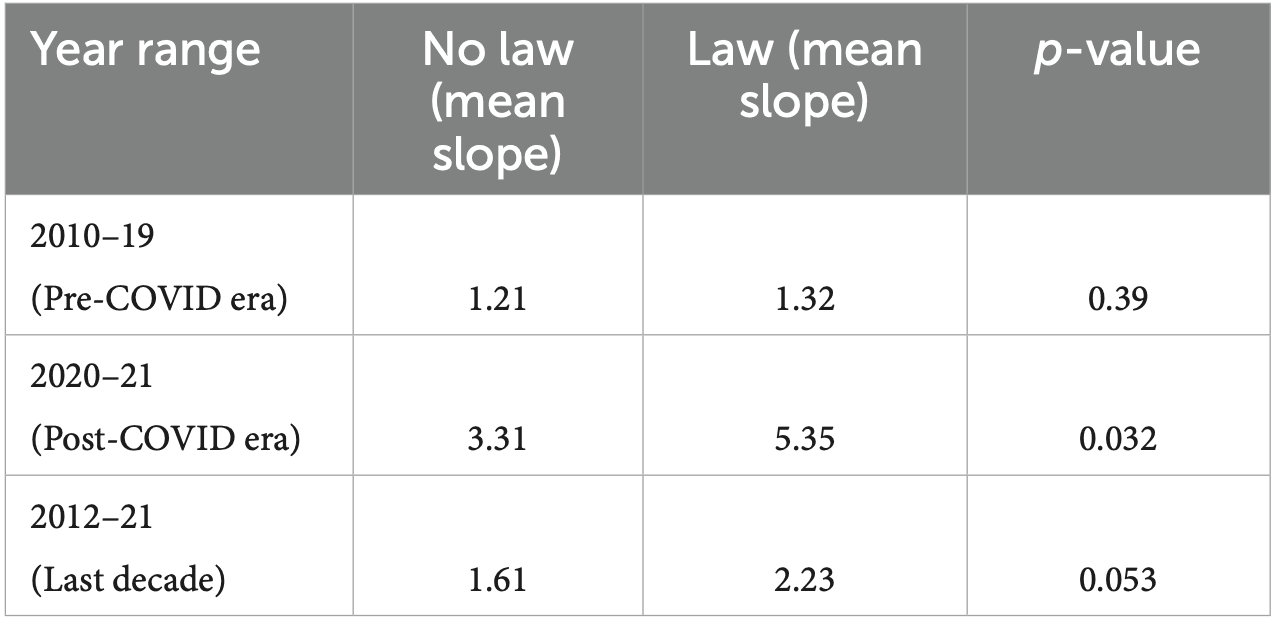
Table 1

OODR, Opioid overdose death rates; CC, Civil commitment; SUD, Substance use disorder.

Figure 1.

Annual age-adjusted OODR from 2010–21 comparing states with vs without civil commitment law. The error bars are 95% confidence interval (CI) of the mean (t-test comparing mean annual age-adjusted OODR for no law vs law, p = 0.35).
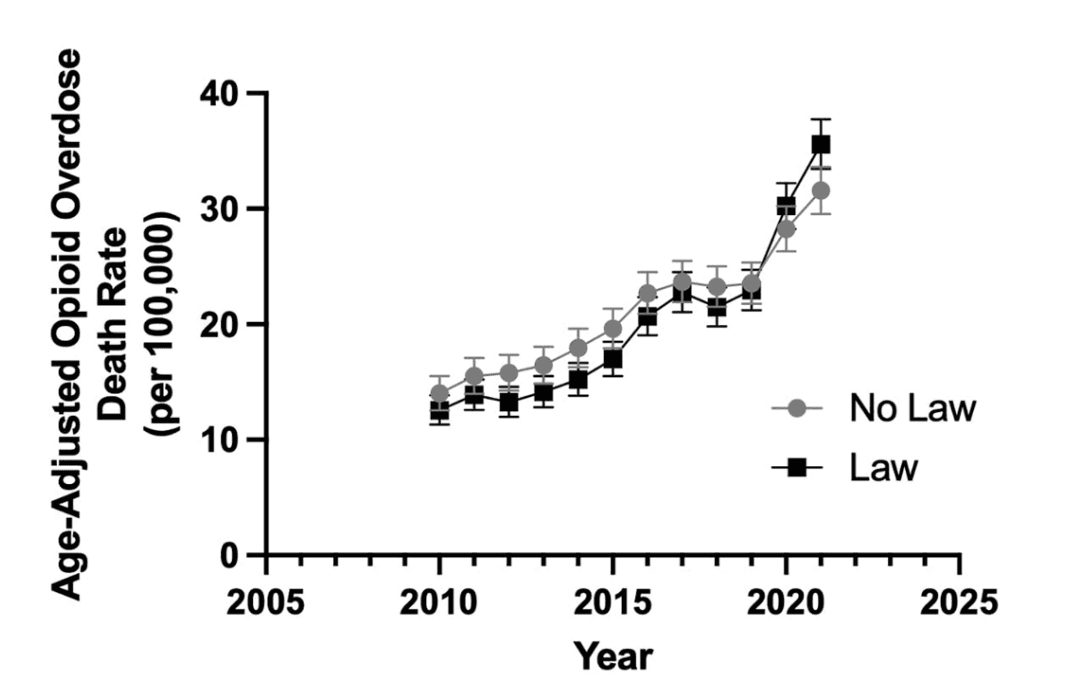
Figure 1

Although no statistical significance is found in OODR between states with and without CC SUD laws, from 2012–21, an increasing trend is evident amongst the slopes of states with and without a law (p = 0.053, Table 1; Figure 1). The OODR increased at a faster rate post-COVID (2020–21) as compared to pre-COVID among states without a CC SUD law (p = 0.019) and those with a CC SUD laws (p = 3.0×10⁻⁸) (Table 2). Table 2 displays the average slopes of OODR for states with and without CC SUD laws for years 2010–19 and 2020–21. Figure 2 presents a graph comparing the impact of CC SUD law on age-adjusted OODR between 2010–19 and 2020–21.

Table 2.

Mean slopes (increase) of age-adjusted OODR for states with or without CC SUD law comparing years 2010–19 (Pre-COVID era) and 2020–21 (Post-COVID era).
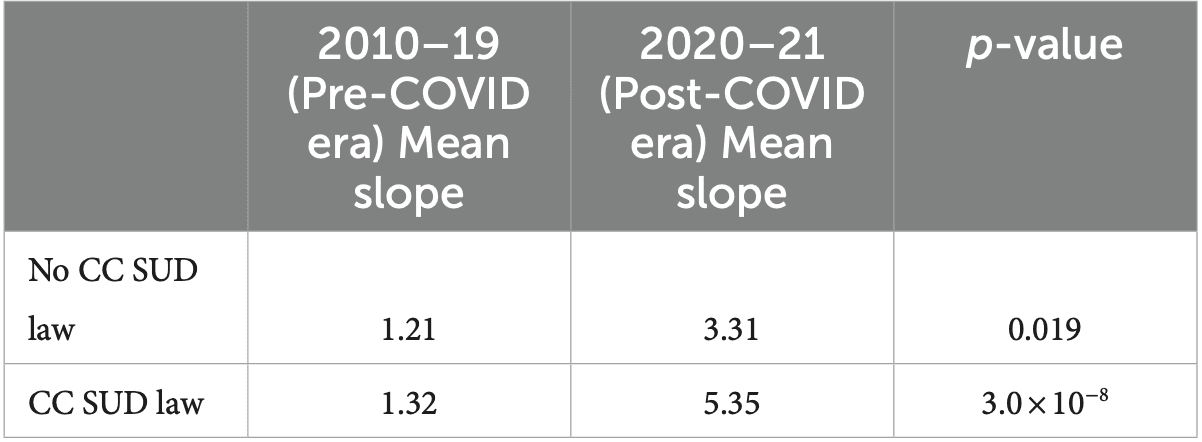
Table 2

OODR, Opioid overdose death rates; CC, Civil commitment; SUD, Substance use disorder.

Figure 2.

Slope of age-adjusted opioid overdose death rates (OODR) comparing 2010–19 to 2020–21 amongst states with or without civil commitment (CC) substance use disorder (SUD) law. Error bars display standard error of the mean (SEM) of age-adjusted OODR in states stratified by CC SUD law versus no CC SUD law states. Two-way ANOVA with Šídák testing confirmed year-range-dependent effects. p-value comparisons: ns (p > 0.05), *(0.01 ≤ p < 0.05), ****(p < 0.0001).
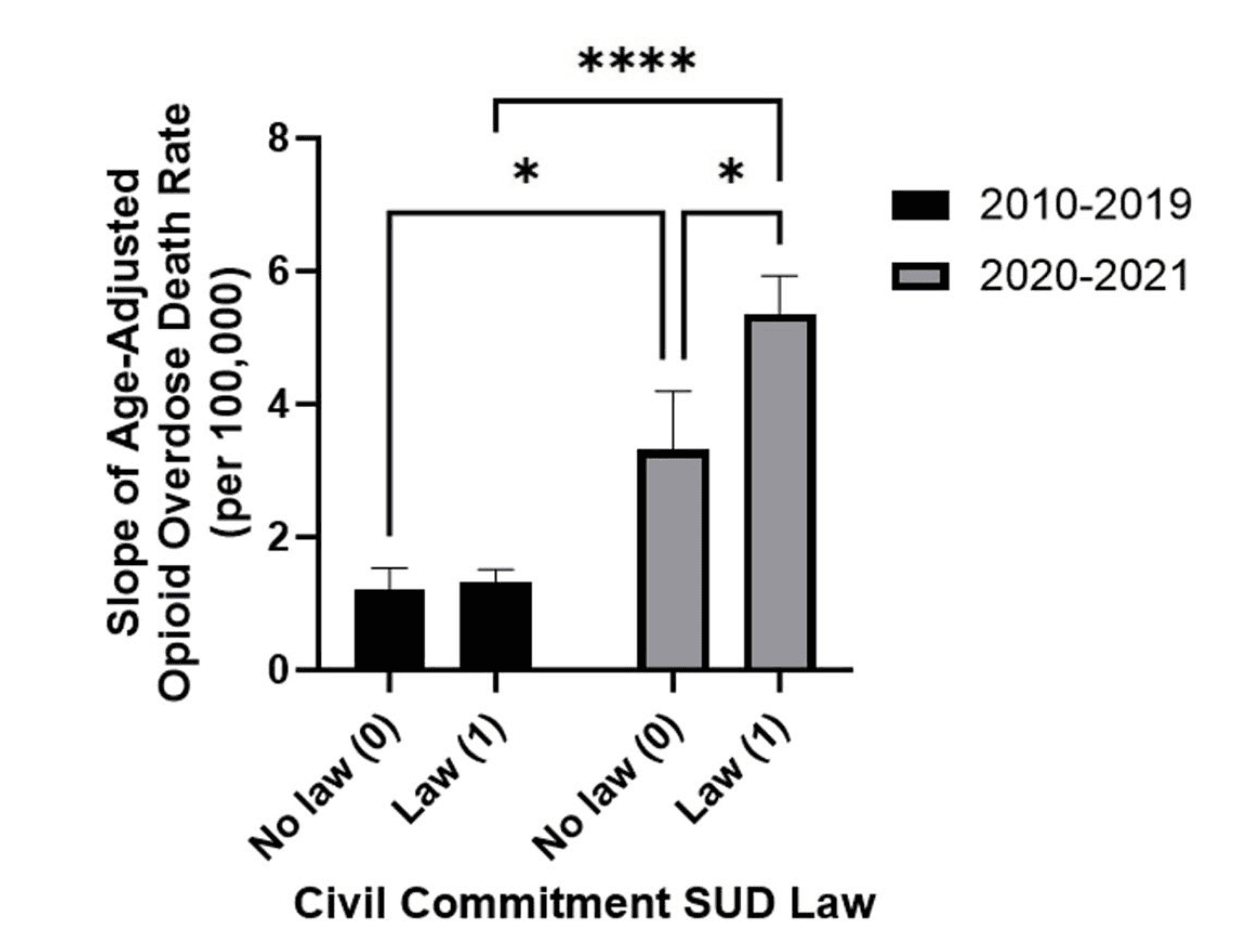
Fig 2

A two-way ANOVA with Šídák test was performed (Table 3). Supplementary Table S1 provides two-way ANOVA source of variation which yielded the following results: (1) years 2010-19 and 2020-21 do not have a consistent impact on OODR across all absence or presence of law values (p = 0.084), (2) the year ranges significantly affect the results (p < 0.0001), (3) absence or presence of law does not significantly impact the results (p = 0.054). Table 4 provides the slopes for each state stratified by 2010–19, 2020–21, and a 10-year range 2012–21.

Table 3.

Two-way ANOVA of four groups: civil commitment law vs. no law and 2010–19 vs. 2020–21.
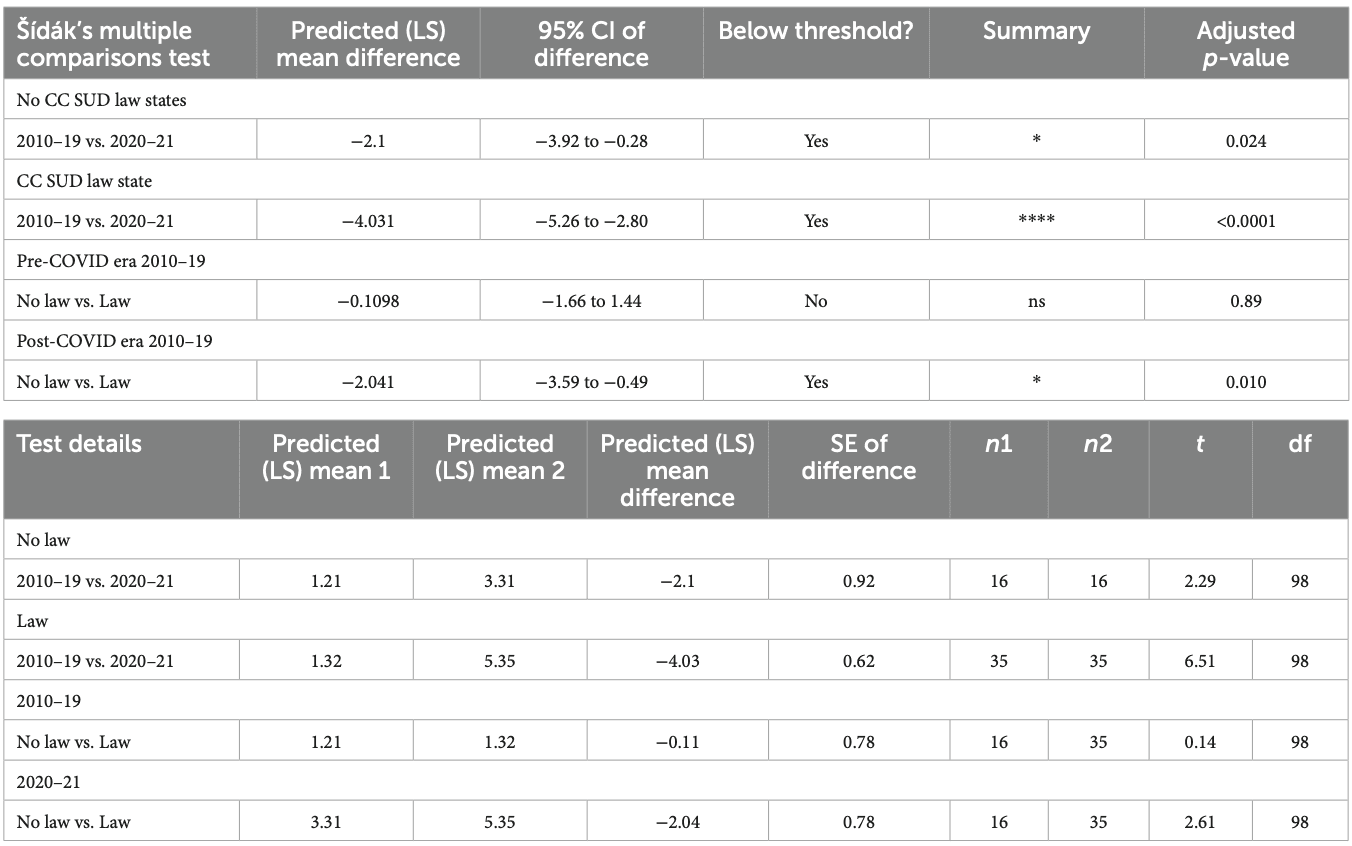
Table 3

Alpha set at 0.05. CI, Confidence interval; LS, Least Squares Means; SE, Standard error; n, sample size; t, t statistic; df, Degrees of freedom. *means (0.01 ≤ p < 0.05) and ****means (p < 0.0001).

Table 4.

Slopes (increase in death rates) for each state stratified by 2010–19, 2020–21, and a ten-year range 2012–21.
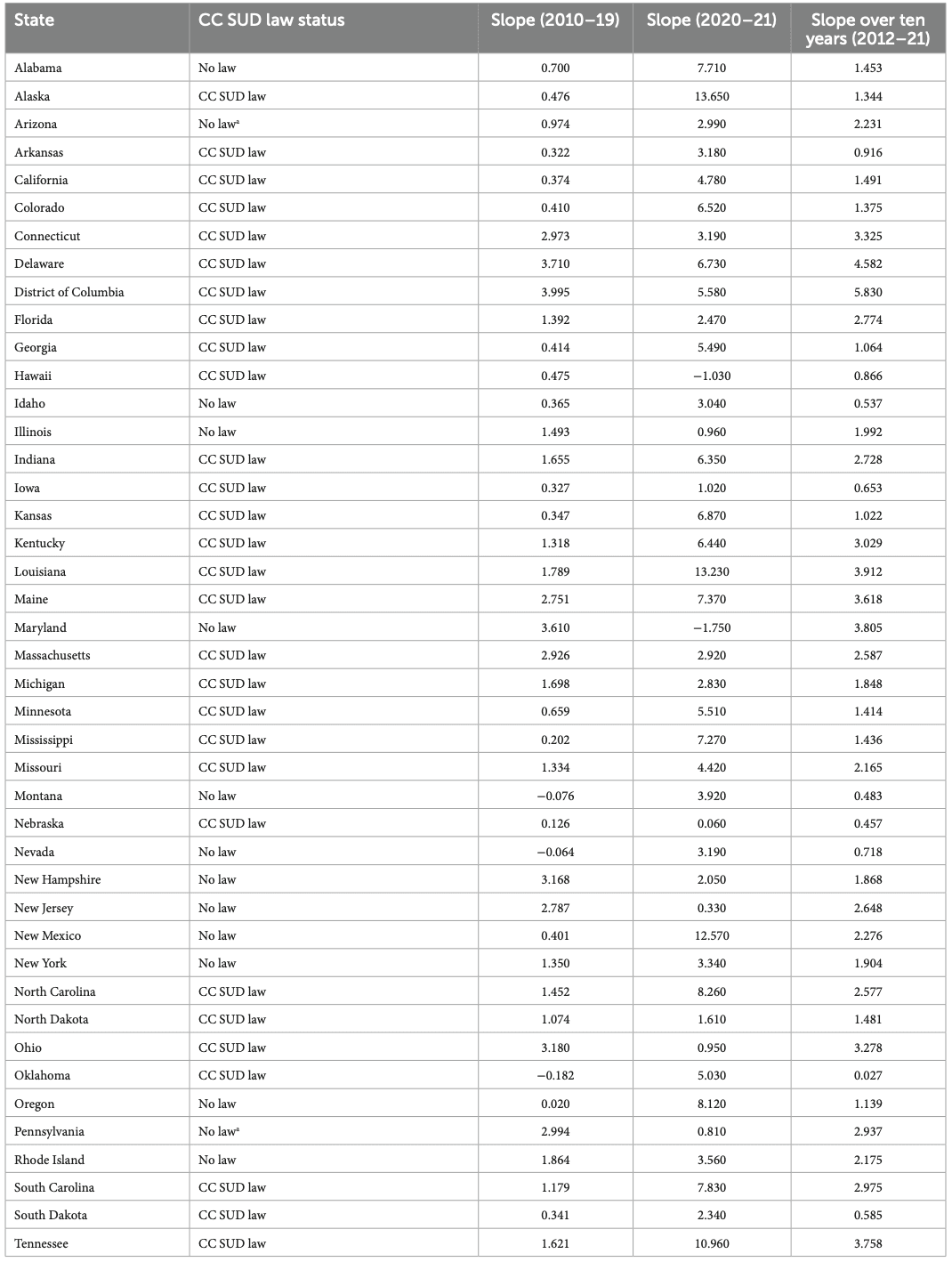
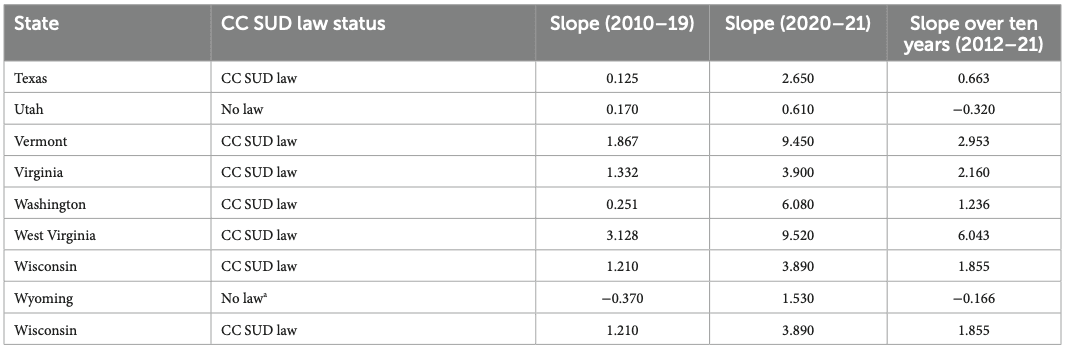
Table 4Table 4 (continued)

aUnique clauses in CC laws led to states Arizona, Pennsylvania, and Wyoming being categorized as not having an SUD (https://pdaps.org/datasets/civil-commitment-for-substance-users-1562936854). These states only permit CC for a diagnosed mental health disorder and not solely on the condition of SUD.

4. Discussion

Our study showed a significant increase in the rates of OODR over the past decade. Surprisingly, we found that the rates of OODR increased at a faster rate among the states with CC SUD laws as compared to those without the CC SUD laws after the COVID-19 pandemic. It may be because the CC SUD laws were enacted in these states due to high overdose death rates as an emergency response. It needs to be seen if CC SUD laws are effective in the long term. This demonstrates a dramatic change in OODR in the U.S. that correlates with the pandemic. It could also be due to physicians’ opposition to or unawareness of the law’s existence leading to underutilization. This suggests that the states with a CC SUD law may have higher pre-existing age-adjusted OODR. Despite the data showing higher age-adjusted OODR in states with CC SUD laws from 2020–21, some states recently enacted such laws. The lack of central recording locations for data acquisition of states using CC for SUD and fluctuating timeframes of enactment dates demonstrates the need for further investigations to determine how CC SUD law has affected patients. As more data becomes available with time, it will be possible to assess changes in death rates and identify significant factors influencing the OODR in each state. An improvement to the study would be to analyze individual state age-adjusted OODR and compare them to the enactment dates of each state’s CC SUD law to identify if states are utilizing the laws and if the laws are effective in reducing age-adjusted OODR.

Historical abuse of IC has led to skepticism of CC for SUD in the medical community. Early 1900’s facilities committed patients without a diagnosed mental illness for extended periods of time which led to a loss of possessions and an infringement on patient autonomy. Despite changes in mental healthcare practices and legal reform, a distressing past affecting one of the most vulnerable patient populations has kept concern for patient autonomy at the forefront of CC for SUD discussion. In addition, ambiguity in the literature arises from linking CC for SUD with outcomes in criminal cases. However, recent literature has uncovered mandated treatment for SUD can be effective, but more research is needed to better understand protective factors in treatment outcomes. CC laws for SUD offer a treatment approach for patients and families at a crossroads who have exhausted other options in addition to serving as a preventive measure against criminality. Individuals in the community and in healthcare realize substance use influences an individual’s thought processes and behavior. Thus, CC for SUD has been reconstructed from policies that were originally used for severe mental illness, such as psychotic disorders, where a potential harm to self or others warranted intervention. However, patient autonomy and consideration for capacity are still valid concerns among the medical community in approaching SUD treatment. In sum, more research is needed to elucidate the impact and efficacy of CC SUD laws on relapse and drug overdose rates.

The surge in fatal opioid overdoses has led to community-based advocacy for mandatory treatment. In 2004, the mother of Mathew Casey Wethington was able to lobby for a CC SUD law in her home state of Kentucky after losing her son who died from a heroin overdose (22, 23). The opioid epidemic has led to shifting viewpoints of CC SUD laws and communities are advocating for change. Those changes to CC SUD laws include extensive criteria for commitment, follow-up court hearings, and physicians who are advocating for patients who are a danger to themselves or others. Yet there are varying opinions among physicians in related specialties. According to a study in 2007 that surveyed psychiatrists, there is less support for CC for drug and alcohol use (22%). Meanwhile, a 2021 survey reported 60.7% of Addiction Medicine physicians support and 17.8% were unsure about supporting CC for SUD and passing a state law. The differing physician opinions may be from variance in their patient populations within each specialty or misconceptions about CC SUD laws, with 18.4% of psychiatrists in 2007 unsure whether their state had a CC SUD law for outpatient commitment. Responding to rising overdose rates, states with high rates may consider implementing CC SUD laws as a possible solution. Unfortunately, many states that have and use the provision lack a central recording location, making this data inaccessible. One avenue to overcome challenges in measuring CC efficacy for SUD through relapse rates is assessing relapse risk predictors in a group. One study found increased relapse risk predictors, such as reduced social connectedness among sober living residents during the COVID-19 pandemic. Another study by Hayaki et al. interviewed 121 individuals prior to CC, then followed them for 3 months after their release. This study showed that 41% used illicit opioids once or more, and over 64% received Medications for Opioid Use Disorder (MOUD) at least once, which was linked to reduced illicit opioid use, demonstrating CC for SUD as an effective prevention modality. To further elaborate on the ethics behind CC laws, there is debate that SUD patients may have diminished capacity due to a threat of harm to self or others, or being “gravely disabled,” justifying the use of CC laws. The prefrontal cortex (PFC) regulates the limbic reward system and higher-order functioning, contributing to compulsive drug taking and behavior. Goldstein and Volkow’s study found drug-addicted individuals show PFC dysfunctions associated with increased drug use, poor PFC-related task performance, and greater relapse likelihood. In 2017, Ieong et al. compiled a review describing that 30 chronic heroin users with OUD, after methadone therapy, exhibited reduced functional connectivity between the insula and inferior orbitofrontal cortex, amygdala, putamen, and caudate areas. Individuals addicted to drugs exhibit dorsal anterior cingulate cortex hypoactivity and deficient inhibitory control. Chronic self-medication with opioids and methamphetamine results in long-term effects, such as reduced inhibitory control and emotional disruptions persisting beyond short-term abstinence and reemerging with drug-related cues during relapses. This supports longer rehabilitation over short abstinence for OUD patients. A 2-week abstinence could improve brain connectivity in the reward system, but impulsivity recovery is lacking. Single treatments may not eliminate cravings or provide effective strategies for their transition afterwards, warranting extended care. Moreover, a PFC dysfunction may precede drug usage, increasing SUD vulnerability. The PFC’s role in craving, compulsive usage, and denial needs more study. Furthermore, severe SUD/OUD patients may even display impaired cognitive abilities, impaired logical thinking, and increased impulsivity. This shifts the view of CC for SUD to a model of possibly impaired logical thinking and unmanageable lifestyle as SUD or OUD patients exhibit impaired decision-making, although some show increased impulsivity without impaired decision-making.

Some limitations to this study include our univariate approach not accounting for confounding factors, such as area poverty level and demographics, and their potential adverse effects on people with SUD. Future research on the association of demographic factors in addition to CC SUD laws is warranted. Previous research found that living in a disadvantaged area, as compared to a prosperous one, was associated with a greater likelihood of both jail sentences longer than 6 months and nonfatal overdoses. These confounding factors are worth investigating to compare how area-level deprivation could have similar effects in the U.S. We also did not measure the effectiveness of CC SUD laws on relapse rates which could potentially show the significance of these laws. The data in this study is observational and does not necessarily indicate a causal relationship between the COVID era and OODR. Tracking relapse rates through a dedicated database would offer more accurate data for assessing CC SUD treatment efficacy. However, documenting relapse rates after discharge in this population poses challenges. For instance, the occurrence of relapse and outpatient treatment is often not known or mandated after discharge from a residential treatment facility. Within the past 5 years, some states have enacted CC SUD laws, so there is insufficient time to affect OODR. Moreover, CC laws have been amended to include SUD. Despite these limitations, we found that states with CC SUD laws, after the COVID-era, did not have lower OODR than states without the laws. Future studies should investigate the long-term impact of these laws on opioid overdose and mortality.

5. Conclusion

Our study found that overall OODR have increased significantly over the last decade. Contrary to our null hypothesis, we found that the OODR increased at a faster rate post-COVID among the states with CC SUD laws as compared to those without. The CC SUD laws were enacted in response to the opioid epidemic, presumably among the states with high rates of opioid overdose deaths. Future studies on the long-term impact of CC SUD laws on OODR is warranted. We also recommend controlling for the personal level factors such as mental illnesses and area level factors such as poverty and drug possession laws while analyzing the impact of CC SUD laws on OODR.

Open Article as PDF

Abstract

Objective Our study analyzed the impact of civil commitment (CC) laws for substance use disorder (SUD) on opioid overdose death rates (OODR) in the U.S. from 2010–21.

Methods We used a retrospective study design using the CDC Wide-ranging Online Data for Epidemiologic Research (WONDER) dataset to analyze overdose death rates from any opioid during 2010–21 using ICD-10 codes. We used t-tests and two-way ANOVA to compare the OODR between the U.S. states with the law as compared to those without by using GraphPad Prism 10.0.

Results We found no significant difference in the annual mean age-adjusted OODR from 2010–21 between U.S. states with and without CC SUD laws. During the pre-COVID era (2010–19), the presence or absence of CC SUD law had no difference in age-adjusted OODR. However, in the post-COVID era (2020–21), there was a significant increase in OODR in states with a CC SUD law compared to states without the law (p = 0.032). We also found that OODR increased at a faster rate post-COVID among both the states with CC SUD laws (p < 0.001) and the states without the law (p = 0.019).

Conclusion We found higher age-adjusted OODR in states with a CC SUD law which could be due to the laws being enacted in response to the opioid crisis or physicians’ opposition to or unawareness of the law’s existence leading to underutilization. Recent enactment of CC SUD law(s), a lack of a central database for recording relapse rates, and disparities in opioid overdose rate reductions uncovers multiple variables potentially influencing OODR. Thus, further investigation is needed to analyze the factors influencing OODRs and long-term effects of the CC SUD laws.

Introduction

Drug treatment was sought by over 1.92 million individuals in the U.S. in 2019, according to the United Nations Office on Drugs and Crime (UNODC). Opioid use accounted for more than 43% of these cases, making it the most common drug class requiring treatment. Opioid use, including prescription opioids, affected approximately 15.1 million people in the U.S. in 2020. While opioid dispensing rates have generally declined nationwide, states like Alabama, Arkansas, Kentucky, Louisiana, Mississippi, and Tennessee still report rates above the national average. For instance, Alabama's rate of 80.4 opioid prescriptions per 100 people in 2020 was the highest among all states. As prescription opioid rates decrease, individuals sometimes turn to more affordable, accessible, and potent illegal drugs, such as synthetic opioids. Overdose deaths involving synthetic opioids, especially fentanyl, have significantly increased over the last decade, with fentanyl contributing to nearly half of all opioid overdose deaths in the U.S. by 2016. Overall drug overdose deaths have risen sharply, reaching over 105,000 by February 2023.

Civil commitment (CC) for substance use disorder (SUD) provides a legal avenue for courts to mandate individuals with an SUD diagnosis into medically supervised treatment. This process can be initiated by interested parties, such as family members or healthcare professionals, who petition the court. If an individual meets specific criteria, such as being "gravely disabled" or posing a threat to themselves or others due to substance use-related cognitive issues, a judge may order CC for SUD. Currently, 34 states and the District of Columbia have enacted CC laws for SUD, though the specific requirements vary significantly by state. These variations include diagnostic criteria, the type of treatment (residential or outpatient), and the mandated duration of treatment, which can range from two weeks to over a year. Some states permit non-consensual medical treatments, including surgery or electric shock, under these laws, while others do not specify permitted interventions. The lack of uniformity in these laws makes it challenging to assess their effectiveness. Despite this, some studies suggest CC can be useful, with one Florida study reporting high completion rates for CC programs. Given the rising rates of opioid overdose deaths in the U.S., this study aimed to investigate the impact of CC SUD laws on overall opioid overdose death rates (OODR) from 2010 to 2021, comparing states with and without these laws. The hypothesis was that states with CC SUD laws would have lower OODR.

Methods

Data for this study were obtained from the Centers for Disease Control and Prevention (CDC) Wide-ranging Online Data for Epidemiologic Research (WONDER) database. The analysis focused on opioid overdose death rates (OODR) from 2010 to 2021 for all 50 states and the District of Columbia. Data retrieval used specific International Classification of Diseases, Tenth Revision (ICD-10) codes related to drug poisonings, including unintentional, suicide, homicide, and undetermined causes. Age-adjusted death rates were calculated per 100,000 people to account for age-related mortality differences. States were categorized based on whether they had a CC SUD law, with some states excluded if their laws only permitted involuntary commitment for diagnosed mental health disorders, not solely for SUD. Opioid overdose deaths were analyzed across two periods: the pre-COVID era (2010–2019) and the post-COVID era (2020–2021), as well as over a ten-year range from 2012 to 2021. Statistical analysis involved t-tests and two-way analysis of variance (ANOVA) to compare age-adjusted OODR across different groups.

Results

The study revealed a significant increase in opioid overdose death rates (OODR) over the past decade. No significant difference was observed in the annual mean age-adjusted OODR between states with and without a CC SUD law across the entire 2010–2021 period. Before the COVID era (2010–2019), the presence or absence of a CC SUD law also did not significantly affect the trends in OODR. However, a significant difference emerged post-COVID (2020–2021), with the OODR increasing at a faster rate in states with CC SUD laws compared to those without. The OODR increased more rapidly in both types of states after the COVID-19 pandemic than before it. Despite no overall statistical significance in OODR between the two groups of states, an increasing trend was evident for both groups from 2012–2021. Further analysis indicated that the year ranges (pre- vs. post-COVID) significantly impacted the results, while the presence or absence of a CC SUD law did not consistently or significantly affect the OODR.

Discussion

This study highlights a concerning increase in opioid overdose death rates (OODR) over the last decade. Unexpectedly, states with civil commitment (CC) laws for substance use disorder (SUD) experienced a faster increase in OODR after the COVID-19 pandemic compared to states without such laws. This outcome may suggest that these laws were implemented as an emergency response in areas already struggling with high overdose rates. The long-term effectiveness of CC SUD laws remains uncertain, and factors such as lack of physician awareness or opposition could contribute to their underutilization. The dramatic rise in OODR post-pandemic underscores a critical shift in the U.S. opioid crisis.

Historically, involuntary commitment has faced skepticism due to past abuses that infringed on patient autonomy. However, the severe impact of substance use on an individual's thought processes and behavior, combined with the current opioid epidemic, has led to a reevaluation of CC for SUD. Recent literature suggests that mandated treatment for SUD can be effective, though more research is needed to understand specific protective factors. CC laws for SUD offer an option for individuals and families who have exhausted other treatment avenues and can serve as a preventative measure against criminal behavior. Neurological studies provide a basis for understanding how severe SUD can impair cognitive abilities, logical thinking, and impulse control, potentially justifying interventions like CC when individuals may have diminished capacity to make sound decisions for themselves. This understanding supports the need for longer rehabilitation periods, as short-term abstinence may not fully restore brain connectivity or resolve cravings and impulsivity.

Despite these potential benefits, limitations in the study include a focus solely on OODR without considering confounding factors such as poverty levels, demographics, or other drug possession laws. Future research should investigate these associations. Additionally, the study did not measure the effectiveness of CC SUD laws on relapse rates due to challenges in data collection post-discharge. Given that some states have only recently enacted or amended their CC SUD laws, sufficient time may not have passed to observe their full impact on OODR. The observational nature of this study also means a direct causal link between the COVID era and OODR cannot be definitively established. Nevertheless, the finding that states with CC SUD laws did not demonstrate lower OODR post-COVID underscores the need for more comprehensive, long-term studies to assess their true impact on opioid overdose and mortality.

Conclusion

Overall opioid overdose death rates have significantly increased over the past ten years. Contrary to the initial hypothesis, the study found that opioid overdose death rates rose at a faster pace in states with civil commitment laws for substance use disorder following the COVID-19 pandemic, compared to states without such laws. These laws were likely implemented in response to high rates of opioid overdose deaths. Further research is necessary to understand the long-term impact of these laws on opioid overdose death rates. It is also recommended that future studies consider personal factors like mental illnesses and area-level factors such as poverty and drug possession laws when analyzing the effects of civil commitment laws for substance use disorder on overdose rates.

Open Article as PDF

Abstract

Objective Our study analyzed the impact of civil commitment (CC) laws for substance use disorder (SUD) on opioid overdose death rates (OODR) in the U.S. from 2010–21.

Methods We used a retrospective study design using the CDC Wide-ranging Online Data for Epidemiologic Research (WONDER) dataset to analyze overdose death rates from any opioid during 2010–21 using ICD-10 codes. We used t-tests and two-way ANOVA to compare the OODR between the U.S. states with the law as compared to those without by using GraphPad Prism 10.0.

Results We found no significant difference in the annual mean age-adjusted OODR from 2010–21 between U.S. states with and without CC SUD laws. During the pre-COVID era (2010–19), the presence or absence of CC SUD law had no difference in age-adjusted OODR. However, in the post-COVID era (2020–21), there was a significant increase in OODR in states with a CC SUD law compared to states without the law (p = 0.032). We also found that OODR increased at a faster rate post-COVID among both the states with CC SUD laws (p < 0.001) and the states without the law (p = 0.019).

Conclusion We found higher age-adjusted OODR in states with a CC SUD law which could be due to the laws being enacted in response to the opioid crisis or physicians’ opposition to or unawareness of the law’s existence leading to underutilization. Recent enactment of CC SUD law(s), a lack of a central database for recording relapse rates, and disparities in opioid overdose rate reductions uncovers multiple variables potentially influencing OODR. Thus, further investigation is needed to analyze the factors influencing OODRs and long-term effects of the CC SUD laws.

Introduction

In 2019, more than 1.92 million individuals in the U.S. received treatment for drug use, with over 43% of these cases related to opioid use. By 2020, approximately 15.1 million people in the U.S. had used opioids, including prescription opioids. While overall opioid prescription rates have declined, several southern states continue to have rates higher than the national average. As access to prescription opioids decreases, some individuals have turned to cheaper, more potent illicit drugs, such as synthetic opioids. This shift has contributed to a significant increase in overdose deaths involving synthetic opioids, particularly fentanyl, over the past decade. The number of drug overdose deaths in the U.S. has risen sharply, reaching over 105,000 deaths by February 2023.

Civil commitment (CC) for substance use disorder (SUD) is a legal process where a court can mandate an individual with an SUD diagnosis to receive medically supervised treatment. This process is initiated when interested parties, such as family members or healthcare professionals, petition the court, arguing that an individual meets specific criteria due to substance use, such as being "gravely disabled" or posing a threat to themselves or others. Not all states have CC laws specifically for SUD. As of 2021, 34 states and the District of Columbia have such laws, though the specific requirements and permitted treatments vary greatly. The effectiveness of these laws remains largely unclear, with limited data available. This study examined the impact of CC SUD laws on overall opioid overdose death rates (OODR) in the U.S. from 2010 to 2021.

Methods

Opioid overdose death rate data from 2010 to 2021 for all 50 states and D.C. were obtained from the Centers for Disease Control and Prevention (CDC) Wide-ranging Online Data for Epidemiologic Research (WONDER) database. The data included multiple cause of death codes related to unintentional, suicidal, homicidal, and undetermined drug poisonings involving opioids. Age-adjusted death rates were used to account for age differences in mortality. States were classified based on whether they had a CC SUD law, with some states excluded if their laws only allowed involuntary commitment for a diagnosed mental health disorder, not solely for SUD. The data was analyzed by comparing states with and without CC SUD laws, and by distinguishing between the pre-COVID era (2010-2019) and the post-COVID era (2020-2021). Statistical analysis involved two-way analysis of variance (ANOVA) and t-tests to compare death rates and their trends.

Results

Analysis of the data revealed no significant difference in the average annual age-adjusted opioid overdose death rates between states with and without CC SUD laws for the entire period of 2010-2021. This trend also held true for the pre-COVID era (2010-2019). However, a significant difference emerged after the COVID-19 pandemic (2020-2021), where states with CC SUD laws experienced a faster increase in age-adjusted opioid overdose death rates compared to states without such laws. Across the entire decade from 2012 to 2021, an overall increasing trend in opioid overdose death rates was observed in both groups of states. The rates of increase accelerated significantly in the post-COVID era for both states with and without CC SUD laws compared to the pre-COVID period.

Discussion

The study's finding that opioid overdose death rates increased at a faster rate in states with CC SUD laws after the COVID-19 pandemic was unexpected. This outcome could be due to these laws being implemented as an emergency response in states already experiencing high overdose rates. The long-term effectiveness of CC SUD laws requires further evaluation. Historical concerns about involuntary commitment, including past abuses and infringements on patient autonomy, have led to skepticism regarding CC for SUD within the medical community. Despite these concerns, research indicates that mandated treatment for SUD can be effective, though more understanding of protective factors in treatment outcomes is needed. The debate around CC for SUD often considers whether severe SUD can impair an individual's capacity for logical thinking and decision-making, potentially justifying intervention. Brain imaging studies have shown that individuals with drug addiction often exhibit prefrontal cortex dysfunctions that contribute to compulsive drug-taking behavior and increased relapse risk, supporting the idea that longer rehabilitation periods might be beneficial. The study had limitations, including not accounting for confounding factors like poverty levels or demographics, and not measuring the direct impact of CC SUD laws on relapse rates.

Conclusion

Opioid overdose death rates have significantly increased over the last decade. Contrary to initial expectations, the study found that these rates increased at a faster pace in states with civil commitment laws for substance use disorder after the COVID-19 pandemic compared to states without such laws. This suggests that the implementation of these laws may have been a response to existing high overdose rates in those areas. Future studies are needed to assess the long-term impact of civil commitment laws on opioid overdose death rates and should also consider personal factors like mental illnesses and area-level factors such as poverty and drug possession laws.

Open Article as PDF

Abstract

Objective Our study analyzed the impact of civil commitment (CC) laws for substance use disorder (SUD) on opioid overdose death rates (OODR) in the U.S. from 2010–21.

Methods We used a retrospective study design using the CDC Wide-ranging Online Data for Epidemiologic Research (WONDER) dataset to analyze overdose death rates from any opioid during 2010–21 using ICD-10 codes. We used t-tests and two-way ANOVA to compare the OODR between the U.S. states with the law as compared to those without by using GraphPad Prism 10.0.

Results We found no significant difference in the annual mean age-adjusted OODR from 2010–21 between U.S. states with and without CC SUD laws. During the pre-COVID era (2010–19), the presence or absence of CC SUD law had no difference in age-adjusted OODR. However, in the post-COVID era (2020–21), there was a significant increase in OODR in states with a CC SUD law compared to states without the law (p = 0.032). We also found that OODR increased at a faster rate post-COVID among both the states with CC SUD laws (p < 0.001) and the states without the law (p = 0.019).

Conclusion We found higher age-adjusted OODR in states with a CC SUD law which could be due to the laws being enacted in response to the opioid crisis or physicians’ opposition to or unawareness of the law’s existence leading to underutilization. Recent enactment of CC SUD law(s), a lack of a central database for recording relapse rates, and disparities in opioid overdose rate reductions uncovers multiple variables potentially influencing OODR. Thus, further investigation is needed to analyze the factors influencing OODRs and long-term effects of the CC SUD laws.

Introduction

Reports from 2019 by the United Nations Office on Drugs and Crime (UNODC) indicated that over 1.92 million individuals in the U.S. sought treatment for drug use. Opioid use accounted for more than 43.2% of these cases, making it the most common drug class for which people received treatment, surpassing hallucinogens, cocaine, cannabis, solvents, inhalants, sedatives, and tranquilizers. In 2020, about 4.56% of the U.S. population, roughly 15.1 million people, used opioids, including prescribed ones. While opioid prescription rates have generally decreased across the U.S., states like Alabama, Arkansas, Kentucky, Louisiana, Mississippi, and Tennessee still show rates above the national average. For instance, Alabama recorded 80.4 opioid prescriptions per 100 people in 2020, remaining the highest among all states, despite a decrease from 142 prescriptions per 100 people in 2012. Additionally, strict criminal laws for drug possession might prevent opioid users from seeking necessary medical care.

As U.S. opioid prescription rates decline, individuals have increasingly turned to cheaper, more accessible, and stronger illegal drugs, such as synthetic opioids. Overdose deaths involving synthetic opioids, especially fentanyl, have significantly risen in the past decade. In 2016, fentanyl and similar substances were linked to nearly half of all opioid overdose deaths in the United States. Data from crime laboratories in 2019 showed a 12% increase in fentanyl identification and a 13% decrease in heroin reports.

According to the UNODC, there were 70,237 drug-related overdose deaths in 2017, primarily due to opioids, followed by cocaine and amphetamine-type stimulants. By June 2021, drug overdose deaths had climbed to 100,569, a 21.3% increase from the 82,916 deaths recorded the previous year. In February 2023, the number of drug overdose deaths reached 105,258.

Civil commitment (CC) for substance use disorder (SUD) is a type of involuntary commitment. It involves a legal process where a court can order an individual diagnosed with SUD into supervised medical treatment. If a person meets specific criteria, such as being "gravely disabled" or posing a threat to themselves or others due to substance use-related mental health issues, a petition for CC for SUD can be filed. Family members, community members, healthcare professionals, or government officials can initiate this process by filing a petition with the court. After a petition is filed, the individual named receives a copy and a notice to appear for a hearing. During the hearing, the judge reviews the petition and any presented evidence to determine if the claims are true and if the state's legal requirements for CC for SUD are met. Not all states have CC laws specifically for SUD. In states without such laws, individuals with SUD cannot be legally mandated to receive treatment like inpatient or outpatient rehabilitation. As of 2021, 34 states and the District of Columbia have enacted CC laws for SUD, with each state having different legal requirements. Some states may not explicitly require a hearing for CC for SUD, which is more common for other mental illnesses. However, all CC SUD laws outline specific criteria that must be met in each case. Once the court decides that legal requirements are fulfilled, the individual is taken into custody and placed in appropriate SUD treatment. Research has shown that individuals with both mental illness and substance use problems have higher rates of amphetamine and inhalant use, and a history of using multiple substances, compared to substance users without mental illnesses. They also tend to have more severe medical issues.

There is not enough information to fully determine how effective CC laws are for SUD. A 2013 study in Florida on CC for SUD found that 69% of participants completed the CC program, which was comparable to the 70% who completed voluntary treatment admissions. This study suggests that CC can be helpful for SUD, but also highlights the complex factors involved, including how a patient's motivation can influence treatment success. For example, a patient might be motivated by external pressures, such as the fear of losing a marriage or job, family pressure, or the consequences of criminal offenses. State CC laws for SUD vary in many ways, including the diagnostic criteria, the type of treatment required (residential or outpatient), and the mandated duration of treatment, which can range from two weeks to one year. Nebraska, Iowa, Michigan, and D.C. do not set a maximum initial commitment duration, but the treatment duration still needs to be specified when the commitment is made. Initial commitment durations vary from 14 days to an unspecified length, and 26 states and D.C. have a process for recommitting individuals under their CC SUD laws. Protocols also differ based on the type of mental illness. Most states with a CC SUD law clearly state that CC for SUD is allowed. In contrast, some states use broader terms like "mentally ill person" and then include substance use or intoxication to authorize CC. This seemingly minor difference is important because an individual might have an SUD diagnosis without a mental illness, or there might not be enough evidence that their ability to care for themselves is impaired. In most states, CC for SUD does not include invasive treatments like medication injections. However, 12 U.S. states permit non-consensual medication under CC SUD laws. States also differ on what is allowed under CC SUD law, including surgery (4 states), electric shock therapy (1 state), restraints (13 states), and seclusion (10 states), while 15 states and D.C. do not specify what is permitted. These variations in state CC laws for SUD make it difficult to prove their effectiveness. A 2015 study found that Florida and Massachusetts had the highest use of CC laws for SUD among all states, with Florida reporting over 9,000 annual uses and Massachusetts over 4,500 uses in 2011. Wisconsin was next with 260 uses in 2011. CC SUD laws have the potential to help reduce the rapidly increasing opioid overdose deaths in the U.S. Given the lack of clear evidence on the effectiveness of these laws, a study investigated how CC SUD laws impact overall death rates from any opioid overdose. The study analyzed opioid overdose death rates (OODR) from 2010–2021 in all 50 states and D.C., comparing states with CC SUD laws to those without. The hypothesis was that states with CC SUD laws would have significantly lower OODR from 2010–2021 than states without such laws.

Methods

Study Data

To analyze opioid overdose death rates (OODR) from 2010 to 2021 for all 50 states and D.C., researchers utilized the Centers for Disease Control and Prevention (CDC) Wide-ranging Online Data for Epidemiologic Research (WONDER) dataset. This analysis focused on Multiple Cause of Death (MCD) data, using International Classification of Diseases, Tenth Revision (ICD-10) codes for drug poisonings (overdose) related to unintentional causes (X40-X44), suicide (X60-64), homicide (X85), and undetermined causes (Y10-Y14).

CDC WONDER Data Parameters

Data was collected from CDC WONDER using specific parameters for MCD-ICD-10 Drug/Alcohol induced causes, focusing on various categories of drug poisonings (overdose). These included unintentional (X40-X44), suicide (X60–X64), homicide (X85), and undetermined (Y10–Y14).

The data was grouped by state, and rates were calculated per 100,000 people. Demographic filters included all ages, all genders, all races, and all origins. All autopsy values and places of death were considered. Selections were made for age-adjusted rates, 95% confidence intervals, standard errors, and percent of total deaths. Data from CDC WONDER (2010–2021) was downloaded as text files and then converted to Excel. The data was retrieved in June 2023, so provisional data for 2022 and partial/provisional data for 2023 were not included. Statistical analyses, including t-tests and two-way ANOVA, were performed using GraphPad Prism 10.0.

Data Measures

Age-adjusted death rates were used instead of crude death rates to account for how age can influence mortality. States were categorized based on whether they had a state law for Civil Commitment for Substance Use Disorder (CC SUD). Arizona, Pennsylvania, and Wyoming were classified as not having a CC SUD law because their laws only permit involuntary commitment if a mental health disorder is diagnosed, not solely for SUD. Opioid-overdose deaths were divided into two periods: the pre-COVID era (2010–2019) and the post-COVID era (2020–2021). The study also examined OODR over the last decade (2012–2021). Opioid-related deaths were grouped by sex, age, and race/ethnicity, and reported per 100,000 people.

Statistical Analysis

A two-way analysis of variance (ANOVA) with Šídák testing (with an alpha level below 0.05) was used to compare age-adjusted OODR across four groups: (1) U.S. states without a CC SUD law (2010–2019), (2) U.S. states with a CC SUD law (2010–2019), (3) U.S. states without a CC SUD law (2020–2021), and (4) U.S. states with a CC SUD law (2020–2021). The p-values were noted as: ns (p > 0.05), * (0.01 ≤ p < 0.05), and **** (p < 0.0001). The analysis assumed unequal variances and generated slopes for each state during 2010–2019, 2020–2021, and the combined 10-year period from 2012–2021. Opioid overdose death rate data for North Dakota in 2011 was reported as unreliable and was therefore excluded from the study.

Results

An analysis of the average increases in age-adjusted opioid overdose death rates (OODR) for different time periods was conducted. A t-test showed no significant difference in the annual average age-adjusted OODR between states without a CC SUD law and states with such a law from 2010–2021 (p = 0.35). Before the COVID era (2010–2019), the presence or absence of a CC SUD law did not significantly affect the rate of increase in age-adjusted OODR (p = 0.39). However, after the COVID era (2020–2021), there was a significant difference in the rate of increase in age-adjusted OODR when comparing states without a CC SUD law to those with one (p = 0.032).

Although no statistical significance was found in OODR between states with and without CC SUD laws from 2012–2021, an increasing trend was observed in the rates of both types of states (p = 0.053). The OODR increased at a faster rate during the post-COVID period (2020–2021) compared to the pre-COVID period among states both without a CC SUD law (p = 0.019) and with a CC SUD law (p = 3.0×10⁻⁸).

A two-way ANOVA with Šídák testing was performed to compare the four groups. The analysis found that the periods of 2010-2019 and 2020-2021 did not have a consistent impact on OODR across all states, regardless of whether a CC SUD law was present (p = 0.084). However, the specific year ranges significantly affected the results (p < 0.0001). The presence or absence of a CC SUD law did not significantly impact the overall results (p = 0.054). The slopes for each state were also analyzed, divided into the 2010–2019 period, the 2020–2021 period, and the 10-year span from 2012–2021.

Discussion

This study revealed a significant increase in opioid overdose death rates (OODR) over the past decade. Surprisingly, the OODR increased at a faster rate in states with Civil Commitment for Substance Use Disorder (CC SUD) laws compared to states without such laws after the COVID-19 pandemic. This observation might be because CC SUD laws were implemented in these states as an emergency response to already high overdose death rates. It remains to be seen if CC SUD laws prove effective in the long run. This finding indicates a dramatic shift in U.S. OODR that correlates with the pandemic. It could also be influenced by physicians' opposition to or lack of awareness about these laws, leading to their underutilization. This suggests that states with CC SUD laws may have had higher pre-existing age-adjusted OODR. Despite data showing higher age-adjusted OODR in states with CC SUD laws from 2020–2021, some states have only recently passed such laws. The lack of centralized data collection for CC SUD use by states and the varying enactment dates make it difficult to determine the exact impact of CC SUD laws on patients. As more data becomes available over time, it will be possible to assess changes in death rates and identify key factors influencing OODR in each state. A future improvement to this research would involve analyzing individual state age-adjusted OODR and comparing them to the enactment dates of each state's CC SUD law to determine if the laws are being used and if they are effective in reducing OODR.

The historical misuse of involuntary commitment has led to skepticism about CC for SUD within the medical community. In the early 1900s, patients were committed to facilities for extended periods without a diagnosed mental illness, resulting in property loss and a violation of their personal freedom. Despite reforms in mental healthcare practices and laws, this troubling past, affecting some of the most vulnerable patient groups, keeps patient autonomy a central concern in discussions about CC for SUD. Furthermore, the existing literature is unclear about the link between CC for SUD and outcomes in criminal cases. However, recent studies suggest that mandated treatment for SUD can be effective, though more research is needed to better understand the protective factors that contribute to successful treatment outcomes. CC laws for SUD offer a treatment approach for patients and families who have exhausted other options, and they can also serve as a preventive measure against criminal behavior. People in communities and healthcare professions recognize that substance use affects an individual's thought processes and behavior. Therefore, CC for SUD has been restructured from policies originally used for severe mental illnesses, such as psychotic disorders, where the risk of harm to oneself or others justified intervention. Nevertheless, concerns about patient autonomy and their capacity to make decisions remain valid among medical professionals when considering SUD treatment. In summary, more research is needed to fully understand the impact and effectiveness of CC SUD laws on relapse rates and drug overdose rates.

The sharp rise in fatal opioid overdoses has led to community advocacy for mandatory treatment. In 2004, a mother successfully advocated for a CC SUD law in Kentucky after her son died from a heroin overdose. The opioid epidemic has changed views on CC SUD laws, and communities are pushing for modifications. These changes to CC SUD laws include strict criteria for commitment, follow-up court hearings, and physicians advocating for patients who pose a danger to themselves or others. However, there are different opinions among physicians in related fields. A 2007 study of psychiatrists found less support (22%) for CC for drug and alcohol use. In contrast, a 2021 survey reported that 60.7% of Addiction Medicine physicians supported CC for SUD and the passage of state laws, with 17.8% unsure. These differing views among physicians might stem from variations in their patient populations within each specialty or misunderstandings about CC SUD laws; for example, 18.4% of psychiatrists in 2007 were unsure if their state had a CC SUD law for outpatient commitment. In response to increasing overdose rates, states with high rates might consider implementing CC SUD laws as a potential solution. Unfortunately, many states that have and use this provision lack a central record-keeping system, making this data hard to access. One way to overcome challenges in measuring the effectiveness of CC for SUD through relapse rates is to assess relapse risk predictors in a group. One study found that reduced social connections among residents of sober living homes during the COVID-19 pandemic increased relapse risk. Another study interviewed 121 individuals before CC and then followed them for three months after their release. This study showed that 41% used illegal opioids one or more times, and over 64% received Medications for Opioid Use Disorder (MOUD) at least once, which was linked to reduced illegal opioid use, demonstrating CC for SUD as an effective preventive tool. Regarding the ethics of CC laws, there is debate that SUD patients might have reduced capacity to make decisions due to the threat of harm to themselves or others, or by being "gravely disabled," which could justify using CC laws. The prefrontal cortex (PFC) regulates the brain's reward system and higher-level functions, contributing to compulsive drug-taking and behavior. Research has found that individuals with drug addiction show PFC problems linked to increased drug use, poor performance on PFC-related tasks, and a higher chance of relapse. Studies have also shown that chronic heroin users with opioid use disorder (OUD) exhibited reduced connectivity in certain brain areas after methadone therapy. Individuals addicted to drugs often show low activity in the dorsal anterior cingulate cortex and poor inhibitory control. Long-term self-medication with opioids and methamphetamine has lasting effects, such as reduced inhibitory control and emotional problems that continue beyond short periods of not using drugs and reemerge when exposed to drug-related cues during relapses. This supports the idea that longer rehabilitation is more effective than short periods of abstinence for OUD patients. A two-week period of not using drugs might improve brain connectivity in the reward system, but impulsivity may not recover. Single treatments might not eliminate cravings or provide effective strategies for life after treatment, suggesting the need for extended care. Moreover, PFC problems might exist before drug use begins, increasing vulnerability to SUD. The role of the PFC in craving, compulsive drug use, and denial requires further study. Furthermore, individuals with severe SUD or OUD may exhibit impaired cognitive abilities, flawed logical thinking, and increased impulsivity. This shifts the view of CC for SUD to a model where impaired logical thinking and an unmanageable lifestyle in SUD or OUD patients, who show impaired decision-making (though some show increased impulsivity without impaired decision-making), could justify CC laws.

Some limitations of this study include its single-factor approach, which did not consider other influencing factors such as local poverty levels and demographics, and their potential negative effects on people with SUD. Future research should investigate the connection between demographic factors and CC SUD laws. Previous studies have found that living in a disadvantaged area, compared to a prosperous one, was linked to a greater chance of both jail sentences longer than six months and nonfatal overdoses. These contributing factors are important to explore to see if area-level deprivation could have similar effects in the U.S. This study also did not measure the effectiveness of CC SUD laws on relapse rates, which could potentially show the significance of these laws. The data in this study is observational and does not necessarily prove a direct cause-and-effect relationship between the COVID era and OODR. Tracking relapse rates through a specialized database would provide more precise data for assessing the effectiveness of CC SUD treatment. However, documenting relapse rates after discharge in this population presents challenges. For instance, whether relapse occurs or if outpatient treatment is sought is often unknown or not required after leaving a residential treatment facility. Within the past five years, some states have enacted CC SUD laws, meaning there has not been enough time to fully observe their impact on OODR. Additionally, CC laws have been modified to include SUD. Despite these limitations, the study found that states with CC SUD laws, after the COVID era, did not have lower OODR than states without these laws. Future studies should investigate the long-term impact of these laws on opioid overdose and mortality.

Conclusion

This study found that overall opioid overdose death rates (OODR) have significantly increased over the last decade. Contrary to the initial hypothesis, OODR rose at a faster rate in states with Civil Commitment for Substance Use Disorder (CC SUD) laws compared to those without such laws during the post-COVID period. It is presumed that CC SUD laws were enacted in these states as a response to high rates of opioid overdose deaths. Future studies are needed to understand the long-term impact of CC SUD laws on OODR. It is also recommended that future analyses control for individual-level factors like mental illnesses and area-level factors such as poverty and drug possession laws when examining the effect of CC SUD laws on OODR.

Open Article as PDF

Abstract

Objective Our study analyzed the impact of civil commitment (CC) laws for substance use disorder (SUD) on opioid overdose death rates (OODR) in the U.S. from 2010–21.

Methods We used a retrospective study design using the CDC Wide-ranging Online Data for Epidemiologic Research (WONDER) dataset to analyze overdose death rates from any opioid during 2010–21 using ICD-10 codes. We used t-tests and two-way ANOVA to compare the OODR between the U.S. states with the law as compared to those without by using GraphPad Prism 10.0.

Results We found no significant difference in the annual mean age-adjusted OODR from 2010–21 between U.S. states with and without CC SUD laws. During the pre-COVID era (2010–19), the presence or absence of CC SUD law had no difference in age-adjusted OODR. However, in the post-COVID era (2020–21), there was a significant increase in OODR in states with a CC SUD law compared to states without the law (p = 0.032). We also found that OODR increased at a faster rate post-COVID among both the states with CC SUD laws (p < 0.001) and the states without the law (p = 0.019).

Conclusion We found higher age-adjusted OODR in states with a CC SUD law which could be due to the laws being enacted in response to the opioid crisis or physicians’ opposition to or unawareness of the law’s existence leading to underutilization. Recent enactment of CC SUD law(s), a lack of a central database for recording relapse rates, and disparities in opioid overdose rate reductions uncovers multiple variables potentially influencing OODR. Thus, further investigation is needed to analyze the factors influencing OODRs and long-term effects of the CC SUD laws.

Introduction

In 2019, many people in the U.S. received help for drug use. More than 4 out of 10 of these people were treated for opioid use, which was the main drug problem. By 2020, about 15 million people in the U.S. had used opioids, including pain pills. While doctors are giving out fewer opioid prescriptions overall, some states like Alabama, Arkansas, Kentucky, Louisiana, Mississippi, and Tennessee still give out more than the national average. For example, in 2020, Alabama still gave out about 80 opioid prescriptions for every 100 people. When prescription opioids are harder to get, people sometimes turn to cheaper, stronger illegal drugs like synthetic opioids. Overdoses from these drugs, especially fentanyl, have gone up a lot. Fentanyl was involved in nearly half of all opioid overdose deaths in the U.S. in 2016. Sadly, the number of drug overdose deaths has kept rising, reaching over 105,000 deaths by early 2023.

Civil commitment (CC) for substance use disorder (SUD) is a legal process where a court can order someone with a drug problem to get medical treatment. This can happen if the person is very sick or is a danger to themselves or others because of their drug use. Family members, doctors, or others can ask the court to start this process. The court then looks at the information and decides if the person needs to be committed for treatment.

Not every state has these civil commitment laws for substance use problems. This means that in some states, a person cannot be legally made to get treatment for their drug use. As of 2021, 34 states and Washington D.C. have these laws, but their rules are different. For example, states have different rules about how long someone must stay in treatment. Most states that have these laws say they can be used for drug problems, but some use broader terms like "mentally ill person" which can make it less clear.

There is not enough clear information to show how well civil commitment laws for substance use problems really work. A study in Florida found that about 7 out of 10 people finished the court-ordered treatment, which was similar to those who started treatment on their own. This suggests these laws can be helpful, but it's complex because other things, like a person's reasons for getting help, can affect how well treatment works. This study looked at opioid overdose death rates from 2010 to 2021 in all states to see if states with these laws had fewer deaths.

Methods

The information for this study came from the Centers for Disease Control and Prevention (CDC). It used data on deaths from 2010 to 2021 for all 50 states and Washington D.C. The study looked at different types of drug overdose deaths, including those that were accidental, suicides, homicides, or undetermined.

The researchers organized the information by state. They looked at death rates for every 100,000 people, adjusting for age so that age differences between states would not affect the results. They included all ages, genders, and races.

States were put into two groups: those that have a civil commitment law for substance use problems and those that do not. Some states were counted as not having these laws if they only allow forced treatment for other mental health issues, not just for drug use alone. The study looked at death rates before the COVID-19 pandemic (2010–2019) and during and after it (2020–2021). They also looked at the last ten years (2012–2021). The information was then compared using statistical tests to see if there were meaningful differences between the groups of states. One state, North Dakota, was left out for one year because its data was not reliable.

Results

The study found that, overall, opioid overdose deaths went up a lot over the last ten years. When looking at all the years from 2010 to 2021, there was no major difference in the average yearly increase of opioid overdose deaths between states with civil commitment laws and states without them.

Before the COVID-19 pandemic (2010–2019), having these laws also did not seem to change how fast opioid overdose deaths increased. However, after the pandemic started (2020–2021), there was a clear difference in how fast deaths increased. Deaths went up faster in states with civil commitment laws than in states without them during this later period.

Even though there was no strong difference between the two types of states in some time periods, the overall trend from 2012 to 2021 showed that opioid overdose deaths were increasing in all states. Deaths increased at a much faster rate after the COVID-19 pandemic began in both types of states, those with the laws and those without.

Discussion

The study showed a surprising result: after the COVID-19 pandemic, opioid overdose deaths increased faster in states that had civil commitment laws for substance use problems compared to states that did not. This might be because these laws were put in place as an emergency step in states that already had very high overdose rates. It will take more time to see if these laws truly help in the long run. It could also mean that doctors are not using these laws, or they do not know much about them.

In the past, forcing people into treatment without their choice caused a lot of problems, making some people wary of civil commitment for drug use. People worry about someone losing their freedom. Even with these past concerns, new information shows that ordered treatment for drug problems can be helpful. Civil commitment laws for drug use can offer an option for people and families when all other ways to get help have been tried. These laws recognize that drug use can change how a person thinks and acts. However, the choice of the patient and their ability to make decisions are still important concerns for doctors. More research is needed to fully understand how these laws affect drug use and overdose rates.

The large number of fatal opioid overdoses has led many communities to ask for mandatory treatment. For example, a mother in Kentucky helped create a civil commitment law in her state after her son died from a heroin overdose. The opioid crisis has made people change their minds about these laws, leading to rules that include strict reasons for commitment and follow-up court meetings. Doctors have different opinions on these laws. Some doctors who work with addiction support them, while others are unsure or do not support them. It is hard to keep track of how often these laws are used because many states do not have a central place to record the information.

Studies show that drug use can affect a person's brain, making it harder for them to control their actions or make good choices. This brain change can support the idea that civil commitment laws are needed to help people who may not be able to help themselves, especially for longer treatment. However, the study did not look at other things that might affect overdose deaths, such as poverty in an area or a person's other health problems. The information in this study only shows what happened; it does not prove that one thing directly caused another. Also, some of these laws are new, so there has not been enough time to see their full effects. Even with these study limits, it found that states with civil commitment laws for substance use problems did not have lower opioid overdose deaths after the COVID-19 pandemic than states without these laws. More studies are needed to see the long-term impact.

Conclusion

This study found that overall opioid overdose deaths have gone up significantly over the last ten years. The study also found that after the COVID-19 pandemic, overdose deaths increased faster in states with civil commitment laws for substance use problems compared to states without these laws. This might be because these laws were put in place in states that already had very high rates of opioid overdose deaths. More research is needed to look at how these laws affect overdose deaths in the long run and to consider other factors like poverty and different drug laws.

Open Article as PDF

Footnotes and Citation

Cite

Cochran, P., Chindavong, P. S., Edelenbos, J., Chiou, A., Trulson, H. F., Garg, R., & Parker, R. W. (2024). The impact of civil commitment laws for substance use disorder on opioid overdose deaths. Frontiers in psychiatry, 15, 1283169. https://doi.org/10.3389/fpsyt.2024.1283169

    Highlights