The Generational Trauma Card: A Tool to Educate on Intergenerational Trauma Transmission
Binny Chokshi
Catherine Pukatch
Natasha Ramsey
Alexa Dzienny
Yael Smiley
SimpleOriginal

Summary

Pilot study evaluates a generational trauma card used with adolescent mothers in primary care, finding high interest in learning about intergenerational trauma and strong likelihood of sharing and applying the information.

2023

The Generational Trauma Card: A Tool to Educate on Intergenerational Trauma Transmission

Keywords Traumatic exposures; adolescent pregnancy; education

Abstract

Communication related to intergenerational trauma has the potential to mitigate the health impact of traumatic exposures for caregivers and also to prevent traumatic exposures and chronic stress for offspring. Pediatricians reviewed a generational trauma card (GTC), a graphic depicting generational trauma transfer and strategies to address the health effects of trauma exposure, with 21 adolescent mothers in a primary care clinic. On a Likert scale of 1–5, participants rated high interest in learning about generational trauma (4.2), likelihood of sharing the information with others (4.6) and potential of making changes in their life based on the information (4.5).

The well-researched link between traumatic exposures and poor health and developmental outcomes across the lifespan (Anda et al., 2006) has been a call to action for healthcare institutions to incorporate the science of adversity and trauma into routine clinical practice (Garner et al., 2012). National medical organizations, such as the American Academy of Pediatrics, have advocated for screening for childhood traumatic exposures during primary care visits; however, screening alone has not been shown to lead to increased resource utilization and improved patient health outcomes (Loveday et al., 2022). Education can be an important alternative or complement to screening; the impact of education on behavioral change is well documented (Arlinghaus & Johnston, 2018 Mar-Apr; Street et al., 2009). There is a paucity of research, however, on best practices to educate patients and families on adversity and trauma and limited data on whether patients and families would find educational interventions related to trauma and stress acceptable in a primary care setting.

Education related to intergenerational trauma is of particular importance, as it presents the opportunity to promote the health of two generations. There are four models to describe how trauma can be transmitted generationally, the psychodynamic, family systems, sociocultural, and biological models (Kellerman, 2001). Together these highlight that the traumatic impact of caregiver adversity exposure can be transferred to children relationally, through caregiver mental health and parent-child interactions (Black et al., 2002; Isobel et al., 2019).

Given the high adversity burden in adolescent parents, their children are at heightened risk for unfavorable health and developmental outcomes due to the intergenerational transfer of trauma (Hillis et al., 2004; Hodgkinson et al., 2014). Therefore, teen-headed families represent an optimal population to educate regarding trauma and health outcomes. This study examined adolescent parent acceptance and assessment of an educational intervention focused on intergenerational transfer of trauma.

Methods

The study was conducted in the Healthy Generations program, a teen-tot primary care medical home for adolescent parents aged 13–22 and their families, located at Children’s National Hospital. The Healthy Generations program provides primary medical care, social work, and mental health services to teen parents and their children. It has been recognized by the Department of Health and Human Services as an evidence-based teen pregnancy prevention program (Cheng et al., 2022).

A Generational Trauma Card (GTC) (Figure 1) was developed by healthcare providers of the Healthy Generations program who have collective expertise in working with teen parents and developing education in trauma-informed care (Chokshi, Chen, et al., 2020; Chokshi, Walsh, et al., 2020). The GTC was developed in accordance with research demonstrating that integration of pictures with simple text in health communications can increase attention, facilitate comprehension, and mediate behavior change (Houts et al., 2006). The content of the GTC represents the family systems and psychodynamic models of intergenerational transfer of trauma, highlighting that trauma can be passed through interpersonal relationships and enmeshed patterns of communication (Isobel et al., 2019). The front side of the GTC has six panels portraying the generational transfer of trauma from adolescent parent to child. Trauma is graphically depicted as a rock or weight that a person carries around with him or her after a defining event. The back side of the GTC lists definitions of trauma and toxic stress and highlights strategies to break the cycle of intergenerational trauma transfer.

Figure 1. The generational trauma card.
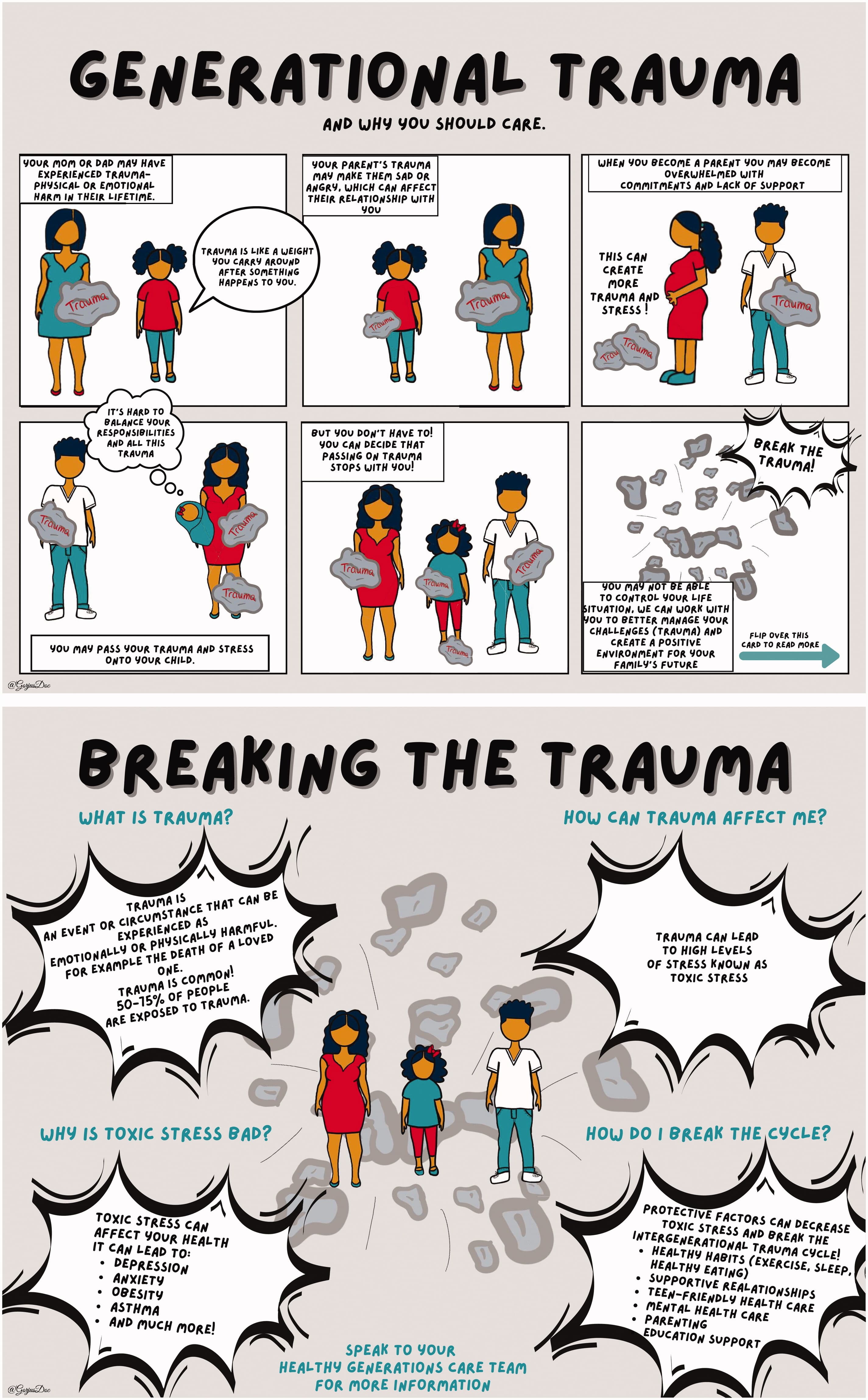
Figure 1. The generational trauma card.

Twenty-one adolescent mothers were recruited for this study during in-person visits in the Healthy Generations clinic. Pediatricians (YS, BC) approached patients for participation in the study and then utilized a semi-structured script (developed by BC) to conduct a 5-minute conversation about generational trauma, using the GTC as an educational tool. Participants then completed a 20-question survey, consisting of demographic, Likert-scaled, and free response questions and received a $10 gift card. Healthy Generations patients were approached universally for participation, without focus on history of traumatic exposures. As part of the Healthy Generations clinic, patients/families are linked with a dedicated social worker, who was available if the GTC and corresponding discussion raised any concerns by patients, which did not occur. This study was approved by the Children’s National Hospital institutional review board.

Results

Among the 21 participants, 43% were 14–17 years and 57% were 18+ years; 91% were Black; and 5% were Hispanic. Twelve participants (57%) had not heard about generational trauma prior to this visit. As shown in Table 1, on a Likert scale of 1–5, participants rated interest in learning about generational trauma 4.2. In a corresponding free-text question, participants indicated surprise that trauma can be passed down generationally, that trauma has significant impacts on personal health, and that the cycle can be broken. Participants rated their comfort in receiving this information from their pediatrician as 4.3 and rated the clarity of how the GTC depicted strategies to reduce the effects of trauma on health as 4.7. Participants indicated being very likely to share this information with others (4.6) and to make changes in their life based on this information (4.5). For the free-text question regarding changes participants would make based on the GTC discussion, responses related to the utilization of self-care to prevent the transfer of trauma were prevalent. Examples included addressing emotions, stress, and mental health through mindfulness, a therapist or support group, and taking time to process trauma.
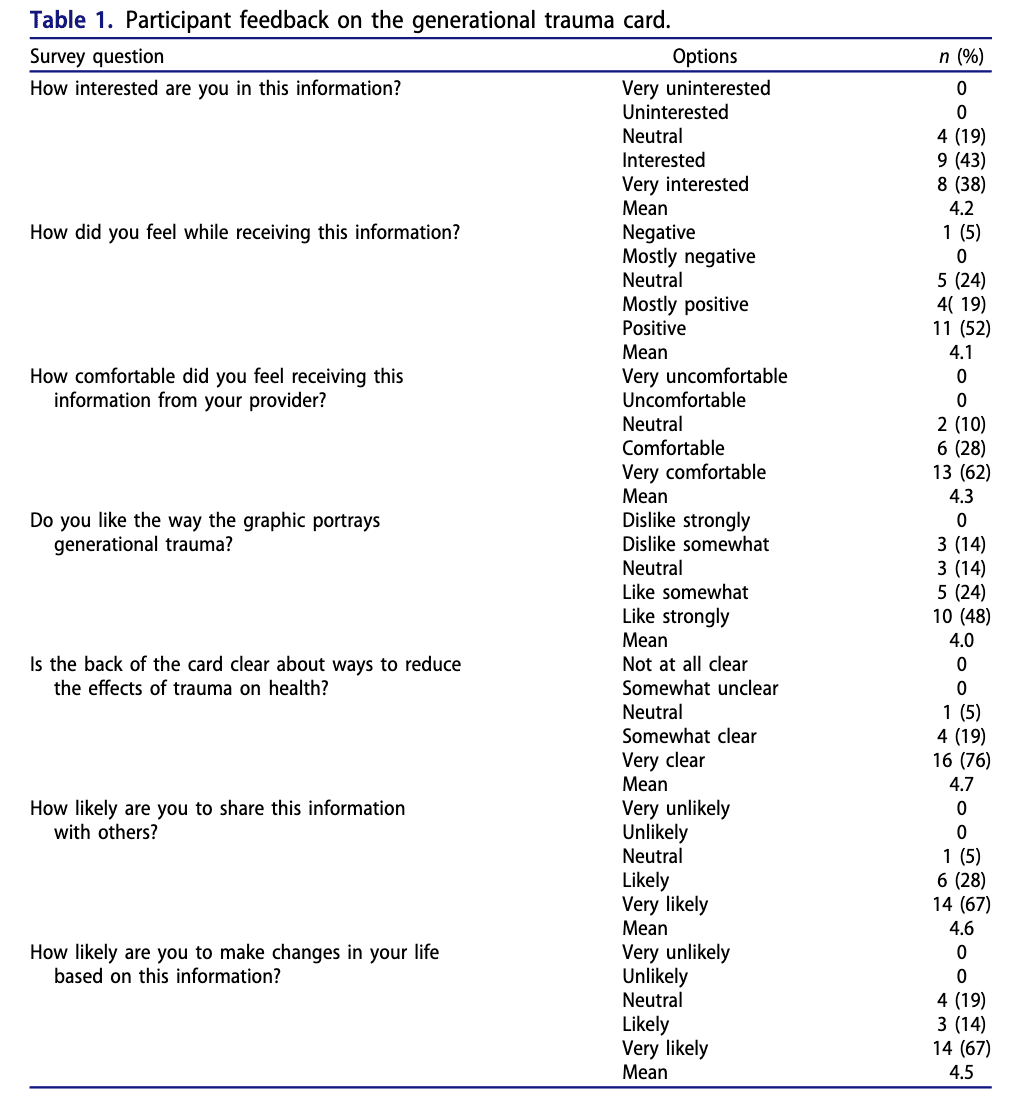
Table 1. Participant feedback on the generational trauma card.

Conclusions

The GTC is a unique educational tool that allows healthcare providers to discuss on the impact of trauma on health and wellness universally during patient visits, rather than prioritizing discussions based on patient or caregiver ACE score. Adolescent parents were comfortable learning about generational trauma with the aid of the GTC and indicated that it may lead to positive behavior change. By promoting awareness of generational trauma and the impact on health, the GTC can be classified as a preventative intervention, which is recognized as the most effective intervention approach to address the intergenerational transmission of trauma (Isobel et al., 2019).

Participant acceptance of the GTC is a critical first step in the further utilization and evaluation of this tool. Next steps will include evaluation of the effectiveness of the GTC and corresponding conversation in leading to specific health-promoting behaviors, such as engagement in mental health services, parenting classes, or self-care habits. Qualitative exploration may also examine the mediators of behavior change, such as an increase in motivation, trust, self-efficacy, or adherence (Street et al., 2009). The limitations of our study include its small sample size and its setting of a teen-tot clinic that participants consider their medical home, which could have made them more comfortable discussing generational trauma. Further study is needed to determine generalizability and feasibility in additional settings.

Despite our sample size and unique sub-population, our study adds to the existing literature by introducing a patient-friendly and brief educational intervention regarding trauma and health. As the development of the GTC was rooted in educational theory and research that images can assist with acceptance, comprehension and behavior change related to health communications, we expect that its contents can be modified to allow for broader education on trauma and health, beyond the sub-topic of generational trauma.

Open Article as PDF

Abstract

Communication related to intergenerational trauma has the potential to mitigate the health impact of traumatic exposures for caregivers and also to prevent traumatic exposures and chronic stress for offspring. Pediatricians reviewed a generational trauma card (GTC), a graphic depicting generational trauma transfer and strategies to address the health effects of trauma exposure, with 21 adolescent mothers in a primary care clinic. On a Likert scale of 1–5, participants rated high interest in learning about generational trauma (4.2), likelihood of sharing the information with others (4.6) and potential of making changes in their life based on the information (4.5).

Introduction

Exposure to trauma is known to impact health and development throughout a person's life. Healthcare systems are increasingly encouraged to address trauma in routine care. While screening for childhood trauma is advocated, it has not consistently led to better patient outcomes or increased use of support services. Education, however, is a proven way to encourage behavioral change and could be a vital addition or alternative to screening. Research is lacking on how best to educate patients and families about trauma, and whether they would find such educational efforts acceptable in a primary care setting. Educating about intergenerational trauma is especially important, as trauma experienced by caregivers can be passed to children through various means, affecting two generations. Adolescent parents often face significant challenges, making their families an ideal group to educate about trauma and its effects on health. This study explored how adolescent parents received and evaluated an educational tool focused on the transfer of trauma across generations.

Methods

The study took place at the Healthy Generations program, a medical home for adolescent parents and their children, which offers primary care, social work, and mental health services. Healthcare providers with experience in trauma-informed care developed a Generational Trauma Card (GTC). This card uses pictures and simple text to explain how trauma can pass from one generation to the next through relationships and communication patterns. The front of the card illustrates this concept, depicting trauma as a weight a person carries, while the back defines trauma and toxic stress and suggests ways to stop the cycle. Twenty-one adolescent mothers were recruited during clinic visits. Pediatricians led a 5-minute discussion about generational trauma using the GTC, after which participants completed a 20-question survey. Study participants were offered a $10 gift card. The study was approved by the institutional review board.

Results

Of the 21 participants, 43% were 14–17 years old, and 57% were 18 or older; 91% were Black, and 5% were Hispanic. More than half of the participants (57%) had not heard about generational trauma before the study visit. On a scale of 1 to 5, participants rated their interest in learning about generational trauma as 4.2. Many expressed surprise that trauma could be passed down generations, affect personal health significantly, and that the cycle could be broken. Participants rated their comfort in receiving this information from their pediatrician as 4.3 and found the GTC's depiction of strategies to reduce trauma's effects on health very clear, with a rating of 4.7. They also reported being very likely to share this information with others (4.6) and to make life changes based on it (4.5). Many free-text responses suggested using self-care, such as mindfulness, therapy, or support groups, to address emotions, stress, and mental health to prevent trauma transfer.

Conclusions

The Generational Trauma Card (GTC) serves as a distinct educational resource, enabling healthcare providers to discuss the effects of trauma on health during routine visits, rather than limiting these conversations to those with high adversity scores. Adolescent parents found the GTC a comfortable way to learn about intergenerational trauma and believed it could encourage positive changes in behavior, acting as a preventive tool. This initial acceptance is crucial for the GTC's future use and evaluation. Further research will assess its effectiveness in promoting specific healthy behaviors, such as seeking mental health services or adopting self-care routines. While this study had a small sample size and was conducted in a specialized clinic, it introduces a patient-friendly and brief educational method for discussing trauma and health. Because the GTC was designed using principles that show images help with understanding and behavior change, its content may be adapted for broader education on trauma beyond intergenerational aspects.

Open Article as PDF

Abstract

Communication related to intergenerational trauma has the potential to mitigate the health impact of traumatic exposures for caregivers and also to prevent traumatic exposures and chronic stress for offspring. Pediatricians reviewed a generational trauma card (GTC), a graphic depicting generational trauma transfer and strategies to address the health effects of trauma exposure, with 21 adolescent mothers in a primary care clinic. On a Likert scale of 1–5, participants rated high interest in learning about generational trauma (4.2), likelihood of sharing the information with others (4.6) and potential of making changes in their life based on the information (4.5).

Introduction

The strong connection between experiences of trauma and poor health outcomes over a person's life is widely recognized. This understanding has led healthcare organizations to include the science of trauma and adversity in standard medical care. National medical groups, such as the American Academy of Pediatrics, have suggested screening children for traumatic experiences during doctor visits. However, simply screening patients has not consistently led to more use of support services or better health results. Education can be an important way to address this issue, either alone or alongside screening, as its effect on behavior change is well-documented. Despite this, there is limited research on the best ways to educate patients and families about adversity and trauma. There is also little information on whether patients and families would find educational programs about trauma and stress acceptable in a primary care setting.

Education about intergenerational trauma is especially important because it offers a chance to improve the health of two generations. There are four main ways trauma can be passed down through generations: psychodynamic, family systems, sociocultural, and biological models. These models show that when caregivers experience adversity, its traumatic effects can be transferred to children through relationships, the caregiver's mental health, and parent-child interactions.

Adolescent parents often face a high amount of adversity, which puts their children at a greater risk for poor health and developmental outcomes due to the generational transfer of trauma. For this reason, families led by teenagers are an ideal group to educate about trauma and its health impacts. This study looked at how adolescent parents accepted and viewed an educational program focused on the intergenerational transfer of trauma.

Methods

The study took place in the Healthy Generations program at Children’s National Hospital. This program is a medical home for adolescent parents aged 13–22 and their families, providing primary medical care, social work, and mental health services. It is recognized by the Department of Health and Human Services as an effective program for preventing teen pregnancies.

A Generational Trauma Card (GTC) was created by healthcare providers from the Healthy Generations program. These providers have extensive experience working with teen parents and developing trauma-informed education. The GTC was designed based on research showing that combining pictures with simple text in health materials can grab attention, improve understanding, and encourage behavior changes. The card's content represents the family systems and psychodynamic models of how trauma is passed down through generations, emphasizing that trauma can be transferred through relationships and ingrained communication patterns. The front of the GTC has six panels illustrating how trauma can be passed from an adolescent parent to a child. Trauma is shown as a rock or weight a person carries after a significant event. The back of the card defines trauma and toxic stress and suggests strategies to stop the cycle of intergenerational trauma.

Twenty-one adolescent mothers were recruited for this study during their in-person visits at the Healthy Generations clinic. Pediatricians approached patients about participating in the study. They then used a structured script to lead a 5-minute conversation about generational trauma, using the GTC as an educational tool. After the conversation, participants completed a 20-question survey that included demographic, Likert-scaled, and free-response questions. Each participant received a $10 gift card. All Healthy Generations patients were invited to participate, regardless of their history of traumatic experiences. As part of the Healthy Generations clinic, patients and families are connected with a dedicated social worker, who was available if the GTC or discussion caused any concerns for patients, though none arose during the study. The Children’s National Hospital institutional review board approved this study.

Results

Among the 21 participants, 43% were 14–17 years old, and 57% were 18 years or older. Most participants (91%) were Black, and 5% were Hispanic. Twelve participants (57%) reported that they had not heard about generational trauma before this clinic visit. When asked to rate their interest in learning about generational trauma on a scale of 1–5, participants gave an average rating of 4.2. In their free-text responses, participants expressed surprise that trauma could be passed down through generations, that it significantly affects personal health, and that its cycle could be broken. Participants rated their comfort with receiving this information from their pediatrician at 4.3 and the clarity of how the GTC showed strategies to reduce trauma's effects on health at 4.7. Participants also indicated they were very likely to share this information with others (4.6) and to make changes in their lives based on it (4.5). For the free-text question about changes participants would make, responses often involved using self-care to prevent trauma transfer. Examples included managing emotions, stress, and mental health through mindfulness, therapy, support groups, and taking time to process trauma.

Conclusions

The Generational Trauma Card (GTC) is a unique educational tool that allows healthcare providers to discuss the impact of trauma on health and wellness with all patients during visits, rather than only with those identified by specific scores. Adolescent parents felt comfortable learning about generational trauma with the GTC and suggested it could lead to positive changes in behavior. By raising awareness of generational trauma and its health effects, the GTC acts as a preventative intervention, which is considered the most effective way to address the intergenerational spread of trauma.

Participant acceptance of the GTC is a crucial first step for further use and evaluation of this tool. Future research will need to assess the GTC's effectiveness and the related conversation in leading to specific health-promoting behaviors, such as engaging in mental health services, parenting classes, or self-care habits. Further qualitative exploration could also examine factors that encourage behavior change, such as increased motivation, trust, self-efficacy, or consistent participation. The study had some limitations, including its small sample size and its setting in a teen-tot clinic where participants felt comfortable discussing generational trauma, which might have influenced their responses. More study is needed to see if these findings apply more broadly and if the GTC is practical in other healthcare settings.

Despite the sample size and specific group studied, this research contributes to existing knowledge by introducing a patient-friendly and brief educational method about trauma and health. Because the GTC was developed based on educational theories and research showing that images can help with understanding, acceptance, and behavior change in health communication, its content could potentially be adapted for broader education on trauma and health, beyond just generational trauma.

Open Article as PDF

Abstract

Communication related to intergenerational trauma has the potential to mitigate the health impact of traumatic exposures for caregivers and also to prevent traumatic exposures and chronic stress for offspring. Pediatricians reviewed a generational trauma card (GTC), a graphic depicting generational trauma transfer and strategies to address the health effects of trauma exposure, with 21 adolescent mothers in a primary care clinic. On a Likert scale of 1–5, participants rated high interest in learning about generational trauma (4.2), likelihood of sharing the information with others (4.6) and potential of making changes in their life based on the information (4.5).

The connection between difficult past experiences (trauma) and poor health throughout a person's life is well-known. This has led healthcare providers to include information about trauma in their regular patient care. Some national medical groups have suggested checking children for trauma during doctor visits. However, simply checking for trauma has not always resulted in people getting more help or having better health outcomes. Education can be an important way to help, either alone or with screenings, as its power to change behavior is clear. Yet, there is limited research on the best ways to educate patients and their families about trauma and stress. There is also not much information on whether patients and families would find such educational efforts helpful in a primary care setting.

Education about trauma that passes from one generation to the next is especially important because it can improve the health of both parents and children. There are different theories explaining how trauma can be passed down. These theories suggest that the effects of a caregiver's difficult experiences can be transferred to children through relationships, the caregiver's mental health, and how parents and children interact.

Adolescent parents often have many difficult past experiences. Because of this, their children are at a higher risk for health and development problems due to trauma passed down through generations. Therefore, families led by teenagers are an ideal group to educate about trauma and its effects on health. This study looked at how well adolescent parents accepted and viewed an educational program focused on trauma passing from one generation to the next.

Methods

The study took place in the Healthy Generations program, which is a healthcare clinic for adolescent parents aged 13–22 and their families at Children’s National Hospital. This program provides medical care, social work services, and mental health support for teen parents and their children. It has been recognized by a government department as a proven program for preventing teen pregnancy.

Healthcare providers from the Healthy Generations program, who have experience working with teen parents and creating trauma-informed education, developed a Generational Trauma Card (GTC). This card was designed based on research showing that using pictures with simple text in health information can help people pay attention, understand, and change their behavior. The GTC's content explains how trauma can be passed down through family relationships and ways people communicate. The front of the GTC has six pictures showing how trauma can transfer from an adolescent parent to their child. Trauma is shown as a rock or a weight that someone carries after a difficult event. The back of the GTC defines trauma and toxic stress and offers strategies to stop the cycle of trauma passing through generations.

Twenty-one adolescent mothers were invited to take part in this study during their clinic visits at Healthy Generations. Doctors spoke with patients about joining the study. They then used a prepared script for a 5-minute conversation about generational trauma, using the GTC as a teaching tool. After the conversation, participants filled out a 20-question survey that asked about their background, included rating scales, and allowed for written answers. Each participant received a $10 gift card. All patients at Healthy Generations were invited to participate, regardless of whether they had a history of traumatic experiences. As part of the Healthy Generations clinic, patients and families have access to a social worker. The social worker was available if the GTC discussion caused any concerns for patients, but no such concerns were raised. This study was approved by the hospital's research review board.

Results

Among the 21 participants, 43% were 14–17 years old, and 57% were 18 years or older. Most participants (91%) were Black, and 5% were Hispanic. Twelve participants (57%) had not heard about generational trauma before this visit. On a scale of 1 to 5, participants rated their interest in learning about generational trauma as 4.2. In their written responses, participants expressed surprise that trauma could be passed down through generations, that it significantly affects personal health, and that the cycle can be broken. Participants rated their comfort in receiving this information from their pediatrician as 4.3. They rated the clarity of how the GTC showed strategies to reduce the effects of trauma on health as 4.7. Participants said they were very likely to share this information with others (4.6) and to make changes in their life based on this information (4.5). For questions about what changes they would make after the GTC discussion, many responses involved using self-care to prevent trauma from being passed on. Examples included managing emotions, stress, and mental health through mindfulness, seeing a therapist or joining a support group, and taking time to process trauma.

Conclusions

The GTC is a unique educational tool that allows healthcare providers to discuss the impact of trauma on health and well-being with all patients during visits. It moves beyond focusing discussions only on patients who have experienced certain difficult events. Adolescent parents felt comfortable learning about generational trauma with the GTC and suggested it might lead to positive changes in behavior. By increasing awareness of generational trauma and its health effects, the GTC can be seen as a preventative tool. Preventing trauma transmission is considered the most effective way to address it.

Participants' acceptance of the GTC is an important first step in using and evaluating this tool further. Future steps will include checking how effective the GTC and its related conversation are in leading to specific healthy behaviors, such as engaging in mental health services, parenting classes, or self-care habits. Further research might also explore what factors lead to behavior change, such as increased motivation, trust, self-belief, or consistency. The study had some limitations, including its small number of participants and its specific setting in a clinic that participants considered their medical home. These factors might have made them more comfortable discussing generational trauma. More research is needed to see if these findings apply more broadly and if the GTC can be used effectively in other settings.

Despite the small sample size and specific group studied, this research contributes to current knowledge by introducing a patient-friendly and brief educational tool about trauma and health. Because the GTC was developed based on educational theories and research showing that images can help with understanding and behavior change in health communication, it is expected that its content can be adapted for broader education on trauma and health, beyond just generational trauma.

Open Article as PDF

Abstract

Communication related to intergenerational trauma has the potential to mitigate the health impact of traumatic exposures for caregivers and also to prevent traumatic exposures and chronic stress for offspring. Pediatricians reviewed a generational trauma card (GTC), a graphic depicting generational trauma transfer and strategies to address the health effects of trauma exposure, with 21 adolescent mothers in a primary care clinic. On a Likert scale of 1–5, participants rated high interest in learning about generational trauma (4.2), likelihood of sharing the information with others (4.6) and potential of making changes in their life based on the information (4.5).

Hard experiences can lead to health problems throughout a person's life. Doctors want to help by learning more about these hard experiences. Sometimes, doctors ask people about tough times they have faced. But just asking questions might not be enough to improve health. Teaching people about how hard times, or trauma, affect health could be a better way to help. Not much is known about the best ways to teach about trauma, or if people would even like learning about it at the doctor's office. It is especially important to teach about trauma that can pass from one family member to another, like from a parent to a child. Teen parents often face many challenges. This can put their children at a higher risk for health problems. Because of this, teaching teen families about trauma and health is a good idea. This study looked at whether young parents liked a teaching program about trauma that moves through families.

Methods

The study took place at the Healthy Generations program, which is a doctor's office for teen parents and their children. A special card, called the Generational Trauma Card (GTC), was created by doctors at this program. The GTC used pictures and simple words to show how trauma can pass from parents to children. One side of the card showed trauma as a heavy rock a person carries. The other side defined trauma and bad stress, and offered ways to stop the cycle. Doctors talked with 21 young mothers using the GTC for about 5 minutes. After the talk, the mothers answered a survey. A social worker was available if anyone needed help after the discussion, but no one did.

Results

There were 21 young mothers in the study. Most were 18 years or older and were Black. More than half of them (57%) had never heard that trauma could pass through families before. The mothers were very interested in learning about trauma and felt comfortable talking about it with their doctor. They thought the GTC clearly showed how to lessen the effects of trauma on health. They also said they would likely tell others about this information and make changes in their own lives. Many mothers mentioned they would take better care of themselves, such as dealing with feelings, stress, or seeking support.

Conclusions

The GTC is a useful teaching tool that lets doctors talk about how trauma affects health with all patients, not just those who have faced many hard experiences. Young parents felt good about learning with the GTC and said it might help them make positive changes in their lives. By teaching about trauma that passes through families, the GTC helps stop problems before they get worse.

This study was a first step. More work is needed to see if using the GTC actually leads people to do things that improve their health, like getting mental health support or practicing self-care. The study was small and happened in a special clinic for teen parents. This means the results might not be the same for everyone or in other doctor's offices. Even so, this study offers a new, simple way to teach patients about trauma and health. Since the GTC uses pictures to make learning easy, similar tools could be made for other health topics.

Open Article as PDF

Footnotes and Citation

Cite

Chokshi, B., Pukatch, C., Ramsey, N., Dzienny, A., & Smiley, Y. (2023). The Generational Trauma Card: A Tool to Educate on Intergenerational Trauma Transmission. Journal of Loss and Trauma, 28(5), 464–471. https://doi.org/10.1080/15325024.2022.2091315

    Highlights