Solitary Confinement and Risk of Self-Harm Among Jail Inmates
Fatos Kaba
Andrea Lewis
Sarah Glowa-Kollisch
James Hadler
David Lee
SimpleOriginal

Summary

A study of NYC jails found self-harm was strongly linked to solitary confinement, serious mental illness and youth. Though only 7% experienced isolation, they accounted for over half of all self-harm incidents.

2014

Solitary Confinement and Risk of Self-Harm Among Jail Inmates

Keywords Self-harm; jail; solitary confinement; mental illness; inmates; risk factors; suicide; New York City; adolescents; correctional health

Abstract

Objectives. We sought to better understand acts of self-harm among inmates in correctional institutions.

Methods. We analyzed data from medical records on 244 699 incarcerations in the New York City jail system from January 1, 2010, through January 31, 2013.

Results. In 1303 (0.05%) of these incarcerations, 2182 acts of self-harm were committed, (103 potentially fatal and 7 fatal). Although only 7.3% of admissions included any solitary confinement, 53.3% of acts of self-harm and 45.0% of acts of potentially fatal self-harm occurred within this group. After we controlled for gender, age, race/ethnicity, serious mental illness, and length of stay, we found self-harm to be associated significantly with being in solitary confinement at least once, serious mental illness, being aged 18 years or younger, and being Latino or White, regardless of gender.

Conclusions. These self-harm predictors are consistent with our clinical impressions as jail health service managers. Because of this concern, the New York City jail system has modified its practices to direct inmates with mental illness who violate jail rules to more clinical settings and eliminate solitary confinement for those with serious mental illness.

Self-harm is a prevalent and dangerous occurrence within correctional settings. Inmates in jails and prisons attempt to harm themselves in many ways, resulting in outcomes ranging from trivial to fatal. Suicide is a leading cause of death among the incarcerated; however, suicide and suicide attempt represent a small share of all acts of self-harm. The motivations of inmates who harm themselves are complex and often difficult to discern. Inmates often arrive in correctional settings with significant pre-existing mental illness and histories of self-harm, but they may also be influenced by environmental stressors within correctional settings or aim to avoid certain situations or punishments.

Approximately one third of those admitted to the jail in New York City (NYC) receive care for mental health services during their incarceration, a proportion that has been increasing over time. Inmates who harm themselves become patients in the mental health service. Those who harm themselves while in solitary confinement may be diverted from that punitive setting to a therapeutic setting outside solitary confinement, which may provide an incentive for self-harm. The purpose of this analysis was to better understand the complex risk factors associated with self-harm and consider whether patients might be better served with innovative approaches to their behavioral issues.

METHODS

The NYC jail system is the nation’s second-largest, representing an average daily population of approximately 12 000 persons and 80 000 annual admissions. Most inmates stay in this system for days to months while awaiting trial or serving relatively short sentences; those sentenced to longer prison terms are transferred to the New York State prison system. Within the NYC jail system, the Bureau of Correctional Health Services (CHS) of the NYC Department of Health and Mental Hygiene is responsible for providing all aspects of medical and mental health care for inmates, and the NYC Department of Correction is responsible for all other aspects of custody and security. Inmates in this jail system occasionally violate jail rules, ranging from refusal to follow orders of security staff to acts of serious violence against other inmates or security staff. To maintain order and safety within the jail, solitary confinement is used as punishment for inmates who violate jail rules, as it is in many jail systems throughout the United States.

We analyzed data from all jail admissions that occurred between January 1, 2010, and October 31, 2012. We counted only acts of self-harm committed during this time period, with the exception of inmates admitted to the jail system in the last 3 months of the study period. For these inmates, we extended the observation period for acts of self-harm to 3 months after their admission date with the latest possible date of self-harm being January 31, 2013, for patients admitted October 31, 2012.

We abstracted data relating to inmate demographics, jail admission and discharge dates, utilization of emergency services, and housing placement to indicate solitary confinement from the jail electronic health record. These data are entered into the Department of Correction database by their staff as inmates are processed and are directly fed into the electronic health record. Serious mental illness (SMI) was defined with standardized criteria followed by mental health professionals throughout New York State, including DOHMH.

We defined self-harm as an act performed by individuals on themselves with the potential to result in physical injury, and potentially fatal self-harm as an act with a high probability of causing significant disability or death, regardless of whether death actually occurred. We obtained information about the method, severity, and outcome of self-harm acts from a database kept by CHS to track acts of self-harm. This database is updated as soon as the self-harm reports are electronically cosigned by the supervising psychiatrists and faxed to CHS. All identification and recording of self-harm is done by clinical staff—clinical social workers, psychologists, or psychiatrists. The potentially fatal self-harm was assessed by 2 physicians and 1 physician assistant from CHS leadership; the reviewers had only self-harm information and were blinded to solitary confinement status. Examples of potentially fatal self-harm included ingestion of a potentially poisonous substance or object leading to a metabolic disturbance, hanging with evidence of trauma from ligature, wound requiring sutures after laceration near critical vasculature, or death. As nearly two thirds of all self-harm acts and 85% of potentially fatal self-harm act were initial occurrences, we focused on timing, incidence, and risk factors for initial self-harm acts during each jail admission.

The dependent variables, self-harm and potentially fatal self-harm, were dichotomous variables (0 = no; 1 = yes). The independent variables included ever being in solitary confinement during their incarceration, SMI, age 18 years and younger, gender, length of stay, and race/ethnicity. We identified patients who were in solitary confinement from housing placement, thus creating a dichotomous solitary confinement variable (0 = no; 1 = yes). We created another binary variable to indicate inmates aged 18 years and younger (0 = older than 18 years; 1 = 18 years and younger), based on the classification used by Department of Correction. Gender was another dichotomous variable (0 = male; 1 = female). We calculated length of stay (in 6-month increments) from jail admission and discharge dates, creating a dummy discharge date for those patients who were still in jail by January 31, 2013. The race/ethnicity was categorized as Hispanic, non-Hispanic White, non-Hispanic Black, non-Hispanic Asian/Pacific Islander, and other or unknown.

We calculated self-harm risk as number of self-harm acts per 1000 inmate days. We calculated risk ratios (RRs) of self-harm by gender, age group, race/ethnicity, mental illness status, assignment to solitary confinement, and length of jail stay. We examined the relationship between self-harm and solitary confinement first by comparing self-harm acts at any time to whether an inmate was ever in solitary confinement during that incarceration, and second by distinguishing acts of self-harm that occurred during inmates’ time in solitary confinement from those that occurred during the incarceration but not while in solitary confinement. We determined statistical significance of differences in rates by using the χ2 test.

We conducted 4 logistic regression models to estimate odds ratios (ORs) and 95% confidence intervals for predictors associated with self-harm and potentially fatal self-harm. The first model looked at the effects of solitary confinement, SMI, age 18 years or younger or older than 18 years, length of stay, gender, and race/ethnicity on self-harm, and the second model looked at the effects of the same independent variables on potentially fatal self-harm. The third model explored the impact of gender, length of stay, race/ethnicity, and the interaction of solitary confinement with SMI, and age on self-harm, and the fourth model investigated the association of these variables and their interaction with potentially fatal self-harm. For persons who experienced solitary confinement and also committed self-harm during the same incarceration, we calculated and graphed the timing of the first self-harm act relative to the week of placement in solitary confinement.

RESULTS

The study population consisted of 134 188 individuals who experienced 244 699 incarcerations. Of all incarcerations included in this study, 4.0% involved inmates diagnosed with SMI, 7.3% involved inmates who spent some time in solitary confinement, 34.8% involved inmates who spent more than 30 days in jail, 6.4% involved inmates who were aged 18 years or younger, and 90.8% involved male inmates. By race/ethnicity, 56.1% were non-Hispanic Black, 31.6% were Hispanic, and 8.4% were non-Hispanic White, with other categories accounting for the remainder.

In 1303 of these incarcerations there were 2182 acts of self-harm; in 89 incarcerations there were 103 acts of potentially fatal self-harm. The most common methods of self-harm were laceration (34%), ligature (28%), swallowing a foreign body (15%), and overdose (14%). In addition, 15% of acts of self-harm were categorized as “other” (e.g., head banging and setting self or cell on fire) and 6% of incidents involved multiple methods. For the 103 acts of potentially fatal self-harm, common methods included ligature (29%), swallowing a foreign body (23%), laceration (19%), overdose (16%), other (21%), and multiple (8%). Of the 2079 self-harm acts judged not to be potentially fatal, 1715 (82%) were treated by jail medical staff (physician or physician’s assistant) and 373 (18%) required transfer to a higher level of care (emergency medicine physician, inpatient admission, or diagnostic imaging) for further evaluation or treatment.

The absolute risk for self-harm during an incarceration was 0.5% and for potentially fatal self-harm was 0.03% (Table A, available as a supplement to the online version of this article at http://www.ajph.org). The RRs for self-harm increased sharply with the length of stay in jail, from 0.02% for those with stays of less than 8 days to 1.4% for those with stays of 31 days or more. The RRs were highest for inmates with SMI (6.0; P < .01), and those aged 18 years or younger (18.9; P < .01). Those ever in solitary confinement had a far greater risk of self-harm than did those never in solitary (14.4; P < .01), but these inmates also had longer lengths of stay. The RR for potentially fatal self-harm among inmates with SMI was 9.5 (P < .01), and the RR for potentially fatal self-harm among inmates ever in solitary confinement was 10.2 (P < .01).

When we calculated the risk of self-harm as per 1000 person-days (rather than per incarceration), the RR for self-harm was highest for inmates with SMI (3.7; P < .01) and those aged 18 years or younger (12.9; P < .01; Table 1). Inmates ever assigned to solitary confinement were 3.2 times as likely to commit an act of self-harm per 1000 days at some time during their incarceration as those never assigned to solitary (P < .01). These inmates assigned to solitary were 2.1 times as likely to commit acts of self-harm during the days that they were actually in solitary confinement and 6.6 times as likely to commit acts of self-harm during the days that they were not in solitary confinement, relative to inmates never assigned to solitary confinement (P < .01 for each).
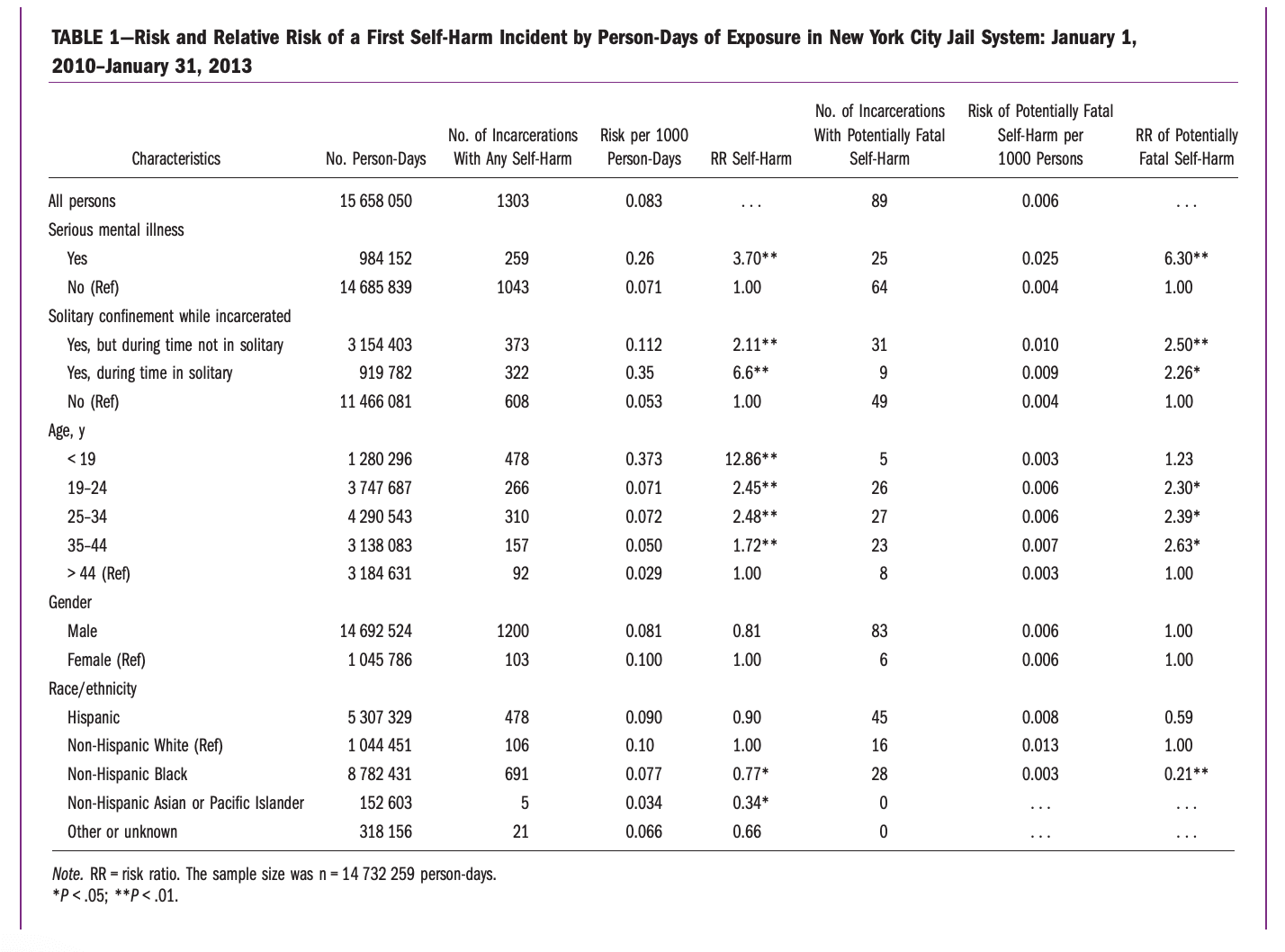
TABLE 1

The RR for potentially fatal self-harm among inmates with SMI was 6.3 (P < .01). The RR for potentially fatal self-harm coincident with actual solitary confinement was 2.3 and for potentially fatal self-harm during the jail admission but not coincident with solitary confinement, RR was 2.5 (P < .01 for both values).

The first 2 logistic regression models demonstrated that self-harm and potentially fatal self-harm were significantly associated with being in solitary confinement, SMI, length of stay, and race/ethnicity. In other words, inmates who were ever in solitary confinement, had SMI, stayed in jail longer, and were White or Hispanic compared with Black were more likely to self-harm and commit potentially fatal self-harm. Inmates who were aged 18 years and younger were significantly more likely to self-harm, and older patients were more likely to do potentially fatal self-harm, but this relationship was not statistically significant (Table 2).
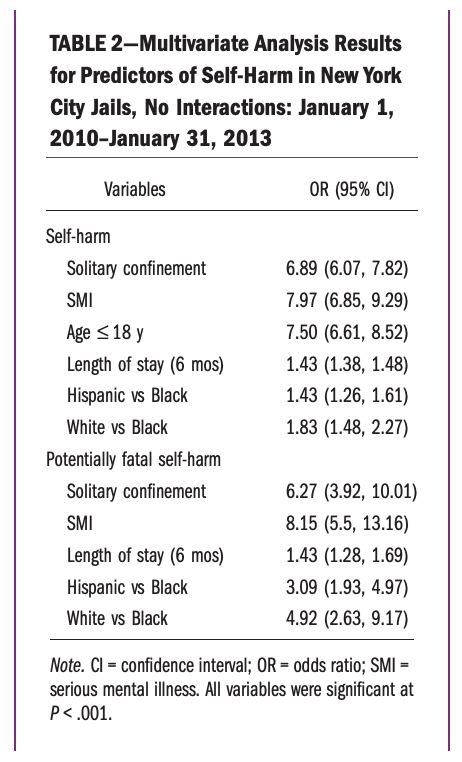
TABLE 2

The third and fourth regression models introduced the interactive terms. We wanted to understand whether the interaction of solitary confinement with SMI and age had stronger or weaker associations with self-harm and potentially fatal self-harm than those variables on their own. Table 3 shows the predictors of self-harm and potentially fatal self-harm when we included the interaction terms. Self-harm is significantly correlated with patients who were in solitary confinement, irrespective of SMI status or age. The strongest correlations were for patients in solitary confinement, not having SMI, and older than 18 years (OR = 10.15) or aged 18 years or younger (OR = 5.89). This indicates the strong effect of solitary confinement on self-harm regardless of the SMI or age status. Interaction of SMI and solitary confinement shows that the effect of SMI on self-harm is quite strong regardless of simultaneously being in solitary confinement (OR = 4.71) or not (OR = 11.86). Finally, interaction of age with solitary confinement demonstrated that patients who were aged 18 years or younger and were in solitary confinement were significantly likely to self-harm (OR = 5.73). Potentially fatal self-harm was significantly correlated with solitary confinement and being older than 18 years and having SMI (OR = 9.06) or older than 18 years and not having SMI (OR = 6.16). It was also significantly associated with having SMI and solitary confinement (OR = 9.80).
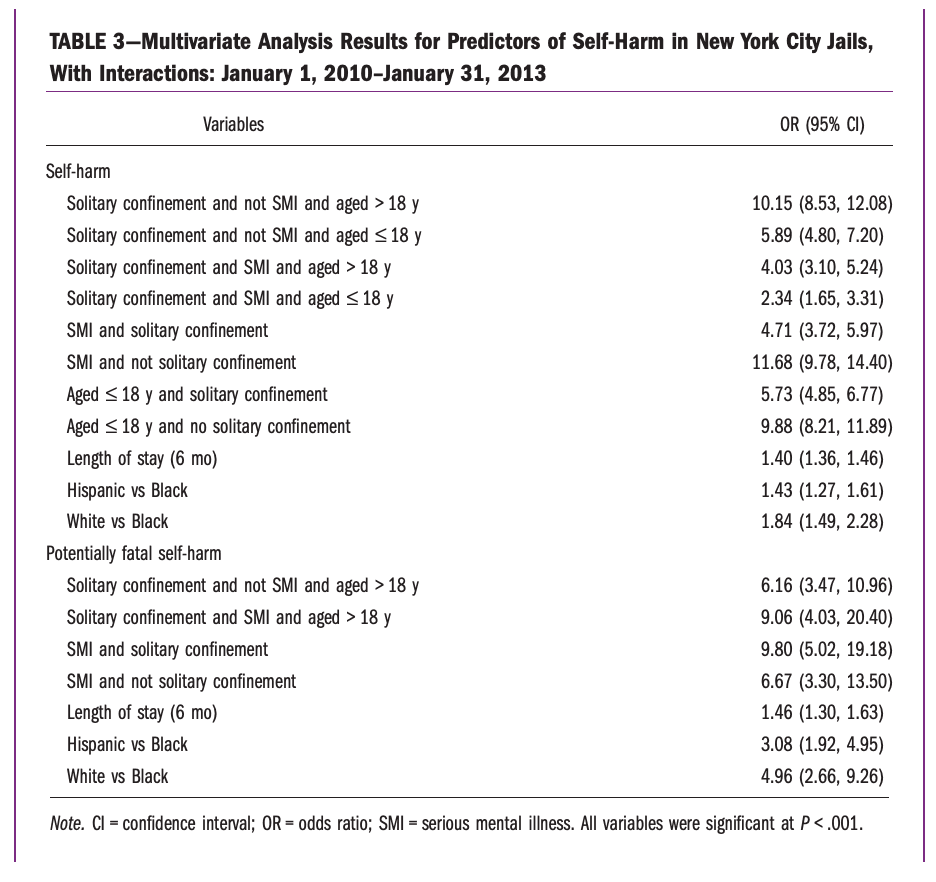
TABLE 3

Review of self-harm frequency revealed that 314 inmates (24.1%) who committed self-harm did so more than once. Among inmates with a stay in solitary confinement, 1.1% had multiple acts of self-harm, whereas only 0.1% of inmates never in solitary confinement had multiple acts of self-harm. Among inmates with SMI, 0.9% committed multiple acts of self-harm whereas 0.1% of the non-SMI inmates did so. Similarly, 0.6% of inmates aged 18 years or younger committed multiple acts of self-harm whereas only 0.1% of those older than 18 years did so. Multiple potentially fatal self-harm acts were done by 11 inmates; 6 inmates in the multiple self-harm group had a low-lethality act before they had a potentially fatal act.

To better understand the relationship between solitary confinement and self-harm, we plotted the timing of initial acts of self-harm for those who did enter solitary confinement relative to the day of admission to solitary confinement and those who did not relative to the week of admission to jail. Once inmates are given a sentence of solitary confinement for violation of jail rules, they may wait days or weeks before being placed in these settings. The histogram of self-harm among inmates by week of jail stay shows that both those who did and did not experience solitary confinement had falling weekly rates of self-harm, although this decline appears to be more pronounced among those who did experience solitary confinement and this decline appears to stall around week 41 for all groups (Figure A, available as a supplement to the online version of this article at http://www.ajph.org). The histogram of self-harm among those who spent some time in solitary confinement shows a near-normal distribution, with the peak frequency shortly before entry into solitary confinement. The similar plot of potentially fatal acts is not so tightly grouped around entry to solitary confinement (Figure A).

DISCUSSION

We found that acts of self-harm were strongly associated with assignment of inmates to solitary confinement. Inmates punished by solitary confinement were approximately 6.9 times as likely to commit acts of self-harm after we controlled for the length of jail stay, SMI, age, and race/ethnicity. This association also held true for potentially fatal self-harm with a slightly lower OR, 6.3. It is notable that acts of self-harm often preceded the actual time spent in solitary confinement. Both SMI (OR = 7.97) and aged 18 years or younger (OR = 7.5) were also predictive of self-harm; nonetheless, the risk of self-harm and potentially fatal self-harm associated with solitary confinement was higher independent of mental illness status and age group.

The analysis showed that a small proportion of inmates, those in solitary confinement, with SMI, and aged 18 years or younger, accounted for the majority of acts of self-harm. Approximately 7% of these acts were potentially fatal self-harm. Our clinical experience with adolescents is that they have a much lower rate of SMI and are very adaptive to jail rules. Inmates often confide that their self-harm acts are used as a means to avoid the rigors of solitary confinement. The logistic regression analysis with solitary confinement and SMI and age interaction demonstrated that inmates who are older and in solitary confinements were more likely to commit potentially fatal self-harm (OR = 9.1), whereas inmates who were younger and in solitary confinement were more likely (OR = 5.73) to engage in the lower-lethality acts of self-harm.

This analysis is consistent with our clinical observations regarding self-harm. In addition to the clear indication from patients with SMI that they self-harm in response to the overall stressors of the jail setting, adolescents appear to commit lower-lethality acts of self-harm, though with not infrequent unintended consequences. Regarding solitary confinement, many inmates report to us that they have and will continue to do anything to escape these settings. Mental health providers are in an ethically complex role with these inmates because currently, they are asked to “clear” them for solitary confinement. Those inmates who appear to self-harm to escape solitary confinement are often judged to exhibit “volitional” or “goal-oriented” behavior, as opposed to suffering from psychosis, mania, or another more recognized mental health symptom. This judgment tracks loosely with the assessment of security staff, who often refer to inmates who self-harm as “bing-beaters,” with the “bing” as the recognized term for solitary confinement.

The peak of self-harm around the time of entry to solitary confinement (Figure 1) suggests that these observations by clinical and security staff are credible. Because it is difficult or impossible to distinguish purely manipulative acts from those reflecting a true interest in severe self-harm or suicide, and even “goal-oriented” acts of self-harm can have severe consequences. Related to these attempts to escape solitary confinement, we have observed some types of self-harm that occur exclusively in these settings. One patient with relatively mild mental illness inserted a deodorant canister into his rectum, requiring surgical removal, all in an attempt to be taken out of his cell. Others set fire to their cells or smear their own feces. In our experience, these are actions that are solely associated with seeking to escape solitary confinement.
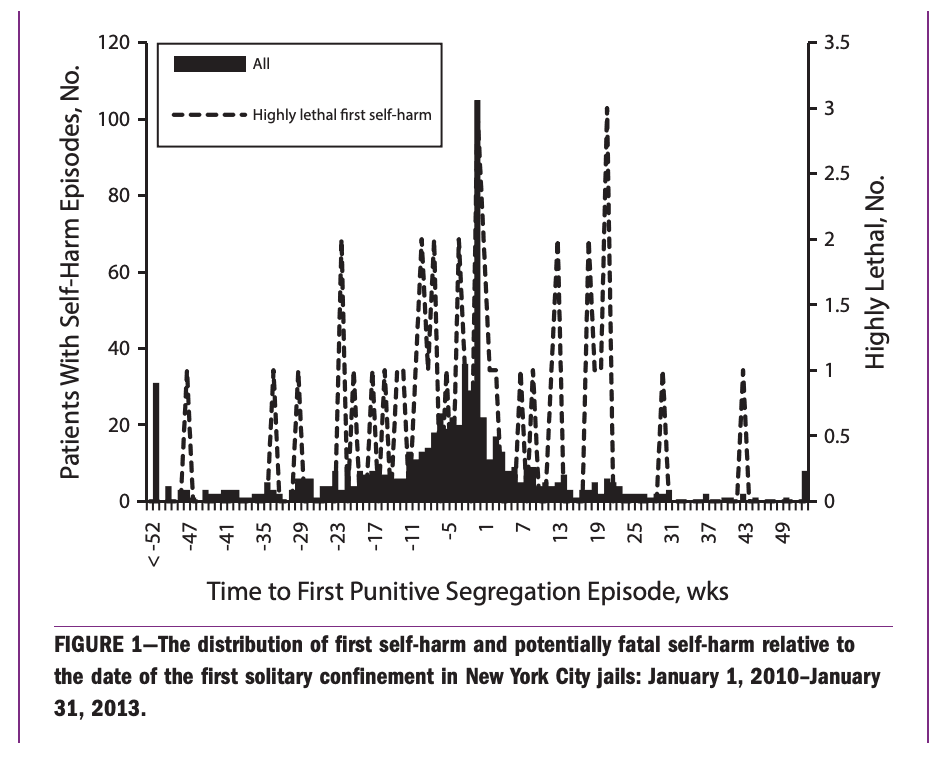
FIGURE 1

An additional layer of complexity is that patients placed in solitary confinement, especially those with mental illness, will often earn new infractions, resulting in even more solitary time. In the most extreme type of example, a patient held in solitary confinement may break off a sprinkler head, use that metal to slash themselves, and then earn not only a new infraction and more solitary confinement time, but also a new criminal charge for destruction of government property.

In addition to the clinical significance of self-harm, this practice represents a significant and increasing drain on resources. When self-harm occurs, inmates receive immediate medical and mental health evaluations, and may require transfer to a higher level of care, which also requires 2 correction officers to escort them. These transfers utilize local emergency medical services, hospital emergency departments, and inpatient wards. On the basis of these data, we estimate that every 100 acts of self-harm result in 36 transfers to a higher level of care and 10 hospital admissions. Every 100 acts of self-harm conservatively represent approximately 3760 hours of additional time by correction officers (for hospital transport and suicide watch) and approximately 450 excess clinical encounters in the jail system.

Most of the published studies concerning the health effects of solitary confinement have focused on prison systems, which are quite different from jails in that solitary confinement in prisons may last for decades. Although to our knowledge this is the first analysis of these predictors of self-harm in a jail setting, a previous study did observe a similar relationship between self-harm and solitary confinement among 132 inmates in a prison setting. One important area for future research is a better understanding of how self-harm in jail relates to overall mental health status while in jail. In addition, the strong association between SMI and self-harm suggests that inmates with a history of mental illness are susceptible to self-harm when facing the solitary confinement in the jail setting.

Limitations

This study has several limitations. First, because of the delay in placement in solitary confinement for rules violations and because jail is a short-stay setting, many inmates are sentenced to solitary confinement but leave before their punishment occurs. Some inmates may have engaged in self-harm anticipating stays in solitary confinement that never occurred.

A second limitation is the lack of data regarding criminal charge or jail rules violations. These nonclinical characteristics may have some bearing on self-harm. The practice of removing actively violent inmates from the presence of others represents a legitimate security act and information regarding why inmates are placed into solitary confinement may hold data that bear on self-harm. A third limitation is that we have no systematic data on self-harm from previous incarcerations and, thus, cannot examine the extent to which previous acts might be independent predictors of jail behavior or self-harm.

Conclusions

According to our analysis, length of stay in jail, SMI, solitary confinement, and young age appear to be important and independent predictors of self-harm in jail. These data support the need to reconsider the use of solitary confinement as punishment in jails, especially for those with SMI and for adolescents. Recently, professional societies for adult and adolescent mental health care have made recommendations against the use of solitary confinement as punishment for adolescents and seriously mentally ill inmates.

The NYC Department of Correction and the Department of Health and Mental Hygiene have recently announced a plan to eliminate the practice of solitary confinement for inmates with SMI. Instead, inmates with SMI who violate jail rules will be placed in clinical settings where they will receive a high level of individual and group therapy aimed at promoting treatment adherence and prosocial behaviors. This exchange of a punishment model for a treatment approach will result in clinical staff making decisions about how best to respond to problematic behavior among inmates with SMI. The plan also restructures the approach to punishment for inmates with mental illness whose illness is not categorized as “serious,” such as those with mild to moderate behavioral problems and those with personality disorders. These inmates will be managed in a setting designed to provide tangible incentives such as increasing time out of cell and reduction in length of solitary confinement sentence for engagement with programming and following of jail rules. These reforms provide an opportunity to evaluate the effect of increased clinical management and decreased reliance on solitary confinement as a means to reduce self-harm and other behaviors among inmates with mental illness.

Open Article as PDF

Abstract

Objectives. We sought to better understand acts of self-harm among inmates in correctional institutions.

Methods. We analyzed data from medical records on 244 699 incarcerations in the New York City jail system from January 1, 2010, through January 31, 2013.

Results. In 1303 (0.05%) of these incarcerations, 2182 acts of self-harm were committed, (103 potentially fatal and 7 fatal). Although only 7.3% of admissions included any solitary confinement, 53.3% of acts of self-harm and 45.0% of acts of potentially fatal self-harm occurred within this group. After we controlled for gender, age, race/ethnicity, serious mental illness, and length of stay, we found self-harm to be associated significantly with being in solitary confinement at least once, serious mental illness, being aged 18 years or younger, and being Latino or White, regardless of gender.

Conclusions. These self-harm predictors are consistent with our clinical impressions as jail health service managers. Because of this concern, the New York City jail system has modified its practices to direct inmates with mental illness who violate jail rules to more clinical settings and eliminate solitary confinement for those with serious mental illness.

Summary

Self-harm is a significant issue in correctional facilities, with various outcomes from minor injuries to fatalities. While suicide is a leading cause of death among incarcerated individuals, it represents a small portion of all self-harm incidents. The reasons behind self-harm are complex. Individuals often enter correctional settings with existing mental health conditions and a history of self-harm. However, environmental stressors within the facility or the desire to avoid specific situations or punishments can also play a role. Approximately one-third of individuals admitted to New York City (NYC) jails receive mental health care during their incarceration, a proportion that has been increasing. Individuals who self-harm often become mental health patients. Diversion from punitive settings like solitary confinement to therapeutic environments might unintentionally incentivize self-harm. This analysis aimed to better understand the risk factors associated with self-harm and to consider alternative approaches for addressing these behaviors.

Methods

The NYC jail system is the second-largest in the nation, with an average daily population of about 12,000 individuals and 80,000 annual admissions. Most individuals stay in this system for short periods while awaiting trial or serving brief sentences. The Bureau of Correctional Health Services (CHS) of the NYC Department of Health and Mental Hygiene provides all medical and mental health care for individuals in the jail system, while the NYC Department of Correction manages custody and security. Solitary confinement is used as a disciplinary measure for rule violations.

Data from all jail admissions between January 1, 2010, and October 31, 2012, were analyzed. Acts of self-harm committed during this period were counted, with the observation period extended for individuals admitted in the last three months of the study. Data on inmate demographics, admission and discharge dates, emergency service use, and housing placement indicating solitary confinement were extracted from the jail's electronic health records. Serious mental illness (SMI) was defined using standardized New York State criteria.

Self-harm was defined as an act performed by individuals on themselves with the potential for physical injury. Potentially fatal self-harm was defined as an act with a high probability of causing significant disability or death, regardless of the actual outcome. Information on the method, severity, and outcome of self-harm acts was obtained from a CHS database, which is updated by clinical staff. Potentially fatal self-harm was assessed by physicians and a physician assistant, who were blinded to solitary confinement status. The analysis focused on the timing, incidence, and risk factors for initial self-harm acts during each incarceration.

Dependent variables were self-harm and potentially fatal self-harm, treated as binary outcomes. Independent variables included whether an individual had ever been in solitary confinement during their incarceration, SMI status, age (18 years or younger vs. older than 18), gender, length of stay, and race/ethnicity.

Self-harm risk was calculated as the number of acts per 1000 inmate days. Risk ratios (RRs) for self-harm were calculated across various demographic and clinical categories. The relationship between self-harm and solitary confinement was examined by comparing self-harm acts at any time to whether an individual was ever in solitary confinement, and by distinguishing acts occurring during solitary confinement from those occurring outside of it. Statistical significance was determined using the χ2 test.

Four logistic regression models were conducted to estimate odds ratios (ORs) and 95% confidence intervals for predictors of self-harm and potentially fatal self-harm. The first two models assessed the effects of solitary confinement, SMI, age, length of stay, gender, and race/ethnicity on self-harm and potentially fatal self-harm, respectively. The third and fourth models explored the impact of gender, length of stay, race/ethnicity, and the interaction of solitary confinement with SMI and age on both outcomes. For individuals who experienced solitary confinement and self-harm, the timing of the first self-harm act relative to solitary confinement placement was analyzed.

Results

The study involved 134,188 individuals across 244,699 incarcerations. Of these, 4.0% involved individuals with SMI, 7.3% involved some time in solitary confinement, and 6.4% involved individuals aged 18 years or younger. Over 90% of individuals were male. The majority were non-Hispanic Black (56.1%), followed by Hispanic (31.6%) and non-Hispanic White (8.4%).

There were 2,182 acts of self-harm in 1,303 incarcerations, and 103 acts of potentially fatal self-harm in 89 incarcerations. Common self-harm methods included laceration (34%), ligature (28%), swallowing foreign bodies (15%), and overdose (14%). For potentially fatal acts, ligature (29%), foreign body ingestion (23%), and laceration (19%) were common. Most non-fatal self-harm acts (82%) were treated by jail medical staff, while 18% required transfer to a higher level of care.

The absolute risk for self-harm during an incarceration was 0.5%, and for potentially fatal self-harm was 0.03%. Risk ratios for self-harm sharply increased with length of stay, with the highest risks observed for individuals with SMI (RR = 6.0) and those aged 18 years or younger (RR = 18.9). Individuals ever in solitary confinement had a much higher risk of self-harm (RR = 14.4). Similarly, SMI (RR = 9.5) and solitary confinement (RR = 10.2) were associated with a higher risk of potentially fatal self-harm.

When self-harm risk was calculated per 1000 person-days, the risk was highest for individuals with SMI (RR = 3.7) and those aged 18 years or younger (RR = 12.9). Individuals ever assigned to solitary confinement were 3.2 times more likely to self-harm per 1000 days. They were 2.1 times more likely to self-harm during days spent in solitary and 6.6 times more likely to self-harm on days outside solitary confinement, compared to those never in solitary. The risk of potentially fatal self-harm was 6.3 times higher for individuals with SMI. Risks for potentially fatal self-harm were 2.3 times higher during solitary confinement and 2.5 times higher during incarceration but not in solitary confinement.

Logistic regression models indicated that self-harm and potentially fatal self-harm were significantly associated with solitary confinement, SMI, length of stay, and race/ethnicity. Individuals who had ever been in solitary confinement, had SMI, experienced longer jail stays, and were White or Hispanic (compared to Black) were more likely to self-harm. Individuals aged 18 and younger were more likely to self-harm, while older individuals were more likely to engage in potentially fatal self-harm, though this latter relationship was not statistically significant.

Models including interaction terms demonstrated that solitary confinement strongly correlated with self-harm, regardless of SMI status or age. The strongest correlations were for individuals in solitary confinement who did not have SMI and were older than 18 (OR = 10.15), or who were 18 or younger (OR = 5.89). The effect of SMI on self-harm was also strong, whether or not individuals were simultaneously in solitary confinement. Individuals aged 18 or younger in solitary confinement were significantly likely to self-harm (OR = 5.73). Potentially fatal self-harm correlated significantly with solitary confinement, being older than 18, and having SMI (OR = 9.06) or not having SMI (OR = 6.16).

A review of self-harm frequency showed that 24.1% of individuals who self-harmed did so more than once. Multiple acts of self-harm were more common among those in solitary confinement (1.1%), with SMI (0.9%), or aged 18 or younger (0.6%). The timing of initial self-harm acts for those who entered solitary confinement showed a peak frequency shortly before entry into solitary.

Discussion

Acts of self-harm were strongly associated with assignment to solitary confinement. Individuals punished by solitary confinement were approximately 6.9 times more likely to commit self-harm, even after controlling for length of jail stay, SMI, age, and race/ethnicity. A similar, though slightly lower, association was found for potentially fatal self-harm (OR = 6.3). It was notable that self-harm often occurred before the actual placement in solitary confinement. The risk of self-harm associated with solitary confinement was significant and independent of mental illness status and age.

A small proportion of the inmate population—those in solitary confinement, with SMI, and aged 18 years or younger—accounted for the majority of self-harm acts. Potentially fatal self-harm constituted about 7% of these acts. Clinical observations suggest that adolescents tend to commit lower-lethality self-harm acts. Many individuals report using self-harm to avoid the harsh conditions of solitary confinement. This places mental health providers in an ethically complex position, as they are often asked to "clear" individuals for solitary confinement. Behavior described as "volitional" or "goal-oriented" to escape solitary is often distinguished from symptoms of psychosis or mania, mirroring the view of security staff who sometimes refer to self-harmers as "bing-beaters" (referring to solitary confinement as "the bing").

The observed peak of self-harm around the time of entry to solitary confinement supports these observations. Distinguishing purely manipulative acts from those indicating a true intention for severe self-harm or suicide is difficult, and even "goal-oriented" acts can have severe consequences. Some forms of self-harm, such as ingesting objects, setting fires in cells, or smearing feces, have been observed almost exclusively in solitary confinement settings as attempts to escape. An additional complication is that individuals in solitary, especially those with mental illness, often incur new infractions, leading to extended solitary time and even new criminal charges.

Self-harm also imposes a significant and increasing burden on resources. Each incident requires immediate medical and mental health evaluations, often leading to transfers to higher levels of care, which necessitates escort by correctional officers and utilization of emergency medical services, hospital emergency departments, and inpatient wards. Estimates suggest that every 100 self-harm acts result in 36 transfers to higher care and 10 hospital admissions, consuming thousands of hours of correctional officer time and hundreds of additional clinical encounters.

Most published research on the health effects of solitary confinement has focused on prison systems, which differ from jails due to the potential for much longer solitary confinement sentences. This analysis is believed to be the first of its kind regarding self-harm predictors in a jail setting, though a similar relationship between self-harm and solitary confinement was noted in a previous prison study. Future research should further explore the relationship between self-harm in jail and overall mental health status. The strong link between SMI and self-harm indicates that individuals with a history of mental illness are particularly vulnerable to self-harm when facing solitary confinement in jails.

Limitations

This study has several limitations. First, due to delays in placement and the short-stay nature of jails, many individuals sentenced to solitary confinement leave the facility before their punishment occurs. Some individuals may have engaged in self-harm anticipating solitary stays that never materialized.

A second limitation is the absence of data regarding criminal charges or jail rule violations. These nonclinical characteristics could influence self-harm. The legitimate security practice of separating violent individuals from others and the reasons for solitary confinement placement might contain information relevant to self-harm. A third limitation is the lack of systematic data on previous self-harm incidents, which would have allowed for an examination of prior acts as independent predictors of jail behavior or self-harm.

Conclusions

The analysis indicates that length of stay in jail, SMI, solitary confinement, and young age are important and independent predictors of self-harm in jail settings. These findings support a reevaluation of solitary confinement as a punishment in jails, particularly for individuals with SMI and adolescents. Professional mental health organizations have recently recommended against using solitary confinement for adolescents and seriously mentally ill individuals.

The NYC Department of Correction and the Department of Health and Mental Hygiene have announced a plan to end solitary confinement for individuals with SMI. Instead, these individuals, if they violate jail rules, will be placed in clinical settings offering intensive individual and group therapy to promote treatment adherence and prosocial behaviors. This shift from a punishment model to a treatment approach will empower clinical staff to determine the most effective responses to problematic behaviors among individuals with SMI. The plan also modifies the disciplinary approach for individuals with mental illness not categorized as "serious," providing tangible incentives like increased time out of cell and reduced solitary confinement sentences for engaging with programs and following rules. These reforms offer an opportunity to evaluate the impact of increased clinical management and reduced reliance on solitary confinement on self-harm and other behaviors among individuals with mental illness.

Open Article as PDF

Abstract

Objectives. We sought to better understand acts of self-harm among inmates in correctional institutions.

Methods. We analyzed data from medical records on 244 699 incarcerations in the New York City jail system from January 1, 2010, through January 31, 2013.

Results. In 1303 (0.05%) of these incarcerations, 2182 acts of self-harm were committed, (103 potentially fatal and 7 fatal). Although only 7.3% of admissions included any solitary confinement, 53.3% of acts of self-harm and 45.0% of acts of potentially fatal self-harm occurred within this group. After we controlled for gender, age, race/ethnicity, serious mental illness, and length of stay, we found self-harm to be associated significantly with being in solitary confinement at least once, serious mental illness, being aged 18 years or younger, and being Latino or White, regardless of gender.

Conclusions. These self-harm predictors are consistent with our clinical impressions as jail health service managers. Because of this concern, the New York City jail system has modified its practices to direct inmates with mental illness who violate jail rules to more clinical settings and eliminate solitary confinement for those with serious mental illness.

Self-harm is a serious and common problem in correctional facilities. Inmates in jails and prisons may harm themselves in many ways, with outcomes ranging from minor injuries to death. While suicide is a leading cause of death among incarcerated individuals, it represents only a small part of all self-harm acts. The reasons why inmates harm themselves are complex. Many inmates arrive in jail with existing mental health issues and a history of self-harm. However, environmental stress within the jail or a desire to avoid certain situations or punishments can also influence these actions.

The purpose of this study was to better understand the many risk factors linked to self-harm and to consider whether new approaches could better serve inmates with behavioral issues.

Study Methods

The New York City (NYC) jail system is one of the largest in the nation, with an average daily population of about 12,000 people. Most inmates stay for days to months while awaiting trial or serving short sentences. The Bureau of Correctional Health Services provides all medical and mental health care for inmates. Solitary confinement is used as punishment for inmates who break jail rules.

This study analyzed data from all jail admissions between January 2010 and October 2012. Researchers defined self-harm as any act an individual performs on themselves with the potential to cause physical injury. "Potentially fatal self-harm" was defined as an act highly likely to cause severe disability or death. Information was collected on inmate demographics, jail stay dates, mental illness status, and time spent in solitary confinement. Statistical methods were used to calculate self-harm risk and identify factors associated with self-harm.

Key Findings

The study included over 134,000 individuals and nearly a quarter-million incarcerations. In total, 2,182 acts of self-harm occurred across 1,303 incarcerations, with 103 acts considered potentially fatal. Common methods included cutting, using ligatures (like ropes or cords), swallowing foreign objects, and overdose.

The risk of self-harm increased sharply with longer jail stays. Inmates with serious mental illness had a six-fold higher risk of self-harm. Those aged 18 or younger had an even greater risk, nearly 19 times higher. Inmates who spent time in solitary confinement faced a much greater risk of self-harm than those who did not. This association held true even when accounting for how long inmates stayed in jail, their mental health, age, and race. Acts of self-harm often occurred around the time inmates were scheduled to enter solitary confinement.

These self-harm incidents create a significant strain on jail resources. Every 100 acts of self-harm lead to an estimated 36 transfers to higher levels of care and 10 hospital admissions. This also requires thousands of additional hours from correction officers for transport and supervision, and hundreds of extra clinical encounters within the jail system.

Discussion and Implications

The analysis confirmed that solitary confinement, serious mental illness, and young age are strong and independent predictors of self-harm in jail. The risk of self-harm and potentially fatal self-harm linked to solitary confinement was high, regardless of an inmate's mental health status or age. Inmates sometimes report that they harm themselves to avoid solitary confinement, posing an ethical challenge for mental health providers who must assess these acts.

The study had some limitations, such as not having data on previous self-harm acts or the specific reasons for solitary confinement placement. Despite these limitations, the findings highlight the need to rethink the use of solitary confinement as punishment in jails, especially for inmates with serious mental illness and for adolescents.

Recently, the NYC Department of Correction and Department of Health and Mental Hygiene announced a plan to stop using solitary confinement for inmates with serious mental illness. Instead, these inmates will be placed in clinical settings that offer therapy and support. This shift from a punishment model to a treatment approach aims to reduce self-harm and other problematic behaviors among inmates with mental health needs.

Open Article as PDF

Abstract

Objectives. We sought to better understand acts of self-harm among inmates in correctional institutions.

Methods. We analyzed data from medical records on 244 699 incarcerations in the New York City jail system from January 1, 2010, through January 31, 2013.

Results. In 1303 (0.05%) of these incarcerations, 2182 acts of self-harm were committed, (103 potentially fatal and 7 fatal). Although only 7.3% of admissions included any solitary confinement, 53.3% of acts of self-harm and 45.0% of acts of potentially fatal self-harm occurred within this group. After we controlled for gender, age, race/ethnicity, serious mental illness, and length of stay, we found self-harm to be associated significantly with being in solitary confinement at least once, serious mental illness, being aged 18 years or younger, and being Latino or White, regardless of gender.

Conclusions. These self-harm predictors are consistent with our clinical impressions as jail health service managers. Because of this concern, the New York City jail system has modified its practices to direct inmates with mental illness who violate jail rules to more clinical settings and eliminate solitary confinement for those with serious mental illness.

Self-Harm in Jail Settings

Self-harm is a common and dangerous issue in jails and prisons. Inmates harm themselves in many ways, with outcomes that can range from minor to deadly. While suicide is a leading cause of death among those in jail, it represents only a small part of all self-harm acts. The reasons why inmates harm themselves are complex and often hard to understand. Many inmates enter jail with existing mental health problems and a history of self-harm. However, stress within the jail or the desire to avoid certain situations or punishments can also influence these actions.

In New York City (NYC) jails, about one-third of admitted inmates receive mental health care, a number that has been increasing. Inmates who harm themselves become mental health patients. Sometimes, those who self-harm while in solitary confinement may be moved from that restrictive setting to a treatment-focused one. This outcome might inadvertently encourage some inmates to harm themselves. This study aimed to better understand the various factors linked to self-harm and consider if new approaches could better help inmates with behavioral issues.

METHODS

The NYC jail system is the second largest in the country, holding an average of 12,000 people daily and admitting 80,000 yearly. Most inmates stay for days to months while awaiting trial or serving short sentences. The Bureau of Correctional Health Services (CHS) of the NYC Department of Health and Mental Hygiene provides all medical and mental health care for inmates. The NYC Department of Correction handles custody and security. Solitary confinement is used as a punishment for inmates who break jail rules, similar to practices in many other jail systems.

This analysis used data from all jail admissions between January 1, 2010, and October 31, 2012. Acts of self-harm committed during this period were counted. For inmates admitted in the last three months of the study, the observation period for self-harm was extended for three months after their admission date.

Information about inmates, including demographics, admission and discharge dates, emergency service use, and housing (to identify solitary confinement), was gathered from the jail's electronic health records. Serious mental illness (SMI) was defined using standard criteria followed by mental health professionals across New York State.

Self-harm was defined as any act an individual performed on themselves that could cause physical injury. Potentially fatal self-harm was an act with a high chance of causing serious injury or death, regardless of whether death actually occurred. Details about the method, severity, and outcome of self-harm acts were obtained from a CHS database. Clinical staff, such as social workers, psychologists, or psychiatrists, identified and recorded all self-harm incidents.

The study examined several factors related to self-harm. These included whether an inmate had ever been in solitary confinement, had serious mental illness (SMI), was 18 years old or younger, their gender, length of stay in jail, and race/ethnicity.

The risk of self-harm was calculated as the number of acts per 1000 inmate days. Researchers used risk ratios to compare self-harm rates across different groups (e.g., by gender, age, mental illness status). They also used logistic regression models to identify factors that predicted self-harm and potentially fatal self-harm.

RESULTS

The study included 134,188 individuals who had a total of 244,699 jail stays. Among these stays, 4.0% involved inmates with a serious mental illness (SMI), and 7.3% involved inmates who spent some time in solitary confinement. Most inmates were male (90.8%), and a significant portion were non-Hispanic Black (56.1%).

A total of 2,182 acts of self-harm occurred across 1,303 jail stays. Among these, 103 acts were classified as potentially fatal self-harm. The most common methods of self-harm included cutting (laceration), using ligatures (tying materials), swallowing foreign objects, and drug overdose.

The overall risk of self-harm during a jail stay was 0.5%, and the risk for potentially fatal self-harm was 0.03%. The risk of self-harm sharply increased with longer jail stays. It was significantly higher for inmates with SMI, those aged 18 or younger, and those who had ever been in solitary confinement. Similarly, the risk for potentially fatal self-harm was much higher among inmates with SMI and those who had been in solitary confinement.

When considering self-harm per 1000 person-days, the risk remained highest for inmates with SMI and those aged 18 or younger. Inmates assigned to solitary confinement were more than three times as likely to self-harm at some point during their incarceration compared to those never in solitary. These inmates also had a higher risk of self-harm both while they were in solitary and while they were not.

Statistical models confirmed that solitary confinement, SMI, length of stay, and race/ethnicity were significantly linked to self-harm and potentially fatal self-harm. Inmates who were younger (18 and under) were more likely to self-harm, while older inmates were more likely to engage in potentially fatal self-harm.

Analysis also showed that a small number of inmates—specifically those in solitary confinement, with SMI, and aged 18 or younger—were responsible for most self-harm acts. Potentially fatal acts made up about 7% of all self-harm incidents. Many acts of self-harm occurred around the time an inmate was placed in solitary confinement.

DISCUSSION

The study found a strong connection between acts of self-harm and an inmate's assignment to solitary confinement. Inmates placed in solitary confinement were about 6.9 times more likely to self-harm, even after accounting for other factors like jail stay length, mental illness, age, and race/ethnicity. This association also held true for potentially fatal self-harm. It was notable that self-harm often happened before inmates were actually placed in solitary confinement. Serious mental illness (SMI) and being 18 years old or younger were also strong predictors of self-harm.

These findings align with observations that inmates sometimes use self-harm to avoid the harsh conditions of solitary confinement. This creates a difficult ethical situation for mental health providers, who are sometimes asked to "clear" inmates for solitary confinement. Behavior that seems purposeful or "goal-oriented," even if it involves self-harm, might be viewed differently from self-harm caused by conditions like psychosis.

Examples of self-harm acts specifically aimed at escaping solitary confinement include inmates inserting objects into their bodies, setting fires in cells, or smearing feces. These actions highlight the desperation some inmates feel. Further complicating matters, inmates in solitary confinement, especially those with mental illness, often commit new rule violations, which can lead to even more solitary time or new criminal charges.

Beyond the impact on inmates, self-harm incidents create a significant strain on resources. When self-harm occurs, inmates need immediate medical and mental health evaluations, often requiring transfer to emergency services outside the jail. These transfers require two correctional officers to escort the inmate, using up local emergency medical services, hospital staff, and inpatient beds. The study estimated that every 100 acts of self-harm resulted in 36 transfers to higher care and 10 hospital admissions.

This analysis is one of the first to look at predictors of self-harm in a jail setting, though similar links between self-harm and solitary confinement have been observed in prisons. Future research is needed to better understand the overall mental health status of inmates in jail and how it relates to self-harm. The strong connection between SMI and self-harm also suggests that inmates with mental illness are especially vulnerable to self-harm when facing solitary confinement in jail.

Limitations

This study had several limitations. Due to delays in placing inmates in solitary confinement after rules violations, and the short time inmates typically spend in jail, some inmates sentenced to solitary may have left before their punishment began. Some inmates might have self-harmed anticipating solitary confinement that never happened.

Another limitation was the lack of data on criminal charges or specific jail rule violations. This information could provide context about why inmates were placed in solitary confinement and how it might relate to self-harm. Finally, the study did not have systematic data on previous acts of self-harm, which could be an independent predictor of future self-harm behavior in jail.

Conclusions

This analysis suggests that length of stay in jail, serious mental illness (SMI), solitary confinement, and young age are important and independent predictors of self-harm in jail. These findings highlight the need to rethink the use of solitary confinement as a punishment in jails, especially for inmates with SMI and for young individuals. Professional mental health organizations for adults and adolescents have recently recommended against using solitary confinement for these vulnerable groups.

The NYC Department of Correction and the Department of Health and Mental Hygiene recently announced a plan to eliminate solitary confinement for inmates with SMI. Instead, these inmates will be placed in clinical settings where they will receive extensive individual and group therapy to promote treatment and positive behaviors. This shift from a punishment-focused model to a treatment-focused approach will allow clinical staff to decide how best to respond to behavioral problems among inmates with SMI. These reforms offer an opportunity to evaluate whether increased clinical management and reduced reliance on solitary confinement can help decrease self-harm and other problematic behaviors among inmates with mental illness.

Open Article as PDF

Abstract

Objectives. We sought to better understand acts of self-harm among inmates in correctional institutions.

Methods. We analyzed data from medical records on 244 699 incarcerations in the New York City jail system from January 1, 2010, through January 31, 2013.

Results. In 1303 (0.05%) of these incarcerations, 2182 acts of self-harm were committed, (103 potentially fatal and 7 fatal). Although only 7.3% of admissions included any solitary confinement, 53.3% of acts of self-harm and 45.0% of acts of potentially fatal self-harm occurred within this group. After we controlled for gender, age, race/ethnicity, serious mental illness, and length of stay, we found self-harm to be associated significantly with being in solitary confinement at least once, serious mental illness, being aged 18 years or younger, and being Latino or White, regardless of gender.

Conclusions. These self-harm predictors are consistent with our clinical impressions as jail health service managers. Because of this concern, the New York City jail system has modified its practices to direct inmates with mental illness who violate jail rules to more clinical settings and eliminate solitary confinement for those with serious mental illness.

Summary

People in jails and prisons often harm themselves. This is a serious problem. Sometimes these acts are minor, but they can also be deadly. Killing oneself is a main cause of death for people in jail. It is hard to know exactly why people in jail harm themselves. Often, they already have mental health problems or have harm themselves before coming to jail. But things that happen in jail, like being stressed or wanting to avoid punishment, can also cause them to harm themselves.

About a third of people in New York City jails get mental health help while they are there. This number has been growing. People who harm themselves may get moved from a lonely place, like solitary confinement, to a place where they can get help. This might make some people harm themselves on purpose to get out of solitary confinement. This study looked at what makes people in jail more likely to harm themselves. It also thought about new ways to help them with their problems.

Methods

The New York City jail system is one of the biggest in the country. About 12,000 people are in jail each day, and 80,000 people enter each year. Most people stay for days or months while they wait for court or serve short sentences. Doctors and mental health workers provide care for people in these jails. The jail staff is in charge of safety and security. People in jail sometimes break rules, from not following orders to harming others. To keep order, solitary confinement is used as a punishment.

This study looked at information from people who entered jail between January 2010 and October 2012. It counted acts of self-harm that happened during this time. For people who entered jail in the last three months of the study, their acts of self-harm were counted for up to three months after they arrived.

Information was gathered from jail health records. This included details about the people, when they entered and left jail, any emergency care they needed, and if they were placed in solitary confinement. Serious mental illness was defined using rules followed by mental health experts in New York State.

Self-harm was defined as doing something to oneself that could cause physical injury. Potentially fatal self-harm meant doing something that had a high chance of causing serious harm or death. Information about how severe the self-harm was and what happened after was taken from a special database. Doctors and other staff checked these acts. Two doctors and one physician assistant reviewed acts that could have been fatal without knowing if the person was in solitary confinement. Examples of potentially fatal self-harm included taking poison, trying to hang oneself, or cutting oneself badly. Since most acts of self-harm happened for the first time, the study focused on when and why these first acts occurred.

The study looked at whether a person harm themselves and if it was potentially fatal. It also looked at different factors: if a person had ever been in solitary confinement, if they had a serious mental illness, if they were 18 or younger, their gender, how long they stayed in jail, and their race.

The risk of self-harm was figured out by counting acts per 1000 days spent in jail. The study compared the risk of self-harm for different groups based on factors like gender, age, mental illness, and solitary confinement. Special math methods were used to find out if there was a strong link between these factors and self-harm. The study also looked at when self-harm happened compared to when someone was put in solitary confinement.

Results

The study looked at 134,188 people who had been in jail 244,699 times. Out of all these jail stays, about 4 out of 100 involved people with serious mental illness. About 7 out of 100 people spent some time in solitary confinement. About a third of people stayed in jail for more than 30 days. About 6 out of 100 people were 18 years old or younger, and most people in the study were male.

There were 2,182 acts of self-harm during 1,303 jail stays. Out of these, 103 acts were potentially fatal, happening during 89 jail stays. Most people harm themselves by cutting (34%), tying something around their neck (28%), swallowing something (15%), or taking too much medicine (14%). About 15% of acts were other things like hitting their head. For the potentially fatal acts, common ways were tying something around their neck (29%) and swallowing something (23%). Most acts of self-harm that were not deadly were treated by jail medical staff, but 18% needed more serious care at a hospital.

The chance of self-harm during any jail stay was low, about 0.5%. The chance of potentially fatal self-harm was even lower, about 0.03%. The risk of self-harm grew a lot with longer jail stays. It was much higher for people with serious mental illness and those 18 years old or younger. People who had ever been in solitary confinement also had a much higher risk of self-harm. The risk of potentially fatal self-harm was also much higher for people with serious mental illness and those who had been in solitary confinement.

When looking at the risk of self-harm per 1000 days in jail, the risk was highest for people with serious mental illness and those 18 years old or younger. People who had been in solitary confinement were more than 3 times more likely to harm themselves. They were also more likely to harm themselves both while in solitary confinement and when they were not.

The study found that self-harm and potentially fatal self-harm were strongly linked to being in solitary confinement, having a serious mental illness, how long someone stayed in jail, and their race. People who were in solitary confinement, had a serious mental illness, stayed in jail longer, or were White or Hispanic (compared to Black) were more likely to harm themselves. Younger people (18 and under) were more likely to harm themselves, while older people were more likely to do potentially fatal self-harm, though this link was not as strong.

The study also looked at how these factors worked together. It found that solitary confinement had a strong link to self-harm, no matter if a person had a serious mental illness or what their age was. The link between serious mental illness and self-harm was also strong. Younger people (18 and under) in solitary confinement were very likely to harm themselves. For potentially fatal self-harm, the strongest links were with solitary confinement and being older with or without serious mental illness.

The study showed that a small number of people harm themselves more than once. About a quarter of those who harm themselves did so more than once. This was more common for people who had been in solitary confinement, had a serious mental illness, or were 18 years old or younger.

The study looked at when the first act of self-harm happened for people who later went into solitary confinement. It found that many acts of self-harm happened shortly before a person was actually placed in solitary confinement.

Discussion

This study found a strong link between acts of self-harm and being placed in solitary confinement. People punished with solitary confinement were about 7 times more likely to harm themselves, even when considering how long they stayed in jail, their mental health, age, and race. This link was also true for potentially fatal self-harm. It is important to note that self-harm often happened before a person was even placed in solitary confinement. Having a serious mental illness and being 18 years old or younger also made people more likely to harm themselves. But the risk of self-harm connected to solitary confinement was high no matter a person's mental health or age.

The study showed that a small group of people—those in solitary confinement, with serious mental illness, and 18 or younger—were responsible for most acts of self-harm. About 7 out of 100 acts were potentially fatal. Doctors who work in jails have seen that younger people tend to do less dangerous acts of self-harm, while older people in solitary confinement were more likely to do potentially fatal self-harm. People in jail sometimes say they harm themselves to get out of solitary confinement. It can be hard for mental health workers to decide if someone is harming themselves on purpose to avoid solitary confinement, or if they are truly suffering from a mental health problem.

When people harm themselves in jail, it takes a lot of time and money. They need medical and mental health help right away. They might need to go to a hospital, which means two jail officers have to go with them. This costs the jail system a lot of time and resources. For every 100 acts of self-harm, about 36 people are sent to a hospital, and 10 are admitted. This means many extra hours for jail officers and many extra visits with doctors and nurses.

Most past studies about solitary confinement have looked at prisons, which are different from jails because people can stay in prison solitary for a very long time. This study is the first to look at what predicts self-harm in a jail setting. The strong link between serious mental illness and self-harm suggests that people with mental health problems are more likely to harm themselves when they are in solitary confinement in jail.

Limitations

This study had some limits. First, because people often wait to be placed in solitary confinement, and jail stays are usually short, some people may have been sentenced to solitary but left jail before it happened. Some may have harm themselves expecting solitary confinement that never happened.

Second, the study did not have information about specific crimes or jail rule breaking. This information might also be linked to self-harm. Also, the study did not have full details on if someone had harm themselves in previous jail stays.

Conclusions

This study shows that staying in jail longer, having a serious mental illness, being in solitary confinement, and being young are all important reasons why people in jail harm themselves. These findings suggest that the use of solitary confinement as a punishment in jails should be thought about again, especially for people with serious mental illness and for young people. Mental health groups for adults and young people have said that solitary confinement should not be used as punishment for these groups.

The New York City jail and health departments have announced a plan to stop using solitary confinement for people with serious mental illness. Instead, these people will go to special health settings where they will get therapy and learn better ways to behave. This change from punishment to treatment will let medical staff decide how to best help people with mental illness who break rules. There are also new plans for people with less serious mental health problems. These plans will offer rewards, like more time out of their cells, for following rules. These changes will help see if providing more mental health care and using less solitary confinement can lower self-harm and other problems in jail.

Open Article as PDF

Footnotes and Citation

Cite

Kaba, F., Lewis, A., Glowa-Kollisch, S., Hadler, J., Lee, D., Alper, H., Selling, D., MacDonald, R., Solimo, A., Parsons, A., & Venters, H. (2014). Solitary confinement and risk of self-harm among jail inmates. American journal of public health, 104(3), 442–447. https://doi.org/10.2105/AJPH.2013.301742.

    Highlights