Risk of Psychosis Among Refugees: A Systematic Review and Meta-analysis
Lasse Brandt
Jonathan Henssler
Martin Müller
SimpleOriginal

Summary

Systematic review and meta-analysis show refugees have higher incidence of nonaffective psychosis than nonrefugee migrants and native populations, suggesting refugee experience is an independent risk factor.

2019

Risk of Psychosis Among Refugees: A Systematic Review and Meta-analysis

Keywords refugees; psychosis; native populations; risk factors

Abstract

Importance This systematic review and meta-analysis is, to date, the first and most comprehensive to focus on the incidence of nonaffective psychoses among refugees. Objective To assess the relative risk (RR) of incidence of nonaffective psychosis in refugees compared with the RR in the native population and nonrefugee migrants. Data Sources PubMed, PsycINFO, and Embase databases were searched for studies from January 1, 1977, to March 8, 2018, with no language restrictions (PROSPERO registration No. CRD42018106740). Study Selection Studies conducted in Denmark, Sweden, Norway, and Canada were selected by multiple independent reviewers. Inclusion criteria were (1) observation of refugee history in participants, (2) assessment of effect size and spread, (3) adjustment for sex, (4) definition of nonaffective psychosis according to standardized operationalized criteria, and (5) comparators were either nonrefugee migrants or the native population. Studies observing ethnic background only, with no explicit definition of refugee status, were excluded. Data Extraction and Synthesis The Preferred Reporting Items for Systematic Reviews and Meta-analyses (PRISMA) and the Meta-analysis of Observational Studies in Epidemiology (MOOSE) guidelines were followed for extracting data and assessing data quality and validity as well as risk of bias of included studies. A random-effects model was created to pool the effect sizes of included studies. Main Outcomes and Measures The primary outcome, formulated before data collection, was the pooled RR in refugees compared with the nonrefugee population. Results Of the 4358 screened articles, 9 studies (0.2%) involving 540 000 refugees in Denmark, Sweden, Norway, and Canada were included in the analyses. The RR for nonaffective psychoses in refugees was 1.43 (95% CI, 1.00-2.05; I2 = 96.3%) compared with nonrefugee migrants. Analyses that were restricted to studies with low risk of bias had an RR of 1.39 (95% CI, 1.23-1.58; I2 = 0.0%) for refugees compared with nonrefugee migrants, 2.41 (95% CI, 1.51-3.85; I2 = 96.3%) for refugees compared with the native population, and 1.92 (95% CI, 1.02-3.62; I2 = 97.0%) for nonrefugee migrants compared with the native group. Exclusion of studies that defined refugee status not individually but only by country of origin resulted in an RR of 2.24 (95% CI, 1.12-4.49; I2 = 96.8%) for refugees compared with nonrefugee migrants and an RR of 3.26 (95% CI, 1.87-5.70; I2 = 97.6%) for refugees compared with the native group. In general, the RR of nonaffective psychosis was increased in refugees and nonrefugee migrants compared with the native population. Conclusions and Relevance Refugee experience appeared to be an independent risk factor in developing nonaffective psychosis among refugees in Denmark, Sweden, Norway, and Canada. These findings suggest that applying the conclusions to non-Scandinavian countries should include a consideration of the characteristics of the native society and its specific interaction with the refugee population.

Introduction

Migration is an established risk factor in the development of schizophrenia and other nonaffective psychoses. The association of migration with the risk of psychosis has been reported in several meta-analyses. Risk of psychosis is increased about 1.8 times, not only in the first generation but also in the second generation of migrants.

Refugees are a subgroup of migrants who left their home country because of armed conflicts or persecution. They are considered to be at particular risk of developing psychoses because they are more likely to experience a range of physical, psychological, and psychosocial problems associated with adversities such as violence, discrimination, economic stress, and social isolation. Under international law, the United Nations High Commissioner for Refugees defined refugees as “persons outside their countries of origin who are in need of international protection because of a serious threat to their life, physical integrity or freedom in their country of origin as a result of persecution, armed conflict, violence or serious public disorder.”

The prevalence of mental disorders is high in refugees. A systematic review of 7000 refugees who resettled in western countries showed the likelihood of posttraumatic stress disorder to be 10 times higher in refugees compared with the native population in those countries.7Previous research has focused on the development of posttraumatic stress disorder and affective disorders in refugees because refugees are more frequently exposed to traumatic life events than nonrefugees.1 Traumatic life events are also among the most consistent risk factors for a psychotic disorder; the odds of developing a psychotic disorder or positive psychotic symptoms are increased to 2.8 to 11.5 in persons who experienced traumatic life events. Proposed theoretical models that associate trauma with psychosis include stress sensitivity, negative schemas, dissociation, information processing biases, and external locus of control, but overall empirical evidence is scarce.

In addition, the psychosocial adversities of being a refugee in a foreign country are substantial and possibly even greater than for nonrefugee migrants; examples include poverty, separation from family members and significant others, and uncertainty of the outcome of the asylum application process. Although psychosocial adversities are detrimental to mental health, to what extent the risk of psychosis is increased in refugees remains unclear.

The need for further investigation of mental health problems among refugees is highlighted by the increasing numbers of refugees not only in Europe but also worldwide; the United Nations High Commissioner for Refugees estimated the existence of more than 19.9 million refugees worldwide by the end of 2017. In addition, the number of persons of concern, including other vulnerable populations such as asylum seekers, internally displaced persons, and stateless individuals, amounted to 71.4 million.

Single studies and systematic literature reviews have suggested an elevated risk of psychosis in refugee migrants, but to date, no meta-analysis has been conducted solely on this topic. We aimed to address this shortage of methodologically rigorous evidence by conducting a systematic literature review and meta-analysis of the relative risk (RR) of incidence for nonaffective psychosis in refugees. We tested the hypothesis that the RR of incidence of nonaffective psychosis was higher in refugees. This study focused on the incidence of nonaffective psychosis in refugees compared with native populations and nonrefugee migrants according to primarily register-based studies.

Methods

This is a systematic literature review and meta-analysis. The protocol of the overarching project has been published (PROSPERO registration No. CRD42018106740). We followed guidelines by the Cochrane Collaboration for conducting systematic reviews. We used the Preferred Reporting Items for Systematic Reviews and Meta-analyses (PRISMA) and the Meta-analysis of Observational Studies in Epidemiology (MOOSE) guidelines for extracting data as well as assessing data quality and validity and risk of bias.

Search Strategy

In brief, we searched PubMed, PsycINFO, and Embase databases for studies published from January 1, 1977, to March 8, 2018. We assessed the RR of incidence for nonaffective psychoses in refugees and compared the data with those of the native population and nonrefugee migrants. Database search entry terms used are described in eFigure 1 in the Supplement. Additional records were identified through manual searches of the references in the included studies. We included no language restrictions, and we acquired translations from native speakers to test the eligibility of articles written in languages other than English. Study full texts and data were accessible, and contacting the authors of included studies was not necessary. The search was carried out with Endnote, version X8.2 (Clarivate Analytics).

Eligibility Criteria

Studies were considered appropriate to test the hypothesis and were included in the analysis if they met the following eligibility criteria. First, specific observation of refugee history was described. Second, the RR (effect size and spread), including rate ratio, risk ratio, or hazard ratio (HR) of incidence of nonaffective psychoses diagnosed according to standard operationalized criteria, was assessed; incidence was defined as first psychiatric contact for a psychotic disorder or first diagnosis of a psychotic disorder within a specified time frame. Third, effect sizes were at least adjusted for sex, or studies needed to display outcomes itemized for sex differences among groups. Fourth, nonaffective psychosis was defined according to standardized operationalized criteria such as the Diagnostic and Statistical Manual of Mental Disorders or the International Classification of Diseases (ICD; eg, ICD, Tenth Revision codes F20 through F29, including schizophrenia, schizoaffective disorder, and schizophreniform disorders but excluding affective psychotic disorders, namely depression, bipolar disorder, and mania with psychotic symptoms). Fifth, the comparator was either nonrefugee migrants or the native population. In addition, the study design had to be either register based or first contact (only if case detection was found to be sufficiently comprehensive with regard to the catchment area).

All definitions of refugee status were included, but definitions with a higher risk of bias (eg, refugee status defined not individually but only by country of origin) were excluded in corresponding sensitivity analyses. Studies observing ethnic background only, with no explicit definition of refugee status, were excluded. Studies were excluded if they focused on subpopulations such as veterans or prisoners.

Study Selection, Data Collection, and Data Extraction

Two of us (S.W. and D.G.) each went through the entire search and screening processes and then compared the results. Consensus in unclear cases was reached via discussion with 2 other members of the team (L.B. and J.H.). Two of us (L.B. and J.H.) also independently performed the testing of eligibility criteria, study selection, and classification and coding of data into a predefined spreadsheet (Microsoft Excel for Mac, version 16.12; Microsoft Corporation), following the recommendations by the Cochrane Collaboration handbook.

Risk of Bias

Two of us (L.B. and J.H.) individually assessed the risk of bias of studies, using an instrument that was developed and implemented previously. In accordance with a validated assessment tool for prevalence studies and assessment recommendations by Sanderson et al, studies were classified as holding overall low or unknown or high risk of bias on the basis of account selection bias (target population and acquisition), missing cases, information bias (information source, case definition, diagnostic instrument, consistency, and observation period), statistical methods, and conflict of interest. Disagreements were resolved by consensus with other coauthors.

Data Synthesis

We implemented a random-effects model as proposed by DerSimonian and Laird. The primary outcome was the pooled RR in refugees compared with the RR in the nonrefugee population accompanied by its 95% CI. Effect sizes of different subgroups (eg, subgroups of nonrefugee migrants) within the same study were pooled with a fixed-effect model. We used HR and rate ratio as an approximation to the RR. Heterogeneity among studies was assessed using I2 statistics, and effect estimates were interpreted in consideration of present heterogeneity.

Sensitivity analyses of the primary outcome took into account studies with low risk of bias and excluded studies that defined refugee status by only the country of origin irrespective of individual reasons for migration. Additional analyses accounted for potential overlap of study populations. We assessed publication bias using funnel plots and Egger test.

Stata, version 13.1 (StataCorp LLC) was used to perform statistical analyses, including the metan1 command for random-effects model. A 2-sided P < .05 was considered statistically significant.

Results

Of the 4358 articles retrieved through the literature search and screened, 9 studies (0.2%) involving 540 000 refugees met the inclusion criteria. These 9 studies, published between January 1, 2004, and December 31, 2018, provided sufficient data to be included in this analysis (Figure 1).
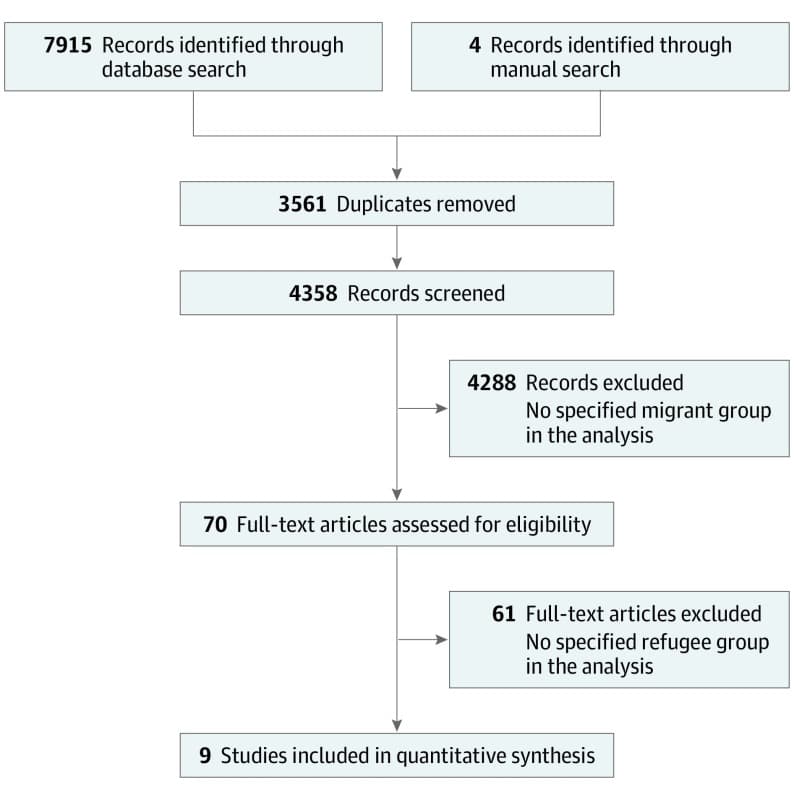
Figure 1. PRISMA Flowchart

The 9 studies presented data on refugee and native groups. Among these studies, 7 (78%) reported separate outcomes for nonrefugee migrants. Eight studies (89%) provided register-based data. One study (11%) was a first-contact or admission study but ensured comprehensive coverage of a catchment area to minimize case leakage. Four studies (44%) presented data on inpatients only. Observations originated from target populations in Denmark, Sweden, Norway, and Canada. Included studies assessed rate ratios or HRs. One study (11%) provided data for schizophrenia only (ICD, Ninth Revision, and ICD, Tenth Revision F20 code) (Table).

Table. Characteristics of Included Studies .

Source

Country or Region of Native Population

Origin or Ethnicity of Refugees or Migrants

a

Generation and Age Group of Refugees or Migrants

Diagnosis (Standardized Criteria)

Study Population, Total No. (No. of Refugees)

Cases of Psychosis Among Refugees, No.

Observation Period

Cohort

Relative Risk

Risk of Bias

Anderson et al,

32

2015

Ontario, Canada

NS

First; 14-40 y

Schizophrenia; nonaffective psychosis (

ICD-9

,

ICD-10

, and

DSM-IV

)

4 284 694 (95 148)

NS

1999-2008

Register based; refugee; nonrefugee

Effect measure rate ratio

Low

Barghadouch et al,

25

2018

Denmark

1

First; migrated <18 y

Schizophrenia; nonaffective psychosis (

ICD-10

)

114 577 (15 264)

95

1994-2012

Register based; refugee

Effect measure rate ratio

Low

Hollander et al,

24

2016

Sweden

2

First; >14 y

Schizophrenia; nonaffective psychosis (

ICD-10

)

1 347 790 (24 123)

93

1998-2011

Register based; refugee; nonrefugee

Effect measure HR

Low

Iversen and Morken,

23

2003

Norway

3

First; mean 30.8-41.4 y

Schizophrenia (

ICD-9

and

ICD-10

)

139 795 (Mean asylum seekers/y: 205)

5 (Asylum seekers)

1995-2000

Inpatient only; first psychiatric contact/admission; refugee; nonrefugee

Effect measure rate ratio

Unknown or high

Saraiva Leão et al,

26

2005

Sweden

6

Second; 16-34 y

Schizophrenia; nonaffective psychosis (

ICD-9

and

ICD-10

)

1 914 703 (33 698)

82

1995-1998

Register based; inpatient only; first psychiatric contact/admission; refugee; nonrefugee

Effect measure HR

Unknown or high

Leão et al,

27

2006

Sweden

7

First, second; 20-39 y

Schizophrenia; nonaffective psychosis (

ICD-9

and

ICD-10

)

2 243 546 (First generation: 68 557; second generation: 3267)

NS

1992-1999

Register based; inpatient only; first psychiatric contact/admission; refugee; nonrefugee

Effect measure HR

Unknown or high

Manhica et al,

50

2016

Sweden

4

First; migrated <19 y

Schizophrenia; nonaffective psychosis (

ICD-10

)

1 275 743 (13 780)

270

2005-2012

Register based; refugee; nonrefugee

Effect measure HR

Low

Norredam et al,

51

2009

Denmark

5

First; migrated >18 y

Schizophrenia; nonaffective psychosis (

ICD-10

)

145 695 (29 139)

371

1994-2003

Register based; refugee

Effect measure rate ratio

Low

Sundquist et al,

28

2004

Sweden

8

First; 25-64 y

Schizophrenia; nonaffective psychosis (

ICD-9

and

ICD-10

)

4 437 491 (259 402)

NS

1997-1999

Register based; inpatient only; first psychiatric contact/admission; refugee; nonrefugee

Effect measure rate ratio

Unknown or high

Main Analysis and Publication Bias

The main analysis included 9 studies. The RR of nonaffective psychosis amounted to 1.43 (95% CI, 1.00-2.05) in refugees compared with nonrefugee migrants. Heterogeneity among studies was high (I2 = 96.3%; Figure 2). Compared with the RR of the native populations, RR was increased by 2.52 (95% CI, 1.78-3.57) in refugees (eFigure 2 in the Supplement) and was increased by 1.85 (95% CI, 1.53-2.24) in nonrefugee migrants. Heterogeneity among studies was invariably high (refugees vs native populations: I2 = 98%; nonrefugee migrants vs native populations: I2 = 94.2%). A funnel plot of the main analysis (refugees vs nonrefugee migrants) and an Egger test did not indicate publication bias (eFigure 3 in the Supplement).
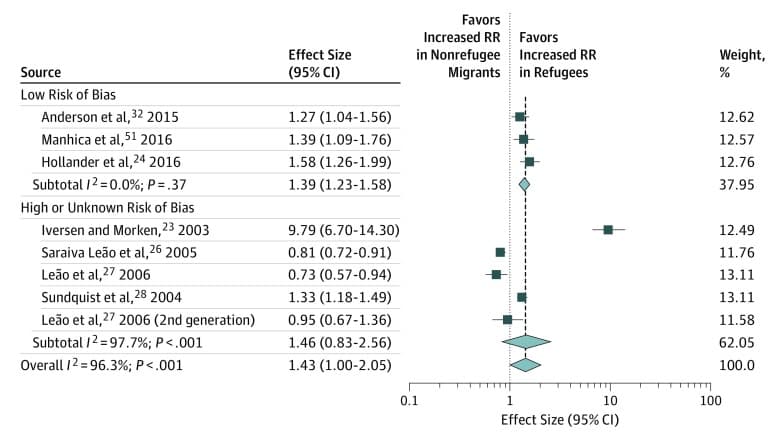
Figure 2. Relative Risk (RR) of Incidence of Nonaffective Psychosis in Refugees and Nonrefugee Migrants.

Sensitivity Analyses

When restricting the analyses to studies with low risk of bias only, the RR was 1.39 (95% CI, 1.23-1.58; I2 = 0.0%) for refugees compared with nonrefugee migrants (Figure 2), 2.41 (95% CI, 1.51-3.85; I2 = 96.3%) for refugees compared with the native populations, and 1.92 (95% CI, 1.02-3.62; I2 = 97.0%) for nonrefugee migrants compared with the native group.

Only the study by Iversen and Morken provided data not adjusted for age. Adjustment for age was part of the assessment of the methodologic rigor of included studies; consequently, age adjustment was controlled for in the sensitivity analysis of studies with low risk of bias only.

Excluding studies that defined refugee status by country of origin only (so-called refugee countries) yielded an RR of 2.24 (95% CI, 1.12-4.49; I2 = 96.8%) for refugees compared with nonrefugee migrants and an RR of 3.26 (95% CI, 1.87-5.70; I2 = 97.6%) for refugees compared with the native group.

To control for potential partial overlap of study populations, we conducted a sensitivity analysis, taking into account only the 1 Swedish study (Hollander et al 201624) and the 1 Danish study (Barghadouch et al 2018) with the longest follow-up and highest methodologic rigor. The RR amounted to 2.66 (95% CI, 0.99-7.16; I2 = 97.8%) for refugees compared with nonrefugee migrants and 3.36 (95% CI, 1.25-9.01; I2 = 98.0%) for refugees compared with the native populations.

Finnish migrants to Sweden showed a considerably high risk of being hospitalized for psychoses in 2 studies. In an exploratory analysis, exclusion of this outlier cohort of Finnish migrants to Sweden in the studies by Saraiva Leão et al and Leão et al increased the RR to 1.69 (95% CI, 1.24-2.32; I2 = 93.6%) for refugees compared with nonrefugee migrants, 2.52 (95% CI, 1.78-3.57; I2 = 98.0%) for refugees compared with the native group, and 1.57 (95% CI, 1.21-2.02; I2 = 94.4%) for nonrefugee migrants compared with the native population.

Discussion

To our knowledge, this systematic review and meta-analysis is the most comprehensive and the first to focus on comparing the RR of nonaffective psychosis in refugees with those of nonrefugee migrants and native populations. The analyses yielded the following main results: The risk of the manifestation of schizophrenia and associated nonaffective psychoses is statistically significantly increased in refugees compared with the native population as well as compared with nonrefugee migrants. The systematic literature search we conducted revealed a paucity of studies that performed direct comparisons and had high methodologic rigor.

Despite the similarity in geographic location and study methods among included studies, their heterogeneity was considerably high. This heterogeneity was mainly from the 3 studies with a high risk of bias (Iversen and Morken, Saraiva Leão et al, and Leão et al [Figure 2]).

The Norwegian study by Iversen and Morken reported an exceptionally high risk of nonaffective psychosis in asylum seekers (ie, persons applying for asylum and the formal recognition as refugees). A potential reason for this finding could be the characteristics of asylum seekers in their study compared with refugees in the other studies. All asylum seekers were currently residing in reception centers, which may place added stress during a particularly vulnerable early phase in the new host country and the uncertainties associated with the outcome of the migratory process. In addition, this study was the only one that did not adjust for age.

All of the included studies, except for Saraiva Leão et al and Leão et al, observed an increased risk of psychosis in refugees compared with nonrefugee migrants. The differing findings in Saraiva Leão et al and Leão et al seemed to be associated with a higher incidence of psychosis in migrants from Finland. This finding remains to be elucidated, given that it was not observed by the 2 other studies from Sweden (Hollander et al and Sundquist et al). On the contrary, both Hollander et al and Sundquist et al showed a greater risk of psychosis in refugees compared with nonrefugee migrants, including Finnish nonrefugee migrants. Other migrant or refugee groups in Sweden, such as Latin American refugees or South European labor migrants, also showed more pronounced self-reported ill health compared with Finnish migrants in another study by Sundquist. Tinghög et al detected higher prevalence of self-reported anxiety and depression and lower subjective well-being in Iraqi and Iranian migrants compared with Finnish migrants in Sweden. In addition, Turkish and Middle Eastern teenaged males showed statistically significantly larger rates of self-reported depression compared with Finnish teenaged males in Sweden in a study by Bursztein Lipsicas et al. These findings do not indicate a generally larger risk of mental health problems in Finnish migrants compared with other migrants or refugees in Sweden. The definition of refugee status in the studies by Saraiva Leão et al and Leão et al possibly resulted in no statistically significant difference between refugees and nonrefugee migrants, given that refugee status was defined by country of origin and not by specific migratory circumstances. The exploratory exclusion from our analyses of the Finnish migrant groups in the 2 studies decreased heterogeneity among the included studies. All studies invariably showed a greater risk of psychosis in refugees compared with nonrefugee migrants.

Only Anderson et al reported no statistically significant association of refugee or migrant status with the risk of psychosis compared with the native group. Their findings, however, may be explained by the examined population. Anderson et al included second-generation migrants in the native population, which likely decreased the contrast between migrants as a whole and the native population because second-generation migrants were also known to be at higher risk of psychosis.

Heterogeneity was high in most of the present analyses, but sensitivity analyses supported the main findings. Moreover, restricting the analysis to studies with low risk of bias in comparing refugees with nonrefugee migrants statistically significantly reduced heterogeneity (Figure 2). Even in light of the methodologic heterogeneity of the included studies, the findings appear to be sufficiently robust to serve as guiding values. Because only 5 studies were considered to have low risk of bias, more studies of high methodologic rigor are needed to determine precise risk estimates.

The general findings are in line with those of previous research. The RR of psychosis was increased in refugees and nonrefugee migrants in comparison with the native group. Parrett and Mason performed a systematic review of the literature on refugees and psychosis and assessed small and large population-based studies. Their findings confirmed the increased risk of psychosis for first-generation refugees.

Even the magnitude of observed effect sizes is in line with that in previous research. The most recent meta-analysis on incidence of nonaffective psychosis found the RR in migrants to be 1.77 (95% CI, 1.62-1.93) higher compared with the native group, which matches observations in the present analysis (1.85; 95% CI, 1.53-2.24). Consistently, observed RR in refugees compared with native populations was higher (2.52; 95% CI, 1.78-3.57).

Limitations

This meta-analysis confirmed the initial assumption that refugees are particularly vulnerable to developing nonaffective psychoses. The representativeness and validity of these findings, however, are limited by several aspects.

The included studies are, with 1 Canadian exception, all from Scandinavian countries. The application of the conclusions from this meta-analysis to other non-Scandinavian countries is therefore limited and should consider the characteristics of the native society and its specific interaction with the refugee population. To date, evidence is available from only a few Western host countries, and the social, economic, and political factors in the association between immigration and mental health may differ substantially among different regions of the world.

Although of limited methodologic comparability, 2 non-Scandinavian studies that did not meet this study’s formal inclusion criteria found the following: Tolmac and Hodes reported high representation of refugees among London adolescents aged 13 to 17 years who were psychiatric inpatients with a psychotic disorder diagnosis, and Fuchs detected an increased proportion of “expellees” (persons from former eastern territories of Germany who fled after World War II to Bavaria in West Germany) in a group of patients with nonaffective psychosis. These 2 studies suggest that increased risk of psychosis in refugees may not be limited to Scandinavian host countries. More register-based studies from countries with different social, economic, and political characteristics appear to be needed to further assess the generalizability of the findings from the present study.

Register-based studies were included in this meta-analysis because of their methodologic advantages, including large sample sizes, small selection bias, and independently collected data. Nevertheless, certain characteristics of register-based studies may limit interpretation. Not all refugees may be registered as refugees, which may lead to the exclusion of certain refugee subgroups from the analysis, although Scandinavian registries are regarded as reliable sources of research. In addition, case ascertainment is based on use of psychiatric services, whereas severity of symptoms or functional level of patients is not reported. The likelihood of seeking out and having access to psychiatric services, particularly in cases of less severe symptoms, may differ among the refugee, migrant, and native groups.

Psychotic disorders and experiences have been reported to vary between countries of origin. Furthermore, cultural variance in subjective psychosis concepts may be a challenge for the diagnostic process, even though core symptoms of psychosis appear to overlap between cultures. The included studies of high methodologic rigor reported that refugees and nonrefugee migrants originated from similar regions, but cultural differences between these 2 groups may still exist. To minimize potential misdiagnoses, we made the evaluation of diagnostic procedures a major component of the methodologic rigor assessment of included studies. We also required disorders to be defined according to well-established and standardized operationalized criteria (ICD-9 or ICD-10 and DSM) and explicit differentiation between affective and nonaffective psychoses as mandatory prerequisites for study inclusion.

Implications

Refugees may be especially vulnerable to developing a psychotic disorder because of a multifactorial combination of pre-, peri-, and postmigratory adversities. These hardships include traumatic life events, human rights violations, social exclusion, poverty, restricted access to medical services, and limited possibilities of participating in society.

Refugees do not migrate deliberately but are forced to migrate and have possibly faced traumatic experiences before and during migration. For example, a systematic review of the prevalence of torture experience showed rates higher than 30% among asylum seekers in high-income host countries. As other research studies have shown, these pre- and perimigratory events may also be associated with increased rates of other mental health problems in refugees, such as affective psychoses and posttraumatic stress disorder.

Postmigratory socioeconomic disadvantage, perceived social exclusion and discrimination, and separation from social networks likely are associated with mental health problems in refugees. High incidence rates of 1.7 to 13.2 for schizophrenia have been reported in migrants whose position in society was disadvantaged compared with the native population in 17 population-based studies in the United Kingdom and the Netherlands. The asylum process for refugees in the host country may have additional negative implications for mental health given that the process can be stressful and has an uncertain outcome. One review suggested an independent adverse effect of detention during the asylum process. Problematic interactions with the host country may include general challenges in verbal communication, social exclusion stress, and an impaired integration of new sensory data with prior knowledge, which may lead to aberrant projection errors and the development of positive psychotic symptoms. This development may increase the vulnerability to nonaffective and affective psychoses.

The negative implications of these psychosocial challenges may include increasing not only the risk of psychotic disorders but also the incidence of other nonpsychotic mental illnesses in refugees. More investigations are needed to assess the full range of mental illnesses in refugees and the mechanisms of their incidence in this cohort.

These challenges may be of exceptional relevance to refugees compared with nonrefugee migrants because their process of migration was forced and likely less prepared. The need for targeted psychiatric intervention and prevention strategies for refugees is further supported by low utilization rates of psychiatric services, language barriers, and cultural differences.

Conclusions

The results of this review suggest that refugees are at particular risk of developing nonaffective psychosis compared with the native population and nonrefugee migrants in a host country. Refugee experience may thus represent an independent risk factor for nonaffective psychosis in migrants. We believe that these findings highlight the need for psychiatric prevention strategies and outreach programs for refugees.

Abstract

Importance This systematic review and meta-analysis is, to date, the first and most comprehensive to focus on the incidence of nonaffective psychoses among refugees. Objective To assess the relative risk (RR) of incidence of nonaffective psychosis in refugees compared with the RR in the native population and nonrefugee migrants. Data Sources PubMed, PsycINFO, and Embase databases were searched for studies from January 1, 1977, to March 8, 2018, with no language restrictions (PROSPERO registration No. CRD42018106740). Study Selection Studies conducted in Denmark, Sweden, Norway, and Canada were selected by multiple independent reviewers. Inclusion criteria were (1) observation of refugee history in participants, (2) assessment of effect size and spread, (3) adjustment for sex, (4) definition of nonaffective psychosis according to standardized operationalized criteria, and (5) comparators were either nonrefugee migrants or the native population. Studies observing ethnic background only, with no explicit definition of refugee status, were excluded. Data Extraction and Synthesis The Preferred Reporting Items for Systematic Reviews and Meta-analyses (PRISMA) and the Meta-analysis of Observational Studies in Epidemiology (MOOSE) guidelines were followed for extracting data and assessing data quality and validity as well as risk of bias of included studies. A random-effects model was created to pool the effect sizes of included studies. Main Outcomes and Measures The primary outcome, formulated before data collection, was the pooled RR in refugees compared with the nonrefugee population. Results Of the 4358 screened articles, 9 studies (0.2%) involving 540 000 refugees in Denmark, Sweden, Norway, and Canada were included in the analyses. The RR for nonaffective psychoses in refugees was 1.43 (95% CI, 1.00-2.05; I2 = 96.3%) compared with nonrefugee migrants. Analyses that were restricted to studies with low risk of bias had an RR of 1.39 (95% CI, 1.23-1.58; I2 = 0.0%) for refugees compared with nonrefugee migrants, 2.41 (95% CI, 1.51-3.85; I2 = 96.3%) for refugees compared with the native population, and 1.92 (95% CI, 1.02-3.62; I2 = 97.0%) for nonrefugee migrants compared with the native group. Exclusion of studies that defined refugee status not individually but only by country of origin resulted in an RR of 2.24 (95% CI, 1.12-4.49; I2 = 96.8%) for refugees compared with nonrefugee migrants and an RR of 3.26 (95% CI, 1.87-5.70; I2 = 97.6%) for refugees compared with the native group. In general, the RR of nonaffective psychosis was increased in refugees and nonrefugee migrants compared with the native population. Conclusions and Relevance Refugee experience appeared to be an independent risk factor in developing nonaffective psychosis among refugees in Denmark, Sweden, Norway, and Canada. These findings suggest that applying the conclusions to non-Scandinavian countries should include a consideration of the characteristics of the native society and its specific interaction with the refugee population.

Introduction

Moving from one country to another is known to increase the risk of developing schizophrenia and similar mental health conditions. Studies have shown that both first and second-generation migrants have about 1.8 times higher risk of these conditions.

Refugees are a specific group of migrants who flee their home countries due to conflict or persecution. They face many challenges, such as violence, discrimination, financial stress, and feeling isolated. These difficulties put them at a higher risk of developing mental health issues, including psychoses. International law defines refugees as individuals needing protection outside their home countries due to serious threats to their safety or freedom from conflict or violence.

Refugees often experience high rates of mental disorders. For example, a review of 7,000 refugees in Western countries found that they were 10 times more likely to have post-traumatic stress disorder than people born in those countries. Past research has focused on post-traumatic stress disorder and mood disorders in refugees because they are more likely to experience traumatic events. These traumatic events are also strongly linked to psychotic disorders, increasing the risk by 2.8 to 11.5 times. Researchers have suggested several ideas about how trauma leads to psychosis, such as increased stress sensitivity or certain thinking patterns, but more research is needed to fully understand these connections.

Life as a refugee in a new country comes with significant challenges, potentially greater than those faced by other migrants. These include poverty, separation from family, and uncertainty about their asylum application. While these difficulties are known to harm mental health, it is not fully clear how much they increase the risk of psychosis in refugees.

The number of refugees worldwide is growing, with over 19.9 million estimated by the end of 2017. When including asylum seekers and other vulnerable groups, this number rises to 71.4 million. This growing population underscores the urgent need to study mental health problems among refugees.

Some individual studies and reviews have suggested a higher risk of psychosis in refugees, but there has not been a comprehensive meta-analysis on this topic until now. This study aimed to fill that gap by reviewing existing research to determine the risk of non-affective psychosis in refugees. The hypothesis was that refugees would have a higher risk of these conditions. The study focused on new cases of non-affective psychosis in refugees compared to people born in the host country and other migrants, primarily using data from national registries.

Methods

This project involved a systematic review of existing research and a meta-analysis, following established guidelines for conducting such studies. It also used specific reporting standards for systematic reviews and observational studies to ensure data quality and manage potential biases.

Search Strategy

Researchers searched major databases like PubMed, PsycINFO, and Embase for studies published between January 1, 1977, and March 8, 2018. The goal was to find studies that compared the risk of non-affective psychoses in refugees with that in people born in the host country and non-refugee migrants. The search included terms related to refugees, migrants, and mental health conditions. Additional studies were found by checking the references of the included articles. There were no language restrictions; articles in other languages were translated by native speakers. All study data were available, so authors did not need to be contacted.

Eligibility Criteria

Studies were included if they met specific conditions:

  • They clearly described the participants' refugee status.

  • They measured the relative risk (like rate ratio or hazard ratio) of new cases of non-affective psychoses, diagnosed using standard methods. "Incidence" meant the first time a person sought psychiatric help or received a diagnosis for a psychotic disorder within a certain period.

  • The risk figures were adjusted for gender, or the results were provided separately for men and women.

  • Non-affective psychosis was defined using recognized diagnostic criteria (like the DSM or ICD codes F20-F29), excluding mood disorders with psychotic features.

  • The comparison group was either non-refugee migrants or people born in the host country.

  • The study design was based on national registries or comprehensive first-contact data.

Studies that defined refugee status broadly (e.g., only by country of origin) were included but also analyzed separately to check for potential bias. Studies that only looked at ethnic background without clearly defining refugee status were excluded. Studies focusing on specific groups like veterans or prisoners were also excluded.

Study Selection, Data Collection, and Data Extraction

Two researchers independently reviewed all search results and then compared their findings. Any disagreements were resolved through discussion with two other team members. These two team members also independently checked if studies met the inclusion criteria, selected the final studies, and entered data into a pre-designed spreadsheet, following guidelines for systematic reviews.

Risk of Bias

Two researchers independently assessed the potential for bias in each study. They used a previously developed tool that looked at factors such as how participants were chosen, missing data, accuracy of information and diagnosis, consistency of methods, observation period, statistical methods, and conflicts of interest. Studies were categorized as having a low, unknown, or high risk of bias. Any differences in assessment were resolved through discussion among the co-authors.

Data Synthesis

A statistical model was used to combine the results from different studies. The main goal was to find the combined relative risk of non-affective psychosis in refugees compared to non-refugee populations, along with a 95% confidence interval. If a study had multiple subgroups, their results were combined using a fixed-effect model. Hazard ratios and rate ratios were used as approximations for relative risk. The consistency of results across studies was measured using I-squared statistics, and this measure was considered when interpreting the overall findings.

To ensure the results were reliable, sensitivity analyses were performed. These analyses included only studies with a low risk of bias and excluded studies that defined refugee status only by country of origin. Additional analyses considered possible overlaps in study populations. Publication bias, which is the tendency for studies with significant results to be published more often, was checked using funnel plots and a statistical test.

Statistical analyses were performed using specialized software. A p-value less than 0.05 was considered statistically significant.

Results

Out of 4,358 articles initially found and reviewed, 9 studies (0.2%) involving 540,000 refugees met the inclusion criteria. These 9 studies, published between January 1, 2004, and December 31, 2018, provided enough data for the analysis.

All 9 studies included data on refugees and people born in the host country. Seven of these studies (78%) also provided separate results for non-refugee migrants. Most studies (89%) used data from national registries. One study (11%) collected data on first psychiatric contacts or admissions, but it covered a wide area to ensure thorough data collection. Four studies (44%) focused only on patients admitted to hospitals. The studies were conducted in Denmark, Sweden, Norway, and Canada. They measured rate ratios or hazard ratios. One study (11%) specifically focused on schizophrenia.

Main Analysis and Publication Bias

The main analysis, which included all 9 studies, showed that the risk of non-affective psychosis in refugees was 1.43 times higher (with a 95% confidence interval of 1.00 to 2.05) compared to non-refugee migrants. There was a significant amount of variation among these studies (I-squared = 96.3%). Compared to people born in the host country, the risk was 2.52 times higher (95% CI, 1.78-3.57) for refugees and 1.85 times higher (95% CI, 1.53-2.24) for non-refugee migrants. The variation among studies remained high for these comparisons as well. Checks for publication bias did not show any evidence of it.

Sensitivity Analyses

When the analysis was limited to studies with a low risk of bias, the risk for refugees compared to non-refugee migrants was 1.39 times higher (95% CI, 1.23-1.58), and the variation among studies was significantly reduced (I-squared = 0.0%). For refugees compared to people born in the host country, the risk was 2.41 times higher (95% CI, 1.51-3.85), and for non-refugee migrants compared to people born in the host country, it was 1.92 times higher (95% CI, 1.02-3.62). The variation for these comparisons remained high.

One study did not adjust its data for age, which was a factor considered in assessing study quality. This age adjustment was accounted for in the sensitivity analysis of low-bias studies.

Excluding studies that defined refugee status only by country of origin, the risk for refugees compared to non-refugee migrants was 2.24 times higher (95% CI, 1.12-4.49). For refugees compared to people born in the host country, it was 3.26 times higher (95% CI, 1.87-5.70).

To account for possible overlap in study populations, a sensitivity analysis was performed using only the Swedish and Danish studies with the longest follow-up and highest quality. This analysis found the risk for refugees compared to non-refugee migrants to be 2.66 times higher (95% CI, 0.99-7.16), and for refugees compared to people born in the host country, it was 3.36 times higher (95% CI, 1.25-9.01).

An exploratory analysis was done to exclude a group of Finnish migrants to Sweden, who showed a particularly high risk of hospitalization for psychoses in two studies. Removing this outlier group increased the risk for refugees compared to non-refugee migrants to 1.69 times higher (95% CI, 1.24-2.32). The risk for refugees compared to people born in the host country remained 2.52 times higher (95% CI, 1.78-3.57), and for non-refugee migrants compared to people born in the host country, it was 1.57 times higher (95% CI, 1.21-2.02). Excluding the Finnish migrant group also reduced the variation among studies.

Discussion

This systematic review and meta-analysis is the first and most comprehensive study to compare the risk of non-affective psychosis in refugees with that in non-refugee migrants and people born in the host country. The main finding is a statistically significant increase in the risk of schizophrenia and related non-affective psychoses among refugees compared to both people born in the host country and other migrants. The systematic search revealed that there are not many studies with strong methods that make direct comparisons.

Despite similarities in where and how the included studies were conducted, there was considerable variation in their results. This variation mainly came from three studies that were identified as having a high risk of bias.

One Norwegian study reported an exceptionally high risk of non-affective psychosis in asylum seekers. This might be because the asylum seekers in that study were living in reception centers, which could add stress during a difficult early period in a new country, along with the uncertainty of their asylum process. Also, this was the only study that did not adjust for age in its findings.

Most included studies, except for two, observed a higher risk of psychosis in refugees compared to non-refugee migrants. The different findings in these two studies appeared to be linked to a higher rate of psychosis in migrants from Finland. This observation needs further explanation, as it was not seen in two other Swedish studies. Those other Swedish studies actually showed a greater risk of psychosis in refugees compared to non-refugee migrants, even when including Finnish non-refugee migrants. Other studies in Sweden have also indicated that other migrant or refugee groups, such as Latin American refugees or Southern European labor migrants, reported worse health than Finnish migrants. For example, Iraqi and Iranian migrants in Sweden reported higher anxiety and depression and lower well-being compared to Finnish migrants. Similarly, Turkish and Middle Eastern teenage boys in Sweden reported significantly higher rates of depression than Finnish teenage boys. These findings do not generally suggest a higher risk of mental health problems in Finnish migrants compared to other migrants or refugees in Sweden. The way refugee status was defined in the two differing studies (by country of origin rather than specific migration circumstances) might explain why there was no significant difference between refugees and non-refugee migrants in their findings. When the Finnish migrant groups from these two studies were removed from the analysis, the variation among the remaining studies decreased. All remaining studies consistently showed a greater risk of psychosis in refugees compared to non-refugee migrants.

Only one study found no significant link between refugee or migrant status and the risk of psychosis compared to people born in the host country. However, this could be because that study included second-generation migrants within the native population. Since second-generation migrants are also known to have a higher risk of psychosis, this inclusion likely reduced the difference between migrants as a whole and the native population.

Even though there was high variation in most of the analyses, the main findings were supported by sensitivity analyses. When the analysis comparing refugees with non-refugee migrants was restricted to studies with a low risk of bias, the variation significantly decreased. Despite the differing methods of the included studies, the findings seem reliable enough to be used as guiding information. Because only five studies were considered to have a low risk of bias, more high-quality research is needed to get more precise risk estimates.

These general findings align with previous research. The risk of psychosis was higher in both refugees and non-refugee migrants compared to people born in the host country. A previous review focusing on refugees and psychosis also confirmed an increased risk for first-generation refugees.

The size of the observed effects also matches previous research. The most recent meta-analysis on the incidence of non-affective psychosis found the risk for migrants to be 1.77 times higher (95% CI, 1.62-1.93) than for people born in the host country, which is similar to the 1.85 times higher risk (95% CI, 1.53-2.24) observed in this analysis. Consistently, the observed risk for refugees compared to people born in the host country was even higher at 2.52 times (95% CI, 1.78-3.57).

Limitations

This meta-analysis confirmed that refugees are particularly vulnerable to developing non-affective psychoses. However, the ability to apply these findings broadly is limited by several factors.

Most included studies, except for one from Canada, were from Scandinavian countries. Therefore, applying these conclusions to other non-Scandinavian countries requires careful consideration of the specific characteristics of those societies and how they interact with refugee populations. Currently, there is evidence from only a few Western host countries, and the social, economic, and political factors influencing the link between immigration and mental health can differ significantly across regions worldwide.

Although not fully comparable in methods, two non-Scandinavian studies that did not meet the formal inclusion criteria also suggested an increased risk. One found a high representation of refugees among London adolescents with psychotic disorders admitted to psychiatric hospitals. Another identified a higher proportion of "expellees" (Germans who fled from former eastern territories after World War II) in a group of patients with non-affective psychosis in Bavaria. These studies indicate that the increased risk of psychosis in refugees might not be exclusive to Scandinavian host countries. More registry-based studies from countries with diverse social, economic, and political landscapes are needed to further assess how broadly these findings can be applied.

Registry-based studies were included in this meta-analysis because of their benefits, such as large sample sizes, low selection bias, and independent data collection. However, certain aspects of these studies can limit interpretation. Not all refugees may be formally registered, potentially excluding some subgroups from the analysis, although Scandinavian registries are generally considered reliable for research. Additionally, identifying cases relies on people seeking psychiatric services; the severity of symptoms or daily functioning is not typically reported. The likelihood of seeking and accessing psychiatric services, especially for less severe symptoms, might differ among refugee, migrant, and native populations.

Psychotic disorders and experiences have been reported to vary between countries of origin. Furthermore, cultural differences in understanding psychosis can challenge the diagnostic process, even though the core symptoms generally overlap across cultures. The high-quality studies included in this review reported that refugees and non-refugee migrants came from similar regions, but cultural differences between these two groups might still exist. To minimize potential misdiagnoses, the evaluation of diagnostic procedures was a key part of assessing the methodological quality of included studies. The study also required that disorders be defined using well-established, standardized criteria (ICD-9 or ICD-10 and DSM) and that there be a clear distinction between mood-related and non-mood-related psychoses as mandatory conditions for inclusion.

Implications

Refugees may be particularly vulnerable to developing a psychotic disorder due to a complex combination of difficulties before, during, and after migration. These challenges include traumatic life events, human rights abuses, social exclusion, poverty, limited access to medical services, and restricted opportunities to participate in society.

Refugees do not choose to migrate but are forced to, and they may have experienced trauma before and during their journey. For instance, one review showed that over 30% of asylum seekers in high-income host countries had experienced torture. As other research indicates, these pre- and peri-migratory events can also lead to higher rates of other mental health problems in refugees, such as mood disorders and post-traumatic stress disorder.

Challenges after migration, such as socioeconomic disadvantage, feeling socially excluded and discriminated against, and being separated from social networks, are likely linked to mental health problems in refugees. High rates of schizophrenia (1.7 to 13.2 per 100,000 people) have been reported in migrants who were socially disadvantaged compared to people born in the host country, based on 17 population-based studies in the United Kingdom and the Netherlands. The asylum process itself can also negatively affect mental health due to its stressful nature and uncertain outcome. One review suggested that detention during the asylum process has an independent negative impact. Difficulties interacting with the host country, such as language barriers, stress from social exclusion, and problems integrating new sensory information with existing knowledge, can lead to incorrect perceptions and the development of psychotic symptoms. These factors may increase vulnerability to both non-affective and affective psychoses.

The negative impacts of these psychosocial challenges may not only increase the risk of psychotic disorders but also the incidence of other non-psychotic mental illnesses in refugees. More research is needed to understand the full range of mental illnesses in refugees and the mechanisms behind their development in this group.

These challenges are particularly relevant for refugees compared to non-refugee migrants, as their migration process was forced and likely less prepared. The need for targeted psychiatric interventions and prevention strategies for refugees is further supported by their low rates of using psychiatric services, along with language and cultural barriers.

Conclusions

The findings of this review suggest that refugees face a specific risk of developing non-affective psychosis compared to both people born in the host country and non-refugee migrants. The refugee experience may therefore be an independent risk factor for non-affective psychosis in migrant populations. These findings underscore the need for psychiatric prevention strategies and outreach programs specifically designed for refugees.

Abstract

Importance This systematic review and meta-analysis is, to date, the first and most comprehensive to focus on the incidence of nonaffective psychoses among refugees. Objective To assess the relative risk (RR) of incidence of nonaffective psychosis in refugees compared with the RR in the native population and nonrefugee migrants. Data Sources PubMed, PsycINFO, and Embase databases were searched for studies from January 1, 1977, to March 8, 2018, with no language restrictions (PROSPERO registration No. CRD42018106740). Study Selection Studies conducted in Denmark, Sweden, Norway, and Canada were selected by multiple independent reviewers. Inclusion criteria were (1) observation of refugee history in participants, (2) assessment of effect size and spread, (3) adjustment for sex, (4) definition of nonaffective psychosis according to standardized operationalized criteria, and (5) comparators were either nonrefugee migrants or the native population. Studies observing ethnic background only, with no explicit definition of refugee status, were excluded. Data Extraction and Synthesis The Preferred Reporting Items for Systematic Reviews and Meta-analyses (PRISMA) and the Meta-analysis of Observational Studies in Epidemiology (MOOSE) guidelines were followed for extracting data and assessing data quality and validity as well as risk of bias of included studies. A random-effects model was created to pool the effect sizes of included studies. Main Outcomes and Measures The primary outcome, formulated before data collection, was the pooled RR in refugees compared with the nonrefugee population. Results Of the 4358 screened articles, 9 studies (0.2%) involving 540 000 refugees in Denmark, Sweden, Norway, and Canada were included in the analyses. The RR for nonaffective psychoses in refugees was 1.43 (95% CI, 1.00-2.05; I2 = 96.3%) compared with nonrefugee migrants. Analyses that were restricted to studies with low risk of bias had an RR of 1.39 (95% CI, 1.23-1.58; I2 = 0.0%) for refugees compared with nonrefugee migrants, 2.41 (95% CI, 1.51-3.85; I2 = 96.3%) for refugees compared with the native population, and 1.92 (95% CI, 1.02-3.62; I2 = 97.0%) for nonrefugee migrants compared with the native group. Exclusion of studies that defined refugee status not individually but only by country of origin resulted in an RR of 2.24 (95% CI, 1.12-4.49; I2 = 96.8%) for refugees compared with nonrefugee migrants and an RR of 3.26 (95% CI, 1.87-5.70; I2 = 97.6%) for refugees compared with the native group. In general, the RR of nonaffective psychosis was increased in refugees and nonrefugee migrants compared with the native population. Conclusions and Relevance Refugee experience appeared to be an independent risk factor in developing nonaffective psychosis among refugees in Denmark, Sweden, Norway, and Canada. These findings suggest that applying the conclusions to non-Scandinavian countries should include a consideration of the characteristics of the native society and its specific interaction with the refugee population.

Introduction

Migration is a known factor that increases the risk of developing schizophrenia and other types of psychosis that are not related to mood disorders. Studies have consistently shown that both first-generation and second-generation migrants have about 1.8 times higher risk of psychosis.

Refugees are a specific group of migrants who leave their home countries due to conflict or persecution. They are considered to be at an especially high risk for developing psychoses. This is because refugees often face many physical, psychological, and social problems. These problems are linked to difficult experiences like violence, discrimination, financial stress, and feeling isolated. International law, as defined by the United Nations High Commissioner for Refugees, describes refugees as individuals outside their home countries who require international protection due to serious threats to their life, safety, or freedom caused by persecution, armed conflict, violence, or severe public disorder.

The occurrence of mental disorders is common among refugees. A review of studies involving 7,000 refugees who settled in Western countries found that the likelihood of post-traumatic stress disorder was 10 times higher in refugees compared to people born in those countries. Past research has primarily focused on post-traumatic stress disorder and mood disorders in refugees because they are more often exposed to traumatic events than others. Traumatic experiences are also strong risk factors for psychotic disorders; the chance of developing a psychotic disorder or related symptoms increases by 2.8 to 11.5 times for those who have experienced trauma. Theories linking trauma to psychosis include increased stress sensitivity, negative thinking patterns, dissociation, biased information processing, and a belief that external factors control one's life, but there is limited solid evidence for these.

Furthermore, the social and psychological difficulties of being a refugee in a foreign country are significant, potentially even greater than for other migrants. These challenges include poverty, separation from family and loved ones, and uncertainty about the outcome of asylum applications. While these hardships are harmful to mental health, the exact extent to which the risk of psychosis increases in refugees is still unclear.

The rising number of refugees globally, including in Europe, emphasizes the need for more research into their mental health issues. By the end of 2017, the United Nations High Commissioner for Refugees estimated over 19.9 million refugees worldwide. Additionally, the total number of people needing assistance, including asylum seekers, internally displaced persons, and stateless individuals, reached 71.4 million.

Individual studies and systematic reviews have indicated a higher risk of psychosis in refugee migrants. However, no meta-analysis has focused solely on this topic until now. The aim was to fill this gap in rigorous evidence by conducting a systematic review and meta-analysis. The study assessed the relative risk (RR) of developing non-mood-related psychosis in refugees. The hypothesis was that refugees would have a higher RR of developing non-mood-related psychosis. This research primarily used data from official registries to compare the occurrence of non-mood-related psychosis in refugees with both native populations and non-refugee migrants.

Methods

This study was a systematic literature review and meta-analysis. The full plan for this larger project has been published. The systematic review followed guidelines from the Cochrane Collaboration. To extract data and assess its quality, validity, and potential for bias, the study used guidelines from the Preferred Reporting Items for Systematic Reviews and Meta-analyses (PRISMA) and the Meta-analysis of Observational Studies in Epidemiology (MOOSE).

Search Strategy

A search was conducted in the PubMed, PsycINFO, and Embase databases for studies published between January 1, 1977, and March 8, 2018. The goal was to assess the relative risk (RR) of non-mood-related psychoses in refugees, comparing it to native populations and non-refugee migrants. The specific search terms used are detailed in the supplementary materials. Additional relevant studies were found by reviewing the references of the included articles. There were no language restrictions; translations were obtained from native speakers for articles in languages other than English to check if they met the study's requirements. Full texts and data from studies were available, so it was not necessary to contact the authors. The search was managed using Endnote, version X8.2.

Eligibility Criteria

Studies were considered suitable for testing the hypothesis and were included if they met specific criteria. First, the studies had to clearly describe observations of refugee history. Second, they needed to assess the relative risk (RR), including rate ratio, risk ratio, or hazard ratio (HR), of developing non-mood-related psychoses diagnosed using standard methods. Incidence was defined as the first psychiatric contact for or first diagnosis of a psychotic disorder within a specific time frame. Third, the reported risk figures had to be adjusted for sex, or studies needed to present outcomes separated by sex. Fourth, non-mood-related psychosis had to be defined using standard diagnostic criteria, such as the Diagnostic and Statistical Manual of Mental Disorders or the International Classification of Diseases (ICD; e.g., ICD, Tenth Revision codes F20 through F29, which include schizophrenia, schizoaffective disorder, and schizophreniform disorders, but exclude mood-related psychotic disorders like depression, bipolar disorder, and mania with psychotic symptoms). Fifth, the comparison group had to be either non-refugee migrants or the native population. Additionally, studies had to be either registry-based or based on first contact (only if case detection was thorough enough for the area covered).

All ways of defining refugee status were included, but definitions with a higher risk of bias (e.g., refugee status determined solely by country of origin rather than individual reasons) were excluded in separate sensitivity analyses. Studies that only looked at ethnic background without clearly defining refugee status were not included. Studies focusing on specific groups like veterans or prisoners were also excluded.

Study Selection, Data Collection, and Data Extraction

Two researchers independently reviewed all search results and then compared their findings. Any disagreements were resolved through discussions with two other team members. These two team members also independently checked if studies met the eligibility criteria, selected the final studies, and categorized and coded the data into a pre-defined spreadsheet, following recommendations from the Cochrane Collaboration handbook.

Risk of Bias

Two researchers independently evaluated the potential for bias in each study using a previously developed and implemented tool. Following a validated assessment tool for prevalence studies and recommendations, studies were classified as having an overall low, unknown, or high risk of bias. This classification was based on factors such as selection bias (target population and how participants were found), missing data, information bias (data source, definition of cases, diagnostic tools, consistency, and observation period), statistical methods, and conflicts of interest. Any disagreements were resolved through discussions with other co-authors.

Data Synthesis

A random-effects model was used for data analysis. The primary outcome was the combined relative risk (RR) for refugees compared to the non-refugee population, along with its 95% confidence interval. For subgroups within the same study (e.g., different types of non-refugee migrants), a fixed-effect model was used to combine effect sizes. Hazard ratios (HR) and rate ratios were used as close estimates of the RR. The degree of variation between studies was measured using I**2 statistics, and the effect estimates were interpreted considering this variation.

For the primary outcome, sensitivity analyses were conducted that included only studies with a low risk of bias. Studies that defined refugee status solely by country of origin were excluded. Additional analyses considered potential overlaps in study populations. Publication bias was assessed using funnel plots and Egger's test.

Statistical analyses were performed using Stata, version 13.1, including the metan1 command for the random-effects model. A two-sided P value less than 0.05 was considered statistically significant.

Results

Out of 4,358 articles found and reviewed, 9 studies (0.2%) involving 540,000 refugees met the criteria for inclusion. These 9 studies, published between January 1, 2004, and December 31, 2018, provided enough data for this analysis.

The 9 studies provided data on both refugee and native populations. Seven of these studies (78%) also reported separate outcomes for non-refugee migrants. Eight studies (89%) used data from official registries. One study (11%) was based on initial psychiatric contacts or admissions but ensured thorough coverage of the area to minimize missed cases. Four studies (44%) presented data only on inpatients. The studies involved populations from Denmark, Sweden, Norway, and Canada. The included studies assessed rate ratios or hazard ratios. One study (11%) provided data specifically for schizophrenia.

Main Analysis and Publication Bias

The main analysis included 9 studies. The relative risk (RR) of non-mood-related psychosis in refugees was found to be 1.43 (95% CI, 1.00-2.05) when compared to non-refugee migrants. There was significant variation among these studies (I**2 = 96.3%). Compared to native populations, the RR for refugees was 2.52 (95% CI, 1.78-3.57), and for non-refugee migrants, it was 1.85 (95% CI, 1.53-2.24). In both comparisons (refugees vs. native populations and non-refugee migrants vs. native populations), the variation among studies remained high (I**2 = 98% and I**2 = 94.2%, respectively). A funnel plot and an Egger test for the main analysis (refugees vs. non-refugee migrants) did not suggest publication bias.

Sensitivity Analyses

When the analysis was limited to studies with a low risk of bias, the relative risk (RR) for refugees compared to non-refugee migrants was 1.39 (95% CI, 1.23-1.58), with no heterogeneity among studies (I**2 = 0.0%). For refugees compared to native populations, the RR was 2.41 (95% CI, 1.51-3.85), with high heterogeneity (I**2 = 96.3%). For non-refugee migrants compared to the native group, the RR was 1.92 (95% CI, 1.02-3.62), also with high heterogeneity (I**2 = 97.0%).

The study by Iversen and Morken was the only one that did not adjust for age. Adjusting for age was a part of evaluating the methodological quality of the studies, and this was addressed in the sensitivity analysis of studies with a low risk of bias.

Excluding studies that defined refugee status only by country of origin (so-called refugee countries) resulted in an RR of 2.24 (95% CI, 1.12-4.49) for refugees compared to non-refugee migrants, with high heterogeneity (I**2 = 96.8%). For refugees compared to the native group, the RR was 3.26 (95% CI, 1.87-5.70), also with high heterogeneity (I**2 = 97.6%).

To account for potential overlap in study populations, a sensitivity analysis included only one Swedish study and one Danish study that had the longest follow-up and highest methodological quality. This analysis found an RR of 2.66 (95% CI, 0.99-7.16) for refugees compared to non-refugee migrants, with high heterogeneity (I**2 = 97.8%). For refugees compared to native populations, the RR was 3.36 (95% CI, 1.25-9.01), also with high heterogeneity (I**2 = 98.0%).

Finnish migrants to Sweden showed a notably high risk of being hospitalized for psychoses in two studies. In an exploratory analysis, excluding this outlier group of Finnish migrants to Sweden from the studies increased the RR to 1.69 (95% CI, 1.24-2.32) for refugees compared to non-refugee migrants, with reduced heterogeneity (I**2 = 93.6%). The RR for refugees compared to the native group remained 2.52 (95% CI, 1.78-3.57), with high heterogeneity (I**2 = 98.0%). For non-refugee migrants compared to the native population, the RR was 1.57 (95% CI, 1.21-2.02), with high heterogeneity (I**2 = 94.4%).

Discussion

This systematic review and meta-analysis is believed to be the most comprehensive and the first to specifically compare the relative risk (RR) of non-mood-related psychosis in refugees with both non-refugee migrants and native populations. The main findings indicate that the risk of developing schizophrenia and related non-mood-related psychoses is significantly higher in refugees compared to both the native population and non-refugee migrants. The systematic literature search showed a scarcity of studies that directly compared these groups with strong methodological rigor.

Despite similarities in geographical location and study methods among the included studies, there was considerable variability in their findings. This variability was mainly due to three studies that had a high risk of bias.

The Norwegian study reported an exceptionally high risk of non-mood-related psychosis in asylum seekers. One possible reason for this finding could be the specific characteristics of asylum seekers in that study compared to refugees in other studies. All asylum seekers were living in reception centers, which might add stress during a particularly vulnerable early stage in a new host country, along with the uncertainties of the asylum process. Additionally, this study was the only one that did not adjust for age.

All included studies, except for two, observed an increased risk of psychosis in refugees compared to non-refugee migrants. The differing results in those two studies appeared to be linked to a higher incidence of psychosis among migrants from Finland. This finding requires further explanation, as it was not observed in two other Swedish studies. In contrast, those other Swedish studies both showed a greater risk of psychosis in refugees compared to non-refugee migrants, including Finnish non-refugee migrants. Other migrant or refugee groups in Sweden, such as Latin American refugees or South European labor migrants, also reported poorer health compared to Finnish migrants in another study. One study detected higher rates of self-reported anxiety and depression and lower subjective well-being in Iraqi and Iranian migrants compared to Finnish migrants in Sweden. Additionally, teenage males from Turkey and the Middle East showed significantly higher rates of self-reported depression compared to Finnish teenage males in Sweden in another study. These findings do not generally suggest a higher risk of mental health problems in Finnish migrants compared to other migrants or refugees in Sweden. The definition of refugee status in the two studies that differed may have resulted in no significant difference between refugees and non-refugee migrants, as refugee status was defined by country of origin rather than specific migration circumstances. When the Finnish migrant groups from these two studies were excluded from the analyses, the variability among the included studies decreased. All studies consistently showed a greater risk of psychosis in refugees compared to non-refugee migrants.

Only one study reported no significant link between refugee or migrant status and the risk of psychosis compared to the native group. However, these findings might be explained by the population examined. This study included second-generation migrants in the native population, which likely reduced the contrast between migrants as a whole and the native population because second-generation migrants are also known to have a higher risk of psychosis.

Heterogeneity was high in most of the current analyses, but sensitivity analyses supported the main findings. Furthermore, limiting the analysis to studies with a low risk of bias when comparing refugees with non-refugee migrants significantly reduced heterogeneity. Even with the methodological variations among the included studies, the findings appear to be strong enough to serve as guiding values. Since only five studies were considered to have a low risk of bias, more studies with high methodological rigor are needed to determine precise risk estimates.

The overall findings are consistent with previous research. The relative risk (RR) of psychosis was found to be higher in refugees and non-refugee migrants compared to the native group. A previous systematic review of literature on refugees and psychosis confirmed the increased risk of psychosis for first-generation refugees.

Even the size of the observed effects aligns with earlier research. The most recent meta-analysis on the incidence of non-mood-related psychosis found the RR in migrants to be 1.77 (95% CI, 1.62-1.93) higher compared to the native group. This matches observations in the current analysis (1.85; 95% CI, 1.53-2.24). Consistently, the observed RR in refugees compared to native populations was higher (2.52; 95% CI, 1.78-3.57).

Limitations

This meta-analysis confirmed the initial belief that refugees are particularly susceptible to developing non-mood-related psychoses. However, the applicability and reliability of these findings are limited in several ways.

The included studies, with one Canadian exception, are all from Scandinavian countries. Therefore, applying the conclusions from this meta-analysis to other non-Scandinavian countries is limited. It should consider the specific characteristics of the local society and how it interacts with the refugee population. Currently, evidence is available from only a few Western host countries, and the social, economic, and political factors linking immigration and mental health can vary significantly across different parts of the world.

Although they have limited methodological comparability, two non-Scandinavian studies that did not meet this study's formal inclusion criteria found interesting results. One study reported a high representation of refugees among London adolescents aged 13 to 17 who were psychiatric inpatients with a psychotic disorder diagnosis. Another study detected an increased proportion of "expellees" (people who fled to Bavaria in West Germany from former eastern territories of Germany after World War II) in a group of patients with non-mood-related psychosis. These two studies suggest that an increased risk of psychosis in refugees may not be limited to Scandinavian host countries. More registry-based studies from countries with different social, economic, and political characteristics seem necessary to further assess how broadly applicable the findings from the current study are.

Registry-based studies were included in this meta-analysis due to their methodological benefits, such as large sample sizes, low selection bias, and independently collected data. Nevertheless, certain features of registry-based studies can limit interpretation. Not all refugees may be officially registered as such, potentially leading to the exclusion of some refugee subgroups from the analysis, even though Scandinavian registries are considered reliable sources for research. Additionally, identifying cases relies on the use of psychiatric services, and the severity of symptoms or patients' functional levels are not typically reported. The likelihood of seeking and accessing psychiatric services, especially for less severe symptoms, may differ among refugee, migrant, and native groups.

Psychotic disorders and experiences have been reported to differ between countries of origin. Furthermore, cultural differences in how psychosis is understood subjectively can pose a challenge for diagnosis, even though core symptoms of psychosis seem to be consistent across cultures. The included studies with high methodological rigor reported that refugees and non-refugee migrants came from similar regions, but cultural differences between these two groups might still exist. To minimize potential misdiagnoses, the evaluation of diagnostic procedures was a major part of assessing the methodological rigor of included studies. It was also required that disorders be defined according to well-established and standardized criteria and that there be a clear distinction between mood-related and non-mood-related psychoses as essential conditions for study inclusion.

Implications

Refugees may be particularly vulnerable to developing a psychotic disorder due to a combination of multiple hardships before, during, and after migration. These difficulties include traumatic life events, human rights violations, social exclusion, poverty, limited access to medical services, and reduced opportunities to participate in society.

Refugees do not choose to migrate but are forced to, and they may have experienced trauma before and during their journey. For example, a systematic review found that over 30% of asylum seekers in high-income host countries reported experiencing torture. As other research has shown, these pre- and peri-migration events can also lead to higher rates of other mental health problems in refugees, such as mood-related psychoses and post-traumatic stress disorder.

Challenges after migration, such as socioeconomic disadvantage, perceived social exclusion and discrimination, and separation from social networks, are likely linked to mental health problems in refugees. High rates of schizophrenia, ranging from 1.7 to 13.2, have been reported in migrants who were disadvantaged in society compared to the native population, based on 17 population-based studies in the United Kingdom and the Netherlands. The asylum process for refugees in the host country can further negatively affect mental health, as it can be stressful and its outcome uncertain. One review suggested an independent harmful effect of detention during the asylum process. Difficult interactions with the host country can include general challenges in verbal communication, stress from social exclusion, and difficulty integrating new sensory information with existing knowledge. These issues can lead to mistaken perceptions and the development of positive psychotic symptoms, which may increase vulnerability to both non-mood-related and mood-related psychoses.

These psychosocial challenges may be exceptionally relevant for refugees compared to non-refugee migrants because their migration process was forced and likely less prepared. The need for specific psychiatric interventions and prevention strategies for refugees is further supported by low rates of psychiatric service use, language barriers, and cultural differences.

Conclusions

The findings of this review suggest that refugees face a heightened risk of developing non-mood-related psychosis compared to both the native population and non-refugee migrants in a host country. The refugee experience may, therefore, be an independent risk factor for non-mood-related psychosis in migrants. These findings underscore the need for psychiatric prevention strategies and outreach programs specifically for refugees.

Abstract

Importance This systematic review and meta-analysis is, to date, the first and most comprehensive to focus on the incidence of nonaffective psychoses among refugees. Objective To assess the relative risk (RR) of incidence of nonaffective psychosis in refugees compared with the RR in the native population and nonrefugee migrants. Data Sources PubMed, PsycINFO, and Embase databases were searched for studies from January 1, 1977, to March 8, 2018, with no language restrictions (PROSPERO registration No. CRD42018106740). Study Selection Studies conducted in Denmark, Sweden, Norway, and Canada were selected by multiple independent reviewers. Inclusion criteria were (1) observation of refugee history in participants, (2) assessment of effect size and spread, (3) adjustment for sex, (4) definition of nonaffective psychosis according to standardized operationalized criteria, and (5) comparators were either nonrefugee migrants or the native population. Studies observing ethnic background only, with no explicit definition of refugee status, were excluded. Data Extraction and Synthesis The Preferred Reporting Items for Systematic Reviews and Meta-analyses (PRISMA) and the Meta-analysis of Observational Studies in Epidemiology (MOOSE) guidelines were followed for extracting data and assessing data quality and validity as well as risk of bias of included studies. A random-effects model was created to pool the effect sizes of included studies. Main Outcomes and Measures The primary outcome, formulated before data collection, was the pooled RR in refugees compared with the nonrefugee population. Results Of the 4358 screened articles, 9 studies (0.2%) involving 540 000 refugees in Denmark, Sweden, Norway, and Canada were included in the analyses. The RR for nonaffective psychoses in refugees was 1.43 (95% CI, 1.00-2.05; I2 = 96.3%) compared with nonrefugee migrants. Analyses that were restricted to studies with low risk of bias had an RR of 1.39 (95% CI, 1.23-1.58; I2 = 0.0%) for refugees compared with nonrefugee migrants, 2.41 (95% CI, 1.51-3.85; I2 = 96.3%) for refugees compared with the native population, and 1.92 (95% CI, 1.02-3.62; I2 = 97.0%) for nonrefugee migrants compared with the native group. Exclusion of studies that defined refugee status not individually but only by country of origin resulted in an RR of 2.24 (95% CI, 1.12-4.49; I2 = 96.8%) for refugees compared with nonrefugee migrants and an RR of 3.26 (95% CI, 1.87-5.70; I2 = 97.6%) for refugees compared with the native group. In general, the RR of nonaffective psychosis was increased in refugees and nonrefugee migrants compared with the native population. Conclusions and Relevance Refugee experience appeared to be an independent risk factor in developing nonaffective psychosis among refugees in Denmark, Sweden, Norway, and Canada. These findings suggest that applying the conclusions to non-Scandinavian countries should include a consideration of the characteristics of the native society and its specific interaction with the refugee population.

Introduction

Moving from one place to another is a known factor that can increase the risk of developing schizophrenia and similar mental health conditions where a person loses touch with reality. Studies have repeatedly shown that both the first generation of people who move and their children are about 1.8 times more likely to develop these conditions.

Refugees are a specific group of people who have moved because of wars or persecution in their home countries. They are thought to be at an even higher risk of developing mental health issues, including psychosis. This is because refugees often face many difficult experiences, such as violence, unfair treatment, financial stress, and feeling alone. The United Nations High Commissioner for Refugees defines a refugee as someone outside their home country who needs international protection because their life, safety, or freedom is seriously threatened by persecution, war, violence, or severe public disorder.

Mental health problems are common among refugees. One review of 7,000 refugees living in Western countries found that they were 10 times more likely to experience post-traumatic stress disorder (PTSD) compared to the people already living in those countries. Past research has focused on PTSD and mood disorders in refugees because they often experience more traumatic events than others. Traumatic events are also strongly linked to psychotic disorders, with the chance of developing one increasing by 2.8 to 11.5 times for those who have experienced trauma. While some theories connect trauma to psychosis, such as how people react to stress or process information, there is not much clear evidence yet.

Additionally, the social and psychological difficulties refugees face in a new country are significant, possibly even greater than for other migrants. These include poverty, being separated from family and loved ones, and the uncertainty of their asylum applications. While these challenges clearly harm mental health, it is still unclear how much they specifically increase the risk of psychosis in refugees.

There is a growing need to study mental health problems in refugees because their numbers are increasing globally. By the end of 2017, the United Nations estimated there were over 19.9 million refugees worldwide. Including asylum seekers and other vulnerable groups, the total number of people needing assistance reached 71.4 million.

While individual studies and reviews have suggested a higher risk of psychosis in refugees, no large-scale meta-analysis had focused specifically on this issue until now. This study aimed to fill that gap by reviewing and analyzing existing research to determine the relative risk of developing non-mood-related psychosis in refugees. The hypothesis was that refugees would have a higher risk of these conditions. The study primarily looked at official records to compare the rates of new cases of non-mood-related psychosis in refugees with those in people already living in the country and with other types of migrants.

Methods

This study was a systematic review and meta-analysis, following standard guidelines for such research. The goal was to examine the relative risk (RR) of new cases of non-mood-related psychosis in refugees.

Search Strategy

Researchers searched databases like PubMed, PsycINFO, and Embase for studies published between January 1, 1977, and March 8, 2018. The search aimed to find studies that compared the risk of non-mood-related psychosis in refugees with the general population and other migrants. The search terms used are detailed in the study's appendix. Additional studies were found by looking at the references of the included articles. No language limits were set, and translations were obtained for non-English articles.

Eligibility Criteria

Studies were included if they met specific requirements. First, they had to clearly describe the refugee status of participants. Second, they needed to assess the relative risk (such as rate ratio, risk ratio, or hazard ratio) of new cases of non-mood-related psychosis, diagnosed using accepted criteria. "New incidence" meant the first time a person sought psychiatric help for a psychotic disorder or received a diagnosis within a certain period. Third, the study results had to be adjusted for sex, or they needed to show outcomes separately for different sexes. Fourth, non-mood-related psychosis had to be defined using standard diagnostic manuals, excluding conditions like depression or bipolar disorder with psychotic symptoms. Fifth, the comparison group had to be either non-refugee migrants or the native population. Finally, studies had to be based on official registries or be first-contact studies with thorough coverage of the area.

Studies were generally inclusive of all definitions of refugee status, but those with a higher chance of bias (for example, defining refugee status only by the country of origin rather than individual circumstances) were excluded in certain sensitivity analyses. Studies that only looked at ethnic background without explicitly defining refugee status were not included. Studies focusing on specific groups like veterans or prisoners were also excluded.

Study Selection, Data Collection, and Data Extraction

Two researchers independently reviewed all search results and then compared them. Any disagreements were resolved by discussing with two other team members. Two other researchers independently checked if studies met the eligibility criteria, selected them, and entered the data into a spreadsheet, following Cochrane Collaboration recommendations.

Risk of Bias

Two researchers independently evaluated the risk of bias in each study using a previously developed tool. Studies were categorized as having low, unknown, or high risk of bias based on factors like how participants were chosen, missing data, accuracy of information, statistical methods, and conflicts of interest. Disagreements were resolved through discussion among the co-authors.

Data Synthesis

A statistical model was used to combine the results from different studies. The main goal was to find the combined relative risk of non-mood-related psychosis in refugees compared to non-refugee populations, along with a 95% confidence interval. If a study had different subgroups, their results were combined using another statistical model. Hazard ratios and rate ratios were used as approximations for relative risk. The consistency of results across studies was checked using a specific statistic.

To ensure the results were reliable, additional analyses were performed. These included looking only at studies with a low risk of bias and excluding studies that defined refugee status only by country of origin. Other analyses checked for potential overlaps in study populations. To see if some studies were missing from the analysis (publication bias), funnel plots and a specific statistical test were used. Statistical analyses were performed using Stata software, and a p-value less than 0.05 was considered statistically significant.

Results

Out of 4,358 articles found and reviewed, 9 studies (0.2%) met the inclusion criteria. These studies involved 540,000 refugees and were published between January 1, 2004, and December 31, 2018.

All 9 studies provided information on refugees and native populations. Seven of these studies (78%) also presented separate results for non-refugee migrants. Eight studies (89%) used data from official registries. One study (11%) was a "first-contact" or admission study, but it covered a wide area to ensure thorough data collection. Four studies (44%) focused only on patients admitted to hospitals. The observations came from populations in Denmark, Sweden, Norway, and Canada. The included studies measured rate ratios or hazard ratios. One study (11%) provided data specifically for schizophrenia.

Main Analysis and Publication Bias

The main analysis included 9 studies. The risk of non-mood-related psychosis in refugees was found to be 1.43 times higher (with a 95% confidence interval of 1.00 to 2.05) compared to non-refugee migrants. There was a high level of variation among these studies. When compared to native populations, the risk was 2.52 times higher (95% CI, 1.78 to 3.57) for refugees and 1.85 times higher (95% CI, 1.53 to 2.24) for non-refugee migrants. In both comparisons, there was also significant variation among studies. Tests for publication bias did not suggest that relevant studies were missing from the analysis.

Sensitivity Analyses

When the analysis was limited to only studies with a low risk of bias, the risk ratio for refugees compared to non-refugee migrants was 1.39 (95% CI, 1.23-1.58), with very little variation among studies. For refugees compared to native populations, the risk ratio was 2.41 (95% CI, 1.51-3.85), and for non-refugee migrants compared to native populations, it was 1.92 (95% CI, 1.02-3.62), both still showing high variation.

One study did not adjust its data for age, which was a factor in assessing the quality of studies. Therefore, this age adjustment was specifically controlled for in the sensitivity analysis of studies with a low risk of bias.

Excluding studies that defined refugee status only by the country of origin (rather than individual reasons for migration) resulted in a risk ratio of 2.24 (95% CI, 1.12-4.49) for refugees compared to non-refugee migrants, and 3.26 (95% CI, 1.87-5.70) for refugees compared to native populations.

To account for possible overlaps in the groups studied, an analysis was performed using only the longest and highest-quality studies from Sweden and Denmark. This showed a risk ratio of 2.66 (95% CI, 0.99-7.16) for refugees compared to non-refugee migrants and 3.36 (95% CI, 1.25-9.01) for refugees compared to native populations.

In two studies, Finnish migrants to Sweden showed a particularly high risk of being hospitalized for psychosis. When this specific group was removed from an exploratory analysis, the risk ratio for refugees compared to non-refugee migrants increased to 1.69 (95% CI, 1.24-2.32). The risk for refugees compared to native populations remained 2.52 (95% CI, 1.78-3.57), and for non-refugee migrants compared to native populations, it was 1.57 (95% CI, 1.21-2.02).

Discussion

This systematic review and meta-analysis is the first comprehensive study to compare the risk of non-mood-related psychosis in refugees with non-refugee migrants and native populations. The main finding is that the risk of developing schizophrenia and related psychoses is significantly higher in refugees compared to both the native population and other migrants. The systematic search showed that there are not many studies that directly compare these groups with strong research methods.

Even though the included studies were from similar geographic areas and used similar methods, there was a lot of variation in their results. This variation was mainly due to three studies that had a higher risk of bias.

One Norwegian study reported an unusually high risk of non-mood-related psychosis in asylum seekers (people applying for refugee status). This might be because the asylum seekers in that study were living in reception centers, which could add significant stress during a vulnerable time, especially with the uncertainty of their asylum process. Also, this was the only study that did not adjust for age in its analysis.

Most studies found an increased risk of psychosis in refugees compared to non-refugee migrants. Two studies, however, showed different findings, possibly because they observed a higher rate of psychosis in migrants from Finland. This finding is unusual, as other Swedish studies did not report it. Other research has shown that different migrant and refugee groups in Sweden experience varying levels of mental health problems, with Finnish migrants often reporting fewer issues compared to others. The way refugee status was defined in those two studies (by country of origin rather than individual circumstances) might have led to no significant difference between refugees and non-refugee migrants. When Finnish migrant groups were removed from the analysis, the variation among studies decreased, and all remaining studies consistently showed a higher risk of psychosis in refugees compared to non-refugee migrants.

Only one study found no significant link between refugee or migrant status and the risk of psychosis compared to the native group. This might be because that study included second-generation migrants in the native population. Second-generation migrants are also known to have a higher risk of psychosis, which could have made the difference between migrants and the native population appear smaller.

Although there was much variation in most analyses, additional analyses confirmed the main findings. When the analysis was limited to studies with a low risk of bias comparing refugees with non-refugee migrants, the variation significantly decreased. Despite the differing methods across studies, the findings appear strong enough to provide guidance. However, since only five studies were considered to have a low risk of bias, more high-quality research is needed to get more precise risk estimates.

The overall findings are consistent with previous research. The risk of psychosis was higher in both refugees and non-refugee migrants compared to the native population. Previous reviews have also confirmed an increased risk of psychosis for first-generation refugees.

The size of the observed effects also matches previous research. A recent large-scale analysis on the incidence of non-mood-related psychosis found that migrants had a 1.77 times higher risk compared to the native group, which is similar to the 1.85 times higher risk found in this study. Consistently, the observed risk for refugees compared to native populations was even higher, at 2.52 times.

Limitations

While this study confirms that refugees are particularly susceptible to developing non-mood-related psychoses, the findings have some limitations regarding how widely they can be applied and their overall accuracy.

Almost all of the included studies, with one exception from Canada, came from Scandinavian countries. Therefore, applying these conclusions to other countries that are not Scandinavian should be done carefully, considering the unique characteristics of the native society and how it interacts with refugee populations. Currently, evidence is limited to a few Western host countries, and the social, economic, and political factors linking immigration to mental health can differ greatly across the world.

Two non-Scandinavian studies, while not meeting the formal inclusion criteria due to methodological differences, also suggested a higher risk. One found many refugees among young psychiatric inpatients in London with psychotic disorders, and another detected a higher proportion of "expellees" (people who fled from former eastern German territories after World War II) among patients with non-mood-related psychosis in Bavaria. These studies suggest that the increased risk of psychosis in refugees might not be limited to Scandinavian countries. More studies based on official records from countries with different social, economic, and political situations are needed to better understand how broadly these findings apply.

Studies based on official registries were included in this analysis because they have advantages such as large sample sizes, reduced selection bias, and independent data collection. However, certain aspects of these studies can limit interpretation. Not all refugees may be officially registered as such, which could lead to some subgroups being missed. Even though Scandinavian registries are considered reliable, the identification of cases depends on who uses psychiatric services. The severity of symptoms or how well patients function is not usually reported. The likelihood of seeking and accessing psychiatric services, especially for less severe symptoms, may differ among refugee, migrant, and native groups.

Psychotic disorders and experiences have been reported to vary between countries of origin. Also, cultural differences in how psychosis is understood can make diagnosis challenging, even though the main symptoms often overlap across cultures. The high-quality studies included in this review reported that refugees and non-refugee migrants came from similar regions, but cultural differences between these two groups could still exist. To minimize potential misdiagnoses, the evaluation of diagnostic procedures was a key part of assessing the quality of included studies. It was also required that disorders be defined using well-established and standardized criteria, and that there be a clear distinction between mood-related and non-mood-related psychoses for a study to be included.

Implications

Refugees may be particularly vulnerable to developing a psychotic disorder due to a combination of many difficult experiences before, during, and after migration. These hardships include traumatic events, human rights abuses, feeling socially excluded, poverty, limited access to medical services, and few opportunities to participate in society.

Refugees do not choose to migrate but are forced to, and they have likely faced traumatic experiences before and during their journey. For instance, one review showed that over 30% of asylum seekers in high-income host countries had experienced torture. Other studies have found that these pre- and peri-migratory events are also linked to higher rates of other mental health problems in refugees, such as mood-related psychoses and post-traumatic stress disorder.

Challenges after migration, such as socioeconomic disadvantage, feeling discriminated against and socially excluded, and separation from social networks, are likely connected to mental health problems in refugees. Studies in the United Kingdom and the Netherlands reported high rates of schizophrenia (1.7 to 13.2 times higher) in migrants who were in a disadvantaged position in society compared to the native population. The asylum process itself can be stressful and uncertain, potentially having additional negative effects on mental health. One review suggested that being held in detention during the asylum process has an independent harmful effect. Difficult interactions with the host country, such as communication barriers, social exclusion stress, and difficulty integrating new information with existing knowledge, can lead to incorrect interpretations and the development of positive psychotic symptoms. This can increase vulnerability to both non-mood-related and mood-related psychoses.

These psychosocial challenges can increase not only the risk of psychotic disorders but also the incidence of other non-psychotic mental illnesses in refugees. More research is needed to understand the full range of mental illnesses in refugees and how they develop in this group.

These challenges are especially significant for refugees compared to non-refugee migrants because their migration was forced and likely unplanned. The need for specific psychiatric help and prevention programs for refugees is further supported by their low rates of using psychiatric services, language barriers, and cultural differences.

Conclusions

The findings of this review suggest that refugees face a unique and higher risk of developing non-mood-related psychosis compared to both the native population and other migrants in a host country. The refugee experience itself may therefore be an independent risk factor for non-mood-related psychosis in migrants. These findings emphasize the importance of developing psychiatric prevention strategies and outreach programs specifically for refugees.

Abstract

Importance This systematic review and meta-analysis is, to date, the first and most comprehensive to focus on the incidence of nonaffective psychoses among refugees. Objective To assess the relative risk (RR) of incidence of nonaffective psychosis in refugees compared with the RR in the native population and nonrefugee migrants. Data Sources PubMed, PsycINFO, and Embase databases were searched for studies from January 1, 1977, to March 8, 2018, with no language restrictions (PROSPERO registration No. CRD42018106740). Study Selection Studies conducted in Denmark, Sweden, Norway, and Canada were selected by multiple independent reviewers. Inclusion criteria were (1) observation of refugee history in participants, (2) assessment of effect size and spread, (3) adjustment for sex, (4) definition of nonaffective psychosis according to standardized operationalized criteria, and (5) comparators were either nonrefugee migrants or the native population. Studies observing ethnic background only, with no explicit definition of refugee status, were excluded. Data Extraction and Synthesis The Preferred Reporting Items for Systematic Reviews and Meta-analyses (PRISMA) and the Meta-analysis of Observational Studies in Epidemiology (MOOSE) guidelines were followed for extracting data and assessing data quality and validity as well as risk of bias of included studies. A random-effects model was created to pool the effect sizes of included studies. Main Outcomes and Measures The primary outcome, formulated before data collection, was the pooled RR in refugees compared with the nonrefugee population. Results Of the 4358 screened articles, 9 studies (0.2%) involving 540 000 refugees in Denmark, Sweden, Norway, and Canada were included in the analyses. The RR for nonaffective psychoses in refugees was 1.43 (95% CI, 1.00-2.05; I2 = 96.3%) compared with nonrefugee migrants. Analyses that were restricted to studies with low risk of bias had an RR of 1.39 (95% CI, 1.23-1.58; I2 = 0.0%) for refugees compared with nonrefugee migrants, 2.41 (95% CI, 1.51-3.85; I2 = 96.3%) for refugees compared with the native population, and 1.92 (95% CI, 1.02-3.62; I2 = 97.0%) for nonrefugee migrants compared with the native group. Exclusion of studies that defined refugee status not individually but only by country of origin resulted in an RR of 2.24 (95% CI, 1.12-4.49; I2 = 96.8%) for refugees compared with nonrefugee migrants and an RR of 3.26 (95% CI, 1.87-5.70; I2 = 97.6%) for refugees compared with the native group. In general, the RR of nonaffective psychosis was increased in refugees and nonrefugee migrants compared with the native population. Conclusions and Relevance Refugee experience appeared to be an independent risk factor in developing nonaffective psychosis among refugees in Denmark, Sweden, Norway, and Canada. These findings suggest that applying the conclusions to non-Scandinavian countries should include a consideration of the characteristics of the native society and its specific interaction with the refugee population.

Summary

Moving from one country to another can make a person more likely to develop serious mental health problems like schizophrenia. This risk is about 1.8 times higher for people who move, and for their children too.

People who are refugees have left their homes because of war or danger. They may face many tough situations like violence, unfair treatment, not having enough money, and feeling alone. These experiences can put them at an even higher risk for mental health problems. A refugee is someone who needs protection because their life or freedom is in danger in their home country.

Many refugees have mental health issues. One study of 7,000 refugees found they were 10 times more likely to have a problem called post-traumatic stress disorder (PTSD) than people living in their new country. Very bad experiences, like trauma, also make it much more likely to develop serious mental health problems.

Being a refugee in a new country can be very hard. People might be poor, separated from family, and unsure about their future. These difficulties can harm mental health. It is not always clear how much these problems increase the risk of serious mental health issues.

More and more people are becoming refugees around the world. In 2017, there were over 19.9 million refugees. Millions more people also needed help, like those seeking safety or people forced to move within their own country. This means it is very important to understand the mental health problems faced by refugees.

Some studies have suggested that refugees have a higher risk of developing serious mental health problems. However, no large study had looked at all the research on this topic. This study wanted to find out if refugees have a higher risk of developing these problems compared to people who are not refugees or people born in the new country. The study focused on information from official records.

Methods

This study looked at many past research papers and combined their findings. The researchers followed special rules to make sure the study was done well.

How the Study Looked for Information

The researchers searched big computer databases for studies published between 1977 and 2018. They looked for studies that compared the risk of serious mental health problems in refugees to people born in the country or other migrants. They also looked at the lists of references in the studies they found. The researchers included studies in any language.

What Studies Were Included

Studies were included if they:

  • Clearly described the refugee experience.

  • Measured the risk of developing serious mental health problems, diagnosed by doctors, for the first time.

  • At least considered differences by sex, or showed results for men and women separately.

  • Defined serious mental health problems using standard medical guidelines.

  • Compared refugees to non-refugee migrants or people born in the country.

  • Used official records or information from people's first visit to a doctor.

Studies that only looked at a person's background without saying they were refugees were not included. Studies about specific groups like soldiers or prisoners were also not included.

How Studies Were Chosen and Information Was Gathered

Two researchers went through all the search results and picked the studies that fit the rules. If they disagreed, other team members helped them decide. Two researchers also checked the studies and put the information into a computer file.

Checking for Problems in Studies

Two researchers checked for problems in each study, such as how people were chosen for the study or how information was collected. If there were disagreements, other team members helped to find a solution.

How Information Was Put Together

The researchers used a special method to combine the results from all the studies. They looked at how likely refugees were to develop serious mental health problems compared to other groups. They also checked how different the results were between studies.

They also did other checks to make sure the results were correct. For example, they looked at studies that had very few problems and studies where refugee status was clearly defined. They also looked for signs that some studies might not have been published because their results were not exciting.

Results

The search found 4,358 articles, but only 9 of them met the study's rules. These 9 studies included information on 540,000 refugees. They were published between 2004 and 2018.

All 9 studies compared refugees to people born in the country. Seven of these studies also had information on non-refugee migrants. Most of the studies (8 out of 9) used official records. One study looked at people's first visit to a doctor. Four studies only looked at people who stayed in a hospital. The studies came from Denmark, Sweden, Norway, and Canada.

Main Findings

The main study found that refugees were 1.43 times more likely to develop serious mental health problems than non-refugee migrants. The studies showed a lot of differences between them.

Compared to people born in the country, refugees were 2.52 times more likely to develop serious mental health problems. Non-refugee migrants were 1.85 times more likely than people born in the country to develop these problems. Again, there were many differences between the studies. The study did not find signs that some studies were not published.

Other Checks

When the researchers looked only at studies that were very well done, refugees were 1.39 times more likely to develop serious mental health problems than non-refugee migrants. In these good studies, there were no big differences between the study results.

When studies that defined refugee status only by country were removed, refugees were 2.24 times more likely to develop serious mental health problems than non-refugee migrants. And they were 3.26 times more likely than people born in the country.

One check looked at only two strong studies from Sweden and Denmark. In these studies, refugees were 2.66 times more likely to develop problems than non-refugee migrants, and 3.36 times more likely than people born in the country.

When some unusual findings from Finnish migrants to Sweden were removed, the risk for refugees compared to non-refugee migrants went up to 1.69 times higher.

Discussion

This study is the first big review to focus on the risk of serious mental health problems in refugees. It found that refugees are much more likely to develop these problems than both people born in the country and other migrants. The search showed that there are not many studies that compare these groups directly and are done very well.

Even though the studies were similar in some ways, their results varied a lot. This was mostly because of three studies that had some problems in how they were done.

One study from Norway found a very high risk for asylum seekers. This might be because these people were living in special centers and were in a very stressful time, unsure of their future. This study also did not consider age, which can affect the results.

Most studies showed that refugees had a higher risk than non-refugee migrants. But two studies did not. This seemed to be linked to a higher rate of serious mental health problems in migrants from Finland in those studies. Other studies have shown that Finnish migrants do not generally have more mental health problems than other migrants in Sweden. The way "refugee" was defined in those two studies might have caused the difference. When the Finnish migrant groups were removed from the study, all studies showed that refugees had a higher risk.

One study found no link between being a refugee or migrant and the risk of serious mental health problems compared to people born in the country. This might be because that study included children of migrants in the group of people born in the country. These children are also known to have a higher risk, which would make the two groups seem more alike.

Even with the differences between studies, the main findings stayed true when the researchers did extra checks. When only studies with few problems were looked at, the differences between studies became much smaller. This means the findings are strong enough to be used as a guide, but more good studies are still needed to get exact numbers.

The overall findings match what other research has shown. Refugees and non-refugee migrants had a higher risk of serious mental health problems compared to people born in the country. The numbers in this study were similar to what other large studies have found. The risk was even higher for refugees compared to people born in the country.

Problems with the Study

This study confirmed that refugees are more likely to develop serious mental health problems. But there are some things that limit how much we can use these findings.

Most of the studies came from countries in northern Europe. So, the results might not be the same in other parts of the world. It is important to think about how a country's society, economy, and politics might affect refugees' mental health.

Two studies from outside northern Europe, which were not good enough to be included in this study, also suggested that refugees have a higher risk. This shows that the risk might not just be limited to northern European countries. More studies from different places are needed to be sure.

The studies used official records, which are good because they include many people and have less bias. But official records might not list all refugees, so some might be missed. Also, these records only show if someone used mental health services, not how bad their problems were. Refugees and other groups might use these services differently.

Mental health problems can be understood differently in different cultures. Even though the main symptoms are similar across cultures, this can make diagnosis tricky. The studies included in this review used standard ways to diagnose problems and clearly separated different types of mental health issues.

What This Means

Refugees may be more likely to develop serious mental health problems because of many difficult things that happen before, during, and after they move. These include traumatic events, human rights abuses, feeling left out, poverty, not being able to get medical help, and not being able to take part in society.

Refugees are forced to move and may have gone through trauma before and during their journey. For example, many asylum seekers have experienced torture. These events can also lead to other mental health problems like PTSD.

Problems after moving, like not having much money, feeling discriminated against, and being away from family, likely cause mental health issues for refugees. Studies have shown high rates of serious mental health problems in migrants who are at a disadvantage in society. The process of asking for safety in a new country can be very stressful and make things worse. Difficulties with language, feeling excluded, and trouble understanding new things can also make someone more likely to develop serious mental health problems.

These difficult life situations can increase the risk of both serious mental health problems and other mental illnesses in refugees. More research is needed to understand all the mental health issues refugees face and why they happen.

These challenges are especially important for refugees because their move was forced and often unplanned. This study's findings show that refugees need special mental health help and programs, especially since they may have trouble getting care due to language and cultural differences.

Conclusions

This study suggests that refugees are at a higher risk of developing serious mental health problems compared to people born in the country and other migrants. The refugee experience itself may be a risk factor for these problems. These findings show that we need to create mental health help and support programs specifically for refugees.

Footnotes and Citation

Cite

Brandt, L., Henssler, J., Müller, M., Wall, S., Gabel, D., & Heinz, A. (2019). Risk of Psychosis Among Refugees: A Systematic Review and Meta-analysis. JAMA psychiatry, 76(11), 1133–1140. https://doi.org/10.1001/jamapsychiatry.2019.1937

    Highlights