Post-Migration Factors and Mental Health Outcomes in Asylum-Seeking and Refugee Populations: a Systematic Review
Christina Gleeson
Rachel Frost
Larissa Sherwood
SimpleOriginal

Summary

Systematic review shows post-migration stressors—especially long asylum processes and family separation—are strongly linked to PTSD, anxiety, and depression among refugees in Europe.

2020

Post-Migration Factors and Mental Health Outcomes in Asylum-Seeking and Refugee Populations: a Systematic Review

Keywords post-migration; mental health; asylum; refugee; forced migration

Abstract

The present systematic review examined post-migration variables impacting upon mental health outcomes among asylum-seeking and refugee populations in Europe. It focuses on the effects of post-settlement stressors (including length of asylum process and duration of stay, residency status and social integration) and their impact upon post-traumatic stress disorder, anxiety and depression. Twenty-two studies were reviewed in this study. Length of asylum process and duration of stay was found to be the most frequently cited factor for mental health difficulties in 9 out of 22 studies. Contrary to expectation, residency or legal status was posited as a marker for other explanatory variables, including loneliness, discrimination and communication or language problems, rather than being an explanatory variable itself. However, in line with previous findings and as hypothesised in this review, there were statistically significant correlations found between family life, family separation and mental health outcomes.

In 2018, 70.8 million people were forcibly displaced worldwide (USA for United Nations High Commissioner for Refugees, 2018), including 3.5 million asylum seekers and 25.9 million refugees. The UNHCR reports that two-thirds of all displaced people originate from Syria, Afghanistan, South Sudan, Myanmar, and Somalia. Studies show that asylum seekers and refugees are particularly vulnerable to traumatic experiences which are threefold in nature: pre-migration, peri-migration, and post-migration (Chen, Hall, Ling, & Renzaho, 2017). Trauma exposure, in this sense, tends to be cumulative. There is a higher prevalence rate of mental health disorders among these groups compared with the general population. This is especially notable in terms of posttraumatic stress disorder (PTSD), anxiety, and depression which are often comorbid in these populations (Fazel, Wheeler, & Danesh, 2005).

While there is ample evidence of a significant association between pre-migration trauma and psychological difficulties, for example the association between torture and PTSD (Ibrahim & Hassan, 2017; Tufan, Alkin, & Bosgelmez, 2013), less is known about the relationship between post-migration factors and mental health problems (Hynie, 2018). Certain psychosocial variables that are specific to the post-migration context (e.g., legal status) have been shown to compound the psychological effects of pre-migration trauma (Silove, Steel, McGorry, & Mohan, 1998). For example, uncertain immigration status has been found to be as strong as predictor of PTSD as pre-migration rape (Chu, Keller, & Rasmussen, 2013). Therefore, resettlement into a ‘safe’ country is not necessarily conducive to improved psychological well-being.

There are several factors that come to prominence following resettlement into a new country for refugees and asylum seekers. These include legal status, the asylum process, family issues, discrimination, socio-religious factors, and unemployment. Longitudinal research shows that limitation on employment is a strong risk factor for depression, particularly among men (Beiser, 2006). This challenge to economic independence results in lower living standards within host countries compared with one’s country of origin (Silove, Sinnerbrink, Field, Manicavasagar, & Steel, 1997).

This review examines the most frequently cited post-migration stressors experienced by both asylum-seeking and refugee populations within Europe and their associations with mental health problems in the context of resettlement into the host environment. The review focuses on European nations as host countries given the large proportion of asylum seekers it they intake each year. Of specific interest are the implications of post-migration stressors on psychological morbidity, with a view to understanding the most effective mechanisms for improving psychosocial well-being among these groups within the post-migration context. Additionally, this paper looks at salient pre-migration traumatic exposure which moderates or predicts post-migration living difficulties in the population. In order to facilitate a substantive review, the Cochrane protocol for systematic reviews was implemented throughout.

1. Method

1.1. Reviewers

In accordance with the Cochrane protocol, this study involved three independent reviewers. Reviewers one (CG) and two (RF) were responsible for screening and selecting all studies, while reviewer three (MS) was recruited as tie-breaker where agreement could not be reached by CG and RF when reviewing conflicts.

1.2. Review question

Which post-migration variables have the most significant effect on the mental health of asylum seekers and refugees in Europe, according to the literature?

1.3. Scoping search

Throughout May 2018, reviewer one conducted preliminary database enquiries using USearch. USearch is a web-based resource available through Ulster University’s online library services and provided by EBSCOhost (Elton B. Stephens Co. host). This was done to determine the approximate number of studies in relation to the review question and the most appropriate databases to include in the main search. Eight significant resources were identified through the scoping search. These were CINAHL, Cochrane Library, Embase, ERIC, Medline, PsycINFO, PubMed, Scopus, and Web of Science. These databases were chosen by identifying (1) the most popular databases in relation to the number of applicable studies they produced and (2) databases cited in relevant systematic reviews (Bogic, Njoku, & Priebe, 2015). These were then used for the main search for this review.

1.4. Search strategy

We conducted a systematic literature search of studies examining the relationship between post-migration psychosocial factors and their impact on mental health outcomes in asylum-seeking and refugee populations in Europe. This search took place on 22 May 2018 using the 8 databases noted above (CINAHL, Cochrane Library, Embase, ERIC, Medline, PsycINFO, PubMed, Scopus, and Web of Science). Initial limiters were set to English language studies published between 2000 and 2018. Exclusion criteria were applied later on in the process. This was done to limit the possibility of selection bias and erroneous omission of any relevant papers (Drucker, Fleming, & Chan, 2016). The search terms and search strategy were devised with the assistance of two subject librarians.

Thirty keywords were used to search each database. Keywords were categorised according to three concepts: population, predictors, outcomes. These categories were searched using common synonyms for each concept. Firstly, population was entered as refugee*, ‘asylum seeker*’, immigrant*, migrant*, ‘displaced person*’, ‘displaced people*’. Secondly, predictors were listed as accommodation, housing, ‘direct provision’, employ*, unemploy*, ‘health care’, language*, ‘socio religio*’, communication*, religio*, ‘health care’, residen*, ‘legal status’, ‘social support*’, family. Thirdly, outcomes included ‘psychosocial’, ‘psychosocial vulnerabilit*’, ‘post migration’, ‘post settlement’, resettlement, ‘post flight’, postflight, ‘mental health’, ‘mental ill-health’, ‘mental ill*’.

Spelling variations were used in the search process to ensure all relevant studies were included. Where appropriate, truncation was employed to broaden results. Keywords were combined in a search matrix using Boolean operators. Synonyms for each individual concept were firstly searched together using ‘or’. Concepts were then combined using ‘and’. This resulted in seven search permutations as illustrated in Table 1.

Table 1.

Search 1

Concept 1

refugee* OR ‘asylum seeker*’ OR immigrant* OR migrant* OR ‘displaced person*’ OR ‘displaced people*’

Search 2

Concept 2

Accommodation OR housing OR ‘direct provision’ OR employ* OR unemploy* OR ‘health care’ OR language* OR ‘socio religio*’ OR communication* OR religio* OR ‘health care’ OR residen* OR ‘legal status’ OR ‘social support*’ OR family

Search 3

Concept 3

‘psychosocial’ OR ‘psychosocial vulnerabilit*’ OR ‘post migration’ OR ‘post settlement’ OR resettlement OR ‘post flight’ OR postflight

Search 4

Concept 1 + 2

refugee* OR ‘asylum seeker*’ OR immigrant* OR migrant* OR ‘displaced person*’ OR ‘displaced people*’ AND Accommodation OR housing OR ‘direct provision’ OR employ* OR unemploy* OR ‘health care’ OR language* OR ‘socio religio*’ OR communication* OR religio* OR ‘health care’ OR residen* OR ‘legal status’ OR ‘social support*’ OR family

Search 5

Concept 1 + 3

refugee* OR ‘asylum seeker*’ OR immigrant* OR migrant* OR ‘displaced person*’ OR ‘displaced people*’ AND ‘psychosocial’ OR ‘psychosocial vulnerabilit*’ OR ‘post migration’ OR ‘post settlement’ OR resettlement OR ‘post flight’ OR postflight

Search 6

Concept 2 + 3

Accommodation OR housing OR ‘direct provision’ OR employ* OR unemploy* OR ‘health care’ OR language* OR ‘socio religio*’ OR communication* OR religio* OR ‘health care’ OR residen* OR ‘legal status’ OR ‘social support*’ OR family AND ‘psychosocial’ OR ‘psychosocial vulnerabilit*’ OR ‘post migration’ OR ‘post settlement’ OR resettlement OR ‘post flight’ OR postflight

Search 7

Concept 1 + 2 + 3

refugee* OR ‘asylum seeker*’ OR immigrant* OR migrant* OR ‘displaced person*’ OR ‘displaced people*’AND Accommodation OR housing OR ‘direct provision’ OR employ* OR unemploy* OR ‘health care’ OR language* OR ‘socio religio*’ OR communication* OR religio* OR ‘health care’ OR residen* OR ‘legal status’ OR ‘social support*’ OR family AND ‘psychosocial’ OR ‘psychosocial vulnerabilit*’ OR ‘post migration’ OR ‘post settlement’ OR resettlement OR ‘post flight’ OR postflight

1.5. Selection criteria and piloting

Criteria were firstly piloted on 22 May 2018. Twenty studies (Table 2) were randomly and independently selected through Covidence by both reviewers who tested the selection criteria to evaluate their accuracy for identifying appropriate texts. After this process, changes were made in categories 1 and 5, study population and publication type, respectively. In terms of study population, initially ‘displaced persons’ was entered as a single inclusion criterion. This was subsequently changed to ‘externally displaced’ only, also resulting in two additional exclusion criteria. CG and RF determined these to be ‘internally displaced persons’ and ‘all displaced persons owing to natural disaster’. Publication type was updated to include only peer-reviewed studies. Corresponding exclusion criteria were subsequently redistributed as ‘book chapters’, ‘conference papers’, ‘theses’, ‘commentaries’, ‘letters’, and ‘replies’.

Study (first author and publication year)

Countries

Population

Study design

Post-migration stress measure

Mental health measure

Methodology

Study quality (%)

Bogic (

2012

)

Germany, Italy and the UK

Refugees

Cross-sectional

Amended version of the 24-item Life Stressor Checklist Revised

Mini International Neuropsychiatric Interview (MINI)

Mixed

100

Bruhn (

2018

)

Denmark

Longitudinal

Interview

Harvard Trauma Questionnaire (HTQ)

Mixed

90

Carswell (

2011

)

The UK

Refugees & asylum seekers

Cross-sectional

Demographic and Post-Migration Living Difficulty Questionnaire; Short Form Social Support Questionnaire (SSQ6); Duke-UNC Functional Social Support Questionnaire (Duke-UNC FSSQ)

Harvard Trauma Questionnaire (HTQ); Hopkins Symptom Checklist-25 (HSCL-25)

Mixed

85

Droždek (

2013

)

The Netherlands

Refugees & asylum seekers

Cross-sectional

Interview

Harvard Trauma Questionnaire (HTQ) Hopkins Symptom Checklist-25 (HSCL-25)

Quantitative

80

Gerritsen (

2006

)

The Netherlands

Refugees & asylum seekers

Cross-sectional

Self-report questionnaire developed for study

Harvard Trauma Questionnaire (HTQ); Hopkins Symptoms Checklist-25 (HSCL-25);

Quantitative

95

Heeren (

2014

)

Switzerland

Refugees & asylum seekers

Cross-sectional

Index calculated specifically for study; items were based on Heckmann and Schnapper’s integration concept; Marlowe-Crowne Social Desirability Scale Short Form X1

Harvard Trauma Questionnaire (HTQ); Posttraumatic Diagnostic Scale (PDS); Hopkins Symptom Checklist-25 (HSCL-25)

Quantitative

95

Heeren (

2012

)

Switzerland

Asylum seekers

Cross-sectional

Self-report questionnaire developed for study

Harvard Trauma Questionnaire (HTQ); Posttraumatic Diagnostic Scale; Mini International Neuropsychiatric Interview (MINI) Post-traumatic stress diagnosis scale; Hopkins Symptom Checklist-25 (HSCL)

Mixed

85

Kivling-Bodén (

2002

)

Sweden

Refugees

Cross-sectional

Life-in-Exile Questionnaire

Harvard Trauma Questionnaire (HTQ)

Quantitative

75

Laban (

2007

)

The Netherlands

Asylum seekers

Cross-sectional

World Health Organization Quality of Life-Bref scale (WHOQOL-Bref); Post-Migration Living Problems Checklist (PMLP)

World Health Organization Composite International Diagnostic Interview (CIDI), version 2.1

Mixed

75

Laban (

2005a

)

The Netherlands

Asylum seekers

Cross-sectional

Interview

World Health Organization Composite International Diagnostic Interview (CIDI), version 2.1;

Mixed

80

Laban (

2005b

)

The Netherlands

Asylum seekers

Cross-sectional

Interview

World Health Organization Composite International Diagnostic Interview (CIDI), version 2.1

Mixed

75

Laban (

2008

)

The Netherlands

Asylum seekers

Cross-sectional

Post-Migration Living Problems Checklist (PMLP); World Health Organization Quality of Life-Bref scale (WHOQOL-Bref)

Harvard Trauma Questionnaire (HTQ); World Health Organisation Composite International Diagnostic Interview (CIDI), version 2.1

Mixed

75

Lamkaddem (

2015

)

The Netherlands

Refugees & asylum seekers

Longitudinal

Checklist created for study

Hopkins Symptom Checklist-25 (HSCL) Harvard Trauma Questionnaire (HTQ)

Quantitative

100

Lecerof (

2016

)

Sweden

Asylum seekers

Cross-sectional

Questionnaire created for study

General Health Questionnaire (GHQ-12);

Quantitative

75

Mölsä (

2014

)

Finland

Refugees

Cross-sectional

Interview; EuroQoL EQ-5D

Beck’s Depression Inventory (BDI); General Health Questionnaire (GHQ-12)

Mixed

80

Nosè (

2018

)

Italy

Refugees & asylum seekers

Cross-sectional

Unclear

Life Events Checklist (LEC); General Health Questionnaire (GHQ-12); Mini International Neuropsychiatric Interview (MINI) Hamilton Rating Scale for Depression (HRSD)

Mixed

85

Schick (

2016

)

Switzerland

Refugees

Cross-sectional

Post-Migration Living Difficulties Checklist (PMLD)

Harvard Trauma Questionnaire (HTQ); Posttraumatic Diagnostic Scale (PDS); Hopkins Symptom Checklist-25 (HSCL)

Quantitative

100

Steel (

2017

)

Sweden

Refugees & asylum seekers

Cross-sectional

Post-Migration Living Difficulties (PMLD); Cultural Lifestyle Questionnaire

Harvard Trauma Questionnaire (HTQ);

Mixed

100

Teodorescu (

2012a

)

Norway

Refugees

Cross-sectional

Questionnaire developed for study

Structured Clinical Interview for DSM-IV-TR PTSD Module (SCID PTSD); MINI International Neuropsychiatric Interview 5.0.0 (MINI); Structured Interview for Disorders of Extreme Stress (SIDES); Hopkins Symptom Checklist (HSCL-25); Impact of Event Scale Revised (IES-R); Life Events Checklist (LEC)

Mixed

95

Teodorescu (

2012b

)

Norway

Refugees

Cross-sectional

World Health Organization Quality of Life-Bref scale (WHOQOL-Bref); Questionnaire developed for study

Life Events Checklist (LEC); Structural Clinical Interview for DSM-IV- TR PTSD Module (SCID-PTSD); MINI International Neuropsychiatric Interview 5.0.0 (MINI); Impact of Event Scale-Revised (IES-R); Posttraumatic Growth Inventory Short Form (PTGI-SF); Hopkins Symptom Checklist (HSCL-25)

Mixed

90

Tinghög (

2017

)

Sweden

Refugees

Cross-sectional

Seven single-item questionnaire developed for study

To identify respondents that had been exposed to refugee-related PTEs before arriving to Sweden, two (identical) checklists were developed to cover the premigration and perimigration periods separately; Hopkins Symptom Checklist (HSCL-25); Harvard Trauma Questionnaire (HTQ); WHO-5 Well-being Index (WHO-5)

Quantitative

95

Toar (

2009

)

Ireland

Refugees & asylum seekers

Cross-sectional

18-item checklist developed for study

Harvard Trauma Questionnaire (HTQ); Hopkins Symptom Checklist (HSCL-25);

Quantitative

90

After piloting, studies were selected for inclusion based on eight categories of criteria. These studies were required to meet criteria in all categories: (1) either asylum seekers, refugees, or displaced persons (not owing to natural disasters) who were male or female, 18 years and over, had a history of psychological trauma or torture and underwent mental health assessment; (2) post-migration psychosocial factors, either legal, accommodation, education, social, financial, employment, health, informal supports (e.g. family, religious), formal supports (e.g. therapeutic, NGO); (3) publication timeframe 2000–2018; (4) English language; (5) peer-reviewed publications; (6) primary data; (7) outcomes related to post-migration psychosocial stressors and mental health or the dose–response relationship linking pre-migration trauma to post-migration psychosocial vulnerability; (8) qualitative and quantitative.

Category 1 exclusions included studies which focused on the general population or did not specifically address asylum seekers, refugees, or displaced persons who were male or female, 18 years and over, had a history of psychological trauma or torture and underwent mental health assessment. Category 2 excluded psychosocial factors related to pre-migration and peri-migration contexts. Category 3 eliminated all studies that were published prior to 2000. The decision to impose this limit was based on a preliminary review of the literature which indicated that relevant studies were published from 2000 onwards. Category 4 exclusions specified studies that were not published in English. Non-English language texts were omitted because time limitations did not allow for translation. Category 5 was limited to peer-reviewed studies. Book chapters, conference papers, theses, commentaries, letters, and replies were all excluded. Category 6 excluded all data other than primary data. The review team agreed that this would avoid overuse of the same data in multiple reviews. Category 7 excluded any outcomes that did not focus on either post-migration psychosocial factors in relation to refugee and asylum seeker mental health or the dose–response link between pre-existing trauma and post-migration psychosocial vulnerability. Category 8 exclusions included systematic reviews, narrative reviews, meta-analyses and meta-syntheses. This was done to avoid reviewing the same data on multiple occasions. All 9,940 studies identified in search seven, the final search strategy (Table 1) were exported to Covidence, online programme for systematic reviews, launched in 2013 (Veritas Health Innovation Ltd).

1.6. Title and abstract screening

After duplicates were removed, a total of 6179 studies remained for title and abstract screening. Reviewers one and two were required to allocate one vote each per study using the Covidence platform. This was either ‘yes’, ‘no’, or ‘maybe’ depending on its match with the selection criteria. Once this stage was completed, 6,099 studies were deemed irrelevant based on the inclusion and exclusion criteria, leaving a total of 80 papers proceeding to the full-text review.

These were ‘no mental health component’, ‘insufficient statistical analysis’, ‘does not explicitly refer to study population’, ‘insufficiently specific’, ‘text unavailable from author’, ‘not available in English’, ‘qualitative study’, ‘book chapter’, ‘non-academic study’, ‘seminar paper’, ‘editorial’, ‘outside Europe’, and ‘population under 18’.

1.7. Full-text screening and extraction

Reviewers 1 and 2 allocated one vote per study, either ‘include’ or ‘exclude’. There were 13 options for excluding studies after full-text screening (Figure 1). There were two stages involved in data extraction: pilot extraction and final extraction. Firstly, a pilot extraction was conducted by Reviewers 1 and 2. Both independently extracted data from only 10 studies which were randomly chosen from Covidence. For the final extraction phase, each reviewer then independently assessed 50% of the remaining papers, with the option to ‘include’ or ‘exclude’ each text.
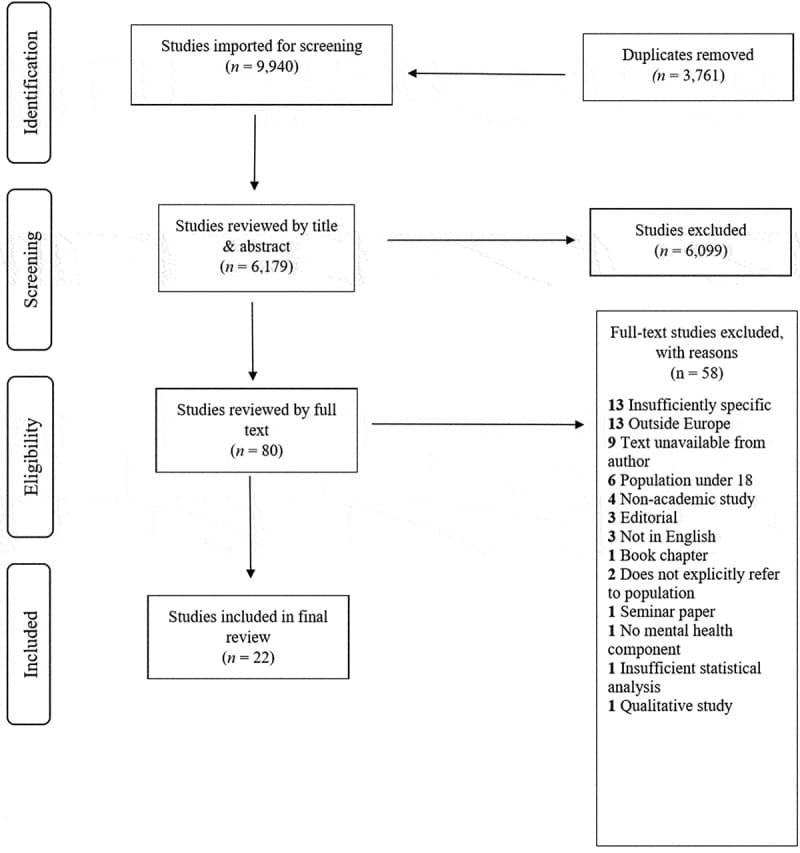
Figure 1

1.8. Quality assessment

(Shea et al., 2007; Well & Littell, 2016) Study quality was assessed twice during the extraction stage. Firstly, using subjective criteria for inclusion, based on the review protocol. Secondly, using a 19-question assessment schedule, to review the overall quality of each text. Both CG and RF were responsible for the preliminary assessment. CG conducted the final quality review after each of the papers was extracted. Each question was assessed using either ‘yes’, ‘no’, ‘somewhat’ or ‘not appropriate’ options. To pass the quality assessment, at least 14 of 19 questions (74%) had to be endorsed with a ‘yes’ vote. All studies passed this assessment.

2. Results

Twenty-two studies were used for the final review and synthesis (Table 2). The total sample for these studies was N = 5,572, with individual studies ranging from n = 26 to n = 1,215. In line with the inclusion criteria, studies were limited to European nations that acted as host countries for refugees and asylum seekers from across the globe. Four studies were conducted in Sweden which included the largest proportion of the overall sample at n = 2,516 (Kivling-Bodén & Sundbom, 2002; Lecerof, Stafström, Westerling, & Östergren, 2016; Tinghög et al., 2017). The Netherlands accounted for n= 1,444 participants across eight studies (Droždek, Kamperman, Tol, Knipscheer, & Kleber, 2013; Gerritsen et al., 2006; Laban, Gernaat, Komproe, & Jong, 2007; Laban et al., 2005a, 2005b; Laban, Komproe, Gernaat, & Jong, 2008; Lamkaddem, Essink-Bot, Devillé, Gerritsen, & Stronks, 2015; Steel, Dunlavy, Harding, & Theorell, 2017). Two studies were conducted in Italy with a sample of n = 406 (Bogic et al., 2012; Nosè et al., 2018). Two further studies in Norway accounted for 70 participants (Teodorescu et al, 2012a, 2012b). Switzerland was home to 392 participants across three studies (Heeren et al., 2012, 2014; Schick et al., 2016) and the UK included 349 participants from the overall sample size drawn from two studies (Bogic et al., 2012; Carswell, Blackburn, & Barker, 2011). Additional studies drew participants from Ireland (n = 88) (Toar, O’Brien, & Fahey, 2009), Finland (n= 128) (Mölsä et al., 2014), Germany (n = 255) (Bogic et al., 2012), and Denmark (n = 34) (Bruhn et al., 2017).

A total of 11 predictors were hypothesised and these were investigated across the twenty-two studies. The following predictors were included insofar as data were reported and explicitly related to mental health outcomes across the studies’ populations.

2.1. Length of asylum process and duration of stay

Nine studies investigated the length of asylum procedure and duration of stay (Heeren et al., 2012, 2014; Laban et al., 2007, 2005a, 2005b, 2008; Mölsä et al., 2014; Nosè et al., 2018; Teodorescu et al., 2012a). A protracted asylum process was one of the most frequently cited stressors to occur during the post-migration period. Using data comparing two pre-stratified groups, those resident for less than 6 months and those resident for greater than 2 years, Laban et al. (2007) reported the length of the asylum procedure to be an important risk factor for psychiatric morbidity (OR = 2.16, CI = 1.15–4.08). Those who were long-stayers (greater than two years) suffered higher rates of psychiatric disorders than those who had been resident for shorter periods of less than 6 months (62% compared to 42%). It was also the strongest predictor for lower overall quality of life, increased disability, and somatic complaints (Laban et al., 2008).

Despite an increase in psychiatric disorders associated with length of stay, an increase in mental health service use was not observed (Laban et al., 2007). Teodorescu et al. (2012a) report four significant inverse correlations between length of stay and current PTSD diagnosis (r = −0.26), depression symptoms (r = −0.27), anxiety symptoms (r = −0.39), general psychological distress (r = −0.35). While Nosè et al. (2018) found length of stay to be a protective factor, where the mean duration was 13 months (Nosè et al., 2018). Contrary to popular research, one study (Heeren et al., 2012) found no correlations between length of stay and mental health outcomes. This finding was duplicated in another later study by Heeren et al. (2014) who reported a significant increased level of anxiety associated with length of stay for refugees only (r = 0.40). Similarly, Mölsä et al. (2014) reported only a marginal positive association between duration of stay and depressive symptoms.

2.2. Residency status

Three studies reported residency status in relation to mental health outcomes with sufficient detail (Heeren et al., 2014; Lamkaddem et al., 2015; Toar et al., 2009). Strong associations were reported between status and mental health risks, but only in instances where other post-migration stressors were present. Asylum seekers were reported to be at greater risk of PTSD (OR = 2.50), depression/anxiety (OR = 3.00) symptoms when compared to refugees (Toar et al., 2009). However, after controlling for other pre- and post-migration stressors and other ongoing conditions, residency was no longer associated with PTSD, depression or anxiety.

Residency status was reported, thus, as a marker for other explanatory variables. Furthermore, Heeren et al. (2014) report unchanged levels of PTSD between those granted status and asylum seekers. PTSD was, thus, purportedly unassociated with residency. In other studies, obtaining residency, or refugee status, was found to improve the overall health of this population (Lamkaddem et al., 2015). But, again, further (mediation) analysis showed that improvements were related to an increase in opportunities, resources and supports available as a consequence of gaining refugee status. That is, factors associated with living outside of the asylum system.

2.3. Family

Four studies related family status to post-migration psychosocial difficulties among these populations (Bruhn et al., 2017; Tinghög et al., 2017; Lamkaddem et al., 2015). With an increase in family/social supports related to status, Lamkaddem et al. (2015) report that family/social support as one of the three main mechanisms through which status operates to improve PTSD, anxiety and depression symptomology. Laban et al. (2006) reported that family-related issues, including missing one’s family, worries about family back home, an inability to go home and loneliness, had one of the highest odds ratios for at least one psychiatric disorder. Participants who had been resident ≥2 years scored significantly higher than newly arrived – less than 6 months. Regarding psychiatric treatment administered in an outpatient setting, family issues were reported as one of the most significant post-migration stressors to interfere with treatment (Bruhn et al., 2017). Additionally, Tinghög et al. (2017) found that stressors related to family life and separation were significantly correlated with mental ill-health. ‘Distressing conflicts in family (family conflicts)’ was reported to be significantly associated with anxiety, depression, low subjective well-being and PTSD. While the same was predominantly true of ‘feeling sad because not reunited with family members (home country and family concerns)’, although this was not significantly associated with anxiety. However, upon conducting a sensitivity analysis, this variable was no longer significantly associated with any mental health outcomes (Tinghög et al., 2017).

2.4. Social integration and weak social network

Three studies looked at the concept of social integration and weak social network in relation to mental health outcomes (Schick et al., 2016; Teodorescu et al., 2012a, 2012b). In one study, bivariate correlation analysis showed that post-traumatic growth has a strong negative associated with poor social integration and weak social network (Teodorescu et al., 2012b). Social network in this instance was measured by the number of good friends that participants had within the host country. In this sample of psychiatric outpatients, the average number of friends reported was 3.0 (range = 0 to 11). Over 25% of the sample had no friends in their reception country. In another study, Teodorescu et al (2012a) also reported weak social integration into the wider host society to be associated only with psychiatric morbidity and higher levels of psychiatric symptomatology. However, weak social integration into one’s ethnic community was associated with current PTSD diagnosis.

Regardless of the duration of stay, one study (Schick et al., 2016), reported that social integration for refugees was notably lacking and did not improve considerably for long-stayers despite participants being resident for over 10 years. This was measured using a version of the Post-Migration Living Difficulties Checklist (PMLDC; Silove et al., 1997; Steel, Silove, Bird, McGorry, & Mohan, 1999) M = 20.7 (SD = 6.1, scale range 0–28). Social integration problems were significantly associated with health-related quality of life and functional impairment (r = −0.47), depressive symptom severity (r = 0.44), PTSD (r = 0.43), and anxiety (r = 0.29). Moreover, in regression analysis, depression and anxiety symptoms were shown to predict difficulties with social integration. Interestingly, integration difficulties were more strongly associated with symptoms of depression and PTSD than frequency of traumatic events.

2.5. Finance

Only two studies offered any significant insight into post-migration financial difficulties in the context of mental health outcomes (Bruhn et al., 2017; Lecerof et al., 2016). Conducting a bivariate analysis, Lecerof et al. (2016) reported financial difficulties to increase the risk of mental health decline (OR = 2.35, 95% CI 1.64–3.38). An analysis of effect modification also showed a positive association between mental health outcomes and low social participation co-occurring with financial difficulties. In a study on post-migration stressors and their impact on mental health treatment, Bruhn et al (2017) found that financial difficulties related to work were the most frequent factor interfering with treatment.

2.6. Employment

Four studies explored employment as a significant post-migratory factor correlated with mental health outcomes (Bogic et al., 2012; Steel et al., 2017; Teodorescu et al., 2012a, 2012b). In a sample of multi-traumatised psychiatric outpatients from a refugee background, unemployment was shown to explain only 1.5% (F (5,45) = 12.62, p <.001) of the variance for psychological health (Teodorescu et al., 2012b). Rendering this variable an insignificant contributor to overall mental health outcomes. Conversely, in a similar sample of multi-traumatised refugees, unemployment was reported to have the most significant correlations with psychiatric illness and symptom severity (Teodorescu et al., 2012a). This was shown to be particularly true in terms of increase in the level of depressive symptoms. In another study, conducted by Bogic et al. (2012), these findings were further endorsed by showing mood disorders (major depression, dysthymia, hypomania, and mania) to be associated with unemployment. Furthermore, Steel et al. (2017) found employment status to be significantly correlated with assimilation into the host environment.

2.7. Housing and accommodation

Along with financial difficulties and discrimination, housing problems were shown to increase the risk of mental ill-health in one study (Lecerof et al., 2016). Lecerof et al. (2016) report an odds ratio of 2.79 (95% CI 1.84–4.22) for poor mental health where participants endured housing issues while age, sex, educational level, social participation and trust in others were controlled for. Together, housing difficulties and low social participation was reported to be the most significant risk factor for poor mental health (Lecerof et al., 2016). Trust in others, conversely, appeared to be a protective factor against declining mental health related to housing difficulties (Lecerof et al., 2016).

2.8. Language proficiency

Across the twenty-two studies, five studies assessed associations between language acquisition/proficiency, social integration and mental health outcomes (Toar et al., 2009; Schick et al., 2016; Mölsä et al., 2014; Tedorescu et al., 2012a; Laban et al., 2006). It was noted that language difficulties appear among the most salient post-migration stressors experienced by asylum seekers (Toar et al., 2009). Interestingly, Laban et al. (2006) also found that regardless of time spent in the host country for asylum seekers, language proficiency did not differ considerably between two pre-stratified groups based on the duration of stay. The mean scores for language problems for those living in the recipient country less than 6 months and greater than 2 years were 55.9 and 51.7, respectively.

Refugees appear to report higher rates of proficiency in terms of ability to communicate in the language native to their host countries. In a sample of traumatised refugees attending outpatient treatment, self-reported medium-high language (host country) proficiency was recorded at 83%. 8.9% scored below this threshold (Teodorescu et al., 2012a). However, this finding was challenged by Schick et al. (2016) who reported less than 20% of refugee participants had sufficient proficiency to answer questionnaires relating to their migration experiences. Indeed, Heeren et al. (2014) found language proficiency to be marginally negatively associated with symptoms of depression (β = −0.20) among older refugees (50–80 years).

2.9. Education

Three studies looked at education as a predictor of mental health outcomes among asylum seekers and refugees (Bogic et al., 2012; Tinghög et al., 2017; Toar et al., 2009). Tinghög et al. (2017) reported similar prevalence rates of PTSD among participants regardless of educational attainment. Years in education ranged from 0 to 9, more than 9 years without a university degree, and more than 12 years with a university degree. However, subjective well-being was reportedly lower among those with a lengthier educational background. Overall mental health remained largely unaffected by educational attainment in this sample. However, Bogic et al. (2012) found education to be independently associated with increased instances of mood and anxiety disorders. Asylum seekers were also found to have had a lower level of education when compared to refugees (Toar et al., 2009).

2.10. Gender

Three studies discussed gender as a predictor of post-migration variables and mental health outcomes (Bogic et al., 2012; Kivling-Bodén & Sundbom, 2002; Mölsä et al., 2014). In a comparative, cross-sectional study (Mölsä et al., 2014) of Somali refugees and their Finnish counterparts, female refugees reported poorer current health and quality of life than male refugees. Kivling-Bodén and Sundbom (2002) reported a greater diagnosis for PTSD at baseline (T1) for males (73.3%) than females (54.5%). However, there was a non-significant difference between males (60%) and females (63.6%) at T2. A partial least squares regression analysis was carried out to ascertain if there were differences in the relationships between post-traumatic symptom severity at T1, age, and the life-situation at T2 and post-traumatic symptom severity at follow-up. For females, they found a significant association where 41.7% of the variance between post-traumatic symptom level at T1, age, and life-situation variables at T2 predicted 94.8% of the variance in the posttraumatic symptom level at T2. Whereas for males, the same analysis indicated that 17.7% of the variance in post-traumatic symptom level at T1 explained 66.9% of the variance in the posttraumatic symptom level at T2. Post-migration variables most strongly associated with decreased levels of post-traumatic symptoms purportedly differed according to genders. Kivling-Bodén and Sundbom (2002) report that social contact, particularly with their own ethnic group, improved symptoms. For males, however, this sentiment did not hold true. In a study by Bogic et al. (2012), increased instances of mood disorders, including major depression, dysthymia, hypomania and mania, were found to be associated with being female.

2.11. Pre-migration trauma as a predictor of post-migration living difficulties

Three studies described in detail the types and frequency of pre-migration trauma in relation to post-migration mental health outcomes (Steel et al., 2017; Teodorescu et al., 2012b; Tinghög et al., 2017). The types of pre-migration traumatic experiences reported were similar across most studies. However, the rank and degree at which these were experienced across the samples differed. Tinghög et al. (2017) reported war (85%) and exposure to potentially life-threatening situations (79%) as the most common pre-migration trauma for their sample. Forced separation from friends and/or family (67.9%) and loss of significant other (64%) also ranked highly. They found 63% of the sample had been witnesses to violence or assault, 33% had been victims of violence or assault, 31% experienced torture, while 7% were survivors of sexual assault. In a study of multi-traumatised psychiatric outpatients with a refugee background, Teodorescu et al (2012b) found severe human suffering was the highest pre-migration trauma for 89.1% of the sample. Additionally, physical assault occurred in 87.3% of cases and 78.2% were subjected to assault with a weapon. However, exposure to war stood at 76.4%. Captivity was the least endorsed, by 56.4% of participants.

Steel et al. (2017) reported the mean number of pre-migration traumatic experiences for their sample to be 9. Frequency of traumatic experiences differed according to gender. Males were found to have experienced more traumatic events (M = 11.00; SD = 8.00). Women, conversely, reported fewer (M = 7.00; SD = 7.00). Material deprivation was ranked highest at 68% of the sample. Sixty-five per cent experienced the death or disappearance of family and 60% experienced confinement. While 54% reported being exposed to situations of war, 38% incurred bodily injury and 21% were forced to inflict harm upon others.

3. Discussion

The aim of this review was to examine and synthesise evidence of post-migration factors affecting mental health outcomes for asylum-seeking and refugee populations across Europe. Twenty-two studies were included in this review.

Length of asylum process and duration of stay was found to be the most frequently cited factor for mental health difficulties in 9 out of 22 studies. This was in line with the review’s hypothesis based on the relevant literature which cites lengthy waiting times for processing applications across Europe. Three studies reported statistically significant associations between residency status and mental health. However, residency status was not independently associated with mental health. Instead, residency was found to be a marker for other explanatory variables and this appears consistent in other studies (Silove et al., 1998). In a study of Tamil asylum seekers, refugees and other immigrants residing in Australia, Silove et al. (1998) reported higher levels of stress among asylum seekers compared with refugees and other migrants.

Family difficulties were also shown to be related to residency and duration of stay (Laban et al., 2006; Lamkaddem et al., 2015). This appears to buttress the claim that other post-migration variables are more relevant to mental health outcomes than residency and duration of stay (Tinghög et al., 2017; Coffeya, Kaplana, Sampson, & Montagna Tucci, 2010; Silove et al., 1997) Silove et al. (1997) found that family separation, and in particular separation from one’s spouse, was significantly associated with anxiety and depression for asylum seekers. Family separation is shown to result in feelings of guilt and powerlessness particularly relating to one’s inability to protect their families from difficulties back home (Tinghög et al., 2017).

Talking to friends and developing a broad social network was reported as a very useful support where family were unavailable (Whittaker, Hardy, Lewis, & Buchan, 2005). With such importance placed on one’s social network, it is unsurprising that post-traumatic stress and depressive symptomology were significantly and positively associated with poor social integration and weak social network or support (Teodorescu et al., 2012b; Gorst-Unsworth & Goldenberg, 1998; Schweitzer, Melville, Steel, & Lacherez, 2006). However, for some, mistrust in others leads to increasing isolation. A lack of trust in others may partially explain why social integration, particularly outside of one’s own ethnic group, was not shown to improve with duration of stay (Schick et al., 2016). Additionally, mistrust of others was shown as a risk factor for declining mental health when related to housing and accommodation issues (Lecerof et al., 2016). Poor social integration and weak social network were also associated with decline of mental health; housing difficulties and low social participation were reported to be the most significant risk factor for poor mental health (Lecerof et al., 2016). Thus, it appears that a lack of social support was a significant predictor of other post-migration difficulties.

Additionally, employment, or the ability to financially support oneself and one’s family, was closely related to personal identity and self-worth, and it was expected that unemployment would have a negative effect on overall health and quality of life (Teodorescu et al., 2012b). Male asylum seekers were reported to endure more financial-related stress than females. This was unsurprising given that males were more likely than females to be unemployed. For males, in particular, employment was seen as a significant marker of achievement.

4. Limitations

Since the search parameters were limited to European host countries alone, there was little discussion by way of non-European practice regarding asylum seekers and refugees. From this point of view, it was difficult to contextualise European law regarding seeking asylum within a global setting. It was especially difficult to accurately account for the role of age on this and other factors considering there was no substantial comparison between older and younger age groups. There appears to be some evidence pointing towards increased acculturative difficulties among older groups, but this finding must be read with caution.

Additionally, the frequent misuse of synonyms purportedly referring to ‘asylum seekers’ and ‘refugees’ such as ‘immigrants’ and ‘migrants’ made it difficult to ascertain in some studies which populations precisely were being referred to. Some studies were excluded on the basis that it was not immediately clear whether terms such as ‘immigrants’ or ‘migrants’ denoted forced or non-forced migrant populations. An overall assessment regarding the quality of the review was made based on the authors’ inability to sufficiently differentiate their subject populations. Given that these are two entirely distinct populations and inclusion of the latter would skew the validity of this review, the reviewers elected to omit these studies. It cannot, therefore, be guaranteed that relevant papers were not overlooked.

5. Conclusions and recommendations

This review examined several post-migration variables impacting upon mental health outcomes among asylum-seeker and refugee populations. It counters existing findings which suggest that mental health decline among these populations is most significantly associated with residency status and length of asylum procedure/duration of stay. Overall, status is thus shown to be an important marker for other explanatory variables. There is mixed evidence about the length of asylum process and duration of stay. Current evidence points towards a significant negative association between these two variables. However, there are conflicting indications claiming that no significant relationship exists. There is sufficient ambiguity in this regard for this association or lack of to be investigated further. Additionally, we know that social integration, weak social network and trust in others appear insidiously problematic across many post-migration variables. This is shown to be especially prevalent among older groups who report increased difficulties with acculturation. There is empirical evidence to suggest that these factors are perhaps more strongly associated with mental health outcomes than any other post-migration variable. Such a finding is useful for devising psychosocial intake risk assessment measures, particularly those focusing on mental health outcomes including PTSD, depression and anxiety.

Open Article as PDF

Abstract

The present systematic review examined post-migration variables impacting upon mental health outcomes among asylum-seeking and refugee populations in Europe. It focuses on the effects of post-settlement stressors (including length of asylum process and duration of stay, residency status and social integration) and their impact upon post-traumatic stress disorder, anxiety and depression. Twenty-two studies were reviewed in this study. Length of asylum process and duration of stay was found to be the most frequently cited factor for mental health difficulties in 9 out of 22 studies. Contrary to expectation, residency or legal status was posited as a marker for other explanatory variables, including loneliness, discrimination and communication or language problems, rather than being an explanatory variable itself. However, in line with previous findings and as hypothesised in this review, there were statistically significant correlations found between family life, family separation and mental health outcomes.

Summary

In 2018, 70.8 million people were forced to leave their homes worldwide. This included 3.5 million people seeking asylum and 25.9 million refugees. The United Nations High Commissioner for Refugees (UNHCR) reported that two-thirds of these displaced people came from Syria, Afghanistan, South Sudan, Myanmar, and Somalia.

Studies show that asylum seekers and refugees often experience trauma in three stages: before moving (pre-migration), during the move (peri-migration), and after settling (post-migration). This means trauma can build up over time. These groups have higher rates of mental health problems like post-traumatic stress disorder (PTSD), anxiety, and depression, which often occur together.

Research has clearly linked trauma before migration to mental health problems, such as torture leading to PTSD. However, less is known about how factors after migration affect mental health. Some social and psychological factors specific to the period after migration, such as legal status, can make the effects of earlier trauma worse. For example, an uncertain immigration status can be as strong a predictor of PTSD as pre-migration sexual assault. This suggests that moving to a "safe" country does not always lead to better mental well-being.

Several factors become important for refugees and asylum seekers after they resettle in a new country. These include their legal status, the asylum process, family issues, discrimination, social and religious factors, and unemployment. Long-term studies show that limits on employment are a strong risk factor for depression, especially among men. This lack of financial independence can lead to lower living standards in the new country compared to their home country.

This review looks at the most common challenges faced by asylum seekers and refugees in Europe after migration and how these challenges relate to mental health problems in the new environment. The review focuses on European countries because they take in a large number of asylum seekers each year. The main goal is to understand how these post-migration challenges affect mental illness and to find effective ways to improve the well-being of these groups after they have moved. The paper also considers how trauma before migration influences difficulties after migration. The Cochrane protocol for systematic reviews was used to ensure a thorough review.

Method

Reviewers

This study followed the Cochrane protocol, involving three independent reviewers. Reviewers one and two screened and selected all studies. Reviewer three helped resolve disagreements when the first two reviewers could not agree.

Review question

The main question for this review was: What post-migration factors have the most significant effect on the mental health of asylum seekers and refugees in Europe, according to existing research?

Scoping search

In May 2018, reviewer one conducted initial database searches to find out how many studies related to the review question existed and which databases would be most useful. Eight key databases were identified: CINAHL, Cochrane Library, Embase, ERIC, Medline, PsycINFO, PubMed, Scopus, and Web of Science. These databases were chosen based on the number of relevant studies they produced and their mention in other systematic reviews. These selected databases were then used for the main search.

Search strategy

A systematic search for studies on the link between post-migration social and psychological factors and mental health outcomes in asylum seekers and refugees in Europe was conducted on May 22, 2018, using the eight identified databases. The initial search was limited to English-language studies published between 2000 and 2018. Exclusion criteria were applied later to avoid selecting studies unfairly or missing relevant papers. Two librarians helped develop the search terms and strategy.

Thirty keywords were used for each database, divided into three categories: population, predictors, and outcomes. Population terms included "refugee," "asylum seeker," "immigrant," "migrant," "displaced person," and "displaced people." Predictor terms covered accommodation, housing, employment, healthcare, language, social-religious factors, communication, legal status, social support, and family. Outcome terms included "psychosocial," "psychosocial vulnerability," "post migration," "post settlement," "resettlement," "post flight," "mental health," and "mental ill-health."

Variations in spelling and word endings were used to include all relevant studies. Keywords within each category were combined using "or," and then the categories were combined using "and." This resulted in seven search combinations. All 9,940 studies found were imported into Covidence, an online tool for systematic reviews.

Selection criteria and piloting

The selection criteria were first tested on May 22, 2018. Twenty studies were randomly chosen and independently reviewed by two reviewers to check if the criteria accurately identified appropriate texts. Based on this pilot, changes were made to the study population and publication type categories. Initially, "displaced persons" was a single inclusion criterion; this was changed to "externally displaced only," and two new exclusion criteria were added: "internally displaced persons" and "all displaced persons owing to natural disaster." Publication type was updated to include only peer-reviewed studies, excluding book chapters, conference papers, theses, commentaries, letters, and replies.

After piloting, studies were selected if they met criteria in all eight categories: (1) involved male or female asylum seekers, refugees, or displaced persons (not due to natural disasters), aged 18 or older, with a history of psychological trauma or torture, and who underwent mental health assessment; (2) focused on post-migration social and psychological factors (legal, accommodation, education, social, financial, employment, health, informal or formal support); (3) published between 2000 and 2018; (4) in English; (5) peer-reviewed; (6) contained primary data; (7) had outcomes related to post-migration social and psychological challenges and mental health, or the link between pre-migration trauma and post-migration vulnerability; and (8) used qualitative or quantitative methods.

Studies were excluded if they focused on the general population or did not specifically address the target group, if psychosocial factors were related to pre-migration or peri-migration contexts, if published before 2000, not in English, not peer-reviewed, not primary data, did not focus on specified outcomes, or were systematic reviews, narrative reviews, meta-analyses, or meta-syntheses. After removing duplicates, 6,179 studies remained for title and abstract screening.

Title and abstract screening

After duplicates were removed, 6,179 studies were screened by title and abstract. Reviewers one and two each voted "yes," "no," or "maybe" for each study based on how well it matched the selection criteria. After this stage, 6,099 studies were considered irrelevant, leaving 80 papers for full-text review. Reasons for exclusion at this stage included "no mental health component," "insufficient statistical analysis," "does not explicitly refer to study population," "insufficiently specific," "text unavailable from author," "not available in English," "qualitative study," "book chapter," "non-academic study," "seminar paper," "editorial," "outside Europe," and "population under 18."

Full-text screening and extraction

Reviewers one and two each voted to "include" or "exclude" studies. There were 13 reasons for excluding studies after full-text screening. Data extraction had two stages: pilot extraction and final extraction. First, reviewers one and two independently extracted data from 10 randomly chosen studies to test the process. For the final stage, each reviewer independently assessed 50% of the remaining papers, with the option to "include" or "exclude" each.

Quality assessment

Study quality was assessed twice during the extraction stage. First, reviewers used subjective criteria based on the review protocol. Second, a 19-question assessment schedule was used to review the overall quality of each text. Reviewers one and two conducted the preliminary assessment, and reviewer one completed the final quality review after all papers were extracted. Each question was answered with "yes," "no," "somewhat," or "not appropriate." To pass, at least 14 of the 19 questions (74%) had to be answered with "yes." All studies passed this assessment.

Results

Twenty-two studies were used for the final review and analysis, with a total of 5,572 participants. Individual study sizes ranged from 26 to 1,215 participants. In line with the inclusion criteria, studies focused on European countries hosting refugees and asylum seekers. Four studies were conducted in Sweden, contributing the largest share of participants (2,516). The Netherlands had 1,444 participants across eight studies. Two studies in Italy included 406 participants, and two in Norway had 70 participants. Switzerland had 392 participants across three studies, and the UK included 349 participants from two studies. Additional studies drew participants from Ireland (88), Finland (128), Germany (255), and Denmark (34).

A total of 11 potential factors influencing mental health were examined across the 22 studies, based on reported data explicitly linked to mental health outcomes in the study populations.

Length of asylum process and duration of stay

Nine studies investigated the length of the asylum process and how long a person had stayed in the host country. A long asylum process was one of the most frequently mentioned stressors after migration. One study, comparing groups living in the country for less than 6 months and more than 2 years, found that a lengthy asylum process significantly increased the risk of mental illness. Those who stayed longer (over two years) had higher rates of mental disorders than those who stayed shorter (less than 6 months) (62% compared to 42%). A long stay was also the strongest predictor of lower overall quality of life, increased disability, and physical complaints.

Despite an increase in mental disorders with longer stays, there was no observed increase in the use of mental health services. Some studies reported that longer stays were linked to lower rates of current PTSD, depression, anxiety, and general psychological distress. However, one study found that a longer stay was a protective factor, meaning it helped mental health, with an average duration of 13 months. Contrary to most research, one study found no link between length of stay and mental health outcomes. This finding was repeated in a later study which only found a significant increase in anxiety among refugees with longer stays. Similarly, another study reported only a small positive link between duration of stay and symptoms of depression.

Residency status

Three studies discussed the link between residency status and mental health outcomes in enough detail. Strong connections were found between status and mental health risks, but only when other post-migration stressors were present. Asylum seekers were found to be at greater risk of PTSD and depression/anxiety symptoms compared to refugees. However, once other pre- and post-migration stressors and ongoing conditions were accounted for, residency was no longer linked to PTSD, depression, or anxiety.

Therefore, residency status was seen as an indicator for other contributing factors. Additionally, one study reported that PTSD levels remained unchanged between those granted status and asylum seekers, suggesting PTSD was not related to residency. In other studies, gaining residency or refugee status was found to improve overall health for this population. However, further analysis showed that these improvements were due to increased opportunities, resources, and support available as a result of gaining refugee status, meaning factors linked to living outside the asylum system.

Family

Four studies connected family issues to difficulties in social and psychological well-being after migration among these populations. Increased family and social support, linked to a person's status, was reported as one of the three main ways that status helps improve symptoms of PTSD, anxiety, and depression. One study found that family-related issues, such as missing family, worrying about family back home, being unable to return, and loneliness, had one of the highest risks for at least one mental disorder. Participants who had lived in the country for two or more years scored significantly higher on these issues than newly arrived individuals (less than six months). For mental health treatment received in an outpatient setting, family issues were reported as one of the most significant post-migration stressors that interfered with treatment. Additionally, another study found that stressors related to family life and separation were strongly linked to mental ill-health. "Distressing conflicts in family" were significantly associated with anxiety, depression, low subjective well-being, and PTSD. "Feeling sad because not reunited with family members" was also largely true for these outcomes, though not significantly linked to anxiety. However, after a closer analysis, this variable was no longer significantly linked to any mental health outcomes.

Social integration and weak social network

Three studies looked at how social integration and weak social networks relate to mental health outcomes. One study found a strong negative link between post-traumatic growth and poor social integration and weak social networks. In this case, social network was measured by the number of close friends participants had in the host country. Among psychiatric outpatients in this sample, the average number of friends reported was 3.0, and over 25% had no friends in their new country. Another study also reported that weak social integration into the wider host society was only linked to mental illness and higher levels of psychiatric symptoms. However, weak social integration into one's own ethnic community was linked to a current PTSD diagnosis.

Regardless of how long they had stayed, one study reported that social integration for refugees was notably poor and did not improve much for those who had lived there for over 10 years. Problems with social integration were strongly linked to health-related quality of life, functional impairment, depressive symptoms, PTSD, and anxiety. Furthermore, analysis showed that symptoms of depression and anxiety predicted difficulties with social integration. Interestingly, integration difficulties were more strongly linked to symptoms of depression and PTSD than to the frequency of traumatic events.

Finance

Only two studies provided significant insights into post-migration financial difficulties in relation to mental health outcomes. One study found that financial difficulties increased the risk of mental health decline. An analysis also showed a positive link between mental health problems and low social participation when combined with financial difficulties. In a study on post-migration stressors affecting mental health treatment, financial difficulties related to work were the most frequent factor interfering with treatment.

Employment

Four studies explored employment as a significant factor after migration linked to mental health outcomes. In a sample of psychiatric outpatients with a refugee background who had experienced multiple traumas, unemployment explained only a small part of the differences in psychological health, making it an insignificant contributor to overall mental health outcomes. Conversely, in a similar group of multi-traumatized refugees, unemployment was reported to have the most significant links to mental illness and symptom severity, especially increasing depressive symptoms. Another study further supported these findings by showing that mood disorders (major depression, dysthymia, hypomania, and mania) were associated with unemployment. Additionally, one study found that employment status was strongly linked to fitting into the host environment.

Housing and accommodation

Along with financial difficulties and discrimination, housing problems were shown to increase the risk of mental ill-health in one study. This study reported a significantly increased risk for poor mental health when participants experienced housing issues, even when age, sex, education level, social participation, and trust in others were accounted for. Together, housing difficulties and low social participation were reported as the most significant risk factors for poor mental health. Trust in others, however, seemed to protect against declining mental health related to housing difficulties.

Language proficiency

Five studies assessed the links between learning a new language, language skills, social integration, and mental health outcomes. Language difficulties appeared to be among the most prominent stressors experienced by asylum seekers after migration. Interestingly, one study found that for asylum seekers, language proficiency did not change much regardless of how long they had lived in the host country, comparing those who had stayed less than 6 months with those who had stayed more than 2 years.

Refugees often report higher levels of ability to communicate in the host country's language. In a sample of traumatized refugees receiving outpatient treatment, 83% reported medium-to-high proficiency in the host country's language, while 8.9% scored below this. However, this finding was challenged by another study which reported that less than 20% of refugee participants had enough language skill to answer questionnaires about their migration experiences. Indeed, one study found that language proficiency was slightly negatively linked to symptoms of depression among older refugees (50-80 years).

Education

Three studies looked at education as a predictor of mental health outcomes among asylum seekers and refugees. One study reported similar rates of PTSD among participants regardless of their education level, which ranged from 0 to over 12 years with a university degree. However, subjective well-being was reportedly lower among those with more education. Overall mental health was largely unaffected by education level in this sample. Conversely, another study found education to be independently linked to more instances of mood and anxiety disorders. Asylum seekers were also found to have a lower level of education compared to refugees.

Gender

Three studies discussed gender as a factor influencing post-migration variables and mental health outcomes. In a comparative study of Somali refugees and their Finnish counterparts, female refugees reported poorer current health and quality of life than male refugees. One study reported a higher diagnosis of PTSD at the start for males (73.3%) than females (54.5%). However, at a later point, the difference between males (60%) and females (63.6%) was not significant. An analysis was performed to see if there were differences in the links between post-traumatic symptom severity at the start, age, life situation at a later point, and post-traumatic symptom severity at follow-up. For females, a significant link was found where initial symptom levels, age, and later life situation predicted a large portion of later symptom levels. For males, the initial symptom level predicted a smaller portion of later symptom levels. Post-migration factors most strongly linked to decreased post-traumatic symptoms reportedly differed by gender. One study reported that social contact, especially with one's own ethnic group, improved symptoms for females. For males, however, this was not true. In another study, increased instances of mood disorders, including major depression, dysthymia, hypomania, and mania, were found to be associated with being female.

Pre-migration trauma as a predictor of post-migration living difficulties

Three studies described in detail the types and frequency of trauma experienced before migration in relation to mental health outcomes after migration. The types of pre-migration traumatic experiences reported were similar across most studies, but their order and severity differed. One study reported war (85%) and exposure to life-threatening situations (79%) as the most common pre-migration traumas. Forced separation from friends or family (67.9%) and the loss of a significant other (64%) also ranked high. That study found 63% of the sample witnessed violence or assault, 33% were victims of violence or assault, 31% experienced torture, and 7% were survivors of sexual assault. In a study of psychiatric outpatients with a refugee background who had experienced multiple traumas, severe human suffering was the highest pre-migration trauma for 89.1% of the sample. Additionally, physical assault occurred in 87.3% of cases, and 78.2% were subjected to assault with a weapon. However, exposure to war stood at 76.4%. Captivity was the least reported, by 56.4% of participants.

Another study reported the average number of pre-migration traumatic experiences for their sample was 9. The frequency of traumatic experiences differed by gender. Males experienced more traumatic events (average 11.00) than females (average 7.00). Material deprivation was ranked highest, affecting 68% of the sample. Sixty-five percent experienced the death or disappearance of family, and 60% experienced confinement. Fifty-four percent reported being exposed to war situations, 38% suffered bodily injury, and 21% were forced to harm others.

Discussion

This review aimed to examine and combine evidence of post-migration factors affecting mental health outcomes for asylum seekers and refugees in Europe. Twenty-two studies were included.

The length of the asylum process and how long a person had stayed in the host country was found to be the most frequently cited factor for mental health difficulties in 9 out of 22 studies. This matched the review's initial idea, based on research showing long waiting times for asylum applications across Europe. Three studies reported statistically significant links between residency status and mental health. However, residency status itself was not independently linked to mental health. Instead, it was found to be an indicator for other factors, which seems consistent with other research. For example, a study of Tamil asylum seekers, refugees, and other immigrants in Australia reported higher stress levels among asylum seekers compared to refugees and other migrants.

Family difficulties were also shown to be related to residency and duration of stay. This supports the idea that other post-migration factors are more important for mental health outcomes than residency and duration of stay. One study found that family separation, especially from a spouse, was strongly linked to anxiety and depression for asylum seekers. Family separation often leads to feelings of guilt and helplessness, particularly regarding the inability to protect families from problems back home.

Talking to friends and building a strong social network was reported as a very useful support when family was unavailable. Given the importance of social networks, it is not surprising that post-traumatic stress and depressive symptoms were strongly and positively linked to poor social integration and weak social networks or support. However, for some, a lack of trust in others leads to increased isolation. A lack of trust might partly explain why social integration, especially outside of one's own ethnic group, did not improve with longer stays. Additionally, mistrust of others was shown to be a risk factor for declining mental health when related to housing and accommodation issues. Poor social integration and weak social networks were also linked to declining mental health; housing difficulties and low social participation were reported as the most significant risk factors for poor mental health. Thus, it appears that a lack of social support was a significant predictor of other post-migration difficulties.

Furthermore, employment, or the ability to financially support oneself and one's family, was closely tied to personal identity and self-worth. It was expected that unemployment would negatively affect overall health and quality of life. Male asylum seekers reported more financial stress than females. This was not surprising, as males were more likely to be unemployed. For males, in particular, employment was seen as a significant sign of achievement.

Limitations

The search was limited to European host countries, so there was little discussion of practices in non-European countries regarding asylum seekers and refugees. This made it difficult to compare European asylum law within a global context. It was also especially difficult to accurately account for the role of age, as there was no substantial comparison between older and younger age groups. Some evidence suggests increased difficulties adjusting to a new culture among older groups, but this finding requires careful consideration.

Additionally, the frequent incorrect use of terms like "immigrants" and "migrants" interchangeably with "asylum seekers" and "refugees" made it difficult in some studies to determine the exact populations being referred to. Some studies were excluded because it was not immediately clear whether terms like "immigrants" or "migrants" referred to people forced to move or those who moved voluntarily. Since these are two distinct populations, including voluntary migrants would affect the validity of this review, so the reviewers chose to omit these studies. Therefore, it cannot be guaranteed that some relevant papers were not overlooked.

Conclusions and recommendations

This review examined several factors after migration that affect mental health outcomes for asylum seekers and refugees. It challenges existing findings that suggest mental health decline in these groups is most strongly linked to residency status and the length of the asylum process or duration of stay. Overall, residency status is shown to be an important indicator for other contributing factors. There is mixed evidence about the length of the asylum process and duration of stay. Current evidence points to a significant negative link between these two variables. However, there are conflicting indications claiming that no significant relationship exists. This uncertainty suggests that this association, or lack thereof, needs further investigation. Additionally, social integration, weak social networks, and trust in others appear to be consistently problematic across many post-migration factors. This is especially common among older groups, who report increased difficulties adjusting to a new culture. There is evidence suggesting that these factors may be more strongly linked to mental health outcomes than any other post-migration variable. This finding is useful for developing assessments to identify psychosocial risks, particularly those focusing on mental health outcomes such as PTSD, depression, and anxiety.

Open Article as PDF

Abstract

The present systematic review examined post-migration variables impacting upon mental health outcomes among asylum-seeking and refugee populations in Europe. It focuses on the effects of post-settlement stressors (including length of asylum process and duration of stay, residency status and social integration) and their impact upon post-traumatic stress disorder, anxiety and depression. Twenty-two studies were reviewed in this study. Length of asylum process and duration of stay was found to be the most frequently cited factor for mental health difficulties in 9 out of 22 studies. Contrary to expectation, residency or legal status was posited as a marker for other explanatory variables, including loneliness, discrimination and communication or language problems, rather than being an explanatory variable itself. However, in line with previous findings and as hypothesised in this review, there were statistically significant correlations found between family life, family separation and mental health outcomes.

Summary

Millions of people are forcibly displaced worldwide, including asylum seekers and refugees. A large number of these individuals come from countries like Syria, Afghanistan, and Somalia. These groups often face severe trauma before, during, and after their migration. As a result, they experience higher rates of mental health conditions such as PTSD, anxiety, and depression compared to the general population.

While the link between pre-migration trauma and psychological issues is well-established, less is known about how factors after migration affect mental health. Research shows that specific post-migration factors, like legal status, can worsen the psychological impact of earlier trauma. This suggests that simply moving to a "safe" country does not always improve mental well-being.

Several issues emerge when refugees and asylum seekers resettle in a new country. These include their legal status, the asylum process, family problems, discrimination, cultural and religious factors, and unemployment. For example, not being able to find work is a major risk factor for depression, especially for men. This lack of economic independence often leads to a lower quality of life in their new homes compared to their countries of origin.

This review focuses on the most common post-migration stressors experienced by asylum seekers and refugees in Europe and how these stressors relate to mental health problems after resettlement. Europe is a significant focus because it takes in a large number of asylum seekers each year. The review aims to understand how post-migration stressors impact psychological health and to identify effective ways to improve the well-being of these groups. Additionally, the paper examines how pre-migration traumatic experiences influence difficulties encountered after migration. A systematic review process, based on the Cochrane protocol, guided this research.

Method

Reviewers

This study followed the Cochrane protocol, involving three independent reviewers. Two reviewers screened and selected all studies. The third reviewer resolved any disagreements between the first two.

Review Question

The central question for this review was: Which post-migration factors have the most significant impact on the mental health of asylum seekers and refugees in Europe, according to existing research?

Scoping Search

In May 2018, an initial search of databases was conducted to estimate the number of relevant studies and identify the most suitable databases for the main search. Eight key resources were found: CINAHL, Cochrane Library, Embase, ERIC, Medline, PsycINFO, PubMed, Scopus, and Web of Science. These databases were chosen based on the number of relevant studies they contained and their inclusion in other systematic reviews.

Search Strategy

A systematic literature search was performed on May 22, 2018, across the eight identified databases. The search focused on studies examining the relationship between post-migration psychosocial factors and mental health outcomes in asylum-seeking and refugee populations in Europe. Initial filters were set for English language studies published between 2000 and 2018. Exclusion criteria were applied later to avoid bias. Thirty keywords, categorized into "population," "predictors," and "outcomes," were used with synonyms and Boolean operators to create seven search combinations.

Selection Criteria and Piloting

Selection criteria were first tested in May 2018 using 20 randomly chosen studies. Based on this pilot, changes were made to the study population and publication type categories. The study population criteria were narrowed to include only "externally displaced" persons, excluding "internally displaced persons" and those displaced by natural disasters. Publication types were limited to peer-reviewed studies, excluding book chapters, conference papers, theses, commentaries, letters, and replies.

After piloting, studies were selected based on eight categories: (1) asylum seekers, refugees, or displaced persons (not due to natural disasters), male or female, 18 years or older, with a history of trauma or torture, and who underwent mental health assessment; (2) post-migration psychosocial factors (legal, accommodation, education, social, financial, employment, health, informal/formal supports); (3) publication timeframe 2000–2018; (4) English language; (5) peer-reviewed; (6) primary data; (7) outcomes related to post-migration psychosocial stressors and mental health or the relationship between pre-migration trauma and post-migration vulnerability; and (8) qualitative and quantitative designs. Studies that did not meet all criteria were excluded. All 9,940 identified studies were uploaded to Covidence for systematic review.

Title and Abstract Screening

After removing duplicates, 6,179 studies remained for title and abstract screening. Reviewers independently voted "yes," "no," or "maybe" for each study based on the selection criteria. This process identified 6,099 irrelevant studies, leaving 80 papers for full-text review.

Full-Text Screening and Extraction

Reviewers then independently decided to "include" or "exclude" the remaining 80 studies. Thirteen reasons for exclusion were available. Data extraction involved two stages: a pilot extraction from 10 randomly selected studies by both reviewers, followed by each reviewer independently assessing 50% of the remaining papers for final extraction.

Quality Assessment

Study quality was assessed twice. First, subjective criteria from the review protocol were used. Second, a 19-question assessment schedule evaluated the overall quality of each text. Reviewers made preliminary assessments, and one reviewer conducted the final quality review. To pass, studies needed to endorse at least 14 of the 19 questions with a "yes" vote (74%). All studies included in the review passed this assessment.

Results

Twenty-two studies were included in the final review, with a total sample size of 5,572 participants. These studies were conducted in European countries hosting refugees and asylum seekers. Sweden contributed the largest proportion of participants (2,516 across four studies), followed by the Netherlands (1,444 across eight studies). Other countries included Italy, Norway, Switzerland, the UK, Ireland, Finland, Germany, and Denmark.

The review examined 11 hypothesized predictors related to mental health outcomes.

Length of Asylum Process and Duration of Stay

Nine studies explored the impact of the asylum process length and duration of stay. A long asylum process was a frequently cited stressor. One study found that a prolonged asylum procedure was a significant risk factor for psychiatric illness. Individuals who had been in the country for more than two years reported higher rates of psychiatric disorders compared to those present for less than six months. This factor also predicted lower quality of life, increased disability, and physical complaints.

Despite an increase in psychiatric disorders, there was no observed increase in mental health service use. Some studies found inverse correlations between length of stay and PTSD, depression, anxiety, and general psychological distress. However, one study reported length of stay as a protective factor, while others found no correlation or only a marginal positive association with depressive symptoms. Another study found an increased level of anxiety associated with length of stay specifically for refugees.

Residency Status

Three studies examined the link between residency status and mental health. Strong associations were found between status and mental health risks, but only when other post-migration stressors were present. Asylum seekers faced higher risks of PTSD, depression, and anxiety symptoms compared to refugees. However, once other pre- and post-migration stressors were considered, residency status was no longer directly linked to these conditions.

Therefore, residency status appeared to indicate other underlying factors. One study found no change in PTSD levels between those granted status and asylum seekers. While obtaining residency or refugee status sometimes improved overall health, further analysis showed these improvements were due to increased opportunities, resources, and support available outside the asylum system.

Family

Four studies explored the relationship between family status and post-migration psychological difficulties. Increased family and social support, often linked to residency status, was identified as a key factor in improving symptoms of PTSD, anxiety, and depression. Family-related issues, such as missing family, worrying about family back home, being unable to return, and loneliness, were significant predictors of psychiatric disorders. These issues were more common among long-term residents. Family problems were also a major stressor interfering with psychiatric treatment. While family conflicts and sadness over family separation were correlated with mental ill-health, a detailed analysis showed this correlation was not always statistically significant after accounting for other factors.

Social Integration and Weak Social Network

Three studies investigated how social integration and weak social networks affect mental health. One study showed a strong negative link between post-traumatic growth and poor social integration/weak social networks. The average number of friends reported by psychiatric outpatients was low, with over 25% having no friends in the host country. Weak social integration into the broader host society was linked to psychiatric illness and higher symptom levels, while weak integration into one's ethnic community was associated with PTSD.

Regardless of how long individuals had stayed, social integration for refugees remained low and did not significantly improve even after more than 10 years. Problems with social integration were strongly linked to health-related quality of life, functional impairment, depressive symptoms, PTSD, and anxiety. Interestingly, integration difficulties were more strongly associated with depression and PTSD symptoms than with the frequency of traumatic events.

Finance

Only two studies provided significant insights into post-migration financial difficulties and their impact on mental health. One study found that financial difficulties increased the risk of mental health decline. A positive association was also observed between poor mental health and the combination of low social participation and financial difficulties. Another study noted that financial issues related to work were the most frequent factor hindering mental health treatment.

Employment

Four studies explored employment as a significant post-migration factor related to mental health outcomes. In one sample of traumatized psychiatric outpatients who were refugees, unemployment explained only a small percentage of the variation in psychological health, suggesting it was not a major contributor to overall mental health. Conversely, in a similar group of traumatized refugees, unemployment was strongly linked to psychiatric illness and symptom severity, particularly increased depressive symptoms. Other research also found mood disorders to be associated with unemployment. Additionally, employment status was significantly correlated with how well individuals integrated into the host environment.

Housing and Accommodation

One study found that housing problems, along with financial difficulties and discrimination, increased the risk of mental ill-health. The odds of experiencing poor mental health were significantly higher for participants facing housing issues, even when controlling for other factors like age, sex, education, social participation, and trust. The combination of housing difficulties and low social participation was identified as the most significant risk factor for poor mental health. Conversely, trust in others appeared to protect against mental health decline related to housing issues.

Language Proficiency

Five studies assessed the connections between language acquisition/proficiency, social integration, and mental health. Language difficulties were among the most prominent post-migration stressors for asylum seekers. Interestingly, one study found that language proficiency did not significantly improve for asylum seekers regardless of how long they had lived in the host country.

While refugees generally reported higher rates of proficiency in the host country's language, another study challenged this finding, noting that less than 20% of refugee participants had sufficient proficiency to complete migration-related questionnaires. Furthermore, language proficiency was marginally negatively associated with depressive symptoms among older refugees.

Education

Three studies examined education as a predictor of mental health outcomes for asylum seekers and refugees. One study found similar rates of PTSD regardless of educational attainment, though subjective well-being was lower among those with more extensive educational backgrounds. Overall mental health was largely unaffected by education in this sample. However, another study found education to be independently linked to higher rates of mood and anxiety disorders. Asylum seekers also generally had lower levels of education compared to refugees.

Gender

Three studies discussed gender as a predictor of post-migration variables and mental health outcomes. One comparative study found that female refugees reported poorer current health and quality of life than male refugees. Another study initially reported a higher PTSD diagnosis for males at baseline, but this difference became non-significant over time. The study also suggested that post-migration factors most strongly linked to reduced post-traumatic symptoms differed by gender; for females, social contact, especially within their own ethnic group, improved symptoms, but this was not true for males. Additionally, one study found that being female was associated with increased instances of mood disorders.

Pre-migration Trauma as a Predictor of Post-migration Living Difficulties

Three studies detailed the types and frequency of pre-migration trauma and their connection to post-migration mental health outcomes. The types of traumatic experiences were generally consistent across studies, though their prevalence varied. Common traumas included war, life-threatening situations, forced separation from family, and loss of loved ones. Many participants also witnessed or were victims of violence, assault, or torture.

One study found that severe human suffering and physical assault were the most common pre-migration traumas for psychiatric outpatients who were refugees. Another study reported a mean of nine pre-migration traumatic experiences, with males experiencing more events than females. Material deprivation, death or disappearance of family, and confinement were also frequently reported.

Discussion

This review aimed to examine and combine evidence regarding post-migration factors that influence mental health outcomes for asylum seekers and refugees in Europe. Twenty-two studies were included in this analysis.

The length of the asylum process and duration of stay emerged as the most frequently cited factor for mental health difficulties across nine of the twenty-two studies. This finding aligned with initial expectations, given the often-long waiting times for processing applications across Europe. While three studies showed statistically significant links between residency status and mental health, residency status itself was not an independent predictor. Instead, it served as an indicator for other contributing factors, a pattern observed in previous research.

Family difficulties were also linked to residency and duration of stay. This supports the idea that other post-migration variables, rather than just residency or duration of stay, are more crucial to mental health outcomes. Family separation, particularly from a spouse, has been significantly associated with anxiety and depression for asylum seekers, often leading to feelings of guilt and helplessness over being unable to protect family members remaining in their home countries.

Building friendships and a strong social network were reported as vital forms of support when family was unavailable. Given the importance of social networks, it is not surprising that post-traumatic stress and depressive symptoms were significantly linked to poor social integration and weak social support. However, a lack of trust in others can lead to increased isolation and may explain why social integration, especially outside one's own ethnic group, did not improve over time. Furthermore, mistrust in others was identified as a risk factor for declining mental health related to housing issues. Poor social integration and weak social networks, combined with housing difficulties, were reported as the most significant risk factor for poor mental health. This suggests that a lack of social support is a significant predictor of other post-migration challenges.

Additionally, employment and the ability to financially support oneself and one's family were closely tied to personal identity and self-worth. Unemployment was expected to negatively affect overall health and quality of life. Male asylum seekers reported more financial stress than females, likely because males were more often unemployed. For men, employment was particularly seen as a significant indicator of achievement.

Limitations

The search parameters for this review were limited to European host countries, which meant there was little discussion of non-European practices concerning asylum seekers and refugees. This made it challenging to place European asylum law within a global context. Accurately accounting for the role of age on various factors was also difficult due to the lack of substantial comparisons between older and younger age groups, though some evidence suggested increased difficulties with cultural adjustment among older populations.

Another limitation arose from the frequent misuse of terms like "immigrants" and "migrants" interchangeably with "asylum seekers" and "refugees" in some studies. This made it difficult to determine the precise populations being studied. Some studies were excluded because it was unclear whether these terms referred to forced or non-forced migrant populations. Since these are two distinct populations, including non-forced migrants would compromise the validity of the review. While this decision aimed to maintain validity, it meant that some potentially relevant papers might have been overlooked.

Conclusions and Recommendations

This review examined several post-migration factors affecting mental health outcomes among asylum seekers and refugee populations. It challenges existing ideas that mental health decline in these groups is most strongly linked to residency status and the length of the asylum process. Instead, residency status appears to be an indicator for other underlying factors. There is mixed evidence regarding the impact of the length of the asylum process and duration of stay. While some evidence points to a significant negative association, other findings suggest no significant relationship. This ambiguity warrants further investigation.

Additionally, social integration, weak social networks, and trust in others emerge as persistent problems across many post-migration variables. These issues are particularly prevalent among older groups who report greater difficulties with cultural adjustment. Empirical evidence suggests that these factors may be more strongly associated with mental health outcomes, including PTSD, depression, and anxiety, than other post-migration variables. This finding is valuable for developing psychosocial risk assessment tools for mental health at intake.

Open Article as PDF

Abstract

The present systematic review examined post-migration variables impacting upon mental health outcomes among asylum-seeking and refugee populations in Europe. It focuses on the effects of post-settlement stressors (including length of asylum process and duration of stay, residency status and social integration) and their impact upon post-traumatic stress disorder, anxiety and depression. Twenty-two studies were reviewed in this study. Length of asylum process and duration of stay was found to be the most frequently cited factor for mental health difficulties in 9 out of 22 studies. Contrary to expectation, residency or legal status was posited as a marker for other explanatory variables, including loneliness, discrimination and communication or language problems, rather than being an explanatory variable itself. However, in line with previous findings and as hypothesised in this review, there were statistically significant correlations found between family life, family separation and mental health outcomes.

Summary

In 2018, many people around the world were forced to leave their homes, including asylum seekers and refugees. Most of these individuals came from countries like Syria, Afghanistan, South Sudan, Myanmar, and Somalia. People in these groups often experience various traumas before, during, and after their journey. These difficult experiences can build up over time. As a result, asylum seekers and refugees often have higher rates of mental health issues like post-traumatic stress disorder (PTSD), anxiety, and depression, which frequently occur together.

While there is strong evidence linking trauma before migration to mental health problems, less is known about how factors after migration affect mental well-being. However, some factors specific to the post-migration period, such as legal status, can worsen the psychological effects of earlier trauma. For example, an uncertain immigration status can predict PTSD as strongly as experiencing rape before migration. This suggests that moving to a "safe" country does not always lead to better psychological health.

After settling in a new country, several factors become important for refugees and asylum seekers. These include legal status, the asylum process, family issues, discrimination, social and religious factors, and unemployment. Studies show that limited job opportunities are a major risk factor for depression, especially among men. This lack of financial independence can lead to lower living standards in host countries compared to their home countries.

This review looks at the most common challenges faced by asylum seekers and refugees in Europe after migration and how these challenges relate to mental health problems. The review focuses on Europe because it takes in a large number of asylum seekers each year. A key interest is how these post-migration challenges affect mental illness. The goal is to understand the best ways to improve the mental well-being of these groups after they have migrated. The paper also considers how traumatic experiences before migration might influence difficulties faced after migration. The study followed the Cochrane protocol for systematic reviews to ensure a thorough examination.

Method

Reviewers

This study followed the Cochrane guidelines and included three independent reviewers. Reviewers one and two were responsible for screening and selecting all studies. Reviewer three was brought in to resolve any disagreements between the first two reviewers.

Review Question

The main question of this review was: Which factors after migration have the most significant impact on the mental health of asylum seekers and refugees in Europe, according to existing research?

Scoping Search

In May 2018, the first reviewer performed initial database searches to estimate the number of relevant studies and identify the most suitable databases for the main search. Eight key databases were chosen: CINAHL, Cochrane Library, Embase, ERIC, Medline, PsycINFO, PubMed, Scopus, and Web of Science. These were selected based on the number of relevant studies they contained and their use in other systematic reviews.

Search Strategy

A systematic search was conducted on May 22, 2018, using the eight databases listed above. The search focused on studies examining the link between psychosocial factors after migration and mental health outcomes in asylum seekers and refugees in Europe. Initial filters limited the search to English-language studies published between 2000 and 2018. Exclusion criteria were applied later to avoid bias. Thirty keywords, categorized into "population," "predictors," and "outcomes," were used with synonyms and Boolean operators to create seven search combinations.

Selection Criteria and Piloting

The selection criteria were first tested on May 22, 2018, using 20 randomly selected studies. Based on this pilot, changes were made to the study population and publication type categories. The study population was narrowed to "externally displaced" persons, excluding "internally displaced persons" and those displaced by natural disasters. Publication type was limited to peer-reviewed studies, excluding book chapters, conference papers, theses, commentaries, letters, and replies.

After piloting, studies were chosen based on eight categories of criteria. These included: participants being asylum seekers, refugees, or externally displaced persons (not due to natural disasters), male or female, 18 years or older, with a history of psychological trauma or torture, and having undergone mental health assessment. Studies also needed to focus on post-migration psychosocial factors, be published between 2000 and 2018 in English, be peer-reviewed, use primary data, address outcomes related to post-migration stressors and mental health, and include both qualitative and quantitative data. Studies that did not meet these criteria, or were systematic reviews, narrative reviews, meta-analyses, or meta-syntheses, were excluded. All 9,940 studies identified were then imported into Covidence for screening.

Title and Abstract Screening

After removing duplicate entries, 6179 studies remained for title and abstract screening. Reviewers one and two each voted "yes," "no," or "maybe" for each study based on the selection criteria. After this process, 6,099 studies were deemed irrelevant, leaving 80 papers to move on to full-text review. Common reasons for exclusion included lacking a mental health component, insufficient statistical analysis, not clearly referring to the study population, being insufficiently specific, text unavailability, not being in English, being a qualitative study, being a book chapter, being a non-academic study, being a seminar paper, being an editorial, being outside Europe, or involving a population under 18 years old.

Full-Text Screening and Extraction

Reviewers one and two each cast one vote per study, either "include" or "exclude." There were 13 reasons for excluding studies after full-text screening. Data extraction involved two stages: a pilot extraction and a final extraction. First, reviewers one and two independently extracted data from 10 randomly selected studies to test the process. For the final extraction, each reviewer independently assessed 50% of the remaining papers, deciding whether to include or exclude each text.

Quality Assessment

Study quality was assessed twice during the extraction stage. First, reviewers one and two used subjective criteria based on the review protocol. Second, reviewer one conducted a final quality review after all papers were extracted, using a 19-question assessment. To pass, studies needed to meet at least 14 of the 19 questions (74%) with a "yes" vote. All included studies met this standard.

Results

Twenty-two studies were included for the final review and analysis, with a total of 5,572 participants. Individual study sizes ranged from 26 to 1,215 participants. All studies were conducted in European countries that host refugees and asylum seekers. Sweden hosted four studies with the largest number of participants (2,516), followed by the Netherlands with eight studies (1,444 participants). Italy had two studies (406 participants), Norway had two studies (70 participants), Switzerland had three studies (392 participants), and the UK had two studies (349 participants). Other studies included participants from Ireland (88), Finland (128), Germany (255), and Denmark (34).

The review investigated 11 predicted factors related to mental health outcomes, as reported in the studies.

Length of Asylum Process and Duration of Stay

Nine studies looked at how long the asylum process took and the overall duration of stay. A long asylum process was often reported as a major stressor after migration. One study found that a longer asylum process was a significant risk factor for mental health problems. Those who had lived in the country for more than two years had higher rates of psychiatric disorders compared to those who had been there for less than six months. A longer stay was also the strongest predictor for lower quality of life, increased disability, and physical complaints.

Despite an increase in mental health disorders linked to longer stays, there was no observed increase in the use of mental health services. Some studies reported that a longer stay was linked to fewer symptoms of PTSD, depression, anxiety, and general psychological distress. However, one study found that a longer stay acted as a protective factor, while other research found no link between length of stay and mental health. Another study found a slight increase in anxiety for refugees with longer stays and a marginal link between duration of stay and depressive symptoms.

Residency Status

Three studies provided detailed information on the link between residency status and mental health outcomes. Strong connections were found between status and mental health risks, but only when other post-migration stressors were also present. Asylum seekers faced a higher risk of PTSD, depression, and anxiety compared to refugees. However, after accounting for other stressors before and after migration, residency status was no longer directly linked to these conditions.

Residency status appeared to indicate other influencing factors. One study reported no change in PTSD levels between those granted status and asylum seekers, suggesting PTSD was not related to residency itself. In other studies, obtaining residency or refugee status improved the overall health of this group. However, further analysis showed these improvements were due to more opportunities, resources, and support that came with gaining refugee status, essentially factors related to living outside the asylum system.

Family

Four studies connected family circumstances to mental health difficulties after migration. With increased family and social support linked to status, one study reported that family and social support was one of the main ways that status improved symptoms of PTSD, anxiety, and depression. Another study found that family-related issues, such as missing family, worrying about family back home, inability to return, and loneliness, were among the strongest predictors for having at least one psychiatric disorder. Participants who had lived in the country for two years or more reported significantly higher issues than new arrivals. Family issues were also identified as a significant post-migration stressor that interfered with psychiatric outpatient treatment. Additionally, family-life stressors and separation were strongly linked to poor mental health, including anxiety, depression, low well-being, and PTSD. However, after a closer look, the sadness from not being reunited with family members was no longer significantly associated with any mental health outcomes.

Social Integration and Weak Social Network

Three studies explored the connection between social integration, weak social networks, and mental health outcomes. One study found a strong negative link between post-traumatic growth and poor social integration and weak social networks. Social network was measured by the number of close friends in the host country; over 25% of participants in a psychiatric outpatient sample reported having no friends. Another study also found that weak social integration into the broader host society was linked to mental illness and higher levels of psychiatric symptoms. However, weak social integration into one's own ethnic community was specifically linked to a current PTSD diagnosis.

Regardless of how long they had stayed, one study reported that social integration for refugees was notably poor and did not improve much even after more than 10 years. Problems with social integration were strongly linked to health-related quality of life, functional impairment, depressive symptom severity, PTSD, and anxiety. Furthermore, depression and anxiety symptoms were found to predict difficulties with social integration. Interestingly, integration difficulties were more strongly linked to symptoms of depression and PTSD than to the frequency of traumatic events.

Finance

Only two studies provided significant insights into financial difficulties after migration and their connection to mental health outcomes. One study found that financial difficulties increased the risk of declining mental health. It also showed a positive link between mental health outcomes and low social participation when financial difficulties were also present. In a study on post-migration stressors affecting mental health treatment, financial difficulties related to work were identified as the most frequent factor interfering with treatment.

Employment

Four studies investigated employment as an important factor after migration that correlated with mental health outcomes. In one study of psychiatric outpatients who had experienced multiple traumas, unemployment explained only a small amount of the variation in psychological health, suggesting it was not a major contributor to overall mental health. However, in a similar group of refugees with multiple traumas, unemployment was found to have the most significant links with mental illness and symptom severity, particularly increasing depressive symptoms. Another study supported these findings, showing that mood disorders were associated with unemployment. Furthermore, employment status was significantly linked to how well individuals adapted to their new environment.

Housing and Accommodation

One study found that housing problems, along with financial difficulties and discrimination, increased the risk of poor mental health. This study reported a significantly higher risk of poor mental health for participants experiencing housing issues, even after accounting for age, sex, education, social participation, and trust in others. Housing difficulties combined with low social participation were identified as the most significant risk factor for poor mental health. In contrast, trust in others seemed to protect against mental health decline related to housing problems.

Language Proficiency

Five studies out of the twenty-two assessed the connections between language learning/ability, social integration, and mental health outcomes. Language difficulties were noted as some of the most prominent stressors experienced by asylum seekers after migration. Interestingly, one study found that language proficiency did not differ significantly between asylum seekers who had lived in the host country for less than 6 months and those who had been there for more than 2 years.

Refugees generally reported higher rates of being able to communicate in the host country's language. In a group of traumatized refugees receiving outpatient treatment, 83% reported medium-to-high language proficiency. However, another study challenged this finding, reporting that less than 20% of refugee participants had enough language skill to answer questionnaires about their migration experiences. Additionally, one study found that language proficiency was slightly negatively linked to symptoms of depression among older refugees (50–80 years old).

Education

Three studies examined education as a predictor of mental health outcomes for asylum seekers and refugees. One study found similar rates of PTSD among participants regardless of their educational background. However, subjective well-being was reportedly lower among those with more education. Overall mental health was largely unaffected by education in this group. In contrast, another study found that education was independently linked to increased instances of mood and anxiety disorders. Asylum seekers also generally had lower levels of education compared to refugees.

Gender

Three studies discussed how gender predicted post-migration factors and mental health outcomes. In a study comparing Somali refugees and Finns, female refugees reported poorer current health and quality of life than male refugees. Another study found that more males (73.3%) were diagnosed with PTSD at the start of the study compared to females (54.5%). However, the difference between males (60%) and females (63.6%) was not significant later on. An analysis showed that for females, early PTSD symptoms, age, and life situation at a later point strongly predicted later PTSD symptoms. For males, these factors had less predictive power. The study suggested that post-migration factors most strongly linked to fewer PTSD symptoms differed by gender. For females, social contact, especially within their own ethnic group, improved symptoms, but this was not true for males. Another study found that being female was associated with increased instances of mood disorders, including major depression, dysthymia, hypomania, and mania.

Pre-migration Trauma as a Predictor of Post-migration Living Difficulties

Three studies described in detail the types and frequency of trauma experienced before migration and how they related to mental health outcomes after migration. The types of traumatic experiences before migration were generally similar across most studies, but their frequency varied. One study reported war (85%) and exposure to life-threatening situations (79%) as the most common traumas. Forced separation from friends/family (67.9%) and losing a significant person (64%) were also common. They found that 63% had witnessed violence, 33% had been victims of violence, 31% experienced torture, and 7% were survivors of sexual assault. In a study of psychiatric outpatients who had experienced multiple traumas, severe human suffering was the most frequent pre-migration trauma for 89.1% of participants. Additionally, 87.3% experienced physical assault, and 78.2% were assaulted with a weapon. Exposure to war was reported by 76.4%, and captivity by 56.4%.

Another study reported that participants had an average of nine traumatic experiences before migration. The frequency of traumatic experiences differed by gender, with males reporting more (average 11) than females (average 7). Material deprivation was the most common, affecting 68% of participants. Sixty-five percent experienced the death or disappearance of family, and 60% experienced confinement. Fifty-four percent reported being exposed to war, 38% suffered bodily injury, and 21% were forced to harm others.

Discussion

This review aimed to examine and combine evidence about how factors after migration affect the mental health of asylum seekers and refugees in Europe. Twenty-two studies were included.

The length of the asylum process and duration of stay was found to be the most frequently mentioned factor contributing to mental health difficulties in 9 out of 22 studies. This aligns with the review's initial idea, based on research that highlights long waiting times for asylum applications across Europe. Three studies found statistically significant links between residency status and mental health. However, residency status itself was not independently linked to mental health. Instead, it served as an indicator for other factors, which seems consistent with other research. For example, a study of Tamil asylum seekers, refugees, and other immigrants in Australia reported higher stress levels among asylum seekers compared to refugees and other migrants.

Family difficulties were also linked to residency and duration of stay. This supports the idea that other post-migration factors are more relevant to mental health outcomes than just residency and how long someone has stayed. One study found that family separation, especially from a spouse, was strongly linked to anxiety and depression for asylum seekers. Family separation can lead to feelings of guilt and powerlessness, particularly regarding the inability to protect family members back home.

Talking to friends and building a strong social network was reported as very helpful support when family was not available. Given the importance of social networks, it is not surprising that post-traumatic stress and depressive symptoms were strongly and positively linked to poor social integration and weak social networks or support. However, for some, a lack of trust in others can lead to increased isolation. This lack of trust might partly explain why social integration, especially outside one's own ethnic group, did not improve with longer stays. Additionally, mistrust of others was identified as a risk factor for declining mental health related to housing and accommodation issues. Poor social integration and weak social networks were also linked to declining mental health; housing difficulties and low social participation were reported as the most significant risk factor for poor mental health. Therefore, it seems that a lack of social support was a significant predictor of other difficulties after migration.

Additionally, employment, or the ability to financially support oneself and one's family, was closely tied to personal identity and self-worth. It was expected that unemployment would negatively affect overall health and quality of life. Male asylum seekers reported more financial stress than females, which was not surprising given that males were more likely to be unemployed. For males, in particular, employment was seen as a significant measure of achievement.

Limitations

Because the search was limited to European host countries, there was little discussion about practices for asylum seekers and refugees in non-European settings. This made it difficult to understand European asylum law within a global context. It was also challenging to accurately account for the role of age on various factors, as there was no substantial comparison between older and younger age groups. While some evidence suggests older groups face more difficulties adapting to a new culture, this finding should be interpreted carefully.

Additionally, the frequent misuse of terms like "immigrants" and "migrants" as synonyms for "asylum seekers" and "refugees" made it difficult in some studies to determine the precise populations being discussed. Some studies were excluded because it was unclear whether terms like "immigrants" or "migrants" referred to people forced to migrate or those who moved voluntarily. Since these are two distinct populations, including voluntary migrants would have affected the validity of this review. Therefore, it is possible that some relevant papers were unintentionally overlooked.

Conclusions and Recommendations

This review examined several factors after migration that affect the mental health of asylum seeker and refugee populations. It challenges existing findings that suggest mental health decline in these groups is most strongly linked to residency status and the length of the asylum process or duration of stay. Instead, residency status is shown to be an important indicator for other contributing factors. Evidence regarding the length of the asylum process and duration of stay is mixed, with some studies showing a significant negative link and others finding no clear relationship. This ambiguity suggests that this connection, or lack thereof, needs further investigation. Additionally, social integration, weak social networks, and trust in others consistently appear to be problematic across many post-migration factors. This is especially true for older groups who report increased difficulties adapting to the new culture. There is evidence suggesting that these factors may be more strongly linked to mental health outcomes than any other post-migration variable. Such a finding is valuable for developing psychosocial risk assessment tools, particularly those focused on mental health outcomes like PTSD, depression, and anxiety.

Open Article as PDF

Abstract

The present systematic review examined post-migration variables impacting upon mental health outcomes among asylum-seeking and refugee populations in Europe. It focuses on the effects of post-settlement stressors (including length of asylum process and duration of stay, residency status and social integration) and their impact upon post-traumatic stress disorder, anxiety and depression. Twenty-two studies were reviewed in this study. Length of asylum process and duration of stay was found to be the most frequently cited factor for mental health difficulties in 9 out of 22 studies. Contrary to expectation, residency or legal status was posited as a marker for other explanatory variables, including loneliness, discrimination and communication or language problems, rather than being an explanatory variable itself. However, in line with previous findings and as hypothesised in this review, there were statistically significant correlations found between family life, family separation and mental health outcomes.

Summary

Many people around the world have been forced to leave their homes. In 2018, over 70 million people were in this situation. A large number of these people come from just a few countries. They often face difficult and upsetting events before, during, and after their journey. These difficult experiences can build up over time. Because of this, these groups of people often have more mental health problems, like strong sadness, worry, and stress after a bad event, than others.

Experts have seen a clear link between upsetting events before moving and mental health issues. For example, being hurt badly is linked to severe stress after a bad event. However, less is known about how things that happen after moving affect mental health. Some things that happen after moving, like not knowing if one can stay in a country, can make the effects of past upsetting events even worse. This means that even moving to a safe country does not always make people feel better mentally.

After moving to a new country, refugees and people seeking safety face many challenges. These include their legal right to stay, how their family is doing, unfair treatment, fitting into new customs, and not having a job. Not being able to work can lead to sadness, especially for men. This lack of money can mean a poorer way of life in the new country compared to their home country.

This paper looks at the most common problems people seeking safety and refugees face in Europe after moving. It explores how these problems are linked to mental health issues after they settle in a new place. The paper focuses on European countries because they take in many people seeking safety each year. The main goal is to understand how these problems affect mental health and to find good ways to help these groups feel better after they move. The paper also looks at important upsetting events that happened before moving, which can make it harder to live after moving. To do this work well, the study followed a clear plan for gathering information.

Method

Reviewers

This study used three people to review information. This followed a specific set of rules. Two reviewers looked at and chose all the studies. If they did not agree on a study, the third reviewer helped make the final choice.

Review Question

The main question for this review was: What things that happen after people move have the biggest impact on the mental health of people seeking safety and refugees in Europe, based on what has been written about it?

Looking for Studies

In May 2018, one reviewer did a first search of databases. This was to see how many studies were related to the question and to find the best databases to use for the main search. Eight important sources were found. These sources were then used for the main search.

Search Plan

The team searched for studies that looked at the link between social and mental factors after moving and their effect on the mental health of people seeking safety and refugees in Europe. This search happened on May 22, 2018, using eight databases. The search only included studies written in English and published between 2000 and 2018. Later, some studies were removed based on certain rules. This was to make sure no important papers were missed and to avoid picking only certain types of studies. Two experts helped create the search words and plan.

Thirty keywords were used in each database. These words were grouped into three main ideas: the people studied, what might cause problems, and the results of those problems. For the "people" group, words like "refugee," "asylum seeker," and "displaced person" were used. For the "problems" group, words like "housing," "job," "language," and "legal status" were used. For the "results" group, words like "mental health" and "well-being" were used.

Different ways of spelling words were used to find all related studies. Sometimes, parts of words were used to find more results. The keywords were put together using special search rules. Words within each group were first joined with "or." Then, the groups were joined with "and." This created seven different ways to search.

How Studies Were Chosen

The rules for choosing studies were tested on May 22, 2018. Twenty studies were chosen by chance and looked at by both reviewers. They checked if the rules for choosing studies worked well. After this, some changes were made. For example, at first, "displaced persons" was a single rule for including studies. This was changed to only include people who were "externally displaced." This also meant adding two rules to exclude studies: "internally displaced persons" and "all displaced persons due to natural disaster." Only studies that had been reviewed by other experts were included. This meant that book chapters, conference papers, and other types of writing were not included.

After testing, studies were chosen based on eight types of rules. Studies had to meet all these rules. This included: (1) people seeking safety, refugees, or displaced persons (not because of natural disasters) who were adults, had experienced upsetting events or torture, and had their mental health checked; (2) factors after moving like legal status, housing, jobs, and social support; (3) published between 2000 and 2018; (4) in English; (5) reviewed by other experts; (6) new, original information; (7) results related to problems after moving and mental health, or the link between past upsetting events and problems after moving; and (8) both written accounts and number-based information.

Studies were not included if they focused on the general public or did not specifically mention the right age group, experiences, or mental health checks. Factors related to events before or during the journey were also not included. Studies published before 2000 were left out because earlier information showed that important studies started appearing around that time. Studies not in English were not included because there was not enough time to translate them. Book chapters, conference papers, and similar writings were excluded. Only original data was used to avoid reviewing the same information many times. Any results not focused on problems after moving and mental health, or the link between past upsetting events and problems after moving, were excluded. Other reviews of studies were also left out to avoid using the same information repeatedly. All 9,940 studies found in the final search were put into a special online program for reviews.

Looking at Titles and Summaries

After removing duplicate studies, 6,179 studies were left to review by title and summary. Both reviewers voted "yes," "no," or "maybe" for each study based on how well it matched the rules. After this step, 6,099 studies were found not to be relevant, leaving 80 papers to be looked at more closely.

Reasons for removing studies included: "no mental health part," "not enough statistical checking," "does not clearly name the study group," "not specific enough," "text not available," "not in English," "qualitative study," "book chapter," "not an academic study," "seminar paper," "editorial," "outside Europe," and "people under 18."

Looking at Full Papers and Getting Information

Reviewers 1 and 2 each voted to "include" or "exclude" studies. There were 13 reasons to exclude studies after looking at the full papers. Getting information from the papers happened in two steps: a test run and the final step. First, both reviewers independently gathered data from 10 studies chosen by chance. For the final step, each reviewer then looked at half of the remaining papers on their own, deciding whether to "include" or "exclude" each one.

Checking Quality

The quality of each study was checked twice. First, simple rules were used to decide if a study should be included. Second, a list of 19 questions was used to check the overall quality of each paper. Both reviewers did the first check. One reviewer did the final quality check after all papers were reviewed. Each question was answered with "yes," "no," "somewhat," or "not appropriate." To pass the quality check, at least 14 out of 19 questions (74%) had to be answered with "yes." All studies passed this check.

Results

Twenty-two studies were used for the final review. These studies included a total of 5,572 people. Each study had between 26 and 1,215 people. The studies were from European countries that hosted refugees and people seeking safety. Four studies were done in Sweden and included the most people, 2,516 in total. The Netherlands had eight studies with 1,444 participants. Italy had two studies with 406 people. Norway had two studies with 70 people. Switzerland had three studies with 392 people, and the UK had two studies with 349 people. Other studies included people from Ireland (88), Finland (128), Germany (255), and Denmark (34).

Eleven possible causes were looked at across the twenty-two studies. These causes were included if information was available and clearly linked to mental health problems in the study groups.

How Long the Asylum Process Took and How Long People Stayed

Nine studies looked at how long the asylum process took and how long people stayed. A long asylum process was one of the main causes of stress after moving. One study found that a long asylum process made it twice as likely for people to have mental health problems. People who had been in the country for more than two years had more mental health issues than those who had been there for less than six months (62% compared to 42%). It was also the biggest reason for lower life quality, more problems with daily tasks, and physical complaints.

Even though more mental health problems were linked to longer stays, people did not use mental health services more often. One study found that longer stays were linked to fewer symptoms of severe stress, sadness, worry, and general mental distress. Another study found that a longer stay was helpful, with the average stay being 13 months. However, one study found no link between how long people stayed and their mental health. Another study found that longer stays were only linked to more worry for refugees. Also, one study found only a small link between how long people stayed and sadness.

Right to Stay

Three studies looked at the right to stay and mental health. Strong links were found between having the right to stay and mental health risks, but only when other problems after moving were also present. People seeking safety were more likely to have severe stress and sadness/worry compared to refugees. However, when other upsetting events before and after moving were considered, having the right to stay was no longer linked to these mental health issues.

So, having the right to stay seemed to point to other reasons for mental health problems. Also, one study found no change in severe stress levels between those who had the right to stay and those still seeking it. This suggested that having the right to stay was not linked to severe stress. In other studies, getting the right to stay, or refugee status, seemed to make people in this group healthier. But further study showed that these improvements were because of more chances, help, and support that came with getting refugee status. These benefits were linked to living outside the asylum system.

Family

Four studies looked at how family situations related to problems after moving among these groups. As people gained the right to stay, their family and social support increased. One study found that family/social support was one of the main ways that having the right to stay helped with severe stress, worry, and sadness. Another study found that family-related problems, like missing family, worrying about family back home, not being able to go home, and feeling alone, were among the biggest reasons for having at least one mental health problem. People who had lived in the country for two years or more had much higher scores than those who had just arrived (less than six months). For mental health treatment in clinics, family issues were one of the most important problems that got in the way of treatment. Also, one study found that family life problems and being separated were clearly linked to mental health issues. "Upsetting conflicts in family" was clearly linked to worry, sadness, low well-being, and severe stress. The same was mostly true for "feeling sad because not reunited with family members," although this was not clearly linked to worry. However, after further checking, this factor was no longer clearly linked to any mental health problems.

Fitting in and Weak Social Connections

Three studies looked at how fitting into society and having weak social connections were related to mental health. One study found that growing stronger after a bad event was strongly linked to poor fitting in and weak social connections. In this study, social connections were measured by how many good friends people had in the new country. Among people getting mental health care, the average number of friends was 3. More than a quarter of the people in the study had no friends in their new country. Another study also found that not fitting well into the wider society was only linked to mental illness and more symptoms. However, not fitting well into one's own ethnic group was linked to a diagnosis of severe stress.

No matter how long people stayed, one study found that refugees struggled to fit in, and this did not get much better even for those who had lived there for over 10 years. This was measured using a checklist of problems after moving. Problems with fitting in were clearly linked to health-related quality of life and daily problems, sadness, severe stress, and worry. Also, sadness and worry were shown to predict problems with fitting in. Interestingly, fitting in problems were more strongly linked to symptoms of sadness and severe stress than to how many upsetting events had happened.

Money

Only two studies gave important information about money problems after moving and their link to mental health. One study found that money problems increased the risk of mental health getting worse. This was an almost 2.5 times higher risk. The study also showed a clear link between mental health problems and having little social involvement along with money problems. In a study about problems after moving and their effect on mental health treatment, money problems related to work were the most common reason treatment was difficult.

Jobs

Four studies looked at jobs as an important factor after moving that was linked to mental health. In a group of people getting mental health care who were refugees and had experienced many upsetting events, not having a job only explained a very small part (1.5%) of their mental health problems. This made it seem like not having a job was not a big reason for overall mental health issues. On the other hand, in a similar group of refugees who had experienced many upsetting events, not having a job was found to have the strongest links to mental illness and how severe the symptoms were. This was especially true for an increase in sadness symptoms. In another study, not having a job was also linked to mood problems like severe sadness and being overly happy. Furthermore, one study found that having a job was clearly linked to fitting into the new country.

Homes and Housing

Along with money problems and unfair treatment, housing problems were shown to increase the risk of mental illness in one study. This study reported that there was almost a 3 times higher chance of having poor mental health if people had housing issues, even when considering age, gender, education, social involvement, and trust in others. Housing problems and low social involvement together were found to be the biggest risk factor for poor mental health. Trust in others, on the other hand, seemed to protect against mental health getting worse due to housing problems.

Language Skills

Five studies looked at the links between learning a new language, how well people spoke it, fitting into society, and mental health. It was noted that language problems seem to be among the most important stresses that people seeking safety face after moving. Interestingly, one study also found that no matter how long people seeking safety had lived in the new country, their language skills did not change much between those who had been there less than 6 months and those who had been there more than 2 years.

Refugees seemed to report better skills in speaking the language of their new country. In a group of traumatized refugees getting clinic treatment, 83% reported medium-to-high language skills in the host country language. However, this finding was questioned by another study, which reported that less than 20% of refugee participants had good enough language skills to answer questions about their migration experiences. Indeed, one study found that language skills were slightly linked to fewer symptoms of sadness among older refugees (50-80 years old).

Education

Three studies looked at education as a sign of mental health for people seeking safety and refugees. One study reported similar rates of severe stress among participants, no matter how much education they had. Education levels ranged from no schooling to more than 12 years with a university degree. However, people with more education reported lower well-being. Overall mental health was mostly not affected by how much education people had in this group. However, one study found that education was independently linked to more cases of mood and worry problems. People seeking safety were also found to have less education compared to refugees.

Gender

Three studies looked at gender as a sign of problems after moving and mental health. In one study of Somali refugees and Finnish people, female refugees reported worse current health and quality of life than male refugees. Another study reported more severe stress at the start for males (73.3%) than for females (54.5%). However, there was not a big difference between males (60%) and females (63.6%) later on. A special analysis was done to see if there were differences in how severe stress symptoms at the start, age, and life situation later on predicted severe stress symptoms later on. For females, a clear link was found where these factors predicted a large amount (94.8%) of the change in severe stress symptoms later on. For males, the same analysis showed that fewer factors (17.7%) predicted less of the change (66.9%) in severe stress symptoms later on. Problems after moving that were most strongly linked to fewer severe stress symptoms seemed to be different for each gender. One study reported that social contact, especially with one's own ethnic group, made symptoms better for females. However, this was not true for males. In another study, more cases of mood problems, including severe sadness and being overly happy, were found to be linked to being female.

Upsetting Events Before Moving as a Sign of Problems After Moving

Three studies described in detail the types and number of upsetting events that happened before moving, and how these related to mental health after moving. The types of upsetting events before moving were similar across most studies. However, how often and how severe these events were differed. One study reported war (85%) and being in dangerous situations (79%) as the most common upsetting events before moving for their group. Being forced apart from friends and/or family (67.9%) and losing a loved one (64%) were also high. They found that 63% of the group had seen violence or attacks, 33% had been victims of violence or attacks, 31% had been tortured, and 7% had survived sexual assault. In a study of people getting mental health care who were refugees and had experienced many upsetting events, severe human suffering was the highest upsetting event before moving for 89.1% of the group. Also, physical attacks happened in 87.3% of cases, and 78.2% were attacked with a weapon. However, being exposed to war was 76.4%. Being held captive was the least reported, by 56.4% of participants.

One study reported that the average number of upsetting events before moving for their group was 9. How often upsetting events happened was different based on gender. Males had experienced more upsetting events (average 11). Females, on the other hand, reported fewer (average 7). Lack of basic needs was highest at 68% of the group. Sixty-five percent experienced the death or disappearance of family, and 60% experienced being locked up. While 54% reported being in war situations, 38% were physically hurt, and 21% were forced to hurt others.

Discussion

This paper aimed to look at and bring together information about problems after moving that affect the mental health of people seeking safety and refugees in Europe. Twenty-two studies were included in this review.

How long the asylum process took and how long people stayed were found to be the most common reasons for mental health problems in 9 out of 22 studies. This matched what was expected, based on other writings that talk about long waits for applications in Europe. Three studies showed clear links between having the right to stay and mental health. However, having the right to stay was not linked to mental health on its own. Instead, it was seen as a sign of other reasons, and this seems to be true in other studies as well. In a study of people from Tamil Nadu seeking safety, refugees, and other immigrants in Australia, higher stress levels were found among those seeking safety compared to refugees and other immigrants.

Family problems were also found to be linked to having the right to stay and how long people stayed. This seems to support the idea that other problems after moving are more important for mental health than having the right to stay and how long someone stays. One study found that being separated from family, especially from one's husband or wife, was clearly linked to worry and sadness for people seeking safety. Being separated from family is shown to cause feelings of guilt and powerlessness, especially about not being able to protect their families from problems back home.

Talking to friends and building a strong social network was reported as a very helpful support when family was not around. Since social connections are so important, it is not surprising that severe stress and sadness symptoms were clearly linked to not fitting in well and having weak social connections or support. However, for some, not trusting others leads to more isolation. A lack of trust in others might partly explain why fitting into society, especially outside of one's own ethnic group, did not get better with longer stays. Also, not trusting others was shown to be a risk factor for mental health getting worse when related to housing and home problems. Poor social fitting in and weak social connections were also linked to a decline in mental health; housing problems and low social involvement were found to be the most important risk factor for poor mental health. So, it seems that a lack of social support was a major sign of other problems after moving.

Also, having a job, or being able to support oneself and one's family financially, was closely linked to a person's sense of who they are and their self-worth. It was expected that not having a job would negatively affect overall health and quality of life. Male people seeking safety reported more money-related stress than females. This was not surprising since males were more likely to be without a job. For males, in particular, having a job was seen as a big sign of success.

Limitations

Since the search only looked at European host countries, there was little talk about practices outside of Europe concerning people seeking safety and refugees. Because of this, it was hard to put European laws about seeking safety into a global picture. It was especially hard to correctly understand how age affected things, as there was no real comparison between older and younger groups. There seems to be some information that older groups have more trouble adjusting to new cultures, but this finding should be looked at carefully.

Also, the frequent wrong use of words that seemed to mean "people seeking safety" and "refugees," such as "immigrants" and "migrants," made it hard to tell exactly which groups of people were being talked about in some studies. Some studies were left out because it was not immediately clear if words like "immigrants" or "migrants" meant people who were forced to move or not. Since these are two completely different groups, including the latter would make this review less accurate. The reviewers chose to leave out these studies. Therefore, it cannot be promised that important papers were not missed.

Conclusions and Recommendations

This review looked at several factors after moving that affect the mental health of people seeking safety and refugees. It goes against some ideas that mental health problems in these groups are mostly linked to having the right to stay and how long the asylum process takes or how long people stay. Overall, having the right to stay is shown to be an important sign of other reasons. There is mixed information about how long the asylum process takes and how long people stay. Current information suggests a strong negative link between these two things. However, there are also conflicting signs that no strong relationship exists. There is enough confusion here that this link, or lack of it, needs more study. Also, we know that fitting into society, weak social connections, and trust in others seem to be problems across many areas after moving. This is especially true for older groups who report more trouble adjusting to new cultures. There is clear evidence that these factors might be more strongly linked to mental health problems than any other factor after moving. This finding is helpful for creating ways to check for mental health risks when people first arrive, especially for problems like severe stress, sadness, and worry.

Open Article as PDF

Footnotes and Citation

Cite

Gleeson, C., Frost, R., Sherwood, L., Shevlin, M., Hyland, P., Halpin, R., … Silove, D. (2020). Post-migration factors and mental health outcomes in asylum-seeking and refugee populations: a systematic review. European Journal of Psychotraumatology, 11(1). https://doi.org/10.1080/20008198.2020.1793567

    Highlights