Neural Correlates of Emotional Reactivity and Regulation in Traumatized North Korean Refugees
Kyung Hwa Lee
Ha Young Lee
Inkyung Park
SimpleOriginal

Summary

Traumatized North Korean refugees show altered amygdala, hippocampus, and PFC activity and connectivity, linking trauma exposure to emotional reactivity and regulation deficits.

2021

Neural Correlates of Emotional Reactivity and Regulation in Traumatized North Korean Refugees

Keywords North Korean refugees; trauma; emotional reactivity; emotion regulation; fMRI; PTSD

Abstract

Refugees often report heightened emotional reactivity and emotion regulation difficulties and are at high risk for mental health problems. Given that refugees are repeatedly exposed to traumatic events that may cause changes in the brain, the present study examined neural correlates of emotional reactivity and regulation and their associations with refugee features (e.g., cumulative trauma) and the severity of psychiatric symptoms (e.g., post-traumatic stress disorder) in North Korean (NK) refugees. Forty NK refugees with trauma exposure and varying levels of psychopathology and 41 healthy South Korean (SK) controls without trauma exposure participated in this study. They performed an emotion regulation task during a functional magnetic resonance imaging (fMRI) assessment. Region of interest (ROI), whole brain, and generalized psychophysiological interaction (gPPI) analyses were conducted. NK refugees with trauma exposure and varying levels of psychopathology showed increased activation in response to negative socio-affective pictures in regions involved in affective processing, including the amygdala and hippocampus, relative to healthy SK controls without trauma exposure. They also exhibited greater prefrontal cortex (PFC) activation, amygdala–PFC functional connectivity (FC), and hippocampal–PFC FC during emotion regulation. More severe PTSD symptoms were associated with greater hippocampal response to negative pictures (vs. neutral pictures) in NK refugees. This study provides neuroscientific evidence for neural alterations in association with emotional reactivity and regulation in traumatized refugees. These findings may contribute to a better mechanistic understanding of emotional reactivity and regulation in refugees and suggest potential ways to address the emotional and mental problems of traumatized refugees.

Introduction

Refugee resettlement and adjustment to a new society or country have been recognized as important issues, given the continued increase in the number of refugees worldwide. Mental health problems may be the most critical issue; refugees are known to be at high risk for various mental health problems, such as depression, anxiety, and post-traumatic stress disorder (PTSD). This may be related to the fact that refugees have repeatedly experienced stressful and traumatic events such as persecution, abuse, and violence during residency in their home country and their escape to or resettlement in different countries. Mental health problems in traumatized refugees may also hinder successful resettlement. Research focusing on elucidating potential risks and maintaining factors in refugees’ mental health problems may contribute to promoting refugees’ successful adjustment to new countries.

One important factor contributing to mental health problems in traumatized refugees may be altered emotion processing, such as (1) heightened emotional responses to past or current traumatic events (emotional reactivity) and (2) limited ability to manage such heightened negative emotions (emotion regulation). It is essential to understand how refugees process negative emotional information and how they regulate their emotions. There is some evidence that refugees exhibit increased negative emotional responses to pictures depicting trauma-related scenes, such as interpersonal violence, where such images may be particularly relevant to refugees. Previous studies have also demonstrated that refugees who have had traumatic experiences report difficulties in regulating their emotions and lower emotion regulation capacity. Furthermore, heightened emotional reactivity and emotion regulation difficulties in refugees vary according to the severity of their mental health problems including PTSD and depressive symptoms.

However, most previous studies used subjective measures (e.g., self-report ratings and questionnaires) to assess emotional responses to trauma-related stimuli and emotion regulation difficulties. These subjective methods are known to be biased. Assessing emotion processing using such subjective measures may be especially problematic for refugees, who have difficulties in identifying and describing their own emotions. It has been suggested that neurobiological measures of emotion may improve our understanding of how people respond to emotional stimuli and regulate negative emotions. Furthermore, traumatic experiences affect brain function and connectivity as it pertains to a wide range of processes, including stress and emotional processing. Thus, it is important to examine whether traumatized refugees show altered neural correlates of emotional reactivity and regulation.

Neuroimaging studies have elucidated the neural circuits involved in emotional reactivity and regulation. Increased emotional responses to negative stimuli (emotional reactivity) are associated with greater activation in brain regions involved in affective processing, including the amygdala, hippocampus, and insula. To date, only one functional magnetic resonance imaging (fMRI) study has demonstrated neural responses to negative faces in traumatized refugees. Cumulative trauma of refugees was correlated with increased activity in response to fearful faces in the insula and anterior cingulate cortex (ACC) regions and decreased functional connectivity (FC) between the anterior insula and inferior frontal gyrus while looking at fearful faces. This result indicates altered emotional reactivity to fearful stimuli in refugees. Other fMRI studies demonstrated that individuals who experienced traumatic events or who had PTSD showed increased amygdala and hippocampal activity in response to negative pictures.

In contrast to neural correlates of emotion reactivity, emotion regulation often appears to be associated with activation in prefrontal cortex (PFC) regions involved in cognitive control, including the dorsolateral prefrontal cortex (DLPFC), ventral lateral prefrontal cortex (VLPFC), and medial prefrontal cortex (MPFC). Emotion regulation has also been investigated in studies of subcortical–PFC FC. There is no past fMRI research that examined neural correlates of emotion regulation in traumatized refugees. However, previous fMRI studies investigating neural correlates of emotion regulation in traumatized individuals with PTSD or without PTSD provided some potential alteration, such as reduced recruitment of PFC regions, during emotion regulation to decrease negative emotions.

Taken together, these previous studies of traumatized individuals suggest that traumatized refugees may show increased neural response to negative information in the amygdala and hippocampus while they may show reduced recruitment of prefrontal regions during emotion regulation. However, no neuroimaging research investigated neural correlates of emotional reactivity and emotion regulation in traumatized refugee sample. It is also plausible that traumatized refugees may differ from other traumatized individuals in part because they may suffer from various ongoing post-migration stressors, such as discrimination, lack of social support, and unemployment. For these reasons, it is necessary to examine neural activation while traumatized refugees were performing an emotion regulation task where they were instructed to view trauma-related pictures (e.g., pictures depicting physical assaults relevant to refugees) and to voluntarily regulate emotional responses elicited by the pictures. Using the emotion regulation task and refugees’ trauma-related pictures may allow us to elucidate neural correlate of emotional reactivity and regulation in traumatized refugees.

In this study, we aimed to examine neural correlates of emotional reactivity and emotion regulation in traumatized refugees. To accomplish our goal, we recruited traumatized North Korean (NK) refugees who have settled in South Korea after escaping from North Korea. NK refugees were known to experience various types of stressful and traumatic events, including persecution, abuse, and violence during residency in North Korea and their journeys from North Korea to South Korea. South Korean (SK) adults were recruited as a control group without trauma and any psychiatric disorders. NK refugees and SK controls were scanned while they were performing the emotion regulation task. Of particular interest, we used emotion suppression as an emotion regulation strategy. One reason for this was that individuals who had alexithymic tendencies or PTSD symptoms were more likely to use emotion suppression, suggesting that NK refugees may be more likely to use emotion suppression. Emotion suppression also appeared to activate PFC regions including the lateral prefrontal cortex (LPFC). Given the paucity of evidence about neural correlates of emotion reactivity and regulation in traumatized refugee sample, we developed our hypotheses based on the results from previous imaging studies of traumatized individuals. We hypothesized that, relative to SK controls, NK refugees would show greater neural activation in response to negative pictures in subcortical–limbic regions (e.g., amygdala and hippocampus) while they would show less activation in the PFC (e.g., LPFC and MPFC) and lower subcortical–PFC connectivity during emotion regulation.

Furthermore, we attempted to examine whether the degree of depression, anxiety, and PTSD severity as well as refugee features (i.e., cumulative trauma and length of SK residency) were correlated with altered neural activation of emotional reactivity and regulation in NK refugees. Given the associations between altered emotion processing, cumulative trauma, and clinical features (i.e., psychiatric symptoms), we predicted that refugee features and the severity of depression, anxiety, and PTSD symptoms in NK refugees would be associated with neural activation in regions involved in emotional reactivity and regulation.

Methods

Participants

Ninety-three adults, including 49 NK refugees and 44 SK controls, were initially recruited through advertisements from 2013 to 2017. SK who had not been exposed to trauma were recruited as healthy controls; 12 participants were excluded due to anatomical abnormalities (e.g., tumor) (n = 4 [4 NK refugees]), task-related errors (n = 6 [4 NK refugees and 2 SK controls]), or poor image quality due to excessive head motion (n = 2 [1 NK refugee and 1 SK control], see the Supplement for the exclusion criteria of excessive head motion). Thus, our final sample comprised 40 NK refugees (31 females; mean ± SD age, 36.15 ± 10.94 years) and 41 SK controls (28 females; mean ± SD age, 36.54 ± 11.45 years). Given that a sample size of 40 was known to be adequate to identify regions with large effect sizes (Cohen’s d > 0.8) in task-based fMRI group analyses, our sample size might be sufficient to detect large effect sizes. Participants were excluded if they had (a) any metal or other implants that contravened MRI safety standards and/or (b) a history of head injury, neurological disorder, untreated serious medical illness, and/or a neurodevelopmental disorder. SK controls were excluded if they had a lifetime history of a psychiatric disorder.

Procedures

This study was approved by the Institutional Review Board of Seoul National University Hospital. All participants provided written informed consent before participating in the study. The participants visited our center on two occasions. During the first visit, both NK and SK participants were assessed using the Structured Clinical Interview for the Diagnostic and Statistical Manual of Mental Disorders, Fourth Edition (DSM-IV) and were asked to complete questionnaires assessing their clinical characteristics. NK refugees also completed the Clinician-Administered PTSD Scale-IV (CAPS-IV) and a short interview after the clinical assessment, in which they were asked to briefly describe their life history and types of traumatic experiences. During the second visit, they participated in an fMRI assessment while performing an emotion regulation task. Participants were given the task instructions and practiced the task prior to the fMRI assessment.

Clinical assessments and self-report measures

The CAPS-IV is a 30-item structured interview concerned with current and lifetime diagnoses of PTSD based on the DSM-IV. The current and lifetime CAPS-IV scores used in the present study were the sums of the current and lifetime symptom severity scores, respectively. The Beck Depression Inventory is widely used for the assessment of depressive symptom severity during the past 2 weeks. It is a self-report scale with 21 items assessing various symptoms of depression such as cognitive, emotional, physical, and motivational symptoms using a 4-point Likert scale. The Korean version has been validated and demonstrated an excellent internal consistency. The Beck Anxiety Inventory (BAI) is a 21-item self-report questionnaire that assesses common symptoms of anxiety during the past week using a 4-point Likert scale. In the present study, the Korean version of the BAI, previously validated, was used. The revised Toronto Alexithymia Scale (TAS) is a 23-item self-report questionnaire that measures alexithymia based on three subscales, including difficulty describing feelings, difficulty identifying feelings, and externally oriented thinking. This study used the Korean version of the TAS, which has shown good internal consistency. The Trauma Exposure Check List for NK Refugees was used to explore the types of traumatic events and count the number of traumatic experiences.

fMRI emotion regulation task

As in a previous study, each trial began with the presentation of a fixation cross for 1 s followed by negative socio-affective pictures or neutral pictures (4 s). An emotion regulation cue was superimposed on the center of the picture for 1 s, and the picture continued to be displayed while emotions were regulated (i.e., suppressed or maintained) for the next 7 s. Then participants were asked to rate the intensity of their emotions based on a rating scale (1 = neutral, 2 = negative, 3 = very negative) presented for 4 s, which was followed by a fixation dot (4 s). In the “suppress” condition, participants were instructed to suppress their emotional response to negative socio-affective pictures (i.e., try not to feel any emotions). In the “maintain” condition, they were asked to maintain their responses to negative socio-affective and neutral pictures.In total, 36 negative socio-affective pictures (18 pictures per each emotion regulation condition) and 18 neutral pictures (only for the “maintain” condition) were used. Neutral pictures were not used for the “suppress” condition. These negative and neutral pictures, which were taken from Korean Social Affective Visual Stimuli, have been validated. For example, negative stimuli induced negatively valenced emotions and neutral stimuli were rated as neutral, respectively. Negative pictures depicted negatively valenced social situations such as a person suffering from physical abuse by other people and neutral pictures included neutral social situations such as people walking together.

fMRI data acquisition and analysis

The fMRI data were acquired with a 3 T whole-body Tim Trio scanner (Siemens AG, Erlangen, Germany) using a 12-channel birdcage head coil and interleaved T2*-weighted echo planar imaging sequence. High-resolution structural images were acquired with a T1-weighted 3D gradient echo pulse sequence with magnetization-prepared rapid gradient-echo sequencing. The fMRI data were preprocessed and analyzed using SPM12 (Wellcome Trust Centre for Neuroimaging, London, UK). Both regions of interest (ROIs) (priori-defined regions; Fig. S1) and exploratory whole-brain t tests were used to elucidate brain regions showing group differences in emotional reactivity (“looking at negative pictures” vs. “looking at neutral pictures” contrast) and emotion regulation (“suppressing emotions” vs. “looking at negative pictures” contrast). A generalized psychophysiological interaction (gPPI) analysis using the CONN connectivity toolbox in SPM 12 was performed to examine task-dependent FC between the seed regions (i.e., amygdala and hippocampus) and other brain regions. Further information on the fMRI data acquisition and analysis is described in the Supplement.

Statistical analysis

Statistical analyses were conducted using the SPSS 25.0 software (SPSS Inc., Chicago, IL, USA). Independent-sample t tests were performed to test for group differences in demographic characteristics, clinical features, and neural activation (e.g., mean parameter estimates of emotional reactivity [“looking at negative pictures” vs. “looking at neutral pictures” contrast] and emotion regulation [“suppressing emotions” vs. “looking at negative pictures” contrast]) extracted from the ROIs involved in emotional reactivity and regulation. Chi-squared tests were used for group differences in categorical variables. Repeated-measures analyses of variance (ANOVAs) were used to examine whether group differences in behavioral ratings were affected by the emotion regulation conditions. Correlation analyses were conducted to explore whether refugee features (e.g., the number of traumatic experiences) and clinical features (e.g., psychiatric symptoms) were associated with mean neural activation (e.g., mean parameter estimates of the contrasts) and mean FC extracted from the anatomically and functionally defined ROIs in NK refugees. The Benjamini–Hochberg method with a false discovery rate (FDR) of 0.05 was applied to correct for multiple correlation tests.

Results

Demographic and clinical features

The demographic and clinical features of NK refugees and SK controls are presented in Table 1. No significant differences in age or gender were observed between NK refugees and SK controls. NK refugees reported more severe depressive symptoms and anxiety and more difficulty in identifying feelings than SK controls.

Variables

South Korean (SK) controls (n = 41)

North Korean (NK) refugees (n = 40)

Group comparison

Mean (SD)

Mean (SD)

t or x2

Sig. (two-tailed)

Age (years)

36.54 (11.45)

36.15 (10.94)

0.16

0.88

Females, n (%)

28 (68.3)

31 (77.5%)

x2 = 0.87

0.35

Refugee features

Time since settlement in South Korea (years)

5.57 (2.79)

Number of traumas experienced (n)

4.58 (2.96)

Axis-I psychiatric disorder, n (%)

Post-traumatic stress disorder

5 (20%)

Mood disorder

7 (17.5%)

Eating disorder

1 (2.5%)

Generalized anxiety disorder

1 (2.5%)

Psychotropic medication

Anti-anxiety and hypnotics

2 (5%)

Anti-depressant

1 (2.5%)

Current CAPS-IV Total

20.95 (22.38)

Lifetime CAPS-IV Total

39.25 (31.41)

BDIa

8.95 (8.58)

15.69 (14.26)

2.49

0.015

BAIb

6.39 (7.23)

19.59 (14.43)

4.95

<0.001

TASc

TAS total

27.45 (11.44)

32.84 (15.32)

1.43

0.16

TAS—DIF

4.72 (5.05)

10.18 (7.36)

3.37

<.01

TAS—DDF

8.68 (4.64)

8.95 (4.71)

0.21

0.83

TAS—EOT

14.05 (3.64)

13.72 (5.40)

−0.25

0.80

Behavioral ratings

As in previous study, we conducted two repeated-measures ANOVAs on ratings after emotion regulation conditions.

Responses to negative pictures vs. neutral pictures

A group (NK vs. SK) × condition (maintaining responses to negative vs. neutral pictures) repeated-measures ANOVA revealed a significant main effect of the condition (F[1, 74] = 1296.29, p < 0.001, partial η2 = 0.95), indicating that both NK refugees and SK controls reported more negative emotional responses after maintaining responses to negative pictures compared to neural pictures (Fig. S2-a).

Suppressing vs. maintaining responses to negative pictures

A group (NK vs. SK) × condition (suppressing vs. maintaining responses to negative pictures) repeated-measures ANOVA revealed a significant group × condition interaction effect (F[1,74) = 4.71, p < 0.03, partial η2 = 0.06) (Fig. S2-b). SK controls reported less intense emotional responses after suppressing compared to maintaining responses to negative pictures (t[39] = 3.32, p = 0.002, Cohen’s d = 0.52), but NK refugees reported similar emotional responses regardless of the emotion regulation conditions (t[35] = 0.69, p = 0.50). This result indicated that NK refugees had more difficulty in suppressing negative emotions or were less successfully suppressing emotions than SK controls.

Neural activation in response to negative pictures (emotional reactivity)

ROI analysis

Consistent with our hypothesis, NK refugees exhibited greater activation in the left amygdala (t[79] = 4.09, p = 0.0001, Cohen’s d = 0.91) and bilateral hippocampus (left: t[79] = 2.75, p = 0.007, Cohen’s d = 0.61; right: t[79] = 3.38, p = 0.001, Cohen’s d = 0.75) (Fig. 1a), compared to SK controls, but not in the right amygdala or bilateral anterior insula (all ps > 0.07) in response to negative socio-affective pictures compared to neutral pictures.
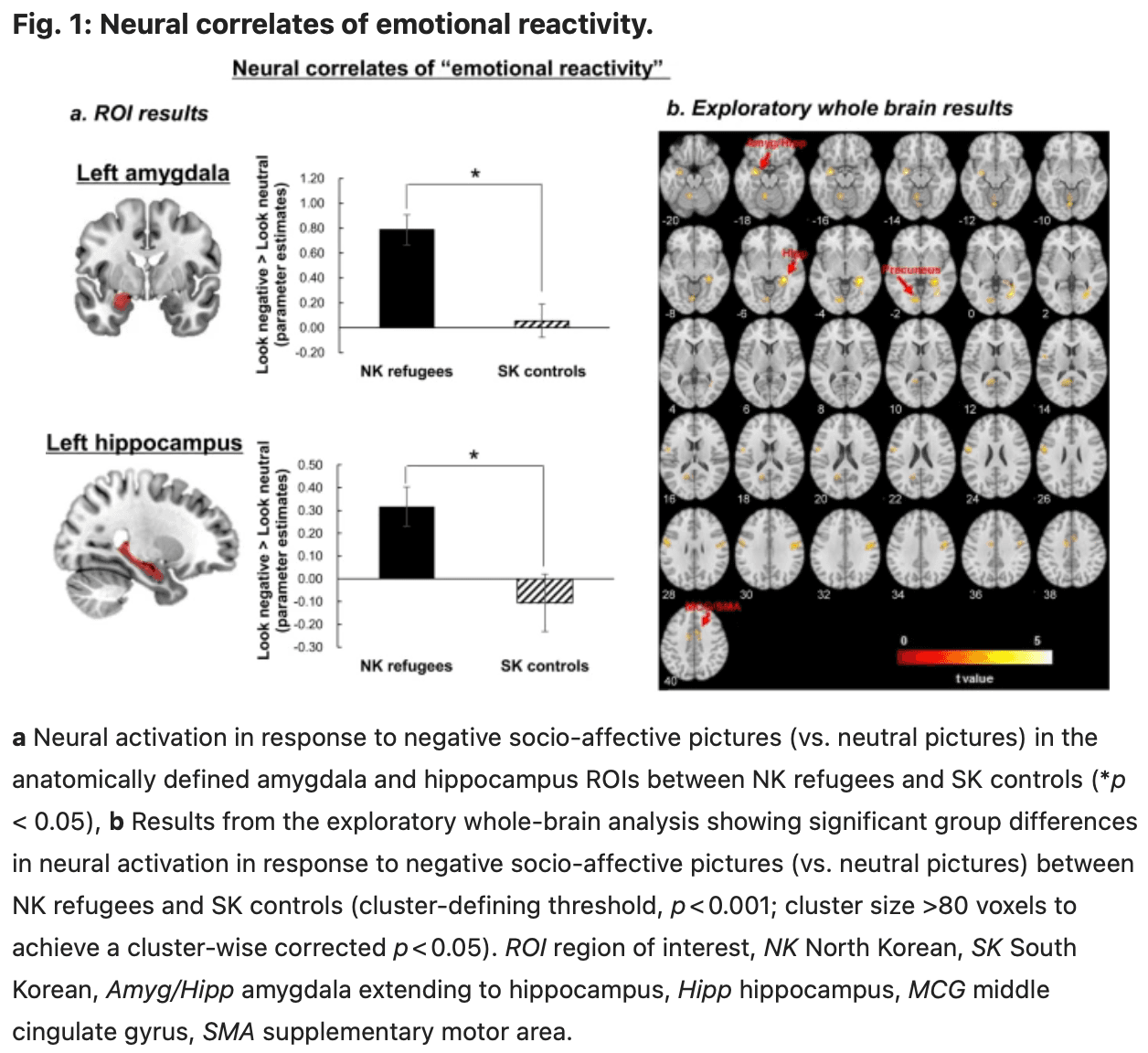
Figure 1

Exploratory whole-brain analysis

Similar to the ROI results, the whole-brain analysis revealed more amygdala and hippocampal activation in NK refugees compared to SK controls in response to negative socio-affective pictures vs. neutral pictures (Table S1 and Fig. 1b; cluster-defining threshold, p < 0.001; cluster size >80 voxels to achieve a cluster-wise corrected p < 0.05). NK refugees also showed greater activation in response to negative vs. neutral pictures in other cortical regions, including the cingulate cortex, precuneus, and visual cortex, than SK controls. However, SK controls did not show greater activation in any regions compared to NK refugees in response to negative vs. neutral pictures.

Neural activation and FC during emotion regulation

ROI analysis

No significant differences in activation were observed during emotion suppression (vs. looking at negative pictures) between NK refugees and SK controls in the DLPFC, VLPFC, and MPFC ROI masks (all ps > 0.40). However, the small volume correction (SVC) analysis limited to the prefrontal ROI revealed a cluster of activation in the left LPFC (cluster-defining threshold, p < 0.001; cluster size >25 voxels to achieve a SVC corrected p < 0.05). In this LPFC cluster (xyz coordinate = −22, 8, 56; 31 voxels; peak t value = 3.73), NK refugees showed greater activation than SK controls during emotion regulation (vs. looking at negative pictures; mean activation in the LPFC cluster, t[79] = 3.71, p = 0.0001, Cohen’s d = 0.82) (Fig. 2a).
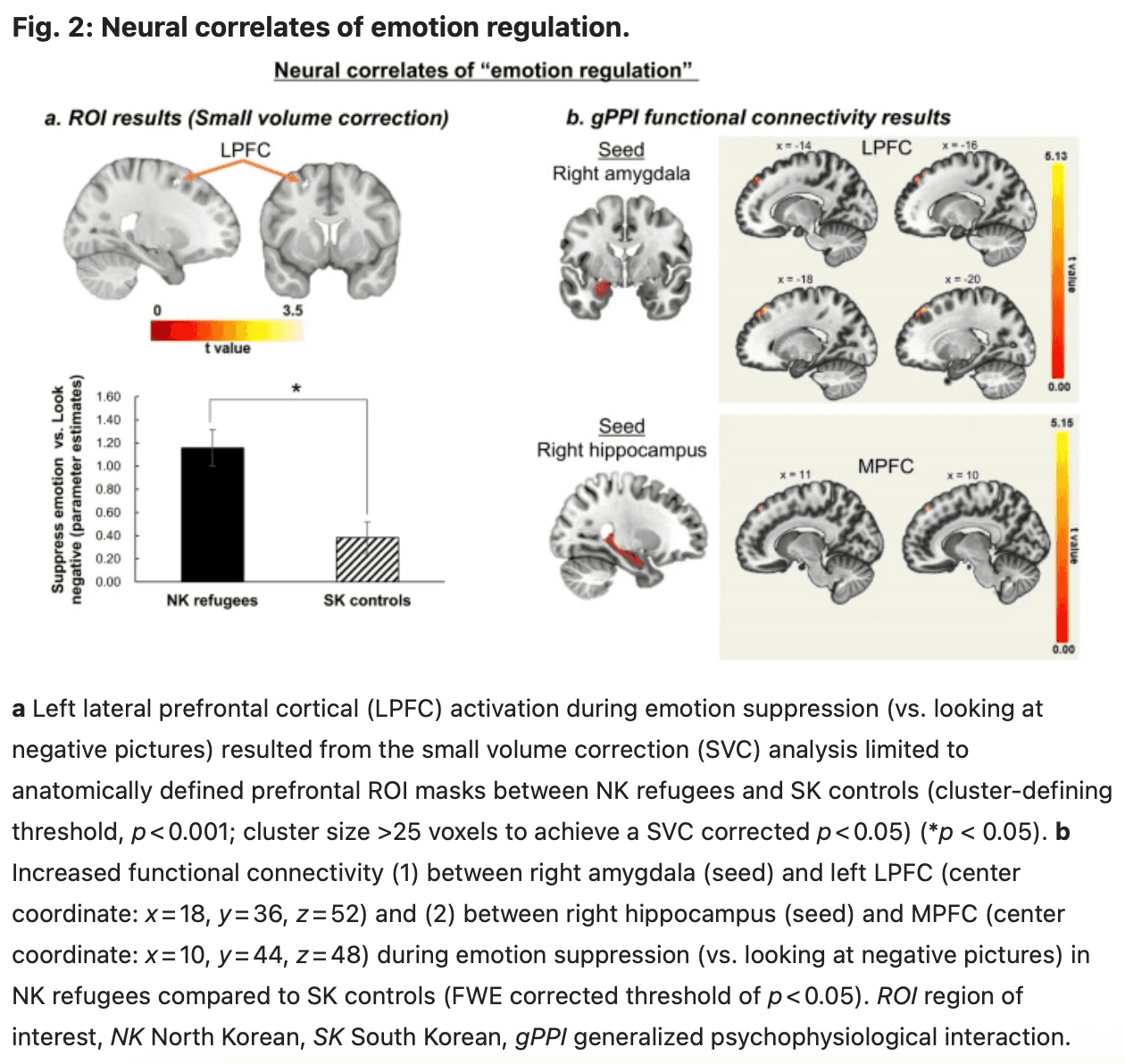
Figure 2

Exploratory whole-brain analysis

NK refugees showed more activation during emotion regulation (vs. looking at negative pictures) in prefrontal regions, in addition to several other regions, compared to the SK controls (cluster-defining threshold, p = 0.001), but the differences were not significant after correcting for multiple comparisons (cluster-defining threshold, p < 0.001; cluster size >89 voxels to achieve a cluster-wise corrected p < 0.05). These exploratory whole-brain results are shown at an uncorrected p < 0.001, with a minimal cluster size of 10 (Table S2 and Fig. S3).

FC using gPPI

NK refugees had greater FC between the right amygdala and LPFC and between the right hippocampus and dorsomedial prefrontal cortex during emotion suppression (vs. looking at negative pictures) compared to SK controls (Fig. 2b and Table 2). However, no significant group differences in FC were observed between the prefrontal and other seed regions (i.e., left amygdala and left hippocampus).

Seed

Contrast

Cluster

Region

BA

H

Number of voxels in the region

Cluster size (voxels)

MNI coordinates

Peak t

x

y

z

R amygdala

NK > SK

1

Superior frontal gyrus

8

L

205

293

−18

36

52

5.13

Medial frontal gyrus

10

71

Middle frontal gyrus

9

4

2

Middle frontal gyrus

8

L

70

82

−32

16

50

4.16

Precentral gyrus

12

SK > NK

L amygdala

NK > SK

1

Cerebellum

R

77

77

54

−52

−46

4.55

SK > NK

R hippocampus

NK > SK

1

Medial frontal gyrus

8

L

46

103

10

44

48

5.15

Medial frontal gyrus

8

R

44

Superior frontal gyrus

10

2

Angular gyrus

39

L

78

78

−46

−64

32

4.25

SK > NK

1

Rectus gyrus

R

37

95

12

20

−16

4.6

Olfactory gyrus

29

Superior orbital gyrus

47

14

Inferior orbital gyrus

47

7

Medial orbital gyrus

47

2

L hippocampus

NK > SK

SK > NK

Correlations between refugee features, clinical features, neural activation, and FC in NK refugees

Correlations between refugee features, neural activation, and FC

As shown in Table 1, two refugee features, including “length of SK residency (i.e., time since settlement in SK)” and “cumulative trauma (i.e., number of traumatic experiences),” were used in these analyses. Given the wide age range and gender disparity, age and gender were included as covariates. There were significant correlations between cumulative trauma and PTSD symptoms (i.e., traumatic experiences and PTSD [lifetime CAPS-IV: r = 0.50, p < 0.01; current CAPS-IV: r = 0.60, p < 0.001]). Current and lifetime PTSD symptoms were further controlled to test correlation between cumulative trauma, neural activation, and FC. Cumulative trauma was not significantly correlated with neural activation in regions involved in emotional reactivity and emotion regulation and FC between subcortical–PFC regions in NK refugees (all ps > 0.08). Length of SK residency was not significantly correlated with any clinical, neural activation, and FC (all ps > 0.08).

Correlations between clinical features, neural activation, and FC

Given the wide age range, gender disparity, and close relationships among variables in NK refugees (i.e., traumatic experiences and PTSD symptoms, alexithymia and depression [r = 0.44, p < 0.05] and alexithymia and anxiety [r = 0.50, p < 0.01]), all correlation coefficients were computed controlling for age, gender, the number of traumatic experiences, and alexithymia scores. Depressive symptoms were highly correlated with anxiety symptoms (r = 0.51, p < 0.01) but not with current PTSD symptoms (r = 0.33, p = 0.09) and lifetime PTSD symptoms (r = 0.35, p = 0.07) after controlling for age, gender, the number of traumatic experiences, and alexithymia scores.

NK refugees who had greater lifetime PTSD symptoms exhibited greater activity in response to negative (vs. neutral) pictures in both the left (r = 0.60, p < 0.01) (Fig. 3a) and right hippocampus (r = 0.51, p < 0.01). NK refugees who had current PTSD also showed greater left hippocampal activity in response to negative (vs. neutral) pictures (r = 0.40, p < 0.05) (Fig. 3b). NK refugees who had more severe depressive symptoms showed greater amygdala activity in response to negative (vs. neutral) pictures (r = 0.49, p < 0.05), but this result did not remain significant after correction for multiple correlation tests (Fig. S4a). The anxiety scores of NK refugees were not correlated with neural activation in response to the negative pictures (all ps > 0.06).
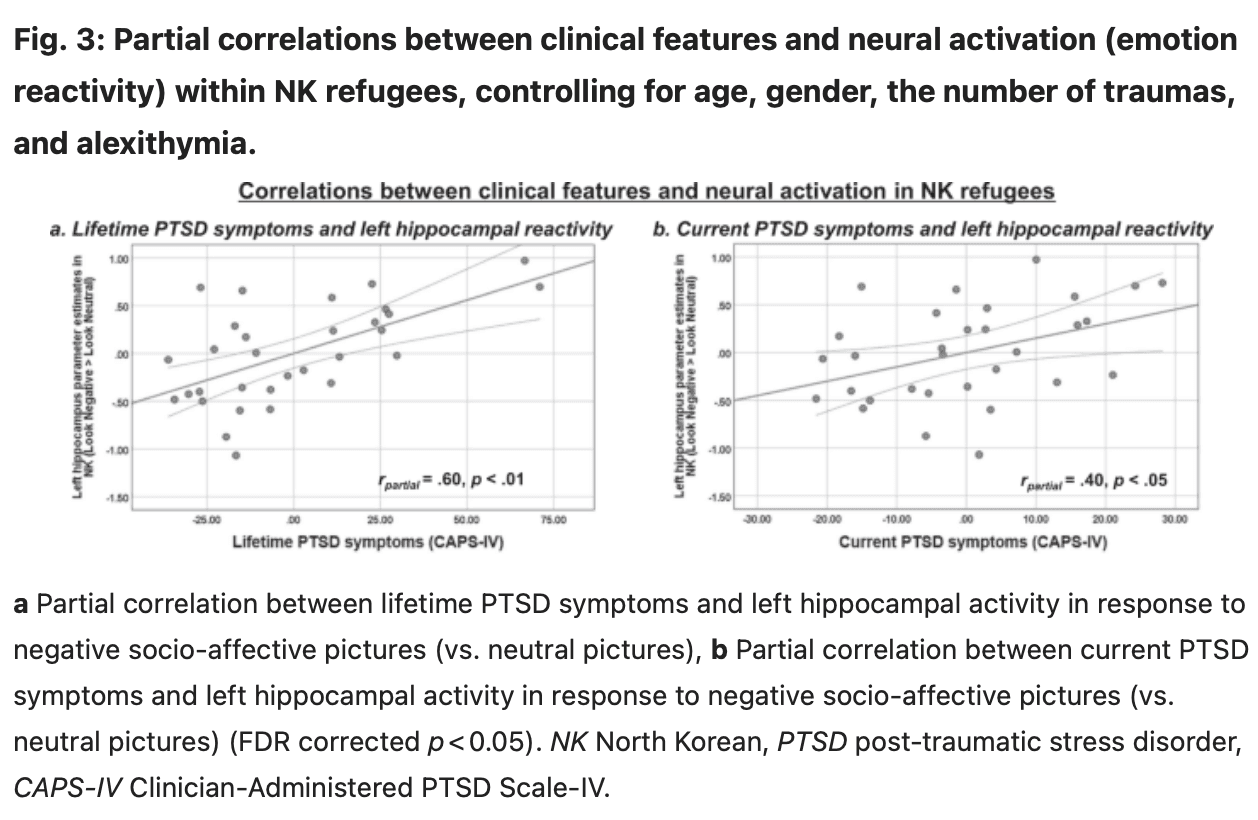
Figure 3

More severe lifetime PTSD symptoms were significantly associated with lower FC between the right amygdala and LPFC in NK refugees during emotion suppression (r = −0.41, p < 0.05), but this finding did not remain significant after correction for multiple correlation tests (Fig. S4b). Other clinical features were not significantly correlated with prefrontal activation and FC in NK refugees during emotion suppression (all ps > 0.07).

Sensitivity analysis

Given that there were 14 NK refugees with Axis-I psychiatric disorders, it is possible that our findings may be driven by current psychiatric disorders. To rule out this possibility, we investigated group differences in neural activation and FC between NK refugees without current Axis-I psychiatric disorders and NK refugees with current Axis-I psychiatric disorders. Given significant differences in age and the number of traumatic experiences between these two groups, we controlled age and the number of traumatic experiences. We found no significant group differences, indicating that our main findings were not affected by current Axis-I psychiatric disorders in NK refugees.

Discussion

In the present study, NK refugees with trauma exposure and varying levels of psychopathology showed greater amygdala and hippocampal responses to negative socio-affective pictures compared to healthy SK controls without trauma exposure. NK refugees also exhibited greater PFC activation, amygdala–PFC FC, and hippocampal–PFC FC during emotion regulation compared to SK controls. Furthermore, more severe PTSD symptoms were significantly correlated with greater hippocampal activity in response to negative pictures in NK refugees. However, refugee features such as cumulative trauma and length of SK residence were not related to neural activation in regions of emotional reactivity and regulation in NK refugees.

Neural correlates of emotional reactivity in NK refugees

Consistent with our first hypothesis, we found greater amygdala and hippocampal activity in response to negative pictures than neutral pictures in NK refugees compared to SK controls. These results were aligned with extant literature that showed heightened amygdala and hippocampal activity in response to trauma-related negative pictures in individuals who had traumatic experiences. The amygdala and hippocampus are involved in several emotion processes, including basic emotions (e.g., fear and anger), hypervigilance/arousal, emotional memory, and emotion-cognition interactions. Individuals who experienced stressful and traumatic events may be highly sensitive to negative information that may contribute to increasing neural activity in these subcortical regions. Heightened amygdala and hippocampal responses to negative pictures in NK refugees may represent increased vigilance, arousal, negative emotions, and emotional memory pertaining to trauma-related information. These results suggest that heightened amygdala and hippocampal reactivity to trauma-related information may be neurobiological factors contributing to mental health problems in traumatized refugees. Alleviating heightened emotional reactivity to trauma-related information may be key to improving mental health for traumatized refugees.

Neural correlates of emotion regulation in NK refugees

Inconsistent with our second hypothesis, NK refugees showed greater PFC activation and subcortical–PFC (i.e., amygdala–PFC and hippocampus–PFC) FC during emotion regulation compared to SK controls. These findings were inconsistent with previous research demonstrating reduced PFC recruitment during emotion regulation in traumatized individuals. This may be due to using different emotion regulation strategies. Unlike previous studies using cognitive reappraisal, we used emotion suppression as an emotion regulation strategy. As mentioned earlier, alexithymic individuals or individuals with PTSD were more likely to use emotion suppression to decrease emotions. Based on the interference hypothesis, greater use of emotion suppression in traumatized individuals may interfere with using instructed cognitive reappraisal. Such interference may contribute to difficulties in recruiting PFC regions during cognitive reappraisal. However, in our study, traumatized refugees might be able to recruit PFC regions when they were asked to decrease emotion using suppression. Thus, NK refugees’ frequent, or even habitual, use of emotion suppression as a coping mechanism may be associated with greater PFC activation and subcortical–PFC connectivity. Similarly, NK refugees show strong amygdala–PFC connectivity even during the resting state, suggesting that they readily engage in emotion suppression when they feel negative emotions. However, future research is needed to examine whether traumatized refugees have difficulty in using cognitive reappraisal or recruiting PFC during cognitive reappraisal.

Despite their readily engaging in emotion suppression (e.g., greater resting-state amygdala–DLPFC FC) in the absence of externally presented stimuli or tasks, NK refugees may need to make more effort to decrease heightened negative emotions induced by negative pictures. In other words, heightened amygdala and hippocampal activity through bottom–up emotion generation using external stimuli may contribute to boosting prefrontal downregulation of negative emotions. Thus, greater PFC activation and subcortical–PFC connectivity during emotion suppression may reflect greater effort to regulate heightened negative emotions in NK refugees, who showed more intense responses to negative socio-affective pictures than SK controls. In support of this idea, previous research has shown that increased emotional responses to negative stimuli contribute to increased demands for regulation of emotional distress. Children with high levels of violence exposure also showed greater subcortical (i.e., amygdala and hippocampus) and prefrontal cortical (i.e., ventromedial PFC) activation during response inhibition. Similar to NK refugees with trauma exposure, children exposed to violence may make more effort (e.g., increased attention) to inhibit inappropriate responses, possibly due to increased emotional vigilance and memory associated with negative information (e.g., fearful faces). Although NK refugees made more effort to suppress emotions via enhanced PFC recruitment and subcortical–PFC connectivity, NK refugees failed to show reduction in subjective emotional responses (see behavioral ratings) to negative pictures after emotion suppression.

Correlations between refugee features, clinical features, and neural correlates of emotional reactivity and regulation in NK refugees

Cumulative trauma, one of the refugee features, was significantly correlated with PTSD symptoms but not with anxiety and depressive symptoms. This result was in line with previous studies showing that individuals with the higher number of traumatic experiences reported greater PTSD symptoms. Both refugee features (i.e., cumulative trauma and length of SK residency) were not significantly correlated with neural activation and FC associated with emotional reactivity and regulation. Specifically, this result was inconsistent with the previous study that showed the association between cumulative trauma and neural activation in response to fearful faces in the insula and perigenual ACC. It is possible that cumulative trauma may be specifically associated with neural activation of fear or threat-related processing. Compared to the previous study that used only fearful faces, we used negative pictures that have been validated to induce various negative emotions including anger, disgust, and fear. In this case, refugees may respond to non-specific negative emotions and activate the amygdala and hippocampus, which are known to be regions involved in various emotion processing, regardless of their cumulative traumatic experiences. Future research is needed to examine whether the association between cumulative trauma (or other refugee features) and neural activation is true for fear or threat-related processing or is generalized to other negative emotional processing.

As hypothesized, greater severity of PTSD symptoms was correlated with the enhanced hippocampal reactivity to negative pictures (vs. neutral pictures) in NK refugees. NK refugees with greater PTSD symptoms showed enhanced hippocampal activation that may be related to traumatic memories retrieved by negative pictures. This result was consistent with previous PTSD and trauma-related studies showing exaggerated hippocampal activity when remembering negative pictures and recalling negative autobiographical memory. This finding may suggest that interventional strategies should focus on desensitizing refugees with current or lifetime PTSD to traumatic emotional memories.

Limitations

Several limitations of the present study should be discussed. First, we included only traumatized NK refugees, which limits the generalizability of our findings to other traumatized refugees. Thus, future research is needed to validate our findings in other traumatized refugee samples. Second, this study used emotion suppression as an emotion regulation strategy. Previous research showed that different emotion strategies recruit different brain regions. Thus, although greater PFC activation and subcortical–PFC connectivity in NK refugees may be true in case of emotion suppression, further studies are needed on other emotion regulation strategies, such as cognitive reappraisal. Finally, we included healthy SKs as the control group, who share a similar heritage and history to NKs, as well as the same Korean language (with differences in vocabulary, accent, and so on), but were raised in distinct cultures and societies. Thus, NKs may differ from the SK control group in terms of several aspects, including different cultures, traumatic experiences, clinical features, and current stress levels (e.g., NKs’ greater stress due to discrimination, lack of social support, and financial problems). Ideally, a control group should be carefully selected according to the specific research goals. However, in practical terms, it is difficult to recruit NK refugees without traumatic experiences or SK with similar traumatic experiences (e.g., human trafficking and witnessing public executions). Alternatively, SK with any type of trauma exposure and some levels of psychopathology (e.g., PTSD symptoms) may be another good control group to disentangle the effect of being a refugee from the effects of trauma and psychopathology. It is also worthy to mention that the comparison of traumatized NK refugees with and without psychiatric disorders may be a good option to examine the effect of psychopathology in traumatized refugee sample. Surprisingly, there were only 5 NK refugees who were diagnosed PTSD and 9 NK refugees with other psychiatric disorders (i.e., 7 with mood disorders, 1 with eating disorder, and 1 with generalized anxiety disorder) at the time of inclusion of this study. However, we did not find significant differences in neural substrates between NK refugees with and without psychiatric disorders. Such null findings may be due in part to a relatively small sample size and heterogeneity in NK refugees with psychiatric disorders. Further research is needed to compare neural substrates between traumatized refugees with and without psychiatric disorders.

Conclusions

Despite these limitations, this study had some strengths; for example, it is the first study to examine neural correlates of emotional reactivity and regulation in a traumatized refugee sample. Furthermore, the findings from this study have both clinical and methodological implications. Relative to healthy SK controls without trauma exposure, NK refugees with trauma exposure and varying levels of psychopathology may have heightened neural sensitivity to trauma-related information, which was varied by psychiatric symptoms, suggesting that future interventions should focus on alleviating such neural sensitivity and desensitizing refugees to traumatic emotional memories. With respect to emotion regulation, traumatized refugees may have the ability to regulate heightened negative emotions by recruiting PFC activation and subcortical–PFC FC, but they may need more effortful neural recruitment for emotion regulation. It is also possible that the emotion regulation ability of refugees may be underestimated or inappropriately assessed due to prejudice, stigma, cultural differences, or language barriers, such as differences in vocabulary and orthography. Refugees who suffer from mental health problems should be given special attention to improve their emotion regulation capabilities by encouraging use of more efficient emotion regulation and more appropriate emotion regulation strategies. Methodologically, given the refugees’ high levels of alexithymia and language problems, future research should include multiple assessments, including self-report, physiological, and neural measures, to evaluate emotion regulation difficulties in traumatized refugees subjectively and more objectively.

Abstract

Refugees often report heightened emotional reactivity and emotion regulation difficulties and are at high risk for mental health problems. Given that refugees are repeatedly exposed to traumatic events that may cause changes in the brain, the present study examined neural correlates of emotional reactivity and regulation and their associations with refugee features (e.g., cumulative trauma) and the severity of psychiatric symptoms (e.g., post-traumatic stress disorder) in North Korean (NK) refugees. Forty NK refugees with trauma exposure and varying levels of psychopathology and 41 healthy South Korean (SK) controls without trauma exposure participated in this study. They performed an emotion regulation task during a functional magnetic resonance imaging (fMRI) assessment. Region of interest (ROI), whole brain, and generalized psychophysiological interaction (gPPI) analyses were conducted. NK refugees with trauma exposure and varying levels of psychopathology showed increased activation in response to negative socio-affective pictures in regions involved in affective processing, including the amygdala and hippocampus, relative to healthy SK controls without trauma exposure. They also exhibited greater prefrontal cortex (PFC) activation, amygdala–PFC functional connectivity (FC), and hippocampal–PFC FC during emotion regulation. More severe PTSD symptoms were associated with greater hippocampal response to negative pictures (vs. neutral pictures) in NK refugees. This study provides neuroscientific evidence for neural alterations in association with emotional reactivity and regulation in traumatized refugees. These findings may contribute to a better mechanistic understanding of emotional reactivity and regulation in refugees and suggest potential ways to address the emotional and mental problems of traumatized refugees.

Introduction

The increasing number of refugees globally highlights the importance of their resettlement and adjustment to new countries. Mental health is a major concern, as refugees often face high risks for conditions like depression, anxiety, and post-traumatic stress disorder (PTSD). These issues often stem from repeated stressful and traumatic experiences, such as persecution, abuse, and violence, both in their home countries and during their journeys to new lands. Mental health challenges can also make it harder for refugees to successfully resettle. Research into the factors that impact refugees' mental health can help them adjust better to new environments.

One important factor in mental health problems for traumatized refugees is how they process emotions. This includes having strong emotional reactions to past or current traumatic events (emotional reactivity) and a limited ability to manage these strong negative emotions (emotion regulation). Understanding how refugees handle negative emotional information and regulate their emotions is crucial. Evidence suggests refugees show stronger negative emotional responses to images related to trauma, such as those depicting violence. Studies also indicate that refugees with traumatic experiences report difficulty regulating their emotions and have lower emotion regulation capacity. The severity of these emotional challenges, including heightened emotional reactivity and difficulty regulating emotions, varies with the severity of their mental health problems, such as PTSD and depressive symptoms.

However, many previous studies used self-reported measures like questionnaires to assess emotional responses and regulation difficulties. These methods can be biased, especially for refugees who may struggle to identify and describe their own emotions. Using neurobiological measures, which look at brain activity, may offer a better way to understand how people respond to emotional triggers and manage negative emotions. Traumatic experiences are known to affect brain function and connectivity related to stress and emotional processing. Therefore, it is important to examine whether traumatized refugees show different brain responses related to emotional reactivity and regulation.

Brain imaging studies have identified the brain areas involved in emotional reactivity and regulation. Increased emotional responses to negative stimuli are linked to greater activity in brain regions that process emotions, such as the amygdala, hippocampus, and insula. One fMRI study found that the amount of trauma refugees experienced was linked to increased activity in the insula and anterior cingulate cortex when viewing fearful faces. It also showed reduced communication between parts of the brain (anterior insula and inferior frontal gyrus) during this task. This suggests altered emotional reactivity to fearful stimuli in refugees. Other fMRI studies have shown that individuals with traumatic experiences or PTSD have increased activity in the amygdala and hippocampus when looking at negative pictures.

In contrast, brain activity related to emotion regulation is often associated with the prefrontal cortex (PFC), which is involved in cognitive control. This includes areas like the dorsolateral prefrontal cortex (DLPFC), ventral lateral prefrontal cortex (VLPFC), and medial prefrontal cortex (MPFC). Emotion regulation has also been studied by looking at the connections between these PFC areas and deeper brain regions. There is no prior fMRI research specifically on emotion regulation in traumatized refugees. However, fMRI studies on traumatized individuals with or without PTSD suggest potential changes, such as less activity in PFC regions, when trying to reduce negative emotions.

Based on these studies of traumatized individuals, it is possible that traumatized refugees may show increased brain responses in the amygdala and hippocampus to negative information, while showing less activity in prefrontal regions during emotion regulation. However, no brain imaging research has directly investigated emotional reactivity and emotion regulation in traumatized refugees. It is also possible that traumatized refugees might differ from other traumatized individuals because they often face additional ongoing stressors after migration, such as discrimination, lack of social support, and unemployment. For these reasons, it is necessary to examine brain activity in traumatized refugees performing an emotion regulation task. In this task, participants view trauma-related pictures (e.g., images of physical assaults relevant to refugees) and are asked to control their emotional responses. Using such a task with refugee-specific trauma pictures may help clarify the brain processes involved in emotional reactivity and regulation in traumatized refugees.

This study aimed to investigate brain activity related to emotional reactivity and regulation in traumatized refugees. To achieve this, traumatized North Korean (NK) refugees who had resettled in South Korea after escaping North Korea were recruited. NK refugees are known to have experienced various stressful and traumatic events, including persecution, abuse, and violence, both in North Korea and during their journey to South Korea. South Korean (SK) adults, with no history of trauma or psychiatric disorders, were recruited as a control group. Both NK refugees and SK controls underwent brain scans while performing an emotion regulation task. The study specifically used emotion suppression as an emotion regulation strategy. One reason for this choice is that individuals with alexithymia (difficulty identifying emotions) or PTSD symptoms are more likely to use emotion suppression, suggesting NK refugees might also use this strategy more often. Emotion suppression has also been shown to activate PFC regions, including the lateral prefrontal cortex (LPFC). Given the limited evidence on brain activity related to emotional reactivity and regulation in traumatized refugees, hypotheses were developed based on previous imaging studies of traumatized individuals. It was hypothesized that, compared to SK controls, NK refugees would show greater brain activation in response to negative pictures in subcortical–limbic regions (e.g., amygdala and hippocampus). It was also hypothesized that NK refugees would show less activation in the PFC (e.g., LPFC and MPFC) and weaker connections between subcortical and PFC regions during emotion regulation.

Furthermore, the study sought to determine if the severity of depression, anxiety, and PTSD, as well as refugee characteristics (like cumulative trauma and length of residency in South Korea), were linked to altered brain activity during emotional reactivity and regulation in NK refugees. Given the known connections between altered emotion processing, cumulative trauma, and mental health symptoms, it was predicted that refugee characteristics and the severity of depression, anxiety, and PTSD symptoms in NK refugees would be associated with brain activity in regions involved in emotional reactivity and regulation.

Methods

Participants

Initially, 93 adults were recruited, comprising 49 NK refugees and 44 SK controls, between 2013 and 2017. SK participants were chosen as healthy controls with no history of trauma. Twelve participants were excluded due to issues such as brain abnormalities (4 NK refugees), errors during the task (4 NK refugees, 2 SK controls), or poor image quality from head movement (1 NK refugee, 1 SK control). The final sample included 40 NK refugees (31 females; average age 36.15 years) and 41 SK controls (28 females; average age 36.54 years). A sample size of 40 is generally considered sufficient for fMRI studies to detect significant brain activity changes. Participants were excluded if they had metal implants incompatible with MRI, a history of head injury, neurological disorders, untreated serious medical conditions, or neurodevelopmental disorders. SK controls were also excluded if they had a history of any psychiatric disorder.

Procedures

The Institutional Review Board of Seoul National University Hospital approved this study. All participants gave written informed consent. Participants visited the center twice. During the first visit, both NK and SK participants were assessed using a standardized interview for psychiatric diagnoses and completed questionnaires about their clinical characteristics. NK refugees also completed a specific scale for PTSD and a brief interview about their life history and traumatic experiences. During the second visit, they underwent an fMRI scan while performing an emotion regulation task. Participants received instructions and practiced the task before the scan.

Clinical assessments and self-report measures

The Clinician-Administered PTSD Scale-IV (CAPS-IV) is a 30-item interview that assesses current and lifetime PTSD symptoms based on diagnostic criteria. Scores represent the sum of symptom severity. The Beck Depression Inventory (BDI) is a 21-item self-report questionnaire used to measure the severity of depressive symptoms over the past two weeks, covering cognitive, emotional, physical, and motivational aspects. A validated Korean version was used. The Beck Anxiety Inventory (BAI) is a 21-item self-report questionnaire assessing common anxiety symptoms over the past week. A validated Korean version was used. The revised Toronto Alexithymia Scale (TAS) is a 23-item self-report questionnaire measuring alexithymia, including difficulty describing and identifying feelings, and externally oriented thinking. A Korean version with good internal consistency was used. The Trauma Exposure Check List for NK Refugees was used to identify types and count the number of traumatic experiences.

fMRI emotion regulation task

Each trial began with a 1-second fixation cross, followed by a negative or neutral picture for 4 seconds. An emotion regulation cue appeared on the picture for 1 second, and the picture remained displayed for another 7 seconds while emotions were regulated (suppressed or maintained). Participants then rated the intensity of their emotions on a scale (1 = neutral, 2 = negative, 3 = very negative) for 4 seconds, followed by a fixation dot for 4 seconds. In the "suppress" condition, participants were instructed to reduce their emotional response to negative pictures. In the "maintain" condition, they were asked to sustain their responses to both negative and neutral pictures. In total, 36 negative socio-affective pictures (18 for each regulation condition) and 18 neutral pictures (only for the "maintain" condition) were used. Neutral pictures were not used for suppression. These pictures, from the Korean Social Affective Visual Stimuli, are validated to induce specific emotions; negative stimuli produced negative emotions, and neutral stimuli were rated as neutral. Negative pictures depicted social situations like physical abuse, while neutral pictures showed everyday social scenes like people walking.

fMRI data acquisition and analysis

fMRI data were collected using a 3 Tesla scanner with a specific imaging sequence. High-resolution structural images were also acquired. The fMRI data were processed and analyzed using SPM12 software. Both pre-defined regions of interest (ROIs) and exploratory whole-brain analyses were used to identify brain areas showing differences between groups in emotional reactivity (comparing "looking at negative pictures" to "looking at neutral pictures") and emotion regulation (comparing "suppressing emotions" to "looking at negative pictures"). A generalized psychophysiological interaction (gPPI) analysis was conducted to examine how brain regions connected during the task, specifically focusing on connections between the amygdala, hippocampus, and other brain areas. More details on data acquisition and analysis are in the Supplement.

Statistical analysis

Statistical analyses were performed using SPSS 25.0. Independent-sample t-tests compared demographic and clinical characteristics, as well as brain activity measures (e.g., average activity estimates for emotional reactivity and emotion regulation) extracted from the ROIs. Chi-squared tests were used for categorical variables. Repeated-measures analyses of variance (ANOVAs) examined if group differences in behavioral ratings were affected by emotion regulation conditions. Correlation analyses explored whether refugee characteristics (e.g., number of traumatic experiences) and clinical features (e.g., psychiatric symptoms) were associated with average brain activity and functional connectivity in NK refugees. The Benjamini–Hochberg method was used to correct for multiple correlation tests, ensuring reliable results.

Results

Demographic and clinical features

Table 1 displays the demographic and clinical characteristics of NK refugees and SK controls. There were no significant differences in age or gender between the two groups. NK refugees reported more severe symptoms of depression and anxiety, and greater difficulty identifying their feelings, compared to SK controls.

Behavioral ratings

Two repeated-measures ANOVAs were conducted on ratings after emotion regulation conditions.

Responses to negative pictures vs. neutral pictures

A statistical analysis comparing group (NK vs. SK) and condition (maintaining responses to negative vs. neutral pictures) showed a significant effect of the condition. This means both NK refugees and SK controls reported more negative emotional responses when maintaining responses to negative pictures compared to neutral pictures.

Suppressing vs. maintaining responses to negative pictures

A statistical analysis comparing group (NK vs. SK) and condition (suppressing vs. maintaining responses to negative pictures) revealed a significant interaction effect. SK controls reported less intense emotional responses after suppressing emotions compared to maintaining them in response to negative pictures. However, NK refugees reported similar emotional responses regardless of whether they suppressed or maintained their emotions. This indicates that NK refugees had more difficulty or were less successful at suppressing negative emotions than SK controls.

Neural activation in response to negative pictures (emotional reactivity)

ROI analysis

As hypothesized, NK refugees showed greater brain activation in the left amygdala and in both the left and right hippocampus compared to SK controls when viewing negative socio-affective pictures versus neutral pictures. No significant differences were found in the right amygdala or bilateral anterior insula.

Exploratory whole-brain analysis

Consistent with the ROI results, the whole-brain analysis showed more amygdala and hippocampal activation in NK refugees than in SK controls in response to negative versus neutral pictures. NK refugees also exhibited greater activation in other brain regions, including the cingulate cortex, precuneus, and visual cortex, when viewing negative versus neutral pictures compared to SK controls. In contrast, SK controls did not show greater activation in any regions compared to NK refugees in response to negative versus neutral pictures.

Neural activation and FC during emotion regulation

ROI analysis

No significant differences in activation during emotion suppression (compared to just looking at negative pictures) were observed between NK refugees and SK controls in the DLPFC, VLPFC, and MPFC regions. However, a specific analysis focusing on the prefrontal ROI revealed a cluster of activation in the left LPFC. Within this LPFC cluster, NK refugees showed greater activation than SK controls during emotion regulation (compared to just looking at negative pictures).

Exploratory whole-brain analysis

NK refugees exhibited more activation in prefrontal regions and several other areas during emotion regulation (compared to just looking at negative pictures) than SK controls. However, these differences were not statistically significant after correcting for multiple comparisons. These exploratory whole-brain results are presented with a less strict statistical threshold.

FC using gPPI

NK refugees showed stronger connections (functional connectivity) between the right amygdala and LPFC, and between the right hippocampus and dorsomedial prefrontal cortex, during emotion suppression (compared to looking at negative pictures) than SK controls. However, there were no significant group differences in connections involving the left amygdala and left hippocampus.

Correlations between refugee features, clinical features, neural activation, and FC in NK refugees

Correlations between refugee features, neural activation, and FC

Two refugee features, "length of SK residency" and "cumulative trauma" (number of traumatic experiences), were included in these analyses. Age and gender were controlled for due to their wide range and disparity. Significant correlations were found between cumulative trauma and PTSD symptoms (both lifetime and current). To further investigate the relationship between cumulative trauma, brain activation, and connectivity, current and lifetime PTSD symptoms were also controlled. Cumulative trauma was not significantly correlated with brain activation in regions involved in emotional reactivity and emotion regulation, nor with connections between subcortical-PFC regions in NK refugees. Similarly, length of SK residency was not significantly correlated with any clinical features, brain activation, or connectivity.

Correlations between clinical features, neural activation, and FC

To account for factors like age, gender, number of traumatic experiences, and alexithymia scores, all correlation coefficients were calculated while controlling for these variables. Depressive symptoms were highly correlated with anxiety symptoms but not significantly with current or lifetime PTSD symptoms after controlling for the other variables.

NK refugees with more severe lifetime PTSD symptoms showed greater activity in both the left and right hippocampus in response to negative (versus neutral) pictures. Those with current PTSD also showed greater left hippocampal activity in response to negative pictures. NK refugees with more severe depressive symptoms showed greater amygdala activity in response to negative pictures, but this finding did not remain significant after statistical correction for multiple tests. Anxiety scores in NK refugees were not correlated with brain activation in response to negative pictures.

More severe lifetime PTSD symptoms were linked to weaker connections between the right amygdala and LPFC in NK refugees during emotion suppression. However, this finding also did not remain significant after correcting for multiple correlation tests. Other clinical features were not significantly correlated with prefrontal activation or functional connectivity in NK refugees during emotion suppression.

Sensitivity analysis

Given that 14 NK refugees had psychiatric disorders, a sensitivity analysis was conducted to ensure these disorders did not solely drive the findings. There were no significant differences in brain activation or connectivity between NK refugees with and without current psychiatric disorders, even after controlling for age and number of traumatic experiences. This suggests that the main findings were not primarily influenced by current Axis-I psychiatric disorders in NK refugees.

Discussion

This study found that North Korean (NK) refugees, who had experienced trauma and showed various levels of mental health problems, displayed greater activity in the amygdala and hippocampus when viewing negative social-emotional pictures compared to healthy South Korean (SK) controls without trauma. NK refugees also showed increased prefrontal cortex (PFC) activation and stronger connections between the amygdala, hippocampus, and PFC during emotion regulation compared to SK controls. Additionally, more severe PTSD symptoms in NK refugees were significantly linked to greater hippocampal activity in response to negative pictures. However, refugee-specific factors like cumulative trauma and the length of time living in South Korea were not related to brain activity during emotional reactivity and regulation in NK refugees.

Neural correlates of emotional reactivity in NK refugees

Consistent with the hypothesis, NK refugees showed greater activity in the amygdala and hippocampus when presented with negative pictures compared to neutral ones, a finding supported by existing research on individuals with traumatic experiences. These brain regions are involved in various emotional processes, including fear, arousal, emotional memory, and emotion-cognition interactions. Individuals who have experienced stress and trauma may be more sensitive to negative information, leading to increased activity in these subcortical areas. The heightened amygdala and hippocampal responses observed in NK refugees to negative pictures may indicate increased vigilance, arousal, negative emotions, and emotional memories related to trauma. These results suggest that increased amygdala and hippocampal reactivity to trauma-related information could be a neurobiological factor contributing to mental health problems in traumatized refugees. Therefore, reducing this heightened emotional reactivity to trauma-related information may be crucial for improving the mental health of traumatized refugees.

Neural correlates of emotion regulation in NK refugees

Contrary to the initial hypothesis, NK refugees exhibited greater PFC activation and stronger connections between subcortical regions (amygdala and hippocampus) and the PFC during emotion regulation compared to SK controls. These findings differ from previous research showing reduced PFC activity during emotion regulation in traumatized individuals. This discrepancy might be due to the different emotion regulation strategies used. This study employed emotion suppression, whereas previous studies often used cognitive reappraisal. As noted, individuals with alexithymia or PTSD are more likely to use emotion suppression. It is possible that for traumatized individuals, frequently using emotion suppression could hinder their ability to use cognitive reappraisal effectively, thereby impacting PFC recruitment during cognitive reappraisal. However, in this study, traumatized refugees appeared to be able to activate PFC regions when asked to suppress emotions. Therefore, the frequent, possibly habitual, use of emotion suppression by NK refugees as a coping mechanism may be linked to greater PFC activation and stronger subcortical–PFC connectivity. Similarly, NK refugees show strong amygdala–PFC connectivity even at rest, suggesting a readiness to engage in emotion suppression when experiencing negative emotions. Future research is needed to determine if traumatized refugees struggle with cognitive reappraisal or with recruiting the PFC during such a task.

Even though NK refugees may often engage in emotion suppression without external triggers, they might need to exert more effort to reduce strong negative emotions prompted by negative pictures. In other words, heightened activity in the amygdala and hippocampus, generated by external stimuli, could lead to increased demand for prefrontal regulation of negative emotions. Thus, greater PFC activation and subcortical–PFC connectivity during emotion suppression may reflect greater effort by NK refugees to regulate their strong negative emotions, especially given their more intense responses to negative social-emotional pictures compared to SK controls. Supporting this idea, previous research indicates that increased emotional responses to negative stimuli elevate the demand for managing emotional distress. Similarly, children exposed to high levels of violence showed increased activity in subcortical (amygdala and hippocampus) and prefrontal cortical (ventromedial PFC) regions during tasks requiring response inhibition. Like traumatized NK refugees, children exposed to violence may exert greater effort to inhibit inappropriate responses, possibly due to increased emotional vigilance and memory associated with negative information. Despite NK refugees' greater effort in suppressing emotions through enhanced PFC recruitment and subcortical–PFC connectivity, they did not show a reduction in their reported subjective emotional responses to negative pictures after emotion suppression.

Correlations between refugee features, clinical features, and neural correlates of emotional reactivity and regulation in NK refugees

Cumulative trauma, a refugee feature, was significantly linked to PTSD symptoms but not to anxiety or depressive symptoms. This aligns with previous studies showing a correlation between a higher number of traumatic experiences and greater PTSD symptoms. Neither refugee feature (cumulative trauma or length of residency in SK) was significantly correlated with brain activation or functional connectivity related to emotional reactivity and regulation. This finding contradicts a previous study that showed an association between cumulative trauma and brain activation in the insula and pregenual anterior cingulate cortex in response to fearful faces. It is possible that cumulative trauma may be specifically linked to brain activity involved in processing fear or threat. Unlike the previous study that used only fearful faces, this study used negative pictures validated to induce various negative emotions, including anger, disgust, and fear. In this context, refugees might respond to non-specific negative emotions and activate the amygdala and hippocampus, regions known for processing various emotions, regardless of their cumulative traumatic experiences. Future research is needed to determine if the link between cumulative trauma (or other refugee features) and brain activation applies specifically to fear or threat-related processing, or if it extends to other negative emotional processing.

As hypothesized, a greater severity of PTSD symptoms in NK refugees was linked to increased hippocampal activity when viewing negative (versus neutral) pictures. NK refugees with more severe PTSD symptoms showed enhanced hippocampal activation, which may be connected to traumatic memories triggered by negative pictures. This finding is consistent with previous PTSD and trauma-related studies showing exaggerated hippocampal activity when recalling negative pictures and autobiographical memories. This suggests that intervention strategies should focus on reducing the sensitivity of refugees with current or lifetime PTSD to traumatic emotional memories.

Limitations

Several limitations of this study should be considered. First, the inclusion of only traumatized NK refugees limits the generalizability of these findings to other traumatized refugee populations. Future research should validate these findings in diverse refugee samples. Second, this study exclusively used emotion suppression as an emotion regulation strategy. Prior research indicates that different emotion regulation strategies activate distinct brain regions. Therefore, while the findings regarding greater PFC activation and subcortical–PFC connectivity in NK refugees may hold true for emotion suppression, further studies are needed to investigate other emotion regulation strategies, such as cognitive reappraisal. Finally, healthy SK individuals were used as a control group. While sharing similar heritage and language, NKs and SKs were raised in distinct cultures and societies. Thus, NKs may differ from SK controls in several aspects, including cultural background, traumatic experiences, clinical characteristics, and current stress levels (e.g., greater stress among NKs due to discrimination, lack of social support, and financial difficulties). Ideally, a control group should be carefully selected based on specific research goals. However, practically, it is challenging to recruit NK refugees without traumatic experiences or SK individuals with similar traumatic experiences (e.g., human trafficking, witnessing public executions). Alternatively, SK individuals with some trauma exposure and mental health challenges (e.g., PTSD symptoms) could serve as a valuable control group to distinguish the effects of being a refugee from those of trauma and mental health conditions. It is also important to note that comparing traumatized NK refugees with and without psychiatric disorders could clarify the impact of mental health conditions within this refugee sample. Surprisingly, only 5 NK refugees were diagnosed with PTSD and 9 with other psychiatric disorders (7 with mood disorders, 1 with an eating disorder, and 1 with generalized anxiety disorder) at the time of inclusion. However, no significant differences in neural activity were found between NK refugees with and without psychiatric disorders. These null findings might be due to the relatively small sample size and the varied nature of psychiatric disorders among NK refugees. Further research is needed to compare neural activity between traumatized refugees with and without psychiatric disorders.

Conclusions

Despite its limitations, this study offers valuable insights as the first to examine brain activity related to emotional reactivity and regulation in a sample of traumatized refugees. The findings have both clinical and methodological implications. Compared to healthy SK controls without trauma, NK refugees who have experienced trauma and exhibit various levels of mental health problems may have increased brain sensitivity to trauma-related information, which varies with their psychiatric symptoms. This suggests that future interventions should focus on reducing this brain sensitivity and helping refugees with traumatic emotional memories to desensitize. Regarding emotion regulation, traumatized refugees may be able to regulate strong negative emotions by activating the PFC and strengthening subcortical–PFC connections, but they may need to exert more effort in their brain activity to do so. It is also possible that refugees' emotion regulation abilities are underestimated or improperly assessed due to prejudice, stigma, cultural differences, or language barriers, such as variations in vocabulary and spelling. Refugees struggling with mental health issues require special attention to enhance their emotion regulation skills by encouraging more effective and appropriate strategies. Methodologically, given the high levels of alexithymia and language issues among refugees, future research should incorporate multiple assessment methods, including self-reports, physiological measures, and brain imaging, to evaluate emotion regulation difficulties in traumatized refugees more objectively.

Abstract

Refugees often report heightened emotional reactivity and emotion regulation difficulties and are at high risk for mental health problems. Given that refugees are repeatedly exposed to traumatic events that may cause changes in the brain, the present study examined neural correlates of emotional reactivity and regulation and their associations with refugee features (e.g., cumulative trauma) and the severity of psychiatric symptoms (e.g., post-traumatic stress disorder) in North Korean (NK) refugees. Forty NK refugees with trauma exposure and varying levels of psychopathology and 41 healthy South Korean (SK) controls without trauma exposure participated in this study. They performed an emotion regulation task during a functional magnetic resonance imaging (fMRI) assessment. Region of interest (ROI), whole brain, and generalized psychophysiological interaction (gPPI) analyses were conducted. NK refugees with trauma exposure and varying levels of psychopathology showed increased activation in response to negative socio-affective pictures in regions involved in affective processing, including the amygdala and hippocampus, relative to healthy SK controls without trauma exposure. They also exhibited greater prefrontal cortex (PFC) activation, amygdala–PFC functional connectivity (FC), and hippocampal–PFC FC during emotion regulation. More severe PTSD symptoms were associated with greater hippocampal response to negative pictures (vs. neutral pictures) in NK refugees. This study provides neuroscientific evidence for neural alterations in association with emotional reactivity and regulation in traumatized refugees. These findings may contribute to a better mechanistic understanding of emotional reactivity and regulation in refugees and suggest potential ways to address the emotional and mental problems of traumatized refugees.

Summary

The increasing number of refugees worldwide highlights the importance of understanding their resettlement and adjustment challenges, especially regarding mental health. Refugees often experience depression, anxiety, and post-traumatic stress disorder (PTSD) due to repeated traumatic events. These mental health issues can make it harder for them to successfully resettle. Studying the factors that influence refugee mental health can help them adjust better to new countries.

One significant factor linked to mental health problems in traumatized refugees is altered emotion processing. This includes having strong emotional reactions to past or current traumatic events (emotional reactivity) and struggling to manage these intense negative emotions (emotion regulation). Previous research suggests refugees show stronger negative emotional responses to trauma-related images and report difficulty regulating their emotions. The severity of these issues can vary with the extent of their mental health problems, such as PTSD and depressive symptoms.

Most past studies relied on subjective measures like self-reports, which can be biased, particularly for refugees who may find it hard to identify and describe their emotions. Using brain-based measures of emotion could offer a better understanding of how individuals respond to and regulate emotions. Traumatic experiences also impact brain function related to stress and emotion processing. Therefore, it is important to investigate whether traumatized refugees exhibit changes in brain activity related to emotional reactivity and regulation.

Brain imaging studies have identified brain areas involved in emotional reactivity and regulation. Increased emotional responses to negative stimuli are linked to more activity in brain regions like the amygdala, hippocampus, and insula. For emotion regulation, brain areas in the prefrontal cortex (PFC) that control thoughts and actions are often involved. There has been limited research using brain imaging to examine emotion regulation in traumatized refugees specifically. However, studies on traumatized individuals with or without PTSD suggest potential changes, such as reduced activity in PFC regions when trying to lessen negative emotions.

This study aimed to examine the brain activity related to emotional reactivity and emotion regulation in traumatized refugees. North Korean (NK) refugees who had settled in South Korea after experiencing trauma were recruited. A control group of South Korean (SK) adults without trauma or psychiatric disorders was also included. Participants underwent fMRI scans while performing an emotion regulation task, where they viewed trauma-related pictures and were asked to suppress their emotional responses. The study hypothesized that NK refugees would show greater brain activation in subcortical-limbic regions (e.g., amygdala and hippocampus) in response to negative pictures and less activation in the PFC (e.g., LPFC and MPFC) during emotion regulation compared to SK controls. The study also explored whether the severity of mental health symptoms and refugee-specific factors (like cumulative trauma) were linked to these brain changes in NK refugees.

Participants

The study initially recruited 93 adults, including 49 NK refugees and 44 SK controls, between 2013 and 2017. SK adults with no history of trauma served as healthy controls. Some participants were excluded due to factors such as brain abnormalities, errors during the task, or poor image quality from head movement. The final group included 40 NK refugees (31 female, average age 36.15 years) and 41 SK controls (28 female, average age 36.54 years). A sample size of 40 for fMRI group analyses is generally considered sufficient to detect significant effects. Participants with metal implants, a history of head injury, neurological disorders, untreated serious medical conditions, or neurodevelopmental disorders were excluded. SK controls were also excluded if they had any history of a psychiatric disorder.

Procedures

The Institutional Review Board of Seoul National University Hospital approved this study. All participants provided written consent. Participants visited the center twice. During the first visit, both NK and SK participants were evaluated using a structured clinical interview and completed questionnaires about their health. NK refugees also completed a specific PTSD scale and a brief interview to describe their life history and traumatic experiences. During the second visit, participants underwent an fMRI assessment while performing an emotion regulation task. Before the fMRI scan, participants received instructions and practiced the task.

Clinical assessments and self-report measures

The Clinician-Administered PTSD Scale-IV (CAPS-IV) is a 30-item interview that assesses current and lifetime PTSD symptoms based on diagnostic criteria. The study used the total scores for current and lifetime symptom severity. The Beck Depression Inventory (BDI) is a 21-item self-report scale that measures depressive symptom severity over the past two weeks, covering cognitive, emotional, physical, and motivational symptoms. A validated Korean version was used. The Beck Anxiety Inventory (BAI) is a 21-item self-report questionnaire that assesses common anxiety symptoms over the past week. A validated Korean version was also used. The revised Toronto Alexithymia Scale (TAS) is a 23-item self-report questionnaire that measures alexithymia, which includes difficulty describing feelings, difficulty identifying feelings, and an externally focused thinking style. A Korean version of the TAS with good internal consistency was used. The Trauma Exposure Check List for NK Refugees was used to identify types and count the number of traumatic experiences.

fMRI emotion regulation task

Each trial of the fMRI task began with a fixation cross for 1 second, followed by a negative or neutral picture for 4 seconds. An emotion regulation cue appeared on the picture for 1 second, and the picture remained displayed for another 7 seconds while emotions were regulated (suppressed or maintained). Participants then rated the intensity of their emotions on a scale of 1 (neutral) to 3 (very negative) for 4 seconds, followed by a fixation dot for 4 seconds. In the "suppress" condition, participants were instructed to prevent feeling any emotions in response to negative pictures. In the "maintain" condition, they were asked to allow their emotions to continue in response to both negative and neutral pictures.

The task used 36 negative pictures (18 for each regulation condition) and 18 neutral pictures (only for the "maintain" condition). Neutral pictures were not used for the "suppress" condition. All pictures were from the Korean Social Affective Visual Stimuli and had been validated. Negative pictures depicted difficult social situations, such as physical abuse, while neutral pictures showed everyday social scenes, like people walking together.

fMRI data acquisition and analysis

The fMRI data were collected using a 3 Tesla scanner. High-resolution structural images of the brain were also obtained. The fMRI data were processed and analyzed using specialized software. Researchers used both pre-defined regions of interest (ROIs) and exploratory whole-brain analyses to identify brain areas that showed differences between groups during emotional reactivity (comparing viewing negative vs. neutral pictures) and emotion regulation (comparing suppressing emotions vs. viewing negative pictures). A specific analysis method (generalized psychophysiological interaction) was used to examine how different brain regions, particularly the amygdala and hippocampus, connected and interacted with other areas during the task.

Statistical analysis

Statistical analyses were conducted using SPSS software. Independent-sample t-tests were used to compare groups on demographics, clinical features, and brain activation levels in specific ROIs. Chi-squared tests compared categorical variables between groups. Repeated-measures ANOVAs examined how group differences in behavioral ratings were affected by the emotion regulation conditions. Correlation analyses explored relationships between refugee characteristics (e.g., number of traumatic experiences), clinical features (e.g., psychiatric symptoms), and brain activity or connectivity in NK refugees. The Benjamini–Hochberg method was used to adjust for multiple correlation tests and control the rate of false discoveries.

Demographic and clinical features

The demographic and clinical information for NK refugees and SK controls is presented in a table. There were no significant differences in age or gender between the two groups. NK refugees reported more severe symptoms of depression and anxiety, and also greater difficulty in identifying their feelings, compared to SK controls.

Behavioral ratings

Two repeated-measures ANOVAs were conducted to analyze ratings after the emotion regulation conditions.

Responses to negative pictures vs. neutral pictures

An analysis comparing NK refugees and SK controls on their responses to maintaining emotions when viewing negative versus neutral pictures showed a significant effect of the condition. Both NK refugees and SK controls reported stronger negative emotional responses when viewing negative pictures compared to neutral pictures.

Suppressing vs. maintaining responses to negative pictures

An analysis comparing emotional responses between suppressing and maintaining emotions for negative pictures revealed a significant difference between the groups. SK controls reported less intense emotional responses after suppressing emotions compared to maintaining them. However, NK refugees reported similar emotional responses regardless of whether they were asked to suppress or maintain emotions. This suggests that NK refugees had more difficulty or were less successful at suppressing negative emotions than SK controls.

Neural activation in response to negative pictures (emotional reactivity)

ROI analysis

Consistent with the study's hypothesis, NK refugees showed greater brain activity in the left amygdala and in both the left and right hippocampus compared to SK controls when viewing negative socio-affective pictures versus neutral pictures. There were no significant differences in the right amygdala or bilateral anterior insula.

Exploratory whole-brain analysis

Similar to the ROI findings, a whole-brain analysis revealed more activity in the amygdala and hippocampus for NK refugees compared to SK controls when viewing negative versus neutral pictures. NK refugees also showed greater activity in other brain regions, including the cingulate cortex, precuneus, and visual cortex, in response to negative pictures. Conversely, SK controls did not show greater activation in any brain regions compared to NK refugees in this comparison.

Neural activation and FC during emotion regulation

ROI analysis

No significant differences were found between NK refugees and SK controls in the activation of the dorsolateral prefrontal cortex (DLPFC), ventral lateral prefrontal cortex (VLPFC), and medial prefrontal cortex (MPFC) during emotion suppression (compared to looking at negative pictures). However, a specific analysis limited to the prefrontal region revealed increased activation in a cluster within the left lateral prefrontal cortex (LPFC) for NK refugees compared to SK controls during emotion regulation. This suggests NK refugees showed greater activity in this LPFC cluster during emotion regulation.

Exploratory whole-brain analysis

An exploratory whole-brain analysis showed that NK refugees had more activation in prefrontal regions and several other areas during emotion regulation (compared to looking at negative pictures) than SK controls. These differences were significant before rigorous correction for multiple comparisons.

FC using gPPI

NK refugees showed stronger functional connectivity (FC) between the right amygdala and LPFC, and between the right hippocampus and dorsomedial prefrontal cortex, during emotion suppression (compared to looking at negative pictures) than SK controls. However, no significant group differences in FC were observed between the prefrontal regions and other seed regions, such as the left amygdala and left hippocampus.

Correlations between refugee features, clinical features, neural activation, and FC in NK refugees

Correlations between refugee features, neural activation, and FC

This analysis included two refugee features: "length of SK residency" (time since settlement) and "cumulative trauma" (number of traumatic experiences). Age and gender were considered as influencing factors. There were significant correlations between cumulative trauma and PTSD symptoms (both lifetime and current). To ensure accuracy, current and lifetime PTSD symptoms were controlled when examining the link between cumulative trauma, neural activation, and FC. Cumulative trauma was not significantly correlated with brain activation in areas related to emotional reactivity and emotion regulation, nor with the functional connectivity between subcortical-PFC regions in NK refugees. Similarly, the length of SK residency was not significantly correlated with any clinical features, neural activation, or functional connectivity.

Correlations between clinical features, neural activation, and FC

Given the variations in age, gender, and relationships among variables in NK refugees (e.g., trauma and PTSD, alexithymia and depression/anxiety), all correlation coefficients were calculated while controlling for age, gender, the number of traumatic experiences, and alexithymia scores. Depressive symptoms were strongly linked to anxiety symptoms but not significantly to current or lifetime PTSD symptoms after accounting for other factors.

NK refugees with more severe lifetime PTSD symptoms showed greater activity in both the left and right hippocampus when viewing negative (versus neutral) pictures. Those with current PTSD also exhibited greater left hippocampal activity in response to negative pictures. NK refugees with more severe depressive symptoms showed greater amygdala activity in response to negative pictures, but this finding was not significant after correcting for multiple comparisons. Anxiety scores in NK refugees were not significantly correlated with brain activation when viewing negative pictures.

More severe lifetime PTSD symptoms were associated with weaker functional connectivity between the right amygdala and LPFC in NK refugees during emotion suppression. However, this finding also did not remain significant after correction for multiple comparisons. Other clinical features were not significantly correlated with prefrontal activation or functional connectivity in NK refugees during emotion suppression.

Sensitivity analysis

To ensure that the findings were not solely driven by current psychiatric disorders, a sensitivity analysis was performed. This compared brain activation and functional connectivity between NK refugees with and without current psychiatric disorders. After controlling for age and the number of traumatic experiences, no significant differences were found between these two groups. This indicates that the main findings were not significantly influenced by the presence of current psychiatric disorders in NK refugees.

Discussion

This study found that North Korean refugees, who have experienced trauma and exhibit various levels of mental health issues, showed stronger activity in the amygdala and hippocampus when viewing negative social pictures compared to healthy South Korean controls without trauma. The refugees also displayed greater activation in the prefrontal cortex (PFC) and stronger connections between subcortical and PFC regions during emotion regulation. Additionally, more severe PTSD symptoms were linked to increased hippocampal activity in response to negative pictures among NK refugees. However, refugee-specific factors like cumulative trauma and duration of residency in South Korea were not related to brain activity in areas associated with emotional reactivity and regulation.

Neural correlates of emotional reactivity in NK refugees

The study's initial hypothesis was supported: NK refugees showed increased activity in the amygdala and hippocampus when viewing negative pictures compared to neutral ones. This aligns with previous research indicating heightened amygdala and hippocampal activity in traumatized individuals when exposed to trauma-related negative images. These brain regions are involved in processing basic emotions (like fear and anger), heightened awareness, emotional memory, and how emotions interact with thoughts. Individuals who have experienced stress and trauma may be more sensitive to negative information, leading to increased activity in these subcortical areas. The stronger amygdala and hippocampal responses in NK refugees might reflect increased vigilance, arousal, negative emotions, and emotional memories tied to trauma. These findings suggest that heightened emotional reactivity to trauma-related information could be a neurological factor contributing to mental health problems in traumatized refugees. Reducing this heightened emotional reactivity could be crucial for improving their mental well-being.

Neural correlates of emotion regulation in NK refugees

Contrary to the second hypothesis, NK refugees showed greater PFC activation and stronger connections between subcortical and PFC regions (amygdala-PFC and hippocampus-PFC) during emotion regulation compared to SK controls. This differs from previous research that found reduced PFC activity during emotion regulation in traumatized individuals. The difference might be due to the specific emotion regulation strategy used: this study focused on emotion suppression, unlike earlier studies that often used cognitive reappraisal. Individuals with alexithymia (difficulty identifying and describing emotions) or PTSD tend to use emotion suppression more frequently. It is possible that for traumatized refugees, the consistent use of emotion suppression as a coping mechanism leads to greater PFC activation and stronger subcortical-PFC connectivity. This aligns with findings that NK refugees show strong amygdala-PFC connectivity even at rest, suggesting a readiness to engage in emotion suppression when experiencing negative emotions. Future research should investigate whether traumatized refugees face challenges with cognitive reappraisal.

Despite their apparent engagement in emotion suppression, NK refugees might need to exert more effort to reduce intense negative emotions triggered by external negative pictures. The strong activity in the amygdala and hippocampus, which are involved in generating emotions from the bottom-up, might necessitate increased top-down regulation from the prefrontal cortex. Therefore, the greater PFC activation and subcortical-PFC connectivity observed during emotion suppression could reflect the increased effort NK refugees expend to regulate their heightened negative emotions. This is supported by research showing that intense emotional responses to negative stimuli demand more effort for emotional regulation. Children exposed to high levels of violence also show greater activity in subcortical and prefrontal regions during response inhibition, suggesting increased effort to control responses potentially due to heightened emotional vigilance. Despite this increased effort to suppress emotions, NK refugees in this study did not show a reduction in their subjective emotional responses, according to behavioral ratings.

Correlations between refugee features, clinical features, and neural correlates of emotional reactivity and regulation in NK refugees

Cumulative trauma, a characteristic of refugees, was significantly associated with PTSD symptoms but not with anxiety or depressive symptoms. This finding is consistent with previous studies showing that individuals with more traumatic experiences report higher PTSD symptoms. However, neither cumulative trauma nor the length of residency in South Korea was significantly correlated with brain activation or functional connectivity related to emotional reactivity and regulation. This contradicts earlier research that linked cumulative trauma to brain activation in response to fearful faces. The discrepancy might stem from the types of stimuli used; previous studies often focused on fear-related processing using fearful faces, while this study used negative pictures designed to elicit a broader range of negative emotions, such as anger, disgust, and fear. It is possible that refugees respond to these general negative emotions by activating the amygdala and hippocampus, regions involved in various emotional processes, regardless of their total traumatic experiences. Future research is needed to clarify whether the relationship between cumulative trauma and brain activation is specific to fear or threat processing, or if it generalizes to other negative emotional processes.

As hypothesized, a greater severity of PTSD symptoms was linked to enhanced hippocampal reactivity to negative pictures (compared to neutral pictures) in NK refugees. This suggests that NK refugees with more severe PTSD symptoms experience increased hippocampal activation, potentially related to traumatic memories triggered by negative images. This finding aligns with prior studies on PTSD and trauma, which show exaggerated hippocampal activity when recalling negative memories. This suggests that therapeutic interventions for refugees with current or lifetime PTSD should focus on reducing their sensitivity to traumatic emotional memories.

Limitations

Several limitations of this study should be considered. First, only traumatized North Korean refugees were included, which means the findings may not apply to other refugee populations. More research involving diverse refugee samples is needed to confirm these results. Second, the study exclusively used emotion suppression as an emotion regulation strategy. Different strategies are known to activate different brain regions. Therefore, while increased PFC activation and subcortical-PFC connectivity in NK refugees may be true for emotion suppression, further studies are needed to explore other emotion regulation strategies, such as cognitive reappraisal. Lastly, the control group consisted of healthy South Koreans. While they share a similar heritage and language with NKs, they were raised in different cultures and societies. This means there are differences between NKs and SKs beyond trauma exposure, including cultural backgrounds, stress levels (e.g., discrimination, lack of social support for NKs), and even subtle language differences. Ideally, a control group should be selected to match specific research goals closely. However, it is challenging to find NK refugees without traumatic experiences or SKs with similar traumatic experiences. An alternative would be to include SKs with some trauma exposure and mental health symptoms to differentiate the effects of being a refugee from the effects of trauma and mental health issues. It is also important to note that only a small number of NK refugees were diagnosed with PTSD or other psychiatric disorders in this study. Although no significant differences in brain activity were found between NK refugees with and without psychiatric disorders, this could be due to the small sample size and varied nature of psychiatric disorders within the group. Future research with larger and more homogenous groups of traumatized refugees with and without psychiatric disorders is necessary.

Conclusions

Despite its limitations, this study has important strengths, as it is the first to examine the brain mechanisms of emotional reactivity and regulation in a traumatized refugee sample. The findings have both clinical and methodological implications. Compared to healthy South Korean controls without trauma, North Korean refugees with trauma exposure and varying levels of mental health problems may have a heightened brain sensitivity to trauma-related information, which varies with their psychiatric symptoms. This suggests that future interventions should aim to reduce this brain sensitivity and help refugees become less affected by traumatic emotional memories. Regarding emotion regulation, traumatized refugees may be able to regulate intense negative emotions by activating their prefrontal cortex and strengthening connections between subcortical and prefrontal regions, but this might require more effort. It is also possible that refugees' emotion regulation abilities are underestimated or not properly assessed due to biases, stigma, cultural differences, or language barriers. Refugees experiencing mental health problems need focused support to improve their emotion regulation skills by encouraging more effective and appropriate strategies. From a research standpoint, given that refugees often experience alexithymia and language difficulties, future studies should use multiple assessment methods, including self-reports, physiological measures, and brain imaging, to evaluate emotion regulation challenges in traumatized refugees more thoroughly and objectively.

Abstract

Refugees often report heightened emotional reactivity and emotion regulation difficulties and are at high risk for mental health problems. Given that refugees are repeatedly exposed to traumatic events that may cause changes in the brain, the present study examined neural correlates of emotional reactivity and regulation and their associations with refugee features (e.g., cumulative trauma) and the severity of psychiatric symptoms (e.g., post-traumatic stress disorder) in North Korean (NK) refugees. Forty NK refugees with trauma exposure and varying levels of psychopathology and 41 healthy South Korean (SK) controls without trauma exposure participated in this study. They performed an emotion regulation task during a functional magnetic resonance imaging (fMRI) assessment. Region of interest (ROI), whole brain, and generalized psychophysiological interaction (gPPI) analyses were conducted. NK refugees with trauma exposure and varying levels of psychopathology showed increased activation in response to negative socio-affective pictures in regions involved in affective processing, including the amygdala and hippocampus, relative to healthy SK controls without trauma exposure. They also exhibited greater prefrontal cortex (PFC) activation, amygdala–PFC functional connectivity (FC), and hippocampal–PFC FC during emotion regulation. More severe PTSD symptoms were associated with greater hippocampal response to negative pictures (vs. neutral pictures) in NK refugees. This study provides neuroscientific evidence for neural alterations in association with emotional reactivity and regulation in traumatized refugees. These findings may contribute to a better mechanistic understanding of emotional reactivity and regulation in refugees and suggest potential ways to address the emotional and mental problems of traumatized refugees.

Introduction

The increasing number of refugees worldwide highlights the importance of understanding their resettlement and adjustment to new societies. Mental health is a key concern, as refugees often experience conditions like depression, anxiety, and post-traumatic stress disorder (PTSD). These problems often stem from traumatic events like persecution, abuse, and violence experienced in their home countries or during their escape and resettlement. Mental health challenges can also make successful resettlement more difficult. Research into the risks and factors that support refugee mental health can help improve their integration into new countries.

One significant factor linked to mental health issues in traumatized refugees is how they process emotions. This includes having strong emotional reactions to past or current traumatic events and struggling to manage these intense negative emotions. Understanding how refugees process and regulate negative emotions is crucial. Evidence suggests refugees show stronger negative emotional responses to images related to trauma, such as interpersonal violence, which may be particularly relevant to their experiences. Studies have also shown that traumatized refugees report difficulties with emotion regulation and have a lower capacity for it. Furthermore, the intensity of these emotional reactions and regulation difficulties in refugees varies with the severity of their mental health problems, including PTSD and depressive symptoms.

However, most past studies used subjective methods, such as self-report questionnaires, to assess emotional responses and regulation difficulties. These methods are known to be biased. For refugees, who often struggle to identify and describe their own emotions, subjective measures can be especially problematic. Neurobiological measures of emotion have been suggested as a way to better understand how people respond to emotional triggers and manage negative feelings. Traumatic experiences are also known to affect brain function and connectivity related to stress and emotional processing. Therefore, it is important to investigate whether traumatized refugees show changes in brain activity related to emotional reactivity and regulation.

Brain imaging studies have identified the brain circuits involved in emotional reactions and regulation. Increased emotional responses to negative stimuli are linked to greater activity in brain areas that process emotions, such as the amygdala, hippocampus, and insula. Only one fMRI study has looked at brain responses to negative faces in traumatized refugees. This study found that a refugee's cumulative trauma was linked to increased activity in the insula and anterior cingulate cortex (ACC) when seeing fearful faces, and reduced functional connectivity (FC) between the anterior insula and inferior frontal gyrus. This suggests altered emotional reactivity to fearful stimuli in refugees. Other fMRI studies have shown that individuals with traumatic experiences or PTSD have increased amygdala and hippocampal activity when exposed to negative images.

In contrast, brain activity related to emotion regulation is often associated with the prefrontal cortex (PFC), which is involved in cognitive control. This includes areas like the dorsolateral prefrontal cortex (DLPFC), ventral lateral prefrontal cortex (VLPFC), and medial prefrontal cortex (MPFC). Emotion regulation has also been explored in studies looking at the connection between subcortical brain regions and the PFC. Currently, no fMRI research has examined brain activity related to emotion regulation in traumatized refugees. However, previous fMRI studies of traumatized individuals with or without PTSD have shown potential changes, such as less activity in PFC regions, when trying to reduce negative emotions.

Based on these studies, traumatized refugees may show increased brain responses to negative information in the amygdala and hippocampus, while showing less activity in prefrontal areas during emotion regulation. However, no brain imaging research has specifically investigated brain activity related to emotional reactivity and regulation in traumatized refugees. It is also possible that traumatized refugees may differ from other traumatized individuals, partly because they face ongoing post-migration stressors like discrimination, lack of social support, and unemployment. For these reasons, it is necessary to examine brain activation while traumatized refugees perform an emotion regulation task. In this task, they would be instructed to view trauma-related pictures (e.g., images of physical assaults relevant to refugees) and actively manage the emotional responses these pictures cause. Using this emotion regulation task with refugee-specific trauma pictures may help clarify the brain's role in emotional reactivity and regulation in traumatized refugees.

This study aimed to examine the brain activity linked to emotional reactivity and emotion regulation in traumatized refugees. To achieve this, researchers recruited traumatized North Korean (NK) refugees who had settled in South Korea after fleeing North Korea. NK refugees are known to have experienced various stressful and traumatic events, including persecution, abuse, and violence in North Korea and during their journey to South Korea. South Korean (SK) adults were recruited as a control group, free from trauma and any psychiatric disorders. Both NK refugees and SK controls underwent brain scans while performing an emotion regulation task. The study specifically used emotion suppression as an emotion regulation strategy. One reason for this choice was that individuals with difficulty expressing emotions (alexithymia) or PTSD symptoms are more likely to use emotion suppression, suggesting NK refugees might also favor this strategy. Emotion suppression has also been shown to activate PFC regions, including the lateral prefrontal cortex (LPFC). Given the limited research on brain activity related to emotional reactivity and regulation in traumatized refugees, the study based its hypotheses on findings from previous imaging studies of traumatized individuals. Researchers hypothesized that, compared to SK controls, NK refugees would show greater brain activation in subcortical–limbic regions (e.g., amygdala and hippocampus) when exposed to negative pictures. They also hypothesized that NK refugees would show less activation in the PFC (e.g., LPFC and MPFC) and weaker connections between subcortical and PFC regions during emotion regulation.

Furthermore, the study sought to determine if the severity of depression, anxiety, and PTSD, as well as refugee-specific factors (such as cumulative trauma and length of residency in South Korea), were linked to altered brain activation during emotional reactivity and regulation in NK refugees. Considering the known connections between altered emotion processing, cumulative trauma, and clinical symptoms, researchers predicted that refugee characteristics and the severity of depression, anxiety, and PTSD symptoms in NK refugees would be associated with brain activation in areas involved in emotional reactivity and regulation.

Methods

Participants

Initially, 93 adults were recruited through advertisements between 2013 and 2017. This group included 49 North Korean (NK) refugees and 44 South Korean (SK) controls. SK participants who had not experienced trauma were recruited as healthy controls. Twelve participants were excluded for various reasons, such as brain abnormalities (4 NK refugees), task-related errors (4 NK refugees and 2 SK controls), or poor image quality due to excessive head movement (1 NK refugee and 1 SK control). The final group consisted of 40 NK refugees (31 females; average age 36.15 ± 10.94 years) and 41 SK controls (28 females; average age 36.54 ± 11.45 years). A sample size of 40 is generally considered sufficient for fMRI studies to identify brain regions with significant effects. Participants were excluded if they had any metal implants that were unsafe for MRI, a history of head injury, a neurological disorder, an untreated serious medical illness, or a neurodevelopmental disorder. SK controls were also excluded if they had a history of any psychiatric disorder.

Procedures

This study was approved by the Institutional Review Board of Seoul National University Hospital, and all participants gave written informed consent. Participants visited the research center twice. During the first visit, both NK and SK participants were evaluated using a structured clinical interview for mental health diagnoses and completed questionnaires about their clinical characteristics. NK refugees also completed a specific PTSD scale and a short interview where they briefly described their life history and traumatic experiences. During the second visit, they underwent an fMRI scan while performing an emotion regulation task. Participants received instructions for the task and practiced it before the fMRI assessment.

Clinical assessments and self-report measures

The CAPS-IV is a 30-item interview that diagnoses current and past PTSD based on the DSM-IV criteria. The scores used in this study represented the total severity of current and past symptoms. The Beck Depression Inventory, a 21-item self-report scale, measures the severity of depressive symptoms over the past two weeks, covering cognitive, emotional, physical, and motivational aspects using a 4-point scale. The Korean version of this scale has been validated and shows high internal consistency. The Beck Anxiety Inventory (BAI) is a 21-item self-report questionnaire assessing common anxiety symptoms over the past week, also using a 4-point scale. The validated Korean version of the BAI was used in this study. The revised Toronto Alexithymia Scale (TAS) is a 23-item self-report questionnaire that measures alexithymia (difficulty identifying and describing emotions) through three subscales: difficulty describing feelings, difficulty identifying feelings, and externally oriented thinking. The Korean version of the TAS, which shows good internal consistency, was used. The Trauma Exposure Check List for NK Refugees was used to identify types of traumatic events and count the number of traumatic experiences.

fMRI emotion regulation task

Similar to a previous study, each trial began with a 1-second display of a cross, followed by either negative socio-affective pictures or neutral pictures for 4 seconds. An emotion regulation instruction appeared over the center of the picture for 1 second, and the picture remained visible for another 7 seconds while emotions were regulated (either suppressed or maintained). After this, participants rated the intensity of their emotions on a scale (1 = neutral, 2 = negative, 3 = very negative) for 4 seconds, followed by a fixation dot for 4 seconds. In the "suppress" condition, participants were told to try not to feel any emotions in response to negative pictures. In the "maintain" condition, they were asked to simply observe their responses to negative socio-affective and neutral pictures. A total of 36 negative socio-affective pictures (18 for each emotion regulation condition) and 18 neutral pictures (only for the "maintain" condition) were used. Neutral pictures were not used in the "suppress" condition. These negative and neutral pictures, sourced from Korean Social Affective Visual Stimuli, have been validated to induce appropriate emotional responses. Negative pictures depicted social situations like physical abuse, while neutral pictures showed everyday social scenes like people walking together.

fMRI data acquisition and analysis

fMRI data were collected using a 3 Tesla scanner and a specific imaging sequence. High-resolution structural images of the brain were also acquired. The fMRI data were then preprocessed and analyzed using a specialized software (SPM12). Researchers used both predefined regions of interest (ROIs) and whole-brain analyses to identify brain areas showing differences between groups in emotional reactivity (comparing "looking at negative pictures" to "looking at neutral pictures") and emotion regulation (comparing "suppressing emotions" to "looking at negative pictures"). A generalized psychophysiological interaction (gPPI) analysis was performed to examine how the connectivity between specific brain regions (amygdala and hippocampus) and other brain areas changed depending on the task. Additional details about the fMRI data collection and analysis are available in the supplementary materials.

Statistical analysis

Statistical analyses were carried out using SPSS 25.0 software. Independent-sample t-tests were used to compare demographic details, clinical characteristics, and brain activation (average activity during emotional reactivity and regulation from the ROIs) between groups. Chi-squared tests were used for categorical variables. Repeated-measures ANOVAs were used to see if group differences in behavioral ratings were affected by the emotion regulation conditions. Correlation analyses explored whether refugee-specific factors (e.g., number of traumatic experiences) and clinical features (e.g., psychiatric symptoms) were linked to average brain activation and functional connectivity in NK refugees. The Benjamini–Hochberg method was applied to adjust for multiple correlation tests, ensuring a false discovery rate of 0.05.

Results

Demographic and clinical features

The characteristics of the NK refugees and SK controls are shown in Table 1. There were no significant differences in age or gender between the two groups. NK refugees, however, reported more severe symptoms of depression and anxiety, and more difficulty identifying feelings, compared to SK controls.

Behavioral ratings

Researchers conducted two repeated-measures ANOVAs on participants' emotional intensity ratings after the emotion regulation conditions.

Responses to negative pictures vs. neutral pictures

A statistical analysis comparing groups (NK vs. SK) and conditions (maintaining responses to negative vs. neutral pictures) showed a strong effect of the condition. Both NK refugees and SK controls reported more negative emotional responses when maintaining responses to negative pictures compared to neutral pictures (Figure S2-a).

Suppressing vs. maintaining responses to negative pictures

A statistical analysis comparing groups (NK vs. SK) and conditions (suppressing vs. maintaining responses to negative pictures) revealed a significant interaction between group and condition (Figure S2-b). SK controls reported less intense emotional responses after suppressing compared to maintaining responses to negative pictures. However, NK refugees reported similar emotional responses regardless of whether they suppressed or maintained their emotions. This finding suggests that NK refugees had more difficulty or were less successful at suppressing negative emotions than SK controls.

Neural activation in response to negative pictures (emotional reactivity)

ROI analysis

Consistent with the study's predictions, NK refugees showed greater activity in the left amygdala and in both the left and right hippocampus compared to SK controls when viewing negative socio-affective pictures versus neutral pictures (Figure 1a). No significant differences were found in the right amygdala or bilateral anterior insula.

Exploratory whole-brain analysis

Similar to the ROI findings, the whole-brain analysis also showed more amygdala and hippocampal activation in NK refugees than in SK controls when reacting to negative versus neutral pictures (Table S1 and Figure 1b). NK refugees also displayed greater activity in other brain regions, including the cingulate cortex, precuneus, and visual cortex, during this contrast. Conversely, SK controls did not show greater activation in any regions compared to NK refugees during this emotional reactivity task.

Neural activation and FC during emotion regulation

ROI analysis

No significant differences in activation were found in the DLPFC, VLPFC, and MPFC regions of interest between NK refugees and SK controls during emotion suppression (compared to just looking at negative pictures). However, a more focused analysis within the prefrontal cortex revealed increased activity in the left LPFC for NK refugees compared to SK controls during emotion regulation (compared to looking at negative pictures) (Figure 2a).

Exploratory whole-brain analysis

NK refugees showed more activity in prefrontal regions and several other areas during emotion regulation (compared to looking at negative pictures) than SK controls. However, these differences were not statistically significant after correcting for multiple comparisons. These preliminary whole-brain results are presented at a less strict statistical threshold (Table S2 and Figure S3).

FC using gPPI

NK refugees showed stronger connections between the right amygdala and LPFC, and between the right hippocampus and dorsomedial prefrontal cortex, during emotion suppression (compared to looking at negative pictures) than SK controls (Figure 2b and Table 2). However, no significant differences in connectivity were observed between the prefrontal cortex and other core regions (i.e., left amygdala and left hippocampus).

Correlations between refugee features, clinical features, neural activation, and FC in NK refugees

Correlations between refugee features, neural activation, and FC

Table 1 shows that two refugee-specific factors, "length of SK residency" (time since settling in South Korea) and "cumulative trauma" (number of traumatic experiences), were included in these analyses. Age and gender were used as control variables due to their wide range and disparity. There were significant correlations between cumulative trauma and PTSD symptoms (both past and current). After controlling for current and past PTSD symptoms, cumulative trauma did not show a significant correlation with brain activation in areas related to emotional reactivity and emotion regulation, nor with connections between subcortical and prefrontal regions in NK refugees. The length of SK residency also did not significantly correlate with any clinical, brain activation, or connectivity measures.

Correlations between clinical features, neural activation, and FC

To account for wide age ranges, gender differences, and known relationships among variables in NK refugees (e.g., traumatic experiences and PTSD symptoms, alexithymia and depression, alexithymia and anxiety), all correlations were calculated while controlling for age, gender, number of traumatic experiences, and alexithymia scores. Depressive symptoms were strongly correlated with anxiety symptoms but not with current or past PTSD symptoms after controlling for these factors.

NK refugees with more severe lifetime PTSD symptoms showed greater activity in both the left and right hippocampus in response to negative (versus neutral) pictures (Figure 3a). Those with current PTSD also showed greater left hippocampal activity in response to negative (versus neutral) pictures (Figure 3b). NK refugees with more severe depressive symptoms showed greater amygdala activity in response to negative (versus neutral) pictures, but this finding was not statistically significant after adjusting for multiple correlation tests (Figure S4a). Anxiety scores in NK refugees were not correlated with brain activation when viewing negative pictures.

More severe lifetime PTSD symptoms were significantly linked to weaker connectivity between the right amygdala and LPFC in NK refugees during emotion suppression (Figure S4b), but this result also did not remain significant after adjusting for multiple correlation tests. Other clinical features were not significantly correlated with prefrontal activation or connectivity in NK refugees during emotion suppression.

Sensitivity analysis

Given that 14 NK refugees had current psychiatric disorders, researchers investigated whether these disorders influenced the findings. To address this, they compared brain activation and connectivity between NK refugees with and without current psychiatric disorders, controlling for age and the number of traumatic experiences due to significant differences between these two groups. No significant differences were found, indicating that the main findings were not affected by current psychiatric disorders in NK refugees.

Discussion

This study found that North Korean (NK) refugees with a history of trauma and varying mental health symptoms showed stronger brain responses in the amygdala and hippocampus to negative social-emotional pictures compared to healthy South Korean (SK) controls without trauma. NK refugees also displayed greater activity in the prefrontal cortex (PFC) and stronger connections between subcortical regions (amygdala, hippocampus) and the PFC during emotion regulation. Furthermore, more severe PTSD symptoms were linked to greater hippocampal activity in NK refugees when viewing negative pictures. However, refugee-specific factors like cumulative trauma and length of residency in South Korea were not related to brain activity involved in emotional reactivity and regulation in NK refugees.

Neural correlates of emotional reactivity in NK refugees

Consistent with the study's first hypothesis, NK refugees showed greater activity in the amygdala and hippocampus in response to negative pictures compared to neutral ones, when contrasted with SK controls. These findings align with existing research showing increased amygdala and hippocampal activity in traumatized individuals when exposed to trauma-related negative images. The amygdala and hippocampus are involved in various emotional processes, including basic emotions (like fear and anger), heightened vigilance, emotional memory, and how emotions interact with thoughts. Individuals who have experienced stressful and traumatic events may be highly sensitive to negative information, which can increase neural activity in these subcortical brain regions. The stronger amygdala and hippocampal responses to negative pictures in NK refugees may indicate increased vigilance, arousal, negative emotions, and emotional memory related to trauma-related information. These results suggest that heightened amygdala and hippocampal reactivity to trauma-related information could be biological factors contributing to mental health problems in traumatized refugees. Reducing this heightened emotional reactivity to trauma-related information may be crucial for improving the mental health of traumatized refugees.

Neural correlates of emotion regulation in NK refugees

Contrary to the study's second hypothesis, NK refugees showed greater activation in the prefrontal cortex (PFC) and stronger connections between subcortical regions (amygdala and hippocampus) and the PFC during emotion regulation compared to SK controls. These findings differ from previous research that showed reduced PFC activity during emotion regulation in traumatized individuals. This difference might be due to the use of different emotion regulation strategies. Unlike previous studies that used cognitive reappraisal, this study employed emotion suppression. As previously noted, individuals with difficulty identifying emotions (alexithymia) or PTSD symptoms are more likely to use emotion suppression to reduce emotions. The interference hypothesis suggests that frequent use of emotion suppression in traumatized individuals may hinder their ability to use instructed cognitive reappraisal. This interference could contribute to difficulties in activating PFC regions during cognitive reappraisal. However, in this study, traumatized refugees might have been able to activate PFC regions when asked to reduce emotions using suppression. Therefore, NK refugees' frequent, or even habitual, use of emotion suppression as a coping mechanism might be linked to greater PFC activation and subcortical–PFC connectivity. Similarly, NK refugees show strong connections between the amygdala and PFC even at rest, suggesting they may readily engage in emotion suppression when experiencing negative emotions. Future research is needed to determine if traumatized refugees indeed struggle with cognitive reappraisal or activating the PFC during such strategies.

Despite readily engaging in emotion suppression (e.g., showing stronger amygdala-DLPFC connectivity even at rest, without external stimuli or tasks), NK refugees may still need to exert more effort to reduce intense negative emotions triggered by negative pictures. In other words, heightened activity in the amygdala and hippocampus, which generates emotions from external stimuli, may contribute to a greater need for the prefrontal cortex to downregulate these negative emotions. Thus, the increased PFC activation and subcortical–PFC connectivity observed during emotion suppression might reflect a greater effort by NK refugees to regulate heightened negative emotions, given their more intense responses to negative socio-affective pictures compared to SK controls. Supporting this idea, previous research indicates that increased emotional responses to negative stimuli lead to a greater demand for regulating emotional distress. Children exposed to high levels of violence also showed increased activity in subcortical areas (amygdala and hippocampus) and the prefrontal cortex (ventromedial PFC) during tasks requiring them to inhibit responses. Similar to traumatized NK refugees, children exposed to violence may exert more effort (e.g., increased attention) to inhibit inappropriate responses, possibly due to heightened emotional vigilance and memory associated with negative information (e.g., fearful faces). Although NK refugees made more effort to suppress emotions through enhanced PFC activation and subcortical–PFC connectivity, they did not show a reduction in their subjective emotional responses to negative pictures after emotion suppression (as shown in behavioral ratings).

Correlations between refugee features, clinical features, and neural correlates of emotional reactivity and regulation in NK refugees

Cumulative trauma, one of the refugee characteristics, was significantly linked to PTSD symptoms but not to anxiety or depressive symptoms. This finding aligns with previous studies showing that individuals with more traumatic experiences report more severe PTSD symptoms. Both refugee characteristics (cumulative trauma and length of SK residency) were not significantly correlated with brain activation or functional connectivity related to emotional reactivity and regulation. Specifically, this result differs from a previous study that found an association between cumulative trauma and brain activation in the insula and pregenual ACC in response to fearful faces. It is possible that cumulative trauma may be specifically linked to brain activation involved in processing fear or threat. Compared to the previous study which only used fearful faces, this study used negative pictures validated to induce various negative emotions including anger, disgust, and fear. In this case, refugees may react to general negative emotions and activate the amygdala and hippocampus, which are known to be involved in various emotional processes, regardless of their cumulative traumatic experiences. Future research is needed to investigate whether the association between cumulative trauma (or other refugee characteristics) and brain activation is specific to fear or threat processing, or if it generalizes to other negative emotional processing.

As hypothesized, greater severity of PTSD symptoms was linked to increased hippocampal reactivity to negative pictures (versus neutral pictures) in NK refugees. NK refugees with more severe PTSD symptoms showed enhanced hippocampal activation, which may be related to traumatic memories triggered by negative pictures. This result is consistent with previous PTSD and trauma-related studies showing exaggerated hippocampal activity when remembering negative pictures and recalling negative autobiographical memories. This finding suggests that intervention strategies should focus on helping refugees with current or past PTSD to become less sensitive to traumatic emotional memories.

Limitations

Several limitations of this study should be discussed. First, the study included only traumatized NK refugees, which limits how broadly these findings can be applied to other traumatized refugee populations. Therefore, future research needs to validate these findings in other traumatized refugee groups. Second, this study used emotion suppression as an emotion regulation strategy. Previous research has shown that different emotion strategies activate different brain regions. While the increased PFC activation and subcortical–PFC connectivity in NK refugees may hold true for emotion suppression, further studies are needed to explore other emotion regulation strategies, such as cognitive reappraisal. Finally, the control group consisted of healthy SK individuals who, despite sharing a similar heritage and language with NKs, were raised in distinct cultures and societies. Thus, NKs may differ from the SK control group in several ways, including cultural background, traumatic experiences, clinical characteristics, and current stress levels (e.g., NKs may experience greater stress due to discrimination, lack of social support, and financial problems). Ideally, a control group should be carefully chosen to match specific research goals. However, practically, it is challenging to recruit NK refugees without traumatic experiences or SK individuals with similar traumatic experiences (e.g., human trafficking, witnessing public executions). Alternatively, SK individuals with some trauma exposure and mental health symptoms (e.g., PTSD symptoms) could serve as another suitable control group to separate the effects of being a refugee from the effects of trauma and mental health conditions. It is also worth noting that comparing traumatized NK refugees with and without psychiatric disorders might be a good way to examine the impact of mental health conditions within a traumatized refugee sample. Surprisingly, only 5 NK refugees were diagnosed with PTSD and 9 had other psychiatric disorders (7 with mood disorders, 1 with an eating disorder, and 1 with generalized anxiety disorder) at the time of inclusion in this study. However, no significant differences in brain activity were found between NK refugees with and without psychiatric disorders. These non-significant findings might be partly due to the relatively small sample size and the varied nature of psychiatric disorders among NK refugees. Further research is needed to compare brain activity between traumatized refugees with and without psychiatric disorders.

Conclusions

Despite these limitations, this study has several strengths, including being the first to investigate the brain activity related to emotional reactivity and regulation in a traumatized refugee population. Furthermore, the findings have both clinical and methodological implications. Compared to healthy SK controls without trauma exposure, NK refugees with trauma and varying levels of mental health problems may have heightened neural sensitivity to trauma-related information, which differed based on psychiatric symptoms. This suggests that future interventions should focus on reducing this neural sensitivity and helping refugees to become less affected by traumatic emotional memories. Regarding emotion regulation, traumatized refugees may have the capacity to regulate intense negative emotions by activating the PFC and strengthening subcortical–PFC connections, but they may need to exert more effort to do so. It is also possible that refugees' emotion regulation abilities may be underestimated or improperly assessed due to prejudice, stigma, cultural differences, or language barriers. Refugees experiencing mental health problems should receive special attention to improve their emotion regulation skills by encouraging the use of more effective and appropriate strategies. Methodologically, given the high rates of alexithymia and language difficulties among refugees, future research should incorporate multiple assessments, including self-report, physiological, and neural measures, to evaluate emotion regulation challenges in traumatized refugees more objectively.

Abstract

Refugees often report heightened emotional reactivity and emotion regulation difficulties and are at high risk for mental health problems. Given that refugees are repeatedly exposed to traumatic events that may cause changes in the brain, the present study examined neural correlates of emotional reactivity and regulation and their associations with refugee features (e.g., cumulative trauma) and the severity of psychiatric symptoms (e.g., post-traumatic stress disorder) in North Korean (NK) refugees. Forty NK refugees with trauma exposure and varying levels of psychopathology and 41 healthy South Korean (SK) controls without trauma exposure participated in this study. They performed an emotion regulation task during a functional magnetic resonance imaging (fMRI) assessment. Region of interest (ROI), whole brain, and generalized psychophysiological interaction (gPPI) analyses were conducted. NK refugees with trauma exposure and varying levels of psychopathology showed increased activation in response to negative socio-affective pictures in regions involved in affective processing, including the amygdala and hippocampus, relative to healthy SK controls without trauma exposure. They also exhibited greater prefrontal cortex (PFC) activation, amygdala–PFC functional connectivity (FC), and hippocampal–PFC FC during emotion regulation. More severe PTSD symptoms were associated with greater hippocampal response to negative pictures (vs. neutral pictures) in NK refugees. This study provides neuroscientific evidence for neural alterations in association with emotional reactivity and regulation in traumatized refugees. These findings may contribute to a better mechanistic understanding of emotional reactivity and regulation in refugees and suggest potential ways to address the emotional and mental problems of traumatized refugees.

Summary

Many people around the world are forced to leave their homes and become refugees. When they move to a new place, they often face big challenges. One of the biggest challenges is dealing with mental health problems like sadness, worry, and bad memories from the past (PTSD). These problems can come from bad things they went through, like being hurt or seeing violence, both in their home country and while trying to find a safe place.

It is important to understand how refugees deal with strong feelings, especially bad ones. Some research shows that refugees react strongly to upsetting pictures and find it hard to control their feelings. The worse their mental health problems are, the harder it is for them to manage these feelings. Most studies have asked people how they feel, but sometimes it's hard for refugees to explain their emotions. Looking at brain activity might give a clearer picture of how they process feelings.

Brain studies show that when people have strong feelings, certain parts of their brain light up. For example, parts like the amygdala and hippocampus are active when someone is upset. Other parts of the brain, like the prefrontal cortex, help control these feelings. This study looked at these brain areas in refugees to see how they react to and control emotions, especially since past studies mostly focused on other groups of people.

This study looked at refugees from North Korea who had moved to South Korea. These refugees had been through many difficult things. The study compared their brain activity to people from South Korea who had not experienced trauma. The researchers showed them upsetting pictures and asked them to try and control their feelings. The main goals were to see how their brains reacted to these pictures and how they tried to control their emotions.

The researchers expected that the refugees would show more brain activity in areas linked to strong emotions and less activity in areas that help control emotions. They also wanted to see if things like how many bad experiences a refugee had, or how long they had lived in South Korea, affected their brain activity.

Methods

Participants

The study started with 93 adults, including 49 North Korean (NK) refugees and 44 South Korean (SK) adults. Twelve people were removed from the study for various reasons, such as brain problems or poor image quality. In the end, there were 40 NK refugees and 41 SK adults. The number of people was enough to find important differences in brain activity. People were not included if they had metal in their bodies that made MRI scans unsafe, or if they had certain brain or health issues. SK adults were also not included if they had any mental health problems in their past.

Procedures

A special board approved this study. Everyone in the study agreed to take part in writing. They visited the study center two times. The first time, they answered questions about their health and mental state. The NK refugees also talked about their life stories and bad experiences. The second time, they had a brain scan (fMRI) while doing a task that involved looking at pictures and controlling their emotions. They practiced the task before the scan.

Clinical Assessments and Self-Report Measures

Researchers used different tests and questionnaires to learn about the participants. One test looked for PTSD, which is a type of stress from very bad events. Other tests checked for sadness (depression) and worry (anxiety). There was also a test to see if people had trouble understanding or describing their feelings. For NK refugees, there was a special checklist to count how many traumatic events they had experienced.

fMRI Emotion Regulation Task

During the brain scan, people saw different pictures. First, a cross appeared for 1 second. Then, a picture was shown for 4 seconds. Some pictures were upsetting, and some were neutral. After 1 second of looking at the picture, a cue appeared, telling them to either "suppress" (try not to feel any emotions) or "maintain" (continue to feel their emotions). They did this for 7 seconds. After that, they rated how strong their emotions were.

The study used 36 upsetting pictures and 18 neutral pictures. The upsetting pictures showed difficult social situations, like people being hurt. The neutral pictures showed everyday social scenes, like people walking.

fMRI Data Acquisition and Analysis

Special MRI machines were used to take pictures of the brain. These machines measure blood flow in the brain, which shows what parts are active. Scientists then used computer programs to look at these brain pictures. They focused on specific brain areas that are known to be involved in emotions. They looked for differences in brain activity when people saw upsetting pictures compared to neutral pictures, and when they tried to control their emotions.

Statistical Analysis

Computer software was used to compare the groups. They checked if there were differences in age, gender, mental health symptoms, and brain activity between the NK refugees and SK adults. They also looked at how well people rated their emotions during the task. The researchers also checked if the number of bad experiences or how long refugees lived in South Korea were linked to their brain activity or mental health. They used special methods to make sure their findings were accurate.

Results

Demographic and Clinical Features

The study found no big differences in age or the number of men and women between the NK refugees and the SK adults. However, the NK refugees reported more sadness, worry, and had a harder time understanding their feelings than the SK adults.

Behavioral Ratings

People in the study were asked to rate their emotions after seeing the pictures.

Responses to Negative Pictures vs. Neutral Pictures

Both groups felt more negative emotions when they looked at upsetting pictures compared to neutral pictures. This showed that the upsetting pictures did their job.

Suppressing vs. Maintaining Responses to Negative Pictures

When asked to suppress their feelings, SK adults said they felt less intense emotions compared to when they just let themselves feel them. But NK refugees reported similar feelings whether they tried to suppress them or not. This means NK refugees found it harder to control their negative emotions.

Neural Activation in Response to Negative Pictures (Emotional Reactivity)

ROI Analysis

As expected, NK refugees showed more activity in parts of the brain called the left amygdala and both sides of the hippocampus when looking at upsetting pictures compared to neutral ones. These brain areas are linked to strong emotions.

Exploratory Whole-Brain Analysis

Looking at the whole brain, NK refugees also had more activity in the amygdala and hippocampus, as well as other brain areas like the cingulate cortex, when viewing upsetting pictures. SK adults did not show more activity in any brain areas compared to NK refugees when looking at these pictures.

Neural Activation and FC During Emotion Regulation

ROI Analysis

When trying to control their emotions, NK refugees showed more activity in a part of the brain called the left LPFC compared to SK adults. This brain area is involved in managing thoughts and actions.

Exploratory Whole-Brain Analysis

The whole-brain analysis also suggested NK refugees had more activity in other prefrontal brain areas when controlling emotions, but these differences were not as strong.

FC Using gPPI

NK refugees showed stronger connections between their right amygdala and LPFC, and between their right hippocampus and another prefrontal area, when trying to suppress emotions. This suggests these brain parts were working more closely together.

Correlations Between Refugee Features, Clinical Features, Neural Activation, and FC in NK Refugees

Correlations Between Refugee Features, Neural Activation, and FC

The study looked at how long refugees had lived in South Korea and how many traumatic events they had experienced. More traumatic events were linked to more PTSD symptoms. However, these refugee features were not clearly linked to brain activity in areas for emotional reactions or control.

Correlations Between Clinical Features, Neural Activation, and FC

NK refugees with more severe PTSD symptoms showed more activity in the hippocampus when looking at upsetting pictures. This brain area is involved in memories. This suggests that upsetting pictures might trigger stronger traumatic memories in refugees with PTSD. Other mental health symptoms like sadness or worry were not strongly linked to brain activity in the same way.

Sensitivity Analysis

The study checked if having a current mental health problem affected the results. They found that the main findings were still true, even when accounting for people with current mental health problems.

Discussion

This study found that North Korean refugees, who had experienced trauma and had different mental health issues, showed stronger brain reactions to upsetting pictures compared to healthy South Korean adults. The refugees also showed more activity and stronger connections in parts of their brain that help control emotions when they tried to suppress their feelings. Also, refugees with more severe PTSD symptoms had stronger activity in the hippocampus, a brain area linked to memory, when seeing upsetting pictures.

Neural Correlates of Emotional Reactivity in NK Refugees

The study found that NK refugees had more activity in the amygdala and hippocampus when seeing upsetting pictures. These brain areas are important for feelings like fear and anger, and for emotional memories. This suggests that refugees might be more sensitive to upsetting information, which could lead to mental health problems. Helping refugees lessen these strong emotional reactions might improve their mental well-being.

Neural Correlates of Emotion Regulation in NK Refugees

The study found that NK refugees had more activity in the prefrontal cortex (PFC) and stronger connections between the amygdala/hippocampus and the PFC when trying to control their emotions. This was different from what some past studies expected. It might be because this study looked at "emotion suppression" (trying not to feel) instead of "cognitive reappraisal" (changing how you think about something). Refugees might often use suppression to cope, leading to these brain patterns.

Even though NK refugees used more brain effort to suppress emotions, they still reported feeling strong emotions. This suggests that while their brains were working hard to control feelings, it might not have been fully successful. It could be that the strong emotional reactions they had to the pictures made them work even harder to try and control their feelings.

Correlations Between Refugee Features, Clinical Features, and Neural Correlates of Emotional Reactivity and Regulation in NK Refugees

The study found that more traumatic experiences were linked to more PTSD symptoms. However, how many traumatic events a refugee had, or how long they lived in South Korea, did not directly link to how their brains reacted to or controlled emotions.

The study did find a link between more severe PTSD symptoms and stronger hippocampal activity when seeing upsetting pictures. This suggests that for refugees with PTSD, upsetting pictures might strongly bring up traumatic memories. Focusing on helping refugees with PTSD deal with these memories could be helpful.

Limitations

This study only looked at North Korean refugees, so the findings might not be true for all refugees. Also, it only looked at one way of controlling emotions (suppression). Other ways of controlling emotions might show different brain patterns. The study compared refugees to healthy South Koreans. While these groups share some things, they also have different life experiences and cultures. It can be hard to find a perfect comparison group for refugees. Future studies should try to look at different refugee groups and other ways of controlling emotions.

Conclusions

This study is the first to look at how trauma affects the brains of refugees when they react to and control emotions. The findings show that traumatized refugees might be very sensitive to upsetting information, and this sensitivity can be linked to their mental health problems. This means that helping refugees lessen their strong reactions to traumatic memories could be an important step. Also, refugees might put a lot of effort into controlling their emotions, even if they still feel strong negative feelings. It is important to help refugees learn better ways to manage their emotions, especially since language or cultural differences might make it hard to understand their true feelings.

Footnotes and Citation

Cite

Lee, K. H., Lee, H. Y., Park, I., Lee, Y. J., Kim, N., Jeon, S., Kim, S., Jeon, J. E., & Kim, S. J. (2021). Neural correlates of emotional reactivity and regulation in traumatized North Korean refugees. Translational Psychiatry, 11, 452. https://doi.org/10.1038/s41398-021-01579-1

    Highlights