Mental Health and Trauma in Asylum Seekers Landing in Sicily in 2015: a Descriptive Study of Neglected Invisible Wounds
Anna Crepet
Francesco Rita
Anthony Reid
SimpleOriginal

Summary

Among asylum seekers arriving in Italy, 50% screened had mental health conditions, mainly PTSD and depression, linked to widespread trauma before/during migration and post-migratory stressors.

2017

Mental Health and Trauma in Asylum Seekers Landing in Sicily in 2015: a Descriptive Study of Neglected Invisible Wounds

Keywords asylum seekers; mental health; PTSD; depression; trauma; migration; Italy

Abstract

Background In 2015, Italy was the second most common point of entry for asylum seekers into Europe after Greece. The vast majority embarked from war-torn Libya; 80,000 people claimed asylum that year. Their medical conditions were assessed on arrival but their mental health needs were not addressed in any way, despite the likelihood of serious trauma before and during migration. Médecins sans Frontières (MSF), in agreement with the Italian Ministry of Health, provided mental health (MH) assessment and care for recently-landed asylum seekers in Sicily. This study documents mental health conditions, potentially traumatic events and post-migratory living difficulties experienced by asylum seekers in the MSF programme in 2014–15.

Methods All asylum seekers transiting the 15 MSF-supported centres were invited to a psycho-educational session. A team of psychologists and cultural mediators then provided assessment and care for those identified with MH conditions. Potentially traumatic events experienced before and during the journey, as well as post-migratory living difficulties, were recorded. All those diagnosed with MH conditions from October 2014 to December 2015 were included in the study.

Results Among 385 individuals who presented themselves for a MH screening during the study period, 193 (50%) were identified and diagnosed with MH conditions. Most were young, West African males who had left their home-countries more than a year prior to arrival. The most common MH conditions were post traumatic stress disorder (31%) and depression (20%). Potentially traumatic events were experienced frequently in the home country (60%) and during migration (89%). Being in a combat situation or at risk of death, having witnessed violence or death and having been in detention were the main traumas. Lack of activities, worries about home, loneliness and fear of being sent home were the main difficulties at the AS centres.

Conclusion MH conditions, potentially traumatic events and post-migratory living difficulties are commonly experienced by recently-arrived ASs, this study suggests that mental health and psychosocial support and improved living circumstances should be integrated into European medical and social services provided by authorities in order to fulfil their humanitarian responsibility and reduce the burden of assimilation on receiving countries.

Background

According to the United Nation High Commissioner for the Refugees (UNHCR) in 2015, 65.3 million individuals were forcibly displaced worldwide as a result of persecution, conflict, generalized violence, or human rights violations; this constitutes a steady increase from previous years. Italy, after Greece, was in 2015 the main point of entry into Europe for people who are fleeing from war and economic instability. The main migratory route to Italy is across the Mediterranean Sea on overcrowded boats and small rubber dinghies from war-torn Libya and other North African countries.

Nationalities of migrants entering Europe have varied significantly over time, depending on the areas of conflict, political instability, human trafficking and changing migratory routes. A common characteristic of these migrants is that they are psychologically vulnerable due to trauma, torture, stay in detention or refugee camps with poor living conditions prior to arrival in Europe. In addition to that, migrants might feel stressed by social isolation, worries about family back home, and the complicated, lengthy asylum processes in the receiving countries.

A vast majority of migrants landing in Italy decide to stay and formally request asylum in Italy itself, thereby entering into the Italian immigration system. Asylum seekers (ASs) are defined as, “individuals who have sought international protection and whose claims for refugee status have not yet been determined”.

The Italian immigration reception system is rather fragmented since the government has outsourced the service delivery to private organizations. This has created, notably in Sicily, a wide-spread business offering services to ASs with limited control from the Italian authorities. Although in theory health care provided by the national health services (SSN) is free of charge for ASs, access frequently does not exist in practice for various reasons. This is especially true for mental health (MH) care services where language barriers and limited transcultural expertise play major roles.

In 2015, 99,096 ASs were hosted in the Italian AS centres, of whom 19% were located in Sicily. Ragusa province in Sicily hosts about 600 people in 15 AS centers, Centri di accoglienza straordinaria, but accurate data was never provided by the Ministry of Health.

The vast majority of ASs hosted in Ragusa province landed in Pozzallo harbour and include men, women, children, unaccompanied minors and older people. In 2015 out of 55 landings, 49 were from Libya (Médecins Sans Fontières programme data). Libya has lately been a place where sub-Saharan Africans are persecuted and victims of violence and abuse, as reported by ASs themselves and documented in a report by the North Africa Mixed Migration Task Force.

For the last two decades MSF has been providing medical care in the first reception centres at the landing harbours and our doctors and nurses together with cultural mediators have seen a wide variety of the landing migrant population. Scabies, burns and wounds were the most common physical conditions seen and dealt with. These are stigmata of detention, perilous journey in the sun-scalded rubber dinghies and across the desert. In several cases, unwanted pregnancies, multiple limb fractures and bullets lodged under the skin bore witness of violence experienced in Libya and long the journey (MSF programme data).

From July 2014 until February 2016, following an official agreement with the local Ministry of Health, the medical humanitarian organization, Médecins Sans Fontières (MSF), provided psychological support to ASs hosted at these 15 AS centers.

There is a vast literature written in the last twenty years concerning migrants and mental health conditions; many studies focus on the prevalence rate of MH conditions and risk factors related to them, Post Traumatic Stress Disorder (PTSD) and depression being the most represented and studied disorders.

According to different studies the prevalence rates can vary from 0–99% and 3–86% for PTSD and depression respectively and this is due to substantial intersurvey heterogeneity. In fact in two comprehensive systematic reviews, one by Steel and one by Fazel, the variability of prevalence rates depends on methodological factors such as sample size, sampling methods and types of potentially traumatic events as well as substantive factors such as time since the conflict and country of origin. Prevalence rate will depend on the population exposure to the risk factors identified. In the same reviews, the most methodologically robust surveys find a 15–20% median prevalence of PTSD and depression.

There are also many other MH conditions such as unexplained somatic disorders, anxiety, psychosis, illicit drug and harmful alcohol use, that are more frequent in migrants than in the general population. However, for drug and alcohol misuse the evidence based is weak and further quality research needs to be conducted.

Higher exposure to potentially traumatic experiences and post-migration stress are the most common factors associated with higher rates of MH disorders across several studies. In a systematic literature review by Hassan looking at mental health and psychosocial wellbeing of Syrians affected by armed conflict, MH problems can be broadly categorised in three: exacerbation of pre-existing MH disorders, new problems caused by conflict, displacement and multiple losses and finally issues related to adaptation to post-emergency context.

There are also substantial differences between refugees and asylum seekers as the former have obtained a formal recongition of international protection (refugee status) whereas the latter don’t have their status recognised yet and they might never do so. ASs carry a more recent history of potentially traumatic experiences and have not taken part into a social net in the receiving country, thus, face a greater uncertainly about their future.

A study comparing these two groups in a population of Afghans, Iraqi and Somalians living in the Nederlands described that more ASs compared to refugees reported poor general health status, and more symptoms of PTSD, depression and anxiety.

Most studies on asylum seekers were conducted in northern European countries and concerned Middle Eastern nationals, whereas little has been written in Italy where many Sub-Saharan Africans tend to claim asylum. However, one Italian study by Aragona et al. described the impact of post migration living difficulties on somatization in 101 migrants accessing a primary care service.

In addition, almost all papers reported study populations drawn from “settled” migrants, rather than those recently-arrived in Europe. It is likely that the MH needs of recently-arrived ASs would be different from those of a settled population, and it is important to document the burden of psychological issues if receiving countries are to cope successfully with a large influx of people with potentially traumatic stories.

Therefore, the aim of this study was to describe the MH conditions detected and traumas reported in a population of ASs shortly after landing in 15 MSF-supported centers in Sicily, Italy. Specific objectives were to describe the frequency and types of, 1. MH conditions, 2. potentially traumatic events suffered by the ASs before leaving their country of origin and during their migration journey and 3. post-migratory living difficulties experienced in Italy.

Methods

Study design

This was a descriptive, cross-sectional study using routinely-collected programme data.

Setting

General

Migrants who claim asylum in Italy are hosted in facilities run by government-selected private companies that should provide housing, food, Italian language classes, presence of cultural mediators, socio-legal needs and access to health care. Asylum seekers remain in these facilities until the process to obtain a form of humanitarian or international protection is completed. As this process is very bureaucratic, it might take from six months to over a year or even longer, especially when asylum is denied and a reappeal is undertaken. Health care in Italy is free of charge and delivered by the National Health Service (SSN) and is theoretically available to all ASs.

Specific

In Ragusa province the AS centres are usually located in remote countryside areas. While housing and food are regularly provided, Italian language classes, socio-legal assistance and access to health care are very limited or completely lacking. This results in dependency and uncertainty for the AS. There is a particular lack of access to psychological care, as no psychologists, counsellors or (to less extent) cultural mediators are employed in the AS centres despite it being part of the centre’s charter.

MSF psychological assessment and care

To address MH needs within the AS centres in Ragusa province, the psychologists gave a training session to the general staff working in the AS centres on the impact of forced migration on psychology of asylum seekers and how to recognise MH symptoms.

As part of the MSF MH service, the psychologists offered a tiered approach to providing psychological care. It began with psycho-educational group sessions (step 1 of Fig. 1) run by two clinical psychologists together with cultural mediators at all the AS centres. Topics discussed were MSF’s humanitarian role, basics on the asylum process in Italy, effects of potentially traumatic events on mental health, the role of psychologists and how to access MH support for the ASs. The group sessions aimed to identify ASs psychologically vulnerable and strengthen their coping mechanisms and resilience. They were offered every time there were new arrivals at the AS centres.
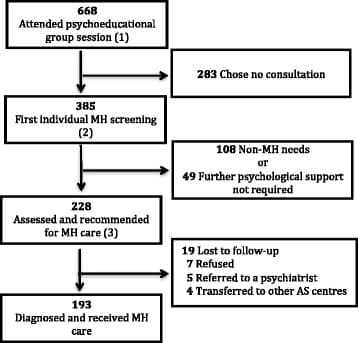
Figure 1

People who attended the psycho-educational groups could self-refer for a first individual MH screening by a psychologist (step 2 of Fig. 1) if they wished; in addition, people who were identified by AS centre staff or the psychologists as needing MH support were invited to attend the first individual MH consultation.

The psychologists used semi-structured interview to screen ASs for significant MH symptoms and those who were felt to need a MH consultation were advised to attend a follow-up MH consultation for diagnosis and treatment (step 3 of Fig. 1). At the same time, the psychologists provided self-help tools for those who had MH concerns but didn’t need a MH follow-up. An AS could also request a repeat psychological assessment at a later stage. At the completion of their therapy sessions, patients were given a clinical report, which could be presented to the asylum commission.

As part of the MSF MH programme, informative sessions on various subjects concerning mental health and ASs were offered to all the personnel working in the AS centres and local immigration authorities. Particular focus was on the effects of potentially traumatic events on human psychology and how to recognise the need for psychological support.

The two psychologists, both speaking English and French, with experience in ethnopsychiatry worked in parallel and related to the ASs taking into account the person’s cultural beliefs. Their ethnopsychiatric perspective allowed the psychologists to deconstruct their Western nosographic categories in order to interact with the cultural categories of the patient in a sort of translation.

A pool of cultural mediators was employed in order to translate the main languages of the ASs: Mandinga, Bambarà, Poular, Soninke, Wolof, Bangla, Urdu, Farsi, Arabic, Tigrigna and Somalian.

A cultural mediator is a person that shares the same geo-cultural origins with the AS and makes the communication between the health worker and the migrant possible, not just as a simple linguistic interpreter but also as a cultural facilitator. He/she acts as a bridge in between two worlds thanks to the knowledge and experience of them both.

They had all been asylum seekers themselves a few years beforehand and had been officially recognized as refugees in Italy. Hardly any of them had previously received formal training in cultural mediation but MSF pioneered a few training sessions given by a formally-trained, experienced cultural mediator. On one hand the mediators were trained and coached by the psychologists to interpret psycho-educational messages at the group sessions and they mediated in the MH consultations, while on the other hand the psychologists were coached by the cultural mediators in cultural sensitivity. Both became an inseparable assessment and treatment pair.

In order to determine MH conditions and the need for further consultations, the psychologists based their diagnostic assessment on the Diagnostic and Statistical Manual of Mental Disorders-5 [1] (DSM-5) criteria. There was cross-checking between the two psychologists regarding diagnosis only for more complex cases, given workload limitations.

A self-reported questionnaire (SRQ-20 designed by the World Health Organisation) was initially used for the individual screening, but was found to be unsuitable for the context of recently-arrived ASs from diverse ethnic and cultural backgrounds, hence it was soon abandoned.

The MSF psychologists worked in synergy with the psychiatrist of Medici per i Diritti Umani, an Italian NGO present in the same geographical area. Likewise, for socio-legal issues and informative sessions concerning adults, children and vulnerables, we combined our efforts respectively with UNHCR, Save the Children and IOM, in fact all three actors monitored arrivals at the landing harbour and, to less extent, the ASs’ centres.

Study population

All patients diagnosed with MH conditions and followed up by the psychologists from October 2014 to December 2015 were included in the study.

Measures

For all MH patients general sociodemographic characteristics plus language used for the MH consultation and whether or not there was involvement of a cultural mediator were included.

The duration of the migration journey was self-reported. Time spent residing in transit countries, even for work, was considered part of their migration journey. Duration of stay in Italy was calculated from the date of arrival in Italy documented on the immigration papers. AS’ vulnerability status (pregnant/unaccompanied minor/disable) was identified following UNHCR definitions.

For the main and secondary MH conditions, the psychologists referred to the DSM-5 Manual, except for ethnopsychiatric conditions and psychological distress in the absence of a diagnosable mental disorder.

Up to two concurrent diagnosis were recorded. The number of MH consultations required by each patient, psychopharmacological treatments and referral to a psychiatrist were also documented.

Outcomes were defined according to the psychologists’ clinical judgement (improved, recovered, unchanged condition) and information given by the staff at the AS centre (transferred to other AS centres, escaped).

Up to three potential traumatic events per person, before leaving the country of origin and during the migration journey to Italy, were self-reported. An event was defined as potentially traumatic by the psychologists if it resulted in a serious disruption, a fracture in the individual’s life. The individual traumatic events were then grouped into wider categories according to the Harvard Trauma Questionnaire. The definition of torture employed was: ‘Severe pain or suffering, whether physical or mental, inflicted for such purposes as obtaining information or a confession, exerting pressure, intimidation or humiliation’.

Similarly, up to three post-migratory living difficulties (PMLD) in the AS centres were recorded based on the difficulties reported by the patients and on the psychologists’ clinical impressions. A PMLD was defined as a severe stressor in a patient’s life.

Data sources and handling

Patients’ data were recorded by the MSF psychologists during each consultation and entered manually onto paper registers. They were then single-entered into a dedicated Excel database (Microsoft Excel, 2011) on a weekly basis. The same data source was used for initial assessment and follow up visits. Dates of arrival in Italy were obtained from the immigration police.

Statistical methods

The dataset was analysed in Excel (Microsoft Excel, 2011). Categorical variables were summarized using frequencies and proportions; medians and interquartile ranges were reported for skewed continuous variables. Sample size calculation was not required as all patients were included.

Results

AS patient flow in the MSF MH programme is shown in the Fig. 1. A total of 668 patients were exposed to the psycho-educational session led by the psychologists. From those sessions 385 presented themselves for a first MH screening visit, and the psychologists identified 232 (60% of total screened) patients with mental health symptoms for whom follow-up assessment and consultation was recommended. Finally, 193 (50% of total screened) patients were taken into care and diagnosed with mental health conditions, while the rest were either lost to follow-up, refused treatment, were referred directly to a psychiatrist or transferred to other centres.

Socio-demographic characteristics of all 385 asylum seekers screened for mental health conditions and 193 patients in care are shown in Table 1. Of the 193 in care, the majority were males (92%) had a median age of 23, and were West Africans (83%) with Nigeria, Gambia and Senegal being the most common countries of origin. In terms of civil status, 74% were single and the rest had left spouses in the country of origin. ASs with a vulnerability accounted for 12%. The duration of the journey from the country of origin to Italy was more than 12 months in a large proportion (57%). The median length of stay in Italy up to the time of MH assessment was 74 days. Cultural mediators were used during the individual MH consultations for 30% of ASs either because they did not speak English or French or because transcultural facilitation was required.
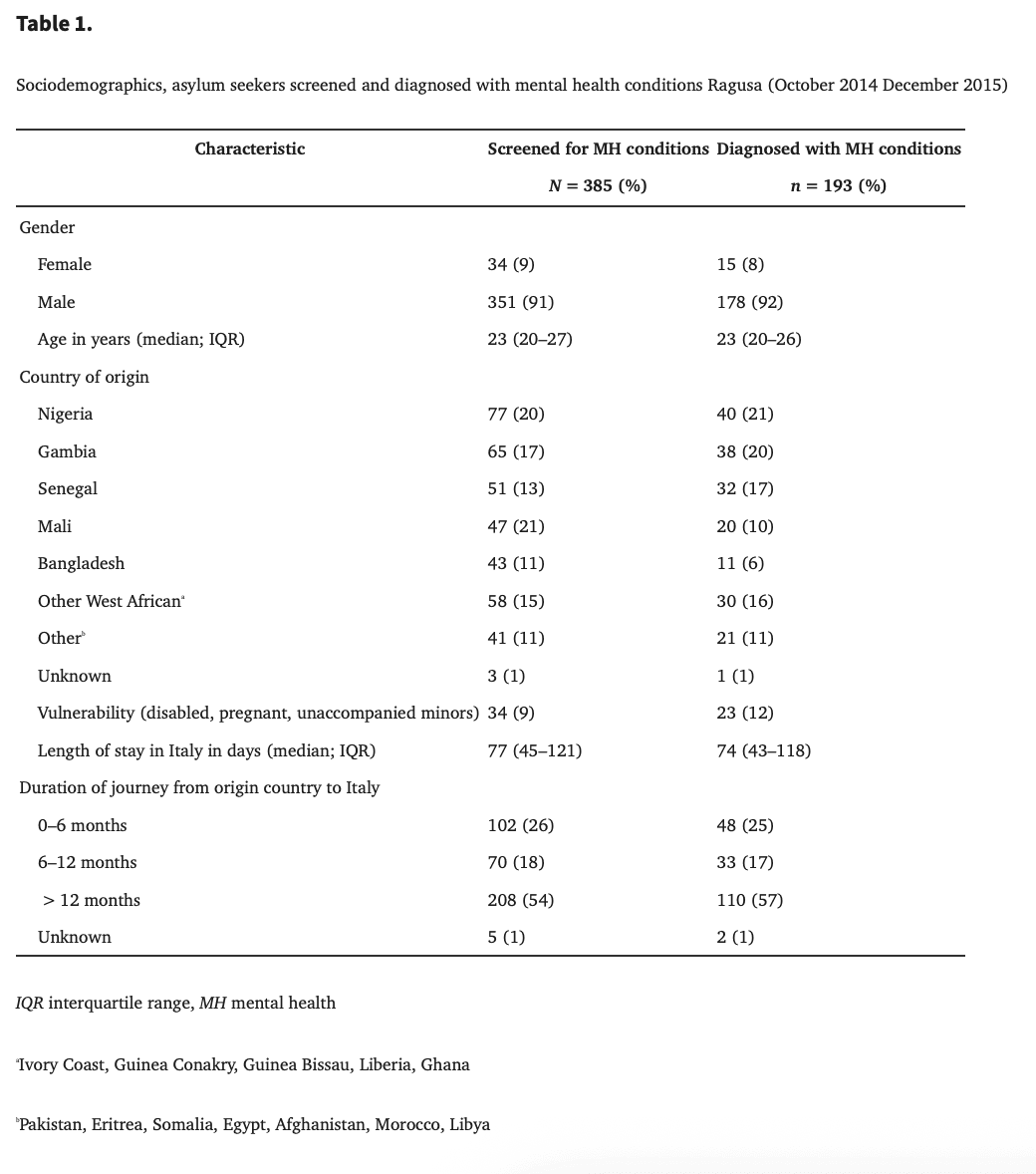
Table 1

As shown in Table 2, the most common diagnoses were PTSD (31%) and depression (20%) while two thirds of patients had at least two MH conditions. Severe depression was the diagnosis for 12% of cases and beside PTSD the other trauma- and stressor-related disorders (i.e., acute stress and adjustment disorders) were occasionally diagnosed. A referral to a psychiatrist was needed in 22% of cases and psychopharmacological treatment was used for 18%. The 36 people on treatment were taking the following medications: antidepressants (14), antipsychotics (4), anxiolytics (10) and mood stabilisers (8).
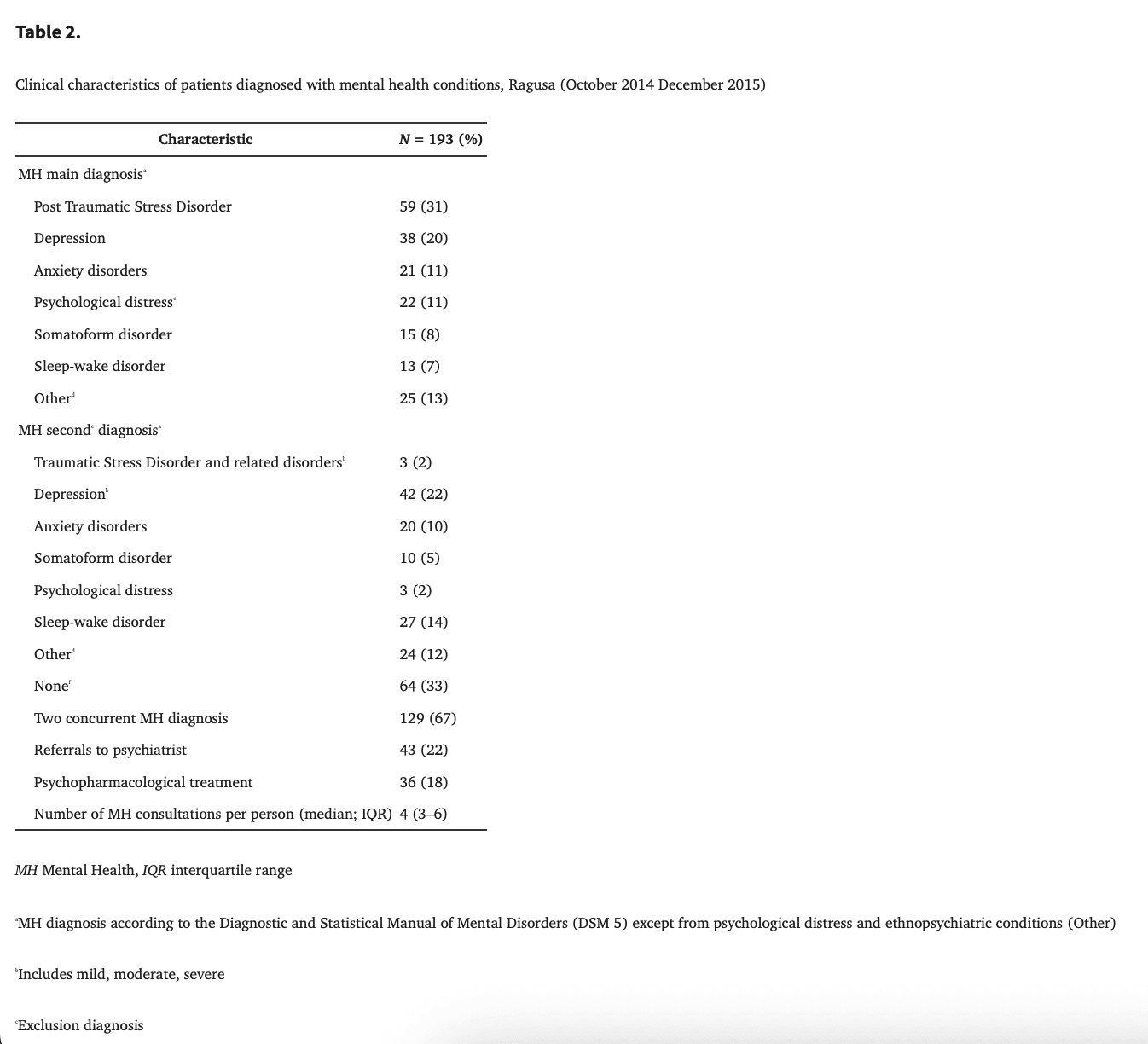
Table 2

The median number of MH consultations was four per person.

The outcomes for the 193 patients were: 130 (44%) people improved or recovered in their MH conditions, nine remained unchanged, 10 were referred to dedicated MH vulnerable centres, nine deliberately left the centres, seven went under exclusive care of a psychiatrist, four refused to continue MH care, 23 were transferred to other centres before completion of MH treatment and for one patient, the outcome was unknown.

Potentially traumatic events (PTEs) prior to departing the country of origin were experienced by a large percentage of ASs (60%), while PTEs that occurred during the migration journey were experienced by an even larger percentage (89%), in the majority of cases ASs experienced more than one event per person and very few did not experience any PTEs.

Table 3 shows the type of potentially traumatic events that occurred in the country of origin, the most common being in a combat situation or being at risk of death (23%), followed by having witnessed violence or death (15%). The most frequent event experienced during the journey was being in a combat situation or at risk of death (29%), followed by detention or kidnapping (24%). Torture was suffered by 11% of ASs at some point in their migration journey.
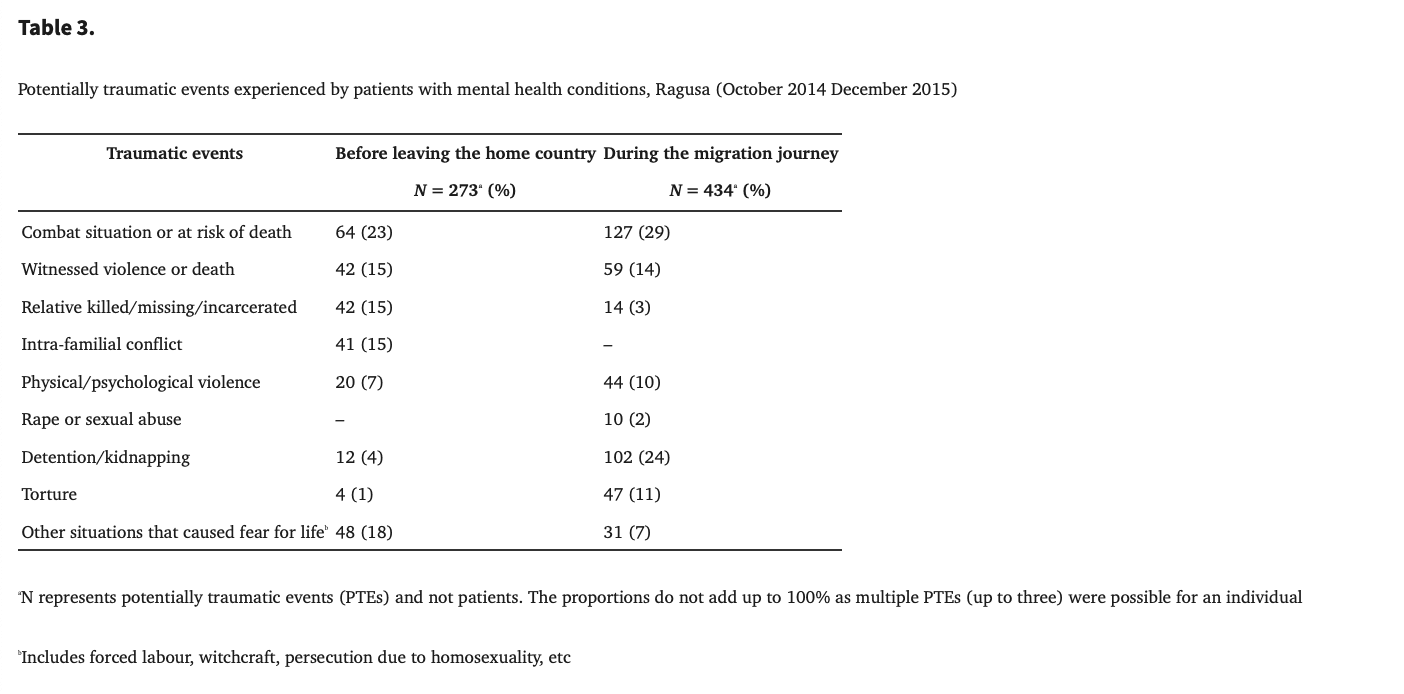
Table 3

Life in the reception centres was fraught with difficulties, as reported by 89% (Table 4). The most common types were lack of daily activities (26%), worries about home (20%), loneliness and boredom (18%), and fear of being sent home (18%). Overall, 42% of ASs reported having fear for the future in general.
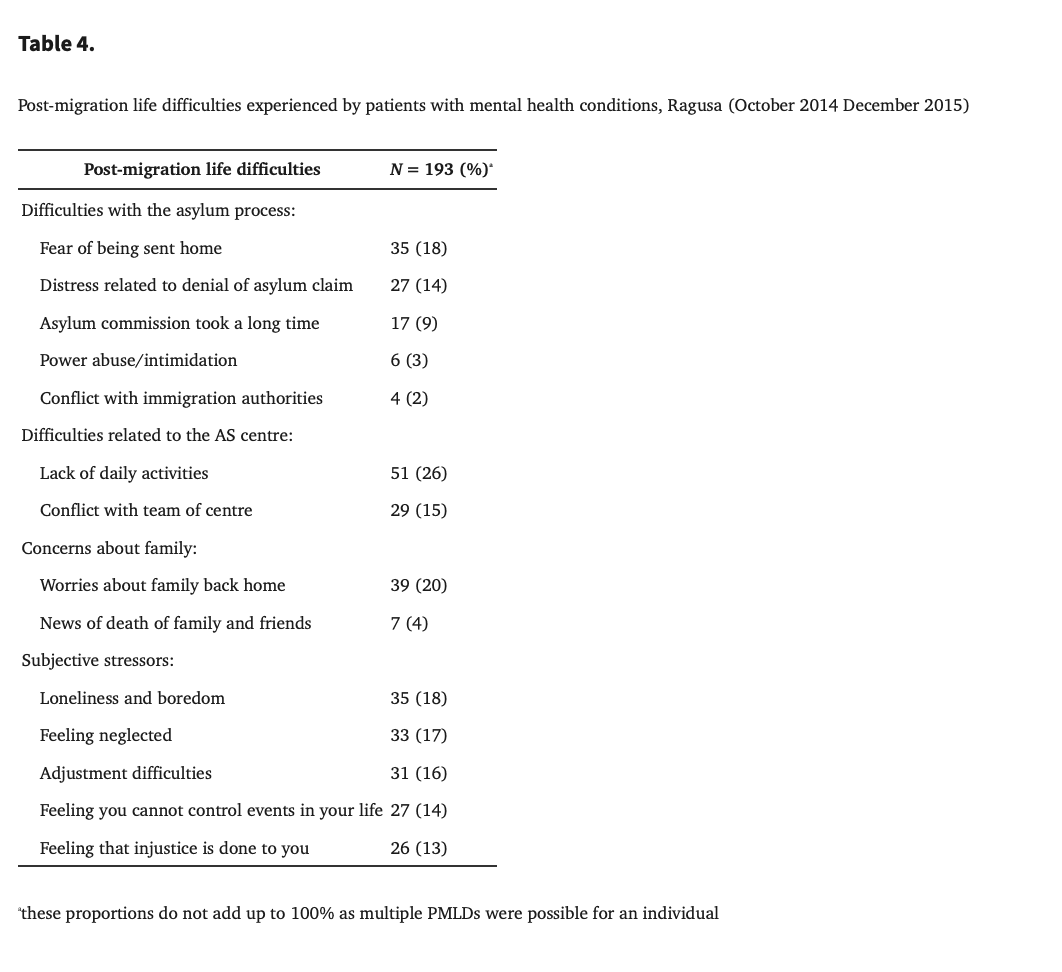
Table 4

Discussion

To our knowledge this is the first mental health study of recently-arrived ASs landing in Sicily during 2014–2015, and it reveals a high burden of mental health diagnoses amongst the selective group of ASs that was screened. It also documents high levels of potentially traumatic events experienced before and during the migration journey, and high stressors after migration. It is important as it implies that care of ASs should go beyond physical needs and anticipate psychological and mental health problems. It also may explain some behaviours of migrants leading to better understanding of their situation and improved care by receiving agencies and personnel.

The majority of the study population were young, single males from West African countries, which is representative of the majority of migrants that sought asylum in Italy in 2015. This pattern is not necessarily representative of all waves of migration to Southern Europe, that tends to be continously evolving. Different groups of migrants come from different parts of Africa, the Middle and Far East at different times. For instance, mainly Syrian and Afghan migrants transited through Greece during 2015 and the start of 2016.

These study’s AS centres hosted almost exclusively men, as many vulnerable people, such as single women, victims of the sex trade, unaccompanied minors, disabled persons, or families were directed to the few dedicated migration centres or bypassed the formal immigration reception system and transited to northern European countries or other places [9], hence were not represented in the study. Women and minors with extreme exploitation stories are a reality as documented by recent humanitarian reports conducted by the International Organisation for Migration and Save the Children. The numbers of young Nigerian women trafficked into prostitution and Egyptian unaccompanied minors are increasing every year.

This study shows a high burden of reactive mental health conditions amongst the ASs who were assessed. Post Traumatic Stress Disorder, with related disorders, and depression, were among the most common MH diagnoses. Even though the epidemiological context and demographic population were different, the diagnoses were similar to a cross-sectional study based on a heterogeneous sample drawn from the Swiss national register of asylum seekers and to a descriptive study in a British community mental health service. We saw very few pre-existing MH disorders as problems identified were related to displacement, multiple losses and difficulty in adaptation. All the psychologists who worked in the programme noted a remarkable level of resilience amongst the ASs they assessed. We are aware of the risk of overdiagnosing clinical mental disorders instead of reactive psychological distress. As already highlighted by other authors, emotional distress and psychosocial problems do not imply that the person has a mental disorder, but the large majority of epidemiological surveys of mental disorders and distress have been unsuccessful in accurately distinguishing between the two types.

The frequency of potentially traumatic events experienced was also very high and physical stigmata of abuse and violence were evident on the ASs’ bodies. The migration journey was reported as particularly dangerous in terms of risk for own life, detention and exploitation. In this study over half of the ASs had travelled for more than 12 months, which suggests that many had spent most of that time in war-torn Libya where persecution of migrants of sub-Saharan African origin is extremely frequent.

There are multiple stressors of adjustment for anyone forced to leave their homeland, but the high levels of potentially traumatic events experienced and accumulated by these migrants before and during their journey put their mental health at risk. A European working group has referred to forced migration itself as a process of grief reactions due to multiple losses, whereby the individual experiences loss of certainty and solid parameters such as a personal, social and cultural structure. These losses may be expressed differently in different cultural and linguistic contexts and can be exacerbated by potential traumas along the journey and once settled. Unfortunately, it was not possible to evaluate the impact of the traumas on these ASs’ mental health conditions given their wide range of backgrounds and experiences, as the subgroups would be too small for comparison.

Post-migratory living stressors were common, which is consistent to what has been shown in an Italian primary health care study. The same study showed that people with post-migratory living difficulties were more likely to have PTSD compared with people without difficulties. Likewise, Swedish and Australian cross-sectional studies showed that individuals with PMLDs were more likely to suffer from MH diagnoses that also included depression and anxiety. Some Dutch studies associated long asylum procedures, lack of work and family issues with significant impacts on anxiety, depressive and somatoform disorders.

This was confirmed with anecdotal evidence from the project’s psychologists who stated that the life conditions in most AS centres, with lack of prospects, social disconnection and loss of autonomy, creates a fertile ground for the previous potentially traumatic events to take shape and become symptomatic.

Unfortunately it was difficult to find combined transcultural and psychological expertise in the national health service and psychosocial institutions, where this profile rarely exists. Therefore, it was crucial to collaborate with the ethnopsychiatrist of the Italian non-governmental organisation Medici per i Diritti Umani. In meetings with the local authorities and local MH departments all efforts were invested in raising awareness of this needs and in passing on some transcultural knowledge and expertise.

Beside that, collaboration with UNHCR, IOM and Save the Children was important in complementing our MH activities with the socio-legal information and expertise that eased off distress and uncertainty the ASs lived in.

As already mentioned above, training sessions in basic mental health care were offered and given to non-specialised staff working in the AS centres. A few meetings with the local mental health department and general health authorities took place but didn’t develop into a formal relationship. Individual cases were referred with support of MSF cultural mediators in order to overcome language barriers.

Training of the asylum seekers themselves as outreach workers was never formalised but would definitely be an important strategy to adopt in future similar programmes.

There were several strengths to this study.

This study was based on data collected within routine monitoring by an MSF programme, so it likely reflected the reality on the ground and contributes to the understanding of real-life problems. The four psychologists had all training and experience in ethnopsychiatry and were sensitive to transcultural issues. The cultural mediators had all been through similar migrant journeys and their sensitivity and knowledge of language and customs, including those of Italy, helped build a trusting relationship. The sample size was quite large for ASs with MH conditions and there was a small loss to follow-up of patients once started on treatment. The study adhered to the STROBE guidelines.

However, there were some limitations.

The programme was not designed to provide a prevalence rate of MH conditions as we assessed a selective group of people, those who chose to attend the psycho-educational sessions and who subsequently self-referred to the mental health services. We also included those who showed extremes of withdrawn or other abnormal behaviours that raised concern amongst the centre-based staff and the MSF psychologists. We might have missed potential patients that did not attend psycho-educational groups or did not recognise the need for MH care. The fact that our MH service was not integrated into the wider medical programme, could have resulted in missing and underdiagnosing potentially unexplained somatic complaints. Beside that, people with severe, decompensated MH disorders were referred beforehand to the few places available in specialised centres for psychiatric ASs or to a psychiatrist so might bias the study results.

There was lack of standardisation of the screening process, MH diagnoses, case definition for traumatic events and post-migratory living difficulties. At the outset, the psychologists tried to use a screening tool, the validated SRQ-20, but soon abandoned it as it was unsuitable for such a cultural context due to the extreme variability of geographical, cultural, linguistic, social origin of the ASs, despite our attempts to have it translated by the cultural mediators. Although this tools is used worldwide, in our experience the list of questions was often misunderstood and perceived as intrusive by the ASs, causing further suffering and distress reactions, all counterproductive for building up a fruitful therapeutic relationship. Moreover, this questionnaire was conceived for self administration, which limited its utility due to illiteracy among the ASs. In the absence of an alternative standardised screening tool for such a context, the psychologists continued screening for MH symptoms using their clinical judgement.

No structured psychiatric clinical instrument, such as the Structured Clinical Interview (SCID), was used; a semi-structured interview format was adopted instead.

There was also lack of diagnostic standardisation and inter-rating reliability amongst the four psychologists. This was mainly due to operational constraints related to workload, limited time and human resources, as well as geographical spread. Trying to translate ethnic-based conditions into western-based mental health categories (DSM-5) might have resulted in loss of some of their meaning and details, but such a standard reference was required by MSF and the local asylum authorities.

Potentially traumatic events were not systematically explored, but recorded just when spontaneously reported by the patient, likewise, post-migratory living difficulties were recorded only when relevant to the patient’s MH conditions, therefore they might not be complete.

Organizational constraints in such a programme were considerable: besides the clinical work done in parallel, the two clinical psychologists had to be versatile in organising the group and individual MH sessions with specific cultural mediators, travelling several hundreds of kilometres a week across the Sicilian countryside, emotionally debriefing the personnel working at the AS centres and more. Ideally, every patient would benefit from the presence of a cultural mediator during their sessions in order to optimise the transcultural understanding but that wasn’t always feasible due to limited human resources, logistics and time. Moreover, the lack of specific training for this emerging professional category makes its technical competencies quite uneven.

There are a number of programmatic issues raised by the study.

First, the situation of newly-arrived ASs in Italy is not the classical humanitarian emergency but the constant influx of thousands of migrants per week and their reception raises prolonged and repeated humanitarian needs. Many of the humanitarian core principles such as the participation of affected population, building on available resources, a multi-layered support and improvement of the mental wellbeing are valid in such a context and should follow the leading humanitarian guidelines.

Second, the important burden of MH conditions and potentially traumatic events suggests that Italian authorities should develop a reception system that treats people with respect of their dignity and supports their resilience. Most migrants have remarkable resilience so public health authorities and MH workers must work on establishing the conditions that promote such resilience. MH care that recognises individuals with diverse geographical, cultural, gender, social, demographical origins, should be integrated with the other levels of the reception system. All people involved in the reception system, from the police officers to the medical personnel should be trained to work and relate with culturally diverse populations. Cultural mediators play a key role in acting as a bridge.

Irrespective from the status of international/humanitarian protection the ASs will receive or will be refused, we should not wait to set up activities that ease their distress and eventually reduce the burden on society.

Third, MH screening should be part of the general health assessment for ASs soon after their arrival. To facilitate this, developing cultural awareness of the degree of trauma ASs might have experienced is important. The role of cultural mediators appears to be crucial to achieve effective screening, the MSF programme could not have functioned without them.

Fourth, there needs to be more coordination and collaboration between the various non-governmental organisations, United Nations agencies and local health authorities to train and empower local MH actors and lay-people.

Conclusion

This first study on mental health problems in a group of recently-arrived ASs in Sicily showed that mental health conditions and potentially traumatic events were common and important. Despite limitations, it suggests that mental health and psychosocial support should be integrated into European medical services provided for ASs on arrival and while awaiting asylum claims. This would address an important and invisible component of ASs’ health needs, fulfill humanitarian obligations, and reduce the burden of assimilation on receiving countries.

Open Article as PDF

Abstract

Background In 2015, Italy was the second most common point of entry for asylum seekers into Europe after Greece. The vast majority embarked from war-torn Libya; 80,000 people claimed asylum that year. Their medical conditions were assessed on arrival but their mental health needs were not addressed in any way, despite the likelihood of serious trauma before and during migration. Médecins sans Frontières (MSF), in agreement with the Italian Ministry of Health, provided mental health (MH) assessment and care for recently-landed asylum seekers in Sicily. This study documents mental health conditions, potentially traumatic events and post-migratory living difficulties experienced by asylum seekers in the MSF programme in 2014–15.

Methods All asylum seekers transiting the 15 MSF-supported centres were invited to a psycho-educational session. A team of psychologists and cultural mediators then provided assessment and care for those identified with MH conditions. Potentially traumatic events experienced before and during the journey, as well as post-migratory living difficulties, were recorded. All those diagnosed with MH conditions from October 2014 to December 2015 were included in the study.

Results Among 385 individuals who presented themselves for a MH screening during the study period, 193 (50%) were identified and diagnosed with MH conditions. Most were young, West African males who had left their home-countries more than a year prior to arrival. The most common MH conditions were post traumatic stress disorder (31%) and depression (20%). Potentially traumatic events were experienced frequently in the home country (60%) and during migration (89%). Being in a combat situation or at risk of death, having witnessed violence or death and having been in detention were the main traumas. Lack of activities, worries about home, loneliness and fear of being sent home were the main difficulties at the AS centres.

Conclusion MH conditions, potentially traumatic events and post-migratory living difficulties are commonly experienced by recently-arrived ASs, this study suggests that mental health and psychosocial support and improved living circumstances should be integrated into European medical and social services provided by authorities in order to fulfil their humanitarian responsibility and reduce the burden of assimilation on receiving countries.

Background

In 2015, 65.3 million people worldwide were forced to leave their homes due to violence, conflict, and human rights issues. This number has been increasing steadily. Italy became a primary entry point into Europe for individuals escaping war and economic hardship, second only to Greece. Most migrants reached Italy by crossing the Mediterranean Sea on crowded boats and small dinghies from Libya and other North African countries.

The nationalities of migrants entering Europe have changed over time, influenced by ongoing conflicts, political instability, human trafficking, and shifts in migration routes. A common factor among these migrants is their psychological vulnerability. This vulnerability often stems from past trauma, torture, and poor living conditions in detention or refugee camps before they reached Europe. Additionally, migrants may experience stress from social isolation, concerns about family members in their home countries, and the complex, lengthy asylum processes in host nations.

Many migrants arriving in Italy choose to remain and formally apply for asylum, thus entering the Italian immigration system. Asylum seekers (ASs) are defined as individuals who have sought international protection but have not yet had their claims for refugee status decided.

Italy's immigration reception system is not unified, as the government has hired private organizations to provide services. This has led to a widespread business in Sicily offering services to ASs, with limited oversight from Italian authorities. While national health services are theoretically free for ASs, practical access is often restricted. This is particularly true for mental health (MH) care services, where language barriers and a lack of understanding of different cultures pose significant challenges.

In 2015, Italian AS centers hosted 99,096 ASs, with 19% located in Sicily. The Ragusa province in Sicily housed approximately 600 people in 15 AS centers, known as Centri di accoglienza straordinaria. However, the Ministry of Health did not provide precise data for these centers.

Most ASs in Ragusa province arrived through Pozzallo harbor. This group included men, women, children, unaccompanied minors, and older people. In 2015, out of 55 arrivals, 49 were from Libya. Libya has recently been a place where people from sub-Saharan Africa face persecution, violence, and abuse, as reported by ASs and documented by the North Africa Mixed Migration Task Force.

For the past two decades, Médecins Sans Frontières (MSF) has provided medical care at initial reception centers in landing harbors. MSF doctors and nurses, along with cultural mediators, have observed a wide range of health issues among arriving migrants. Scabies, burns, and wounds were the most frequent physical conditions. These injuries reflect detention, dangerous journeys across deserts and in sun-exposed rubber dinghies. In several cases, unwanted pregnancies, multiple limb fractures, and bullets lodged under the skin indicated violence experienced in Libya and during the journey.

From July 2014 to February 2016, MSF, in agreement with the local Ministry of Health, offered psychological support to ASs in these 15 centers.

Extensive research over the last twenty years has explored migrants and mental health conditions. Many studies focus on the occurrence rates of MH conditions and related risk factors, with Post Traumatic Stress Disorder (PTSD) and depression being the most frequently studied disorders.

Prevalence rates for PTSD and depression can vary widely, from 0–99% and 3–86% respectively, largely due to significant differences between studies. Two comprehensive reviews by Steel and Fazel found that this variability depends on methodological factors such as sample size, sampling methods, and types of traumatic events, as well as substantive factors like the time since the conflict and the country of origin. The prevalence rate depends on how much the population has been exposed to identified risk factors. These reviews indicated that the most reliable studies found a median prevalence of 15–20% for both PTSD and depression.

Many other MH conditions, such as unexplained physical symptoms, anxiety, psychosis, and harmful use of drugs and alcohol, are more common in migrants than in the general population. However, for drug and alcohol misuse, the evidence is limited, and more high-quality research is needed.

Increased exposure to potentially traumatic experiences and stress after migration are the most common factors linked to higher rates of MH disorders in several studies. A systematic review by Hassan, focusing on the mental health and well-being of Syrians affected by armed conflict, categorized MH problems into three broad groups: worsening of existing MH disorders, new problems caused by conflict, displacement, and multiple losses, and issues related to adapting to the post-emergency situation.

There are also significant differences between refugees and asylum seekers. Refugees have officially received international protection, while asylum seekers have not yet had their status recognized and may never receive it. Asylum seekers often have a more recent history of potentially traumatic experiences and have not yet established a social network in the host country, leading to greater uncertainty about their future.

A study comparing these two groups among Afghans, Iraqis, and Somalis in the Netherlands found that more asylum seekers than refugees reported poor general health and more symptoms of PTSD, depression, and anxiety.

Most studies on asylum seekers were conducted in northern European countries and focused on people from the Middle East. There is less written about Italy, where many sub-Saharan Africans tend to seek asylum. However, one Italian study by Aragona et al. examined the impact of post-migration living difficulties on physical symptoms in 101 migrants using a primary care service.

Additionally, almost all research has focused on "settled" migrants rather than those who have recently arrived in Europe. The mental health needs of newly arrived asylum seekers are likely different from those of a settled population. It is important to document the extent of psychological issues so that host countries can effectively manage a large influx of people with potentially traumatic histories.

Therefore, this study aimed to describe the mental health conditions identified and traumas reported in a group of asylum seekers shortly after their arrival in 15 MSF-supported centers in Sicily, Italy. Specific goals included describing the frequency and types of: 1) MH conditions, 2) potentially traumatic events experienced by ASs before leaving their home country and during their migration journey, and 3) post-migration living difficulties experienced in Italy.

Methods

Study Design

This was a descriptive, cross-sectional study that used data collected during routine program activities.

Setting

General

Migrants who seek asylum in Italy are housed in facilities managed by private companies chosen by the government. These companies are expected to provide housing, food, Italian language classes, cultural mediators, socio-legal assistance, and access to healthcare. Asylum seekers stay in these facilities until their application for humanitarian or international protection is finalized. This process is very bureaucratic and can take from six months to over a year, or even longer if asylum is denied and an appeal is made. Healthcare in Italy is free and provided by the National Health Service (SSN), theoretically available to all asylum seekers.

Specific

In Ragusa province, asylum seeker centers are often located in remote rural areas. While housing and food are consistently provided, access to Italian language classes, socio-legal assistance, and healthcare is very limited or entirely absent. This situation leads to dependency and uncertainty for asylum seekers. There is a notable lack of access to psychological care, as psychologists, counselors, or cultural mediators (to a lesser extent) are rarely employed in these centers, despite this being part of the center's official duties.

MSF Psychological Assessment and Care

To address mental health needs in the asylum seeker centers in Ragusa province, MSF psychologists trained the general staff on how forced migration affects the psychology of asylum seekers and how to recognize mental health symptoms.

As part of the MSF mental health service, psychologists provided psychological care using a step-by-step approach. This began with psycho-educational group sessions led by two clinical psychologists and cultural mediators at all asylum seeker centers. Topics discussed included MSF’s humanitarian role, basic information about the asylum process in Italy, the effects of traumatic events on mental health, the role of psychologists, and how asylum seekers could access mental health support. These group sessions aimed to identify psychologically vulnerable asylum seekers and strengthen their coping skills and resilience. They were offered whenever new arrivals came to the centers.

Individuals who attended the psycho-educational groups could request an initial individual mental health screening with a psychologist if they wished. Additionally, people identified by center staff or psychologists as needing mental health support were invited for this first individual consultation.

Psychologists used a semi-structured interview to screen asylum seekers for significant mental health symptoms. Those who appeared to need further mental health support were advised to attend a follow-up consultation for diagnosis and treatment. At the same time, psychologists provided self-help tools for those with mental health concerns but no need for immediate follow-up. An asylum seeker could also request another psychological assessment later. After completing therapy sessions, patients received a clinical report, which they could present to the asylum commission.

As part of the MSF mental health program, informative sessions on various mental health topics for asylum seekers were offered to all staff working in the centers and local immigration authorities. A particular focus was placed on the effects of traumatic events on human psychology and how to recognize the need for psychological support.

The two psychologists, both fluent in English and French, had experience in ethnopsychiatry. They worked collaboratively and interacted with asylum seekers, considering their cultural beliefs. Their ethnopsychiatric perspective allowed them to adapt Western diagnostic categories to engage with the patients' cultural understanding, in a process of translation.

A group of cultural mediators was employed to translate the main languages of the asylum seekers, including Mandinga, Bambarà, Poular, Soninke, Wolof, Bangla, Urdu, Farsi, Arabic, Tigrigna, and Somalian.

A cultural mediator is someone who shares the same cultural background as the asylum seeker. They facilitate communication between the healthcare worker and the migrant, not just as a linguistic interpreter but also as a cultural facilitator. They act as a bridge between two cultures through their knowledge and experience of both.

All cultural mediators had been asylum seekers themselves a few years prior and had officially been recognized as refugees in Italy. Few had received formal training in cultural mediation previously, but MSF initiated training sessions led by an experienced cultural mediator. On one hand, the mediators were trained and coached by psychologists to interpret psycho-educational messages in group sessions and assisted in mental health consultations. On the other hand, the psychologists were coached by the cultural mediators on cultural sensitivity. Both became an essential assessment and treatment team.

To determine mental health conditions and the need for further consultations, psychologists based their diagnostic assessments on the Diagnostic and Statistical Manual of Mental Disorders-5 (DSM-5) criteria. Due to workload limitations, the two psychologists cross-checked diagnoses only for more complex cases.

A self-reported questionnaire (SRQ-20, designed by the World Health Organization) was initially used for individual screening. However, it proved unsuitable for newly arrived asylum seekers from diverse ethnic and cultural backgrounds and was soon discontinued.

MSF psychologists collaborated with the psychiatrist from Medici per i Diritti Umani, an Italian non-governmental organization active in the same region. Similarly, for socio-legal issues and informational sessions concerning adults, children, and vulnerable individuals, efforts were combined with UNHCR, Save the Children, and IOM. These three organizations monitored arrivals at the landing harbor and, to a lesser extent, at the asylum seeker centers.

Study Population

This study included all patients diagnosed with mental health conditions who were followed by psychologists from October 2014 to December 2015.

Measures

For all mental health patients, general demographic information was collected, including the language used during consultations and whether a cultural mediator was involved.

The length of the migration journey was self-reported. Time spent in transit countries, even for work, was included as part of their migration journey. The duration of their stay in Italy was calculated from the arrival date documented on immigration papers. Asylum seekers' vulnerability status (e.g., pregnant, unaccompanied minor, disabled) was identified using UNHCR definitions.

For primary and secondary mental health conditions, psychologists used the DSM-5 Manual, except for ethnopsychiatric conditions and psychological distress without a diagnosable mental disorder.

Up to two concurrent diagnoses were recorded. The number of mental health consultations each patient required, psychopharmacological treatments, and referrals to a psychiatrist were also documented.

Outcomes were determined by the psychologists' clinical judgment (improved, recovered, unchanged condition) and information from the asylum center staff (transferred to other centers, escaped).

Up to three potentially traumatic events per person, experienced before leaving their country of origin and during their journey to Italy, were self-reported. An event was considered potentially traumatic by the psychologists if it caused a significant disruption or break in the individual's life. These individual traumatic events were then grouped into broader categories based on the Harvard Trauma Questionnaire. Torture was defined as "severe pain or suffering, whether physical or mental, inflicted for such purposes as obtaining information or a confession, exerting pressure, intimidation or humiliation."

Similarly, up to three post-migration living difficulties (PMLDs) in the asylum centers were recorded, based on difficulties reported by patients and the psychologists' clinical impressions. A PMLD was defined as a severe stressor in a patient's life.

Data Sources and Handling

Patient data were recorded by MSF psychologists during each consultation and manually entered into paper registers. This information was then entered weekly into a dedicated Excel database (Microsoft Excel, 2011). The same data source was used for initial assessments and follow-up visits. Dates of arrival in Italy were obtained from immigration police records.

Statistical Methods

The dataset was analyzed using Excel (Microsoft Excel, 2011). Categorical variables were summarized with frequencies and proportions. Medians and interquartile ranges were reported for continuous variables that were not evenly distributed. A sample size calculation was not needed as all eligible patients were included.

Results

The flow of asylum seeker patients through the MSF mental health program is shown in Figure 1. A total of 668 patients participated in psycho-educational sessions led by psychologists. Of these, 385 sought an initial mental health screening. Psychologists identified 232 (60% of those screened) patients with mental health symptoms who were recommended for follow-up assessment and consultation. Ultimately, 193 (50% of those screened) patients received care and were diagnosed with mental health conditions. The remaining individuals were either lost to follow-up, refused treatment, were referred directly to a psychiatrist, or transferred to other centers.

Table 1 displays the demographic characteristics of all 385 asylum seekers screened for mental health conditions and the 193 patients who received care. Among the 193 patients in care, most were male (92%) with a median age of 23. The majority were West Africans (83%), with Nigeria, Gambia, and Senegal being the most common countries of origin. Regarding marital status, 74% were single, and the rest had left spouses in their home countries. Asylum seekers with a recognized vulnerability accounted for 12% of the group. The journey from their country of origin to Italy lasted over 12 months for a large proportion (57%). The median length of stay in Italy up to the time of mental health assessment was 74 days. Cultural mediators were utilized during individual mental health consultations for 30% of asylum seekers, either due to language barriers (not speaking English or French) or the need for transcultural facilitation.

As presented in Table 2, the most common diagnoses were PTSD (31%) and depression (20%). Two-thirds of patients had at least two mental health conditions. Severe depression was diagnosed in 12% of cases, and other trauma- and stress-related disorders (e.g., acute stress and adjustment disorders) were occasionally diagnosed in addition to PTSD. A referral to a psychiatrist was needed for 22% of cases, and psychopharmacological treatment was used for 18%. The 36 individuals receiving treatment were taking the following medications: antidepressants (14), antipsychotics (4), anxiolytics (10), and mood stabilizers (8).

The median number of mental health consultations per person was four.

Outcomes for the 193 patients were as follows: 130 (44%) individuals improved or recovered from their mental health conditions, nine remained unchanged, 10 were referred to specialized mental health centers for vulnerable individuals, nine voluntarily left the centers, seven received exclusive care from a psychiatrist, four refused to continue mental health care, 23 were transferred to other centers before completing mental health treatment, and the outcome for one patient was unknown.

A large percentage of asylum seekers (60%) experienced potentially traumatic events (PTEs) before leaving their country of origin. An even larger percentage (89%) experienced PTEs during their migration journey. In most cases, asylum seekers experienced more than one event, and very few reported no PTEs.

Table 3 displays the types of potentially traumatic events that occurred in the country of origin. The most common was being in a combat situation or at risk of death (23%), followed by witnessing violence or death (15%). The most frequent event experienced during the journey was being in a combat situation or at risk of death (29%), followed by detention or kidnapping (24%). Torture was endured by 11% of asylum seekers at some point during their migration journey.

Life in the reception centers presented many difficulties, reported by 89% (Table 4). The most common issues included a lack of daily activities (26%), worries about family back home (20%), loneliness and boredom (18%), and fear of being sent back (18%). Overall, 42% of asylum seekers expressed a general fear for their future.

Discussion

This study is, to the best of our knowledge, the first mental health study of recently arrived asylum seekers in Sicily between 2014 and 2015. It reveals a significant burden of mental health diagnoses among the specific group of asylum seekers screened. It also documents high levels of potentially traumatic events experienced before and during migration, as well as significant stressors after migration. This is important because it implies that care for asylum seekers should extend beyond physical needs to anticipate psychological and mental health problems. The findings may also help explain some behaviors of migrants, leading to a better understanding of their situation and improved care from receiving agencies and personnel.

The study population consisted mainly of young, single males from West African countries, which is typical of most migrants seeking asylum in Italy in 2015. This pattern does not necessarily represent all migration waves to Southern Europe, which are constantly changing. Different groups of migrants arrive from various parts of Africa, the Middle East, and the Far East at different times. For instance, mainly Syrian and Afghan migrants passed through Greece in 2015 and early 2016.

The asylum seeker centers in this study primarily hosted men. Many vulnerable individuals, such as single women, victims of sex trafficking, unaccompanied minors, disabled persons, or families, were directed to specialized migration centers or bypassed the formal immigration reception system, moving on to northern European countries or other locations. Therefore, these groups were not represented in the study. Reports by the International Organization for Migration and Save the Children document the reality of women and minors with extreme exploitation histories. The number of young Nigerian women trafficked for prostitution and Egyptian unaccompanied minors increases annually.

This study indicates a high burden of mental health conditions resulting from current circumstances among the assessed asylum seekers. Post Traumatic Stress Disorder, along with related disorders, and depression were among the most common mental health diagnoses. Although the epidemiological context and demographic populations differed, the diagnoses were similar to those found in a cross-sectional study of a varied sample from the Swiss national register of asylum seekers and a descriptive study in a British community mental health service. Very few pre-existing mental health disorders were observed, as identified problems were linked to displacement, multiple losses, and difficulties adapting. All psychologists involved in the program noted a remarkable level of resilience among the asylum seekers they assessed. We recognize the risk of over-diagnosing clinical mental disorders instead of reactive psychological distress. As other authors have noted, emotional distress and psychosocial problems do not necessarily mean a person has a mental disorder, but most epidemiological surveys of mental disorders and distress have struggled to accurately differentiate between the two.

The frequency of potentially traumatic events experienced was also very high, and physical signs of abuse and violence were evident on the bodies of asylum seekers. The migration journey was reported as particularly dangerous in terms of risks to one's life, detention, and exploitation. In this study, over half of the asylum seekers had traveled for more than 12 months, suggesting that many spent most of that time in war-torn Libya, where persecution of sub-Saharan African migrants is extremely common.

There are multiple stressors involved in adjusting for anyone forced to leave their homeland. However, the high levels of potentially traumatic events experienced and accumulated by these migrants before and during their journey place their mental health at significant risk. A European working group has described forced migration itself as a process of grief reactions stemming from multiple losses, where individuals lose certainty and stable structures such as personal, social, and cultural frameworks. These losses may be expressed differently in various cultural and linguistic contexts and can be intensified by potential traumas along the journey and after settling. Unfortunately, it was not possible to evaluate the specific impact of these traumas on the mental health conditions of these asylum seekers, given their wide range of backgrounds and experiences, as the subgroups would be too small for meaningful comparison.

Post-migration living stressors were common, consistent with findings from an Italian primary healthcare study. That study also showed that people with post-migration living difficulties were more likely to have PTSD than those without such difficulties. Similarly, Swedish and Australian cross-sectional studies indicated that individuals with PMLDs were more likely to suffer from mental health diagnoses, including depression and anxiety. Some Dutch studies linked long asylum procedures, lack of work, and family issues to significant impacts on anxiety, depressive, and somatoform disorders.

This was supported by anecdotal evidence from the project's psychologists, who noted that living conditions in most asylum seeker centers—characterized by a lack of prospects, social isolation, and loss of independence—create an environment where previous traumatic events can resurface and become symptomatic.

Unfortunately, it was challenging to find combined transcultural and psychological expertise within the national health service and psychosocial institutions, where such profiles are rare. Therefore, collaboration with the ethnopsychiatrist from the Italian non-governmental organization Medici per i Diritti Umani was crucial. During meetings with local authorities and mental health departments, efforts were made to raise awareness of these needs and to share some transcultural knowledge and expertise.

Additionally, collaboration with UNHCR, IOM, and Save the Children was important for supplementing mental health activities with socio-legal information and expertise. This helped alleviate distress and uncertainty for asylum seekers.

As previously mentioned, training sessions in basic mental health care were offered to non-specialized staff working in the asylum seeker centers. A few meetings took place with the local mental health department and general health authorities, but these did not evolve into a formal working relationship. Individual cases were referred with the support of MSF cultural mediators to overcome language barriers.

Formal training for asylum seekers themselves to become outreach workers was never established but would be an important strategy for future similar programs.

This study had several strengths.

The study relied on data collected through routine monitoring by an MSF program, which likely reflects real-world problems and contributes to understanding practical issues. The four psychologists involved all had training and experience in ethnopsychiatry, making them sensitive to transcultural issues. The cultural mediators had personal experiences as migrants, and their sensitivity and knowledge of both their own cultures and Italian customs helped build trusting relationships. The sample size for asylum seekers with mental health conditions was quite large, and there was a low rate of patients lost to follow-up once treatment began. The study adhered to STROBE guidelines.

However, there were some limitations.

The program was not designed to determine the prevalence rate of mental health conditions, as it assessed a specific group of people: those who chose to attend psycho-educational sessions and then self-referred to mental health services. It also included individuals who displayed extreme withdrawal or other unusual behaviors that concerned center staff and MSF psychologists. The study may have missed potential patients who did not attend psycho-educational groups or did not recognize their need for mental health care. The fact that the mental health service was not integrated into the broader medical program might have led to missed or under-diagnosed unexplained physical complaints. Furthermore, individuals with severe, uncontrolled mental health disorders were referred in advance to the few available specialized psychiatric centers for asylum seekers or to a psychiatrist, which could have skewed the study results.

There was a lack of standardized procedures for the screening process, mental health diagnoses, and case definitions for traumatic events and post-migration living difficulties. Initially, psychologists attempted to use a validated screening tool, the SRQ-20, but quickly abandoned it. The tool was found unsuitable for this cultural context due to the extreme variety of geographical, cultural, linguistic, and social backgrounds of the asylum seekers, despite attempts to have it translated by cultural mediators. While this tool is used worldwide, in our experience, the questions were often misunderstood and perceived as intrusive by asylum seekers, causing further suffering and distress. This was counterproductive to building a productive therapeutic relationship. Moreover, this questionnaire was designed for self-administration, limiting its usefulness due to illiteracy among asylum seekers. Without an alternative standardized screening tool for this context, psychologists continued to screen for mental health symptoms using their clinical judgment.

No structured psychiatric clinical instrument, such as the Structured Clinical Interview (SCID), was used. Instead, a semi-structured interview format was adopted.

There was also a lack of consistency in diagnostic methods and inter-rater reliability among the four psychologists. This was primarily due to operational constraints related to workload, limited time and human resources, and geographical distribution. Attempting to translate ethnic-based conditions into Western-based mental health categories (DSM-5) may have resulted in a loss of some meaning and detail. However, such a standard reference was required by MSF and local asylum authorities.

Potentially traumatic events were not systematically explored but were recorded only when spontaneously reported by the patient. Similarly, post-migration living difficulties were recorded only when relevant to the patient’s mental health conditions, so they may not be comprehensive.

Organizational challenges in such a program were considerable. In addition to parallel clinical work, the two clinical psychologists had to be adaptable in organizing group and individual mental health sessions with specific cultural mediators, traveling hundreds of kilometers weekly across the Sicilian countryside, and providing emotional support to staff at the asylum seeker centers, among other tasks. Ideally, every patient would benefit from the presence of a cultural mediator during their sessions to optimize transcultural understanding, but this was not always feasible due to limited human resources, logistics, and time. Furthermore, the lack of specific training for this emerging professional category results in varied technical competencies.

The study raises several programmatic issues.

First, the situation of newly arrived asylum seekers in Italy is not a typical humanitarian emergency. However, the continuous arrival of thousands of migrants weekly and their reception creates prolonged and repeated humanitarian needs. Many core humanitarian principles, such as affected population participation, leveraging available resources, multi-layered support, and improving mental well-being, are relevant in this context and should follow leading humanitarian guidelines.

Second, the significant burden of mental health conditions and potentially traumatic events suggests that Italian authorities should develop a reception system that treats people with dignity and supports their resilience. Most migrants show remarkable resilience, so public health authorities and mental health workers must work to establish conditions that promote this resilience. Mental health care that recognizes individuals with diverse geographical, cultural, gender, social, and demographic backgrounds should be integrated into all levels of the reception system. All personnel involved in the reception system, from police officers to medical staff, should be trained to work with and relate to culturally diverse populations. Cultural mediators play a critical role in bridging these differences.

Regardless of whether asylum seekers receive international or humanitarian protection, action should be taken immediately to alleviate their distress and ultimately reduce the burden on society.

Third, mental health screening should be part of the general health assessment for asylum seekers soon after their arrival. To facilitate this, it is important to develop cultural awareness regarding the extent of trauma asylum seekers may have experienced. The role of cultural mediators appears crucial for effective screening; the MSF program could not have operated without them.

Fourth, there is a need for greater coordination and collaboration among various non-governmental organizations, United Nations agencies, and local health authorities to train and empower local mental health professionals and community members.

Conclusion

This initial study on mental health problems in a group of recently arrived asylum seekers in Sicily revealed that mental health conditions and potentially traumatic events were common and significant. Despite its limitations, the study suggests that mental health and psychosocial support should be integrated into European medical services provided to asylum seekers upon arrival and while their asylum claims are pending. This would address an important and often overlooked component of asylum seekers' health needs, fulfill humanitarian obligations, and reduce the burden of integration on host countries.

Open Article as PDF

Abstract

Background In 2015, Italy was the second most common point of entry for asylum seekers into Europe after Greece. The vast majority embarked from war-torn Libya; 80,000 people claimed asylum that year. Their medical conditions were assessed on arrival but their mental health needs were not addressed in any way, despite the likelihood of serious trauma before and during migration. Médecins sans Frontières (MSF), in agreement with the Italian Ministry of Health, provided mental health (MH) assessment and care for recently-landed asylum seekers in Sicily. This study documents mental health conditions, potentially traumatic events and post-migratory living difficulties experienced by asylum seekers in the MSF programme in 2014–15.

Methods All asylum seekers transiting the 15 MSF-supported centres were invited to a psycho-educational session. A team of psychologists and cultural mediators then provided assessment and care for those identified with MH conditions. Potentially traumatic events experienced before and during the journey, as well as post-migratory living difficulties, were recorded. All those diagnosed with MH conditions from October 2014 to December 2015 were included in the study.

Results Among 385 individuals who presented themselves for a MH screening during the study period, 193 (50%) were identified and diagnosed with MH conditions. Most were young, West African males who had left their home-countries more than a year prior to arrival. The most common MH conditions were post traumatic stress disorder (31%) and depression (20%). Potentially traumatic events were experienced frequently in the home country (60%) and during migration (89%). Being in a combat situation or at risk of death, having witnessed violence or death and having been in detention were the main traumas. Lack of activities, worries about home, loneliness and fear of being sent home were the main difficulties at the AS centres.

Conclusion MH conditions, potentially traumatic events and post-migratory living difficulties are commonly experienced by recently-arrived ASs, this study suggests that mental health and psychosocial support and improved living circumstances should be integrated into European medical and social services provided by authorities in order to fulfil their humanitarian responsibility and reduce the burden of assimilation on receiving countries.

Background

In 2015, 65.3 million people worldwide were forced to leave their homes due to conflict, violence, or human rights issues. Italy became a main entry point into Europe for many of these individuals, most of whom crossed the Mediterranean Sea from North Africa in overcrowded boats. These migrants often suffered psychological distress from trauma, torture, or poor living conditions in detention or refugee camps. Once in Europe, they might also experience stress from social isolation, concerns about family, and complex asylum procedures.

Most migrants who arrived in Italy sought asylum there, entering the Italian immigration system. Asylum seekers are individuals seeking international protection whose claims for refugee status have not yet been decided. Italy's system for receiving asylum seekers is fragmented, with many services outsourced to private organizations, especially in Sicily. While healthcare from national services is theoretically free, practical access is often limited, particularly for mental health services, due to language barriers and a lack of cultural understanding. In 2015, Sicily hosted 19% of Italy's 99,096 asylum seekers, with about 600 in the Ragusa province.

Médecins Sans Frontières (MSF) provided medical care at landing harbors for two decades, observing a wide range of physical conditions such as scabies, burns, and wounds, which were signs of detention and dangerous journeys. Some migrants also experienced unwanted pregnancies, fractures, and bullet wounds, showing the violence they faced in Libya and during their travels. From July 2014 to February 2016, MSF offered psychological support to asylum seekers in 15 centers in Ragusa province, following an agreement with the local Ministry of Health.

Much research over the past two decades has focused on mental health conditions in migrants, with Post-Traumatic Stress Disorder (PTSD) and depression being common. Prevalence rates for PTSD and depression vary widely in studies, from 0–99% and 3–86% respectively. More robust studies found median prevalence rates of 15–20% for both conditions. Other mental health issues like unexplained physical symptoms, anxiety, psychosis, and substance use are also more frequent in migrants. Higher exposure to traumatic events and stress after migration are key factors linked to these increased rates.

Asylum seekers face more uncertainty than refugees because their protection status is not yet recognized. Studies show asylum seekers often report worse general health and more symptoms of PTSD, depression, and anxiety compared to refugees. Most research on asylum seekers has been conducted in northern Europe and focused on Middle Eastern populations. Little information existed for Italy, where many sub-Saharan Africans seek asylum. This study aimed to describe the mental health conditions and traumas reported by recently arrived asylum seekers in Sicily.

Methods

Study Design

This study used existing program data to describe mental health conditions.

Setting

General

Asylum seekers in Italy reside in facilities managed by private companies that should provide housing, food, language classes, cultural mediators, legal assistance, and healthcare. This process can take six months to over a year. While national healthcare is free, access can be challenging.

Specific

In Ragusa province, asylum seeker centers are often in rural areas. Housing and food are provided, but language classes, legal help, and healthcare, especially psychological care, are limited or absent. This lack of support can lead to dependency and uncertainty for asylum seekers.

MSF Psychological Assessment and Care

MSF psychologists addressed mental health needs by training center staff on the psychological impact of forced migration and how to recognize symptoms. They provided psychological care in stages. First, psycho-educational group sessions, led by psychologists and cultural mediators, covered topics like MSF's role, the asylum process, the effects of trauma, and how to access support. These sessions aimed to identify vulnerable asylum seekers and strengthen their coping skills.

Individuals from these groups could request an initial mental health screening. Staff or psychologists could also refer individuals for screening. Psychologists used semi-structured interviews to identify significant mental health symptoms. Those needing further help received follow-up consultations for diagnosis and treatment, while others received self-help tools. Patients who completed therapy received a clinical report for their asylum application. MSF also offered informative sessions on mental health for center staff and local immigration authorities.

The two MSF psychologists, fluent in English and French and experienced in ethnopsychiatry, considered the cultural beliefs of asylum seekers. They worked with cultural mediators who spoke various languages, acting as both linguistic interpreters and cultural facilitators. These mediators had often been asylum seekers themselves. Psychologists trained mediators to convey psycho-educational messages, and mediators coached psychologists on cultural sensitivity.

Psychologists used DSM-5 criteria for diagnosis. A self-reported questionnaire (SRQ-20) was initially used but discontinued due to its unsuitability for recently arrived asylum seekers from diverse backgrounds. MSF psychologists also collaborated with a psychiatrist from another NGO and with UNHCR, Save the Children, and IOM for socio-legal issues.

Study Population

The study included all patients diagnosed with mental health conditions and seen by psychologists from October 2014 to December 2015.

Measures

For all mental health patients, general demographic details were collected, along with the language used and whether a cultural mediator was involved. The duration of their migration journey and stay in Italy were recorded. Vulnerability status (e.g., pregnant, unaccompanied minor) was identified using UNHCR definitions. Up to two mental health diagnoses were recorded based on DSM-5, along with ethnopsychiatric conditions or psychological distress not meeting diagnostic criteria. The number of consultations, psychiatric referrals, and psychopharmacological treatments were also documented.

Outcomes were determined by psychologists' clinical judgment (improved, recovered, unchanged) and information from center staff (transferred, escaped). Up to three potentially traumatic events (PTEs) before leaving their home country and during their journey were recorded, grouped into categories from the Harvard Trauma Questionnaire. Torture was defined as severe physical or mental pain inflicted for specific purposes. Similarly, up to three post-migratory living difficulties (PMLDs) in the asylum centers were recorded based on patient reports and psychologists' observations, defined as severe stressors.

Data Sources and Handling

Patient data were manually recorded on paper during consultations and then entered into an Excel database weekly. Dates of arrival in Italy were obtained from immigration police.

Statistical Methods

Data were analyzed in Excel. Frequencies and proportions summarized categorical variables, while medians and interquartile ranges were used for skewed continuous variables. All patients were included, so no sample size calculation was needed.

Results

Of 668 asylum seekers who attended psycho-educational sessions, 385 sought a first mental health screening. Psychologists identified 232 (60%) with mental health symptoms needing follow-up. Ultimately, 193 (50% of those screened) received care and were diagnosed. Others were lost to follow-up, refused treatment, were referred to a psychiatrist, or transferred.

Most patients receiving care (193) were young, single males (92%), with a median age of 23, mainly from West Africa (83%), particularly Nigeria, Gambia, and Senegal. About 12% had a vulnerability. Over half (57%) had migrated for more than 12 months. The median stay in Italy before assessment was 74 days. Cultural mediators were used in 30% of consultations.

The most common diagnoses were PTSD (31%) and depression (20%), with two-thirds of patients having at least two conditions. Severe depression accounted for 12% of cases. Twenty-two percent needed psychiatric referral, and 18% received psychopharmacological treatment. The median number of consultations per person was four.

Outcomes showed 44% improved or recovered. Others remained unchanged, were referred to specialized centers, left the centers, refused care, or were transferred.

A large percentage of asylum seekers experienced potentially traumatic events (PTEs): 60% before leaving their home country and 89% during their journey, often more than one event. The most common PTEs in their home country were combat situations or risk of death (23%) and witnessing violence or death (15%). During the journey, combat situations or risk of death (29%) and detention or kidnapping (24%) were most frequent. Eleven percent reported torture.

Difficulties in reception centers were common, reported by 89%. These included lack of daily activities (26%), worries about family (20%), loneliness and boredom (18%), and fear of being sent home (18%). Forty-two percent expressed general fear for the future.

Discussion

This study is the first to examine mental health in recently arrived asylum seekers in Sicily during 2014–2015. It shows a high rate of mental health diagnoses among those screened, as well as high levels of traumatic events before and during migration, and significant stressors after arrival. This highlights that care for asylum seekers must address psychological and mental health issues beyond physical needs. It also helps to explain some migrant behaviors, leading to better understanding and care from receiving agencies.

The study population, mainly young, single West African males, reflected the majority of asylum seekers in Italy at that time. This demographic varies over time and differs from migration patterns in other parts of Southern Europe. Vulnerable individuals, such as single women, victims of trafficking, unaccompanied minors, or families, were often directed to specialized centers or moved to other European countries, so they were not included in this study. Reports from organizations like the International Organization for Migration and Save the Children confirm the increasing numbers of exploited women and unaccompanied minors.

The study revealed a high prevalence of reactive mental health conditions, with PTSD and depression being the most common. These findings are similar to those from studies in Switzerland and the UK, despite different contexts. The problems identified were primarily related to displacement, loss, and adaptation difficulties, rather than pre-existing conditions. Psychologists observed remarkable resilience among asylum seekers, acknowledging the challenge of distinguishing clinical disorders from reactive psychological distress.

The frequency of traumatic events was very high, with physical signs of abuse and violence often visible. The migration journey was particularly dangerous, involving risks to life, detention, and exploitation. Over half of the asylum seekers had traveled for more than 12 months, suggesting prolonged stays in conflict-ridden Libya, where persecution of sub-Saharan Africans is common. The cumulative impact of these traumas puts their mental health at significant risk. Forced migration can be understood as a process of grief due to multiple losses, which can be expressed differently across cultures and worsened by traumas during and after the journey.

Post-migratory living stressors were also common, consistent with other studies. These difficulties are linked to higher rates of PTSD, depression, and anxiety. Long asylum procedures, lack of work, and family issues have been associated with increased anxiety, depression, and physical symptoms. Psychologists noted that conditions in the reception centers, including lack of opportunities, social isolation, and loss of independence, created an environment where previous traumas could become symptomatic.

Finding combined transcultural and psychological expertise within the national health service was challenging. Therefore, collaboration with an ethnopsychiatrist from the NGO Medici per i Diritti Umani was vital. Efforts were made to raise awareness and share transcultural knowledge with local authorities and mental health departments. Collaboration with UNHCR, IOM, and Save the Children was also important for providing socio-legal information, which helped reduce distress and uncertainty for asylum seekers.

Training sessions on basic mental health care were provided to non-specialized staff in the centers. While formal relationships with local mental health departments did not develop, individual cases were referred with the help of MSF cultural mediators to overcome language barriers. Training asylum seekers as outreach workers was not formalized but could be a valuable future strategy.

This study had several strengths. It used data from an MSF program, reflecting real-life problems. The psychologists had ethnopsychiatric training, and cultural mediators, having similar migration experiences, helped build trust. The sample size was large for asylum seekers with mental health conditions, with low loss to follow-up. The study followed STROBE guidelines.

However, there were limitations. The study did not provide a prevalence rate of mental health conditions because it focused on a select group of asylum seekers who sought help. It might have missed individuals who did not attend sessions or recognize their need for care. The mental health service was not fully integrated into the broader medical program, potentially leading to missed or under-diagnosed physical complaints linked to mental health. Individuals with severe mental health disorders were referred to specialized centers before the study, which could have skewed results.

There was a lack of standardized screening processes, diagnoses, and definitions for traumatic events and post-migratory difficulties. An initial screening tool (SRQ-20) was abandoned due to its unsuitability for the diverse cultural context, as it was often misunderstood and caused distress. Psychologists relied on clinical judgment for screening. No structured psychiatric clinical instruments were used, and there was a lack of diagnostic standardization and inter-rater reliability among psychologists due to operational constraints. Translating ethnic-based conditions into Western mental health categories might have led to some loss of meaning. Traumatic events and post-migratory difficulties were not systematically explored but recorded when spontaneously reported, so they may not be complete.

Operational challenges were significant. Psychologists managed clinical work, organized group and individual sessions with cultural mediators, traveled extensively, and provided emotional support to staff. Ideally, all patients would have had a cultural mediator present to optimize transcultural understanding, but this was not always feasible due to limited resources. The lack of specific training for cultural mediators also led to uneven technical skills.

The study raised several programmatic issues. First, the continuous influx of migrants to Italy creates prolonged humanitarian needs, requiring approaches that incorporate humanitarian principles such as community participation, resource utilization, multi-layered support, and mental well-being improvement. Second, the high burden of mental health conditions and traumatic events suggests that Italian authorities should develop a reception system that respects dignity and supports resilience. Mental health care should be integrated into the reception system, and all personnel, from police to medical staff, should be trained to work with diverse populations. Cultural mediators are essential in bridging cultural gaps. Even without official protection status, activities to ease distress should be implemented to reduce the burden on society.

Third, mental health screening should be part of general health assessments for asylum seekers soon after arrival. Developing cultural awareness of the trauma they may have experienced is crucial, and cultural mediators are vital for effective screening. Fourth, better coordination among NGOs, UN agencies, and local health authorities is needed to train and empower local mental health workers and community members.

Conclusion

This study on recently arrived asylum seekers in Sicily found that mental health conditions and traumatic experiences were common and significant. Despite some limitations, the findings suggest that mental health and psychosocial support should be integrated into European medical services for asylum seekers upon arrival and while their asylum claims are processed. This integration would address a crucial and often overlooked aspect of asylum seekers' health, fulfill humanitarian obligations, and help receiving countries better manage the process of assimilation.

Open Article as PDF

Abstract

Background In 2015, Italy was the second most common point of entry for asylum seekers into Europe after Greece. The vast majority embarked from war-torn Libya; 80,000 people claimed asylum that year. Their medical conditions were assessed on arrival but their mental health needs were not addressed in any way, despite the likelihood of serious trauma before and during migration. Médecins sans Frontières (MSF), in agreement with the Italian Ministry of Health, provided mental health (MH) assessment and care for recently-landed asylum seekers in Sicily. This study documents mental health conditions, potentially traumatic events and post-migratory living difficulties experienced by asylum seekers in the MSF programme in 2014–15.

Methods All asylum seekers transiting the 15 MSF-supported centres were invited to a psycho-educational session. A team of psychologists and cultural mediators then provided assessment and care for those identified with MH conditions. Potentially traumatic events experienced before and during the journey, as well as post-migratory living difficulties, were recorded. All those diagnosed with MH conditions from October 2014 to December 2015 were included in the study.

Results Among 385 individuals who presented themselves for a MH screening during the study period, 193 (50%) were identified and diagnosed with MH conditions. Most were young, West African males who had left their home-countries more than a year prior to arrival. The most common MH conditions were post traumatic stress disorder (31%) and depression (20%). Potentially traumatic events were experienced frequently in the home country (60%) and during migration (89%). Being in a combat situation or at risk of death, having witnessed violence or death and having been in detention were the main traumas. Lack of activities, worries about home, loneliness and fear of being sent home were the main difficulties at the AS centres.

Conclusion MH conditions, potentially traumatic events and post-migratory living difficulties are commonly experienced by recently-arrived ASs, this study suggests that mental health and psychosocial support and improved living circumstances should be integrated into European medical and social services provided by authorities in order to fulfil their humanitarian responsibility and reduce the burden of assimilation on receiving countries.

Background

In 2015, over 65 million people worldwide were forced to leave their homes because of conflict, violence, or human rights abuses. Italy became a major entry point into Europe for these individuals, especially those crossing the Mediterranean Sea from Libya and other North African countries.

Migrants entering Europe often experience psychological distress due to trauma, torture, and poor living conditions in detention or refugee camps before arrival. They may also face stress from social isolation, concerns about family, and complex asylum processes in their new countries. Most migrants arriving in Italy request asylum there, entering the Italian immigration system. Asylum seekers are individuals seeking international protection whose claims for refugee status have not yet been decided.

Italy's immigration reception system is not well organized, with private organizations often providing services with limited government oversight, particularly in Sicily. Although asylum seekers are supposed to receive free healthcare from national services, practical access is often limited. This is especially true for mental health care, where language barriers and a lack of understanding of different cultures pose significant challenges.

In 2015, Italian asylum centers housed over 99,000 asylum seekers, with nearly one-fifth in Sicily. The province of Ragusa in Sicily hosted about 600 people in 15 special reception centers, though accurate data from the Ministry of Health was not fully provided. Most asylum seekers in Ragusa arrived through Pozzallo harbor, including men, women, children, unaccompanied minors, and older individuals. In 2015, 49 of 55 arrivals were from Libya, a country where people from sub-Saharan Africa often face persecution, violence, and abuse.

For the past two decades, Médecins Sans Frontières (MSF) has provided medical care at initial reception centers in landing harbors. MSF doctors, nurses, and cultural mediators have observed a range of health issues among arriving migrants, including scabies, burns, and wounds—signs of detention, dangerous journeys across deserts, and on crowded boats. In some cases, unwanted pregnancies, multiple bone fractures, and bullet wounds indicated violence experienced in Libya and during the journey. From July 2014 to February 2016, MSF also provided psychological support to asylum seekers in 15 centers in Ragusa province through an agreement with the local Ministry of Health.

Much has been written over the last two decades about migrants and mental health conditions. Many studies examine how common mental health issues are and the risk factors involved, with Post-Traumatic Stress Disorder (PTSD) and depression being the most frequently studied. The reported rates of PTSD and depression vary widely across studies due to differences in research methods and other factors like the time since conflict and country of origin. More reliable studies typically find that about 15–20% of migrants experience PTSD and depression.

Other mental health conditions, such as unexplained physical symptoms, anxiety, psychosis, and harmful use of drugs and alcohol, are also more common in migrants than in the general population. However, more research is needed on drug and alcohol misuse. Higher exposure to traumatic experiences and stress after migration are the most common factors linked to higher rates of mental health disorders. Mental health problems can include worsening existing conditions, new problems caused by conflict and loss, and difficulties adapting to new environments.

Significant differences exist between refugees and asylum seekers. Refugees have been formally granted international protection, while asylum seekers are still awaiting a decision on their status. Asylum seekers often have more recent traumatic experiences and lack a social support network in their new country, leading to greater uncertainty about their future. Studies comparing these groups have shown that asylum seekers tend to report poorer general health and more symptoms of PTSD, depression, and anxiety than refugees.

Most studies on asylum seekers have focused on individuals from the Middle East in northern European countries. Less research has been done in Italy, where many sub-Saharan Africans claim asylum. However, one Italian study explored the impact of post-migration living difficulties on physical symptoms in migrants using primary care services. Additionally, most research has studied "settled" migrants rather than recent arrivals. It is likely that the mental health needs of recently arrived asylum seekers differ significantly from those who have been settled for some time. Documenting these psychological issues is crucial for receiving countries to effectively manage a large influx of people with potentially traumatic histories.

This study aimed to describe the mental health conditions and traumas reported by asylum seekers shortly after arriving in Sicily, Italy, specifically in 15 MSF-supported centers. The study focused on identifying the types and frequency of mental health conditions, traumatic events experienced before and during migration, and difficulties faced after migration in Italy.

Methods

Study Design

This study was a descriptive, cross-sectional analysis using information collected during regular program activities.

Setting

General

Migrants seeking asylum in Italy are housed in facilities run by private companies. These companies are meant to provide housing, food, Italian language classes, cultural mediators, legal assistance, and healthcare. Asylum seekers stay in these facilities until their application for humanitarian or international protection is complete. This process can be lengthy, often taking six months to over a year, especially if an appeal is needed after an initial denial. Italy's National Health Service (SSN) provides free healthcare, which is theoretically available to all asylum seekers.

Specific

In Ragusa province, asylum centers are typically located in remote rural areas. While housing and food are generally provided, access to Italian language classes, legal aid, and healthcare is very limited or nonexistent. This situation creates dependency and uncertainty for asylum seekers. There is a particular lack of access to psychological care, as psychologists, counselors, or cultural mediators are rarely employed in these centers, despite their inclusion in the center's guidelines.

MSF Psychological Assessment and Care

To address mental health needs in Ragusa province's asylum centers, MSF psychologists trained center staff on the psychological impact of forced migration and how to recognize mental health symptoms in asylum seekers. MSF's mental health service used a stepped approach. It began with psycho-educational group sessions led by two clinical psychologists and cultural mediators at all centers. These sessions covered MSF's role, basics of the Italian asylum process, effects of traumatic events on mental health, the role of psychologists, and how to access mental health support. The goal was to identify vulnerable asylum seekers and strengthen their coping skills. These sessions were offered whenever new arrivals came to the centers.

Following these group sessions, individuals could choose to have an initial private mental health screening with a psychologist. Additionally, center staff or psychologists could refer individuals who appeared to need mental health support for this screening. During the screening, psychologists used semi-structured interviews to identify significant mental health symptoms. Those needing further help were advised to attend follow-up consultations for diagnosis and treatment. Psychologists also provided self-help tools for those with mental health concerns not requiring ongoing treatment. Asylum seekers could also request additional psychological assessments later. Upon completing therapy, patients received a clinical report for their asylum application.

The MSF mental health program also offered informative sessions to all staff working in asylum centers and local immigration authorities on various mental health topics, especially the impact of traumatic events on human psychology and how to recognize the need for psychological support. The two psychologists, fluent in English and French and experienced in ethnopsychiatry, worked with asylum seekers while considering their cultural beliefs. Their approach allowed them to understand and interact with patients' cultural perspectives.

A team of cultural mediators was employed to translate for asylum seekers in various languages, including Mandinga, Bambarà, Poular, Soninke, Wolof, Bangla, Urdu, Farsi, Arabic, Tigrigna, and Somalian. A cultural mediator is someone who shares the asylum seeker's geo-cultural background and facilitates communication between healthcare workers and migrants. They act as a bridge between two cultures, offering linguistic interpretation and cultural understanding. These mediators had all been asylum seekers themselves a few years prior and had been recognized as refugees in Italy. While most had not received formal cultural mediation training before, MSF provided training sessions led by an experienced cultural mediator. Mediators were trained by psychologists to interpret psycho-educational messages and assist in consultations. In turn, psychologists learned cultural sensitivity from the mediators. This created an integrated assessment and treatment team.

To diagnose mental health conditions and determine the need for further consultations, psychologists used criteria from the Diagnostic and Statistical Manual of Mental Disorders-5 (DSM-5). Due to workload limitations, diagnoses were cross-checked between the two psychologists only for more complex cases. A self-reported questionnaire (SRQ-20 by the World Health Organization) was initially used for individual screening but was soon discontinued. It was found unsuitable for recently arrived asylum seekers from diverse backgrounds, as questions were often misunderstood and perceived as intrusive.

MSF psychologists collaborated with the psychiatrist from Medici per i Diritti Umani, an Italian non-governmental organization in the same area. For socio-legal issues and informational sessions for adults, children, and vulnerable individuals, efforts were combined with UNHCR, Save the Children, and IOM. These three organizations monitored arrivals at the harbor and, to a lesser extent, in the asylum centers.

Study Population

The study included all patients diagnosed with mental health conditions and followed by the psychologists from October 2014 to December 2015.

Measures

For all mental health patients, general demographic details, the language used for consultations, and whether a cultural mediator was involved were recorded. The duration of the migration journey was self-reported, including time spent in transit countries for work. The length of stay in Italy was calculated from the arrival date on immigration documents. Asylum seekers' vulnerability status (e.g., pregnant, unaccompanied minor, disabled) was identified using UNHCR definitions.

For primary and secondary mental health conditions, psychologists used DSM-5 criteria, with exceptions for ethnopsychiatric conditions and general psychological distress without a specific diagnosable disorder. Up to two diagnoses were recorded per patient. The number of consultations needed, psychopharmacological treatments, and psychiatrist referrals were also documented. Outcomes were determined by psychologists' clinical judgment (improved, recovered, unchanged) and information from center staff (transferred, escaped).

Patients reported up to three potentially traumatic events (PTEs) that occurred before leaving their home country and during their migration journey to Italy. An event was considered traumatic if it caused a severe disruption in an individual's life. These events were then categorized using the Harvard Trauma Questionnaire. Torture was defined as "severe pain or suffering, whether physical or mental, inflicted for such purposes as obtaining information or a confession, exerting pressure, intimidation or humiliation." Similarly, up to three post-migratory living difficulties (PMLDs) in the asylum centers were recorded based on patient reports and psychologists' observations. A PMLD was defined as a severe stressor in a patient's life.

Data Sources and Handling

Patient data were recorded manually on paper registers by MSF psychologists during each consultation. This information was then entered weekly into an Excel database (Microsoft Excel, 2011). The same data source was used for initial assessments and follow-up visits. Arrival dates in Italy were obtained from immigration police.

Statistical Methods

The dataset was analyzed using Excel (Microsoft Excel, 2011). Frequencies and percentages summarized categorical variables. Medians and interquartile ranges were reported for continuous variables with skewed distributions. A sample size calculation was not needed as all eligible patients were included.

Results

The mental health program served 668 patients through psycho-educational sessions. Of these, 385 attended an initial mental health screening. Psychologists identified 232 (60% of those screened) with mental health symptoms who were recommended for follow-up. Ultimately, 193 (50% of those screened) patients received care and were diagnosed with mental health conditions. The remaining individuals were either lost to follow-up, refused treatment, were referred directly to a psychiatrist, or transferred to other centers.

Among the 193 patients receiving care, most were males (92%) with a median age of 23. The majority (83%) were from West African countries, primarily Nigeria, Gambia, and Senegal. Seventy-four percent were single, with the rest having left spouses in their home countries. About 12% were identified as vulnerable. Over half (57%) had a migration journey lasting more than 12 months. The median stay in Italy before mental health assessment was 74 days. Cultural mediators assisted 30% of individual consultations, either due to language barriers (English or French not spoken) or to provide cultural facilitation.

The most common diagnoses were PTSD (31%) and depression (20%), with two-thirds of patients having at least two mental health conditions. Severe depression accounted for 12% of cases. Other trauma- and stress-related disorders, such as acute stress and adjustment disorders, were also occasionally diagnosed. Twenty-two percent of cases required a referral to a psychiatrist, and 18% received psychopharmacological treatment. The 36 individuals on medication were prescribed antidepressants (14), antipsychotics (4), anxiolytics (10), and mood stabilizers (8). The median number of mental health consultations per person was four.

Outcomes for the 193 patients were: 130 (44%) improved or recovered, nine remained unchanged, 10 were referred to specialized mental health centers, nine left the centers voluntarily, seven came under the exclusive care of a psychiatrist, four refused further mental health care, 23 were transferred to other centers before completing treatment, and the outcome for one patient was unknown.

A large percentage of asylum seekers experienced potentially traumatic events (PTEs): 60% before leaving their home country and an even higher 89% during their migration journey. Most individuals experienced multiple PTEs, with very few reporting none. Common traumatic events in the country of origin included combat situations or risk of death (23%) and witnessing violence or death (15%). During the journey, the most frequent events were combat situations or risk of death (29%) and detention or kidnapping (24%). Eleven percent of asylum seekers experienced torture at some point during their migration journey.

Life in the reception centers presented many difficulties, reported by 89% of patients. The most common issues were lack of daily activities (26%), worries about family back home (20%), loneliness and boredom (18%), and fear of being sent back (18%). Overall, 42% of asylum seekers expressed a general fear for their future.

Discussion

This study is the first to examine the mental health of recently arrived asylum seekers in Sicily between 2014 and 2015. It reveals a significant prevalence of mental health diagnoses among the screened asylum seekers, along with high levels of traumatic events experienced before and during migration, and considerable stress after migration. These findings highlight the importance of providing care beyond just physical needs and anticipating psychological and mental health problems in asylum seekers. Such insights can also help explain certain behaviors of migrants, leading to a better understanding of their situations and improved care from receiving organizations and personnel.

The study population largely consisted of young, single males from West African countries, which aligns with the demographics of many migrants seeking asylum in Italy in 2015. However, this demographic pattern is not constant and can change over time. Different groups of migrants arrive from various parts of Africa, the Middle East, and the Far East at different periods. For example, primarily Syrian and Afghan migrants passed through Greece in 2015 and early 2016.

The asylum centers in this study primarily hosted men. Many vulnerable individuals, such as single women, victims of sex trafficking, unaccompanied minors, disabled persons, or families, were directed to specialized centers or bypassed the formal immigration system to travel to northern European countries or other locations, thus they were not included in this study. Reports from organizations like the International Organization for Migration and Save the Children confirm the reality of women and minors facing extreme exploitation, noting an annual increase in young Nigerian women trafficked for prostitution and Egyptian unaccompanied minors.

This study indicates a high prevalence of reactive mental health conditions among the assessed asylum seekers. Post-Traumatic Stress Disorder (PTSD) and related disorders, along with depression, were among the most frequent diagnoses. While the specific context and demographics differed, these diagnoses are similar to those found in studies of asylum seekers in Switzerland and a British mental health service. Few pre-existing mental health disorders were observed; the identified problems mainly stemmed from displacement, multiple losses, and adaptation difficulties. All psychologists in the program noted the remarkable resilience among the asylum seekers they assessed. The risk of over-diagnosing clinical mental disorders versus normal psychological distress is acknowledged, but many epidemiological surveys struggle to distinguish between the two.

The frequency of potentially traumatic events was very high, and physical signs of abuse and violence were evident on asylum seekers' bodies. The migration journey was particularly dangerous, with risks to life, detention, and exploitation. Over half of the asylum seekers in this study had traveled for more than 12 months, suggesting many spent significant time in conflict-ridden Libya, where persecution of sub-Saharan African migrants is common.

Adjusting to a new country after being forced to leave one's homeland involves many stressors. The high levels of traumatic events accumulated by these migrants before and during their journey put their mental health at serious risk. A European working group described forced migration as a process of grief due to multiple losses, including the loss of certainty and established personal, social, and cultural structures. These losses can manifest differently across cultures and languages and may worsen with additional traumas during the journey and after settlement. Evaluating the specific impact of traumas on the mental health of these asylum seekers was not possible due to their diverse backgrounds and experiences, which would create subgroups too small for comparison.

Post-migratory living stressors were common, consistent with findings from an Italian primary healthcare study. That study also showed that individuals with post-migratory living difficulties were more likely to have PTSD. Similarly, studies in Sweden and Australia found that individuals with such difficulties were more prone to mental health diagnoses, including depression and anxiety. Some Dutch studies linked long asylum procedures, unemployment, and family issues to significant impacts on anxiety, depressive, and somatoform disorders. These findings were supported by anecdotal evidence from the project's psychologists, who noted that conditions in most asylum centers—such as a lack of future prospects, social isolation, and loss of autonomy—created an environment where previous traumatic events could become symptomatic.

It was difficult to find combined transcultural and psychological expertise within the national health service and psychosocial institutions, where such specialists are rare. Therefore, collaboration with the ethnopsychiatrist from the Italian non-governmental organization Medici per i Diritti Umani was crucial. Efforts were made to raise awareness of these needs and share transcultural knowledge with local authorities and mental health departments. Collaboration with UNHCR, IOM, and Save the Children was also important for complementing mental health activities with socio-legal information and expertise, which helped reduce distress and uncertainty for asylum seekers.

Training sessions in basic mental health care were provided to non-specialized staff in the asylum centers. While a few meetings with local mental health departments and general health authorities occurred, they did not lead to formal partnerships. Individual cases were referred with the support of MSF cultural mediators to overcome language barriers. While not formalized, training asylum seekers themselves as outreach workers would be an important strategy for future programs.

This study had several strengths. It was based on data collected during routine monitoring of an MSF program, offering insights into real-world problems. The four psychologists had training and experience in ethnopsychiatry and were sensitive to cultural issues. The cultural mediators, having undergone similar migrant journeys, fostered trust through their understanding of language and customs. The study had a relatively large sample size for asylum seekers with mental health conditions, with minimal loss to follow-up once treatment began. The study followed STROBE guidelines.

However, there were limitations. The program was not designed to determine the overall prevalence of mental health conditions, as it assessed a selected group of individuals who chose to attend psycho-educational sessions or were identified by staff due to concerning behaviors. This means some potential patients who did not attend groups or recognize their need for mental health care might have been missed. The mental health service was not fully integrated into the broader medical program, potentially leading to missed or underdiagnosed unexplained physical complaints. Furthermore, individuals with severe, acute mental health disorders were often referred to specialized psychiatric centers or psychiatrists beforehand, which could bias the study results.

The screening process, mental health diagnoses, and definitions for traumatic events and post-migratory living difficulties lacked standardization. An initial attempt to use the validated SRQ-20 screening tool was abandoned because it was found unsuitable for the diverse cultural contexts of recently arrived asylum seekers. Despite efforts to translate it, the questions were often misunderstood and perceived as intrusive, causing further distress and hindering therapeutic relationships. Its self-administration format was also limited by illiteracy among asylum seekers. In the absence of an alternative standardized tool, psychologists relied on their clinical judgment for screening.

No structured psychiatric clinical instrument, such as the Structured Clinical Interview (SCID), was used; instead, a semi-structured interview format was adopted. There was also a lack of diagnostic standardization and reliability among the four psychologists, primarily due to operational constraints like workload, limited time, human resources, and geographical spread. Translating ethnic-based conditions into Western mental health categories (DSM-5) might have resulted in some loss of meaning and detail, but a standard reference was required by MSF and local asylum authorities.

Potentially traumatic events were not systematically explored but recorded only when spontaneously reported by patients. Similarly, post-migratory living difficulties were recorded only when relevant to the patient's mental health conditions, meaning the data might not be complete. Organizational constraints were significant: in addition to clinical work, the two clinical psychologists had to organize group and individual sessions with specific cultural mediators, travel hundreds of kilometers weekly, and emotionally debrief staff. Ideally, every patient would have a cultural mediator present to optimize cross-cultural understanding, but this was not always feasible due to limited resources. Furthermore, the lack of specific training for this emerging professional role resulted in inconsistent technical skills among mediators.

The study also highlighted several programmatic issues. First, the situation of newly arrived asylum seekers in Italy is not a typical short-term humanitarian emergency. The continuous influx of thousands of migrants weekly creates prolonged and recurring humanitarian needs. Core humanitarian principles—like involving affected populations, using available resources, providing multi-layered support, and improving mental well-being—are relevant here and should guide responses. Second, the significant burden of mental health conditions and traumatic events suggests that Italian authorities should develop a reception system that respects individuals' dignity and supports their resilience. Most migrants show remarkable resilience, so public health authorities and mental health workers must create conditions that foster it. Mental health care that acknowledges diverse geographical, cultural, gender, social, and demographic origins should be integrated into all levels of the reception system. All personnel involved, from police officers to medical staff, should be trained to work with culturally diverse populations. Cultural mediators play a crucial bridging role. Regardless of whether asylum seekers receive international or humanitarian protection, efforts should be made to alleviate their distress and reduce the burden on society.

Third, mental health screening should be part of the general health assessment for asylum seekers soon after arrival. Developing cultural awareness of the extent of trauma asylum seekers may have experienced is important for this. The role of cultural mediators is essential for effective screening; the MSF program could not have operated without them. Fourth, better coordination and collaboration are needed among non-governmental organizations, United Nations agencies, and local health authorities to train and empower local mental health providers and community members.

Conclusion

This initial study on mental health problems among recently arrived asylum seekers in Sicily found that mental health conditions and traumatic events are common and significant. Despite some limitations, the findings suggest that mental health and psychosocial support should be integrated into European medical services for asylum seekers upon arrival and while they await asylum decisions. This would address a crucial and often overlooked aspect of asylum seekers' health needs, fulfill humanitarian obligations, and help ease their integration into receiving countries.

Open Article as PDF

Abstract

Background In 2015, Italy was the second most common point of entry for asylum seekers into Europe after Greece. The vast majority embarked from war-torn Libya; 80,000 people claimed asylum that year. Their medical conditions were assessed on arrival but their mental health needs were not addressed in any way, despite the likelihood of serious trauma before and during migration. Médecins sans Frontières (MSF), in agreement with the Italian Ministry of Health, provided mental health (MH) assessment and care for recently-landed asylum seekers in Sicily. This study documents mental health conditions, potentially traumatic events and post-migratory living difficulties experienced by asylum seekers in the MSF programme in 2014–15.

Methods All asylum seekers transiting the 15 MSF-supported centres were invited to a psycho-educational session. A team of psychologists and cultural mediators then provided assessment and care for those identified with MH conditions. Potentially traumatic events experienced before and during the journey, as well as post-migratory living difficulties, were recorded. All those diagnosed with MH conditions from October 2014 to December 2015 were included in the study.

Results Among 385 individuals who presented themselves for a MH screening during the study period, 193 (50%) were identified and diagnosed with MH conditions. Most were young, West African males who had left their home-countries more than a year prior to arrival. The most common MH conditions were post traumatic stress disorder (31%) and depression (20%). Potentially traumatic events were experienced frequently in the home country (60%) and during migration (89%). Being in a combat situation or at risk of death, having witnessed violence or death and having been in detention were the main traumas. Lack of activities, worries about home, loneliness and fear of being sent home were the main difficulties at the AS centres.

Conclusion MH conditions, potentially traumatic events and post-migratory living difficulties are commonly experienced by recently-arrived ASs, this study suggests that mental health and psychosocial support and improved living circumstances should be integrated into European medical and social services provided by authorities in order to fulfil their humanitarian responsibility and reduce the burden of assimilation on receiving countries.

Summary

In 2015, many people had to leave their homes because of fighting and problems. Italy became a main entry point for these people. They often traveled across the sea from North Africa in small, crowded boats.

These people, called migrants, were often very upset or hurt inside. They had seen or lived through bad things like war, torture, or poor living conditions in camps. They also felt lonely, worried about family, and stressed by the long process of asking for help in new countries.

Most migrants who arrived in Italy wanted to stay there and ask for protection. People who are asking for protection are called asylum seekers (ASs). Their request for help had not yet been decided.

Italy’s system for helping ASs was broken up. Private groups often provided services, especially in Sicily, but there was not much control from the government. Even though healthcare was supposed to be free, it was often hard for ASs to get it, especially mental health care. This was due to language barriers and a lack of staff who understood different cultures.

In 2015, about 100,000 ASs were in Italian centers, and many were in Sicily. The Ragusa area in Sicily had about 600 people in 15 centers, but the exact number was unclear.

Most ASs in Ragusa came through Pozzallo harbor. They were men, women, children, and older people, including kids traveling alone. Many came from Libya, where people from other parts of Africa faced violence and abuse.

For 20 years, MSF (Doctors Without Borders) helped at the arrival ports. Doctors and nurses, with cultural helpers, saw many types of migrants. Common problems were skin rashes, burns, and wounds from dangerous journeys and being held in bad places. Some also had broken bones, bullets in their skin, or unwanted pregnancies from violence in Libya or on the way.

From 2014 to 2016, MSF offered mental health support to ASs in the 15 centers in Ragusa. This was done with the local health department’s agreement.

Over the past 20 years, many studies have looked at migrants and mental health. These studies often found that problems like Post-Traumatic Stress Disorder (PTSD) and depression were common. How often these problems appeared changed a lot depending on how the studies were done. But most good studies found that 15-20% of migrants had PTSD and depression.

Other mental health problems like body aches without a clear cause, anxiety, serious mental illness, and drug or alcohol use were also more common in migrants. However, more research was needed for drug and alcohol problems.

Being through many bad experiences and stress after moving were the main reasons for these mental health problems. Mental health issues could be old problems getting worse, new problems from war and loss, or problems from trying to fit into a new place.

There are important differences between refugees and asylum seekers. Refugees have already been given official protection. Asylum seekers are still waiting for a decision, and they may never get it. ASs often have more recent bad experiences and no support system in their new country, so they feel very unsure about their future.

One study found that ASs had worse health and more signs of PTSD, depression, and anxiety compared to refugees.

Most studies on asylum seekers were done in Northern Europe and looked at people from the Middle East. Not much was written about Italy, where many people from African countries below the Sahara asked for help. One Italian study looked at how difficulties after moving affected physical pain in migrants.

Also, most studies focused on migrants who had already settled down, not those who had just arrived. People who just arrived likely had different mental health needs. It was important to understand these problems so that countries could better help the large number of people with difficult stories.

So, this study aimed to describe the mental health problems and bad experiences reported by ASs soon after they arrived in Sicily, in the 15 centers MSF supported. The study looked at: 1. common mental health conditions, 2. bad things that happened to ASs before leaving home and during their journey, and 3. daily problems they faced in Italy after arriving.

Methods

Study design

This study looked at information already collected by MSF’s program. It was a snapshot in time.

Setting

General

Migrants who ask for protection in Italy stay in places run by private companies. These companies are supposed to provide housing, food, Italian lessons, cultural helpers, legal aid, and health care. Asylum seekers stay in these places until their request for protection is finished. This process can take six months to over a year, especially if their request is denied and they try again. In Italy, healthcare is free for everyone and should be available to all ASs.

Specific

In the Ragusa area, AS centers were often in faraway country spots. While housing and food were provided, Italian lessons, legal help, and health care were very limited or not there at all. This made ASs feel helpless and unsure. There was a big lack of mental health care, as no psychologists or counselors were hired in the centers, even though they were supposed to be.

MSF psychological assessment and care

To help with mental health needs in Ragusa, MSF psychologists taught the staff at the AS centers about how forced migration affects people's minds and how to spot mental health problems.

As part of MSF's mental health help, psychologists offered care in different steps. First, they held group lessons led by two psychologists and cultural helpers at all centers. They talked about MSF's work, how to ask for protection in Italy, how bad events affect mental health, and how to get mental health support. These group sessions aimed to find ASs who were struggling and help them cope. These sessions were held whenever new people arrived.

People from the group sessions could ask to see a psychologist for a first check-up if they wanted. Also, staff or psychologists who saw someone needed help would invite them for this first meeting.

Psychologists used a special interview to check ASs for important mental health signs. Those who needed more help were asked to come back for another visit to get a diagnosis and treatment. At the same time, psychologists gave tips for self-help to those who had worries but did not need more visits. An AS could also ask for another check-up later. After finishing therapy, patients received a report to show the asylum office.

MSF also held lessons for all staff at the AS centers and local immigration offices about mental health and ASs. They focused on how bad experiences affect people's minds and how to know when someone needs mental health help.

The two psychologists spoke English and French and had experience with different cultures. They understood that people's cultural beliefs were important when talking to ASs. They tried to understand patients' cultural ideas instead of just using Western medical terms.

Cultural helpers were hired to translate the main languages of the ASs, like Mandinga, Arabic, and Somalian.

A cultural helper is someone who shares the same background as the AS. They help health workers and migrants talk to each other, not just by translating words but also by helping them understand each other’s cultures. They connect two different worlds because they know both.

All the cultural helpers had been asylum seekers themselves a few years before and had been recognized as refugees in Italy. Most had not been trained formally, but MSF started training sessions with an experienced cultural helper. The helpers were taught by psychologists to explain mental health messages in group sessions and to help in private talks. At the same time, the psychologists learned about cultural differences from the helpers. They worked as a close team.

To figure out mental health problems and if more help was needed, psychologists used the DSM-5 guide. For more difficult cases, the two psychologists talked to each other about the diagnosis, but this was not always possible due to too much work.

A survey called SRQ-20 was first used to check people, but it did not work well for newly arrived ASs from different backgrounds. So, it was stopped.

MSF psychologists worked closely with a psychiatrist from another Italian group called Medici per i Diritti Umani. They also joined forces with UNHCR, Save the Children, and IOM for legal help and information for adults, children, and vulnerable people. These groups watched arrivals at the harbor and at the AS centers.

Study population

This study included all patients who were diagnosed with mental health problems and seen by psychologists from October 2014 to December 2015.

Measures

For all mental health patients, the study looked at their age, gender, language used in talks, and if a cultural helper was involved.

People said how long their journey took. Time spent in other countries, even for work, was counted as part of their journey. How long they stayed in Italy was counted from the date they arrived, as shown on their papers. If an AS was pregnant, a child alone, or had a disability, it was noted using UNHCR rules.

For the main and other mental health problems, psychologists used the DSM-5 guide, except for problems linked to culture or general stress when there was no clear mental illness.

Up to two diagnoses were written down for each person. The study also noted how many mental health visits each patient needed, if they took medicine, and if they were sent to a psychiatrist.

How patients did was judged by the psychologists (better, fully recovered, no change) and by staff at the AS center (moved to other centers, ran away).

Up to three bad experiences per person were reported for before they left home and during their journey to Italy. Psychologists called an event "potentially traumatic" if it caused a major upset in a person's life. These events were then grouped into bigger categories, like those in the Harvard Trauma Questionnaire. Torture was defined as 'severe physical or mental pain or suffering, caused to get information, a confession, to pressure, scare, or shame someone.'

Similarly, up to three problems faced by ASs in the centers after moving to Italy were noted. These were based on what patients said and what psychologists thought. A problem was called a "severe stressor" if it caused great difficulty in a patient's life.

Data sources and handling

Patient information was written down by MSF psychologists during each visit and then put into a computer program every week. The same information was used for first checks and follow-up visits. Arrival dates in Italy came from the immigration police.

Statistical methods

The information was looked at using a computer program. Numbers and percentages were used for different groups. For numbers that changed a lot, the middle value and range were given. No special math was needed to figure out how many people to include, as all patients were part of the study.

Results

The path of AS patients in the MSF mental health program is shown in Fig. 1. A total of 668 people went to the group lessons with psychologists. From those, 385 came for a first mental health check. Psychologists found that 232 (60% of those checked) had mental health signs and needed more checks and talks. Finally, 193 (50% of those checked) patients were cared for and diagnosed with mental health problems. The rest either did not follow up, refused help, were sent straight to a psychiatrist, or moved to other centers.

Information about the 385 asylum seekers who were checked and the 193 patients who received care is in Table 1. Of the 193 in care, most were men (92%) with an average age of 23. Most were from West Africa (83%), with Nigeria, Gambia, and Senegal being common home countries. Most (74%) were single, and the rest had left their spouses at home. About 12% of ASs were considered vulnerable (like pregnant women or children alone). For a large number (57%), the journey from their home country to Italy took more than 12 months. They had stayed in Italy for an average of 74 days when their mental health was checked. Cultural helpers were used in 30% of the individual mental health talks, either because people did not speak English or French, or because help was needed to understand cultural differences.

As shown in Table 2, the most common diagnoses were PTSD (31%) and depression (20%). Two-thirds of patients had at least two mental health problems. Severe depression was found in 12% of cases. Besides PTSD, other problems related to bad experiences (like acute stress and adjustment disorders) were sometimes diagnosed. About 22% of cases needed to see a psychiatrist, and 18% used mental health medicines. The 36 people on medicine took: antidepressants (14), antipsychotics (4), anxiety medicines (10), and mood stabilizers (8).

Patients had an average of four mental health talks.

For the 193 patients, the outcomes were: 130 (44%) people got better or recovered from their mental health problems, 9 stayed the same, 10 were sent to special centers for vulnerable people with mental health issues, 9 left the centers on their own, 7 went to a psychiatrist for all their care, 4 refused to continue mental health care, 23 were moved to other centers before finishing treatment, and the outcome for 1 patient was unknown.

Many ASs (60%) had gone through bad experiences before leaving their home country. Even more (89%) had bad experiences during their journey. Most ASs had more than one bad event, and very few had none.

Table 3 shows the types of bad experiences that happened in their home country. The most common was being in a fight or fearing death (23%), followed by seeing violence or death (15%). The most common event during the journey was being in a fight or fearing death (29%), followed by being held or kidnapped (24%). About 11% of ASs were tortured at some point during their journey.

Life in the reception centers was very hard, as reported by 89% (Table 4). The most common problems were not having daily activities (26%), worrying about family back home (20%), feeling lonely and bored (18%), and fearing being sent back home (18%). Overall, 42% of ASs said they were afraid of their future in general.

Discussion

This is the first study to look at the mental health of newly arrived ASs in Sicily in 2014-2015. It shows that many of the ASs who were checked had mental health problems. It also shows they had many bad experiences before and during their journey, and many stresses after arriving. This is important because it means that caring for ASs should not only be about physical needs but also about expected mental health problems. This information can also help people understand migrants' actions better and improve the care they receive.

Most people in this study were young, single men from West Africa. This matches most migrants who sought protection in Italy in 2015. However, the types of migrants coming to Southern Europe often change over time. For example, in 2015 and early 2016, many Syrians and Afghans came through Greece.

The AS centers in this study mostly hosted men. Many vulnerable people, like single women, victims of sex trafficking, children traveling alone, disabled people, or families, were sent to special centers or moved to other European countries, so they were not in this study. Reports show that stories of extreme abuse of women and children are real, and the number of young Nigerian women forced into prostitution and Egyptian children traveling alone is growing each year.

This study shows that many ASs who were checked had mental health problems caused by their experiences. PTSD and depression were among the most common. Although the situations and people were different, these diagnoses were similar to studies in Switzerland and the UK. We saw very few mental health problems that people had before their journey. The problems were mostly new, caused by being displaced, losing many things, and struggling to adapt. All the psychologists noted how strong ASs were. We know there is a risk of diagnosing mental illness when someone is just very stressed. As others have said, emotional stress does not always mean a person has a mental illness, but many studies have struggled to tell the difference.

The number of bad experiences was very high, and signs of abuse and violence were clear on the ASs' bodies. The journey was said to be especially dangerous, with risks to life, being held, and being used. In this study, over half of the ASs had traveled for more than 12 months. This suggests that many spent a lot of that time in war-torn Libya, where people from African countries below the Sahara are often harmed.

It is very stressful for anyone forced to leave their home. But the many bad experiences these migrants had before and during their journey put their mental health at risk. Some experts have said that being forced to move is like dealing with grief from many losses, where a person loses their sense of certainty, their personal and social life, and their culture. These losses can show up differently in different cultures and languages and can be made worse by bad events during the journey and after settling. Sadly, it was not possible to measure how these bad experiences affected the mental health of these ASs because their backgrounds were too different for small group comparisons.

Problems after moving were common, which agrees with what another Italian study found. That study also showed that people with problems after moving were more likely to have PTSD. Studies in Sweden and Australia also found that people with problems after moving were more likely to have mental health diagnoses, including depression and anxiety. Some Dutch studies linked long waiting times for asylum, not being able to work, and family issues to serious anxiety, depression, and physical symptoms.

This was also seen by the project’s psychologists, who said that living conditions in most AS centers—with no hope, no social connections, and no control over their lives—made it easy for past bad experiences to resurface and cause mental health problems.

Unfortunately, it was hard to find people in the national health service who understood both different cultures and psychology. So, it was very important to work with a cultural psychologist from the Italian group Medici per i Diritti Umani. In meetings with local officials and mental health departments, much effort was made to make them aware of these needs and to share cultural knowledge.

Also, working with UNHCR, IOM, and Save the Children was important. They added legal information and help, which reduced the stress and uncertainty for ASs.

As mentioned before, basic mental health training was given to staff at the AS centers who were not specialists. A few meetings happened with the local mental health department and general health officials, but no formal partnership was made. Individual cases were sent for help with MSF cultural helpers to get past language problems.

Training asylum seekers themselves to help others was never made official, but it would be a good idea for future programs like this.

This study had several strengths.

It used information from MSF’s regular work, so it likely showed what was really happening and helped us understand real-life problems. The four psychologists had training and experience in working with different cultures. The cultural helpers had all been through similar journeys, and their understanding of language and customs helped build trust. The study had a good number of ASs with mental health problems, and few patients stopped treatment once it started. The study followed important guidelines for research.

However, there were some weaknesses.

The program was not set up to find out how common mental health problems were in general. We only checked a specific group of people: those who chose to come to the group lessons and then asked for mental health help. We also included those who showed very withdrawn or unusual behaviors that worried staff and MSF psychologists. We might have missed people who did not come to the group lessons or did not realize they needed mental health care. The fact that our mental health service was not part of the wider medical program might have caused us to miss or not diagnose some unexplained body pains. Also, people with very severe mental health problems were sent to special centers or psychiatrists beforehand, which might have changed the study's results.

There was no standard way to check for problems, diagnose mental health issues, or define bad events and problems after moving. At first, psychologists tried to use a standard screening tool, the SRQ-20, but stopped quickly. It was not good for newly arrived ASs from so many different places, cultures, and languages, even with our attempts to have it translated by cultural helpers. Although this tool is used worldwide, in our experience, the questions were often misunderstood and felt too personal by the ASs. This caused more pain and upset, which did not help build a good working relationship. Also, this survey was made for people to fill out themselves, but many ASs could not read or write. Without another standard screening tool, psychologists kept checking for mental health signs using their own clinical judgment.

No strict psychiatric test, like the Structured Clinical Interview (SCID), was used. Instead, a less structured interview was used.

There was also no standard way to diagnose problems or make sure the four psychologists agreed on diagnoses. This was mainly due to how much work they had, limited time and staff, and being spread out geographically. Trying to fit problems based on culture into Western mental health categories (DSM-5) might have caused some meaning and details to be lost. However, such a standard was needed by MSF and local asylum offices.

Bad experiences were not always asked about directly. They were only written down if the patient mentioned them on their own. Similarly, problems after moving were only recorded if they were important to the patient’s mental health problems, so the list might not be complete.

There were big challenges in running such a program. Besides working with patients, the two psychologists had to organize group and individual mental health sessions with specific cultural helpers, travel hundreds of kilometers each week across Sicily, and help staff at the AS centers deal with their emotions, among other things. Ideally, every patient would have had a cultural helper during their sessions to improve understanding across cultures, but this was not always possible due to limited staff, travel, and time. Also, the lack of specific training for these cultural helpers meant their skills were not always the same.

The study brings up several important points for programs.

First, the situation of newly arrived ASs in Italy is not a typical emergency, but the constant arrival of thousands of migrants each week and how they are received creates ongoing and repeated needs for help. Many important ideas for helping people, like getting affected people involved, using existing resources, having different layers of support, and improving mental well-being, are important in this situation and should follow humanitarian guidelines.

Second, the large number of mental health problems and bad experiences means that Italian authorities should create a system that treats people with dignity and helps them be strong. Most migrants are very strong, so public health officials and mental health workers must create conditions that help people stay strong. Mental health care that understands people from different places, cultures, genders, and social backgrounds should be part of all parts of the reception system. Everyone involved in the reception system, from police officers to medical staff, should be trained to work with people from different cultures. Cultural helpers are very important in connecting these different groups.

No matter if ASs get protection or are denied it, we should not wait to start activities that ease their stress and lessen the burden on society.

Third, checking for mental health problems should be part of the general health check for ASs soon after they arrive. To help with this, it is important to understand how much trauma ASs might have experienced. Cultural helpers seem vital for effective checking; the MSF program could not have worked without them.

Fourth, there needs to be more teamwork and help between different non-profit groups, UN agencies, and local health authorities to train and support local mental health workers and everyday people.

Conclusion

This first study on mental health problems in a group of newly arrived ASs in Sicily showed that mental health problems and bad experiences were common and important. Even with some weaknesses, it suggests that mental health support should be part of the medical services given to ASs in Europe when they arrive and while they wait for their protection requests to be decided. This would address a big and often unseen part of ASs' health needs, fulfill humanitarian duties, and make it easier for countries to help them fit in.

Open Article as PDF

Footnotes and Citation

Cite

Crepet, A., Rita, F., Reid, A. et al. Mental health and trauma in asylum seekers landing in Sicily in 2015: a descriptive study of neglected invisible wounds. Confl Health 11, 1 (2017). https://doi.org/10.1186/s13031-017-0103-3

    Highlights