MDMA and MDMA-Assisted Therapy
Aaron S. Wolfgang
Gregory A. Fonzo
Joshua C. Gray
John H. Krystal
Adrienne Grzenda
SimpleOriginal

Summary

MDMA-assisted therapy is FDA-designated as Breakthrough Therapy for PTSD, showing lasting benefits and high efficacy in clinical trials; distinctions are drawn between regulated clinical use and risks of recreational MDMA.

2025

MDMA and MDMA-Assisted Therapy

Keywords MDMA; MDMA-Assisted Therapy; Posttraumatic Stress Disorder (PTSD); Mental Health Treatment

Abstract

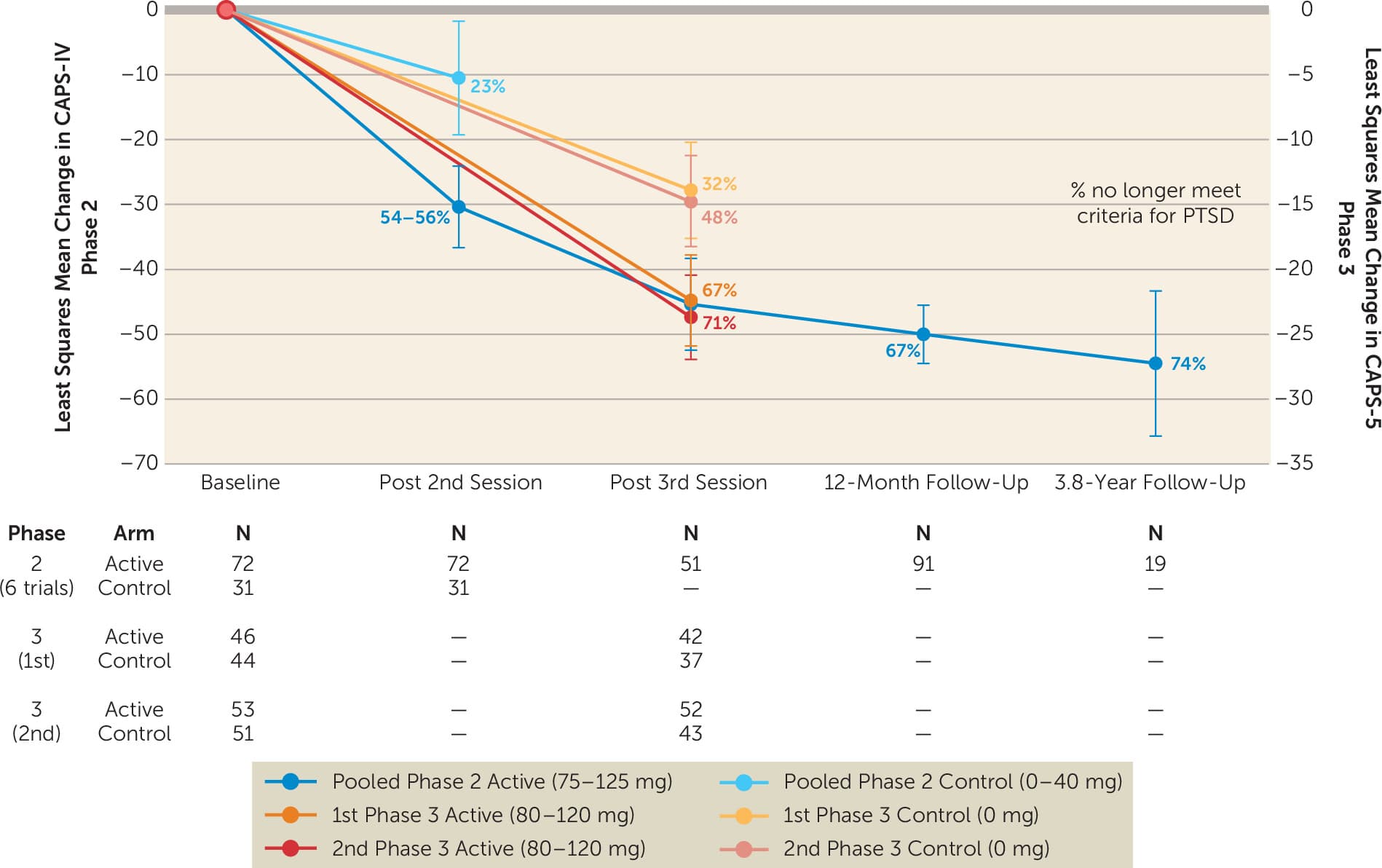
MDMA (i.e., 3,4-methylenedixoymethamphetamine), commonly known as “Ecstasy” or “Molly,” has been used since the 1970s both in recreational and therapeutic settings. The Food and Drug Administration (FDA) designated MDMA-Assisted Therapy (MDMA-AT) as a Breakthrough Therapy for posttraumatic stress disorder (PTSD) in 2017, and the FDA is requiring an additional phase 3 trial after rejecting the initial New Drug Application in 2024. Unlike other psychedelics, MDMA uniquely induces prosocial subjective effects of heightened trust and self-compassion while maintaining ego functioning as well as cognitive and perceptual lucidity. While recreational use in nonmedical settings may still cause harm, especially due to adulterants or when used without proper precautions, conclusions that can be drawn from studies of recreational use are limited by many confounds. This especially limits the extent to which evidence related to recreational use can be extrapolated to therapeutic use. A considerable body of preliminary evidence suggests that MDMA-AT delivered in a controlled clinical setting is a safe and efficacious treatment for PTSD. After a course of MDMA-AT involving three MDMA administrations supported by psychotherapy, 67%–71% of individuals with PTSD no longer meet diagnostic criteria after MDMA-AT versus 32%–48% with placebo-assisted therapy, and effects endure at long-term follow-up. This review primarily aims to distinguish evidence of recreational use in nonclinical settings versus MDMA-AT using pharmaceutical-grade MDMA in controlled clinical settings. This review further describes the putative neurobiological mechanisms of MDMA underlying its therapeutic effects, the clinical evidence of MDMA-AT, considerations at the level of public health and policy, and future research directions.

MDMA (±3,4-methylenedioxymethamphetamine), otherwise known in recreational settings as “Ecstasy” or “Molly,” is primarily being studied as an augmenting agent to psychotherapy for posttraumatic stress disorder (PTSD). Eight randomized clinical trials that included a total of 171 participants randomized to receive MDMA at starting doses of 75 mg–125 mg (with a supplemental half-dose 90–120 minutes later) in comparison to 126 participants randomized to receive an inactive placebo or up to 40 mg of MDMA found that at higher doses, MDMA-Assisted Therapy (MDMA-AT) was an efficacious treatment for PTSD, with moderate to large between-group effect sizes (Cohen’s d=0.70–0.91) and large within-group effect sizes (Cohen’s d=1.95–2.10) (1–3). The Food and Drug Administration (FDA) designated MDMA-AT as a Breakthrough Therapy in 2017, which is reserved for treatments that may represent substantial improvement over current treatment options (4). FDA-approved Expanded Access (colloquially known as “Compassionate Use”) began in 2022, allowing for greater access to open-label MDMA-AT outside of clinical trials and within FDA-regulated treatment settings. Although the FDA declined to approve the New Drug Application of MDMA-AT for the treatment of PTSD due in large part to limitations in study design of the Phase 3 trials, the FDA invited a New Drug Application resubmission after another Phase 3 trial is conducted that addresses previous study design limitations. As this modality emerges as a potential treatment option, clinicians will need to be equipped with a deeper understanding of MDMA and MDMA-AT to adequately counsel patients on this topic.

The landscape of evidence for MDMA and MDMA-AT can be generally divided into two distinct categories: 1) evidence that overall supports the potential harm of “Ecstasy,” “Molly,” or MDMA in nonclinical settings, and 2) evidence that overall supports the potential benefits and limited risk of harm of MDMA-AT using pharmaceutical-grade MDMA in controlled clinical settings. There are inherent risks in overgeneralizing the promising evidence of MDMA-AT in clinical settings to mistakenly underestimate the risks of harm and overestimate potential benefits of use in nonclinical settings. Conversely, there are also inherent risks in overgeneralizing the unfavorable evidence of use in nonclinical settings to mistakenly overestimate the risks of harm and underestimate the benefits of MDMA-AT in clinical settings.

This review primarily aims to make a clear distinction between the evidence of “Ecstasy,” “Molly,” or MDMA in nonclinical settings versus MDMA-AT using pharmaceutical-grade MDMA in controlled clinical settings. This review will also discuss the neurobiological mechanisms of MDMA underlying its therapeutic effects, the clinical evidence of MDMA-AT, considerations at the level of public health and policy, and future research directions.

History of MDMA and MDMA-Assisted Therapy

MDMA was first synthesized in 1912 by Anton Köllisch, a chemist working for the pharmaceutical company Merck, as a precursor to a hemostatic agent (5). However, its psychoactive properties remained unrecognized for several decades. The first known synthesis of MDMA to study its potential for clinical use was a 1953 study contracted by the U.S. Army Chemical Corps and conducted by the University of Michigan (6). This was an animal toxicology study to estimate safe doses of MDMA and several other similar substances such as 3,4-methylenedioxyamphetamine (MDA), a metabolite of MDMA (7). While MDA would later be used in government-funded research, there is no record of MDMA being studied or administered to humans by the government (8).

MDA, an entactogen similar to MDMA, was patented in 1960 to treat anxiety and was used throughout the 1960s–1970s both recreationally and as an adjunct to psychotherapy, similar to how MDMA-AT is conducted today (6, 9). Once MDA was made a Schedule I substance by the passage of the 1970 Controlled Substances Act, MDMA first surfaced that same year on the streets of Chicago as an unscheduled recreational alternative to MDA (6). Alexander Shulgin, a pioneer of the chemistry of psychedelic and entactogenic compounds, also facilitated the synthesis of MDMA during this period and began self-trials with MDMA in 1976 (6). In 1977, Shulgin introduced it to retired Army Lieutenant Colonel Leo Zeff, an Oakland, California psychotherapist with years of experience in MDA-assisted therapy throughout the 1960s. Zeff went on to train approximately 150 therapists and legally treat over 4,000 patients with MDMA-AT until 1985, when MDMA was declared a Schedule I substance with no accepted medical use due to the rise of its use in recreational settings (5).

The first report of the clinical use of MDMA was also published in 1985, and it involved a summary of proceedings from a gathering of 35 clinicians and researchers experienced in the use of MDMA (10). The report described that MDMA “reduced defensiveness and fear of emotional injury, thereby facilitating more direct expression of feelings and opinions, and enabling people to receive both praise and criticism with more acceptance than usual… Many subjects experienced the classic retrieval of lost traumatic memories, followed by the relief of emotional symptoms (10).”

Given that by 1985 MDMA had been used for therapeutic purposes to treat various psychiatric conditions for over a decade, court proceedings were initiated to determine if there was a more appropriate scheduling for MDMA than a Schedule I substance with “no accepted medical use.” Supporting data included clinical findings of safety and efficacy presented by MDMA-AT therapists (11). The DEA administrative law judge presiding over the case ultimately determined that “the evidence of record requires MDMA to be placed in Schedule III” (12) – meaning that MDMA has an accepted medical use and low to moderate risk of physical dependence or high psychological dependence (13). Despite this ruling, the DEA determined in 1986 that MDMA should remain Schedule I with no accepted medical use for reasons that remain unclear.

The Multidisciplinary Association for Psychedelic Studies (MAPS), a nonprofit organization, was subsequently founded in 1986 by Rick Doblin in response to the DEA Schedule I determination. The primary effort of MAPS has been building an evidence base toward FDA-approval of MDMA-AT for PTSD. All the randomized placebo-controlled Phase 2 and 3 studies conducted of MDMA-AT for PTSD have thus far been sponsored by MAPS (Figure 1). The MAPS Public Benefit Corporation, which was their drug development entity, was rebranded as Lykos Therapeutics prior to their submission of the New Drug Application in early 2024.
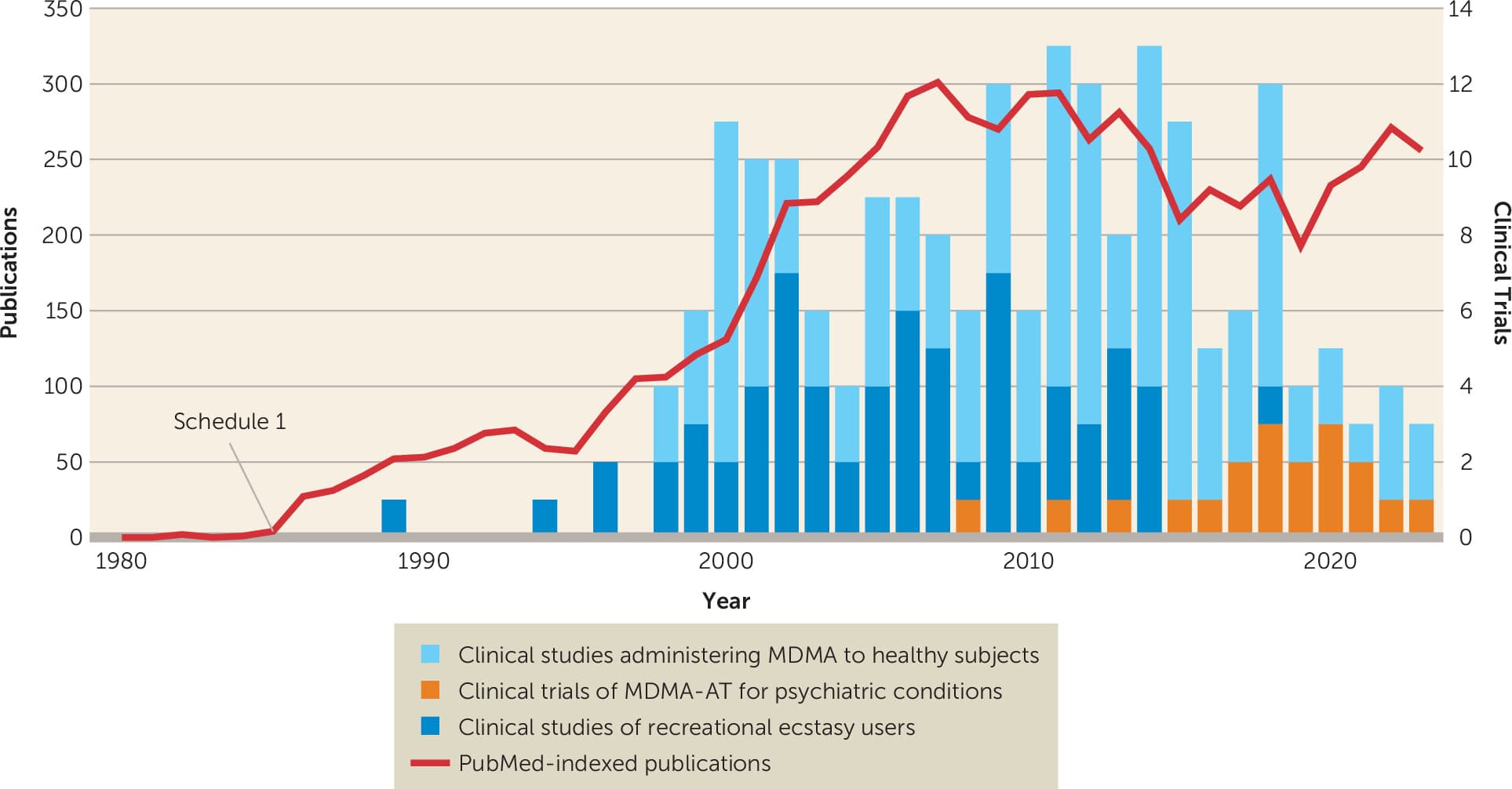
Figure 1

Figure 1. MDMA publications and clinical trialsa

a. Publications and clinical trials involving individuals who had used recreational Ecstasy, healthy individuals administered pharmaceutical-grade MDMA, and individuals with psychiatric conditions provided MDMA-AT.

MDMA: What It Is and What It Is Not

Classification and Subjective Effects

MDMA is variably considered a psychedelic (Figure 2), meaning “mind manifesting.” Many common preconceptions and connotations from popular culture associated with psychedelics often refer to the classical psychedelics, which are distinct from MDMA. The most common classical psychedelics are lysergic acid diethylamide (“LSD” or “acid”) and psilocybin (“magic mushrooms”) (15). Classical psychedelics like LSD and psilocybin are known to cause vivid visual perceptual phenomena (16), mystical or spiritual experiences (17), a dissolution of the ego or sense of self (18), and a sense of unity or interconnectedness with all else (19).

MDMA at therapeutic doses does not markedly produce the aforementioned subjective effects that are characteristic of classical psychedelics (Figure 3) (20). Although MDMA at therapeutic doses is potentially associated with mild transient depersonalization or derealization phenomena, it does not produce visual perceptual phenomena or panic reactions that are more strongly associated with classical psychedelics (21). MDMA instead produces a state of positive mood, well-being, and extroversion that is not attenuated by the serotonin (5HT)2A/C antagonist ketanserin (22). Thus, MDMA should not be considered a classical psychedelic because 5HT2A agonism is the primary mechanism of action characteristic of classical psychedelics (23), and the subjective effects of MDMA are not attenuated by a 5HT2A antagonist (22).

The first academic publication of the clinical effects of MDMA was the 1985 proceedings from a meeting of 35 experts that included experienced researchers and clinicians (10). The report included a comparison of the subjective effects of MDMA and LSD that noted “[u]nlike LSD, MDMA does not essentially cause perceptual or cognitive distortions or loss of ego control. MDMA consistently promotes a positive mood state, while LSD promotes mood swings that can be extreme and unpredictable. MDMA’s principal effects last 3–5 hours, those of LSD last 6–14. The clinicians agreed that MDMA was much easier to use than LSD, and because MDMA did not threaten ego control, involved little psychological risk to a naïve subject. While LSD subjects sometimes experience transient delusional states, the only complications of using MDMA, according to the clinicians and researchers, are occasional anxiety and various physical symptoms due to the drug’s sympathomimetic effects (10).”

More rigorous modern studies have corroborated many of the claims in the initial 1985 report. Notably, a randomized, double-blind, cross-over study of 28 healthy participants who received LSD (100 μg), MDMA (125 mg), D-amphetamine (40 mg), and inactive placebo at least 10 days apart found that the subjective effects of MDMA are more comparable to D-amphetamine than to LSD (Figure 2) (20). Unlike with LSD, perceptual and cognitive lucidity remain intact with both D-amphetamine and MDMA (20). The primary differences that separate MDMA from other commonly prescribed amphetamines are the additional subjective effects of bliss and self-compassion, as well as prosocial effects including heightened empathy, trust, compassion, and sense of connectedness to others (20, 24). Notably, a study comparing separate clinical trials of MDMA and methamphetamine in healthy subjects suggests MDMA and methamphetamine may have comparable effects on prosocial perceptions of social connection (25). Furthermore, MDMA has been found to increase feelings of self-reported sociability (26), to enhance implicit and explicit emotional empathy for positive emotional stimuli more so in men than in women (27, 28), to reduce rejection of unfair offers in a partnered economic decision-making game (29), and to enhance attention to positive social cues and pleasantness of experienced affective touch (30).

Thus, MDMA is better classified as a nonclassical psychedelic and more specifically, an empathogen or entactogen (Figure 2). Empathogen refers to a core feature of MDMA to “generate empathy.” Entactogen is the more widely accepted term referring to the way in which MDMA allows an individual to “touch within” through a lens of inner-directed self-compassion (31). MDMA’s entactogenic characteristics are thought to be a core feature of its therapeutic effects when paired with psychotherapy (32).
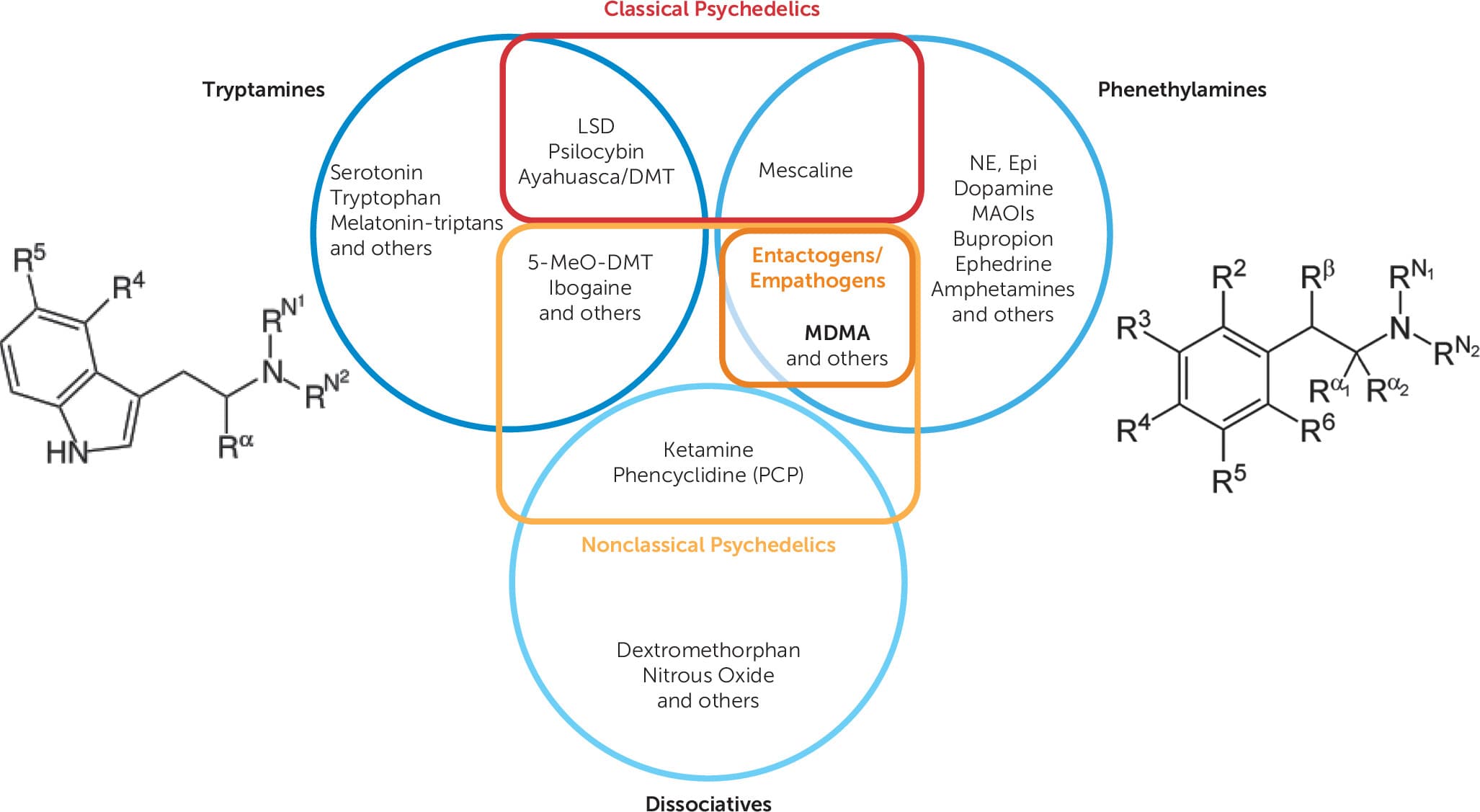
Figure 2

Figure 2. Classification of tryptamines, phenethylamines, and dissociatives as classical psychedelics, nonclassical psychedelics, or neithera

a. Adapted from Wolfgang and Hoge (14). DMT: dimethyltryptamine; 5-MeO-DMT: 5-methoxy-N,N-dimethyltryptamine; NE, norepinephrine; Epi, epinephrine; R: a carbon or hydrogen atom.
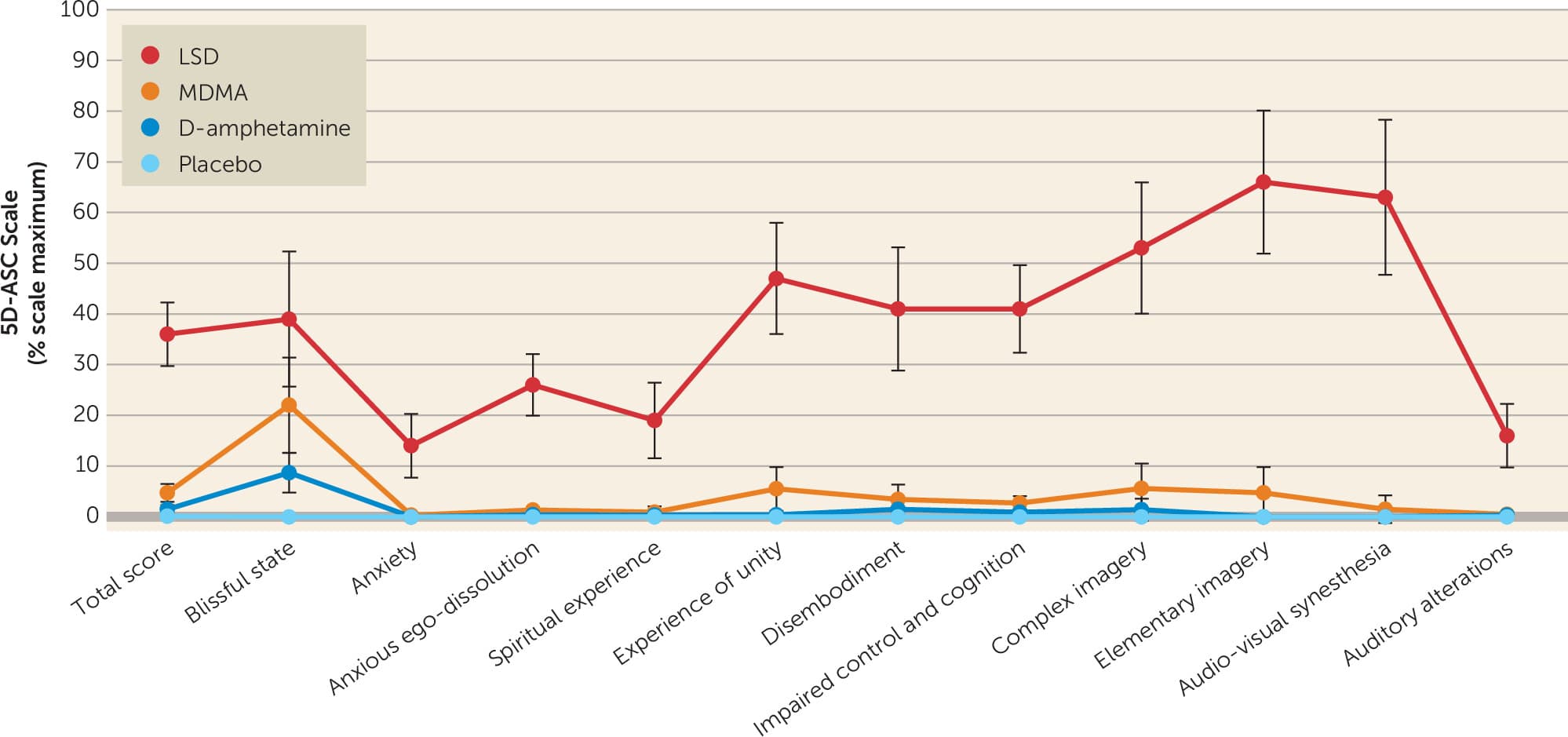
Figure 3

Figure 3. Comparative subjective effects of LSD, MDMA, D-amphetamine, and placebo on the 5 Dimensions of Altered States of Consciousness (5D-ASC) scalea

a. Doses were 100 μg oral for LSD, 125 mg oral for MDMA, and 40 mg oral for D-amphetamine versus inactive placebo. Data are presented as mean and 95% confidence intervals. Adapted from Holze et al. (20).

Objective Effects

MDMA elicits acute sympathomimetic effects including elevated blood pressure, heart rate, body temperature, and pupillary dilation (2, 20, 33, 34). MDMA at doses of 75–125 mg in healthy participants elicits temporary hypertension (33% of participants) and tachycardia (29%) and increases body temperature >38°C (19%) (33). MDMA exhibits dose-dependent effects, such that higher doses and plasma blood concentrations are associated with greater elevations in hemodynamic response (33, 34). Because MDMA is primarily metabolized by CYP2D6, CYP2D6 activity is inversely related to MDMA plasma concentrations (34), subjective drug effects (35), and blood pressure (35) after MDMA administration.

A randomized, double-blind, cross-over study comparing MDMA (125 mg), LSD (100 μg), D-amphetamine (40 mg), and inactive placebo in healthy participants found that the three active drugs had comparable increases in hemodynamic response, body temperature, and pupillary dilation (20). Compared to D-amphetamine, however, MDMA and LSD had comparably greater increases in heart rate and lesser increases in blood pressure (20). Overall, MDMA produces a constellation of sympathomimetic effects that are well-tolerated but must still be accounted for in clinical contexts.

Pharmacology and Neuroscience

Classical psychedelics like LSD and psilocybin are believed to primarily act through 5HT2A receptor agonism, which underlies their psychedelic effects as well as most of their behavioral and neural effects (36–40). MDMA also is predominantly serotonergic, but in contrast to classical psychedelics, MDMA blocks serotonin, norepinephrine, and dopamine reuptake in descending order of affinity and degree of elevation of extracellular transmitter levels (41, 42).

Oxytocin may also be an important mediator underlying some of MDMA’s effects (43). For several hours after MDMA administration, plasma oxytocin reaches levels up to four times greater than baseline (44), an effect that is unique to MDMA and not observed with LSD or D-amphetamine (20). In a rodent model, MDMA induces oxytocin release via 5-HT activation of presynaptic 5-HT4 receptors on oxytocin neurons, and subsequent activation of oxytocin receptors in the nucleus accumbens reopens the age-related closure of a critical period of neuroplasticity that temporarily enhances social reward learning (43). This oxytocinergic effect may underlie feelings of greater trust (45), openness to social reward and connectedness (43), and modulate encoding of stimuli as aversive versus neutral (46). However, MDMA and oxytocin differ in some ways in their behavioral effects. While MDMA tends to have direct prosocial effects as reviewed above, oxytocin may increase the intensity of both positively and negatively valenced social connections. As a result, in some cases, oxytocin may aggravate mistrust and social conflict (47–49). Thus, although oxytocin may contribute to the observed effects of MDMA, it seems unlikely that oxytocin fully mediates MDMA effects.

Reductions in the fear response with MDMA are supported by decreased activity in the amygdala in response to socially threatening stimuli during MDMA administration (26). When MDMA is administered to rodents during reconsolidation of an extinguished cue-shock association, the learning of the new safety memory is strengthened (50). Likewise, in humans, MDMA administered after threat conditioning and prior to extinction training results in a greater proportion of individuals demonstrating extinction retention 2 days later relative to inactive placebo (51).

Safety of MDMA and MDMA-Assisted Therapy

“Ecstasy” Versus MDMA

Especially when discussing safety profiles, a clear distinction must be made between recreational “Ecstasy” used in nonclinical settings versus pharmaceutical-grade MDMA used in controlled clinical settings.

MDMA itself is considered to have a low risk of dependence and harm relative to many other prescribed and nonprescribed substances (52, 53). However, the risks are greater with Ecstasy, which often does not contain pure MDMA and is typically taken in uncontrolled, nonclinical environments. Approximately half of Ecstasy pills contain adulterants such as cocaine, amphetamines, or fentanyl, and some pills may not contain MDMA at all (54, 55). Many cases of toxicity in the literature attributed to MDMA are in fact not confirmed by laboratory testing to be MDMA, but rather, they depend on patient or collateral report of Ecstasy use, which is often confounded by other substances (56–58). Thus, conclusions drawn from studies of Ecstasy used in nonclinical settings cannot be directly translated to pharmaceutical-grade MDMA administered in a controlled clinical setting.

Neurotoxicity

Through popular media, MDMA was once thought to “put holes in your brain.” These reports reflected concerns specifically related to detrimental effects of MDMA on dopamine and serotonin neurons. However, the 2002 study (59) that formed the basis of this belief was later retracted due to the lab having been found to inject their primates with methamphetamine instead of MDMA (60). The original findings could not be reproduced when the study was replicated with confirmed MDMA (60).

Other animal studies have reported neurotoxic injury to a subset of serotonin neuronal axons in rodents and primates with doses of 2.5–40 mg/kg (175–2,800 mg if extrapolated to a 70-kg mammal) injected subcutaneously up to twice daily for up to 4 consecutive days (61–66). However, humans in controlled clinical research settings are dosed orally approximately 1 month apart with therapeutic doses of approximately 1.7 mg/kg (120 mg for a 70-kg person) and with a supplemental half-dose approximately 2 hours later to prolong the peak effect (2, 3). Therapeutic range doses up to 1.5 mg/kg in healthy human participants in clinical research settings have been found to be unlikely to be neurotoxic to serotonergic neurons, considering no detectable effects on 5-HT uptake has been measured using positron emission tomography at these doses (67). At concentrations closer to therapeutic levels, MDMA in fact promotes neuritogenesis and synaptogenesis—the formation of new branching and interconnections between neurons (68).

In a study of chronic recreational users of MDMA—many of whom also used other substances and who had used recreational MDMA on approximately 228 occasions with an average dose of 386 mg—reductions in ligand binding to 5-HT transporters (SERT) and reduced neuroendocrine response to tryptophan suggest reduced SERT density and neuronal function after chronic recreational MDMA use (69). A later study found decreased SERT density only in female subjects who had used >50 MDMA tablets recreationally over their lifetime, but there were no statistically significant decreases in SERT density in male subjects regardless of the amount of lifetime recreational MDMA use (70). In this same study, female subjects who had reported remaining abstinent from using recreational MDMA for over 1 year had SERT densities that were significantly higher than female subjects with >50 lifetime MDMA tablets but not higher than controls (70). Thus, chronic heavy use of MDMA in recreational settings may lead to decreases in SERT density that may be reversible and normalize over time.

Mortality

It is estimated that approximately 500,000 doses of MDMA were administered in clinical settings with no known instances of mortality before MDMA was first declared a Schedule I substance in 1985 (71, 72). However, in recreational nonclinical settings, the risk of death for a first-time use of Ecstasy is between 1 in 2,000 and 1 in 50,000 (73, 74). Out of 81 deaths of individuals who used recreational drugs and were found to have MDMA in their system at the time of death, two deaths per year were confirmed to involve only MDMA (73). All other deaths included other substances, with opiates being involved in the majority (59%) of cases (73).

The two most common causes of death related to Ecstasy use are hyperthermia and hyponatremia (75), both of which are a direct result of use in recreational settings characterized by high temperatures, physical exertion, and a lack of appropriately balanced fluid and electrolyte intake. Hyperthermia and hyponatremia both are preventable in controlled clinical settings. Altogether, deaths involving Ecstasy use are rarely a direct result of MDMA itself. Instead, cases of death are typically compounded by other substances, hyperthermia, hyponatremia, the environment, or underlying medical conditions—the risks for all of which are directly minimized in controlled clinical settings and through careful pre-screening and assessment.

Hyperthermia

Hyperthermia (body temperature >40°C) and its sequelae are, by far, the most common cause of morbidity and mortality related to recreational Ecstasy use, with 183 total reports in the literature (76). All these cases comprise individuals who used Ecstasy in nonclinical settings. Therapeutic doses of MDMA can lead to an increase in body temperature of 0.2–0.8°C, which is typically clinically insignificant (77). Ecstasy-related hyperthermia is thought to be multifactorial, due to a combination of high doses of MDMA, other substances, vigorous physical exertion, high ambient temperature, crowded conditions, and reduced fluid intake—all of which are commonplace in recreational settings (78–81). The following precautions are implemented in controlled clinical settings to limit the risk of hyperthermia: MDMA is only provided at therapeutic dosages, interacting substances are screened for, physical activity is minimal, ambient temperature is controlled, and fluids are available and frequently encouraged. With these precautions in place, there have been no known instances of clinically significant hyperthermia in clinical trials of MDMA or MDMA-AT (1–3, 77).

Hyponatremia

Hyponatremia and its sequelae are another cause of morbidity and mortality related to Ecstasy use in nonclinical settings, with 26 total reports in the literature (76). This is due to MDMA-induced syndrome of inappropriate antidiuretic hormone (SIADH) combined with voluntary compensatory overhydration, as many recreational users will overhydrate in an attempt to address the commonly known risk of hyperthermia without proper awareness of the risk of hyponatremia (82). MDMA releases antidiuretic hormone (ADH), which leads to fluid retention and decreased serum sodium concentration (83). When this is combined with compensatory overhydration to combat dehydration, individuals can develop dangerously low sodium concentrations that can ultimately lead to seizures and death. This risk is mitigated in clinical settings by screening for electrolyte abnormalities prior to treatment and moderating fluid intake with balanced electrolyte content during treatment. With these precautions, clinically significant hyponatremia has not occurred in clinical trials of MDMA or MDMA-AT (1–3, 76).

Cardiovascular Conditions

Cardiovascular conditions and their sequelae are the final higher risk category of morbidity and mortality associated with Ecstasy use in nonclinical settings, with 27 total reports of such cases in the literature (76). However, not all cases toxicologically confirmed the presence of MDMA, and many involved other substances (76). Similar to other amphetamines and classical psychedelics, MDMA has sympathomimetic properties that result in elevated heart rate and blood pressure (21), which can increase the risk of cardiovascular events in those with premorbid vulnerabilities (84). In healthy individuals receiving at least 100 mg of MDMA, blood pressures remained below the hypertensive threshold of 140/90 mmHg in 95% of cases (21, 85). Risks of precipitating cardiovascular events are mitigated in clinical settings with careful pretreatment screening with a detailed medical history and electrocardiogram (ECG), frequent blood pressure and vital sign monitoring during treatment, and ensuring blood pressure medications are available, if necessary.

Since an estimated 500,000 doses of MDMA were administered in unregulated clinical settings before 1985 (71, 72), at least another 1,775 individuals have received a dose of MDMA in controlled clinical research settings to date (76). Of these, there have been no documented cases of clinically significant hyperthermia, hyponatremia, or related conditions. However, there was a single instance whereby a participant was medically observed overnight after developing chest discomfort during his last of five MDMA sessions (76). He had already received two blinded low-dose control sessions of MDMA-AT (a 30-mg initial dose plus a 15-mg supplemental dose 2 hours later) and two open-label high-dose sessions of MDMA-AT (a 125-mg initial dose plus a 62.5-mg supplemental dose 2 hours later), with no symptoms until his fifth MDMA session. He developed chest discomfort that safely resolved after a single dose of metoprolol and overnight medical observation in a hospital setting before being discharged the next day. He was confirmed to have premature ventricular contractions (PVC), which is a benign arrhythmia that commonly can occur with exercise, caffeine, or other substances. A single PVC that was detected on his initial screening for the study had at the time been determined to be benign, and thus he was permitted to enroll.

Cardiac screening criteria for MDMA-AT have since become more stringent to mitigate the risk of similar cases from recurring. Considering this participant had already received four doses—two low-dose and two high-dose—without incident, further studies may be warranted to investigate the safety and efficacy of moderate doses (80 mg plus a supplemental half dose 2 hours later) in those with benign cardiac conditions, given that 75 mg (plus a supplemental half dose 2 hours later) has been found to be the lowest dose still potentially efficacious for PTSD (86).

5-HT2B-mediated valvular heart disease (VHD) also warrants clinical consideration. 5-HT2B receptors are highly expressed within the fibroblasts that maintain the structural homeostasis of cardiac valves (87). Several 5-HT2B agonist medications such as methysergide, ergotamine, and fenfluramine have been associated with VHD (87, 88). MDMA is also a 5-HT2B agonist (89). A case-control study of 33 individuals with chronic Ecstasy use versus 29 age- and gender-matched controls found that eight chronic Ecstasy users (28%) had VHD compared to none in the control group (90). Those with clinically relevant VHD had a higher cumulative dose of Ecstasy (mean 943 tablets) than those without clinically relevant VHD (mean 242 tablets) (90). For comparison, a full course of treatment in clinical trials of MDMA-AT involves two to three MDMA sessions total (1–3). Although no clinical trials administering pharmaceutical-grade MDMA have been found to lead to long-term cardiac complications including 5-HT2B VHD (76), the potential for cardiac adverse effects must still be taken into account—especially in real-world clinical implementation where patients may eventually receive a total number of doses that are beyond what has been studied thus far in clinical trials.

Psychiatric Conditions

Depression, anxiety, and psychosis are additional potential concerns with Ecstasy in nonclinical settings compared to MDMA in controlled clinical settings. In a review of 199 case reports of nonclinical Ecstasy use, approximately 20% reported psychiatric concerns (91). Symptoms of anxiety and depression, in particular, have been associated with non-clinical Ecstasy use (92, 93). However, anxiety and depression have a stronger association to polydrug use overall compared with any single particular substance (94–97). Cannabis may have greater adverse psychiatric sequelae when compared with Ecstasy (98, 99). The extent to which these associations can be translated from nonclinical to clinical settings is limited, given the high variability of the contents of illegally obtained Ecstasy, involvement of other substance use, usage patterns in nonclinical settings, environmental factors, and possible pre-existing psychiatric conditions prior to Ecstasy use.

A 14-year prospective study of children followed into adulthood found that individuals who had used Ecstasy in adulthood were twice as likely to have had depression or anxiety in childhood (100). Thus, it is difficult to establish causal associations between Ecstasy use and psychiatric conditions, given that individuals predisposed to psychiatric conditions may be more likely to use Ecstasy and other substances in nonclinical settings.

In clinical settings, brief anxiety reactions can occur and are often self-limited within the MDMA-AT session. However, as adverse effects, there is no difference in frequency of anxiety reactions between active and placebo groups during and after a session of MDMA-AT in controlled clinical settings (101).

Seventeen percent of individuals receiving MDMA-AT have also been found to have an increased likelihood of low mood compared with placebo during a dosing session (101). In contrast, there was a nonsignificant improvement in depression over an entire treatment course when pooling all four phase 2 clinical trials of MDMA-AT that measured depression (1), and significant improvements in depression were found in the first phase 3 multisite clinical trial (2). Depression symptom outcomes were collected but not reported for the second phase 3 clinical trial (3).

Current evidence does not indicate increased risk for suicidal ideation or behavior. In studies of MDMA-AT for PTSD, six participants had suicidal behavior and a seventh was hospitalized for suicidal ideation. However, six of the seven participants were either in the placebo arm or prior to receiving any active MDMA (1–3).

Symptoms of psychosis associated with Ecstasy use in nonclinical settings have been reported (102, 103). However, these cases are susceptible to the same confounds that limit the generalizability of conclusions drawn between the nonclinical use of Ecstasy and the clinical use of MDMA. There are no reported instances of psychosis due to MDMA in controlled clinical settings (1–3, 86, 104–112). This is likely due to limiting MDMA dosages to therapeutic ranges, ensuring a therapeutic setting, and careful medical screening and monitoring.

While there is weak evidence suggesting a positive bidirectional relationship between nonclinical Ecstasy use and psychiatric conditions such as depression and anxiety (92, 93, 100), such relationships have not been observed with MDMA-AT in controlled clinical settings. Stronger evidence provided by clinical trials of MDMA-AT for PTSD suggest that for carefully screened individuals from this patient population, anxiety and psychosis are not long-term sequelae of the treatment, depression may improve, and serious suicidality is primarily found in those who do not receive the active treatment (1–3).

Neurocognition

The body of literature regarding the impact of Ecstasy use on neurocognitive performance is overall conflicting and has substantial methodological limitations. Many studies rely on retrospective design, unmatched controls, and cohorts confounded with polysubstance use and occasionally ongoing substance use. Conclusions that can be drawn from these studies are further limited by reliance on self-report without being able to confirm the reported identity, amount, and frequency of use of Ecstasy and other substances.

A prospective cohort study of Ecstasy-naïve individuals with new Ecstasy use found no differences in attention, working memory, visual memory, and visuospatial functioning after initiating Ecstasy use (113). The new Ecstasy use group were found to have lower scores of verbal memory, but they were still in the normal range and not corrected for multiple testing (113). However, no differences in verbal memory were detected when using age- and gender-matched controls (114).

One study found that individuals actively using Ecstasy had significant impairments in various types of memory, although impairments were not associated with amount of lifetime Ecstasy use (115). A conflicting study found memory impairments only in heavy use (≥80 lifetime Ecstasy tablets) compared to moderate use (<80 lifetime Ecstasy tablets) or controls (116). This study also found no differences between moderate use and controls in any measures of neurocognition to include executive function, working memory, planning, and cognitive impulsivity (116).

While many studies attribute neurocognitive impairments to Ecstasy use despite being confounded by concomitant substance use, one study concluded that neurocognitive impairments were in fact not associated with Ecstasy use but rather with polysubstance use (117).

Experimental studies administering MDMA to healthy volunteers have likewise produced no evidence for acute impairments in neurocognitive functions. Individuals under the influence of MDMA displayed no appreciable changes in inhibitory control during a go/no go paradigm (118), nor did MDMA impair selective attention as measured by a Stroop paradigm (21).

All three clinical trials of MDMA-AT for PTSD that included a neurocognitive battery (106, 109, 119) showed no change in neurocognition after a course of treatment (1).

Overall, the literature is equivocal in terms of the relationship between Ecstasy use and neurocognition, given the methodological limitations inherent in such studies. However, the literature is unequivocal that MDMA-AT delivered in a controlled clinical setting has no negative effects on neurocognition (1). Whether this relates to differences in population demographics/history, purity of the compound, adulteration with other substances, or the fact that most recreational use studies include individuals with a far greater number of lifetime ingestions remains to be elucidated.

Addiction

Despite primarily being serotonergic, MDMA also has mild pro-dopaminergic properties which confer at least a theoretical potential for dependence (120). Animal studies suggest that MDMA has rewarding properties, although significantly less than other substances such as cocaine, methamphetamine, or heroin (121–126). Chronic administration of high doses of MDMA in mice does not induce physical dependence (127). This aligns with findings in humans that approximately three-fourths of individuals who use Ecstasy in nonclinical settings use it less frequently than once per month, often infrequently on special occasions (128).

While evidence for the addictive properties of MDMA is equivocal, some evidence indicates MDMA may have the potential to treat addiction. MDMA-AT may reduce alcohol use in patients with PTSD (129). An open-label clinical trial of individuals with heavy alcohol use who recently completed detox suggests MDMA-AT potentially may be an effective treatment for individuals diagnosed with alcohol use disorder (110).

In a sample of 83 patients with PTSD who received MDMA-AT, eight had reported use of Ecstasy between the end of their course of MDMA-AT and 12-month follow-up (129). Of those eight, six had used Ecstasy prior to the study and thus did not constitute new use. Nearly all, including the two individuals without prior use, had attempted to self-administer Ecstasy in a nonapproved setting for therapeutic purposes. However, additional Ecstasy use was not reported after the initial nonapproved session, as participants reported they found it to be therapeutically ineffective without trained clinical support.

Overall, although Ecstasy is one of the most commonly used recreational substances globally (130), the risk of dependence is low compared with other recreational substances (52, 53). The risk of future nonprescribed use after receiving MDMA in a controlled clinical setting is also low but must still be considered and mitigated (112, 129). Given new nonprescribed Ecstasy use after MDMA-AT clinical trials has primarily been for therapeutic purposes in uncontrolled settings, this suggests that an important component of mitigating future nonprescribed use after a course of MDMA-AT would be to facilitate greater access to legal MDMA-AT for individuals requiring ongoing treatment. In this way, individuals are less incentivized to self-administer nonprescribed Ecstasy for therapeutic use in nonapproved and potentially unsafe settings, and instead, access to legal treatment will be able to better meet the demand from patients seeking continued treatment.

Serotonin Syndrome

Serotonin syndrome is a potentially life-threatening condition caused by the use of substances leading to overactivation of serotonin pathways in the central and peripheral nervous systems (131). Serotonin syndrome and potential mortality may result from coadministration of MDMA and monoamine oxidase inhibitors (MAOIs) (132–134). However, the combination of MDMA with a serotonin reuptake inhibitor paradoxically diminishes the clinical effects of MDMA and does not lead to serotonin syndrome in either rodent models (135–137) or humans (138). This is because the entry of MDMA into the presynaptic terminal is inhibited by serotonin reuptake inhibitors (139). Out of 20 cases of serotonin syndrome involving confirmed or presumed MDMA reported to the FDA since 2004, none of the cases involved MDMA as the only ingested substance (140). All 20 cases involved other substances—the most common being amphetamines (140). Despite the paradoxical attenuation of effects when co-administering MDMA with a serotonin reuptake inhibitor, MDMA still carries a risk for serotonin syndrome with MAOIs and other serotonergic medications (141). This risk has thus far been successfully mitigated in clinical trials involving MDMA (140) by ensuring at least five half-lives of a washout period between the last dose of a serotonergic medication and the dose of MDMA.

Relational Safety

The term “relational safety” is intended to encompass the domains of potential harm and associated safeguards within the relationship dynamic between the patient and other individuals, particularly the co-therapists. MDMA-AT and other psychedelic-assisted therapies involve potential risks to relational safety that must be accounted for and mitigated to the maximum extent possible. The use of therapeutic touch in MDMA-AT and other psychedelic-assisted therapies is an unresolved question in terms of the balance between its potential benefits and harms. Additional risks to relational safety also include the heightened potential for sexual abuse (142), interpersonal dependency, and suggestibility.

Therapeutic touch.

In alignment with the MDMA-AT treatment manual, therapeutic touch is occasionally offered as a form of support during an MDMA session in a manner that is discussed with the participant beforehand. The aim is to find an individualized balance between enhancing therapeutic support while respecting the participant’s boundaries and comfort. Therapeutic touch typically entails a momentary holding of the participant’s hand, arm, or shoulder in a supportive manner. The pleasantness of therapeutic touch is selectively enhanced by MDMA but not by methamphetamine or placebo (30, 143), and it serves to help ground the participant through challenging moments during the medication session. While therapeutic touch may be clinically advantageous to an extent that is yet uncertain, it also comes with additional risks that must be mitigated, namely the possibility of boundary violations in the form of sexual touch and abuse.

Overall, the use of therapeutic touch in MDMA-AT and other psychedelic-assisted therapies remains an open question in terms of precisely where to set the threshold of allowable therapeutic touch to optimize the balance between its potential benefits and harms. In the absence of any clinical trials designed to investigate this question, the current established threshold described above is thought to strike an optimal balance between potential benefit and harm: a momentary holding of the participant’s hand, arm, or shoulder during therapeutically appropriate times with precise boundaries agreed upon between the participant and therapists beforehand.

Sexual abuse.

An important domain of relational safety with MDMA-AT—and any psychedelic-assisted therapy—is the potential for sexual abuse. Contributing factors may include a combination of readjusted therapeutic boundaries due to the acceptance of therapeutic touch, the uneven power dynamic inherent in the therapeutic relationship, an unendorsed loosening of ethical standards on the part of the therapist, and the acute effects of the MDMA, which may amplify the risks associated with each of the aforementioned factors due to the patient’s acutely heightened levels of trust and emotional vulnerability. With this heightened risk to relational safety also comes a need for heightened ethical safeguards detailed further in the online supplement.

There have been at least two documented instances of sexual contact related to MDMA-AT prior to 1985 when MDMA-AT was still legal in clinical settings (5) and at least one instance since then in a clinical trial in Canada (144). The most recent incident in Canada involved a participant in an MDMA-AT clinical trial where the unlicensed male therapist initiated non-intercourse intimate physical contact with the female study participant in the form of caressing and cuddling during the MDMA session, which evolved into a sexual relationship outside of the study sessions. These forms of physical contact are not permitted in the MDMA-AT manual. A civil case between the participant and co-therapists was resolved out of court in 2019 with terms that are not public (145). Detailed accounts surrounding this incident are publicly available both from the perspective of the participant (146) and the study sponsor (144).

While allowing therapeutic touch may present additional risks for unethical behavior, these risks are significantly mitigated in modern times by numerous layers of safeguards, several of which were not in place until the current wave of clinical trials and have since been strengthened in response to the most recent case in Canada. Further elaboration of the many layers of ethical safeguards now in place can be found in the online supplement.

Interpersonal dependency.

Interpersonal dependency refers to “a complex of thoughts, beliefs, feelings, and behaviors revolving around needs to associate closely with valued other people” (147). Although our review did not identify evidence of interpersonal dependency with MDMA-AT published in the peer-reviewed scientific literature, there are nonscientific reports suggestive of interpersonal dependency described by at least two MDMA-AT clinical trial participants, one of whom was described as feeling “desperately dependent on her therapists” after her course of MDMA-AT had completed (146). Given that interpersonal dependency is both a known component of several psychiatric diagnoses and can be anticipated as a component of the natural course of treatment in traditional therapy (148), it is yet unclear to what extent the incidence and character of treatment-emergent interpersonal dependency may differ between MDMA-AT and traditional therapy. Although the MDMA-AT treatment modality allows for interpersonal dependency and other relational dynamics to be processed as an aspect of integration therapy, further research is still needed to identify potential areas of risk for treatment-emergent interpersonal dependency and to develop strategies that may further mitigate potential harm.

Suggestibility.

Suggestibility is “an individual’s susceptibility or responsiveness to suggestion (149).” While LSD administered to healthy participants has been found to increase suggestibility (149), MDMA has been found to not increase suggestibility in healthy participants (150). Also, MDMA, D-amphetamine, and placebo all scored <1% of the maximum score for “impaired control and cognition” compared with 41% for LSD (20) (Figure 3), suggesting that cognitive control remains intact with MDMA compared with a classical psychedelic. Nevertheless, considering the attenuated fear response and enhanced prosocial effects associated with MDMA (151), more studies are needed to accurately profile the potential risks of suggestibility with MDMA-AT that might increase a patient’s vulnerability to unintended or even intended harm.

Summary: Safety of MDMA and MDMA-AT

Conclusions and preconceptions drawn from the use of Ecstasy in nonclinical settings need to be clearly distinguished from the use of MDMA in controlled clinical settings. Ecstasy in nonclinical settings can indeed be harmful and even fatal on rare occasions without appropriate precautions. In contrast, the use of pharmaceutical-grade MDMA at therapeutic dosages with appropriate precautions in clinical settings with trained professionals appears to be safe.

Risk of addiction or future nonprescribed use is low when MDMA is administered in a clinical research setting. Whether the low likelihood of future nonprescribed use changes with increased access to MDMA secondary to potential FDA approval remains to be assessed. Although chronic heavy use of recreational Ecstasy may be associated with impaired neurocognition, therapeutic MDMA in controlled clinical settings has not been found to impair neurocognition. The factors dictating these differences are currently not well understood, although impurity and unknown dosages of recreational Ecstasy almost certainly play a role. The three most common causes of morbidity and mortality associated with nonclinical Ecstasy use are hyperthermia, hyponatremia, and cardiac conditions. However, the factors that confer an increased risk of morbidity and mortality with nonclinical Ecstasy use can be mitigated when using pharmaceutical-grade MDMA in controlled clinical settings with appropriately trained providers, proper screening and assessment, and fidelity to standard precautionary measures. MDMA-AT in FDA-approved clinical settings allows for appropriate dosing, assurance of purity, preventing physical overexertion, maintaining appropriate body temperature with a temperature-controlled environment, moderated/balanced fluid and electrolyte intake, thorough medical screening and oversight, and availability of specially trained therapists to facilitate an optimally safe and therapeutic process. When combining all these factors, MDMA-AT in an FDA-approved clinical setting with all appropriate safeguards in place appears to be medically and psychiatrically safe.

MDMA-Assisted Therapy

Treatment Course

MDMA-AT primarily consists of three distinct types of sessions: preparatory, MDMA, and integration sessions. A treatment course involves two to three MDMA sessions. Each MDMA session is 6–8 hours long and is approximately 1 month (±1 week) apart. Preceding the first MDMA session are three 90-minute preparatory sessions designed to educate the participant about the treatment, build a therapeutic alliance, and establish therapeutic aims.

Each MDMA session is followed by three 90-minute integration sessions for a total of six to nine integration sessions per course of treatment. The first of each trio of integration sessions occurs the morning after the MDMA session. The second and third integration sessions follow at approximately 1-week intervals but prior to the next MDMA session.

Each MDMA session involves two doses of MDMA. The first dose of each MDMA session is a full dose ranging from 75–125 mg (80–120 mg in the most recent phase 3 trials and likely in real-world clinical implementation). The second supplemental dose is half of the initial dose and is offered 90–120 minutes after the initial dose as an option based on tolerability, patient preference, and therapist clinical judgment. In MDMA-AT clinical trials, participants were offered and in nearly all cases accepted the supplemental dose. The purpose of the timing and dosage of the supplemental dose is to extend the peak effect of the MDMA.

Note: the prevailing convention used not only in this paper but also throughout the MDMA-AT literature is that stated doses typically refer to the initial dose with the implied understanding that a supplemental half dose was offered and likely administered 90–120 minutes after the initial dose, unless stated otherwise. All stated MDMA doses that appear throughout this paper should be assumed to be followed by a supplemental half dose 90–120 minutes later if the MDMA dose is mentioned in the context of MDMA-AT. For example, if it is stated that participants in an MDMA-AT study arm were offered 80 mg of MDMA, it should be assumed that they were initially offered 80 mg and an additional 40 mg 90–120 minutes later for a cumulative dose of 120 mg for that dosing day. This assumption is not applicable when an MDMA dose is mentioned in a context outside of an MDMA-AT study.

Therapeutic Modality

The therapeutic modality of MDMA-AT is derived fundamentally from elements of a person-centered, process-oriented approach that endeavors to establish a dynamic of trust, respect, and supportive self-discovery while providing nondirective support. As long as these elements are prioritized, the treatment manual entrusts the content and technique of therapeutic engagement to be guided by the therapist’s prior psychotherapeutic training. Details of the therapeutic modality practiced in the preparation, medication, and integration sessions are further described in the online supplement.

MDMA-AT classically involves the participant working with a female-male co-therapist pair, which has since become the gold-standard model of psychedelic-assisted therapy (152). The reason for a female-male co-therapist pair is 1) to better ensure the comfort and safety of the participant, 2) to maintain a therapeutic connection with the participant if one therapist must briefly leave the room, and 3) to allow for gender-specific therapeutic dynamics to develop and be processed, such as transference/countertransference dynamics (5). However, the adherence to this gender split is more recently being questioned, and newer trials have also incorporated two co-therapists of the same gender (107). Although the currently established MDMA-AT modality is the most well-studied approach, other approaches have yet to be rigorously studied.

MDMA-AT for PTSD

Efficacy.

Nearly 300 study participants have received MDMA-AT for PTSD across eight randomized placebo-controlled clinical trials (Table 1) (2, 3, 86, 106, 108, 109, 119, 154). Participants had a diagnosis of PTSD for 14–18 years on average, and the illness for nearly all was resistant to previous therapies (1–3).

At the primary study endpoint (approximately 4 weeks after the last of three MDMA doses) across both phase 3 multicenter clinical trials, 67%–71% of individuals lost the diagnosis of PTSD after a course of MDMA-AT versus 32%–48% with placebo-assisted therapy (between-group: Cohen’s d=0.70–0.91; within-group: d=1.95–2.1; Figure 4) (2, 3). In phase 2 studies, loss of diagnosis rates significantly further improve at 1-year follow-up (129) and remain durable, with 74% no longer meeting diagnostic criteria for PTSD nearly 4 years later (Figure 4) (153).

Remission (defined as loss of PTSD diagnosis and Clinician-Administered PTSD Scale for DSM-5 total score ≤ 11) was achieved by 33% of the active group and 5% of the placebo group in the first phase 3 trial (2) as well as 46% of the active group and 21% of the placebo group in the second phase 3 trial (3). Dropout rates across both phase 3 trials over the 3–4-month treatment course were 5% with MDMA-AT and 17% in the placebo group (1–3).

Table 1. Published completed randomized placebo-controlled clinical trials of MDMA-AT for PTSDa
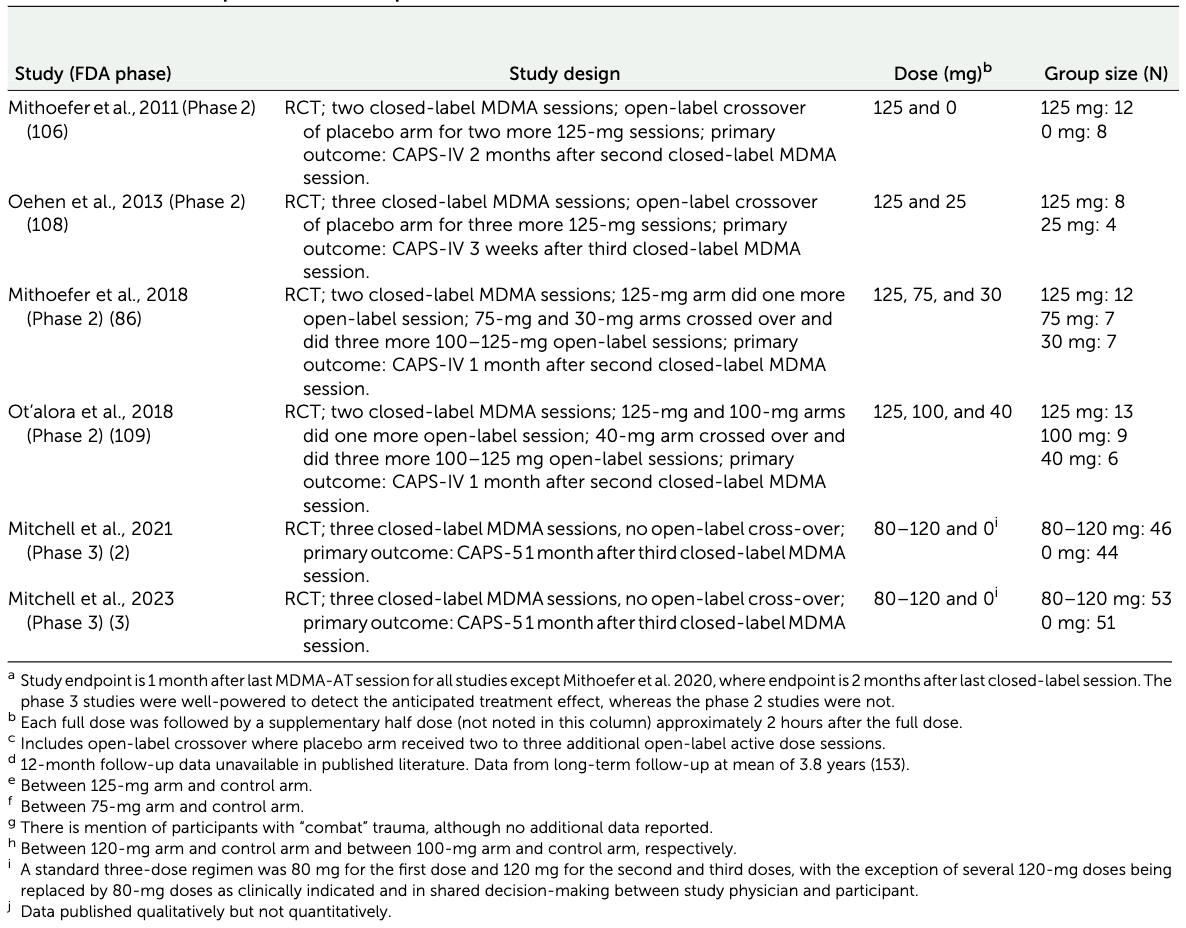
Table 1Figure 4

Figure 4. Pooled results from all phase 2 and 3 trials of MDMA-AT for PTSDa

a. Results pooled from all phase 2 and 3 clinical trials that used the Clinician-Administered PTSD Scale (CAPS-IV or CAPS-5) as the primary outcome. Data are presented as mean and 95% confidence intervals. Adapted from published data (1–3, 86, 106, 108, 109, 119, 129, 153, 154).

Comparisons to current PTSD treatments.

Prolonged Exposure (PE) or Cognitive Processing Therapy (CPT) are trauma-focused psychotherapies that are widely accepted as the two gold-standard, first-line treatments for PTSD. Of individuals with military-related PTSD who receive PE and CPT, approximately one-third (28%–40%) of individuals no longer meet diagnostic criteria for PTSD, 12%–20% of individuals achieve remission, and 13%–56% drop out of treatment (155, 156).

Currently available medications are less efficacious than trauma-focused psychotherapies for PTSD (157). The antidepressants sertraline and paroxetine are the only two medications approved by the FDA to treat PTSD. Yet, their low to moderate efficacy when used alone (158) has led them to be considered second-line treatments for PTSD (159). Their efficacy for PTSD further diminishes to being indistinguishable from placebo when combined with trauma-focused psychotherapy (160, 161). No studies have yet been conducted directly comparing MDMA-AT against other medications or psychotherapies. Further comparative studies are needed.

It is notable that the rates of loss of diagnosis and remission in the placebo-assisted therapy arms of MDMA-AT studies are comparable to those found in the active arms of studies of PE and CPT. This is potentially due in part to the extensive clinical contact associated with the MDMA-AT protocol—approximately 42 hours with two therapists. In contrast, PE and CPT involve approximately 12–18 hours of clinical contact with one therapist. Thus, this limits any direct comparisons that can be made between outcomes from studies of MDMA-AT versus those of other trauma-focused therapies.

Comorbid depression and insomnia.

Depression (162–165) and insomnia (166–169) are highly comorbid with PTSD, with each being prevalent in approximately 50% of cases of PTSD. They also potentially interact with PTSD to worsen its severity (170) and increase the risk of suicidality (171). MDMA-AT has been found to significantly improve symptoms of both comorbid depression (2) and insomnia (172) by treatment endpoint in individuals with PTSD. Improvements in insomnia continue to significantly improve between treatment endpoint and 12-month follow-up (172).

Posttraumatic growth.

Posttraumatic growth—a composite of post-trauma positive changes that can occur in self-perception, interpersonal relationships, and life philosophy—was measured by the Post-Traumatic Growth Inventory (PTGI) across three of the MDMA-AT studies (total N=60) (173). Posttraumatic growth significantly increased after completing a course of MDMA-AT for PTSD (173). The magnitude of posttraumatic growth was sustained at 12-month follow-up (173). Similar to how posttraumatic growth has been associated with improvements in PTSD severity after PE (174), posttraumatic growth was associated with improvements in PTSD severity after MDMA-AT as well, which may in part explain the therapeutic mechanism of MDMA-AT (173).

Personality.

MDMA-AT may also promote increases in the personality structure of openness on the NEO Personality Inventory, with openness increasing from pre- to posttreatment relative to placebo for those with PTSD (175). Similar findings of increased openness have been described in studies of psilocybin-assisted therapy for depression (176, 177).

The relationship between PTSD, its treatments, and the personality domain of openness has not been well-described in the literature. However, low openness is a risk factor for treatment-resistant depression (178). MDMA-AT significantly improves openness in those with PTSD, and improvements in openness were further found to moderate improvements in PTSD severity, albeit in the context of a very small, underpowered sample (175). This suggests the possibility of increased openness being one potential mechanism by which MDMA-AT exerts its therapeutic effects for those with PTSD.

Other studies of MDMA-AT for PTSD.

Several additional single arm, nonrandomized, open-label studies of MDMA-AT for PTSD have been conducted as well (179). One such study involved using MDMA to enhance Cognitive Behavioral Conjoint Therapy (CBCT), which is a couples-based, empirically supported cognitive-behavioral treatment for PTSD. In this study, CBCT was modified by having the participant with PTSD as well as their significant other both jointly consume MDMA in two separate administration sessions spread out over the course of CBCT manualized treatment sessions (107). The underlying concept of this approach is that the prosocial effects of the MDMA may contribute to an added clinical benefit in the context of a key social relationship within the framework of couples-based therapy. MDMA-assisted CBCT was found to have large within-group effect sizes of PTSD symptom reduction comparable to traditional MDMA-AT (107), although further randomized placebo-controlled studies are needed.

MDMA-AT for Other Conditions

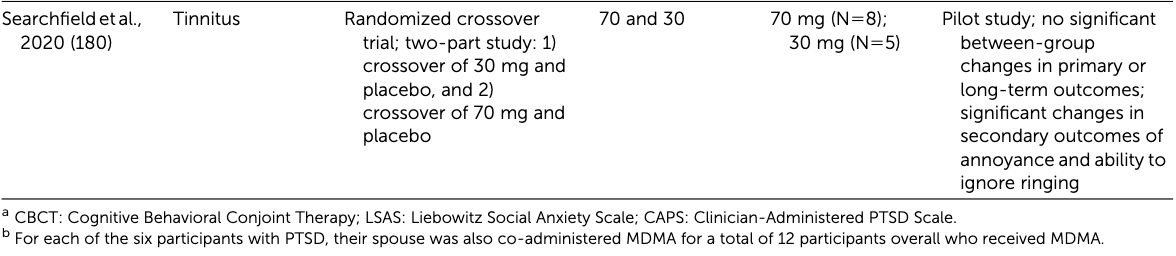
Recent clinical trials of MDMA-AT for conditions other than PTSD include single studies for alcohol use disorder (110), social anxiety in adults with autism spectrum disorder (105), anxiety related to life-threatening illness (111), and tinnitus (180). Despite their limitations, results from these non-PTSD studies suggest further study of MDMA-AT is warranted not only in PTSD but also in other conditions.

Alcohol use disorder.

The Bristol Imperial MDMA in Alcoholism Study (BIMA) is the first study of MDMA-AT for a substance use disorder. Fourteen individuals with alcohol use disorder who recently detoxed from alcohol received two sessions of open-label MDMA-AT with an initial dose of 125 mg of MDMA and a supplemental half dose 2 hours later. The open-label MDMA-AT group was compared with a separately conducted observational study of a similar population of 14 different individuals who received treatment as usual. Nine months post-detox, 75% of the observational group were drinking >14 units of alcohol weekly, whereas 21% of the MDMA-AT group met the same criteria (110).

Anxiety.

A small double-blind, randomized, placebo-controlled clinical trial (RCT) of MDMA-AT to treat social anxiety in 12 adults with autism spectrum disorder found that social anxiety significantly improved after two MDMA-AT sessions of 75–125 mg (plus a supplemental half dose 2 hours later) of MDMA (N=7) compared to inactive placebo (N=4) (105). Another RCT investigated two sessions of MDMA-AT for 18 individuals with anxiety or psychological distress related to a life-threatening illness comparing 125 mg (plus a supplemental half-dose 2 hours later) of MDMA (N=13) and inactive placebo (N=5) (111). Reductions in anxiety between arms were not statistically significant (p=0.056) (111).

Tinnitus.

A pilot within-group crossover RCT studying MDMA for tinnitus evaluated 70 mg of MDMA with inactive placebo crossover (N=8) versus 30 mg of MDMA with inactive placebo crossover (N=5). No differences were found in the primary outcomes of short-term tinnitus symptom severity and long-term tinnitus-related quality of life in this underpowered study (180). This study also did not offer participants a supplemental half dose as is typically done in studies of MDMA-AT, and a dose of 70 mg as the primary arm was the lowest dose used of any MDMA-AT study.

Limitations

Studies of MDMA-AT and psychedelics are generally characterized by several limitations including inadequate blinding, expectancy bias, lack of comparative studies, small numbers of participants, and highly selected populations (181). Studies of MDMA-AT also lack a robust body of dose-finding studies and long-term follow-up data.

Inadequate blinding is an inherent limitation for studies not only of MDMA-AT but also of psychedelics overall. Guessing of blinding was reported in five studies of MDMA-AT for PTSD (3, 86, 106, 108, 109), and the rest of the PTSD studies did not either assess or report success of blinding. Reported rates of correct guesses ranged from a reported 59% overall when combining both participants and therapists (108) to 95% for participants and 100% for therapists (106). Future studies may need to consider an active comparator such as methylphenidate or an amphetamine derivative.

Expectancy bias is another inherent limitation for studies of MDMA-AT and other psychedelics. Among 83 participants across all of the phase 2 studies of MDMA-AT for PTSD, nearly 10% (N=8) had used Ecstasy prior to their enrollment in the study (129). Prior lifetime use of MDMA was reported in 32% of participants in the first phase 3 trial (2) and in 46% of participants in the second phase 3 trial (3). This is problematic because these participants likely enter the study with higher expectations of a positive subjective experience or therapeutic benefit, which may bias the results in favor of a positive treatment effect (181). Prior MDMA experience is also problematic from the perspective of enacting a successful blind in studies with an active comparator condition.

Studies have not yet been conducted that directly compare MDMA-AT and another first-line treatment for PTSD. This has been due in part to the inherent challenges of designing a study that would adequately compare MDMA-AT and a first-line trauma-focused psychotherapy.

The relatively small number of patients across all phase 2 and 3 trials of MDMA-AT for PTSD (approximately 300) is relatively low compared with studies of other pharmaceuticals seeking FDA approval, which typically require thousands of patients. The low number of patients is justified in terms of statistical power to demonstrate a significant difference between treatment groups, due to the large effect size of MDMA-AT for the treatment of PTSD symptoms. However, it is questionable whether data from approximately 300 patients can adequately answer questions of safety or generalizability to a broad segment of the population. The limited patient data may not reliably characterize the full spectrum of potential adverse effects, especially adverse effects that are rare. However, nearly 2,000 individuals have received MDMA in clinical trials both including and aside from the treatment of PTSD (76), and more patients are continuing to receive MDMA-AT through Expanded Access treatment protocols, all of which will contribute to safety data. Altogether, this emphasizes the critical importance of phase 4 post-market monitoring of MDMA-AT.

Despite the relatively small numbers of participants enrolled in studies of MDMA-AT, these studies attract and screen large numbers of individuals seeking enrollment, with only approximately 10% of screened individuals being enrolled. This allows the study to be highly selective about enrolling participants, which consequently limits generalizability. Certain patient populations such as those with borderline personality disorder, substance use disorders, and history of psychosis are also excluded from studies, thus further reducing the generalizability of results.

The current body of MDMA-AT clinical trials lacks adequate dose-finding studies. The active arm of all phase 2 and 3 studies conducted thus far have used either 120 mg or 125 mg as the highest initial dose of an MDMA session (followed by a 60–62.5 mg supplemental half dose 90–120 minutes later, for a total cumulative dose of 180–187.5 mg per dosing day) (1–3). No studies evaluated initial doses higher than 125 mg, and only two studies introduced a third arm with an intermediate doses of either 75 mg (N=7) (86) or 100 mg (N=9) (109). Although there were no differences between the 100-mg and 125-mg arms compared with the 40-mg control arm in Ot’alora et al. (109), the 75-mg arm in Mithoefer et al. appeared to have a greater effect size (loss of diagnosis, N=6 of 7 [86%]; between-group Cohen’s d=2.8) than the 125-mg arm (loss of diagnosis, N=7 of 12 [58%]; between-group Cohen’s d=1.1) compared with the 30-mg control arm (loss of diagnosis, N=2 of 7 [29%]) (86). Despite this unanticipated potential signal of an intermediate dose effect, further well-powered dose-finding studies were not pursued. Such studies are still needed.

The questions of a potential intermediate dose effect, dose preference, and need for supplemental dose were partially addressed in the phase 3 studies. All participants were started at an initial dose of 80 mg (plus a supplemental half dose 90–120 minutes later) for their first session. Based on tolerability and shared decision-making, the protocols allowed for flexibility in the second and third MDMA sessions to either increase the initial dose to 120 mg (with or without a supplemental half dose) or stay at an initial dose of 80 mg (with or without a supplemental half dose) (2, 3). With a few exceptions, nearly all participants elected to take the 120-mg initial dose with a supplemental half dose for each of their last two MDMA sessions (2, 3). Thus, current evidence does not allow for differentiating safety and efficacy profiles between treatment courses where the second and third MDMA sessions utilize 1) initial doses of 80 mg versus 120 mg or 2) dosing with versus without supplemental half doses.

Although long-term follow-up data at 1 and 4 years suggests the treatment effect of MDMA-AT for PTSD is durable (129, 153), no blinded, placebo-controlled data exist beyond 2 months after the final dosing session. All phase 2 and 3 participants were unblinded after the primary outcome measure 1–2 months after their final dosing session, and those who received placebo were offered to crossover to open-label MDMA-AT. One-third to nearly half of participants who received placebo no longer met criteria for PTSD after a course of treatment (2, 3), and PTSD is known to gradually improve in many individuals even without treatment (164). Thus, without blinded, placebo-controlled long-term follow-up data, reliable conclusions cannot yet be drawn about the long-term durability and magnitude of treatment effects.

Future Directions

Pharmacology: MDMA Derivatives and Analogs

Altering the pharmacology of the psychedelic by developing derivatives and analogs is an avenue with wide potential for further research. MDMA is comprised of a racemic mixture of S(+)-MDMA and R(−)-MDMA. Compared to the racemic mixture of traditional MDMA, the enantiomer R(−)-MDMA potentially has an improved therapeutic index and reduced side effect profile (182) while still maintaining its prosocial effects (183). R(−)-MDMA is currently being developed as a potential therapeutic for autism spectrum disorder (184). Several other MDMA derivatives are also being developed (185–187).

Lysine-MDMA and lysine-MDA are derivatives of MDMA and MDA, respectively, currently undergoing their first human clinical trial in healthy subjects (187). Similar to the FDA-approved medication lisdexamfetamine—which attaches the amino acid lysine to dextroamphetamine to create a prodrug with a more gradual onset of action—lysine is being similarly attached to MDMA and MDA to potentially achieve a similar effect. Especially given the long durations of action of MDMA and other current psychedelics, further studies are needed to examine the pharmacology of not only currently established psychedelics but also their derivatives and analogs.

Investigating Therapeutic Mechanisms

While clinical efficacy continues to be established for MDMA-AT, the precise neurobiological mechanisms underlying its efficacy are still unclear. Although MDMA seems to facilitate memory reconsolidation and fear extinction (26, 50, 51), this research is nascent, and further studies are needed to clarify the biological, psychological, and social mechanisms by which this occurs.

MDMA-mediated endogenous release of oxytocin has been implicated potentially as a central component of MDMA’s therapeutic mechanism due to its ability to reopen a critical period of social reward learning in rodent models (43). Although these findings have yet to be corroborated in humans, the capacity to reopen critical periods of social reward learning in rodents has been replicated with other classical and nonclassical psychedelic compounds with varying mechanisms of action (ketamine, psilocybin, LSD, and ibogaine) and which lack MDMA’s unique prosocial effects (188). These findings shift our thinking away from the importance of MDMA-mediated oxytocin release specifically reopening windows of social reward learning. They instead shift our focus toward a more overarching concept of psychedelics as a “master key” for activating a common pathway of reopening critical periods of metaplasticity (defined as “a change in the ability to induce subsequent synaptic plasticity, such as long-term potentiation or depression”) by regulating DNA transcription of components, receptors, and proteases associated with the extracellular matrix (188). The widened window of tolerance (189) to stress and fear (46) that is observed in MDMA-AT also warrants further study in humans.

While MDMA may lead to substantial increases in neuroplasticity in the form of neuritogenesis and synaptogenesis (68), further studies are needed to better understand the neurobiological underpinnings of these changes and their clinical implications, particularly in those with traumatic brain injury and other trauma-related conditions.

MDMA-AT promotes improvements in posttraumatic growth (173) as well as in the personality domain of openness (175)—each of which may contribute to an overall framework describing its therapeutic mechanism. However, much is still unclear as to what extent these and other psychological factors contribute to the therapeutic efficacy of MDMA-AT.

Therapeutic alliance and rapport have been implicated as potential moderators of treatment response to psilocybin-assisted therapy for depression (190). However, therapeutic alliance and rapport have yet to be studied as moderators of treatment response in MDMA-AT.

Examining and Developing the Therapeutic Modality

As described earlier, MDMA-AT utilizes a manualized yet open-ended modality that incorporates a nondirective, person-centered approach. Many components of this modality are grounded in approaches established by the initial generation of Western psychedelic therapists and refined over time (191). While randomized placebo-controlled clinical trials have thus far studied the medication (MDMA versus placebo) as the variable, no trials have yet studied the therapeutic modality itself versus a control therapeutic modality as the study variable. Component analyses to study various components of the MDMA-AT therapeutic modality are also warranted.

The first study using MDMA to enhance a traditional psychotherapeutic modality was conducted with a single-arm study of MDMA-Assisted Cognitive Behavioral Conjoint Therapy for PTSD where both the patient and their spouse received MDMA together (107). Similar studies will be needed to study other current first-line psychotherapeutic modalities augmented by MDMA and whether the augmentation of an evidence-based psychotherapeutic approach with MDMA produces superior outcomes to MDMA-AT in the standard model.

Novel Indications

Clinical trials have studied MDMA-AT for PTSD, alcohol use disorder, anxiety disorders, and tinnitus (Table 2). Studies are also being planned for eating disorders, traumatic brain injury (193), and female hypoactive sexual desire disorder (194). By far, the largest evidence base lies in MDMA-AT for PTSD, with other conditions having only small—often uncontrolled—clinical trials currently published. Further studies are needed to examine MDMA-AT for a wider range of psychiatric conditions.

Table 2. Other clinical trials of MDMA-ATa
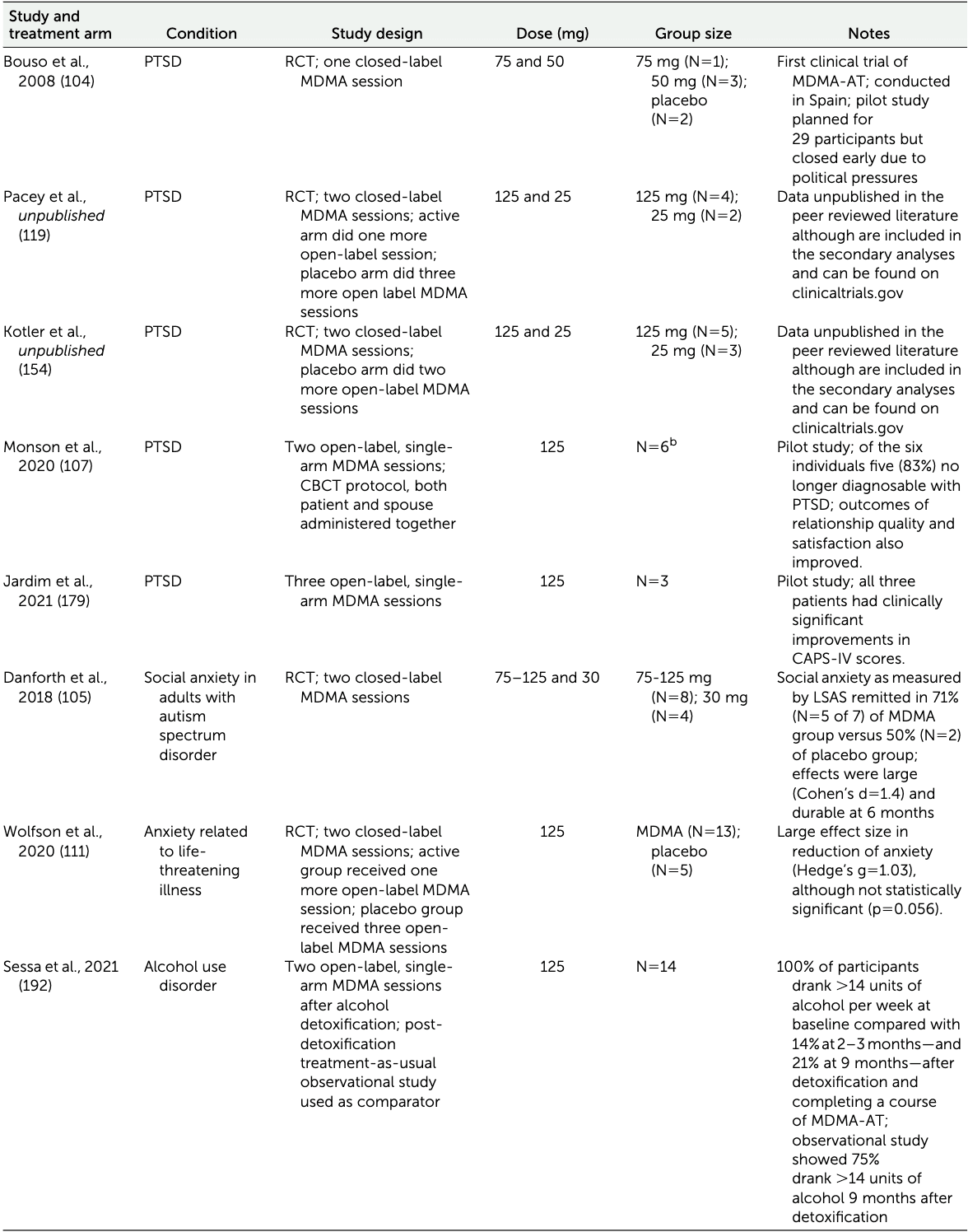
Table 2

Table 2 (Continued).

Table 2 (Continued)

Care Delivery Models and Resource Intensiveness

Accounting for two to three MDMA sessions, MDMA-AT in its current form is a highly resource-intensive treatment with approximately 26–42 therapist-hours needed for each of the two therapists for a total of approximately 52–84 therapist-hours to complete a course of treatment. In contrast, current manualized first-line trauma-focused psychotherapies such as PE and CPT typically involve 8–15 sessions anywhere between daily to weekly with one therapist and 60–90 minutes per session for a total of 8–23 therapist-hours over a single course of treatment (195). Nevertheless, MDMA-AT compared to standard of care has been suggested to be cost-effective, generating health care savings of $132.9 million over 30 years and averting 61.4 premature deaths for every 1,000 patients (196, 197).

The following are 10 potential avenues of future research to improve the efficiency of care delivery for MDMA-AT and other psychedelic-assisted therapies. Each of these potential avenues of research represents a departure from the current established care delivery model of having two co-therapists in the room with the patient for every preparation, medication, and integration session that was established to maximize safety and efficacy. It is yet unclear if any of these approaches can indeed maintain safety and efficacy while improving resource efficiency. However, they are mentioned here for researchers to consider.

1.Simultaneous administration whereby multiple rooms are run simultaneously with a single facilitator per room while the supervising facilitator is in a video control room concurrently supervising all rooms. For example, if five rooms are running at once with one patient each, this would require a total of six facilitators instead of 10.2.Group administration of the medication in a single large room with several facilitators supervising. This is already being done in Switzerland in groups of up to 12 patients (198).3.Group preparation and/or integration sessions, or a combination of individual/group preparation and/or integration sessions.4.A combination of simultaneous administration and group administration over a course of treatment.5.Having the patient’s primary therapist be the second facilitator.6.Having a single facilitator per patient.7.Having facilitators primarily not in the room with the patient.8.Having some of the preparation be done with pre-recorded video modules.9.Further limiting the number or length of preparation and/or integration sessions.10.Utilizing telehealth for some of the preparation and/or integration sessions.

Public Policy and Access for Nonmedical Use

Another important consideration is the dichotomy between medical use and nonmedical use. Although the national conversation has primarily been focused on medical use, there are growing efforts to legalize or decriminalize nonmedical use of psychedelics, with various models being proposed that mental health professionals must be aware of to better appreciate the rapidly evolving landscape of psychedelic public policy.

One model already passed into law is the Oregon Model, which passed as Ballot Measure 109 in November 2020. As of 2023, nonmedical facilitators may be licensed by the state of Oregon to administer psilocybin to individuals for nonmedical use (199). The rationale to receive psilocybin under the Oregon Model is not to treat a medical diagnosis but rather to improve well-being and quality of life (operationalized as “psilocybin services”), which in turn may lead to greater public access to psilocybin compared with the medical model (200). Although the Oregon Model is specific to psilocybin, it is plausible that this model may encompass MDMA and other psychedelics if it is passed into law in other states. While the nonmedical model poses numerous concerns and risks that must be mitigated, it is a potential reality that clinicians must contend with in the future and must be equipped with knowledge of appropriate safeguards.

Another model is the decriminalization of possessing, obtaining, sharing, and personally using psychedelics (200). California Senate bill 519 proposes this model for MDMA and several other psychedelics. Although it has not yet been passed as of the time of writing, its passage would make California the first state to legalize this model. However, this model has already been adopted by smaller localities in Denver, Colorado; Oakland, California; Ann Arbor, Michigan; and Cambridge, Massachusetts.

A third model that is an intermediate between the Oregon and California models that adds an additional layer of safeguards to mitigate unsafe use: licensed personal use. In this model, individuals would be licensed by the state to acquire and personally use a pharmaceutical-grade psychedelic within predetermined limitations of amount, frequency, and/or pattern of use set by state law. Much like with driving a vehicle, the license would be revoked after meeting a legal threshold of irresponsible use. This model has not yet been adopted by any jurisdiction.

It is possible that the social movement toward greater access to psychedelics may eventually take a similar trajectory as cannabis. However, many of the limitations that restricted cannabis research and public policy were due in part to its status as a Schedule I controlled substance. Those same limitations will not be applicable to psychedelics if they become FDA-approved and removed from Schedule I. Clinicians, researchers, policymakers, and the public can anticipate this topic eventually taking a more prominent role in the national conversation over the coming years and must prepare accordingly.

Research Funding Support

Federal research funding to examine the therapeutic efficacy of psychedelics had been precluded by Section 509 of an annual appropriations Act which allocates funding to the National Institutes of Health (NIH) (201). It states that “[n]one of the funds made available in this Act may be used for any activity that promotes the legalization of any drug or other substance included in schedule I… (201).”

For this reason, much of the funding support for the advancement of psychedelic science thus far has come from philanthropy. Johns Hopkins was the first academic institution in the United States to open a center to study psychedelics in 2019 with the backing of $17 million in philanthropic funding. Since then, psychedelic research centers have opened at Harvard, Yale, UC Berkeley, UC San Diego, UCSF, NYU, Mount Sinai, UT Austin, and Imperial College London.

However, the same law that established the legal preclusion for NIH funding also had a caveat that the preclusion would no longer apply when “there is significant medical evidence of a therapeutic advantage to the use of such drug or other substance or that federally sponsored clinical trials are being conducted to determine therapeutic advantage (201).” Given this, the NIH recently funded its first grant studying the clinical efficacy of a psychedelic: a study of psilocybin for tobacco cessation at Johns Hopkins. This was a watershed moment for psychedelic research as it opened the door for psychedelic research to be funded by the NIH. Given that MDMA-AT for PTSD currently has a stronger evidence base from clinical trial data than psilocybin for smoking cessation, it would be reasonable to conclude that studies investigating the clinical efficacy of MDMA-AT would also no longer be precluded from NIH funding. NIH also hosted the first public webinar on psychedelics as therapeutics in January of 2022, which further illustrates a potential change in institutional disposition toward the conduct of this research with federal funds.

Conclusions

A clear distinction must be made between classical psychedelics and MDMA. Compared with classical psychedelics, MDMA can also be described as an entactogen and is unique in terms of its pharmacology and subjective effects. Unlike classical psychedelics, MDMA allows the individual to maintain intact ego functioning and a greater degree of cognitive and perceptual lucidity while still experiencing a prosocial altered state of consciousness that facilitates deeply emotional therapeutic breakthroughs. Such therapeutic breakthroughs may be mediated by enhanced levels of trust, empathy, self-compassion, and a “window of tolerance” that may not have been otherwise possible with traditional psychotherapy.

Another important distinction that must be made is the distinction between Ecstasy used in recreational settings which is often adulterated with other substances, versus pharmaceutical-grade MDMA administered by trained professionals in a controlled clinical setting that optimizes safety. Harms associated with Ecstasy are most often attributable to unknown adulterants and unsafe practices in uncontrolled recreational environments. MDMA administered in controlled clinical settings has been consistently found to be safe with a low potential for harm and dependence. Preliminary evidence suggests MDMA-AT may have efficacy as a treatment for certain types of addiction.

Conflating findings between recreational Ecstasy and clinical MDMA-AT in either direction can be potentially hazardous. Incorrectly assuming recreational Ecstasy use is safer than it is based on evidence from pharmaceutical-grade MDMA and MDMA-AT may contribute to recreational users, patients, clinicians, and policymakers erring on the side of relaxing caution too far and making decisions that may be more aggressive than is warranted. On the other hand, incorrectly assuming MDMA-AT in clinical settings is more unsafe than it is based on evidence from recreational Ecstasy use may contribute to overcautiousness and delaying actions that could benefit patients in need. Judicious evidence-based clinical and policy decisions must appropriately apply evidence from recreational use to inform decisions about recreational use and evidence from clinical use to inform decisions about clinical use, without conflating the evidence between the two.

Eight randomized, placebo-controlled clinical trials suggest that MDMA-AT may be safe and efficacious for PTSD. Two-thirds of individuals no longer meet criteria for PTSD after a course of MDMA-AT. This body of evidence has been the foundation for the FDA’s decisions to designate MDMA-AT as a Breakthrough Therapy for PTSD in 2017 and to grant Expanded Access (“Compassionate Use”) in 2022.

In light of the FDA requesting an additional phase 3 clinical trial after rejecting the initial New Drug Application, further studies are still needed that address previous study design limitations, investigate the pharmacology of MDMA and its derivatives, strengthen and refine the therapeutic modality, elucidate therapeutic mechanisms and predictors of response, investigate indications beyond PTSD, improve care delivery models to reduce resource-intensiveness without compromising safety and efficacy, and inform the design of data-driven and patient-centered public policy.

Open Article as PDF

Abstract

MDMA (i.e., 3,4-methylenedixoymethamphetamine), commonly known as “Ecstasy” or “Molly,” has been used since the 1970s both in recreational and therapeutic settings. The Food and Drug Administration (FDA) designated MDMA-Assisted Therapy (MDMA-AT) as a Breakthrough Therapy for posttraumatic stress disorder (PTSD) in 2017, and the FDA is requiring an additional phase 3 trial after rejecting the initial New Drug Application in 2024. Unlike other psychedelics, MDMA uniquely induces prosocial subjective effects of heightened trust and self-compassion while maintaining ego functioning as well as cognitive and perceptual lucidity. While recreational use in nonmedical settings may still cause harm, especially due to adulterants or when used without proper precautions, conclusions that can be drawn from studies of recreational use are limited by many confounds. This especially limits the extent to which evidence related to recreational use can be extrapolated to therapeutic use. A considerable body of preliminary evidence suggests that MDMA-AT delivered in a controlled clinical setting is a safe and efficacious treatment for PTSD. After a course of MDMA-AT involving three MDMA administrations supported by psychotherapy, 67%–71% of individuals with PTSD no longer meet diagnostic criteria after MDMA-AT versus 32%–48% with placebo-assisted therapy, and effects endure at long-term follow-up. This review primarily aims to distinguish evidence of recreational use in nonclinical settings versus MDMA-AT using pharmaceutical-grade MDMA in controlled clinical settings. This review further describes the putative neurobiological mechanisms of MDMA underlying its therapeutic effects, the clinical evidence of MDMA-AT, considerations at the level of public health and policy, and future research directions.

MDMA for Posttraumatic Stress Disorder

MDMA, also known as "Ecstasy" or "Molly" in recreational use, is being explored as an aid to psychotherapy for posttraumatic stress disorder (PTSD). Clinical trials involving hundreds of participants have indicated that MDMA-Assisted Therapy (MDMA-AT) is effective for PTSD when administered at higher doses. The Food and Drug Administration (FDA) recognized MDMA-AT as a Breakthrough Therapy in 2017, suggesting it could significantly improve existing treatments. In 2022, the FDA also allowed Expanded Access, known as "Compassionate Use," making MDMA-AT available in regulated settings outside of formal trials. While the FDA initially did not approve MDMA-AT for PTSD due to study design issues in Phase 3 trials, it has requested a resubmission after an additional Phase 3 trial that addresses these limitations. As this treatment option develops, healthcare professionals require a thorough understanding of MDMA and MDMA-AT to advise patients effectively.

Research on MDMA and MDMA-AT falls into two main areas: one suggesting potential harm from "Ecstasy" or "Molly" in uncontrolled settings, and another supporting the benefits and limited risks of pharmaceutical-grade MDMA-AT in controlled clinical environments. It is crucial not to confuse these two categories. Applying the positive findings from clinical MDMA-AT to recreational use can lead to underestimating risks and overestimating benefits. Conversely, using negative findings from recreational use to assess clinical MDMA-AT can lead to overestimating risks and underestimating benefits in a therapeutic context. This discussion aims to clearly differentiate between MDMA use in nonclinical settings and MDMA-AT using pharmaceutical-grade MDMA in controlled clinical settings. It will also explore MDMA's neurobiological effects, clinical evidence for MDMA-AT, public health and policy considerations, and future research pathways.

History of MDMA and MDMA-Assisted Therapy

MDMA was first created in 1912 by a chemist at Merck, though its mind-altering effects were not recognized for decades. Early research in 1953 by the U.S. Army focused on animal toxicology. A similar substance, MDA, was patented in 1960 for anxiety treatment and used recreationally and therapeutically. After MDA became a controlled substance in 1970, MDMA emerged as an alternative.

In 1977, MDMA was introduced to psychotherapists, notably Leo Zeff, who trained others and legally treated over 4,000 patients with MDMA-AT. Clinicians reported that MDMA reduced defensiveness, eased emotional expression, and helped patients access traumatic memories, leading to symptom relief. However, in 1985, due to increasing recreational use, MDMA was classified as a Schedule I substance, implying no accepted medical use.

Despite a DEA administrative law judge's recommendation in 1985 to place MDMA in Schedule III, acknowledging its medical utility, the DEA maintained its Schedule I classification in 1986. This decision led to the formation of the Multidisciplinary Association for Psychedelic Studies (MAPS) in 1986. MAPS has since spearheaded research to gain FDA approval for MDMA-AT for PTSD, sponsoring all major clinical trials. Their drug development arm was later rebranded as Lykos Therapeutics.

MDMA: What It Is and What It Is Not

MDMA is often categorized as a nonclassical psychedelic, specifically an empathogen or entactogen, rather than a classical psychedelic like LSD or psilocybin. While classical psychedelics cause vivid visual changes, mystical experiences, and ego dissolution, therapeutic doses of MDMA do not typically produce these effects. Instead, MDMA is associated with feelings of positive mood, well-being, extroversion, bliss, and self-compassion. It also fosters prosocial behaviors like heightened empathy, trust, and connection with others. Research indicates that MDMA's subjective effects are more akin to D-amphetamine than LSD, with cognitive clarity largely preserved.

Physically, MDMA causes acute sympathomimetic effects, including increased blood pressure, heart rate, body temperature, and pupil dilation. These effects are dose-dependent and generally well-tolerated. Studies have shown comparable increases in these physiological responses across MDMA, LSD, and D-amphetamine. However, MDMA and LSD may lead to greater increases in heart rate and lesser increases in blood pressure compared to D-amphetamine.

Pharmacologically, MDMA primarily affects serotonin, norepinephrine, and dopamine reuptake, blocking them in that order. Unlike classical psychedelics, which mainly act on 5HT2A receptors, MDMA's primary mechanism involves reuptake inhibition. MDMA also significantly increases plasma oxytocin levels, an effect not seen with LSD or D-amphetamine, which may contribute to feelings of trust, social connection, and an altered perception of aversive stimuli. Research suggests MDMA can reduce fear responses by decreasing amygdala activity and strengthening the learning of safety memories. This effect may involve an increased capacity for neuroplasticity.

Safety of MDMA and MDMA-Assisted Therapy

A crucial distinction exists between recreational "Ecstasy" and pharmaceutical-grade MDMA used in controlled clinical settings. "Ecstasy" often contains unknown adulterants and is consumed in uncontrolled environments, elevating risks of dependence and harm. Conversely, MDMA in clinical trials is pure and administered under strict protocols, demonstrating a low risk of dependence. Reports of MDMA causing brain damage stemmed from a retracted study. While animal studies at extremely high doses show some neurotoxic effects, therapeutic doses in human trials are much lower, less frequent, and have not shown detectable neurotoxicity to serotonin neurons. Chronic heavy recreational use may reduce serotonin transporter density, a change that might be reversible.

Mortality associated with "Ecstasy" use is rare and typically linked to adulterants, hyperthermia, hyponatremia, co-ingestion of other substances, environmental factors, or underlying medical conditions. Deaths directly caused by MDMA alone are extremely infrequent. Hyperthermia (elevated body temperature) and hyponatremia (low sodium levels) are significant causes of morbidity and mortality in recreational settings, often due to strenuous activity, high ambient temperatures, and inappropriate fluid intake. In controlled clinical settings, these risks are minimized through careful dosing, screening for drug interactions, controlled environments, and balanced fluid management, leading to no reported instances of clinically significant hyperthermia or hyponatremia in trials.

Cardiovascular risks arise from MDMA's sympathomimetic properties, which elevate heart rate and blood pressure. In healthy individuals at therapeutic doses, blood pressure usually remains within safe limits. Pre-treatment screening, including medical history and electrocardiogram, coupled with continuous monitoring, mitigates these risks during clinical use. While long-term heavy recreational use has been associated with valvular heart disease, clinical trials involving pharmaceutical-grade MDMA, with their limited total doses, have not demonstrated such complications.

Psychiatric concerns like anxiety, depression, and psychosis have been linked to recreational "Ecstasy" use, though these are often confounded by polysubstance use and pre-existing conditions. In MDMA-AT, brief anxiety reactions may occur but are generally transient. Depression symptoms can improve, and there is no evidence of increased risk for long-term anxiety or psychosis in carefully screened patients. Suicidal ideation or behavior in trials has predominantly occurred in placebo groups or prior to active MDMA administration. Studies on "Ecstasy" and neurocognition often present conflicting results due to methodological issues, but MDMA-AT in controlled clinical settings has shown no negative effects on neurocognitive function.

Relational safety is paramount due to the heightened trust and emotional vulnerability experienced by patients during MDMA-AT. Therapeutic touch, when pre-approved and strictly defined within boundaries, can be supportive. However, this also introduces risks of boundary violations, including sexual abuse, as some historical cases indicate. Modern MDMA-AT protocols employ robust ethical safeguards, such as male-female co-therapist teams and extensive training, to minimize these risks. Interpersonal dependency may arise, similar to traditional therapy, and is addressed during integration sessions. While MDMA does not appear to heighten suggestibility as classical psychedelics do, the attenuated fear response and enhanced prosocial effects warrant further investigation into potential vulnerabilities. The risk of addiction to MDMA is considered low, and serotonin syndrome, while a concern with certain drug combinations, has been successfully managed in clinical trials through stringent screening and washout protocols.

Summary: Safety of MDMA and MDMA-AT

It is vital to differentiate between "Ecstasy" used recreationally and pharmaceutical-grade MDMA administered in controlled clinical settings. Recreational "Ecstasy" can be harmful or even fatal without proper precautions, often due to adulteration and uncontrolled environments. Conversely, therapeutic MDMA, when used at appropriate dosages with trained professionals and precautions in clinical settings, appears to be safe.

The risk of addiction or future non-prescribed use is low when MDMA is administered in clinical research. While heavy recreational "Ecstasy" use may be linked to impaired neurocognition, therapeutic MDMA in controlled settings has not shown such effects. The reasons for these differences are not fully understood, but the purity and precise dosing of clinical MDMA, compared to recreational substances, are likely significant factors. The main risks associated with recreational "Ecstasy" use—hyperthermia, hyponatremia, and cardiac issues—are effectively managed in clinical MDMA-AT. This is achieved through careful dosing, ensuring purity, preventing physical overexertion, maintaining stable body temperature, balancing fluid and electrolyte intake, thorough medical screening and oversight, and the presence of trained therapists. Therefore, MDMA-AT in an FDA-approved clinical setting, with all necessary safeguards, appears to be both medically and psychiatrically safe.

MDMA-Assisted Therapy

MDMA-AT typically involves a structured treatment course comprising preparatory, MDMA, and integration sessions. A full course includes two to three MDMA sessions, each lasting 6–8 hours and spaced approximately one month apart. Before the first MDMA session, three preparatory sessions educate the patient, build a therapeutic relationship, and establish therapeutic goals. Following each MDMA session, three integration sessions are conducted to process the experience, occurring the morning after the MDMA session and then at weekly intervals until the next MDMA session.

Each MDMA session involves two doses: an initial full dose (e.g., 75–125 mg, often 80–120 mg in recent trials) and a supplemental half-dose offered 90–120 minutes later. The supplemental dose aims to extend the peak effects of MDMA, and most participants in clinical trials accept it. The stated MDMA doses in literature generally refer to the initial dose, with the supplemental half-dose implicitly understood to be part of the session, unless otherwise specified.

The therapeutic approach of MDMA-AT is person-centered and process-oriented, focusing on trust, respect, and supportive self-discovery within a non-directive framework. Therapists integrate their existing psychotherapeutic training to guide the content and techniques. Traditionally, MDMA-AT uses a female-male co-therapist pair to enhance patient comfort, ensure continuous support, and allow for the processing of gender-specific therapeutic dynamics. While this model is well-studied, newer trials are exploring same-gender co-therapist teams.

MDMA-AT for PTSD

MDMA-AT has shown significant efficacy in treating PTSD, with nearly 300 participants across eight randomized placebo-controlled clinical trials. Participants in these studies often had chronic PTSD (averaging 14–18 years duration) that had been resistant to previous therapies. At the primary study endpoint, typically four weeks after the last of three MDMA doses, 67%–71% of individuals receiving MDMA-AT no longer met the diagnostic criteria for PTSD, compared to 32%–48% in the placebo group. Remission rates, defined as loss of diagnosis and very low symptom scores, were also significantly higher with MDMA-AT. Furthermore, phase 2 studies indicate that these improvements are durable, with 74% of participants still not meeting PTSD criteria nearly four years later. Dropout rates were notably lower in the MDMA-AT groups compared to placebo.

When compared to established first-line treatments for PTSD, such as Prolonged Exposure (PE) or Cognitive Processing Therapy (CPT), MDMA-AT shows compelling outcomes. PE and CPT typically result in 28%–40% of patients no longer meeting PTSD criteria and 12%–20% achieving remission, with high dropout rates (13%–56%). The efficacy of currently FDA-approved medications for PTSD, such as sertraline and paroxetine, is lower than trauma-focused psychotherapies. Direct comparative studies between MDMA-AT and other treatments are still needed. The extensive therapist contact (approximately 42 hours with two therapists) in MDMA-AT protocols, compared to 12–18 hours in PE and CPT, may contribute to the observed outcomes, even in placebo groups.

MDMA-AT also significantly improves common co-occurring conditions, such as depression and insomnia, which are prevalent in about 50% of PTSD cases. Improvements in insomnia continue to progress even after the treatment course, up to 12-month follow-up. Additionally, MDMA-AT has been found to promote posttraumatic growth—positive psychological changes following trauma—which may contribute to its therapeutic mechanism. It also appears to increase "openness" as a personality trait, a change also observed in psilocybin therapy for depression, and which may moderate improvements in PTSD severity. Preliminary open-label studies have explored MDMA's use to enhance other psychotherapeutic modalities, such as Cognitive Behavioral Conjoint Therapy for PTSD, showing promising results that warrant further randomized controlled trials.

MDMA-AT for Other Conditions

Beyond PTSD, MDMA-AT has been explored in clinical trials for several other conditions. For alcohol use disorder, an open-label study comparing MDMA-AT to usual treatment in individuals recently detoxed from alcohol found that a significantly lower percentage of the MDMA-AT group engaged in heavy drinking nine months post-detox.

In anxiety disorders, a small double-blind, randomized, placebo-controlled trial for social anxiety in adults with autism spectrum disorder showed significant improvement after MDMA-AT. Another trial for anxiety related to life-threatening illness did not find a statistically significant reduction in anxiety compared to placebo. A pilot study for tinnitus also showed no significant differences in symptom severity or quality of life, potentially due to low dosing and lack of supplemental doses.

While these non-PTSD studies have limitations, including small sample sizes and often uncontrolled designs, their preliminary results suggest that further research into MDMA-AT's potential for a wider range of psychiatric conditions is warranted.

Limitations

Research on MDMA-AT and other psychedelics faces several common limitations, including challenges with blinding, potential expectancy bias, and a scarcity of direct comparative studies with existing treatments. Blinding is difficult because the effects of MDMA are distinct, leading participants and therapists to often correctly guess who received the active drug. This can introduce bias, especially since many participants in trials have prior experience with MDMA recreationally, potentially inflating expectations for positive outcomes.

Current studies also involve a relatively small number of participants for FDA approval standards, though the large effect sizes observed in MDMA-AT for PTSD contribute to statistical power. However, the limited data may not fully capture the spectrum of potential adverse effects or allow for broad generalization to diverse populations, as trial participants are highly selected and often exclude individuals with conditions like borderline personality disorder or psychosis. This highlights the importance of post-market monitoring (Phase 4 studies) to gather more extensive safety data.

Furthermore, there is a need for more robust dose-finding studies to optimize MDMA-AT protocols. Most trials have used 120-125 mg as the highest initial dose, with limited exploration of higher or intermediate doses. Questions remain regarding the optimal initial dose, the necessity of supplemental half-doses, and whether different dosing strategies could affect safety and efficacy. Although long-term follow-up data suggest durable treatment effects, these studies are unblinded beyond two months, and placebo-controlled long-term data are lacking, making it difficult to draw definitive conclusions about the true long-term durability of the treatment effect.

Future Directions

Future research into MDMA-AT encompasses several critical areas, starting with pharmacology. Developing MDMA derivatives and analogs, such as R(−)-MDMA or lysine-MDMA, could lead to improved therapeutic indices, reduced side effects, or modified onset of action. Detailed investigation into the unique pharmacological profiles of these compounds is essential. Simultaneously, a deeper understanding of MDMA's precise therapeutic mechanisms is needed. This includes clarifying its role in memory reconsolidation, fear extinction, and the promotion of neuroplasticity (e.g., neuritogenesis and synaptogenesis). Further human studies are necessary to explore how MDMA's effects, such as oxytocin release and the reopening of critical learning periods, contribute to its therapeutic outcomes, alongside its impact on posttraumatic growth and personality openness.

Efforts are also directed at refining and expanding the therapeutic modality. While the existing manualized approach has demonstrated efficacy, studies are needed to compare it directly with other therapeutic models or to conduct component analyses to optimize its elements. Research into augmenting other established psychotherapies with MDMA, such as Cognitive Behavioral Conjoint Therapy for PTSD, represents another promising direction to explore enhanced treatment outcomes.

The investigation of novel indications beyond PTSD is crucial. While early studies show promise for conditions like alcohol use disorder and social anxiety in autism spectrum disorder, more robust clinical trials are needed. Planned studies for eating disorders, traumatic brain injury, and female hypoactive sexual desire disorder further highlight the potential breadth of MDMA-AT's application across psychiatric conditions.

Improving care delivery models is vital to make MDMA-AT more accessible and less resource-intensive. Current protocols require extensive therapist hours. Future research should explore innovations such as simultaneous administration for multiple patients, group preparation and integration sessions, or leveraging telehealth components. The goal is to maintain safety and efficacy while increasing efficiency and reach.

Finally, the evolving landscape of public policy and research funding for psychedelics is a significant area of focus. Models for nonmedical use, like Oregon's psilocybin services, and decriminalization efforts are changing how these substances are accessed and perceived. Clinicians and policymakers must be informed to develop appropriate safeguards. The recent shift in federal funding, exemplified by NIH grants for psychedelic research, marks a pivotal moment, suggesting increased support for studies into MDMA-AT's clinical efficacy, given its strong evidence base for PTSD.

Conclusions

It is important to differentiate between classical psychedelics and MDMA. MDMA, often described as an entactogen, possesses unique pharmacology and subjective effects compared to classical psychedelics. It allows for sustained cognitive clarity and ego function while fostering a prosocial altered state that facilitates deep emotional insights. This process may involve enhanced trust, empathy, self-compassion, and a widened emotional "window of tolerance" that might not be achievable through traditional psychotherapy alone.

Another crucial distinction is between recreational "Ecstasy" and pharmaceutical-grade MDMA administered in controlled clinical settings. Harms linked to "Ecstasy" typically arise from unknown adulterants and unsafe practices in uncontrolled environments. In contrast, MDMA used in controlled clinical settings has consistently been shown to be safe, with a low potential for harm and dependence. Preliminary evidence also suggests that MDMA-AT may be effective in treating certain types of addiction.

Misinterpreting findings between recreational "Ecstasy" and clinical MDMA-AT can lead to significant risks. Overestimating the safety of recreational use based on clinical evidence can encourage dangerous behaviors. Conversely, overstating the risks of clinical MDMA-AT based on recreational use can hinder access to a potentially beneficial treatment for patients. Evidence-based decisions in both clinical practice and public policy must carefully apply research findings to their appropriate context, without conflating the two.

Eight randomized, placebo-controlled clinical trials consistently indicate that MDMA-AT is safe and effective for PTSD, with approximately two-thirds of individuals losing their PTSD diagnosis after treatment. This strong evidence base led the FDA to designate MDMA-AT as a Breakthrough Therapy for PTSD in 2017 and to grant Expanded Access in 2022.

Given the FDA's request for an additional Phase 3 clinical trial, ongoing research is essential. Future studies need to address past study design limitations, explore MDMA's pharmacology and derivatives, refine the therapeutic modality, clarify therapeutic mechanisms, investigate other medical conditions, develop more efficient care delivery models, and inform evidence-based public policy.

Open Article as PDF

Abstract

MDMA (i.e., 3,4-methylenedixoymethamphetamine), commonly known as “Ecstasy” or “Molly,” has been used since the 1970s both in recreational and therapeutic settings. The Food and Drug Administration (FDA) designated MDMA-Assisted Therapy (MDMA-AT) as a Breakthrough Therapy for posttraumatic stress disorder (PTSD) in 2017, and the FDA is requiring an additional phase 3 trial after rejecting the initial New Drug Application in 2024. Unlike other psychedelics, MDMA uniquely induces prosocial subjective effects of heightened trust and self-compassion while maintaining ego functioning as well as cognitive and perceptual lucidity. While recreational use in nonmedical settings may still cause harm, especially due to adulterants or when used without proper precautions, conclusions that can be drawn from studies of recreational use are limited by many confounds. This especially limits the extent to which evidence related to recreational use can be extrapolated to therapeutic use. A considerable body of preliminary evidence suggests that MDMA-AT delivered in a controlled clinical setting is a safe and efficacious treatment for PTSD. After a course of MDMA-AT involving three MDMA administrations supported by psychotherapy, 67%–71% of individuals with PTSD no longer meet diagnostic criteria after MDMA-AT versus 32%–48% with placebo-assisted therapy, and effects endure at long-term follow-up. This review primarily aims to distinguish evidence of recreational use in nonclinical settings versus MDMA-AT using pharmaceutical-grade MDMA in controlled clinical settings. This review further describes the putative neurobiological mechanisms of MDMA underlying its therapeutic effects, the clinical evidence of MDMA-AT, considerations at the level of public health and policy, and future research directions.

MDMA for Post-Traumatic Stress Disorder: An Overview

MDMA, also known recreationally as “Ecstasy” or “Molly,” is being studied as a way to enhance psychotherapy for post-traumatic stress disorder (PTSD). Multiple clinical trials involving hundreds of participants have shown that MDMA-Assisted Therapy (MDMA-AT) can be an effective treatment for PTSD, especially at higher doses. These studies indicated a significant positive impact both when comparing MDMA-AT to a placebo and within the group receiving MDMA-AT.

The Food and Drug Administration (FDA) recognized MDMA-AT as a Breakthrough Therapy in 2017, a designation given to treatments that may offer a major improvement over existing options. In 2022, the FDA also approved expanded access for MDMA-AT, allowing more patients to receive it outside of formal trials in regulated settings. Although the FDA initially did not approve MDMA-AT for PTSD due to some study design limitations in earlier trials, it has invited a new application once another Phase 3 trial addressing these issues is completed. As this treatment becomes more available, healthcare professionals will need a deeper understanding of MDMA and MDMA-AT to properly advise patients.

It is crucial to differentiate between two main categories of information regarding MDMA and MDMA-AT. The first category includes evidence suggesting potential harm from using recreational “Ecstasy” or “Molly” in uncontrolled settings. The second category consists of evidence supporting the potential benefits and low risks of pharmaceutical-grade MDMA when used in controlled clinical therapy settings. Confusing these two categories can lead to underestimating risks for recreational use or overestimating risks for clinical treatment.

This overview aims to clearly distinguish between the effects of recreational MDMA and pharmaceutical-grade MDMA used in clinical therapy. It will also explore how MDMA works in the brain, its clinical evidence, public health considerations, and future research directions.

History of MDMA and MDMA-Assisted Therapy

MDMA was first created in 1912 by a chemist working for Merck, initially as a component for a blood-clotting agent. Its mind-altering properties were not recognized for many years. The first known study to explore MDMA's clinical potential was in 1953, an animal study conducted for the U.S. Army to determine safe doses. While a related substance, MDA, was later used in government-funded research, there are no records of MDMA being administered to humans by the government.

In the 1960s and 70s, MDA, a substance similar to MDMA, was patented for anxiety treatment and used recreationally and as part of psychotherapy. After MDA was classified as a Schedule I substance in 1970 (meaning it had no accepted medical use and a high potential for abuse), MDMA appeared as an unscheduled recreational alternative. A chemist named Alexander Shulgin later began self-testing MDMA in 1976 and introduced it to psychotherapists who had experience with MDA-assisted therapy. One therapist, Leo Zeff, trained about 150 other therapists and legally treated over 4,000 patients with MDMA-AT until 1985. In that year, MDMA was also declared a Schedule I substance due to its increasing recreational use.

The first published report on MDMA's clinical use in 1985 noted that it "reduced defensiveness and fear of emotional injury," making it easier for people to express feelings and accept feedback. Many patients also recalled traumatic memories, which led to emotional relief. Given its therapeutic use for over a decade, court proceedings were held to re-evaluate MDMA's classification. An administrative law judge recommended placing MDMA in Schedule III, acknowledging its accepted medical use and lower potential for dependence. However, the DEA controversially decided to keep MDMA as a Schedule I substance in 1986.

In response to this decision, the Multidisciplinary Association for Psychedelic Studies (MAPS) was founded in 1986 with the goal of gaining FDA approval for MDMA-AT for PTSD. MAPS has sponsored all subsequent randomized, placebo-controlled studies on MDMA-AT for PTSD. Their drug development entity was recently renamed Lykos Therapeutics before submitting a new drug application in early 2024.

MDMA: What It Is and What It Is Not

Classification and Subjective Effects

MDMA is sometimes called a psychedelic, but it is distinct from classical psychedelics like LSD or psilocybin. Classical psychedelics are known for causing strong visual effects, spiritual experiences, and a dissolution of the ego. MDMA, at therapeutic doses, does not typically produce these intense effects. While there might be mild temporary feelings of being detached from oneself, it usually does not cause visual distortions or panic.

Instead, MDMA creates a positive mood, a sense of well-being, and a feeling of being more outgoing. It is better classified as a nonclassical psychedelic, and more specifically, an empathogen or entactogen. "Empathogen" highlights its ability to foster empathy, while "entactogen" refers to its capacity to help individuals "touch within" with self-compassion. This entactogenic quality is believed to be a key part of its therapeutic benefits when used with psychotherapy. Studies show that MDMA's subjective effects are more similar to D-amphetamine than to LSD, maintaining clear thinking and perception. The unique differences are feelings of bliss, self-compassion, and prosocial effects like increased empathy, trust, and connection to others.

Objective Effects

MDMA causes temporary physical effects similar to stress, such as increased blood pressure, heart rate, body temperature, and widened pupils. In healthy people, doses of 75–125 mg can lead to temporary increases in blood pressure (in about one-third of participants) and heart rate (in about one-third of participants), and a body temperature above 38°C (in almost one-fifth of participants). Higher doses usually lead to greater changes in these physical responses. These effects are generally well-tolerated, but medical professionals must be aware of them in clinical settings.

Pharmacology and Neuroscience

While classical psychedelics primarily affect serotonin receptors, MDMA works by blocking the reuptake of serotonin, norepinephrine, and dopamine, increasing their levels in the brain. Oxytocin, a hormone linked to social bonding, may also play a role in MDMA's effects. After MDMA administration, oxytocin levels in the blood can significantly increase. Research in animals suggests that MDMA's effect on oxytocin might temporarily enhance social reward learning, but the role of oxytocin in all of MDMA's effects is still being studied.

MDMA has been shown to reduce the brain's fear response by decreasing activity in the amygdala, an area linked to fear, when people are exposed to threatening social cues. It also appears to strengthen the learning of safety memories, which is important for overcoming trauma. MDMA can also promote the growth of new connections between brain cells (neuritogenesis and synaptogenesis), suggesting it may increase the brain's ability to change and adapt.

Safety of MDMA and MDMA-Assisted Therapy

“Ecstasy” Versus MDMA

When discussing safety, it is essential to distinguish between recreational “Ecstasy” used outside of medical settings and pharmaceutical-grade MDMA used in controlled clinical environments. While pure MDMA has a low risk of dependence and harm compared to many other substances, recreational Ecstasy often contains other substances like cocaine, amphetamines, or fentanyl, or may not contain MDMA at all. Many reported cases of harm attributed to MDMA in recreational settings are not confirmed by lab tests and often involve other drugs. Therefore, safety conclusions from recreational Ecstasy use cannot be directly applied to pharmaceutical-grade MDMA in a clinical setting.

Neurotoxicity

The idea that MDMA "puts holes in your brain" originated from a 2002 study that was later retracted because primates in the study were mistakenly given methamphetamine instead of MDMA. When the study was correctly replicated with MDMA, the original findings could not be reproduced. While some animal studies show nerve damage at very high, repeated doses (much higher than human therapeutic doses), human studies using therapeutic doses have not found evidence of damage to serotonin-producing neurons. In fact, MDMA at concentrations closer to therapeutic levels may encourage new neuron branching and connections. Heavy, chronic recreational use has been linked to changes in serotonin transporters, particularly in women, but these changes might be reversible over time.

Mortality

Before 1985, an estimated 500,000 doses of MDMA were given in clinical settings without any reported deaths. In contrast, the risk of death for first-time recreational Ecstasy use is estimated to be between 1 in 2,000 and 1 in 50,000. Among deaths where MDMA was found in a person's system, only a few each year were confirmed to involve only MDMA, with most others involving additional substances, especially opiates. The two most common causes of death related to recreational Ecstasy use are hyperthermia (overheating) and hyponatremia (dangerously low sodium levels), both of which are preventable in controlled clinical settings. Overall, deaths linked to Ecstasy are rarely due to MDMA itself but are often complicated by other substances, environmental factors, or underlying health issues.

Hyperthermia

Overheating (body temperature above 40°C) and its complications are the most common causes of serious illness and death linked to recreational Ecstasy use. Therapeutic MDMA doses typically cause only small, clinically insignificant increases in body temperature. Ecstasy-related hyperthermia is thought to be caused by a combination of high doses, other drugs, strenuous physical activity, hot environments, crowded conditions, and not drinking enough fluids—all common in recreational settings. In controlled clinical trials of MDMA-AT, precautions such as controlled doses, screening for interacting substances, minimal physical activity, controlled room temperature, and available fluids have successfully prevented any cases of clinically significant hyperthermia.

Hyponatremia

Low sodium levels (hyponatremia) and its consequences are another cause of serious illness and death from recreational Ecstasy. MDMA can cause the release of antidiuretic hormone (ADH), which leads to fluid retention and lower sodium in the blood. When recreational users over-hydrate to prevent overheating without understanding the risk of hyponatremia, their sodium levels can drop dangerously low, potentially leading to seizures and death. In clinical settings, this risk is managed by screening for electrolyte problems before treatment and carefully monitoring fluid intake with balanced electrolytes during treatment. These precautions have prevented any cases of clinically significant hyponatremia in clinical trials.

Cardiovascular Conditions

Cardiovascular issues are another risk category linked to recreational Ecstasy use, though not all cases confirmed the presence of MDMA, and many involved other substances. Like other amphetamines and classical psychedelics, MDMA can increase heart rate and blood pressure, which might raise the risk of heart problems in people with existing vulnerabilities. In healthy individuals receiving MDMA, blood pressure usually stays within safe limits. Clinical settings mitigate these risks through careful pre-treatment screening, including a detailed medical history and EKG, along with frequent monitoring of vital signs during treatment.

Despite millions of MDMA doses administered in clinical and research settings over decades, serious heart-related events have been extremely rare. One participant in a clinical trial experienced chest discomfort and an irregular heartbeat during a session, which resolved safely with medical care. This led to stricter heart screening guidelines for MDMA-AT studies. Another concern is 5-HT2B-mediated valvular heart disease, which has been linked to chronic heavy recreational Ecstasy use. However, clinical trials with pharmaceutical-grade MDMA, involving far fewer doses than chronic recreational use, have not shown long-term heart complications, but the potential for such effects must still be considered in real-world clinical use.

Psychiatric Conditions

Depression, anxiety, and psychosis are concerns with recreational Ecstasy use, but often these cases are complicated by other drug use, environmental factors, and pre-existing mental health conditions. Studies have shown that individuals who use Ecstasy recreationally might have a higher likelihood of having experienced depression or anxiety in childhood, making it hard to prove a direct cause-and-effect link.

In clinical settings, brief anxiety during an MDMA-AT session can occur but usually resolves on its own. However, the frequency of anxiety reactions during and after MDMA-AT sessions is no different between active MDMA and placebo groups. MDMA-AT has shown improvements in depression symptoms over the course of treatment for PTSD patients. Serious suicidal thoughts or behaviors in MDMA-AT studies have primarily been observed in participants in the placebo group or before they received any active MDMA. There have been no reported cases of psychosis caused by MDMA in controlled clinical settings, likely due to therapeutic dosages, supportive settings, and careful screening.

Neurocognition

Research on how recreational Ecstasy use affects brain function and thinking abilities often shows conflicting results and has many limitations, such as relying on past memories, using unmatched control groups, and including people who use multiple substances. These studies are also limited by self-reported information, making it hard to verify the purity or amount of Ecstasy used. Some studies suggest impairments in memory with recreational use, especially heavy use, while others find no differences or attribute impairments to overall polysubstance use rather than Ecstasy itself.

In contrast, experimental studies where healthy volunteers received MDMA found no immediate negative effects on thinking abilities. People under the influence of MDMA showed no significant changes in their ability to control impulses or focus attention. Crucially, all three clinical trials of MDMA-AT for PTSD that assessed neurocognitive function found no changes after a full course of treatment. This consistent finding in clinical settings, despite the mixed results for recreational use, highlights the differences between pure MDMA in a controlled environment and often adulterated Ecstasy used recreationally.

Addiction

While MDMA has some dopamine-related properties that could theoretically lead to dependence, studies in animals suggest its rewarding effects are significantly less than those of substances like cocaine, methamphetamine, or heroin. Chronic high doses in mice do not cause physical dependence. In humans, most recreational Ecstasy users report using it less than once a month, often only for special occasions.

Interestingly, there is some evidence that MDMA may actually help treat addiction. MDMA-AT has been shown to reduce alcohol consumption in PTSD patients and may be an effective treatment for alcohol use disorder. In PTSD patients who received MDMA-AT, a small number later tried recreational Ecstasy, mostly for therapeutic reasons in uncontrolled settings, but found it ineffective without professional support. Overall, despite Ecstasy being a commonly used recreational substance, the risk of dependence is low compared to many other recreational drugs. The risk of future non-prescribed use after receiving MDMA in a controlled clinical setting is also low. If MDMA-AT becomes more accessible, providing legal treatment options might further reduce the incentive for people to self-administer non-prescribed Ecstasy.

Serotonin Syndrome

Serotonin syndrome is a serious condition caused by too much serotonin activity. It can happen if MDMA is taken with certain medications called monoamine oxidase inhibitors (MAOIs). However, combining MDMA with selective serotonin reuptake inhibitors (SSRIs), which are common antidepressants, actually reduces MDMA's effects and typically does not lead to serotonin syndrome. This is because SSRIs prevent MDMA from entering the brain cells where it acts. All reported cases of serotonin syndrome involving MDMA also included other substances, most commonly amphetamines. To prevent serotonin syndrome in clinical trials, strict "washout" periods are enforced, meaning patients stop taking any serotonergic medications for a sufficient time before receiving MDMA.

Relational Safety

"Relational safety" refers to potential harms and safeguards within the relationship between a patient and their therapists. MDMA-AT and other psychedelic therapies carry specific risks that require careful management, including questions around therapeutic touch, the potential for sexual abuse, interpersonal dependency, and suggestibility.

Therapeutic touch, such as a momentary holding of a hand, arm, or shoulder, is sometimes offered as support during MDMA sessions after discussion and agreement with the patient. It aims to enhance support and help ground the patient during challenging moments. MDMA appears to make therapeutic touch feel more pleasant. While potentially beneficial, it also introduces risks of boundary violations, including sexual abuse. The current guidelines aim to balance benefits and harms by allowing only minimal, pre-approved supportive touch within clear boundaries.

Sexual abuse is a significant concern in any therapy, especially with psychedelic-assisted treatments. Factors like altered therapeutic boundaries (due to accepted touch), the power imbalance in therapy, and MDMA's effects (like increased trust and emotional vulnerability) can heighten this risk. There have been documented instances of sexual misconduct related to MDMA-AT both before and after its initial prohibition. Modern protocols now include multiple layers of ethical safeguards, many strengthened in response to past incidents, to mitigate these risks.

Interpersonal dependency refers to strong emotional reliance on others. While not widely studied in MDMA-AT literature, some patients have reported feeling dependent on their therapists after treatment. Since dependency can occur in traditional therapy and is part of some mental health conditions, more research is needed to understand how MDMA-AT might influence this dynamic and to develop strategies to prevent harm.

Suggestibility, or how easily someone is influenced by suggestions, has been found not to increase with MDMA in healthy individuals, unlike LSD. MDMA also allows for more cognitive control compared to classical psychedelics. However, because MDMA can reduce fear and enhance prosocial feelings, more studies are needed to fully understand any potential risks of suggestibility that might make a patient vulnerable.

Summary: Safety of MDMA and MDMA-AT

It is vital to clearly distinguish between recreational Ecstasy use and pharmaceutical-grade MDMA in controlled clinical settings. Recreational Ecstasy can be harmful and, in rare cases, fatal, especially due to unknown ingredients and unsafe environments. In contrast, pharmaceutical-grade MDMA used at therapeutic doses with proper precautions and trained professionals appears safe.

The risk of addiction or future non-prescribed use is low when MDMA is given in a clinical research setting. While chronic heavy recreational Ecstasy use may be linked to impaired brain function, therapeutic MDMA in controlled clinical settings has not shown such negative effects. The main causes of serious illness and death from recreational Ecstasy—overheating, low sodium, and heart problems—are prevented in clinical settings through careful screening, appropriate dosing, controlled environments, monitored fluid intake, and professional oversight. When these factors are combined, MDMA-AT in an FDA-approved clinical setting with all safeguards in place appears to be medically and psychologically safe.

MDMA-Assisted Therapy

Treatment Course

MDMA-AT typically involves three types of sessions: preparatory, MDMA, and integration sessions. A full course of treatment usually includes two to three MDMA sessions, each lasting 6–8 hours and spaced approximately one month apart. Before the first MDMA session, patients undergo three 90-minute preparatory sessions to learn about the treatment, build trust with the therapists, and establish personal goals.

After each MDMA session, there are three 90-minute integration sessions, for a total of six to nine integration sessions per treatment course. The first integration session occurs the morning after the MDMA session, with the subsequent two sessions following at about one-week intervals, before the next MDMA session.

Each MDMA session involves two doses. The first dose ranges from 75–125 mg. A supplemental dose, half of the initial dose, is offered 90–120 minutes later. This supplemental dose extends the peak effects of MDMA and is given based on how the patient tolerates it, their preference, and the therapists' judgment. In clinical trials, participants nearly always accepted the supplemental dose. When MDMA doses are mentioned in the context of MDMA-AT studies, it generally refers to the initial dose, with the understanding that a supplemental half dose was also administered. For example, an 80 mg dose implies an additional 40 mg was given later, for a total of 120 mg for that day.

Therapeutic Modality

The therapeutic approach in MDMA-AT is based on a person-centered, process-oriented method that aims to create trust, respect, and support for self-discovery, while offering non-directive guidance. As long as these core elements are prioritized, therapists use their existing psychotherapeutic training to guide the content and techniques during the sessions.

Traditionally, MDMA-AT involves a male and female co-therapist pair, a model now considered standard for psychedelic-assisted therapy. This setup aims to enhance patient comfort and safety, ensure continuous therapeutic connection if one therapist needs to leave, and allow for specific therapeutic dynamics related to gender to unfold. Recently, some trials have begun to explore using two co-therapists of the same gender. While the current MDMA-AT model is well-studied, other approaches still need rigorous investigation.

MDMA-AT for PTSD

Efficacy

Nearly 300 individuals with PTSD have participated in eight randomized, placebo-controlled clinical trials of MDMA-AT. On average, these participants had lived with PTSD for 14–18 years, and for most, other treatments had not been successful. In the two main Phase 3 trials, 67%–71% of participants no longer met the criteria for a PTSD diagnosis about four weeks after their last MDMA dose, compared to 32%–48% in the placebo group. The positive effects often continue to improve, with 74% of participants no longer meeting PTSD criteria almost four years later in some follow-up studies. Remission, defined as losing the PTSD diagnosis and having very low symptom scores, was achieved by 33%–46% of the active group, compared to 5%–21% of the placebo group in Phase 3 trials. Dropout rates during the 3–4 month treatment were lower in the MDMA-AT group (5%) than in the placebo group (17%).

Comparisons to Current PTSD Treatments

Trauma-focused psychotherapies like Prolonged Exposure (PE) or Cognitive Processing Therapy (CPT) are considered the standard first-line treatments for PTSD. For individuals with military-related PTSD receiving PE and CPT, about one-third (28%–40%) no longer meet diagnostic criteria, and 12%–20% achieve remission. However, dropout rates for these therapies can be high (13%–56%). Medications like sertraline and paroxetine, the only two FDA-approved for PTSD, are less effective than psychotherapy and are considered second-line treatments. Their effectiveness diminishes when combined with trauma-focused psychotherapy. No studies have directly compared MDMA-AT to other medications or psychotherapies yet. It's important to note that the MDMA-AT protocol involves significantly more therapist contact (around 42 hours with two therapists) than PE and CPT (around 12–18 hours with one therapist), which might contribute to the positive outcomes seen even in the placebo groups of MDMA-AT studies.

Comorbid Depression and Insomnia

Depression and insomnia are common alongside PTSD, affecting about half of all PTSD cases. These conditions can worsen PTSD severity and increase the risk of suicidal thoughts. MDMA-AT has been shown to significantly improve symptoms of both depression and insomnia in individuals with PTSD by the end of treatment. Improvements in insomnia continue even up to 12 months after treatment completion.

Posttraumatic Growth

Posttraumatic growth refers to positive changes that can occur after trauma, such as improvements in self-perception, relationships, and life philosophy. Several MDMA-AT studies have shown that posttraumatic growth significantly increases after a course of MDMA-AT for PTSD. This growth is sustained for at least 12 months and is associated with improvements in PTSD severity, suggesting it may be part of how MDMA-AT helps patients heal.

Personality

MDMA-AT may also increase an individual's "openness" in personality structure, a trait linked to creativity and curiosity. Similar increases in openness have been observed in studies of psilocybin-assisted therapy for depression. While the relationship between PTSD and openness is not fully understood, low openness is a risk factor for hard-to-treat depression. The fact that MDMA-AT improves openness in PTSD patients, and that this improvement may lead to reduced PTSD severity, suggests it could be another way MDMA-AT works.

Other Studies of MDMA-AT for PTSD

Beyond the main clinical trials, other studies have explored MDMA-AT for PTSD. One open-label study used MDMA to enhance Cognitive Behavioral Conjoint Therapy (CBCT), a couples-based treatment for PTSD. In this approach, both the person with PTSD and their partner received MDMA during two sessions within the CBCT treatment. The idea was that MDMA's prosocial effects might boost the benefits of therapy within a key social relationship. MDMA-assisted CBCT showed significant reductions in PTSD symptoms, comparable to traditional MDMA-AT, but more randomized, placebo-controlled studies are needed.

MDMA-AT for Other Conditions

Recent clinical trials have also investigated MDMA-AT for conditions other than PTSD, including alcohol use disorder, social anxiety in adults with autism spectrum disorder, anxiety related to life-threatening illness, and tinnitus. Despite being small, and often uncontrolled, these studies suggest that MDMA-AT may warrant further research for these conditions.

The first study of MDMA-AT for a substance use disorder involved 14 individuals with alcohol use disorder who had recently stopped drinking. After two open-label MDMA-AT sessions, compared to a similar group receiving standard care, significantly fewer MDMA-AT participants were drinking heavily nine months later.

A small trial for social anxiety in 12 adults with autism spectrum disorder found that social anxiety improved significantly after two MDMA-AT sessions compared to placebo. Another trial for 18 individuals with anxiety related to a life-threatening illness showed reductions in anxiety with MDMA-AT, but the difference compared to placebo was not statistically significant. A pilot study for tinnitus (ringing in the ears) with low MDMA doses did not find significant differences in symptom severity or quality of life.

Limitations

Studies of MDMA-AT and psychedelics generally face several limitations. These include challenges with blinding participants and therapists to whether they receive the active drug or placebo, which can lead to expectation bias. Many participants in MDMA-AT trials have prior experience with MDMA, which could influence their expectations and results. There is also a lack of direct comparison studies between MDMA-AT and other first-line PTSD treatments.

The total number of patients across all Phase 2 and 3 MDMA-AT trials for PTSD (around 300) is relatively small compared to what is usually required for FDA approval of other pharmaceuticals. While this number has been sufficient to show a significant treatment effect due to MDMA-AT's large impact, it may not be enough to fully understand the range of potential rare side effects or how widely the treatment can be applied to diverse populations. Many individuals are screened out of these studies, further limiting the generalizability of the findings to a broader patient group. Specific populations, such as those with certain personality disorders, substance use disorders, or a history of psychosis, are typically excluded from trials.

The current research also lacks comprehensive studies to determine the optimal dose of MDMA. Most trials have used an initial dose of 120 mg or 125 mg, followed by a supplemental half dose. While a few studies explored intermediate doses, more robust dose-finding research is still needed. Additionally, while long-term follow-up data (up to four years) suggest the treatment effects are durable, there is no blinded, placebo-controlled data beyond two months after the final dosing session. Without this, it's hard to draw definitive conclusions about the long-term effectiveness compared to placebo.

Future Directions

Pharmacology: MDMA Derivatives and Analogs

One area for future research involves modifying MDMA to create derivatives and similar compounds with potentially better safety profiles or specific therapeutic effects. For example, R(-)-MDMA, one part of the MDMA mixture, is being studied for autism spectrum disorder because it may offer therapeutic benefits with fewer side effects. Other derivatives like lysine-MDMA are being developed to potentially provide a more gradual onset of action, similar to how some existing medications work. More studies are needed to understand the pharmacology of these new compounds.

Investigating Therapeutic Mechanisms

While MDMA-AT's effectiveness is becoming clearer, the exact biological mechanisms behind it are still being investigated. Research is needed to clarify how MDMA helps with memory reconsolidation and fear extinction, processes crucial for overcoming trauma. The role of oxytocin release in MDMA's therapeutic effects is also being explored. Recent findings suggest that various psychedelics, not just MDMA, might activate a common pathway to temporarily enhance brain plasticity, allowing for new learning and changes. Further studies are also needed to understand how MDMA's ability to create a "window of tolerance" to stress and fear works in humans and its implications for therapy. The significant increases in brain plasticity (new neuron connections) observed with MDMA also require more research into their underlying biology and clinical relevance, especially for conditions like traumatic brain injury. Psychologically, understanding how MDMA-AT promotes posttraumatic growth and increases openness, and how these factors contribute to healing, is also important. The role of the therapeutic relationship and rapport in MDMA-AT outcomes also needs more study.

Examining and Developing the Therapeutic Modality

The MDMA-AT therapeutic approach is based on a structured yet flexible model that emphasizes a non-directive, patient-centered style. While clinical trials have focused on comparing MDMA to a placebo, no studies have yet directly compared different therapeutic approaches for MDMA-AT. Research on different components of the MDMA-AT modality is warranted to understand which aspects are most effective. Future studies could also investigate combining MDMA with other established psychotherapies to see if this enhances outcomes compared to standard MDMA-AT or the other psychotherapies alone.

Novel Indications

Clinical trials have primarily focused on MDMA-AT for PTSD, but smaller studies have also explored its use for alcohol use disorder, anxiety disorders, and tinnitus. Plans are underway to study MDMA-AT for other conditions, including eating disorders, traumatic brain injury, and female hypoactive sexual desire disorder. Given that the strongest evidence base is currently for PTSD, more research is needed to determine the effectiveness of MDMA-AT across a wider range of mental health conditions.

Care Delivery Models and Resource Intensiveness

In its current form, MDMA-AT is a highly resource-intensive treatment, requiring approximately 52–84 hours of therapist time from two co-therapists for a full course of treatment. This is significantly more than typical first-line psychotherapies for PTSD, which usually involve 8–23 therapist-hours with one therapist. Despite this, MDMA-AT has been suggested to be cost-effective in the long run, potentially saving healthcare costs and preventing premature deaths.

Future research is needed to explore more efficient ways to deliver MDMA-AT without compromising safety or effectiveness. This could include models such as: having one facilitator manage multiple patients simultaneously in separate rooms; administering medication to groups in a single large room; conducting group preparation or integration sessions; allowing a patient's primary therapist to be the second facilitator; using only one facilitator per patient; having facilitators primarily outside the room; using pre-recorded video modules for preparation; reducing the number or length of sessions; or utilizing telehealth for some sessions.

Public Policy and Access for Nonmedical Use

Beyond medical use, there is a growing movement to legalize or decriminalize the nonmedical use of psychedelics, and mental health professionals must be aware of these changing policies. The Oregon Model, for example, allows licensed nonmedical facilitators to administer psilocybin for general well-being rather than a medical diagnosis, potentially leading to wider public access. If this model expands to include MDMA, it raises specific concerns and risks that need to be addressed.

Another model is the decriminalization of possessing, obtaining, sharing, and personally using psychedelics, as proposed in California and adopted in some smaller localities. A third model, licensed personal use, would involve state licensing for individuals to acquire and use pharmaceutical-grade psychedelics under specific legal limits, with licenses revocable for irresponsible use. The trajectory for psychedelic policy might resemble that of cannabis. However, because psychedelics may eventually gain FDA approval and be removed from Schedule I, some past research and policy limitations will no longer apply. This topic is expected to become a more prominent national conversation, requiring preparation from clinicians, researchers, policymakers, and the public.

Research Funding Support

Historically, federal research funding for the therapeutic effectiveness of psychedelics was largely prevented by a law that prohibited using National Institutes of Health (NIH) funds for activities promoting Schedule I drug legalization. Consequently, most of the funding for psychedelic science has come from private donations and foundations.

However, the law included an exception: the funding restriction would not apply if there was significant medical evidence of therapeutic benefit or if federally sponsored clinical trials were underway. Based on this, the NIH recently funded its first grant studying the clinical effectiveness of a psychedelic—psilocybin for tobacco cessation. This marked a significant shift for psychedelic research, opening the door for NIH funding. Given that MDMA-AT for PTSD has an even stronger evidence base from clinical trial data, it is now reasonable to expect that studies on its clinical efficacy would also be eligible for NIH funding.

Conclusions

It is crucial to understand the distinct differences between classical psychedelics and MDMA. Unlike classical psychedelics, MDMA, also described as an entactogen, has unique pharmacological properties and subjective effects. It allows individuals to maintain clear thinking and perception while experiencing a positive, prosocial altered state of consciousness. This state fosters deep emotional breakthroughs through enhanced trust, empathy, self-compassion, and an increased "window of tolerance" to stress and fear, which might not be possible with traditional psychotherapy alone.

Another important distinction is between recreational Ecstasy, often contaminated with other substances, and pharmaceutical-grade MDMA administered by trained professionals in controlled clinical settings that prioritize safety. Harms associated with recreational Ecstasy are typically due to unknown adulterants and unsafe practices in uncontrolled environments. In contrast, MDMA administered in controlled clinical settings has consistently been found to be safe with a low potential for harm or dependence. Preliminary evidence also suggests that MDMA-AT may be effective in treating certain types of addiction.

Confusing findings between recreational Ecstasy and clinical MDMA-AT can be dangerous. Misinterpreting recreational Ecstasy as safer based on clinical evidence could lead individuals to take unwarranted risks. Conversely, incorrectly believing clinical MDMA-AT is unsafe due to recreational Ecstasy evidence could delay access to beneficial treatment for patients in need. Evidence-based clinical and policy decisions must apply findings from recreational use to recreational contexts and clinical use to clinical contexts, without blurring the lines between them.

Eight randomized, placebo-controlled clinical trials indicate that MDMA-AT is safe and effective for PTSD, with two-thirds of individuals no longer meeting PTSD criteria after treatment. This strong body of evidence led the FDA to grant MDMA-AT Breakthrough Therapy status in 2017 and Expanded Access in 2022.

Despite these advancements, the FDA has requested an additional Phase 3 clinical trial before approving the New Drug Application. Therefore, ongoing research is needed to address previous study design limitations, explore the pharmacology of MDMA and its derivatives, refine the therapeutic modality, clarify therapeutic mechanisms and predictors of response, investigate its use for conditions beyond PTSD, develop more efficient care delivery models, and inform public policy based on solid data and patient needs.

Open Article as PDF

Abstract

MDMA (i.e., 3,4-methylenedixoymethamphetamine), commonly known as “Ecstasy” or “Molly,” has been used since the 1970s both in recreational and therapeutic settings. The Food and Drug Administration (FDA) designated MDMA-Assisted Therapy (MDMA-AT) as a Breakthrough Therapy for posttraumatic stress disorder (PTSD) in 2017, and the FDA is requiring an additional phase 3 trial after rejecting the initial New Drug Application in 2024. Unlike other psychedelics, MDMA uniquely induces prosocial subjective effects of heightened trust and self-compassion while maintaining ego functioning as well as cognitive and perceptual lucidity. While recreational use in nonmedical settings may still cause harm, especially due to adulterants or when used without proper precautions, conclusions that can be drawn from studies of recreational use are limited by many confounds. This especially limits the extent to which evidence related to recreational use can be extrapolated to therapeutic use. A considerable body of preliminary evidence suggests that MDMA-AT delivered in a controlled clinical setting is a safe and efficacious treatment for PTSD. After a course of MDMA-AT involving three MDMA administrations supported by psychotherapy, 67%–71% of individuals with PTSD no longer meet diagnostic criteria after MDMA-AT versus 32%–48% with placebo-assisted therapy, and effects endure at long-term follow-up. This review primarily aims to distinguish evidence of recreational use in nonclinical settings versus MDMA-AT using pharmaceutical-grade MDMA in controlled clinical settings. This review further describes the putative neurobiological mechanisms of MDMA underlying its therapeutic effects, the clinical evidence of MDMA-AT, considerations at the level of public health and policy, and future research directions.

MDMA, also known as "Ecstasy" or "Molly" in casual settings, is mainly being studied as a treatment to improve psychotherapy for post-traumatic stress disorder (PTSD). Studies involving over 170 participants have shown that MDMA-Assisted Therapy (MDMA-AT) is effective for PTSD, especially at higher doses. The Food and Drug Administration (FDA) recognized MDMA-AT as a "Breakthrough Therapy" in 2017, meaning it could be a significant improvement over current treatments. In 2022, the FDA also allowed expanded access for MDMA-AT outside of clinical trials. However, the FDA has not yet fully approved MDMA-AT due to some study design issues in the main trials, and they have asked for another trial to address these concerns. As this treatment becomes more available, healthcare providers will need to understand MDMA and MDMA-AT better to properly advise patients.

It is important to distinguish between "Ecstasy" or "Molly" used casually and pharmaceutical-grade MDMA used in controlled clinical settings. Research shows that recreational MDMA often carries risks, while MDMA-AT in a clinical setting has potential benefits with limited risks. It is risky to mix up the evidence from these two different contexts. The aim of this information is to clearly separate the evidence for casual MDMA use from that of MDMA-AT in a clinical setting. It also covers how MDMA works in the brain, its clinical evidence, public health issues, and future research.

History of MDMA and MDMA-Assisted Therapy

MDMA was first created in 1912 by a chemist at Merck. Its effects on the mind were not known for many years. In 1953, the U.S. Army Chemical Corps funded a study on MDMA's safety in animals. Later, in the 1970s, MDMA became a recreational drug. Around the same time, a chemist named Alexander Shulgin began experimenting with it. He introduced it to therapist Leo Zeff, who then trained about 150 therapists and treated over 4,000 patients with MDMA-AT until 1985. That year, MDMA was classified as a Schedule I substance, meaning it had no accepted medical use, largely because of its growing recreational use. Although a judge ruled that MDMA should be a Schedule III substance (meaning it has accepted medical use), the DEA kept it as Schedule I. In response, a nonprofit organization called the Multidisciplinary Association for Psychedelic Studies (MAPS) was founded in 1986. MAPS has since sponsored all the major clinical trials aiming for FDA approval of MDMA-AT for PTSD.

MDMA: What It Is and What It Is Not

MDMA is sometimes called a psychedelic, but it is different from classical psychedelics like LSD or psilocybin. While classical psychedelics can cause strong visual changes, mystical experiences, and a loss of one's sense of self, MDMA at therapeutic doses generally does not. Instead, MDMA tends to create a positive mood, a sense of well-being, and a feeling of being outgoing. It helps people feel more bliss, self-compassion, empathy, trust, and connection with others. For these reasons, MDMA is better described as an empathogen or entactogen, which means it helps people "generate empathy" or "touch within" themselves with self-compassion.

Physically, MDMA causes temporary increases in blood pressure, heart rate, body temperature, and widens pupils. These effects are similar to some amphetamines and are generally well-tolerated in clinical settings, though they require careful monitoring. In the brain, MDMA mainly affects serotonin, norepinephrine, and dopamine levels. It also temporarily increases oxytocin, a hormone linked to trust and social bonding, which may help improve social reward learning and reduce fear.

Safety of MDMA and MDMA-Assisted Therapy

It is crucial to distinguish between recreational "Ecstasy" and pharmaceutical-grade MDMA used in controlled clinical settings when discussing safety. Recreational "Ecstasy" often contains other harmful substances like cocaine or fentanyl and is used in uncontrolled environments, which increases risks.

The idea that MDMA "puts holes in your brain" came from a mistaken study where animals were given methamphetamine instead of MDMA. Animal studies using very high doses of MDMA have shown some nerve damage, but human studies with therapeutic doses (around 120 mg) show no detectable harm to serotonin neurons. In fact, MDMA at therapeutic levels can promote the growth of new connections between brain cells. While heavy, long-term recreational use may lead to temporary changes in serotonin transporters, these changes may be reversible.

No deaths have been reported in clinical settings where MDMA has been administered. However, recreational "Ecstasy" use has been linked to rare deaths, often due to other substances, extreme body temperature (hyperthermia), or dangerously low sodium levels (hyponatremia). These risks are typically prevented in controlled clinical settings through proper dosing, monitoring of body temperature and fluid intake, and careful patient screening.

MDMA can temporarily raise heart rate and blood pressure, similar to other stimulants. This can be a concern for individuals with pre-existing heart conditions. Clinical settings manage this risk with thorough heart screenings (including ECGs) and close monitoring of vital signs during treatment. While chronic recreational "Ecstasy" use has been linked to heart valve issues, a full course of clinical MDMA-AT (2-3 sessions) has not shown long-term heart complications.

Recreational "Ecstasy" use has been associated with psychiatric issues like depression, anxiety, and psychosis. However, these cases are often complicated by the use of multiple drugs and pre-existing mental health conditions. In controlled clinical trials, MDMA-AT has not led to increased long-term anxiety or psychosis. Depression symptoms often improve, and serious thoughts of suicide are mostly seen in those who did not receive active MDMA.

Studies on recreational "Ecstasy" and brain function (neurocognition) have mixed results and are often flawed due to factors like other drug use. However, clinical trials of MDMA-AT for PTSD have found no negative effects on brain function after treatment.

MDMA has a low potential for addiction compared to many other recreational drugs. Animal studies show it is less rewarding than substances like cocaine or heroin. In humans, recreational users often use it infrequently. In fact, MDMA-AT may even help treat addiction, such as alcohol use disorder. Most participants in MDMA-AT trials who later used "Ecstasy" did so for therapeutic reasons in uncontrolled settings, and they often found it ineffective without clinical support. Expanding access to legal MDMA-AT could reduce this self-medication risk.

Serotonin syndrome, a severe condition from too much serotonin activity, can occur if MDMA is combined with certain antidepressants called MAOIs. However, combining MDMA with common antidepressants (SSRIs) actually reduces MDMA's effects and typically does not cause serotonin syndrome. Clinical trials prevent this risk by ensuring patients stop other serotonergic medications for a safe period before MDMA sessions.

Special attention is given to "relational safety" in MDMA-AT. This involves the relationship between the patient and therapists. Therapeutic touch, such as a brief, supportive touch of a hand or shoulder, is sometimes offered, but it is always discussed and agreed upon beforehand to respect boundaries. However, the patient's heightened trust and emotional openness during MDMA sessions mean there is a higher risk of boundary violations or sexual abuse. This is addressed with strict ethical rules, multiple safeguards, and a co-therapist model. While some patients have reported feeling overly dependent on their therapists, more research is needed to understand this. MDMA does not seem to increase a person's general suggestibility, unlike some classical psychedelics, but its effects on trust and openness still require careful consideration of potential vulnerabilities.

Overall, recreational "Ecstasy" can be harmful, but pharmaceutical-grade MDMA, when given in controlled clinical settings with trained professionals, appears to be safe. Risks like addiction, brain damage, hyperthermia, hyponatremia, and heart issues, which are seen in recreational use, are greatly reduced in clinical settings due to careful screening, monitoring, and a controlled environment. MDMA-AT, when following FDA-approved protocols, is considered medically and psychiatrically safe.

MDMA-Assisted Therapy

MDMA-AT involves three types of sessions: preparatory, MDMA, and integration sessions. A full treatment usually includes two to three MDMA sessions, each lasting 6-8 hours, about one month apart. Before the first MDMA session, there are preparatory meetings to educate the patient, build trust with the therapists, and set treatment goals. After each MDMA session, there are integration sessions to help the patient process their experiences.

Each MDMA session involves an initial dose, usually between 75-125 mg, followed by a supplemental half-dose about 90-120 minutes later. This second dose helps extend the main effects of the MDMA.

The therapy approach is centered on the patient, aiming to create a trusting and supportive environment for self-discovery. Therapists provide guidance but allow the patient's experiences to lead the session. Traditionally, two co-therapists (often a man and a woman) are present to ensure comfort, safety, and support, though some newer studies are exploring same-gender therapist pairs.

MDMA-AT for PTSD

MDMA-AT has been studied in nearly 300 participants with PTSD, many of whom had suffered for 14-18 years and had not responded to other treatments. In key studies, 67-71% of people lost their PTSD diagnosis after MDMA-AT, compared to 32-48% with placebo therapy. These improvements have been shown to last, with 74% no longer meeting PTSD criteria almost four years later. MDMA-AT also had much lower dropout rates than placebo therapy.

Existing first-line PTSD treatments like Prolonged Exposure (PE) and Cognitive Processing Therapy (CPT) help about one-third of patients lose their diagnosis, but dropout rates can be high. FDA-approved medications for PTSD are generally less effective. It is hard to directly compare MDMA-AT with these treatments because MDMA-AT involves significantly more therapist contact (around 42 hours compared to 12-18 hours for PE/CPT), which may contribute to the positive outcomes seen even in the placebo groups of MDMA-AT trials.

Beyond PTSD symptoms, MDMA-AT has also significantly improved related issues like depression and insomnia, which are common in PTSD patients. Many patients experience post-traumatic growth, meaning positive life changes after trauma, which continues to improve long after treatment. MDMA-AT also appears to increase a personality trait called "openness," which has been linked to improved PTSD symptoms. Some smaller studies have even explored using MDMA to enhance other therapies, such as couples therapy for PTSD.

MDMA-AT for Other Conditions

Clinical trials are also exploring MDMA-AT for other conditions, though these studies are smaller. These include studies for alcohol use disorder, social anxiety in adults with autism spectrum disorder, anxiety related to life-threatening illness, and tinnitus. The results from these initial studies suggest that MDMA-AT could be helpful for conditions beyond PTSD, warranting further research.

Limitations

Despite its promise, MDMA-AT research has several limitations. It can be hard to keep participants and therapists unaware of who is receiving MDMA versus a placebo, which can influence expectations and results. Many participants also have prior experience with recreational "Ecstasy," which might lead to higher expectations for the treatment.

There have been no studies directly comparing MDMA-AT to other standard PTSD treatments like PE or CPT. The total number of patients studied in MDMA-AT trials (around 300) is relatively small compared to what is usually required for FDA approval of new medications. This means it is harder to fully understand all potential rare side effects or how effective the treatment might be for a wide range of people. The studies also enroll a very select group of individuals, excluding those with certain mental health conditions, which further limits how broadly the results apply.

More research is needed to determine the best doses of MDMA. Most studies have used a specific high dose, but there is some early indication that an intermediate dose might be effective. Also, long-term follow-up data that is blinded and placebo-controlled is limited beyond a couple of months. Without this, it is hard to know the true long-term effectiveness of the treatment.

Future Directions

Future research is exploring various aspects of MDMA-AT. This includes developing new forms of MDMA (derivatives and analogs) that might have fewer side effects or a different action time. Scientists are also working to better understand exactly how MDMA works in the brain and mind to achieve its therapeutic effects, including its impact on memory, fear responses, and brain plasticity. More studies are needed to refine the therapy's structure and methods, and to explore if combining MDMA with other established psychotherapies could be more effective.

Clinical trials are expanding beyond PTSD to investigate MDMA-AT for conditions like eating disorders, traumatic brain injury, and sexual desire disorder. Given the intensive nature of current MDMA-AT delivery (requiring many hours from two therapists), researchers are looking for ways to make the treatment more efficient without compromising safety or effectiveness. This could involve group sessions, different therapist models, or using technology like telehealth.

Public policy is also evolving, with increasing efforts to legalize or decriminalize psychedelics for nonmedical use. Mental health professionals need to be aware of models like the "Oregon Model" for psilocybin, which allows use for general well-being, and other proposals for broader access. Federal funding for psychedelic research, once limited, is now starting to become available, marking a significant shift in scientific support for this field.

Conclusions

It is important to understand that MDMA is distinct from classical psychedelics. MDMA allows individuals to maintain a sense of self and clear thinking, while experiencing positive, prosocial changes that can help with deep emotional healing. These effects may come from increased trust, empathy, self-compassion, and an expanded "window of tolerance" for difficult emotions.

The difference between recreational "Ecstasy" and pharmaceutical-grade MDMA used in clinical settings is also crucial. The harms associated with "Ecstasy" typically stem from unknown ingredients and unsafe environments. In contrast, MDMA given in controlled clinical settings by trained professionals has consistently shown to be safe with a low risk of harm or dependence. Early evidence even suggests MDMA-AT might help treat certain addictions.

Misunderstanding or mixing up information from recreational use with clinical use can be dangerous. Overlooking the risks of recreational "Ecstasy" can lead to unsafe choices, while exaggerating the dangers of clinical MDMA-AT based on recreational data can delay beneficial treatments for patients. Sound clinical and policy decisions must carefully apply evidence from each context without confusion.

Eight randomized clinical trials indicate that MDMA-AT is safe and effective for PTSD, with about two-thirds of participants no longer meeting the criteria for the disorder. This evidence led the FDA to give MDMA-AT its "Breakthrough Therapy" designation and allow "Expanded Access." Although the FDA has requested more clinical trials, further research is needed to refine MDMA's pharmacology, understand its therapeutic mechanisms, improve therapy methods, find new treatment areas, develop more efficient delivery models, and inform public policy.

Open Article as PDF

Abstract

MDMA (i.e., 3,4-methylenedixoymethamphetamine), commonly known as “Ecstasy” or “Molly,” has been used since the 1970s both in recreational and therapeutic settings. The Food and Drug Administration (FDA) designated MDMA-Assisted Therapy (MDMA-AT) as a Breakthrough Therapy for posttraumatic stress disorder (PTSD) in 2017, and the FDA is requiring an additional phase 3 trial after rejecting the initial New Drug Application in 2024. Unlike other psychedelics, MDMA uniquely induces prosocial subjective effects of heightened trust and self-compassion while maintaining ego functioning as well as cognitive and perceptual lucidity. While recreational use in nonmedical settings may still cause harm, especially due to adulterants or when used without proper precautions, conclusions that can be drawn from studies of recreational use are limited by many confounds. This especially limits the extent to which evidence related to recreational use can be extrapolated to therapeutic use. A considerable body of preliminary evidence suggests that MDMA-AT delivered in a controlled clinical setting is a safe and efficacious treatment for PTSD. After a course of MDMA-AT involving three MDMA administrations supported by psychotherapy, 67%–71% of individuals with PTSD no longer meet diagnostic criteria after MDMA-AT versus 32%–48% with placebo-assisted therapy, and effects endure at long-term follow-up. This review primarily aims to distinguish evidence of recreational use in nonclinical settings versus MDMA-AT using pharmaceutical-grade MDMA in controlled clinical settings. This review further describes the putative neurobiological mechanisms of MDMA underlying its therapeutic effects, the clinical evidence of MDMA-AT, considerations at the level of public health and policy, and future research directions.

MDMA-Assisted Therapy for PTSD

MDMA, also called "Ecstasy" or "Molly" on the street, is being studied to help people with post-traumatic stress disorder (PTSD). It is used together with talk therapy. Studies have shown that this treatment, called MDMA-Assisted Therapy (MDMA-AT), can work well for PTSD, especially at higher doses. The Food and Drug Administration (FDA) even called it a "Breakthrough Therapy" in 2017. This means it might be much better than other treatments. In 2022, the FDA also allowed special access to MDMA-AT for some people outside of studies. However, the FDA has not yet fully approved MDMA-AT because they want more studies to be done. Doctors need to understand MDMA-AT better as it becomes a possible new way to help patients.

It is important to understand that MDMA has two sides. One side is about the dangers of "Ecstasy" or "Molly" used outside of medical settings. The other side is about the possible good effects and low risks of MDMA-AT when a pure form of MDMA is used in controlled medical settings. It is a mistake to think that MDMA is safe for everyone just because it helps in studies. It is also a mistake to think MDMA-AT in studies is too dangerous just because street drugs can be harmful.

This information will clearly explain the difference between street "Ecstasy" and MDMA used in medical studies. It will also cover how MDMA works, what the studies show, public health ideas, and what more needs to be learned.

History of MDMA and MDMA-Assisted Therapy

A chemist at Merck first made MDMA in 1912. For many years, no one knew it could affect the mind. In 1953, the U.S. Army looked at MDMA in animal studies to find safe doses. This was done by the University of Michigan. Another similar drug called MDA was studied by the government, but there are no records of MDMA being given to people by the government.

MDA was like MDMA and was used for anxiety in the 1960s and 70s. It was used both for fun and with therapy. When MDA became an illegal drug in 1970, MDMA started being sold on the street. A scientist named Alexander Shulgin also worked with MDMA and tried it himself in 1976. In 1977, he shared it with Leo Zeff, a therapist who had used MDA with patients.

Mr. Zeff taught about 150 other therapists. They legally treated over 4,000 patients with MDMA-AT until 1985. At that time, MDMA was made illegal, meaning it had "no accepted medical use." This happened because more people were using it on the street. In 1985, a report about MDMA's medical use was published. It said MDMA helped people talk more openly and deal with painful memories, which helped ease their emotional problems.

Because MDMA had been used in therapy for over 10 years, there were court hearings to decide if it should stay illegal. Therapists showed evidence that MDMA was safe and helpful. A judge said MDMA should be a Schedule III drug, meaning it has medical use and a low to medium risk of dependence. But in 1986, the government still kept MDMA illegal for unclear reasons.

The Multidisciplinary Association for Psychedelic Studies (MAPS) was started in 1986 because of this decision. MAPS has worked hard to get MDMA-AT approved by the FDA for PTSD. MAPS has funded all the main studies on MDMA-AT for PTSD. The company that develops their drugs is now called Lykos Therapeutics.

MDMA: What It Is and What It Is Not

MDMA is sometimes called a "psychedelic" drug, which means "mind opening." But it is different from well-known psychedelics like LSD or "magic mushrooms." Those drugs can cause strong visual effects, spiritual feelings, and a loss of one's sense of self. MDMA, when used in therapy, does not usually cause these strong effects or panic. Instead, it makes a person feel happy, well, and more outgoing.

In studies, MDMA's effects are more like a mild stimulant than LSD. People using MDMA can still think clearly and understand what is happening. What makes MDMA special is that it also brings feelings of joy, self-compassion, and helps people feel more connected to others. It can increase empathy, trust, and kindness. Because of this, MDMA is better called an "empathogen" or "entactogen." This means it helps people feel empathy and "touch within" themselves with self-compassion. These effects are key to how MDMA helps in therapy.

MDMA also has effects on the body. It can raise blood pressure, heart rate, and body temperature. It can also make pupils wider. These effects are usually mild and manageable in a medical setting. Studies have shown that MDMA, LSD, and stimulants can all cause similar changes in the body, but these are carefully watched during treatment.

The way MDMA works in the brain is mainly by affecting chemicals like serotonin, norepinephrine, and dopamine. It causes more of these chemicals to be released. MDMA also leads to a rise in oxytocin, sometimes called the "love hormone." This is a special effect not seen with LSD or stimulants. Oxytocin might help people feel more trust and connection.

MDMA can also reduce fear. Studies show it can make the part of the brain linked to fear, called the amygdala, less active. It may help strengthen new memories of safety and reduce the impact of past fearful events.

Safety of MDMA and MDMA-Assisted Therapy

It is very important to tell the difference between street "Ecstasy" and pure MDMA used in medical settings. "Ecstasy" from the street often contains other dangerous drugs like fentanyl and is taken without supervision. This makes it risky and sometimes deadly. In contrast, pure MDMA used in medical studies is given in safe amounts and watched by doctors. Studies that looked at "Ecstasy" on the street cannot be used to understand the safety of MDMA in medical treatment.

There were once false stories that MDMA "puts holes in the brain." This came from a study that mistakenly used a different drug. Later studies with real MDMA showed this was not true. In animal studies, very high doses of MDMA given often can harm brain cells. But in human studies, the doses used are much lower and given much less often. These medical doses do not harm brain cells; they may even help brain cells grow new connections. Heavy street use of "Ecstasy" over many years might affect some brain functions, but these effects could get better over time.

In the past, about half a million doses of MDMA were given in medical settings without any deaths. But in street use, the risk of death can be high. Deaths linked to "Ecstasy" are usually not from MDMA itself. They often happen because other drugs were mixed in, or due to things like overheating (hyperthermia) or low salt levels in the body (hyponatremia). These problems mostly happen in party settings where people might push themselves too hard, get too hot, or drink too much or too little water.

In controlled medical settings, doctors take steps to prevent these problems. They screen for other drugs, keep people from overheating, manage how much water is consumed, and check heart health carefully. For example, MDMA can increase heart rate and blood pressure, so patients are screened for heart problems before treatment. With these safety measures, serious overheating, low salt levels, or major heart issues have not happened in MDMA-AT studies.

MDMA-AT in medical settings also appears safe for mental health. While street "Ecstasy" has been linked to issues like depression, anxiety, or psychosis, these are often tied to using many drugs together or existing mental health problems. In MDMA-AT studies, serious mental health issues like psychosis have not been seen. Anxiety is usually mild and short-lived. Depression and suicidal thoughts are actually less common in those receiving MDMA-AT than in those getting a placebo. Also, studies show that MDMA-AT does not harm memory or thinking skills. The risk of addiction to MDMA in medical settings is also low, and it might even help treat other addictions. Overall, MDMA-AT, when used carefully by trained professionals in controlled settings, is considered medically and mentally safe.

MDMA-Assisted Therapy

MDMA-AT treatment includes three main types of sessions: preparation, MDMA dosing, and integration. A full treatment plan usually has two or three MDMA dosing sessions. Each dosing session lasts 6 to 8 hours and happens about one month apart. Before the first MDMA session, there are three shorter talks (90 minutes each) to help the person understand the treatment, build trust with the therapists, and set goals.

After each MDMA session, there are three more shorter talks (90 minutes each) to help the person think about what they experienced. The first of these "integration" talks happens the morning after the MDMA session. The other two happen about a week later, before the next MDMA session. In each MDMA session, a person takes an initial dose of MDMA (usually 75-125 mg). About 90 to 120 minutes later, they are offered a smaller dose (half of the first dose) to make the effects last longer. Most people in studies choose to take this second dose.

The therapy style for MDMA-AT focuses on supporting the person as they explore their feelings and discover things about themselves. Therapists create a trusting and respectful space. Often, two therapists, a man and a woman, work together. This helps ensure comfort and safety for the person. It also helps if one therapist needs to leave the room for a moment. However, some newer studies are also using two therapists of the same gender.

MDMA-AT for PTSD

Studies involving nearly 300 people with PTSD have shown that MDMA-AT works well. Many of these people had PTSD for 14 to 18 years and had not gotten better with other treatments. After MDMA-AT, about 67% to 71% of people no longer had a PTSD diagnosis. This compares to 32% to 48% of people who received a fake drug (placebo) with therapy. This improvement often lasted for years.

MDMA-AT also helps with other common problems that happen with PTSD, like depression and trouble sleeping. It has been found to make these symptoms much better. In general, MDMA-AT helps people feel more positive changes after trauma, a concept known as posttraumatic growth. It can also help people become more open in their personality, which may help them heal from PTSD.

When comparing MDMA-AT to other PTSD treatments, it is hard to make direct links. Standard talk therapies for PTSD, like Prolonged Exposure (PE) or Cognitive Processing Therapy (CPT), help about one-third of people no longer have PTSD. The medications approved for PTSD are not as strong as talk therapy. MDMA-AT involves many hours with two therapists, much more than typical talk therapies, which might also contribute to its effects.

Some studies have looked at MDMA-AT for PTSD in other ways. For example, one study looked at MDMA-AT for couples where one person had PTSD. Both partners took MDMA together with therapy. This approach also showed good results, with big drops in PTSD symptoms, but more research is needed to fully understand it.

Overall, MDMA-AT shows strong promise for people with PTSD, especially those who have not found relief with other treatments. It helps improve not just PTSD symptoms but also related issues like depression and insomnia, and can lead to positive personal changes.

MDMA-AT for Other Conditions

While most research on MDMA-AT has focused on PTSD, studies have also looked at its use for other problems. For example, early studies explored MDMA-AT for people with alcohol use disorder. In one study, people who received MDMA-AT drank much less alcohol after nine months compared to a group that received usual care.

Other small studies have looked at MDMA-AT for social anxiety in adults with autism and for anxiety caused by life-threatening illnesses. Some positive changes were seen in social anxiety. However, a study for anxiety related to serious illness did not show a clear difference compared to a fake drug. A study for tinnitus (ringing in the ears) also did not find clear benefits. These studies are early, but they suggest that MDMA-AT might be helpful for more conditions, and more research is needed.

Limitations

Studies of MDMA-AT, like other psychedelic studies, have some common limits. It is hard to keep people from knowing if they received the real drug or a fake one, which is called "blinding." Many people in these studies guessed correctly whether they got MDMA or not. This can make the results seem better if people expect the drug to work. Also, some people in the studies had used "Ecstasy" before, which might have raised their expectations.

Another limit is that there have not been direct studies comparing MDMA-AT to other main treatments for PTSD, like standard talk therapy. This makes it hard to say how much better MDMA-AT is compared to what is currently available.

The number of people in MDMA-AT studies (about 300 for PTSD) is quite small compared to studies for other new medicines, which often involve thousands of patients. While MDMA-AT shows strong results with fewer people, a larger group could help find any rare side effects and ensure the treatment works for more types of people. People in studies are often chosen very carefully, which means the results might not apply to everyone with PTSD. For example, people with other serious mental health problems are often not included.

There have not been enough studies to figure out the best doses of MDMA. Most studies used similar high doses. While one small study hinted that a medium dose might work even better, more research is needed to confirm this. Also, it is not fully clear if taking a second smaller dose during a session is always necessary.

Finally, while initial follow-up shows MDMA-AT effects can last a long time (up to 4 years), these long-term results are not from "blinded" studies. This means that after a few months, people found out if they got the real drug or the fake one. Without "blinded" long-term data, it is harder to know for sure how lasting and strong the benefits are over many years.

Future Directions

Scientists are looking at ways to change MDMA to make it even better. For example, they are studying parts of MDMA that might have fewer side effects but still help people feel connected. New versions of MDMA are being tested, some of which might work more slowly in the body. This kind of research helps improve how these drugs work and how long their effects last.

There is still much to learn about exactly how MDMA helps the brain and mind. Studies are trying to find out how it helps people get over fear and bad memories. Researchers are also looking into how MDMA affects brain growth and changes, and how it helps with things like feeling more open and growing after difficult times. Understanding these connections can help improve the therapy.

The way MDMA-AT is currently delivered uses two therapists and many hours of sessions. This can be very costly. Researchers are looking for new ways to make the therapy more accessible and less expensive without making it less safe or effective. This could include using one therapist, having group sessions, or using video calls for some parts of the therapy. These new ways of providing care need to be studied carefully.

Beyond PTSD, MDMA-AT is being explored for other health problems, such as eating disorders, brain injuries, and sexual health issues. More studies are needed to see if MDMA-AT can safely and effectively help people with these other conditions.

Finally, there is a big discussion about how MDMA and other psychedelics will be used in the future, both in medicine and outside of it. Some places are looking at allowing trained people to offer psychedelics for general well-being, not just for medical conditions. Others are discussing simply making it legal for people to use them on their own. It is likely that government funding for psychedelic research will increase, which will help us learn more about how to use these drugs safely and effectively.

Conclusions

It is important to understand that MDMA is different from other psychedelic drugs. Unlike drugs like LSD, MDMA allows a person to think clearly and keep their sense of self. It creates a friendly and open state of mind that helps people deal with deep emotions during therapy. This can lead to important breakthroughs, helped by feelings of trust, empathy, and self-compassion.

Another key point is to tell the difference between "Ecstasy" used on the street and pure MDMA used in controlled medical settings. Street "Ecstasy" is often mixed with other drugs and used in unsafe ways, which makes it dangerous. However, pure MDMA given by trained medical staff in a safe setting has been found to be safe, with a low chance of harm or addiction. There is also early evidence that MDMA-AT could help with some addictions.

It is risky to mix up what is known about street "Ecstasy" with what is known about medical MDMA-AT. Thinking street drugs are safer because of medical studies could lead to bad choices. On the other hand, thinking medical MDMA-AT is unsafe because of street drug dangers could stop people who need it from getting help. Decisions about using MDMA in medicine or elsewhere should be based on the right kind of evidence for each situation.

Eight studies have shown that MDMA-AT is safe and works well for PTSD. About two out of three people no longer had PTSD after this treatment. This led the FDA to call MDMA-AT a "Breakthrough Therapy" for PTSD and allow special access to it. Even though the FDA wants more studies before full approval, research continues to explore new forms of MDMA, how it works, ways to make the therapy better, how to offer it more easily, and how laws should guide its use.

Open Article as PDF

Footnotes and Citation

Cite

Wolfgang, A. S., Fonzo, G. A., Gray, J. C., Krystal, J. H., Grzenda, A., Widge, A. S., ... & Nemeroff, C. B. (2025). MDMA and MDMA-assisted therapy. American Journal of Psychiatry, 182(1), 79-103. https://doi.org/10.1176/appi.ajp.20230681

    Highlights