Long-term relapse: markers, mechanisms, and implications for disease management in alcohol use disorder
John Kelly
Morgan Klein
Katherine Zeng
Sydney Manske
Alexandra Abry
SimpleOriginal

Summary

Study of 50 people with AUD found long-term relapse after remission was most linked to reduced recovery focus, mental health issues, isolation, and support-service changes. Risks built up over a year, suggesting targets for prevention.

2026

Long-term relapse: markers, mechanisms, and implications for disease management in alcohol use disorder

Keywords Alcohol Use Disorder (AUD); long-term relapse (LTR); sustained remission; relapse prevention; recovery; bio-psycho-social factors; recovery support services (RSS); risk factors; cognitive vigilance; mental health symptoms

Abstract

Objective: Much has been theorized and documented about factors involved in alcohol use disorder (AUD) relapse during the early months following a recovery attempt where biobehavioral classical conditioning (“cues/triggers”) and neurophysiological explanatory theories predominate. Little has been documented, however, about long-term relapse (LTR) factors following sustained AUD remission where self-regulation and stress and coping theories may predominate because LTR precursors are centered less around neurophysiological dysregulation and cue reactivity and more around factors such as lowered recovery vigilance, avoidant coping, or changes in recovery-support services (RSS) usage. Greater knowledge of factors involved in LTR could sensitize and empower clinicians to deliver more effective disease management protocols to monitor and intervene upon such risks prior to AUD recurrence. Methods: Cross-sectional, retrospective study of individuals in recovery from primary AUD (N = 50; 44% Female; 50% White) who had experienced LTR within the past 5 years following at least 1 year of remission (M years remitted prior to relapse = 3.6; range = 1–23) and assessed for any change in bio-psycho-social domains or RSS usage during the year prior to LTR, along with their attributions of factors' contribution to relapse (risk “potency”; i.e., didn't contribute, possibly, probably, or definitely, contributed). Research questions focused on the year preceding the LTR assessing: (1) prevalence and nature of the bio-psycho-social and RSS use changes and degree of attributed LTR risk potency; (2) number and type of definitely-contributing relapse factors within participants; (3) dynamic temporal onset and nature of high-risk LTR precipitants; (4) single most influential LTR risk factor. Results: Several bio-psycho-social and RSS changes occurred during the year preceding LTR varying in prevalence and potency. Some were prevalent, but not potent, in terms of definitely contributing to LTR (e.g., sleep, energy); others occurred infrequently, but were potent (e.g., physical pain, recreational drug use); others were both highly prevalent and highly potent (e.g., change in recovery vigilance). Within participants, median number of definitely contributing LTR factors = 4, covering 2 different domains, on average. Temporal accumulation of LTR risks tended to intensify toward the relapse horizon over the preceding year. The single most important relapse factor tended to cluster in psychological (e.g., recovery vigilance, mental health) and social domains. Conclusions: Findings have implications for long-term disease management during AUD recovery providing a set of potential preliminary markers and mechanisms that might be assessed, monitored, and, when necessary, intervened upon prior to the onset of heavy symptomatic alcohol use to prevent AUD recurrence.

1 Introduction

During the past 50 years of alcohol use disorder (AUD) research, much has been theorized and documented empirically regarding the factors involved in relapse in the early weeks and months following a recovery attempt. Because of the importance of initial metabolic and psychosocial stabilization in individuals' lives, much of AUD care has centered around withdrawal management and the operant and classically conditioned cues or triggers (e.g., certain people and places, as well as time of day/day of the week) that can precipitate use/harmful use of the drug. As such, the goal of improving the odds of achieving initial remission through treatment efforts has been focused on metabolic stabilization and on building the repertoire of cognitive and behavioral relapse prevention coping skills, and facilitating cognitive restructuring and de-conditioning of classically conditioned cues. Most pharmacological trials and manualized psychosocial treatments have been developed for, and tested during, the early months of recovery stabilization [e.g., typically the first 12 weeks post-detoxification]. A great deal of research conducted therefore has been focused on understanding the short-term biobehavioral vulnerabilities that can precipitate relapse as a means to better address them by developing, testing, and implementing critically important clinical protocols.

While vitally important, however, almost nothing is known about the factors involved in long-term relapse (LTR) after the achievement of full sustained remission (i.e., after one or more years of abstinence/non-symptomatic use), despite the fact that we have learned that stable recovery—wherein the risk of meeting criteria for an alcohol or other drug disorder in the following year is approximately the same as that of the general population - occurs only after about 5 years of continuous remission. Indeed, well-articulated and empirically-supported theories regarding factors involved in relapse risk during the early months of recovery exist, but these theories may have less applicability to relapse following full sustained remission. This is because, conceivably, neurophysiological dysregulation and post-acute withdrawal phenomena, and classically conditioned cue reactivity, are comparatively less salient following full sustained remission because it may have been years since the last use of alcohol, and central nervous system dysregulation could have re-adapted to abstinence and deconditioning occurred.

It is possible, however, that for some (e.g., those with more severe and chronic AUD histories), neurological, neurocognitive, and psychophysiological deficits (e.g., sleep, appetite, energy levels) could continue to confer long-term relapse risk even after a year or more of sustained remission. Such risks might also be exacerbated from a neuro-psychopharmacological perspective (e.g., through low level alcohol use, cannabis use, opioid medication exposure, tobacco use changes), kindling craving or interfering with neurological healing and recalibration, disrupting mood and emotion regulation. Indeed, prior research has found that among individuals in sustained AUD remission, those who continue to use alcohol even at lower levels are much more susceptible to subsequent AUD recurrence. Yet, it is more likely that, during these later stabilized recovery stages, other self-regulation (11, 12) and stress and coping theory related psychosocial processes may be more significant. Specifically, decay in cognitive vigilance and recovery focus (e.g., keeping AUD recovery as a daily priority) or resolve; shifts in attitudes toward the need for, or use of, recovery support services (e.g., AA, SMART Recovery; counseling); social network changes (e.g., acquiring new heavy drinking friends/colleagues as a result of job promotion); inability to manage acute or chronic negative (distress) or positive (eustress) life-course events, such as changes in environment (e.g., buying a new house in a new area); work, education, and income changes (new job/job promotion, retirement; returning to college), social role transitions (e.g., birth of a child, children leaving home, deaths); or coping with medical illness onset or offset (e.g., heart disease, cancer). Thus, such risks relating to LTR, might be categorized broadly into bio-psycho-social, as well as recovery support services (RSS), change domains.Given there are currently no clinically robust observable AUD relapse risk biomarkers (e.g., blood or urinalysis) that can alert clinicians to potential impending relapse prior to the onset of symptomatic heavy drinking when someone is still in sustained AUD remission, such delineation of risk must still rely on clinical interview and patients' self-report. For practitioners engaged in long-term disease management for AUD (e.g., AUD recovery monitoring in primary care settings), it is critical, therefore, to have knowledge of the nature and potency (i.e., relapse risk potential) of the variety of possible bio-psycho-social and RSS use changes that are shown to be associated with subsequent LTR in order to assess for them and alert AUD patients currently in remission who may be unwittingly on a trajectory that is placing them at higher risk for LTR, so that they can “course correct” before it's too late, prior to resumption of heavy symptomatic alcohol use. Yet, whereas sporadic and anecdotal accounts of the factors precipitating LTR are sometimes suggested (e.g., the patient stopped attending recovery support services such as AA), more precise, comprehensive, empirical documentation of the nature, aggregation, and risk potency of, and dynamic temporal changes involved in, such risk factors preceding LTR, is sorely lacking.To this end, this study was designed to begin to systematically document the nature, prevalence, potency, and dynamic temporal onset of the factors precipitating LTR through addressing several fundamental clinically relevant research questions: (1) What are the commonly reported bio-psycho-social and RSS use changes that occur in the year prior to a relapse following full sustained remission for individuals in long-term recovery from AUD; and, to what degree of certainty do such individuals attribute such changes as contributing to their relapse. (2) What is the prevalence and nature of the reported “definitely” contributing relapse factors within persons. (3) When do such potential high-risk warning signs occur and intensify during the year prior to LTR, and (4) What is the single most influential reported contributor of LTR relapse among individuals in prior full sustained AUD remission.

2 Methods

2.1 Participants

Participants (N = 50) were recruited from December 2023 until November 2024. Advertisements were placed on Craigslist, Facebook, Instagram, and the Mass General Brigham online platform Rally. Individuals interested in participating were contacted by study staff via phone or email and completed a phone screening with trained study staff to determine eligibility. To be eligible for participation, individuals needed to: (1) be age 18 or older, (2) meet the Diagnostic and Statistical Manual of Mental Disorders, Fifth Edition [DSM 5] criteria for lifetime history of AUD, (3) be abstinent from alcohol for the past 90 days or be in early remission from AUD (participant does not meet more than one DSM 5 criterion for AUD), (4) have had a recurrence of AUD symptoms within the last 5 years, before which they must have been in remission for at least 1 year, and (5) listed alcohol as the primary substance from which they were in recovery.

Of the 840 people who were interested in the study, 358 were screened for study eligibility via phone. Of these who were screened, 220 were ineligible, an additional 41 were excluded due to being either duplicates of other screens or for providing fraudulent answers; 97 met study inclusion criteria. After providing verbal consent through a fact sheet, study participants were provided a link to complete the self-administered, online surveys and were scheduled for an approximately 1-h Zoom interview with study staff. One eligible individual did not complete the consent process and thus, 96 people were enrolled in the study. Six individuals missed their appointment and could not be rescheduled, and 17 individuals were withdrawn after internal data validity checks. Of the 73 completed interviews, 23 were removed from the final dataset due to validity concerns. The final sample (N = 50) represents 14% of the 358 screened for eligibility.

2.2 Procedures

Interested individuals who contacted the study team by email, phone, or Rally were asked to participate in an approximately 15-min phone screen to assess their eligibility. Study data were collected and managed using REDCap electronic data capture tools hosted by Mass General Brigham Research Computing, Enterprise Research Infrastructure and Services (ERIS) group.

Following consent and prior to the assessment interview, participants completed a brief set of self-administered surveys via REDCap. Surveys consisted of questions regarding demographics, as well as lifetime substance use, addiction treatment, mental health diagnosis and treatment, and recovery support service utilization. Staff reviewed survey responses for completeness and validity prior to the interview.To be eligible, during the screening process, individuals underwent a validated semi-structured interview to capture AUD status at various important timepoints. To help minimize retrospective recall bias, the following timeline of events had to have occurred within the past 5 years. First, participants had to have met criteria for AUD in the year prior to achieving at least 1 year of full sustained remission, and, then, subsequently, report a relapse to alcohol use (typically involving a return to frequent heavy use, related consequences, and that lasted for more than 1 week and up to many months or longer). Also, at the time of the study interview, participants also had to be at least in early remission from AUD (i.e., no AUD symptoms in the past 90 days) and either be abstinent or report no more than National Institute on Alcohol Abuse and Alcoholism (NIAAA)-defined low-risk alcohol use and report no days of other frequent, heavy, other drug use that interfered with functioning during the past 3 months. To state this again in more common language, at some point during the past 5 years, participants in sustained AUD remission must have relapsed, and now, be sober/in early remission again for a minimum of 90 days at the time of the interview without any recent heavy alcohol or other drug use exposure.

Interviews were conducted over Zoom and lasted roughly 1 h and were audio recorded for transcription purposes. Interviews delved into life factors that may or may not have contributed to a recurrence of AUD symptoms. These factors covered four domains: biological (e.g., sleep, nutrition, pain, mental and physical health, substance use), psychological (e.g., quality of life, recovery capital, recovery vigilance), social (e.g., life events, social network), and health services (e.g., medication, therapy, mutual-help organization [MHO] participation). The participant was prompted to expand on each theme. When the theme was fully explored and no further change factors/relapse precipitants were reported, the interviewer shifted the focus to the next theme. Interviewers attempted to establish a general timeline—when each theme emerged, if it did, during the 12-month period leading up to the reported AUD relapse.

Interviews were transcribed verbatim using a transcription service (TranscribeMe) and then reviewed by research staff to ensure accuracy. Following review, recordings were deleted to ensure confidentiality. Subjects received $50 for participation in our study, in the form of a gift card (Amazon, Target, Dunkin').

For the purposes of current study, we summarize and report here the types of reported relapse precursors across the four domains (biological, psychological, social, health services) including each participants' confidence in the degree to which each reported factor they believed contributed to their relapse (i.e., did not contribute, possibly contributed, probably contributed, definitely contributed), along with the timing (month of onset) of each factor's occurrence in the year prior the relapse.The study protocol and procedures were approved by the Mass General Brigham Institutional Review Board. This mixed quantitative-qualitative study was not pre-registered, thus findings should be considered exploratory.

2.3 Measures

2.3.1 Screening measures

To assess whether participants successfully met the critical AUD milestones (see procedure above), the AUD Diagnostic Assessment Research Tool [DART]. Additionally, if participants reported yes to having used any alcohol at all since they got back into recovery following their relapse, recent heavy alcohol exposure was assessed according to the NIAAA criteria with women asked: “In the past 90 days, have you had 3 or more drinks on any single day or consumed more than 7 drinks in any given week.” And men were asked, “In the past 90 days, have you had 4 or more drinks on any single day or consumed more than 14 drinks in any given week.”To additionally rule out potential participants reporting frequent recent use of other drugs besides alcohol, during screening, participants answered a series of questions about 15 substances/classes of substances from the Global Appraisal of Individual Needs [GAIN-I] (e.g., alcohol, marijuana, cocaine, heroin, amphetamine/methamphetamine, etc.). If participants endorsed using any of the 15 substances 10 or more times in their lifetime, they were asked: (1) In the past 3 months (90 days), on how many days did your use of drugs interfere with your functioning [FORM-90]. If 4 or more days of use was reported, participants were excluded.

2.3.2 Demographics

Participants reported their date of birth, sex assigned at birth, gender identity, race, ethnicity, where they were living in the past 3 months, current marital status, sexual orientation, education, parental/guardian education, current employment status, and total annual household income using standardized validated items from the GAIN-I.

2.3.3 Substance use

The study surveys asked participants a series of questions about 15 substances/classes of substances (hereafter simply referred to as substances) from the GAIN-I (e.g., alcohol, marijuana, cocaine, heroin, narcotics other than heroin (e.g., pharmaceutical opioids), etc.) (see above under Screening Measures).

2.3.4 Mental health

Participants were asked if they had ever been told that they had a mental health condition by a doctor, nurse, or counselor. If, yes, they were asked which mental health condition among any one of 22 substance use/mental health conditions (e.g., Agoraphobia, Anorexia nervosa, Bipolar disorder (I or II), Bulimia nervosa, Delusional disorder, Dysthymic disorder, Generalized anxiety disorder, Major depressive disorder etc.) or “other” mental health diagnosis not listed, which if selected, were prompted to specify [GAIN-I].

Medication prescribed by a physician or medical practitioner for a mental health condition (lifetime use; not including treatment for substance use or health problems) was assessed by asking which medication they had ever been prescribed (1) antidepressants, (2) anti-anxiety medication, (3) anti-psychotics, (4) mood stabilizers, (5) stimulants, (6) painkillers, (7) medications for sleep 1, (8) medications for sleep 2, and other psychiatric medications) [GAIN-I].

2.3.5 Treatment for alcohol and drug use problems

The Form-90 [FORM-90] was used to assess prior treatments received in their lifetime including emergency room visits, hospital admissions, and prescribed anti-craving/anti-relapse medications (e.g., acamprosate, naltrexone/depot naltrexone, disulfiram, nalmefene, topiramate, baclofen).

2.3.6 12-step/MHO attendance history

Participation at any one of 11 different MHOs (e.g., AA, NA, MA, CMA, CA, SMART Recovery, LifeRing, Moderation Management, Celebrate Recovery, Women for Sobriety etc.), with an “other” option specified by participant was used, was assessed using the Multidimensional Measure of Mutual-Help Assessment Scale [MMHAS]. For each MHO, participants, participants reported whether they ever attended regularly (at least once per week).

2.3.7 Recovery support services and formal treatment programs

History of participation in nine formal psychosocial treatment and recovery support services was assessed using the GAIN-I: (1) Outpatient addiction treatment; (2) Inpatient or residential treatment; (3) Alcohol or drug medical detoxification services; (4) sober living environment (e.g., halfway house, Oxford house, sober dorm); (5) recovery high school; (6) collegiate recovery program/community; (7) recovery community center (RCC)/Peer Recovery Community Center/Recovery Café; (8) faith-based recovery services (e.g., addiction recovery support group provided by a church, synagogue, mosque); or (9) state or local recovery community organization (RCO).

2.3.8 Online resources and social network sites

The questionnaire assessed participants' history of using various online/remote recovery resources. Potential online and mobile technologies included (1) online MHO meetings; (2) Discussion forums for alcohol/drug recovery; (3) social network sites (e.g., Facebook, YouTube, Instagram), but focused on your recovery/change attempt; (4) Recovery-focused social network sites (e.g., In The Rooms); (5) Text message programs for alcohol/drug recovery; (6) Smartphone apps for alcohol/drug recovery; (7) Live chats (e.g., with a recovery coach, therapist, peer); (8) Online educational resources (e.g., Recovery Answers website, NIAAA Alcohol Effects and Help Page; (9) Other (to be specified by the participant).

2.3.9 Study interview guide

At the start of the interview, participants were asked to confirm the date they initiated their recovery. Once the recovery date was confirmed, participants were asked: (1) Why did you initiate recovery in [date stated] and (2) What was helping you maintain your recovery? Participants were then asked to confirm their relapse date. Once confirmed, participants were asked: what was going on in the year leading up to your relapse? When needed, study staff would prompt the participant by asking about (1) significant events and (2) vacations, holidays, and personal memories that stand out during the 1 year leading up to their relapse [similar to the Timeline Follow-Back Procedure]. Participants were also asked: (1) Is there anything that changed in your attitude toward your recovery/emotional state and (2) Was there anything you were doing differently? Study staff prompted participants with questions about the year leading up to their relapse for approximately 30 min.

Participants were asked questions across bio-psycho-social and recovery support services use areas. The questionnaire was devised by the first author (JK) for the purposes of this study. Participants were asked whether there were changes in any of the following specific areas:Participants were asked nine biological/health questions: (1) Were you having problems with sleep? (2) Were you feeling less or more energetic than usual? (3) Were you having problems with appetite or eating habits (e.g., eating too little or too much)? (4) Were you experiencing significant weight gain or loss? (5) Were you suffering from chronic/ongoing pain? (6) Were you using recreational drugs to get high or change how you were feeling? (7) Were you starting to use tobacco, or quitting tobacco? (8) Were you having physical health problems? and (9) Was there a change in your medications?Participants were asked seven social questions: (1) Were you spending more time around alcohol? (2) Were you becoming socially isolated? (3) Were you feeling lonely? (4) Did you experience a change in your employment? (5) Did you lose someone close to you? (6) Was there a change in your living situation? (7) Was there a change in your financial situation?Participants were asked six psychological questions: (1) Were you feeling more impulsive than usual (i.e. acting without considering the consequences, or thinking things through? (2) Did you begin to focus less on your own recovery? (3) Were you feeling less confident that you could sustain your recovery? (4) Were you satisfied with life? (5) Did engagement in compulsive behaviors, such as gambling, gaming, sex, exercise, shopping increase? (6) Were you having trouble with mental health symptoms (such as depression or anxiety)?Participants were asked four health services questions: (1) Was there a change in the SUD treatment you were getting? (2) Was there a change in the way you were attending meetings with MHO/12-step organizations (such as SMART Recovery and Alcoholics Anonymous? (3) Was there a change in your use of recovery support services (such as recovery coaching, recovery community centers, or recovery housing)? (4) Was there a change in your use of psychological medications or counseling?Additionally, participants were asked the following open-ended questions: (1) Are there any other factors that occurred in the 12 months prior to your relapse that I haven't asked you about, and (2) Did any of these questions jog your memory about that year?Relapse Attribution Definiteness: For each change element that participants' endorsed, they were asked to approximate the date the change began, and to rate how that factor contributed to their relapse (“To what degree did you feel that this factor contributed to your relapse?) rated on a four-point scale (did not contribute = 0, possibly contributed = 1, probably contributed = 2, definitely contributed = 3).

Major Reason for Relapse: At the end of the interview, participants were asked: “As you reflect on your relapse, what do you think was the major reason why you relapsed”. Responses were categorized by the research team into one of the same four broad category domains: biological/health, psychological, social, and RSS.

2.4 Analytic strategy

2.4.1 Quantitative analysis

Descriptive summary statistics were used to describe the characteristics of the sample including means, standard deviations, frequencies/percentages, and ranges (Table 1). For the relapse precipitants interview questionnaire, endorsed categories and items were organized and summarized graphically in a color-coded fashion (by biological, psychological, social, RSS usage domains) in terms of how frequently each type of domain/sub-domain was reported across the sample along with the degree of attributional definiteness in causing or precipitating their relapse (i.e., did not contribute, possibly contributed, probably contributed, definitely contributed; Figures 1, 2). Data were also summarized by color-coded domain in terms of when they were estimated to have begun during the year prior to the relapse event (Figure 6).
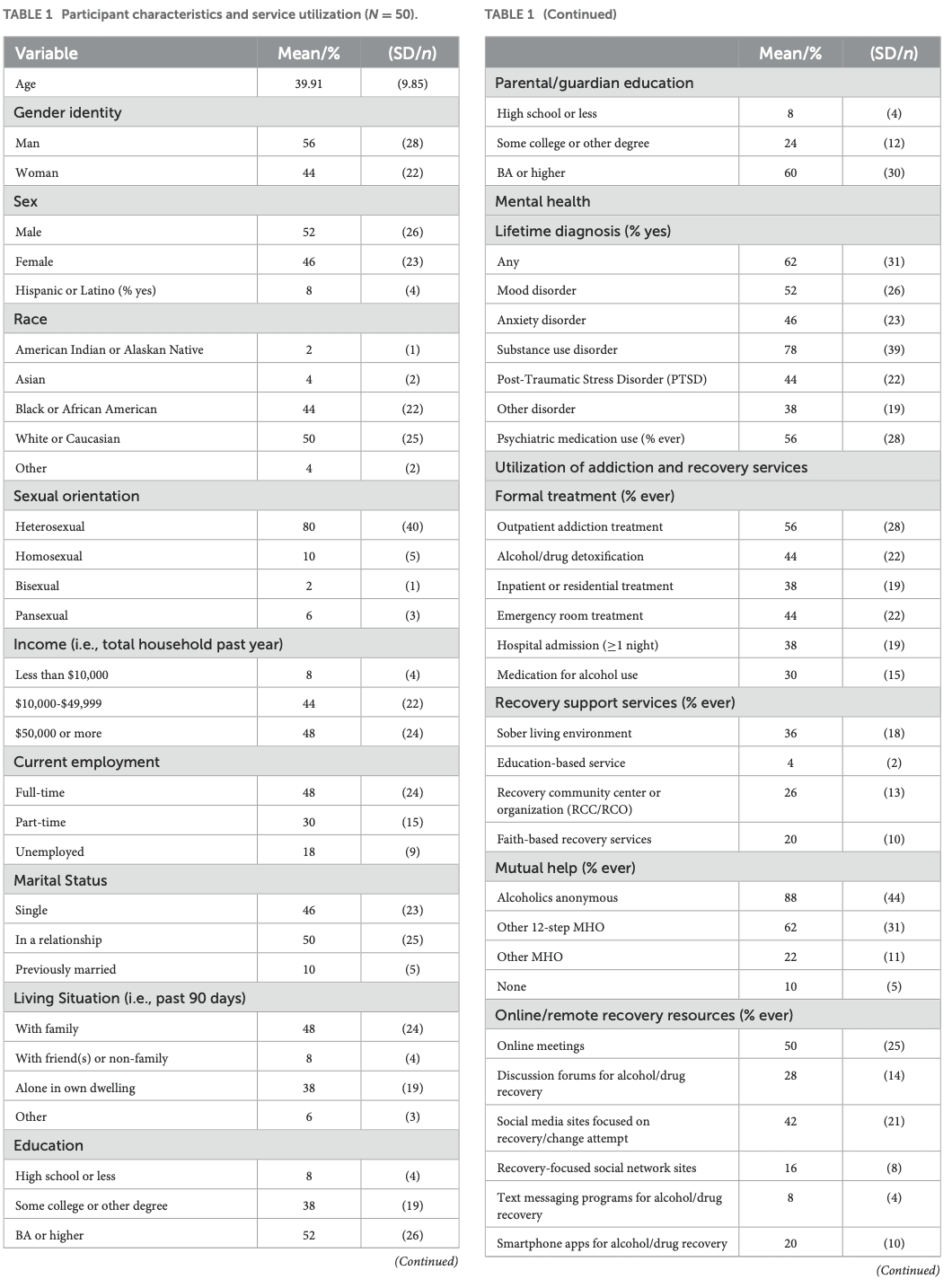
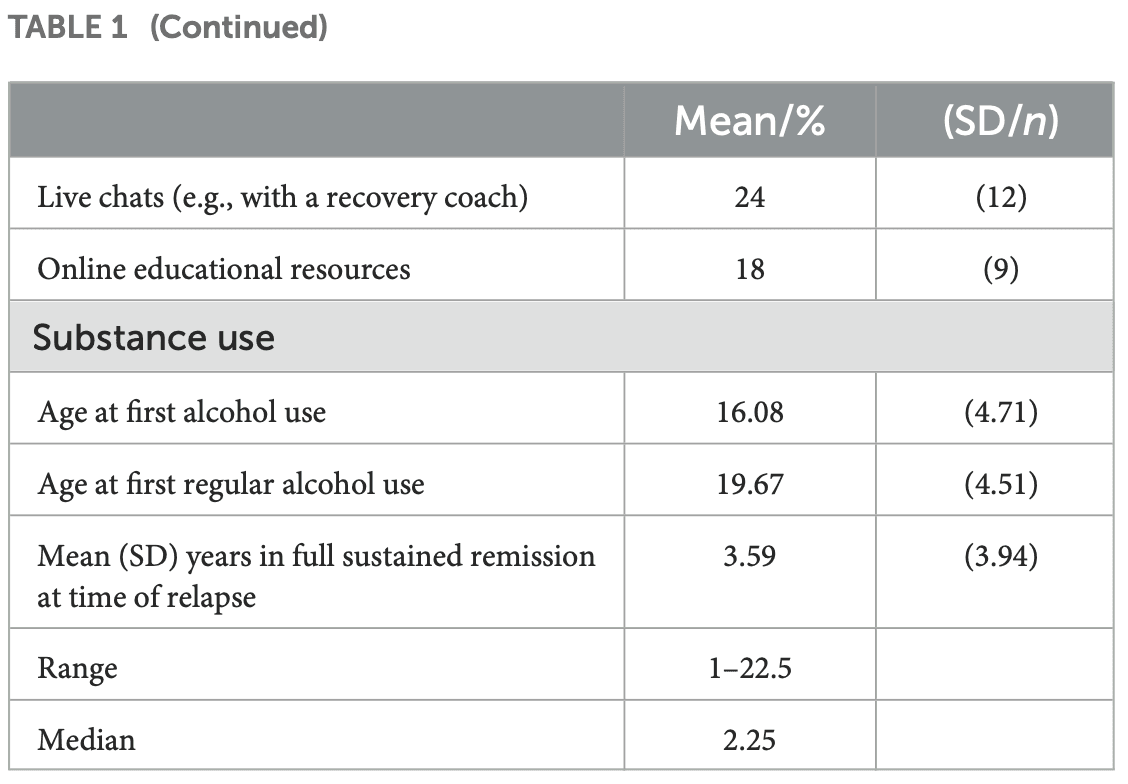
Table 1Table 1 continuedFigure 1

Data were summarized and organized in keeping with the study's four central research questions:

  • What are the commonly reported bio-psycho-social and RSS use changes that occur in the year prior to a relapse following full sustained remission for individuals recovering from AUD and to what degree of certainty do such individuals attribute such changes as contributing to their relapse. First, we examined and graphically presented which color-coded domains and related factors were reported as changing in the year prior to the relapse following at least one year of full sustained remission. Of the factors reported as changing during the year prior to the relapse, we examined the degree to which participants reported each of these as contributing to their relapse ranging from “did not contribute”, to “possibly contributed”, to “probably contributed”, to “definitely contributed”. These were then ranked by the individual-level factors that “definitely contributed” to their relapse as a proportion of the reported factors that changed during the year prior to relapse and color-coded by domain (Figures 1, 2).

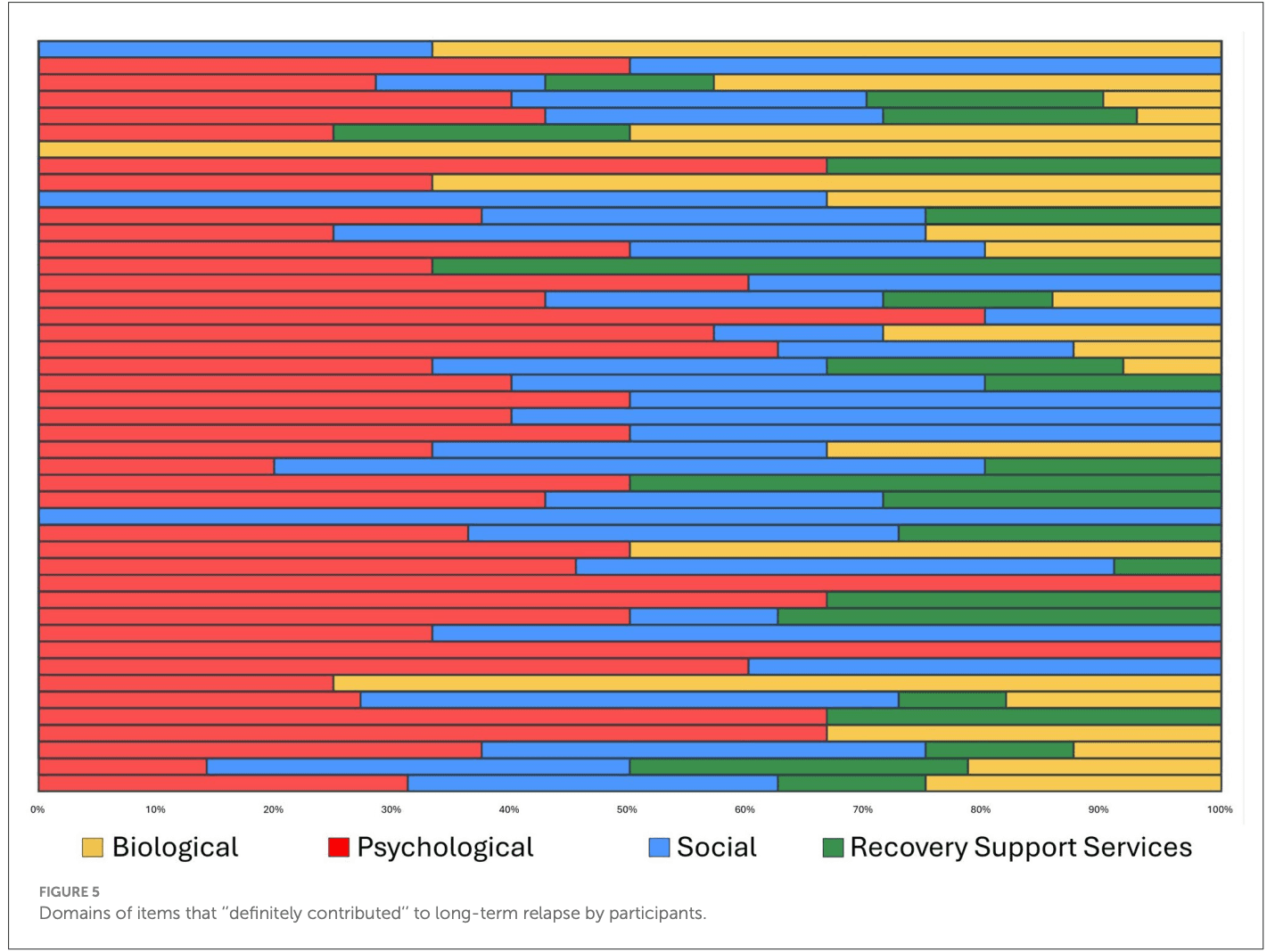
  • What is the frequency and nature of the reported contributing relapse factors. We examined the number of total “definitely contributing” factors that were reported as contributing to their relapse and examined and graphically presented the degree to which these fell into each of the four categories (biological, psychological, social, recovery support services; Figures 35).

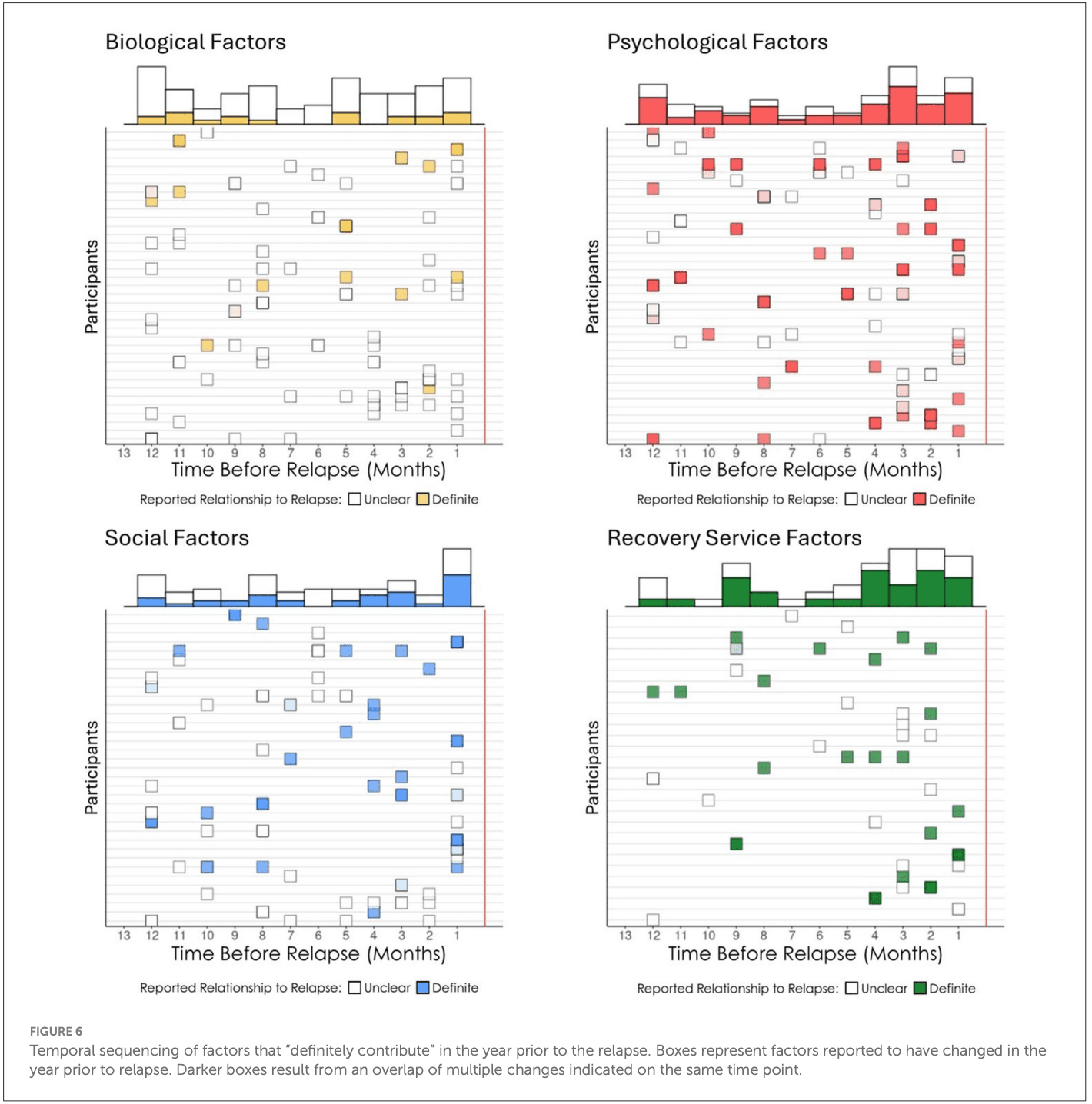
  • When do such potential high-risk warning signs occur during the year prior to a long-term relapse. We explored and graphically presented the temporal onset sequencing of definitely contributing relapse factors and summarized by domain (Figure 6).

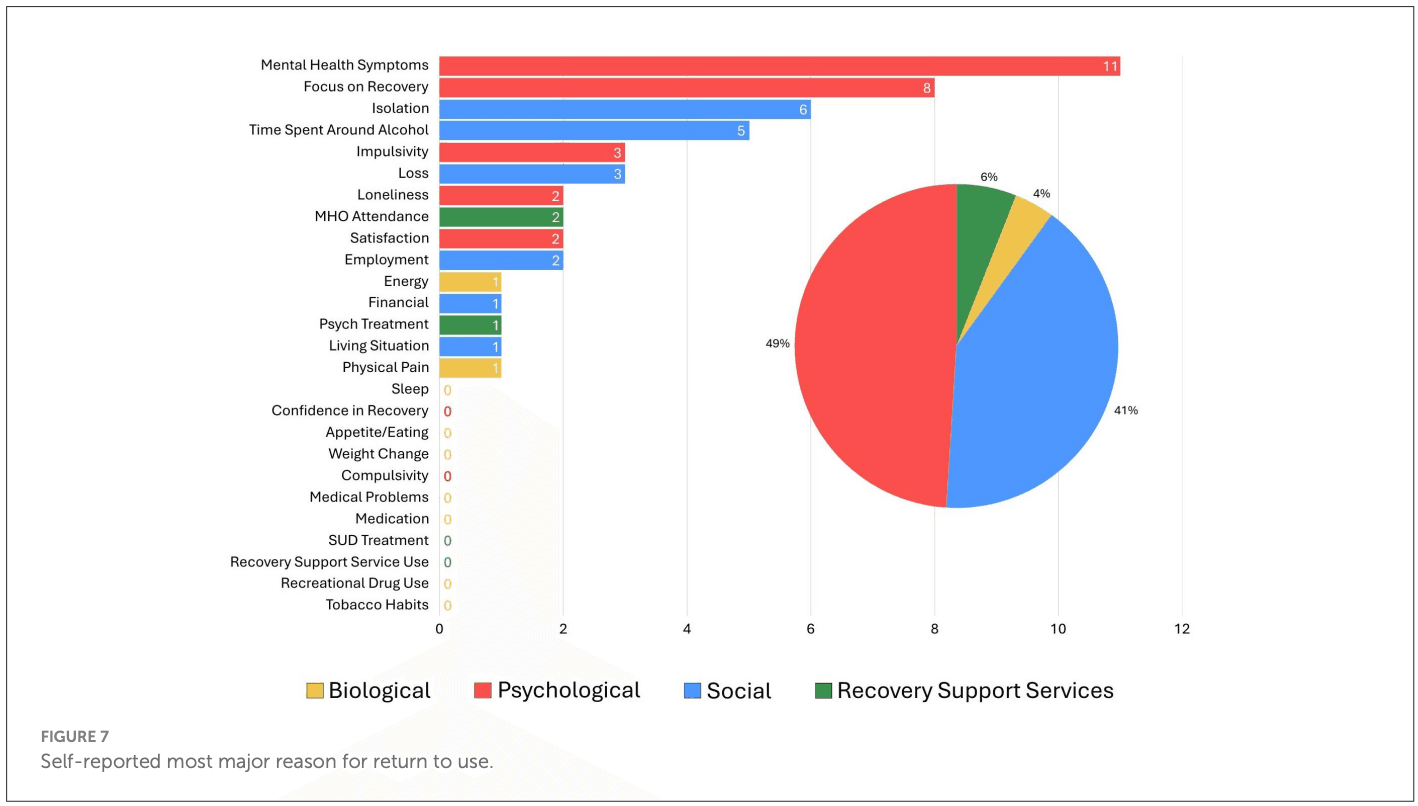
  • What is the single most influential reported contributor of relapse among individuals in prior full sustained remission who have subsequently relapsed. Responses to the open-ended question, “As you reflect on your relapse, what do you think was the major reason why you relapsed?” were coded using our framework with the 26 items covering the four domains: biological/health (9 items), social (7 items), psychological (6 items), and health services (4 items). Two members of the research team (SM, KZ) reviewed participant responses independently and coded each quotation using this framework. There was moderate interrater reliability (63.3% agreement; Cohen's kappa = 0.54). The majority of coding discrepancies were resolved by discussion with the two members (84.2%). The remaining three responses initially coded as “other” were reclassified following discussion with the larger team. One response was removed due to insufficient information, resulting in a final sample of n = 49. This list of the most influential reported relapse precipitants were summarized, rank ordered according to frequency, and graphically presented (Figure 7).
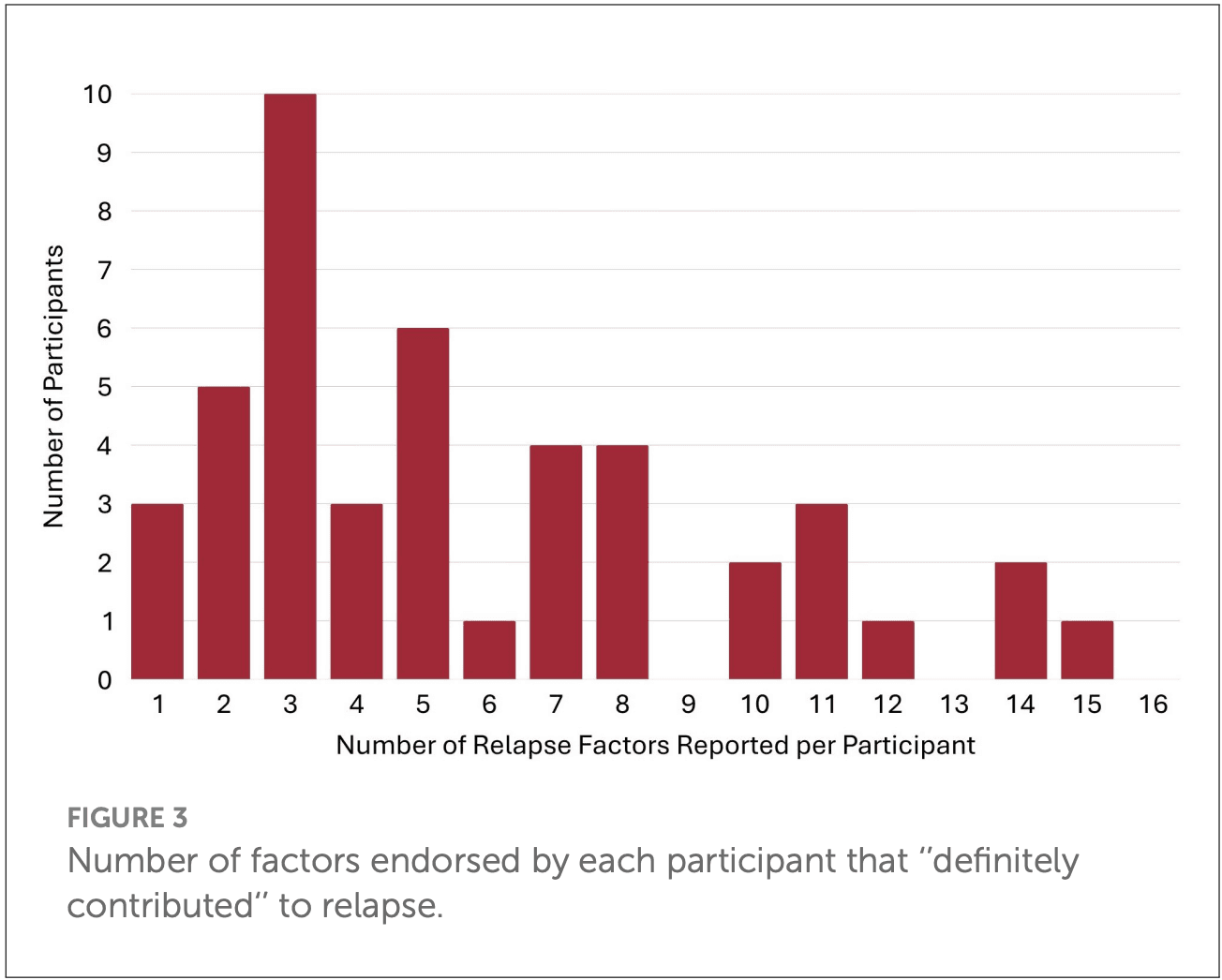
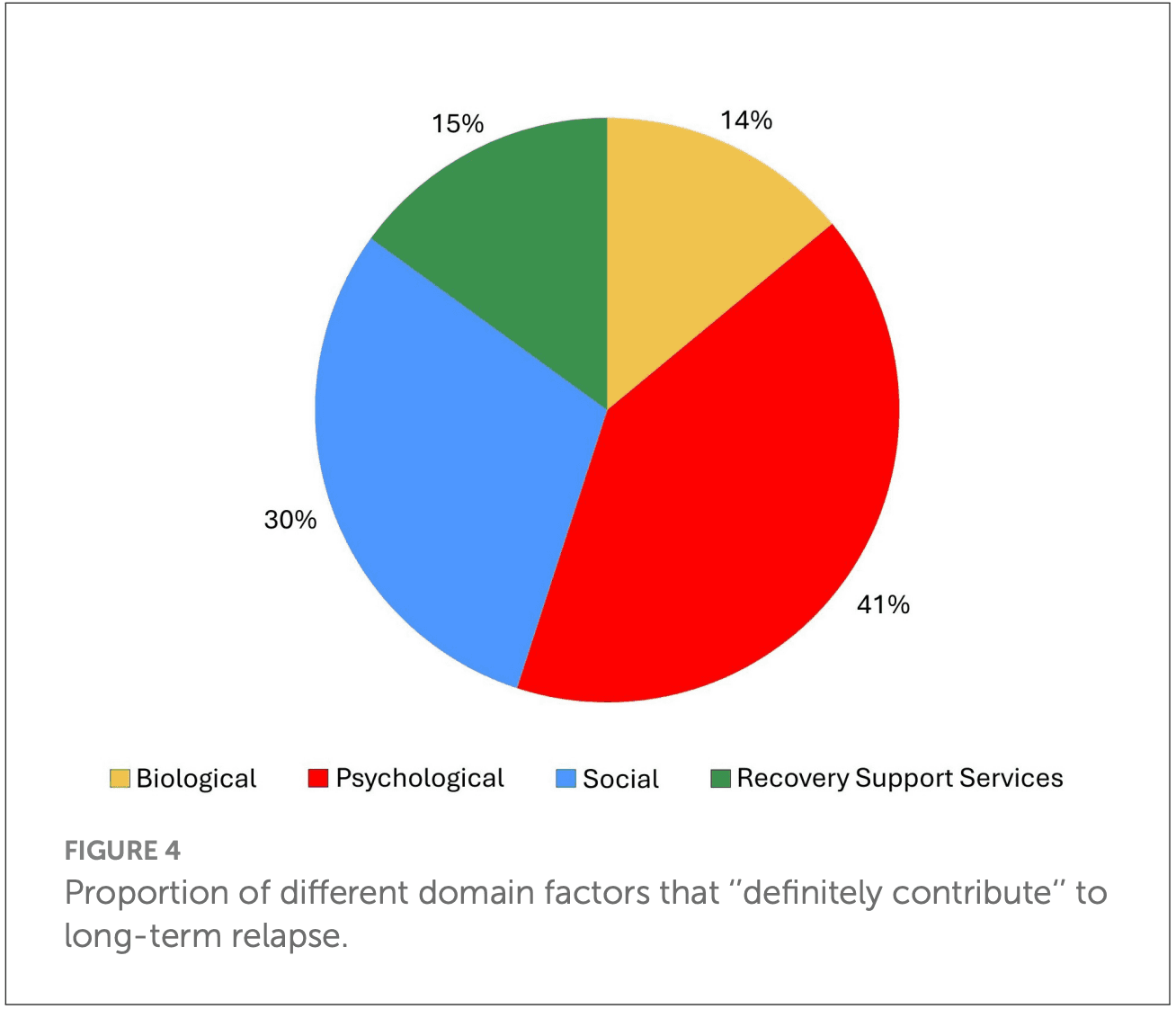
Figure 3

Figure 4Figure 5Figure 6Figure 7

3 Results

3.1 Sample characteristics

As shown in Table 1, approximately half the sample was female, with an average age of about 40 years old. Most identified as of either Black or White racial background, and non-Hispanic. Most were employed either part- or full-time, and about half were currently in a relationship and about half reported living with family. Income was generally low to moderate and educational attainments was quite with high the majority reporting have some college participation or achieving a BA or higher. About two-thirds reported a lifetime mental health diagnosis with about half reporting prior use of psychotropic medications. In terms of prior addiction service usage, about one-third to just over half reported either medication, withdrawal management, or some type of outpatient or inpatient treatment. The vast majority reported prior use of AA and many reported use of other 12-step MHOs or other recovery support services with about one-third reporting a history of residing in a sober living environment. Digital recovery support services use were also quite commonly reported. Age of first alcohol use was around age 16 with regular (at least once per week) reported by age 19 years old.

3.2 Frequency of reported bio-psycho-social and recovery support services use changes occurring in the year prior to LTR following full sustained remission and degree of reported attributional certainty such changes contributing to the LTR

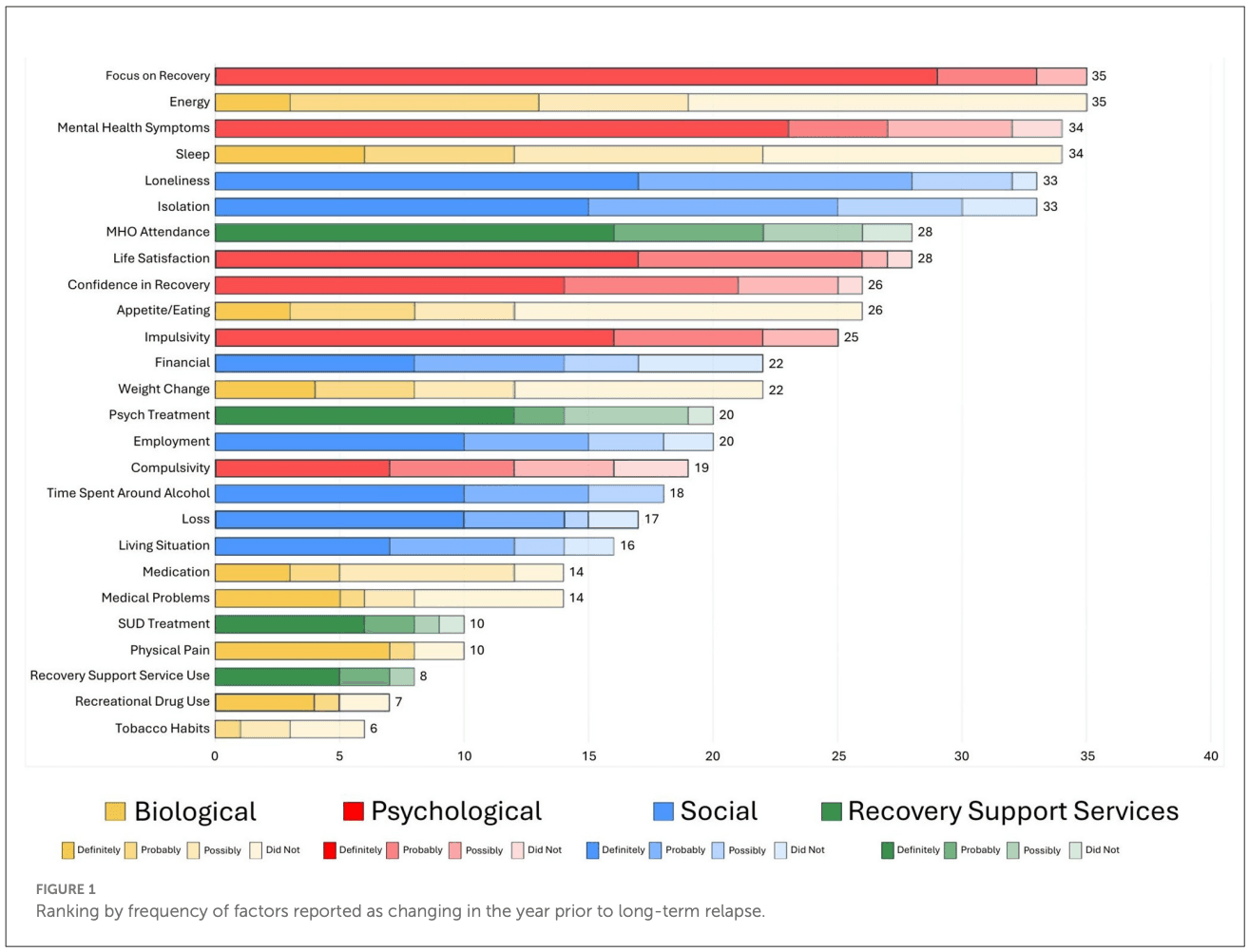
Figures 1, 2 illustrate both the frequency (far right-hand column) and “potency” (degree of ascribed certainty in causing the individuals' relapse represented by the different domain color shades) of each of the reported potential long-term relapse factors with Figure 1 rank ordered by frequency and Figure 2 by potency (% “definitely contributed”).

As shown, the top factor both in terms of frequency and potency was a change in individuals' Focus on Recovery (N = 35). Of note, when reported as changing during the year prior to the relapse, it was always considered to be at least “possibly contributing” and more than 80% of time as “definitely” having contributed. Two biological factors (energy level and sleep) were the second and fourth most common reported elements that changed in the year preceding the relapse, respectively, but both of these were only rarely reported as definitely contributing to relapse. The third most common change reported was in mental health challenges, which was also a potent relapse risk factor with close to 70% rating this change as definitely contributing to their relapse. Two social factors, loneliness and social isolation, were ranked fifth and sixth in terms of most commonly reported elements that changed during the year preceding relapse, and were also quite potent, with about half of participants reporting such changes as definitely contributed to their relapse. Mutual-help organization participation changes were the seventh most common and also quite potent, with close to 60% reporting the change as definitely contributing to their relapse. Three psychological factors—life satisfaction, confidence in recovery (recovery self-efficacy) and impulsivity, were the eighth, ninth, and eleventh most common reported elements that changed, with approximately 50–60% of participants rating these elements as definitely contributing to their relapse. Two other biological factors—appetite/eating, and weight change, were ranked the tenth and thirteenth most common change elements, but these were only rarely reported as definitely contributing to relapse.

In terms of social factors, changes in financial situation, employment, time spent around alcohol, loss, and living situation, were also quite commonly reported as changing in the year prior the relapse, and were also relatively high-risk with approximately 40–50% of participants reporting that these definitely contributed to relapse. Other biological factor changes such as medications, medical problems, physical pain, recreational drug use, and tobacco use changes were less common elements noted to have changed in the year preceding the relapse and were generally low potency with the exception of physical pain and recreational drug use, where approximately 70% and 58% of participants, respectively, reported them as definitely contributing to their relapse. Two health service usage factors were less frequently reported as changing, but when they did, they were generally of high-risk relapse potency: changes in recovery support services use and change in SUD treatment use, where approximately 65% in each domain reported such changes as definitely contributing to their relapse.

Of note in Figure 2, which is rank ordered from the most to least potent relapse risk factors in terms of definiteness, a glance at the color coding of the domains reveal clusters of biological and social factors in the lower half of the chart, indicating about 50% or less describing these as definitely contributing to their relapse. Thus, with the exception of physical pain which possessed high relapse risk potency, there was a general trend for social, and especially biological factors, to possess lower, or low, relapse risk potency compared to psychological and RSS use change domains, which tended to contain higher potency relapse contributing factors.

3.3 The frequency and nature of reported “definitely” contributing long-term relapse factors within participants

As shown in Figure 3, the number of definitely contributing factors ranged from 0 to 16 within participants, with a very skewed distribution. The median was 4 per person (M = 5.2, SD = 4.05) and this average of four definitely contributing factors, covered an average mean of 2.3 (SD = 1.17) different domains (biological, psychological, social, RSS). As highlighted in Figure 4, of the reported definitely contributing relapse factors, some individuals reported factors in a single domain (e.g., biological), but many reported factors covering all four domains as definitely contributing (Figure 4). The pie chart in Figure 5, shows the proportion of each domain items that were ascribed as definitely contributing to relapse.

3.4 Temporal onset and relapse risk potency of changes occurring during the year prior to long-term relapse

As shown in Figure 6, we constructed a timeline of the temporal sequencing of the onset of the reported change factors for each participant separated by domain (biological, psychological, social, services) along with their ascribed relationship to participants' relapse dichotomized as either unclear (not related, possibly related, probably related) or definite (definitely related). Marginal histograms summarized by month at the top of each domain figure have hollow bars reflecting the total number of change events reported with the proportion of “definitely” contributing factors filled in each respective domain color. As noted above, there was a trend for participants to ascribe greater confidence in contribution to relapse for psychological and treatment and recovery support service changes in the year prior the relapse than for the biological or social domains (see Figure 6). Of note also, was that there tended to be a general linear increase over time from left to right leading up to the relapse horizon, in both the number of change factors reported, as well as the proportion of definitely contributing factors, with the exception of biological factors which tended to show a more flat distribution.

3.5 Single most influential reported contributors of relapse

Summarized results from the final question that participants were asked, “What do you think is the major reason you relapsed?”, are presented in Figure 7, ranked from most to least frequent and color coded according to domain. As shown, the highest proportion of reported reasons were psychological (53% of participants) or social (37% of participants) in nature, with the psychological domain factors, mental health symptoms and focus on recovery, reported as the highest single most commonly referenced influential relapse risk factors overall, followed by the social domain factors, isolation and time spent around alcohol. Also, in the social domain, loss, employment, and living situation, were reported as major relapse reasons, but much less frequently. Similarly, within the psychological domain, impulsivity, loneliness, and life satisfaction, were reported as the major relapse causing changes, but these were infrequent. Major relapse reasons that fell into either the biological or RSS related realms, were represented by only 6% and 4% of participants, respectively. Two reported individual factors each fell into these two domains with MHO attendance and psychiatric treatment falling into the latter, and energy and physical pain falling into the former.

4 Discussion

While much is known about the theories and factors involved in short-term relapse as people try to stabilize and establish some initial early AUD remission, very little is known empirically about the factors involved in long-term relapse following a year or more of full sustained remission. Greater knowledge and conceptual understanding about the kinds of risks that individuals encounter prior to losing their sobriety, is of central importance, as AUD recurrence can be devastating and deadly. In terms of clinical models of long-term disease management in the treatment of clinically prevalent AUD, these so-called “remission-based warning signs” once detected might be highlighted, discussed, and addressed with the aid of a primary care, or other knowledgeable clinician, before they lead to resumption of problematic alcohol use and AUD recurrence. Given the lack of focus in this area to date, the current study is significant, innovative, and timely, in that it sheds some preliminary light on this important topic. Findings highlight a number of significant changes occurring in the year prior to a relapse following, often, years of full sustained AUD remission, many of which were attributed to causing AUD relapse with a high degree of certainty and, thus, may serve as useful set of preliminary markers or potential mechanisms that might be monitored in long-term disease management care protocols to help prevent AUD recurrence (e.g., see Appendix I).

Many types of biological, psychological, social, and addiction-related health services factors were noted by participants to have changed in the year preceding relapse. Such change factors varied in both frequency as well as relapse potency. Some were quite common, but not very potent—in terms of being attributed to definitely causing a relapse (e.g., energy levels, sleep changes)—whereas others were both common and potent (e.g., focus on recovery). Still others were comparatively infrequently reported, but potent or highly potent (e.g., recreational drug use, physical pain).

Several existing theories may be useful in helping to explain the occurrence of these factors and their relationship to long-term relapse explicated herein. As noted in the paper introduction above, theories based in neurophysiological post-acute withdrawal and cue reactivity, while highly applicable in models of early recovery stabilization, would appear to have less applicability in long-term relapse given the central nervous system healing and neurological and endocrinological recalibration that would have occurred in the years since last alcohol exposure. This lack of fit with such theories, might be said to be highlighted by the relatively less significant contribution of biological factors in reported relapse. More applicable with the relapse markers and mechanisms discovered here, are stress and coping, self-regulation [e.g., 11], behavioral economic, and social identity, theories. Also, neurocognitive aging effects could be at play given the age-range and long-term remission durations (prior to relapse) of some of the cases (e.g., as long as 20+ years in sustained remission), which could affect aspects of memory, risk-appraisal, and decision-making.

More specifically, the top factor in terms of frequency of occurrence and potency in the year prior to the relapse was the change in focus on recovery—this aspect of continued cognitive vigilance is a central feature in self-regulation theory [e.g., 12] specifically in maintaining adequate healthy and functional self-regulation individuals must continually be aware of, and appraise, address, and successfully cope with, dynamic elements that might disrupt or distract the equilibrium. Further, underlying such a shift may be elements integral to social identity and behavioral economic theories of addiction recovery as the salience of being a “recovering person” may lose centrality in favor of more novel identities and competing rewards and reinforcers that, paradoxically, have emerged due to individuals' successful liberation from addiction and the accrual of recovery-related benefits [also referred to as “recovery capital”].

It is sometimes said that the word “slip” often used to describe a return to alcohol use following a period of cessation (e.g., “Jim had a slip”) among individuals with AUD attempting to achieve stable recovery, stands for “Sobriety Losing Its Priority”. What stands out in our set of findings here, is that a reduction in cognitive recovery vigilance may be a potent marker to continually assess for and address among individuals in long-term AUD remission. Phenomenologically, in the natural history of AUD recovery, as time in remission begins to accrue over many years, oftentimes homelife stabilizes and improves, relationships heal or new ones obtained, better employment and educational opportunities present themselves, and physical health and general resiliency all get better. As alluded to above, this can lead naturally to positive distractions that may displace the focus on recovery-specific goals and activities in favor of new, and oftentimes positive, opportunities, that ironically have arisen because of individual's successful enduring recovery. This does not mean that such positives should not occur, but that such positive adaptations are part of recovery and need to be negotiated and successfully accommodated into the repertoire of activities within the recovery landscape while individuals continue to prioritize recovery and maintain cognitive recovery vigilance.

The popular “one day at a time” maxim of Alcoholics Anonymous, thus, may not only serve to assuage the angst caused by the potentially long-term depressogenic thought regarding, “how am I going to stay sober for the rest of my life”, but also may likely be borne of the kind of bitter experience of exactly the phenomenon herein where there is great potential for some individuals with long-term stable remission to take one's proverbial eye off the ball over time and focus elsewhere apparently at the peril of increasing relapse risk.

When one contextualizes this with the other findings here such as the fact that many people report several potent factors occurring simultaneously or close together during the year prior to their relapse and that are attributed as definitely contributing to relapse, it could also signify that the observed potent lack of recovery vigilance also may lead to a negative cascade in increased vulnerability that implicates other risk factors such as attenuation of treatment and recovery support services use (particularly reducing MHO participation)—now perceived to be unnecessary—resulting in a potential accelerating accumulation of risk that leads toward an implicit relapse horizon where resumption of alcohol use once again looks like a good idea—despite the enormous prior suffering that pushed the same individual into making often radical lifestyle changes to accommodate and facilitate the achievement of AUD remission to begin with. That said, the exact temporal causal sequencing of these multiple potent intersecting risks within persons remain to be clarified. It's equally plausible, for example, that the onset of mood and/or anxiety symptom changes might be more endogenous and biologically cause (e.g., during menopause in women) and subsequently interfere with a continued recovery priority focus. Further research is needed to untangle such intersecting risk elements. Of note, when asked to single out the most important contributor to relapse, most participants reported a psychological or social factor. Specifically, mental health symptom challenges and focus on recovery, impulsivity, and loneliness within the psychological domain; and isolation, time spent around alcohol, and loss within the social domain. Although more research is clearly needed in this regard, these types of changes detected as occurring under the auspices of AUD disease management protocols may require particular highlighting and proactive clinical intervention to help reduce subsequent relapse risk.

4.1 Limitations

There is clearly much to investigate in this area and there are many limitations inherent in the current study design and analyses, which need to be carefully considered when drawing conclusions and generalizations from the findings reported here. The sample size, while diverse in terms of sex and race, was quite small (N = 50) and mostly early middle-aged, and whereas study findings do offer important preliminary insights into this phenomenon, the sample could hardly be considered representative of the AUD long-term relapsing population. That said, inclusion criteria by necessity, contained several very specific boundaries (e.g., participants need to meet DSM 5 AUD criteria, then achieve full sustained remission for at least 1 year and then relapsed and now be at least in early remission all within the past 5 years) limiting the pool of eligible participants and speed of recruitment in the context of our fairly brief study timeline. Also, retrospective recall, analysis, and appraisal of past events, are all susceptible to cognitive biases involved in the processes of construction of memory and meaning-making, which could have affected reported factors and their attributed relapse risk potency estimation in unknown ways. That said, to address these, we did our best to limit the sample to having had to experience a long-term relapse within the past 5 years, and currently have returned to at least early remission status (i.e., no/subthreshold AUD symptoms within the past 90 days) and otherwise have no, or only very limited, alcohol or other drug exposure within the past 90 days to help minimize such bias and prevent recent heavy use potentially impairing current cognitive clarity. Also clear, was that the long-term relapse risk factors reported were many and several were potently related to increasing risk within persons. This finding underscores a multifaceted and dynamic long-term relapse risk scenario involving several, likely intersecting, factors that warrant continued untangling in terms of their temporal sequencing and nature. For example, as alluded to above, is it the onset of potentially endogenous mood and anxiety symptom changes that interfere with a continued recovery priority focus, or, are such potent mental health symptom challenges more exogenous, caused by a lack of recovery prioritization and relegation of recovery support service usage, resulting in decreased ability to manage the eustress and distress associated with navigating their recovery journey all within the broader context of the adaptations needed to adjust to, and address, broader developmental life-course challenges. Further research is needed to uncover and discover more about this. Furthermore, definitive bio-psycho-social categorization of the uncovered relapse markers/mechanisms herein are arguable (e.g., “focus on recovery” may be a psychological construct reflecting cognitive vigilance but also could be underwritten by more affective motivational importance). Finally, despite the limitations of this cross-sectional retrospective design, the phenomenon of long-term relapse is difficult to study even in prospective longitudinal research designs, due to likely “assessment reactivity” that could well raise consciousness and produce therapeutic cognitive and behavioral changes around the very phenomena under investigation (e.g., asking about focus on recovery or mental health symptoms or recovery support health services changes may well increase awareness among participants that could lead to adaptive changes ultimately preventing relapses that may have occurred without such questioning). Such therapeutic effects from assessment reactivity are known to occur and have begun to be clarified and their empirical magnitude documented [e.g.]. As with all research questions, however, valid causal conclusions will be drawn ultimately from a mix of different research designs that all converge with consistency and coherence on a set of common findings.

4.2 Conclusions and clinical implications

In addition to the great need for more research into this important clinical and public health area, the array of potent biological, psychological, social, and recovery health services factor changes that occurred in the year preceding long-term AUD relapse detected in this study, highlight several markers and potential mechanisms that could be incorporated into a checklist (see Appendix I) for patients to complete in ongoing visits during long-term recovery monitoring. Such a list as those in Figures 1, 2, the presence of one or more of which, could alert a clinician to focused discussion and intervention or, otherwise, be used as a stimulus and foundation for broader clinical discussion about the need for continued AUD recovery focus and successfully facing and addressing recovery and life course challenges, ultimately may help prevent further morbidity and mortality that can arise from long-term AUD recurrence.

Open Article as PDF

Abstract

Objective: Much has been theorized and documented about factors involved in alcohol use disorder (AUD) relapse during the early months following a recovery attempt where biobehavioral classical conditioning (“cues/triggers”) and neurophysiological explanatory theories predominate. Little has been documented, however, about long-term relapse (LTR) factors following sustained AUD remission where self-regulation and stress and coping theories may predominate because LTR precursors are centered less around neurophysiological dysregulation and cue reactivity and more around factors such as lowered recovery vigilance, avoidant coping, or changes in recovery-support services (RSS) usage. Greater knowledge of factors involved in LTR could sensitize and empower clinicians to deliver more effective disease management protocols to monitor and intervene upon such risks prior to AUD recurrence. Methods: Cross-sectional, retrospective study of individuals in recovery from primary AUD (N = 50; 44% Female; 50% White) who had experienced LTR within the past 5 years following at least 1 year of remission (M years remitted prior to relapse = 3.6; range = 1–23) and assessed for any change in bio-psycho-social domains or RSS usage during the year prior to LTR, along with their attributions of factors' contribution to relapse (risk “potency”; i.e., didn't contribute, possibly, probably, or definitely, contributed). Research questions focused on the year preceding the LTR assessing: (1) prevalence and nature of the bio-psycho-social and RSS use changes and degree of attributed LTR risk potency; (2) number and type of definitely-contributing relapse factors within participants; (3) dynamic temporal onset and nature of high-risk LTR precipitants; (4) single most influential LTR risk factor. Results: Several bio-psycho-social and RSS changes occurred during the year preceding LTR varying in prevalence and potency. Some were prevalent, but not potent, in terms of definitely contributing to LTR (e.g., sleep, energy); others occurred infrequently, but were potent (e.g., physical pain, recreational drug use); others were both highly prevalent and highly potent (e.g., change in recovery vigilance). Within participants, median number of definitely contributing LTR factors = 4, covering 2 different domains, on average. Temporal accumulation of LTR risks tended to intensify toward the relapse horizon over the preceding year. The single most important relapse factor tended to cluster in psychological (e.g., recovery vigilance, mental health) and social domains. Conclusions: Findings have implications for long-term disease management during AUD recovery providing a set of potential preliminary markers and mechanisms that might be assessed, monitored, and, when necessary, intervened upon prior to the onset of heavy symptomatic alcohol use to prevent AUD recurrence.

Introduction

Much research on alcohol use disorder (AUD) has focused on what causes people to relapse in the first weeks and months after trying to recover. Because a person's initial physical and mental stability is so important, most AUD care has focused on managing withdrawal symptoms and recognizing triggers (like certain people, places, or times) that can lead to alcohol use. The goal of improving early recovery has thus involved stabilizing the body, teaching coping skills to prevent relapse, and helping to change thinking patterns and reactions to triggers. Most drug trials and structured treatments have been developed for and tested during the first few months of recovery, typically after detoxification. This research has aimed to understand immediate biological and behavioral weaknesses that can cause relapse, so better clinical strategies can be developed.

However, very little is known about what causes long-term relapse (LTR) after a person has achieved full sustained remission (meaning one or more years of not using alcohol or not having symptoms). This is true even though stable recovery, where the risk of having an alcohol or drug disorder is similar to the general population, often takes about five years of continuous remission. Theories about early relapse might not apply to LTR, because after years of not using alcohol, brain functions may have re-adapted, and old triggers may have lost their power.

It is possible that for some individuals, especially those with severe or long-term AUD histories, problems with brain function, thinking, and physical symptoms (like sleep, appetite, or energy) could still pose a risk for LTR even after a year or more of remission. These risks might also worsen with even low levels of alcohol use or use of other substances, which could trigger cravings or interfere with healing. However, it is more likely that during these later stages of stable recovery, other factors related to self-control, stress, and coping become more significant. These factors could include a reduced focus on recovery, changes in attitudes toward needing recovery support (like support groups or counseling), shifts in social circles (making new friends who drink heavily), or difficulty managing stressful life events (both good and bad). Major life changes such as moving, job changes, retirement, or dealing with health issues could also play a role. Therefore, LTR risks can broadly be grouped into biological, psychological, social, and recovery support service categories.

Since there are currently no clear biological markers (like blood tests) that can warn doctors of a potential relapse before heavy drinking starts, understanding these risks still relies on talking to patients and their self-reports. For healthcare providers who manage AUD as a long-term condition, it is vital to know the types and strength of these biological, psychological, social, and recovery support changes that lead to LTR. This knowledge allows them to assess for these risks and alert patients in remission who might unknowingly be at higher risk, enabling them to make changes before it is too late and heavy alcohol use resumes. While anecdotal stories about LTR factors exist (e.g., a patient stopped attending support groups), there is a significant lack of precise, comprehensive research documenting the nature, combination, risk potential, and changing timing of these factors before LTR.

To address this gap, this study aimed to systematically document the nature, commonness, strength, and timing of factors leading to LTR. The study focused on several key questions: (1) What common biological, psychological, social, and recovery support service changes occur in the year before a relapse in individuals with long-term AUD recovery, and how certain are these individuals that these changes contributed to their relapse? (2) How often do people report factors that "definitely" contributed to their relapse, and what types are they? (3) When do these high-risk warning signs appear and become stronger during the year before LTR? (4) What is the single most important factor reported to cause LTR among individuals who had been in sustained AUD remission?

Methods

2.1 Participants

Fifty individuals participated in the study, recruited from December 2023 to November 2024 through online advertisements. Interested individuals completed a phone screening with trained staff to check if they were eligible. To participate, individuals had to be: (1) at least 18 years old, (2) have a lifetime history of AUD, (3) have not used alcohol for the past 90 days or be in early remission from AUD, (4) have had a relapse of AUD symptoms within the last five years, after being in remission for at least one year before the relapse, and (5) identify alcohol as their primary substance of recovery.

Of 840 interested people, 358 were screened. Of these, 220 were not eligible, and 41 were excluded for other reasons. Ninety-seven met the study criteria. After giving verbal consent, participants received a link to complete online surveys and were scheduled for a one-hour Zoom interview. Ninety-six people enrolled. Six missed their appointments, and 17 were removed after data validity checks. Twenty-three completed interviews were also removed due to validity concerns. The final sample of 50 participants represented 14% of those screened.

2.2 Procedures

Individuals interested in the study first completed a 15-minute phone screen to determine eligibility. Study data were collected and managed using electronic data capture tools. Before the interview, participants completed a brief set of online surveys. These surveys gathered information on demographics, lifetime substance use, addiction treatment, mental health diagnoses and treatment, and use of recovery support services. Staff reviewed survey responses for completeness and accuracy before the interview.

During screening, a structured interview was used to assess AUD status at various key points. To reduce memory bias, a specific timeline of events had to have occurred within the past five years. Participants must have met AUD criteria in the year before achieving at least one year of full sustained remission, then relapsed to alcohol use (typically frequent heavy use with consequences, lasting over a week). At the time of the study interview, participants also needed to be in early remission from AUD (no symptoms in the past 90 days), abstinent, or reporting only low-risk alcohol use without heavy use of other drugs interfering with daily life during the past three months. Simply put, participants must have experienced a relapse within the past five years after a period of remission, and then returned to a state of sobriety or early remission for at least 90 days at the time of the interview, without recent heavy alcohol or other drug use.

Interviews were conducted online via Zoom, lasting about one hour, and were audio recorded for transcription. Interviews explored life factors that may have contributed to a return of AUD symptoms. These factors covered four areas: biological (e.g., sleep, nutrition, pain, health, substance use), psychological (e.g., quality of life, recovery vigilance), social (e.g., life events, social network), and health services (e.g., medication, therapy, mutual-help group participation). Participants were encouraged to discuss each theme fully. Interviewers aimed to establish a general timeline for when each factor emerged during the 12 months leading up to the relapse. Interviews were transcribed, reviewed for accuracy, and then recordings were deleted to protect privacy. Participants received $50 for their involvement. The study summarized the types of reported relapse factors across the four domains, including how certain participants were that each factor contributed to their relapse (ranging from "did not contribute" to "definitely contributed"), and the timing of each factor in the year before relapse. The study was approved by the Institutional Review Board, and its findings are considered exploratory because it was not preregistered.

2.3 Measures

To confirm participants met key AUD milestones, a validated semi-structured interview was used. If participants reported any alcohol use after their relapse, recent heavy alcohol exposure was assessed based on national health guidelines. Women were asked about having three or more drinks on any single day or more than seven drinks in a week in the past 90 days, while men were asked about four or more drinks on a single day or more than 14 drinks in a week. To exclude participants with frequent recent use of other drugs, questions about 15 substances were asked. If participants used any substance 10 or more times in their lifetime, they were asked if drug use interfered with their functioning in the past three months. Those reporting four or more days of interference were excluded.

Demographic information collected included date of birth, sex assigned at birth, gender identity, race, ethnicity, living situation, marital status, sexual orientation, education, parental education, employment, and annual household income using standardized items. Information on substance use covered 15 substances or classes of substances, including alcohol, marijuana, cocaine, and prescription opioids. Mental health data involved asking if a doctor or counselor had ever diagnosed a mental health condition, and if so, which of 22 specific conditions (e.g., depression, anxiety, bipolar disorder) or "other" diagnoses. Participants also reported if they had ever been prescribed medication for a mental health condition, such as antidepressants, anti-anxiety medication, or mood stabilizers.

Treatment history for alcohol and drug problems included emergency room visits, hospital admissions, and prescribed anti-craving/anti-relapse medications. Participation in 11 different mutual-help organizations (e.g., AA, SMART Recovery) was assessed, with participants reporting if they attended regularly (at least weekly). History of participation in nine formal psychosocial treatment and recovery support services was also gathered, including outpatient addiction treatment, residential treatment, detoxification services, sober living environments, and recovery community centers. Participants reported their history of using various online/remote recovery resources, such as online mutual-help meetings, discussion forums, recovery-focused social media sites, text message programs, smartphone apps, live chats, and online educational resources.

The study interview guide began by confirming the participant's recovery initiation date, asking why recovery began, and what helped maintain it. Participants then confirmed their relapse date and were asked about what occurred in the year leading up to it. Interviewers prompted questions about significant events, vacations, holidays, and personal memories. Participants were also asked about changes in their attitude toward recovery, emotional state, or different behaviors. Staff prompted questions for approximately 30 minutes about the year before relapse. Specific questions covered nine biological/health areas (sleep, energy, appetite, weight, pain, recreational drug use, tobacco use, physical health problems, medication changes), seven social areas (time around alcohol, social isolation, loneliness, employment changes, loss of a loved one, living situation changes, financial changes), six psychological areas (impulsivity, focus on recovery, confidence in recovery, life satisfaction, compulsive behaviors, mental health symptoms), and four health services areas (changes in SUD treatment, mutual-help organization attendance, other recovery support services, psychological medications or counseling). Participants were also asked open-ended questions about any other factors and whether the questions triggered further memories. For each reported change, participants estimated the start date and rated its contribution to their relapse on a four-point scale. At the end, participants identified the major reason for their relapse, which was categorized into biological/health, psychological, social, or recovery support services domains.

2.4 Analytic strategy

Quantitative analyses used summary statistics like averages, standard deviations, frequencies, and percentages to describe the sample's characteristics. Endorsed categories and items from the relapse interview were organized and summarized to show how often each type of factor was reported, along with how certain participants were that it contributed to their relapse. Data were also summarized by domain to show when changes were estimated to have begun during the year before relapse.

The data were organized to address the study's four main research questions:

  • The first question explored common biological, psychological, social, and recovery support service changes in the year before long-term relapse and how certainly individuals attributed these changes to their relapse. Factors were ranked by those that "definitely contributed" to relapse as a proportion of reported changes, categorized by domain.

  • The second question examined the frequency and nature of reported contributing relapse factors. This involved looking at the number of "definitely contributing" factors reported per person and how these factors were distributed across the four domains.

  • The third question investigated when potential high-risk warning signs occurred in the year before a long-term relapse. The study presented the timing of "definitely contributing" relapse factors by domain.

  • The fourth question sought to identify the single most influential reported contributor to relapse among individuals who had previously achieved full sustained AUD remission. Responses to an open-ended question about the major reason for relapse were coded into the four domain categories. Two research team members independently coded responses to ensure consistency, and any disagreements were resolved through discussion. The most influential relapse factors were then summarized and ranked by frequency.

Results

3.1 Sample characteristics

Approximately half of the study participants were female, with an average age of about 40 years. Most identified as Black or White and non-Hispanic. The majority were employed either part-time or full-time, and about half were in a relationship, with a similar number living with family. Incomes were generally low to moderate, and educational attainment varied, with most having some college education or a bachelor's degree or higher. About two-thirds reported a lifetime mental health diagnosis, and about half had previously used psychiatric medications. Regarding past addiction services, about one-third to just over half reported using medication, withdrawal management, or some type of outpatient or inpatient treatment. Most reported prior use of Alcoholics Anonymous, and many had used other 12-step mutual-help organizations or recovery support services, with about one-third having lived in a sober living environment. Digital recovery support services were also commonly used. The average age of first alcohol use was around 16, with regular use (at least once per week) reported by age 19.

3.2 Frequency of reported bio-psycho-social and recovery support services use changes occurring in the year prior to LTR following full sustained remission and degree of reported attributional certainty such changes contributing to the LTR

The findings show both how often potential long-term relapse factors were reported and how strongly they were believed to cause relapse. The most frequent and potent factor was a change in an individual's "Focus on Recovery," reported by 35 participants. When this factor was reported, it was always seen as at least "possibly contributing," and more than 80% of the time, it "definitely" contributed. Two biological factors, changes in energy level and sleep, were the second and fourth most common reported changes, respectively, but these were rarely considered to be definite causes of relapse. Mental health challenges were the third most common change and also a strong risk factor, with nearly 70% of participants rating this change as definitely contributing to their relapse.

Social factors like loneliness and social isolation were the fifth and sixth most commonly reported changes, and they were also quite potent, with about half of participants indicating these changes definitely contributed to their relapse. Changes in participation in mutual-help organizations were the seventh most common factor and also potent, with nearly 60% reporting this change as definitely contributing. Three psychological factors—life satisfaction, confidence in recovery, and impulsivity—were the eighth, ninth, and eleventh most common reported changes, with approximately 50–60% of participants rating these as definitely contributing to their relapse. Two other biological factors, appetite/eating changes and weight changes, were the tenth and thirteenth most common, but rarely considered definite causes of relapse.

Among social factors, changes in financial situation, employment, time spent around alcohol, loss, and living situation were also commonly reported in the year before relapse and were relatively high-risk, with approximately 40–50% of participants reporting they definitely contributed to relapse. Other biological factors like medication changes, medical problems, physical pain, recreational drug use, and tobacco use changes were less frequent. However, physical pain and recreational drug use were notable exceptions, with approximately 70% and 58% of participants, respectively, reporting them as definitely contributing to their relapse. Two health service usage factors were less frequently reported as changing, but when they did, they were generally high-risk: changes in recovery support services use and changes in substance use disorder treatment, with approximately 65% in each domain reporting such changes as definitely contributing to their relapse.

When ranked by how strongly factors contributed to relapse, biological and social factors tended to appear in the lower half of the chart, indicating that about 50% or fewer participants described them as definitely contributing. Thus, with the exception of physical pain, there was a general trend for social, and especially biological factors, to have lower relapse risk potential compared to psychological and recovery support service usage changes, which tended to contain higher potency relapse contributing factors.

3.3 The frequency and nature of reported “definitely” contributing long-term relapse factors within participants

The number of factors that definitely contributed to relapse ranged from 0 to 16 per participant, with an average of 5.2 factors per person. On average, these factors covered 2.3 different domains (biological, psychological, social, recovery support services). While some individuals reported factors from only a single domain, many reported factors covering all four domains as definitely contributing. A breakdown shows the proportion of each domain's items that were seen as definitely contributing to relapse.

3.4 Temporal onset and relapse risk potency of changes occurring during the year prior to long-term relapse

A timeline was created to show when the reported change factors began for each participant, separated by domain (biological, psychological, social, services). The study also noted whether these factors were considered unclear or definitely related to the relapse. As previously mentioned, participants tended to have greater confidence in the contribution of psychological and treatment/recovery support service changes to relapse compared to biological or social factors. A general trend observed was a linear increase over time in the number of reported change factors and the proportion of "definitely" contributing factors as the relapse approached, with the exception of biological factors, which showed a flatter distribution.

3.5 Single most influential reported contributors of relapse

When asked about the major reason for their relapse, most participants (53%) cited psychological factors, and 37% cited social factors. The psychological factors of "mental health symptoms" and "focus on recovery" were the most commonly reported single influential relapse risk factors overall. These were followed by the social factors of "isolation" and "time spent around alcohol." Less frequently reported major relapse reasons within the social domain included loss, employment, and living situation. Similarly, within the psychological domain, impulsivity, loneliness, and life satisfaction were reported as major causes but were infrequent. Major relapse reasons falling into either the biological or recovery support services categories were reported by only 6% and 4% of participants, respectively. In these two domains, MHO attendance and psychiatric treatment were each mentioned twice, and energy and physical pain were each mentioned twice.

Discussion

While much is understood about short-term relapse during the early stages of AUD recovery, there is limited research on factors involved in long-term relapse (LTR) after a year or more of sustained remission. Gaining a deeper understanding of the risks individuals face before losing their sobriety is critically important, as AUD recurrence can have severe and fatal consequences. For clinical models of long-term AUD management, identifying these "remission-based warning signs" is crucial. Once detected, these signs can be discussed and addressed with a healthcare provider, potentially preventing the return of problematic alcohol use and AUD recurrence. Given the current lack of focus in this area, this study offers important initial insights. Findings highlight several significant changes occurring in the year before a relapse, often after years of sustained AUD remission. Many of these changes were strongly believed to cause relapse and could serve as preliminary markers or mechanisms to monitor in long-term care to help prevent AUD recurrence.

Participants reported many types of biological, psychological, social, and addiction-related health service factors that changed in the year preceding relapse. These factors varied in how often they occurred and how strongly they were linked to relapse. Some were very common but not strongly attributed to definitely causing a relapse (e.g., changes in energy levels, sleep), while others were both common and potent (e.g., focus on recovery). Still other factors were reported less frequently but were strongly or highly potent (e.g., recreational drug use, physical pain).

Several existing theories can help explain these factors and their link to long-term relapse. Theories based on brain function changes after withdrawal and reactions to triggers, while highly relevant in early recovery, seem less applicable to LTR. This is because brain and hormonal systems would have re-adapted over years without alcohol exposure. The relatively smaller contribution of biological factors to reported relapse aligns with this view. Theories related to stress and coping, self-regulation, behavioral economics, and social identity are more relevant to the relapse markers found here. Additionally, the effects of aging on brain functions could play a role, especially given the age range and long remission periods (some over 20 years) of some participants, which might affect memory, risk assessment, and decision-making.

More specifically, the most frequent and potent factor in the year before relapse was a change in an individual's focus on recovery. This aspect of continuous mental vigilance is central to self-regulation theory, which suggests that maintaining healthy self-regulation requires ongoing awareness, assessment, and successful management of dynamic elements that could disrupt stability. Furthermore, this shift in focus might stem from ideas in social identity and behavioral economics. The importance of being a "recovering person" may diminish as new identities, rewards, and opportunities arise from successful recovery, ironically displacing the focus on recovery-specific goals.

The phrase "Sobriety Losing Its Priority" sometimes describes a return to alcohol use after a period of abstinence. A key finding here is that a reduction in cognitive recovery vigilance may be a potent indicator to continuously assess in individuals with long-term AUD remission. In the natural course of AUD recovery, as years of remission accumulate, home life often stabilizes, relationships heal, new opportunities arise, and physical health and resilience improve. This can naturally lead to positive distractions that may shift focus away from recovery-specific goals and activities toward new, often positive, opportunities that ironically emerged due to successful recovery. This does not mean these positive changes should be avoided, but rather that such adaptations are part of recovery and need to be successfully managed within the recovery landscape while maintaining a recovery focus and mental vigilance.

The popular Alcoholics Anonymous maxim, "one day at a time," may not only ease the anxiety about staying sober for life but also likely stems from the bitter experience described here: a great potential for some individuals with long-term stable remission to gradually lose focus over time, increasing their risk of relapse.

Considering this alongside other findings, such as many people reporting several potent factors occurring simultaneously or close together before their relapse, suggests that a lack of recovery vigilance may lead to a negative chain of events. This could include reduced use of treatment and recovery support services, which are then seen as unnecessary, leading to an accelerating build-up of risks that makes resuming alcohol use seem like a viable option again, despite past suffering. However, the exact timing and cause-and-effect of these multiple intersecting risks within individuals need further clarification. For example, it is equally possible that mood or anxiety symptoms might begin for biological reasons (e.g., during menopause in women) and then interfere with a continued focus on recovery. Further research is needed to understand these complex interactions. Notably, when asked to identify the single most important contributor to relapse, most participants cited a psychological or social factor. Specifically, mental health challenges and focus on recovery, impulsivity, and loneliness within the psychological domain, and isolation, time spent around alcohol, and loss within the social domain. While more research is clearly needed, these types of changes, when detected under AUD disease management protocols, may require specific attention and proactive clinical intervention to help reduce subsequent relapse risk.

4.1 Limitations

There is much more to learn in this area, and the current study has several limitations that must be considered when interpreting its findings. The sample size of 50 participants, while diverse in terms of sex and race, was quite small and mostly early middle-aged. While the findings offer important preliminary insights, the sample is not fully representative of the general population of individuals who experience long-term AUD relapse. The study's strict eligibility criteria (e.g., participants had to meet AUD criteria, achieve sustained remission for at least a year, relapse, and then return to early remission, all within the past five years) limited the number of eligible participants and slowed recruitment. Additionally, recalling, analyzing, and evaluating past events are all prone to cognitive biases in memory and meaning-making, which could have influenced reported factors and their attributed relapse risk potency in unknown ways. To mitigate this, the study limited the sample to those who had experienced a long-term relapse within the past five years and were currently in at least early remission (no/minimal AUD symptoms within 90 days) with very limited recent alcohol or other drug exposure, to help ensure current cognitive clarity. It was also clear that the reported long-term relapse risk factors were numerous and several were strongly related to increasing risk within individuals. This finding highlights a complex and dynamic long-term relapse risk scenario involving several, likely interconnected, factors that require further investigation into their timing and nature. For example, is it the onset of potentially biological mood and anxiety symptom changes that interfere with a continued focus on recovery, or are these potent mental health challenges more external, caused by a lack of recovery prioritization and reduced use of recovery support services? This could lead to a decreased ability to manage both positive and negative stress associated with navigating recovery, all within the broader context of adapting to life changes. Further research is needed to explore these intersecting risk elements. Furthermore, the definitive classification of the identified relapse markers/mechanisms into biological, psychological, and social categories can be debated (e.g., "focus on recovery" may be a psychological concept of mental vigilance but could also be driven by emotional motivation). Finally, despite the limitations of this study's retrospective design, the phenomenon of long-term relapse is difficult to study even in prospective long-term research because simply asking about these phenomena can increase awareness and lead to therapeutic cognitive and behavioral changes that might prevent relapses that would otherwise have occurred. Such therapeutic effects from assessment are known and have begun to be documented. However, valid conclusions about causes will ultimately come from a combination of different research designs that consistently and coherently point to a common set of findings.

4.2 Conclusions and clinical implications

In addition to the strong need for more research in this important clinical and public health area, the range of potent biological, psychological, social, and recovery health service factor changes identified in this study highlights several markers and potential mechanisms. These could be incorporated into a checklist for patients to complete during ongoing visits for long-term recovery monitoring. The presence of one or more of these factors could alert a clinician to initiate a focused discussion and intervention, or serve as a basis for a broader conversation about the ongoing need to prioritize AUD recovery and successfully address life challenges. Ultimately, this approach may help prevent further illness and death that can result from long-term AUD recurrence.

Open Article as PDF

Abstract

Objective: Much has been theorized and documented about factors involved in alcohol use disorder (AUD) relapse during the early months following a recovery attempt where biobehavioral classical conditioning (“cues/triggers”) and neurophysiological explanatory theories predominate. Little has been documented, however, about long-term relapse (LTR) factors following sustained AUD remission where self-regulation and stress and coping theories may predominate because LTR precursors are centered less around neurophysiological dysregulation and cue reactivity and more around factors such as lowered recovery vigilance, avoidant coping, or changes in recovery-support services (RSS) usage. Greater knowledge of factors involved in LTR could sensitize and empower clinicians to deliver more effective disease management protocols to monitor and intervene upon such risks prior to AUD recurrence. Methods: Cross-sectional, retrospective study of individuals in recovery from primary AUD (N = 50; 44% Female; 50% White) who had experienced LTR within the past 5 years following at least 1 year of remission (M years remitted prior to relapse = 3.6; range = 1–23) and assessed for any change in bio-psycho-social domains or RSS usage during the year prior to LTR, along with their attributions of factors' contribution to relapse (risk “potency”; i.e., didn't contribute, possibly, probably, or definitely, contributed). Research questions focused on the year preceding the LTR assessing: (1) prevalence and nature of the bio-psycho-social and RSS use changes and degree of attributed LTR risk potency; (2) number and type of definitely-contributing relapse factors within participants; (3) dynamic temporal onset and nature of high-risk LTR precipitants; (4) single most influential LTR risk factor. Results: Several bio-psycho-social and RSS changes occurred during the year preceding LTR varying in prevalence and potency. Some were prevalent, but not potent, in terms of definitely contributing to LTR (e.g., sleep, energy); others occurred infrequently, but were potent (e.g., physical pain, recreational drug use); others were both highly prevalent and highly potent (e.g., change in recovery vigilance). Within participants, median number of definitely contributing LTR factors = 4, covering 2 different domains, on average. Temporal accumulation of LTR risks tended to intensify toward the relapse horizon over the preceding year. The single most important relapse factor tended to cluster in psychological (e.g., recovery vigilance, mental health) and social domains. Conclusions: Findings have implications for long-term disease management during AUD recovery providing a set of potential preliminary markers and mechanisms that might be assessed, monitored, and, when necessary, intervened upon prior to the onset of heavy symptomatic alcohol use to prevent AUD recurrence.

Introduction

Research over the last 50 years has explored many reasons why people relapse in the first weeks and months after trying to recover from alcohol use disorder (AUD). Because it is important for individuals to first stabilize their body and mind, much of AUD care has concentrated on managing withdrawal symptoms. It has also focused on identifying cues or triggers (such as certain people, places, or times) that can lead to harmful drinking. Therefore, the goal of improving the chances of early recovery has focused on physical stabilization, building coping skills to prevent relapse, changing thought patterns, and reducing the impact of conditioned triggers. Most drug trials and structured treatments have been developed and tested during these initial months of recovery, typically the first 12 weeks after detoxification. A lot of research has aimed to understand these short-term biological and behavioral risks that can cause relapse, so better clinical protocols can be developed and used.

However, despite this important work, very little is known about factors involved in long-term relapse (LTR), which occurs after someone has been in full, steady remission for a year or more. Stable recovery, where the risk of having an alcohol or drug disorder in the next year is similar to the general population, only happens after about 5 years of continuous remission. While there are clear theories about relapse risk in the early months of recovery, these might not apply as well to relapse after a long period of remission. This is because brain changes, post-withdrawal symptoms, and the effects of conditioned cues are likely less significant after years of not using alcohol, as the brain may have adjusted to abstinence and the conditioning may have faded.

Still, it is possible that for some individuals, especially those with more severe and long-standing AUD, neurological, thinking, and physical problems (like issues with sleep, appetite, or energy) could still pose a risk for long-term relapse, even after a year or more of steady remission. These risks might worsen with low-level alcohol use, cannabis use, exposure to opioid medications, or changes in tobacco use, potentially triggering cravings or hindering brain healing and balance, and disrupting mood. Previous research shows that people in sustained AUD remission who continue to drink, even at low levels, are much more likely to have AUD symptoms return. However, it is more likely that in these later, stable recovery stages, other factors like self-regulation, stress management, and coping skills play a more important role.

Specifically, a decrease in mental alertness and focus on recovery (e.g., making AUD recovery a daily priority) or determination can be significant. Changes in attitudes about needing or using recovery support services (like AA or counseling) can also be important. Social network changes, such as making new friends or colleagues who drink heavily due to a job promotion, may also contribute. The inability to manage stressful life events, whether negative (distress) or positive (eustress), such as moving to a new house, changes in work or education, transitions in social roles (like having a child or dealing with deaths), or coping with new or resolving medical illnesses (like heart disease or cancer) can also pose risks. Thus, these long-term relapse risks can be broadly grouped into biological, psychological, social, and recovery support services changes.

Since there are currently no reliable physical markers (like blood or urine tests) that can warn doctors about an upcoming relapse before heavy drinking starts, understanding these risks still relies on discussions with patients and their self-reports. For doctors who manage AUD long-term, it is crucial to know the types and strength of various biological, psychological, social, and recovery support service changes linked to long-term relapse. This knowledge allows them to assess these factors and warn patients in remission who might be unknowingly heading toward higher risk, helping them to "correct course" before it is too late and heavy alcohol use resumes. While occasional stories suggest factors leading to long-term relapse (e.g., stopping AA meetings), detailed and scientific documentation of the nature, combination, risk level, and timing of these risk factors before long-term relapse is significantly lacking. This study was designed to systematically document the nature, frequency, strength, and timing of factors leading to long-term relapse by addressing several key research questions: (1) What common biological, psychological, social, and recovery support service changes occur in the year before a relapse for individuals in long-term AUD recovery, and how certain are these individuals that these changes contributed to their relapse? (2) What is the frequency and type of these "definitely" contributing relapse factors within individuals? (3) When do these high-risk warning signs appear and intensify in the year before long-term relapse? (4) What is the single most influential factor reported by individuals who experienced long-term relapse after being in full, sustained AUD remission?

Methods

Participants

Fifty participants were recruited between December 2023 and November 2024 through online advertisements. Interested individuals were screened by phone to check eligibility. To participate, individuals had to be 18 or older, have a lifetime history of AUD, be abstinent from alcohol for the past 90 days or in early AUD remission, have experienced an AUD recurrence within the last 5 years after at least 1 year of remission, and identify alcohol as their primary substance of recovery.

Out of 840 interested individuals, 358 were screened by phone. Of these, 220 were not eligible, and 41 were excluded for other reasons. Ninety-seven met the study criteria. After giving consent, participants were given a link to complete online surveys and scheduled for a Zoom interview. One eligible person did not complete consent, so 96 enrolled. Six missed their appointments, and 17 were withdrawn due to data validity issues. Of the 73 completed interviews, 23 were removed for validity concerns. The final group of 50 participants represents 14% of those initially screened.

Procedures

Individuals interested in the study underwent a 15-minute phone screening to determine eligibility. Study data were collected and managed using secure electronic tools. Before their interview, participants completed online surveys about demographics, substance use history, addiction treatment, mental health, and use of recovery support services. Staff reviewed these responses for completeness.

To be eligible during screening, participants completed an interview to confirm their AUD status at different points in time. To minimize errors from remembering past events, a specific timeline was required: within the past 5 years, participants had to have met AUD criteria, then achieved at least 1 year of full, steady remission, and then relapsed. At the time of the study interview, they also needed to be in at least early remission from AUD (no symptoms in the past 90 days), with no or very low-risk alcohol use and no heavy drug use in the past 3 months. In simpler terms, participants had to have experienced a long period of sobriety, relapsed, and then returned to sobriety for at least 90 days before the interview.

Interviews were conducted online via Zoom, lasted about an hour, and were audio recorded. The interviews explored life factors that might have contributed to a return of AUD symptoms. These factors covered four main areas: biological (e.g., sleep, pain, health, substance use), psychological (e.g., quality of life, recovery focus), social (e.g., life events, social circle), and health services (e.g., medication, therapy, mutual-help groups). Interviewers asked participants to elaborate on each theme and tried to establish a timeline for when each factor emerged during the 12 months leading up to the relapse. Recordings were transcribed and then deleted to maintain privacy. Participants received $50 for their involvement. For this study, the types of reported relapse triggers across these four areas were summarized, along with how certain participants were that each factor contributed to their relapse (from "did not contribute" to "definitely contributed"), and the timing of each factor's onset in the year before relapse. The study was approved by the Institutional Review Board. Since it was not preregistered, the findings should be considered preliminary.

Measures

Before the main interview, participants completed several questionnaires. Screening measures helped confirm AUD status at different times and assessed recent heavy alcohol or other drug use. Demographic information included age, gender, race, education, employment, and income. Questions covered participants' history of using various substances, mental health diagnoses and prescribed medications, and prior treatments for alcohol and drug problems (e.g., detox, outpatient care, anti-craving medications). Participants also reported their history of attending mutual-help organizations (like AA) and other formal recovery support services or treatment programs. Information about their use of online and digital recovery resources was also collected.

During the study interview, participants confirmed their recovery and relapse dates and described what was happening in the year leading up to their relapse. They answered questions across four domains:

  • Biological/Health (9 questions): Problems with sleep, energy, appetite, weight, chronic pain, recreational drug use, tobacco use changes, physical health problems, and changes in medications.

  • Social (7 questions): More time around alcohol, social isolation, loneliness, changes in employment, loss of a loved one, changes in living situation, and financial situation.

  • Psychological (6 questions): Increased impulsivity, less focus on recovery, decreased confidence in recovery, life satisfaction, increase in compulsive behaviors, and mental health symptoms (like depression or anxiety).

  • Health Services (4 questions): Changes in substance use treatment, mutual-help group attendance, other recovery support services, or psychological medications/counseling.

Participants also answered open-ended questions about any other factors that contributed to their relapse and were asked to rate how much each reported change contributed to their relapse (from "did not contribute" to "definitely contributed"). At the end, they identified the single "major reason" they believed caused their relapse.

Analytic Strategy

Standard descriptive statistics were used to describe participant characteristics, including averages, ranges, and percentages. For the relapse factors reported in the interview, categories were visually summarized to show how often each type of factor was reported, how strongly participants believed it contributed to their relapse, and when it began during the year before relapse.

The data were organized to answer the study's four main questions:

  • The first question explored which biological, psychological, social, and recovery support service changes were most common in the year before relapse and how certain participants were about their contribution. Factors reported as "definitely contributing" were ranked.

  • The second question examined the number and type of "definitely contributing" relapse factors reported by each person and how they fell into the four main categories.

  • The third question focused on when these high-risk warning signs occurred and intensified during the year before a long-term relapse.

  • The fourth question addressed the single most influential contributor to relapse reported by individuals. Responses to this open-ended question were categorized, reviewed by the research team, and then ranked by how often they were reported.

Results

Sample Characteristics

About half of the participants were female, with an average age of about 40. Most identified as Black or White and non-Hispanic. Most were employed either part- or full-time, about half were in a relationship, and about half lived with family. Income levels were generally low to moderate, and educational attainment varied widely, with most having some college or a bachelor's degree or higher. About two-thirds reported a lifetime mental health diagnosis, and about half had used psychiatric medications. In terms of prior addiction services, about one-third to over half had received medication, withdrawal management, or some type of outpatient or inpatient treatment. Most reported using Alcoholics Anonymous, and many used other 12-step mutual-help organizations or recovery support services, with about one-third having lived in sober housing. Use of digital recovery support services was also common. The average age for first alcohol use was around 16, with regular use (at least once a week) starting around age 19.

Frequency and Certainty of Relapse Factors

The results show both how often certain factors changed and how strongly participants believed these changes caused their relapse. The most frequent and impactful factor was a change in an individual's "Focus on Recovery" (reported by 35 participants). When this change was reported, it was almost always seen as at least "possibly contributing," and over 80% of the time, as "definitely" contributing to relapse. Two biological factors, energy level and sleep, were the second and fourth most common reported changes, but they were rarely identified as "definitely" causing relapse. Mental health challenges were the third most common change and also a strong risk factor, with nearly 70% of participants rating this change as "definitely" contributing to their relapse.

Loneliness and social isolation, both social factors, ranked fifth and sixth in terms of how often they changed before relapse. They were also quite impactful, with about half of participants saying these changes "definitely" contributed to their relapse. Changes in participation in mutual-help organizations ranked seventh and were also very impactful, with almost 60% reporting this change as "definitely" contributing. Three psychological factors—life satisfaction, confidence in recovery, and impulsivity—were the eighth, ninth, and eleventh most common changes, with about 50–60% of participants rating them as "definitely" contributing to their relapse. Two other biological factors, appetite/eating and weight change, were ranked tenth and thirteenth, but these were rarely seen as "definitely" contributing to relapse.

Regarding social factors, changes in financial situation, employment, time spent around alcohol, loss, and living situation were also commonly reported as changing in the year before relapse. These were relatively high-risk, with about 40–50% of participants reporting they "definitely" contributed. Other biological changes, such as medications, medical problems, physical pain, recreational drug use, and tobacco use, were less common. However, physical pain and recreational drug use were highly impactful, with approximately 70% and 58% of participants, respectively, reporting they "definitely" contributed to their relapse. Two health service factors, changes in recovery support services use and changes in substance use disorder treatment, were less frequently reported but were high-risk when they occurred, with about 65% in each category reporting such changes as "definitely" contributing to their relapse.

When factors were ranked by their impact, there was a general trend: social and especially biological factors tended to have lower influence on relapse compared to psychological factors and changes in the use of recovery support services, which were more frequently identified as strongly contributing factors. The exception was physical pain, which showed a high relapse risk impact.

Nature of Definitely Contributing Relapse Factors

The number of factors that "definitely" contributed to relapse varied widely among participants, ranging from 0 to 16, with a median of 4 per person. On average, these four factors covered about 2.3 different domains (biological, psychological, social, recovery support services). While some individuals reported contributing factors in a single domain, many reported factors spanning all four domains as definitely contributing to their relapse. Psychological factors and recovery support services accounted for the largest proportion of items identified as definitely contributing to relapse.

Timing and Potency of Relapse Factors

A timeline of the reported changes showed that psychological, social, and health service factors were more often seen as "definitely" related to relapse compared to biological factors. Importantly, there was a general increase in both the number of change factors reported and the proportion of "definitely" contributing factors as the time to relapse shortened, with the exception of biological factors, which showed a more consistent distribution over time.

Most Influential Relapse Contributors

When asked to identify the "major reason" for their relapse, most participants (53%) cited psychological factors, and 37% cited social factors. Within the psychological domain, mental health symptoms and a reduced focus on recovery were the most commonly mentioned influential risk factors. In the social domain, isolation and increased time spent around alcohol were frequently reported. Other social factors like loss, employment, and living situation, and psychological factors such as impulsivity, loneliness, and life satisfaction, were less frequently reported as major reasons for relapse. Only a small percentage of participants (6% for biological and 4% for recovery support services) identified factors from these domains as the major reason for their relapse. These included changes in energy levels and physical pain for biological factors, and mutual-help organization attendance and psychiatric treatment for health services.

Discussion

While much is understood about early relapse in AUD recovery, there is limited scientific knowledge about long-term relapse after a year or more of steady remission. Better understanding and conceptualizing the risks individuals face before relapsing is crucial, as AUD recurrence can be devastating. For clinical models of long-term AUD management, these "remission-based warning signs," once identified, could be discussed and addressed with a clinician before they lead to problematic alcohol use again. Given the lack of focus in this area, this study is significant and innovative, offering initial insights into this important topic. The findings highlight several important changes that occur in the year before a relapse following, often, years of full, steady AUD remission. Many of these changes were attributed with high certainty to causing relapse and thus may serve as useful preliminary markers that could be monitored in long-term care protocols to help prevent AUD recurrence.

Many types of biological, psychological, social, and addiction-related health service factors were noted by participants to have changed in the year leading up to relapse. These factors varied in how often they occurred and how strongly they were believed to contribute to relapse. Some were very common but not very potent—meaning they were rarely identified as "definitely" causing a relapse (e.g., changes in energy levels, sleep). Others were both common and impactful (e.g., focus on recovery). Still others were less frequently reported but were very impactful (e.g., recreational drug use, physical pain).

Several existing theories may help explain these factors and their link to long-term relapse. As noted in the introduction, theories based on brain changes after withdrawal and cue reactivity, while useful for early recovery, seem less applicable to long-term relapse. This is because the brain would have had years to heal and re-adjust after the last alcohol exposure. The relatively less significant role of biological factors in reported relapse might support this idea. Theories related to stress and coping, self-regulation, behavioral economics, and social identity are more relevant to the relapse markers found here. Additionally, age-related changes in thinking could play a role, given the age range and long remission periods (sometimes over 20 years) before relapse in some cases, potentially affecting memory, risk assessment, and decision-making.

More specifically, the most frequent and impactful factor in the year before relapse was a change in the focus on recovery. This aspect of continued mental vigilance is central to self-regulation theory, which suggests that maintaining healthy self-regulation requires constant awareness, assessment, and successful coping with dynamic elements that might cause disruption. Furthermore, underlying such a shift might be elements integral to social identity and behavioral economic theories of addiction recovery. The importance of being a "recovering person" may diminish in favor of new identities and competing rewards that, paradoxically, emerged because of successful recovery and the benefits it brought.

It is sometimes said that "slip," often used to describe a return to alcohol use after a period of abstinence, stands for "Sobriety Losing Its Priority." What stands out in these findings is that a reduction in cognitive recovery vigilance may be a powerful indicator to continuously assess and address among individuals in long-term AUD remission. In the natural course of AUD recovery, as years of remission accumulate, home life often improves, relationships heal, new opportunities arise, and physical health and overall resilience get better. As mentioned, this can naturally lead to positive distractions that might shift focus away from recovery-specific goals toward new opportunities. While these positive changes are welcome, they are part of recovery and need to be integrated into the recovery journey while individuals continue to prioritize recovery and maintain mental vigilance.

The popular "one day at a time" motto of Alcoholics Anonymous may not only ease the anxiety about staying sober for life but also likely stems from the bitter experience described here, where individuals with long-term stable remission can lose sight of their recovery over time, leading to increased relapse risk. When considering this alongside findings that many people report several impactful factors occurring simultaneously or close together before their relapse, it could also mean that a lack of recovery vigilance can lead to a negative chain of events. This chain could involve a reduction in the use of treatment and recovery support services (especially mutual-help groups), which are then seen as unnecessary. This could result in a faster accumulation of risk, making a return to alcohol use seem like a good idea again, despite the immense suffering that initially drove the individual to make radical lifestyle changes to achieve AUD remission. However, the exact timing and cause-and-effect sequence of these multiple intersecting risks within individuals still need to be clarified. For example, it is equally possible that mood or anxiety symptoms might arise due to biological causes (e.g., during menopause in women) and then interfere with a continued focus on recovery. More research is needed to untangle these complex risk elements. Notably, when asked to name the single most important contributor to relapse, most participants reported a psychological or social factor. Specifically, mental health challenges and focus on recovery, impulsivity, and loneliness within the psychological domain, and isolation, time spent around alcohol, and loss within the social domain were key. Although more research is clearly needed, detecting these types of changes in AUD management protocols may require specific attention and proactive clinical intervention to help reduce subsequent relapse risk.

Limitations

There are many limitations in this study that should be considered when interpreting the findings. The sample size was small (50 participants), and while diverse in terms of sex and race, it mostly consisted of early middle-aged individuals. While the findings offer important initial insights, the sample may not fully represent the broader population of individuals who experience long-term relapse from AUD. The inclusion criteria were very specific, requiring participants to meet AUD criteria, achieve at least 1 year of remission, relapse, and then return to at least early remission all within the past 5 years. These criteria limited the pool of eligible participants and the speed of recruitment within the study’s timeframe. Also, remembering and evaluating past events can be influenced by cognitive biases related to memory and making sense of experiences, which might have affected the reported factors and their estimated relapse risk in unknown ways. To address this, efforts were made to limit the sample to those who had experienced a long-term relapse within the past 5 years and had returned to at least early remission (no or minimal AUD symptoms in the past 90 days), with very limited alcohol or other drug exposure in the past 90 days, to minimize bias and ensure current mental clarity. It was also clear that many long-term relapse risk factors were reported, and several were strongly linked to increased risk within individuals. This finding highlights a complex and dynamic long-term relapse scenario involving several likely interconnected factors that require further investigation into their timing and nature. For example, it needs to be explored whether mood and anxiety symptoms interfere with a continued focus on recovery, or if these mental health challenges are caused by a lack of recovery prioritization and reduced use of recovery support services, leading to a decreased ability to manage life's stresses within broader developmental challenges. Further research is needed to understand this better. Additionally, the exact categorization of the identified relapse markers into biological, psychological, or social domains can be debated (e.g., "focus on recovery" might be a psychological concept but could also be driven by emotional motivation). Finally, despite the limitations of this retrospective design, long-term relapse is difficult to study even in prospective research because simply asking about recovery focus, mental health, or recovery support services can increase awareness and lead to changes that prevent relapses that might have otherwise occurred. Such therapeutic effects from assessment are known to happen. However, valid conclusions will ultimately come from combining different research designs that consistently point to a common set of findings.

Conclusions and Clinical Implications

In addition to the great need for more research in this important clinical and public health area, the range of impactful biological, psychological, social, and recovery health service changes that occurred in the year before long-term AUD relapse in this study highlight several markers and potential mechanisms. These could be incorporated into a checklist for patients to complete during ongoing visits for long-term recovery monitoring. The presence of one or more of these factors could alert a clinician to initiate a focused discussion and intervention. Alternatively, such a list could serve as a starting point for a broader clinical discussion about the ongoing need for AUD recovery focus and successfully addressing recovery and life challenges. This approach may ultimately help prevent further illness and death that can result from long-term AUD recurrence.

Open Article as PDF

Abstract

Objective: Much has been theorized and documented about factors involved in alcohol use disorder (AUD) relapse during the early months following a recovery attempt where biobehavioral classical conditioning (“cues/triggers”) and neurophysiological explanatory theories predominate. Little has been documented, however, about long-term relapse (LTR) factors following sustained AUD remission where self-regulation and stress and coping theories may predominate because LTR precursors are centered less around neurophysiological dysregulation and cue reactivity and more around factors such as lowered recovery vigilance, avoidant coping, or changes in recovery-support services (RSS) usage. Greater knowledge of factors involved in LTR could sensitize and empower clinicians to deliver more effective disease management protocols to monitor and intervene upon such risks prior to AUD recurrence. Methods: Cross-sectional, retrospective study of individuals in recovery from primary AUD (N = 50; 44% Female; 50% White) who had experienced LTR within the past 5 years following at least 1 year of remission (M years remitted prior to relapse = 3.6; range = 1–23) and assessed for any change in bio-psycho-social domains or RSS usage during the year prior to LTR, along with their attributions of factors' contribution to relapse (risk “potency”; i.e., didn't contribute, possibly, probably, or definitely, contributed). Research questions focused on the year preceding the LTR assessing: (1) prevalence and nature of the bio-psycho-social and RSS use changes and degree of attributed LTR risk potency; (2) number and type of definitely-contributing relapse factors within participants; (3) dynamic temporal onset and nature of high-risk LTR precipitants; (4) single most influential LTR risk factor. Results: Several bio-psycho-social and RSS changes occurred during the year preceding LTR varying in prevalence and potency. Some were prevalent, but not potent, in terms of definitely contributing to LTR (e.g., sleep, energy); others occurred infrequently, but were potent (e.g., physical pain, recreational drug use); others were both highly prevalent and highly potent (e.g., change in recovery vigilance). Within participants, median number of definitely contributing LTR factors = 4, covering 2 different domains, on average. Temporal accumulation of LTR risks tended to intensify toward the relapse horizon over the preceding year. The single most important relapse factor tended to cluster in psychological (e.g., recovery vigilance, mental health) and social domains. Conclusions: Findings have implications for long-term disease management during AUD recovery providing a set of potential preliminary markers and mechanisms that might be assessed, monitored, and, when necessary, intervened upon prior to the onset of heavy symptomatic alcohol use to prevent AUD recurrence.

Introduction

Over the last 50 years, much research has explored why people return to alcohol use after trying to recover from an alcohol use disorder (AUD). Studies have focused on what causes relapse in the first weeks and months of recovery. Because it is so important for individuals to stabilize their bodies and minds initially, much of AUD care has focused on managing withdrawal and identifying triggers. These triggers can be certain people, places, times of day, or days of the week that lead to drinking.

Therefore, treatment has aimed to improve the chances of initial recovery by helping the body stabilize. It has also focused on teaching skills to prevent relapse, such as changing thought patterns and unlearning associations with triggers. Most drug trials and standard talk therapies have been developed and tested during the early stages of recovery stabilization, typically in the first 12 weeks after detox. A lot of research has aimed to understand biological and behavioral weaknesses that cause short-term relapse so that better clinical treatments can be developed and used.

While this early research is vital, very little is known about the factors involved in long-term relapse (LTR). This refers to relapse after a person has stayed sober for at least a year. Stable recovery, where the risk of having an alcohol problem in the next year is similar to the general population, usually only happens after about 5 years of continuous sobriety. Existing theories about relapse risk in the early months of recovery might not apply to relapse after long-term sobriety. This is because, after years without alcohol, brain and body system problems, and trigger responses, may be less important as the body would have healed and unlearned many associations.

However, for some individuals, especially those with more severe and long-lasting AUD histories, problems with the brain, thinking abilities, and body functions (like sleep, appetite, and energy levels) might continue to increase the risk of long-term relapse. These risks could also worsen if someone drinks alcohol at low levels, uses cannabis, takes opioid pain medication, or changes tobacco use. Such actions might strengthen cravings or slow down brain healing, disrupting mood and emotional control. Studies have shown that people in long-term AUD recovery who continue to drink, even a little, are much more likely to have their AUD return.

It is more likely that, during these later, stable recovery stages, other factors become more significant. These include self-control, how people handle stress, a decrease in staying focused on recovery, or changes in how people view or use recovery support services (like AA or counseling). Social changes, such as gaining new friends who drink heavily, big life events (like buying a new house or starting a new job), family changes (like having a child or a death), or dealing with new or resolved medical illnesses, can also contribute. Therefore, these long-term relapse risks can be broadly grouped into biological, psychological, social, and recovery support service changes. Since there are currently no clear biological signs (like blood tests) that can warn doctors about an upcoming relapse before heavy drinking starts in someone who is sober, doctors must still rely on talking with patients and their self-reports. For doctors who help manage AUD long-term, it is crucial to understand these changes and how likely they are to cause relapse. This knowledge helps doctors assess patients and warn them if they are unknowingly heading towards a higher risk of relapse, allowing them to change course before heavy drinking begins again. Although there are occasional stories about what causes long-term relapse (e.g., a patient stopped attending AA), there is a great need for more precise and complete studies of these risk factors: what they are, how they combine, how strong they are, and how they change over time before long-term relapse. This study aimed to systematically document these factors and answer key questions: (1) What common biological, psychological, social, and recovery support service changes happen in the year before a relapse in individuals with long-term AUD recovery, and how sure are these individuals that these changes led to their relapse? (2) How common are the factors that are definitely believed to cause relapse within individuals? (3) When do these warning signs appear and become more intense in the year before long-term relapse? (4) What is the single most important factor that people with previous long-term AUD sobriety report as contributing to their relapse?

Methods

Participants

Fifty participants were recruited between December 2023 and November 2024 through advertisements on Craigslist, Facebook, Instagram, and the Mass General Brigham Rally platform. Those interested were contacted by study staff for a phone screening to check if they qualified. To be eligible, individuals had to be 18 or older, have a history of AUD as defined by the DSM 5, have been alcohol-free for the past 90 days or be in early recovery, have relapsed within the last 5 years after at least one year of sobriety, and consider alcohol their main problem substance.

Out of 840 interested people, 358 were screened by phone. Of these, 220 did not qualify, and 41 were removed because they were duplicates or gave false information. Ninety-seven people met the study requirements. After giving verbal consent, they received a link to complete online surveys and scheduled a one-hour Zoom interview. One person did not finish the consent process, so 96 were enrolled. Six missed appointments and could not reschedule, and 17 were removed after data quality checks. The final group of 50 participants represents 14% of those originally screened.

Procedures

Individuals who contacted the study team participated in a 15-minute phone screen to confirm eligibility. Study information was collected and managed using REDCap, an electronic tool. Before their interview, participants completed online surveys about their background, past substance use, addiction treatment, mental health diagnoses and treatment, and use of recovery support services. Staff checked these responses for completeness and accuracy.

To qualify, participants had to meet specific AUD milestones. Within the past five years, they needed to have met AUD criteria, then achieved at least one year of full sobriety, then relapsed to alcohol use (usually heavy, problematic drinking lasting for weeks or months). At the time of the study interview, they also had to be in early recovery again (no AUD symptoms in the past 90 days), either completely sober or drinking at very low-risk levels as defined by health organizations, and have no frequent heavy use of other drugs that affected their daily life in the last three months. In simpler terms, participants had to have experienced a relapse after a period of long-term sobriety and then returned to being sober or in early recovery for at least 90 days without recent heavy alcohol or drug use.

Interviews were conducted on Zoom, lasted about an hour, and were audio recorded for transcription. The interviews explored life factors that may have led to the return of AUD symptoms. These factors were grouped into four areas: biological (e.g., sleep, pain, health, substance use), psychological (e.g., life satisfaction, recovery focus), social (e.g., life events, social circle), and health services (e.g., medication, therapy, support groups). Participants were encouraged to describe each factor fully. Interviewers aimed to establish a general timeline, noting when each factor appeared in the 12 months before the relapse. Transcripts were made from the recordings and checked for accuracy, after which recordings were deleted to protect privacy. Participants received a $50 gift card for their time.

For this study, researchers reported the types of factors that came before relapse in these four areas. They also noted how confident participants were that each factor contributed to their relapse (e.g., "did not contribute," "possibly contributed," "probably contributed," or "definitely contributed"), along with the month each factor started in the year before relapse. The study was approved by the Mass General Brigham Institutional Review Board. This mixed-method study was not pre-registered, so its findings are considered preliminary.

Measures

Measures were used during screening and interviews to gather information. Participants' AUD status at different times was assessed using a tool called DART. If participants reported any alcohol use since their relapse, their recent heavy alcohol use was checked using specific criteria from the National Institute on Alcohol Abuse and Alcoholism (NIAAA). Women were asked about having 3 or more drinks on any single day or more than 7 drinks in a week, and men were asked about 4 or more drinks on any single day or more than 14 drinks in a week, in the past 90 days. To ensure participants were not frequently using other drugs, they answered questions about 15 substances from the Global Appraisal of Individual Needs (GAIN-I) tool. If they reported using any substance 10 or more times in their lifetime, they were asked if drug use interfered with their daily life for 4 or more days in the past 3 months; if so, they were excluded.

Participants provided demographic information like age, gender, race, ethnicity, living situation, marital status, education, employment, and household income using standard GAIN-I questions.

Questions about their lifetime use of 15 substances from the GAIN-I (like alcohol, marijuana, cocaine, and opioids) were also included.

Mental health history was assessed by asking if a doctor or counselor had ever diagnosed them with one of 22 mental health conditions (e.g., depression, anxiety, bipolar disorder) or "other." They also reported if they had ever been prescribed mental health medications, such as antidepressants, anti-anxiety drugs, or mood stabilizers.

Treatment history for alcohol and drug problems was gathered using the Form-90, which covered emergency room visits, hospital stays, and prescribed anti-craving medications (like naltrexone).

Information on attendance at 11 different mutual-help organizations (MHOs) like AA or SMART Recovery was collected using the Multidimensional Measure of Mutual-Help Assessment Scale (MMHAS). Participants reported if they attended regularly (at least once a week). History of participation in formal treatments and recovery support services was also assessed, including outpatient or inpatient addiction treatment, detox, sober living, recovery high schools, and faith-based services. The study also asked about using online recovery resources, such as online MHO meetings, discussion forums, social media focused on recovery, and smartphone apps.

The study interview guide began by confirming the participant's original recovery date and asking why they started recovery and what helped them maintain it. After confirming the relapse date, participants discussed "what was going on in the year leading up to their relapse." Interviewers prompted them about significant events, vacations, holidays, and memories from that year. Questions also covered changes in attitudes toward recovery, emotional state, or daily routines. The interview specifically asked about changes in 30 areas across the four domains: 9 biological/health questions (e.g., sleep, energy, pain, use of other drugs), 7 social questions (e.g., time around alcohol, isolation, changes in employment or finances), 6 psychological questions (e.g., impulsivity, focus on recovery, life satisfaction, mental health symptoms), and 4 health services questions (e.g., changes in addiction treatment, MHO attendance, use of recovery coaching or counseling). Participants were also asked open-ended questions about any other factors they hadn't mentioned. For each factor identified, participants estimated when it began and rated how much it contributed to their relapse on a scale from "did not contribute" to "definitely contributed." Finally, participants were asked, "As you reflect on your relapse, what do you think was the major reason why you relapsed?" These responses were categorized into the four main domains.

Analytic Strategy

Researchers used basic statistics to describe the study group, including averages, ranges, and percentages. For the relapse factors identified in interviews, endorsed categories and items were visually presented, color-coded by the four domains (biological, psychological, social, recovery support services). This display showed how often each factor was reported and how sure participants were that it caused or contributed to their relapse. The data also showed when each factor was estimated to have started in the year before relapse.

The data analysis addressed the four main research questions:

  • Researchers examined which factors in each domain were reported as changing in the year before relapse, after at least one year of sobriety. They then looked at how strongly participants believed each factor contributed to their relapse. Factors that "definitely contributed" were ranked and color-coded.

  • The study examined the number of factors people said "definitely contributed" to their relapse and showed how these factors were distributed across the four categories (biological, psychological, social, recovery support services).

  • The study explored when these important warning signs began in the year before a long-term relapse, summarizing the timing by domain.

  • The most influential reason for relapse was identified by analyzing responses to the open-ended question, "What do you think was the major reason why you relapsed?" Two researchers independently coded these responses into the four domains, and disagreements were resolved through discussion. These reasons were then ranked by how often they were reported.

Results

Sample Characteristics

About half of the participants were female, with an average age of 40. Most identified as Black or White and not Hispanic. A majority were employed part-time or full-time, and about half were in a relationship or living with family. Incomes were generally low to moderate, and educational levels varied, with many having some college or a bachelor's degree or higher. Roughly two-thirds reported a mental health diagnosis during their lifetime, and about half had used mental health medications.

Factors Leading to Relapse

About one-third to over half of participants had used addiction services, including medication, withdrawal management, or outpatient/inpatient treatment. Most had attended AA, and many had used other 12-step support groups or other recovery services. About a third had lived in a sober living environment. Digital recovery support services were also commonly reported. Participants first started drinking alcohol around age 16 and reported regular drinking (at least once a week) by age 19. The top factor, both in how often it was reported and how strongly it contributed to relapse, was a change in individuals' focus on recovery (35 participants). When this change was reported, it was always seen as at least "possibly contributing," and more than 80% of the time, as "definitely contributing."

Two biological factors, energy level and sleep, were the second and fourth most common changes reported in the year before relapse. However, these were rarely reported as definitely causing relapse. Mental health challenges were the third most common change and a strong relapse risk factor, with nearly 70% of participants saying this change definitely contributed to their relapse. Loneliness and social isolation, two social factors, were ranked fifth and sixth in commonness and were also quite strong, with about half of participants saying these changes definitely contributed. Changes in participation in mutual-help organizations were the seventh most common and also strong, with nearly 60% saying this change definitely contributed. Three psychological factors—life satisfaction, confidence in recovery, and impulsivity—were the eighth, ninth, and eleventh most common changes. About 50-60% of participants rated these as definitely contributing to their relapse. Other biological factors—appetite/eating and weight changes—were ranked tenth and thirteenth but were rarely reported as definitely contributing.

Types of Relapse Factors

Changes in financial situation, employment, time spent around alcohol, loss, and living situation were also commonly reported social factors in the year before relapse, with about 40-50% of participants saying these definitely contributed. Less common biological changes included medications, medical problems, physical pain, recreational drug use, and tobacco use. However, when physical pain or recreational drug use did change, they were potent risk factors, with about 70% and 58% of participants, respectively, reporting they definitely contributed to relapse. Changes in recovery support services use and SUD treatment use were less frequently reported but were high-risk when they occurred, with about 65% in each area saying these changes definitely contributed. Overall, psychological and recovery support service changes tended to be considered stronger contributors to relapse than most biological and social factors, with the exception of physical pain.

The number of factors people said "definitely contributed" to their relapse varied greatly, from none to 16. The average was about 5 factors per person, covering an average of 2 to 3 different areas (biological, psychological, social, recovery support services). While some individuals reported factors from only one area, many reported factors across all four areas as definitely contributing. The proportion of "definitely contributing" factors varied across the domains.

When Warning Signs Appear

Looking at the timeline, participants tended to report more change factors, and a higher proportion of "definitely contributing" factors, as they got closer to their relapse, generally increasing over time. This trend was less pronounced for biological factors, which showed a more consistent distribution over the year.

Most Important Relapse Contributor

When asked for the single most important reason for their relapse, most participants (53%) named psychological factors, and 37% named social factors. Specifically, mental health symptoms and a reduced focus on recovery were the most commonly cited psychological reasons. Isolation, spending time around alcohol, loss, employment, and living situation were the main social reasons, though less frequent. Impulsivity, loneliness, and life satisfaction were also reported as major psychological reasons, but less often. Biological or recovery support service factors were named as the major relapse reason by only 6% and 4% of participants, respectively. Within these domains, energy and physical pain were noted for biological factors, and MHO attendance and psychiatric treatment for health services.

Discussion

While much is understood about short-term relapse during initial recovery, little is known about factors leading to long-term relapse after a year or more of sustained sobriety. Greater understanding of these risks is crucial, as AUD recurrence can be devastating. For doctors managing AUD long-term, recognizing these "warning signs of remission" could help them discuss and address issues with patients before problems lead to drinking again. This study offers initial insights into this important area. Findings show several significant changes happening in the year before relapse, often after years of sobriety. Many of these changes were strongly believed to cause relapse and could serve as early indicators to monitor in long-term care protocols to help prevent AUD recurrence.

Many types of biological, psychological, social, and addiction-related health service factors were reported as changing in the year before relapse. These changes varied in how often they occurred and how strongly they were believed to contribute to relapse. Some were very common but not often seen as a definite cause (e.g., energy levels, sleep changes). Others were both common and strong contributors (e.g., a reduced focus on recovery). Still others were reported less often but were very strong contributors (e.g., recreational drug use, physical pain).

Existing theories can help explain these findings. Theories about lingering withdrawal symptoms and trigger responses, while useful for early recovery, seem less applicable to long-term relapse. This is because the brain and body systems would have largely healed and reset after years without alcohol. This idea is supported by the relatively less significant role biological factors played in reported relapses. Theories about stress and coping, self-regulation, behavioral economics, and social identity are more relevant to the relapse factors found here. Also, brain changes that come with aging might play a role, given the age range and long periods of sobriety (sometimes over 20 years) for some participants before they relapsed. This could affect memory, risk assessment, and decision-making.

Specifically, the most frequent and powerful factor in the year before relapse was a change in focus on recovery. This idea of staying aware and vigilant is key in self-regulation theory. To maintain healthy self-control, individuals must constantly recognize, evaluate, address, and cope with things that might disrupt their stability. This shift might also be linked to social identity and behavioral economics theories of addiction recovery. As people stay sober for many years, the importance of being a "person in recovery" might lessen, replaced by new identities and appealing rewards that have come about precisely because of their successful recovery.

It is often said that the term "slip" for returning to alcohol use stands for "Sobriety Losing Its Priority." This study highlights that a drop in mental focus on recovery can be a powerful indicator to continuously assess in individuals with long-term AUD sobriety. As people stay sober for many years, their home life often improves, relationships heal, new opportunities arise in work and education, and physical health gets better. As mentioned, these positive changes can naturally distract from recovery-specific goals, leading people to focus on new, positive opportunities that paradoxically came about because of their successful recovery. While these positive adaptations are good, they are part of recovery and need to be managed within the recovery process, with individuals continuing to prioritize recovery and maintain their focus.

The popular Alcoholics Anonymous saying, "one day at a time," may not only ease the anxiety of thinking about staying sober for life but also likely comes from the harsh experience seen here: individuals with long-term stable sobriety can easily lose focus over time, increasing their relapse risk. When considering this alongside other findings—that many people report several strong factors occurring simultaneously or close together before relapse—it suggests that a lack of recovery focus might lead to a negative chain of events. This includes reducing treatment and recovery support services, which are now seen as unnecessary. This could create a growing risk that makes drinking seem like a good idea again, despite the past suffering that led the individual to seek sobriety in the first place. However, the exact timing and cause-and-effect of these multiple, powerful, interacting risks within individuals need further clarification. For example, it is possible that mood or anxiety symptoms might start for biological reasons (e.g., during menopause) and then interfere with a continued focus on recovery. More research is needed to understand these complex interactions. It is worth noting that when asked for the most important reason for relapse, most participants cited a psychological or social factor. These included challenges with mental health symptoms and focus on recovery, impulsivity, loneliness, isolation, time spent around alcohol, and loss. While more research is needed, doctors should specifically highlight and address these types of changes in care to help reduce future relapse risk.

Limitations

There are many limitations in this study's design and analysis that should be considered when interpreting the findings. The study group was small (50 participants) and mostly early middle-aged. While diverse in gender and race, it may not represent all people who experience long-term relapse. However, strict eligibility criteria (meeting AUD criteria, achieving one year of sobriety, relapsing within five years, and now being in early recovery) limited the available participants and recruitment speed. Also, remembering and evaluating past events can be affected by biases in memory and how people make sense of their experiences, which might have influenced reported factors and their perceived contribution to relapse. To minimize this, the study focused on relapses within the past five years and ensured participants were in at least early recovery with little to no recent alcohol or drug use, to maintain clear thinking. The study also clearly showed that many long-term relapse risk factors were identified, and several were strongly linked to increased risk within individuals. This indicates a complex and changing relapse risk involving several likely interacting factors that need more detailed investigation into their timing and nature. For example, is it the onset of internal mood and anxiety symptom changes that interfere with a continued focus on recovery, or are these mental health challenges more external, caused by a lack of recovery prioritization and less use of recovery support services? These questions need more research. Additionally, the exact biological, psychological, and social categories for the identified relapse factors can be debated (e.g., "focus on recovery" might be a psychological concept but also involves motivation). Finally, despite the limitations of this retrospective study, long-term relapse is challenging to study even with future-focused research. This is because asking about recovery focus or mental health symptoms might make participants more aware, leading to positive changes that prevent relapses that otherwise might have occurred. Such therapeutic effects from assessment are known to happen and are being studied. However, valid conclusions will ultimately come from various research designs that consistently show similar findings.

Conclusions and Clinical Use

More research is greatly needed in this important clinical and public health area. The various powerful changes in biological, psychological, social, and recovery health services factors found in this study, occurring in the year before long-term AUD relapse, highlight several indicators and potential causes that could be included in a checklist for patients. This checklist could be used during ongoing visits for long-term recovery monitoring. The presence of one or more of these factors could prompt a doctor to have a focused discussion and intervene. It could also serve as a starting point for broader clinical conversations about the ongoing need for AUD recovery focus and successfully managing life challenges. Ultimately, this approach may help prevent further illness and death that can result from long-term AUD recurrence.

Open Article as PDF

Abstract

Objective: Much has been theorized and documented about factors involved in alcohol use disorder (AUD) relapse during the early months following a recovery attempt where biobehavioral classical conditioning (“cues/triggers”) and neurophysiological explanatory theories predominate. Little has been documented, however, about long-term relapse (LTR) factors following sustained AUD remission where self-regulation and stress and coping theories may predominate because LTR precursors are centered less around neurophysiological dysregulation and cue reactivity and more around factors such as lowered recovery vigilance, avoidant coping, or changes in recovery-support services (RSS) usage. Greater knowledge of factors involved in LTR could sensitize and empower clinicians to deliver more effective disease management protocols to monitor and intervene upon such risks prior to AUD recurrence. Methods: Cross-sectional, retrospective study of individuals in recovery from primary AUD (N = 50; 44% Female; 50% White) who had experienced LTR within the past 5 years following at least 1 year of remission (M years remitted prior to relapse = 3.6; range = 1–23) and assessed for any change in bio-psycho-social domains or RSS usage during the year prior to LTR, along with their attributions of factors' contribution to relapse (risk “potency”; i.e., didn't contribute, possibly, probably, or definitely, contributed). Research questions focused on the year preceding the LTR assessing: (1) prevalence and nature of the bio-psycho-social and RSS use changes and degree of attributed LTR risk potency; (2) number and type of definitely-contributing relapse factors within participants; (3) dynamic temporal onset and nature of high-risk LTR precipitants; (4) single most influential LTR risk factor. Results: Several bio-psycho-social and RSS changes occurred during the year preceding LTR varying in prevalence and potency. Some were prevalent, but not potent, in terms of definitely contributing to LTR (e.g., sleep, energy); others occurred infrequently, but were potent (e.g., physical pain, recreational drug use); others were both highly prevalent and highly potent (e.g., change in recovery vigilance). Within participants, median number of definitely contributing LTR factors = 4, covering 2 different domains, on average. Temporal accumulation of LTR risks tended to intensify toward the relapse horizon over the preceding year. The single most important relapse factor tended to cluster in psychological (e.g., recovery vigilance, mental health) and social domains. Conclusions: Findings have implications for long-term disease management during AUD recovery providing a set of potential preliminary markers and mechanisms that might be assessed, monitored, and, when necessary, intervened upon prior to the onset of heavy symptomatic alcohol use to prevent AUD recurrence.

Introduction

For the past 50 years, people have studied why adults start drinking alcohol again after trying to stop. Most of this research has looked at the first few weeks and months after someone tries to recover. During this early time, it's very important for a person's body and mind to get steady. So, much of the help for alcohol problems has focused on easing withdrawal symptoms and teaching people how to handle triggers. Triggers are things like certain people, places, or even times of day that make someone want to drink.

The main goal has been to help people stop drinking at first. This means getting the body stable and teaching skills to avoid drinking again. These skills help people change how they think and react to triggers. Most studies on medicines and special talking therapies have focused on these early months of recovery, usually the first 12 weeks after detox. A lot of research has gone into understanding what makes people vulnerable to drinking again in the short term, so better ways to help can be found.

Even though this early research is very important, almost nothing is known about why people start drinking again after being sober for a long time. This means after a year or more of not drinking. Yet, studies show that true, stable recovery—where the chance of having alcohol problems is like that of anyone else—often takes about 5 years of not drinking. There are good ideas about why people relapse in the first few months of recovery, but these ideas might not work for someone who has been sober for years. This is because after a long time, the body and brain usually heal, and old triggers might not be as strong.

However, for some people, especially those with a longer history of severe alcohol problems, brain and body issues might still increase the risk of drinking again, even after a year or more of being sober. These issues could include problems with sleep, appetite, or energy. Other things could also make this risk worse, like using small amounts of alcohol, cannabis, pain medicine, or changing tobacco use. These could make cravings stronger, stop the brain from healing, or make it harder to control moods. Studies have found that adults who have been sober from alcohol problems but then drink even a little bit are much more likely to have full alcohol problems again.

It is more likely that, after a person has been sober for a long time, other things become more important. These include how a person controls themselves and how they handle stress. For example, a person might stop focusing on their recovery as much, or stop going to support groups like AA. Their friends might change, or they might struggle with big life events, both good and bad. These could be buying a new home, getting a new job, having a child, or dealing with an illness. So, the risks for drinking again after a long time can involve a person's body, mind, social life, and how they use recovery help.

There are currently no easy body tests, like blood or urine tests, that can tell doctors if someone is about to start drinking heavily again while they are still sober. Because of this, doctors must rely on talking to patients and what patients say about themselves. For doctors who help manage alcohol problems over a long time, it is key to know what changes might lead to someone drinking again. This way, doctors can talk about these changes with patients who might be unknowingly heading toward a relapse. This helps patients "course correct" before it's too late. While some ideas about long-term relapse exist from personal stories, there isn't much strong proof or clear information about what these risk factors are, how common they are, how strong they are, or how they change over time before someone starts drinking again.

This study was created to start looking at these issues. It aimed to find out what kinds of changes happen, how often, how strong they are, and when they start in the year before an adult starts drinking again after being sober for a long time. This included asking: (1) What common changes in body, mind, social life, and recovery help do people report in the year before they start drinking again, and how sure are they that these changes led to their relapse? (2) How often do people report changes that "definitely" caused their relapse? (3) When do these warning signs appear and get worse in the year before drinking again? and (4) What was the single most important reason people reported for starting to drink again?

Methods

Participants

Fifty adults took part in this study from December 2023 to November 2024. Information about the study was placed on websites like Craigslist, Facebook, and Instagram. People who wanted to join were contacted by phone or email. Staff then talked to them on the phone to see if they could take part. To be in the study, a person needed to be: (1) 18 years or older, (2) have had alcohol problems in their life, (3) not have drunk alcohol for the past 90 days or be in early recovery from alcohol problems, (4) have started drinking alcohol again in the last 5 years after being sober for at least 1 year, and (5) say that alcohol was their main substance of concern.

Out of 840 people interested, 358 were screened by phone. Of these, 220 could not be in the study. Another 41 were removed for being duplicates or giving false answers. This left 97 people who met the study rules. After they agreed to take part, they were given a link to online surveys and set up for a 1-hour interview by video call. One person did not finish the agreement process, so 96 people officially joined. Six people missed their interview and could not reschedule, and 17 were removed after checks showed their information was not reliable. From the 73 interviews completed, 23 were removed for similar reasons. The final group had 50 people, which was 14% of those screened.

Procedures

People who reached out to the study team took part in a 15-minute phone screening to check if they were eligible. All study information was collected and managed using special computer tools.

After agreeing to join and before the interview, participants filled out short online surveys. These asked about their background, past substance use, addiction treatment, mental health, and use of recovery support groups. Staff checked these answers for completeness before the interview. To be eligible, people had to have reached certain milestones related to their alcohol use in the past 5 years. First, they had to have had alcohol problems before being sober for at least 1 year. Then, they had to report starting to drink alcohol again (usually drinking heavily for more than a week). Also, at the time of the study interview, they had to be sober again or in early recovery (no alcohol problems in the last 90 days). This meant no recent heavy drinking or drug use that stopped them from functioning well. In simple terms, at some point in the last 5 years, participants had been sober for a long time, then relapsed, and were now sober again for at least 90 days.

Interviews were held over video call and lasted about 1 hour. They were recorded so staff could write down exactly what was said. The interviews focused on life factors that might have caused alcohol problems to return. These factors included: body (like sleep, pain, health, other drug use), mind (like how happy they were, how strong their recovery was, how focused they were), social life (like life events, friends), and health services (like medicine, therapy, support groups). Participants were asked to talk more about each topic. Once a topic was fully covered, the interviewer moved to the next one. Interviewers tried to figure out when each change happened in the 12 months before the person started drinking again.

Interviews were written down word-for-word and then checked for mistakes. After checking, the recordings were deleted to keep information private. Participants received a $50 gift card for taking part in the study. For this study, the researchers looked at the types of changes reported across the four areas (body, mind, social life, health services). This included how sure each participant was that a factor led to their relapse, and when each factor started in the year before the relapse. The study followed rules approved by a review board. These findings are a first look and should be thought of as ideas to explore further.

Measures

To check if participants met the key milestones for alcohol problems, a special tool was used. If participants reported any alcohol use after their relapse, their recent heavy drinking was checked using specific guidelines for men and women. To make sure participants weren't using other drugs heavily, they answered questions about 15 different substances. If they had used any of these substances 10 or more times in their life, they were asked if drug use had interfered with their daily life in the past 3 months. If it had for 4 or more days, they were not included in the study.

Participants also shared information about their date of birth, gender, race, where they lived, marital status, education, job, and household income.

The study asked participants about their use of 15 different substances, similar to what was done in the screening.

Participants were asked if a doctor or counselor had ever told them they had a mental health condition. If yes, they named the condition from a list of 22 choices. They also said if they had ever been prescribed medicine for a mental health condition, such as antidepressants or anti-anxiety medicine.

Information was collected about past treatments for alcohol and drug problems, including emergency room visits, hospital stays, and medicines to help with cravings.

The study asked about participation in 11 different support groups, such as AA and SMART Recovery. Participants reported if they attended any of these regularly (at least once a week).

Past participation in nine formal treatment and recovery support programs was also assessed, including outpatient or inpatient treatment, detox services, sober living homes, and recovery community centers.

The questionnaire asked about participants' past use of online and phone-based recovery tools. These included online support group meetings, discussion forums, social media focused on recovery, text message programs, smartphone apps, live chats with coaches, and online educational resources.

At the start of the interview, participants confirmed when they first began their recovery and what helped them stay sober. They also confirmed the date they started drinking again. Then, they were asked what happened in the year leading up to that relapse. Staff would prompt them by asking about important events, holidays, and memories from that year. Participants were also asked if their attitude toward recovery changed or if they did anything differently. These questions about the year before relapse lasted about 30 minutes.

Participants answered questions about changes in their body, mind, social life, and use of recovery support services. This questionnaire was created for this study. They were asked nine questions about their biological/health state, such as problems with sleep, energy, appetite, weight, pain, drug use, tobacco use, and changes in health or medications. Seven social questions covered changes in time spent around alcohol, isolation, loneliness, employment, losing someone close, living situation, and financial situation. Six psychological questions explored feeling impulsive, focusing less on recovery, having less confidence in recovery, life satisfaction, increases in compulsive behaviors, and mental health symptoms. Four health services questions asked about changes in addiction treatment, support group attendance, other recovery support services, and psychological medications or counseling. Lastly, participants were asked open-ended questions about any other factors they hadn't mentioned. For each change they reported, they were asked when it began and how much they felt it contributed to their relapse (from "did not contribute" to "definitely contributed"). At the end, participants were asked to name the single most important reason they relapsed. These answers were sorted into the four main categories.

Analytic Strategy

Simple math was used to describe the group, like averages and percentages. For the interview questions about what caused relapse, the reported changes were grouped by body, mind, social life, and recovery help. Researchers looked at how often each type of change was reported and how strongly people felt it led to their relapse. The timing of these changes in the year before relapse was also looked at.

The information was organized to answer the four main study questions:

  • What common changes in body, mind, social life, and recovery help happen in the year before someone relapses after being sober for a long time, and how sure are people that these changes led to their relapse? Researchers looked at which changes were reported and how much participants believed they caused their relapse, especially those they said "definitely contributed."

  • How often do people report factors that "definitely" led to their relapse, and what kind of factors are these? Researchers looked at how many such factors each person reported and which of the four categories they fell into.

  • When do these possible warning signs appear in the year before a long-term relapse? Researchers looked at the order in which these "definitely contributing" factors began during the year.

  • What was the single most important reason someone relapsed? Responses to this open-ended question were sorted into the four categories. Two researchers reviewed and sorted these answers.

Results

Sample Characteristics

About half of the participants were women, and their average age was about 40. Most were Black or White and not Hispanic. Most had jobs, and about half were in a relationship and lived with family. Their income was usually low to middle range, and many had some college education or a bachelor's degree. About two-thirds reported having a mental health problem in their life, and about half had taken medicine for it. Regarding past addiction help, about one-third to over half had received medicine, detox, or some kind of outpatient or inpatient treatment. Most had used AA, and many had used other support groups or sober living homes. Using online recovery tools was also common. Most people started drinking alcohol around age 16 and regularly by age 19.

Changes Before Relapse and How Much They Mattered

The study showed how often certain changes happened in the year before a person started drinking again after being sober for a long time. It also showed how strongly people felt these changes caused their relapse. The most frequent and most strongly linked factor was a change in how much people focused on their recovery. When this change was reported, people almost always felt it contributed, and over 80% were "definitely" sure it did.

Two body-related factors, energy level and sleep, were also commonly reported as changing, but people rarely felt these "definitely" caused their relapse. The third most common change was mental health problems, which was also a strong cause of relapse, with almost 70% saying it "definitely" contributed. Two social factors, feeling lonely and social isolation, were also common and quite strong, with about half of participants saying they "definitely" led to relapse. Changes in going to support groups were also common and strong, with almost 60% saying this "definitely" caused their relapse. Other mind-related factors like life satisfaction, confidence in staying sober, and acting without thinking were common, with about 50-60% saying they "definitely" contributed. Other body factors like appetite/eating and weight changes were common but rarely seen as strong causes of relapse.

Social factors like changes in money, jobs, time spent around alcohol, loss, and living situation were also common changes before relapse and were fairly strong causes, with about 40-50% saying they "definitely" contributed. Other body changes, like medications, health problems, pain, recreational drug use, and tobacco use, were less common. However, physical pain and recreational drug use were strong causes when they occurred, with about 70% and 58%, respectively, saying they "definitely" contributed. Changes in recovery support services and alcohol problem treatment were less often reported, but when they were, about 65% of people said these changes "definitely" led to their relapse.

Looking at the strength of these factors, changes related to the mind and recovery support services were generally seen as stronger causes of relapse. Body and social factors tended to be seen as weaker causes, except for physical pain, which was very strong. This suggests that psychological and support-related changes played a bigger role in leading to relapse than many body or social changes.

How Many Factors Contributed to Relapse

The number of factors that "definitely" led to relapse for each person ranged from 0 to 16, but many people had around 4. On average, each person reported about 5 factors that definitely contributed, covering about 2 to 3 different areas (body, mind, social life, recovery help). Some people reported factors in only one area, but many reported factors from all four areas as definitely contributing to their relapse. A closer look showed that mind-related factors were the most common type of "definitely contributing" factor.

When Warning Signs Started

The study created a timeline showing when changes began in the year before relapse for each person, separated by body, mind, social life, and services. It also noted if these changes were clearly linked to relapse. People generally felt more certain that mind-related and treatment/recovery support changes led to relapse than body or social changes. There was a general increase in both the number of changes and the proportion of "definitely contributing" factors as time went on, leading up to the relapse. This was true for all areas except body factors, which stayed fairly flat.

Main Reasons for Relapse

When participants were asked, "What do you think was the major reason why you relapsed?", most answers pointed to mind-related (53%) or social (37%) reasons. Mental health problems and not focusing on recovery were the top reasons overall. These were followed by social factors like isolation and spending time around alcohol. Other social factors like loss, employment, and living situation were mentioned less often. Within mind-related factors, acting without thinking, loneliness, and life satisfaction were also mentioned as main reasons but were less frequent. Body-related or recovery help-related reasons were reported by only a small number of participants (6% and 4% respectively).

Discussion

While much is known about why adults start drinking again in the short term, little is known about why they do so after being sober for a year or more. Understanding these risks is very important because starting to drink again can be very harmful or even deadly. Doctors who manage long-term alcohol problems could use these warning signs. If detected, these signs could be discussed and addressed with patients before they start drinking heavily again. Because this area hasn't been studied much, this research is important and new. It offers first insights into this topic. The findings show many important changes that happen in the year before someone relapses after often years of being sober. Many of these changes were believed to strongly cause the relapse. These could be useful early signs for doctors to watch for to help prevent alcohol problems from coming back.

Many types of changes related to the body, mind, social life, and addiction health services were reported by participants in the year before they relapsed. These changes differed in how often they happened and how strongly they led to relapse. Some changes were very common but not often seen as a strong cause (like changes in energy or sleep). Others were both common and strong (like not focusing on recovery). Still others were reported less often but were very strong causes (like using recreational drugs or having physical pain).

Several existing ideas might help explain these factors and why they lead to long-term relapse. As mentioned earlier, ideas based on body and brain issues after withdrawal, or reactions to triggers, may not apply as much to long-term relapse. This is because the body and brain would have healed after years of not drinking. The study's finding that body-related factors were less important in relapses seems to support this. Ideas about stress and coping, self-control, and how people identify with their recovery are more fitting for the relapse signs found here. Also, brain changes from aging could play a part, given the age range of participants and how long some had been sober (over 20 years for some). This could affect memory, how people judge risks, and decision-making.

More specifically, the most common and strongest factor reported before relapse was a change in how much a person focused on their recovery. Staying alert and focused on recovery is a key part of self-control. To stay healthy, people must constantly be aware of and handle things that might upset their balance. Also, this shift might be linked to how people see themselves and what rewards they value. As people recover and their lives improve, they might find new hobbies or identities that take priority, sometimes pushing recovery to the background.

People sometimes say that "slip," a word used to describe drinking again, means "Sobriety Losing Its Priority." What stands out in these findings is that a drop in focus on recovery might be an important sign for doctors to check on regularly for adults who have been sober for a long time. In real life, as people stay sober for many years, their home life often gets better, relationships heal, new jobs appear, and their physical health improves. As mentioned, these positive changes can make people less focused on recovery goals, as they pursue new opportunities. This doesn't mean these good things shouldn't happen, but that they are part of recovery and need to be handled carefully while still keeping recovery a priority.

The popular AA saying "one day at a time" may not only help ease worries about staying sober for life but also likely comes from the experience that people who have been sober for a long time can sometimes lose focus and shift their attention elsewhere. This can increase their risk of drinking again. When this is seen with other findings, such as many people reporting several strong factors happening at the same time before relapse, it could mean that a lack of focus on recovery makes a person more vulnerable. This can also lead to less use of recovery support services, which they might feel are no longer needed. This creates a growing risk that makes drinking alcohol again seem like a good idea, even though it caused great suffering before. However, the exact order of these many strong risks is still unclear. For example, it's possible that mood or anxiety changes might start naturally (like during menopause in women) and then make it harder to focus on recovery. More research is needed to sort out these different risks. When asked for the single most important reason for relapse, most people said it was a mind-related or social factor. Specifically, mental health problems, not focusing on recovery, acting without thinking, and loneliness were mind-related. Isolation, spending time around alcohol, and loss were social factors. While more study is needed, doctors should pay close attention to these kinds of changes when managing alcohol problems over time, to help lower the risk of relapse.

Limitations

There is much to study in this area, and this study has some limits that need to be thought about when understanding its results. The number of participants, though varied in gender and race, was small (50 adults), and most were middle-aged. While the study gives important first insights, this group may not represent all adults who relapse after being sober for a long time. Also, people looking back at past events can remember and explain things in ways that are not always perfect, which could have affected what they reported and how strongly they linked factors to their relapse. To reduce this, the study only included people who had relapsed within the past 5 years and were sober again, which aimed to make their memories clearer. Also, it was clear that many strong risk factors contributed to relapse for individuals. This shows that long-term relapse involves many changing factors that likely affect each other. More research is needed to understand the order and nature of these factors. For example, do mood or anxiety changes happen first and then make it hard to focus on recovery? Or does not prioritizing recovery lead to mental health problems? More study is needed to find out. Also, it can be argued how some relapse factors were grouped (for example, "focus on recovery" could be seen as a mental idea but also linked to feelings and motivation). Lastly, studying long-term relapse is hard even in studies that follow people over time. This is because simply asking about things like focus on recovery or mental health might make people more aware and change their behavior, preventing a relapse that might have happened otherwise. However, true understanding will come from different kinds of studies that all point to the same findings.

Conclusions and Clinical Implications

More research is greatly needed in this important area of health. The study found many strong changes in the body, mind, social life, and recovery health services that happened in the year before adults relapsed after being sober for a long time. These findings highlight signs and possible reasons for relapse that could be put into a checklist for patients to use during doctor visits for long-term recovery. If a doctor sees one or more of these signs, it could lead to important talks and help. This could also be a way to start a wider discussion about the need to keep focusing on recovery and successfully handling life's challenges. Ultimately, this may help prevent more sickness and death that can come from alcohol problems returning after long-term sobriety.

Open Article as PDF

Footnotes and Citation

Cite

Kelly, J. F., Klein, M., Zeng, K., Manske, S., & Abry, A. (2026). Long-term relapse: Markers, mechanisms, and implications for disease management in alcohol use disorder. Frontiers in Public Health, 13, 1706192. https://doi.org/10.3389/fpubh.2025.1706192

    Highlights