Juvenile Confinement Exacerbates Adversity Burden: A Neurobiological Impetus for Decarceration
Natalia Orendain
Adriana Galván
Emma Smith
Elizabeth S. Barnert
Paul J. Chung
SimpleOriginal

Summary

Juvenile confinement exposes youth to stress, trauma, and deprivation during critical brain development, worsening outcomes and recidivism. Evidence suggests rehabilitative alternatives better support development and reduce harm.

2022

Juvenile Confinement Exacerbates Adversity Burden: A Neurobiological Impetus for Decarceration

Keywords neurodevelopment; adversity; trauma; stress; juvenile justice; adolescence; incarceration

Abstract

Every year, about 700,000 youth arrests occur in the United States, creating significant neurodevelopmental strain; this is especially concerning as most of these youth have early life adversity exposures that may alter brain development. Males, Black, and Latinx youth, and individuals from low socioeconomic status households have disproportionate contact with the juvenile justice system (JJS). Youth confined in the JJS are frequently exposed to threat and abuse, in addition to separation from family and other social supports. Youths' educational and exploratory behaviors and activities are substantially restricted, and youth are confined to sterile environments that often lack sufficient enrichment resources. In addition to their demonstrated ineffectiveness in preventing future delinquent behaviors, high recidivism rates, and costs, juvenile conditions of confinement likely exacerbate youths' adversity burden and neurodevelopmentally harm youth during the temporally sensitive window of adolescence. Developmentally appropriate methods that capitalize on adolescents' unique rehabilitative potential should be instated through interventions that minimize confinement. Such changes would require joint advocacy from the pediatric and behavioral health care communities. "The distinct nature of children, their initial dependent, and developmental state, their unique human potential as well as their vulnerability, all demand the need for more, rather than less, legal and other protection from all forms of violence (United Nations Committee on the Rights of the Child, 2007)."

Introduction

When the United Nation’s minimum age of legal culpability, competence to stand trial, and capacity to intentionally perform wrongful behavior was defined, neurodevelopmental research was nascent. Now, neurodevelopmental research is taking an essential seat not only in the discussion of culpability, but in the treatment of delinquent behavior. In our discussion, we—a team of neuroscientists and pediatricians—advise that the current conditions of juvenile confinement can serve as a form of adversity, which can further contribute to negative neurodevelopmental and quality of life outcomes. Adversity is defined as exposure to abuse, neglect, and pervasive threat; exposure occurring before the age of 18 years is termed early life adversity. An individual’s adversity burden is their cumulative lifetime exposure. Oftentimes, terms such as chronic stress and trauma are used interchangeably with adversity exposure.

The United States’ Juvenile Justice System (JJS) derives much of its structure from the adult criminal justice system and operates in a similarly punitive manner (McCarthy et al., 2016), with confinement serving as both incapacitation and deterrence from crime. Males, racial and ethnic minorities, and youth from socioeconomically disadvantaged households are disproportionately impacted (Spinney et al., 2018; Padgaonkar et al., 2020).

As the majority of JJS-involved youth enter the system with prior adversity exposure, experiencing adversity while confined can further exacerbate the detrimental neurodevelopmental outcomes associated with such exposures (Lansing et al., 2016), creating a cumulative disadvantage (Chapman et al., 2006; Logan-Greene et al., 2016). Developmental science suggests that the current JJS is often developmentally inappropriate and may culminate in additional adversity burden for some of our most disadvantaged and vulnerable youth.

Defining the reach of the justice system on young children

The United Nations (UN) Convention on the Rights of the Child of 1989 defined any and every human being below the age of eighteen a child—unless majority is attained earlier under law. In 2019, the UN Committee on the Rights of the Child recommended fourteen as the absolute minimum age at which children can be held legally responsible for their actions, raising the international standard for a minimum age of juvenile confinement from twelve. The United States (US) is the only country to not have ratified the Convention, and most US states have not adopted a minimum age of legal responsibility. Among states that have, fourteen states have established 10 years as the minimum age, and North Carolina has set it at six.

The juvenile carceral continuum

The US criminal justice system incarcerates more individuals per capita—including its youth—than any other country in the world. Despite declining arrest rates, about 700,000 youth arrests still occur every year, with the most common offenses being: larceny-theft, drug abuse violations, disorderly conduct, and vandalism (Lansing et al., 2016; Office of Juvenile Justice and Delinquency Juvenile Arrests, 2021). Youth arrest rates for violent crimes (e.g., robbery and assault) comprise only about 6% of all juvenile arrests and are near their lowest in over 40 years (Office of Juvenile Justice and Delinquency Juvenile Arrests, 2021). Aggression, conduct problems, and psychopathy typically desist with age (Bos et al., 2018), with 90% of juvenile offenders desisting from crime by their mid-20’s (Steinberg, 2013).

Racial disparities in incarceration rates are evident, particularly with Black (40%) and Latino (23%) male youth disproportionately represented (Barnert et al., 2019). Youth with cognitive, physical, and mental disabilities and youth who identify as lesbian, gay, bisexual, transgender, and questioning (LGBTQ) (20%) are also disproportionately involved with the justice system (Society for Adolescent Health and Medicine, 2016). Among JJS-involved youth, two-thirds of males and three-quarters of females present with at least one psychiatric diagnosis, such as substance abuse, depression, or post-traumatic stress disorder (PTSD) (Barnert et al., 2016).

Youth held in the JJS are confined to shared living quarters or isolation; receive limited and supervised contact with sources of support outside the facility; and often have minimal access to enrichment and educational opportunities (Mendel, 2015; McCarthy et al., 2016). Confined youth are also often without access to quality healthcare, sanitary living conditions, adequate sleep, and other basic needs (Barnert et al., 2016; Anderson et al., 2019). Furthermore, allegations of abuse (physical, sexual, and emotional) are routinely reported in the JJS and have induced staff relocations, resignations, and facility closures (Mendel, 2015; McCarthy et al., 2016). Psychosocial and neuroimaging research has demonstrated the detrimental impacts of abuse and neglect on adolescent neurodevelopment and behaviors (Teicher and Samson, 2016; McLaughlin et al., 2019) even in the presence of redeeming resources like education and life skills trainings (Fritz et al., 2018). Environmental onslaughts experienced during adolescents’ temporally sensitive window of neurodevelopment can leave a lifelong imprint on neural structure and functioning (Nettle et al., 2017). While variability exists among individual juvenile detention facilities, the JJS in practice often operates in a manner akin to the adult criminal justice system (Feld, 1997).

Neurodevelopment

Sensitive windows of development are periods of both increased vulnerability to stressors and enhanced malleability in response to interventions, both of which can yield a lasting impact on brain structure and function (Lupien et al., 2009). Adolescence, defined roughly as the onset of puberty to the mid-20s, is one such window.

Contrary to childhood, which is characterized by global and regional neural outgrowth, adolescence is marked by refinement in neuronal processing, attributable to synaptic pruning that facilitates responding to anticipated environmental conditions. Declines in gray matter volume are attributed to neuronal firing efficiency, while white matter volumetric increases support whole brain connectivity and axonal myelination. The age of pubertal onset and the length of pubertal maturation influence the neurodevelopmental trajectory and behavior of youth (Blakemore et al., 2010; Herting and Sowell, 2017); however, neuroplasticity diminishes with age causing adolescent experiences to have a tremendous impact not only on this critical period but on adulthood.

Compared to other ages, the period of adolescence contains a disproportionate amount of both “offenders” and victims of crime (Society for Adolescent Health and Medicine, 2016). Adolescence is uniquely characterized by enhanced emotional reactivity and responding, increased impulsivity and risk taking, heightened peer influence, and continued maturation of regulatory control, in comparison with adults. Adversity exposure can amplify these normative adolescent behaviors (Lansing et al., 2016). Around 90% of JJ-involved youth have a history of adversity exposure (Baglivio and Epps, 2014), and one-third of JJ-involved youth have been exposed to five or more adverse childhood experiences (Barnert et al., 2019). Early life adversity refers to instances of abuse (physical, verbal, or sexual), neglect, or deprivation that occur during childhood and adolescence. Similar to neural refinement processes during adolescence that lead to stronger and more specialized connections, neural circuitry that is repeatedly engaged as a result of adversity exposure (Teicher and Samson, 2016; McLaughlin et al., 2019) is subsequently strengthened and therefore primed for recruitment with further onslaughts (Tottenham and Galván, 2016). Thus, youth with altered neurodevelopment due to adversity exposure are more vulnerable to the detrimental imprint of high stress environments, like detention facilities and prisons (Lansing et al., 2016; Barnert et al., 2019). We hypothesize that youth’s neurodevelopmental vulnerability to the conditions of confinement propels them toward trauma exacerbation and engagement in ineffective and harmful cognitive processing, behaviors and relationships. Engagement in these behaviors may yield future justice system involvement, as depicted in Figure 1.
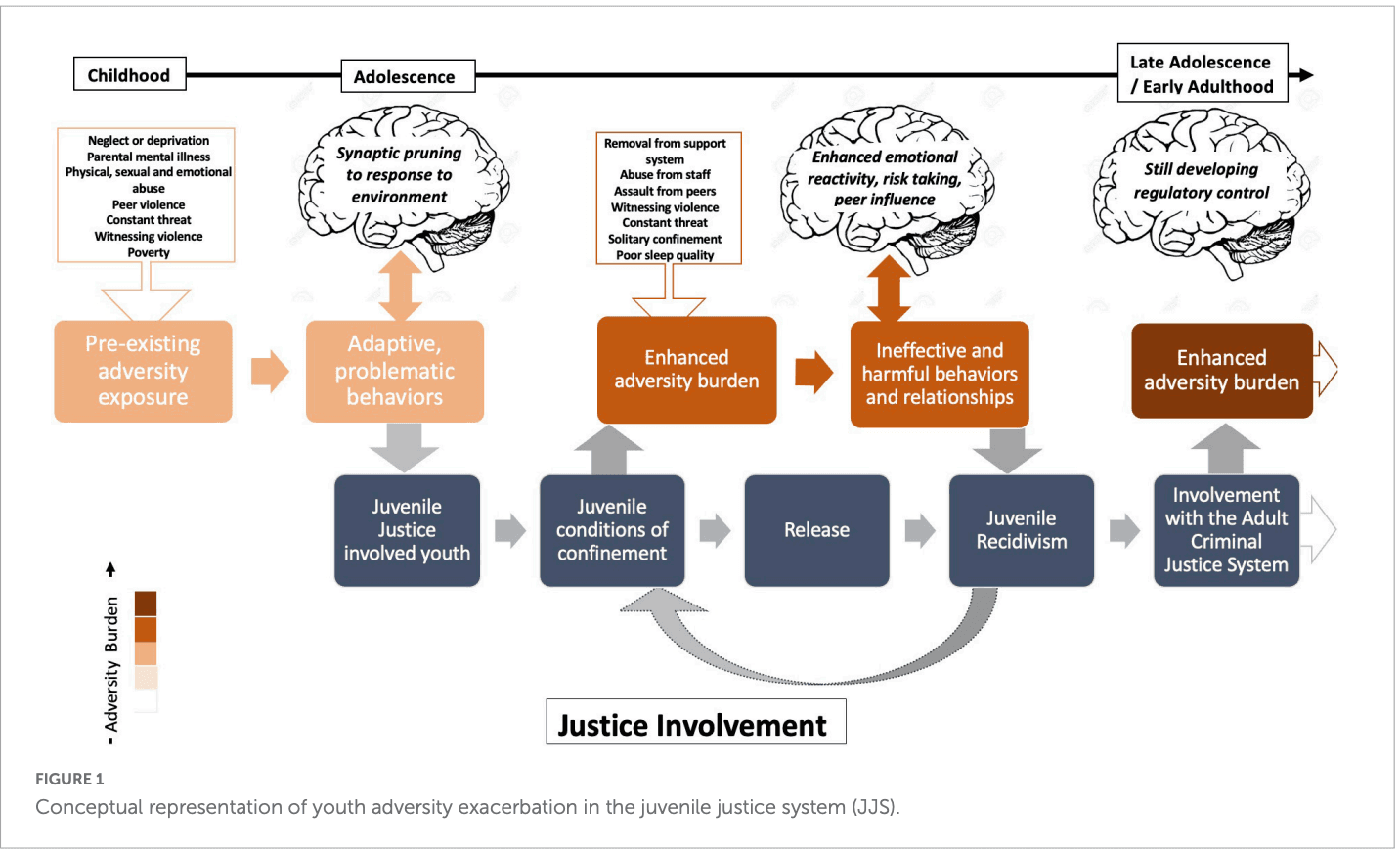
Figure 1

Stress and the brain

Prolonged and frequent activation of the body’s sympathetic nervous system [i.e., hypothalamic-pituitary-adrenal (HPA) axis] and circulation of stress hormones are detrimental to homeostatic maintenance and overall health (Lupien et al., 2009). Glucocorticoids permeate the blood-brain barrier and act on receptors in the frontal lobe, insula, amygdala, hippocampus, and cerebellum resulting in impaired functioning and structural alterations (Teicher and Samson, 2016). Neural regions impacted by stress typically contain a high concentration of glucocorticoid receptors, with early life adversity and stress hormone exposure resulting in decreased cell proliferation and neurogenesis, increased apoptosis, and diminished synaptic spine density (Bath et al., 2016). Given that the developing brain contains a greater proportion of stress hormone receptors than adults (Avishai-Eliner et al., 1996), youth are more vulnerable to the impacts of stress and adversity.

Extensive research has explored the impact of early life adversity on prominent neural circuitry, endocrine functioning, psychopathology, and behavior (Cowan et al., 2016; Teicher and Samson, 2016)—exposure akin to chronic stressors faced during juvenile confinement (Lansing et al., 2016). Different forms of early life adversity, such as abuse, neglect and deprivation—all present at a higher rate in JJS-involved youth—are suggested to uniquely impact the brain contingent upon the characteristics of the stressor, e.g., age of onset, duration, and frequency of exposure (Callaghan et al., 2014; Teicher and Samson, 2016). Physical abuse is the most widespread form of abuse early in life, particularly among males (Felitti et al., 1998; Teicher et al., 2012). Associated with a history of physical abuse is traumatic brain injury (TBI) (Ewing-Cobbs et al., 1999), the immediate effect being axonal injury resulting in cellular transport disruption, inflammation, and eventual white matter degeneration. Systematically, TBI negatively impacts cognitive control, intellectual function, attention, memory, social functioning, psychiatric symptomology, and is associated with delinquency (McKinlay, 2014). Youth are particularly vulnerable to the neural effects of TBI given the prevalence of developing fiber bundles and unmyelinated axons. A 2013 meta-analysis noted that juvenile offenders were over 3 times as likely to report a history of TBI than controls, with high rates among juvenile offenders both pre- and post-confinement (Farrer et al., 2013).

National survey data indicate that adolescent exposure to community violence is on par with adversity exposure within the home (Fagan et al., 2014). JJS-involved youth often present with a history of neighborhood violence exposure (Chapman et al., 2006) and originate from impoverished or low SES households (Wilson et al., 2009); these households are disproportionality Black and Latinx (Williams and Collins, 2001). Irrespective of direct harm, community violence exposure constitutes a pervasive threat that accelerates biological aging and contributes to detrimental quality of life outcomes (Motley et al., 2017; Sumner et al., 2019). Youth from low SES households have higher basal cortisol levels (Kuhlman et al., 2018), neural alterations similar to those associated with early life adversity exposure (Hanson et al., 2015) and present with advanced pubertal development. Many Black and Latinx youth undergo pubertal maturation earlier than White youth (Ramnitz and Lodish, 2013) and thus may outwardly physically appear older. Youth who appear more pubertally advanced are more often treated as adults and stigmatized in school and throughout the community (Mendle et al., 2019), despite their developing biology. This stigmatization based off outward appearances may in part explain prosecutorial attempts to erroneously place justice-involved youth in adult correctional facilities.

Confinement as adversity

Instances of abuse—including physical, sexual and emotional—within the JJS are not uncommon. Evidence of youth maltreatment within the JJS has been documented in most states (Mendel, 2015), with maltreatment including violence, sexual abuse, and frequent or prolonged use of restraints. Punitive tactics such as physical force, group punishment, and solitary confinement are routinely employed at all levels of criminal justice involvement (Mendel, 2015; Owen and Wallace, 2020). Neuroscientific research on solitary confinement documents its damaging impact on mental and physical health, socioemotional learning, and overall quality of life. The acute and chronic repercussions of isolation include prominent behavioral and social deficits and a propensity for psychopathology, particularly mood disorders and psychosis; these effects have been observed across developmental periods and among numerous species, including rodents, non-human primates, adolescents, and adults (Champagne and Meaney, 2007; Sinclair et al., 2014). The most recent data indicate that over a third of youth in custody experienced solitary confinement (American Civil Liberties Union, 2013; Department of Justice, 2017). In 2016, the Obama administration banned the use of solitary confinement for juveniles held in federal prisons and tightened restrictions on its use for adult inmates. While the majority of youth are held under state jurisdiction, the federal isolation ban for juveniles has been a powerful catalyst for state and local reform.

It is well-established that enriched environments support optimal brain development through greater learning opportunities and enhanced neuroplasticity (Bailoo et al., 2018). The sterile environments youth are confined to in the JJS restrict behaviors and activities that are educational, exploratory, or creative (McCarthy et al., 2016). Despite supportive conditions in place—such as primary and secondary education, behavioral management, and skill building—the prevalence of physical violence, constant threat, absence of a stable support system, and seclusion is still detrimental to neurodevelopment and overall functioning (Mota et al., 2016). A proportional hazards model from an aggregated exposure of 386,709 person-years positively correlated the degree of justice involvement (i.e., arrest, detainment, confinement, or transfer to an adult facility) with mortality risk (i.e., homicide), such that youth transferred to an adult facility were more likely to die than detained youth (Aalsma et al., 2016). Evidence indicates that current conditions of juvenile confinement are developmentally harmful for confined youth and serve as a source of adversity exposure and possible exacerbation.

The COVID-19 pandemic has intensified the challenging living conditions and health risks faced by confined youth (Barnert, 2020). Online-learning resources available for confined youth are ill-equipped to meet their educational and rehabilitative needs; youth are further distanced from sources of support as visitations have been suspended or reduced (Barnert, 2020). The unique neurodevelopmental need of social support during adolescence is no less for these youth and of particular importance given the demonstrated impact of social support on decreasing the occurrence of problematic and delinquent behaviors (Fritz et al., 2018).

Neuroscience applied to juvenile justice reform

Neurocognitive, psychosocial, and behavioral research has informed much of our understanding of criminal behavior, culpability, and the ensuing legal consequences. Recent neuroscientific research that underscores adolescents’ developmentally diminished culpability has been referenced in court cases and has impacted legal proceedings. The 2005 Supreme Court case of Roper v. Simmons eliminated the death penalty for individuals under age 18 by referencing scientific findings upholding the developmental immaturity of adolescents in terms of impulsivity, recklessness and irresponsibility, as well as heightened peer influence.

In 2010, the Supreme Court ruled in the case of Graham v. Florida that life sentences without the possibility of parole for juveniles convicted of non-homicidal crimes were cruel and unusual and thus unconstitutional. Building upon Graham v. Florida, the 2012 Miller v. Alabama Supreme Court case ruled mandatory sentencing of juvenile life without parole was in violation of the Eighth Amendment’s ban on cruel and unusual punishment. Youths’ inherent vulnerability to and dependence on their environment provided the impetus for the court’s decision.

Unlike the previous court cases predominately addressing youth sentencing, the 2011 Supreme Court case of J.D.B. v. North Carolina utilized neurodevelopmental research to inform our understanding of cognitive capacity. This case determined that age must be accounted for when conducting the Miranda police custody analysis. As youth’s cognitive faculties are still developing, their ability to reason, make long-term projections, and understand the legal gravity of any past actions and criminal involvement are not yet sufficiently within their developmental purview.

These Supreme Court decisions, along with other recent advancements in juvenile justice reform, bring the US in agreement with article 37(a) of the UN’s Convention on the Rights of the Child prohibiting capital punishment and life imprisonment without the possibility of release for individuals under eighteen. In each of these court cases, adolescents’ neurobiological propensity for risk taking, impulsivity and enhanced peer influence was weighed heavily. Examining neuroimaging scans across thousands of individuals was ultimately how the scientific community demonstrated that typical adolescent behaviors, which are conserved across species, can be attributed to unique, neurodevelopmentally appropriate characteristics of the adolescent brain. In addition to attention focused on youth’s characteristics pre-confinement, the long-term detrimental physical and mental health effects of juvenile confinement have been documented by health professionals (Barnert et al., 2019). Mitigating the detrimental impacts of juvenile confinement on neurodevelopment while improving health outcomes of previously incarcerated youth should provide the impetus for the next wave of advancements in JJS reform.

Discussion

The US Department of Justice reports, “Nearly one in three Americans of working age have had an encounter with the criminal justice system” (Department of Justice, 2017). While an encounter encompasses any level of justice system involvement, the statistic highlights the system’s degree of enmeshment within our society. In both the juvenile and adult criminal justice systems, males and minoritized groups are overrepresented, even after controlling for type of crime, age, SES, and US geographic region (McCarthy et al., 2016). The annual fiscal burden placed on society from confining youth ranges from $8 to $21 billion (Justice Policy Institute, 2015). Additionally, juvenile recidivism rates are comparable to that of adults (Mendel, 2011) with 70–80% of youth facing re-arrest 2–3 years post-release (McCarthy et al., 2016). Adults with a history of juvenile confinement face significant disadvantages educationally, economically, socially, emotionally, interpersonally (Abram et al., 2017), and in general health (Barnert et al., 2016).

Alternatives to the juvenile confinement model

Given that the current conditions can serve as a source of traumatization and adversity exacerbation, leaving youth more vulnerable to adverse outcomes than when they entered, scientists, clinicians, and advocates have called for the instatement of a more developmentally appropriate evidence-based continuum of services (Balsamo and Poncin, 2016; McCarthy et al., 2016; Lynch et al., 2018; Guckenburg et al., 2019). A 2009 meta-analysis of 548 studies on alternatives to confinement and youth recidivism found that interventions rooted in counseling, skill-building, and restoration had the greatest impact on recidivism reductions; conversely, programs built on deterrence and discipline were associated with higher reoffending rates (Lipsey, 2009). Thus, programs aimed at rehabilitation rather than punishment would capitalize upon adolescent neuroplasticity and be more effective at deterring adolescents from delinquent behaviors. Here, we provide a summary of evidence-based alternatives to youth confinement organized in three tiers based off youth’s history of involvement with the JJS and their current charge: (1) low-level, non-violent offenses; (2) non-violent offenses among individuals with a history of JJ involvement; and (3) violent, repeat offenses (Table 1).

Table 1. Alternatives to juvenile incarceration for all youth through the age of 25 years
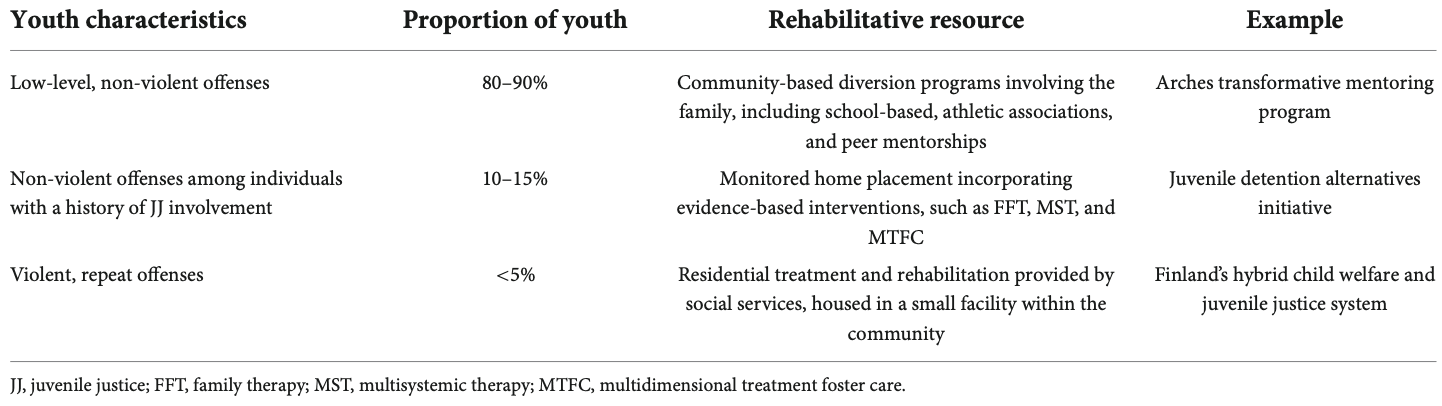
Table 1

The first-line intervention is culturally supportive and developmentally appropriate diversion tactics implemented within the community. These include school-based programs, athletic associations, and peer mentorships that involve the family (Farahmand et al., 2012). In New York City, the Department of Probation addressed neighborhood-specific challenges faced by youth and curbed recidivism through the Arches Transformative Mentoring Program. By pairing youth with paid mentors who are former inmates and from the same neighborhood of their mentees, program graduates committed significantly less felonies 1- and 2-years post-probation (Lynch et al., 2018). Environmental enrichment and social support have neuro-protective properties in their ability to diminish the detrimental structural and functional neurobiological correlates of stress while enhancing neuroplasticity (Biggio et al., 2019).

For youth unresponsive to diversion tactics within the community, the next line of intervention could be the home. Monitored home placement may be less disruptive to and more appropriate for developmental processes while youth are undergoing redirection and rehabilitation. Evidenced-based interventions include functional family therapy, multisystemic therapy, and multidimensional treatment foster care (Balsamo and Poncin, 2016). The Detention Diversion Advocacy Program and Juvenile Detention Alternatives Initiative follow this approach and have been recognized by governmental agencies as national models and evidence-based alternatives to juvenile confinement (The Annie E. Casey Foundation, 2017). Given adversity’s impact on frontolimbic circuitry, improving emotion regulation, particularly in females, in parallel with evidence-based interventions has been shown to improve treatment responsivity (Winiarski et al., 2017).

For the remaining youth for whom neither community diversion nor in-home rehabilitation is appropriate, community-based facilities staffed by a consortium of social service officers and health and educational professionals could be utilized (McCarthy et al., 2016; Society for Adolescent Health and Medicine, 2016). These facilities reflect an organizational shift from confinement in correctional facilities to residential treatment and rehabilitation provided by social services, as has historically been the case for youth in Finland (Abrams et al., 2018). In 2020, California bill SB823 shifted oversight of juvenile cases from state corrections to county-level health departments. The legislation aims to promote developmentally sensitive rehabilitation, house youth closer to sources of support, and permit youth to remain in the juvenile system until age 25, limiting transfers to adult corrections.

As reward sensitivity peaks during adolescence, the receipt of rewards has been shown to drive learning behaviors and suppress inappropriate actions (Lourenco and Casey, 2013). Rehabilitative efforts that capitalize on youth’s existing strengths and incentivize learning through rewards vs. punishments are neurodevelopmentally poised to succeed.

Funding more rehabilitative options for adjudicated youth may lead to less youth entering juvenile jails, detention centers, and adult prisons, diminishing the incidence of confinement-related stressors. It may also lead to greater cost-benefit outcomes. For example, multisystemic therapy provided for serious juvenile offenders resulted in $4,643 saved per youth in behavioral health claims (Dopp et al., 2018). While systemic barriers attributable to funding, existing policies, and regulations often curtail reform (Guckenburg et al., 2019), scientific advancements in neurodevelopment have already contributed to the improved treatment of youth. Since the landmark Supreme Court cases over a decade ago, further scientific advancements have been made addressing neurodevelopment in the context of adversity exposure, making the juvenile carceral system long overdue for the integration of neuroscientific understandings in the treatment of youth. In addition to improved rehabilitative outcomes and reintegration into society, the inclusion of this information may help shift the public’s perception of and long-term investment in these youth.

Conclusion

Due to neuroplasticity, adolescents are susceptible to lasting neural alterations in response to environmental conditions, especially the harsh conditions of juvenile confinement; however, they may also be more amenable than adults toward redirection and rehabilitation. To capitalize on adolescents’ unique rehabilitative potential, the primary objective of juvenile justice reform should be to strengthen and support redirection and rehabilitative efforts that are developmentally appropriate for youth and reinforce individual existing strengths and contributions. Advancement toward a developmentally appropriate response to youth who come to the attention of law enforcement requires acknowledgment that existing conditions may often constitute a state-sanctioned form of adversity exposure and exacerbation, an argument that the neuroscientific, pediatric, and behavioral health care communities can advance in striving toward decarceration of youth.

Open Article as PDF

Abstract

Every year, about 700,000 youth arrests occur in the United States, creating significant neurodevelopmental strain; this is especially concerning as most of these youth have early life adversity exposures that may alter brain development. Males, Black, and Latinx youth, and individuals from low socioeconomic status households have disproportionate contact with the juvenile justice system (JJS). Youth confined in the JJS are frequently exposed to threat and abuse, in addition to separation from family and other social supports. Youths' educational and exploratory behaviors and activities are substantially restricted, and youth are confined to sterile environments that often lack sufficient enrichment resources. In addition to their demonstrated ineffectiveness in preventing future delinquent behaviors, high recidivism rates, and costs, juvenile conditions of confinement likely exacerbate youths' adversity burden and neurodevelopmentally harm youth during the temporally sensitive window of adolescence. Developmentally appropriate methods that capitalize on adolescents' unique rehabilitative potential should be instated through interventions that minimize confinement. Such changes would require joint advocacy from the pediatric and behavioral health care communities. "The distinct nature of children, their initial dependent, and developmental state, their unique human potential as well as their vulnerability, all demand the need for more, rather than less, legal and other protection from all forms of violence (United Nations Committee on the Rights of the Child, 2007)."

Introduction

When the minimum age for legal accountability, competence to stand trial, and the capacity to intentionally commit wrongful acts was established by the United Nations, neurodevelopmental research was in its early stages. This research now plays a critical role in discussions about culpability and the treatment of delinquent behavior. Current conditions within juvenile confinement can act as a form of adversity, potentially contributing to negative neurodevelopmental and life outcomes. Adversity is defined as exposure to abuse, neglect, and constant threat, with exposure before age 18 termed early life adversity. An individual's cumulative lifetime exposure to such experiences constitutes their adversity burden, often used interchangeably with terms like chronic stress and trauma.

The United States’ Juvenile Justice System (JJS) largely mirrors the adult criminal justice system, operating punitively. Confinement serves as both incapacitation and a deterrent from crime. Males, racial and ethnic minorities, and youth from socioeconomically disadvantaged backgrounds are disproportionately affected by this system.

Many youth entering the JJS have already experienced adversity. Experiencing further adversity during confinement can intensify the detrimental neurodevelopmental outcomes associated with these prior exposures, creating a cumulative disadvantage. Developmental science indicates that the current JJS is often developmentally inappropriate, potentially adding to the adversity burden for some of the most disadvantaged and vulnerable youth.

Defining the Reach of the Justice System on Young Children

The United Nations (UN) Convention on the Rights of the Child, established in 1989, defines any human being under the age of eighteen as a child, unless legal adulthood is reached earlier. In 2019, the UN Committee on the Rights of the Child recommended 14 years as the absolute minimum age at which children can be held legally responsible for their actions, raising the international standard from 12. The United States is the only country that has not ratified this Convention, and most U.S. states have not adopted a minimum age of legal responsibility. Among the states that have, 14 have set the minimum age at 10 years, and North Carolina has established it at six years old.

The Juvenile Carceral Continuum

The United States incarcerates more individuals per capita, including youth, than any other nation. Despite declining arrest rates, approximately 700,000 youth arrests occur annually. The most common offenses include larceny-theft, drug abuse violations, disorderly conduct, and vandalism. Arrests for violent crimes, such as robbery and assault, constitute only about 6% of all juvenile arrests and are at near their lowest levels in over 40 years. Aggression, conduct problems, and psychopathy typically decrease with age, with 90% of juvenile offenders ceasing criminal activity by their mid-20s.

Racial disparities in incarceration rates are evident, with Black (40%) and Latino (23%) male youth disproportionately represented. Youth with cognitive, physical, and mental disabilities, as well as those identifying as lesbian, gay, bisexual, transgender, and questioning (LGBTQ+) (20%), are also overrepresented in the justice system. Among youth involved with the JJS, two-thirds of males and three-quarters of females present with at least one psychiatric diagnosis, such as substance use, depression, or post-traumatic stress disorder (PTSD).

Youth in the JJS are confined to shared living quarters or isolation. They receive limited and supervised contact with external support and often have minimal access to enrichment and educational opportunities. Confined youth frequently lack access to quality healthcare, sanitary living conditions, adequate sleep, and other basic needs. Furthermore, allegations of abuse (physical, sexual, and emotional) are routinely reported in the JJS, leading to staff reassignments, resignations, and facility closures. Psychosocial and neuroimaging research demonstrates the harmful impacts of abuse and neglect on adolescent neurodevelopment and behavior, even when educational and life skills trainings are available. Environmental stressors experienced during adolescence, a period of sensitive neurodevelopment, can leave a lifelong mark on neural structure and function. While individual juvenile detention facilities vary, the JJS often operates in a manner similar to the adult criminal justice system.

Neurodevelopment

Sensitive periods of development are characterized by both increased vulnerability to stressors and enhanced capacity for change in response to interventions, with both yielding lasting effects on brain structure and function. Adolescence, roughly defined as the onset of puberty to the mid-20s, represents one such critical period.

Unlike childhood, which involves global and regional neural growth, adolescence is marked by the refinement of neuronal processing through synaptic pruning, which helps adapt to anticipated environmental conditions. Reductions in gray matter volume are linked to increased neuronal firing efficiency, while increases in white matter volume support whole-brain connectivity and axonal myelination. The age of pubertal onset and the duration of pubertal maturation influence youth's neurodevelopmental trajectory and behavior; however, neuroplasticity decreases with age, making adolescent experiences profoundly impactful on both this critical period and adulthood.

Adolescence accounts for a disproportionate number of both "offenders" and victims of crime compared to other age groups. This period is uniquely characterized by heightened emotional reactivity, increased impulsivity and risk-taking, stronger peer influence, and ongoing maturation of regulatory control, in contrast to adults. Exposure to adversity can amplify these typical adolescent behaviors. Approximately 90% of youth involved with the JJS have a history of adversity exposure, and one-third have experienced five or more adverse childhood experiences. Early life adversity encompasses instances of abuse (physical, verbal, or sexual), neglect, or deprivation occurring during childhood and adolescence. Similar to neural refinement processes that create stronger, more specialized connections during adolescence, neural circuitry repeatedly activated due to adversity exposure becomes strengthened, making it more susceptible to further stressors. Consequently, youth with altered neurodevelopment due to adversity exposure are more vulnerable to the detrimental effects of high-stress environments, such as detention facilities and prisons. A hypothesis suggests that this neurodevelopmental vulnerability to confinement conditions propels youth toward trauma exacerbation and engagement in ineffective and harmful cognitive processing, behaviors, and relationships, potentially leading to future justice system involvement.

Stress and the Brain

Prolonged and frequent activation of the body’s sympathetic nervous system, specifically the hypothalamic-pituitary-adrenal (HPA) axis, and the circulation of stress hormones are detrimental to maintaining bodily balance and overall health. Glucocorticoids penetrate the blood-brain barrier and act on receptors in the frontal lobe, insula, amygdala, hippocampus, and cerebellum, resulting in impaired function and structural alterations. Brain regions affected by stress typically have a high concentration of glucocorticoid receptors, with early life adversity and stress hormone exposure leading to decreased cell proliferation, reduced neurogenesis, increased cell death, and diminished synaptic spine density. Given that the developing brain contains a greater proportion of stress hormone receptors than adult brains, youth are more vulnerable to the impacts of stress and adversity.

Extensive research has investigated the impact of early life adversity on prominent neural circuitry, endocrine function, psychopathology, and behavior. Exposure to such adversity is comparable to the chronic stressors encountered during juvenile confinement. Different forms of early life adversity, including abuse, neglect, and deprivation—all more prevalent among JJS-involved youth—are believed to uniquely affect the brain depending on the characteristics of the stressor, such as age of onset, duration, and frequency of exposure. Physical abuse is the most common form of early life abuse, especially among males, and is associated with traumatic brain injury (TBI). The immediate effects of TBI include axonal injury, leading to cellular transport disruption, inflammation, and eventual white matter degeneration. Systematically, TBI negatively impacts cognitive control, intellectual function, attention, memory, social functioning, psychiatric symptoms, and is linked to delinquency. Youth are particularly vulnerable to the neural effects of TBI due to the prevalence of developing fiber bundles and unmyelinated axons. A 2013 meta-analysis found that juvenile offenders were over three times more likely to report a history of TBI than control groups, with high rates observed both before and after confinement.

National survey data indicate that adolescent exposure to community violence is as significant as adversity exposure within the home. Youth involved with the JJS often have a history of neighborhood violence exposure and frequently come from impoverished or low socioeconomic status (SES) households, which are disproportionately Black and Latinx. Regardless of direct physical harm, community violence exposure constitutes a pervasive threat that accelerates biological aging and contributes to detrimental quality of life outcomes. Youth from low SES households exhibit higher basal cortisol levels, neural alterations similar to those associated with early life adversity exposure, and demonstrate advanced pubertal development. Many Black and Latinx youth undergo pubertal maturation earlier than White youth, potentially appearing physically older. Youth who appear more pubertally advanced are more often treated as adults and stigmatized in school and the community, despite their developing biology. This stigmatization, based on outward appearances, may partly explain attempts to erroneously place justice-involved youth in adult correctional facilities.

Confinement as Adversity

Instances of abuse—including physical, sexual, and emotional—are not uncommon within the JJS. Evidence of youth maltreatment, such as violence, sexual abuse, and frequent or prolonged use of restraints, has been documented in most states. Punitive tactics, including physical force, group punishment, and solitary confinement, are routinely employed at all levels of criminal justice involvement. Neuroscientific research on solitary confinement documents its damaging impact on mental and physical health, socioemotional learning, and overall quality of life. The acute and chronic repercussions of isolation include prominent behavioral and social deficits and a propensity for psychopathology, particularly mood disorders and psychosis; these effects have been observed across developmental periods and among various species, including rodents, non-human primates, adolescents, and adults. Recent data indicate that over one-third of youth in custody have experienced solitary confinement. In 2016, the federal government banned the use of solitary confinement for juveniles in federal prisons and tightened restrictions for adult inmates, serving as a powerful catalyst for state and local reform, though most youth are held under state jurisdiction.

Enriched environments are known to support optimal brain development through enhanced learning opportunities and increased neuroplasticity. The sterile environments to which youth are confined in the JJS restrict educational, exploratory, and creative behaviors and activities. Even when supportive conditions like primary and secondary education, behavioral management, and skill-building are in place, the prevalence of physical violence, constant threat, absence of stable support systems, and seclusion remains detrimental to neurodevelopment and overall functioning. A proportional hazards model from an aggregated exposure of 386,709 person-years positively correlated the degree of justice involvement (e.g., arrest, detainment, confinement, or transfer to an adult facility) with mortality risk, indicating that youth transferred to an adult facility were more likely to die than detained youth. Evidence suggests that current conditions of juvenile confinement are developmentally harmful for confined youth and serve as a source of adversity exposure and possible exacerbation.

The COVID-19 pandemic intensified the challenging living conditions and health risks faced by confined youth. Online-learning resources available for confined youth are often inadequate to meet their educational and rehabilitative needs, and youth are further distanced from sources of support as visitations have been suspended or reduced. The unique neurodevelopmental need for social support during adolescence is critical for these youth, particularly given its demonstrated impact on decreasing problematic and delinquent behaviors.

Neuroscience Applied to Juvenile Justice Reform

Neurocognitive, psychosocial, and behavioral research has significantly informed the understanding of criminal behavior, culpability, and the associated legal consequences. Recent neuroscientific findings emphasizing adolescents' developmentally diminished culpability have been referenced in court cases and influenced legal proceedings. The 2005 Supreme Court case Roper v. Simmons eliminated the death penalty for individuals under age 18 by citing scientific evidence that supported the developmental immaturity of adolescents regarding impulsivity, recklessness, irresponsibility, and heightened peer influence.

In 2010, the Supreme Court ruled in Graham v. Florida that life sentences without the possibility of parole for juveniles convicted of non-homicidal crimes were cruel and unusual, thus unconstitutional. Building on this, the 2012 Miller v. Alabama Supreme Court case ruled that mandatory sentencing of juvenile life without parole violated the Eighth Amendment's ban on cruel and unusual punishment. The inherent vulnerability of youth to and dependence on their environment provided the impetus for the court's decision.

Unlike previous cases primarily addressing youth sentencing, the 2011 Supreme Court case J.D.B. v. North Carolina utilized neurodevelopmental research to inform the understanding of cognitive capacity. This case determined that age must be considered when conducting the Miranda police custody analysis. As youth's cognitive faculties are still developing, their ability to reason, make long-term projections, and understand the legal gravity of past actions and criminal involvement are not yet fully within their developmental capacity.

These Supreme Court decisions, along with other recent advancements in juvenile justice reform, bring the United States closer to agreement with Article 37(a) of the UN’s Convention on the Rights of the Child, which prohibits capital punishment and life imprisonment without the possibility of release for individuals under 18. In each of these court cases, adolescents' neurobiological predisposition for risk-taking, impulsivity, and enhanced peer influence was heavily considered. Examining neuroimaging scans across thousands of individuals ultimately allowed the scientific community to demonstrate that typical adolescent behaviors, which are consistent across species, can be attributed to unique, neurodevelopmentally appropriate characteristics of the adolescent brain. In addition to attention focused on youth's characteristics prior to confinement, the long-term detrimental physical and mental health effects of juvenile confinement have been documented by health professionals. Mitigating these detrimental impacts on neurodevelopment while improving health outcomes for previously incarcerated youth should serve as the impetus for the next wave of advancements in JJS reform.

Discussion

The U.S. Department of Justice reports that "Nearly one in three Americans of working age have had an encounter with the criminal justice system." While an encounter encompasses any level of justice system involvement, this statistic highlights the system’s deep integration into society. In both juvenile and adult criminal justice systems, males and minoritized groups are overrepresented, even after controlling for crime type, age, socioeconomic status, and U.S. geographic region. The annual financial burden on society from confining youth ranges from $8 to $21 billion. Additionally, juvenile recidivism rates are comparable to those of adults, with 70–80% of youth facing re-arrest within 2–3 years post-release. Adults with a history of juvenile confinement face significant disadvantages educationally, economically, socially, emotionally, interpersonally, and in general health.

Given that current conditions can lead to traumatization and adversity exacerbation, leaving youth more vulnerable to adverse outcomes than when they entered, scientists, clinicians, and advocates have called for the establishment of a more developmentally appropriate, evidence-based continuum of services. A 2009 meta-analysis of 548 studies on alternatives to confinement and youth recidivism found that interventions rooted in counseling, skill-building, and restoration had the greatest impact on reducing recidivism; conversely, programs built on deterrence and discipline were associated with higher reoffending rates. Thus, programs aimed at rehabilitation rather than punishment would capitalize upon adolescent neuroplasticity and be more effective at deterring adolescents from delinquent behaviors. Evidence-based alternatives to youth confinement can be organized into tiers based on a youth's history of involvement with the JJS and their current charge.

For low-level, non-violent offenses, the first-line intervention involves culturally supportive and developmentally appropriate diversion tactics implemented within the community. These include school-based programs, athletic associations, and peer mentorships that involve the family. In New York City, the Arches Transformative Mentoring Program addressed neighborhood-specific challenges faced by youth, curbing recidivism by pairing youth with paid mentors who are former inmates from the same neighborhood as their mentees. Program graduates committed significantly fewer felonies one and two years post-probation. Environmental enrichment and social support possess neuro-protective properties, diminishing detrimental structural and functional neurobiological correlates of stress while enhancing neuroplasticity.

For youth unresponsive to community diversion tactics, monitored home placement can serve as the next intervention level. This approach may be less disruptive to and more appropriate for developmental processes while youth undergo redirection and rehabilitation. Evidence-based interventions include functional family therapy, multisystemic therapy, and multidimensional treatment foster care. The Detention Diversion Advocacy Program and the Juvenile Detention Alternatives Initiative exemplify this approach and have been recognized as national models and evidence-based alternatives to juvenile confinement. Given adversity’s impact on frontolimbic circuitry, improving emotion regulation, particularly in females, alongside evidence-based interventions has been shown to enhance treatment responsiveness.

For the remaining youth for whom neither community diversion nor in-home rehabilitation is appropriate, community-based facilities staffed by a consortium of social service officers and health and educational professionals could be utilized. These facilities reflect an organizational shift from confinement in correctional facilities to residential treatment and rehabilitation provided by social services, similar to the historical approach for youth in Finland. In 2020, California bill SB823 shifted oversight of juvenile cases from state corrections to county-level health departments. This legislation aims to promote developmentally sensitive rehabilitation, house youth closer to sources of support, and permit youth to remain in the juvenile system until age 25, limiting transfers to adult corrections.

As reward sensitivity peaks during adolescence, the receipt of rewards has been shown to drive learning behaviors and suppress inappropriate actions. Rehabilitative efforts that capitalize on youth’s existing strengths and incentivize learning through rewards versus punishments are neurodevelopmentally poised to succeed. Funding more rehabilitative options for adjudicated youth may lead to fewer youth entering juvenile jails, detention centers, and adult prisons, thereby diminishing the incidence of confinement-related stressors. It may also lead to greater cost-benefit outcomes; for example, multisystemic therapy provided for serious juvenile offenders resulted in $4,643 saved per youth in behavioral health claims. While systemic barriers attributable to funding, existing policies, and regulations often restrict reform, scientific advancements in neurodevelopment have already contributed to the improved treatment of youth. Since the landmark Supreme Court cases over a decade ago, further scientific advancements have been made regarding neurodevelopment in the context of adversity exposure, making the juvenile carceral system long overdue for the integration of neuroscientific understandings in the treatment of youth. In addition to improved rehabilitative outcomes and reintegration into society, the inclusion of this information may help shift public perception of and long-term investment in these youth.

Conclusion

Due to neuroplasticity, adolescents are susceptible to lasting neural alterations in response to environmental conditions, especially the harsh conditions of juvenile confinement; however, they may also be more amenable than adults toward redirection and rehabilitation. To capitalize on adolescents’ unique rehabilitative potential, the primary objective of juvenile justice reform should be to strengthen and support redirection and rehabilitative efforts that are developmentally appropriate for youth and reinforce individual existing strengths and contributions. Advancement toward a developmentally appropriate response to youth who come to the attention of law enforcement requires acknowledgment that existing conditions may often constitute a state-sanctioned form of adversity exposure and exacerbation, an argument that the neuroscientific, pediatric, and behavioral health care communities can advance in striving toward the decarceration of youth.

Open Article as PDF

Abstract

Every year, about 700,000 youth arrests occur in the United States, creating significant neurodevelopmental strain; this is especially concerning as most of these youth have early life adversity exposures that may alter brain development. Males, Black, and Latinx youth, and individuals from low socioeconomic status households have disproportionate contact with the juvenile justice system (JJS). Youth confined in the JJS are frequently exposed to threat and abuse, in addition to separation from family and other social supports. Youths' educational and exploratory behaviors and activities are substantially restricted, and youth are confined to sterile environments that often lack sufficient enrichment resources. In addition to their demonstrated ineffectiveness in preventing future delinquent behaviors, high recidivism rates, and costs, juvenile conditions of confinement likely exacerbate youths' adversity burden and neurodevelopmentally harm youth during the temporally sensitive window of adolescence. Developmentally appropriate methods that capitalize on adolescents' unique rehabilitative potential should be instated through interventions that minimize confinement. Such changes would require joint advocacy from the pediatric and behavioral health care communities. "The distinct nature of children, their initial dependent, and developmental state, their unique human potential as well as their vulnerability, all demand the need for more, rather than less, legal and other protection from all forms of violence (United Nations Committee on the Rights of the Child, 2007)."

Introduction

When the United Nations first set rules for the age at which individuals could be held legally responsible for crimes, brain development research was just beginning. This research is now crucial for understanding not only criminal responsibility but also how to treat young people who commit offenses. The current conditions in juvenile detention can be a form of hardship, which may worsen brain development and overall well-being. Hardship, or adversity, includes experiencing abuse, neglect, and constant threats, especially before age 18. An individual's total exposure to these difficult experiences over their lifetime is called their adversity burden. Terms like chronic stress and trauma are often used to describe similar experiences.

The Juvenile Justice System (JJS) in the United States often mirrors the adult criminal justice system, using punishment as a primary method. Confinement aims to both remove young people from society and deter them from future crimes. However, certain groups are affected more than others, including males, racial and ethnic minorities, and youth from homes with fewer economic resources.

Most young people who enter the Juvenile Justice System have already faced hardship. Experiencing more hardship while in confinement can make existing problems with brain development worse, leading to even greater disadvantages over time. Research on child development indicates that the current system is often not suitable for young people's developmental stage. This can add to the burden of adversity for already vulnerable and disadvantaged youth.

Defining the Reach of the Justice System on Young Children

The United Nations Convention on the Rights of the Child, signed in 1989, defines any person under eighteen as a child, unless local law states an earlier age for adulthood. In 2019, a UN committee suggested 14 as the youngest age a child should be held legally responsible, raising the international standard from 12. The United States is the only country that has not formally accepted this Convention. Most US states do not have a minimum age for legal responsibility. Among the states that do, 14 have set the minimum at 10 years old, while North Carolina has set it at six.

The Juvenile Carceral Continuum

The US justice system incarcerates more people per person, including young people, than any other country. Despite fewer arrests overall, about 700,000 young people are arrested each year. The most common reasons include theft, drug use, disorderly conduct, and vandalism. Arrests for violent crimes, such as robbery and assault, make up only about 6% of all juvenile arrests and are at their lowest point in over 40 years. Aggressive behaviors, conduct problems, and psychopathy usually decrease as people get older, with 90% of young offenders stopping criminal activity by their mid-20s.

Racial differences in incarceration rates are clear, with Black youth (40%) and Latino youth (23%) being overrepresented, especially males. Young people with cognitive, physical, and mental disabilities, as well as those who identify as lesbian, gay, bisexual, transgender, and questioning (LGBTQ) (20%), are also more likely to be involved with the justice system. Among youth in the JJS, two-thirds of males and three-quarters of females have at least one mental health diagnosis, such as substance use, depression, or post-traumatic stress disorder (PTSD).

Young people in the JJS are often held in shared living areas or in isolation. They have limited and supervised contact with family and friends outside the facility, and often have minimal access to learning and educational opportunities. Confined youth also frequently lack proper healthcare, clean living conditions, enough sleep, and other basic necessities. Furthermore, reports of abuse (physical, sexual, and emotional) are common in the JJS, leading to staff reassignments, resignations, and facility closures. Research using psychological studies and brain imaging shows that abuse and neglect can harm adolescent brain development and behavior, even if there are some positive resources like education and life skills training. Negative environmental experiences during the sensitive period of adolescent brain development can leave a permanent mark on brain structure and function. While juvenile detention centers vary, the JJS often operates in a way similar to the adult criminal justice system.

Neurodevelopment

Key periods of development are times when the brain is both more easily harmed by stress and more responsive to helpful interventions. Both can have lasting effects on brain structure and function. Adolescence, generally from the start of puberty to the mid-20s, is one such period.

Unlike childhood, which involves overall growth of brain cells, adolescence focuses on refining how brain cells work. This process, called synaptic pruning, makes the brain more efficient at responding to expected environmental conditions. A decrease in gray matter volume is linked to more efficient firing of brain cells, while an increase in white matter volume supports better brain-wide connections and nerve insulation. The age when puberty begins and how long it lasts influence a young person's brain development and behavior. However, the brain's ability to change decreases with age, meaning adolescent experiences can profoundly impact this critical period and adulthood.

Compared to other age groups, adolescents make up a larger proportion of both those who commit crimes and those who are victims of crime. Adolescence is unique because it involves heightened emotional reactions, increased impulsivity and risk-taking, stronger peer influence, and continued development of self-control, all compared to adults. Exposure to hardship can make these normal adolescent behaviors even more pronounced. About 90% of young people in the JJS have a history of hardship, and one-third have experienced five or more adverse childhood events. Early life adversity refers to abuse (physical, verbal, or sexual), neglect, or deprivation during childhood and adolescence. Just as brain refinement during adolescence leads to stronger, more specialized connections, brain pathways repeatedly used due to hardship become stronger and more easily activated when more challenges occur. Therefore, young people whose brain development has been altered by hardship are more vulnerable to the damaging effects of highly stressful environments, such as detention centers and prisons. Research suggests that the vulnerability of young people's brain development to the conditions of confinement can lead to worsening trauma and engaging in unhelpful and harmful ways of thinking, behaving, and relating to others. Such behaviors may increase their future involvement with the justice system.

Stress and the Brain

Long-term and frequent activation of the body’s stress response system, known as the hypothalamic-pituitary-adrenal (HPA) axis, and the continuous circulation of stress hormones are harmful to the body's balance and overall health. Stress hormones can cross into the brain and affect areas like the frontal lobe, insula, amygdala, hippocampus, and cerebellum. This leads to reduced function and changes in brain structure. Brain regions affected by stress typically have many stress hormone receptors. Early life hardship and exposure to stress hormones can result in fewer new brain cells, more cell death, and reduced connections between cells. Since the developing brain has more stress hormone receptors than an adult brain, young people are more vulnerable to the effects of stress and hardship.

Extensive research has explored how early life adversity impacts key brain circuits, hormone function, mental health problems, and behavior. This exposure is similar to the chronic stressors young people face during juvenile confinement. Different types of early life adversity, such as abuse, neglect, and deprivation—all more common among youth in the JJS—are believed to affect the brain in unique ways depending on the stressor's characteristics, like its age of onset, duration, and frequency. Physical abuse is the most common form of early life abuse, especially among males. A history of physical abuse is linked to traumatic brain injury (TBI), which immediately causes nerve damage, leading to cell transport disruption, inflammation, and eventually white matter damage. TBI negatively affects mental control, intelligence, attention, memory, social functioning, psychiatric symptoms, and is associated with delinquent behavior. Young people are especially vulnerable to the brain effects of TBI because their nerve fibers are still developing and often lack full insulation. A 2013 review found that young offenders were over three times more likely to report a history of TBI than those not in the system, with high rates observed both before and after confinement.

National survey data show that adolescents' exposure to violence in their communities is similar to the amount of hardship they experience at home. Youth involved in the JJS often have a history of being exposed to neighborhood violence and come from impoverished or low-income households. These households are disproportionately Black and Latinx. Regardless of direct harm, exposure to community violence creates a constant threat that speeds up biological aging and contributes to poorer quality of life. Young people from low-income households have higher baseline levels of the stress hormone cortisol, brain changes similar to those caused by early life adversity, and show earlier pubertal development. Many Black and Latinx youth go through puberty earlier than White youth and may therefore appear physically older. Young people who seem more developed are often treated as adults and face unfair judgment in school and their communities, even though their biology is still maturing. This unfair treatment based on appearance may partly explain why prosecutors sometimes wrongly try to place justice-involved youth in adult correctional facilities.

Confinement as Adversity

Instances of abuse—including physical, sexual, and emotional—within the Juvenile Justice System are not uncommon. Evidence of mistreatment of young people in the JJS, including violence, sexual abuse, and frequent or prolonged use of restraints, has been documented in most states. Punitive tactics like physical force, group punishment, and solitary confinement are regularly used at all levels of justice involvement. Neuroscientific research on solitary confinement shows its damaging effects on mental and physical health, social-emotional learning, and overall quality of life. The immediate and long-term consequences of isolation include clear behavioral and social problems and a tendency toward mental health issues, especially mood disorders and psychosis. These effects have been observed in all age groups and across various species, including rodents, monkeys, adolescents, and adults. Recent data indicates that over a third of young people in custody experienced solitary confinement. In 2016, the Obama administration banned solitary confinement for juveniles in federal prisons and tightened restrictions for adult inmates. While most youth are held under state control, the federal ban on isolation for young people has significantly encouraged state and local reform efforts.

It is well-established that environments rich in stimulation and support promote optimal brain development through better learning opportunities and increased brain flexibility. The sterile environments where young people are confined in the JJS limit activities that are educational, exploratory, or creative. Even with supportive conditions like education, behavioral management, and skill-building programs, the presence of physical violence, constant threats, a lack of stable support, and isolation still harm brain development and overall functioning. A study that looked at 386,709 person-years of data found a positive link between the level of justice involvement (such as arrest, detention, confinement, or transfer to an adult facility) and the risk of death, specifically from homicide. It showed that young people transferred to an adult facility were more likely to die than those who were only detained. Evidence indicates that the current conditions of juvenile confinement are harmful for young people’s development and serve as a source of hardship or can make existing hardships worse.

The COVID-19 pandemic has made the difficult living conditions and health risks faced by confined youth even worse. Online learning resources available for these young people are not well-equipped to meet their educational and rehabilitation needs. Youth are further cut off from sources of support as visits have been suspended or reduced. The unique developmental need for social support during adolescence is just as important for these young people, especially given how social support has been shown to reduce problematic and delinquent behaviors.

Neuroscience Applied to Juvenile Justice Reform

Research in neurocognition, psychosocial factors, and behavior has significantly shaped our understanding of criminal behavior, legal responsibility, and resulting legal consequences. Recent neuroscience research highlighting adolescents' reduced culpability due to their development has been used in court cases and influenced legal proceedings. For example, the 2005 Supreme Court case Roper v. Simmons eliminated the death penalty for individuals under 18. This decision cited scientific findings that support the developmental immaturity of adolescents in terms of impulsivity, recklessness, irresponsibility, and strong peer influence.

In 2010, the Supreme Court ruled in Graham v. Florida that life sentences without the possibility of parole for juveniles convicted of non-homicidal crimes were cruel and unusual, making them unconstitutional. Building on this, the 2012 Miller v. Alabama Supreme Court case ruled that mandatory sentencing of juvenile life without parole violated the Eighth Amendment’s ban on cruel and unusual punishment. The court's decision was driven by young people’s natural vulnerability and reliance on their environment.

Unlike previous court cases that mainly addressed youth sentencing, the 2011 Supreme Court case of J.D.B. v. North Carolina used neurodevelopmental research to understand cognitive capacity. This case determined that age must be considered when evaluating a young person's understanding of their rights during a Miranda police custody analysis. As young people's mental abilities are still developing, their capacity to reason, plan for the long term, and grasp the legal seriousness of their past actions and criminal involvement is not yet fully mature.

These Supreme Court decisions, along with other recent progress in juvenile justice reform, bring the US closer to agreeing with Article 37(a) of the UN’s Convention on the Rights of the Child, which prohibits capital punishment and life imprisonment without release for individuals under eighteen. In each of these court cases, the neurobiological tendency of adolescents toward risk-taking, impulsivity, and increased peer influence was heavily considered. Examining brain imaging scans from thousands of individuals ultimately allowed the scientific community to show that typical adolescent behaviors, which are seen across different species, can be linked to unique, developmentally appropriate features of the adolescent brain. In addition to focusing on characteristics of youth before confinement, health professionals have documented the long-term harmful physical and mental health effects of juvenile confinement. Reducing the negative impacts of juvenile confinement on brain development while improving health outcomes for formerly incarcerated youth should drive the next wave of advancements in JJS reform.

Discussion

The US Department of Justice reports that "Nearly one in three Americans of working age have had an encounter with the criminal justice system." While an encounter can mean any level of involvement, this statistic highlights how deeply the system is woven into society. In both juvenile and adult criminal justice systems, males and minority groups are overrepresented, even when factors like crime type, age, socioeconomic status, and US region are taken into account. The annual financial cost to society for confining youth ranges from $8 billion to $21 billion. Additionally, juvenile reoffending rates are similar to those of adults, with 70–80% of youth being re-arrested 2–3 years after release. Adults with a history of juvenile confinement face significant disadvantages in education, employment, social life, emotions, relationships, and general health.

Alternatives to the Juvenile Confinement Model

Given that current conditions can cause trauma and worsen existing hardships, potentially leaving youth more vulnerable than when they entered the system, scientists, clinicians, and advocates have called for more developmentally appropriate, evidence-based services. A 2009 analysis of 548 studies on alternatives to confinement and youth reoffending found that interventions focused on counseling, skill-building, and restoration had the greatest impact on reducing reoffending rates. In contrast, programs built on deterrence and discipline were linked to higher reoffending rates. Therefore, programs aimed at rehabilitation rather than punishment would use adolescents' brain flexibility to their advantage and be more effective at deterring them from delinquent behaviors. Here is a summary of evidence-based alternatives to youth confinement, organized into three categories based on a young person's past involvement with the JJS and their current charge: (1) low-level, non-violent offenses; (2) non-violent offenses among individuals with a history of JJS involvement; and (3) violent, repeat offenses.

The first step is to use culturally supportive and developmentally appropriate diversion strategies within the community. These include school-based programs, athletic associations, and peer mentorships that involve the family. In New York City, the Department of Probation addressed specific neighborhood challenges faced by youth and reduced reoffending through the Arches Transformative Mentoring Program. By pairing youth with paid mentors who are former inmates and from the same neighborhood, program graduates committed significantly fewer felonies one and two years after probation. Positive environments and social support have brain-protective qualities; they can reduce the harmful structural and functional brain changes associated with stress while increasing the brain's ability to change and adapt.

For young people who do not respond to community diversion, the next option could be home-based interventions. Monitored home placement may be less disruptive and more appropriate for developmental processes while youth are undergoing redirection and rehabilitation. Evidence-based interventions include functional family therapy, multisystemic therapy, and multidimensional treatment foster care. Programs like the Detention Diversion Advocacy Program and Juvenile Detention Alternatives Initiative follow this approach and have been recognized as national models and proven alternatives to juvenile confinement by government agencies. Given the impact of hardship on brain circuits related to emotions, improving emotion regulation, especially in females, alongside evidence-based interventions has been shown to improve how well treatment works.

For the remaining youth for whom neither community diversion nor in-home rehabilitation is suitable, community-based facilities staffed by a team of social service officers and health and educational professionals could be used. These facilities represent a shift from confinement in correctional facilities to residential treatment and rehabilitation provided by social services, similar to how youth have historically been treated in Finland. In 2020, California bill SB823 moved the oversight of juvenile cases from state corrections to county health departments. The legislation aims to promote developmentally sensitive rehabilitation, house youth closer to their support systems, and allow youth to remain in the juvenile system until age 25, limiting transfers to adult corrections.

Since reward sensitivity is highest during adolescence, receiving rewards has been shown to encourage learning behaviors and reduce inappropriate actions. Rehabilitation efforts that build on a young person's existing strengths and use rewards, rather than punishments, to incentivize learning are more likely to succeed due to adolescent brain development. Funding more rehabilitative options for young people in the justice system may lead to fewer youth entering juvenile jails, detention centers, and adult prisons, thereby reducing confinement-related stressors. It may also lead to greater cost-benefit outcomes. For example, multisystemic therapy for serious juvenile offenders resulted in $4,643 saved per youth in behavioral health claims. While systemic barriers due to funding, existing policies, and regulations often limit reform, scientific advancements in brain development have already contributed to better treatment for youth. Since the landmark Supreme Court cases over a decade ago, further scientific progress has been made regarding brain development in the context of hardship exposure, making the juvenile carceral system long overdue for integrating neuroscientific understandings into the treatment of youth. In addition to improved rehabilitation and reintegration into society, including this information may help change public perception and long-term investment in these young people.

Conclusion

Because of brain plasticity, adolescents are susceptible to lasting brain changes in response to environmental conditions, especially the harsh conditions of juvenile confinement. However, they may also be more receptive than adults to redirection and rehabilitation. To take advantage of adolescents' unique potential for rehabilitation, the main goal of juvenile justice reform should be to strengthen and support redirection and rehabilitation efforts that are appropriate for their development and build on their individual strengths and contributions. Progress toward a developmentally appropriate response to young people who come into contact with law enforcement requires acknowledging that existing conditions often represent a state-approved form of hardship exposure and worsening. The neuroscientific, pediatric, and behavioral healthcare communities can advocate for this argument in their efforts to reduce the incarceration of youth.

Open Article as PDF

Abstract

Every year, about 700,000 youth arrests occur in the United States, creating significant neurodevelopmental strain; this is especially concerning as most of these youth have early life adversity exposures that may alter brain development. Males, Black, and Latinx youth, and individuals from low socioeconomic status households have disproportionate contact with the juvenile justice system (JJS). Youth confined in the JJS are frequently exposed to threat and abuse, in addition to separation from family and other social supports. Youths' educational and exploratory behaviors and activities are substantially restricted, and youth are confined to sterile environments that often lack sufficient enrichment resources. In addition to their demonstrated ineffectiveness in preventing future delinquent behaviors, high recidivism rates, and costs, juvenile conditions of confinement likely exacerbate youths' adversity burden and neurodevelopmentally harm youth during the temporally sensitive window of adolescence. Developmentally appropriate methods that capitalize on adolescents' unique rehabilitative potential should be instated through interventions that minimize confinement. Such changes would require joint advocacy from the pediatric and behavioral health care communities. "The distinct nature of children, their initial dependent, and developmental state, their unique human potential as well as their vulnerability, all demand the need for more, rather than less, legal and other protection from all forms of violence (United Nations Committee on the Rights of the Child, 2007)."

Introduction

When the United Nations first set minimum ages for legal responsibility, understanding of brain development was limited. Now, research into brain development is crucial not only for discussing responsibility but also for treating young people who break the law. Experts in neuroscience and pediatrics believe that the conditions of juvenile confinement can be harmful, leading to further negative brain development and poorer life outcomes. This harm is defined as exposure to abuse, neglect, or constant threats, especially before age 18, which is called early life adversity. A person's "adversity burden" is the total amount of these experiences throughout their life. Often, terms like chronic stress and trauma are used to mean the same thing as exposure to adversity.

The Juvenile Justice System in the United States largely mirrors the adult criminal justice system and often uses similar methods of punishment. Confinement is used both to remove young people from society and to discourage them from committing crimes. However, this system affects males, racial and ethnic minorities, and youth from low-income families much more severely.

Most young people entering the justice system have already experienced adversity. Experiencing more hardship while confined can worsen the negative effects on brain development that come with such prior exposures, creating a cycle of disadvantage. Developmental science suggests that the current Juvenile Justice System is often not suitable for young people's developing minds and may add to the burden of adversity for some of the most vulnerable youth.

Defining the reach of the justice system on young children

The United Nations Convention on the Rights of the Child, established in 1989, defines anyone under the age of eighteen as a child, unless a country's law sets an earlier age for adulthood. In 2019, the UN Committee on the Rights of the Child suggested that fourteen should be the absolute minimum age at which children can be held legally accountable for their actions. This raised the international standard from twelve years old. The United States is the only country that has not formally agreed to this Convention, and most US states do not have a minimum age for legal responsibility. Among the states that do, fourteen have set the minimum age at 10 years, and North Carolina has set it at six.

The juvenile carceral continuum

The US criminal justice system holds more people, including young people, in jail or prison than any other country. Although arrest rates are falling, about 700,000 youth arrests still occur each year. The most common reasons are larceny-theft, drug abuse, disorderly conduct, and vandalism. Arrests for violent crimes, such as robbery and assault, make up only about 6% of all juvenile arrests and are currently at one of their lowest points in over 40 years. Aggressive behavior, conduct problems, and psychopathy usually decrease with age, with 90% of young offenders stopping criminal behavior by their mid-20s.

Significant racial differences are clear in incarceration rates, with Black (40%) and Latino (23%) male youth being held disproportionately. Young people with cognitive, physical, and mental disabilities, as well as those who identify as lesbian, gay, bisexual, transgender, and questioning (20%), are also overrepresented in the justice system. Among youth involved with the justice system, two-thirds of males and three-quarters of females have at least one mental health diagnosis, such as substance use, depression, or post-traumatic stress disorder (PTSD).

Young people in the Juvenile Justice System are kept in shared living spaces or isolation. They have limited and supervised contact with support outside the facility and often have minimal access to enriching and educational activities. Confined youth frequently lack access to quality healthcare, sanitary living conditions, enough sleep, and other basic needs. Furthermore, reports of abuse (physical, sexual, and emotional) are common in the Juvenile Justice System, sometimes leading to staff transfers, resignations, and facility closures. Research using brain imaging and social psychology has shown the damaging effects of abuse and neglect on adolescent brain development and behavior, even when educational and life skills training are provided. Harmful environmental experiences during the sensitive period of adolescent brain development can leave a lasting mark on brain structure and function. While individual juvenile detention facilities vary, the Juvenile Justice System often operates much like the adult criminal justice system.

Neurodevelopment

Sensitive periods of development are times when the brain is both more easily harmed by stress and more open to change from helpful interventions. Both can have a lasting impact on brain structure and function. Adolescence, which roughly spans from the start of puberty to the mid-20s, is one such period.

Unlike childhood, which involves overall and regional growth in the brain, adolescence is characterized by the refinement of brain processes. This happens through "synaptic pruning," which makes the brain more efficient at responding to expected environmental conditions. A decrease in gray matter is linked to more efficient nerve cell firing, while an increase in white matter supports overall brain connectivity and the insulation of nerve fibers. The age when puberty begins and how long it lasts influence a young person's brain development and behavior. However, the brain's ability to change decreases with age, meaning that adolescent experiences have a huge impact not only on this critical period but also on adulthood.

Compared to other age groups, adolescence sees a disproportionately high number of both "offenders" and victims of crime. Adolescence is uniquely characterized by increased emotional reactions, impulsivity, risk-taking, heightened peer influence, and the continued development of self-control, compared to adults. Exposure to adversity can intensify these normal adolescent behaviors. Around 90% of youth involved in the justice system have a history of adversity, and one-third have been exposed to five or more adverse childhood experiences. Early life adversity refers to instances of abuse (physical, verbal, or sexual), neglect, or deprivation that happen during childhood and adolescence. Similar to how brain refinement processes during adolescence lead to stronger, more specialized connections, brain circuits repeatedly used because of adversity are strengthened and therefore become more easily activated by future stressors. Thus, youth whose brain development has been altered by adversity are more vulnerable to the damaging impact of highly stressful environments, such as detention centers and prisons. Experts suggest that young people's vulnerability to the conditions of confinement drives them towards worse trauma and engagement in unhelpful and damaging thought patterns, behaviors, and relationships. These behaviors may lead to future involvement in the justice system.

Stress and the brain

Long-term and frequent activation of the body's stress response system, along with the circulation of stress hormones, harms the body's ability to maintain balance and overall health. Stress hormones enter the brain and act on areas like the frontal lobe, insula, amygdala, hippocampus, and cerebellum. This leads to impaired functioning and changes in structure. Brain regions affected by stress typically have a high number of stress hormone receptors. Exposure to adversity and stress hormones early in life can result in fewer new brain cells, increased cell death, and reduced connections between nerve cells. Since the developing brain has a greater proportion of stress hormone receptors than adult brains, young people are more vulnerable to the effects of stress and adversity.

Extensive research has explored how early life adversity impacts key brain circuits, hormone function, mental illness, and behavior. These exposures are similar to the chronic stressors faced during juvenile confinement. Different types of early life adversity, such as abuse, neglect, and deprivation—all of which are more common among youth in the justice system—are believed to affect the brain in unique ways depending on the stressor's characteristics, like age of onset, duration, and frequency. Physical abuse is the most common form of early life abuse, especially among males. A history of physical abuse is linked to traumatic brain injury (TBI), which immediately causes damage to nerve fibers, leading to inflammation and eventual white matter breakdown. Systematically, TBI negatively affects cognitive control, intelligence, attention, memory, social functioning, mental health symptoms, and is associated with delinquent behavior. Young people are especially vulnerable to the brain effects of TBI because their nerve fiber bundles are still developing and many nerve fibers are not yet fully insulated. A 2013 study found that young offenders were over three times more likely to report a history of TBI than those who were not offenders, with high rates among juvenile offenders both before and after confinement.

National survey data show that adolescents' exposure to violence in their communities is comparable to exposure to adversity within their homes. Youth involved in the justice system often have a history of exposure to neighborhood violence and come from impoverished or low-income households. These households are disproportionately Black and Latinx. Regardless of direct harm, exposure to community violence is a constant threat that speeds up biological aging and contributes to worse life outcomes. Youth from low-income households have higher baseline stress hormone levels, brain changes similar to those associated with early life adversity, and show earlier pubertal development. Many Black and Latinx youth go through puberty earlier than White youth and may therefore look physically older. Youth who appear more advanced physically are often treated as adults and face stigma in school and the community, despite their developing biology. This stigmatization based on appearance may partly explain efforts by prosecutors to mistakenly place justice-involved youth in adult correctional facilities.

Confinement as adversity

Instances of abuse—including physical, sexual, and emotional—within the Juvenile Justice System are not rare. Evidence of youth mistreatment in the justice system, including violence, sexual abuse, and frequent or prolonged use of restraints, has been documented in most states. Punitive methods like physical force, group punishment, and solitary confinement are regularly used at all levels of criminal justice involvement. Neuroscience research on solitary confinement shows its damaging impact on mental and physical health, social-emotional learning, and overall quality of life. The immediate and long-term consequences of isolation include significant behavioral and social problems, and an increased likelihood of mental health issues, especially mood disorders and psychosis. These effects have been observed across different developmental stages and in many species, including animals, adolescents, and adults. The most recent data indicate that over a third of youth in custody experienced solitary confinement. In 2016, the Obama administration banned solitary confinement for juveniles in federal prisons and tightened rules for its use with adult inmates. While most youth are held under state authority, the federal ban on isolation for juveniles has been a strong driver for state and local reform.

It is well-established that rich environments support optimal brain development through greater learning opportunities and enhanced brain plasticity. The sterile environments in which youth are confined within the Juvenile Justice System restrict behaviors and activities that are educational, exploratory, or creative. Even with supportive conditions like education, behavioral management, and skill-building, the presence of physical violence, constant threat, lack of a stable support system, and isolation are still detrimental to brain development and overall functioning. A study looking at data from 386,709 person-years found a positive link between the level of justice involvement (e.g., arrest, detainment, confinement, or transfer to an adult facility) and the risk of death (e.g., homicide). Youth transferred to an adult facility were more likely to die than detained youth. Evidence suggests that current conditions of juvenile confinement are harmful for confined youth and act as a source of adversity and possible worsening of existing problems.

The COVID-19 pandemic has made the challenging living conditions and health risks faced by confined youth even worse. Online learning resources available for confined youth are not well-equipped to meet their educational and rehabilitation needs. Youth are further cut off from support as visits have been stopped or reduced. The unique developmental need for social support during adolescence is just as important for these youth, especially given the proven impact of social support on reducing problematic and delinquent behaviors.

Neuroscience applied to juvenile justice reform

Research in brain function, social psychology, and behavior has greatly advanced understanding of criminal behavior, responsibility, and legal consequences. Recent neuroscience research highlighting adolescents' reduced responsibility due to their development has been used in court cases and has influenced legal proceedings. The 2005 Supreme Court case of Roper v. Simmons eliminated the death penalty for individuals under 18. This decision cited scientific findings that supported the developmental immaturity of adolescents in terms of impulsivity, recklessness, irresponsibility, and increased peer influence.

In 2010, the Supreme Court ruled in Graham v. Florida that life sentences without the possibility of parole for juveniles convicted of non-homicidal crimes were cruel and unusual and therefore unconstitutional. Building on Graham v. Florida, the 2012 Miller v. Alabama Supreme Court case ruled that mandatory sentencing of juvenile life without parole violated the Eighth Amendment's ban on cruel and unusual punishment. The court's decision was driven by youth's inherent vulnerability and reliance on their environment.

Unlike previous court cases primarily addressing youth sentencing, the 2011 Supreme Court case of J.D.B. v. North Carolina used neurodevelopmental research to inform understanding of cognitive ability. This case determined that age must be considered when police analyze whether someone is in custody for Miranda rights purposes. Because young people's cognitive abilities are still developing, their capacity to reason, plan for the long term, and understand the legal seriousness of past actions and criminal involvement is not yet fully mature.

These Supreme Court decisions, along with other recent advancements in juvenile justice reform, align the US with Article 37(a) of the UN's Convention on the Rights of the Child, which prohibits capital punishment and life imprisonment without possibility of release for individuals under eighteen. In each of these court cases, adolescents' biological tendency for risk-taking, impulsivity, and increased peer influence was heavily considered. Examining brain imaging scans from thousands of individuals was how the scientific community ultimately demonstrated that typical adolescent behaviors, which are consistent across species, can be attributed to unique, developmentally appropriate characteristics of the adolescent brain. In addition to focusing on youth characteristics before confinement, health professionals have documented the long-term detrimental physical and mental health effects of juvenile confinement. Reducing the harmful impacts of juvenile confinement on brain development while improving health outcomes for previously incarcerated youth should drive the next wave of advancements in Juvenile Justice System reform.

Discussion

The US Department of Justice reports that nearly one in three working-age Americans has had an interaction with the criminal justice system. While "interaction" can mean any level of involvement, this statistic highlights how deeply the system is integrated into society. In both the juvenile and adult criminal justice systems, males and minority groups are overrepresented, even when considering factors like type of crime, age, income level, and geographic region. The annual cost to society for confining youth ranges from $8 billion to $21 billion. Additionally, juvenile reoffending rates are similar to those of adults, with 70–80% of youth being re-arrested 2–3 years after release. Adults with a history of juvenile confinement face significant disadvantages in education, economics, social life, emotions, relationships, and general health.

Given that current confinement conditions can cause trauma and worsen existing adversity, potentially leaving youth in a worse state than when they entered, scientists, clinicians, and advocates have called for more appropriate, evidence-based services. A 2009 study of 548 research papers on alternatives to confinement and youth reoffending found that programs focusing on counseling, skill-building, and restoration were most effective at reducing reoffending. In contrast, programs built on deterrence and discipline were linked to higher reoffending rates. Therefore, rehabilitation-focused programs, rather than punishment, would take advantage of adolescent brain plasticity and be more effective at deterring young people from delinquent behaviors.

A range of evidence-based alternatives to youth confinement exists, often categorized into tiers based on a youth's history with the justice system and their current charge. The first tier involves community-based strategies for low-level, non-violent offenses. These culturally supportive and developmentally appropriate programs are implemented within the community and include school programs, athletic associations, and peer mentorships that involve the family. For example, in New York City, the Arches Transformative Mentoring Program addressed specific neighborhood challenges, pairing youth with paid mentors who were formerly incarcerated and from the same neighborhood. This program significantly reduced felony offenses for graduates one and two years after probation. Enriched environments and social support protect the brain by lessening the harmful structural and functional brain changes associated with stress, while also boosting brain plasticity.

For youth who do not respond to community diversion, the next intervention level could be monitored home placement. This approach may be less disruptive and more suitable for developmental processes while youth are being redirected and rehabilitated. Proven interventions include functional family therapy, multisystemic therapy, and multidimensional treatment foster care. Programs like the Detention Diversion Advocacy Program and Juvenile Detention Alternatives Initiative are recognized as national models for preventing juvenile confinement. Considering adversity's impact on brain areas involved in emotion, improving emotion regulation, especially in females, alongside evidence-based interventions, has been shown to improve how well treatment works.

For the remaining youth for whom neither community diversion nor in-home rehabilitation is suitable, community-based facilities staffed by social service officers and health and educational professionals could be used. These facilities represent a shift from confinement in correctional facilities to residential treatment and rehabilitation provided by social services, similar to the historical approach for youth in Finland. For example, in 2020, California shifted oversight of juvenile cases from state corrections to county-level health departments. This legislation aims to promote rehabilitation sensitive to development, house youth closer to support systems, and allow youth to remain in the juvenile system until age 25, limiting transfers to adult corrections.

Since sensitivity to rewards peaks during adolescence, receiving rewards has been shown to encourage learning and suppress inappropriate actions. Therefore, rehabilitation efforts that capitalize on a young person's existing strengths and incentivize learning through rewards rather than punishments are developmentally well-positioned to succeed. Funding more rehabilitative options for adjudicated youth may lead to fewer young people entering juvenile jails, detention centers, and adult prisons, reducing the number of confinement-related stressors. It may also lead to greater cost savings. For example, multisystemic therapy for serious juvenile offenders resulted in $4,643 saved per youth in behavioral health claims. While systemic barriers related to funding, existing policies, and regulations often limit reform, scientific advancements in brain development have already improved the treatment of young people. Since the landmark Supreme Court cases over a decade ago, further scientific progress has been made regarding brain development in the context of adversity, making the juvenile justice system long overdue for integrating these scientific understandings into the treatment of youth. In addition to improved rehabilitation outcomes and reintegration into society, including this information may help shift public perception and long-term investment in these young people.

Conclusion

Because of brain plasticity, adolescents are vulnerable to lasting brain changes in response to environmental conditions, especially the harsh conditions of juvenile confinement. However, they may also be more receptive than adults to redirection and rehabilitation. To take advantage of adolescents' unique potential for rehabilitation, the main goal of juvenile justice reform should be to strengthen and support redirection and rehabilitation efforts that are appropriate for youth's development and build on their individual strengths and contributions. Moving towards a developmentally appropriate response to youth who come into contact with law enforcement requires acknowledging that existing conditions can often represent a form of adversity that is permitted by the state, and that this adversity can worsen existing problems. The neuroscientific, pediatric, and behavioral healthcare communities can advance this argument in striving to reduce the number of young people in custody.

Open Article as PDF

Abstract

Every year, about 700,000 youth arrests occur in the United States, creating significant neurodevelopmental strain; this is especially concerning as most of these youth have early life adversity exposures that may alter brain development. Males, Black, and Latinx youth, and individuals from low socioeconomic status households have disproportionate contact with the juvenile justice system (JJS). Youth confined in the JJS are frequently exposed to threat and abuse, in addition to separation from family and other social supports. Youths' educational and exploratory behaviors and activities are substantially restricted, and youth are confined to sterile environments that often lack sufficient enrichment resources. In addition to their demonstrated ineffectiveness in preventing future delinquent behaviors, high recidivism rates, and costs, juvenile conditions of confinement likely exacerbate youths' adversity burden and neurodevelopmentally harm youth during the temporally sensitive window of adolescence. Developmentally appropriate methods that capitalize on adolescents' unique rehabilitative potential should be instated through interventions that minimize confinement. Such changes would require joint advocacy from the pediatric and behavioral health care communities. "The distinct nature of children, their initial dependent, and developmental state, their unique human potential as well as their vulnerability, all demand the need for more, rather than less, legal and other protection from all forms of violence (United Nations Committee on the Rights of the Child, 2007)."

Introduction

When countries first set the youngest age at which a person could be held responsible for their actions in court, or be able to take part in a trial, the study of how the brain develops was very new. Now, brain development research is very important, not only for discussing who is responsible, but also for helping young people who break the rules.

Experts in brain science and children's doctors believe that the way young people are currently held can cause more hardship. This can further harm their brain development and their well-being. Hardship means being exposed to abuse, neglect, or constant danger. If this happens before age 18, it is called early life hardship. A person's total amount of hardship over their life is their hardship burden. Often, words like long-term stress and upsetting experiences are used to mean the same as hardship.

The system for young people in the United States gets much of its design from the adult prison system. It works in a similar way, focusing on punishment. Young people are held to keep them from doing more crimes and to stop others. Boys, young people from different racial or ethnic backgrounds, and those from poor families are held much more often than others.

Most young people in the justice system have already faced hardship. Having more hardship while being held can make the harmful brain development issues from earlier hardships even worse. This creates more problems over time. Science about how people grow suggests that the current system for young people is often not right for their age. It may add to the hardship for some of the most struggling and defenseless young people.

How the Justice System Handles Young People

The United Nations (UN) set rules in 1989 that say anyone under the age of 18 is a child, unless a country's law says they become an adult sooner. In 2019, the UN group on children's rights suggested that the youngest age a child can be held legally responsible for their actions should be 14. This raised the international rule from age 12. The United States is the only country that has not agreed to these rules. Most US states do not have a set minimum age when a child can be held legally responsible. Of the states that do, 14 states set the age at 10, and North Carolina set it at six.

Young People in the Justice System

The US prison system holds more people than any other country, including young people. Even though fewer young people are being arrested, about 700,000 young people are still arrested each year. The most common reasons are theft, drug use, being disorderly, and damaging property. Arrests for violent crimes like robbery and assault make up only about 6% of all arrests for young people and are at their lowest point in over 40 years. Acting aggressively, having behavior problems, and showing signs of a lack of feeling for others usually stop as young people get older. About 90% of young people who break the law stop doing so by their mid-20s.

There are clear differences in who is held. For example, Black young men make up 40% and Latino young men make up 23% of those held, which is a much higher share than their numbers in the population. Young people with thinking, physical, or mental disabilities, and those who identify as LGBTQ (lesbian, gay, bisexual, transgender, and questioning) are also much more involved with the justice system. Among young people in the justice system, two out of three boys and three out of four girls have at least one mental health problem, such as drug abuse, sadness, or extreme stress after a bad event.

Young people held in the justice system might be in shared rooms or kept alone. They have limited and watched contact with support from outside the facility. They often have little chance for learning and education. Young people who are held also often lack good healthcare, clean living spaces, enough sleep, and other basic needs. What is more, claims of abuse (physical, sexual, and emotional) are often reported in the justice system for young people. These claims have led to staff being moved, quitting, and facilities closing. Research using brain scans shows the harmful effects of abuse and neglect on brain development and behavior in young people. This is true even when there are good things like education and life skills training. Bad things that happen during a young person's important brain development period can leave a lasting mark on their brain's structure and how it works. While each detention center for young people is different, the system often acts like the adult prison system.

How the Brain Grows

Certain times in development are important. They are times when the brain is both more easily harmed by stress and more able to change when it gets help. Both can have a lasting effect on the brain's structure and how it works. Adolescence, which is roughly from when puberty starts until the mid-20s, is one such important time.

Unlike childhood, when the brain grows in all its parts, adolescence is a time when brain cells work better. This happens because the brain gets rid of unused connections, which helps it respond to what is expected in the environment. A decrease in gray matter in the brain means brain cells are firing more efficiently. Increases in white matter mean the whole brain is better connected and brain connections are getting coated. The age when puberty starts and how long it lasts affects how a young person's brain develops and how they behave. However, the brain's ability to change decreases with age. This means what happens during a young person's life has a huge effect on this important time and on adulthood.

Compared to other age groups, young people are much more likely to be both "offenders" and victims of crime. Adolescence is special because it involves stronger feelings and reactions, more impulsive actions and risk-taking, bigger influence from friends, and the continued growth of self-control, compared to adults. Hardship can make these normal young adult behaviors even stronger. About 90% of young people in the justice system have a history of hardship, and one-third have faced five or more bad experiences in childhood. Early life hardship means physical, verbal, or sexual abuse, neglect, or not having basic needs met during childhood and young adulthood. Just as brain changes in young adulthood lead to stronger and more specific connections, brain pathways that are used again and again because of hardship become stronger. This makes them ready to be used more when more bad things happen. So, young people whose brain development has changed due to hardship are more easily harmed by the bad effects of high-stress places, like detention centers and prisons. Experts believe that young people's brain development makes them weak against the conditions of being held. This pushes them toward worse upsetting experiences and causes them to think, act, and form relationships in ways that don't help and cause harm. These behaviors might lead to future involvement with the justice system.

Stress and Brain Development

When the body's stress system (the HPA axis) is active for a long time and often, and stress chemicals move through the body, it is bad for keeping the body balanced and for overall health. Stress hormones can get into the brain and affect areas that control thinking, emotions, and memory. This leads to these areas working less well and changing shape. Brain areas affected by stress usually have many stress hormone receptors. When hardship and stress hormones are present early in life, it can lead to fewer new brain cells growing, more brain cells dying, and fewer connections between brain cells. Since the growing brain has more stress hormone receptors than an adult brain, young people are more easily harmed by stress and hardship.

Much research has looked at how early life hardship affects important brain pathways, how hormones work, mental health problems, and behavior. This exposure is like the long-term stresses faced during being held in facilities for young people. Different types of early life hardship, such as abuse, neglect, and not having basic needs met (all more common in young people in the justice system), seem to affect the brain in unique ways. This depends on what the stressor was like, such as the age it started, how long it lasted, and how often it happened. Physical abuse is the most common type of abuse early in life, especially for boys. A history of physical abuse is linked to head injuries. The immediate effect is damage to brain cell connections, leading to problems with cell movement, swelling, and eventually the breakdown of white matter in the brain. Head injuries can harm thinking, learning, paying attention, remembering, getting along with others, and cause mental health problems. They are also linked to breaking rules. Young people are especially harmed by head injuries because their brain connections are still forming and coating. A study from 2013 found that young people who broke the law were over 3 times more likely to have had a head injury than others. High rates were found both before and after they were held.

National survey data shows that young people seeing violence in their neighborhood is as common as hardship at home. Young people in the justice system often have a history of seeing violence in their neighborhood and come from poor families. These families are much more often Black and Latinx. Even without direct harm, seeing neighborhood violence is a constant threat that speeds up how the body ages and leads to harmful effects on a person's quality of life. Young people from poor families have higher normal stress hormone levels, brain changes like those seen with early life hardship, and go through puberty earlier. Many Black and Latinx young people go through puberty earlier than White young people. This means they might look physically older on the outside. Young people who appear more grown up are often treated like adults and judged in school and the community, even though their biology is still developing. This judging based on outward looks might partly explain why lawyers try to wrongly put young people who have broken the law into adult prisons.

Being Held Can Cause Harm

Abuse, including physical, sexual, and emotional, is not rare in the system for young people. Proof of bad treatment of young people in this system has been found in most states. This bad treatment includes violence, sexual abuse, and often or long-term use of restraints. Ways to punish, such as physical force, punishing groups, and solitary confinement (being kept alone), are often used at all levels of being involved with the justice system. Brain science research on solitary confinement shows its damaging effects on mental and physical health, learning social and emotional skills, and overall quality of life. The immediate and long-term bad effects of being alone include clear problems with behavior and social skills, and a tendency to have mental health problems, especially mood disorders and losing touch with reality. These effects have been seen at different ages and in many kinds of animals, including mice, monkeys, young people, and adults. The most recent information shows that over one-third of young people held experienced solitary confinement. In 2016, the Obama administration stopped the use of solitary confinement for young people in federal prisons and made rules stricter for adults. While most young people are held by state rules, the federal ban on isolation for young people has strongly pushed states and local areas to make changes.

It is well known that environments with many good things to learn and do help the brain develop best by giving more learning chances and making the brain better at changing. The plain places where young people are held in the justice system limit activities that are educational, allow exploration, or are creative. Even with help like education, behavior management, and skill-building, the common physical violence, constant danger, lack of a stable support system, and being alone are still harmful to brain development and overall functioning. A study looking at many years of data found that the more involved a young person was with the justice system (arrest, detention, being held, or being moved to an adult facility), the higher their risk of dying (for example, by murder). Young people moved to an adult facility were more likely to die than those just held. Evidence shows that the current conditions of holding young people are harmful to their development and act as a source of hardship and possibly make existing hardships worse.

The COVID-19 pandemic has made the tough living conditions and health risks faced by young people who are held even worse. Online learning for young people held in facilities is not good enough for their education and rehabilitation needs. Young people are also further from support because visits have been stopped or reduced. The special need for social support during adolescence is just as important for these young people. Social support has been shown to lower the chances of problem and rule-breaking behaviors.

Science Helps Change Youth Justice

Research on thinking, social, and behavior has taught us a lot about breaking the law, who is responsible, and the legal results. Recent brain science research shows that young people are less responsible for their actions because their brains are still developing. This research has been used in court cases and has changed how legal cases are handled. The 2005 Supreme Court case, Roper v. Simmons, stopped the death penalty for people under age 18. It used scientific findings showing that young people are not fully grown up in terms of acting without thinking, taking silly risks, and not being careful, and that friends have a big effect on them.

In 2010, the Supreme Court decided in Graham v. Florida that life sentences without the chance of getting out of prison for young people who committed crimes that didn't involve killing were very harsh and wrong. They said this was against the basic laws of the country. Following Graham v. Florida, the 2012 Miller v. Alabama Supreme Court case ruled that having to give a life sentence without parole to young people was against the Eighth Amendment's ban on cruel and unusual punishment. The court's decision was pushed by young people's natural weakness and how much they depend on their surroundings.

Unlike the earlier court cases that mainly dealt with sentencing young people, the 2011 Supreme Court case of J.D.B. v. North Carolina used brain development research to help understand thinking ability. This case decided that age must be considered when police try to figure out if someone is in custody and needs their rights read (Miranda warning). Because young people's thinking abilities are still developing, they cannot yet fully think clearly, plan for the future, and understand how serious past actions and legal involvement are.

These Supreme Court decisions, along with other recent improvements in the justice system for young people, bring the US in line with Article 37(a) of the UN's Convention on the Rights of the Child. This article stops the death penalty and life in prison without the chance of release for people under eighteen. In each of these court cases, the brain's natural tendency for young people to take risks, act without thinking, and be highly influenced by friends was very important. Looking at brain scans from thousands of people showed how scientists proved that normal young adult behaviors, which are seen in many kinds of animals, come from special brain features that are normal for their age. Besides looking at what young people are like before being held, health experts have recorded the long-term harmful physical and mental health effects of being held as a young person. Reducing the harmful effects of being held on brain development and improving the health of young people who were held should be the reason for the next big steps forward in changing the justice system for young people.

What This Means

The US Department of Justice reports, "Almost one out of every three working-age Americans has been involved with the criminal justice system." While "involved" means any level of contact, this number shows how deeply the system is part of our society. In both the system for young people and adults, boys and groups of people who are treated unfairly are held more often. This is true even when factors like type of crime, age, income, and location in the US are considered. The yearly cost to society for holding young people ranges from $8 billion to $21 billion. Also, the rates of young people going back to crime are similar to adults, with 70–80% of young people being arrested again 2–3 years after release. Adults who were held as young people face big problems with school, money, friends, feelings, getting along with others, and their general health.

Better Ways to Help Young People

Since current conditions can cause more upsetting experiences and make hardship worse, leaving young people more likely to have bad outcomes than when they entered, scientists, doctors, and advocates have asked for better ways to help. They want services that are right for their age and based on what we know works. A study from 2009 that looked at 548 other studies on ways to help instead of holding young people, and on how often young people went back to crime, found that programs focused on talking, learning skills, and making things right had the biggest effect on lowering repeat crime. On the other hand, programs based on fear and strict rules led to higher rates of breaking the law again. So, programs that aim to help young people get better, rather than just punish them, would make the most of young people's brain's ability to change. These programs would be better at stopping young people from breaking the rules. Here, we describe ways to help young people instead of holding them. These are grouped into three levels based on a young person's past involvement with the justice system and their current charge: (1) minor, non-violent offenses; (2) non-violent offenses for those who have been involved before; and (3) violent, repeat offenses.

The first step is to use helpful ways to keep young people out of the system in their community. These programs should be respectful of their culture and right for their age. Examples include school programs, sports groups, and mentors from their own age group who involve the family. In New York City, a program helped lower repeat crime by matching young people with paid mentors who had been in prison before and were from the same neighborhood. Young people who finished this program committed far fewer serious crimes one and two years after being on probation. Good environments and social support help protect the brain by reducing the harmful brain changes from stress and making the brain better at changing.

For young people who do not respond to community programs, the next step could be their home. Being watched at home may be less upsetting and more right for their development while they are getting help and changing. Programs that work well include specific types of family therapy and foster care programs. These approaches have been recognized as good national models and proven ways to help young people instead of holding them. Because hardship affects parts of the brain related to feelings and thinking, helping young people control their feelings, especially girls, along with other proven programs, has been shown to improve how well they respond to help.

For the remaining young people for whom neither community programs nor in-home help is right, community centers staffed by social workers, health workers, and teachers could be used. These centers show a change from holding young people in jails to giving them treatment and help in special homes run by social services. This is how it has been done for young people in Finland. In 2020, a California law shifted who manages young people's cases from state jails to local health groups. This law aims to provide help that is good for their age, keep young people closer to their support systems, and allow them to stay in the system for young people until age 25, limiting transfers to adult prisons.

Because young people care most about rewards during adolescence, getting rewards has been shown to encourage learning and stop bad actions. Helping young people get better should use their strengths and encourage learning with rewards instead of punishments. This approach is most likely to work because of how their brain is growing.

Spending more money on ways to help young people who have been through court may mean fewer young people go into juvenile jails, detention centers, and adult prisons. This would lower the amount of stress related to being held. It may also lead to better outcomes for the cost. For example, a certain type of family therapy for young people who committed serious crimes saved $4,643 per young person in health costs. While problems in the system due to money, old rules, and laws often slow down changes, scientific advances in brain development have already led to better treatment for young people. Since the important Supreme Court cases over a decade ago, more scientific discoveries have been made about brain development when young people face hardship. This means the justice system for young people is long overdue for using these brain science understandings to help young people. Besides better outcomes for getting better and rejoining society, including this information may help change how the public sees these young people and invests in them for the long term.

Conclusion

Because their brains can change so much, young people can have lasting brain changes from their environment, especially from the harsh conditions of being held. However, they may also be more open to changing their path and getting help than adults. To use young people's special ability to get better, the main goal of changing the justice system for young people should be to make help stronger and better. This help should be right for their age and build on each person's strengths. Moving towards a way of helping young people who interact with the police, which is right for their age, means admitting that current conditions often create hardship and make it worse, with the state's approval. Brain scientists, children's doctors, and mental health groups can push this idea as they work to keep young people out of jail.

Open Article as PDF

Footnotes and Citation

Cite

Orendain, N., Galván, A., Smith, E., Barnert, E. S., & Chung, P. J. (2022). Juvenile confinement exacerbates adversity burden: A neurobiological impetus for decarceration. Frontiers in Neuroscience, 16, 1004335. https://doi.org/10.3389/fnins.2022.1004335

    Highlights