Improved Emotion Regulation Following a Trauma-Informed Cbt-Based Intervention Associates With Reduced Risk for Recidivism in Justice-Involved Emerging Adults
Nathalie M. Dumornay
Katherine E. Finegold
Anisha Chablani
Lili Elkins
Sotun Krouch
SimpleOriginal

Summary

Among 300+ justice-involved young men, participation in a trauma-informed CBT program improved emotion regulation, reduced substance use, and enhanced relationships, well-being, and other life outcomes.

2022

Improved Emotion Regulation Following a Trauma-Informed Cbt-Based Intervention Associates With Reduced Risk for Recidivism in Justice-Involved Emerging Adults

Keywords Justice-involved youth; trauma; mental health; emotion regulation; Cognitive Behavioral Therapy (CBT); recidivism; emerging adults; youth violence; Roca; behavioral health intervention

Abstract

Objective: Male youth who have been involved in the juvenile legal system have disproportionate rates of trauma and violence exposure. Many justice-involved youth have untreated mental illness, with an estimated 66% of young men who are incarcerated meeting criteria for at least one mental health disorder, including posttraumatic stress disorder (PTSD), depression, and substance abuse. While Cognitive Behavioral Therapy (CBT) approaches are considered among effective evidence-based treatments for addressing and treating behavioral and emotional difficulties, male youth with a history of incarceration and youth who are at risk for (re)incarceration, violence, emotion dysregulation, and trauma face significant barriers in accessing these services.

Methods: Roca, Inc. (Roca), an internationally recognized organization moving the needle on urban violence by working relentlessly with young people at the center of violence in Massachusetts and Maryland, employs a trauma-informed CBT-based skills curriculum and approach in their intervention model, to improve youths' educational, employment, parenting, and life skills opportunities, while decreasing risk for recidivism, addressing trauma and increasing skills for emotion regulation. The aim of this analysis was to assess the effectiveness of Roca's trauma-informed CBT skills curriculum on youths' emotional and behavioral outcomes. We analyzed data from over 300 participating emerging adult men from four sites in Massachusetts and one site in Baltimore, Maryland who had at least three series of data collection across multiple skills-based sessions.

Results: We found improvements in outcomes in overall mean scores related to decreased distress about employment and education, as are expected with standard intervention approaches for justice-involved youth. Participants who show improvement in emotion regulation across engagement (approximately half the cohort), were found to have significant improvements in distress related to relationship and family functioning and self-care, and decreased substance use, along with other outcomes compared to those participants with less improvement in emotion regulation. Furthermore, improvement in different aspects of emotion regulation were associated with improved relationships, life distress, substance use, and improved prosocial thinking.

Conclusions: Together, these data suggest that adding mental health support and skills training, such as with trauma-informed CBT models, to programs for justice-involved youth may lead to significant improvements in functioning, quality of life, and mental health outcomes.

Introduction

Male youth who have been involved in the juvenile legal system have disproportionate rates of trauma and violence exposure (1–3). Many justice-involved youths have untreated mental illness, with ~66% of young men who are incarcerated meeting criteria for at least one mental health disorder, including depressive disorders, posttraumatic stress disorder (PTSD), and substance use disorder (1, 4). Moreover, it is estimated that 90% of justice-involved youth have experienced at least one traumatic event (5). Despite knowledge of the associations between trauma, mental illness, and justice involvement, the historical approach to addressing youth violence and recidivism risk has noticeably lacked a nuanced consideration of the role that mental health and trauma-exposure plays in justice involvement (6). Addressing youth's underlying mental health issues could potentially impact their risk for (re)incarceration, since mental health problems and emotion regulation difficulties are cited as among significant risk factors for recidivism (7, 8). Furthermore, while previous literature provides supporting evidence that the more effective violence intervention programs place an emphasis on social, economic, developmental, and behavioral elements, access and referral to services is largely unavailable to youth involved in the juvenile legal system (9).

To address this barrier, Roca, a behavioral health intervention organization in Massachusetts and Maryland, added a Cognitive Behavioral Theory (CBT)-based curriculum and approach to their intervention model. The individuals that Roca serves are living at the center of urban violence and are determined to be at high risk for (re)incarceration, have experienced significant levels of trauma, have a history of engagement in violence, and/or have low educational attainment and limited or no work history (10, 11). Roca employs a CBT approach to engage emerging adult men, aged 17–24, who otherwise would not be eligible or able to participate in other youth driven services due to being high-risk for violence and (re)incarceration. There is compelling evidence that “meeting individuals where they are” by acknowledging and addressing behavioral and socioeconomic conditions can improve population health and is effective in disrupting the cycle of violence (12, 13). A large proportion of young people involved with the juvenile legal system are deemed transition age youth (i.e., 16–25 years of age) (14). This is a particularly vulnerable subgroup in the justice system, as this age group has the highest rates of mental health problems (15). Zajac et al. (14) highlighted that while several validated treatments target delinquency in justice-involved adolescents, there are fewer treatments established to address the unique developmental needs and mental health challenges in transitional age, justice involved youth. Transition aged youth, like those Roca serves, are at a heightened risk for the onset of major mental health disorders (16). Moreover, transition age youth face significant life changes, including educational and vocational transitions, greater independence from family, and changes in social influences/networks (14, 17, 18).

Prior literature shows a clear association between trauma-exposure, mental illness, and justice involvement (7, 19, 20). Systematic reviews indicate that interventions targeting mental health, such as multisystemic therapy and family focused therapy, are linked to outcomes such as decreased emotional and behavioral problems, decreased association with deviant peers, and decreased recidivism in antisocial youth referred from various systems, including the juvenile legal system (15, 21–24). Further, systematic reviews have indicated that certain trauma-informed interventions, most notably trauma-focused CBT, are linked with positive outcomes (e.g., pre- to post-treatment decline in PTSD and other trauma-related symptoms) in trauma-exposed children and adolescents (25–28). Additionally, several studies focusing specifically on youth involved in the legal system demonstrated the effectiveness of CBT-based interventions to assist with skills building, emotion management [as measured by the Difficulties in Emotion Regulation Scale (DERS)], violence and recidivism reduction, and improvement in functional outcomes such as program enrollment and employment obtainment (22, 29–31). Although the literature does not provide a clear distinction in outcomes for juvenile justice-involved youths who are children and adolescents vs. at a transitional age (emerging adults) supporting evidence suggests that addressing mental health, particularly deficits in dimensions of emotion regulation could be an effective method of intervention for the justice-involved emerging adults Roca serves.

An important link between trauma exposure and juvenile delinquency is impairment in emotion regulation. Emotion regulation is defined as the ability to correctly identify emotions and employ adaptive strategies to effectively address or cope with emotions (32, 33). Depression, substance use disorder, and PTSD can be understood as disorders of emotion dysregulation, with characteristic changes in the neurocircuitry of brain regions involved in threat-appraisal and fear learning. In early adolescence, there are key developmental changes happening in the brain, namely in the prefrontal cortex (PFC), which functions to support emotion regulation, impulse control, and personality expression (34). During the peri-pubertal (early preteen years), the PFC and parietal lobes begin protracted trimming of neuronal axons (a decrease of cortical gray matter) with a concomitant increase in myelination of axons (35). These neural changes are thought to underlie greater frontal cortex control over emotional behavior including impulsivity and poor decision-making (34). Trauma impacts brain development by contributing to impaired frontal cortex maturation and less top-down control, manifesting as impulsivity, inability to cope with intense emotion, poor decision-making, high novelty seeking behavior, and risk-taking in adolescents (36–41).

While maladaptive emotion regulation increases youths' risk for recidivism, adaptive emotion regulation may serve as a protective factor that could buffer against negative outcomes. Emotion dysregulation is correlated with externalizing problems including impulsivity, aggression, and substance use, which are linked to greater risk of arrest among youth (42, 43). In one study, emotion dysregulation, as reported by teachers, predicted the higher likelihood of arrest in adolescents (44). Conversely, greater self-control and self-regulation (e.g., impulse control, managing emotions) was correlated with reductions in delinquency and recidivism in youth (45, 46). In Docherty et al. (47), increased emotion regulation during incarceration was associated with lower risk for felony recidivism 1 year after youths' release from juvenile facilities. Moreover, adaptive emotion regulation is considered a resilience factor among violence-exposed youth (48). Thus, improving or strengthening emotion regulation skills may be an important strategy for reducing justice-involved youths' risk for (re)incarceration and improving their life outcomes. Taken together, addressing the underlying emotion dysregulation of justice-involved youth may be key for ensuring the safety and habilitation of youth from at-risk environments. Roca's CBT intervention model may provide an effective method to improve outcomes and reduce risk for violence and recidivism among justice-involved emerging adults, many of whom have experienced significant trauma.

The current study examined the effectiveness of Roca's CBT curriculum and approach on outcomes that may indicate risk for violence and recidivism: distress about life; criminal thinking, attitudes and behaviors; unhealthy relationship interactions; and drug and alcohol use (49, 50). Given prior evidence suggesting the effectiveness of CBT in improving emotion regulation, we examined the following research questions: (1) Is Roca's CBT intervention program associated with improvements in participants' emotion regulation? (2) Are improvements in emotion regulation associated with better behavioral and life outcomes, such as improvements in relationships, levels of life stress, and substance use, as well as decreases in criminal-related thinking, attitudes, and behavior? We hypothesized that the emerging adult men in Roca's program would improve in measures of emotion regulation, and that improved emotion regulation would be associated with improvements in participants' emotional and behavioral outcomes.

Method

This was a data based, evaluation type project using data that was collected from all participants in the program as part of Roca's typical procedures. This study was IRB exempt because it included fully deidentified, retrospective data collected for clinical intervention purposes.

Roca's intervention model

Data were collected as part of an academic-community partnership with Roca, a behavioral health intervention organization established in 1988. Roca has four programming sites in Massachusetts (Boston, Chelsea, Holyoke, and Springfield, MA) and one site in Baltimore, Maryland. The aim of the Roca intervention model is to reduce recidivism by: (1) creating safety and stability by fostering transformational relationships between youth workers/staff and participants, (2) teaching life-saving skills through education, job readiness, healthy habits, and parenting classes, (3) engaging participants in programming through relentless outreach by youth workers, (4) practicing skills via stage-based programming individualized for each participant, and (5) building strategic partnerships with institutions and systems (e.g., police and probation officers) (10).

Roca's CBT curriculum

In 2016, Roca partnered with a Massachusetts General Hospital/Harvard Medical School expert in cognitive behavioral curriculum development for youth as an evidence-based practice to guide the construction of their CBT intervention. Utilizing a community-based participatory research framework and intervention mapping, the CBT curriculum was developed through iterative pilot testing and feasibility trials (51), and a training and coaching program was developed and implemented (52). The CBT skills curriculum was found to have good feasibility and acceptability among organizational staff and participants (51), and was effective in increasing youth program enrollment and job obtainment (53).CBT was selected as the intervention modality in part because CBT-based programs used in correctional facilities, such as the Thinking for Change curriculum, are associated with reduced recidivism rates and improved emotional and behavioral outcomes in justice-involved youth (30, 54). CBT posits that maladaptive cognitions contribute to the maintenance of emotional distress and behavioral challenges. Based on the CBT model, maladaptive cognitions include general beliefs, or schemas, about the world, the self, and the future, giving rise to specific and automatic thoughts in particular situations. Strategies to change these maladaptive cognitions are associated with changes in emotional distress and behavioral challenges (55).

Roca's CBT curriculum concentrates on the following basic tenants: creating safety and stability; teaching life skills; practicing skills, rinse, and repeat; and engaging institutions and systems. Roca adapted the CBT model for youth to accommodate the reality that many of the youth that Roca wants to engage with and support are less likely to show up on their doorstep asking for support, secondary to their history of being sub-optimally and traumatically served by systems designed to help them. The Roca CBT adapted model applies a trauma-informed lens, adhering to trauma-informed principles of safety (psychological, physical), prevention of re-traumatization, collaboration, empowerment, mutuality, voice and choice, and respect for shared expertise (56). Meeting youth in an environment that feels safe to them (e.g., home, work, restaurant, school), Roca youth workers employ CBT based skills learning and invite youth to demonstrate their understanding of the skills. These CBT based interventions range from 10 to 60 min, once per month to once per year over a 3-year window, depending on the youth. The Roca CBT based trauma-informed model is about “meeting youth where they are”.

Peer delivery of CBT

Roca uses a peer delivered CBT model in which masters level clinicians train paraprofessionals (e.g., youth workers who have similar backgrounds/lived experiences as participants, including involvement in gangs or the juvenile legal system) in Roca's CBT curriculum. Youth workers then deliver the CBT skills to emerging adult males in urban neighborhoods in Massachusetts and Maryland. Peer delivered CBT has been shown to be effective in improving relationships, treatment adherence and engagement, health outcomes, and anxiety and depression management (57, 58). Peer specialists meet participants where ever they feel most safe— literally meeting participants where they are (e.g., in participants' homes or on the street)—with the goal of increasing engagement in the intervention.

Participants

Participants (N = 344) were emerging adult men aged 17–24 who engaged in the intervention model. The initial dataset included 1,896 participants; however, only participants who had at least three encounters (pre-, mid-, and post-CBT intervention) where they learned or engaged in CBT skills over a three-year window were included in analyses. Young men not included in this analysis did not meet the minimum engagement/participation criteria.

The average length of male emerging adult engagement with the Roca program is 2–4 years. The majority of the participants were of self-reported Hispanic/Latino ethnicity (55.8%) and were non-white (82.8%; Table 1). The majority did not finish high school (63.7%) and had not been employed within the past 6 months (68%) at intake. Furthermore, most participants were involved in the juvenile legal system at time of baseline interview (77.3%), had been involved in drug use or sale in the past (73.8%), and had been involved in street or gang activity (58.7%). Roca uses a risk assessment tool to determine whether participants are at the highest risk and to determine their individual dynamic and static risk factors (10). Young men were eligible to receive services if: (a) they were considered high-risk for (re)incarceration, gang involvement, substance use, or dropping out of high school and (b) if they are not ready, willing, or able to participate in traditional services or maintain employment (e.g., due to ongoing substance use, risk of harm to themselves or others, or noncompliance with organizations' requirements) (11). Young men were ineligible to receive services if they had a pending open charge in the adult legal system. Additionally, Roca assesses how ready participants are to engage in a change process. Participants who are assessed as low or medium risk are considered “ready to change” and are referred to more traditional youth development programs (10).

Table 1

Variable

%

Race

American Indian or Alaskan Native

0.3

Asian

0.3

Bi/Multi Racial

14.2

Black or African American

34.9

Native Hawaiian or Other Pacific Islander

0.3

White

17.2

Other

29.4

Ethnicity

Hispanic/Latino

55.8

Non-Hispanic/Latino

42.4

Education

In High School

8.1

Dropped Out of High School – No GED

63.7

Dropped Out of High School – Has GED

10.8

Graduated High School

15.1

Employment history (last 6 months)

Has been employed

30.2

Has not been employed

68.0

Is currently criminal justice system involved

Yes

77.3

No

22.7

Is drug involved (sale and/or use)

Yes

73.8

No

26.2

Is street/gang involved

Yes

58.7

No

41.3

Participant demographics at program intake (N = 344).

Variables with percentage totals non-equal to 100% reflect participants for whom we had missing data.

Measures

The Difficulties in Emotion Regulation Scale (DERS) is a validated instrument measuring emotion dysregulation (59) including 36 items assessing six dimensions of emotion regulation (i.e., acceptance of emotional responses, emotional clarity, goal directed behavior, impulse control, emotional awareness, and emotion regulation strategies). These six dimensions are grouped into subscales which we used for analyses. Items were rated on a Likert scale from 1 (Almost never) to 5 (Almost always). Examples of items include “I am clear about my feelings,” “When I'm upset, I feel out of control,” and “When I'm upset, I have difficulty concentrating.” The DERS has good internal reliability, with each subscale having a Cronbach's α > 0.80 and the total scale having α = 0.93 (59). For the purposes of future reduced participant burden, a validated short form of the DERS (60) will be delivered moving forward, but for a more detailed analysis of the emotional regulation subscales the long form was included in the current analysis. We used the short form (DERS-SF) for all analyses except those that examined the subscales of the full DERS. A sum score of the DERS-SF items was created, with higher scores denoting less emotion regulation. For our analyses, we calculated a change score by subtracting the DERS-SF sum score from the first (pre) CBT skills session from the last (post) CBT skills session. Higher DERS-SF change indicates improved emotion regulation.

The Life Distress Inventory (LDI) is an 18-item rapid assessment inventory measuring self-reported distress in multiple areas of social life and functioning (e.g., intimate relationships, finances, and physical health) (61, 62). Participants rated the severity of distress they were feeling on a Likert scale from 1 (No distress) to 7 (The most distress ever felt) for each item. Higher scores indicated greater distress. The total LDI score has good reliability with a Cronbach's alpha of 0.89 (62).

The Justification of Verbal and Coercive Tactics Scale (63) (which is referred to as the Relationship Interactions Questionnaire in Roca's assessment battery and in the present manuscript) included 11 items assessing unhealthy relationship attitudes (e.g., “How justified is interfering with [your partner's] relationship with family members?” and “How justified is doing or saying something to spite [your partner]?”). Participants rated items on a Likert scale from 1 (Justified in MANY situations) to 5 (Not justified NO MATTER WHAT) with higher scores indicating healthier relationship interactions. The questionnaire has good internal consistency reliability (for males, Cronbach's α = 0.71 – 0.86, and for females Cronbach's α = 0.72 – 0.83) (63).

The 11-item Drug/Alcohol Use Questionnaire assessed number of days in the last month participants used alcohol and/or drugs, as well as the number of days they experienced alcohol and/or drug problems.

The Criminal Thinking Scale (CTS) is a brief 19-item self-report that assesses criminal thinking, attitudes, or behaviors (64). Using a 5-point Likert scale from 1 (Strongly disagree) to 5 (Strongly agree), example items from the CTS include “It is okay to commit crime in order to live the life you deserve” and “When not in control of a situation, you feel the need to exert power over others.” Roca administered three of the six subscales of the CTS: Entitlement (Cronbach's α = 0.78), Criminal Rationalization (Cronbach's α = 0.71), and Power Orientation (Cronbach's α = 0.81) (64). The sum score of the three CTS subscales was included in analyses. Higher scores on the CTS indicated more criminal thinking.

Statistical analyses

Statistical analyses were completed using SPSS Statistics Version 24.0. The change in outcomes over time (pre-, mid-, post-) was assessed using repeated measures analyses of variance (ANOVA). The relationship between emotion regulation (as measured by the DERS-SF) and our outcome variables (e.g., level of life distress, quality of relationships, and drug/alcohol use) was analyzed using Pearson correlations and ANOVAs. The change in emotion regulation (DERS-SF) throughout the CBT skills program was the predictor variable. Given the multiple analyses performed to examine different aspects of life distress improvement, we performed a multiple-test correction on these specific analyses. Within the Life Distress Inventory (LDI), there are 18 items examining different components of life distress, and we performed 19 separate tests examining the LDI specific questions plus the sum score. Thus, for a simple Bonferroni correction, (0.05/19) a corrected alpha level for significance would be p = 0.0026. The outcome variables in our analyses included the total sum score and item-level variables from the LDI, Relationship Interactions Questionnaire sum score, Drug/Alcohol Use Questionnaire, and CTS sum score. To examine whether there might be unique relationships between our outcomes and different dimensions of emotion regulation (i.e., acceptance of emotional responses, emotional clarity, goal directed behavior, impulse control, emotional awareness, and emotion regulation strategies) we also completed Pearson correlations between the change scores of the six subscales of the DERS long form and our outcome variables.

Results

Change in outcomes over time

We initially examined whether psychological and quality of life measures improved across the course of treatment. Using rmANOVA with the full sample, we found that distress related to employment and education significantly improved over time. Specifically, pre-, mid-, and post-treatment employment distress (F(2,319) = 8.5, p < 0.001, ηp2 = 0.026) and education distress (F(2,320) = 10.7, p < 0.001, ηp2 = 0.032) showed robust and continuous improvement over time (Figure 1). Further, participants reported being less troubled or bothered by drug problems in the last 30 days (F(2,286) = 304.3, p < 0.001, ηp2 = 0.516) and felt that getting treatment for their drug problems was less important (F(2,287) = 165.9, p < 0.001, ηp2 = 0.366). However, there was a marginally significant increase in alcohol consumption over a 30-day period from pre-, mid-, to post-treatment (F(2,295) = 3.1, p = 0.045, ηp2 = 0.010).
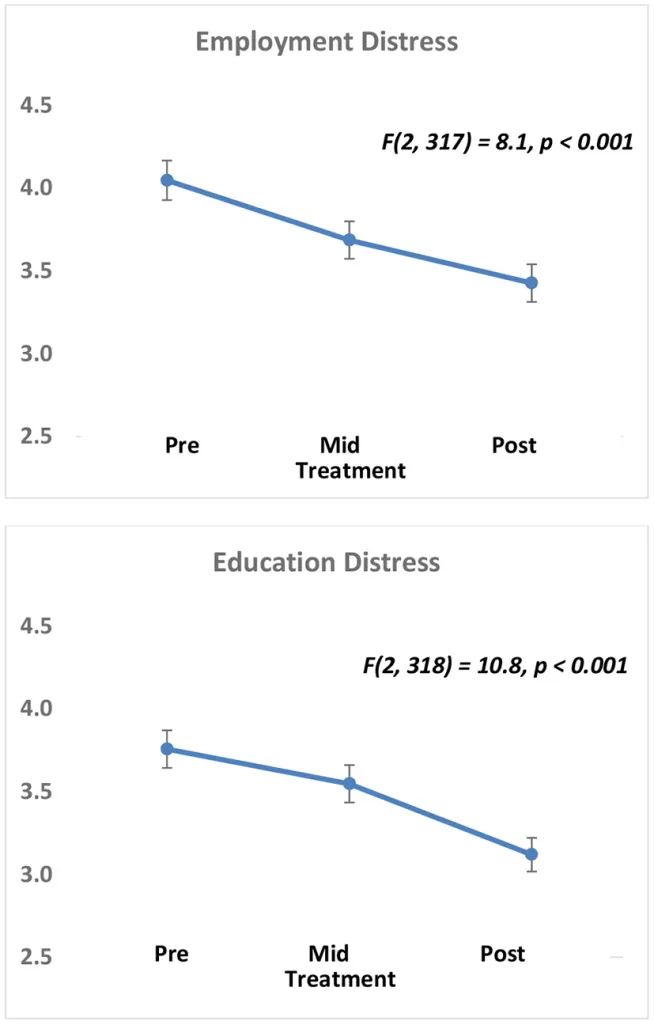
Figure 1.

Is Roca's CBT intervention program associated with improvements in participants' emotion regulation?

A critical component of Roca that is distinct from most reintegration, education, job support, and youth development programs is the focus on mental health, behavior change and emotion regulation skills training. Using a paired samples t-test, we found that emotion regulation did not significantly improve across the entire sample (p = 0.256, as measured by the DERS-SF) from pre to post. These data suggested that not all participants were able to fully benefit from the structure and CBT skills, likely given this high-risk population is often living in ongoing at-risk situations. Due to this null finding, we were not able to test hypothesis two (i.e., are improvements in emotion regulation associated with better behavioral and life outcomes?) in the whole sample. Thus, the following exploratory analyses included all participants, but focused on comparing those whose emotion regulation improved (based on the DERS-SF) to those whose did not, to determine whether those with emotion regulation improvement were also more likely to have improvement across other quality of life and functional measures.

Exploratory analyses – did those with improved emotion regulation also demonstrate better psychological and behavioral outcomes?

When we examined pre- to post- treatment change in the DERS-SF (calculated as post-DERS-SF minus pre-DERS-SF score), approximately half of the participants were found to have some improvement (positive score) in their DERS-SF over time. Specifically, based on the definition of greater emotion regulation total scores from DERS-SF at baseline to DERS-SF at the third assessment, N = 124 (46%) participants improved and N = 146 (54%) did not.

Life distress outcomes

In order to test whether improvements in emotion regulation associated with better life distress outcomes, we used ANOVA with DERS-SF category (improved vs. not-improved) predicting total LDI score or individual inventory item scores (19 tests).

When we examined the role of emotion regulation improvement on overall life distress, we observed a robust difference in level of overall distress (sum LDI) in those with vs. without improved emotional regulation over time. Clients with greater improvement in emotion regulation over the course of Roca (higher levels of pre-post DERS-SF difference scores), also have significantly less life distress at last visit [F(1,269) = 9.6, p = 0.002 ω2 = 0.031, 95% CI (0.001, 0.83); Figure 2A]. Furthermore, we observed a significant positive correlation between overall continuous emotion regulation measure (DERS-SF) and life distress (sum LDI) such that better emotion regulation is correlated with less life distress (r = 0.248, p < 0.001, N = 310) (Figure 2B).
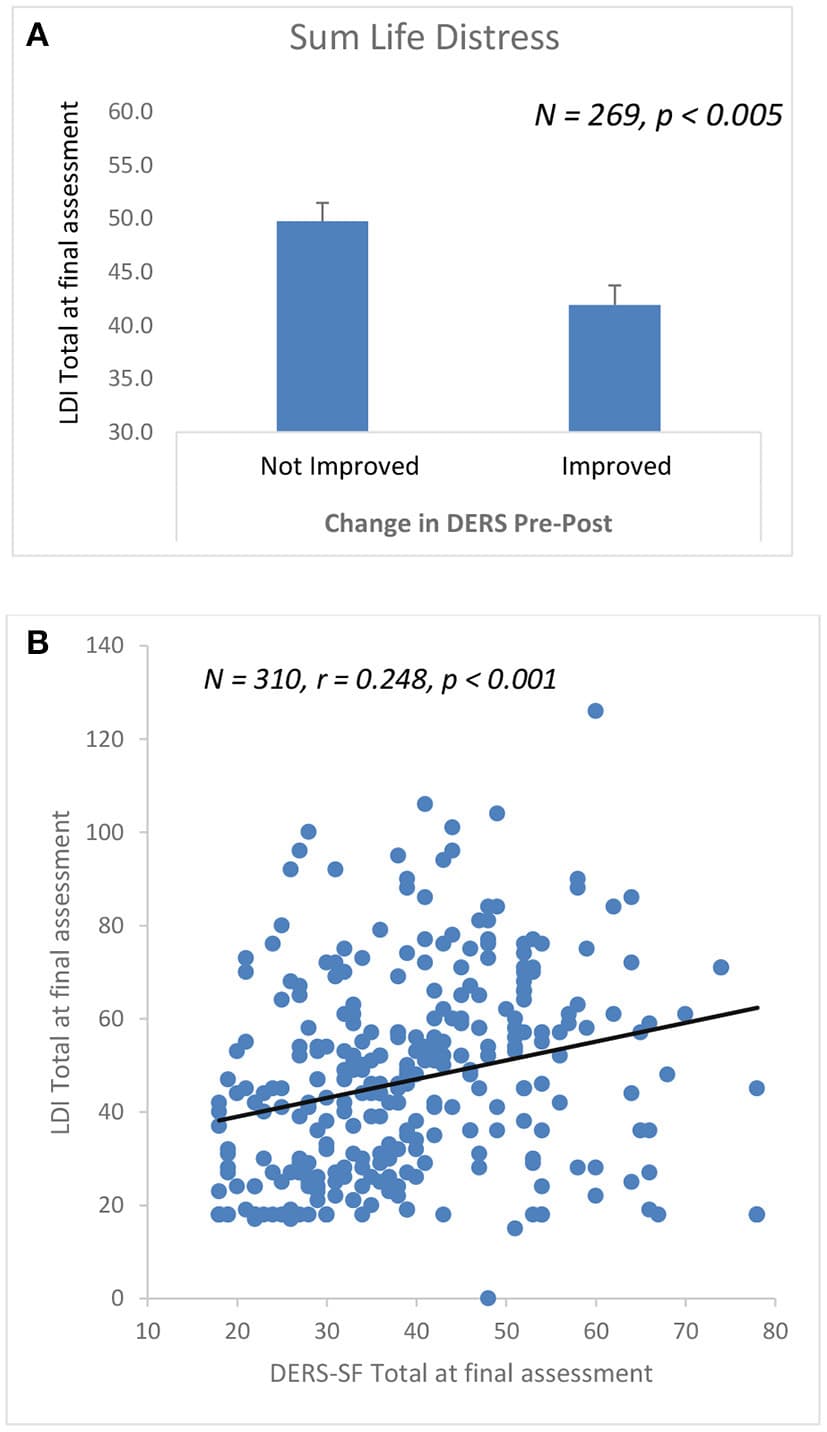
Figure 2.

Further, we found that, compared to participants who did not demonstrate improved emotion regulation from pre-to-post CBT, participants who did demonstrate improved emotion regulation had significantly lower ratings across 10 of the 18 areas of life distress at the follow-up timepoint. LDI individual items that were found to be nominally significant as a function of DERS-SF outcome included distress related to intimate relationships [F(1,266) = 4.5, p = 0.03, ω2 = 0.013, 95% CI (−0.004, 0.055)], sexual behavior [F(1,268) = 15.9, p < 0.001, ω2 = 0.052, 95% CI (0.011, 0.113)], relationship to children [F(1,261) = 8.7, p = 0.003, ω2 = 0.029, 95% CI (0.00, 0.081)] and relationships to other relatives [F(1,263) = 8.0, p = 0.005, ω2 = 0.026, 95% CI (−0.001, 0.077)], recreation/leisure [F(1,265) = 7.1, p = 0.008, ω2 = 0.022, 95% CI (−0.002, 0.071)], social life [F(1,264) = 7.7, p = 0.006, ω2 = 0.025, 95% CI (−0.001, 0.075)], religion [F(1,267) = 11.0, p = 0.001, ω2 = 0.036, 95% CI (0.003, 0.091)], physical health [F(1,267) = 5.3, p = 0.02, ω2 = 0.016, 95% CI (−0.004, 0.060)], personal independence [F(1,267) = 4.6, p = 0.03, ω2 = 0.013, 95% CI (−0.004, 0.056)], and with regards to the role of alcohol in their life [F(1,267) = 5.5, p = 0.02, ω2 = 0.017, 95% CI (−0.003, 0.061); Figure 3]. Given the multiple analyses performed to examine different aspects of life distress improvement, we performed a Bonferroni multiple-test correction on these analyses, with a corrected alpha level of p = 0.0026. With this correction for multiple testing on the LDI individual items, sexual behavior and religion would survive the analyses.
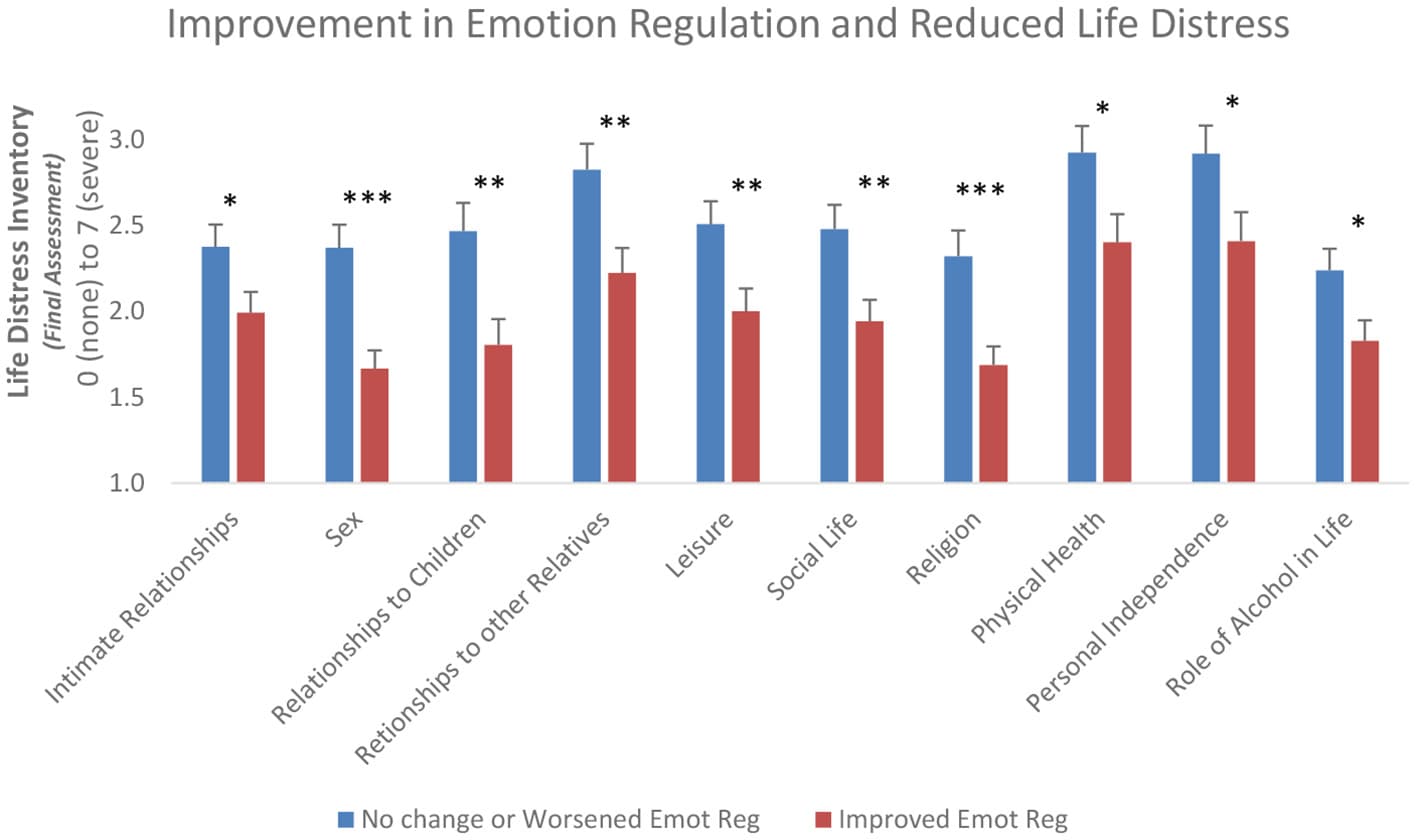
Figure 3.

In addition to the categorical analyses of DERS-SF outcome, we examined the bivariate correlation between continuous variables of improvement on the DERS-SF (DERS-SF change score) related to the above items on the Life Distress Inventory for all participants. In addition to an overall significant correlation with total LDI (r = −0.128, p < 0.05), we found significant correlations between improvement on the DERS-SF and LDI items of sexual behavior (r = −0.189, p < 0.01), relationship to children (r = −0.165, p < 0.01), social life (r = −0.202, p < 0.001), recreation/leisure (r = −0.185, p < 0.01) and religion (r = −0.223, p < 0.001). Following a correction for multiple testing (Bonferroni adjusted alpha = 0.0026), sex, recreation/leisure, social life, and religion would survive the continuous analyses. Together, these data suggest that the effect of the CBT intervention on improving emotion regulation may result in improvements in several of the life distress items that were measured.

Relationship interactions, drug/alcohol consumption, and criminal thinking

In order to test whether improvements in emotion regulation associated with better relationship, criminal thinking, and drug/alcohol outcomes, we used ANOVA with DERS-SF category (improved vs. not-improved) predicting total RI and CTS sum score or individual drug/alcohol item scores at the final timepoint. When we examined the role of emotion regulation improvement on relationship interactions and criminal thinking, we did not observe a difference in RI sum score (p = 0.107) or CTS sum score (p = 0.078) in those with vs. without improved emotional regulation over time. Similarly, we did not observe a significant difference in any of the drug/alcohol consumption items between those with vs. without improved emotional regulation over time. In addition to the categorical analyses of relationship interactions, drug/alcohol consumption, and criminal thinking outcomes, we examined the bivariate correlation with continuous variables of improvement on the DERS-SF and found that emotion regulation improvement was not significantly correlated with any of these outcomes.

Exploratory analyses - association between emotion regulation subscales and behavioral outcomes

We also observed several correlations between change in emotion regulation (DERS) subscales (e.g., acceptance of emotional responses, emotional clarity, goal directed behavior, impulse control, emotional awareness, and emotion regulation strategies) and other outcome indicators (Figure 4). While we did not observe a significant overall improvement in emotion regulation from pre to post, there was a significant improvement in the emotional awareness subscale of the DERS from pre to post [t(310) = −3.08, p = 0.002, Cohen's d = 0.174, 95% CI (0.062, 0.286)]. Further, we found that improved emotional awareness correlated with less criminal thinking, more emotional clarity was associated with improved relationship functioning, and less difficulty in engaging in goal directed behavior was associated with less life distress and improved relationship interactions. Notably, the DERS subscale related to improved impulse control was associated with the most positive outcome including decreased life distress, improved relationship functioning, decreased criminal thinking, and decreased alcohol use (p's <0.05, r's = 0.125 to 0.159; Figure 4).
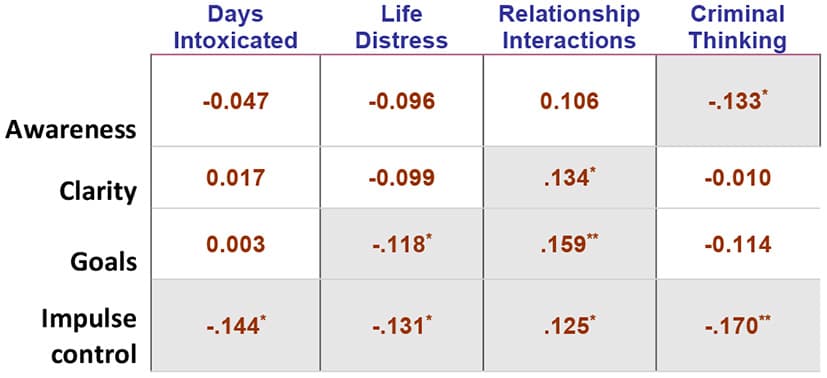
Figure 4.

Discussion

Roca's trauma-informed CBT targets improving emotion and cognitive regulation in challenging circumstances. In line with earlier work using participant data from Roca's intervention model (53), we found that at-risk emerging adults who participated in the CBT curriculum experienced less distress about employment and education over time. These findings likely relate to the structure, education, and job placement components of the supportive reintegration programming for justice involved youth. Moreover, the results of the present study provide supporting evidence that CBT skills contribute to improvements in emotional awareness, one aspect of emotion regulation, and that those with improved emotion regulation also had significantly less distress about multiple life areas. We also found that improvement in emotional clarity, goal directed behavior, impulse control, and emotional awareness correlated with greater improvements in outcome measures, including lower levels of distress in several areas of life, less criminal thinking, healthier relationship interactions, and reduced substance and alcohol use. Although this sample as a whole did not experience statistically significant improvement in emotion regulation, these above results provide preliminary evidence that one effective way to achieve the goals of habilitation and skills building programs is to address the underlying emotion dysregulation that stems from trauma and contributes to violence perpetration.

Noteworthy among our findings is that despite positive associations between the subscales of emotion regulation and improved outcomes, emotion regulation across all domains did not improve over time for the overall group. The limited improvements in emotion regulation after receiving CBT skills may be explained by several factors. First, due to the naturalistic nature of this study, all individuals received CBT intervention but not all individuals received the same amount of CBT intervention. Further, prior literature has found that certain types of CBT are more effective than others with specific CBT treatment elements moderating outcome effectiveness. For example, a meta-analysis on CBT effectiveness found that CBT programs that included anger control and interpersonal problem-solving skills were more effective at reducing recidivism while those that included victim impact or behavior modification skills were less effective (30).

Furthermore, behavior and emotion change take time to develop, and emotion regulation skills may take longer to establish in persons who have experienced profound, often developmental, trauma that Roca serves (5, 42, 44, 46). Key tenets in Roca's programming are building trust and safety with individuals but this too takes time to foster and is often a pre-requisite for affective and behavioral change (65). It is promising that even though the DERS overall was not significantly associated with improved outcomes in the entire sample, certain DERS subscales were associated with lower life stress in areas such as social life, religion, and sexual behaviors. Among the DERS subscales that were correlated with improved life outcomes were the emotion awareness and emotion clarity subscales. It is possible that the first step in changing one's actions in relation to one's emotions is correctly identifying and labeling the emotions one is feeling. Thus, individuals' may be experiencing affective changes in association with the CBT intervention, but the DERS isn't a sensitive enough tool to measure small, incremental improvements. Using a different measure or re-administering the DERS after individuals' have received more CBT sessions may yield different results. Additionally, it would be useful to collect collateral (e.g., youth worker or peer reports) in addition to self-report measures.

Moreover, the characteristics of CBT recipients has been shown to influence outcomes. Persons served by Roca have experienced significant trauma and have challenging life circumstances; this could provide an explanation for differences in effectiveness. For example, consistent with the “risk-principle” (66) those with disproportionately challenging circumstances and who have significant trauma experiences may have had higher susceptibility at the start of program and may have benefitted more from treatment. Similarly, differences in individuals' trauma exposure or mental health status at the start could determine who benefits more from the CBT. These observations suggest that expanded and culturally sensitive engagement strategies may be critical for those at higher risk.

Furthermore, studies have found that the amount and implementation of the CBT moderated the effectiveness on CBT (30, 31). Variability in the amount/frequency of exposure to CBT could explain the limited improvements in emotion regulation in some individuals and should be examined in the future. Importantly, this curriculum was designed to be flexibly taught whenever needed, in brief segments and in formal or informal settings. Our results demonstrate improvement in emotion regulation and outcomes in some individuals, suggesting that the method of curriculum delivery may be effective with certain skills but not others, or more effective with some clients than others. Expanding our understanding of the most effective aspects of interventions, and the most effective way to pair specific interventions with individuals, will further the long-term success of such programs.

The results of this study provide initial evidence that a community-based, CBT intervention for justice-involved emerging adult men can positively impact affective, behavioral, and life outcomes, including improved emotion regulation, decreased criminal thinking, less life distress, improved relationships, and decreased alcohol use. These findings are consistent with previous meta-analyses and reviews that found that CBT-based programs for individuals who have become entangled with the legal system, including youth who have become entangled or more susceptible to entanglement with the legal system, were associated with improvements in outcomes, including small but significant reductions in recidivism and externalizing behaviors (67–69). Additionally, Trauma Affect Regulation: Guide for Education and Therapy (TARGET) (70), a trauma-informed cognitive-behavioral intervention for adolescents, was associated with greater improvements in depression and participant-rated optimism and hope compared to treatment as usual in a group of incarcerated youth (71). Therefore, CBT-based interventions, especially those that are trauma-informed, demonstrate positive associations with life and behavioral outcomes in justice-involved populations.

Limitations and future directions

The present findings should be considered in light of several limitations. First, we did not consider environmental and situational contexts of the individuals' lives outside of their qualifying risk factors, nor other sources of institutional support they may be receiving. These factors, such as whether they have a support system outside of Roca, could potentially influence the effectiveness of the curriculum. For example, healthy interactions with family is one avenue that has been found to positively impact anger regulation in youth exposed to violence (72). Second, Given Roca's intervention model of meeting individuals where they are at (both practically and figuratively), a large proportion of our initial sample received less than three CBT skills sessions. An important aspect of building trust and safety is allowing youth to decide when they are ready to engage in a new intervention, and where and how they would like that engagement to happen. However, in addition to greatly limiting our sample size and thus reducing our statistical power, inconsistent or limited engagement in the intervention may have influenced the overall effectiveness of the CBT intervention in improving emotion regulation. Third, we were not able to include “dosing” of amount of exposure to CBT that individuals had in this analysis as described above, nor were we able to have a true “control” group, though future studies may be able to utilize a wait-list control. Fourth, based on the naturalistic nature of this study, we did not have information about youth worker assignments (e.g., which youth workers engaged with which individuals and how often). Moreover, it is possible that differences in the training and/or supervision of youth workers could have impacted the effectiveness of the CBT intervention, although previous work has demonstrated the fidelity of the intervention model (51, 53). Lastly, given that the study sample included emerging adult males aged 17–24, the study results may have limited generalizability to other populations, such as females and other age groups involved in the juvenile legal system. Furthermore, data for this study was collected as part of one organization's routine programming. An important next step would be to see if the program's CBT curriculum is generalizable to other organizations or geographical locations.

Recognizing these limitations, the study findings offer a number of meaningful directions for future research. First, examining contextual factors as potential moderators of the effect of Roca's CBT programming on outcomes could help us understand why some individuals improved in their emotion regulation and others did not. Mediation analyses would also further allow us to examine whether the emotion regulation changes are causal in the observed overall improvements in outcomes. Furthermore, future inclusion of additional objective re-incarceration related outcome measures would help provide a stronger case for CBT's effects on recidivism.

The present study examines the effect of CBT on behaviors and attitudes that may confer susceptibility for violence and recidivism. These findings suggest that CBT skills are associated with positive improvements in emotion regulation, such as an improvement in emotional awareness, which in turn could potentially impact life outcomes such as rates of violence and recidivism in justice-involved youth. Despite the limitations, these findings contribute to our understanding of the effectiveness of CBT programs for youth who have experienced trauma, have challenging life circumstances, have become entangled or who may be more susceptible to becoming entangled with the legal system. This research can be used to inform future efforts to improve the lives of justice-involved emerging adults.

Open Article as PDF

Abstract

Objective: Male youth who have been involved in the juvenile legal system have disproportionate rates of trauma and violence exposure. Many justice-involved youth have untreated mental illness, with an estimated 66% of young men who are incarcerated meeting criteria for at least one mental health disorder, including posttraumatic stress disorder (PTSD), depression, and substance abuse. While Cognitive Behavioral Therapy (CBT) approaches are considered among effective evidence-based treatments for addressing and treating behavioral and emotional difficulties, male youth with a history of incarceration and youth who are at risk for (re)incarceration, violence, emotion dysregulation, and trauma face significant barriers in accessing these services.

Methods: Roca, Inc. (Roca), an internationally recognized organization moving the needle on urban violence by working relentlessly with young people at the center of violence in Massachusetts and Maryland, employs a trauma-informed CBT-based skills curriculum and approach in their intervention model, to improve youths' educational, employment, parenting, and life skills opportunities, while decreasing risk for recidivism, addressing trauma and increasing skills for emotion regulation. The aim of this analysis was to assess the effectiveness of Roca's trauma-informed CBT skills curriculum on youths' emotional and behavioral outcomes. We analyzed data from over 300 participating emerging adult men from four sites in Massachusetts and one site in Baltimore, Maryland who had at least three series of data collection across multiple skills-based sessions.

Results: We found improvements in outcomes in overall mean scores related to decreased distress about employment and education, as are expected with standard intervention approaches for justice-involved youth. Participants who show improvement in emotion regulation across engagement (approximately half the cohort), were found to have significant improvements in distress related to relationship and family functioning and self-care, and decreased substance use, along with other outcomes compared to those participants with less improvement in emotion regulation. Furthermore, improvement in different aspects of emotion regulation were associated with improved relationships, life distress, substance use, and improved prosocial thinking.

Conclusions: Together, these data suggest that adding mental health support and skills training, such as with trauma-informed CBT models, to programs for justice-involved youth may lead to significant improvements in functioning, quality of life, and mental health outcomes.

Introduction

Young men involved with the legal system experience high rates of trauma and violence exposure. A significant number of these individuals also live with untreated mental health conditions, including depression, post-traumatic stress disorder (PTSD), and substance use disorders. It is estimated that a large majority have experienced at least one traumatic event. Despite a clear understanding of the connection between trauma, mental illness, and involvement with the legal system, past approaches to reducing youth violence have often overlooked the critical role of mental health and trauma. Addressing these underlying mental health issues could reduce the likelihood of re-incarceration, as mental health problems and difficulties with managing emotions are significant risk factors for re-offending. However, access to effective intervention programs, especially those emphasizing social, economic, and behavioral support, is often unavailable to this population.

To address this gap, Roca, a behavioral health organization in Massachusetts and Maryland, integrated a Cognitive Behavioral Theory (CBT)-based curriculum into its intervention model. Roca serves young men, aged 17–24, who are at high risk for re-incarceration, have experienced significant trauma, have a history of violence, and often have low educational attainment or limited work experience. The organization's CBT approach is designed to engage these emerging adults who may not qualify for or participate in other youth services due to their high-risk status. Research shows that meeting individuals "where they are" by acknowledging their behavioral and socioeconomic circumstances can improve public health outcomes and help disrupt cycles of violence. This age group (16–25) is particularly vulnerable within the justice system, exhibiting the highest rates of mental health problems. While treatments exist for younger adolescents, there are fewer options tailored to the unique developmental and mental health needs of justice-involved young adults, who also face significant life transitions.

Previous research clearly demonstrates a link between trauma, mental illness, and involvement with the legal system. Interventions focusing on mental health, such as multisystemic therapy and family-focused therapy, have been shown to reduce emotional and behavioral problems, decrease association with problematic peers, and lower re-incarceration rates in antisocial youth. Trauma-informed interventions, particularly trauma-focused CBT, have also led to positive outcomes, such as reduced PTSD and other trauma-related symptoms in children and adolescents. Studies specifically with young people in the legal system have found CBT-based interventions effective in building skills, managing emotions, reducing violence and re-offending, and improving functional outcomes like program enrollment and employment. A crucial connection between trauma exposure and delinquent behavior is difficulty with emotion regulation, which is the ability to identify emotions and use healthy strategies to cope with them. Trauma can impact brain development, particularly the prefrontal cortex, which controls emotion regulation and impulse control. This can lead to impulsivity, difficulty coping with intense emotions, poor decision-making, and risky behaviors in adolescents.

While poor emotion regulation increases the risk of re-offending, adaptive emotion regulation can act as a protective factor. Difficulty regulating emotions is linked to externalizing behaviors like impulsivity, aggression, and substance use, which increase the likelihood of arrest. Conversely, greater self-control and emotion management are associated with reduced delinquency and re-incarceration. Improving emotion regulation skills is therefore a vital strategy for reducing re-incarceration risk and improving life outcomes for young people involved with the legal system. Roca's CBT intervention aims to address this underlying emotion dysregulation, potentially improving outcomes and reducing violence and re-offending among justice-involved emerging adults with significant trauma histories. This study investigated the effectiveness of Roca's CBT curriculum on outcomes related to violence and re-offending risk: distress, criminal thinking, unhealthy relationships, and substance use. The research aimed to determine if Roca's CBT improved participants' emotion regulation and if those improvements were linked to better behavioral and life outcomes. It was hypothesized that participants would show better emotion regulation, which would then be associated with improved emotional and behavioral outcomes.

Method

This evaluation project used pre-existing, de-identified data collected from all program participants as part of Roca's standard procedures. The study was exempt from Institutional Review Board review because it involved retrospective data collected for clinical intervention purposes.

Roca's intervention model

Data were gathered through a partnership with Roca, a behavioral health intervention organization established in 1988 with sites in Massachusetts and Maryland. Roca's intervention model aims to reduce re-incarceration by: fostering strong relationships between youth workers and participants, teaching essential life skills (education, job readiness, healthy habits, parenting), consistently engaging participants through outreach, allowing participants to practice skills through individualized stage-based programming, and building partnerships with external institutions like police and probation offices.

Roca's CBT curriculum

In 2016, Roca collaborated with an expert in cognitive behavioral curriculum development to create its CBT intervention, adopting an evidence-based approach. The curriculum was developed through pilot testing and feasibility trials, with a training and coaching program also implemented for staff. This CBT skills curriculum proved feasible and acceptable to staff and participants and effectively increased youth program enrollment and job attainment. CBT was chosen because similar programs in correctional facilities have been linked to reduced re-incarceration rates and improved emotional and behavioral outcomes in justice-involved youth. CBT proposes that unhelpful thought patterns contribute to ongoing emotional distress and behavioral problems. By changing these thought patterns, individuals can improve their emotional distress and behavioral challenges. Roca's CBT curriculum focuses on building safety and stability, teaching and practicing life skills, and engaging with institutions. The model was adapted for youth, using a trauma-informed lens. Roca youth workers meet participants in safe environments, providing CBT-based skills learning and encouraging participants to apply these skills. These interventions vary in length and frequency, delivered over a three-year period, reflecting a "meeting youth where they are" approach.

Peer delivery of CBT

Roca employs a peer-delivered CBT model, where masters-level clinicians train paraprofessionals, often youth workers with similar backgrounds or lived experiences as the participants (including involvement in gangs or the legal system). These youth workers then deliver the CBT skills to young adult men in urban areas. Peer-delivered CBT has been shown to improve relationships, treatment adherence, health outcomes, and management of anxiety and depression. Peer specialists engage participants in environments where they feel most comfortable, such as their homes or in the community, to maximize engagement in the intervention.

Participants

The study included 344 emerging adult men, aged 17–24, who participated in the intervention model. Only participants who had at least three encounters (pre-, mid-, and post-CBT intervention) where they engaged in CBT skills over a three-year period were included in the analyses. Participants not meeting this minimum engagement were excluded. On average, these young men were involved with Roca for 2–4 years. Most participants were self-identified as Hispanic/Latino (55.8%) and non-white (82.8%). At intake, the majority had not completed high school (63.7%) and had not been employed in the past six months (68%). Furthermore, most participants had past involvement in the legal system (77.3%), drug use or sale (73.8%), and street or gang activity (58.7%). Roca uses a risk assessment tool to identify participants at the highest risk for re-incarceration, gang involvement, substance use, or dropping out of high school, and who are not ready or able to participate in traditional services. Young men with pending adult legal charges were not eligible. Participants assessed as low or medium risk for violence and re-incarceration were referred to traditional youth development programs.

Measures

The Difficulties in Emotion Regulation Scale (DERS) is a validated tool with 36 items that assesses six dimensions of emotion regulation: acceptance of emotional responses, emotional clarity, goal-directed behavior, impulse control, emotional awareness, and emotion regulation strategies. Items are rated on a 5-point Likert scale. The DERS demonstrates good internal reliability. For most analyses, a validated short form (DERS-SF) was used, with higher scores indicating less emotion regulation. A change score was calculated by subtracting the pre-intervention DERS-SF score from the post-intervention score; a higher change score indicated improved emotion regulation.

The Life Distress Inventory (LDI) is an 18-item assessment that measures self-reported distress in various areas of social life and functioning, such as intimate relationships, finances, and physical health. Participants rated their distress on a 7-point Likert scale, with higher scores indicating greater distress. The LDI total score shows good reliability.

The Relationship Interactions Questionnaire, originally known as the Justification of Verbal and Coercive Tactics Scale, consists of 11 items assessing unhealthy relationship attitudes. Participants rated items on a 5-point Likert scale, with higher scores reflecting healthier relationship interactions. This questionnaire has good internal consistency reliability for both males and females.

The Drug/Alcohol Use Questionnaire, with 11 items, assessed the number of days participants used alcohol or drugs and experienced related problems in the past month. The Criminal Thinking Scale (CTS) is a brief 19-item self-report measure assessing criminal thinking, attitudes, or behaviors. Using a 5-point Likert scale, Roca administered three of its six subscales: Entitlement, Criminal Rationalization, and Power Orientation, all of which have good reliability. A sum score of these three subscales was used, with higher scores indicating more criminal thinking.

Statistical analyses

Statistical analyses were performed using SPSS Statistics. Changes in outcomes over time (pre-, mid-, post-intervention) were analyzed using repeated measures analyses of variance (ANOVA). The relationship between emotion regulation (DERS-SF) and other outcome variables, such as life distress, relationship quality, and substance use, was examined using Pearson correlations and ANOVAs. The change in emotion regulation was the predictor variable. To account for multiple comparisons when examining the 18 items of the Life Distress Inventory plus its sum score, a Bonferroni correction was applied, setting the significance level at 0.0026. Additionally, Pearson correlations were used to explore unique relationships between changes in the six subscales of the DERS long form and the outcome variables.

Results

The study first examined whether psychological and quality of life measures improved during the intervention.

Change in outcomes over time

Using repeated measures ANOVA, distress related to employment and education significantly improved over time, showing consistent improvement from pre- to mid- to post-treatment. Participants also reported being less bothered by drug problems in the last 30 days and felt that treatment for drug problems was less important. However, a slight, although statistically marginal, increase in alcohol consumption over a 30-day period was observed from pre- to post-treatment.

Is Roca's CBT intervention program associated with improvements in participants' emotion regulation?

A key aspect of Roca's program is its focus on mental health, behavior change, and emotion regulation skills training. However, a paired samples t-test revealed that emotion regulation, as measured by the DERS-SF, did not significantly improve across the entire group from pre- to post-intervention. This suggests that not all participants fully benefited from the CBT skills, likely due to the high-risk situations many faced. Because of this finding, the second hypothesis, regarding whether improved emotion regulation was associated with better behavioral and life outcomes, could not be tested across the whole sample. Therefore, subsequent exploratory analyses compared participants whose emotion regulation improved to those whose did not.

Exploratory analyses – did those with improved emotion regulation also demonstrate better psychological and behavioral outcomes?

When examining the change in DERS-SF scores from pre- to post-treatment, approximately half of the participants showed some improvement in emotion regulation. Specifically, 46% (N = 124) of participants improved, while 54% (N = 146) did not.

Life distress outcomes

To determine if improved emotion regulation was linked to better life distress outcomes, ANOVA was used to compare total LDI scores and individual item scores based on DERS-SF improvement status. A significant difference was observed in overall life distress: participants with greater improvement in emotion regulation over the course of the Roca program reported significantly less life distress at their final visit. Furthermore, a strong positive correlation indicated that better emotion regulation was associated with less life distress overall. Compared to those without improved emotion regulation, participants who showed improvement in emotion regulation had significantly lower distress ratings across 10 of 18 life areas at follow-up. These areas included distress related to intimate relationships, sexual behavior, relationships with children and other relatives, recreation/leisure, social life, religion, physical health, personal independence, and the role of alcohol in their lives. After applying a Bonferroni correction for multiple comparisons, improvements in distress related to sexual behavior and religion remained statistically significant. Continuous analyses also showed significant correlations between improved DERS-SF scores and lower distress in sexual behavior, relationships with children, social life, recreation/leisure, and religion, with sex, recreation/leisure, social life, and religion remaining significant after Bonferroni correction. These results suggest that the CBT intervention's effect on emotion regulation can lead to improvements in several measured aspects of life distress.

Relationship interactions, drug/alcohol consumption, and criminal thinking

When examining the impact of emotion regulation improvement on relationship interactions, criminal thinking, and drug/alcohol outcomes, no significant differences were observed in relationship interaction scores, criminal thinking scores, or any drug/alcohol consumption items between participants with and without improved emotion regulation. Similarly, continuous analyses of emotion regulation improvement did not show significant correlations with these outcomes.

Exploratory analyses - association between emotion regulation subscales and behavioral outcomes

Further analysis revealed several correlations between changes in specific emotion regulation subscales (e.g., acceptance of emotional responses, emotional clarity, goal-directed behavior, impulse control, emotional awareness, and emotion regulation strategies) and other outcome indicators. While overall emotion regulation did not significantly improve, there was a significant improvement in the emotional awareness subscale of the DERS. Moreover, improved emotional awareness correlated with less criminal thinking, greater emotional clarity was linked to improved relationship functioning, and less difficulty engaging in goal-directed behavior was associated with reduced life distress and better relationship interactions. Notably, improvements in the DERS subscale related to impulse control were associated with the most positive outcomes, including decreased life distress, improved relationship functioning, less criminal thinking, and reduced alcohol use.

Discussion

Roca's trauma-informed CBT program aims to improve emotion and cognitive regulation in challenging situations. Consistent with previous research, at-risk young adults in the CBT curriculum experienced less distress regarding employment and education over time, likely due to the program's structured support for reintegration and job placement. The study's findings also indicate that CBT skills contributed to improvements in emotional awareness, a component of emotion regulation. Participants who showed improved emotion regulation also reported significantly less distress in multiple life areas. Furthermore, improvements in specific emotion regulation skills—such as emotional clarity, goal-directed behavior, impulse control, and emotional awareness—correlated with greater improvements in outcomes, including lower life distress, reduced criminal thinking, healthier relationships, and decreased substance use. Although emotion regulation across all domains did not significantly improve for the entire group, these results offer preliminary evidence that addressing underlying emotion dysregulation, often stemming from trauma and contributing to violence, can be an effective way to achieve habilitation and skill-building goals.

The limited overall improvements in emotion regulation among all participants could be attributed to several factors. The naturalistic design of this study meant that individuals received varying amounts of CBT intervention. Additionally, behavior and emotion change require time, and emotion regulation skills may take longer to develop in individuals who have experienced profound, often developmental, trauma, such as those served by Roca. Building trust and safety, a core tenet of Roca's program, also takes time and is often a prerequisite for emotional and behavioral change. The DERS measure itself might not be sensitive enough to capture small, incremental improvements, suggesting that alternative measures or re-administration after more CBT sessions could yield different results. Supplementing self-report measures with observations from youth workers could also provide a more comprehensive picture.

The characteristics of CBT recipients can also influence outcomes. Individuals served by Roca often have significant trauma histories and challenging life circumstances. It is possible that those with greater challenges at the outset may benefit more from treatment, aligning with the "risk-principle." Differences in individuals' initial trauma exposure or mental health status could determine who benefits most from CBT. These observations suggest that expanded and culturally sensitive engagement strategies are critical for those at higher risk. Variability in the amount and implementation of CBT could also explain the limited improvements in emotion regulation for some individuals. The curriculum was designed to be taught flexibly, in brief segments, and in various settings. The findings indicate that this delivery method may be effective for certain skills or with particular clients. Further understanding the most effective aspects of interventions and how to best match them to individuals will enhance the long-term success of such programs.

This study's findings provide initial evidence that a community-based, CBT intervention for justice-involved young adult men can positively impact emotional, behavioral, and life outcomes, including improved emotion regulation, reduced criminal thinking, less life distress, healthier relationships, and decreased alcohol use. These results are consistent with previous research indicating that CBT-based programs for individuals involved with the legal system are associated with improvements in outcomes, including reductions in re-offending and externalizing behaviors. Trauma-informed cognitive-behavioral interventions have also demonstrated positive associations with life and behavioral outcomes in justice-involved populations.

Limitations and future directions

These findings should be considered in light of several limitations. The study did not account for individuals' broader environmental and situational contexts or other sources of institutional support they may have received, which could influence the curriculum's effectiveness. Due to Roca's approach of meeting individuals where they are, a significant portion of the initial sample received fewer than three CBT skills sessions and was thus excluded. While this respects participant autonomy, it limited the sample size and statistical power, and inconsistent engagement may have influenced the overall effectiveness of the intervention. The study also lacked information about the "dosing" or amount of CBT exposure individuals received and did not include a control group. Furthermore, information regarding specific youth worker assignments was not available, and while intervention fidelity has been demonstrated, differences in youth worker training or supervision could potentially impact outcomes. Lastly, the study's focus on emerging adult males aged 17–24 limits the generalizability of the results to other populations, such as females or other age groups within the legal system, or to other organizations or geographical locations.

Despite these limitations, the study findings offer several meaningful directions for future research. Examining contextual factors as potential moderators of the CBT program's effects could help clarify why some individuals improved in emotion regulation while others did not. Conducting mediation analyses would also allow for exploring whether changes in emotion regulation are causal in the observed overall improvements in outcomes. Additionally, incorporating objective measures related to re-incarceration in future studies would provide stronger evidence for CBT's effects on reducing re-offending. This research contributes to the understanding of CBT program effectiveness for young people who have experienced trauma, face challenging life circumstances, and are involved with or susceptible to involvement with the legal system. This information can inform future efforts aimed at improving the lives of justice-involved emerging adults.

Open Article as PDF

Abstract

Objective: Male youth who have been involved in the juvenile legal system have disproportionate rates of trauma and violence exposure. Many justice-involved youth have untreated mental illness, with an estimated 66% of young men who are incarcerated meeting criteria for at least one mental health disorder, including posttraumatic stress disorder (PTSD), depression, and substance abuse. While Cognitive Behavioral Therapy (CBT) approaches are considered among effective evidence-based treatments for addressing and treating behavioral and emotional difficulties, male youth with a history of incarceration and youth who are at risk for (re)incarceration, violence, emotion dysregulation, and trauma face significant barriers in accessing these services.

Methods: Roca, Inc. (Roca), an internationally recognized organization moving the needle on urban violence by working relentlessly with young people at the center of violence in Massachusetts and Maryland, employs a trauma-informed CBT-based skills curriculum and approach in their intervention model, to improve youths' educational, employment, parenting, and life skills opportunities, while decreasing risk for recidivism, addressing trauma and increasing skills for emotion regulation. The aim of this analysis was to assess the effectiveness of Roca's trauma-informed CBT skills curriculum on youths' emotional and behavioral outcomes. We analyzed data from over 300 participating emerging adult men from four sites in Massachusetts and one site in Baltimore, Maryland who had at least three series of data collection across multiple skills-based sessions.

Results: We found improvements in outcomes in overall mean scores related to decreased distress about employment and education, as are expected with standard intervention approaches for justice-involved youth. Participants who show improvement in emotion regulation across engagement (approximately half the cohort), were found to have significant improvements in distress related to relationship and family functioning and self-care, and decreased substance use, along with other outcomes compared to those participants with less improvement in emotion regulation. Furthermore, improvement in different aspects of emotion regulation were associated with improved relationships, life distress, substance use, and improved prosocial thinking.

Conclusions: Together, these data suggest that adding mental health support and skills training, such as with trauma-informed CBT models, to programs for justice-involved youth may lead to significant improvements in functioning, quality of life, and mental health outcomes.

Introduction

Male youth involved with the legal system experience higher rates of trauma and violence. Many young men in incarceration have untreated mental health conditions, with about 66% meeting criteria for at least one mental health disorder, such as depression, post-traumatic stress disorder (PTSD), and substance use disorder. It is also estimated that 90% of justice-involved youth have experienced at least one traumatic event. Despite knowing the connections between trauma, mental illness, and involvement with the legal system, past approaches to youth violence and the risk of re-offending have often lacked a detailed understanding of how mental health and trauma exposure play a role. Addressing underlying mental health issues could reduce the risk of re-incarceration, as mental health problems and difficulties regulating emotions are significant risk factors for re-offending. Furthermore, while effective violence intervention programs emphasize social, economic, developmental, and behavioral elements, youth in the legal system often lack access to these services.

To address this gap, Roca, a behavioral health organization in Massachusetts and Maryland, added a Cognitive Behavioral Therapy (CBT)-based curriculum to its intervention model. Roca serves emerging adult men, aged 17–24, who live amidst urban violence and are at high risk for re-incarceration, have experienced significant trauma, have a history of violence, and/or have low educational attainment and limited work history. Roca uses a CBT approach to engage these young men who might not otherwise qualify for other youth services due to their high risk for violence and re-incarceration. There is strong evidence that "meeting individuals where they are" by acknowledging their behavioral and socioeconomic conditions can improve public health and disrupt cycles of violence. A large portion of young people in the legal system are considered transition-age youth (16–25 years old), a vulnerable group with the highest rates of mental health problems. While many treatments exist for delinquency in adolescents, fewer target the unique developmental and mental health needs of transition-age youth involved in the legal system. This group, like those Roca serves, faces a higher risk for developing major mental health disorders and significant life changes such as educational, vocational, and social transitions.

Past research shows a clear link between trauma exposure, mental illness, and involvement with the legal system. Systematic reviews indicate that mental health interventions, such as multisystemic therapy and family-focused therapy, are associated with reduced emotional and behavioral problems, less association with negative peer groups, and decreased re-offending in antisocial youth referred from various systems, including the juvenile legal system. Additionally, certain trauma-informed interventions, particularly trauma-focused CBT, are linked to positive outcomes like a decline in PTSD and other trauma-related symptoms in children and adolescents exposed to trauma. Several studies specifically focusing on youth in the legal system have also demonstrated the effectiveness of CBT-based interventions in building skills, managing emotions, reducing violence and re-offending, and improving functional outcomes like program enrollment and employment. Although research does not clearly distinguish outcomes for younger versus transition-age justice-involved youth, evidence suggests that addressing mental health, especially difficulties with emotion regulation, could be an effective intervention for the emerging adults Roca serves.

A significant connection between trauma exposure and youth delinquency is impaired emotion regulation. Emotion regulation is the ability to correctly identify emotions and use effective strategies to cope with them. Disorders like depression, substance use disorder, and PTSD can be seen as problems of emotion dysregulation, characterized by changes in brain regions involved in threat assessment and fear learning. During early adolescence, the brain undergoes key developmental changes, particularly in the prefrontal cortex (PFC), which supports emotion regulation, impulse control, and personality expression. Trauma impacts brain development by hindering PFC maturation, leading to less top-down control. This can manifest as impulsivity, difficulty coping with intense emotions, poor decision-making, high novelty-seeking behavior, and risk-taking in adolescents.

While poor emotion regulation increases the risk for re-offending, adaptive emotion regulation can act as a protective factor against negative outcomes. Emotion dysregulation is linked to externalizing problems like impulsivity, aggression, and substance use, all of which are associated with a higher likelihood of arrest among youth. Conversely, greater self-control and self-regulation (e.g., impulse control, managing emotions) correlate with reductions in delinquency and re-offending. One study found that improved emotion regulation during incarceration was associated with a lower risk of felony re-offending one year after release. Therefore, enhancing emotion regulation skills may be a crucial strategy for reducing the risk of re-incarceration for justice-involved youth and improving their life outcomes. Addressing the underlying emotion dysregulation in justice-involved youth may be key to ensuring their safety and rehabilitation. Roca's CBT intervention model could offer an effective way to improve outcomes and reduce the risk of violence and re-offending among justice-involved emerging adults, many of whom have experienced significant trauma.

The current study investigated how Roca's CBT curriculum affects outcomes that may indicate a risk for violence and re-offending: distress about life; criminal thinking, attitudes, and behaviors; unhealthy relationship interactions; and drug and alcohol use. Given previous evidence for CBT's effectiveness in improving emotion regulation, the study examined two research questions: (1) Is Roca's CBT intervention program associated with improvements in participants' emotion regulation? (2) Are improvements in emotion regulation linked to better behavioral and life outcomes, such as better relationships, lower life stress, reduced substance use, and decreases in criminal thinking, attitudes, and behavior? The hypothesis was that emerging adult men in Roca's program would show improvements in emotion regulation, and that this improvement would be associated with better emotional and behavioral outcomes.

Method

This project was a data-based evaluation using de-identified, retrospective data collected from all program participants as part of Roca's standard procedures. The study was exempt from Institutional Review Board (IRB) review.

Roca's intervention model

Data were collected through a partnership between academics and Roca, a behavioral health intervention organization founded in 1988. Roca operates four sites in Massachusetts and one in Baltimore, Maryland. The Roca intervention model aims to reduce re-offending by: (1) building safety and stability through strong relationships between youth workers and participants, (2) teaching essential life skills through education, job readiness, healthy habits, and parenting classes, (3) ensuring participant engagement through persistent outreach by youth workers, (4) allowing participants to practice skills in individualized, stage-based programming, and (5) forming strategic partnerships with institutions such as police and probation officers.

Roca's CBT curriculum

In 2016, Roca collaborated with an expert from Massachusetts General Hospital/Harvard Medical School in cognitive behavioral curriculum development to create its CBT intervention, using an evidence-based approach. The CBT curriculum was developed through repeated pilot testing and feasibility trials, and a training and coaching program was also implemented. This CBT skills curriculum proved feasible and acceptable to staff and participants and was effective in increasing youth program enrollment and job attainment. CBT was chosen because CBT-based programs used in correctional facilities, like the "Thinking for Change" curriculum, are linked to reduced re-offending rates and improved emotional and behavioral outcomes in justice-involved youth. CBT suggests that problematic thoughts contribute to ongoing emotional distress and behavioral challenges. According to the CBT model, these problematic thoughts include general beliefs about the world, oneself, and the future, which give rise to specific automatic thoughts in certain situations. Strategies to change these problematic thoughts are associated with improvements in emotional distress and behavioral challenges.

Roca's CBT curriculum focuses on key principles: creating safety and stability; teaching life skills; practicing skills repeatedly; and engaging institutions and systems. Roca adapted the CBT model for youth to acknowledge that many youth they serve are unlikely to seek help directly due to past negative experiences with systems meant to assist them. The Roca CBT model incorporates a trauma-informed lens, adhering to principles of psychological and physical safety, preventing re-traumatization, collaboration, empowerment, mutual respect, choice, and honoring shared expertise. Roca youth workers meet youth in safe environments (e.g., home, work, restaurant, school), teaching CBT skills and inviting youth to demonstrate their understanding. These CBT interventions, lasting 10 to 60 minutes, occur from once a month to once a year over a three-year period, depending on the individual. The core of Roca's trauma-informed CBT model is "meeting youth where they are."

Peer delivery of CBT

Roca uses a peer-delivered CBT model where master's level clinicians train paraprofessionals (e.g., youth workers who share similar backgrounds or lived experiences as participants, including involvement in gangs or the juvenile legal system) in Roca's CBT curriculum. These youth workers then deliver the CBT skills to emerging adult males in urban neighborhoods in Massachusetts and Maryland. Peer-delivered CBT has been shown to improve relationships, treatment adherence and engagement, health outcomes, and management of anxiety and depression. Peer specialists meet participants in locations where they feel safest, literally "meeting participants where they are," with the goal of increasing engagement in the intervention.

Participants

The study included 344 emerging adult men aged 17–24 who participated in the intervention model. While the initial dataset contained 1,896 participants, only those with at least three encounters (pre-, mid-, and post-CBT intervention) where they learned or engaged in CBT skills over a three-year period were included in the analysis. Young men not included did not meet this minimum engagement criterion.

The average length of engagement for male emerging adults with the Roca program is two to four years. Most participants self-reported as Hispanic/Latino (55.8%) and were non-white (82.8%). At intake, the majority had not finished high school (63.7%) and had not been employed within the past six months (68%). Furthermore, most participants were involved in the juvenile legal system at the time of their baseline interview (77.3%), had a history of drug use or sales (73.8%), and had been involved in street or gang activity (58.7%). Roca uses a risk assessment tool to identify participants at the highest risk and determine their individual dynamic and static risk factors. Young men qualified for services if: (a) they were considered high-risk for re-incarceration, gang involvement, substance use, or dropping out of high school, and (b) if they were not ready, willing, or able to participate in traditional services or maintain employment (e.g., due to ongoing substance use, risk of harm to themselves or others, or noncompliance with organizational requirements). Young men were ineligible if they had a pending open charge in the adult legal system. Roca also assesses participants' readiness to engage in a change process. Those assessed as low or medium risk are considered "ready to change" and are referred to more traditional youth development programs.

Measures

The Difficulties in Emotion Regulation Scale (DERS) is a validated 36-item tool measuring emotion dysregulation, covering six dimensions: acceptance of emotional responses, emotional clarity, goal-directed behavior, impulse control, emotional awareness, and emotion regulation strategies. These dimensions are grouped into subscales used for analysis. Items were rated on a Likert scale from 1 (Almost never) to 5 (Almost always), with examples including "I am clear about my feelings" and "When I'm upset, I feel out of control." The DERS has good internal reliability. For future reduced participant burden, a validated short form (DERS-SF) will be used, but the long form was included in this analysis for a detailed look at subscales. A sum score of the DERS-SF items was created, with higher scores indicating less emotion regulation. For analyses, a change score was calculated by subtracting the DERS-SF sum score from the first (pre) CBT skills session from the last (post) session. A higher DERS-SF change indicates improved emotion regulation.

The Life Distress Inventory (LDI) is an 18-item quick assessment measuring self-reported distress in various social life and functioning areas (e.g., intimate relationships, finances, physical health). Participants rated distress severity on a Likert scale from 1 (No distress) to 7 (The most distress ever felt) for each item. Higher scores indicated greater distress. The total LDI score has good reliability.

The Relationship Interactions Questionnaire (originally the Justification of Verbal and Coercive Tactics Scale) included 11 items assessing problematic relationship attitudes (e.g., "How justified is interfering with [your partner's] relationship with family members?"). Participants rated items on a Likert scale from 1 (Justified in MANY situations) to 5 (Not justified NO MATTER WHAT), with higher scores indicating healthier relationship interactions. The questionnaire has good internal consistency reliability.

The 11-item Drug/Alcohol Use Questionnaire assessed the number of days in the last month participants used alcohol and/or drugs, as well as the number of days they experienced alcohol and/or drug problems.

The Criminal Thinking Scale (CTS) is a brief 19-item self-report that assesses criminal thinking, attitudes, or behaviors. Using a 5-point Likert scale from 1 (Strongly disagree) to 5 (Strongly agree), example items included "It is okay to commit crime in order to live the life you deserve." Roca administered three of the six CTS subscales: Entitlement, Criminal Rationalization, and Power Orientation, all with good internal reliability. The sum score of these three subscales was used in analyses. Higher scores on the CTS indicated more criminal thinking.

Statistical analyses

Statistical analyses were completed using SPSS Statistics Version 24.0. Changes in outcomes over time (pre-, mid-, post-) were assessed using repeated measures analyses of variance (ANOVA). The relationship between emotion regulation (DERS-SF) and outcome variables (e.g., life distress, relationship quality, drug/alcohol use) was analyzed using Pearson correlations and ANOVAs, with the change in emotion regulation (DERS-SF) as the predictor variable. To account for multiple comparisons regarding life distress, a Bonferroni correction was applied to the 19 separate tests (18 individual LDI items plus the sum score), setting the corrected alpha level for significance at p = 0.0026. Outcome variables included the total sum score and item-level variables from the LDI, the Relationship Interactions Questionnaire sum score, the Drug/Alcohol Use Questionnaire, and the CTS sum score. To investigate unique relationships between outcomes and different dimensions of emotion regulation, Pearson correlations were also conducted between the change scores of the six subscales of the DERS long form and the outcome variables.

Results

Initial analyses showed that psychological and quality of life measures improved over the course of treatment. Distress related to employment and education significantly improved over time, showing robust and continuous improvement from pre- to post-treatment. Participants also reported being less bothered by drug problems and felt that seeking treatment for drug problems was less important. However, there was a slight increase in alcohol consumption over a 30-day period from pre- to post-treatment. A paired samples t-test revealed that emotion regulation, as measured by the DERS-SF, did not significantly improve across the entire sample from pre to post, suggesting that not all participants fully benefited from the CBT skills, possibly due to the high-risk nature of the population and their ongoing challenging situations. This null finding meant the second hypothesis (are improvements in emotion regulation associated with better behavioral and life outcomes?) could not be tested on the whole sample, leading to exploratory analyses.

In exploratory analyses, approximately half of the participants (46%, N=124) showed some improvement in their DERS-SF scores over time, while 54% (N=146) did not. When examining the impact of emotion regulation improvement on overall life distress, a strong difference was observed: clients with greater improvement in emotion regulation over the course of Roca's program had significantly less life distress at their final visit. Furthermore, there was a significant positive correlation between continuous emotion regulation improvement (DERS-SF) and life distress (sum LDI), indicating that better emotion regulation was associated with less life distress. Compared to participants who did not show improved emotion regulation, those who did had significantly lower distress ratings across 10 of the 18 areas of life distress at follow-up. After applying a Bonferroni correction for multiple testing (corrected p = 0.0026), improvements in distress related to sexual behavior, recreation/leisure, social life, and religion remained significant. These findings suggest that the CBT intervention's effect on emotion regulation may lead to improvements in several measured areas of life distress.

However, when examining the role of emotion regulation improvement on relationship interactions, criminal thinking, and drug/alcohol outcomes, no significant differences were observed in overall relationship interaction scores, criminal thinking scores, or any drug/alcohol consumption items between those with and without improved emotion regulation. Similarly, continuous emotion regulation improvement was not significantly correlated with any of these outcomes. Despite the lack of overall emotion regulation improvement in the full sample, specific emotion regulation subscales showed promising associations with behavioral outcomes. A significant improvement was noted in the emotional awareness subscale of the DERS from pre to post. Additionally, improved emotional awareness correlated with less criminal thinking, greater emotional clarity was associated with improved relationship functioning, and less difficulty with goal-directed behavior was linked to reduced life distress and better relationship interactions. Notably, improvement in the DERS subscale related to impulse control was associated with the most positive outcomes, including decreased life distress, improved relationship functioning, reduced criminal thinking, and decreased alcohol use.

Discussion

Roca's trauma-informed CBT aims to improve emotion and cognitive regulation in difficult situations. Consistent with earlier work on Roca's intervention model, the study found that at-risk emerging adults participating in the CBT curriculum experienced less distress about employment and education over time. These results likely stem from the program's structured educational and job placement components, which support the reintegration of justice-involved youth. Furthermore, the present study provides evidence that CBT skills contribute to improvements in emotional awareness, a component of emotion regulation. Participants with improved emotion regulation also experienced significantly less distress in multiple areas of their lives. The study also found that improvements in emotional clarity, goal-directed behavior, impulse control, and emotional awareness correlated with better outcomes, including lower life distress, reduced criminal thinking, healthier relationships, and decreased substance and alcohol use. Although the sample as a whole did not show statistically significant improvement in overall emotion regulation, these results offer initial evidence that addressing the underlying emotion dysregulation stemming from trauma and contributing to violence may be an effective way to achieve rehabilitation and skill-building goals.

A notable finding was that despite positive associations between specific emotion regulation subscales and improved outcomes, overall emotion regulation did not improve significantly for the entire group. Several factors might explain the limited overall improvements in emotion regulation after receiving CBT skills. Due to the study's naturalistic design, individuals received varying amounts of CBT intervention. Additionally, behavior and emotion change take time to develop, and emotion regulation skills may take longer to establish in individuals, like those Roca serves, who have experienced profound and often developmental trauma. Building trust and safety, a core principle of Roca's programming, also requires time and is often a prerequisite for emotional and behavioral change. It is encouraging that even though the DERS overall was not significantly associated with improved outcomes, certain DERS subscales correlated with lower life stress in areas like social life, religion, and sexual behaviors. The emotion awareness and emotion clarity subscales were among those correlated with improved life outcomes. It is possible that correctly identifying and labeling emotions is a crucial first step in changing one's actions, and individuals may be experiencing subtle affective changes from the CBT intervention that the DERS may not be sensitive enough to fully capture.

The characteristics of CBT recipients also influence outcomes. Individuals served by Roca have experienced significant trauma and face challenging life circumstances, which could explain differences in effectiveness. For example, consistent with the "risk-principle," those with more challenging circumstances and significant trauma experiences may have been more susceptible at the program's start and may have benefited more from treatment. Similarly, variations in individuals' trauma exposure or mental health status at the beginning could determine who benefits most from CBT. These observations suggest that expanded and culturally sensitive engagement strategies may be critical for those at higher risk. The amount and implementation of CBT have also been shown to moderate its effectiveness. Variability in the amount or frequency of exposure to CBT could explain the limited improvements in emotion regulation in some individuals. Roca's curriculum was designed to be taught flexibly, in brief segments, and in formal or informal settings. The results show improvement in emotion regulation and outcomes for some individuals, suggesting that the delivery method may be effective for certain skills or with particular clients. Further understanding the most effective aspects of interventions and how to best match specific interventions with individuals will enhance the long-term success of such programs.

The results of this study provide initial evidence that a community-based CBT intervention for justice-involved emerging adult men can positively affect emotional, behavioral, and life outcomes, including improved emotion regulation, decreased criminal thinking, less life distress, improved relationships, and reduced alcohol use. These findings align with previous research and meta-analyses indicating that CBT-based programs for individuals involved with the legal system, including youth, are associated with improved outcomes, such as small but significant reductions in re-offending and externalizing behaviors. For example, Trauma Affect Regulation: Guide for Education and Therapy (TARGET), a trauma-informed cognitive-behavioral intervention for adolescents, was linked to greater improvements in depression and participant-rated optimism and hope compared to standard treatment in a group of incarcerated youth. Therefore, CBT-based interventions, especially those that are trauma-informed, demonstrate positive associations with life and behavioral outcomes in justice-involved populations.

Limitations and future directions

These findings should be considered in light of several limitations. First, the study did not account for individuals' environmental and situational contexts outside their qualifying risk factors, nor other sources of institutional support they might have been receiving. Such factors, like the presence of a support system beyond Roca, could influence the curriculum's effectiveness. Second, due to Roca's intervention model of meeting individuals where they are, a significant portion of the initial sample received fewer than three CBT skills sessions. While allowing youth to decide when and how they engage is crucial for building trust, inconsistent or limited engagement may have affected the overall effectiveness of the CBT intervention in improving emotion regulation, also limiting the statistical power of the analysis. Third, this analysis could not include the exact "dosing" of CBT exposure for each individual, nor did it include a true control group, though future studies might use a wait-list control. Fourth, given the naturalistic nature of this study, information about youth worker assignments (e.g., which youth workers engaged with which individuals and how often) was unavailable. Additionally, differences in the training or supervision of youth workers could have impacted the CBT intervention's effectiveness, although previous work has shown the fidelity of the intervention model. Lastly, because the study sample comprised emerging adult males aged 17–24, the results may have limited generalizability to other populations, such as females and different age groups in the juvenile legal system. Furthermore, as data for this study was collected as part of one organization's routine programming, an important next step would be to assess if the program's CBT curriculum is applicable to other organizations or geographical locations.

Recognizing these limitations, the study findings offer several meaningful directions for future research. First, examining contextual factors as potential moderators of Roca's CBT program's effect on outcomes could help explain why some individuals improved their emotion regulation while others did not. Mediation analyses could also further explore whether changes in emotion regulation are a causal factor in the observed overall improvements in outcomes. Furthermore, including additional objective measures related to re-incarceration in future studies would provide stronger evidence for CBT's effects on re-offending.

The present study investigates how CBT affects behaviors and attitudes that may increase susceptibility to violence and re-offending. These findings suggest that CBT skills are associated with positive improvements in emotion regulation, such as enhanced emotional awareness, which in turn could potentially impact life outcomes like rates of violence and re-offending in justice-involved youth. Despite the limitations, these findings contribute to understanding the effectiveness of CBT programs for youth who have experienced trauma, face challenging life circumstances, and are involved in or susceptible to involvement with the legal system. This research can be used to inform future efforts aimed at improving the lives of justice-involved emerging adults.

Open Article as PDF

Abstract

Objective: Male youth who have been involved in the juvenile legal system have disproportionate rates of trauma and violence exposure. Many justice-involved youth have untreated mental illness, with an estimated 66% of young men who are incarcerated meeting criteria for at least one mental health disorder, including posttraumatic stress disorder (PTSD), depression, and substance abuse. While Cognitive Behavioral Therapy (CBT) approaches are considered among effective evidence-based treatments for addressing and treating behavioral and emotional difficulties, male youth with a history of incarceration and youth who are at risk for (re)incarceration, violence, emotion dysregulation, and trauma face significant barriers in accessing these services.

Methods: Roca, Inc. (Roca), an internationally recognized organization moving the needle on urban violence by working relentlessly with young people at the center of violence in Massachusetts and Maryland, employs a trauma-informed CBT-based skills curriculum and approach in their intervention model, to improve youths' educational, employment, parenting, and life skills opportunities, while decreasing risk for recidivism, addressing trauma and increasing skills for emotion regulation. The aim of this analysis was to assess the effectiveness of Roca's trauma-informed CBT skills curriculum on youths' emotional and behavioral outcomes. We analyzed data from over 300 participating emerging adult men from four sites in Massachusetts and one site in Baltimore, Maryland who had at least three series of data collection across multiple skills-based sessions.

Results: We found improvements in outcomes in overall mean scores related to decreased distress about employment and education, as are expected with standard intervention approaches for justice-involved youth. Participants who show improvement in emotion regulation across engagement (approximately half the cohort), were found to have significant improvements in distress related to relationship and family functioning and self-care, and decreased substance use, along with other outcomes compared to those participants with less improvement in emotion regulation. Furthermore, improvement in different aspects of emotion regulation were associated with improved relationships, life distress, substance use, and improved prosocial thinking.

Conclusions: Together, these data suggest that adding mental health support and skills training, such as with trauma-informed CBT models, to programs for justice-involved youth may lead to significant improvements in functioning, quality of life, and mental health outcomes.

Introduction

Young men involved in the legal system often experience high rates of trauma and violence. Many of these young men also have untreated mental health issues, with about 66% of incarcerated youth meeting the criteria for at least one mental health disorder, such as depression, post-traumatic stress disorder (PTSD), or substance use disorder. It is estimated that 90% of justice-involved youth have faced at least one traumatic event. Historically, efforts to address youth violence and repeat offenses have not fully considered the significant role that mental health and trauma play. However, addressing these underlying mental health problems could help reduce the risk of future incarceration, as mental health issues and difficulty managing emotions are major risk factors for repeat offenses.

To tackle these challenges, Roca, an organization that helps with behavioral health, added a Cognitive Behavioral Therapy (CBT)-based program to its intervention model. Roca serves young men, aged 17–24, who are living in areas with high urban violence and are at high risk for re-incarceration. These individuals often have extensive trauma, a history of violence, low education, and limited work experience. Roca uses a CBT approach to engage these emerging adult men who might not qualify for or participate in other youth services due to their high-risk situations. There is strong evidence that supporting individuals by acknowledging their behaviors and life situations can improve health and break cycles of violence. This age group (16–25) is especially vulnerable in the justice system, as they have the highest rates of mental health problems. While some treatments exist for younger adolescents in the justice system, there are fewer options for the unique developmental and mental health needs of transition-aged youth.

Past research clearly shows a link between trauma, mental illness, and involvement with the legal system. Studies indicate that interventions focusing on mental health, like multisystemic therapy, can reduce emotional and behavioral problems, decrease association with negative peer groups, and lower repeat offenses in at-risk youth. Furthermore, trauma-informed interventions, especially trauma-focused CBT, have been linked to positive outcomes, such as a reduction in PTSD and other trauma-related symptoms in children and adolescents who have experienced trauma. Many studies have also shown that CBT-based programs help youth in the legal system build skills, manage emotions, reduce violence and repeat offenses, and improve life outcomes like program enrollment and finding jobs. While there is no clear distinction in outcomes for younger adolescents versus emerging adults, evidence suggests that addressing mental health, particularly difficulties in emotion regulation, can be an effective approach for the justice-involved emerging adults Roca serves.

A significant connection between trauma and youth delinquency is impaired emotion regulation. Emotion regulation is the ability to correctly identify emotions and use healthy strategies to cope with them. Disorders like depression, substance use disorder, and PTSD can be seen as problems with emotion dysregulation, as they involve changes in brain areas linked to threat assessment and fear. During early adolescence, the brain undergoes key developmental changes, especially in the prefrontal cortex, which supports emotion regulation, impulse control, and personality. Trauma can negatively affect brain development, leading to problems with frontal cortex maturity and less control over emotions. This can result in impulsivity, difficulty coping with strong emotions, poor decision-making, and risky behaviors in adolescents.

While poor emotion regulation increases the risk of repeat offenses, good emotion regulation can act as a protective factor. Difficulty regulating emotions is linked to externalizing problems like impulsivity, aggression, and substance use, which increase a young person's risk of arrest. Conversely, greater self-control and self-regulation (such as impulse control and managing emotions) have been linked to reductions in delinquency and repeat offenses. Studies show that improving emotion regulation during incarceration is associated with a lower risk of serious repeat offenses after release. Therefore, strengthening emotion regulation skills may be an important strategy to reduce the risk of re-incarceration for justice-involved youth and improve their overall life outcomes. Addressing the underlying emotion dysregulation in these youth could be crucial for their safety and successful rehabilitation, especially for those who have experienced significant trauma.

This study examined how effective Roca's CBT program is in improving outcomes that indicate a risk for violence and repeat offenses. These outcomes include distress about life, criminal thinking and behaviors, unhealthy relationship interactions, and drug and alcohol use. Given previous evidence that CBT improves emotion regulation, the study asked: (1) Does Roca's CBT program improve participants' emotion regulation? (2) Are improvements in emotion regulation linked to better behavioral and life outcomes, such as better relationships, lower life stress, and reduced substance use, as well as decreases in criminal thinking? It was hypothesized that the young men in Roca's program would show better emotion regulation, and that this improvement would be connected to better emotional and behavioral outcomes.

Method

This study was an evaluation project that used existing, de-identified data collected from all program participants as part of Roca's regular procedures. Because the data was anonymous and collected for intervention purposes, the study was exempt from standard ethical review. Roca, a behavioral health intervention organization established in 1988, has multiple locations in Massachusetts and Maryland. Its intervention model aims to reduce repeat offenses by: creating stability through strong relationships with staff, teaching vital life skills (education, job readiness, healthy habits), engaging participants through consistent outreach, helping participants practice skills through individualized programs, and building strong partnerships with institutions like police and probation officers.

In 2016, Roca worked with an expert from Massachusetts General Hospital and Harvard Medical School to develop its CBT intervention, using evidence-based practices. This CBT program was created through testing and trials and was found to be practical and well-received by staff and participants. It also successfully increased youth program enrollment and job placement. CBT was chosen because similar programs in correctional facilities have been shown to reduce repeat offenses and improve emotional and behavioral outcomes in justice-involved youth. CBT suggests that negative thought patterns contribute to emotional distress and behavioral problems. Roca's CBT curriculum focuses on establishing safety, teaching life skills, practicing these skills repeatedly, and working with institutions. It adapts the CBT model for youth by using a trauma-informed approach, which prioritizes psychological and physical safety, preventing re-traumatization, collaboration, empowerment, and respecting participants' experiences. Roca's youth workers meet participants in safe environments, teaching CBT skills and inviting them to demonstrate their understanding. These interventions vary in length and frequency over a three-year period, with the goal of "meeting youth where they are."

Roca uses a peer-delivered CBT model, where trained clinicians teach the CBT curriculum to paraprofessionals, often youth workers who share similar backgrounds and experiences as the participants, including past involvement with gangs or the legal system. These youth workers then deliver the CBT skills to emerging adult men in urban areas. This peer-delivered approach has been shown to improve relationships, treatment engagement, and health outcomes, as well as help manage anxiety and depression. Peer specialists meet participants in places where they feel most safe, such as their homes or in public, to increase their engagement in the program.

The study included 344 emerging adult men, aged 17–24, who participated in the intervention. From an initial dataset of 1,896 participants, only those who had at least three interactions (before, during, and after the CBT intervention) where they learned or practiced CBT skills over a three-year period were included in the analysis. Young men not meeting this minimum engagement were excluded. The average participation in the Roca program is 2–4 years. Most participants identified as Hispanic/Latino (55.8%) and non-white (82.8%). At intake, the majority had not completed high school (63.7%) and had not been employed in the past six months (68%). Furthermore, most were involved in the juvenile legal system (77.3%), had a history of drug use or sales (73.8%), and had been involved in street or gang activity (58.7%). Roca uses a risk assessment tool to identify high-risk participants and their individual risk factors. Young men were eligible for services if they were considered high-risk for re-incarceration, gang involvement, substance use, or dropping out of high school, and if they were not ready or able to participate in traditional services or maintain employment due to ongoing issues. They were not eligible if they had an open charge in the adult legal system. Roca also assesses how ready participants are to make changes; those assessed as low or medium risk are referred to other youth development programs.

Various measures were used to assess participants' changes. The Difficulties in Emotion Regulation Scale (DERS), a validated 36-item tool, measures emotion dysregulation across six dimensions (e.g., acceptance of emotions, clarity of feelings, impulse control). Items are rated on a 1-5 scale, with higher scores indicating less emotion regulation. For analysis, a change score was calculated, with higher scores indicating improved emotion regulation. The Life Distress Inventory (LDI) is an 18-item rapid assessment that measures self-reported distress in various social and functional areas (e.g., relationships, finances, health). Participants rated their distress on a 1-7 scale, with higher scores indicating greater distress. The Relationship Interactions Questionnaire (originally the Justification of Verbal and Coercive Tactics Scale) has 11 items assessing unhealthy relationship attitudes. Participants rated items on a 1-5 scale, with higher scores indicating healthier interactions. The Drug/Alcohol Use Questionnaire is an 11-item tool that assesses the number of days participants used alcohol and/or drugs and experienced problems in the last month. The Criminal Thinking Scale (CTS) is a brief 19-item self-report that assesses criminal thinking, attitudes, or behaviors. Using a 5-point scale, higher scores indicate more criminal thinking. Roca administered three of its six subscales.

Statistical analyses were conducted using SPSS Statistics Version 24.0. Changes in outcomes over time (before, during, and after treatment) were assessed using repeated measures analysis of variance (ANOVA). The connection between emotion regulation (measured by the DERS-SF) and other outcomes (e.g., life distress, relationship quality, substance use) was analyzed using Pearson correlations and ANOVAs. The change in emotion regulation during the CBT program was the primary predictor. To account for multiple tests, especially for the 18 items of the Life Distress Inventory plus the total score, a Bonferroni correction was applied, setting the significance level at p = 0.0026. Further Pearson correlations were performed to examine how changes in the six individual DERS subscales related to the outcome variables.

Results

Initial examination showed that psychological and quality of life measures improved during the treatment period. Specifically, participants reported significantly less distress related to employment and education over time, showing consistent improvement from pre- to post-treatment. They also reported being less bothered by drug problems and felt that seeking treatment for drug problems was less important. However, there was a small but significant increase in alcohol consumption over a 30-day period from pre- to post-treatment.

When assessing whether Roca's CBT program improved participants' emotion regulation, a statistical test found no significant overall improvement in emotion regulation across the entire group of participants. This suggested that not all participants fully benefited from the CBT skills, likely because this high-risk population often lives in challenging ongoing situations. Because overall emotion regulation did not improve for the whole group, the second hypothesis (linking emotion regulation improvement to better outcomes) could not be tested for everyone. Therefore, further exploratory analyses compared those whose emotion regulation did improve to those whose did not.

About half of the participants showed some improvement in their emotion regulation over time. Specifically, 124 participants (46%) improved, while 146 (54%) did not. For those whose emotion regulation improved, there was a significant reduction in their overall life distress at their last visit. Additionally, better emotion regulation was generally correlated with less life distress across all participants. When comparing those with improved emotion regulation to those without, participants with improved emotion regulation reported significantly lower distress in 10 of the 18 life areas at the follow-up. After applying a strict statistical correction for multiple tests, improvements in distress related to sexual behavior and religion remained statistically significant.

Furthermore, analyzing continuous improvement in emotion regulation showed significant correlations with lower distress in several LDI items, including sexual behavior, relationships with children, social life, recreation/leisure, and religion. After the correction for multiple testing, improvements in sexual behavior, recreation/leisure, social life, and religion remained significant. These findings suggest that the CBT intervention's effect on emotion regulation might lead to improvements in several areas of life distress.

However, when examining the impact of emotion regulation improvement on relationship interactions, criminal thinking, and drug/alcohol outcomes, there was no significant difference in relationship attitudes or criminal thinking between those with improved versus unimproved emotion regulation. Similarly, no significant differences were observed in any drug/alcohol consumption items. Also, continuous improvement in emotion regulation was not significantly correlated with these specific outcomes.

Despite the lack of overall emotion regulation improvement in the entire sample, specific subscales of emotion regulation showed positive associations with other outcome indicators. There was a significant improvement in the emotional awareness subscale of the emotion regulation measure from pre- to post-treatment. Additionally, improved emotional awareness was linked to less criminal thinking. Better emotional clarity was associated with improved relationship functioning. Less difficulty in goal-directed behavior was linked to less life distress and healthier relationship interactions. Notably, improvement in impulse control was associated with the most positive outcomes, including decreased life distress, healthier relationships, reduced criminal thinking, and decreased alcohol use.

Discussion

Roca's trauma-informed CBT program aims to improve emotion and cognitive regulation in difficult situations. Similar to earlier studies using Roca participant data, this study found that at-risk emerging adults who participated in the CBT program experienced less distress about employment and education over time. These results likely stem from the program's structure, education components, and job placement support for justice-involved youth. Furthermore, the current study provides evidence that CBT skills contribute to improved emotional awareness, a component of emotion regulation. Participants who showed improved emotion regulation also experienced significantly less distress in multiple areas of their lives. It was also found that improvements in emotional clarity, goal-directed behavior, impulse control, and emotional awareness were correlated with greater improvements in outcomes, such as lower life distress, less criminal thinking, healthier relationships, and reduced substance and alcohol use. Although the group as a whole did not show a statistically significant improvement in overall emotion regulation, these findings suggest that addressing underlying emotion dysregulation, which often comes from trauma and contributes to violence, is an effective way to achieve rehabilitation and skill-building goals.

It is important to note that despite positive links between specific emotion regulation skills and improved outcomes, overall emotion regulation did not improve for the entire group. Several factors might explain these limited improvements. First, this study was naturalistic, meaning participants received varying amounts of CBT. Second, research shows that certain types of CBT are more effective than others, and specific CBT elements can influence outcomes. For example, CBT programs focusing on anger control and interpersonal problem-solving skills are more effective at reducing repeat offenses than those focusing on victim impact.

Furthermore, changes in behavior and emotion take time, and emotion regulation skills may take longer to develop in individuals who have experienced deep, often developmental trauma, like those Roca serves. Key parts of Roca's program involve building trust and safety with individuals, which also takes time and is often necessary before emotional and behavioral changes can occur. It is encouraging that even if the overall measure of emotion regulation did not show significant improvement for the entire group, certain subscales were linked to lower life stress in areas like social life, religion, and sexual behaviors. Among the subscales that correlated with improved life outcomes were emotional awareness and emotional clarity. It is possible that the first step in changing one's actions in response to emotions is correctly identifying and naming those feelings. Thus, individuals may be experiencing emotional changes from the CBT, but the current measurement tool might not be sensitive enough to detect small, incremental improvements. Using a different measure or reassessing emotion regulation after more CBT sessions might yield different results. Additionally, collecting information from youth workers or peers, in addition to self-reports, would be beneficial.

The characteristics of those receiving CBT also influence outcomes. Roca serves individuals who have experienced significant trauma and face challenging life circumstances. This might explain differences in effectiveness. For example, those with more challenging circumstances and significant trauma might have been more vulnerable at the start of the program and potentially benefited more from treatment. Similarly, differences in participants' trauma exposure or mental health status at the beginning could determine who benefits most from CBT. These observations suggest that expanded and culturally sensitive engagement strategies may be crucial for individuals at higher risk. Additionally, studies have shown that the amount and way CBT is delivered can affect its effectiveness. Variations in the amount or frequency of CBT exposure could explain the limited emotion regulation improvements in some individuals and should be examined in future research. Importantly, this curriculum was designed to be taught flexibly, in brief segments, and in various settings. Our results show improvement in emotion regulation and other outcomes for some individuals, suggesting that the delivery method may be effective for certain skills or with certain clients. Expanding our understanding of the most effective aspects of these interventions, and how best to match specific interventions with individuals, will further the long-term success of such programs.

The findings of this study offer initial evidence that a community-based CBT intervention for justice-involved emerging adult men can positively impact emotional, behavioral, and life outcomes. This includes improved emotion regulation, reduced criminal thinking, less life distress, healthier relationships, and decreased alcohol use. These results align with previous analyses that found CBT-based programs for individuals in the legal system, including at-risk youth, were associated with improvements in outcomes, such as small but significant reductions in repeat offenses and externalizing behaviors. Other trauma-informed cognitive-behavioral interventions for adolescents have also shown positive links to improved depression and optimism in incarcerated youth. Therefore, CBT-based interventions, especially those that address trauma, demonstrate positive associations with life and behavioral outcomes in justice-involved populations.

Limitations and Future Directions

These findings should be considered alongside several limitations. First, the study did not account for individuals' environmental and situational contexts outside of their identified risk factors, nor for other institutional support they might have received. These external factors, such as a support system outside Roca, could influence the program's effectiveness. Second, due to Roca's intervention model of meeting individuals where they are, a large portion of the initial sample received fewer than three CBT skills sessions. While building trust means allowing youth to decide when and how they engage, inconsistent or limited participation in the intervention may have affected the overall effectiveness of CBT in improving emotion regulation, also limiting the statistical power of the study. Third, this analysis could not include the exact "dosing" or amount of CBT exposure individuals received, nor did it have a true control group, though future studies might use a wait-list control. Fourth, due to the naturalistic nature of the study, there was no information about which youth workers engaged with which individuals or how often. Differences in youth worker training or supervision could also have impacted the CBT's effectiveness, though previous work has shown the intervention model's fidelity. Lastly, as the study sample included emerging adult males aged 17–24, the results may not fully apply to other groups, such as females or other age groups within the juvenile legal system. Additionally, since the data was collected as part of one organization's routine programming, it would be important to see if the program's CBT curriculum is effective in other organizations or locations.

Despite these limitations, the study's findings suggest several valuable directions for future research. First, examining contextual factors as potential influences on Roca's CBT program outcomes could help clarify why some individuals improved their emotion regulation while others did not. Mediation analyses could also further explore whether changes in emotion regulation are a direct cause of the observed overall improvements in outcomes. Furthermore, including additional objective measures related to re-incarceration in future studies would provide stronger evidence for CBT's effects on repeat offenses.

This study examines how CBT affects behaviors and attitudes that may increase the risk of violence and repeat offenses. The findings indicate that CBT skills are associated with positive improvements in emotion regulation, such as greater emotional awareness, which in turn could potentially impact life outcomes like rates of violence and repeat offenses in justice-involved youth. Despite its limitations, this research adds to our understanding of the effectiveness of CBT programs for youth who have experienced trauma, face challenging life circumstances, and are involved in or susceptible to the legal system. This research can be used to guide future efforts to improve the lives of justice-involved emerging adults.

Open Article as PDF

Abstract

Objective: Male youth who have been involved in the juvenile legal system have disproportionate rates of trauma and violence exposure. Many justice-involved youth have untreated mental illness, with an estimated 66% of young men who are incarcerated meeting criteria for at least one mental health disorder, including posttraumatic stress disorder (PTSD), depression, and substance abuse. While Cognitive Behavioral Therapy (CBT) approaches are considered among effective evidence-based treatments for addressing and treating behavioral and emotional difficulties, male youth with a history of incarceration and youth who are at risk for (re)incarceration, violence, emotion dysregulation, and trauma face significant barriers in accessing these services.

Methods: Roca, Inc. (Roca), an internationally recognized organization moving the needle on urban violence by working relentlessly with young people at the center of violence in Massachusetts and Maryland, employs a trauma-informed CBT-based skills curriculum and approach in their intervention model, to improve youths' educational, employment, parenting, and life skills opportunities, while decreasing risk for recidivism, addressing trauma and increasing skills for emotion regulation. The aim of this analysis was to assess the effectiveness of Roca's trauma-informed CBT skills curriculum on youths' emotional and behavioral outcomes. We analyzed data from over 300 participating emerging adult men from four sites in Massachusetts and one site in Baltimore, Maryland who had at least three series of data collection across multiple skills-based sessions.

Results: We found improvements in outcomes in overall mean scores related to decreased distress about employment and education, as are expected with standard intervention approaches for justice-involved youth. Participants who show improvement in emotion regulation across engagement (approximately half the cohort), were found to have significant improvements in distress related to relationship and family functioning and self-care, and decreased substance use, along with other outcomes compared to those participants with less improvement in emotion regulation. Furthermore, improvement in different aspects of emotion regulation were associated with improved relationships, life distress, substance use, and improved prosocial thinking.

Conclusions: Together, these data suggest that adding mental health support and skills training, such as with trauma-informed CBT models, to programs for justice-involved youth may lead to significant improvements in functioning, quality of life, and mental health outcomes.

Introduction

Young men who have been in trouble with the law often have higher rates of bad experiences like trauma and violence. Many of these young men have mental health problems that have not been treated. About 66% of young men in jail show signs of at least one mental health issue, like feeling very sad, having stress from past bad events (PTSD), or problems with drugs and alcohol. Also, it is thought that 90% of these young people have gone through at least one very upsetting event. Even though we know that trauma and mental illness are linked to young people getting into legal trouble, the old ways of dealing with youth violence and preventing them from going back to jail did not really consider mental health and trauma. Helping young people with their mental health issues could lower their risk of going to jail again. This is because mental health problems and trouble controlling feelings are big reasons why people get into trouble repeatedly. Also, while earlier studies show that the best programs for stopping violence focus on how people live, their money, their growth, and their behavior, it is often hard for young people in the legal system to get these services.

To help with this, Roca, a group in Massachusetts and Maryland that helps with mental health, added a special program based on Cognitive Behavioral Therapy (CBT) to their work. Roca helps young men, aged 17–24, who live in areas with a lot of city violence. These young men are at high risk of going to jail again, have gone through a lot of trauma, have a history of violence, and may not have finished much school or had many jobs. Roca uses the CBT approach to work with these young men who might not be able to join other youth programs because they are considered high-risk for violence and going to jail again. There is strong proof that helping people where they are, by understanding their behavior and life situations, can make them healthier and stop the cycle of violence. Many young people in the legal system are between 16 and 25 years old. This age group is especially sensitive in the legal system because they have the most mental health problems. Some studies have pointed out that while there are good treatments for younger teens in trouble, there are fewer treatments made for the special needs and mental health challenges of young people growing into adulthood, like those Roca helps. This age group has a higher risk for serious mental health problems to start. They also face big life changes, like going from school to work, becoming more independent, and changing friends.

Past studies clearly show a link between trauma, mental illness, and getting into trouble with the law. Other studies that looked at many interventions (programs) found that those focusing on mental health, like family therapy, helped young people who don't follow rules. These programs led to fewer emotional and behavior problems, less time with bad friends, and less chance of getting in trouble again. Also, studies have shown that certain programs that understand trauma, especially trauma-focused CBT, lead to good results. For example, they can reduce stress and other trauma-related problems in children and teens who have gone through trauma. Many studies on young people in the legal system also showed that CBT-based programs are good for learning skills, managing feelings, reducing violence and the chance of getting in trouble again, and improving things like joining programs and getting jobs. While studies don't show a clear difference in results for younger teens versus young adults, evidence suggests that helping with mental health, especially improving how people control their feelings, could be a good way to help the young adults Roca serves.

A key link between trauma and getting into trouble with the law is difficulty controlling feelings. Controlling feelings means being able to correctly know what feelings you are having and using helpful ways to deal with them. Feeling very sad, having drug and alcohol problems, and PTSD can all be seen as problems with controlling feelings. This is because they cause changes in the brain parts that deal with fear. During the early teen years, important changes happen in the front part of the brain. This part helps control feelings, stop sudden urges, and show personality. Trauma affects how the brain develops. It can lead to the front part of the brain not developing as well. This can show up as acting on sudden urges, not being able to handle strong feelings, making bad choices, always looking for new and exciting things, and taking risks in teens.

While unhelpful ways of controlling feelings make young people more likely to get in trouble again, helpful ways of controlling feelings can protect them from bad results. Trouble controlling feelings is linked to outward problems like acting on sudden urges, being aggressive, and using drugs, all of which make it more likely for young people to be arrested. One study found that teachers who reported students had trouble controlling feelings meant those students were more likely to be arrested. On the other hand, better self-control and self-regulation (like controlling urges and managing feelings) were linked to less bad behavior and less chance of getting in trouble again. Another study showed that better control of feelings while in jail was linked to a lower risk of serious legal trouble one year after release. Also, helpful control of feelings is considered a strength for young people who have been through violence. So, making feeling-control skills better could be an important way to lower the risk of young people in the legal system from going to jail again and to improve their lives. Helping young people in the legal system with their problems in controlling feelings may be key to keeping them safe and helping them live normal lives. Roca's CBT program may be a good way to improve results and lower the risk of violence and getting in trouble again for young adults in the legal system, many of whom have experienced serious trauma.

This study looked at how well Roca's CBT program worked to improve things that could lead to violence and getting in trouble again. These things include feeling upset about life, having criminal thoughts and behaviors, having unhealthy relationships, and using drugs and alcohol. Since past evidence suggested CBT helps improve emotion control, we asked these questions: (1) Does Roca's CBT program help people get better at controlling their feelings? (2) Are better emotion control skills linked to better life outcomes, like better relationships, less stress, less substance use, and fewer criminal thoughts and behaviors? We thought that the young adult men in Roca's program would get better at controlling their feelings, and that this would lead to better emotional and behavioral results for them.

Method

This was a project that used information already collected from all participants in Roca's program as part of their regular work. This study did not need special approval because it used old, unnamed information gathered for helping people.

Roca's Intervention Model

Information was gathered through a partnership between researchers and Roca, a group that helps with mental health, started in 1988. Roca has four program locations in Massachusetts and one in Baltimore, Maryland. Roca's program aims to lower the chance of people going back to jail by: (1) making participants feel safe and stable by building strong relationships between youth workers and participants, (2) teaching important life skills like education, job readiness, healthy habits, and parenting, (3) keeping participants involved through youth workers reaching out to them often, (4) helping participants practice skills through programs made for each person, and (5) working with other groups and systems (like police and probation officers).

Roca's CBT Curriculum

In 2016, Roca worked with a CBT expert from a Harvard Medical School hospital to create their CBT program. This program was built using a step-by-step process, testing it out and making changes along the way. A training and coaching program was also made for staff. The CBT skills program was found to be practical and well-liked by staff and participants. It also helped more young people join programs and get jobs. CBT was chosen because CBT-based programs in jails, like the "Thinking for Change" program, have been linked to fewer people going back to jail and better emotional and behavioral results in young people in the legal system. CBT believes that unhelpful thoughts cause ongoing emotional upset and behavior problems. According to CBT, these unhelpful thoughts include general beliefs about the world, themselves, and the future, which lead to specific thoughts in certain situations. Changing these unhelpful thoughts is linked to changes in emotional upset and behavior problems.

Roca's CBT program focuses on these main ideas: creating safety and stability; teaching life skills; practicing skills over and over; and working with other groups and systems. Roca changed the CBT model for young people to fit the fact that many young people Roca wants to help are not likely to ask for help on their own. This is because they have often been poorly served or hurt by systems meant to help them. Roca's changed CBT model uses a trauma-informed approach, which means it follows principles of safety (mental and physical), preventing more trauma, working together, giving power, sharing, giving choices, and respecting shared knowledge. Roca youth workers meet young people where they feel safe (like at home, work, a restaurant, or school) and teach CBT skills. They invite young people to show they understand the skills. These CBT activities can last from 10 to 60 minutes, from once a month to once a year, over three years, depending on the young person. Roca's CBT model is about "meeting young people where they are."

Peer Delivery of CBT

Roca uses a peer-led CBT model. This means that trained mental health experts train non-professionals (like youth workers who have similar backgrounds as the participants, including having been involved with gangs or the legal system) in Roca's CBT program. These youth workers then teach the CBT skills to young adult men in cities in Massachusetts and Maryland. Peer-led CBT has been shown to help improve relationships, how well people stick to treatment, health outcomes, and how they manage anxiety and sadness. Peer specialists meet participants where they feel safest—literally meeting them where they are (like in their homes or on the street)—to get them more involved in the program.

Participants

The study included 344 young adult men, aged 17–24, who took part in the program. The original data had 1,896 participants. However, only those who had at least three meetings (before, during, and after the CBT program) where they learned or used CBT skills over three years were included in this study. Young men not included did not meet this minimum involvement rule.

Most participants were with Roca's program for 2–4 years. Most reported being Hispanic/Latino (55.8%) and were not white (82.8%). Most had not finished high school (63.7%) and had not had a job in the past 6 months (68%) when they started the program. Also, most participants were in the legal system when they first joined (77.3%), had used or sold drugs in the past (73.8%), and had been involved in street or gang activities (58.7%). Roca uses a tool to figure out which participants are at the highest risk and to understand what makes them high-risk. Young men could get services if: (a) they were seen as high-risk for going to jail again, gang involvement, drug use, or dropping out of high school, and (b) if they were not ready, willing, or able to join regular services or keep a job (for example, due to ongoing drug use, risk of harm to themselves or others, or not following program rules). Young men could not get services if they had an open charge in the adult legal system. Roca also checks how ready participants are to make changes. Participants who are low or medium risk are seen as "ready to change" and are sent to more traditional youth programs.

Measures

The Difficulties in Emotion Regulation Scale (DERS) is a proven tool that measures trouble controlling feelings. It has 36 questions that look at six areas of emotion control (like accepting feelings, understanding feelings clearly, working towards goals, controlling urges, being aware of feelings, and using ways to control feelings). We used these six areas for our study. People answered questions on a scale from 1 (Almost never) to 5 (Almost always). Examples of questions include "I am clear about my feelings," "When I'm upset, I feel out of control," and "When I'm upset, I have difficulty concentrating." The DERS is reliable, meaning it gives similar results each time. For future studies, a shorter version of the DERS (DERS-SF) will be used to make it easier for participants. But for this study, we used the longer version to look at the different parts of emotion control. We used the DERS-SF for most of our study. We added up the scores from the DERS-SF questions. Higher scores meant less emotion control. We figured out a "change score" by taking the DERS-SF score from the last CBT session and subtracting the score from the first session. A higher change score means better emotion control.

The Life Distress Inventory (LDI) is an 18-question quick survey that measures how much upset a person feels in different parts of their social life and daily activities (like close relationships, money, and physical health). Participants rated how bad their upset felt on a scale from 1 (No distress) to 7 (The most distress ever felt) for each question. Higher scores meant more upset. The total LDI score is reliable.

The Justification of Verbal and Coercive Tactics Scale (called the Relationship Interactions Questionnaire in Roca's forms and this paper) had 11 questions that looked at unhealthy relationship attitudes (for example, "How okay is it to interfere with [your partner's] relationship with family members?" and "How okay is it to do or say something to get back at [your partner]?"). Participants rated questions on a scale from 1 (Okay in MANY situations) to 5 (Not okay NO MATTER WHAT). Higher scores meant healthier relationship interactions. This questionnaire is reliable.

The 11-question Drug/Alcohol Use Questionnaire asked how many days in the last month participants used alcohol and/or drugs, and how many days they had problems because of alcohol and/or drugs.

The Criminal Thinking Scale (CTS) is a short 19-question self-report that measures criminal thoughts, attitudes, or behaviors. Using a 5-point scale from 1 (Strongly disagree) to 5 (Strongly agree), example questions from the CTS include "It is okay to commit crime in order to live the life you deserve" and "When not in control of a situation, you feel the need to show power over others." Roca used three of the six parts of the CTS: Feeling entitled, Excusing criminal acts, and Wanting power. The total score from these three parts of the CTS was used in the study. Higher scores on the CTS meant more criminal thinking.

Statistical Analyses

We used a computer program called SPSS Statistics Version 24.0 for our statistical analyses. We looked at how results changed over time (before, during, and after) using a type of analysis called repeated measures ANOVA. We also looked at the connection between emotion control (measured by the DERS-SF) and our outcome measures (like level of life upset, quality of relationships, and drug/alcohol use) using Pearson correlations and ANOVAs. The change in emotion control (DERS-SF) during the CBT skills program was what we used to predict changes in other areas. Because we did many analyses to look at different parts of life upset, we adjusted our significance level to avoid finding things by chance. The outcome measures in our analyses included the total score and individual questions from the LDI, the total score from the Relationship Interactions Questionnaire, the Drug/Alcohol Use Questionnaire, and the total score from the CTS. To see if there might be special connections between our outcomes and different parts of emotion control (like accepting feelings, understanding feelings clearly, working towards goals, controlling urges, being aware of feelings, and using ways to control feelings), we also used Pearson correlations. We looked at how the change in scores for the six parts of the long DERS was connected to our outcome measures.

Results

Change in Outcomes Over Time

First, we looked at whether mental and life quality measures got better during the program. We found that feeling upset about getting a job and education got much better over time. Specifically, upset about employment and education before, during, and after treatment showed clear and ongoing improvement. Also, participants reported being less bothered by drug problems in the last 30 days and felt that getting help for their drug problems was less important. However, there was a small increase in how much alcohol was consumed over a 30-day period from before, during, to after treatment.

Is Roca's CBT Intervention Program Associated with Improvements in Participants' Emotion Regulation?

A key part of Roca's program, which is different from most other programs for helping youth get back on track, learn, or find jobs, is its focus on mental health, changing behavior, and learning emotion control skills. We used a special test and found that emotion control, measured by the DERS-SF, did not get much better for everyone in the study from before to after the program. This suggests that not all participants fully benefited from the CBT skills, likely because these high-risk individuals often live in ongoing difficult situations. Because we did not find a significant improvement in emotion control for the whole group, we could not directly test our second question (are improvements in emotion regulation linked to better behavior and life outcomes?) for everyone. So, the next part of our study looked at all participants but focused on comparing those whose emotion control did get better to those whose did not, to see if those with better emotion control also saw other improvements in their lives.

Exploratory Analyses – Did Those With Improved Emotion Regulation Also Demonstrate Better Psychological and Behavioral Outcomes?

When we looked at the change in DERS-SF scores from before to after the program (last score minus first score), about half of the participants showed some improvement in their DERS-SF (a positive score) over time. To be exact, 124 participants (46%) improved in their emotion control, and 146 (54%) did not.

When we looked at how better emotion control affected overall life upset, we saw a clear difference in the total amount of upset in those whose emotion control improved versus those whose did not. Clients who showed more improvement in emotion control during the Roca program also had much less life upset at their last visit. Also, we saw a clear link between ongoing emotion control (DERS-SF) and life upset (total LDI). This means that better emotion control was linked to less life upset.

Also, compared to participants whose emotion control did not improve, those whose emotion control did improve had much lower ratings across 10 of the 18 areas of life upset at the follow-up time. These areas included upset about close relationships, sexual behavior, relationships with children, and relationships with other family members, free time, social life, religion, physical health, being independent, and how alcohol played a role in their life. After correcting for doing many tests, improvements in sexual behavior and religion upset were still significant.

Besides looking at groups of people, we also looked at the direct link between ongoing improvements on the DERS-SF and the LDI questions for all participants. Besides an overall link with total LDI, we found clear links between better DERS-SF scores and LDI questions about sexual behavior, relationships with children, social life, free time, and religion. After correcting for doing many tests, improvements in sex, free time, social life, and religion were still significant. These findings suggest that the CBT program's effect on improving emotion control may lead to improvements in many of the life upset areas that were measured.

When we looked at how better emotion control affected relationships and criminal thinking, we did not see a difference in relationship scores or criminal thinking scores between those with and without improved emotion control. Similarly, we did not see a big difference in any of the drug/alcohol use questions between these two groups. Also, we looked at the direct link with ongoing improvements on the DERS-SF for relationships, drug/alcohol use, and criminal thinking and found that better emotion control was not clearly linked to any of these outcomes.

Exploratory Analyses - Association Between Emotion Regulation Subscales and Behavioral Outcomes

We also saw several links between changes in the different parts of emotion control (like accepting feelings, understanding feelings clearly, working towards goals, controlling urges, being aware of feelings, and using ways to control feelings) and other results. While we did not see a big overall improvement in emotion control from before to after, there was a big improvement in the "emotional awareness" part of the DERS. Also, we found that better emotional awareness was linked to less criminal thinking. More clear understanding of feelings was linked to better relationships. And less trouble doing things to reach goals was linked to less life upset and better relationships. It is worth noting that the DERS part related to better "impulse control" (controlling urges) was linked to the most good results. These included less life upset, better relationships, less criminal thinking, and less alcohol use.

Discussion

Roca's program, which understands trauma and uses CBT, aims to improve how people control their feelings and thoughts in tough situations. Like earlier work using information from Roca's program, we found that at-risk young adults who took part in the CBT program felt less upset about getting jobs and education over time. These findings likely have to do with the training, education, and job placement parts of the supportive programs for young people in the legal system. Also, the results of this study show that CBT skills help improve emotional awareness, which is one part of emotion control. It also shows that those with better emotion control also had much less upset about many parts of their lives. We also found that better emotional clarity, working towards goals, impulse control, and emotional awareness were linked to bigger improvements in other results. These included lower levels of upset in several life areas, less criminal thinking, healthier relationships, and less drug and alcohol use. Even though the group as a whole did not show a big improvement in emotion control, these results suggest that one good way to achieve the goals of helping young people live normal lives and build skills is to address the underlying trouble controlling feelings that comes from trauma and leads to violence.

It is important that, despite good links between parts of emotion control and better outcomes, emotion control in all areas did not improve over time for the whole group. The limited improvements in emotion control after getting CBT skills might be because of several things. First, because this study looked at real-life situations, not everyone got the same amount of CBT help. Also, past studies have found that some types of CBT work better than others, and specific parts of CBT can affect how well it works. For example, a study that looked at many CBT programs found that those with anger control and problem-solving skills were better at lowering the chance of people going back to jail, while those with victim impact or behavior change skills were less effective.

Also, changing behavior and feelings takes time. Emotion control skills may take longer to develop in people who have experienced deep, often long-lasting, trauma, like those Roca serves. Key parts of Roca's program are building trust and safety with individuals, but this also takes time and is often needed before feelings and behavior can change. It is hopeful that even though the DERS overall was not significantly linked to better outcomes in the whole group, certain parts of the DERS were linked to less life stress in areas like social life, religion, and sexual behaviors. Among the DERS parts that were linked to better life outcomes were emotional awareness and emotional clarity. It is possible that the first step in changing actions related to feelings is correctly knowing and naming the feelings one is having. So, people might be experiencing emotional changes because of the CBT program, but the DERS might not be a sensitive enough tool to measure small, steady improvements. Using a different measure or giving the DERS again after people have had more CBT sessions might show different results. Also, it would be helpful to get reports from others (like youth workers) in addition to what people say about themselves.

Also, the characteristics of people getting CBT have been shown to affect results. People helped by Roca have experienced serious trauma and have tough life situations. This could explain why the program works differently for different people. For example, those with especially tough situations and serious trauma might have been more open to help at the start of the program and might have benefited more from treatment. Similarly, differences in people's trauma or mental health status at the start could determine who benefits more from CBT. These observations suggest that wider and culturally sensitive ways to involve people may be very important for those at higher risk.

Furthermore, studies have found that the amount and way CBT is given affect how well it works. Differences in how much or how often people were exposed to CBT could explain the limited improvements in emotion control in some individuals and should be looked at more in the future. Importantly, this program was made to be taught flexibly whenever needed, in short parts, and in formal or informal settings. Our results show improvement in emotion control and outcomes in some individuals. This suggests that the way the program is given might work well for some skills but not others, or work better for some clients than others. Understanding more about the most effective parts of these programs, and the best way to match specific programs with individuals, will help these programs succeed in the long run.

The results of this study are early proof that a community-based CBT program for young adult men in the legal system can have a good impact on their emotions, behaviors, and life outcomes. These include better emotion control, less criminal thinking, less life upset, better relationships, and less alcohol use. These findings match earlier studies that looked at many CBT programs and found that they helped people in the legal system, including young people who have been involved or are more likely to be involved with the law. These programs were linked to improvements, including small but meaningful reductions in getting in trouble again and outward bad behaviors. Also, the TARGET program, which helps teens with trauma and uses CBT, was linked to bigger improvements in sadness and how hopeful participants felt compared to regular treatment for a group of young people in jail. So, CBT-based programs, especially those that understand trauma, show good links with life and behavior outcomes in people involved in the legal system.

Limitations and Future Directions

The findings of this study should be considered with a few limits in mind. First, we did not consider the home and life situations of the individuals outside of their risk factors, nor other help they might be getting. These things, like whether they have a support system outside of Roca, could affect how well the program works. For example, good interactions with family have been found to help young people exposed to violence control their anger. Second, because Roca's program meets people where they are (both in person and in their readiness for change), a large part of our original group had fewer than three CBT skills sessions. An important part of building trust and safety is letting young people decide when they are ready to join a new program, and where and how they want that to happen. However, this greatly reduced our study size and our ability to find clear results. Also, not always being involved or being involved for only a short time in the program might have affected how well the CBT program improved emotion control. Third, we could not include how much CBT people received in this study, as mentioned before, nor did we have a true "control" group. However, future studies might be able to use a group that waits to get help. Fourth, because this study looked at real-life situations, we did not have information about which youth workers worked with which individuals and how often. Also, it is possible that differences in how youth workers were trained or supervised could have affected how well the CBT program worked, though past work has shown the program was followed correctly. Lastly, since the study included young adult men aged 17–24, the results might not apply to other groups, like females or other age groups in the legal system. Also, the information for this study was collected as part of one group's regular program. An important next step would be to see if the program's CBT curriculum works for other groups or in other places.

Knowing these limits, the study's findings offer several important paths for future research. First, looking at what other factors in people's lives might affect how Roca's CBT program works could help us understand why some individuals improved their emotion control and others did not. Other analyses could also help us see if changes in emotion control directly cause the overall improvements seen in other results. Also, including other objective measures related to going back to jail in the future would help prove the effects of CBT on preventing people from getting in trouble again.

This study looks at how CBT affects behaviors and attitudes that might make young people more likely to be involved in violence and get in trouble again. These findings suggest that CBT skills are linked to good improvements in emotion control, such as better emotional awareness. This, in turn, could affect life outcomes like rates of violence and getting in trouble again for young people in the legal system. Despite the limits, these findings add to our understanding of how well CBT programs work for young people who have experienced trauma, have tough life situations, or have been involved or are more likely to be involved with the legal system. This research can be used to help improve the lives of young adults in the legal system in the future.

Open Article as PDF

Footnotes and Citation

Cite

Dumornay, N. M., Finegold, K. E., Chablani, A., Elkins, L., Krouch, S., Baldwin, M., ... & Moreland-Capuia, A. (2022). Improved emotion regulation following a trauma-informed CBT-based intervention associates with reduced risk for recidivism in justice-involved emerging adults. Frontiers in psychiatry, 13, 951429. https://doi.org/10.3389/fpsyt.2022.951429

    Highlights