Abstract
High rates of trauma among court-involved youth have led to efforts to incorporate trauma-informed practices (TIPs) in courts. Despite these efforts, little is known about the degree to which TIPs have been adopted. We observed 201 juvenile court hearings overseen by 16 judges in a Southeastern state in the United States, examining the presence of over 60 TIPs related to the environment, policies/activities, and judge behaviour. Descriptive analyses revealed vast gaps in the implementation of certain TIPs, such as those related to decision-making and acknowledgment of contextual factors contributing to youths’ court involvement. We additionally conducted multilevel modelling to examine whether judges’ engagement with TIPs depended on case-, judge-, and youth-related factors. We found judges generally implemented TIPs equitably across examined factors but between-judge variability in three practice categories suggests youths’ court experiences may depend on the judge to whom they are assigned.
Trauma and the juvenile justice system are inextricably linked – people involved in the system (as juveniles, victims, or witnesses) have high rates of trauma exposure and involvement in the system itself can cause immense stress and perpetuate trauma symptoms (Dierkhising et al., 2013; Epstein & Goodman, 2019; Ford et al., 2007; Katirai, 2020; Malvaso et al., 2019, 2022; Matheson, 2012; Sickmund, 2016). A trauma-informed approach (TIA) to court is one that recognises this reality by attempting to address past trauma and reduce future traumatisation through implementation of a wide range of practices (called trauma-informed practices; TIPs) related to all aspects of court, from the environment to policies to behaviour of criminal legal personnel (NCJFCJ, n.d.; SAMHSA, 2014). In this study, we sought to better understand the landscape of a TIA in juvenile delinquency court, with a particular focus on judge behaviour, by observing just over 200 court hearings. We first assessed the extent to which over 60 TIPs were implemented in court and then examined whether judges’ engagement with different categories of TIP depended on various case-, judge-, and youth-related factors.
Trauma & the criminal legal system
Trauma is a lasting emotional response to an event, series of events, or set of circumstances that an individual experiences as harmful or life-threatening (SAMHSA, 2014). Trauma is prevalent among people, particularly youth, involved in criminal legal systems around the world: According to a review of 124 studies in 13 countries, 87% of youth in the criminal legal system had experienced at least one traumatic event (Malvaso et al., 2022). Other studies show that rates can be even higher, with up to 90% of youth involved in the US legal system (Dierkhising et al., 2013) and 95% of youth under justice supervision in South Australia reporting exposure to at least one traumatic event (Malvaso et al., 2019). Indeed, individuals who experience childhood trauma are significantly more likely to commit serious and violent crimes as adolescents and as adults, even when controlling for other risk factors for criminal behaviour (Fox et al., 2015; Kar, 2019; Maxfield & Widom, 1996). This relationship between trauma and criminal legal system involvement can be traced, in part, to the physiological impacts of trauma on the brain and body. Childhood trauma disrupts the development of certain cognitive, psychological, and emotional skills, and is associated with challenges that can increase the odds of engagement in violent, reactive, and criminalised behaviours (Fox et al., 2015; Kar, 2019; Pechtel & Pizzagalli, 2011). Beyond individual effects, trauma can also result from and/or exacerbate family-, community-, and societal-level oppressive conditions – such as limited access to resources, community violence, and systemic racism – that can also increase the likelihood of system involvement (Heberle et al., 2020; Slovinsky, 2023). Furthermore, involvement in court itself can cause immense stress, thereby perpetuating a cycle of trauma (Ford et al., 2007). Given these connections, a TIA is necessary to help break the cycle of trauma experienced by many court-involved young people.
A trauma-informed approach & the criminal legal system
A TIA to service delivery is one that acknowledges the trauma individuals have experienced, aims to address its effects, and attempts to prevent re-traumatisation (SAMHSA, 2014). Central to a TIA is the recognition that the impacts of trauma do not have to be permanent – the brain is malleable and can heal (Cozolino, 2017; Purewal Boparai et al., 2018), and people can demonstrate resilience, and even growth, following traumatic events (Clements-Nolle & Waddington, 2019; Harmon & Venta, 2021). The United States’ Substance Abuse and Mental Health Services Administration (SAMHSA) provides a framework for a TIA that includes six guiding principles – Safety; Trustworthiness and Transparency; Peer Support; Collaboration and Mutuality; Empowerment, Voice and Choice; and Cultural, Historical and Gender Issues – that can help organisations serve trauma-affected individuals (SAMHSA, 2014). As knowledge of the prevalence and effects of trauma has increased over the past few decades, so have efforts to incorporate TIAs into a wide range of social service sectors and domains, including, but not limited to, healthcare (Oral et al., 2020), education (Carello & Butler, 2015), and social work (Levenson, 2017).
Efforts to implement a TIA in the criminal legal system have also increased. Ample literature – including peer-reviewed articles, primers, and bench cards – as well as an increasing number of educational opportunities (e.g. Bolch Judicial Institute, n.d.; SAMHSA, n.d.) provide guidance on how to incorporate a TIA into the court system. Trauma-focused literature and education offer a vast range of practices, often called trauma-informed practices (TIPs), that court systems can adopt to better promote the goals and values of a TIA. TIPs in this context generally fall into three main categories: (a) courthouse/room environment (e.g. multilingual signs, accessible parking, minimising psychological triggers like loud noises and unpleasant odors); (b) policies and procedures (e.g. eliminating unnecessarily restrictive practices; utilising trauma screenings and assessments, scheduling the docket in intentional ways); and (c) judge behaviour and decision-making (e.g. avoiding demeaning language, providing positive feedback, giving court-involved individuals a space to speak, prioritising less restrictive sentences; collaborating with community-based organisations) (Branson et al., 2017; Cook, 2021; Desai et al., 2019; DeVault et al., 2018; Marsh et al., 2016; McKenna & Holtfreter, 2021; McKinsey et al., 2022; NC Judicial Branch, 2022; NCTSN, 2018; Rice & Meinster, 2019; SAMHSA, 2014). Despite the profusion of TIA-related recommendations directed at legal systems around the world, little is known about the implementation of these practices – that is, whether the practices have been adopted and to what extent.
Judges’ role in implementing a TIA
When it comes to implementing a TIA, judge behaviour warrants outsized attention: judges wield immense influence over various aspects of court, including court-involved people’s experiences and outcomes, courtroom policy and culture, and the behaviours of other court personnel (Edwards, 1992; Salvatore et al., 2011; Traguetto & Guimaraes, 2019). As such, their engagement with and buy-in to TIPs is essential to the successful adoption of a TIA in the court system. While some studies have investigated judges’ attitudes and experiences related to a TIA (McKinsey et al., 2022; 2024), no prior research – to our knowledge – has explicitly and comprehensively examined judge engagement with TIPs in the juvenile courtroom. For instance, one study surveyed 91 state judges in the United States to examine their attitudes and experiences related to a TIA, finding greater self-reported engagement with TIPs related to communication compared to policies/procedures and decision-making (McKinsey et al., 2024). However, because this study solely relied on self-report measures, the extent to which the judges actually implemented these TIPs was unknown.
That said, a host of observational studies have examined judge behaviour in other court settings and with different focuses (e.g. Beier et al., 2014; Knoche et al., 2022; Kopelovich et al., 2013; Salvatore et al., 2011). Most relevant to the present research are studies examining judge behaviour through the lens of procedural justice (PJ) theory (Beier et al., 2014; Knoche et al., 2022; Kopelovich et al., 2013), which has similar processes and goals of a TIA (McKenna & Holtfreter, 2021). The elements of voice, neutrality, respect, and trust form the basis for PJ (Tyler & Jackson, 2014), just as the principles of voice, fairness, respect, and mutuality are central to a TIA (McKenna & Holtfreter, 2021; SAMHSA, 2014). In one such study that assessed the extent to which judges engaged in behaviour aligned with PJ theory in New York City mental health courts, researchers observed 339 judge–defendant interactions across four courts with different resident judges, collecting data on engagement with behaviours related to procedural fairness, respect, inclusion/voice, etc. (e.g. whether the judge spoke directly to the defendant) (Kopelovich et al., 2013). Items were summed to create a Judge Subscale representing the extent to which the judge–defendant interaction aligned with PJ-theory (potential score range = 1–21). Findings revealed that interactions across all courts were fairly positive (M = 16.94, SD = 4.15); however, scores differed significantly across courts demonstrating between-judge variability in practice. While this and other similar studies provide insight into certain judge behaviours that align closely with a TIA, they do not capture the full range of TIPs – like decision-making practices, policy considerations, efforts to understand root cause of problem behaviour, and involvement of family – leaving a gap in knowledge surrounding TIP implementation in courts.
Differential treatment by judges
There is also a dearth of knowledge about whether judges implement TIPs in equitable ways. Research assessing equity in the courts typically examines the influence of legal factors (e.g. offence severity, prior record) and extralegal factors (e.g. race/ethnicity, gender, age of defendant) on judicial decision-making. While there is a general assumption that decision-making based strictly on legal information represents the most rational approach, extra-legal information – which is often rooted in bias and stereotypes – inevitably plays a role as well (Applegate et al., 2000; Carvacho et al., 2023; Hartley, 2014; Micle et al., 2013; Steffensmeier et al., 1998). Many of these prior studies examining the influence of legal- and extra-legal factors, however, focus on decision-making and outcomes (e.g. length of incarceration; placement outcomes), rather than on process (e.g. interactions during court hearings).
When considering a TIA in court, we are primarily talking about process (including the process of making decisions, e.g. collaborating with community groups). Part of taking a TIA in court means recognising that, because nearly all court-involved persons have experienced some form of trauma, it is safest to assume trauma and implement a TIA at all times (referred to as a ‘universal precautions approach’; NCJFCJ, n.d.). This approach also recognises that TIPs can benefit all individuals, even court personnel and court-involved persons who have not endured significant trauma. As such, judge engagement with TIPs within the courtroom should not depend on legal nor extra-legal factors. This expectation can appear contradictory, given the attention to contextual, extra-legal factors within a TIA. For instance, a TIA encourages judges to acknowledge structural inequities, like systemic racism, to understand a child’s court involvement and decide a culturally appropriate consequence (Esaki et al., 2022; McKenna & Holtfreter, 2021). But considering race to better understand a child’s experience is not the same thing as engaging in a TIA to differing extents depending on a child’s race. In other words, a TIA may include attention to selective factors but should not include selectively deploying TIPs. We recognise this distinction is blurry, and therefore greater investigation into equitable employment of TIPs is needed, particularly to ensure that TIPs are not discriminately withheld from minoritized populations.
Though research on the factors (both legal and extra-legal) that influence judges’ differential treatment towards court-involved people (as opposed to decision-making) is lacking, one recent study did investigate this issue (Knoche et al., 2022). Through analysis of audio recordings from 86 hearings from a juvenile court located in the Southwestern United States, Knoche and colleagues found that both personal characteristics of the youth and of the judge predicted certain elements of the judge–youth in-court interaction (e.g. youth race predicted the number of times a judge interacted with them; judge gender predicted the length of judge–youth interaction). Further investigation into the factors that predict judge engagement with a wide range of TIPs is a crucial step in ensuring equitable and comprehensive roll-out of a TIA across court systems.
Current research
The present study aims to fill some of the gaps regarding implementation of TIPs in juvenile delinquency court. Specifically, we conducted systematic court observations of juvenile delinquency court, collecting data on the extent to which the courthouse and courtroom environment, the courtroom policies/activities, and the judges’ behaviours were trauma-informed. We aimed to: (a) better understand the ways in which courts and judges are currently implementing TIPs (research aim #1); and (b) assess the equitable nature of engagement with TIPs by investigating whether judges’ engagement in different categories of TIPs depended on various case-, judge-, and youth-related factors (research aim #2).
Method
Research sites
We observed juvenile delinquency court in seven urban counties in a Southeastern state in the United States. In this state, the juvenile delinquency court is the system that handles complaints against children (i.e. any person under age 18 who is not married, emancipated, or in the military) who are alleged to be either delinquent (i.e. to have engaged in conduct that would be considered a crime if committed by an adult) or undisciplined (i.e. to have engaged in conduct that is considered ‘inappropriate’, such as skipping school). All juvenile delinquency court cases are overseen by district court judges (i.e. judges who hear cases involving civil, criminal, magistrate, and juvenile matters). We used a combination of purposive and convenience sampling to select the seven study counties. We narrowed to only urban counties in a single state to generally control for access to services, resources, and programming (which often differ between urban and rural counties) and to counties with high caseloads to increase the odds of observing a substantial number of hearings on each day that we visited. We also narrowed to counties whose chief juvenile court counsellors (i.e. court-employed professionals who provide services to youth involved in the juvenile court system) were willing to provide us with court schedules in advance. Although we did not officially need permission to observe court (juvenile court is open to the public in the study state), we decided to communicate with court counsellors to assist with creating observation schedules and in case our presence in the courtroom was questioned. We left it to the discretion of the court counsellors about whether to inform the judge of our presence.
Sample
We collected data on 36 court sessions that included 201 juvenile delinquency court hearings overseen by 16 different judges. As for the 16 judges we observed, 55.2% were perceived by observers as women and the rest as men. Just over half were perceived as Black/African American (56.3%), around one-third were perceived as White (31.3%), and the rest as an unknown race. As for youths,1 of the 201 hearings observed, almost three-quarters of those hearings involved youth perceived as Black/African American (72.1%), nearly 13% involved youth perceived as Hispanic/Latinx, and nearly 12% involved youth perceived as White. Over four fifths of hearings involved youth perceived as boys (83.1%); three fifths of hearings involved youth perceived as Black boys (59.7%). For the 44.3% of hearings in which youth age was publicly shared, the average age was 15.7 years (SD = 1.4, range = 12–19). Just over three fourths of the hearings involved youths who were in court without restraints (76.1%), and the remaining hearings involved an equal number of youths who were in court and restrained to some extent (i.e. hand restraints, leg shackles, or both: 11.9%) and who were currently in secure custody (i.e. joined via teleconferencing from detention centre: 11.9%). For the majority of hearings, only a single parental figure was present (62.2%), and this person was typically the youth’s mother (56.2%). We do not report on victim characteristics (nor judge interactions with victims) because victims were present in only five of the 201 hearings we observed.
Table 1 presents the frequency of hearing types2 we observed. The most frequent type was secure custody hearings, which are held to assess the need for continued detention of the youth leading up to their adjudication hearing (i.e. the hearing when the judge determines whether the youth committed the act). The next two most frequent hearing types were first appearances (i.e. initial hearings in which the court informs the youth of the allegations in their petition, confirms presence of counsel, and reviews the responsibilities of a guardian), and continuances (i.e. hearings in which all matters were continued (postponed) to another date). With regard to the level of offences we observed, for nearly 40% of the hearings, observers did not know the highest offence for which the youth was charged. For the hearings in which the highest charge level was known, a majority of those were serious offences (the second highest possible charge level out of three; 35.8% of all hearings), followed by violent offences (the highest possible charge level; 15.9%), followed by minor or undisciplined offences (the lowest charge levels; 9.0%).
Table 1.
Frequency of hearing types.
Hearing type | n (%) |
First appearance | 36 (17.9) |
Secure custody | 51 (25.4) |
Admission | 12 (6.0) |
Trial | 3 (1.5) |
Completed disposition | 25 (12.4) |
Deferred adjudication/disposition | 11 (5.5) |
Violation of court order (only) | 4 (2.0) |
Continuance | 39 (19.4) |
Other | 20 (10.0) |
Note: N = 201. We categorised hearing type as the furthest along that the case moved procedurally during that hearing. ‘First appearance’ category may have included waived probable cause. The ‘Other’ category included reviews, motions for review, writs, transfers, dismissal upon review, and status offences. For inferential analyses, we further collapsed hearing type into six categories (see Supplemental materials).
Data collection materials
We collected data using a three-page paper court observation instrument developed by our research team (see the Appendix). To create the instrument, we conducted a review of both grey and peer-reviewed literature on trauma-informed courtrooms to identify observable practices that can be implemented in the court setting (see the codebook in Supplemental materials for sources for each included practice). We organised the practices into sub-sections on a paper-form format, then piloted the instrument in court for approximately four months. To ensure content validity, we received feedback on the instrument from a juvenile court attorney and a social psychologist who is an expert on TIAs in the criminal legal context. We developed a codebook with operational definitions and examples for each item on the instrument. Below, we describe the sections and items of the instrument for which we report results.
Session-level variables
The first page of the instrument focused on session-level information, or information that observers recorded only once per visit to a particular courthouse and courtroom. Observers collected perceived personal information about the judge (race/ethnicity and gender) and information on different practices related to courthouse/room environment (e.g. temperature, greenery, artwork) and courtroom policies/activities (e.g. docket flexibility, use of restraints on juveniles in custody). Observers rated each practice on a scale from 0 (‘not at all’ or ‘none of the time’) to 3 (‘to a great extent’ or ‘all of the time’) to indicate the level at which they observed this practice or element being present or implemented during the court session. In general, 0 reflected a not trauma-informed score and 3 reflected a trauma-informed score. For example, for the item ‘Docket flexibility’, a rating of 0 meant that the judge was ‘not at all flexible about changes to order or timing of the docket (e.g. does not allow case to be seen out of order; does not wait for parents to log into WebEx)’ and a rating of 3 meant that the judge was ‘very flexible and proactively changed the order or timing of the docket for ease of youths, families, and other legal actors’.
Hearing-level variables
The remaining two pages included hearing-level information, or information that observers recorded multiple times during a visit to a courtroom, for every hearing. Observers recorded hearing type (e.g. first appearance, admission, disposition); offence type and/or level (e.g. ‘larceny’ or Level 1, 2, or 3); perceived personal characteristics of the youth (i.e. race/ethnicity, gender, age [when publicly shared in court]); the youth’s incapacitation level (i.e. degree of restraints and/or detention); guardian information (i.e. which guardian(s) attended hearing); case outcome information (i.e. court actors’ recommendations and the judge’s final decision), and information on judge-specific practices (described below). All information was collected based on observations and limited to the information openly discussed at the hearing (no court records, outside information, or direct identifiers were obtained/collected). As with the session-level environment- and policies/activities-related items, observers rated the judge-specific practice items on a scale from 0 (‘not at all’ or ‘none of the time’) to 3 (‘to a great extent’ or ‘all of the time’) to indicate the level at which the judge engaged with each practice during the hearing. For example, for the item ‘Explains legal jargon (or avoids using it)’, a score of 0 meant that the judge ‘used lots of jargon without providing any explanations or rephrasing’, and a score of 3 meant that the judge ‘avoided jargon entirely or proactively and clearly explained/rephrased’.
Data collection procedure
Our observation team was comprised of nine researchers, all of whom participated in extensive training on the court observation instrument and codebook before beginning official data collection, which lasted from April to September of 2023. Two observers attended each court session on predetermined days and remained in court for the duration of the session. Observers coded their observation instruments separately, filling out the first page of the instrument once per session and the other two pages for every hearing. Following each court session, the two observers engaged in consensus coding, reviewing all objective information (e.g. hearing type, case outcome) and their subjective scores (0–3) for each practice item, identifying any scores that differed by more than one point. Once a week for the duration of data collection, we met as an observation team to discuss discrepancies in coding and how to remedy any confusion or disagreements before beginning the next week of observations. As the final step of data collection, observers entered their individual data into a Qualtrics form that mirrored the observation instrument. A university institutional review board (IRB) approved all study materials and procedures prior to data collection. The requirement for informed consent from study participants was waived because the research involved no more than minimal risk and all data were collected from court sessions that were open to the public.
Analysis
We assessed interrater reliability by calculating percent agreement between the two observers across session-level and hearing-level data for all subjective items (items scored 0 through 3). Percent agreement was calculated with allowance of a one-point difference (given scores would later be averaged). The average percentage of agreement was 95.8% for session-level data across all sessions and 98.4% for hearing-level data across all hearings. For the hearing-level data, we also calculated the percentage of agreement for each of the seven sub-sections of the instrument, which ranged from 97.8% to 99.9% across all hearings.
To create our analytical dataset, we merged the two observers’ responses into one response for each session and hearing. Two members of our research team first reviewed all objective information (e.g. hearing type, case outcome), ensuring that the two coders’ responses for each session and hearing were the same. If so, one of their responses was randomly selected to be in the merged dataset. If differences were identified, observers would attempt to resolve the discrepancy (e.g. by checking their original coding sheets to see if data were simply entered into Qualtrics incorrectly). If observers could not resolve the discrepancy, the response would be recorded as missing in the merged dataset. For all subjective items (i.e. items coded 0–3), we used the average score between the two coders in the merged dataset. If one observer’s response was N/A or missing for an item and the other observer coded a value, we included the coded value in the merged dataset.
To address our first research aim of exploring the extent to which juvenile delinquency court in our study state was trauma-informed, we assessed levels of engagement with TIPs individually and in categories. We categorised all practices into nine main categories. Three categories were at the session-level: (a) Courthouse environment, (b) Courtroom environment, and (c) Courtroom policies/activities (see Table 2). The other six were at the hearing-level: (a) General Communication, which included practices related to the judge’s General Communication with courtroom participants; (b) Understanding/Transparency, which included practices related to the judge ensuring the hearing was transparent and understood by youths and families; (c) Youth Interactions, which included practices related to how the judge interacted with the youth; (d) Family Interactions, which included practices related to how the judge interacted with youths’ family members and/or guardians; (e) Bigger Picture, which included practices related to the judge attempting to understand or acknowledge broader contextual factors that may have contributed to the youth’s court involvement; and (f) Decision-Making, which included practices related to how the judge made decisions in the case and what those decisions were (see Table 3). We computed descriptive statistics for each item individually (i.e. mean, standard deviation, median, mode, minimum, maximum) and computed average scores for each practice category. We reverse-scored some items when calculating means, such that higher mean scores always represented a more trauma-informed approach (e.g. we reverse-scored the mean score for ‘Youths in restraints’ so that a higher score translated to fewer youths being restrained). We present the raw median, mode, minimum, and maximum scores (i.e. not reverse-scored) so that values align with the actual scores coded for those items. The N columns in Tables 2 and 3 display the total number of valid sessions or hearings for each practice, which we used as the denominator when calculating the mean scores (e.g. the N for ‘Youths in restraints’ was 24 because only 24 sessions involved hearings in which youths were brought into court from secure custody (i.e. there were only 24 sessions in which youths could be in restraints); we did not count first appearances and continuances as valid hearings for practices related to decision-making because decisions are not made during those hearings). (See Supplemental materials for explanations of all N exceptions.)
 Table 3. Descriptive statistics for hearing-level TIPs (all relating to judge behaviour).
To explore our second research aim of investigating which factors predicted judges’ engagement with different TIP categories, we conducted six multilevel linear models, one for each hearing-level practice category. We conducted multilevel modelling because of the hierarchical nature of the data (i.e. hearings (Level 1) were nested within judges (Level 2)). We first conducted unconditional means models, which allowed us to assess the percentage of variability in the data that was between-judges. We then ran separate multilevel regression models predicting each of the six practice categories that included seven categorical predictor variables – six at the hearing-level, and two at the judge-level (see below). For multi-categorical variables, the reference groups were chosen as the simplest or lowest level, and for binary variables, the reference group was automatically chosen as the lower-coded number. The hearing-level variables, which related to either the case or the youth, included the following: (a) guardian presence (two groups – single parent present, all other guardianship arrangements (reference group)); (b) incapacitation level (three groups – in court with no restraints (reference group), in court in restraints, in secure custody (i.e. youth appearing via teleconference from detention)); (c) hearing type (six groups – first appearance (reference group),3 secure custody, admission, deferred adjudication/deferred disposition/completed disposition, continuance, all other); (d) highest offence level (four groups – minor (reference group), serious, violent, unknown); (e) youth gender (two groups – boy (reference group), girl); and (f) youth race (two groups – not White (reference group), White). There were two judge-level variables: judge race (two groups – not White (reference group), White) and judge gender (two groups – man [reference group], woman).
Results
We report analysis results related to our two main research aims.
Research aim 1: implementation of TIPs
Session-level TIPs
Courthouse & courtroom environment
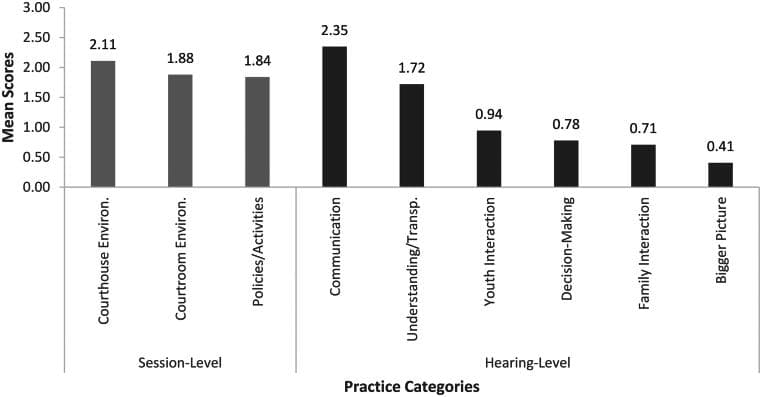
Table 2 presents the descriptive statistics for both courthouse and courtroom environment-related items and Figure 1 displays the mean scores. In both categories, the majority of items (62% of courthouse items and 64% of courtroom items) had mean scores between 2 and 3, meaning these elements tended to be present in the courthouses and courtrooms where we observed. The same three items received the lowest scores in both the courthouse and courtroom categories – comfortable seating, artwork, and greenery – which were either completely missing or limited where we observed. Results showed many floor- or ceiling-effects for items, indicating that there was little variability in the degree to which these elements were practiced or present (e.g. almost all courthouses and courtrooms scored the same for items such as clean (3), artwork (0), greenery (0), bad smell (0)). Mean scores for each category revealed that courthouse environments (M = 2.11, SD = 0.43) were overall more trauma-informed compared to courtroom environments (M = 1.88, SD = 0.33).
Courtroom policies & activities
Table 2 also presents the descriptive statistics for the TIP items related to courtroom policies and activities. The majority of items in this practice category also had mean scores between 2 and 3; however, a few practices had markedly lower scores – youths in restraints, judge conducts court from the bench, and judge wearing their robe. The overall mean score for the courtroom policies/activities category was 1.84 (SD = 0.30; see Figure 1).
Hearing-Level TIPs
Table 3 presents the descriptive statistics for hearing-level practice items, which all relate to judge behaviour and which we categorised into six practice categories. Figure 1 displays the mean scores for each practice category. Judges engaged with practices related to communication (M = 2.35, SD = 0.48) and Transparency/Understanding (M = 1.72, SD = 0.76) to the greatest extent. That said, several practices within those categories still had fairly low scores, such as the practice of greeting the youth and/or family for the hearing, assessing the youth and/or family understanding of the hearing, and explaining procedural steps and purpose of hearing.
The other four practice categories had average scores of less than 1, indicating that judges tended to not implement TIPs at all in those realms or to do so to a small extent (many items had floor effects). Within the practice category of Youth Interactions (M = 0.94, SD = 0.93), the most common practice was inviting the youth to speak, and when the judge did do that, they tended to engage with the youth in a fairly constructive way. The lowest scores in that category were for the practices of providing positive feedback/praise to the youth and involving the youth in decision-making, both of which judges did not engage with at all during the majority of hearings. The Decision-Making and Family Interaction categories had similar mean scores, 0.78 and 0.71 respectively, with the Decision-Making category having slightly less variability (SDs = 0.62 vs. 0.78). The decision-making practice that judges engaged with most, but still not to a great extent, was exploring less restrictive options. As for the other practices in that category, judges very rarely connected youths and family to services, outwardly considered progress when making decisions, or made decisions that involved collaboration with community-based organisations or groups. As for Family Interactions, judges invited family members to speak to a greater extent than they invited youths to speak; however, their engagement with family tended to be less constructive than when they engaged with youth (e.g. using what the family member said against the youth). Judges also rarely sought to connect with family members, provide positive feedback/praise, or involve family in decision-making. Judges engaged the least with practices within the Bigger Picture category (M = 0.41, SD = 0.55), indicating that they very rarely outwardly acknowledged or attempted to understand broader contextual factors that may have contributed to youths’ court involvement, such as personal adversity/trauma or structural inequity, nor recognised youths’ strength and resilience factors.
Research aim 2: Equitable engagement with TIPs
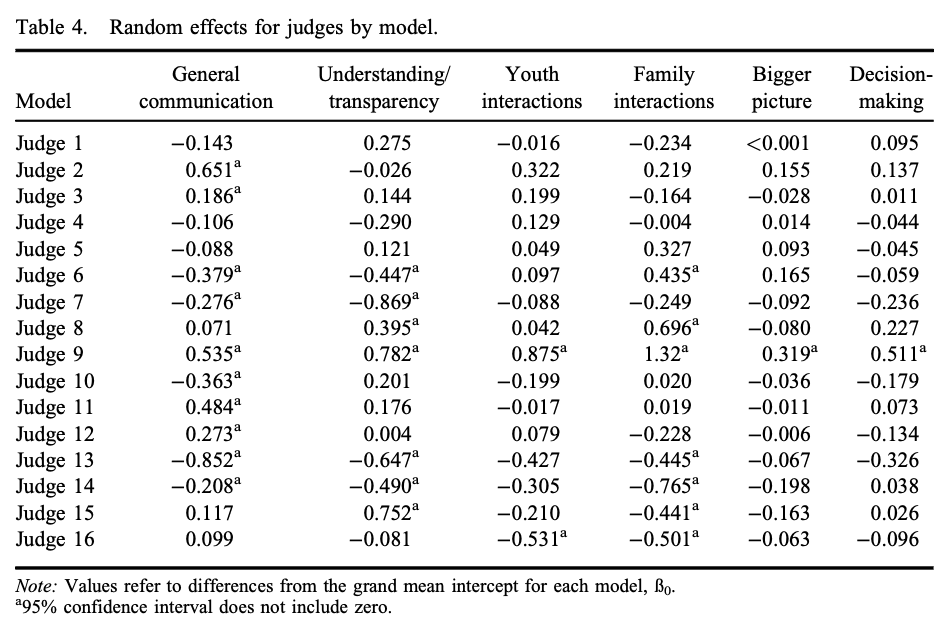
Results of unconditional means models for each of the six judge-focused practice categories showed that for three of the practice categories – General Communication, Understanding/Transparency, and Family Interactions – substantial proportions (i.e. >45%) of variability were due to between-judge differences. For the other three practice categories – Youth Interactions, Bigger Picture, and Decision-Making – 20% or less of the variation was between judges (see Table S1 in Supplemental materials). Results from each of the six multilevel linear regression models are also displayed in the Supplemental materials due to space limitations (Tables S2–7). We describe significant results below. In all six models, other than the intercept (which was significant in all models except the Decision-Making model, indicating that the practice category scores were significantly greatly than 0 with all predictor variables at the reference level), few variables were significant predictors (p < .05), and none were significant in all models. Below, all coefficients can be interpreted as: ‘on average, holding all modelled variables constant’.
Results revealed no significant predictors in the General Communication model (ps ≥ .163) and the Bigger Picture model (ps ≥ .085). For the Understanding/Transparency model, only incapacitation level of youth was a significant predictor, (p = .030 for in restraints and p = .005 for in secure custody). Judges’ scores were higher for youths in court/in restraints by 0.34 points and in secure custody (youth appearing via teleconference) by 0.53 points compared to those in court/no restraints. For the models predicting Youth Interactions, Family Interactions, and Decision-Making, hearing type was a significant predictor. In the model for Youth Interactions, scores for continuances were 0.55 points lower than first appearance hearings (p = .039). In the Family Interactions model, scores were 0.42 points lower for secure custody (p = .025) and 0.38 points lower for continuances (p = .031), compared to first appearances. In the Decision-Making model, scores were higher by 0.59 points for deferred adjudications/deferred dispositions/completed dispositions (p < .001) and 0.43 points higher for ‘other’ types of hearings (p = .017), compared to secure custody hearings.
Despite there being few significant predictors, the random effects by judge for each model revealed notable differences between scores by judge, holding all else constant, in half of the models (see Table 4). These coefficients can be interpreted as judge-specific adjustments to the scores – in other words, a negative score for a specific judge indicates lower levels of observed TIPs compared to average, while a positive score indicates higher levels. For the General Communication, Understanding/Transparency, and Family Interactions practice category scores, 10, 7, and 7 judges, respectively, showed individual intercept adjustments that were significant. Conversely, Youth Interactions, Bigger Picture, and Decision-Making categories showed two or fewer significant judge-specific intercept adjustments.
Discussion
In this observational study, we investigated the presence of TIPs related to courthouse and courtroom environment, courtroom policies/activities, and judge behaviour in juvenile delinquency court. We observed 36 court sessions that included 201 juvenile delinquency court hearings overseen by 16 different judges in seven urban counties in a Southeastern state in the United States. In addition to examining the level of engagement with over 60 TIPs, we also assessed various hearing-, youth-, and judge-related factors as predictors of judge engagement in different categories of TIP. Before reviewing the findings related to our research aims, we discuss the implications from two findings related to our study’s sample – one related to race and the other to type of hearing.
Sample findings & implications
Nearly three quarters of the hearings we observed involved youth perceived by observers as Black/African American, far exceeding the percentage of Black/African American people that comprise the study state’s population, which is less than 25% (U.S. Census Bureau, 2023). Of the hearings we observed, 12% involved youth perceived as White, while nearly seven-tenths of the study state’s population is White (U.S. Census Bureau, 2023). In other words, our sample reveals severe overrepresentation of Black/African American youth and underrepresentation of White youth in the study state’s juvenile court system, mirroring national-level racial disparities at various stages of criminal legal system processing – Black youth are arrested at higher rates compared to White youth for nearly all offences; the rate of involvement in the juvenile justice system for Black/African American youth is five times higher than of non-Hispanic White youth; and one in three Black/African American youth are incarcerated at some point in their lives compared to one in 17 non-Hispanic White youth (National Academies, 2022; OJJDP, 2020). Our study sample substantiates the pervasiveness of racial inequity in the U.S. criminal legal system – a product of past and continuing systemic racism (Najdowski & Stevenson, 2022) – thereby affirming the need for varied and committed efforts to address this issue, such as investing in culturally relevant and responsive community-based programming, emphasising diversion programs at the time of arrest, pursuing innovative discipline options to mediate the school-to-prison pipeline, and implementing wide-scale cultural humility and systemic racism training (Cabaniss et al., 2007; Kim et al., 2020; Sanders, 2021).
The second and third most common types of hearings observed were continuances and first appearances (19.4% and 17.9%, respectively, of all hearings observed). Research demonstrates that the longer a court-involved person is exposed to the legal system, the more their mental health deteriorates (Clemente & Padilla-Racero, 2020). Continuances and first appearances, while administratively useful, prolong a youth’s contact with the court and delay their ability to receive closure to their situation (Butts et al., 2009). This delay has the potential to erode their mental health, adding to any previous trauma they may have undergone. Furthermore, both continuances and first appearances typically last around five minutes (though we did not officially record hearing length), yet the court-involved youth and at least one guardian are required to attend. Given the unpredictable nature of court schedules, attending any hearing, even one that lasts 5 min, typically means missing work for the guardian and school for the child, thereby presenting challenges to employment for the guardian (e.g. risk of losing job because of missed work) and obstacles to consistent education for the child. Given these varied issues, efforts should be made to reduce the frequency of these hearings (e.g. improving docket management and communication between court actors, so that families can be informed ahead of time if their case will be continued) or to conduct such hearings remotely, which many court systems have begun to do (Quintanilla et al., 2023). If unable to avoid these hearings altogether, judges can use these times to set a trauma-informed tone and establish a psychologically safe environment from the start (e.g. by taking time to explain the court process, learn about the youth, etc.), rather than simply rushing through them (McKenna & Holtfreter, 2021; Rice & Meinster, 2019; SAMHSA, 2014).
Summary of research aim findings & implications
Research aim 1: implementation of TIPs
Our first research aim was to explore the landscape of a TIA in the juvenile delinquency court setting by investigating which TIPs are and are not in use, and to what extent. Overall, findings revealed vast gaps in implementation of certain TIPs, highlighting areas where juvenile courts can focus future education, policy, and practice efforts. In regard to both the courthouse and courtroom environment, comfortable seating, artwork, and greenery ranked as the least trauma-informed elements. However, these environmental conditions matter – quantity and quality of seating can contribute to general feelings of ease and comfort, visual artwork can reduce the amount of stress an individual experiences, and greenery can boost psychological wellbeing and increase positive health outcomes (DeVault et al., 2018). These findings highlight opportunities for simple, low-cost changes that, if pursued, can help create more trauma-informed court environments, which is a crucial step towards achieving a more trauma-informed court system overall.
As for court session policies/activities, we observed engagement with such practices to a fair extent. For instance, observers recorded that courtroom policies were generally enforced equitably by both judges and bailiffs (e.g. bailiffs asking all people speaking loudly in the courthouse to quiet down, regardless of identity or role) and that judges appeared to typically allow for docket flexibility from the bench. Several policies and activities related to a TIA, however, were not as well implemented. For instance, ‘Youth in restraints’ received a fairly low score, indicating a good number of youths wore restraints, or were shackled, in the courtroom. Use of restraints can trigger trauma symptoms, exacerbate feelings of isolation, hopelessness, and shame, and perpetuate stigma among young people, making elimination of this practice whenever possible a highly recommended TIP (Branson et al., 2017; Nabha, 2008). Some juvenile justice organisations argue that the harm of shackling far outweighs the oft-proffered justification of courtroom security, advocating, instead, for the use of shackles as an absolute last resort at times when other courtroom attendees are in active danger and when other de-escalation efforts have failed (Nabha, 2008). Our results demonstrate that there is likely still work to be done to reduce reliance on this practice that remains somewhat common in juvenile courtrooms in the United States. Additionally, all judges we observed wore their formal judicial robes (as opposed to going without), and nearly all conducted court fully from the bench (as opposed to, e.g. stepping down into the well). While doing otherwise are undoubtedly unconventional practices, they are simple approaches that may reduce feelings of intimidation, ease communication, and help foster the trauma-informed principles of collaboration and mutuality (McKinsey et al., 2022; NJC, 2017; SAMHSA, 2014).
Regarding hearing-level TIPs, we found the most engagement with practices related to general communication and understanding/transparency and the least engagement with practices related to Youth Interactions, Family Interactions, Bigger Picture, and Decision-Making. These findings are not necessarily surprising – the two practice categories with higher engagement (though still room for improvement) represent some of the most basic TIPs, such as using a cordial tone and reading text clearly; the four practice categories with the lowest scores represent much higher-level engagement of a TIA (e.g. require more time, knowledge of trauma, coordination, judge effort, system-level thinking, questioning the status quo, etc.). The relatively greater engagement with general communication- and transparency/understanding-related TIPs may reflect efforts in recent decades to increase perceptions of PJ by urging judges to make relatively simple changes, such as adjusting their tone, making eye contact, and avoiding complex language (Beier et al., 2014). This is not to say that these practices are not important to promoting a TIA and PJ, or that some of the practices within the other four categories do not also align with PJ-theory (e.g. engaging with youth can promote PJ). But the least used practices, such as those in the Decision-Making and Bigger Picture categories, are more central to a TIA as opposed to merely a PJ-oriented approach. This may indicate that the PJ movement has enjoyed some success in courts while highlighting the need for improved implementation of more complex TIPs.
To expand, judges rarely implemented decision-making-related TIPs core to a TIA, like ordering, or referencing, psychological screenings/evaluations, and connecting youth and families with services (Branson et al., 2017; NCTSN, 2018). This is especially notable because the judge is the only one with the legal authority to issue an order requiring these. Indeed, a TIA is one that not only recognises but also addresses past trauma, which psychological screenings/evaluations and many services are designed to do. Another core tenet of a TIA is to work to better understand the contextual factors that lead to certain behaviours, such as individual- and structural-level adversity, and to take a strengths-based approach to addressing these factors (Baker et al., 2016; SAMHSA, 2014). These practices, which we labelled as ‘Bigger Picture’ practices, were the least commonly implemented in the courtrooms where we observed. These findings align with prior research, such as one study demonstrating South Australian superior court judges’ general avoidance of both acknowledging collective/intergenerational trauma associated with court-involved persons’ Aboriginality and recognising the possible link between trauma and offending behaviour (McLachlan, 2022). This finding may indicate that judges are failing to fully appreciate the varied ways in which outside circumstances and experiences are relevant to a person’s court involvement as well as their path forward, or to understand that their role can and should encompass discussion of these realities. Alternatively, or additionally, judges may not feel confident in how to broach these topics appropriately in an open courtroom. For instance, as McLachlan (2022) pointed out, judges may worry that commenting on factors related to someone’s cultural identity may be perceived as biased or racist, thereby resulting in a general avoidance of these topics, even if such factors were considered in decision-making (2022). As such, future trauma education programming should attend to how judges can engage in discussion of bigger picture factors in appropriate, considerate, and trauma-informed ways.
Our findings additionally support prior postulating that judges, while willing to make surface-level changes to their practice, resist practices that require forethought or coordination with other court actors or that challenge the status quo (McKinsey et al., 2024; Ostrom, 2010), including changes that may threaten the perception of the judge as one whose primary role is to be authoritative and dole out punishment. For instance, engaging with youth and families during the court process, such as involving them in decision-making, may feel counterintuitive to a judge who sees themselves as the leader, expert, and ultimate decider. This may be especially true of juvenile court judges, who question the cognitive ability or psychosocial development of the youth and, therefore, believe the youth should have a limited say in the process (Berryessa & Reeves, 2020). However, a TIA cannot be achieved without centring the principles of choice, voice, empowerment, collaboration, and mutuality (SAMHSA, 2014).
This failure to engage may have real consequences, since research suggests that engagement with youth and families may help achieve more effective and positive outcomes. For instance, we know that accountability and behaviour change are most likely to occur when young people have an input in the process and are offered positive reinforcement instead of solely negative feedback (National Research Council, 2013; Seigle et al., 2014), yet judges rarely engaged with youth in these ways. Additionally, positive interactions with family may lead to better understanding of family and youth needs, which is crucial to effective intervention and rehabilitation efforts (Buffington et al., 2010; Desai et al., 2019). Yet, again, the judges we observed rarely implemented such practices.
Research aim 2: Equitable engagement with TIPs
Our second research aim was to assess whether certain characteristics of the judge (race, gender), youth (race, gender, incapacitation level), and case (guardian presence, hearing type, offence level) predicted judge engagement in the six hearing-level TIP categories. Multilevel modelling revealed that the included variables had minimal and inconsistent predictive influence on judge behaviour. Specifically, we found no significant predictors of judge engagement with the General Communication and Bigger Picture categories. This finding suggests equitable implementation of practices in these categories across the variables as tested as predictors, whether that takes the form of high engagement across the board (as in the case of General Communication TIPs) or very low engagement across the board (as in the case of Bigger Picture TIPs). We did find, however, that incapacitation level of youth predicted judges’ engagement with the Understanding/Transparency category: judges showed greater engagement with youth appearing in court in restraints and youth in secure custody (i.e. joining court via teleconference) compared to youth appearing in court not in restraints. Though taking steps to ensure that all court-involved youth, regardless of incapacitation level, understand court proceedings is essential to a TIA, this particular finding does not necessarily indicate a negative inequity. Instead, it may indicate that judges recognise that youth in restraints or in custody may be experiencing relatively greater levels of withdrawal and/or that they are facing more dire legal consequences (e.g. continued time in detention) – therefore, judges may exert extra effort to ensure these youth are tuned into and understand the court process.
Lastly, we found hearing type predicted engagement in the Youth Interactions, Family Interactions, and Decision-Making categories. Given the goals, required components, and duration of hearing can differ widely across hearing types, this finding makes sense. For example, judges interacted less with family and youth during continuances (which are often focused on simply rescheduling the hearing) compared to first appearance hearings and engaged with decision-making TIPs more in completed or deferred dispositions/adjudications (hearings where the judge determines consequences/orders/goals with a timeline) compared to secure custody hearings. Though intuitive, these findings demonstrate that a TIA is not always applied evenly, thereby highlighting the need for judges to continue to explore ways to embody a TIA, even at times when it appears challenging (e.g. during very brief hearings).
That said, the finding of few significant predictors signals that judges generally implemented TIPs in equitable ways within their courtrooms across the predictors we tested, countering previous research showing differential treatment of court-involved youth by judges based on judge and youth characteristics, like race and gender (Knoche et al., 2022). While this set of findings is encouraging, our analyses also revealed notable differences between judges when it comes to applying TIPs in several practice categories: General Communication, Understanding/Transparency, and Family Interactions. In other words, many judges acted differently from one another in the above-listed categories. (Though, as noted above, these differences were not along lines of judge race and gender.) Though there were few significant differences between judges in the other three categories, the very low levels of engagement in those categories overall indicate ample room for improvement for all judges we observed. As such, children’s exposure to a TIA may essentially depend on the judge to whom they are assigned. These findings substantiate prior research finding significant differences in practices between different judges (Beier et al., 2014) as well as anecdotal reports from members of our observation team who frequently discussed the vast range in judge behaviour that they witnessed (from the ‘exemplary trauma-informed judge’ to the ‘opposite of a trauma-informed judge’). Future efforts should include standardising a TIA across entire court systems through wide-scale trauma education opportunities and addressing all types of barriers to TIA implementation, including lack of judicial buy-in, practical barriers, and systemic barriers (McKinsey et al., 2022). It must be recognised that a court system is far from trauma-informed as long as court-involved people are at risk of ending up in a courtroom with a judge who does not fully appreciate the power they hold to either interrupt a cycle of trauma or to perpetuate it.
Limitations & future directions
Implications should be considered in light of several limitations. First, we collected data from juvenile delinquency courts in just seven counties in a Southeastern state in the United States, thereby limiting the extent to which findings can be generalised across court contexts and geographic regions. However, as this is the first observational study to comprehensively examine a large number of TIPs, the findings provide a solid foundation on which future research can be built. Further, overlaps between our findings and prior studies’ findings, such as a South Australian study on how judges respond to trauma in the lives of Aboriginal persons (McLachlan, 2022), suggest that some of the TIP implementation gaps we found are also present in other contexts and populations. Second, our study examined implementation of TIPs only to the extent that those practices were observable. This greatly limited the extent to which we could assess certain types of TIPs, such as policy-related practices (e.g. a court’s official policy on trauma assessments, physical restraints, cattle calls, etc.). We also recognise that TIPs can be implemented within judges’ minds (e.g. considering the findings from a psychological evaluation when making a decision without stating that they are doing so), especially when disclosure of certain details related to trauma in open court can be triggering or a violation of privacy. But if our team – explicitly on the lookout for TIPs – did not observe them (or even missed or misinterpreted them), it seems unlikely that court-involved individuals experienced those TIPs themselves. And, as others have noted, judicial remarks should be comprehensive enough so that listeners know which factors are – or are not – being considered in decision-making (McLachlan, 2022). Given these limitations, our study may not accurately capture the extent to which courts and judges included in our sample engaged with a TIA; however, we believe it represents the most comprehensive examination to date.
Third, and related, we collected data on practices in the court context that have been deemed to be trauma-informed in the literature. Many of the practices are considered trauma-informed based on their general alignment with overarching TIA principles (e.g. safety, transparency, empowerment; SAMHSA, 2014) or research demonstrating their positive impacts in other contexts (e.g. in detention centres; King, 2017). Research examining the impacts of TIPs within the court context is needed to identify which practices do indeed result in less stress and better outcomes for youth. Fourth and lastly, our analytical decision to assess the influence of judge-, youth-, and case-related factors on categories of TIPs, as opposed to individual practices, presents the possibility that our analyses missed inequitable implementation of individual practices based on these factors. Future research should continue to assess equitable implementation of TIPs within the courtroom.
Conclusion
As efforts to create more trauma-informed courts continue, so must efforts to determine whether and what kind of trauma-informed practices (TIPs) are in fact used in court – and whether they are used equitably. Our court observation study examining their use in juvenile delinquency court in a Southeastern state in the United States demonstrated that, while judges tend to engage with simple, surface-level TIPs that are easily implemented on the fly (e.g. using a cordial tone), they avoid or struggle to implement a large number of TIPs for which we measured, including more substantive and complex TIPs (e.g. seeking to understand the root cause of behaviour), those TIPs that may contradict habit or systemic norms (e.g. avoiding use of restraints), or those that seem to impinge upon a judge’s traditional power (e.g. involving youth in decision-making). Analyses also revealed that, although judge engagement with TIP categories did not depend on judge and youth personal characteristics like race and gender, judges differed significantly in the extent to which they engaged with different categories of TIPs, likely due to their broad discretion and their varied levels of trauma training and buy-in. Taken together, these findings show that TIPs are severely underutilized – and inconsistently utilized – such that children’s court experiences may rely heavily on the particular judge to whom they are assigned. Future education, policy, and reform efforts aimed at creating more trauma-informed courts must attend to these gaps.
Supplementary Material
Supplemental Material_Observation Instrument Codebook.xlsx
TPPL_A_2421172_SM1835.xlsx (48.5KB, xlsx)
Supplemental Materials_Tables.docx
TPPL_A_2421172_SM1834.docx (38.7KB, docx)
. Appendix
. AppendixCorrection Statement
This article has been corrected with minor changes. These changes do not impact the academic content of the article.