Abstract
Nordic countries incarcerate offenders at much lower rates in comparison with incarceration rates in the United States, and reincarcerate fewer people per capita. Noncustodial alternatives to sanctions, including fines and community service, are used extensively in Finland to reduce negative effects of institutionalization and subsequent disadvantage caused by incarceration. The nature of drug-involved offenders within the Finnish system is reviewed in light of current research about the effectiveness of incarceration and deterrence-based approaches for drug offenders. Employing a 2014 sample from register data (consisting of official government records) of drug offenders in Finland with a 3-year recidivism period, this study utilizes a genetic matching procedure to compare offenders who received fines, conditional sentences (probation), or incarceration. While recognizing that numerous confounding variables affect incarceration, we compare a matched sample of drug offenders and the sanctions they have received from the Finland judicial system to determine whether offenders who initially receive a fine or a conditional sentence reenter the correctional system at different rates than those who are incarcerated. After matching, results found no significant differences between offenders receiving incarceration sentences or those who received noncustodial sentences (fine, or conditional sentence) for general and drug-related recidivism. These results are presented within the context of the Finnish corrections system in order to inform the criminal justice community about culture, incarceration, and process differences that could positively affect working with drug offenders in other localities.
Introduction
Despite its popularity, serious questions about the effectiveness of incarceration have been raised over the past several decades (e.g., see Smith & Akers, 1993; Cullen, Jonson, & Nagin, 2011; Bales & Piquero, 2012; Cochran, Mears, & Bales, 2014) and especially for drug offenders (Mitchell, Wilson, & Mackenzie, 2007). In the United States, 68% of those who are released from prison and jail are rearrested within three years post-release (Alper, Durise, & Markman, 2018); and in some studies, approximately 77% of drug offenders are rearrested within five years of release from prison (Durose, Cooper, & Snyder, 2014). Overall, despite widespread use, the benefits of custodial sanctions appears thin: A review by Nagin, Cullen, and Jonson (2009:115) examined the impact of incarceration on reoffending and concluded that, compared to noncustodial sanctions, incarceration seems to have a non-existent or even “mildly criminogenic effect on future criminal behavior.” Moreover, a meta-analysis based on four controlled and five natural experiments by Villettaz, Gillieron, and Killias (2015) concluded that “custodial sentences were not more effective in reducing reoffending compared with noncustodial alternatives.”
Since the early 2000s there has been a major push to divert offenders from prison to community-based corrections. It has been suggested that these practices provide numerous benefits and successes compared to incarceration (Cochran et al., 2014), especially with drug offenders (Mitchell et al., 2007). For example, Cochran et al. (2014)utilized a sample of convicted offenders in Florida employing a propensity score matching technique, finding that less severe community sanctions were more likely to reduce recidivism.
Countries like the United States have largely followed the criminal justice precedent set by English Common Law. Based in deterrence theory, incarceration – or at least the threat of it – serves as the key rationale behind the alarmingly high incarceration rates in the United States. The extensive reliance and focus on deterrence theory leave us stuck between a rock and hard place: Deterrence as a whole appears to be largely ineffective (Pratt & Cullen, 2005; Pogarsky, 2009), but it is so entrenched in the United States’ criminal justice system that alternatives are either seen as impractical or infeasible (Pratt, 2008a, 2008b). Despite this, there is probably no theory of crime that is more important than deterrence theory, since it is employed most frequently in criminal justice systems across the globe. Deterrence theory is focused on three general principles – certainty, severity, and celerity. With the important caveat that celerity has been very infrequently tested due to conceptual and practical difficulties associated with speedy punishment (see Nagin & Pogarsky, 2001), research has rather firmly concluded that certainty and severity principles do little in the United States to deter crime (Pratt et al., 2006).
Even though traditional deterrence-based approaches appear ineffective, it is critical to continue to apply and test the theory’s principles (e.g., Boman IV, 2013; Matsueda, Kreager, & Huizinga, 2006; Pogarsky, 2009). The logic underlying this sentiment is relatively straightforward: Deterrence-based techniques, strategies, and policies permeate the criminal justice system. Rather than completely dismantling our current approach, we should be remodeling our methods to discern effectiveness in a society which is already heavily reliant on deterrence theory, thus restructuring policies and practices without fundamentally “recreating the wheel.”
Drawing from the urgent need to identify effective strategies based in deterrence theory, this study investigates one particular direction which may be fruitful for the future of deterrence-based policies dealing with incarceration. Our argument centers on the proposition that incarceration within the United States may be ineffective because of the overall poor conditions of jails and prisons within the United States. In other words, the quality of life, degradation of physical facilities, poor reentry preparation, and a lack of sufficient treatment programming in the United States may serve as additional barriers that impede people from successfully reentering society after they are released.
In stark contrast to the United States, we analyze data from a country that takes a very different philosophical approach to incarceration – Finland. Additionally, Finland maintains extensive data registries for social and health care details, providing a rich source of data. After discussing how Finnish and American incarceration differ, we use a sample of drug-involved offenders to explore whether noncustodial sanctions are associated with lower rates of recidivism compared with incarceration. If results indicate that community sanctions or incarceration are associated with increased reoffending in a Finnish sample, this offers critical insight into deterrence-based policies, conditions of imprisonment, and the effectiveness of sanctions in a way in which they could potentially become more effective in other countries. Prior to discussing specific research questions, however, we review the nature of drug-involved offenders in the Finnish system and place this in the context of research that investigates the effectiveness of incarceration and deterrence-based approaches with drug offenders.
Incarceration in the Finnish Context
In the context of the conditions of incarceration, the Nordic method is often seen as being exceptional because of an extensive reliance on moderate punitive policies (Pratt, 2008a, 2008b). While the median European prison population rate is about 133 inmates per 100,000 people – more than five times lower than the United States (Prison Policy Initiative, 2020) –Finland and Sweden incarcerate at less than half that rate, approximately 60 out of every 100,000 people. Other Nordic countries – namely Norway and Denmark – are similar in their incarceration rate: approximately 70 per 100,000 (Aebi & Delgrande, 2015). The American incarceration rate is 698 per 100,000 (Prison Policy Initiative, 2020). In other words, Finland incarcerates over ten times fewer peopleper capita than the United States.
Despite a concerted attempt to keep people out of prison, Finland does house about 20 to 30% of their “active” offenders inside prisons (Pratt, 2008a, 2008b), only incarcerating those who have committed serious offenses or have lengthy criminal records (Lappi-Seppälä, 2012). In addition, Finland incarcerates offenders for a significantly shorter period of time than other countries, resulting in a yearly prison population of just over 3100 prisoners incarcerated in twenty-six prison facilities throughout the country (Prison Policy Initiative, 2020).
Like the trend towards community-based corrections in the United States starting in the early 2000s, Finland relies on a model where non-custodial alternatives to sanctions are used extensively. In 2014, the average daily number of community supervision clients was 3137 (RISE, 2014). Similar to the recent trends in American incarceration practices, Finland also uses non-incarceration-based options such as fines, community service, and home confinement under electronic monitoring (Fallesen & Andersen, 2017; Lappi-Seppälä, 2012).
The legal system in Finland reflects the ideology of the Nordic social welfare system, which is based on principles of universal coverage and social rights (Esping-Andersen, 1990, 1999). Like other Nordic countries, Finland ratified the European Convention on Human Rights (ECHR) and enacted national legislation in 1990, along with national and international monitoring systems, to ensure human rights and legal protections for prisoners (Lappi-Seppälä & Koskenniemi, 2018). In Finland, corrections and sanctions are managed by the Central Administration of the Criminal Sanctions Agency (CSA) - Rikosseuraamuslaitoksen keskushallintoyksikkö - and three regional offices throughout the country. The CSA, operating under the direction of the Ministry of Justice, enforces judicial system sentencing. They focus on decreasing offender recidivism, while demonstrating respect for human rights, fairness, safety, and a belief in the capability of individuals to change (Linderborg, Blomster, Tyni, & Muiluvuori, 2012; RISE FCSA, 2020).
Finnish Incarceration Practices
Lindeborg and colleagues (Linderborg et al., 2012) evaluated the quality of life and living conditions in Finnish closed prisons. More than three hundred fifty prisoner surveys were supplemented with additional interviews that provided qualitative details. Prisoners felt that safety was appropriate in the facilities; that staff were mostly respectful and understanding of prisoner needs; and that the daily schedule, as well as personal autonomy, were satisfactory. In terms of areas for improvement, atmosphere, cell conditions, and canteen services between prisons and sometimes even within certain wards of a prison varied. In contrast, inmate opinions about staff treatment of prisoners differ significantly from the United States, where inmates are sometimes ignored and subject to mistreatment and frustration in response to extremely high levels of correctional staff stress and conflict (Trammell & Rundle, 2015).
During the day, Finnish prisoners are required to work, study, or participate in some other activity, as well as clean their own living facilities in prison. Overall, 31% of prisoners work at a variety of jobs available to the prisoners (RISE, 2014). With universal healthcare, inmates are entitled to free medical resources; they are eligible for mental health therapy, addiction treatment services, and wellness benefits that promote prisoners’ abilities to live without crime while encouraging a substance-free lifestyle. Between 7 and 10% of inmates attend school to complete their education or to study trades. In their leisure time, prisoners can use the library, exercise outdoors at least one hour every day, or engage in crafts or arts. In closed Finnish prisons, inmates can communicate with the outside world through telephone and correspondence along with meeting visitors in the visiting area or the family visiting rooms (RISE, 2020).
Unlike American prisons where reentry preparation is done immediately prior to release with often deleterious results for drug offenders (Hamilton & Belenko, 2019), Finland’s philosophical approach to incarceration is fundamentally different and uniquely positioned to promote desistance and facilitate reintegration into society. Throughout the incarceration period, several types of in-prison activities are organized for inmates that are designed to provide the person with the necessary toolset to successfully return to the community, such as possibilities for education or rehabilitation. Participating in these activities is voluntary and does not factor into the sentence length. Despite the voluntary nature of these programs, the majority of those incarcerated in Finnish prisons do take advantage of these programs, and only about one in every four drug offenders chooses to abstain from these programs while incarcerated (Tyni & Blomster, 2012). In addition, prisoners may apply for leave, stepping down to halfway type of facility called an open prison, up to a year before their sentence ends. This prison leave concept was introduced into the Finnish legal system in 1971 to reduce the negative effects of institutionalization and the disadvantages caused by long prison sentences (Keinänen, Kilpeläinen, Pajuoja, & Tyni, 2019). Leave allows prisoners to learn about job prospects, reunify with family, and identify housing.
American and international research both continue to show how poor living conditions in prison decrease the chances of finding employment after prison (e.g., Petersilia, 2003; Pager, 2008). While the role which employment serves in the reentry process is debated (e.g., the distinction made between having a “job” and having a “career”), workforce participation even before incarceration presents a challenge for offenders. For example, a recent Finnish study using register-based population data shows that Finnish inmates tend to be poorly integrated into labor markets even before their incarceration (Aaltonen et al., 2017; Danielsson & Aaltonen, 2017). Reflecting trends in most – if not all – other countries, Finland’s inmate population prior to incarceration tends to be either sporadically employed prior to prison or working in industries that offer very little upward mobility (Aaltonen, 2016a, 2016b; Aaltonen et al., 2017); that does not change significantly post incarceration (RISE, 2014).
Social circumstances among community sanction clients can also be difficult. In 2014, unemployment rates for supervised parolees was 60%, and homelessness accounted for approximately 10% of community-based service clients (RISE, 2014). Partially due to personal drug problems, there is a correlation in Finland between being either intermediately employed or unemployed and being poorly connected to family life (Suonpää, Ellonen, Aaltonen, & Tyni, forthcoming). The majority of the inmates are poorly connected to family life both before and after their incarceration period (Suonpää et al., forthcoming) and suffer from poor health (Joukamaa et al., 2010).
In 2014, 19% of men and 27% of women incarcerated in Finland had a primary charge of drug crime as their most serious offense (Kristoffersen, 2019). The drug of choice has changed significantly during the past decade, with several newer drugs and polydrug use complicating addiction, incarceration, and treatment. Similar to most countries, Finland’s most prevalent drugs include opioids, amphetamines, MDMA, cannabis, hash, and small amounts of cocaine (EMCDDA, 2020). The refractory effect of opioids has altered the treatment landscape with its dependency-inducing qualities, resulting in drug users engaging in treatment on multiple occasions to try to control their dependency. In 2017, 51% of those entering treatment facilities reported opioid use as their primary problem (EMCDDA, 2020). In comparison, the second most prevalent drug, amphetamine use, was reported by 18.9% of those seeking treatment.
Current Study
Finland not only incarcerates fewer people than the United States per capita, but it reincarcerates fewer people per capita. U.S.-based studies have reported a correlation between incarceration and increased recidivism (e.g., Cochran et al., 2014). However, it is not known whether similar associations are found with more lenient criminal justice systems like those found in Finland. Using a sample of drug-involved offenders in Finland, this study investigates whether noncustodial sanctions such as fines and intermediate sentences (e.g., probation) are associated with lower rates of recidivism outcomes compared with incarceration. Therefore, if noncustodial sanctions such as conditional incarceration and fines have lower recidivism rates, this could indicate that, similar to U.S. studies (Cochran et al., 2014), incarceration itself may serve as a criminogenic factor even in the context of a less punitive incarceration system. Alternatively, if incarceration results in lower recidivism than noncustodial sanctions this would lend support that incarceration acts as a deterrent in the context of the effectiveness of Finnish prisons.
Data
This analysis is based on Finnish register data maintained by the Institute of Criminology and Legal Policy at the University of Helsinki. In the context of Finland and much of the rest of Northern Europe, register data contain information on all criminal convictions, sentences, and fines during a set time frame in a designated geographical space. Although register data is extremely rich in detail, it often presents logistical challenges for statistical analyses. Accessing register data is complex, time consuming, and costly, and involves a substantial amount of manual coding work. As a result, samples, instead of complete population data, are often used in register-based data analysis (Suonpää, Aaltonen, & van der Geest, 2020; Suonpää, Kivivuori, & Aaltonen, 2018). This work employs a nationally representative sample of sentences given for drug offenses from the register database.
We are particularly interested in how recidivism of people who committed drug offenses vary across the type of sanction received. Specifically, we use a sample of Finnish drug offenses from the 2014 cohort of total drug offenses which occurred across the country. We followed a sample of drug offenders who committed their ‘baseline’ offense in 2014 for three years following the baseline offense (2014–2017). To provide additional valuable context to the analysis, we also coded in the prior five years (2009–2013) of offenses, conviction, and sentencing data for the people in our sample to use as control variables. As such, this project uses longitudinal panel data that tracks people from 2009 to 2017 who committed at least one drug offense during 2014.
The Finnish criminal code includes nine types of drug offenses: Unlawful use of drugs, drug offense, aggravated drug offense, preparation of drug offense, attempt of preparation of drug offense, promoting drug offense, preparation of aggravated drug offense, attempt of preparation of aggravated drug offense, and promoting aggravated drug offense. However, drug preparation attempts and promoting offenses are very rare; in 2014, there were zero promotion offenses and two preparation convictions. As a result, the six categories involving preparation or promotion were excluded from the data. Cases undergoing an appeal process were also excluded, resulting in 3555 adjudicated drug offense cases involving “unlawful use of drugs,” “drug offense,” and “aggravated drug offense” in 2014. Because the aim of this paper is to compare unconditional incarceration to other sanction types, we had to exclude all unlawful use of drugs (n = 505) because there is no incarceration sentence for this type of offense, which is routinely handled by offenders receiving a fine. Since this offense lacked variability for the incarceration portion of the comparison, these offenses were not included in the analysis.
Of the remaining 3050 offenses, 6% (n = 172) of convictions were aggravated drug offenses, and 94% (n = 2878) were drug offenses. Since only 172 aggravated drug offenses appear in these data, we included all of them in our quantitative dataset. Of the regular drug offenses, we took a nationally representative random sample of 20% (n = 596). Although this is a smaller sample percentage than employed in other register-based studies (in previous studies with samples from register data, 50% samples have been utilized; see, for example, Suonpää et al., 2020 and Suonpää et al., 2018), this data was originally collected for another purpose and access to manually code additional data is restricted and costly. However, the sample resulted in a significant number of cases (n= 596) to have sufficient predictive statistical power (i.e., regression) to generalize back to the overall population of cases.
The sampling procedure resulted in 768 drug and aggravated drug offenses (172 aggravated drugs +596 standard drug offenses = 768 total offenses). Of these, 25 cases were excluded (all regular drug offenses) since the database did not include all necessary information for these cases, resulting in a final analytical sample of 743 offenses.
Dependent Variable: Recidivism
Recidivism includes all possible convictions after the day of conviction from baseline offense in 2014 until end of 2017. Recidivism was divided to two categories measuring 1) general recidivism (including all convictions), and 2) drug-related recidivism (including drug-related convictions). Recidivism was measured with a dichotomous indicator for both drug-related recidivism and any type of recidivism (1 = yes, 0 = no). The time at risk was shorter for individuals whose baseline conviction resulted in incarceration, but due to the short duration of custodial sentences,1 the incapacitation effect is deemed small and unlikely to bias our results.
Focal Independent Variable: Sanction Types
The most common sanction types used in Finland are fine, community service, conditional incarceration, and unconditional incarceration. Conditional incarcerations are effectively identical to intermediate sanctions in the U.S. and are most similar to probation. Also monitoring sentences are possible but very rare. In this data there was one monitoring sentence. Combinations of sanctions are also common, for example a combination of conditional incarceration and community service or fine. In some cases, it is possible to have an unconditional incarceration sentence commuted to community service.
Because in this analysis we are interested in comparing incarceration to non-incarceration, the categorization was made as follows: 1) unconditional incarceration2(n = 101), 2) conditional sentences including conditional incarceration and combinations of conditional incarceration and community service (n = 255), and 3) only a fine (n = 365).
Criminal History
Criminal history includes all possible convictions in the five years prior to the 2014 drug offense conviction (baseline conviction) and was categorized to four classes: 1) no prior offenses, 2) one prior offense, 3) two–five prior offenses, and 4) more than five prior offenses.
Control Variables
Due to the strong link between age and crime (Aaltonen, Kivivuori, & Martikainen, 2011; Farrington, 1986), we covary the offender’s age at the time of the baseline conviction in 2014. Additionally, gender (female = 1) was included in the analysis as a control variable.
Methodology
First, we report the general and drug-related recidivism rates by sanction type and criminal history. Next, the association between sanction type and recidivism was analyzed by logistic regression. First, analyses were made based on the full data (N = 721). We fitted two separate models with the dichotomous outcome variables indicating whether offender had recidivated by committing 1) any offense or 2) a drug-related offense after the sentence.
In order to minimize the discrepancy of the observed characteristics and to further establish the robustness of the analysis, we applied a matching procedure using a 1:1 genetic matching algorithm. Genetic matching is a generalization of propensity score and Mahalanobis distance (MD) matching (Rosenbaum & Rubin, 1985) using a search algorithm to iteratively check and improve covariate balance, which in propensity score matching is done manually. In turn, this algorithmic approach minimizes the discrepancy between the distributions of observed confounders in the treatment group and control group (Diamond & Sekhon, 2013; Sekhon, 2011).
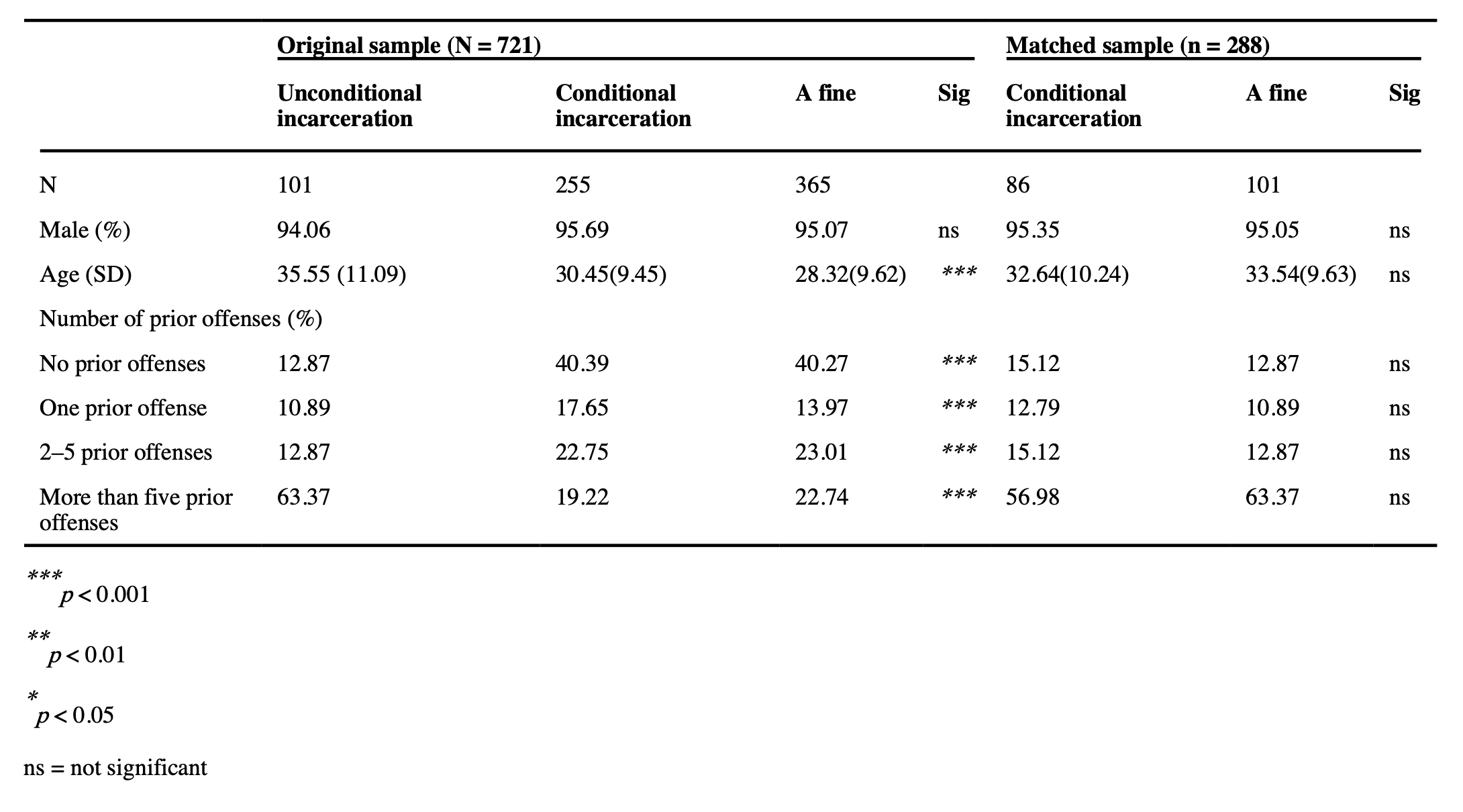
In this study, the offenders who received unconditional incarceration (n = 101) were used as a treatment group, and suitable matches were searched separately from the offenders whose sanction was conditional incarceration (n = 255) and from offenders whose sanction was a fine (n = 365). Variables used for matching were the offender’s gender (male/female), age (years), and history of prior offenses, classified into four categories. In order to increase the balance between the covariates, exact matches were demanded for history of prior offenses since numerous other studies demonstrate that prior offending is a significant predictor of recidivism. For gender and age, the nearest possible matches were allowed. The balance of the variables was tested by χ2 tests (gender and history of prior offenses) and a one-way analysis of variance (age). Matching was conducted using R 3.5.2. using the package “Matching” (Diamond & Sekhon, 2013; Sekhon, 2011). Finally, we fitted similar regression models with the matched sample. Since the complete balance was not reached by the matching procedure, (see Table 3) we added the matching variables as additional covariates to the regression models for analysis. The analysis was conducted by using Stata 15.1.
Results
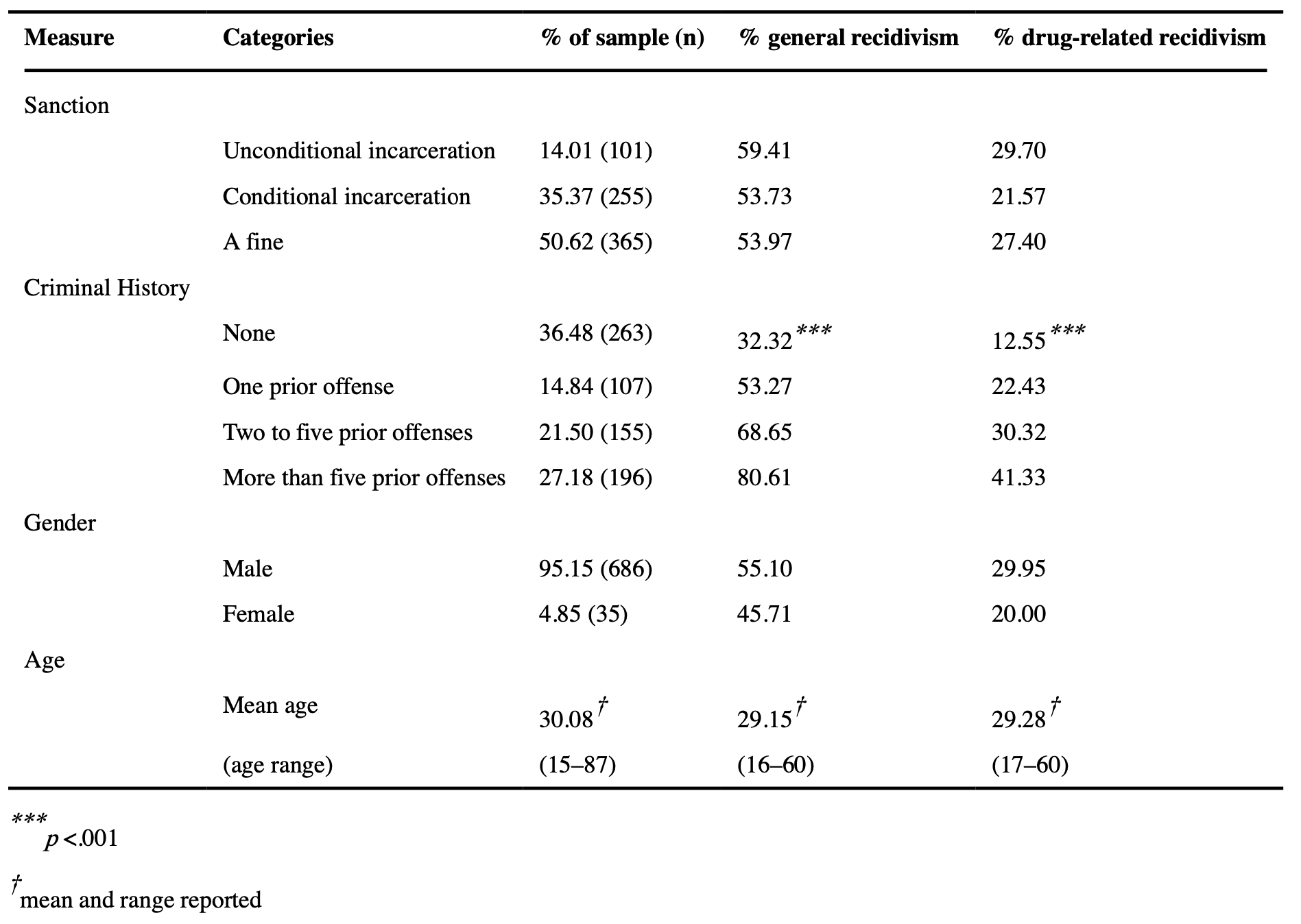
Table 1 reports general and drug-related recidivism rates in the full sample. The general recidivism rates for unconditional incarceration was a little higher (59.4%), compared to offenders receiving conditional incarceration (53.7%) or a fine (54.0%), but these differences were not significant. Drug-related recidivism rates were lower than the general recidivism rates with 29.7% for unconditional incarceration, 21.6% for conditional incarceration, and 27.4% for a fine. For both general and drug-related recidivism a clear pattern emerged with criminal history where more prior offenses resulting in higher recidivism rates. Those with no prior offenses had a significantly (p < 0.001) lower recidivism rates (general, 23.3%; drug-related, 12.6%) compared to those with one prior offense (general, 53.3%; drug-related, 22.4%), two to five prior offenses (general, 68.7%; drug-related, 30.3%), or more than five prior offenses (general, 80.6%; drug-related, 41.3%). There were no statistically significant differences in gender or age for either general or drug-related recidivism Table 2.
Logistic Regression Models within Full Sample
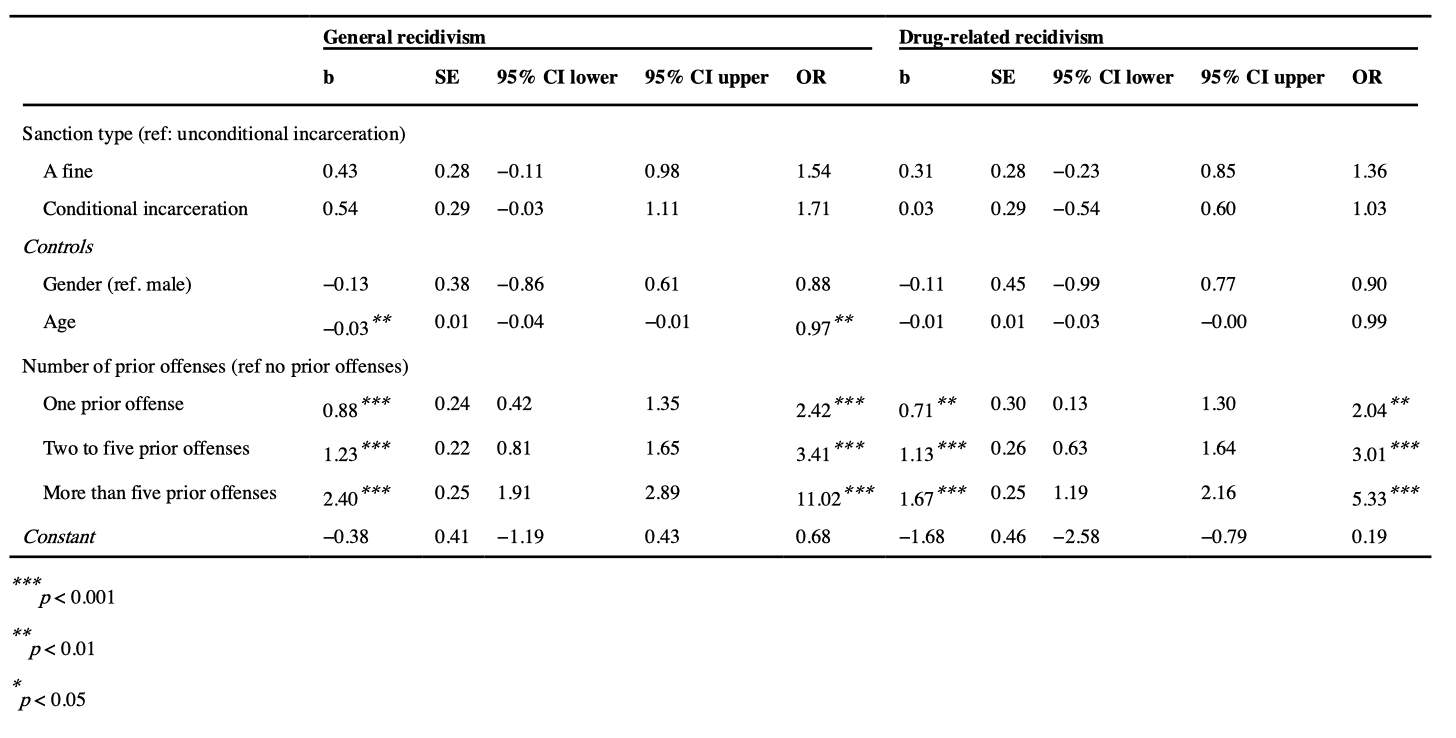
Using the full sample, we estimated separate regression models for general recidivism and drug-related recidivism that investigated whether there were differences between the type of sanction and recidivism while controlling for criminal history, age, and gender. For the model predicting general recidivism, younger age (OR = 0.97, p < 0.01) and more extensive prior history were significant predictors. For criminal history, one prior offense (OR = 2.42, p < 0.001), two to five prior offenses (OR = 3.41, p < 0.001), and five or more prior offenses (OR = 11.02, p < 0.001) were more likely to recidivate as compared to no prior offenses. For drug-related recidivism, criminal history was the only significant predictor with one prior offense (OR = 2.04, p < 0.05), two to five prior offenses (OR = 3.01, p < 0.001), and five or more prior offenses (OR = 5.33, p < 0.001) as compared to no prior offenses.
Matching Procedure as Sensitivity Analysis
To further establish the robustness of the analysis, a genetic matching procedure was utilized. Descriptive statistics are displayed in Table 3 for both the original and the matched sample. In the original sample, offenders who received unconditional incarceration were a few years older (mean age: 35.6) compared to offenders receiving conditional incarceration (mean age: 30.5) or a fine (mean age: 28.3). This difference was statistically significant (p < 0.001). In the matched sample, however, the differences were substantially smaller and no longer statistically significant.
In all three of the sanction groups, a clear majority of the offenders were males (>94%) before and after the matching procedure, and the slight differences were not statistically significant before or after the matching procedure.
In the original sample, the sanction groups had major differences regarding criminal history (p < 0.001): Only 13% (12.9%) of the offenders sanctioned to unconditional incarceration had no history of prior convictions whereas the analogous share of the offenders sentenced to conditional incarceration or a fine was 40% (40.4% and 40.3%, respectively). Moreover, 63% (63.4%) of unconditional incarceration subjects, but only 19% (19.2%) of offenders convicted to unconditional incarceration and 23% (22.7%) of offenders convicted to a fine had committed at least five prior offenses.
After the matching procedure, the large discrepancy between the sanction groups was greatly diminished, especially from history of prior crimes since the matching procedure required exact matching. In the fine category the exact match was found; 13% (12.9%) had no prior offenses, 11% (10.9%) had one, 13% (12.9%) had 2–5 and 63% (63.4%) had more than fine prior offenses. In conditional incarceration the exact match was not found, but the differences were greatly reduced; 15% (15.1%) for offenders receiving conditional incarceration had no prior offenses, 13% (12.8%) had one offense, 15% (15.2%) had two to five offenses and 57% (57.0%) had more than five prior offenses.
Recidivism in Original and Matched Samples
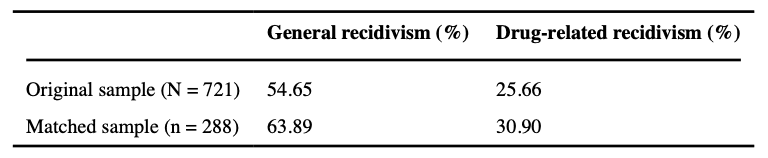
In the original sample, 55% (54.7%, n = 394) of the offenders were convicted of a new crime during the following three-year period and 26% (25.7%, n = 185) were convicted of new drug-related crime (Table 4). In the matched sample, recidivism was even more common. The percentages for general and drug-related recidivism were 64% (63.9%, n= 184) and 31% (30.9%, n = 89), respectively. Both the general and drug-related offending are more prevalent in the matched sample since the background characteristics of the sample were made to resemble the offenders who received unconditional incarceration sentences.
Logistic Regression Models within the Matched Sample
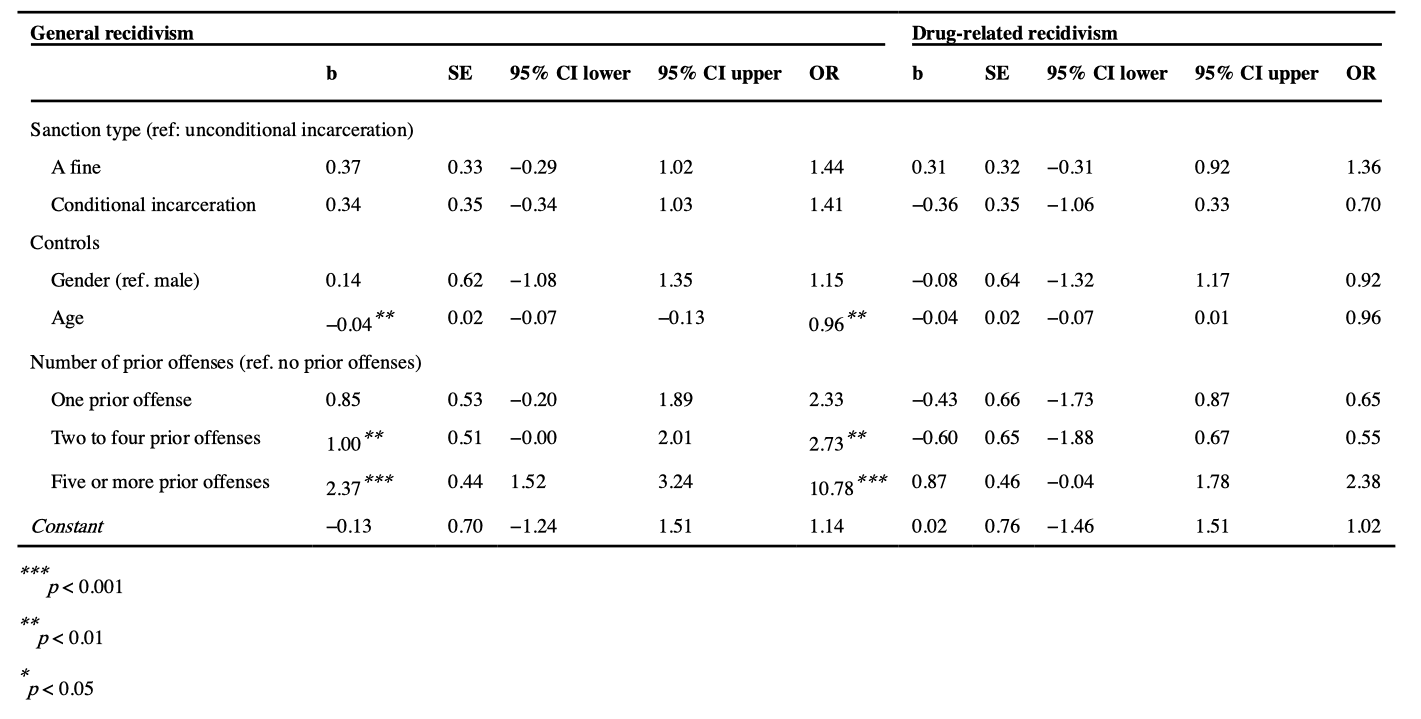
We estimated separate regression models for general recidivism and drug-related recidivism that investigated whether there were differences between the type of sanction and recidivism. Control variables were included. Since the matching procedure did not reach the complete balance between covariates, we adjusted the regression models for all of the matching variables (offender’s gender, age, and number of prior offenses classified into four categories). The tables reporting the regression coefficients are provided in Table 5. Regarding background characteristics, number of prior offenses is associated with recidivism in both models.
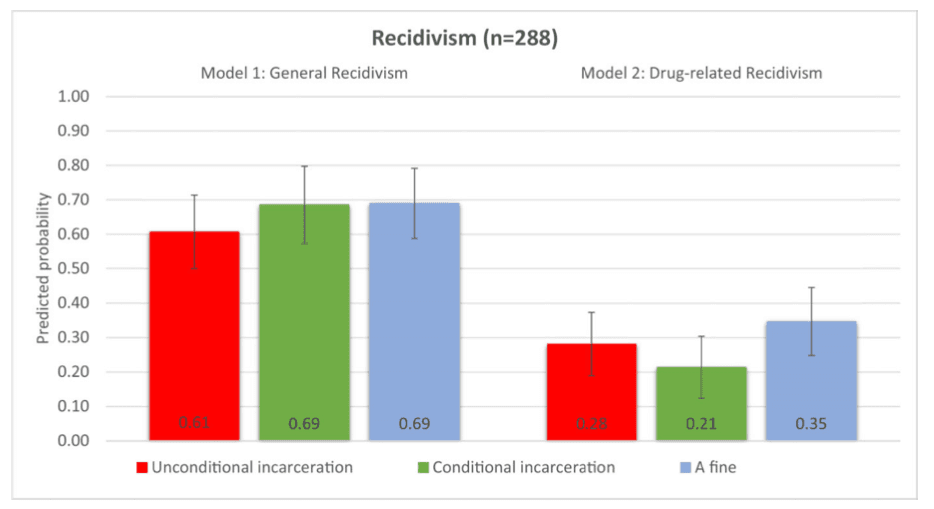
For assisting the interpretation of the logistic regression unstandardized coefficient point estimates, we report the predicted probabilities of outcome variables using 95% confidence intervals and fix the demographic covariates at their mean values in Fig. 1. The predicted probabilities separately for general recidivism (Model 1) and drug-related recidivism (Model 2). The probability of new conviction of any crime is 0.61 for offenders sanctioned to unconditional incarceration, 0.69 for offenders sanctioned with conditional incarceration, and 0.69 for offenders sanctioned to fine. The confidence intervals of the sanction groups are largely overlapping, meaning there are no differences between the sanctioning types. Regarding drug-related recidivism, the probabilities of new convictions are lower (0.28, 0.21, and 0.35, respectively) but, as in Model 1, we do not observe statistically significant differences between the sanction groups. Thus, the results indicate that when the offenders were matched by gender, age, and criminal history, the type of sanction received is not associated with desistance from crime.
Discussion
This study analyzed Finnish drug-related offenders and subsequent offenses, comparing recidivism rates across three categories of corrections: unconditional incarceration, conditional incarceration, and fines. Analyses revealed that formerly incarcerated offenders in Finland do not manifest significantly higher rates of recidivism than offenders receiving conditional incarceration or fines after taking into account gender, age, and number of prior convictions.
A growing body of literature in the United States report associations between incarceration and reoffending noting the criminogenic influence of prison, but often lack rigorous evidence on the impact of incarceration on reoffending (Nagin et al., 2009; Villettaz et al., 2015). Utilizing a sample of Finnish drug offenders, the association between sanction type and recidivism was not statistically significant when criminal history, age, and gender of the offenders were taken into account. Age is one of the most robust factors impacting criminal behavior (Farrington, 1986), as is one’s prior history of convictions. Yet, we expected that controlling for these factors would only attenuate the association between sanction type and subsequent offending, not result in statistically nonsignificant associations between the two.
The explanations for our somewhat surprising results may lie in the content of incarceration in Finland. Conditions in Finnish prisons are much different compared to the United States with vastly more programming available and an overall less degrading and stigmatizing experience. Findings from the United States which demonstrate that recidivism is higher among those who receive custodial sanctions (e.g., Cochran et al., 2014) could be due to overall poor prison conditions, a lack of programming availability, and lengthy sentences rather than the decision to give a custodial or noncustodial sanctions. In other words, custodial sanctions may be as effective of a deterrent as compared to community sanctions when the conditions of incarceration are applied more like those found in Finland. Therefore, deterrence may be impacted by the sanction conditions and whether it serves a reintegrative purpose (Braithwaite, 2003) and is applied with high levels of legitimacy (Sherman, 1993). Future research should investigate differences in how sanction types vary across the overall physical properties and conditions of the jail/prison environment and how these factors independently and interdependently impact recidivism rates.
Alternatively, recidivism was still prevalent in the Finnish sample regardless of sanction type. This further indicates the many challenges for reentry, addiction treatment, and criminal justice interventions even in a system which has embraced rehabilitative practices. Individual behaviors and criminogenic factors are difficult to overcome regardless of sanction type or criminal justice conditions, including those found in Nordic social welfare states. Further, one constant significant finding was the impact of criminal history. Although there are probably many ways to interpret this variable being significant, this finding may lend support to other theories which argue that crime is the result of individual traits (Gotfredson & Hirschi, 1990) which can diminish the impact of deterrence and may be especially prevalent among substance abusers (Abdel-Salam, 2013).
In this study, using matched samples allowed us to reduce the bias caused by the differences in gender, prior offense history, and age of the offender. However, matching can only reliably create balance on the matched covariates, whereas actual randomization is needed for reaching a balance between both the observed and unobserved covariates (e.g., Rubin & Thomas, 2000). Other factors which may have limited the effectiveness of our analysis include the size of the dataset. As with all studies of crime, the data includes only crimes that have been detected and persons arrested, numbers that are far lower than the actual criminal activity that occurs (especially in the case of drug use). Therefore, we acknowledge that many of the drug offenders have possibly committed offenses that have gone undetected. Yet there are important benefits from using administrative data in this study, as the dataset limits the number of non-responses and minimizes the rate of attrition from our sample (Aaltonen & Mikkonen, 2018; Lyngstad & Skardhamar, 2011). Finally, it is possible that these results could reflect differences regarding the type, or seriousness, of criminal history offenses, since the sanction type did not explain recidivism even when the number of prior offenses was taken into consideration within our data. Therefore, disparity exists, leaving room for additional exploration.
Additional research into the null results of this study might examine, in-depth, more nuanced data concerning incarceration versus non-incarceration options in Finland. For example, matching provides the ability to focus upon specific variables and covariates; other factors may play a significant role in Finland’s drug-related recidivism rates, including education, job training courses, and whether gaining and maintaining gainful employment/income plays a role in drug-related reoffending. Another factor which differs significantly from many countries is Finnish open prisons, which might play a role in leveling the field, so to speak, for those who are initially sentenced to be segregated from society.
It is worth noting that Finland’s population is homogeneous, both ethnically (93.4% of the population are Finns, while 5.6% of the population are Swedish speakers) and religiously (71% of Finns are Lutheran). However, the prevalence of foreign individuals incarcerated in Finland (16%) is significantly different from the percentages of those under community supervision; and 35% of those foreign prisoners originate from Russia or Estonia (RISE, 2014). With racial and ethnic disparities at the forefront of criminal justice reform, differences in drug offender sentencing (Freiburger, Marcum, & Pierce, 2010) may require further examination.
This initial examination of the association between incarceration and recidivism among Finnish offenders provides us with additional avenues for future research considering these research findings. With these results, further exploration of Finland’s unique practices within corrections can inform the criminal justice community about innovative practices that positively affect those who are sentenced to return to their community with greater opportunities to regain family, employment, and standing.
While research in the United States has found incarceration to associate with increased recidivism, we do not find evidence in this study to support Finnish incarceration as significantly increasing recidivism for drug offenders. Unlike the United States where the overall conditions within jails and prisons, lack of treatment services, and lack of significant reentry preparation may exacerbate criminogenic factors, this does not appear to be the case in Finland. In other words, poor conditions and lack of services may serve as additional barriers impeding successful reentry into the community, but the nature of incarceration in Finland does not create significantly deleterious effects in comparison to offenders receiving non-incarceration sentences such as probation.