Emotional Conflict and Trauma: The Recovery of Stolen Memory Using a Mixed-Methods Approach
Belén Castro-Fernández
Guadalupe Jiménez-Esquinas
Luís Alberto Marques Alves
Ramón López-Facal
SimpleOriginal

Summary

Study in Portomarín, Spain, explores how traumatic forced removal due to a dam in 1963 affects community identity, highlighting the role of heritage education and intergenerational dialogue.

2021

Emotional Conflict and Trauma: The Recovery of Stolen Memory Using a Mixed-Methods Approach

Keywords forced removal; Portomarín; Galicia; intergenerational dialogue; heritage education; community identity; traumatic history; local history

Abstract

This paper presents the results of a research project carried out in Portomarín, a small town in Galicia (Spain), which was flooded as a result of the construction of a dam in 1963. A new town was built a short distance away, but a strong sense of rootlessness remains among the inhabitants of the town. To what extent does the population of Portomarín recognise its memory regarding the forced removal as heritage? What means can be employed to incorporate the historical process of the forced removal into its identity? How can heritage education contribute towards the population overcoming these feelings of rootlessness? The inhabitants’ conceptions of their forced removal were identified, and an educational activity was implemented in the town’s school regarding the process of the removal. The hypothesis is confirmed that a community that does not foster intergenerational dialogue about its past (which in this case was traumatic) and does not develop its own strategy to assist in explaining and understanding its local history does not construct a shared identity.

Introduction

Communities have progressively acquired prominence in heritage management. The objectual view has changed along with the evaluation of exceptionality from expert criteria towards a progressive approach to the anthropological concept of culture with a holistic and processual approach and community participation (Cortés-Vázquez et al., 2017). In the most recent legislation relating to heritage, community participation has come to be seen as both a necessity and a duty. A community which does not participate in the transmission of its heritage loses interest, distances itself from it and may even destroy it. For its heritage to be accepted as its own, processes of social participation, education, and awareness-raising are necessary in order to contribute towards its resignification (Quintero, 2011). The heritagisation process includes “relationships of power, accumulation of capital (symbolic, economic, educational, etc.), relationships between the community itself and the emotional burden of these practices and assets” (Jiménez-Esquinas and Quintero-Morón, 2017, p. 1853).

In the words of Smith, “Heritage is a multilayered performance—be this a performance of visiting, managing, interpretation, or conservation—that embodies acts of remembrance and commemoration while negotiating and constructing a sense of place, belonging and understanding in the present” (Smith, 2006, p. 3). History education, oriented towards civic socialisation, incorporates the emotional dimension by way of informed memories in order to obtain a balanced understanding of the importance of the past in the present (Smith and Campbell, 2015). The commemorative places of a traumatic event can become heritage as spaces for the conciliation of conflict and the reconstruction of local memory, making use of the testimonies and significations of the main characters and custodians of that narrative (Hunt, 2010). Indeed, there is a whole line of research along these lines on heritage and conflict and on the management of traumatic memory and shameful, uncomfortable or negative heritage (Graham et al., 2000; Meskell, 2002; Prats, 2005).

Prats refers to uncomfortable heritage (Prats, 2004, p. 89) which exists but which nobody knows how to deal with due to the fact that it is incorrect and undesirable from the present-day point of view, even though it fulfils all of the requirements to be appreciated and activated (Prats, 2005, p. 26). Some authors propose that the heritagisation of these elements supposes a work of communal reflection which proves to be therapeutic as it makes it possible to deal with, manage, work with and publicly present our shadows, traumas, and misfortunes (Huyssen, 2003).

Place-based education is one of the strategies which makes use of the local ecological, cultural and historical context (Elfer, 2016). Its development has been greater in the field of environmental education, but its many-faceted potential for promoting processes of co-responsibility among students (Sobel, 2014) makes it suitable for history and heritage education. It fosters commitment to civic ideals, a participative attitude and a sense of belonging to and identity with a community (McInerney et al., 2011; Sánchez and Murga-Menoyo, 2019).

This study identifies the conceptions regarding local heritage held by the inhabitants of Portomarín, a rural community forcibly relocated, in 1963, to another site due to the construction of a dam. This uprooting took place during the Franco dictatorship (1939–1975), a context which must be taken into account in understanding the conflict and trauma brought about by the relocation. The degree to which heritage education can provide the inhabitants of the town with tools for the management of their recent history is analysed. Results are presented which reveal to what extent this event is present in the autobiographical memory and in the construction of identity of this community. Strategies are explored to enable the rediscovery and resignification of the two sites: the former location, which reappears during seasons of drought, and the new site. The research required the participation of elderly people who lived in the old site at the moment of the relocation (IOP: Inhabitants of Old Portomarín), adults who have only lived in the new site (INP: Inhabitants of the New Portomarín) and local primary school children (Sch).

The following objectives were formulated:

  1. To identify the perception of the inhabitants of Portomarín regarding the forced removal.

  2. To investigate what means the local population can employ in order to incorporate the historical process of the relocation into their identity.

  3. To characterise how heritage education can contribute towards overcoming the sense of rootlessness.

Justification

The town of Portomarín (Lugo, Galicia), of medieval origin and located on the route of the Way of Saint James (Camino de Santiago), disappeared under the River Miño in 1963, during the dictatorship of General Franco, as a result of the creation of the Belesar reservoir. A short distance away and at a higher altitude a new town was built, which differed greatly from the original. Some buildings of the old town were moved brick by brick to the new site. When the old town (OP) was flooded, some locals moved to the new site (NP) while others decided to leave the area.

The present study originates from two prior projects. The first made it possible to lay the groundwork to the case via a theoretical approach (Castro-Fernández and López-Facal, 2018). Portomarín has an ageing population and memories of the removal are scarce apart fr om the ruined constructions which appear from under the water in times of drought and the buildings which were transferred to and decontextualised in the new site. As time goes by, there are fewer and fewer witnesses to the removal. Without them, it will be difficult to reconstruct the town’s history in a comprehensive manner. Portomarín has enormous potential as a site of memory.

The second study was carried out with a group of trainee primary school teachers. It was observed that heritage education has a transforming power when traumatic experiences of the past are approached in situ via personal memories with the aim of promoting the construction of a democratic citizenship and preventing trauma from being forgotten (Castro-Fernández and López-Facal, 2019). Two subgroups were organised. One of them was experimental and moved to Portomarín. It was observed that this immersion into the local population, with whom its heritage was approached as a socially conflictive problem, modified perceptions of heritage education. The control group worked on the same contents in the classroom with no contact with the local population. The results confirmed that approaching a problematic context contributes to developing the capacities of empathy and critical argumentation of future teachers and modifies the way education is approached.

These two projects provided the premises for the new hypotheses: (1) In spite of the comfort acquired, emotional links were submerged under the River Miño and the inhabitants of old Portomarín (IOP) did not develop a feeling of belonging to the new town; (2) The inhabitants of the new town (INP) did not develop a sense attachment to the old town due to the fact that they were not provided with the necessary tools to feel it as their own, neither did they attribute value to their surroundings; (3) Intergenerational dialogue regarding what happened before, during and after the removal has been practically interrupted, probably in order to avoid opening up old wounds and reliving the emotional conflict which arose from the construction of the dam; (4) The INP did not truly redress the emotional damage, the denaturalisation of the relocated buildings and the spiritual profanation suffered by their predecessors; (5) The Way of Saint James monopolised plans for local development, leading to a significant rift between institutional heritage policies and (the absence of) community participation.

The moral debt with the experiences of the inhabitants’ forebears lives on and, from the perspective of history education, can contribute towards building a social counter-memory and dismantling a fictionalised identity. To this end, the subjects’ links with their heritage, territory and history were taken as a central axis. In order to build a comprehensible narrative regarding NP, it is essential to reconstruct its most recent history with the help of the local people, taking into account their experiences and testimony, their memories and loss thereof.

“A being deprived of culture is one who has never acquired the culture of their forefathers, or has forgotten or lost it” Todorov (2008, p. 35). The key lies in making an exemplary use of memory, making the most of the lessons of the past to take action in the present. It is not merely a question of gathering and ordering certain facts, but rather of selecting the most relevant ones, not so much as to find the truth but to find good. Memory contributes to the reconstruction of what happened in order to learn from it. It is a “social process of relationship, conservation, resignification and transmission of the past and, therefore, a rich source for extracting lessons for the defence of rights” (Maceira Ochoa, 2012, p. 10). This research takes into account the relationship between education and heritage, memory and identity, territory and emotion.

Method

Our hypothesis is that a community is not able to construct a shared identity if it does not foster intergenerational dialogue about its past and does not develop its own strategy for explaining its history. The focus of study are the subjects, via a mixed methodology, principally based on real-life testimonies. The principles of heritage communities and social participation of the Faro Convention (Council of Europe, 2005) are assumed.

Tools

Different data collection tools have been employed in order to make comparisons between the groups studied:

  1. Local community

    1. Old Portomarín (OP): questionnaires, group discussions (GD) and in-depth individual interviews (Ideep).

    2. New Portomarín (NP): questionnaires, group discussions (GD) and in-depth individual interviews (Ideep).

    3. Relocated people (Reloc): in-depth individual interviews (Ideep).

  2. School community: Three questionnaires, intergenerational workshop (IW) and school assembly (Sch-Ass).

  3. Experts (Exp): individual interviews.

The tools were validated according to their aspects of form, structure and content by six lecturers from the Universities of Murcia, the Basque Country, Huelva, Valladolid and Santiago de Compostela, experts in research methodology, heritage education, historical thinking and education, and the teaching of Francoist repression in Galicia. The validation process highlighted as strengths that the desired objective was clearly explicit; the extension was appropriate; the writing and selection of the items was appropriate (depending on the response, mainly nominal and ordinal data were handled); the content and form were user-friendly for the participant in the research; the course of action in the responses was easy and did not require the opinions of other people; the dimensions (categories) making up each tool were identified. The weak points taken into account for improvement consisted of including the code of each tool and the place of implementation; clarifying terminology; making it possible to choose one or several responses in some questions; seeking the reciprocal opinion among the groups interviewed; and avoiding value judgements in the formulation of the questions and topics so as to avoid bias in the research.

Characterisation of the sample

Via the questionnaires designed for the collection of data, a probabilistic sample, of a random nature and by cluster, has been taken (Bisquerra, 1989; Buendía et al., 1998). The remaining tools have employed an intentional sample (Deslauriers, 2004).

The groups classified for the organisation of the fieldwork were:

  1. The local community

    1. Old Portomarín (IOP): people who were living in the old town at the time of the removal. The distribution according to sex of the sample is balanced. Most of those surveyed were between 16 and 25 years of age at the time of the relocation. Their mean age in the present day is 75 years of age. The sample is reduced (34 cases), thus statistical support for the results is limited.

    2. New Portomarín (INP): adults who have only lived in the new site, which is their place of reference. Their connection with the old town is low and is channelled by their relationship with the previous group. The sample is more numerous (109 individuals). The distribution by sex is balanced with a slight majority of women. More than half are aged between 31 and 45 years of age with a lower number of individuals below the age of 30. Their mean age is 42 years of age.

    3. Relocated (Reloc): adults who lived in the old town and, following the forced removal, moved away from Portomarín. The sample consists of only three people due to the difficulty in tracking down these individuals and the lack of interest shown by members of this group in participating in the research.

  2. Schoolchildren (Sch): pupils from the three last years of primary education, aged between 10 and 13 years of age, who are in the same class in the only school in Portomarín. All of the work has been carried out with the same group. The sample size is small: 13 pupils (3 girls and 10 boys).

  3. Experts (Exp): their witness was employed to contrast the data collected. This group consists of two technicians, one belonging to the local council of Portomarín and the other to the management of cultural heritage in the regional government of Galicia.

Procedure

Phase 1: Data collection in the local community

143 individuals were surveyed (34 Old Portomarín and 109 New Portomarín). The difference in the number of cases is due to the difficulty in finding people who experienced the forced removal as a result of the time which has passed since then and, also, the reluctance of some people to respond to the survey. However, the numbers are sufficient to offer consistent and comparable results with the New Portomarín group. The data collection was carried out between October 2018 and February 2019. The registered population of the town in February 2019 was 1526 inhabitants.

The questionnaire filled in by the inhabitants of Old Portomarín contained questions relating to their feelings towards both towns and their memories of the process of the removal. For the residents of the present-day town, the questionnaire was similar to the former, but was oriented towards their role as receivers of the narrative. The fact that the two questionnaires shared a large number of questions made it possible to establish comparisons between both groups and to observe the mark which the discourse regarding the relocation has left in each group.

Two discussion groups were organised: inhabitants of the new town (3 men and 3 women) and residents of the old town (4 men and 5 women). The participants were of two types: those who were born in the new town and those who had been forced to abandon their homes and move to live in the new town. The number of participants was small in order to facilitate participation. The aim was to obtain qualitative information on perception, knowledge and memory with regard to the removal. A filtering of informants was carried out to interview them in depth. The themes covered were addressed in the form of open questions in order to make room for emerging issues which could be of use for the study.

Eleven semi-structured in-depth individual interviews (Ideep) were carried out with residents of New Portomarín (3), of the old town (5) and relocated individuals (3). The aim was to discover their experiences regarding the removal and to identify crossed histories.

Phase 2: Data collection with primary schoolchildren

Two questionnaires were distributed in order to detect what the children knew about the removal, who had received information from their families or from school and even who had no knowledge of the issue at all. The first questionnaire was given before carrying out an educational intervention and the second after it in order to evaluate if any change was brought about in their opinions or attitudes. The aim was to analyse the children’s perceptions and the capacity of the activity to modify their feelings towards Portomarín.

The intervention consisted of several activities. First of all, an intergenerational workshop (IW) was held with the participation of three residents of Old Portomarín. The workshop was carried out in two phases: (1) active listening based on oral testimonies, videos and images of the old town and the removal explained by the invited residents; (2) a group reflection on the emotional impact of the removal on routines, roots and traditions. After that, a mural of emotions was created with the identification of the experiences narrated in different heritage elements of the old town. An educational excursion around Portomarín was also organised, including the ruins of the old site, in order to identify these elements and to favour the construction of a civic identity based on the surroundings.

The following activity, concerning negotiation and consensus, consisted of a school assembly (Sch-Ass) to draw up a heritage itinerary around Portomarín based on the knowledge acquired and the emotions perceived. The schoolchildren filled in a questionnaire in order to discover their perceptions and sense of identification with their heritage. Via a guided debate among teachers and pupils, with arguments for and against the removal, the children’s awareness of their heritage was stimulated. To draw up the itinerary, photographs of the old and new towns of Portomarín were used with a QR code attached with the children’s explanation of the associated emotion.

The pupils were also asked to do a project at home in order to gather family material about the old town and the time of the removal.

Phase 3: Data collection with experts

Two semi-structured in-depth interviews were carried out in order to learn the experts’ opinions of two issues: (a) to what degree the memory of the relocation of Portomarín should be integrated into the management of the local heritage and (b) to assess the impact of the removal on the heritage dimension of Portomarín.

Data analysis

Quantitative

The attitudes and opinions of the different groups were analysed. The predominant perspectives of the removal were identified along with its impact at that time, how the narrative has been transmitted and what the heritage evaluation made of the town has been. Due to the different historical contexts of each group analysed, comparable but also specific data has been sought. A descriptive statistical analysis of the data has been carried out. Based on the numerical results, guidelines have been established and the discourse of the different informants has been systematised. The unstructured nature of the data obtained from the schoolchildren does not make it possible to establish very clear contrasts between their narrative and that of the rest of the groups. However, it does reveal certain fixed representations in the imagination of the younger generations.

Qualitative

Via the assumptions of Grounded Theory, we aimed to define the basic social processes related with the history of Portomarín and its relocation. The interviews and discussion groups held in the local community were based on semi-structured techniques with a tendency towards being open. Although this generated a greater dispersion of themes, it made it possible to relate the different dimensions in order to explain the whole. The analysis of the results has been aimed at highlighting the differences between the groups. The data reduction has been carried out via codes (labels) and thematic axes (groups of codes). The construction of the codes has been established in a combined (axial) manner (Strauss and Corbin, 2002). An initial reading of the analytical material and the prior knowledge of the theme of the study and of the aims, has oriented the construction of the codes in a deductive way. The organisation of the codes has guided the initial phases of data reduction and has provided a common analytical framework for the interviews and discussion groups. Other codes have been obtained inductively as a response to coding needs based on the different repetition patterns observed or by the identification of the importance of certain elements in the discourse. As far as the schoolchildren are concerned, an in vivo coding has been sought. In other words, the interventions themselves have been analysed as units of significance. This procedure does not follow a common structure and the elements of discourse belonging to other qualitative techniques were extremely atomised. The type of coding is considered appropriate in these cases in order to approach the data collected.

Results

Process and trauma

The central event of the recent history of Portomarín is the flooding of the old town due to the construction of a dam and the removal, brick by brick, of its main architectural elements to another site and, therefore, this is the most important element of this study. It is a transversal and many-faceted issue, which appears constantly in the participants’ representations.

Negative consequences attributed to the move

The main consequence was the loss of the activities particular to the town, especially those related with the subsistence economy. The move altered the town’s rural nature and its relationship with the surrounding area, in particular with the River Miño. This perception is shared among those who did not experience the move. There is, therefore, an initial consensus concerning the loss of the differentiating activity of Portomarín.

Also worthy of note is the loss of its patterns of sociability. Losing the town meant losing the scenario of co-existence. These types of significations are recurrent among those who experienced the move. The sense of community was severely altered and a process of rootlessness was set in motion: “with the change of town, many associations of friendship were unmade … there were people who stayed and tried to find a way of life here the best they could, but many people moved away” (Exp-2). The informants from New Portomarín (INP) are sensitive to this loss and include it in their discourse.

This breaking of bonds was exacerbated by people leaving the town. Among this group, references to depopulation are important, albeit in a more descriptive than painful tone. They are part of this exodus and restrict themselves to making reference to it, to narrating the experience. For them, the dimension of community was not directly affected.

In this issue, a greater consensus is evident: the pain of those affected by the experience of a traumatic experience is recognised. A notable coincidence in the evaluation of the loss of memories and roots is registered, as is that of homes, families and friends (Fig. 1). The schoolchildren also identify the loss in terms of family; there is an increase in the percentage who consider that the most significant loss was that of homes, followed by that of memories, particularly after the activities were carried out (Fig. 2).
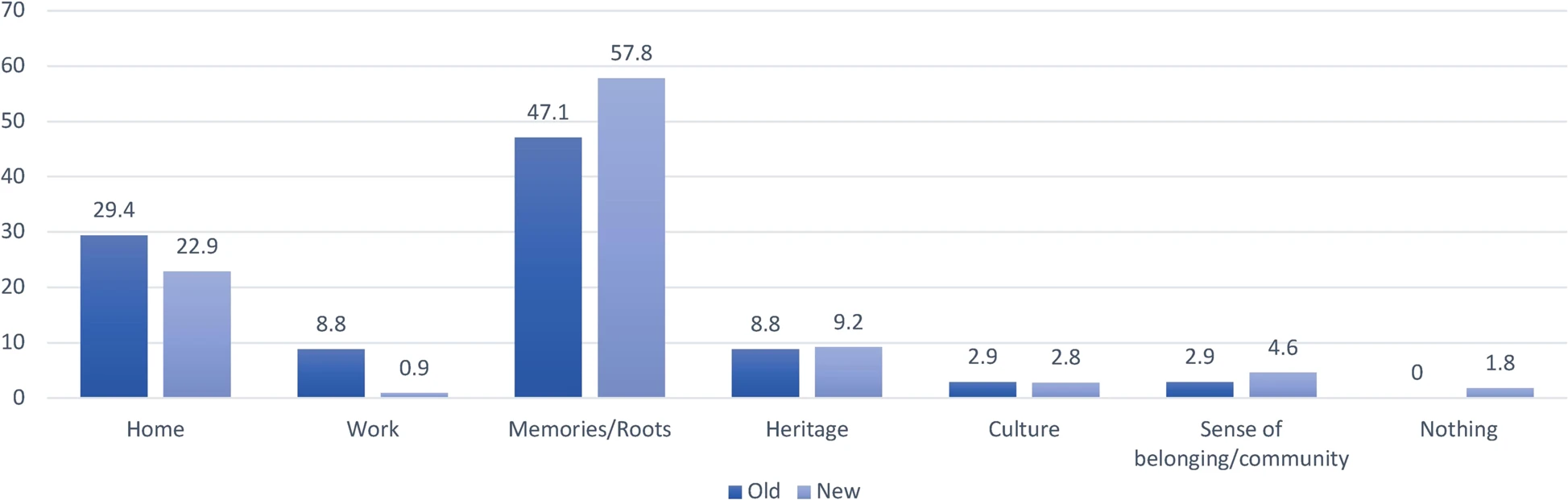
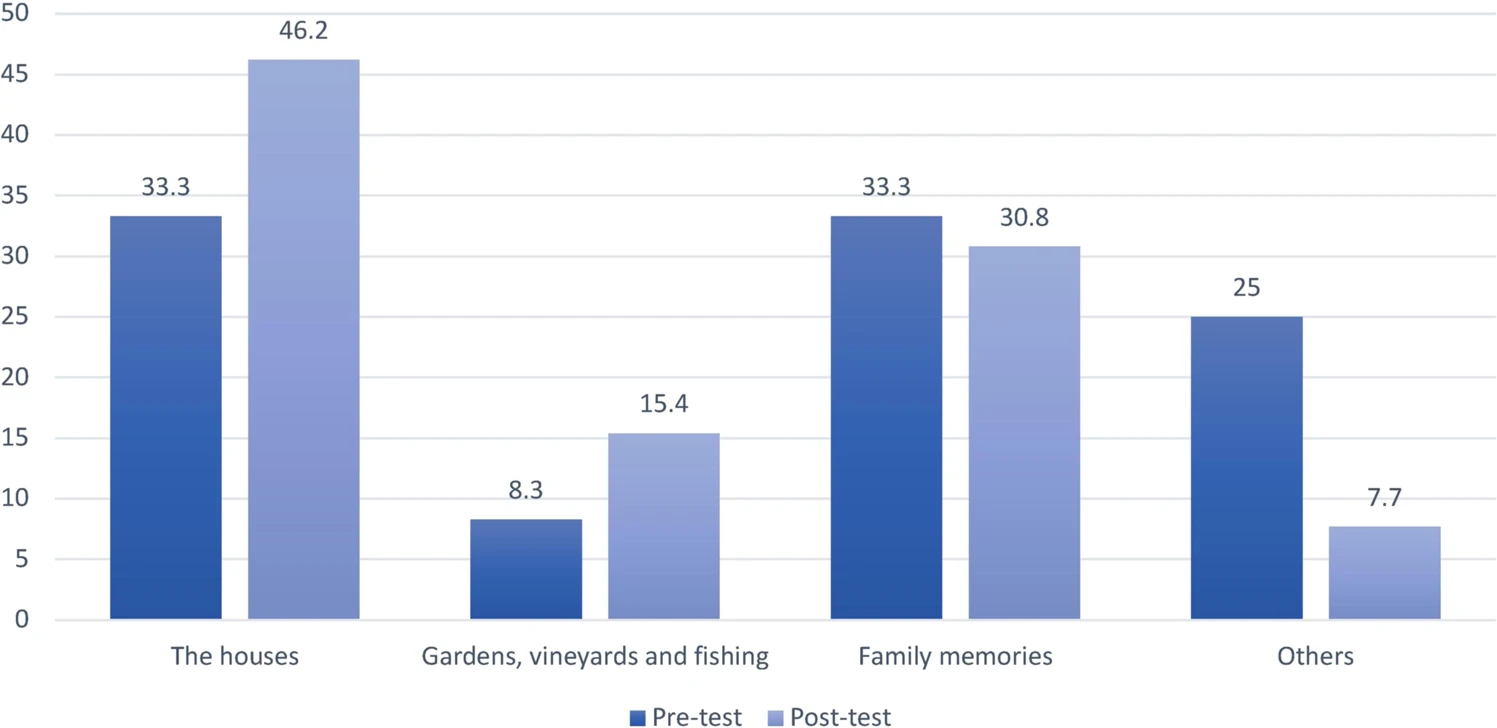
Fig. 1: Local community.Fig. 2: School community.

Differences with regard to the gains

The perception of the gains derived from the move is greater among the informants from the new town of Portomarín and the relocated people than among those who experienced the move. Among the latter, the benefit of some who were able to make money is relativised, but none of them accepted that the impact was to the common good. Even those who accepted that they had profited in some way pointed out that this did not make up for the pain: “We were very poor people, my parents had seven children … the money was welcome at the time because two of my brothers were married and had no job … but it did not compensate at all the suffering of my parents” (DG-IOP 1). The general tendency among the inhabitants of the old town interviewed was to make this type of reflection on the few occasions on which mention was made of the profits. They responded with heterogeneity in the questionnaire (Fig. 3).
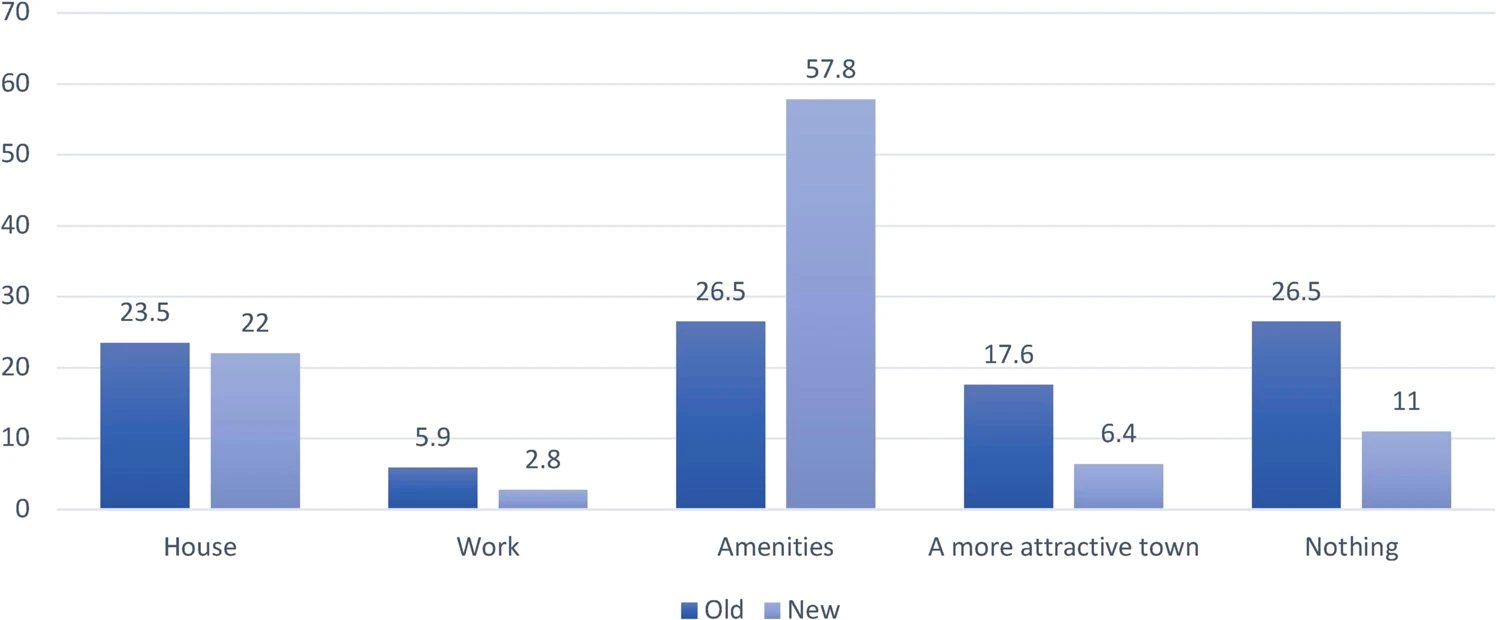
Fig. 3: Local community.

Both the relocated people and the INP highlighted that the disappearance of the town made it possible to occupy a new space with modern services and infrastructures and an attractive urban design, to leave the rural landscape and to enjoy new work opportunities and improve their living conditions (Fig. 3): “They didn’t lose anything because in the old town … it was basically just fields” (Ideep-Reloc 2). These opinions lack the emotion found in the group of residents of Old Portomarín.

The perception of the schoolchildren regarding benefits, coinciding with that of the inhabitants of New Portomarín, was different after the activities were carried out. Initially, they considered that the main benefit was a new type of work but, after learning new information, they stressed the improvement in the quality of life (Fig. 4).
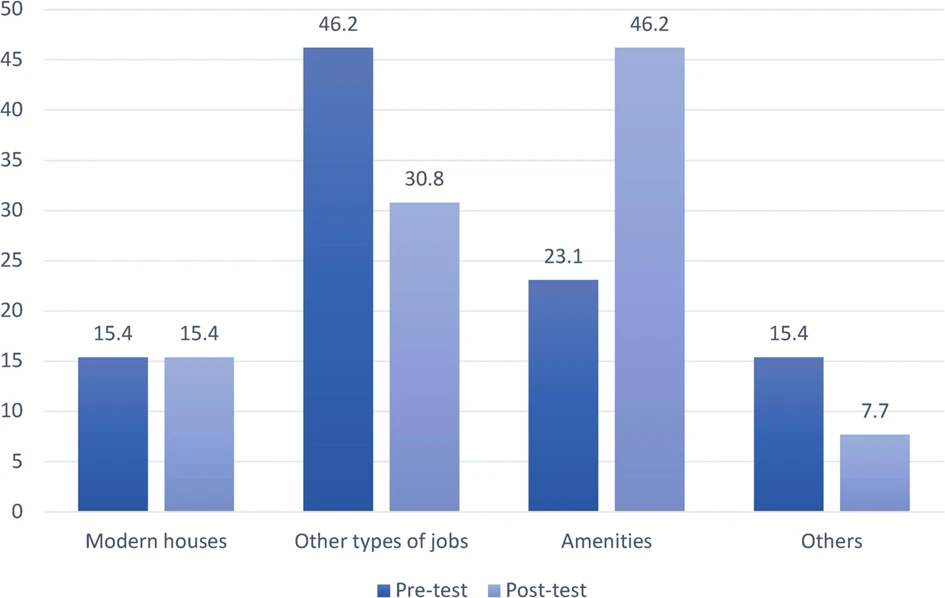
Fig. 4: School community.

Compensation and grievance

The inhabitants of the old town of Portomarín consider that the compensation they received was unfair. They consider themselves to be victims of the state administration and the company responsible for carrying out the construction work, the expropriation and the move. There is discrepancy among this group regarding whether those who lost most were those who owned most property in the old town. The perceptions of grievance, compensation and profit are relativised depending on their personal experience, but they agree on the fact that nobody had any choice, it was all imposed by the Francoist dictatorship with only defencelessness and neglect for those affected. The personal impact is evaluated negatively. The locals lament the loss of traditions. The inhabitants of the new town share this narrative, although they value more the improvements achieved in housing and jobs. They did not express value for the effect on relationships among the community (Fig. 5).
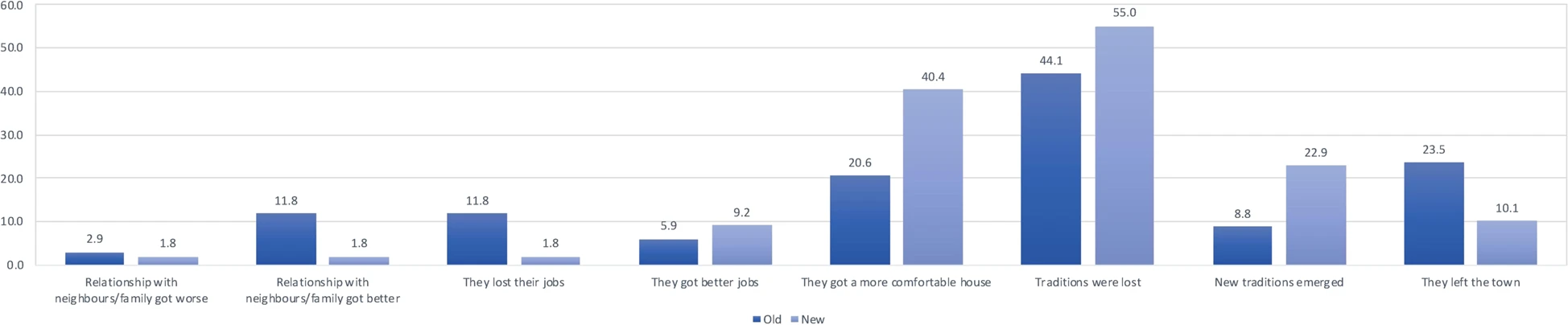
Fig. 5: Local community.

The narrative: complexity in the restitution of a singular history

The functionality of the narrative differs depending on the informant: re-composition of the memory of everyday life or knowledge of the truth in a context of defencelessness.

Attitudes against trauma

The attitude of the majority is silence. The general feeling is of pain followed by uncertainty, insecurity, anger and betrayal. The survivors of Old Portomarín hide these feelings. Some recognise that they do not wish to share their experiences. They justify their silence with the lack of interest of the current inhabitants. They consider that the young people value the move as an opportunity to live in a better town. Only a minority are of the opinion that some young people share a similar perception to them, such as a lack of roots (Fig. 6).
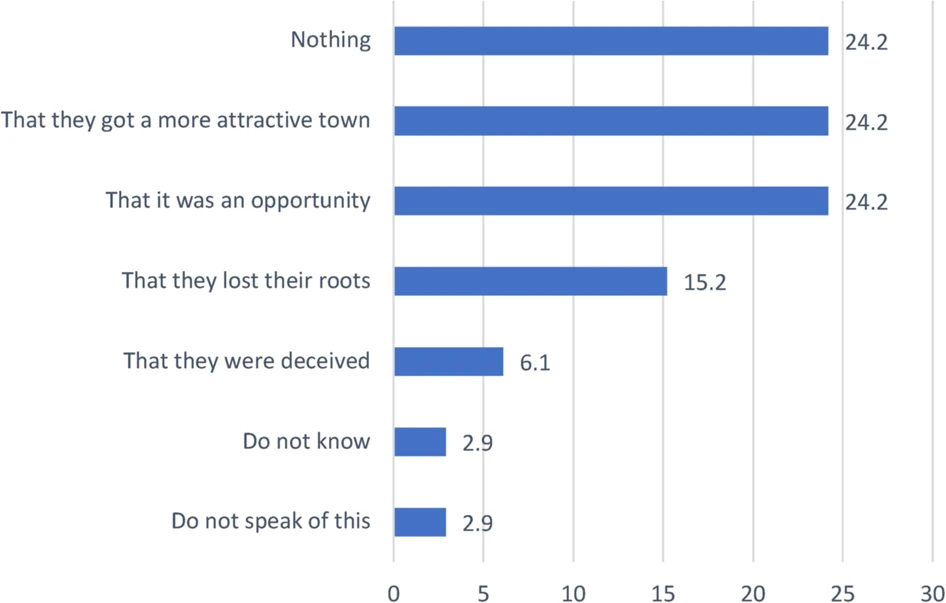
Fig. 6: Local community.

The inhabitants of New Portomarín interviewed questioned this covering up of feelings of the IOP. Even among the group of relocated people an attitude of silence and of hiding feelings prevails, thereby making it difficult to exchange information: “My brother would know, but they never told me, and I never asked anything” (Ideep-Reloc-1). However, the majority of the INP consider the experience of the move for the older people as a loss of their roots (Fig. 7).
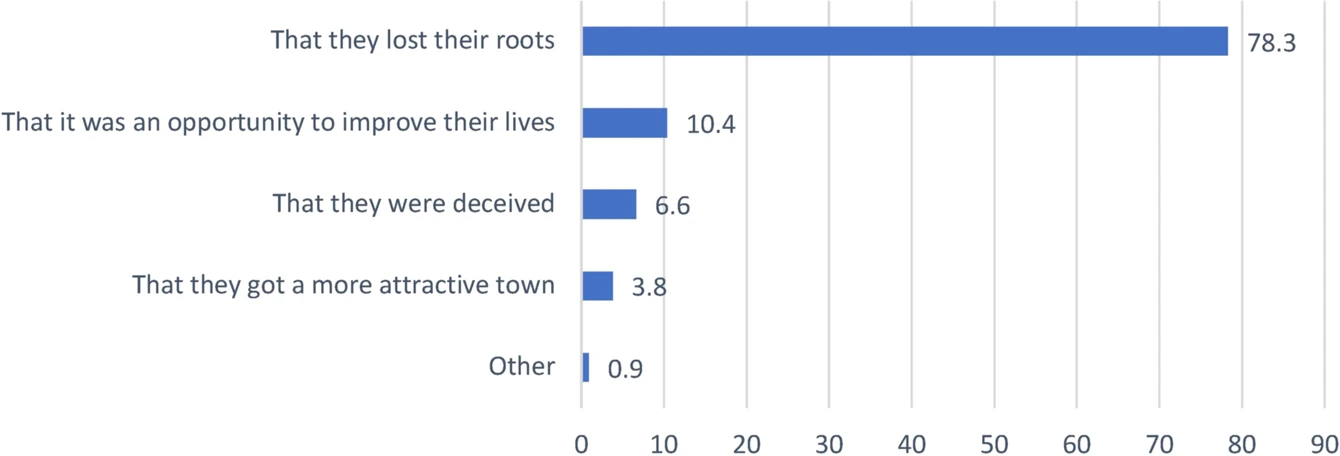
Fig. 7: Local community.

The memory is linked more to a process of otherness, of recognition of the pain of others than to a real process of information exchange. The experts expressed the need to promote this dialogue: “I think they have … a trauma … yes, it would be good for them to talk about it, even if it was only as therapy” (individual interview, Exp-1).

Usefulness and perspective with regard to the narrative

The inhabitants of the old town stress their experiences and hardly mention the move. They mention memories and ways of life which are difficult to forget. This attitude is coherent with the desire to ease the pain and focus attention on their space of relationship and the way of life which was lost. The most striking memories are related with the most traumatic aspects: the flooding, the forced removal, the pain of the people and, specifically, that of the elderly population at that time (Fig. 8). They also transmit certain urgency for preserving this history which will die with them. They consider themselves as guardians of this memory, and that time is of the essence because it ends with them. Recovering memories linked to the past involves gathering all that its main characters are willing to share: “an initial part would be to compile the personal memories which still remain … the only way of knowing this memory is by enabling people to tell it, and to record what they tell” (Exp-1).
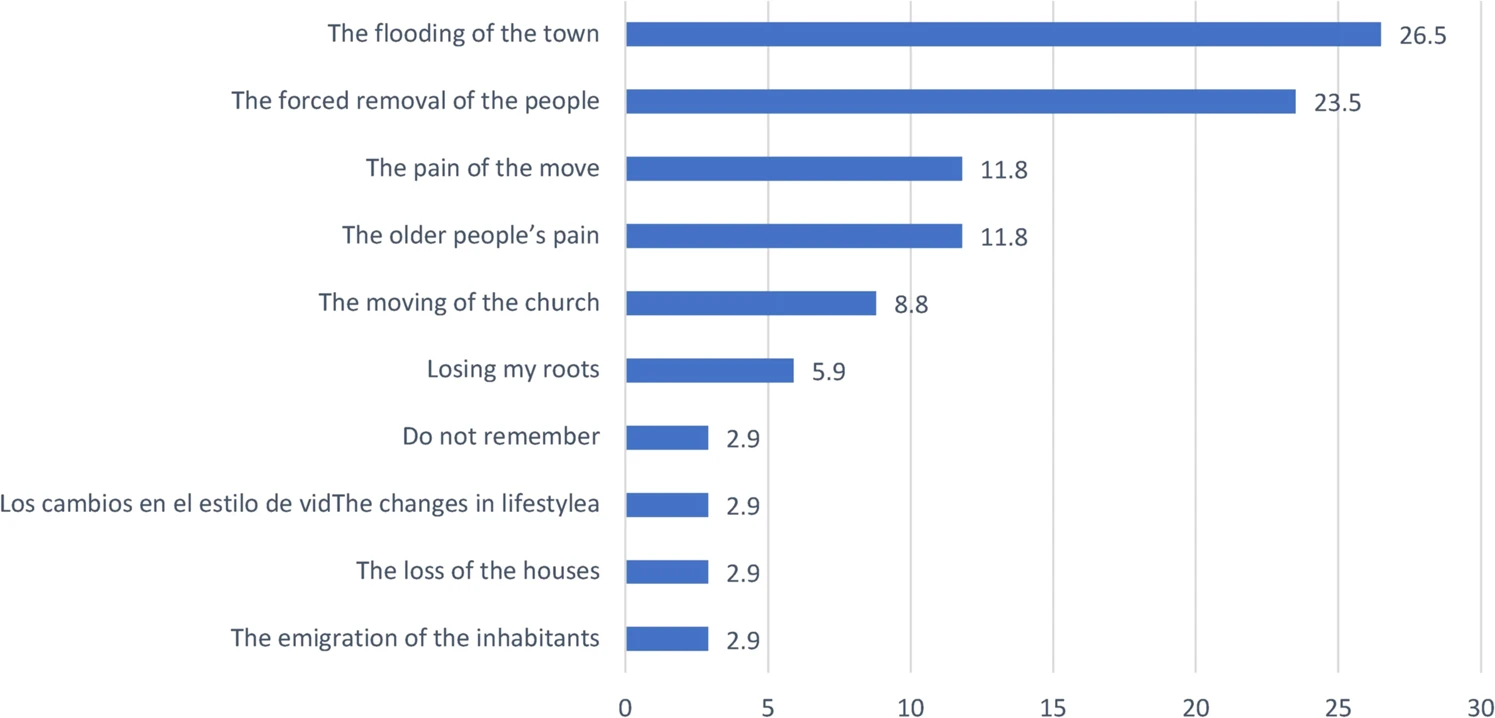
Fig. 8: Local community.

The inhabitants of the new town are interested in gathering information relating to the grievance and defencelessness of the original inhabitants in order to reconstruct a narrative to do justice. They consider that the trauma and the personal experience of the pain of the process of reconstructing the narrative should be separated: “How can the memory be preserved? … We cannot preserve the memory of the people who bore witness to the event and were left traumatised … It must be preserved … (it would be) via information, via knowledge … Those whose eyes weep every time they speak of it will not be alive forever … the important thing is that the story is known” (INP-1-DG). What is most shocking about the narrative received is that the people were forcibly removed, and the old buildings were taken apart and rebuilt (Fig. 9). Everybody learned about what happened within their family and a high percentage (75%) during their education. For those who never knew the old town, the most relevant tools are photographs and press cuttings (94%).
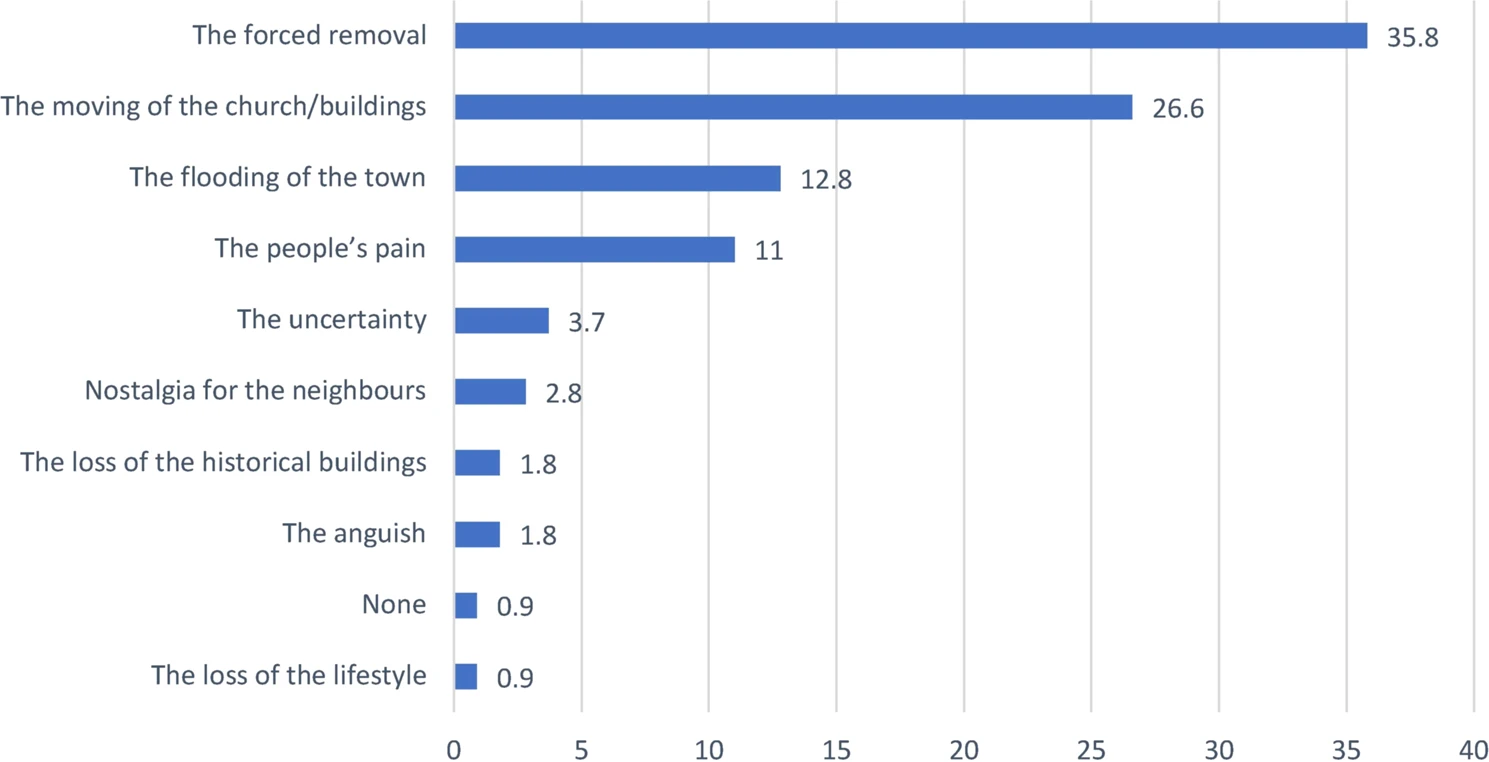
Fig. 9: Local community.

The schoolchildren take part in the same narrative, albeit in a fragmented manner. The majority mention that they know about the story via their families and from school. They highlight, above all, the traumatic aspects, particularly the forced removal: people were forced to leave their homes. However, they consider that their knowledge is scarce, that they know little or nothing of the most relevant aspects. The school activities managed to increase their curiosity about the history of Portomarín and, upon completing these activities, the majority were interested in knowing more (75%). When asked what aspects they would like to know more about, they mentioned the everyday life in the original town. The most valued activity of those carried out was the visit to the ruins of the old town (54%).

Divergent spaces with regard to the trauma and the narrative

The emotional detachment of the inhabitants of New Portomarín with the old town affects their identification with the spaces of the trauma: “the connections are gradually being lost … the emotional connection, I mean, it’s just one more story, a story which people tell: Listen, just so that you know, once there was such and such a thing here, and one day they came and took it and put it two hundred metres higher up, but … there is no emotional element behind it” (INP-Ideep-1). Nevertheless, these people form an active part of the narrative, albeit as receivers, as they have experienced the relationship with the process, the trauma and its consequences.

The relocated group, however, reveal even more divergent significations, even more detached from the old town of Portomarín. They seem to have also distanced themselves from the trauma and do not seek the restitution of the narrative because it has become something alien to them. Not having formed part of the community which settled in the new town seems to have distanced them from the emotional experience. The places and spaces with which they have generated roots are those to which they moved after moving away from Portomarín. They mention no direct effects of the trauma, the uprooting or the pain. Certain experiences of childhood or youth are mentioned with some nostalgia, albeit without the emotion expressed by their former neighbours.

The activities carried out with the schoolchildren contribute towards moderating the idealisation of life in the old town of Portomarín. The opinion of the children who would have liked to have lived in the old town fell from 92 to 69% after discovering the realism of the experiences in the intergenerational workshop.

New Portomarín as a place in dispute

The majority of the inhabitants of new Portomarín perceive the ruins of the old town as a permanent reminder of the trauma: “We would have preferred never to have seen the ruins of Portomarín … they bring back to me a thousand memories of my parents, of my grandparents, who suffered so much because of the reservoir” (ONP-Ideep1). The inhabitants of the new town share this pain, but what they truly feel is curiosity (Fig. 10).
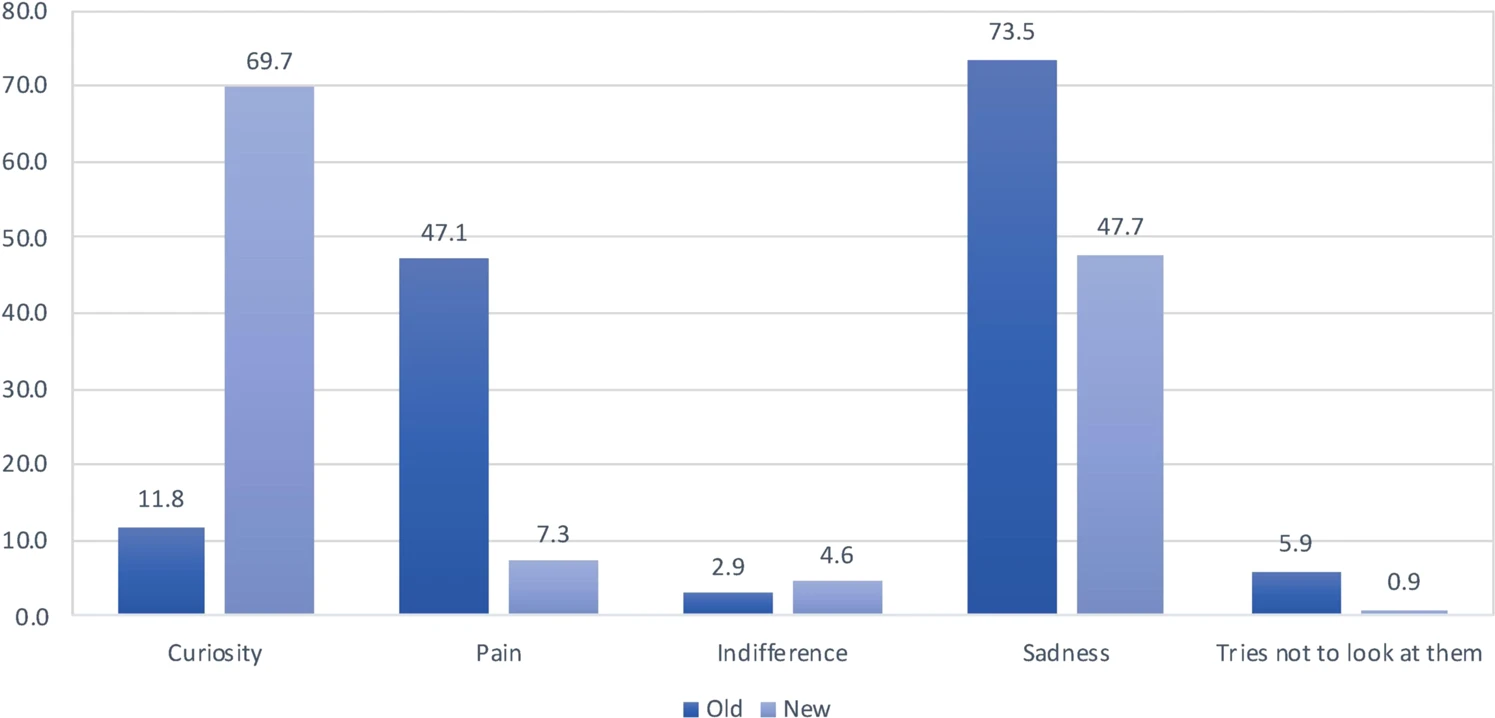
Fig. 10: Local community.

The ruins are an element with enormous potential for restoring the history and preserving the narrative of everyday life. One of the experts consulted stated: “An attempt should be made to preserve the physical medium …, the streets, what is interpretable and legible in Portomarín. It is a complicated problem for preservation, as it is an element which is flooded for part of the year, which can only be seen at certain times … but to preserve it is complicated … We can record it, it can be drawn, it can be digitalised and interpreted and, on that basis, and with the support of memory, it could even be possible to have a virtual Portomarín in the new Portomarín, or wherever, so as to always have the reference. It is not necessary to be physically there or to touch the stones, but it is good that they are there, or that we know they are there” (Exp1).

The ruins can be converted into a tourist attraction. The majority of the INP consider them to be a place of high environmental and heritage value. They value positively the idea of converting the ruins into a space for exchange which can contribute an added value to the local people. Contrary to the case of the IOP, it is a place frequently visited by this group for walks.

The visit made by the schoolchildren to the ruins seems to have satisfied the curiosity which they initially expressed (from 92.3% to 75%) and gave rise to a feeling of sadness in the majority (from 53.8% to 75%).

Relationships with New Portomarín

The inhabitants of the old town avoid expressing their opinions about the new town, even though the interviews led to this point. In the discussion group, little attention was paid to this aspect and the new town was compared negatively with the old one. 73.5% did not express preference for the new site. This opinion worsens the sense of rootlessness. The discourse of the inhabitants of New Portomarín is practically the opposite; the new town is their place of reference, of relationship, and their home. 59.3% valued it positively.

The local community as a whole expressed a broad consensus regarding the buildings moved to the new site, considering them as fundamental for the identity of present-day Portomarín: “What would be of the new town if they hadn’t moved the churches? Five things were moved here, they could have moved many more because there were some very beautiful mansions. I believe that it would not be Portomarín today if they hadn’t moved the church … it would be a new town with nothing … without history. These buildings are art and a part of our history” (IOP-GD-4). For the inhabitants of the old site, the distinctive nature of the new town is dependent on the buildings that were moved. The inhabitants of the new town are in agreement with this aspect and make reference to the restorative sense of these buildings due to their architectonic and heritage value. The symbolic consideration of the architectural elements moved may explain why the local people feel identified with the new site (55.9% IOP and 86% INP).

The schoolchildren also point to the church as the element which they would like children from other places to know (34.8%). What they most value is the old town, although they do not specify whether they are referring to the buildings that were moved or to the ruins which are preserved in situ.

One of the experts also recognised the determining role of the buildings which were moved in the construction of a shared identity: “A new urban space was built which had nothing to do with the previous one, but it has enabled the citizens of Portomarín, at least that’s my impression from afar, to be able to transform it into heritage, to understand it as their town, their living space, their place of reference” (Exp1). More than a few inhabitants of the new town have a sense of attachment due to the singular history of the town. They highlight the fact that links have been strengthened due to the narrative of suffering and to the history of the move.

Both groups agree in considering that that the most important thing in New Portomarín is tourism and the pilgrimage associated to the Way of Saint James. They also agree on valuing their immaterial heritage, although the inhabitants of Old Portomarín lend more significance to the historical buildings whereas those of the new town value more the cultural practices and the history of the former site. The IOP particularly value the old style of life associated with activities such as fishing and agriculture and attribute less importance to the improvements in the connections of the present-day town.

The schoolchildren changed their perception of the old town of Portomarín following the educational intervention. Aspects relating to the homelife of their predecessors lost significance and the heritage of the buildings gained in importance. This change may be due to the emphasis placed on these elements during the classroom activities (Fig. 11). They consider that the churches are the most important elements in the new town, although the responses were more heterogeneous in the post-test, most probably because they had acquired new knowledge (Fig. 12).
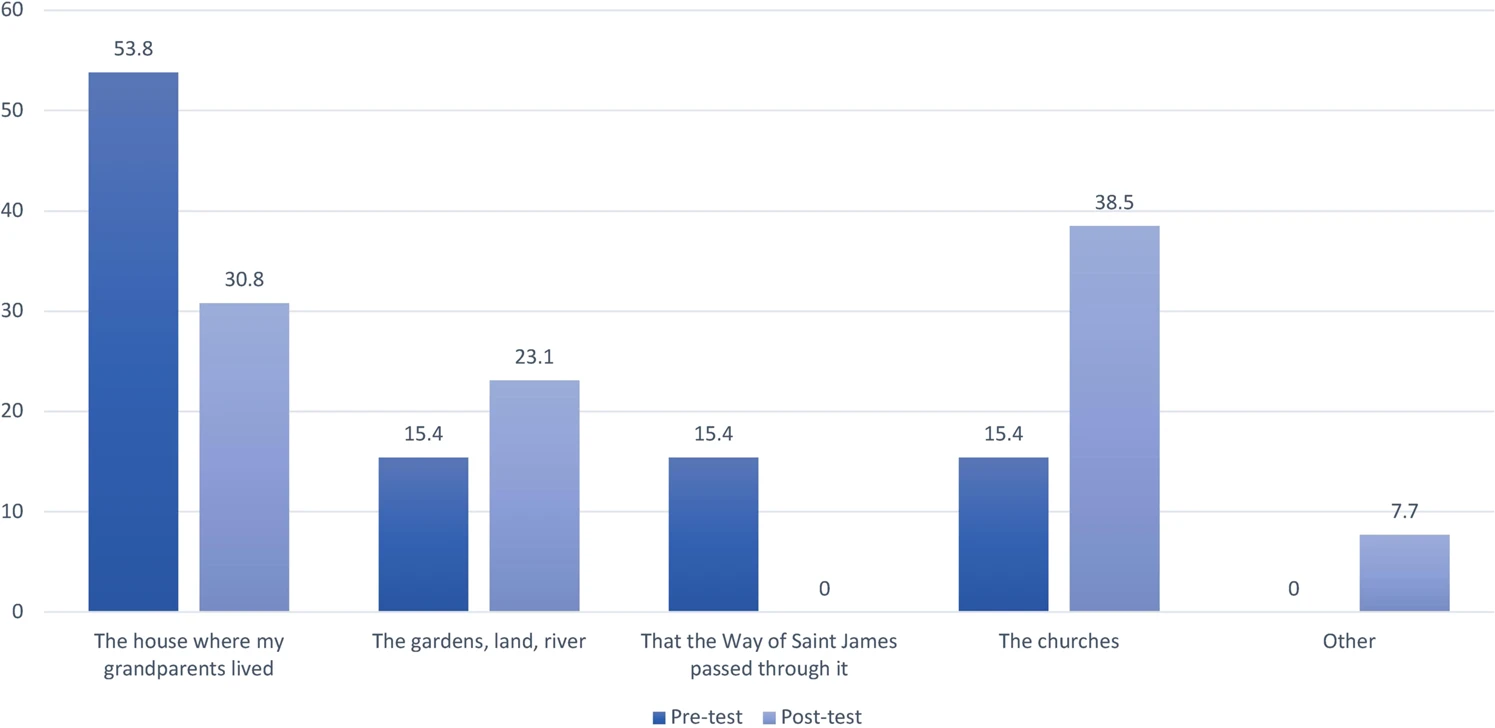
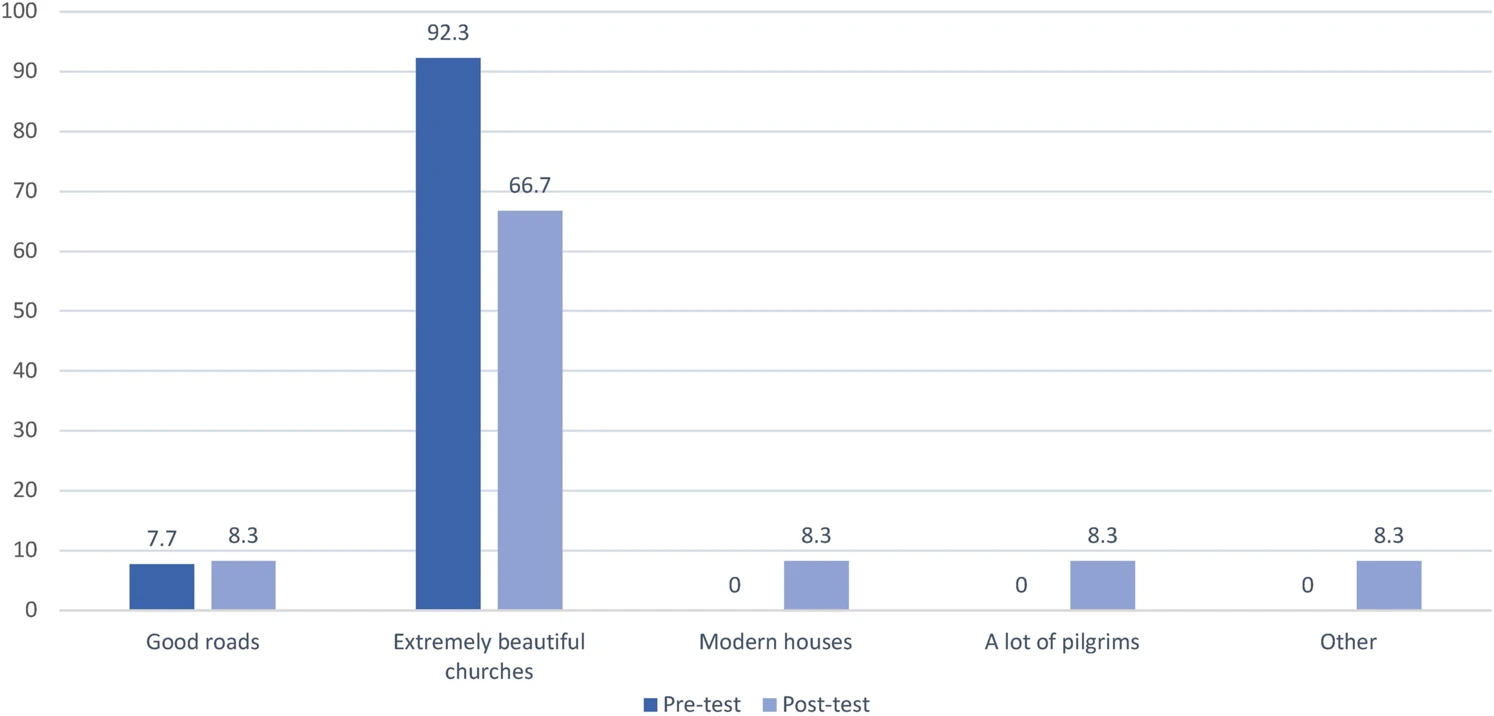
Fig. 11: School community.Fig. 12: School community.

Redefining the space: The Way of Saint James as the key element

The new town of Portomarín is still associated to the losing of their roots for those who experienced the move while for the inhabitants of the new town it represents modernity and progress. However, there is a consensus in that the Way of Saint James is currently the most important activity: “We owe everything to the Way. That’s why the word Portomarín is synonymous with the Way because without it the heritage we are speaking of would not have existed in Portomarín” (Exp2). The relationship of dependence on this economic factor is also highlighted: “At least the pilgrims come, because, if they didn’t, I don’t know what we would live on in Portomarín!” (INP-GD-1). Nonetheless, two problems were highlighted. First of all, the excessive dependence on the Way does not allow for other types of activities to grow: “The Way of Saint James is a blessing for us, of course, but, in another sense, it is also a kind of curse … It does not allow us the possibility of having things that we deserve” (INP-Ideep-2). Secondly, the mass tourism it generates is described as an obstacle which affects the local people (high prices, businesses oriented only towards pilgrims): “The Way of Saint James is going to do more to put an end to the town than the move” (INP-Ideep-1).

Difficulties in establishing the nexus in New Portomarín

Pessimism and worrying about the future may impede advancement in the recovery of the narrative as an integrating history of the town leading to the construction of a collective identity. The perception of having been abandoned by the institutions of government is related with endemic problems in the rural community, such as the exodus of the population and the absence of job opportunities: “As a consequence of having an important resource such as the Way of Saint James, we are ignored in many other aspects … They say “They have enough with the Way” … And that is basically the burden we are left with now. Many services we had, which were cutting-edge in their time, 56 years ago, are totally obsolete today” (INP-Ideep-1).

Nobody’s testimony has spontaneously made reference to the creation of a museum or an interpretation centre to contribute to the (re)construction of the unique narrative of Portomarín. The references are more related with direct interpellation, but there seems to be a consensus in considering such an element as positive and useful as a nexus of social cohesion. Mentions of a space of this type as a mere means for exhibition to visitors are scarce and are interwoven with the symbolic elements: “I think it could have the effect of facilitating the recovery of this memory … it doesn’t matter how many initiatives are begun by the government or by experts … if there is no interpretation centre which empowers them and which puts them at the level of cultural value of what, for them, is their personal memory, then they will probably be very reluctant” (Exp-1).

Discussion

Objective 1: To identify the perception of the forced removal

The population of Portomarín builds the narrative of the removal by focusing on their pain and loss. The trauma is understandable taking into account the seriousness of a situation which completely altered their context and their relationships of proximity. None of the participants are insensitive to this perception regardless of the differences with respect to the importance of what was lost.

In their minds, it is not so relevant who won or who lost, and the compensation received, but rather that there is a general sense of grievance and defencelessness: a flooded town whose inhabitants cannot recover what belongs to them. This type of testimony is homogenous.

The experience and the transmission of the trauma strengthen the link with Portomarín. The generations closest to the move, the children of the town’s inhabitants at the time, consider themselves the nexus with this history.

Objective 2: Investigating the means which can be employed by the population in order to incorporate the process of the move into their identity

The recovery of the town’s memory makes it possible to build a better-informed history “in which hidden issues or relegated problems appear to be forgotten” (Fernández, 2009, p. 21). The difficulty derives from the trauma caused by the move. Silence has been imposed, along with the concealment of painful experiences which impede the restitution of a shared memory. To this, another problem is added: the discrepancies between generations regarding the transmission of the history and the relationship with present-day Portomarín. The narrative of spoliation is still alive in the imagination of the town’s inhabitants, but it is threatened by conscious forgetfulness, by the passing of time, by the loss of individual memories and by the lack of consensus regarding what should be remembered.

Faced with these difficulties, Portomarín is a social scenario characterised by a close family relationship among its inhabitants. Therefore, there is a foundation for the establishment of intergenerational dialogue and the shared reconstruction of the narrative. There is, furthermore, a desire to have a space or medium which enables the promotion of the sharing of local memory.

Incorporating the forced removal into the collective identity consists of rebuilding an integral narrative in which all participate and in which everybody feels they are represented; in other words, recovering the narrative of the recent history of Portomarín, being able to re-establish certain elements of identity and of intergenerational connection.

Objective 3: To characterise how heritage education can contribute towards overcoming the sense of rootlessness deriving from the forced removal

There is enormous potential for establishing a narrative in Portomarín which, as well as being restorative on a sentimental level, can contribute towards forming links of identity. This history can be reflected in an educational intervention, based on the territory and the needs of its community.

In this study, an educational activity has been designed and put into action which incorporates the emotional dimension as the catalyst for developing learning processes associated with elements of memory. Two elements were selected. Firstly, the physical remains of the removal manifested in the ruins of the old town of Portomarín. The ruins and their surroundings are an element of the heritage of the present-day town, a significant component of its history, a connection between the old and the new and an educational site, albeit embroiled in an emotional dispute. Secondly, the buildings moved brick by brick, the churches and the arch of the medieval bridge, which are heritage symbols expressing “in a synthetic and emotionally effective way a relationship between ideas and values” (Prats, 2004, p. 29). These elements, although they provoke different feelings, are assumed as points of reference of the collective identity.

The educational intervention has reinforced the idea that the move forms part of the narrative in the children’s imagination, albeit with no special emotional relevance. An event which was so shocking and transformative for several generations of the local community, arouses in the schoolchildren the same level of emotion as other elements. This fact seems to indicate that the narrative is not being transmitted as a connective element of community identity. The results of the activities carried out indicate that education can contribute towards redirecting this dialogue and generating processes of shared heritagisation. However, the time dedicated to the intervention was insufficient and a broader educational project would have been required with more involvement from the children’s families for the creation of a true learning community. In fact, the children were asked to do a small project at home which consisted of compiling family memories relating to the history of Portomarín, but the desired results were not achieved and only 2 out of the 13 participants completed the task. This is probably due to the fact that there is no consolidated work dynamic between the school and the families.

In the non-formal context, it is equally important to establish processes which promote the activation of heritage based on its environment, such as the emotional and territorial intelligence of the general public (Cuenca-López and Estepa-Giménez, 2017). The Way of Saint James is the main economic engine of the town, but it blocks the reconstruction of identity from an endogenous perspective in a context of depopulation and the absence of job opportunities. The area is progressively losing its distinctive activities and growing increasingly dependent on tourism and the commercialisation of culture, as occurs in other places which make their living from the Way (Jiménez-Esquinas and Sánchez-Carretero, 2018). The success of the Way has been accompanied by a certain degree of institutional abandonment and value is taken away from what is truly exceptional about Portomarín: its people and their memories.

The pilgrimage to Santiago de Compostela dominates the plans for local development, generating a significant rift between heritage policies and community participation. A similar situation has occurred along other stretches of the Way, where the participation of the local population in the taking of decisions and the organisation of initiatives relating to heritage has not been incentivised, and the association of heritage with its touristic use has prevailed in public policy-making (Sánchez-Carretero, 2012). Along general lines, the enhancement of cultural heritage has occurred in “an environment of economic investment and political debate around what should be preserved, represented, remembered, documented or eliminated” (Alonso, 2013, p. 489). It is necessary to defend the preservation of heritage in the context of its relationship with the people and the land. The heritage of Portomarín is its key economic foundation. However, the participation of the town’s citizens should be encouraged in terms of its management and use.

The idea of opening up a space such as an interpretation centre is an attractive option as a tool for the reconstruction of memory. One of the experts consulted suggested the possibility of a virtual Portomarín, by way of its digitalisation, which, with the support of recovered oral memory, can contribute towards restoring the local history, even though the ruins of the town are submerged for the majority of the year.

Conclusion

In this study, the heritage conceptions of the inhabitants of a town forcibly moved due to the construction of a dam have been identified. The hypothesis has been confirmed that a community which does not foster intergenerational dialogue about its past (in this case a traumatic past) and does not develop its own strategy to contribute towards explaining and understanding local history is not able to build a shared identity.

The trauma lives on in those people who experienced the forced removal and who bear it in silence and suppress their emotions. The receivers of this fragmented narrative demand a greater exchange of information in order to allow themselves to reconstruct this traumatic history and have a desire to clarify the situation of grievance and defencelessness in a repressive context. The discourse regarding the move and the sense of identification with the old and new towns is different between the two groups. The consensus seems to lie in considering the buildings moved brick by brick from the old town as elements of reconciliation, of restoration from the trauma and as fundamental in the reconstruction of a common identity. This position is even clearer among the inhabitants of the new Portomarín than among those of the old town. The latent lack of intergenerational dialogue does not favour the shared reconstruction of the emotional memory in a critical and informed manner.

The importance attributed to the moved buildings as remains of the past and symbols of the present-day town has also been identified in the imagination of the school community. However, the absence of emotional attachment to the move makes it difficult to transmit the local history. The activities carried out with the children have managed to bring to the fore emotions attached to the local heritage and to increase interest in the everyday memories of the old town. However, these activities have proved to be insufficient. It is desirable that the community itself establish an internal strategy of a prospective nature in order to assess which heritage elements should be included in its collective identity and with which meanings. The excessive presence of tourism linked with the Way of Saint James, the main economic resource of Portomarín, and rural depopulation threaten to destroy the attempts to create a heritage identity from an endogenous perspective.

Bearing in mind that “participating is sharing … communicating and relating” (Alguacil, 2005, p. 5), education can trigger participatory processes, as a right and human’s needs, which foster the construction of a critical and committed citizenship which is conscious of its heritage values, capable of signifying its space and preserving the memory of its community. These participatory processes, which on occasions lack of enough procedures and goodwill (Sánchez-Carretero and Jiménez-Esquinas, 2016), must foster the awareness of heritage, applying the sequence of knowing, understanding, respecting and valuing (Fontal, 2003). They must also promote the activation of the subjects with capacity for reflection and decision as they are heritage agents and not merely passive bearers and transmitters of culture who are lacking in will (Kirshenblatt-Gimblett, 2004).

Open Article as PDF

Abstract

This paper presents the results of a research project carried out in Portomarín, a small town in Galicia (Spain), which was flooded as a result of the construction of a dam in 1963. A new town was built a short distance away, but a strong sense of rootlessness remains among the inhabitants of the town. To what extent does the population of Portomarín recognise its memory regarding the forced removal as heritage? What means can be employed to incorporate the historical process of the forced removal into its identity? How can heritage education contribute towards the population overcoming these feelings of rootlessness? The inhabitants’ conceptions of their forced removal were identified, and an educational activity was implemented in the town’s school regarding the process of the removal. The hypothesis is confirmed that a community that does not foster intergenerational dialogue about its past (which in this case was traumatic) and does not develop its own strategy to assist in explaining and understanding its local history does not construct a shared identity.

Introduction

Local communities have become increasingly important in managing heritage. The way heritage is viewed has changed from focusing on objects and expert opinions to a broader understanding of culture that includes community involvement and how culture evolves over time. Recent laws about heritage now require and expect communities to take part. When a community does not help share its heritage, it loses interest, distances itself, and may even destroy it. For heritage to be truly accepted by a community, processes of social participation, education, and awareness are needed to give it new meaning. The process of making something into heritage involves power dynamics, the gathering of different kinds of value (like symbolic, economic, or educational), relationships within the community, and the emotional impact of these practices and assets.

Heritage is like a performance with many layers, whether it involves visiting, managing, interpreting, or preserving sites. It represents acts of remembering and honoring the past, while also shaping a sense of place, belonging, and understanding in the present. History education, which aims to prepare people for civic life, includes emotions through informed memories. This helps people understand how important the past is to the present. Places that commemorate a difficult event can become heritage sites. These spaces can help resolve conflicts and rebuild local memory by using the stories and meanings provided by those who experienced the events and those who preserve the narrative. There is extensive research on heritage and conflict, as well as on managing traumatic memories and "shameful," "uncomfortable," or "negative" heritage.

Sometimes, heritage is considered "uncomfortable" because it exists but people do not know how to handle it. This is often because it is seen as incorrect or undesirable from today's perspective, even though it meets all the requirements to be valued and activated. Some experts suggest that turning these elements into heritage requires communal reflection. This process can be therapeutic, helping people address, manage, work through, and publicly present difficult pasts, traumas, and misfortunes.

Place-based education is a strategy that uses the local natural, cultural, and historical environment for learning. While it has been more developed in environmental education, its potential to promote shared responsibility among students makes it suitable for history and heritage education. It encourages commitment to civic ideals, active participation, and a sense of belonging and identity within a community.

This study examines what residents of Portomarín think about their local heritage. Portomarín is a rural community that was forcibly moved in 1963 because a dam was built. This relocation happened during the Franco dictatorship (1939–1975), a historical context essential for understanding the conflict and trauma caused by the move. The study analyzes how heritage education can help residents manage their recent history. It presents findings that show how this event is present in the personal memories and identity of the community. Strategies are explored to help rediscover and give new meaning to both sites: the old location, which reappears during dry seasons, and the new site. The research involved older people who lived in the old site during the relocation (IOP), adults who have only lived in the new site (INP), and local primary school children (Sch).

The study aimed to achieve the following:

  1. Identify how Portomarín residents perceive the forced relocation.

  2. Investigate how the local population can incorporate the historical process of the relocation into their identity.

  3. Describe how heritage education can help overcome feelings of rootlessness.

Justification

The town of Portomarín (Lugo, Galicia), originally from the medieval period and located on the Way of Saint James (Camino de Santiago), was submerged under the Miño River in 1963. This occurred during General Franco's dictatorship, as a result of the construction of the Belesar reservoir. A short distance away and at a higher elevation, a new town was built, which was very different from the original. Some buildings from the old town were moved brick by brick to the new site. When the old town (OP) was flooded, some locals moved to the new site (NP), while others decided to leave the area entirely.

The current study builds on two previous projects. The first project provided a theoretical foundation for the case. Portomarín has an aging population, and memories of the relocation are fading, apart from the ruined structures that emerge from the water during droughts and the buildings transferred to the new site but taken out of their original context. As time passes, fewer witnesses to the relocation remain. Without their testimonies, it will be difficult to fully reconstruct the town's history. Portomarín has significant potential as a site of memory.

The second study involved a group of trainee primary school teachers. It showed that heritage education can be transformative when past traumatic experiences are explored on-site through personal memories. This approach aims to promote democratic citizenship and prevent trauma from being forgotten. Two subgroups were formed. One was an experimental group that visited Portomarín. This immersion with the local population, discussing their heritage as a socially challenging issue, changed their perceptions of heritage education. The control group studied the same topics in the classroom without local interaction. The results confirmed that engaging with a problematic context helps future teachers develop empathy and critical thinking, and modifies their approach to education.

These two projects led to new hypotheses: (1) Despite finding comfort, the emotional connections of the inhabitants of old Portomarín (IOP) remained submerged under the Miño River, and they did not develop a sense of belonging to the new town; (2) The inhabitants of the new town (INP) did not form an attachment to the old town because they lacked the necessary tools to feel it as their own, nor did they value their surroundings; (3) Intergenerational dialogue about what happened before, during, and after the relocation has largely stopped, likely to avoid reopening old wounds and reliving the emotional conflict caused by the dam's construction; (4) The INP did not truly address the emotional harm, the decontextualization of relocated buildings, or the spiritual disrespect suffered by their predecessors; (5) The Way of Saint James dominated local development plans, creating a significant gap between official heritage policies and the lack of community involvement.

The moral obligation regarding the experiences of previous generations continues. From the perspective of history education, this can help build a social counter-memory and dismantle a fictionalized identity. To achieve this, the residents' connections with their heritage, land, and history were central to the study. To create an understandable story about the new town, it is essential to reconstruct its recent history with the help of local people, considering their experiences, testimonies, memories, and losses.

A person deprived of culture is one who has never acquired the culture of their ancestors, or has forgotten or lost it. The goal is to use memory in an exemplary way, learning from the past to act in the present. This involves not just gathering facts, but selecting the most relevant ones, not necessarily to find the absolute truth but to find what is good. Memory helps reconstruct what happened to learn from it. It is a social process of connecting with, preserving, reinterpreting, and passing on the past, thus providing a rich source for understanding and defending rights. This research examines the relationships between education and heritage, memory and identity, land, and emotion.

Method

The study's hypothesis is that a community cannot build a shared identity if it does not encourage intergenerational dialogue about its past and does not develop its own way of explaining its history. The study focuses on the individuals involved, using a mixed approach primarily based on real-life testimonies. The principles of heritage communities and social participation from the Faro Convention are assumed.

Tools

Various data collection tools were used to compare the groups studied:

  1. Local community

    • Old Portomarín (OP): questionnaires, group discussions (GD), and in-depth individual interviews (Ideep).

    • New Portomarín (NP): questionnaires, group discussions (GD), and in-depth individual interviews (Ideep).

    • Relocated people (Reloc): in-depth individual interviews (Ideep).

  2. School community: Three questionnaires, an intergenerational workshop (IW), and a school assembly (Sch-Ass).

  3. Experts (Exp): Individual interviews.

These tools were reviewed for their structure, form, and content by six university lecturers who are experts in research methods, heritage education, historical thinking, education, and the teaching of Francoist repression in Galicia. The review confirmed the tools clearly stated their goals, were of appropriate length, used suitable writing and item selection (primarily for nominal and ordinal data), and were easy for participants to use without needing outside opinions. The review also identified the categories within each tool. Areas for improvement included adding tool codes and implementation locations, clarifying terms, allowing multiple responses for some questions, seeking opinions between interviewed groups, and avoiding biased wording in questions and topics.

Characterisation of the sample

A random, cluster-based probability sample was used for the questionnaires. For other tools, an intentional sample was used.

The groups organized for fieldwork were:

  1. The local community

    • Old Portomarín (IOP): People living in the old town at the time of relocation. The sample had an even distribution of sexes. Most were aged 16 to 25 at the time of relocation, with a current average age of 75. The sample size was small (34 cases), which limits the statistical support for the results.

    • New Portomarín (INP): Adults who have only lived in the new site, which is their primary reference point. Their connection to the old town is low and channeled through their relationship with the previous group. This was a larger sample (109 individuals), with a balanced sex distribution and slightly more women. Over half were aged 31 to 45, with fewer individuals under 30. Their average age was 42.

    • Relocated (Reloc): Adults who lived in the old town and moved away from Portomarín after the forced relocation. This group consisted of only three people due to difficulty in finding them and their limited interest in participating.

  2. Schoolchildren (Sch): Students from the last three years of primary education, aged 10 to 13, from the same class in Portomarín's only school. All work was done with this single group. The sample size was small: 13 pupils (3 girls and 10 boys).

  3. Experts (Exp): Their testimonies were used to cross-reference collected data. This group included two technicians: one from the Portomarín local council and one from the regional government of Galicia's cultural heritage management.

Procedure

Phase 1: Data collection in the local community

One hundred forty-three individuals were surveyed (34 from Old Portomarín and 109 from New Portomarín). The difference in numbers reflects the difficulty in finding people who experienced the forced relocation due to the passage of time and some reluctance to respond. However, the numbers are sufficient to provide consistent and comparable results with the New Portomarín group. Data collection took place between October 2018 and February 2019. The town's registered population in February 2019 was 1526 inhabitants.

The questionnaire for Old Portomarín residents asked about their feelings toward both towns and their memories of the relocation process. For current residents, the questionnaire was similar but focused on their role as recipients of the narrative. Many shared questions allowed for comparisons between groups and for observing the impact of the relocation narrative on each group.

Two discussion groups were organized: one for new town inhabitants (3 men and 3 women) and one for old town residents (4 men and 5 women). Participants included those born in the new town and those forced to leave their homes and move. The small number of participants aimed to encourage participation. The goal was to gather qualitative information on perceptions, knowledge, and memories regarding the relocation. Informants were then selected for in-depth interviews. Themes were explored through open questions to allow for new issues to emerge that could be useful for the study.

Eleven semi-structured in-depth individual interviews were conducted with residents of New Portomarín (3), the old town (5), and relocated individuals (3). The purpose was to uncover their experiences with the relocation and identify shared histories.

Phase 2: Data collection with primary schoolchildren

Two questionnaires were distributed to assess what children knew about the relocation, whether they received information from family or school, or if they knew nothing. The first questionnaire was given before an educational activity, and the second after, to evaluate any changes in their opinions or attitudes. The aim was to analyze children’s perceptions and the activity’s ability to change their feelings toward Portomarín.

The intervention included several activities. First, an intergenerational workshop was held with three residents from Old Portomarín. The workshop had two phases: (1) active listening based on oral testimonies, videos, and images of the old town and the relocation, explained by the invited residents; (2) a group reflection on the emotional impact of the relocation on routines, roots, and traditions. Following this, an emotion mural was created by identifying narrated experiences in different heritage elements of the old town. An educational excursion around Portomarín, including the old site's ruins, was also organized to identify these elements and promote the development of a civic identity based on their surroundings.

The next activity, focused on negotiation and consensus, involved a school assembly to develop a heritage itinerary around Portomarín, using acquired knowledge and perceived emotions. The schoolchildren completed a questionnaire to discover their perceptions and sense of identification with their heritage. Through a guided debate between teachers and pupils, discussing arguments for and against the relocation, children's awareness of their heritage was stimulated. To create the itinerary, photographs of old and new Portomarín were used, with QR codes linking to the children's explanations of associated emotions.

Pupils were also asked to complete a home project to collect family materials about the old town and the time of the relocation.

Phase 3: Data collection with experts

Two semi-structured in-depth interviews were conducted to gather experts' opinions on two topics: (a) how much the memory of Portomarín's relocation should be included in local heritage management, and (b) assessing the impact of the relocation on Portomarín's heritage aspects.

Data analysis

Quantitative

The attitudes and opinions of the different groups were analyzed. The dominant views on the relocation were identified, along with its impact at the time, how the story has been passed down, and how the town's heritage has been valued. Given the different historical backgrounds of each group, both comparable and specific data were sought. A descriptive statistical analysis of the data was performed. Based on these numerical results, guidelines were established, and the various informants' accounts were organized. The unstructured nature of the data from the schoolchildren made it difficult to draw clear comparisons between their narrative and those of other groups. However, it did reveal certain fixed ideas in the imagination of the younger generations.

Qualitative

Using the principles of Grounded Theory, the aim was to define the basic social processes related to Portomarín's history and relocation. Interviews and discussion groups with the local community used semi-structured, open-ended techniques. While this led to a wider range of topics, it allowed for connecting different aspects to explain the overall picture. The analysis focused on highlighting differences between the groups. Data was reduced using codes (labels) and thematic axes (groups of codes). Codes were developed in a combined (axial) manner. An initial review of the analytical material and prior knowledge of the study's theme and objectives guided the deductive construction of codes. Organizing these codes helped with the early stages of data reduction and provided a common analytical framework for interviews and discussion groups. Other codes were developed inductively, based on observed repetition patterns or identifying important elements in the narratives. For schoolchildren, "in vivo" coding was used, meaning their direct statements were analyzed as units of meaning. This method was considered appropriate for the collected data, as it did not follow a common structure and the discourse elements from other qualitative techniques were very fragmented.

Results

Process and trauma

The central event in Portomarín's recent history is the flooding of the old town due to dam construction and the relocation, brick by brick, of its main architectural elements to another site. This is the most significant aspect of this study. It is a widespread and complex issue that constantly appears in participants' accounts.

Negative consequences attributed to the move

The main consequence was the loss of the town's specific activities, especially those related to a subsistence economy. The relocation altered the town's rural character and its connection to the surrounding area, particularly the Miño River. This view is shared even by those who did not experience the move. Therefore, there is broad agreement about the loss of Portomarín's unique economic activities.

Also notable is the loss of social patterns. Losing the town meant losing the environment of shared life. These types of meanings are common among those who experienced the move. The sense of community was severely disrupted, leading to a feeling of rootlessness: "with the change of town, many friendships broke up… some people stayed and tried to make a life here as best they could, but many people moved away" (Exp-2). Informants from New Portomarín (INP) are sensitive to this loss and include it in their discussions.

This breakdown of connections was made worse by people leaving the town. Among this group, references to depopulation are significant, though expressed in a descriptive rather than painful tone. They were part of this exodus and simply describe the experience. For them, the community aspect was not directly affected.

On this issue, there is greater agreement: the pain of those affected by a traumatic experience is acknowledged. A notable agreement exists in assessing the loss of memories and roots, as well as homes, families, and friends. Schoolchildren also identify the loss in terms of family; after the activities, there was an increase in the percentage who considered the most significant loss to be homes, followed by memories.

Differences with regard to the gains

The perception of benefits from the relocation is greater among New Portomarín informants and relocated individuals than among those who experienced the move. Among the latter, the benefit to some who made money is downplayed, and none accepted that the impact was for the common good. Even those who admitted some profit pointed out it did not make up for the pain: "We were very poor people, my parents had seven children… the money was welcome at the time because two of my brothers were married and had no job… but it did not at all compensate for my parents' suffering" (DG-IOP 1). The general tendency among interviewed old town inhabitants was to make such reflections on the few occasions profit was mentioned. Their questionnaire responses showed varied views.

Both the relocated people and the INP highlighted that the town's disappearance allowed for a new space with modern services, infrastructure, and an attractive urban design, moving away from the rural landscape to enjoy new job opportunities and better living conditions: "They didn’t lose anything because in the old town… it was basically just fields" (Ideep-Reloc 2). These opinions lack the emotion found in the group of Old Portomarín residents.

The schoolchildren's perception of benefits, aligning with that of New Portomarín inhabitants, changed after the activities. Initially, they saw new types of work as the main benefit, but after learning more, they emphasized improved quality of life.

Compensation and grievance

The inhabitants of old Portomarín believe the compensation they received was unfair. They see themselves as victims of the state administration and the company responsible for construction, expropriation, and relocation. There is disagreement among this group about whether those who owned the most property in the old town lost the most. Perceptions of grievance, compensation, and profit vary based on personal experience, but they agree that no one had a choice; it was all imposed by the Francoist dictatorship, leaving those affected defenseless and neglected. The personal impact is viewed negatively. Locals regret the loss of traditions. New town inhabitants share this narrative, though they value the improvements in housing and jobs more. They did not express value for the effect on community relationships.

The narrative: complexity in the restitution of a singular history

The purpose of the narrative differs among informants: for some, it is about reconstructing memories of daily life, while for others, it is about understanding the truth in a situation of powerlessness.

Attitudes against trauma

Most people maintain silence. The general feeling is one of pain, followed by uncertainty, insecurity, anger, and betrayal. Survivors from Old Portomarín hide these feelings. Some admit they do not want to share their experiences. They justify their silence by citing the current inhabitants' lack of interest. They believe young people view the move as an opportunity to live in a better town. Only a minority think some young people share a similar perception, such as a lack of roots.

The interviewed inhabitants of New Portomarín questioned this concealment of feelings by the IOP. Even among the relocated group, an attitude of silence and hiding feelings prevails, making information exchange difficult: "My brother would know, but they never told me, and I never asked anything" (Ideep-Reloc-1). However, most INP residents view the older people's experience of the move as a loss of their roots.

Memory is linked more to recognizing others' pain than to a genuine exchange of information. Experts emphasized the need to promote this dialogue: "I think they have... a trauma... yes, it would be good for them to talk about it, even if only as therapy" (individual interview, Exp-1).

Usefulness and perspective with regard to the narrative

Old town inhabitants emphasize their experiences and rarely mention the relocation itself. They recall memories and ways of life that are difficult to forget. This attitude is consistent with a desire to ease pain and focus on their community space and the lost way of life. The most striking memories relate to the most traumatic aspects: the flooding, the forced relocation, the pain of the people, especially the elderly at that time. They also express a sense of urgency to preserve this history, which they believe will die with them. They see themselves as guardians of this memory, and time is critical because it ends with their generation. Recovering past memories involves gathering all that its key figures are willing to share: "an initial part would be to compile the personal memories which still remain... the only way of knowing this memory is by enabling people to tell it, and to record what they tell" (Exp-1).

New town inhabitants are interested in gathering information about the original inhabitants' grievances and defenselessness to reconstruct a narrative that brings justice. They believe the trauma and personal experience of pain should be separated from the process of reconstructing the narrative: "How can the memory be preserved? ... We cannot preserve the memory of the people who bore witness to the event and were left traumatized ... It must be preserved ... (it would be) via information, via knowledge ... Those whose eyes weep every time they speak of it will not be alive forever ... the important thing is that the story is known" (INP-1-DG). What is most striking about the received narrative is that people were forcibly removed, and old buildings were disassembled and rebuilt. Everyone learned about what happened within their family, and a high percentage (75%) learned it through education. For those who never knew the old town, photographs and press clippings are the most relevant tools (94%).

Schoolchildren participate in the same narrative, though in a fragmented way. Most mention learning the story from their families and school. They particularly highlight the traumatic aspects, especially the forced relocation: people were forced to leave their homes. However, they believe their knowledge is limited, knowing little or nothing about the most important aspects. The school activities increased their curiosity about Portomarín's history, and after completing these activities, most were interested in learning more (75%). When asked what aspects they would like to know more about, they mentioned daily life in the original town. The most valued activity was the visit to the old town's ruins (54%).

Divergent spaces with regard to the trauma and the narrative

The emotional detachment of New Portomarín inhabitants from the old town affects their identification with the spaces of trauma: "the connections are gradually being lost... the emotional connection, I mean, it's just one more story, a story which people tell: 'Listen, just so that you know, once there was such and such a thing here, and one day they came and took it and put it two hundred meters higher up,' but... there is no emotional element behind it" (INP-Ideep-1). Nevertheless, these people are an active part of the narrative, albeit as receivers, having experienced the relationship with the process, the trauma, and its consequences.

The relocated group, however, shows even more differing interpretations, even more detached from old Portomarín. They appear to have also distanced themselves from the trauma and do not seek narrative restitution because it has become something foreign to them. Not having been part of the community that settled in the new town seems to have distanced them from the emotional experience. The places and spaces where they have established roots are those to which they moved after leaving Portomarín. They mention no direct effects of trauma, uprooting, or pain. Certain childhood or youth experiences are mentioned with some nostalgia, but without the emotion expressed by their former neighbors.

The activities with schoolchildren helped to moderate the idealization of life in old Portomarín. The percentage of children who would have liked to live in the old town dropped from 92% to 69% after learning about the realities of the experiences in the intergenerational workshop.

New Portomarín as a place in dispute

Most inhabitants of new Portomarín view the old town's ruins as a constant reminder of the trauma: "We would have preferred never to have seen the ruins of Portomarín... they bring back a thousand memories of my parents, of my grandparents, who suffered so much because of the reservoir" (ONP-Ideep1). New town inhabitants share this pain, but what they primarily feel is curiosity.

The ruins offer significant potential for restoring history and preserving the narrative of daily life. One expert consulted stated: "An attempt should be made to preserve the physical medium..., the streets, what is interpretable and legible in Portomarín. It is a complex preservation problem, as it is submerged for part of the year, visible only at certain times... but preserving it is complicated... We can record it, draw it, digitize and interpret it, and on that basis, with memory's support, it could even be possible to have a virtual Portomarín in the new Portomarín, or wherever, to always have the reference. It is not necessary to be physically there or to touch the stones, but it is good that they are there, or that we know they are there" (Exp1).

The ruins can be developed into a tourist attraction. Most INP residents consider them a place of high environmental and heritage value. They positively view the idea of converting the ruins into a space for exchange that can add value for local people. Unlike the IOP, this is a place frequently visited by this group for walks.

The schoolchildren's visit to the ruins seems to have satisfied their initial curiosity (from 92.3% to 75%) and evoked a feeling of sadness in most of them (from 53.8% to 75%).

Relationships with New Portomarín

Old town inhabitants avoid sharing their opinions about the new town, even when prompted in interviews. In the discussion group, little attention was given to this aspect, and the new town was unfavorably compared to the old one. 73.5% did not prefer the new site. This opinion deepens the sense of rootlessness. The discourse of New Portomarín inhabitants is almost the opposite; the new town is their place of reference, connection, and home. 59.3% viewed it positively.

The community as a whole agreed that the buildings moved to the new site are essential for the identity of present-day Portomarín: "What would the new town be if they hadn’t moved the churches? Five things were moved here; they could have moved many more because there were some very beautiful mansions. It is believed that it would not be Portomarín today if they hadn't moved the church… it would be a new town with nothing… without history. These buildings are art and a part of our history" (IOP-GD-4). For old site inhabitants, the new town's distinctiveness depends on the moved buildings. New town inhabitants agree, referring to the restorative meaning of these buildings due to their architectural and heritage value. The symbolic importance of the moved architectural elements may explain why local people feel identified with the new site (55.9% IOP and 86% INP).

Schoolchildren also identify the church as the element they would like children from other places to know (34.8%). They value the old town most, though they do not specify whether they refer to the moved buildings or the ruins preserved in situ.

One expert also recognized the crucial role of the moved buildings in creating a shared identity: "A new urban space was built that had nothing to do with the previous one, but it has allowed Portomarín citizens, at least that's the impression from afar, to transform it into heritage, to understand it as their town, their living space, their place of reference" (Exp1). Many new town inhabitants feel a sense of attachment due to the town's unique history. They highlight that connections have strengthened due to the narrative of suffering and the history of the move.

Both groups agree that tourism and the pilgrimage associated with the Way of Saint James are currently the most important aspects in New Portomarín: "Everything is owed to the Way. That's why the word Portomarín is synonymous with the Way because without it the heritage being discussed would not have existed in Portomarín" (Exp2). The reliance on this economic factor is also emphasized: "At least the pilgrims come, because, if they didn’t, it is unknown what would be lived on in Portomarín!" (INP-GD-1). However, two problems were highlighted. First, excessive reliance on the Way prevents other types of activities from growing: "The Way of Saint James is a blessing, of course, but, in another sense, it is also a kind of curse… It does not allow the possibility of having things that are deserved" (INP-Ideep-2). Second, the mass tourism it generates is described as an obstacle affecting local people (high prices, businesses catering only to pilgrims): "The Way of Saint James is going to do more to end the town than the move did" (INP-Ideep-1).

Difficulties in establishing the nexus in New Portomarín

Pessimism and concerns about the future may hinder progress in recovering the narrative as an integrating history for the town, leading to the construction of a collective identity. The perception of being abandoned by government institutions is linked to ongoing problems in rural communities, such as population exodus and a lack of job opportunities: "As a consequence of having an important resource like the Way of Saint James, other aspects are ignored… They say 'They have enough with the Way'… And that is basically the burden left now. Many services that were cutting-edge 56 years ago are totally obsolete today" (INP-Ideep-1).

No one spontaneously mentioned creating a museum or interpretation center to help build Portomarín's unique narrative. References are more related to direct discussion, but there seems to be a general agreement that such an element would be positive and useful for social cohesion. Mentions of such a space solely for visitor exhibition are rare and intertwined with symbolic elements: "It is believed it could facilitate the recovery of this memory… it doesn’t matter how many initiatives are started by the government or by experts… if there is no interpretation center that empowers them and places them at the cultural value level of what, for them, is their personal memory, then they will probably be very reluctant" (Exp-1).

Discussion

Objective 1: To identify the perception of the forced removal

Portomarín's population constructs the narrative of the relocation by focusing on their pain and loss. The trauma is understandable given the severity of a situation that completely altered their environment and close relationships. All participants are sensitive to this perception, despite differences in how they value what was lost.

In their minds, the winners or losers, or the compensation received, are less important than a general feeling of grievance and defenselessness: a flooded town whose inhabitants cannot reclaim what is theirs. This type of testimony is consistent.

The experience and transmission of trauma strengthen the connection to Portomarín. The generations closest to the relocation, the children of the town's inhabitants at the time, see themselves as the link to this history.

Objective 2: Investigating the means which can be employed by the population in order to incorporate the process of the move into their identity

Recovering the town's memory helps build a more informed history, bringing to light "hidden issues or relegated problems that appear to be forgotten." The difficulty arises from the trauma caused by the relocation. Silence has been imposed, along with the concealment of painful experiences that prevent the restoration of a shared memory. An additional problem is the discrepancies between generations regarding how history is passed down and their relationship with present-day Portomarín. The narrative of expropriation remains alive in the inhabitants' imagination but is threatened by conscious forgetfulness, the passage of time, the loss of individual memories, and a lack of consensus on what should be remembered.

Despite these challenges, Portomarín is a community characterized by strong family ties among its residents. Therefore, a foundation exists for establishing intergenerational dialogue and the shared reconstruction of the narrative. Furthermore, there is a desire for a space or medium that promotes the sharing of local memory.

Incorporating the forced relocation into the collective identity involves rebuilding a comprehensive narrative in which everyone participates and feels represented. This means recovering the recent history of Portomarín and re-establishing certain elements of identity and intergenerational connection.

Objective 3: To characterise how heritage education can contribute towards overcoming the sense of rootlessness deriving from the forced removal

There is significant potential to establish a narrative in Portomarín that is both emotionally healing and capable of building identity connections. This history can be reflected in an educational intervention based on the local area and the community's needs.

In this study, an educational activity was designed and implemented that incorporates emotion as a catalyst for developing learning processes related to memory elements. Two elements were chosen. First, the physical remains of the relocation, visible in the ruins of old Portomarín. The ruins and their surroundings are a heritage element of the present-day town, a significant part of its history, a link between the old and the new, and an educational site, despite being involved in emotional dispute. Second, the buildings moved brick by brick, the churches, and the arch of the medieval bridge, which are heritage symbols that express "in a synthetic and emotionally effective way a relationship between ideas and values." These elements, though they evoke different feelings, are accepted as reference points for collective identity.

The educational intervention reinforced the idea that the relocation is part of the children's imagination, though without special emotional significance. An event that was so shocking and transformative for several generations of the local community arouses the same level of emotion in schoolchildren as other elements. This suggests that the narrative is not being transmitted as a connecting element of community identity. The results of the activities indicate that education can help redirect this dialogue and generate shared heritage-making processes. However, the time dedicated to the intervention was insufficient, and a broader educational project with more involvement from children's families would have been needed to create a true learning community. In fact, children were asked to do a small home project compiling family memories related to Portomarín's history, but the desired results were not achieved, with only 2 out of 13 participants completing the task. This is likely due to a lack of established collaboration between the school and families.

In non-formal settings, it is equally important to establish processes that promote heritage activation based on its environment, such as the emotional and territorial intelligence of the general public. The Way of Saint James is the town's main economic driver, but it hinders the reconstruction of identity from an internal perspective in a context of depopulation and a lack of job opportunities. The area is gradually losing its unique activities and becoming increasingly dependent on tourism and the commercialization of culture, as happens in other places sustained by the Way. The Way's success has been accompanied by some institutional neglect, and value is taken away from what is truly exceptional about Portomarín: its people and their memories.

The pilgrimage to Santiago de Compostela dominates local development plans, creating a significant gap between heritage policies and community participation. A similar situation has occurred along other sections of the Way, where local participation in decision-making and organizing heritage initiatives has not been encouraged, and public policy has prioritized the association of heritage with its touristic use. Generally, the enhancement of cultural heritage has happened in "an environment of economic investment and political debate around what should be preserved, represented, remembered, documented or eliminated." It is necessary to defend heritage preservation in the context of its relationship with people and the land. Portomarín's heritage is its key economic foundation. However, the participation of the town's citizens should be encouraged in its management and use.

The idea of opening a space like an interpretation center is an appealing option as a tool for memory reconstruction. One expert consulted suggested the possibility of a virtual Portomarín, through digitalization, which, supported by recovered oral memory, could help restore local history, even if the town's ruins are submerged for most of the year.

Conclusion

This study identified the heritage views of inhabitants from a town forcibly relocated due to dam construction. The hypothesis was confirmed: a community that does not foster intergenerational dialogue about its past (especially a traumatic one) and does not develop its own strategy to explain and understand local history cannot build a shared identity.

The trauma continues for those who experienced the forced relocation, who bear it in silence and suppress their emotions. Those who receive this fragmented narrative ask for more information exchange to reconstruct this traumatic history and want to clarify the situation of grievance and defenselessness in a repressive context. The discourse about the relocation and the sense of identification with the old and new towns differs between the two groups. Consensus seems to exist in viewing the buildings moved brick by brick from the old town as elements of reconciliation, restoration from trauma, and fundamental in reconstructing a common identity. This position is even clearer among new Portomarín inhabitants than among those from the old town. The underlying lack of intergenerational dialogue does not promote the shared reconstruction of emotional memory in a critical and informed way.

The importance given to the moved buildings as remnants of the past and symbols of the present-day town was also identified in the school community's imagination. However, the absence of emotional attachment to the relocation makes transmitting local history difficult. The activities carried out with children managed to bring out emotions linked to local heritage and increased interest in daily memories of the old town. Yet, these activities proved insufficient. It is desirable for the community itself to establish an internal, forward-looking strategy to assess which heritage elements should be included in its collective identity and with what meanings. The excessive presence of tourism linked to the Way of Saint James, Portomarín's main economic resource, and rural depopulation threaten attempts to create an internally driven heritage identity.

Considering that "participating means sharing... communicating and relating," education can spark participatory processes as a right and human need. These processes foster the creation of critical, committed citizens who are aware of their heritage values, capable of giving meaning to their space, and preserving their community's memory. Such participatory processes, which sometimes lack sufficient procedures and goodwill, must promote heritage awareness, following the sequence of knowing, understanding, respecting, and valuing. They must also encourage individuals to be reflective and decisive heritage agents, not just passive carriers and transmitters of culture who lack agency.

Open Article as PDF

Abstract

This paper presents the results of a research project carried out in Portomarín, a small town in Galicia (Spain), which was flooded as a result of the construction of a dam in 1963. A new town was built a short distance away, but a strong sense of rootlessness remains among the inhabitants of the town. To what extent does the population of Portomarín recognise its memory regarding the forced removal as heritage? What means can be employed to incorporate the historical process of the forced removal into its identity? How can heritage education contribute towards the population overcoming these feelings of rootlessness? The inhabitants’ conceptions of their forced removal were identified, and an educational activity was implemented in the town’s school regarding the process of the removal. The hypothesis is confirmed that a community that does not foster intergenerational dialogue about its past (which in this case was traumatic) and does not develop its own strategy to assist in explaining and understanding its local history does not construct a shared identity.

Introduction

The role of communities in managing heritage has become increasingly important. The focus has shifted from seeing heritage as just objects, judged by experts, towards a broader understanding of culture that includes community involvement. Recent laws emphasize community participation in heritage as both necessary and a responsibility. If a community does not participate in sharing its heritage, it can lose interest, disconnect from it, and potentially even damage it. For heritage to be truly valued by a community, processes of social participation, education, and awareness are essential to give it new meaning. Heritage creation involves power dynamics, the accumulation of various forms of capital (symbolic, economic, educational), relationships within the community, and the emotional impact of these practices and assets.

Heritage is considered a complex process that involves visiting, managing, interpreting, or preserving sites. It includes acts of remembrance and commemoration while also shaping a sense of place, belonging, and understanding in the present. History education aims for civic engagement and includes the emotional aspect through informed memories. This helps people understand the past's importance today. Places that commemorate traumatic events can become heritage sites, helping to resolve conflicts and rebuild local memory by using stories and meanings from those directly involved. There is significant research into how heritage relates to conflict and how to manage traumatic memories, as well as difficult or negative aspects of heritage.

Some heritage is considered "uncomfortable" because its history is undesirable or incorrect from a modern viewpoint, even if it meets all the criteria to be recognized. Some researchers suggest that making these elements into heritage requires community reflection, which can be therapeutic. This process allows communities to address, manage, and publicly acknowledge their past difficulties and misfortunes.

Place-based education uses the local environment, culture, and history as teaching tools. While it has primarily been used in environmental education, its potential to promote shared responsibility among students makes it suitable for history and heritage education. This approach encourages commitment to civic ideals, active participation, and a sense of belonging and identity within a community.

This study explores what residents of Portomarín, a rural community forcibly moved in 1963 due to a dam construction, think about their local heritage. The relocation happened during a dictatorship, which is important for understanding the resulting conflict and trauma. The research examines how heritage education can help residents manage their recent history. The findings show how this event affects the autobiographical memory and identity of the community. Strategies are explored to redefine both the old site, which reappears during droughts, and the new location. The study involved elderly people who lived in the old site, adults who have only lived in the new site, and local primary school children.

The study aimed to achieve the following:

  1. Identify how Portomarín residents perceive the forced relocation.

  2. Investigate how the local population can integrate the historical process of the move into their identity.

  3. Describe how heritage education can help overcome the feeling of displacement.

Justification

Portomarín, a medieval town in Lugo, Galicia, located on the Way of Saint James, was submerged by the Miño River in 1963 when the Belesar reservoir was built during General Franco's dictatorship. A new town was constructed nearby at a higher elevation, significantly different from the original. Some buildings from the old town were dismantled and rebuilt brick by brick at the new site. When the old town was flooded, some residents moved to the new location, while others left the area entirely.

This current study builds on two previous projects. The first project established a theoretical framework for understanding the case of Portomarín. The town has an aging population, and memories of the relocation are fading, with few reminders beyond the ruins that emerge during droughts and the transferred buildings in the new site. As time passes, fewer witnesses to the move remain, making a comprehensive historical reconstruction more challenging. Portomarín holds significant potential as a site of memory.

The second study involved a group of trainee primary school teachers. It showed that heritage education can be transformative when traumatic past experiences are addressed directly, using personal memories to promote democratic citizenship and prevent trauma from being forgotten. An experimental group of teachers visited Portomarín and engaged with the local population, approaching heritage as a social conflict. This immersion changed their perceptions of heritage education. A control group studied the same content in the classroom without local contact. The results confirmed that engaging with a problematic context helps future teachers develop empathy and critical thinking, and alters their approach to education.

These two projects led to new hypotheses: (1) Despite new comforts, emotional ties remained with the submerged old town, and its former residents did not develop a strong sense of belonging to the new town; (2) New town residents did not form an attachment to the old town because they lacked the tools to connect with it or value its surroundings; (3) Intergenerational dialogue about the relocation has largely stopped, likely to avoid reopening old wounds and reliving the emotional conflict from the dam's construction; (4) New town residents did not truly address the emotional harm, the unnatural placement of relocated buildings, or the spiritual disrespect suffered by their predecessors; (5) The Way of Saint James dominated local development plans, creating a gap between official heritage policies and the lack of community involvement.

The moral obligation to honor the experiences of past inhabitants remains, and from the perspective of history education, it can help build a social counter-memory and dismantle a fictionalized identity. For this, the residents' connections to their heritage, land, and history were central. To create a meaningful narrative for the new town, it is essential to reconstruct its recent history with the help of local people, including their experiences, testimonies, memories, and losses.

People deprived of their culture have either never acquired it or have forgotten or lost it. The key is to use memory effectively, learning from the past to guide actions in the present. This involves not just collecting facts, but selecting the most relevant ones to find positive lessons. Memory helps reconstruct events to learn from them. It is a social process of connecting, preserving, redefining, and passing on the past, offering valuable lessons for defending rights. This research examines the relationships between education and heritage, memory and identity, and land and emotion.

Method

The study's hypothesis proposes that a community cannot build a shared identity without encouraging intergenerational dialogue about its past and developing its own strategy to explain its history. The research focuses on individuals using a mixed methodology, primarily relying on real-life testimonies. It adopts the principles of heritage communities and social participation outlined in the Faro Convention.

Tools

Different data collection tools were used to compare the groups studied:

Researchers employed questionnaires, group discussions, and in-depth individual interviews for residents of both the Old and New Portomarín. For relocated individuals, only in-depth individual interviews were conducted. The school community participated in three questionnaires, an intergenerational workshop, and a school assembly. Experts were interviewed individually.

The tools' form, structure, and content were reviewed by six university lecturers who were experts in research methodology, heritage education, historical thinking, and education about past political repression. The validation process confirmed that the tools clearly stated their objectives, were an appropriate length, used suitable wording for responses (mostly nominal and ordinal data), and were user-friendly. Identified weaknesses, which were addressed for improvement, included ensuring each tool and its location were coded, clarifying terminology, allowing multiple responses for some questions, seeking reciprocal opinions among interviewed groups, and avoiding biased wording in questions to prevent skewed research results.

Characterisation of the sample

A random, cluster-based probabilistic sample was used for the questionnaires. Other tools employed an intentional sample.

The groups organized for fieldwork were:

The local community included "Inhabitants of Old Portomarín" (IOP), who lived in the old town during the relocation. This group had a balanced male-female distribution, with most participants aged 16-25 at the time of the move, and an average current age of 75. The sample size was small (34 cases), limiting statistical support for results. "Inhabitants of the New Portomarín" (INP) were adults who had only lived in the new site. This larger sample (109 individuals) also had a balanced male-female distribution, with a slight majority of women. Over half were aged 31-45, with fewer individuals under 30, and an average age of 42. "Relocated" individuals were adults who moved away from Portomarín after the forced removal. This group had only three participants due to recruitment difficulties and lack of interest in participating.

Schoolchildren (Sch) included 13 pupils (3 girls, 10 boys) from the last three years of primary education, aged 10-13, who were in the same class at the only school in Portomarín. All activities were carried out with this single group.

Experts (Exp) included two technicians—one from the Portomarín local council and one from the regional government's cultural heritage management—whose insights were used to cross-reference collected data.

Procedure

Phase 1: Data collection in the local community

Surveys were conducted with 143 individuals, including 34 from Old Portomarín and 109 from New Portomarín. The difference in numbers reflects the difficulty in finding people who experienced the forced removal due to the passage of time and some reluctance to participate. However, the numbers were sufficient for consistent and comparable results between the groups. Data collection occurred from October 2018 to February 2019, when the town's registered population was 1526.

The questionnaire for Old Portomarín residents explored their feelings toward both towns and their memories of the relocation. For current residents, a similar questionnaire focused on their role as recipients of the narrative. The shared questions allowed for comparisons between groups and revealed the impact of the relocation discourse on each.

Two discussion groups were organized: one with three men and three women from the new town, and another with four men and five women from the old town. Participants included both those born in the new town and those forced to relocate. The small group size facilitated participation. The goal was to gather qualitative information on perceptions, knowledge, and memories of the relocation. Select informants were then chosen for in-depth interviews. Themes were explored through open questions, allowing for new issues relevant to the study to emerge.

Eleven semi-structured in-depth individual interviews were conducted with residents of New Portomarín (3), the old town (5), and relocated individuals (3). These aimed to uncover their experiences with the removal and identify shared histories.

Phase 2: Data collection with primary schoolchildren

Two questionnaires were administered to assess what children knew about the relocation, who had received information from family or school, and who had no knowledge. The first questionnaire was given before an educational intervention, and the second afterward, to evaluate any changes in opinions or attitudes. The aim was to analyze the children's perceptions and the activity's ability to modify their feelings toward Portomarín.

The intervention included several activities. An intergenerational workshop involved three Old Portomarín residents. It consisted of active listening to oral testimonies, videos, and images of the old town and the relocation, explained by the invited residents. This was followed by a group reflection on the emotional impact of the move on routines, roots, and traditions. Next, an emotions mural was created, identifying experiences linked to different heritage elements of the old town. An educational excursion to Portomarín, including the ruins of the old site, was also organized to identify these elements and foster civic identity based on the surroundings.

A subsequent activity focused on negotiation and consensus, involving a school assembly to create a heritage itinerary around Portomarín based on acquired knowledge and perceived emotions. Children completed a questionnaire to assess their perceptions and identification with their heritage. Through a guided debate with teachers and pupils, discussing arguments for and against the relocation, children's heritage awareness was stimulated. For the itinerary, photographs of both old and new Portomarín were used, with QR codes linking to children's explanations of associated emotions.

Pupils were also asked to complete a home project, gathering family materials related to the old town and the time of the relocation.

Phase 3: Data collection with experts

Two semi-structured in-depth interviews were conducted to gather experts' opinions on two key issues: first, the extent to which the memory of Portomarín's relocation should be integrated into local heritage management, and second, to assess the impact of the relocation on Portomarín's heritage dimension.

Data analysis

Quantitative

The attitudes and opinions of the different groups were analyzed, identifying predominant perspectives on the relocation, its historical impact, how its narrative has been passed down, and how the town's heritage has been valued. Given the varied historical contexts of each group, both comparable and specific data were sought. A descriptive statistical analysis of the data was performed, using numerical results to establish guidelines and systematize the informants' discourses. The unstructured nature of the schoolchildren's data limited clear contrasts with other groups' narratives, but it did reveal consistent ideas among younger generations.

Qualitative

Using Grounded Theory principles, the study aimed to define core social processes related to Portomarín's history and relocation. Interviews and discussion groups with the local community employed semi-structured, open-ended techniques. While this led to a broader range of topics, it allowed for connections between different dimensions to explain the whole picture. The analysis highlighted differences between groups. Data reduction involved creating codes (labels) and thematic axes (groups of codes). Codes were constructed in a combined, axial manner. An initial review of the analytical material and prior knowledge of the study's theme and objectives guided deductive code construction. The organization of codes helped in the early stages of data reduction and provided a common analytical framework for interviews and discussion groups. Other codes emerged inductively, based on observed repetition patterns or the identification of important elements in the discourse. For schoolchildren, an "in vivo" coding approach was used, analyzing their interventions as units of meaning. This method was considered appropriate for the collected data, given its unstructured nature and the fragmented discourse elements from other qualitative techniques.

Results

Process and trauma

The flooding of the old town, the construction of a dam, and the relocation of its main architectural elements to a new site represent the central event in Portomarín's recent history and a crucial part of this study. This is a complex issue, appearing consistently in participants' accounts.

Negative consequences attributed to the move

The primary consequence of the move was the loss of the town's specific activities, particularly those related to a subsistence economy. The relocation changed the town's rural character and its connection to the surrounding area, especially the Miño River. This view is shared even by those who did not experience the move, establishing an initial consensus regarding the loss of Portomarín's unique way of life.

Also significant was the loss of social patterns. Losing the town meant losing the setting for community life. Such sentiments are common among those who experienced the move, indicating a severe disruption to the sense of community and the beginning of displacement. As one expert noted, "with the change of town, many associations of friendship were unmade... there were people who stayed and tried to find a way of life here the best they could, but many people moved away." Residents of the new Portomarín acknowledge this loss in their discussions.

The departure of people from the town further intensified these broken connections. Among those who left, references to depopulation are significant, though expressed more descriptively than painfully. They were part of this exodus and describe their experience without directly focusing on how the community dimension was affected.

A broad consensus emerged on this issue: the recognition of pain among those affected by the traumatic experience. There was notable agreement in assessing the loss of memories and roots, as well as homes, families, and friends. Schoolchildren also identified family loss, with an increased percentage considering homes, followed by memories, as the most significant losses after participating in study activities.

Differences with regard to the gains

The perception of benefits from the relocation is greater among residents of the new town of Portomarín and those who moved away, compared to those who experienced the move. Among the latter, the financial gain for some is downplayed, and none accepted that the impact was for the common good. Even those who acknowledged some profit stated it did not outweigh the pain. One participant from an old town discussion group remarked, "We were very poor people, my parents had seven children... the money was welcome at the time because two of my brothers were married and had no job... but it did not compensate at all the suffering of my parents." Generally, old town residents interviewed made similar reflections on the rare occasions profits were mentioned. Their questionnaire responses showed varied opinions.

Both relocated individuals and residents of the new Portomarín highlighted that the town's disappearance allowed for a new space with modern services, infrastructure, and an attractive urban design, moving away from a rural landscape to new job opportunities and better living conditions. For example, one relocated individual stated, "They didn't lose anything because in the old town... it was basically just fields." These opinions lack the emotional depth found among former residents of the old town.

Schoolchildren's perception of benefits, initially aligning with the new town residents (believing new work was the main benefit), changed after the activities. They then emphasized improved quality of life.

Compensation and grievance

Former residents of Portomarín's old town believe the compensation received was unfair. They view themselves as victims of the state administration and the company responsible for construction, expropriation, and relocation. There is disagreement within this group about whether those with more property in the old town lost the most. Perceptions of grievance, compensation, and profit vary based on personal experience, but they all agree that there was no choice; everything was imposed by the dictatorship, leaving those affected defenseless and neglected. The personal impact is seen as negative, and locals mourn the loss of traditions. Residents of the new town share this narrative, though they place more value on improvements in housing and jobs, and less on the effect on community relationships.

The narrative: complexity in the restitution of a singular history

The narrative serves different purposes depending on the informant: for some, it helps reconstruct memories of daily life, while for others, it's about understanding the truth in a context of vulnerability.

Attitudes against trauma

The prevailing attitude is silence. A general feeling of pain, followed by uncertainty, insecurity, anger, and betrayal, exists. Survivors from Old Portomarín conceal these feelings, with some admitting they do not wish to share their experiences. They justify their silence by citing a perceived lack of interest from current inhabitants, whom they believe view the relocation as an opportunity for a better town. Only a minority think some young people share their sense of displacement.

Residents of the new Portomarín questioned this suppression of feelings among former residents. Even among the relocated group, silence and concealment of emotions are common, hindering information exchange. One relocated individual stated, "My brother would know, but they never told me, and I never asked anything." However, most new Portomarín residents perceive the elders' experience of the move as a loss of roots.

Memory is less about direct information exchange and more about recognizing others' pain. Experts emphasized the need to promote this dialogue, with one stating, "I think they have... a trauma... yes, it would be good for them to talk about it, even if it was only as therapy."

Usefulness and perspective with regard to the narrative

Old town residents emphasize their personal experiences and rarely mention the relocation itself, focusing instead on cherished memories and lost ways of life. This stance aligns with a desire to ease pain and highlight their past community and lifestyle. Their most striking memories relate to the most traumatic aspects: the flooding, forced removal, and the suffering of the people, especially the elderly at that time. They also express an urgency to preserve this history, believing it will vanish with them. They see themselves as guardians of this memory, emphasizing the limited time remaining. Recovering these memories means gathering all that the main figures are willing to share. As one expert put it, "an initial part would be to compile the personal memories which still remain... the only way of knowing this memory is by enabling people to tell it, and to record what they tell."

New town residents are interested in collecting information about the grievances and helplessness of the original inhabitants to build a narrative that achieves justice. They believe the trauma and personal pain of the narrative's reconstruction process should be separated. One new town resident commented, "How can the memory be preserved?... We cannot preserve the memory of the people who bore witness to the event and were left traumatized... It must be preserved... (it would be) via information, via knowledge... Those whose eyes weep every time they speak of it will not be alive forever... the important thing is that the story is known." The most striking aspects of the narrative received are the forced removal of people and the dismantling and rebuilding of old structures. Most learned about the events from family, and a significant percentage (75%) through education. For those who never knew the old town, photographs and press cuttings are the most relevant tools (94%).

Schoolchildren participate in the same narrative, though in a fragmented way. Most mention learning about the story from their families and at school, highlighting the traumatic aspects, especially the forced removal where people were forced from their homes. However, they feel their knowledge is limited, knowing little or nothing about the most important aspects. School activities sparked their curiosity about Portomarín's history, and after completing these activities, most (75%) wanted to learn more. When asked what aspects they would like to explore, they mentioned daily life in the original town. The visit to the old town ruins was the most valued activity (54%).

Divergent spaces with regard to the trauma and the narrative

The emotional distance of new Portomarín residents from the old town impacts their connection to the traumatic spaces. As one resident explained, "the connections are gradually being lost... the emotional connection, I mean, it's just one more story, a story which people tell: Listen, just so that you know, once there was such and such a thing here, and one day they came and took it and put it two hundred metres higher up, but... there is no emotional element behind it." Nevertheless, these individuals actively participate in the narrative as recipients, having experienced the relocation process, its trauma, and consequences.

The relocated group, however, shows even more distinct meanings, further detached from old Portomarín. They appear to have distanced themselves from the trauma and do not seek narrative restitution because it has become something foreign to them. Not having been part of the community that settled in the new town seems to have separated them from the emotional experience. The places and spaces where they have established roots are those to which they moved after leaving Portomarín. They report no direct effects of trauma, displacement, or pain, mentioning certain childhood or youth experiences with some nostalgia, but without the emotion expressed by their former neighbors.

The activities conducted with schoolchildren helped temper their idealization of life in old Portomarín. The percentage of children who wished they had lived in the old town decreased from 92% to 69% after learning about the realities of the experiences in the intergenerational workshop.

New Portomarín as a place in dispute

Most residents of new Portomarín view the ruins of the old town as a constant reminder of the trauma. One old Portomarín resident commented, "We would have preferred never to have seen the ruins of Portomarín... they bring back to me a thousand memories of my parents, of my grandparents, who suffered so much because of the reservoir." New town residents share this pain but also express curiosity.

The ruins hold significant potential for restoring history and preserving the narrative of daily life. One expert suggested, "An attempt should be made to preserve the physical medium..., the streets, what is interpretable and legible in Portomarín. It is a complicated problem for preservation, as it is an element which is flooded for part of the year, which can only be seen at certain times... but to preserve it is complicated... We can record it, it can be drawn, it can be digitalized and interpreted and, on that basis, and with the support of memory, it could even be possible to have a virtual Portomarín in the new Portomarín, or wherever, so as to always have the reference. It is not necessary to be physically there or to touch the stones, but it is good that they are there, or that we know they are there."

The ruins can become a tourist attraction. Most new town residents consider them to be of high environmental and heritage value, positively viewing the idea of transforming the ruins into a space for exchange that adds value for local people. Unlike former residents of the old town, new town residents frequently visit the ruins for walks. The schoolchildren's visit to the ruins seemed to satisfy their initial curiosity (dropping from 92.3% to 75%) and evoked a feeling of sadness in the majority (increasing from 53.8% to 75%).

Relationships with New Portomarín

Former residents of the old town largely avoid discussing their opinions about the new town, even when prompted. In discussion groups, little attention was given to this aspect, and the new town was negatively compared to the old. Most (73.5%) expressed no preference for the new site, which deepens their sense of displacement. Residents of the new Portomarín, however, express almost the opposite view; the new town is their central point for relationships and home, with 59.3% viewing it positively.

The community as a whole largely agrees on the importance of the buildings moved to the new site, seeing them as essential for present-day Portomarín's identity. One old town resident noted, "What would be of the new town if they hadn’t moved the churches? Five things were moved here, they could have moved many more because there were some very beautiful mansions. I believe that it would not be Portomarín today if they hadn’t moved the church... it would be a new town with nothing... without history. These buildings are art and a part of our history." For former residents, the new town's distinct character depends on these moved buildings. New town residents agree, referencing the restorative symbolism of these buildings due to their architectural and heritage value. The symbolic importance of these relocated architectural elements may explain why local people feel identified with the new site (55.9% of old town residents and 86% of new town residents).

Schoolchildren also identify the church as the element they would like children from other places to know (34.8%). They most value the old town, though they do not specify whether they mean the moved buildings or the in-situ ruins. An expert acknowledged the crucial role of the moved buildings in shaping a shared identity, stating, "A new urban space was built which had nothing to do with the previous one, but it has enabled the citizens of Portomarín, at least that’s my impression from afar, to be able to transform it into heritage, to understand it as their town, their living space, their place of reference." Many new town residents feel attached due to the town's unique history, emphasizing that links have been strengthened by the narrative of suffering and the story of the relocation.

Both groups agree that tourism and the pilgrimage associated with the Way of Saint James are currently the most important activities in new Portomarín. They also value their intangible heritage, though former residents of the old town place more significance on historical buildings, while new town residents value cultural practices and the history of the former site more. Former residents particularly value the old way of life linked to activities like fishing and agriculture, attributing less importance to improvements in the present-day town's connections.

Schoolchildren's perception of old Portomarín changed after the educational intervention. Aspects related to their predecessors' home life became less significant, while the heritage of the buildings gained importance. This shift may be due to the emphasis placed on these elements during classroom activities. They consider the churches to be the most important elements in the new town, though responses were more varied in the post-test, likely because they had gained new knowledge.

Redefining the space: The Way of Saint James as the key element

For those who experienced the move, the new town of Portomarín is still associated with losing their roots, while for its current inhabitants, it represents modernity and progress. However, there is a consensus that the Way of Saint James is currently the most significant activity. One expert noted, "We owe everything to the Way. That’s why the word Portomarín is synonymous with the Way because without it the heritage we are speaking of would not have existed in Portomarín." The reliance on this economic factor is also highlighted, with one new town resident stating, "At least the pilgrims come, because, if they didn’t, I don’t know what we would live on in Portomarín!" Nevertheless, two problems were identified. First, excessive dependence on the Way hinders the growth of other activities. As one new town resident explained, "The Way of Saint James is a blessing for us, of course, but, in another sense, it is also a kind of curse... It does not allow us the possibility of having things that we deserve." Second, the mass tourism it generates is seen as an obstacle affecting local people through high prices and businesses focused solely on pilgrims. Another new town resident commented, "The Way of Saint James is going to do more to put an end to the town than the move."

Difficulties in establishing the nexus in New Portomarín

Pessimism and concerns about the future could hinder progress in recovering the narrative as an integrated history of the town that contributes to building a collective identity. The perception of being abandoned by government institutions is linked to ongoing problems in rural communities, such as population exodus and a lack of job opportunities. One new town resident observed, "As a consequence of having an important resource such as the Way of Saint James, we are ignored in many other aspects... They say 'They have enough with the Way'... And that is basically the burden we are left with now. Many services we had, which were cutting-edge in their time, 56 years ago, are totally obsolete today."

No one spontaneously suggested creating a museum or interpretation center to help reconstruct Portomarín's unique narrative. References were more about direct appeal, but there seemed to be a consensus that such an element would be positive and useful for social cohesion. Mentions of such a space purely for visitors were rare and intertwined with symbolic elements. An expert stated, "I think it could have the effect of facilitating the recovery of this memory... it doesn’t matter how many initiatives are begun by the government or by experts... if there is no interpretation center which empowers them and which puts them at the level of cultural value of what, for them, is their personal memory, then they will probably be very reluctant."

Discussion

Objective 1: To identify the perception of the forced removal

Portomarín's residents construct the narrative of the relocation by focusing on their pain and loss. The trauma is understandable given the severity of a situation that completely altered their environment and close relationships. All participants acknowledge this perspective, regardless of their views on the specific importance of what was lost.

For them, who won or lost, and the compensation received, are less relevant than a general sense of grievance and helplessness: a flooded town whose inhabitants cannot recover what belongs to them. This type of testimony is consistent across groups. The experience and transmission of the trauma strengthen the connection to Portomarín. Generations closest to the move, particularly the children of the town's inhabitants at the time, see themselves as the link to this history.

Objective 2: Investigating the means which can be employed by the population in order to incorporate the process of the move into their identity

Recovering the town's memory allows for the construction of a more informed history, bringing to light forgotten issues or neglected problems. The challenge stems from the trauma caused by the relocation. Silence has prevailed, along with the concealment of painful experiences, which prevents the restitution of a shared memory. An additional problem is the discrepancies between generations regarding how history is transmitted and its relationship with present-day Portomarín. The narrative of dispossession remains alive in the inhabitants' imagination but is threatened by deliberate forgetfulness, the passage of time, the loss of individual memories, and a lack of consensus on what should be remembered.

Despite these difficulties, Portomarín is a community characterized by close family ties among its residents. This provides a foundation for establishing intergenerational dialogue and jointly reconstructing the narrative. There is also a desire for a space or medium that can promote the sharing of local memory. Incorporating the forced relocation into the collective identity involves rebuilding an inclusive narrative where everyone participates and feels represented. This means recovering Portomarín's recent history and re-establishing certain elements of identity and intergenerational connection.

Objective 3: To characterise how heritage education can contribute towards overcoming the sense of rootlessness deriving from the forced removal

There is significant potential to create a narrative in Portomarín that is both emotionally restorative and helps form identity links. This history can be integrated into an educational intervention tailored to the area and its community's needs.

This study designed and implemented an educational activity that used emotional aspects as a catalyst for learning processes linked to memory elements. Two main elements were chosen: first, the physical remains of the relocation seen in the ruins of old Portomarín. These ruins and their surroundings are a heritage element of the current town, a significant part of its history, a link between the old and new, and an educational site, despite emotional conflicts. Second, the buildings moved brick by brick, like the churches and the medieval bridge arch, are heritage symbols that "express in a synthetic and emotionally effective way a relationship between ideas and values." These elements, though evoking different feelings, are recognized as collective identity reference points.

The educational intervention reinforced the idea that the relocation is part of the children's understanding, though without special emotional significance. An event that was so shocking and transformative for several generations of the local community aroused the same level of emotion in schoolchildren as other elements. This suggests that the narrative is not being passed on as a unifying element of community identity. The results of the activities indicate that education can help redirect this dialogue and generate shared heritage processes. However, the time dedicated to the intervention was insufficient; a broader educational project with more family involvement would have been needed to create a true learning community. For example, a home project for children to compile family memories about Portomarín's history did not achieve desired results, with only 2 out of 13 participants completing it, likely due to a lack of established collaboration between the school and families.

In non-formal settings, it is equally important to establish processes that promote heritage activation based on its environment, such as fostering emotional and territorial intelligence in the general public. The Way of Saint James is the town's main economic driver, but it hinders the reconstruction of identity from a local perspective amid depopulation and a lack of job opportunities. The area is gradually losing its unique activities and becoming increasingly reliant on tourism and the commercialization of culture, mirroring other places along the Way. The success of the Way has coincided with some institutional neglect, diminishing the true uniqueness of Portomarín: its people and their memories.

The pilgrimage to Santiago de Compostela dominates local development plans, creating a significant disconnect between heritage policies and community participation. Similar situations have occurred along other parts of the Way, where local involvement in heritage decisions and initiatives has not been encouraged, and public policy has prioritized the touristic use of heritage. Generally, cultural heritage enhancement has happened within "an environment of economic investment and political debate around what should be preserved, represented, remembered, documented or eliminated." It is vital to advocate for heritage preservation in relation to people and land. Portomarín's heritage is its core economic foundation, but citizen participation in its management and use should be encouraged.

The idea of opening a space like an interpretation center is an appealing option for reconstructing memory. One expert consulted suggested the possibility of a virtual Portomarín through digitalization, which, supported by recovered oral memory, could help restore local history, even if the town's ruins are submerged most of the year.

Conclusion

This study identified the heritage perspectives of residents in a town forcibly relocated due to dam construction. The hypothesis was confirmed: a community that does not encourage intergenerational dialogue about its past (especially a traumatic one) and fails to develop its own strategy for explaining and understanding local history cannot build a shared identity.

The trauma persists among those who experienced the forced removal, who carry it in silence and suppress their emotions. Recipients of this fragmented narrative seek more information exchange to reconstruct this traumatic history and desire clarification regarding the grievances and helplessness faced in a repressive context. The discourse surrounding the relocation and the sense of identification with both the old and new towns differs between the two groups. Consensus appears to center on viewing the buildings moved brick by brick from the old town as elements of reconciliation, restoration from trauma, and crucial for reconstructing a common identity. This position is even clearer among residents of new Portomarín than among those from the old town. The existing lack of intergenerational dialogue hinders the shared, critical, and informed reconstruction of emotional memory.

The school community also recognized the importance attributed to the moved buildings as remnants of the past and symbols of the present-day town. However, the absence of emotional attachment to the relocation makes transmitting local history challenging. Activities conducted with children successfully brought out emotions connected to local heritage and increased interest in everyday memories of the old town. Nevertheless, these activities proved insufficient. It is desirable for the community itself to establish an internal, forward-looking strategy to assess which heritage elements should be included in its collective identity and with what meanings. The overwhelming presence of tourism linked to the Way of Saint James, Portomarín's main economic resource, along with rural depopulation, threatens efforts to create a heritage identity from a local perspective.

Considering that "participating means sharing... communicating and relating," education can initiate participatory processes, seen as a human right and need. These processes foster the development of critical and engaged citizens who are aware of their heritage values, capable of defining their space, and preserving their community's memory. Such participatory processes, which sometimes lack sufficient procedures and goodwill, must promote heritage awareness by following the sequence of knowing, understanding, respecting, and valuing. They must also encourage individuals to become active agents with the capacity for reflection and decision, rather than merely passive carriers and transmitters of culture lacking initiative.

Open Article as PDF

Abstract

This paper presents the results of a research project carried out in Portomarín, a small town in Galicia (Spain), which was flooded as a result of the construction of a dam in 1963. A new town was built a short distance away, but a strong sense of rootlessness remains among the inhabitants of the town. To what extent does the population of Portomarín recognise its memory regarding the forced removal as heritage? What means can be employed to incorporate the historical process of the forced removal into its identity? How can heritage education contribute towards the population overcoming these feelings of rootlessness? The inhabitants’ conceptions of their forced removal were identified, and an educational activity was implemented in the town’s school regarding the process of the removal. The hypothesis is confirmed that a community that does not foster intergenerational dialogue about its past (which in this case was traumatic) and does not develop its own strategy to assist in explaining and understanding its local history does not construct a shared identity.

Introduction

Communities are becoming increasingly important in the management of historical and cultural heritage. The way heritage is understood has changed, moving from just focusing on objects and expert opinions to including a broader understanding of culture and the active involvement of local people. Recent laws highlight that community participation is both needed and expected. When a community does not participate in sharing its heritage, interest can decline, potentially leading to neglect or even harm. For heritage to truly belong to a community, efforts in social participation, education, and awareness are essential to give it new meaning. Managing heritage involves power dynamics, the accumulation of various forms of capital, relationships within the community, and the emotions tied to these places and traditions.

Heritage is like a performance that involves visiting, managing, interpreting, or preserving sites, all while remembering the past and building a sense of place and belonging in the present. Education about history, aimed at civic engagement, includes emotions and informed memories to understand how the past shapes today. Places that commemorate traumatic events can become heritage sites for healing conflicts and rebuilding local memory, using stories and meanings from those directly involved. There is a whole area of study focused on heritage related to conflict, trauma, and "uncomfortable" or negative historical aspects. This includes heritage that exists but is difficult to deal with because it conflicts with current views, even if it holds historical value. Some suggest that making these elements part of heritage can be a healing process, allowing communities to address their past difficulties publicly.

Place-based education uses local environmental, cultural, and historical contexts for learning. While it has been more common in environmental education, its potential to encourage shared responsibility among students makes it suitable for history and heritage education. This approach promotes civic commitment, participation, and a sense of belonging to a community.

This study explores how residents of Portomarín understand their local heritage. This rural community was forcibly moved in 1963 due to a dam construction during a dictatorship, which adds a layer of conflict and trauma to the relocation. The research examines how heritage education can help residents manage their recent history. It also looks at how this event is present in the personal memories and identity of the community, and explores ways to rethink and rediscover both the old site (which reappears during droughts) and the new one. The study included older residents who lived in the old town, adults who have only lived in the new town, and local elementary school children. The main goals were to understand perceptions of the forced relocation, identify how residents can incorporate this history into their identity, and determine how heritage education can help overcome feelings of displacement.

Justification

Portomarín, a medieval town on the Way of Saint James, was flooded in 1963 during a dictatorship to create a reservoir. A new town, very different from the original, was built nearby at a higher elevation. Some buildings from the old town were painstakingly moved to the new location. When the old town was submerged, some residents moved to the new site, while others left the area entirely.

This study builds on two previous projects. The first provided a theoretical basis for the case. Portomarín has an aging population, and direct memories of the relocation are fading, except for the ruins that emerge from the water during dry seasons and the buildings moved to the new site. As time passes, fewer witnesses remain, making it harder to fully reconstruct the town’s history. Portomarín has significant potential as a site for memory.

The second study, conducted with student teachers, showed that heritage education can transform how people view traumatic past events when approached on-site through personal memories. This promotes democratic citizenship and prevents trauma from being forgotten. An experimental group of trainees visited Portomarín and engaged with locals, discussing their heritage as a complex social issue. This immersion changed their views on heritage education, unlike a control group that studied the same topics in a classroom without local contact. These findings suggested several ideas for this new study: that older residents might not feel connected to the new town, that newer residents might not feel connected to the old town, that intergenerational dialogue about the move was likely interrupted to avoid pain, that the emotional harm and displacement of relocated buildings were not fully addressed, and that the focus on the Way of Saint James might have created a gap between official heritage policies and community involvement.

The moral obligation to honor the experiences of past inhabitants continues. From a history education perspective, this can help build a shared memory and challenge a simplified identity. The study centered on people's connections to their heritage, land, and history. To create a clear story about the new town, it is essential to reconstruct its recent history with the help of local people, including their experiences, testimonies, memories, and losses. Memory is not just about gathering facts, but about selecting important ones to learn from the past and act wisely in the present. It helps reconstruct what happened to draw lessons for upholding rights. This research explores the links between education, heritage, memory, identity, land, and emotion.

Method

The study's main idea is that a community cannot build a shared identity without encouraging conversations between generations about its past and developing its own way to explain its history. The study focuses on the people involved, using a combination of methods, primarily real-life stories. It operates under the principles of heritage communities and social participation outlined in the Faro Convention.

Data was collected using several tools to compare different groups. For the local community, residents of the Old Portomarín and New Portomarín completed questionnaires, participated in group discussions, and had in-depth individual interviews. Residents who moved away after the relocation also had in-depth interviews. For the school community, primary school children completed questionnaires, participated in an intergenerational workshop, and had a school assembly. Experts were also interviewed to cross-reference data. These tools were reviewed and validated by university lecturers specializing in research methodology and heritage education.

The study included a random sample of residents from Old Portomarín (34 people, mean age 75, balanced by gender) and New Portomarín (109 people, mean age 42, slightly more women). The sample for relocated individuals was small (3 people) due to difficulty in finding participants. Schoolchildren were a small group of 13 primary students (ages 10-13). Experts included two technicians involved in local and regional cultural heritage management.

The data collection involved a three-phase procedure. Phase 1 collected data from 143 local residents between October 2018 and February 2019. Questionnaires for Old Portomarín residents focused on their feelings about both towns and memories of the move, while those for New Portomarín residents focused on their role as receivers of the narrative. Two discussion groups and eleven in-depth interviews were also conducted to gather qualitative information on perceptions, knowledge, and memories. Phase 2 focused on primary schoolchildren. Two questionnaires were used to assess their knowledge about the relocation before and after an educational intervention, which included an intergenerational workshop with older residents, an educational excursion to the old ruins, and a school assembly. Children were also asked to collect family material at home. Phase 3 involved two in-depth interviews with experts to understand their views on integrating the relocation memory into local heritage management and assessing its impact.

The collected data was analyzed using both quantitative and qualitative methods. Quantitative analysis focused on attitudes and opinions, identifying dominant perspectives and the impact of the relocation, how the story was shared, and the heritage evaluation of the town. Descriptive statistics were used to establish guidelines. Qualitative analysis used Grounded Theory assumptions to define social processes related to Portomarín's history and relocation. Interviews and discussion groups provided open-ended data, which was reduced using codes and thematic axes established deductively and inductively. Schoolchildren's interventions were analyzed as units of significance.

Results

The central event in Portomarín's recent history is the flooding of the old town for a dam and the relocation of its main buildings, a theme that constantly appeared in participants' stories. The main consequence of the move was the loss of the town's traditional activities, especially those related to the local economy, which altered its rural character and connection to the Miño River. This perception was shared by both those who experienced the move and those who did not. The loss of community connections and increased feelings of displacement were also significant. Those who left the town noted depopulation. There was a strong agreement that the experience was traumatic, leading to the loss of memories, homes, families, and friends. Schoolchildren also identified the loss of family and homes as significant.

Perceptions of benefits from the move differed. Residents of the new town and those who moved away saw more gains, such as modern services, new job opportunities, and improved living conditions. Older residents from the old town, however, felt the compensation was unfair and that any financial gain did not outweigh their suffering. They viewed themselves as victims of the state and the construction company, noting that they had no choice under the dictatorship. Schoolchildren's views on benefits also shifted after educational activities, with more emphasizing improved quality of life.

The dominant attitude towards the trauma was silence, driven by pain, uncertainty, and anger. Survivors often hid their feelings, sometimes justifying it by a perceived lack of interest from current residents. However, most residents of the new town understood the older generation's experience as a loss of roots. Experts encouraged dialogue, seeing it as therapeutic. Older residents focused on remembering their lost daily life and felt a responsibility to preserve this history before it disappeared with them. New town residents were interested in understanding the injustice and vulnerability of the original inhabitants to reconstruct a truthful story, believing that the trauma and personal pain should be separated from the historical narrative itself. They learned about the forced removal and rebuilding of structures, mainly through family and school, and valued photographs and press cuttings. Schoolchildren also learned about the trauma from family and school, and their curiosity increased after the school activities.

The emotional distance of new town residents from the old town affected their connection to the trauma sites. However, those who moved away showed even less attachment to the old town and its trauma. Educational activities helped moderate schoolchildren's romanticized views of life in the old town.

The ruins of the old town are a constant, painful reminder for some residents, while others view them with curiosity or as a potential tourist attraction. Experts suggested preserving the physical remains and creating a virtual Portomarín to keep the history alive. The moved buildings, like churches and the medieval bridge arch, are considered crucial for the new town's identity and are seen as symbols of reconciliation. Both groups agree that the Way of Saint James is currently the most important economic activity, but it also creates challenges like over-tourism and hinders other local development. There is a general sense of abandonment by institutions and concern for the future. While no one spontaneously suggested a museum, the idea of an interpretation center for local memory was seen as positive and useful for social cohesion.

Discussion

The study confirms that the people of Portomarín tell the story of their relocation by focusing on pain and loss. The trauma is clear, given how profoundly their lives and relationships were disrupted. All participants, regardless of their direct experience, acknowledged this deep sense of loss. The general feeling was one of injustice and helplessness, rather than focusing on who gained or lost financially. This collective experience of trauma and its transmission strengthens the community's bond with Portomarín. Generations closer to the event see themselves as the keepers of this history.

Rebuilding the town's memory can help create a more complete history, bringing forgotten issues to light. However, the trauma itself makes this difficult, leading to silence and hidden painful experiences that prevent a shared memory from forming. Differences between generations about how this history should be passed down and their connection to present-day Portomarín add to the challenge. Despite these difficulties, strong family ties in Portomarín provide a foundation for intergenerational conversations and the shared reconstruction of their story. There is also a clear desire for a space or method to encourage the sharing of local memories. Incorporating the forced relocation into the community's identity means building a complete narrative where everyone feels represented, thereby restoring elements of identity and intergenerational connection.

There is significant potential to establish a narrative in Portomarín that not only offers emotional healing but also strengthens identity. This can be achieved through educational programs tailored to the local area and its community's needs, incorporating emotional aspects to drive learning. The study used two key elements: the physical ruins of the old town, seen as a significant historical and educational link between the past and present, and the buildings moved brick by brick, which serve as strong symbols of collective identity despite mixed feelings. The educational activities showed that while children recognized the relocation as part of their town's history, it didn't initially evoke strong emotions. This suggests that the story isn't always transmitted as a unifying community identity element. The activities indicated that education can guide this dialogue and foster shared heritage appreciation. However, the intervention was brief, suggesting a more extensive educational project with greater family involvement would be needed to create a true learning community.

The Way of Saint James, while the town's primary economic driver, can hinder the development of a local identity focused on internal needs, especially with challenges like depopulation and limited job opportunities. The area's increasing reliance on tourism and commercialized culture often overshadows its unique heritage: its people and their memories. This economic focus creates a gap between heritage policies and community involvement. It is crucial to preserve heritage in connection with its people and land, encouraging citizen participation in its management and use. An interpretation center, perhaps even a virtual one, could be a valuable tool for reconstructing memory and local history, especially since the ruins are often submerged.

Conclusion

This study confirmed that a community struggling to encourage intergenerational conversations about its past, especially a traumatic one, and lacking its own strategy to explain its history, will find it difficult to build a shared identity. The trauma of forced relocation continues to affect those who experienced it, often leading to silence and suppressed emotions. Younger generations, who receive a fragmented version of this story, desire more information to reconstruct this traumatic history and understand the injustice they experienced during a repressive period. Perceptions of the old and new towns, and the relocation itself, differ between the older and newer residents. However, there is a clear consensus that the buildings moved brick by brick from the old town serve as symbols of reconciliation, healing, and are essential for rebuilding a common identity. This belief is even stronger among new town residents than among the older generation. The lack of open intergenerational dialogue prevents the shared reconstruction of emotional memories in a critical and informed way.

The school community also recognizes the importance of the moved buildings as remnants of the past and symbols of the present town. However, without a strong emotional connection to the relocation, transmitting local history becomes difficult. The activities with children successfully brought out emotions related to local heritage and increased interest in the daily memories of the old town. Nevertheless, these activities were not enough. The community itself needs to develop a forward-looking strategy to decide which heritage elements should be part of its collective identity and what meanings they should hold. The strong presence of tourism from the Way of Saint James, Portomarín's main economic resource, along with rural depopulation, threatens efforts to create a unique heritage identity from within the community.

Participation means sharing, communicating, and connecting. Education can start these participatory processes, which are human rights and needs, fostering critical and engaged citizens aware of their heritage values. Such citizens can give meaning to their space and preserve their community's memory. These participatory efforts must raise heritage awareness, following a sequence of knowing, understanding, respecting, and valuing. They must also empower people to be active heritage agents, capable of reflection and decision-making, rather than just passive bearers and transmitters of culture.

Open Article as PDF

Abstract

This paper presents the results of a research project carried out in Portomarín, a small town in Galicia (Spain), which was flooded as a result of the construction of a dam in 1963. A new town was built a short distance away, but a strong sense of rootlessness remains among the inhabitants of the town. To what extent does the population of Portomarín recognise its memory regarding the forced removal as heritage? What means can be employed to incorporate the historical process of the forced removal into its identity? How can heritage education contribute towards the population overcoming these feelings of rootlessness? The inhabitants’ conceptions of their forced removal were identified, and an educational activity was implemented in the town’s school regarding the process of the removal. The hypothesis is confirmed that a community that does not foster intergenerational dialogue about its past (which in this case was traumatic) and does not develop its own strategy to assist in explaining and understanding its local history does not construct a shared identity.

Introduction

Communities are becoming more important in how old places and things are cared for. The old way of just focusing on objects is changing. Now, people understand that culture is about everything—people, feelings, and what happens over time. Local people taking part in protecting their heritage is now seen as very important. If a community does not help share its history, it might stop caring about it, or even ruin it.

For people to truly feel that a heritage site is their own, they need to be involved. This includes learning, understanding, and talking about its meaning. Making something into heritage involves power, money, and how people in the community feel about these places and objects.

Heritage is like a play that happens in many ways. It includes visiting places, taking care of them, explaining them, and keeping them safe. It helps people remember the past and feel connected to a place now. Learning history can help people become good citizens. It uses feelings and memories to understand how the past affects today.

Places where sad events happened can become heritage sites. These places can help people heal from conflicts and rebuild local stories. This is done by listening to people who were there and who keep these stories alive. There is much study about heritage connected to conflict, hard memories, or things that people feel bad about.

This study looks at what people in Portomarín think about their local heritage. This rural town was forced to move in 1963 because a dam was built. This move happened during a time when Spain was ruled by a dictator. This is important to understand the hurt and conflict caused by the move. The study looks at how teaching about heritage can help people deal with their recent history. It shows how much this move is remembered and how it shapes who the community is today. The study also looks at ways to understand the old and new town sites better. The research included older people who lived in the old town, adults who only lived in the new town, and local school children. The study aimed to find out what people thought about the forced move, how they could make this history part of their identity, and how heritage education could help them feel less lost.

Justification

The old town of Portomarín, a very old town on a famous walking path, was covered by the Miño River in 1963. This happened during a time of dictatorship because a dam was built. A new town was built close by, but it was very different. Some buildings from the old town were taken apart and rebuilt in the new place. When the old town flooded, some people moved to the new town, and others left the area completely.

This study builds on two past projects. The first one helped set up the basic ideas for this research. Portomarín has many older people, and memories of the move are fading. The only physical reminders are the old buildings that appear when the water is low, and the buildings moved to the new site. As time passes, fewer people remember the move. It will be hard to tell the full story without them. Portomarín could be a very important place for remembering history.

The second study worked with teachers-in-training. It showed that teaching about heritage can change things. When sad past events are discussed in person, using real memories, it helps people become better citizens and keeps the hurt from being forgotten. One group of teachers went to Portomarín and talked with local people about their difficult history. This changed how they saw heritage education. Another group learned the same things in a classroom without meeting locals. The study found that talking about difficult history helps future teachers understand others better and think more deeply. It also changed how they taught.

These studies led to new ideas. First, even with new comforts, the people from old Portomarín did not feel a strong connection to the new town. Second, people in the new town did not feel a connection to the old town. They were not given ways to feel it was their own or to see its value. Third, talks between older and younger people about the move almost stopped. This was likely to avoid bringing up old hurts. Fourth, the people in the new town did not truly fix the emotional pain felt by those who lived through the move. Fifth, the famous walking path took over all plans for local growth. This created a big gap between what leaders wanted for heritage and what the community wanted.

The past experiences of the people who came before are still important. Learning history can help build a truer memory of what happened and correct false ideas about the town's identity. For this study, the connections people have to their heritage, land, and history were very important. To understand the new town well, its recent history needs to be put back together. This must be done with the help of local people, using their stories, memories, and what they have forgotten. Using memory wisely means learning from the past to act well today. Memory helps rebuild what happened so people can learn from it. It is a way for people to connect, keep, give new meaning to, and pass on the past. This provides important lessons for protecting people's rights. This study looks at how education, heritage, memory, identity, land, and feelings are all connected.

Method

The main idea of this study is that a community cannot share a common identity if older and younger people do not talk about their past. It also cannot if it does not have its own way to explain its history. This study focused on people's real-life stories and used a mix of different research methods. The study followed ideas about how local communities should be involved in caring for their heritage.

Different ways were used to collect information from various groups. These included people from Old Portomarín (34 individuals), New Portomarín (109 individuals), and three people who moved away. Schoolchildren (13 students aged 10-13) and two experts were also included. For the surveys, people were chosen randomly. For other tasks, specific people were picked on purpose. These tools were checked by six professors who knew a lot about research, history, and education.

The study collected information from 143 local people from October 2018 to February 2019. People from the old town answered questions about their feelings for both towns and their memories of the move. People from the new town answered similar questions about what they heard about the move. Many questions were the same for both groups, helping to compare their views. Group discussions and in-depth interviews were also held with residents and those who moved away to understand their experiences.

Schoolchildren also took part. They completed two surveys: one before and one after special activities. The activities included a workshop where three older residents shared their memories, videos, and pictures of the old town. The children listened and then talked about how the move affected people's lives and feelings. They also went on a trip to see the old town ruins and held a school meeting to plan a heritage tour. Two experts were interviewed to get their opinions on how the memory of the move should be part of managing local heritage and its impact.

Data Analysis

The study looked at what each group thought and felt. It found the main ideas about the move, its effects, how its story was told, and how the town's heritage was seen. Since each group had a different history, the study looked for both similar and unique information. Numbers from the surveys were used to understand general trends and organize what people said. The children's answers were less organized, so it was harder to compare them directly to other groups, but their answers did show some common ideas among younger people.

The study also looked at people's stories and words to understand the social changes related to Portomarín's history and move. The interviews and group talks were open-ended, which allowed for many topics to come up. This helped to see how all the different parts of the story fit together. The study focused on finding the differences between the groups. The information was sorted by using "codes" or labels for main ideas. These codes were created both from known topics and from new ideas that came up often in people's conversations. For the schoolchildren, their own words and actions were studied directly to understand what they meant.

Process and Trauma

The flooding of the old town and the forced move were the most important events in Portomarín's recent past. This topic came up often in people's stories. The main bad outcome was the loss of the town's usual activities, especially farming and fishing. The move changed the town's rural feel and its connection to the river. People who did not even experience the move agreed with this loss. The loss of how people used to socialize was also very clear. Losing the old town meant losing the way they lived together. This caused a deep feeling of being uprooted. People leaving the town made this problem even worse.

Everyone agreed that those who lived through the move felt deep pain. There was a clear agreement about losing memories, roots, homes, families, and friends. Schoolchildren also saw the loss of family and homes as most important, especially after learning more.

People from the new town and those who moved away saw more benefits from the move. But those who lived through it rarely agreed it was good for everyone. Even if some made money, they said it did not make up for the pain. For those who moved away, the new town offered modern services, a nice design, new jobs, and better living conditions. These views did not have the same strong emotions as those from the old town residents. Schoolchildren, like new town residents, saw benefits after learning more. At first, they thought new jobs were the main gain. But after the activities, they focused on a better quality of life.

Old town residents felt the money they received was unfair. They saw themselves as victims of the government and the company that built the dam. While some disagreements existed about who lost the most, everyone agreed they had no choice. The dictatorship forced the move, leaving people helpless. Locals still miss their traditions. New town residents understood this pain but also valued the improved homes and jobs. They did not talk as much about the loss of community bonds.

The Narrative

Most people dealt with the trauma by being silent. They felt pain, uncertainty, anger, and betrayal. Those who lived in old Portomarín hid these feelings. Some said they did not want to share their experiences because current residents did not seem interested. They thought younger people saw the move as a chance for a better town. Only a few thought some young people felt a similar lack of roots.

New town residents wondered why the older people hid their feelings. Even among those who moved away, silence about feelings was common, making it hard to share information. But most new town residents understood that the move meant a loss of roots for older people. Memories of the move were more about understanding other people's pain than about truly sharing information. Experts felt that talking about it, even just as therapy, would be good.

Old town residents mostly talked about their past experiences and daily life, not just the move. They focused on memories and traditions that were hard to forget, trying to ease the pain. The most striking memories were about the painful parts: the flooding, being forced to leave, and the suffering of the elderly. They also felt it was urgent to save this history before they were gone. They saw themselves as the keepers of this memory. To get these memories back, it meant collecting whatever people were willing to share.

New town residents wanted information about the unfairness and helplessness of the original people. They wanted to build a story that would make things right. They believed the trauma and personal pain should be separated from the facts of the story. They said, "Those whose eyes weep every time they speak of it will not be alive forever... the important thing is that the story is known." What shocked them most was that people were forced to move, and buildings were taken apart and rebuilt. Most learned about this from family and school. For those who never knew the old town, photos and old news articles were the most important tools.

Schoolchildren shared a similar, but less complete, understanding of the story. Most knew about it from family and school. They mainly focused on the traumatic parts, like people being forced from their homes. However, they felt they did not know much about the important details. The school activities made them more curious about Portomarín's history. After the activities, most wanted to learn more. They were most interested in what daily life was like in the old town. Visiting the old town ruins was the activity they liked best. New town residents felt less connected to the old town emotionally, which affected how they related to the painful places. People who moved away felt even more distant from the old town and its pain, having found new roots elsewhere. The school activities helped children see the old town more realistically, making them less likely to think life there was perfect.

New Portomarín as a Place of Conflict

Most new town residents saw the ruins of the old town as a constant reminder of the pain. "We would have preferred never to have seen the ruins... they bring back a thousand memories of my parents, of my grandparents, who suffered so much." New town residents shared this sadness but also felt curiosity.

The ruins could be very useful for bringing back history and daily life stories. One expert suggested keeping the physical remains of the streets and what can be seen. Even if the ruins are flooded most of the year, they can be recorded, drawn, and put into computers to create a "virtual Portomarín." This would always keep the memory alive. The ruins could also become a tourist attraction. Most new town residents saw them as having great natural and historical value. They liked the idea of making the ruins a place for sharing, which could help local people. Unlike old town residents, new town residents often visited the ruins for walks. After visiting the ruins, schoolchildren felt less curious and more sad.

Old town residents avoided talking about the new town. When they did, they often compared it negatively to the old one. Most did not prefer the new town, which made them feel more uprooted. New town residents felt the opposite; it was their home and where they connected with others. Most saw it positively.

Everyone agreed that the old buildings moved to the new site were vital for Portomarín's identity today. One old town resident said, "What would be of the new town if they hadn't moved the churches? ... it would be a new town with nothing... without history." New town residents agreed, seeing these buildings as a way to heal from the trauma because of their beauty and history. These moved buildings likely helped people feel connected to the new site. Schoolchildren also pointed to the church as the most important thing to show visitors. One expert noted that these moved buildings helped build a shared identity. Many new town residents felt connected to the town because of its unique, difficult history.

Both groups agreed that tourism, especially from the famous walking path, was the most important thing in new Portomarín. They said, "We owe everything to the Way... without it the heritage we are speaking of would not have existed." But two problems came up. First, relying too much on the path stopped other activities from growing. Second, too many tourists caused problems for locals, like high prices. One person said, "The Way of Saint James is going to do more to put an end to the town than the move."

Sadness and worry about the future might stop the town from rebuilding its story into a shared identity. People felt left behind by the government. This was linked to common problems in rural areas, like people moving away and no jobs. Because of the walking path, people felt ignored in other important areas. They felt institutions thought, "They have enough with the Way." Services that were once modern were now old. No one directly suggested creating a museum or a center to tell Portomarín's unique story. But there was a general agreement that such a place would be good for bringing the community together. One expert thought a virtual Portomarín, made from digital records and old stories, could help bring back local history.

Objective 1: Understanding the Forced Move

The people of Portomarín tell the story of the move through their pain and loss. The trauma is clear, considering how much their lives and relationships changed. Everyone felt this pain, even if they disagreed on how important certain losses were. It was not about who won or lost, or how much money they got. It was about feeling wronged and helpless. Their town was flooded, and they could not get back what was theirs. These stories were all very similar. The experience of the trauma, and how it was passed down, made people feel more connected to Portomarín. The generations closest to the move felt like they held this history.

Objective 2: Making the Move Part of Identity

Remembering the town's history can help tell a truer story, bringing up hidden problems. But the trauma of the move makes this hard. Silence and hiding painful memories stop a shared memory from being rebuilt. Another problem is that different generations disagree on how to pass on the history and what it means for today's Portomarín. The story of being taken advantage of still lives in people's minds, but it is threatened by people choosing to forget, by time passing, by lost personal memories, and by not agreeing on what should be remembered.

Even with these problems, Portomarín is a place where families are close. This means there is a good chance for older and younger people to talk and rebuild their shared story. There is also a wish for a place or way to help share local memories. Making the forced move part of the town's shared identity means building a full story where everyone is involved and feels represented. This means bringing back the recent history of Portomarín and finding new ways to connect generations and build a sense of who they are.

Objective 3: Heritage Education and Healing

There is a great chance in Portomarín to build a story that helps heal feelings and creates a sense of identity. This history can be used in education, based on the town's land and what its people need. This study designed and used an education activity that used feelings to help people learn about memory. Two things were chosen: First, the actual remains of the old town's ruins. These ruins are part of the town's heritage, an important part of its history, and a link between the old and new. They are a place for learning, even with the strong feelings they bring up. Second, the buildings moved brick by brick, like the churches and old bridge arch. These are symbols that show ideas and values. Even though they bring up different feelings, they are seen as key parts of the town's identity.

The education activity showed that the move is part of children's understanding, but without much strong emotion. An event that changed so many lives for older generations had the same emotional impact on schoolchildren as other topics. This might mean the story is not being passed on as something that truly connects the community. The activities showed that education can help restart this conversation and create shared ownership of heritage. However, the time spent was too short. A bigger project with more family involvement would be needed to create a true learning community. For example, children were asked to collect family memories, but only 2 out of 13 did. This likely means there is not a strong link between the school and families yet.

Outside of school, it is also important to encourage activities that bring heritage to life based on the local area and people's feelings. The famous walking path is the town's main source of money, but it stops the town from building its identity from within. This happens in a place where people are leaving and there are no jobs. The town is losing its special activities and relying more on tourism. This is similar to other places that depend on the walking path. While the path brings success, it also comes with a feeling of being ignored by leaders. The special value of Portomarín — its people and their memories — is being overlooked.

Plans for local growth are too focused on the walking path. This causes a big gap between what leaders want for heritage and what the community does. This has happened in other parts of the path, where local people were not encouraged to help make decisions about heritage. Instead, heritage was mostly seen as something for tourists. Overall, cultural heritage has often been shaped by "money and arguments about what should be saved, shown, remembered, recorded, or removed." It is important to protect heritage by connecting it to its people and land. Portomarín's heritage is its key economic foundation. But local citizens should be encouraged to help manage and use it.

The idea of opening a place like an interpretation center is a good way to help rebuild memory. One expert suggested a virtual Portomarín, using digital records and spoken memories. This could help restore local history, even if the ruins are underwater most of the year.

Conclusion

This study found out what people in Portomarín think about their town being forced to move due to the building of a dam. It proved that if a community does not encourage older and younger people to talk about its past, especially a hard past, it cannot build a shared identity.

The hurt from the move still lives in those people who went through it. They often keep their feelings to themselves. Those who heard the story later want more information to understand this painful history. They want to make sense of the unfairness and helplessness during that tough time. The stories about the move and how people feel about the old and new towns are different between the two groups. However, everyone seems to agree that the buildings moved brick by brick from the old town are symbols of healing. They are important for rebuilding a common identity. This feeling is even stronger among people in the new town than in the old.

The lack of talks between generations makes it hard to rebuild a shared, emotional memory of the past in a thoughtful way. Children also see the moved buildings as important symbols of the past and present. But without strong emotional ties to the move, it is hard to pass on the local history. The activities with the children did help bring out emotions connected to local heritage. They also made children more interested in the everyday memories of the old town. But these activities were not enough.

The community itself needs to make a plan for the future. They need to decide which parts of their heritage should be part of their shared identity and what those parts mean. Too much tourism from the famous walking path and people leaving rural areas threaten to stop efforts to create a heritage identity that comes from within the community.

Taking part means sharing, talking, and connecting. Education can start these shared efforts. It is a right and a need for people to become thoughtful citizens who care about their heritage. They can then give meaning to their space and keep their community's memory alive. These efforts must help people learn, understand, respect, and value heritage. They must also encourage people to think and make choices, becoming active helpers of heritage, not just quiet carriers of culture.

Open Article as PDF

Footnotes and Citation

Cite

Castro-Fernández, B., Jiménez-Esquinas, G., Alves, L.A.M. et al. Emotional conflict and trauma: the recovery of stolen memory using a mixed-methods approach. Humanit Soc Sci Commun 8, 1 (2021). https://doi.org/10.1057/s41599-020-00684-8

    Highlights