Combined Effects of Social Exclusion and Social Rank Feedback on Risky Decision-Making Across Adolescence
Corinna Lorenz
Nicola Ferdinand
SimpleOriginal

Summary

This study of 11–19-year-olds found that being left out by peers made teens more cautious, not more reckless, on a risk task and more attentive to chances of gain or loss. Social-rank feedback mattered most for mid-teens.

2025

Combined Effects of Social Exclusion and Social Rank Feedback on Risky Decision-Making Across Adolescence

Keywords Adolescence; risky decision-making; social exclusion; social rank; peer influence; information use; Columbia Card Task (CCT); Cyberball; mid-adolescence; social cognition

Abstract

Adolescents’ need to belong and concerns about social status are thought to increase risk-taking, however, not much is known about how feedback about social rank and the effects of social exclusion moderate risky decision-making. To this end, the present study examined how social rank feedback moderates the effects of social exclusion on risky decisions during adolescence. The experimental study included a total of 122 participants (11–19 years; 44% female). Participants were randomly assigned to receive either individual or social rank feedback in the Columbia Card Task after social inclusion and exclusion via the Cyberball paradigm. Contrary to expectations, social exclusion led to more cautious decision-making. Mid-adolescents were most influenced by the combination of social exclusion and social rank feedback, while late adolescents became more cautious with individual feedback. These findings suggest that peer influences also have adaptive effects, increasing sensitivity to risk information, with developmental differences in the role of social rank.

Introduction

One of the primary developmental goals during adolescence is the achievement of independence, which facilitates the formation of new and more mature interpersonal relationships with peers (Havighurst, 1953). Increased time spent with peers (Brown & Larson, 2009) and an increased need to belong (Tomova et al., 2021) correlate with the acquisition of social skills, but also with delinquent behavior and risk-taking (Weerman et al., 2015). This risk-taking may stem from a strong drive for acceptance, where fear of social exclusion outweighs concerns about negative outcomes (Tomova et al., 2021). The social reorientation from family to peers causes adolescents to become preoccupied with belonging and therefore to begin to behave in accordance with social goals, such as achieving higher social status or rank (Op de Macks et al., 2017). At the same time, peer groups are in a constant state of flux (Hitti et al., 2011), and adolescents are most likely to engage in and experience acts of social exclusion (Mulvey et al., 2017), while also showing more negative affect (Sebastian et al., 2010) and likely long-term consequences than other age groups (Mulvey et al., 2017). Thus, understanding the interplay between decision making and social pressures such as social exclusion and social rank is critical to mitigating negative peer influences and fostering positive peer relationships as adolescents move toward independence. In this study, social exclusion and inclusion were experimentally manipulated to examine how being excluded from a virtual peer group influences risky decisions and information use, assessed through a task evaluating sensitivity to gain amounts, loss amounts, and loss probabilities, while also exploring the moderating effects of feedback on social rank.

Peer Influence on Adolescent Risk-Taking

The dynamics of social influence and its impact on risky decision-making among adolescents is a complex area of research. In the laboratory, peer influences have been studied using a variety of methods, with peers merely present, observing, or actively encouraging risk-taking behavior (for review, see Powers et al., 2022). Some models suggest that peer influence triggers impulsive decision-making due to an imbalance between an immature cognitive control system and a hyperactive system for processing socioemotional information (Shulman et al., 2016). Overall, experimental evidence supports the notion that the presence of peers increases risk-taking tendencies during adolescence. Neurodevelopmental approaches have shown that adolescents are more risk-taking in the presence of peers and show more activity in reward-related brain regions, such as striatal areas, in such situations than any other age group (Chein et al., 2011). As such, peer presence is thought to be a rewarding situation, causing impulsive decisions, increasing risky choices and the perceived value of potential rewards as opposed to thinking about consequences (Shulman et al., 2016).Alternative perspectives suggest that peer influence can foster trust and social learning. Adolescents may engage in goal-directed behavior and calculated risk-taking to gain social status and acceptance within peer groups (Ciranka et al. 2021a). Accordingly, meta-analytic evidence suggests that the effect of mere peer presence is small but robust, with high variance in contextual settings, and becomes strong only when peers actively encourage risk-taking or express pro-risk attitudes (Powers et al., 2022). It has been emphasized that adherence to peer norms may be enhanced by an ongoing need to belong to peer groups. Specifically, it has been proposed that the pervasive fear of social exclusion during adolescence may contribute to increased risk-taking as a means of regaining acceptance and restore social status (Tomova et al., 2021).

Social Exclusion and Social Rank

Social exclusion has been studied in the laboratory using virtual environments in which participants are ignored or excluded from activities. One such environment is the Cyberball paradigm (Williams & Jarvis, 2006), in which participants are tasked with a simple ball-tossing game. While engaged in the task of mentally representing the setting, environment, and people, they play the ball-tossing game with virtual others. In the case of social exclusion, the confederates stop tossing the ball to the participant, creating a feeling of being left out of the group activity. The effect of social exclusion has been shown to be robust against distrust in the realness of the environment, with long-lasting effects on mood and behavior (Hartgerink et al., 2015). In terms of effects on adolescent risk behavior, it has been shown that thinking about others during social exclusion is associated with risky driving in the presence of peers (16–17 years, Falk et al., 2014). Similarly, adolescents (15–17 years) with low peer resistance show higher levels of risky driving following social exclusion (Peake et al., 2013). In adults, social exclusion sometimes showed no effects on risky decision-making (Murphy, 2019), or increased risk-taking (Meng, 2020; Twenge et al., 2002), sometimes also only when an opportunity was given to regain acceptance through such behavior (DeWall & Richman, 2011; Mead et al., 2011).Accordingly, in addition to the risk-increasing effect of social exclusion on adolescents, experimental studies support the importance of social standing in adolescent risk-taking. Social standing, or rank, refers to one’s position relative to others within a social hierarchy, which can be derived from, for example, subjective popularity or task performance (Koski et al., 2015). Occupation with topics such as social rank thereby peaks during adolescence (LaFontana & Cillessen, 2010). Accordingly, in a task where adolescent girls could bid on items, they often overbid to win bets that were revealed to fictive peers, meaning that they tolerated high financial losses to show that they were winning over others (Cardoos et al., 2017). However, compared to monetary feedback, i.e., winning or losing more or less money, increasing or decreasing social rank relative to others did not affect risk-taking in adolescent girls (Op de Macks et al., 2017). It is possible that persuasive peer interactions and the knowledge that others will notice changes in social rank are crucial for inducing effects on risk-taking. Moreover, by making risk-taking behavior relevant to the social situation at hand and thus goal-directed behavior, integrating social rank into the study of peer effects on adolescent risk-taking may enhance these effects.

Developmental Differences in the Use of Information

Risk-taking, status-seeking, and fear of social exclusion are collectively attributed to neurodevelopmental changes and developmental tasks during adolescence, these phenomena have rarely been studied simultaneously to capture their interrelationships. In addition, it remains to be determined whether this socioemotional vigilance is actually maladaptive or whether concern for peer social status may also be an adaptive feature of adolescence. Many dynamic experimental risk-taking tasks provide valuable insights into how adolescents explore uncertain but risky situations, enhancing ecological validity in contrast to static decisions under known risks. Accordingly, dynamic risk-taking has been associated with real-life risk behaviors, such as drinking (Weber & Johnson, 2009). However, they often fail to fully capture adaptive behaviors, such as the processing and incorporation of risk information. In contrast, the Columbia Card Task (CCT, Figner et al., 2009) assesses decision-making under risk by having participants select a series of cards that represent either small but recurring gains or large and infrequent losses. This allows researchers to study how individuals adapt their risk-taking to different aspects of the situation, such as varying amounts of gain, loss, and probability of loss, which are fully provided for each series of choices. As such, the CCT provides a promising task environment for investigating how the presence of peers affects information use in decisions that are still affectively arousing (Schonberg et al., 2011).Developmental models suggest a maturational imbalance between socioemotional arousal and cognitive control (Shulman et al., 2016). Accordingly, the reward sensitivity associated with this maturational imbalance has been shown to peak in mid-adolescence in developmental studies on risky decision-making (Braams et al., 2016; Chein et al., 2011) but also cognitive control (Ferdinand et al., 2022) and other task settings (Kray et al., 2018). Studies using the CCT have shown how adolescents’ decision-making tendencies are consistent with these developmental trends. Findings revealed that mid-adolescents between the ages of 14 and 16 incorporate less information about risk and reward than adults, which may contribute to their increased risk taking (Figner et al., 2009). However, another study reported no significant age differences in sensitivity to information about gain and loss amounts and probabilities across a broader age range (8–35 years, Duijvenvoorde et al., 2015). Investigations of social influences on CCT suggest that the presence of peers may affect decision making in different ways depending on task context and age group. Specifically, findings suggested that the presence of peers actually increased risk-taking in early to mid-adolescents (ages 13–15 and 16–18), but older age groups (ages 19+) responded in the opposite way, making less risky decisions in the presence of peers than alone (Somerville et al., 2019). As such, information use is a sensitive measure to reflect developmental differences in social influences on risky decision-making across adolescence.

Current Study

Despite significant advances in understanding social influences on adolescent behavior, several gaps remain. First, while social cognition significantly influences adolescents’ decision making, the effects of social exclusion and its association with social status are underexplored. Most research has focused on simulated driving tasks, neglecting how social exclusion might affect the processing of potential gains and losses and their probabilities. Furthermore, the effects of social exclusion on risky decision-making have not been compared across developmental stages, despite peaks in reward sensitivity and social vulnerability during mid-adolescence. For these reasons, this study examined the combined effects of social exclusion and social rank feedback on adolescent risk-taking decisions. It was expected that socially excluded adolescents would exhibit increased risky decision-making compared to socially included adolescents (Hypothesis 1a). More specifically, it was hypothesized that increased risky decision-making following social exclusion would result in decreased use of information about gains, losses, and loss probabilities (Hypothesis 1b). Given adolescents’ sensitivity to social rank, it was also predicted that under combined conditions of social exclusion and social rank feedback, adolescents would make riskier decisions (Hypothesis 2a) due to reduced information use (Hypothesis 2b). Finally, it was hypothesized that while adolescents generally improve in their use of information about gains, losses, and loss probabilities with age (Hypothesis 3a), mid-adolescents would show the greatest effects of combined social exclusion and social rank feedback (Hypothesis 3b).

Methods

Please note, this study’s desired sample size, included variables, hypotheses, and planned analyses were preregistered on Open Science Framework (https://osf.io/aywvb/).

Participants

The final sample for analysis consisted of N = 122 participants that were randomly assigned to one of the two feedback groups. 58 individuals (39.66% female) received individual feedback, which consisted of information solely about their accrued points, and 64 individuals (48.44% female) received feedback in the form of a social rank, revealing their points earned in comparison to two virtual peers. Please note, sex was recorded by asking for the sex as listed on the birth certificate, allowing for any changes and entries outside the binary sex system to be specified. All participants identified their sex as either female or male. The mean age of the individual feedback group was 15.3 (SD = 2.7, age range = 11.0–20.1 years) and for the social rank feedback group it was 15.4 (SD = 2.5, age range = 11.1–19.8 years). Among the participants, 78.69% reported German as their mother language, while 4.10% reported Arabic. All other mother tongues each comprised less than 4% of the total sample. Of the total sample 81.15% of the participants still went to school with 76.77% visiting schools preparing for academic certificates. One participant reported to be still in Primary school. Participants that reported to have left school had all acquired a qualification that grants access to universities.Adolescent participants were recruited through a multi-faceted approach in the vicinity of the University of Wuppertal in Germany in the years from 2021 to 2023. Recruitment methods included the distribution of flyers in local schools, organizations, and at public events. Late adolescents were also recruited from the pool of undergraduate university students utilizing the SONA Participant Recruitment System. Potential participants were informed that they could participate in the study if they met the following criteria: fluency in the German language and the absence of a history of psychological, neurological, or learning problems. To acknowledge their participation, eligible participants were compensated with a 10€ gift card or received participation credits if they were enrolled in psychology, sociology, or sports science. From 124 participants that were enrolled in the study, two participants from the individual feedback group were excluded prior to analysis as they showed extreme values and a notable lack of decision variance in the decision-making task. More specifically, one participant consistently selected either none or all of the cards in the trials of the CCT and the other one most often chose all cards. Two participants were excluded from the manipulation check analyses of the questionnaire data because the participants did not complete the questionnaire due to technical problems.

Procedure

The experiment was conducted using computer-based setups, which included a laboratory setting as well as tablets deployed in schools. Participants underwent testing individually or in groups, with group sizes limited to a maximum of three individuals. To ensure that there were no social interactions between the participants, despite being tested in the same room, the participants were not allowed to communicate with each other. They were placed in individual workspaces and informed that they should not interact. In addition, participants were informed throughout the procedure that the other players with whom they were interacting were in a different room or lab.The following section will present the material in the order of their occurrence in the paradigm. The experimental procedure is graphically illustrated in Fig. 1. First, participants were introduced to two virtual peers via a simulated chat environment. In the Cyberball paradigm, participants were either included or excluded from the group by receiving the ball during a game, either for the same amount of time or only at the beginning. Following each round of the Cyberball game, participants engaged in a risky decision-making task, the Columbia Card Task (CCT), and received either individual feedback or feedback in the form of a social rank. Following the introduction of the peers and each iteration of the Cyberball game, participants were prompted to indicate their emotional state via the Self-Assessment Manikin Task (SAM). This was followed by a series of questionnaires designed to measure further information regarding their cognitive and emotional responses during the tasks, following the conclusion of the experimental procedure.

Fig. 1
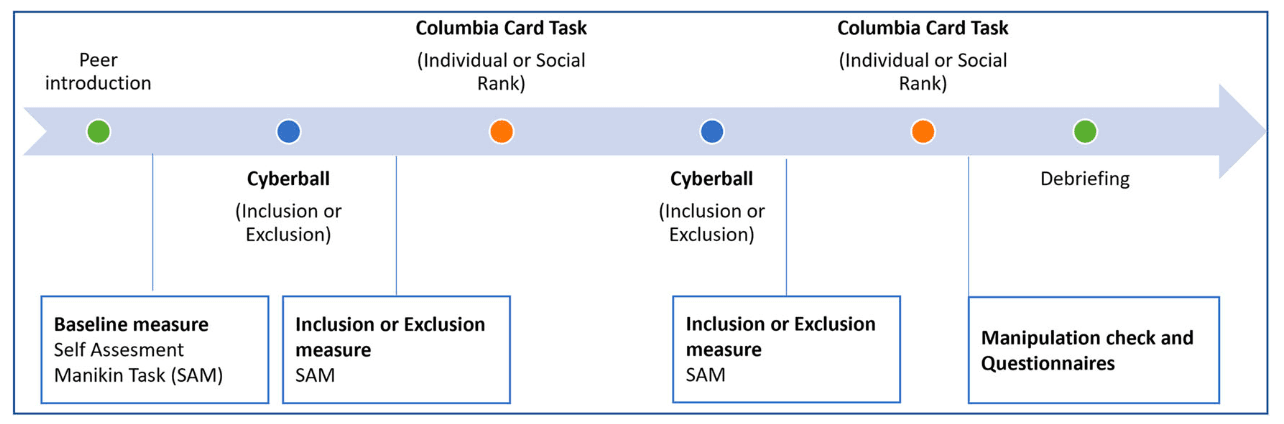
Fig 1

A graphical representation of the procedure. Participants were randomly assigned to one of two feedback groups in the CCT, as well as to one of the two groups either receiving the inclusion or exclusion condition in the Cyberball paradigm first

Upon their arrival at the testing location, participants underwent random assignment. To ensure a balanced gender ratio across feedback groups and to maintain the integrity of random assignment, participants were first stratified by three age groups (11–13, 14–16, and 17–19 years) and gender. Each participant was then assigned a unique ID code to ensure an equal number of male and female participants in each age group. Within these strata, participants were then randomly assigned to either the individual feedback group or the social rank feedback group. Additionally, the order of experiencing social exclusion (first or second) was randomized. In addition to the questionnaires used to examine the effects of social exclusion as described in the following section, also resistance to peer influence, rejection sensitivity, and need to belong were measured. Adding additional research questions regarding individual differences to the ones already included in this manuscript would go beyond the scope of this study. Thus, individual differences in how social exclusion and social rank affect risky decisions in adolescence will be reported elsewhere.

Material

Peer introduction and cyberball paradigm

To enhance the authenticity of the social interaction, participants were introduced to two virtual peers through a simulated university network. The virtual peers were supposedly connected to the network sitting in other labs. The participant created profiles that included a selected avatar, a disclosed hobby, and their age. Subsequently, the own profile and the two other preformulated profiles belonging to the virtual peers were presented to the participants, creating a semblance of genuine social engagement (see Fig. 2). Following the introduction to the virtual peers, the participants’ perceptions of inclusion or exclusion within a social group were manipulated using the Cyberball paradigm (Williams & Jarvis, 2006). The aim was to investigate the impact of social exclusion on risky decision-making. The participants were directed to train their mental visualization skills by immersing themselves in the ball tossing game. To this end, participants were asked to visualize the game’s environment and interact with the two fictitious peers they had previously encountered virtually (see Fig. 3). In the inclusion condition, participants received the ball at a frequency equivalent to that of the other players, which was approximately one-third of the total ball tosses. Conversely, in the exclusion condition, participants were deliberately assigned the ball in only 16% of the ball tosses (5 out of 30 tosses). To circumvent any potential bias that might arise from the sequence in which the inclusion and exclusion conditions were experienced, a counterbalancing approach was employed across participants.

Fig. 2
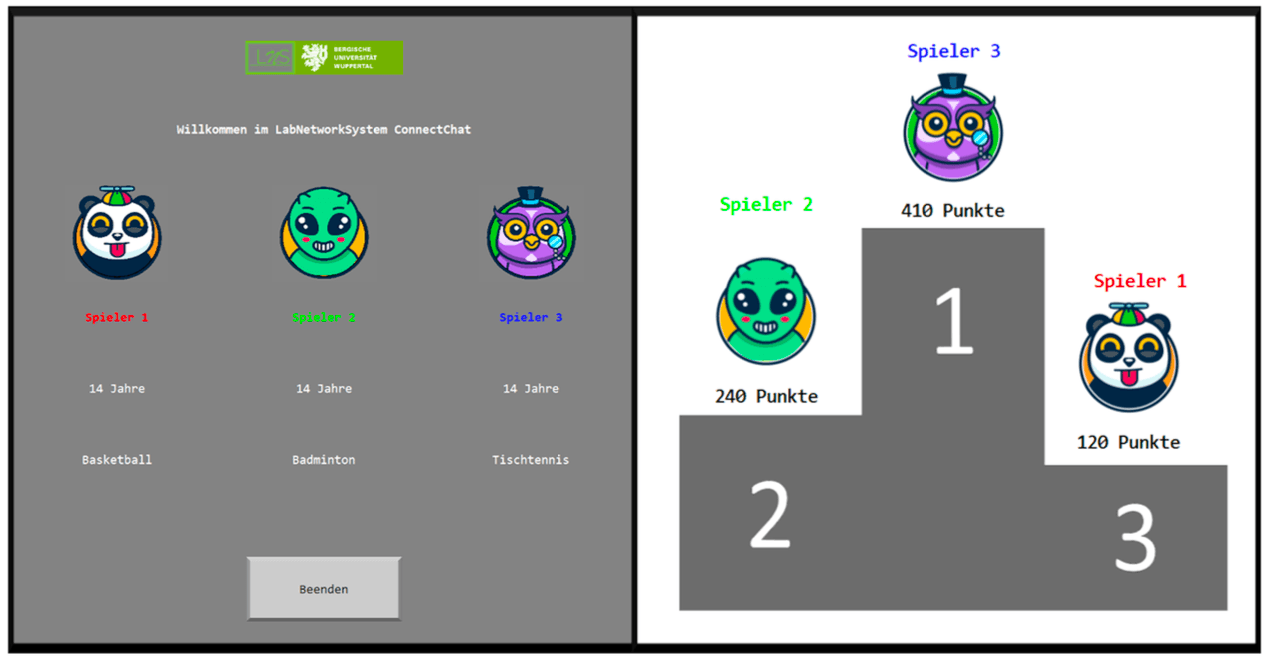
Fig 2.

Left: To acquaint participants with their fictitious confederates, participants generated a personal profile as Player 2, which included their age, a chosen hobby, and the selection of an avatar to represent themselves throughout the duration of the experiment. Right: Following each of the two rounds of the Columbia Card Task (CCT), participants in the social rank group were provided with feedback regarding their performance compared to the fictitious confederates

Fig. 3
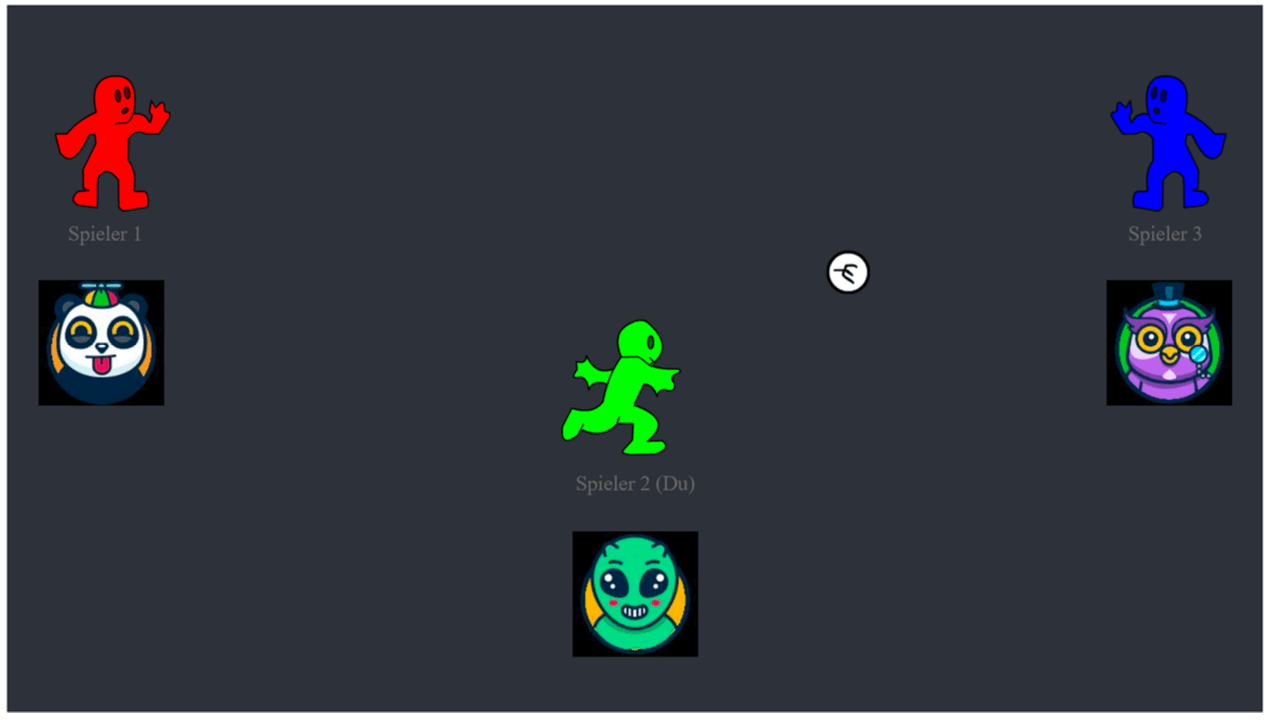
Fig. 3.

In the Cyberball paradigm, participants were instructed to enhance their mental visualization skills by engaging in a virtual ball tossing game, all while visualizing the game’s surroundings and other players. During the social inclusion condition, all players received the ball with equal frequency. In contrast, during the social exclusion condition, participants were allocated the ball only at the commencement of the game and once during its progression, creating an experience of being left out by the other players

Risky decision-making

To assess risky decision-making, a modified version of the Columbia Card Task (CCT, Figner et al., 2009) was employed in E-Prime 3.0 software (Psychology Software Tools, Inc. 2016) based on Murphy (2019). In this computerized task, participants are presented with a table containing 32 face-down cards organized into four rows. These cards display either smileys (gain cards) or frownies (loss cards) on their face sides (see Fig. 4). At the upper section of the screen, information for each trial was displayed, including the gain value for positive cards, the loss value for negative cards, and the number of loss cards that could be encountered in the deck. Gain cards were assigned point values of either 10 or 30 points, while loss cards incurred penalties of either 250 or 750 points. The deck contained either 1 or 3 loss cards at any given time. In a completely factorial design, every combination of these factors was presented twice, resulting in a total of 24 trials. Each participant underwent two iterations of the CCT, one following their inclusion and one following their exclusion from the cyber ball game. The order of occurrence for both iterations was randomized. Risky decision-making was measured by the number of cards chosen in each trial. A higher number of cards selected signified a greater inclination toward risk-taking, as the probability of encountering a loss card increases with each additional card turned over.

Fig. 4
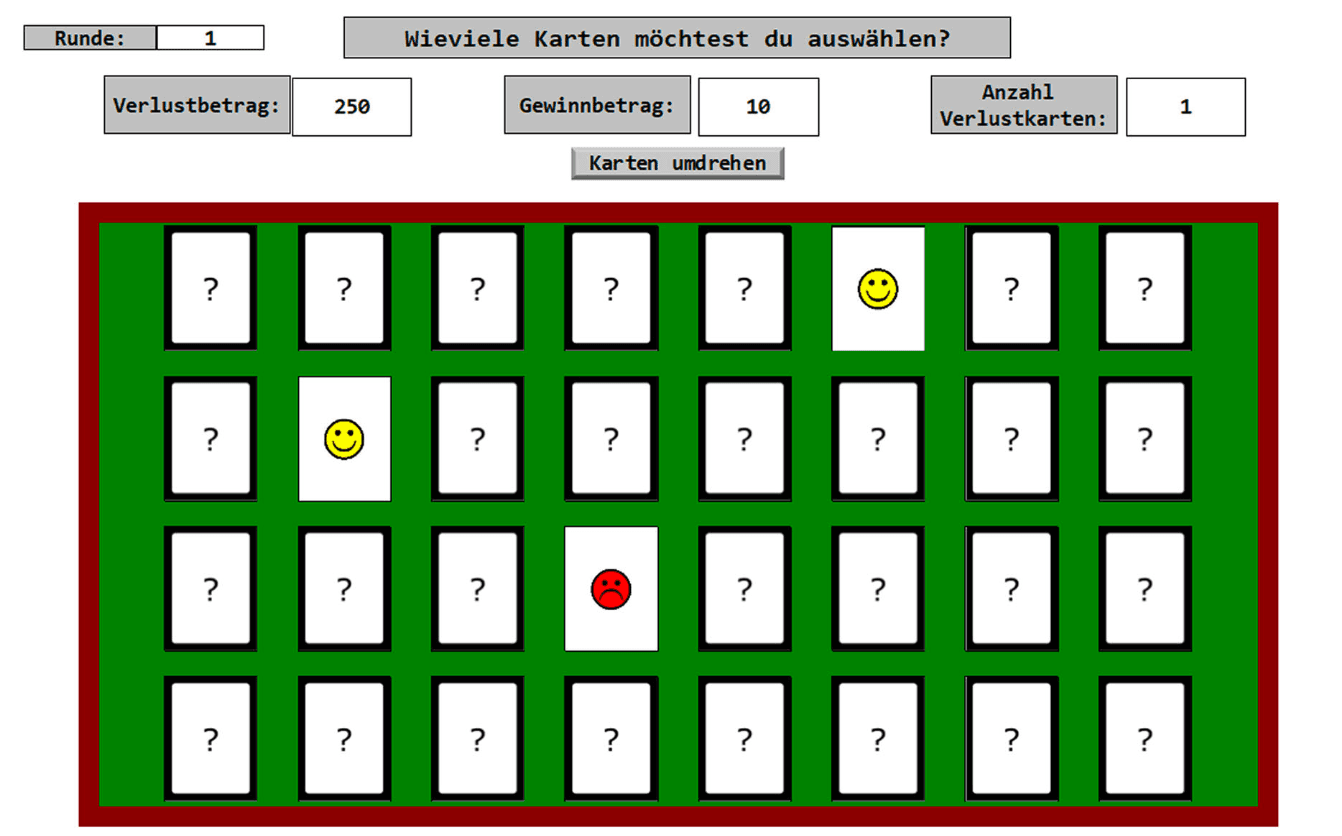
Fig. 4.

In the Columbia Card Task, participants make selections to reveal specific cards from a set of 32 face-down cards. Each card in this array carries a distinct probability of either yielding a gain or a loss. Trial information (“Runde”), including gain amounts (“Gewinnbetrag”), loss amounts (“Verlustbetrag”), and the number of loss cards on the table (“Anzahl Verlustkarten”), is prominently displayed at the top of the screen for every trial

For each trial, participants were tasked with choosing which cards they would like to reveal by marking the face-down cards and confirming their choice with a “turn over” button. It is important to note that unlike the “hot” version of the CCT, this adapted task does not employ risk censoring. This means that through the separation in selection and feedback phase, trials do not terminate upon the choice of a loss card, with the number of cards chosen indicating the non-censored willingness to engage in the risk of losing points (Buelow & Blaine, 2015; De Groot & Thurik, 2018). In a subsequent feedback phase, the selected cards were turned over one by one in order of selection, revealing either a gain or a loss. Which card led to losses was randomly chosen at the beginning of the trial., i.e., the task feedback was not rigged and allowed to experience real outcome probability. For each trial, points linked to gain cards were added to a virtual balance that started at zero points at the beginning of each CCT round and then the next card was turned over. On the other hand, when the first loss card was revealed, its associated points were subtracted and no further cards were revealed. Feedback presentation ended after the first negative card to make outcomes comparable to the original version of the CCT referred to as “hot” (Figner et al., 2009), i.e., it was avoided that multiple losses in a trial occurred as it would fundamentally change scores and probability calculation in the task.Furthermore, the study investigated whether the sensation of being under evaluation by peers would modulate the effect of social exclusion on risky decision-making. Therefore, one group received individual feedback about their performance, while another group received feedback in the form of a social rank also featuring the confederates’ avatars and points at the end of the two rounds (see Fig. 2), respectively. In both rounds, the social rank feedback consistently depicted participants as the second-highest performer among the group of three players. In order to achieve this, the scores of the virtual peers were calculated by subtracting either 120 or 150 points from the participant’s score for Player 1, and adding 170 or 140 points to the participant’s score for Player 3, respectively, in the first and second round of the CCT. Before engaging in the task, participants were explicitly informed whether the points earned by players would be openly disclosed (in the form of social rank feedback) or kept confidential (provided as individual feedback).

Self Assesment Manikin Task (SAM)

To assess emotional responses to the social manipulations used in this study, the Self-Assessment Manikin (SAM, Bradley & Lang, 1994) was employed at multiple time points. SAM assessments were conducted at baseline, following the introduction of fictive peers, and subsequent to each of the two rounds within the Cyberball paradigm. This scale employs a 9-point single-item format to measure three distinct emotional dimensions: arousal, valence, and control/dominance. For each dimension, participants were presented with manikin illustrations representing these emotional scales, encompassing five different images each. The nine points to indicate their emotional state were located at each of the five images and in between them. Although the SAM is a nonverbal measure of emotion, participants were verbally provided with pre-defined adjectives (e.g., happy-unhappy, excited-calm, dominant-controlled) to describe the images of the poles of the scales if participants were unsure of their meaning.

Need Threat Questionnaire (NTQ)

To further assess changes in emotions and cognitions during the two Cyberball sessions, a German adaptation (Grzyb, 2005) of the Need Threat Questionnaire (NTQ) (Williams et al., 2000) was used after the experimental session. The NTQ asked about feelings of belonging and selfworth, amongst others, alongside an aversive impact index designed to gauge shifts in feelings subsequent to inclusion or exclusion from the peer group. Items that asked about general emotions were summed to a “Mood” index with higher values signifying a better mood and questions that inquired about a sense of belonging to a “Belonging” index with higher values indicating a stronger feeling of belonging to the peer group. Furthermore, one component of the NTQ inquired about the participants’ subjective estimation of the percentage of balls they received during the Cyberball paradigm, which was designed to assess whether they actively sensed social exclusion.

Statistical Analyses

Statistical power

A power analysis from a pilot study indicated that a minimum sample size of N = 30 per feedback group (individual/social rank feedback) is necessary to reliably (α = 0.90) detect medium (~0.1) and small (~0.01) effect sizes for the primary interaction of Feedback Type * Cyberball Condition in a between-within subjects design. Although the pilot did not include age differences, effect sizes were expected to be higher in an adolescent sample, increasing the power to detect effects of social manipulations in this as opposed to the pilot study. The study also examined higher-order interactions, including three- and four-way interactions with information about risk. This information is repeated in the CCT in a factorial manner over 48 trials per participant, allowing for a strong measurement of sensitivity to changes in gain amount, loss amount, and loss probability. While the sample size was not calculated for these complex effects, they were pre-registered and theoretically justified as integral parts of the present research design, viewed as being essential for a comprehensive analysis of decision behavior in the CCT. Consequently, participants were recruited with an a priori target of 30 per age group (11–13, 14–16, 17–19 years) but 122 were ultimately included in the analysis.

Linear mixed effect models

For all linear mixed effect models (LMEM), the R-Studio (R Core Team, 2023) environment was used. Specifically, the lmerTest (Kuznetsova et al., 2017) package was used that is based on the lme4 (Bates et al., 2015) package but additionally calculates p-values based on Satterthwaite’s method for approximating degrees of freedom for the t and F tests. To account for random effects, a maximal random structure with all within-subjects variables and their interactions entering the models as random factors per participant was intended. In the case of convergence issues, the models were reduced to parsimonious ones as recommended by Bates et al. (2015). To this end, first different convergence routines and heightened iterations were applied. If no solutions fitted the model, interactions between random variables were removed from the random structure first. If convergence was still not obtained then random effects with lowest variance explanation were excluded one by one until a model converged. Specific information about convergence of the models can be found in the Appendix.To evaluate the effectiveness of social exclusion, a manipulation check utilizing LMEM was conducted. These models were employed to scrutinize emotional responses both during the experiment, as assessed by the SAM, and in the post-experiment phase, evaluated through the NTQ. To test hypotheses concerning risky decision-making, a LMEM on the number of cards turned over per trial was conducted. To test the main interaction of interest, i.e., whether social exclusion has combined effects with the social relevance of the risk situation, Cyberball Condition (Inclusion/Exclusion; within-subjects), Feedback Group (Individual/Social Rank; between-subjects), and their interaction entered the model as deviation coded factors (−1/1). Also, the task variables Gain Amount (10/30; within-subjects), Loss Amount (90/270; within-subjects), and Loss Cards (1/3; within-subjects) were included as deviation coded factors (−1/1) and their interactions in the models. To assess potential developmental differences, continuous age was recorded as age in years and months, expressed in fractional years. The mean-centered age variable was entered into the model with linear and quadratic age contrasts to test for potential peaks of the effects in mid-adolescence.To facilitate visualization and interpretation, breaks in the age variable were marked at the midpoint of three age groups: early (11–13 years; M = 12 years), middle (14–16 years; M = 15 years), and late adolescence (17–19 years; M = 18 years). Although it is common practice to distinguish between different phases of adolescence, it should be noted that the denotation of the three age groups was arbitrary. Simple effects and contrasts were tested to facilitate interpretation of interactions in the LMEM. Given that these follow-up analyses are not independent confirmatory tests but are aimed at understanding the interaction, corrections for multiple comparisons were not applied to avoid increasing the risk of Type II errors (see e.g., Bender & Lange, 2001).

Results

Manipulation Check

Overall, the manipulation checks suggested that the manipulation of feeling socially excluded was successful. For more detailed information on the analyses and results of the manipulation check, see Appendix A. The pattern of results obtained by comparing SAM scores at baseline with scores after social inclusion and exclusion suggests that social exclusion significantly decreased positive affect in all groups. Except for mid-adolescents in the individual feedback group, social exclusion had no effect on arousal ratings. Feelings of control were decreased by social exclusion only in late adolescents. Results also indicated that feelings of belonging and mood decreased significantly after social exclusion. In addition, adolescents recognized exclusion from the ball toss game by reporting a lower percentage of balls received in the exclusion condition than in the inclusion condition.

Risky Decision-Making

To maintain an overview of the effects of the LMEM on the influence of Cyberball Condition, Feedback Group, Age and the information on gain amounts, loss amounts and loss probability, the effects are reported along the announced research questions and hypotheses. The full results of the model can be found in Table 4 in the Appendix.

Research Question 1: How does social exclusion influence information use during risky decision-making?

A main effect of Cyberball Condition indicated that, contrary to Hypothesis 1a, adolescents made a greater number of risky decisions after social inclusion than after social exclusion (Est. = 0.11, SE = 0.03, p = < .001). Regarding information use in the CCT in general, results indicated that all adolescents reduced the number of risky choices when gain amounts were smaller (Est. = −0.08, SE = 0.01, p = <.001) and increased the number of risky choices when loss amounts were smaller (Est. = 0.11, SE = 0.01, p = <.001) and the probability of loss was smaller (Est. = 0.21, SE = 0.02, p = <.001). Results regarding the hypothesized decreases in the sensitivity to gain amounts, loss amounts, and loss probabilities with social exclusion (Hypothesis 1b) revealed significant interactions between Cyberball Condition and Gain Amount (Est. = 0.03, SE = 0.00, p = < .001), Cyberball Condition and Loss Amount (Est. = −0.04, SE = 0.00, p = <0.001), as well as Cyberball Condition and Loss Cards (Est. = −0.02, SE = 0.01, p = < 0.001). Contrary to the hypothesis, the pattern of results indicated that adolescents were more sensitive to differences in gain amounts, loss amounts, and loss probabilities when they were socially excluded than when they were included.

Research Question 2: Can the possibility to compare performance with the perpetrators of social exclusion bolster these effects?

Overall, there was no effect of Feedback Group on the number of risky decisions (p = 0.789) and no interaction between Feedback Group and Cyberball Condition (p = 0.440) that would indicate that social rank feedback increased effects of social exclusion (Hypothesis 2a). There was a small effect of social rank increasing the sensitivity to Loss Amount (Est. = 0.03, SE = 0.01, p = 0.050) and significant three-way interactions between Cyberball Condition, Feedback Group, and Loss Amount (Est. = 0.77, SD = 0.37, p = 0.036) as well as between Cyberball Condition, Feedback Group, and Gain Amount (Est. = 0.77, SD = 0.37, p = 0.036). Simple effects contrasting smaller and larger amounts of gain and loss suggested that adolescents were sensitive to amounts of loss and gain in all conditions except for the inclusion condition in the individual feedback group (see Table 5). The pattern of results indicated that, contrary to Hypothesis 2b, social rank increased sensitivity to gains and losses, particularly in the social inclusion condition.

Research Question 3: Are there developmental differences in combined effects of social exclusion and social rank feedback on information use during risky decision-making in adolescence?

Regarding the hypotheses about developmental differences in the use of information in the CCT (Hypothesis 3a), significant interactions between linear Age and Gain Amount (Est. = −2.07, SE = 1.01, p = 0.041), linear Age and Loss Amount (Est. = 3.73, SE = 1.10, p = < 0.001), and linear Age and Loss Cards (Est. = 6.85, SE = 1.38, p = <0.001) suggested that adolescents became more sensitive to information about gain amounts, loss amounts, and loss probabilities with age. The pattern of results indicating whether the effects of social manipulation on risky decision-making are maximal in mid-adolescence (Hypothesis 3b), is shown in Fig. 5. As expected, the effect of social exclusion was modulated by quadratic Age and Feedback Group (Est. = 5.76, SD = 1.93, p = 0.003), indicating a significant peak in the effect of social exclusion in mid-adolescence for the group that received social rank feedback. Further examination by simple effects at the middle of the three age groups (12 years, 15 years, and 18 years of age) revealed that only late adolescents in the individual feedback group (Est. = 0.14, SE = 0.16, p = 0.389) and middle adolescents in the social rank group (Est. = 0.20, SE = 0.16, p = 0.201) significantly reduced risky decisions after social exclusion. There was no main effect for linear or quadratic Age (p = 0.081 and p = 0.919, respectively) and no further two-way interactions between Cyberball Condition, Feedback Group, and Age (all p’s ≥ 0.099).

Fig. 5
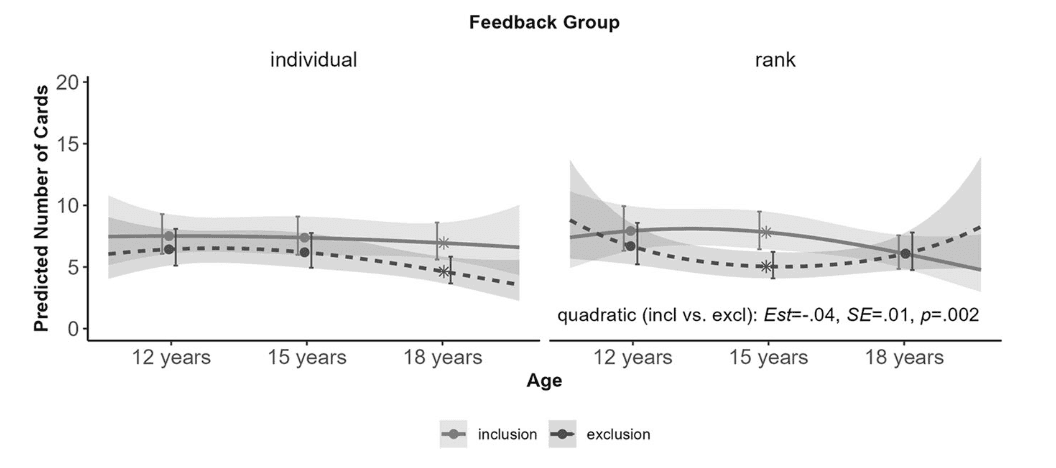
Fig 5

Developmental differences in the effect of Cyberball Condition on the number of cards turned over in the Columbia Card Task (CCT) as a function of Feedback Group (individual vs. social rank). Asterisks indicate that differences between social inclusion and social exclusion conditions were significant at p < 0.001

Higher order interactions between Cyberball Condition, Feedback Group, Age, and sensitivity to gain amounts and loss amounts (see Table 4) suggested that adolescents increasingly became more sensitive to differences in gain amounts and loss amounts with age in the exclusion condition of the individual feedback group, mirroring the greater reduction in the number of risky decisions after social exclusion in late adolescence. Thus, in the social rank feedback group, there was a peak in sensitivity to gain and loss amounts after social exclusion in mid-adolescence, again reflecting the greater reduction in risky decisions after social exclusion in the mid of the adolescent age range of this group (see Fig. 7 and Fig. 8). For the number of loss cards, results suggested a general increase in the sensitivity to loss probability with age, mostly induced by a decrease in risky decisions when loss probability was higher. In the inclusion condition of the individual feedback group, however, adolescents also increasingly engaged in risky decisions with age when loss probability was low (see Fig. 9). A more detailed report on these higher-order interactions can be found in Appendix B.

Discussion

It has been proposed that mid-adolescents are particularly susceptible to social influences due to neurodevelopmental changes that increase their propensity to engage in risky behaviors when in the presence of their peers (Shulman et al., 2016). Although it has been postulated that this elevated propensity for risk-taking can be attributed to a fear of being excluded from the peer group (Tomova et al., 2021), the consequences of social ostracism on adolescent risk-taking behavior have thus far only been empirically examined in the context of simulated driving (Falk et al., 2014; Peake et al., 2013). Furthermore, it is believed that the reorientation towards peers as opposed to close family members also implies that adolescents begin to align their behavior with social goals in order to achieve higher social status among peers (Op de Macks et al., 2017). However, peer influences and social comparison effects have been examined independently of one another. Moreover, the developmental changes across adolescence, which could elucidate the increase in sensitivity to social manipulations and the mechanisms through which feelings of social exclusion and social comparison may elevate risk-taking tendencies in adolescence, remain insufficiently explored. The present study sought to investigate the impact of social exclusion and social comparison on risky decision-making across adolescence (11–19 years), with an additional focus on information processing related to gains, losses, and loss probabilities. Interestingly, the findings suggest that combined effects of social exclusion and social rank feedback can enhance adolescents’ consideration of information surrounding risk, decreasing tendencies to engage in risky decisions.

How Does Social Exclusion Influence Information Use During Risky Decision-Making?

The analysis of emotional responses following social exclusion revealed that the manipulation effectively induced feelings of social exclusion. Participants reported receiving the ball significantly less frequently than expected during the exclusion scenario. Additionally, social exclusion notably reduced positive affect, mood, and feelings of belonging, aligning with findings from previous Cyberball studies (Hartgerink et al., 2015). However, contrary to expectations, social exclusion did not lead to an increase in risky decision-making. Conversely, adolescents demonstrated a reduction in risky decision-making as indexed by an increased awareness of the potential consequences of their actions. These findings challenge conventional assumptions linking social exclusion to elevated risk-taking behaviors during adolescence, as supported by previous research (Falk et al., 2014; Peake et al., 2013) and theoretical considerations (Blakemore, 2018; Tomova et al., 2021). Nevertheless, the study’s findings align with existing research indicating that other social influences, such as peer observation, can have both risk-inducing and risk-diminishing effects, depending on task-specific factors, contextual details, and age (e.g., Lorenz & Kray, 2022; Somerville et al., 2019).For instance, empirical evidence indicates that adolescents, like adults and children, rely more on social information when faced with uncertainty (Ciranka et al., 2021a). Accordingly, peer influence can enhance confidence in decision-making, which may explain increased exploration under uncertainty (Lorenz & Kray, 2022; Romer et al., 2017). This is consistent with studies demonstrating increased risk-taking following social exclusion under uncertain conditions, such as simulated driving (Falk et al., 2014; Peake et al., 2013). In situations where risks and rewards are known, as in the CCT, peer influence may foster learning through social evaluation and valued contribution, highlighting information regarding which choices are more likely to result in rewards or losses (Ciranka et al., 2021b; Dahl et al., 2018; Silva et al., 2016). Accordingly, although all adolescents demonstrated a reduction in the number of risky decisions when gain amounts were smaller, loss amounts were larger, and loss probability was higher, it could be observed that social exclusion heightened sensitivity to such information in the CCT. Despite the prevailing view that adolescents are prone to impulsive and unconsidered actions, social influence may encompass social learning that can lead to adaptive behavior in both risk-taking and risk avoidance (Ciranka et al., 2021b; Dahl et al., 2018).

Can the Possibility to Compare Performance with the Perpetrators of Social Exclusion Bolster These Effects?

The present study also illuminates the influence of social comparison on adolescent risk-taking behavior. Of particular interest is the observation that adolescents’ sensitivity to gain and loss amounts on risky decision-making varies based on the availability of social comparison feedback. Specifically, adolescents demonstrated heightened sensitivity to gains and losses following social exclusion, but also in the inclusion condition when social rank feedback was provided. In contrast, previous findings on social rank and disclosed feedback either showed no effect (Op de Macks et al., 2017) or indicated a strong motivation to gain social status despite potential losses (Cardoos et al., 2017). Therefore, social norms play a significant role in moderating the influence of social factors on adolescent risk-taking behavior. Research indicates that adolescents modify their risk propensity in accordance with the risk profile of their peer group (Cascio et al., 2015; Ciranka et al., 2021b; Tomova et al., 2021). This perspective aligns peer influence with a more reasoned form of risk-taking that involves a cost-benefit analysis, specifically considering the social benefits derived from risk-taking, such as gaining status and group belonging (Blakemore, 2018; Ciranka et al., 2021b; Tomova et al., 2021). In contrast to risk settings like the CCT, activities such as simulated driving often present opportunities to flout commonly understood traffic regulations, including basic rules like obeying traffic signals. Bidding scenarios, on the other hand, offer the possibility of gaining an advantage over others, which may result in social effects such as direct competition that might lead to a commitment to risk-taking irrespective of potential losses. These task characteristics provide avenues for self-presentation, fostering a perception of risk-taking as desirable or admired within social contexts. Consequently, in the context of the current task setting, it can be posited that cautious behavior may be perceived as a prevalent strategy among adolescents, as they endeavor to conform to peer expectations by achieving higher scores in the social rank feedback.

Are There Developmental Differences in Combined Effects of Social Exclusion and Social Rank Feedback on Information Use During Risky Decision-Making in Adolescence?

Finally, the specific influence of social rank on risky decision-making became particularly evident in this study, due to the unique developmental differences on the influence of social rank on adolescent behavior. Although previous research has demonstrated that adolescents’ sensitivity to information surrounding risk increases with age (Figner et al., 2009), the current findings did not indicate a corresponding decrease in risky choices with age. A similar pattern of results was observed in previous studies that utilized the CCT in its version where feedback was not directly delivered (Figner et al., 2009; Somerville et al., 2019), suggesting that the CCT version employed in this study may promote the use of “cold” decision processes. However, an intriguing pattern emerged regarding developmental differences in the combined effects of social exclusion and social rank feedback. Specifically, middle adolescents demonstrated a more pronounced reduction in risky choices after social exclusion when comparing their performance with those who excluded them socially. That is, as suggested by theoretical accounts (Crone & Dahl, 2012; Shulman et al., 2016; Tomova et al., 2021) the peak of combined effects of social exclusion and social rank was in mid-adolescence. In contrast to the effects of peer observation, social exclusion did not result in an increase in risky choices in the CCT, as previously observed in younger age groups (aged 13–15 years, Somerville et al., 2019). Instead of acting impulsively, a more cautious approach was observed in mid-adolescence when feeling excluded, at least when performance was disclosed. This pattern of effects is comparable to the meta-analytic moderator effects found for the influence of peer observation on risky decision-making (Powers et al., 2022). There was overall no peak in the effect of peer observation in mid-adolescence but information about social norms, i.e., risk preferences displayed by peers, had a strong influence on whether peer observation had an influence on risky decisions, or not. Differences in the moderating effects of risk preference depending on the age range included in the analysis furthermore suggests developmental variations in moderating effects of social norms (Powers et al., 2022).Accordingly, and in contrast to mid-adolescents, late adolescents exhibited reduced risky decision-making after social exclusion solely in the individual feedback group as opposed to the social rank feedback group, in this study. However, no significant age trend in the effect of social exclusion was found in the individual feedback group. Nevertheless, findings in the individual feedback group more closely resemble the findings on peer observation on risky decision-making in the CCT, where with increasing age more risks were taken when alone than when observed by peers (Somerville et al., 2019). It is noteworthy that social exclusion decreased feelings of control only in late adolescents in this study, suggesting qualitatively different effects of social exclusion between age groups. This finding also underscores the importance of considering multiple emotional facets beyond just valence effects in studies investigating social exclusion. Late adolescents may also place greater emphasis on non-social incentives than younger age groups, such as points as an index of their performance (for a review, see Kray et al., 2018). Therefore, social rank feedback may mitigate frustration resulting from frequent losses in the CCT by contextualizing low scores. This suggests that observing others attaining similarly low scores in the social rank feedback group may have reduced the inclination to become more cautious after social exclusion, as evidenced by the late adolescents in the individual feedback group.Most intriguingly, the sensitivity to gain and loss amounts mirrored the developmental differences in the combined effects of social exclusion and social rank feedback on risky decisions. That is, the gain and loss sensitivity were maximal in late adolescence in the individual feedback group and during middle adolescence in the social rank feedback group. In contrast, the sensitivity to loss probability was rather insensitive to differences in feedback type. Overall, the sensitivity to loss probability increased with age, with a trend for adolescents to even increase risky decisions with age when loss probability was low in the individual feedback group. This suggests that, indeed, adolescents’ risk tendencies and changes therein are well reflected by sensitivity to information about known risks. In this regard, it is important to note that risk-taking is not inherently maladaptive; rather, it is a set of behaviors that foster exploration and independence, both of which are crucial for the achievement of developmental tasks during adolescence. As such, it may strongly depend on the context whether risk-taking and exploration or cautious behavior is advantageous. Many risky decision tasks in the laboratory actually encourage risk-taking and exploration, and more cautious behavior under peer influence may be disadvantageous in the long run, as in the Balloon Analog Risk Task (Lorenz & Kray, 2022). In other settings that allow for more learning, such as the Iowa Gambling Task (IGT), exploration is critical and has been found to increase with peer influence (Silva et al., 2016). In the case of the CCT, the study adds to the literature by showing that more cautious behavior after social exclusion is induced by greater adherence to available information. This highlights the benefits of using different task settings to examine the effects of social manipulation on risky decision making depending on the process of interest, which in this study was information use.Taken together, the findings corroborate the hypothesis that mid-adolescents are particularly susceptible to social exclusion, particularly in settings comprising social comparison. This aligns with established views that emphasize adolescence as a sensitive developmental phase for social cognitive processing (Blakemore & Mills, 2014; Crone & Dahl, 2012). Interestingly, social exclusion did not lead to an increase in risky choices; instead, it was associated with a decrease in such behaviors. Moreover, the impact of social exclusion on risky decision-making was contingent upon the information available about the potential gains and losses involved. This suggests that feelings of exclusion and peer evaluation may promote cautious decision-making behaviors among adolescents, particularly in situations with low gains and high potential losses. In conclusion, this study contributes to the understanding of current theoretical frameworks that highlight the adaptive function of risk-taking among adolescents. In particular, it increases exploration and the acquisition of wisdom (Ciranka et al., 2021b; Romer et al., 2017), as well as the engagement in positive and prosocial risk behavior (Do et al., 2017; Duell & Steinberg, 2021; Kwon & Telzer, 2022). Considering factors such as peer influences, social comparison, and social norms, gives insights into the complexities of adolescent decision-making processes. Understanding these dynamics can inform interventions aimed at mitigating the negative effects of social exclusion and promoting healthier decision-making during adolescence. Specifically, the study suggests that peer contexts can alleviate motivation to find information that promote safe behavior when the outcomes promise peer group adherence.

Limitations and Outlook

In discussing the present findings, it’s important to acknowledge several key points. Firstly, while the study covers a broad age range spanning early to late adolescence, which provides valuable insight into the developmental trajectory of social influences on risk-taking, the inclusion of even older age groups could offer additional insights. This is particularly relevant as emerging adults have been shown to engage in risky behaviors to a greater extent in real-life settings, and this study’s findings suggest a potential diminishing or reversal of social exclusion effects in older age groups. However, it’s worth noting that a study on emerging adults found no effects of social exclusion on risky decision-making in the CCT (Murphy, 2019). Additionally, longitudinal studies would provide the strongest evidence for understanding developmental changes over time.Secondly, while the study contributes to theories and models regarding social influence in youth by considering the role of social exclusion and social comparison, it’s important to recognize that social exclusion may not be qualitatively or quantitatively distinct from other social influences on risky behavior, such as peer observation or direct influence. Future research should explore the comparative effects of different types of social influences or their interactions to determine the specific role of fear of social exclusion in social influences on risky decision-making during adolescence. Nevertheless, a significant strength of this study is the demonstration of differing effects of social exclusion depending on whether performance was disclosed and tied to social rank, or not, highlighting the importance of social standing in these effects. It will be of interest to observe how future studies address social rank when investigating peer influences, as there is considerable scope for further manipulation, including differences in rank position and risk-taking addressed to others versus the self (Do et al., 2017; Kwon & Telzer, 2022).Thirdly, the study indicates that social exclusion affects the processing of information about risks and rewards, leading to increased sensitivity to such information. However, the specific cognitive processes involved remain unclear. The integration of electrophysiological measures, such as the electroencephalogram (EEG), could provide valuable insights in this regard. The inclusion of the CCT in the EEG would allow for the reflection on how sequential decision-making and feedback processing changes with development during adolescence. Especially, as the CCT is thought to offer good ecological validity, as it represents risky decisions that are more closely aligned with real-life experiences than other tasks. While there are numerous sequential risk-taking tasks, such as the Balloon Analog Risk Task or the Stoplight task, the CCT also allows for the simultaneous investigation of information use (Figner et al., 2009; Schonberg et al., 2011). This allows for the investigation of how adolescents and other age groups develop expectations about the occurrence of gains and losses in the CCT, which could be quantified with event-related potentials. Adolescents may develop fewer or less complex expectations than adults, reflecting their reduced information use and increased risk taking. In certain social interactions, however, this could be increased in adolescents, which would explain their being more flexible and socially adapted risk-takers than adults.Lastly, it’s important to recognize that not all adolescents may exhibit cautious behavior following social exclusion. Individual differences, such as resistance to peer influence or rejection sensitivity, could account for the diverse findings ranging from increased to decreased risk-taking or no differences at all. While these influences were assessed in the current study, further investigation into individual differences will be explored in future publications dedicated to this specific aspect. Another crucial aspect not evaluated in this study is the sociocultural differences, primarily due to the predominance of White participants with German as at least one of their mother tongues.

Conclusion

It has been assumed that adolescents will respond with risky decision-making when in fear of being excluded from their peer group. However, there is a paucity of research investigating the developmental differences that show this effect is maximal in adolescence, as well as the role of social comparison and underlying mechanisms. This study investigated how social exclusion affects risky decision-making across adolescence (11–19 years) and examined how factors like social comparison and information about gains, losses, and probabilities influence these effects. Contrary to initial expectations, social exclusion did not result in increased risky choices but rather in more cautious decision-making. The findings suggest that social exclusion can, under specific circumstances, positively influence risk adaptation by heightening sensitivity to relevant context information. Additionally, social exclusion and social rank had a differential impact on information usage, indicating that adolescence is a sensitive period for social cognition, which becomes increasingly complex with age. These findings corroborate recent accounts suggesting that peer influence can also have adaptive effects, fostering exploration and social learning.

Open Article as PDF

Abstract

Adolescents’ need to belong and concerns about social status are thought to increase risk-taking, however, not much is known about how feedback about social rank and the effects of social exclusion moderate risky decision-making. To this end, the present study examined how social rank feedback moderates the effects of social exclusion on risky decisions during adolescence. The experimental study included a total of 122 participants (11–19 years; 44% female). Participants were randomly assigned to receive either individual or social rank feedback in the Columbia Card Task after social inclusion and exclusion via the Cyberball paradigm. Contrary to expectations, social exclusion led to more cautious decision-making. Mid-adolescents were most influenced by the combination of social exclusion and social rank feedback, while late adolescents became more cautious with individual feedback. These findings suggest that peer influences also have adaptive effects, increasing sensitivity to risk information, with developmental differences in the role of social rank.

Introduction

Adolescence is a time when individuals work towards becoming independent. This period often involves forming new and more mature relationships with peers. Spending more time with peers and having a strong need to belong can help adolescents learn social skills. However, these changes also link to risky or rule-breaking behaviors. The desire for acceptance can be so strong that the fear of being left out may seem more important than thinking about possible negative outcomes.

As adolescents shift their focus from family to friends, they become very concerned with belonging. This leads them to behave in ways that help them achieve social goals, such as gaining higher social status. At the same time, peer groups are always changing, and adolescents are more likely to experience or participate in social exclusion than other age groups. This can lead to more negative feelings and potentially long-term consequences. Therefore, understanding how decision-making interacts with social pressures, such as social exclusion and social status, is vital. This knowledge can help reduce negative peer influences and encourage positive peer relationships as adolescents move towards independence.

Peer Influence on Adolescent Risk-Taking

The way social influence affects risky decisions in adolescents is a complex research area. Studies have looked at peer influence in lab settings, where peers are simply present, observing, or actively encouraging risky behavior. Some theories suggest that peer influence leads to impulsive decisions because the part of the brain controlling impulses is still developing, while the part processing social and emotional information is highly active.

Overall, experiments show that adolescents are more likely to take risks when peers are present. Brain studies indicate that adolescents show more activity in reward-related brain areas when peers are around, more than any other age group. This suggests that being with peers is rewarding, leading to impulsive choices, more risky decisions, and a greater focus on potential rewards over consequences.

Other ideas suggest that peer influence can build trust and social learning. Adolescents might take calculated risks to gain social status and acceptance within their groups. Research shows that just having peers present has a small but consistent effect on risk-taking, which becomes much stronger when peers actively promote or approve of risky actions. A strong need to belong to peer groups can strengthen adherence to peer norms. Specifically, the widespread fear of social exclusion during adolescence might lead to increased risk-taking as a way to regain acceptance and restore social status.

Social Exclusion and Social Rank

Social exclusion has been studied using virtual environments where participants are ignored or left out. One common method is the Cyberball game, where participants play a simple ball-tossing game with virtual players. In cases of social exclusion, the other players stop throwing the ball to the participant, creating a feeling of being left out. The effects of social exclusion are strong, even if participants doubt the virtual environment's reality, and can have lasting impacts on mood and behavior.

Regarding adolescent risk behavior, thinking about others during social exclusion has been linked to risky driving in the presence of peers for 16-17 year olds. Similarly, 15-17 year olds who are easily influenced by peers show more risky driving after being socially excluded. In adults, social exclusion sometimes has no effect on risky decisions, sometimes increases risk-taking, and sometimes only increases risk-taking when there is a chance to regain acceptance through such behavior.

Alongside the risk-increasing effect of social exclusion on adolescents, studies also show the importance of social standing, or rank, in adolescent risk-taking. Social rank refers to one's position compared to others in a social group, based on things like popularity or performance. Concerns about social rank peak during adolescence. For example, in a task where adolescent girls could bid on items, they often overbid to win bets that were shown to fictional peers. This meant they accepted high financial losses to appear as if they were winning. However, simply increasing or decreasing social rank did not affect risk-taking in adolescent girls when compared to monetary feedback alone. It is possible that persuasive peer interactions and knowing that others will notice changes in social rank are essential for affecting risk-taking. Additionally, making risk-taking relevant to the social situation and thus goal-directed behavior, by including social rank, might enhance these effects.

Developmental Differences in the Use of Information

Risk-taking, seeking status, and fearing social exclusion are all linked to brain development and typical adolescent challenges. However, these phenomena are rarely studied together to understand how they relate. It is also unclear whether this strong focus on social emotions is harmful or if concern for peer social status might actually be beneficial during adolescence. Many dynamic experimental tasks that involve risk-taking offer valuable insights into how adolescents explore uncertain situations, making the studies more like real life compared to making static decisions with known risks. Such dynamic risk-taking has been linked to real-life risky behaviors, like drinking.

However, these tasks often fail to fully capture adaptive behaviors, such as how individuals process and use information about risk. In contrast, the Columbia Card Task (CCT) evaluates decision-making under risk by asking participants to choose a series of cards that offer either small, frequent gains or large, rare losses. This allows researchers to see how individuals adjust their risk-taking based on different aspects of the situation, such as varying gain amounts, loss amounts, and loss probabilities, all of which are clearly provided. The CCT is a promising task for exploring how the presence of peers affects the use of information in decisions that are still emotionally stimulating.

Developmental theories suggest an imbalance between socioemotional excitement and cognitive control during adolescence. The heightened reward sensitivity linked to this imbalance peaks in mid-adolescence, as shown in studies on risky decision-making, cognitive control, and other tasks. Studies using the CCT have shown that adolescents' decision tendencies align with these developmental trends. Findings revealed that mid-adolescents (ages 14-16) use less information about risk and reward than adults, which may contribute to their increased risk-taking. However, another study found no significant age differences in sensitivity to information about gain and loss amounts and probabilities across a broader age range (8-35 years).

Research on social influences in the CCT suggests that the presence of peers can affect decision-making differently depending on the task context and age group. Specifically, findings indicated that the presence of peers actually increased risk-taking in early to mid-adolescents (ages 13-15 and 16-18), but older age groups (ages 19+) responded oppositely, making less risky decisions when peers were present compared to when they were alone. Thus, the way individuals use information is a sensitive measure to show developmental differences in how social influences affect risky decision-making throughout adolescence.

Current Study

Despite progress in understanding social influences on adolescent behavior, some questions remain. First, while social cognition significantly impacts adolescents' decisions, the effects of social exclusion and its link to social status are not fully explored. Most research has focused on simulated driving, overlooking how social exclusion might affect the processing of potential gains, losses, and their probabilities. Also, the effects of social exclusion on risky decision-making have not been compared across developmental stages, even though reward sensitivity and social vulnerability peak during mid-adolescence.

For these reasons, this study examined how social exclusion and social rank feedback together influence adolescent risk-taking decisions. It was predicted that socially excluded adolescents would take more risks than included adolescents. Specifically, it was expected that increased risk-taking after social exclusion would lead to less use of information about gains, losses, and loss probabilities. Given adolescents' sensitivity to social rank, it was also predicted that when social exclusion and social rank feedback were combined, adolescents would make riskier decisions due to reduced information use. Finally, it was hypothesized that while adolescents generally improve their use of information about gains, losses, and loss probabilities with age, mid-adolescents would show the strongest effects from the combined social exclusion and social rank feedback.

Methods

This study's sample size, variables, hypotheses, and planned analyses were officially registered on Open Science Framework.

Participants

The final group for analysis included 122 participants who were randomly assigned to one of two feedback groups. Fifty-eight individuals (39.66% female) received individual feedback, which only showed their earned points. Sixty-four individuals (48.44% female) received social rank feedback, which showed their points compared to two virtual peers. All participants identified their sex as either female or male. The average age in the individual feedback group was 15.3 years (range 11.0–20.1 years), and in the social rank group, it was 15.4 years (range 11.1–19.8 years). Most participants (78.69%) reported German as their first language. Most participants (81.15%) were still in school, with many preparing for academic qualifications.

Adolescent participants were recruited between 2021 and 2023 near the University of Wuppertal in Germany. Recruitment involved flyers in local schools, organizations, and public events. Older adolescents were also recruited from university students. Potential participants were eligible if they spoke German fluently and had no history of psychological, neurological, or learning problems. Participants received a 10€ gift card or course credits. Two participants were excluded from analysis due to extreme and inconsistent decision-making. Two others were excluded from questionnaire data analysis due to technical issues.

Procedure

The experiment used computer setups in a lab or on tablets in schools. Participants were tested individually or in small groups (up to three). To prevent social interaction in group settings, participants were placed in separate workspaces and told not to communicate. They were also informed that other players were in a different room or lab.

The materials were presented in the following order. First, participants met two virtual peers through a simulated chat. In the Cyberball game, participants were either included or excluded by receiving the ball for equal amounts of time or only at the start. After each Cyberball round, participants completed a risky decision-making task, the Columbia Card Task (CCT), and received either individual feedback or social rank feedback. After meeting peers and after each Cyberball game, participants rated their emotional state using the Self-Assessment Manikin Task (SAM). A series of questionnaires followed the experiment to gather more information about their cognitive and emotional responses.

Upon arrival, participants were randomly assigned. To ensure a balanced gender ratio and proper randomization, participants were first grouped by three age ranges (11–13, 14–16, and 17–19 years) and gender. Each participant received a unique ID. Within these groups, participants were randomly assigned to either the individual feedback or social rank feedback group. The order of experiencing social exclusion (first or second) was also randomized. Additional questionnaires measured resistance to peer influence, rejection sensitivity, and need to belong, but these individual differences are outside the scope of this study and will be reported elsewhere.

To make the social interaction feel real, participants were introduced to two virtual peers through a simulated university network. Participants created profiles with an avatar, a hobby, and their age. Their profile and the two pre-made profiles of the virtual peers were then shown, creating a sense of genuine social engagement. After meeting the virtual peers, the participants' feelings of being included or excluded were manipulated using the Cyberball game. This aimed to study how social exclusion affects risky decisions. Participants were asked to imagine the game's environment and interact with the two fictional peers. In the inclusion condition, participants received the ball as often as the other players (about one-third of tosses). In the exclusion condition, participants received the ball only 16% of the time (5 out of 30 tosses). To prevent bias from the order of inclusion/exclusion, the conditions were counterbalanced across participants.

To measure risky decision-making, a modified version of the Columbia Card Task (CCT) was used. In this computer task, participants see a table of 32 face-down cards. These cards show either happy faces (gains) or sad faces (losses). At the top of the screen, information for each trial was displayed, including the gain value for positive cards, the loss value for negative cards, and the number of loss cards in the deck. Gain cards were worth 10 or 30 points, while loss cards resulted in penalties of 250 or 750 points. The deck contained either 1 or 3 loss cards. Every combination of these factors was presented twice, for a total of 24 trials. Each participant completed two CCT rounds, one after inclusion and one after exclusion from the Cyberball game. The order of these rounds was randomized. Risky decision-making was measured by how many cards were chosen in each trial. Choosing more cards indicated a greater willingness to take risks, as it increased the chance of revealing a loss card.

For each trial, participants selected cards and confirmed their choice. Unlike some versions of the CCT, this task did not end if a loss card was chosen; participants could choose as many cards as they wished. This allowed for measuring the willingness to risk losing points without interruption. In a later feedback stage, selected cards were turned over one by one. The card leading to a loss was randomly determined at the start of the trial, ensuring real outcome probability. Points from gain cards were added to a virtual balance. When the first loss card was revealed, its points were subtracted, and no more cards were turned over in that trial. This made outcomes comparable to the original CCT.

The study also investigated whether the feeling of being judged by peers would change how social exclusion affected risky decisions. One group received private feedback about their performance. The other group received feedback showing their social rank compared to the virtual peers at the end of each round. In both rounds, the social rank feedback consistently showed participants as the second-highest performer among the three players. Before starting, participants were told whether their points would be publicly shown (social rank feedback) or kept private (individual feedback).

To assess emotional responses to the social manipulations, the Self-Assessment Manikin (SAM) was used at several points: at the start, after meeting the fictional peers, and after each Cyberball round. This 9-point scale measures three emotional dimensions: arousal, valence (pleasantness), and control. Participants saw illustrations representing these scales. If unsure, they were given adjectives to describe the scale poles (e.g., happy-unhappy, excited-calm, dominant-controlled).

To further evaluate changes in emotions and thoughts during the two Cyberball sessions, a German adaptation of the Need Threat Questionnaire (NTQ) was used after the experiment. The NTQ asked about feelings of belonging and self-worth, among other things, and included a measure of negative impact designed to gauge shifts in feelings after being included or excluded. Items about general emotions were combined into a "Mood" index (higher values meant better mood), and questions about belonging were combined into a "Belonging" index (higher values meant stronger feeling of belonging). The NTQ also asked participants to estimate the percentage of balls they received during Cyberball, to check if they perceived social exclusion.

Statistical Analyses

A power analysis from a pilot study indicated that at least 30 participants per feedback group were needed to reliably detect medium to small effects for the main interaction of Feedback Type * Cyberball Condition. Although the pilot did not include age differences, effects were expected to be stronger in an adolescent sample. The study also examined more complex interactions, including three- and four-way interactions with information about risk, which was measured strongly across 48 trials per participant. While the sample size was not specifically calculated for these complex effects, they were pre-registered and considered essential for a comprehensive analysis. Ultimately, 122 participants were included in the analysis, recruited with a target of 30 per age group (11–13, 14–16, 17–19 years).

For all linear mixed effect models (LMEM), the R-Studio environment was used. The lmerTest package, based on lme4, was employed to calculate p-values using Satterthwaite’s method. To account for random effects, a maximal random structure was initially planned, including all within-subjects variables and their interactions as random factors per participant. If convergence issues occurred, models were simplified by removing interactions between random variables first, and then random effects with the lowest variance explanation, until convergence was achieved.

To check the effectiveness of social exclusion, LMEMs were used to examine emotional responses during the experiment (SAM) and after (NTQ). To test hypotheses about risky decision-making, an LMEM was conducted on the number of cards turned over per trial. To test the main interaction of interest (whether social exclusion combined with social relevance affected decisions), Cyberball Condition (Inclusion/Exclusion), Feedback Group (Individual/Social Rank), and their interaction were included as deviation coded factors. Task variables (Gain Amount, Loss Amount, Loss Cards) and their interactions were also included as deviation coded factors. To assess developmental differences, mean-centered continuous age (in fractional years) was included with linear and quadratic contrasts to check for effects peaking in mid-adolescence. For easier understanding, age breaks were marked at the midpoints of three age groups: early (11–13 years), middle (14–16 years), and late adolescence (17–19 years). Simple effects and contrasts were used to interpret interactions in the LMEM without applying corrections for multiple comparisons, to avoid increasing the risk of Type II errors.

Results

Manipulation Check

Overall, the manipulation checks confirmed that the social exclusion manipulation was effective. Social exclusion significantly reduced positive feelings across all groups. Except for mid-adolescents in the individual feedback group, social exclusion did not affect arousal ratings. Feelings of control were decreased by social exclusion only in late adolescents. Results also showed that feelings of belonging and mood significantly decreased after social exclusion. Additionally, adolescents recognized being excluded from the ball toss game by reporting a lower percentage of balls received in the exclusion condition compared to the inclusion condition.

Risky Decision-Making

To provide a clear overview of the LMEM results regarding the influence of Cyberball Condition, Feedback Group, Age, and information on gain amounts, loss amounts, and loss probability, the findings are presented according to the research questions and hypotheses.

A main effect of Cyberball Condition showed that, contrary to Hypothesis 1a, adolescents made more risky decisions after social inclusion than after social exclusion. Regarding general information use in the CCT, all adolescents reduced risky choices when gain amounts were smaller, and increased risky choices when loss amounts were smaller and the probability of loss was smaller. Results concerning Hypothesis 1b (decreased sensitivity to gain, loss, and loss probability with social exclusion) revealed significant interactions between Cyberball Condition and Gain Amount, Loss Amount, and Loss Cards. Contrary to the hypothesis, the findings indicated that adolescents were more sensitive to differences in gain amounts, loss amounts, and loss probabilities when socially excluded than when included.

Overall, there was no effect of Feedback Group on risky decisions, and no interaction between Feedback Group and Cyberball Condition, which means Hypothesis 2a (social rank feedback increasing effects of social exclusion) was not supported. There was a small effect of social rank increasing sensitivity to Loss Amount. Significant three-way interactions were found between Cyberball Condition, Feedback Group, and Loss Amount, as well as between Cyberball Condition, Feedback Group, and Gain Amount. Simple effects showed that adolescents were sensitive to gain and loss amounts in all conditions except the inclusion condition in the individual feedback group. This pattern indicated that, contrary to Hypothesis 2b, social rank increased sensitivity to gains and losses, especially in the social inclusion condition.

Regarding Hypothesis 3a (developmental differences in information use), significant interactions between linear Age and Gain Amount, Loss Amount, and Loss Cards suggested that adolescents became more sensitive to information about gain amounts, loss amounts, and loss probabilities with age. The pattern of results for Hypothesis 3b (effects of social manipulation being maximal in mid-adolescence) showed that the effect of social exclusion was influenced by quadratic Age and Feedback Group, indicating a significant peak in the effect of social exclusion in mid-adolescence for the social rank feedback group. Further analysis at different age points (12, 15, and 18 years) revealed that only late adolescents in the individual feedback group and middle adolescents in the social rank group significantly reduced risky decisions after social exclusion. There was no main effect for linear or quadratic Age, and no further two-way interactions between Cyberball Condition, Feedback Group, and Age.

Higher order interactions suggested that adolescents became increasingly sensitive to differences in gain and loss amounts with age in the exclusion condition of the individual feedback group. This mirrored the greater reduction in risky decisions after social exclusion in late adolescence. In the social rank feedback group, there was a peak in sensitivity to gain and loss amounts after social exclusion in mid-adolescence, again reflecting the greater reduction in risky decisions after social exclusion in mid-adolescence for this group. For the number of loss cards, results indicated a general increase in sensitivity to loss probability with age, mainly due to fewer risky decisions when loss probability was higher. However, in the inclusion condition of the individual feedback group, adolescents also increasingly engaged in risky decisions with age when loss probability was low.

Discussion

It has been suggested that mid-adolescents are highly susceptible to social influences due to brain changes that increase their likelihood of risky behaviors when with peers. While it has been proposed that this increased risk-taking stems from a fear of being excluded, the effects of social exclusion on adolescent risk-taking have mainly been studied in simulated driving. Furthermore, the shift in focus towards peers implies that adolescents begin to align their behavior with social goals to achieve higher social status. However, peer influences and social comparison effects have been studied separately. The developmental changes across adolescence that could explain increased sensitivity to social manipulations and how social exclusion and comparison might increase risk-taking remain underexplored. This study aimed to investigate how social exclusion and social comparison affect risky decision-making in adolescents (11-19 years), focusing on information processing related to gains, losses, and loss probabilities. Interestingly, the findings suggest that the combined effects of social exclusion and social rank feedback can improve adolescents' consideration of risk information, thus decreasing risky decisions.

How Does Social Exclusion Influence Information Use During Risky Decision-Making?

The analysis of emotional responses showed that the social exclusion manipulation successfully made participants feel excluded. They reported receiving the ball much less often than expected during exclusion. Social exclusion also significantly reduced positive feelings, mood, and sense of belonging, consistent with previous Cyberball studies. However, contrary to expectations, social exclusion did not increase risky decision-making. Instead, adolescents reduced their risky decisions, showing increased awareness of potential consequences. These findings challenge common assumptions linking social exclusion to higher risk-taking in adolescents, as suggested by previous research and theories.

Nevertheless, the study's findings align with research indicating that other social influences, such as peer observation, can either increase or decrease risk, depending on task specifics, context, and age. For example, studies show that adolescents, like adults and children, rely more on social information when facing uncertainty. Peer influence can boost confidence in decision-making, which might explain more exploration when uncertain. This is consistent with studies showing increased risk-taking after social exclusion in uncertain conditions, such as simulated driving. In situations where risks and rewards are known, like the CCT, peer influence might encourage learning through social evaluation and valued contribution, highlighting information about which choices are more likely to lead to rewards or losses.

Although all adolescents reduced risky decisions when gains were smaller, losses were larger, and loss probability was higher, social exclusion intensified their sensitivity to this information in the CCT. Despite the common view that adolescents are prone to impulsive actions, social influence can involve social learning that leads to adaptive behavior in both risk-taking and risk avoidance.

Can the Possibility to Compare Performance with the Perpetrators of Social Exclusion Bolster These Effects?

This study also sheds light on how social comparison influences adolescent risk-taking. It was particularly interesting to see that adolescents' sensitivity to gain and loss amounts during risky decision-making changed based on whether social comparison feedback was available. Specifically, adolescents showed greater sensitivity to gains and losses after social exclusion, but also in the inclusion condition when social rank feedback was provided. In contrast, previous findings on social rank and disclosed feedback either showed no effect or indicated a strong motivation to gain social status despite potential losses. Therefore, social norms play a significant role in moderating how social factors influence adolescent risk-taking.

Research indicates that adolescents adjust their willingness to take risks according to their peer group's risk profile. This perspective aligns peer influence with a more reasoned form of risk-taking that involves weighing costs and benefits, particularly considering the social benefits like gaining status and group belonging. Unlike risk settings such as the CCT, activities like simulated driving often offer chances to break common traffic rules. Bidding scenarios, on the other hand, provide opportunities to gain an advantage over others, which might create direct competition that leads to a commitment to risk-taking regardless of potential losses. These task characteristics allow for self-presentation, fostering a perception of risk-taking as desirable or admired in social contexts. Consequently, in the current task setting, it can be suggested that cautious behavior may be seen as a common strategy among adolescents as they try to meet peer expectations by achieving higher scores in the social rank feedback.

Are There Developmental Differences in Combined Effects of Social Exclusion and Social Rank Feedback on Information Use During Risky Decision-Making in Adolescence?

Finally, the unique developmental differences in how social rank influences adolescent behavior made its specific impact on risky decision-making especially clear in this study. Although previous research has shown that adolescents' sensitivity to information about risk increases with age, the current findings did not show a corresponding decrease in risky choices with age. A similar pattern was observed in previous studies using the CCT where feedback was not directly given, suggesting that the CCT version used here may encourage "cold" (rational) decision processes. However, an interesting pattern emerged regarding developmental differences in the combined effects of social exclusion and social rank feedback. Specifically, middle adolescents showed a more significant reduction in risky choices after social exclusion when comparing their performance with those who excluded them. As theoretical accounts suggest, the peak of combined effects of social exclusion and social rank occurred in mid-adolescence.

Unlike the effects of peer observation, social exclusion did not lead to an increase in risky choices in the CCT, as previously observed in younger age groups. Instead of acting impulsively, a more cautious approach was seen in mid-adolescence when feeling excluded, at least when performance was shared. This pattern is comparable to meta-analytic findings for how peer observation influences risky decision-making. There was no overall peak in the effect of peer observation in mid-adolescence, but information about social norms (peers' risk preferences) strongly influenced whether peer observation affected risky decisions. Differences in how risk preference moderates effects, depending on the age range studied, also suggest developmental variations in the moderating effects of social norms.

Accordingly, and in contrast to mid-adolescents, late adolescents in this study reduced risky decision-making after social exclusion only in the individual feedback group, not the social rank feedback group. However, no significant age trend in the effect of social exclusion was found in the individual feedback group. Nevertheless, findings in the individual feedback group more closely resemble those on peer observation and risky decision-making in the CCT, where older individuals took more risks when alone than when observed by peers. It is notable that social exclusion decreased feelings of control only in late adolescents in this study, suggesting different qualitative effects of social exclusion across age groups. This finding also highlights the importance of considering multiple emotional aspects beyond just pleasantness in studies on social exclusion. Late adolescents may also prioritize non-social rewards, like points as a measure of performance, more than younger age groups. Therefore, social rank feedback might reduce frustration from frequent losses in the CCT by putting low scores into context. This suggests that seeing others achieve similarly low scores in the social rank feedback group may have reduced the tendency to become more cautious after social exclusion, as seen in late adolescents in the individual feedback group.

Most intriguingly, the sensitivity to gain and loss amounts mirrored the developmental differences in the combined effects of social exclusion and social rank feedback on risky decisions. That is, gain and loss sensitivity were highest in late adolescence in the individual feedback group and during middle adolescence in the social rank feedback group. In contrast, sensitivity to loss probability was less affected by feedback type. Overall, sensitivity to loss probability increased with age, with a trend for adolescents to even increase risky decisions with age when loss probability was low in the individual feedback group. This suggests that adolescents' risk tendencies and changes in them are well-reflected by their sensitivity to information about known risks. It is important to note that risk-taking is not inherently harmful; rather, it involves behaviors that foster exploration and independence, which are crucial for adolescent development. Therefore, whether risk-taking and exploration or cautious behavior is beneficial may depend heavily on the context. Many lab tasks encourage risk-taking and exploration, and more cautious behavior under peer influence might be disadvantageous in the long run, as in the Balloon Analog Risk Task. In other settings that allow for more learning, like the Iowa Gambling Task, exploration is critical and has been found to increase with peer influence. In the case of the CCT, this study adds to the literature by showing that more cautious behavior after social exclusion is driven by greater attention to available information. This highlights the benefits of using different task settings to examine the effects of social manipulation on risky decision-making depending on the process of interest, which in this study was information use.

Overall, the findings support the hypothesis that mid-adolescents are particularly vulnerable to social exclusion, especially in situations involving social comparison. This aligns with established views that emphasize adolescence as a sensitive developmental phase for social cognitive processing. Interestingly, social exclusion did not increase risky choices; instead, it was linked to a decrease in such behaviors. Moreover, the impact of social exclusion on risky decision-making depended on the available information about potential gains and losses. This suggests that feelings of exclusion and peer evaluation can promote cautious decision-making in adolescents, particularly in situations with low gains and high potential losses. In conclusion, this study contributes to understanding current theories that highlight the adaptive function of risk-taking among adolescents. Specifically, it increases exploration and the acquisition of wisdom, as well as engagement in positive and prosocial risk behavior. Considering factors like peer influences, social comparison, and social norms provides insights into the complexities of adolescent decision-making processes. Understanding these dynamics can inform interventions aimed at reducing the negative effects of social exclusion and promoting healthier decision-making during adolescence. Specifically, the study suggests that peer contexts can lessen the motivation to seek information that promotes safe behavior when outcomes promise peer group adherence.

Limitations and Outlook

Several key points should be acknowledged when discussing these findings. First, while the study covered a broad age range from early to late adolescence, which offers valuable insight into the developmental path of social influences on risk-taking, including even older age groups could provide further understanding. This is especially relevant as young adults have been shown to engage in risky behaviors more often in real-life settings, and this study's findings suggest a potential weakening or reversal of social exclusion effects in older age groups. However, it is worth noting that a study on young adults found no effects of social exclusion on risky decision-making in the CCT. Additionally, longitudinal studies would offer the strongest evidence for understanding developmental changes over time.

Second, while the study contributes to theories about social influence in youth by considering social exclusion and social comparison, it is important to recognize that social exclusion may not be fundamentally different from other social influences on risky behavior, such as peer observation or direct influence. Future research should explore the comparative effects of different types of social influences or their interactions to determine the specific role of fear of social exclusion in adolescent risky decision-making. Nevertheless, a significant strength of this study is its demonstration of varying effects of social exclusion depending on whether performance was disclosed and linked to social rank, highlighting the importance of social standing in these effects. It will be interesting to see how future studies address social rank when investigating peer influences, as there is considerable room for further manipulation, including differences in rank position and risk-taking directed at others versus oneself.

Third, the study indicates that social exclusion affects how information about risks and rewards is processed, leading to increased sensitivity to such information. However, the specific cognitive processes involved remain unclear. Integrating electrophysiological measures, such as the electroencephalogram (EEG), could provide valuable insights. Including the CCT in EEG studies would allow for understanding how sequential decision-making and feedback processing change developmentally during adolescence. The CCT is considered to have good real-world relevance, representing risky decisions more closely aligned with real-life experiences than other tasks. While many sequential risk-taking tasks exist, such as the Balloon Analog Risk Task or the Stoplight task, the CCT also allows for simultaneous investigation of information use. This enables researchers to study how adolescents and other age groups develop expectations about gains and losses in the CCT, which could be measured with event-related potentials. Adolescents might develop fewer or less complex expectations than adults, reflecting their reduced information use and increased risk-taking. However, in certain social interactions, this could increase in adolescents, explaining why they might be more flexible and socially adaptive risk-takers than adults.

Lastly, it is important to recognize that not all adolescents may show cautious behavior after social exclusion. Individual differences, such as resistance to peer influence or sensitivity to rejection, could explain the varied findings ranging from increased to decreased risk-taking or no differences at all. While these influences were assessed in this study, further investigation into individual differences will be explored in future publications dedicated to this specific aspect. Another crucial aspect not evaluated in this study is sociocultural differences, primarily due to the predominance of White participants with German as at least one of their native languages.

Conclusion

It has been assumed that adolescents will respond with risky decision-making when they fear being excluded from their peer group. However, research investigating the developmental differences that show this effect is maximal in adolescence, as well as the role of social comparison and underlying mechanisms, is limited. This study investigated how social exclusion affects risky decision-making across adolescence (11–19 years) and examined how factors like social comparison and information about gains, losses, and probabilities influence these effects. Contrary to initial expectations, social exclusion did not result in increased risky choices but rather in more cautious decision-making. The findings suggest that social exclusion can, under specific circumstances, positively influence risk adaptation by heightening sensitivity to relevant contextual information. Additionally, social exclusion and social rank had a differential impact on information usage, indicating that adolescence is a sensitive period for social cognition, which becomes increasingly complex with age. These findings support recent ideas suggesting that peer influence can also have adaptive effects, fostering exploration and social learning.

Open Article as PDF

Abstract

Adolescents’ need to belong and concerns about social status are thought to increase risk-taking, however, not much is known about how feedback about social rank and the effects of social exclusion moderate risky decision-making. To this end, the present study examined how social rank feedback moderates the effects of social exclusion on risky decisions during adolescence. The experimental study included a total of 122 participants (11–19 years; 44% female). Participants were randomly assigned to receive either individual or social rank feedback in the Columbia Card Task after social inclusion and exclusion via the Cyberball paradigm. Contrary to expectations, social exclusion led to more cautious decision-making. Mid-adolescents were most influenced by the combination of social exclusion and social rank feedback, while late adolescents became more cautious with individual feedback. These findings suggest that peer influences also have adaptive effects, increasing sensitivity to risk information, with developmental differences in the role of social rank.

Introduction

During adolescence, a key goal is to become independent. This often means forming new and more mature friendships with peers. Spending more time with friends and a stronger need to fit in can help teenagers develop social skills. However, these factors can also lead to risky or rule-breaking behaviors. This risk-taking might stem from a strong desire to be accepted, where the fear of being left out seems more important than potential negative outcomes. As teenagers shift their focus from family to friends, they become very concerned with belonging and start to act in ways that help them achieve social goals, such as gaining higher social status. At the same time, peer groups are constantly changing, and adolescents are more likely to experience or participate in social exclusion. This can lead to more negative emotions and potentially long-term problems compared to other age groups. Therefore, it is essential to understand how decision-making interacts with social pressures like exclusion and social rank. This understanding can help reduce negative peer influences and encourage positive peer relationships as adolescents move toward independence. This study experimentally explored how being excluded from a virtual peer group affects risky decisions and how teenagers use information. This was assessed using a task that measured sensitivity to different gain amounts, loss amounts, and the likelihood of losses, while also looking at how feedback on social rank influenced these effects.

Peer Influence on Adolescent Risk-Taking

The way social influence affects risky decision-making in adolescents is a complex area of study. In laboratory settings, researchers have studied peer influence using various methods, such as simply having peers present, observing, or actively encouraging risky behavior. Some theories suggest that peer influence triggers impulsive decisions because of an imbalance between a still-developing part of the brain that controls thinking and a very active part that processes social and emotional information. Overall, experiments support the idea that the presence of peers increases risk-taking in adolescents. Brain development studies show that teenagers take more risks when peers are around and that areas of the brain related to reward are more active in these situations than in any other age group. This suggests that being with peers is seen as rewarding, leading to impulsive decisions, more risky choices, and an increased perception of potential rewards rather than focusing on consequences.

Other perspectives suggest that peer influence can actually build trust and aid social learning. Adolescents might engage in goal-directed and calculated risk-taking to gain social status and acceptance within their peer groups. Research indicates that the effect of just having peers present is small but consistent, with varied results depending on the situation. This effect becomes strong only when peers actively encourage risk-taking or express positive attitudes toward risk. It has been emphasized that following peer norms may be strengthened by an ongoing need to belong to peer groups. Specifically, it has been proposed that the widespread fear of social exclusion during adolescence might contribute to increased risk-taking as a way to regain acceptance and restore social standing.

Social Exclusion and Social Rank

Social exclusion has been studied in laboratory settings using virtual environments where participants are ignored or left out of activities. One such environment is the Cyberball game, a simple ball-tossing game. While players imagine the setting and other players, they participate in this game with virtual teammates. In the exclusion scenario, the other players stop tossing the ball to the participant, creating a feeling of being left out. The effects of social exclusion have been shown to be strong, even if participants doubt the environment is real, and can have long-lasting effects on mood and behavior. Regarding how this affects adolescent risk behavior, studies have shown that thinking about others during social exclusion is linked to risky driving in the presence of peers. Similarly, adolescents who have difficulty resisting peer pressure show higher levels of risky driving after being socially excluded. In adults, social exclusion sometimes has no effect on risky decision-making, while other times it increases risk-taking, occasionally only when there is a chance to regain acceptance through such behavior.

In addition to social exclusion's impact on adolescent risk, experimental studies highlight the importance of social standing in adolescent risk-taking. Social standing, or rank, describes a person's position compared to others in a social group, which can come from things like popularity or performance in a task. Concern with topics such as social rank is highest during adolescence. For example, in a task where adolescent girls could bid on items, they often overbid to win bets that were revealed to imaginary peers. This meant they tolerated significant financial losses to show they were winning against others. However, in another study, changing social rank relative to others did not affect risk-taking in adolescent girls as much as feedback about money won or lost. It is possible that persuasive interactions with peers and the knowledge that others will notice changes in social rank are crucial for influencing risk-taking. Furthermore, by making risk-taking relevant to the social situation and thus goal-directed behavior, incorporating social rank into the study of peer effects on adolescent risk-taking may strengthen these effects.

Developmental Differences in the Use of Information

Risk-taking, seeking status, and fearing social exclusion are all linked to brain development and specific tasks during adolescence. However, these phenomena are rarely studied at the same time to understand how they relate. It also remains unclear whether this heightened social-emotional awareness is truly unhelpful or if concern for peer social status might actually be an adaptive part of adolescence. Many experimental tasks that involve dynamic risk-taking offer valuable insights into how adolescents explore uncertain but risky situations, making them more realistic than simple decisions under known risks. For example, dynamic risk-taking has been linked to real-life risky behaviors like drinking. However, these tasks often fail to fully capture adaptive behaviors, such as how people process and use information about risk.

In contrast, the Columbia Card Task (CCT) assesses decision-making under risk by having participants choose a series of cards that offer either small but frequent gains or large and rare losses. This allows researchers to see how individuals adjust their risk-taking based on different aspects of the situation, such as varying amounts of gain, loss, and the probability of loss, all of which are clearly provided for each set of choices. As such, the CCT provides a promising environment for studying how the presence of peers affects the use of information in decisions that still evoke strong emotions. Developmental models suggest an imbalance in maturity between emotional arousal and cognitive control. Consistent with this, sensitivity to rewards, which is linked to this maturational imbalance, has been shown to peak in mid-adolescence in developmental studies on risky decision-making, cognitive control, and other task settings. Studies using the CCT have shown that adolescents’ decision-making aligns with these developmental trends. Findings revealed that mid-adolescents, between 14 and 16 years old, incorporate less information about risk and reward than adults, which may contribute to their increased risk-taking. However, another study found no significant age differences in sensitivity to information about gain and loss amounts and probabilities across a wider age range. Investigations of social influences on the CCT suggest that the presence of peers may affect decision-making differently depending on the task context and age group. Specifically, findings indicated that the presence of peers actually increased risk-taking in early to mid-adolescents, but older age groups responded in the opposite way, making less risky decisions in the presence of peers than when alone. Thus, the way information is used is a sensitive measure that can reveal developmental differences in how social influences impact risky decision-making throughout adolescence.

Current Study

Despite significant progress in understanding how social factors influence adolescent behavior, several gaps remain. First, while social thinking greatly affects adolescent decision-making, the impact of social exclusion and its connection to social status are not well understood. Most research has focused on simulated driving tasks, overlooking how social exclusion might affect how teenagers process potential gains, losses, and their probabilities. Furthermore, the effects of social exclusion on risky decision-making have not been compared across different developmental stages, even though teenagers in mid-adolescence are highly sensitive to rewards and social vulnerability. For these reasons, this study examined the combined effects of social exclusion and social rank feedback on risk-taking decisions in adolescents. It was expected that adolescents who were socially excluded would take more risks compared to those who were socially included. More specifically, it was predicted that this increased risk-taking after social exclusion would result in less use of information about gains, losses, and loss probabilities. Given how sensitive adolescents are to social rank, it was also predicted that under conditions combining social exclusion and social rank feedback, adolescents would make riskier decisions due to reduced information use. Finally, it was hypothesized that while adolescents generally improve in their use of information about gains, losses, and loss probabilities with age, mid-adolescents would show the strongest effects from the combined social exclusion and social rank feedback.

Methods

This study’s desired sample size, included variables, hypotheses, and planned analyses were officially recorded before the study began.

Participants

The final group of participants analyzed included 122 individuals. They were randomly assigned to one of two feedback groups. Fifty-eight individuals (39.66% female) received individual feedback, which only provided information about their earned points. Sixty-four individuals (48.44% female) received feedback showing their social rank, comparing their points to two virtual peers. All participants identified their sex as either female or male. The average age in the individual feedback group was 15.3 years (ranging from 11.0 to 20.1 years), and for the social rank feedback group, it was 15.4 years (ranging from 11.1 to 19.8 years). Most participants (78.69%) reported German as their first language. Most participants (81.15%) were still in school, with a high percentage attending schools that prepare students for academic certificates. Participants who had left school had all earned qualifications that allow access to universities.

Adolescent participants were recruited between 2021 and 2023 near the University of Wuppertal in Germany. Recruitment methods included distributing flyers in local schools, organizations, and at public events. Older adolescents were also recruited from undergraduate university students. Potential participants were told they could join the study if they were fluent in German and had no history of psychological, neurological, or learning problems. To acknowledge their participation, eligible participants received a 10€ gift card or academic credits if they were enrolled in psychology, sociology, or sports science courses. Out of 124 enrolled participants, two from the individual feedback group were excluded from the analysis because they showed extreme values and a clear lack of variety in their decisions in the task. Specifically, one participant consistently chose either no cards or all cards in the CCT trials, and the other most often chose all cards. Two participants were excluded from the questionnaire data analysis because they did not complete the questionnaire due to technical problems.

Procedure

The experiment was conducted using computers, both in a laboratory and on tablets deployed in schools. Participants were tested individually or in groups of no more than three people. To prevent social interaction, even when tested in the same room, participants were not allowed to communicate with each other. They were placed in separate workspaces and told not to interact. Additionally, participants were informed throughout the procedure that the other players they were interacting with were in a different room or lab.

The following describes the study materials in the order they appeared in the experiment. First, participants were introduced to two virtual peers through a simulated chat environment. In the Cyberball game, participants were either included or excluded from the group by receiving the ball an equal amount of time or only at the beginning. After each round of the Cyberball game, participants completed a risky decision-making task, the Columbia Card Task (CCT), and received either individual feedback or feedback showing their social rank. Following the introduction of the peers and each Cyberball game round, participants were asked to report their emotional state using the Self-Assessment Manikin Task (SAM). After the experimental procedure concluded, a series of questionnaires was administered to gather more information about their cognitive and emotional responses during the tasks.

Upon arrival at the testing location, participants were randomly assigned to groups. To ensure a balanced gender ratio across feedback groups and maintain the fairness of random assignment, participants were first sorted by three age groups (11–13, 14–16, and 17–19 years) and gender. Each participant was then given a unique ID code to ensure an equal number of male and female participants in each age group. Within these sorted groups, participants were then randomly assigned to either the individual feedback group or the social rank feedback group. The order of experiencing social exclusion (first or second) was also randomized. In addition to the questionnaires used to examine the effects of social exclusion, other measures included resistance to peer influence, sensitivity to rejection, and the need to belong. Adding more research questions about individual differences would go beyond the scope of this study, so these individual differences in how social exclusion and social rank affect risky decisions in adolescence will be reported in a separate publication.

Material

To make the social interaction feel real, participants were introduced to two virtual peers through a simulated university network. The virtual peers were supposedly connected to the network from other labs. Participants created profiles that included a chosen avatar, a disclosed hobby, and their age. Then, their own profile and the two pre-written profiles of the virtual peers were presented to the participants, creating the impression of genuine social engagement. After introducing the virtual peers, the participants’ feelings of being included or excluded from a social group were manipulated using the Cyberball game. The goal was to investigate how social exclusion affects risky decision-making. Participants were instructed to practice their mental visualization skills by immersing themselves in the ball-tossing game. To do this, participants were asked to imagine the game’s environment and interact with the two fictitious peers they had previously encountered virtually. In the inclusion condition, participants received the ball as often as the other players, roughly one-third of all ball tosses. In contrast, in the exclusion condition, participants were intentionally given the ball in only 16% of the tosses (5 out of 30 tosses). To prevent any bias from the order in which the inclusion and exclusion conditions were experienced, the order was varied across participants.

To measure risky decision-making, a modified version of the Columbia Card Task (CCT) was used. In this computerized task, participants see a table with 32 face-down cards arranged in four rows. These cards either show smileys (gain cards) or frownies (loss cards) when turned over. At the top of the screen, information for each trial was displayed, including the point value for positive cards, the penalty for negative cards, and the number of loss cards in the deck. Gain cards were worth either 10 or 30 points, while loss cards resulted in penalties of either 250 or 750 points. The deck always contained either 1 or 3 loss cards. Every combination of these factors was presented twice, resulting in a total of 24 trials. Each participant completed two rounds of the CCT, one after being included and one after being excluded from the Cyberball game. The order of these two rounds was randomized. Risky decision-making was measured by the number of cards chosen in each trial. Choosing more cards indicated a greater willingness to take risks, as the chance of uncovering a loss card increases with each additional card turned over. For each trial, participants were asked to select which cards they wanted to reveal by marking the face-down cards and confirming their choice with a “turn over” button. Unlike some versions of the CCT, this adapted task does not stop the trial if a loss card is chosen. This separation of selection and feedback means that the number of cards chosen shows the participant's willingness to risk losing points, regardless of whether a loss actually occurred. In a later feedback phase, the selected cards were turned over one by one in the order they were chosen, revealing either a gain or a loss. The card that led to losses was randomly chosen at the beginning of the trial, meaning the task feedback was not rigged and allowed for real outcome probability. For each trial, points from gain cards were added to a virtual balance that started at zero points at the beginning of each CCT round. Then the next card was turned over. However, when the first loss card was revealed, its points were subtracted, and no further cards were revealed. Feedback stopped after the first negative card to make outcomes comparable to the original CCT version, thus avoiding multiple losses in a single trial, which would fundamentally alter scores and probability calculations. Furthermore, the study investigated whether the feeling of being judged by peers would change the effect of social exclusion on risky decision-making. Therefore, one group received individual feedback about their performance, while another group received feedback in the form of a social rank, which also showed the avatars and points of the other virtual players at the end of the two rounds. In both rounds, the social rank feedback consistently showed participants as the second-highest performer among the three players. To achieve this, the scores of the virtual peers were calculated by subtracting points from the participant’s score for Player 1 (either 120 or 150 points) and adding points to the participant’s score for Player 3 (either 170 or 140 points) in the first and second CCT rounds, respectively. Before starting the task, participants were explicitly told whether the points earned by players would be openly shared (social rank feedback) or kept private (individual feedback).

To assess emotional responses to the social manipulations, the Self-Assessment Manikin (SAM) was used at several points. SAM assessments were conducted at the beginning of the study, after the introduction of the fictitious peers, and after each of the two rounds within the Cyberball game. This scale uses a 9-point single-item format to measure three distinct emotional dimensions: arousal, valence (pleasantness), and control/dominance. For each dimension, participants were shown cartoon figures representing these emotional scales, with five different images each. The nine points to indicate their emotional state were located at each of the five images and in between them. Although SAM is a nonverbal measure of emotion, participants were given verbal adjectives (e.g., happy-unhappy, excited-calm, dominant-controlled) to describe the images at the ends of the scales if they were unsure of their meaning. The Need Threat Questionnaire (NTQ), a German adaptation, was used after the experimental session to further assess changes in emotions and thoughts during the two Cyberball sessions. The NTQ asked about feelings of belonging and self-worth, among other things, along with an "aversive impact index" designed to measure shifts in feelings after being included or excluded from the peer group. Questions about general emotions were added together to create a "Mood" index, where higher values meant a better mood. Questions about a sense of belonging were summed to a "Belonging" index, with higher values indicating a stronger feeling of connection to the peer group. Additionally, one part of the NTQ asked participants to estimate the percentage of balls they received during the Cyberball game, which was designed to check if they actively felt socially excluded.

Statistical Analyses

A power analysis from a preliminary study indicated that a minimum sample size of 30 participants per feedback group (individual/social rank feedback) was needed to reliably detect medium and small effect sizes for the main interaction of Feedback Type by Cyberball Condition in a between-within subjects design. Although the preliminary study did not include age differences, effect sizes were expected to be higher in an adolescent sample, increasing the power to detect effects of social manipulations in this study compared to the preliminary one. The study also examined more complex interactions, including three- and four-way interactions involving information about risk. This information is repeated in the CCT in a structured way over 48 trials per participant, allowing for a strong measurement of how sensitive participants were to changes in gain amount, loss amount, and loss probability. While the sample size was not specifically calculated for these complex effects, they were pre-registered and theoretically justified as essential parts of the current research design, seen as crucial for a thorough analysis of decision behavior in the CCT. Consequently, participants were recruited with an initial goal of 30 per age group (11–13, 14–16, 17–19 years), but 122 were ultimately included in the analysis.

For all linear mixed effect models (LMEM), the R-Studio environment was used. Specifically, the lmerTest package was employed, which builds on the lme4 package but also calculates p-values based on Satterthwaite’s method for estimating degrees of freedom for the t and F tests. To account for individual variations, a maximal random structure was initially planned, with all within-subjects variables and their interactions included as random factors per participant. If there were issues with the models converging, they were simplified as recommended by researchers. This involved first trying different convergence methods and more iterations. If no solutions fit the model, interactions between random variables were removed from the random structure first. If convergence still wasn't achieved, random effects that explained the least variance were excluded one by one until a model converged. Details about model convergence can be found in the Appendix. To check if social exclusion was successfully manipulated, an LMEM was conducted. These models were used to analyze emotional responses both during the experiment, as measured by the SAM, and after the experiment, as assessed by the NTQ. To test hypotheses about risky decision-making, an LMEM was performed on the number of cards turned over per trial. To test the main interaction of interest—whether social exclusion has combined effects with the social relevance of the risk situation—Cyberball Condition (Inclusion/Exclusion; within-subjects), Feedback Group (Individual/Social Rank; between-subjects), and their interaction were included in the model as factors coded for deviation. Also, the task variables Gain Amount (10/30; within-subjects), Loss Amount (90/270; within-subjects), and Loss Cards (1/3; within-subjects) were included as deviation coded factors and their interactions in the models. To assess potential developmental differences, continuous age was recorded in years and months, expressed as fractional years. The age variable, centered around its mean, was entered into the model with linear and quadratic age contrasts to test for potential peaks of the effects in mid-adolescence. For easier visualization and interpretation, age groups were marked at the midpoint of three categories: early adolescence (11–13 years; average 12 years), middle adolescence (14–16 years; average 15 years), and late adolescence (17–19 years; average 18 years). Although distinguishing between different phases of adolescence is common, it should be noted that the age group definitions were arbitrary. Simple effects and contrasts were tested to help interpret interactions in the LMEM. Because these follow-up analyses are for understanding interactions rather than independent confirmatory tests, corrections for multiple comparisons were not applied to avoid increasing the risk of Type II errors.

Results

Manipulation Check

Overall, the checks confirmed that the manipulation of feeling socially excluded was successful. More detailed information on the analyses and results of the manipulation check can be found in Appendix A. The pattern of results, comparing SAM scores at the beginning of the study with scores after social inclusion and exclusion, suggests that social exclusion significantly decreased positive emotions in all groups. Except for mid-adolescents in the individual feedback group, social exclusion had no effect on arousal ratings. Feelings of control were decreased by social exclusion only in late adolescents. Results also showed that feelings of belonging and overall mood decreased significantly after social exclusion. Additionally, adolescents recognized being excluded from the ball toss game by reporting a lower percentage of balls received in the exclusion condition compared to the inclusion condition.

Risky Decision-Making

To provide a clear overview of the effects of the LMEM on Cyberball Condition, Feedback Group, Age, and information about gain amounts, loss amounts, and loss probability, the results are presented according to the research questions and hypotheses. The complete results of the model can be found in Table 4 in the Appendix.

Regarding how social exclusion influences the use of information during risky decision-making, a main effect of Cyberball Condition indicated that, contrary to initial predictions, adolescents made more risky decisions after social inclusion than after social exclusion. In terms of using information in the CCT generally, results showed that all adolescents chose fewer risky options when gain amounts were smaller, and increased risky choices when loss amounts were smaller and the probability of loss was lower. For the hypothesized decreases in sensitivity to gain amounts, loss amounts, and loss probabilities with social exclusion, significant interactions were found. Contrary to predictions, the results showed that adolescents were actually more sensitive to differences in gain amounts, loss amounts, and loss probabilities when they were socially excluded compared to when they were included.

Concerning whether the possibility to compare performance with those who caused social exclusion could strengthen these effects, there was no overall effect of Feedback Group on the number of risky decisions and no interaction between Feedback Group and Cyberball Condition. This means that social rank feedback did not increase the effects of social exclusion as hypothesized. There was a small effect where social rank increased sensitivity to the amount of loss. Significant three-way interactions were also found between Cyberball Condition, Feedback Group, and Loss Amount, as well as between Cyberball Condition, Feedback Group, and Gain Amount. Simple comparisons between smaller and larger amounts of gain and loss suggested that adolescents were sensitive to the amounts of loss and gain in all conditions except for the inclusion condition in the individual feedback group. The results indicated that, contrary to predictions, social rank increased sensitivity to gains and losses, particularly in the social inclusion condition.

Regarding developmental differences in the combined effects of social exclusion and social rank feedback on information use during risky decision-making in adolescence, significant interactions between age and gain amount, age and loss amount, and age and loss cards suggested that adolescents became more sensitive to information about gain amounts, loss amounts, and loss probabilities as they got older. As expected, the effect of social exclusion was modified by quadratic Age and Feedback Group, indicating a significant peak in the effect of social exclusion in mid-adolescence for the group that received social rank feedback. Further examination at the middle of the three age groups (12, 15, and 18 years old) showed that only late adolescents in the individual feedback group and middle adolescents in the social rank group significantly reduced risky decisions after social exclusion. There was no main effect for age and no other two-way interactions between Cyberball Condition, Feedback Group, and Age. Higher order interactions between Cyberball Condition, Feedback Group, Age, and sensitivity to gain and loss amounts suggested that adolescents increasingly became more sensitive to differences in gain and loss amounts with age in the exclusion condition of the individual feedback group. This mirrored the greater reduction in risky decisions after social exclusion in late adolescence. Thus, in the social rank feedback group, there was a peak in sensitivity to gain and loss amounts after social exclusion in mid-adolescence, again reflecting the greater reduction in risky decisions after social exclusion in the middle of the adolescent age range of this group. For the number of loss cards, results suggested a general increase in sensitivity to loss probability with age, mostly caused by a decrease in risky decisions when loss probability was higher. In the inclusion condition of the individual feedback group, however, adolescents also increasingly engaged in risky decisions with age when loss probability was low. A more detailed report on these higher-order interactions can be found in Appendix B.

Discussion

It has been suggested that mid-adolescents are especially sensitive to social influences because of brain development changes that make them more likely to take risks when peers are present. Although this increased risk-taking has been linked to a fear of being excluded from the peer group, the effects of social ostracism on adolescent risk-taking behavior have only been studied in driving simulations so far. Furthermore, it is believed that shifting focus from close family members to peers also means adolescents start to align their behavior with social goals to achieve higher social status among peers. However, peer influences and the effects of social comparison have been examined separately. Moreover, the developmental changes across adolescence that could explain the increased sensitivity to social manipulations and the mechanisms through which feelings of social exclusion and social comparison might increase risk-taking in adolescence remain largely unexplored. This study aimed to investigate the impact of social exclusion and social comparison on risky decision-making across adolescence (11–19 years), with an added focus on how information about gains, losses, and loss probabilities is processed. Interestingly, the findings suggest that the combined effects of social exclusion and social rank feedback can lead adolescents to consider risk information more carefully, thereby reducing their tendency to make risky decisions.

How Does Social Exclusion Influence Information Use During Risky Decision-Making?

Analysis of emotional responses after social exclusion showed that the manipulation successfully created feelings of social exclusion. Participants reported receiving the ball much less frequently than expected during the exclusion scenario. Additionally, social exclusion significantly reduced positive emotions, mood, and feelings of belonging, consistent with previous Cyberball studies. However, contrary to what was expected, social exclusion did not lead to an increase in risky decision-making. Instead, adolescents showed a reduction in risky decision-making, indicated by increased awareness of the potential consequences of their actions. These findings challenge common assumptions that link social exclusion to higher risk-taking behaviors during adolescence, which is supported by some previous research and theories. Nevertheless, the study’s findings align with existing research showing that other social influences, such as peer observation, can either encourage or discourage risk-taking, depending on specific task factors, context, and age.

For example, evidence shows that adolescents, like adults and children, rely more on social information when faced with uncertainty. Accordingly, peer influence can boost confidence in decision-making, which might explain increased exploration when things are uncertain. This is consistent with studies showing increased risk-taking after social exclusion in uncertain conditions, such as simulated driving. In situations where risks and rewards are known, like in the CCT, peer influence might encourage learning through social evaluation and valuable contributions, highlighting information about which choices are more likely to result in rewards or losses. Therefore, although all adolescents reduced the number of risky decisions when gain amounts were smaller, loss amounts were larger, and the probability of loss was higher, it was observed that social exclusion increased their sensitivity to such information in the CCT. Despite the common belief that adolescents are prone to impulsive and thoughtless actions, social influence can involve social learning that leads to adaptive behavior in both taking and avoiding risks.

Can the Possibility to Compare Performance with the Perpetrators of Social Exclusion Bolster These Effects?

This study also sheds light on how social comparison influences adolescent risk-taking behavior. Of particular interest is the observation that adolescents’ sensitivity to gain and loss amounts when making risky decisions varies based on whether social comparison feedback is available. Specifically, adolescents showed increased sensitivity to gains and losses after social exclusion, and also in the inclusion condition when social rank feedback was provided. In contrast, previous findings on social rank and disclosed feedback either showed no effect or indicated a strong motivation to gain social status despite potential losses. Therefore, social norms play a significant role in moderating how social factors influence adolescent risk-taking behavior. Research indicates that adolescents adjust their willingness to take risks according to the risk profile of their peer group. This perspective views peer influence as a more rational form of risk-taking that involves weighing costs and benefits, specifically considering the social benefits from risk-taking, such as gaining status and group belonging. In contrast to risk settings like the CCT, activities such as simulated driving often offer chances to break commonly understood traffic rules, including basic ones like obeying traffic signals. Bidding scenarios, on the other hand, provide an opportunity to gain an advantage over others, which might lead to social effects like direct competition that could result in committing to risk-taking regardless of potential losses. These task characteristics provide avenues for self-presentation, fostering a perception of risk-taking as desirable or admirable within social contexts. Consequently, in the context of the current task setting, it can be suggested that cautious behavior may be seen as a common strategy among adolescents as they try to meet peer expectations by achieving higher scores in the social rank feedback.

Are There Developmental Differences in Combined Effects of Social Exclusion and Social Rank Feedback on Information Use During Risky Decision-Making in Adolescence?

Finally, the specific influence of social rank on risky decision-making became particularly clear in this study due to the unique developmental differences in how social rank affects adolescent behavior. Although previous research has shown that adolescents’ sensitivity to information about risk increases with age, the current findings did not indicate a corresponding decrease in risky choices with age. A similar pattern of results was observed in previous studies that used the CCT in its version where feedback was not directly given, suggesting that the CCT version employed in this study may encourage more "cold" (less emotional) decision processes. However, an interesting pattern emerged regarding developmental differences in the combined effects of social exclusion and social rank feedback. Specifically, middle adolescents showed a more notable reduction in risky choices after social exclusion when comparing their performance with those who socially excluded them. That is, as suggested by theories, the peak of combined effects of social exclusion and social rank was in mid-adolescence. In contrast to the effects of peer observation, social exclusion did not result in an increase in risky choices in the CCT, as previously observed in younger age groups. Instead of acting impulsively, a more cautious approach was observed in mid-adolescence when feeling excluded, at least when performance was disclosed. This pattern of effects is comparable to the meta-analytic findings for the influence of peer observation on risky decision-making. There was no overall peak in the effect of peer observation in mid-adolescence, but information about social norms, such as risk preferences shown by peers, strongly influenced whether peer observation affected risky decisions. Differences in how risk preference moderates effects, depending on the age range included, further suggest developmental variations in the moderating effects of social norms.

Accordingly, and in contrast to mid-adolescents, late adolescents in this study showed reduced risky decision-making after social exclusion only in the individual feedback group, not in the social rank feedback group. However, no significant age trend in the effect of social exclusion was found in the individual feedback group. Nevertheless, findings in the individual feedback group more closely resemble findings on peer observation on risky decision-making in the CCT, where with increasing age, more risks were taken when alone than when observed by peers. It is worth noting that social exclusion decreased feelings of control only in late adolescents in this study, suggesting qualitatively different effects of social exclusion between age groups. This finding also highlights the importance of considering multiple emotional aspects beyond just pleasantness when studying social exclusion. Late adolescents may also place greater importance on non-social rewards than younger age groups, such as points as a measure of their performance. Therefore, social rank feedback may lessen frustration from frequent losses in the CCT by putting low scores into perspective. This suggests that seeing others achieve similarly low scores in the social rank feedback group may have reduced the tendency to become more cautious after social exclusion, as seen in the late adolescents in the individual feedback group. Most interestingly, sensitivity to gain and loss amounts mirrored the developmental differences in the combined effects of social exclusion and social rank feedback on risky decisions. That is, the sensitivity to gains and losses was highest in late adolescence in the individual feedback group and during middle adolescence in the social rank feedback group. In contrast, sensitivity to loss probability was less affected by differences in feedback type. Overall, sensitivity to loss probability increased with age, with a trend for adolescents to even increase risky decisions with age when loss probability was low in the individual feedback group. This suggests that, indeed, adolescents’ risk tendencies and changes in them are well reflected by sensitivity to information about known risks. In this regard, it is important to note that risk-taking is not inherently harmful; rather, it is a set of behaviors that promote exploration and independence, both of which are crucial for achieving developmental tasks during adolescence. As such, it may strongly depend on the context whether risk-taking and exploration or cautious behavior is beneficial. Many risky decision tasks in the laboratory actually encourage risk-taking and exploration, and more cautious behavior under peer influence may be a disadvantage in the long run. In other settings that allow for more learning, such as the Iowa Gambling Task, exploration is critical and has been found to increase with peer influence. In the case of the CCT, the study adds to the literature by showing that more cautious behavior after social exclusion is prompted by greater attention to available information. This highlights the benefits of using different task settings to examine the effects of social manipulation on risky decision-making, depending on the process of interest, which in this study was information use. Taken together, the findings support the hypothesis that mid-adolescents are particularly vulnerable to social exclusion, especially in settings that involve social comparison. This aligns with established views that emphasize adolescence as a sensitive developmental phase for social cognitive processing. Interestingly, social exclusion did not lead to an increase in risky choices; instead, it was associated with a decrease in such behaviors. Moreover, the impact of social exclusion on risky decision-making depended on the information available about the potential gains and losses involved. This suggests that feelings of exclusion and peer evaluation may encourage cautious decision-making behaviors among adolescents, particularly in situations with low gains and high potential losses. In conclusion, this study contributes to the understanding of current theories that highlight the adaptive function of risk-taking among adolescents. In particular, it increases exploration and the acquisition of wisdom, as well as engagement in positive and prosocial risk behavior. Considering factors such as peer influences, social comparison, and social norms provides insights into the complexities of adolescent decision-making processes. Understanding these dynamics can inform interventions aimed at reducing the negative effects of social exclusion and promoting healthier decision-making during adolescence. Specifically, the study suggests that peer contexts can reduce the motivation to find information that promotes safe behavior when the outcomes promise peer group adherence.

Limitations and Outlook

When discussing these findings, it is important to acknowledge several key points. First, while the study covered a broad age range from early to late adolescence, providing valuable insight into the developmental path of social influences on risk-taking, including even older age groups could offer additional insights. This is particularly relevant as young adults have been shown to engage in risky behaviors more often in real-life settings, and this study’s findings suggest a potential lessening or reversal of social exclusion effects in older age groups. However, it is worth noting that a study on young adults found no effects of social exclusion on risky decision-making in the CCT. Additionally, longitudinal studies, which follow the same individuals over time, would provide the strongest evidence for understanding developmental changes.

Second, while the study contributes to theories and models regarding social influence in youth by considering the role of social exclusion and social comparison, it is important to recognize that social exclusion may not be fundamentally different from other social influences on risky behavior, such as peer observation or direct influence. Future research should explore how different types of social influences compare or interact to determine the specific role of fear of social exclusion in adolescent risky decision-making. Nevertheless, a significant strength of this study is its demonstration of differing effects of social exclusion depending on whether performance was shared and linked to social rank, or not, highlighting the importance of social standing in these effects. It will be interesting to see how future studies address social rank when investigating peer influences, as there is significant room for further manipulation, including differences in rank position and risk-taking directed at others versus oneself.

Third, the study indicates that social exclusion affects how information about risks and rewards is processed, leading to increased sensitivity to such information. However, the specific thought processes involved remain unclear. Integrating electrophysiological measures, such as electroencephalograms (EEG), could provide valuable insights in this regard. Including the CCT in EEG research would allow for examination of how sequential decision-making and feedback processing change with adolescent development. This is especially relevant as the CCT is believed to offer good ecological validity, meaning it represents risky decisions that are more closely aligned with real-life experiences than other tasks. While there are many sequential risk-taking tasks, the CCT also allows for the simultaneous investigation of how information is used. This enables researchers to study how adolescents and other age groups develop expectations about gaining and losing in the CCT, which could be measured with event-related potentials. Adolescents may develop fewer or less complex expectations than adults, reflecting their reduced use of information and increased risk-taking. In certain social interactions, however, this could increase in adolescents, which would explain why they are more flexible and socially adapted risk-takers than adults.

Lastly, it is important to recognize that not all adolescents may exhibit cautious behavior after social exclusion. Individual differences, such as resistance to peer influence or sensitivity to rejection, could explain the varied findings ranging from increased to decreased risk-taking or no differences at all. While these influences were assessed in the current study, further investigation into individual differences will be explored in future publications dedicated to this specific aspect. Another crucial aspect not evaluated in this study is sociocultural differences, primarily due to the predominance of White participants with German as at least one of their native languages.

Conclusion

It has been assumed that adolescents will respond with risky decision-making when they fear being excluded from their peer group. However, there is limited research investigating the developmental differences that show this effect is strongest in adolescence, as well as the role of social comparison and the underlying mechanisms. This study investigated how social exclusion affects risky decision-making across adolescence (11–19 years) and examined how factors like social comparison and information about gains, losses, and probabilities influence these effects. Contrary to initial expectations, social exclusion did not lead to increased risky choices but rather to more cautious decision-making. The findings suggest that social exclusion can, under specific circumstances, positively influence how individuals adapt to risk by making them more sensitive to relevant contextual information. Additionally, social exclusion and social rank had different impacts on how information was used, indicating that adolescence is a sensitive period for social thinking, which becomes increasingly complex with age. These findings support recent ideas suggesting that peer influence can also have adaptive effects, promoting exploration and social learning.

Open Article as PDF

Abstract

Adolescents’ need to belong and concerns about social status are thought to increase risk-taking, however, not much is known about how feedback about social rank and the effects of social exclusion moderate risky decision-making. To this end, the present study examined how social rank feedback moderates the effects of social exclusion on risky decisions during adolescence. The experimental study included a total of 122 participants (11–19 years; 44% female). Participants were randomly assigned to receive either individual or social rank feedback in the Columbia Card Task after social inclusion and exclusion via the Cyberball paradigm. Contrary to expectations, social exclusion led to more cautious decision-making. Mid-adolescents were most influenced by the combination of social exclusion and social rank feedback, while late adolescents became more cautious with individual feedback. These findings suggest that peer influences also have adaptive effects, increasing sensitivity to risk information, with developmental differences in the role of social rank.

Introduction

Becoming independent is a key goal for teenagers. This helps them build new, more mature relationships with friends. Teenagers spend more time with peers and deeply want to belong. While this helps them learn social skills, it can also lead to risky behaviors or breaking rules. Such risk-taking might stem from a strong desire for acceptance, where the fear of being left out seems more important than potential negative results.

As teenagers’ focus shifts from family to friends, they often become very concerned with fitting in and start acting in ways that help them achieve higher social status. However, friend groups are always changing, and teenagers are most likely to experience being excluded by others. When this happens, they often feel more negative emotions, and there can be lasting effects.

Therefore, understanding how decision-making is influenced by social pressures, like being excluded or gaining social rank, is crucial. This knowledge can help reduce negative peer influences and build positive friendships as teenagers become more independent. In this study, social exclusion and inclusion were created in an experiment to examine how being left out of a virtual friend group affects risky decisions and how participants use information. This was measured by a task evaluating sensitivity to amounts that could be won, amounts that could be lost, and the chances of losing. The study also looked at how feedback about social standing influenced these effects.

Peer Influence on Adolescent Risk-Taking

The way social influence affects how teenagers make risky decisions is a complex area of study. In research settings, peer influence has been studied in different ways, such as when friends are simply present, observing, or actively encouraging risky behavior. Some theories suggest that peer influence leads to impulsive decisions because the part of the brain that controls thinking is still developing, while the part that processes social and emotional information is highly active. Overall, studies show that when friends are present, teenagers tend to take more risks. Brain studies have also shown that teenagers take more risks with friends and that the reward centers of their brains are more active in these situations than in any other age group. It is thought that being with friends feels rewarding, which can lead to impulsive choices, more risky decisions, and a focus on potential rewards over consequences.

Other ideas suggest that peer influence can build trust and help with social learning. Teenagers might engage in purposeful behavior and calculated risk-taking to gain social status and acceptance within their friend groups. Research indicates that simply having friends present has a small but consistent effect, though this effect varies greatly with different situations. The impact becomes strong only when friends actively encourage risk-taking or show positive attitudes toward risks. It has been noted that the desire to fit into friend groups can strengthen how teenagers follow peer norms. Specifically, the widespread fear of being socially excluded during adolescence might contribute to increased risk-taking as a way to regain acceptance and improve social standing.

Social Exclusion and Social Rank

Social exclusion has been studied in research settings using virtual environments where participants are ignored or left out of activities. One example is the Cyberball game, where participants play a simple ball-tossing game. While mentally picturing the game and the other players, they interact with virtual participants. If a participant is socially excluded, the other players stop throwing the ball to them, creating a feeling of being left out. Studies show that the effects of social exclusion are strong, even if participants doubt the virtual environment is real, and it can have lasting impacts on mood and behavior. Regarding risky behavior in teenagers, thinking about others during social exclusion has been linked to risky driving in the presence of friends (for 16–17-year-olds). Similarly, teenagers (15–17 years old) who are less able to resist peer pressure show more risky driving after being socially excluded. For adults, social exclusion sometimes shows no effect on risky decision-making, or it can increase risk-taking, sometimes only when there is a chance to regain acceptance through such behavior.

Building on the idea that social exclusion increases risk in teenagers, studies also show the importance of social standing in their risk-taking. Social standing, or rank, describes an individual’s position compared to others in a social group, which can come from things like popularity or how well they perform a task. Teenagers are most concerned with topics like social rank. For example, in a task where teenage girls could bid on items, they often bid too high to win bets that were shown to fake friends. This means they were willing to accept large financial losses to show they were winning against others. However, compared to feedback about money won or lost, increases or decreases in social rank did not affect risk-taking in other studies with teenage girls. It is possible that convincing interactions with friends and the awareness that others will notice changes in social rank are vital for influencing risk-taking. Also, by making risk-taking behavior relevant to the social situation and therefore purposeful, including social rank in studies about peer effects on teenage risk-taking might strengthen these effects.

Developmental Differences in the Use of Information

Risk-taking, seeking social status, and the fear of being left out are all linked to brain development and specific tasks teenagers face during adolescence. However, these factors are rarely studied together to understand how they relate. Also, it is still unclear if this high level of social and emotional awareness is actually harmful or if caring about peer social status is a helpful part of growing up. Many risk-taking tasks used in experiments offer valuable insights into how teenagers explore uncertain but risky situations. These tasks are more like real-life situations than simply making choices when risks are already known. For example, dynamic risk-taking has been linked to real-life risky behaviors like drinking. However, these tasks often do not fully capture helpful behaviors, such as how teenagers process and use information about risk. In contrast, the Columbia Card Task (CCT) measures decision-making under risk by having participants choose a series of cards that either lead to small but regular wins or large and rare losses. This allows researchers to see how individuals adjust their risk-taking based on different aspects of the situation, such as varying amounts of gain, loss, and the chance of loss, all of which are clearly provided for each set of choices. Therefore, the CCT is a promising task for studying how the presence of friends affects how teenagers use information in decisions that still cause emotional excitement.

Models of development suggest an imbalance between emotional arousal and the ability to control thoughts. Accordingly, studies on risky decision-making show that this sensitivity to rewards peaks in mid-adolescence (around ages 14-16), as does the development of cognitive control and other task settings. Studies using the CCT have shown that teenagers' decision-making patterns match these developmental trends. Findings revealed that middle adolescents (ages 14 to 16) use less information about risk and reward than adults, which might explain why they take more risks. However, another study found no major age differences in how sensitive people were to information about gain and loss amounts and probabilities across a wider age range (8–35 years). Research on social influences in the CCT suggests that having friends present can affect decision-making differently depending on the task and age group. Specifically, findings indicated that the presence of friends actually increased risk-taking in early to middle adolescents (ages 13–15 and 16–18), but older age groups (ages 19 and up) reacted the opposite way, making less risky decisions with friends present than when alone. This shows that how information is used is a good way to see developmental differences in how social influences affect risky decision-making throughout adolescence.

Current Study

Despite significant progress in understanding how social influences affect adolescent behavior, several gaps remain. First, while social thinking greatly influences teenagers' decisions, the effects of social exclusion and its link to social status have not been fully explored. Most research has focused on simulated driving tasks, ignoring how social exclusion might affect how teenagers process potential wins, losses, and their chances. Also, the effects of social exclusion on risky decision-making have not been compared across different stages of development, even though sensitivity to rewards and social vulnerability peak in mid-adolescence. For these reasons, this study examined the combined effects of social exclusion and social rank feedback on teenagers' risky decision-making. It was predicted that socially excluded teenagers would make riskier decisions compared to those who were socially included (Hypothesis 1a). More specifically, it was expected that increased risky decision-making after social exclusion would lead to less use of information about gains, losses, and loss probabilities (Hypothesis 1b). Given teenagers' sensitivity to social rank, it was also predicted that when both social exclusion and social rank feedback were present, teenagers would make riskier decisions (Hypothesis 2a) due to reduced information use (Hypothesis 2b). Finally, it was hypothesized that while teenagers generally get better at using information about gains, losses, and loss probabilities with age (Hypothesis 3a), middle adolescents would show the strongest effects of combined social exclusion and social rank feedback (Hypothesis 3b).

Methods

A note: This study’s desired sample size, chosen variables, hypotheses, and planned analyses were officially registered online.

Participants

The final group for this study included 122 participants who were randomly assigned to one of two feedback groups. Fifty-eight individuals (39.66% female) received feedback only about their own points. Sixty-four individuals (48.44% female) received feedback showing their points compared to two virtual friends, which indicated a social rank. The sex of participants was recorded as listed on their birth certificate, allowing for any changes or non-binary entries to be specified. All participants identified as either female or male. The average age for the individual feedback group was 15.3 years (ranging from 11.0–20.1 years) and for the social rank feedback group it was 15.4 years (ranging from 11.1–19.8 years).

Most participants (78.69%) reported German as their first language, while 4.10% reported Arabic. Other languages each made up less than 4% of the total group. Most participants (81.15%) were still in school, with 76.77% attending schools that prepare students for university. One participant reported being in primary school. Participants who had finished school had all earned qualifications that allow access to universities.

Teenage participants were recruited from 2021 to 2023 in the area around the University of Wuppertal in Germany. Recruitment involved distributing flyers in local schools, organizations, and at public events. Older teenagers were also recruited from university students using a participant recruitment system. Potential participants were told they could join the study if they spoke German fluently and had no history of psychological, neurological, or learning problems. Eligible participants received a 10€ gift card or participation credits if they were studying psychology, sociology, or sports science.

Out of 124 participants initially enrolled, two from the individual feedback group were excluded before analysis. They showed extreme values and very little change in their decisions during the task. Specifically, one participant always chose either no cards or all cards in the task, and the other most often chose all cards. Two participants were excluded from the checks of the questionnaire data because they could not complete the questionnaire due to technical problems.

Procedure

The experiment used computers and was conducted in a lab setting, as well as on tablets in schools. Participants were tested alone or in groups of up to three. To prevent social interaction in group settings, participants were not allowed to talk to each other. They were placed in separate workspaces and told not to interact. Additionally, throughout the study, participants were informed that the other players they were interacting with were in a different room or lab.

The following describes the materials in the order they appeared in the study. First, participants were introduced to two virtual friends through a simulated chat. In the Cyberball game, participants were either included or excluded from the group by receiving the ball. After each round of Cyberball, participants completed a risky decision-making task, the Columbia Card Task (CCT), and received either individual feedback or feedback showing their social rank. After meeting the virtual friends and after each Cyberball game, participants reported their emotional state using the Self-Assessment Manikin Task (SAM). Finally, after the experiment, participants completed a series of questionnaires to gather more information about their thoughts and feelings during the tasks.

When they arrived, participants were randomly assigned. To ensure a balanced gender ratio across feedback groups and fair random assignment, participants were first sorted by three age groups (11–13, 14–16, and 17–19 years) and gender. Each participant was then given a unique ID code to ensure an equal number of male and female participants in each age group. Within these sorted groups, participants were then randomly assigned to either the individual feedback group or the social rank feedback group. Also, the order in which they experienced social exclusion (first or second) was randomized. Questionnaires were used to check the effects of social exclusion, as well as to measure resistance to peer influence, sensitivity to rejection, and the need to belong. Adding more research questions about individual differences would go beyond the scope of this study, so these individual differences will be reported elsewhere.

Material

To make the social interaction feel real, participants were introduced to two virtual friends through a simulated university network. These virtual friends were supposedly connected from other labs. Participants created profiles by choosing an avatar, listing a hobby, and stating their age. Then, their own profile and two pre-written profiles for the virtual friends were shown, creating the impression of genuine social interaction. Following this introduction, participants' feelings of being included or excluded from a social group were manipulated using the Cyberball game. The goal was to study how social exclusion affects risky decision-making. Participants were told to improve their mental visualization skills by playing the ball-tossing game and imagining the game environment and the two fake friends they had met virtually. In the inclusion condition, participants received the ball as often as the other players (about one-third of all tosses). In the exclusion condition, participants were intentionally given the ball in only 16% of the tosses (5 out of 30). To prevent any bias from the order of inclusion and exclusion, the conditions were alternated among participants.

The Columbia Card Task (CCT) was used to measure risky decision-making. In this computer task, participants see a table with 32 face-down cards, arranged in four rows, that show either smileys (win cards) or frownies (loss cards) when turned over. At the top of the screen, information for each trial was displayed, including the value of winning cards, the penalty for losing cards, and the number of loss cards in the deck. Win cards were worth 10 or 30 points, while loss cards resulted in penalties of 250 or 750 points. The deck always contained either 1 or 3 loss cards. All possible combinations of these factors were presented twice, totaling 24 trials. Each participant completed two rounds of the CCT, one after being included and one after being excluded from the Cyberball game. The order of these rounds was random. Risky decision-making was measured by the number of cards chosen in each trial. Choosing more cards indicated a greater tendency to take risks, as the chance of hitting a loss card increases with each card turned over.

For each trial, participants chose which cards to reveal by marking them and confirming their choice. Unlike some versions of the CCT, this task did not stop when a loss card was chosen. Instead, the number of cards chosen showed the willingness to risk losing points. In a feedback phase, the chosen cards were turned over one by one. The card that would lead to losses was randomly decided at the start of each trial, meaning the feedback was not fixed. For each trial, points from win cards were added to a virtual balance, which started at zero at the beginning of each CCT round. However, when the first loss card was revealed, its points were subtracted, and no more cards were turned over. Feedback ended after the first negative card to make results comparable to the original CCT version, avoiding multiple losses in one trial that would change scores and probability calculations.

The study also looked at whether being evaluated by friends would change how social exclusion affected risky decision-making. Therefore, one group received individual feedback about their performance, while another group received feedback as a social rank, which also showed the virtual friends' avatars and points at the end of the two rounds. In both rounds, the social rank feedback consistently showed participants as the second-highest performer among the three players. To achieve this, the scores of the virtual friends were set by subtracting 120 or 150 points from the participant’s score for Player 1, and adding 170 or 140 points to the participant’s score for Player 3, in the first and second rounds of the CCT, respectively. Before starting the task, participants were clearly told whether the points earned by players would be publicly shown (social rank feedback) or kept private (individual feedback).

The Self-Assessment Manikin (SAM) was used to measure emotional responses to the social changes in this study at several points: at the start, after meeting the fake friends, and after each of the two Cyberball rounds. This scale uses a single 9-point item to measure three emotional aspects: arousal, how positive or negative they felt, and control/dominance. For each aspect, participants saw illustrations of manikins representing these emotional scales, with five different images each. The nine points for indicating emotional state were located at each of the five images and between them. Although SAM is a nonverbal way to measure emotion, participants were given descriptive words (e.g., happy-unhappy, excited-calm, dominant-controlled) if they were unsure what the images meant.

To further assess changes in emotions and thoughts during the two Cyberball sessions, a German version of the Need Threat Questionnaire (NTQ) was used after the experiment. The NTQ asked about feelings of belonging and self-worth, among other things, including a measure designed to assess changes in feelings after being included or excluded from the friend group. Items asking about general emotions were added together to create a "Mood" index (higher values meant better mood), and questions about belonging were added to a "Belonging" index (higher values meant a stronger feeling of belonging). Additionally, one part of the NTQ asked participants to estimate the percentage of balls they received during the Cyberball game, which was designed to see if they actively felt socially excluded.

Statistical Analyses

A power analysis from an initial study suggested that a minimum of 30 participants per feedback group (individual/social rank feedback) was needed to reliably detect average and small effects for the main interaction between Feedback Type and Cyberball Condition in a specific study design. While the initial study did not include age differences, it was expected that effects would be stronger in a teenage group, increasing the ability to find effects of social changes compared to the initial study. The study also examined more complex interactions, including three- and four-way interactions with information about risk. This information is repeated in the CCT across 48 trials per participant, allowing for a strong measurement of how sensitive participants were to changes in win amounts, loss amounts, and the chance of losing. Although the sample size was not calculated for these complex effects, they were pre-registered and considered essential for a full analysis of decision behavior in the CCT. Therefore, participants were recruited with an initial goal of 30 per age group (11–13, 14–16, 17–19 years), but 122 were ultimately included in the analysis.

For all statistical models, specialized software was used. These models calculated p-values based on a specific method for approximating degrees of freedom. To account for individual differences, the models aimed to include a maximal random structure with all variables that changed within participants and their interactions. If there were issues with the models working correctly, they were simplified as recommended. This involved trying different settings and increasing the number of calculations. If a solution still couldn't be found, interactions between random variables were removed first. If issues persisted, random effects that explained the least amount of variation were removed one by one until the model worked. Specific details about how the models worked can be found in the Appendix.

To check if social exclusion was successfully created, a manipulation check using these statistical models was performed. These models examined emotional responses both during the experiment (as measured by SAM) and after the experiment (as measured by NTQ). To test hypotheses about risky decision-making, a model on the number of cards turned over per trial was conducted. To test the main interaction of interest—that is, whether social exclusion had combined effects with the social relevance of the risk situation—Cyberball Condition (Inclusion/Exclusion; within-subjects), Feedback Group (Individual/Social Rank; between-subjects), and their interaction were included in the model. Also, the task variables Gain Amount (10/30; within-subjects), Loss Amount (90/270; within-subjects), and Loss Cards (1/3; within-subjects) were included with their interactions.

To assess potential developmental differences, age was recorded in years and months. The average-centered age variable was entered into the model with linear and quadratic age contrasts to test for potential peaks of effects in mid-adolescence. For easier viewing and interpretation, breaks in the age variable were marked at the midpoint of three age groups: early (11–13 years; average 12 years), middle (14–16 years; average 15 years), and late adolescence (17–19 years; average 18 years). While it is common to distinguish between different phases of adolescence, it should be noted that the names for these three age groups were chosen for convenience. Simple effects and comparisons were tested to help interpret interactions in the models. Since these follow-up analyses are not independent confirmatory tests but aim to understand the interaction, corrections for multiple comparisons were not applied to avoid increasing the risk of false negative results.

Results

Manipulation Check

Overall, the manipulation checks showed that the attempt to make participants feel socially excluded was successful. More detailed information about these analyses and results can be found in the Appendix. When comparing emotional scores at the start with scores after social inclusion and exclusion, the pattern of results suggested that social exclusion significantly reduced positive feelings in all groups. Except for middle adolescents in the individual feedback group, social exclusion had no effect on how aroused participants felt. Feelings of control were decreased by social exclusion only in older adolescents. Results also indicated that feelings of belonging and overall mood decreased significantly after social exclusion. Additionally, teenagers recognized being excluded from the ball toss game by reporting they received a lower percentage of balls in the exclusion condition compared to the inclusion condition.

Risky Decision-Making

To provide a clear overview of the effects found in the statistical models regarding Cyberball Condition, Feedback Group, Age, and information on gain amounts, loss amounts, and loss probability, the results are presented according to the research questions and hypotheses. The full results of the model are available in the Appendix.

Research Question 1: How does social exclusion influence information use during risky decision-making?

A main effect of Cyberball Condition showed that, contrary to Hypothesis 1a, teenagers made more risky decisions after social inclusion than after social exclusion. Regarding how information was used in the Columbia Card Task (CCT) generally, results indicated that all teenagers reduced the number of risky choices when potential wins were smaller and increased risky choices when potential losses were smaller and the chance of losing was smaller.

Results regarding the predicted decreases in sensitivity to win amounts, loss amounts, and loss probabilities with social exclusion (Hypothesis 1b) showed significant interactions between Cyberball Condition and Gain Amount, Cyberball Condition and Loss Amount, as well as Cyberball Condition and Loss Cards. Contrary to the hypothesis, the pattern of results indicated that teenagers were more sensitive to differences in win amounts, loss amounts, and loss probabilities when they were socially excluded compared to when they were included.

Research Question 2: Can the possibility to compare performance with the perpetrators of social exclusion bolster these effects?

Overall, there was no effect of Feedback Group on the number of risky decisions, and no interaction between Feedback Group and Cyberball Condition that would suggest social rank feedback increased the effects of social exclusion (Hypothesis 2a). There was a small effect where social rank increased sensitivity to Loss Amount, and significant three-way interactions between Cyberball Condition, Feedback Group, and Loss Amount, as well as between Cyberball Condition, Feedback Group, and Gain Amount.

Simple effects comparing smaller and larger amounts of gain and loss suggested that teenagers were sensitive to amounts of loss and gain in all conditions except for the inclusion condition in the individual feedback group. The pattern of results indicated that, contrary to Hypothesis 2b, social rank increased sensitivity to gains and losses, especially in the social inclusion condition.

Research Question 3: Are there developmental differences in combined effects of social exclusion and social rank feedback on information use during risky decision-making in adolescence?

Regarding the hypotheses about developmental differences in how information is used in the CCT (Hypothesis 3a), significant interactions between linear Age and Gain Amount, linear Age and Loss Amount, and linear Age and Loss Cards suggested that teenagers became more sensitive to information about win amounts, loss amounts, and loss probabilities with increasing age. The pattern of results showing whether the effects of social manipulation on risky decision-making are strongest in mid-adolescence (Hypothesis 3b) is shown in a figure.

As expected, the effect of social exclusion was modified by quadratic Age and Feedback Group, indicating a significant peak in the effect of social exclusion in middle adolescence for the group that received social rank feedback. Further examination by simple effects at the middle of the three age groups (12, 15, and 18 years of age) revealed that only older adolescents in the individual feedback group and middle adolescents in the social rank group significantly reduced risky decisions after social exclusion. There was no main effect for linear or quadratic Age, and no further two-way interactions between Cyberball Condition, Feedback Group, and Age.

Higher-order interactions between Cyberball Condition, Feedback Group, Age, and sensitivity to gain amounts and loss amounts suggested that teenagers became increasingly sensitive to differences in gain amounts and loss amounts with age in the exclusion condition of the individual feedback group. This mirrored the greater reduction in risky decisions after social exclusion in older adolescence. Thus, in the social rank feedback group, there was a peak in sensitivity to gain and loss amounts after social exclusion in middle adolescence, again reflecting the greater reduction in risky decisions after social exclusion in the middle of the adolescent age range of this group. For the number of loss cards, results suggested a general increase in sensitivity to loss probability with age, mostly caused by a decrease in risky decisions when loss probability was higher. In the inclusion condition of the individual feedback group, however, teenagers also increasingly engaged in risky decisions with age when loss probability was low. A more detailed report on these higher-order interactions can be found in the Appendix.

Discussion

It has been suggested that middle adolescents are especially vulnerable to social influences because brain changes make them more likely to take risks when friends are present. Although it has been proposed that this increased tendency for risk-taking comes from a fear of being left out of the friend group, the effects of being socially excluded on adolescent risk-taking have only been studied in driving simulations. Furthermore, it is believed that shifting focus to friends instead of close family members also means teenagers start to align their behavior with social goals to achieve higher social status among peers. However, peer influences and social comparison effects have been studied separately. Also, the developmental changes throughout adolescence that could explain the increased sensitivity to social pressures and how feelings of social exclusion and social comparison might increase risk-taking in teenagers remain underexplored. This study aimed to investigate the impact of social exclusion and social comparison on risky decision-making across adolescence (11–19 years), with an added focus on how information about gains, losses, and loss probabilities is processed. Interestingly, the findings suggest that the combined effects of social exclusion and social rank feedback can make teenagers consider risk information more carefully, which reduces their tendency to make risky decisions.

How Does Social Exclusion Influence Information Use During Risky Decision-Making?

The analysis of emotional responses after social exclusion showed that the manipulation successfully created feelings of being left out. Participants reported receiving the ball much less often than expected during the exclusion scenario. Additionally, social exclusion significantly reduced positive feelings, mood, and sense of belonging, which is consistent with previous Cyberball studies. However, contrary to what was expected, social exclusion did not lead to more risky decision-making. Instead, teenagers showed a reduction in risky decisions, indicated by a greater awareness of the potential consequences of their actions. These findings challenge common assumptions that link social exclusion to increased risk-taking in teenagers, as suggested by earlier research and theories.

Nevertheless, the study’s findings align with existing research that shows other social influences, like peer observation, can both increase and decrease risk-taking, depending on specific task factors, situation details, and age. For example, evidence shows that teenagers, like adults and children, rely more on social information when facing uncertainty. Accordingly, peer influence can boost confidence in decision-making, which might explain increased exploration in uncertain situations. This fits with studies showing more risk-taking after social exclusion in uncertain conditions, such as simulated driving. In situations where risks and rewards are known, like in the Columbia Card Task (CCT), peer influence may promote learning through social evaluation and valuable contributions, highlighting information about which choices are more likely to result in rewards or losses. Therefore, even though all teenagers reduced risky decisions when win amounts were smaller, loss amounts were larger, and the chance of loss was higher, social exclusion increased their sensitivity to such information in the CCT. Despite the common view that teenagers are prone to impulsive actions, social influence can involve social learning that leads to helpful behavior in both taking and avoiding risks.

Can the Possibility to Compare Performance with the Perpetrators of Social Exclusion Bolster These Effects?

This study also sheds light on how social comparison affects teenagers’ risky decision-making. Of particular interest is the observation that teenagers' sensitivity to win and loss amounts in risky decision-making changes based on whether social comparison feedback is available. Specifically, teenagers showed increased sensitivity to gains and losses after social exclusion, but also in the inclusion condition when social rank feedback was provided. In contrast, previous findings on social rank and disclosed feedback either showed no effect or indicated a strong drive to gain social status despite potential losses.

Therefore, social norms play a significant role in moderating how social factors influence risky behavior in teenagers. Research suggests that teenagers adjust their risk-taking behavior to match the risk profile of their peer group. This perspective views peer influence as a more thoughtful form of risk-taking that involves weighing costs and benefits, especially considering the social benefits gained from risk-taking, such as gaining status and belonging to a group. Unlike risk settings such as the CCT, activities like simulated driving often offer chances to break common traffic rules. Bidding scenarios, on the other hand, provide opportunities to gain an advantage over others, which can lead to social effects like direct competition that might commit individuals to risk-taking regardless of potential losses. These task features allow for self-presentation, making risk-taking seem desirable or admirable in social settings. Consequently, in the current task setting, it can be suggested that careful behavior might be seen as a common strategy among teenagers, as they try to meet peer expectations by achieving higher scores in the social rank feedback.

Are There Developmental Differences in Combined Effects of Social Exclusion and Social Rank Feedback on Information Use During Risky Decision-Making in Adolescence?

Finally, the specific impact of social rank on risky decision-making became very clear in this study, due to unique developmental differences in how social rank affects teenage behavior. Although previous research has shown that teenagers’ sensitivity to risk information increases with age, the current findings did not show a corresponding decrease in risky choices with age. A similar pattern was seen in earlier studies that used the CCT in a version where feedback was not given immediately, suggesting that the CCT version used here might encourage more "cold," thoughtful decision processes. However, an interesting pattern emerged regarding developmental differences in the combined effects of social exclusion and social rank feedback. Specifically, middle adolescents showed a more notable reduction in risky choices after social exclusion when comparing their performance with those who excluded them. This means that, as suggested by theories, the peak of combined effects of social exclusion and social rank was in mid-adolescence.

Unlike the effects of peer observation, social exclusion did not lead to an increase in risky choices in the CCT, as previously seen in younger age groups (13–15 years). Instead of acting impulsively, middle adolescents showed a more cautious approach when feeling excluded, at least when their performance was made public. This pattern is similar to the effects found in research on how peer observation influences risky decision-making. There was no overall peak in the effect of peer observation in middle adolescence, but information about social norms (i.e., risk preferences shown by peers) strongly influenced whether peer observation affected risky decisions. Differences in how risk preference moderates effects, depending on the age range studied, further suggest developmental changes in how social norms influence behavior.

Accordingly, and unlike middle adolescents, older adolescents in this study showed reduced risky decision-making after social exclusion only in the individual feedback group, not in the social rank feedback group. However, no significant age trend in the effect of social exclusion was found in the individual feedback group. Nevertheless, findings in the individual feedback group more closely resemble findings on peer observation and risky decision-making in the CCT, where older participants took more risks when alone than when observed by peers. It is worth noting that social exclusion only decreased feelings of control in older adolescents in this study, suggesting that social exclusion has different effects across age groups. This finding also highlights the importance of looking at multiple emotional aspects, not just positive or negative feelings, when studying social exclusion. Older adolescents might also place more importance on non-social rewards than younger age groups, such as points as a measure of their performance. Therefore, social rank feedback might lessen the frustration from frequent losses in the CCT by putting low scores into perspective. This suggests that seeing others achieve similarly low scores in the social rank feedback group might have reduced the desire to become more cautious after social exclusion, as observed in the older adolescents in the individual feedback group.

Most interestingly, sensitivity to gain and loss amounts mirrored the developmental differences in the combined effects of social exclusion and social rank feedback on risky decisions. That is, the highest sensitivity to gains and losses was found in older adolescence in the individual feedback group and during middle adolescence in the social rank feedback group. In contrast, sensitivity to loss probability was less affected by differences in feedback type. Overall, sensitivity to loss probability increased with age, with a trend for adolescents to even increase risky decisions with age when loss probability was low in the individual feedback group. This suggests that teenagers’ risk tendencies and changes in them are well reflected by how sensitive they are to information about known risks. In this regard, it is important to note that risk-taking is not always bad; rather, it includes behaviors that encourage exploration and independence, both crucial for adolescent development. As such, it may heavily depend on the situation whether risk-taking and exploration or cautious behavior is beneficial. Many risky decision tasks in the lab actually encourage risk-taking and exploration, and more cautious behavior under peer influence might be disadvantageous in the long run. In other settings that allow for more learning, like the Iowa Gambling Task, exploration is critical and has been found to increase with peer influence. In the case of the CCT, the study adds to the literature by showing that more cautious behavior after social exclusion is caused by greater attention to available information. This highlights the benefits of using different task settings to examine the effects of social manipulation on risky decision-making, depending on the specific process of interest, which in this study was how information is used.

Overall, the findings support the idea that middle adolescents are especially vulnerable to social exclusion, particularly in settings that involve social comparison. This fits with established views that emphasize adolescence as a sensitive time for social thinking. Interestingly, social exclusion did not lead to more risky choices; instead, it was linked to fewer such behaviors. Moreover, the impact of social exclusion on risky decision-making depended on the available information about potential gains and losses. This suggests that feelings of being excluded and peer evaluation might encourage cautious decision-making among teenagers, especially in situations with low gains and high potential losses. In conclusion, this study helps us understand current theories that highlight the helpful function of risk-taking among teenagers. Specifically, it increases exploration and the learning of wisdom, as well as engagement in positive and pro-social risk behavior. Considering factors like peer influences, social comparison, and social norms provides insight into the complex decision-making processes of teenagers. Understanding these dynamics can inform programs aimed at reducing the negative effects of social exclusion and promoting healthier decision-making during adolescence. Specifically, the study suggests that peer contexts can reduce the motivation to find information that promotes safe behavior when outcomes promise peer group acceptance.

Limitations and Outlook

When discussing these findings, several key points are important to acknowledge. First, while the study covers a wide age range from early to late adolescence, offering valuable insight into how social influences on risk-taking develop, including even older age groups could provide further insights. This is especially relevant because young adults have been shown to engage in risky behaviors more in real-life settings, and this study’s findings suggest that the effects of social exclusion might lessen or reverse in older age groups. However, it's worth noting that one study on young adults found no effects of social exclusion on risky decision-making in the CCT. Also, long-term studies would provide the strongest evidence for understanding developmental changes over time.

Second, while the study contributes to theories about social influence in youth by considering the role of social exclusion and social comparison, it's important to recognize that social exclusion may not be entirely different from other social influences on risky behavior, such as peer observation or direct influence. Future research should explore the comparative effects of different types of social influences or how they interact to determine the specific role of the fear of social exclusion in risky decision-making during adolescence. Nevertheless, a significant strength of this study is showing that social exclusion has different effects depending on whether performance was made public and linked to social rank. This highlights the importance of social standing in these effects. It will be interesting to see how future studies address social rank when investigating peer influences, as there is much room for further investigation, including differences in rank position and risk-taking directed at others versus oneself.

Third, the study indicates that social exclusion affects how information about risks and rewards is processed, leading to increased sensitivity to such information. However, the exact thought processes involved remain unclear. Integrating brain activity measurements, such as electroencephalograms (EEG), could offer valuable insights. Using the CCT with EEG would allow researchers to see how decision-making and feedback processing change during adolescence. This is especially useful because the CCT is thought to be realistic, representing risky decisions that are closer to real-life experiences than other tasks. While there are many sequential risk-taking tasks, the CCT also allows for simultaneously studying how information is used. This could help investigate how teenagers and other age groups develop expectations about wins and losses in the CCT, which could be measured by specific brain responses. Teenagers might develop fewer or less complex expectations than adults, reflecting their reduced use of information and increased risk-taking. In certain social interactions, however, this could increase in teenagers, explaining why they are more flexible and socially adaptive risk-takers than adults.

Lastly, it’s important to acknowledge that not all teenagers may act cautiously after social exclusion. Individual differences, such as how resistant they are to peer influence or how sensitive they are to rejection, could explain the varied findings, ranging from increased to decreased risk-taking or no differences at all. While these influences were measured in the current study, further investigation into individual differences will be explored in future publications dedicated to this specific aspect. Another important factor not evaluated in this study is sociocultural differences, mainly because most participants were White and had German as at least one of their native languages.

Conclusion

It has been assumed that teenagers will respond with risky decision-making when they fear being excluded from their friend group. However, there has been limited research exploring the developmental differences that show this effect is strongest in adolescence, as well as the role of social comparison and the reasons behind it. This study examined how social exclusion affects risky decision-making throughout adolescence (11–19 years) and how factors like social comparison and information about gains, losses, and probabilities influence these effects. Contrary to initial expectations, social exclusion did not lead to more risky choices but rather to more careful decision-making. The findings suggest that social exclusion can, under specific circumstances, positively influence how teenagers adapt to risk by making them more sensitive to important information in the situation. Additionally, social exclusion and social rank had different impacts on how information was used, indicating that adolescence is a sensitive period for social thinking, which becomes increasingly complex with age. These findings support recent ideas that peer influence can also have positive effects, encouraging exploration and social learning.

Open Article as PDF

Abstract

Adolescents’ need to belong and concerns about social status are thought to increase risk-taking, however, not much is known about how feedback about social rank and the effects of social exclusion moderate risky decision-making. To this end, the present study examined how social rank feedback moderates the effects of social exclusion on risky decisions during adolescence. The experimental study included a total of 122 participants (11–19 years; 44% female). Participants were randomly assigned to receive either individual or social rank feedback in the Columbia Card Task after social inclusion and exclusion via the Cyberball paradigm. Contrary to expectations, social exclusion led to more cautious decision-making. Mid-adolescents were most influenced by the combination of social exclusion and social rank feedback, while late adolescents became more cautious with individual feedback. These findings suggest that peer influences also have adaptive effects, increasing sensitivity to risk information, with developmental differences in the role of social rank.

Introduction

During teenage years, young people want to be more independent and make new friends. Spending more time with friends can help them learn social skills, but it can also lead to risky behaviors. Sometimes, the fear of being left out makes young people take risks. They care a lot about being accepted and fitting in with a group. This study looked at how being left out or included in a group, and how one's social standing, affects risky choices and how young people use information when making decisions.

Peer Influence on Adolescent Risk-Taking

How friends affect risky choices in young people is a complex topic. Studies have shown that young people often take more risks when friends are around. This might happen because their brains are still developing, making them act on impulse. When friends are present, the brain's reward centers become more active, making risky choices seem more appealing and rewards seem bigger.

However, other ideas suggest that friends can also help young people learn and build trust. Young people might take calculated risks to gain status or be accepted by their group. Being afraid of being left out can also lead to more risk-taking as a way to fit in again.

Social Exclusion and Social Rank

Scientists study what it's like to be left out using computer games. One game is called Cyberball, where players throw a ball. If a player is left out, others stop throwing the ball to them. This can make people feel left out and sad for a long time. For young people, being left out can make them drive more dangerously.

Young people also care a lot about their social standing, or "rank," compared to others. This means how popular or well-liked they are, or how well they do in tasks. For example, some teen girls would spend a lot of money to win games if their friends knew about it, just to show they were better. But sometimes, knowing their social rank didn't change how risky their choices were, compared to winning or losing money. It seems that how friends act and if young people know their rank is changing might be important for how much risk they take.

Developmental Differences in the Use of Information

Risky choices, wanting status, and fear of being left out are all tied to how a young person's brain grows. These things are rarely studied at the same time. We don't always know if caring so much about what friends think is helpful or not.

A game called the Columbia Card Task (CCT) helps scientists understand how young people make choices when risks are involved. In this game, players pick cards that can give them points or make them lose points. They know how many points they can win or lose, and how likely it is to lose. Studies show that young people in their middle teen years (around 14-16) use less of this information than adults, which can lead to them taking more risks. However, some studies found no age differences. How friends affect choices in the CCT also changes with age. Younger teens take more risks when friends are watching, but older people take fewer risks. So, how young people use information is a good way to see how friends influence their risky choices.

Current Study

We still need to learn more about how being left out and social standing affect young people's choices. Most research has looked at driving, not how young people think about winning or losing. Also, we haven't compared these effects across different ages.

So, this study looked at how being left out and getting feedback on social standing together affect risky choices in young people. We thought that young people who were left out would take more risks. We also thought they would pay less attention to information about how much they could win or lose. We believed that getting social standing feedback while being left out would make them take even more risks and pay even less attention to information. Lastly, we expected that young people would get better at using information as they got older. But we also thought that young people in their middle teen years would be most affected by being left out and getting social standing feedback.

Methods

The plan for this study was written down before it started. This helps make sure the study is done properly.

Participants

This study included 122 young people. They were split into two groups. One group received feedback about their own points, and the other group received feedback showing how they scored compared to two pretend friends. The young people were between 11 and 20 years old.

They were found in and around Wuppertal, Germany, from 2021 to 2023. This was done by putting up flyers in schools and at events, and also by asking university students to join. To be in the study, they had to speak German well and not have any history of brain, learning, or mental health problems. They received a 10-euro gift card or class credits for taking part. Two young people were not included in the main study results because their choices were too unusual. Two others were not included in some survey results because of computer issues.

Procedure

The study was done on computers. Young people took part alone or in small groups, but they were not allowed to talk to each other. They were told that the other players they were playing with were in a different room.

First, they met two pretend friends in a chat program. Then, they played a ball-tossing game called Cyberball. In this game, they were either included (received the ball often) or excluded (received the ball rarely). After each ball game, they played a risky card game called the Columbia Card Task (CCT). After the CCT, they either saw how many points they earned, or they saw their score compared to the pretend friends. After each ball game round, they also rated their feelings using a simple picture scale. At the very end, they filled out some surveys about their feelings during the games. The order of being included or excluded was random, and so was the type of score feedback they got. Other information about how different young people reacted will be shared in other reports.

Peer introduction and cyberball paradigm

To make the study feel real, young people were told they were on a university network with two other players. They made a profile for themselves with a picture, a hobby, and their age. Then they saw their own profile and the profiles of the two pretend friends.

Next, they played the Cyberball game. In this game, they were asked to imagine they were throwing a ball with the two pretend friends. If they were included, they got the ball about a third of the time, just like the others. If they were excluded, they only got the ball 5 out of 30 times, which made them feel left out. The order of being included or excluded was changed for different young people, so it was fair.

Risky decision-making

To check how young people made risky choices, they played a card game called the Columbia Card Task (CCT). In this game, they saw 32 cards face down on a computer screen. Some cards had happy faces (meaning they won points), and some had sad faces (meaning they lost points). At the top of the screen, they saw how many points they could win, how many they could lose, and how many sad-face cards were in the deck.

They played this game twice, once after being included and once after being left out in the Cyberball game. They chose how many cards they wanted to turn over. Choosing more cards meant taking more risks, because it increased the chance of finding a sad-face card.

After they chose, the cards were turned over one by one. If they found a happy-face card, they gained points. If they found a sad-face card, they lost points, and the game ended for that round.

One group saw only their own points as feedback. The other group saw their points and how they compared to the two pretend friends. This meant they saw their social rank. In the social rank group, the young person was always shown as the second-best player. They were told before starting if they would get individual or social rank feedback.

Self Assesment Manikin Task (SAM)

To see how young people felt during the study, they used a picture scale called the Self-Assessment Manikin (SAM). This scale helped them rate their feelings about how excited or calm they were, how happy or sad they were, and how much they felt in control. They used this scale at the start, after meeting the pretend friends, and after each round of the Cyberball game.

Need Threat Questionnaire (NTQ)

After the study, young people filled out a survey called the Need Threat Questionnaire (NTQ). This survey asked about how much they felt like they belonged, how they felt about themselves, and how upset they were. It also had questions that added up to a "Mood" score and a "Belonging" score. A higher score meant a better mood or a stronger feeling of belonging. The survey also asked them to guess how many balls they got in the Cyberball game, to see if they truly felt left out.

Statistical Analyses

Before starting, scientists figured out how many young people were needed for the study to get good results. They aimed for about 30 young people in each age group, and in the end, 122 were part of the study.

They used special computer programs to look at all the information collected. These programs helped them understand how feelings changed during the study and how many risky choices were made. They looked at how being included or left out, and how getting different types of feedback (individual scores or social rank), affected decisions. They also checked how young people used information about winning, losing, and the chance of losing. They looked at how these things changed as young people got older. To make sense of the results, they compared different groups and situations.

Results

The checks showed that the study successfully made young people feel left out when it was supposed to. When they were left out, they felt less happy, had a worse mood, and felt less like they belonged. They also noticed they got the ball less often in the game. Feeling in control only dropped for older teens when they were left out. For most young people, being left out did not change how excited they felt.

Risky Decision-Making

The results about risky decision-making are shared below, answering the main questions of the study.

Research Question 1: How does social exclusion influence information use during risky decision-making?

The study found that when young people were left out, they actually made fewer risky choices, not more. This was different from what was expected.

In general, all young people made fewer risky choices when there was less to gain. They took more risks when there was less to lose, or when the chance of losing was smaller.

Also, the study found that when young people felt left out, they paid more attention to how much they could win, how much they could lose, and the chance of losing. This was also different from what was expected.

Research Question 2: Can the possibility to compare performance with the perpetrators of social exclusion bolster these effects?

Overall, seeing one's social rank did not change the number of risky choices. It also didn't combine with being left out to make young people take more risks, which was expected.

However, seeing their social rank did make young people pay a little more attention to how much they could lose. When young people were included and received social rank feedback, they paid more attention to how much they could win or lose. This was different from what was thought. It means social rank feedback made them more aware of wins and losses, especially when they felt included.

Research Question 3: Are there developmental differences in combined effects of social exclusion and social rank feedback on information use during risky decision-making in adolescence?

As young people got older, they paid more attention to how much they could win, how much they could lose, and the chance of losing. This means they got better at using this information.

The study also found that the effect of being left out was strongest for young people in their middle teen years (around 14-16) when they also received social rank feedback. In this group, middle teens made fewer risky choices after being left out. For older teens who only saw their individual scores, being left out also led to fewer risky choices. This was what was expected, that the effects would be strongest in mid-adolescence, especially with social rank feedback.

As young people got older, they became more careful when the chance of losing was high. However, if the chance of losing was low, they actually took more risks as they got older, especially if they only saw their individual scores. This shows that how young people use information about risks changes as they grow up.

Discussion

Many people think that young people in their middle teen years are easily swayed by friends. This is because their brains are changing, and it can lead them to take risks when friends are around. Some believe this is due to a fear of being left out. But most studies have only looked at things like risky driving. Also, how friends influence choices and how young people compare themselves to others have been studied separately. We don't know enough about how these things change as young people grow up.

This study looked at how being left out and comparing oneself to others affects risky choices in young people aged 11 to 19. It also focused on how they used information about wins, losses, and chances of losing. What was interesting is that when young people were left out and received social rank feedback, they actually thought more about the information, and took fewer risks.

How Does Social Exclusion Influence Information Use During Risky Decision-Making?

When young people were made to feel left out, they truly felt it. They said they got the ball much less often, and they felt less happy and less like they belonged. But, against what many thought, being left out did not make them take more risks. Instead, they took fewer risks and thought more about what could happen.

This finding supports other studies that show friends can either make young people take more risks or fewer risks, depending on the situation and their age. For example, young people often pay more attention to what friends do when they are not sure what to do. Friends can also make young people feel more confident, which can lead to trying new things. This might explain why some studies found more risk-taking in uncertain situations like driving.

But in the card game (CCT), where the risks and rewards were clear, friends' influence seemed to help young people learn. The study found that being left out made young people pay more attention to the details about winning, losing, and the chances of losing. So, even though young people are sometimes seen as acting without thinking, friends can actually help them make smarter choices.

Can the Possibility to Compare Performance with the Perpetrators of Social Exclusion Bolster These Effects?

This study also showed how comparing scores with others affects risky choices. Young people paid more attention to how much they could win or lose when they were left out, and also when they were included but saw their social rank. This is different from some past studies where social rank didn't have much effect or even pushed young people to take risks to gain status.

How friends act and what is considered "normal" in a group plays a big part in how young people take risks. Young people often change their risk-taking based on what their friends do. They might weigh the good and bad parts of taking a risk, especially if it means gaining status or fitting in. In games like driving or bidding, taking risks might make them look cool. But in the card game (CCT), being careful might have been seen as a good strategy by their friends to get higher scores.

Are There Developmental Differences in Combined Effects of Social Exclusion and Social Rank Feedback on Information Use During Risky Decision-Making in Adolescence?

The study clearly showed that social rank affects young people's risky choices differently depending on their age. Even though young people generally paid more attention to risk information as they got older, this didn't always mean they took fewer risks in this study.

What was really interesting was that young people in their middle teen years (around 14-16) took fewer risks after being left out, especially when they could compare their scores to the pretend friends who left them out. This fits with the idea that the middle teen years are a key time for being affected by social things.

Unlike some studies where friends made younger teens take more risks, here, being left out led to more careful choices in middle teens, at least when their scores were shown. For older teens, being left out made them take fewer risks, but only when they didn't compare their scores to others.

It was also noted that only older teens felt less in control after being left out. This means that being left out affects different age groups in different ways. Older teens might also care more about their own scores than about what their friends think. If they saw that the pretend friends also had low scores, it might have made them less likely to be cautious after being left out.

The way young people paid attention to how much they could win or lose also showed these age differences. It was highest in older teens when they only saw their own scores, and highest in middle teens when they saw their social rank. This means how much young people think about risks changes as they grow up, and it depends on if they are comparing themselves to others.

Taking risks isn't always a bad thing; it can help young people explore and become independent. Whether being risky or careful is good depends on the situation. In this card game, being left out made young people more careful because they paid more attention to the information. This study helps us understand how different situations affect choices, especially how young people use information when dealing with social pressures.

Limitations and Outlook

It's important to remember a few things about this study. While it looked at young people from early to late teen years, including even older young adults might offer more insights. Another study found that being left out didn't affect risky choices in young adults playing this card game. Also, looking at the same young people over many years would give a better picture of how changes happen over time.

We also need to know more about how being left out compares to other ways friends influence young people, like just watching them or telling them to take a risk. But a strong point of this study is that it showed how being left out affects choices differently depending on whether scores were shared and tied to social standing. Future studies could look at different social ranks or risks taken for oneself versus for others.

The study also doesn't fully explain how the brain processes this information. Using special brain scans (like EEG) could show how thinking and getting feedback changes as young people grow up. This card game is good because it's like real-life risky choices and shows how young people use information.

Finally, this study looked at young people mostly from a similar background (white, German speakers). We need to study more different groups to see if these findings hold true for everyone. Also, how individual young people react (like if they are easily swayed by friends or sensitive to being rejected) was measured but will be shared in other reports.

Conclusion

People often thought that young people would take more risks when they feared being left out by their friends. But we didn't know enough about how this changes with age, how comparing oneself to others affects it, or why it happens.

This study looked at how being left out affects risky choices in young people aged 11 to 19, and how social comparison and information about wins, losses, and chances of losing played a part.

Against what was expected, being left out actually made young people make more careful choices, not riskier ones. The findings suggest that in certain situations, being left out can actually help young people make better decisions by making them pay more attention to important information. Also, how being left out and social rank affected how young people used information changed as they got older. This shows that the teenage years are a sensitive time for how social feelings affect thinking.

These results support the idea that friends can also have good effects, helping young people explore and learn. Knowing more about these things can help us create programs that reduce the bad effects of being left out and help young people make healthier choices. It suggests that what friends think can sometimes make young people less motivated to be careful if it means fitting in.

Open Article as PDF

Footnotes and Citation

Cite

Lorenz, C., & Ferdinand, N. K. (2025). Combined effects of social exclusion and social rank feedback on risky decision-making across adolescence. Journal of Youth and Adolescence, 54(3), 537-558.

    Highlights