Bridging the gap: Post-release outcome evaluation of the first jail-based telemedicine buprenorphine program
Annabelle M. Belcher
Hannah Smith
Christopher Welsh
Heather Fitzsimons
Angel Dalverny
SimpleOriginal

Summary

Rural jail telemedicine buprenorphine program kept nearly all participants on MOUD in custody and 78% in community care two weeks post-release, with no overdoses, showing telehealth can bridge treatment gaps and support safer re-entry.

2025

Bridging the gap: Post-release outcome evaluation of the first jail-based telemedicine buprenorphine program

Keywords Opioid Use Disorder (OUD); Medications for Opioid Use Disorder (MOUD); Buprenorphine; Telemedicine; Carceral settings; Incarcerated individuals; Rural areas; Overdose prevention; Treatment engagement; Post-release outcomes

Abstract

Release from incarceration poses significant risk for opioid-associated overdose. Treatment engagement with medications for opioid use disorder prior to community release is an effective overdose mitigation strategy. But this evidence-based intervention is infrequently implemented in rural jails, a gap that can be addressed with the use of telemedicine. The aim of this study was to evaluate a novel telemedicine buprenorphine (tele-buprenorphine) treatment program for incarcerated people diagnosed with moderate-to-severe opioid use disorder (OUD). We conducted a retrospective chart review of data collected from discharged patients who were enrolled in a rural jail-based telemedicine buprenorphine treatment between 4/26/2021–12/17/2022. Outcome measures included community buprenorphine treatment engagement at two weeks following release from jail (primary) and fatal and/or non-fatal overdose events occurring within two weeks of release from jail (secondary). A total of 151 incarcerated patients were enrolled in the tele-buprenorphine program, 98.7 % (n = 149) of whom remained in buprenorphine treatment throughout custody. Of these 149 patients, six were provided with extended-release buprenorphine prior to release, and 23 were transferred to another jail. Of the 120 patients who were discharged into the community, 78 % (n = 93) were engaged in buprenorphine treatment within the two weeks following release. Significantly more people in this group (75 %) received bridge buprenorphine prescription prior to release. These first-of-its-kind data suggest that like in-person jail-based buprenorphine provision, tele-buprenorphine may increase community treatment engagement and possibly prevent opioid overdose and fatality. This report provides proof-of-concept justification for a unique clinical implementation model that warrants wider adoption and evaluation.

For the past decade or more, the US has remained mired in an opioid crisis (Products, 2025). Recently released incarcerated individuals are particularly vulnerable, with as much as 12.7 times greater risk than the general public of overdose death in the weeks following community re-entry (Borschmann, 2024a). Provision of evidence-based medications for opioid use disorder (MOUD), including buprenorphine, to incarcerated individuals has been tied to decreased post-release overdose deaths (Green et al., 2018) and to increased community treatment engagement (Gordon et al., 2008, Moore et al., 2019, Friedmann et al., 2025). Jails offer a controlled, monitored setting, conducive to initiating buprenorphine treatment, but jails frequently lack buprenorphine dosing expertise and staffing resources, and are challenged with space restraints representing a crucial opportunity to implement creative solutions to expand treatment access (Flanagan Balawajder et al., 2024). ‬‬‬‬‬‬‬‬‬‬‬‬‬‬‬‬‬‬‬‬‬‬‬‬‬‬‬‬‬‬‬‬‬‬‬‬‬‬‬‬‬‬‬‬‬‬‬‬‬‬‬‬

Telemedicine provides a viable and scalable solution for health care and treatment gaps (Rubin, 2019). Calls for widespread adoption of telemedicine for confined populations abound, (Rubin, 2019, Donelan et al., 2020) but reports of telemedicine for addiction treatment with medications in carceral settings is limited. MOUD access is a particularly acute problem in rural communities, which often have existing issues of resource and healthcare shortages (Lister et al., 2020, Morenz et al., 2025)—thus compounding the already challenging issue of access in carceral settings. Our team has provided remote telemedicine buprenorphine (tele-buprenorphine) treatment to a variety of rural clinical settings, (Weintraub et al., 2018, Weintraub et al., 2021a) which we expanded to incarcerated populations in 2020 (Belcher et al., 2021, Spaderna et al., 2025). Currently, we are the primary buprenorphine treatment provider for rural county jail and detention centers in seven jurisdictions—roughly 40 % of all of Maryland’s rural counties. To our knowledge, no study has evaluated the outcomes of jail-based telemedicine treatment for opioid use disorder (OUD). The aim of the current observational study was to evaluate patient outcomes of the first two years of tele-buprenorphine program implementation at one of our rural detention center sites.

1.1. Literature review

1.1.1. OUD is overrepresented and undertreated in carceral settings

People who are incarcerated have been disproportionately affected by the opioid crisis. Estimates suggest that up to 36 % of people with OUD cycle through the correctional system each year, (Boutwell et al., 2007) and that more broadly, 15 % of people who are incarcerated have an OUD (Lenz et al., 2025). Tragically, these individuals also face a significantly higher risk of drug-related overdose death, and several reports have documented fatal opioid overdose as the leading cause of death following release from jail or prison (Alex et al., 2017, Binswanger et al., 2007, Binswanger, 2013, Merrall et al., 2010, Borschmann, 2024b). Local data support these findings; a Maryland state-commissioned report found that the risk of overdose was 8.8 and 8.2 times greater in the first week after release from Maryland prisons and jail, respectively, compared to the period of 90–365 days following release (Maryland Department of Health and Mental Hygiene, 2014). The reasons for this heightened risk are many, but chiefly, without MOUD protocols in place, jails and prisons use withdrawal/detoxification procedures that lower a person's tolerance, leading to a higher risk of overdose upon release (The ASAM National Practice Guideline for the Treatment of Opioid Use Disorder, 2020, Rich et al., 2015).

Decades of research have shown that MOUD—including methadone, buprenorphine, and naltrexone—are the most effective, evidence-based treatments for OUD (Mattick et al., 2003, Mattick et al., 2014, National Academies of Sciences, 2019). The benefits of MOUD, including decreased overdose mortality, arguably have a higher impact in OUD-enriched carceral contexts. A growing body of literature demonstrates that MOUD provision during and after incarceration reduces opioid use, fatal and non-fatal overdose, and recidivism (Green et al., 2018, Gordon et al., 2008, Friedmann et al., 2025, National Academies of Sciences, 2019, Macmadu et al., 2020, Evans et al., 2022, Lim et al., 2022). MOUD jail programs vary in their design, but the two major models include in-house treatment (usually through the jail’s contracted medical provider, but jails can become federally certified as opioid treatment programs [OTPs]), and partnership with a community OTP for off-site delivery—in either case, treatment is provided with an in-person encounter with a prescriber. Jail-based treatment represents a critical opportunity to initiate OUD treatment and may serve as a significant inflection point in an individual's recovery pathway, even if treatment was not sought prior to incarceration (Spaderna et al., 2025).

Major medical and justice authorities across a wide range of sectors have unilaterally endorsed MOUD provision for incarcerated individuals, including the American Psychiatric Association, (How to Help Those with Opioid Use Disorder in Jails and Prisons, 2025) the American Society of Addiction Medicine, (The ASAM National Practice Guideline for the Treatment of Opioid Use Disorder, 2020) the National Institute of Justice, (Five Things About Substance Use Interventions, 2025) and the National Commission on Correctional Healthcare, (Jail-Based MAT, 2025) among others. Unfortunately, however, MOUD is infrequently offered to justice-involved individuals as standard-of-care. A 2014 analysis of SAMHSA’s Treatment Episodes Data Set-Admission (TEDS-A) data surveyed 72,084 treatment episodes and found that only 4.6 % of justice-referred people received agonist treatment, compared to 40.9 % of clients who were referred through other channels (self- or health provider-referred). Krawczyk et al., (2017) More recently, a nationally representative survey study of local jails across the US found that less than half (43.8 %) offered MOUD to at least some individuals, and only 12.8 % offered them to anyone with an OUD who requested treatment (Flanagan Balawajder et al., 2024). Growing awareness of the paucity of treatment availability for people entering and leaving carceral settings has been met with several responses, including litigation pressuring carceral systems to provide MOUD in line with ethical healthcare standards, (Office of Public Affairs et al., 2025a) increased federal funding to support research on MOUD in carceral settings, (Justice et al., 2025) and an uptick in the number of states (as of November 2023, 16 states) that require that MOUD be implemented in all, or nearly all, state or local correctional settings (admlappa, 2023). Collectively, these events suggest a wave of change with increasing openness to MOUD delivery in correctional settings. But gaps in MOUD healthcare delivery, particularly in rural, geographically constrained areas of the country, stymy this positive momentum (Bunting et al., 2018). ‬‬‬‬‬‬‬‬‬‬‬‬

1.1.2. The opioid crisis in rural America

Rural regions have been disproportionately affected by the opioid public health crisis, exhibiting the highest rates of opioid prescribing and the highest per capita opioid-related deaths (Lister et al., 2020, Hedegaard et al., 2020). Driven primarily by shortages of available treatment options, (Haffajee et al., 2019) patients residing in rural areas experience longer wait times and longer driving distances, as well as increased stigma—factors that further challenge OUD treatment (Bunting et al., 2018, Hedegaard et al., 2020, Lofaro et al., 2025, Abraham et al., 2018, Kiang et al., 2021).

Sociocultural factors also contribute to the treatment disparities between rural and urban communities, as well as the higher burden of opioid use in rural populations. Many factors are linked to the prevalence of labor-intensive occupations, which increase the risk of occupational injuries and promote a cultural acceptance of opioid use for pain management (Keyes et al., 2014, Rigg et al., 2018). Additionally, rural populations are typically older, leading to a higher frequency of chronic pain and, consequently, a greater rate of opioid prescriptions (Keyes et al., 2014). Other contributing factors include limited economic opportunities and tightly knit social and family networks that can facilitate the distribution of opioids (Keyes et al., 2014, Rigg and Monnat, 2015). There is a critical need to bridge the OUD treatment gap in rural areas of the United States, for which telemedicine offers a promising solution (Rubin, 2019).

1.1.3. The evolution of telemedicine in opioid use disorder treatment

The Centers for Medicare and Medicaid Services (CMS) defines telemedicine, or more broadly, telehealth, as two-way, real-time interactive communication between patients and practitioners at a distant site for the purpose of improving patient health (CMS, 2025). Telemedicine platforms have been used for at least several decades to deliver a wide range of psychiatric care, including evaluations, therapy, patient education, and medication management (Services B on HC, 2012). These platforms have been evaluated using various implementation and effectiveness metrics, including feasibility, validity, reliability, patient satisfaction, cost-effectiveness, and clinical outcomes. Previous research has shown that telemedicine is effective in treating various mental health disorders including depression and post-traumatic stress disorder; (Turvey and Fortney, 2017, Hall et al., 2022, Hand, 2022, Shaker et al., 2023) advances that have paved the way for its expansion into OUD treatment.

In the United States, methadone for OUD is a federally regulated treatment exclusively available through certified OTPs. Buprenorphine, however, is a partial μ-opioid receptor agonist approved in 2002, and is an alternative with less regulatory oversight that can be prescribed in office-based settings (Welsh and Valadez-Meltzer, 2005). The use of telemedicine for OUD has increased not only from the demand for solutions to the public health crisis, but as a crucial response following the outbreak of COVID-19 (Yang et al., 2018). Prior to the COVID-19 pandemic, a major barrier to the widespread use of buprenorphine via telemedicine was the 2008 Ryan Haight Act, which effectively prohibited the prescription of controlled substances without a prior in-person patient encounter. This restriction was lifted to allow for safe, social-distanced treatment of OUD, a flexibility that the federal government has extended three times to December 2025 (DEA and HHS Extend Telemedicine Flexibilities through, 2025). We have demonstrated that telemedicine-based OUD treatment yields clinical outcomes—specifically, patient retention and reduction in illicit substance use—that are comparable to those of in-person care (Weintraub et al., 2018, Weintraub et al., 2021a, Weintraub et al., 2021b).

1.1.4. University of Maryland's DART telemedicine for OUD program

The Division of Addiction Research and Treatment (DART) at the University of Maryland School of Medicine has been a leader in providing MOUD (buprenorphine and naltrexone) via telemedicine to rural areas of Maryland's Eastern Shore and western Appalachian communities. Since August 2015, DART has partnered with intensive outpatient programs and behavioral treatment programs in rural counties—including Caroline, Talbot, and Dorchester Counties on the Eastern Shore, and Garrett and Washington Counties in western Maryland—to provide telemedicine-based MOUD for OUD-diagnosed patients. These counties have been disproportionately affected by the opioid epidemic, with opioid overdose death trends showing little sign of reversal. For example, while the state of Maryland saw a decrease in opioid overdose deaths between 2018 and 2019, these specific counties experienced either an increase or a plateau in fatalities (State of State of State of Maryland Opioid Operational Command Center et al., 2025b).

Anecdotally, our clinicians have treated patients in these various rural settings, only to lose them to the revolving cycle of incarceration. In 2019, the state of Maryland passed House Bill (HB) 116 mandating that all local correctional facilities make at least one formulation of each FDA–approved full opioid agonist, partial opioid agonist, and long–acting opioid antagonist used for the treatment of opioid use disorders available to any incarcerated individual in need (Maryland Correctional Services Code Ann. §9–603 [2020]). In response to this mandate, our team applied for and was awarded private foundation funding to launch a new clinical program of treatment with medications via telemedicine to three rural county detention centers across the state (FORE Foundation, 2022). We have reported successful implementation of telemedicine MOUD in rural detention center sites, with treatment engagement and initiation occurring prior to the high-risk period of discharge (Belcher et al., 2021, Spaderna et al., 2025). This program has grown quickly, and we currently provide tele-buprenorphine treatment to 7 different jail and detention center sites across Maryland. The opportunity to expand our clinical work to rural detention center settings has also allowed our team to conduct research in these settings.

The following is the first reported evaluation of a jail-based telemedicine program developed to expand buprenorphine prescribing in this vulnerable population. Data are reported from first encounters of all incarcerated patients who were treated and released in the first 24 months following program implementation at a high-volume detention center site in rural Appalachia.

2. Methods

We report on retrospectively collected data following jail discharge of initial and follow-up treatment episodes of incarcerated patients who were enrolled in our tele-buprenorphine program. Data are stored in REDCap, a HIPAA-compliant database maintained at the University of Maryland (UM) School of Medicine. All data were collected as part of a study protocol approved by the UM Human Research Protection Office (IRB protocol No. HP- 00100535). This study followed the Strengthening the Reporting of Observational Studies in Epidemiology (STROBE) reporting guideline.

2.1. Setting

The detention center site is a 234-person rated facility with an average daily census of 185 individuals. Prior to the detention center’s engagement with the telemedicine-based buprenorphine program, methadone and buprenorphine continuation were provided through an MOU with a local opioid treatment program, but no buprenorphine initiation/induction protocol was in place. Program implementation was initiated in February 2021, and the first patient was enrolled in treatment on April 26, 2021. We have reported screening and treatment methods previously, (Belcher et al., 2021) but briefly, the SBIRT (Screening, Brief Intervention, Referral to Treatment) model is used upon entry to the facility by the detention center’s nurse to screen for potential opioid use disorder. Individuals who screen positive are scheduled for an evaluation via secure videoconferencing with a UM provider who obtains a full patient history and performs a thorough clinical exam. For those deemed appropriate for buprenorphine treatment, a patient-centered dosing protocol is ordered. Buprenorphine mono-product is administered as either 2 or 8 mg tablets on a once daily basis by the jail’s nursing staff with correctional officer oversight using diversion mitigation protocols (Belcher et al., 2021). Upon custody release, patients are provided with up to two weeks’ worth of bridge prescription of buprenorphine in the community. Patients with an existing home supply of buprenorphine or immediate access to a community treatment provider are not provided bridge prescriptions. All interactive video conferencing sessions are conducted point-to-point using Health Insurance Portability and Accountability Act (HIPAA)-compliant Advanced Encryption Standard (AES) algorithm via Internet Protocol (IP) connections. The EPIC (Epic Systems Corp) electronic health record (EHR) system is used to enter patient encounter notes, lab results, and to schedule appointments.

2.2. Data collected

This retrospective chart review analyzed data from patients discharged from a jail-based telemedicine buprenorphine program between April 26, 2021, and December 17, 2022. Data were collected from jail intake and discharge records, the electronic health record (EHR), and the Maryland Department of Health Vital Statistics Administration (VSA).

2.2.1. Sources of data

2.2.1.1. Jail records

Upon enrollment, patients signed a release of information to allow the University of Maryland treatment team to access their jail records. Jail intake data included age, self-identified gender (male, female, other), race (Caucasian/White, African American/Black, Native American/Alaska Native, Asian/Asian American, Unsure, Other), ethnicity (Hispanic/LatinX), total years of opioid use, most recent route of administration (intranasal, intravenous, smoked, or oral), comorbid mental health conditions (Depression, Anxiety, PTSD, ADHD/ADD, Bipolar Disorder, Other), and crime charge (property, substance use, violence, or other).

2.2.1.2. Discharge data

Discharge data included discharge date, tele-buprenorphine retention (discharge from tele-buprenorphine program and reason for discharge), whether an appointment was made by the jail re-entry coordinator for the person to continue care in the community, and post-release status (transferred to community inpatient program, transferred to another detention facility, extended-release buprenorphine provided upon release, other).

2.2.1.3. Electronic health record data

EHR abstraction included whether any pre-incarceration MOUD treatment was provided in the week prior to incarceration, buprenorphine dosage (in mg), duration of tele-buprenorphine treatment, whether a buprenorphine bridge prescription was provided at discharge, whether the patient picked up their community buprenorphine prescription, and encounter notes completed by the providing physicians. These encounter notes also provided post-release outcome data, which included community buprenorphine prescription pick-up events, and any noted fatal or non-fatal drug overdose events, based on our physicians’ standard practice of querying prescription drug monitoring program (PDMP) information to assess engagement in care following discharge.

2.2.1.4. Vital statistics data

Fatal overdose data were verified through a Data Use Agreement with the Maryland Department of Health Vital Statistics Administration (VSA), which provided data on verified occurrences of deaths among patients discharged in 2021 and 2022. This verification was completed on October 16, 2024.

2.3. Outcome measures

The main outcome measure was community buprenorphine treatment engagement at two weeks post-release from jail. Community buprenorphine treatment engagement was defined as PDMP-confirmed patient fulfillment of a buprenorphine prescription within the 14-day period following release, constituted by a pick-up of either the bridge or any buprenorphine prescriptions provided post-release by a community provider, and was coded as a binomial variable. Secondary outcomes included PDMP-documented fatal or non-fatal overdose events occurring within the 14 days following release from jail. Fatal overdose was verified with VSA data.

2.4. Statistical analysis

Analyses were conducted using SPSS statistical software v29 (IBM) and were performed from January 30, 2024, to May 30, 2025. Baseline demographic, clinical characteristics and fatal/non-fatal overdose outcome data are reported as frequencies and percentages, and central tendencies (mean or median) with dispersion (S.D. or range) were used to report continuous data. Pearson χ2 tests were used to compare differences between groups of patients who either had or had not received a bridge buprenorphine prescription on the primary outcome of treatment engagement. A binary logistic regression was used to explore the relationships between various pre-treatment and treatment related covariates on community treatment entry. p < .05 (2-tailed) was considered statistically significant.

3. Results

3.1. Patient population characteristics

Between April 26, 2021, and December 17, 2022, a total of 151 incarcerated patients with diagnosed moderate-to-severe OUD were enrolled in the telemedicine buprenorphine program. The mean age of the patients was 35.22 (S.D.= 7.35) years, 66.9 % were men, 83.4 % identified as White, and 97.4 % were of non-Hispanic ethnicity. Patients reported an average of 13.76 (S.D. = 7.04) years of opioid use, and 59.6 % of the patients reported intravenous administration for their most recent opioid use. The median prescribed induction dose of buprenorphine was 8 (range=2–24) mg, and patients were maintained on an average of 12 (range=3–24) mg across the duration of treatment. Seventy-six (53 %) of the patients were on buprenorphine treatment prior to jail intake and waited a median one day (IQR=7) to be admitted to the tele-buprenorphine treatment program. Full patient baseline characteristics are presented in Table 1.
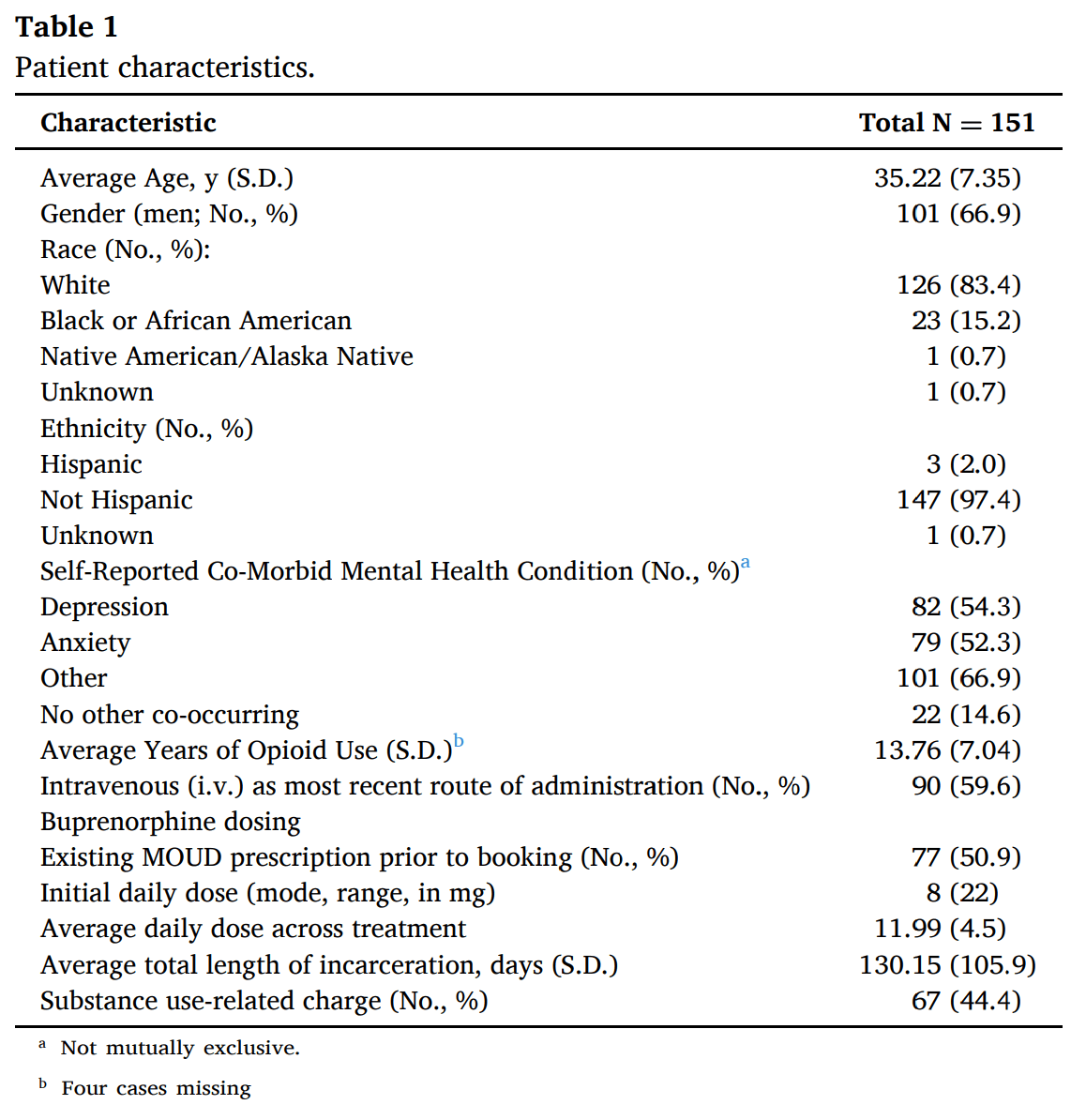
Table 1

3.2. Primary outcome: treatment engagement

Of the 151 patients, 98.7 % (n = 149) remained in treatment throughout the duration of their incarceration; of the two patients not retained, one individual was discharged for medication noncompliance (diversion) and a second individual discontinued medication due to side effects. Among the remaining 149 patients, six chose to receive extended-release buprenorphine injection prior to their release and 23 patients were transferred to another correctional facility (post-release data from other detention centers or jails was unavailable). These 31 cases were not considered in any further analyses (Fig. 1).
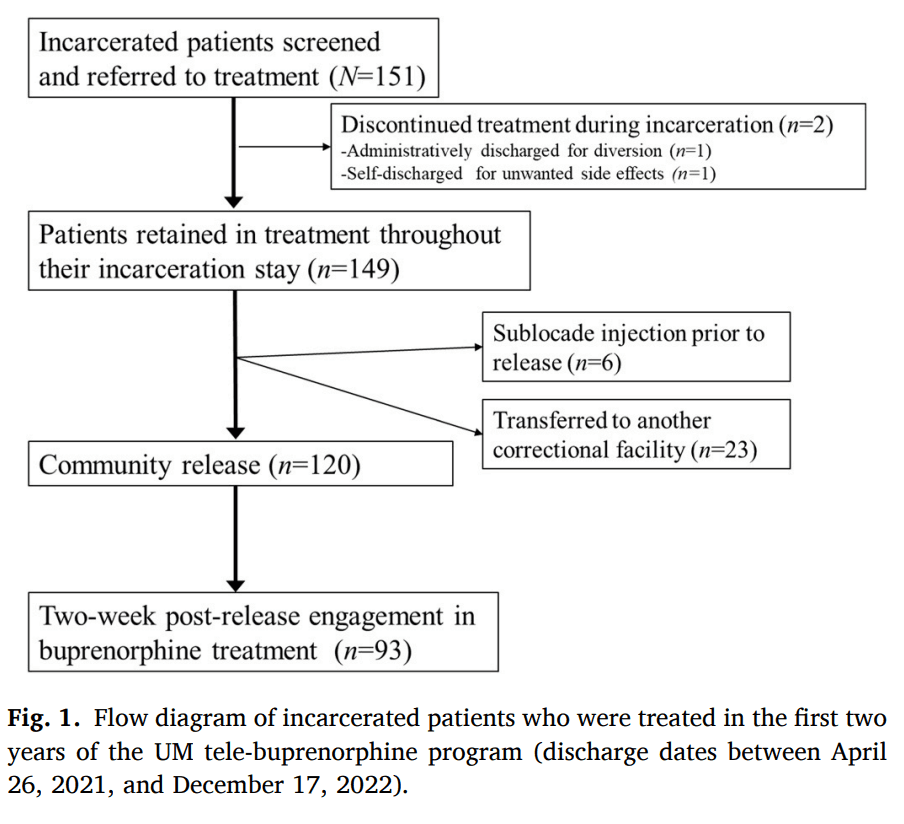
Fig 1

Among the 120 patients who were in buprenorphine care at the time they were discharged from the facility, 93 patients (78 %) were engaged in community-based buprenorphine treatment in the two weeks following their release from the detention center. Seventy of these 93 individuals had been provided with a bridge buprenorphine prescription by our tele-buprenorphine treatment team (Fig. 2). Comparisons revealed a significantly greater proportion of patients who were provided with bridge buprenorphine prescriptions had established community-based buprenorphine treatment, relative to individuals who had not received bridge buprenorphine prescriptions (χ2(1120) = 13.76, p < 0.001; see Fig. 2).
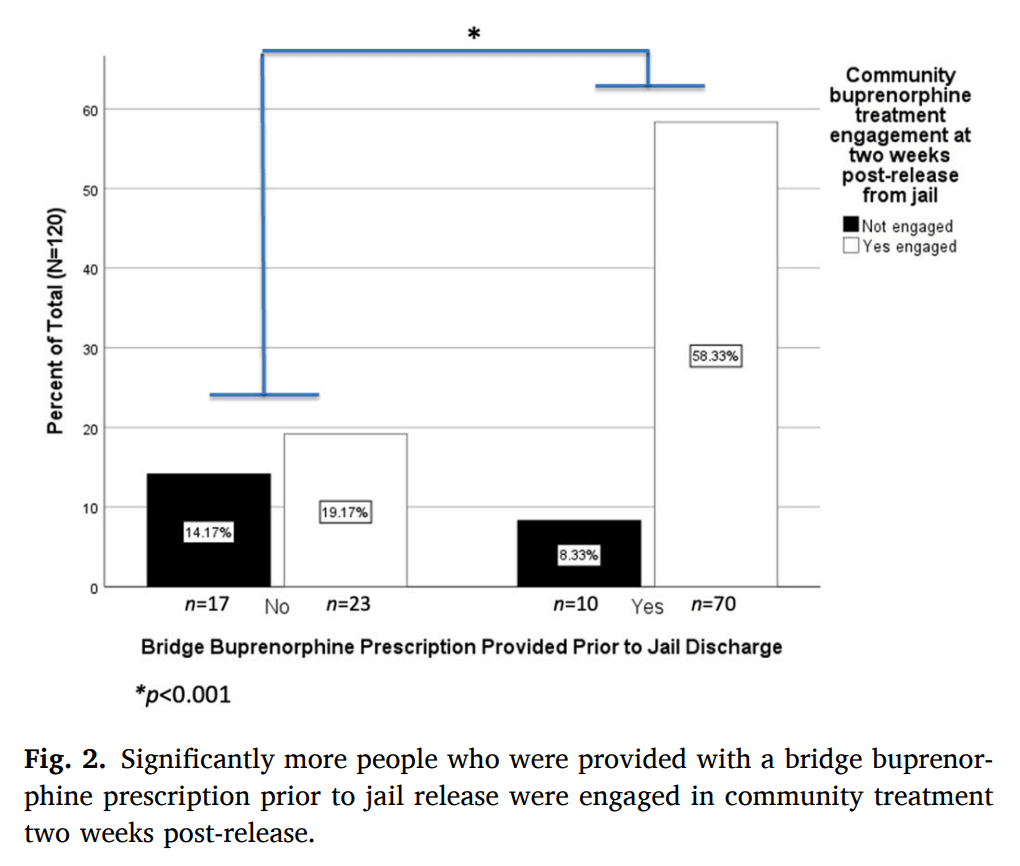
Fig 2

Sixty-one of the 120 individuals considered in final analyses had an existing buprenorphine prescription in the days prior to incarceration and continued their treatment with the jail-based tele-buprenorphine program. Buprenorphine continuation had no impact on the primary outcome, however, as there was no difference in post-release treatment engagement between this group and the group of individuals (n = 59) who were newly inducted in jail (χ2(1120) = 0.173, p > 0.05).

To explore possible relationships between demographics, years of opioid use, family history of substance use, treatment length and the primary outcome of post-release treatment engagement, we performed a binary logistic regression using a step-wise approach. The dependent variable was engagement in treatment within two weeks of release (Yes=1; No=0). Independent variables were entered into the model in two blocks. The first block consisted of generic demographic variables including: (1) age, (2) sex, (3) race, and (4) ethnicity. Participant age was treated as a continuous variable while sex (male=0; female=1), race (White=1; other race=0), and ethnicity (Hispanic=1; Non-Hispanic=0) were treated as dichotomous categorical variables. Race categories were collapsed because only 24 individuals identified as Non-White (23 Black/African American and one Native American). The second block consisted of variables of interest and included: (1) prior community treatment engagement (defined as having a buprenorphine or methadone prescription at the time of incarceration; Yes=1; No=0); lifetime years of opioid use (continuous); self-reported family history of substance use disorders (Yes=1; No=0); total number of telemedicine encounters with UMD providers (continuous); and treatment length (defined as the number of days receiving telemedicine divided by length of stay to control for variable periods of incarceration; continuous). Variables in the first block were entered using a backward elimination method where all variables are entered into the model and at each step, the least significant variable is removed until all the remaining variables have a statistically significant contribution. Variables in the second block were entered simultaneously and preserved in the final model regardless of statistical significance. The results of the model revealed that none of the generic demographic factors in the first block provided a statistically significant contribution to the model; these variables were not included in the final model. Results of the final model are presented in Table 2. In summary, there were no statistically significant predictors of post-release treatment engagement amongst the variables of interest.
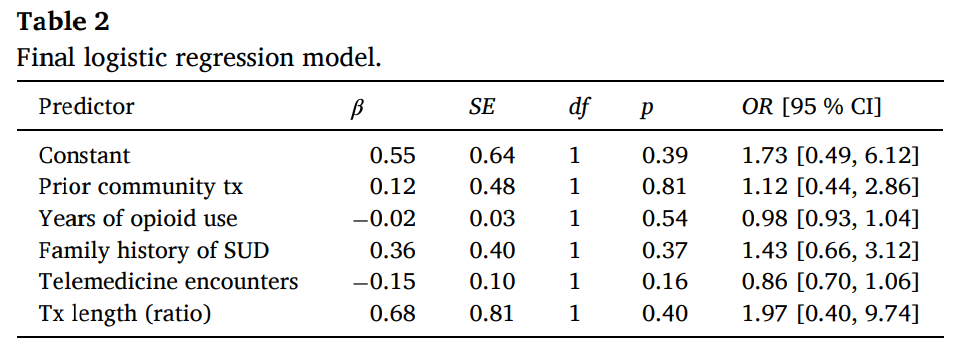
Table 2

3.3. Secondary and exploratory outcome measures

No individuals had a fatal or non-fatal drug overdose event noted in the PDMP within the two weeks following release from jail. VSA data confirmed that no patients died in 2021 or 2022.

4. Discussion

Although several reports have provided incontrovertible evidence for the risk of not providing incarcerated patients with life-saving treatment with MOUD, (Borschmann, 2024a, Green et al., 2018, Binswanger, 2013) current treatment models still rely largely on jail-based providers with local expertise with buprenorphine dosing or community providers to initiate treatment following discharge from carceral settings. With the dual benefit of reducing the high risk of post-release overdose death and increasing MOUD community treatment engagement, (Degenhardt et al., 2014) MOUD induction during incarceration (and prior to the vulnerable period of release from jail) should be standard of care. Yet jail-based MOUD treatment initiation is rare, reportedly as little as 13 % (Sufrin et al., 2023). There is a dire need for increased access to equitable treatment, particularly in rural areas of the U.S (Rubin, 2019). Our data provide initial evidence that telemedicine can be leveraged to meet this gap. These data add to the limited but growing evidence supporting telemedicine as a method to connect incarcerated patients to MOUD treatment Duncan et al. (2021) and expand it to demonstrate that jail-based buprenorphine initiation was associated with a high rate of patients initiating buprenorphine in the community. Specifically, nearly all (~99 %) of the patients were retained in treatment during their incarceration, with a high rate of community buprenorphine engagement (78 %). Despite consistent reports of younger age as a risk factor for MOUD treatment retention, (Brorson et al., 2013, Krawczyk et al., 2021) we found no patient characteristics (demographics, pre-treatment and treatment-related variables) that significantly predicted post-release engagement; however, a younger population and the fact that factors surrounding people’s release from jail (inherently tied to treatment duration) may explain this departure from published findings. These data further suggest that provision of pre-release bridge buprenorphine yields increased treatment engagement post-release. Finally, although this study is limited in its scope and observational nature, the fact that there were no documented fatal or non-fatal overdoses is an encouraging signal to suggest that telemedicine-based treatment in jail may be an effective intervention for decreasing opioid-associated death. Collectively, these data underscore the utility of telemedicine to fill the urgent need for strategies to increase access to evidence-based treatment for incarcerated populations.

5. Limitations

This study is limited in its retrospective design and lack of a well-controlled comparator arm. In a real-world implementation setting, a comparative effectiveness trial would provide the clearest information regarding effectiveness. Additionally, as an observational trial, we were unable to collect self-report data for the reasons why individuals did not engage in community buprenorphine treatment, nor were we able to verify buprenorphine adherence through urine drug screening. Moreover, provider encounters are documented at only one time point following release from the jail treatment program; thus, we were unable to collect data on longer-term follow-up of buprenorphine prescriptions. Furthermore, although we were able to verify fatal overdose incidences through VSA, there might have been underreporting of non-fatal overdoses into the PDMP. Finally, as a single-site observational trial, these data are not generalizable to other detention centers or jails.

6. Conclusions

There is an urgent need for evidence-based treatment with MOUD in carceral settings. Our data provide preliminary data that telemedicine provides a low-threshold, effective approach to treating incarcerated individuals, particularly in rural areas of the US, and warrants prospective evaluation using randomized controlled studies.

Open Article as PDF

Abstract

Release from incarceration poses significant risk for opioid-associated overdose. Treatment engagement with medications for opioid use disorder prior to community release is an effective overdose mitigation strategy. But this evidence-based intervention is infrequently implemented in rural jails, a gap that can be addressed with the use of telemedicine. The aim of this study was to evaluate a novel telemedicine buprenorphine (tele-buprenorphine) treatment program for incarcerated people diagnosed with moderate-to-severe opioid use disorder (OUD). We conducted a retrospective chart review of data collected from discharged patients who were enrolled in a rural jail-based telemedicine buprenorphine treatment between 4/26/2021–12/17/2022. Outcome measures included community buprenorphine treatment engagement at two weeks following release from jail (primary) and fatal and/or non-fatal overdose events occurring within two weeks of release from jail (secondary). A total of 151 incarcerated patients were enrolled in the tele-buprenorphine program, 98.7 % (n = 149) of whom remained in buprenorphine treatment throughout custody. Of these 149 patients, six were provided with extended-release buprenorphine prior to release, and 23 were transferred to another jail. Of the 120 patients who were discharged into the community, 78 % (n = 93) were engaged in buprenorphine treatment within the two weeks following release. Significantly more people in this group (75 %) received bridge buprenorphine prescription prior to release. These first-of-its-kind data suggest that like in-person jail-based buprenorphine provision, tele-buprenorphine may increase community treatment engagement and possibly prevent opioid overdose and fatality. This report provides proof-of-concept justification for a unique clinical implementation model that warrants wider adoption and evaluation.

The United States has experienced an opioid crisis for over a decade. Individuals recently released from incarceration face a particularly high risk, with a significantly increased likelihood of overdose death in the weeks following community re-entry. Providing evidence-based medications for opioid use disorder (MOUD), such as buprenorphine, to incarcerated individuals has been linked to fewer post-release overdose deaths and greater engagement in community treatment. Jails offer a controlled environment suitable for starting buprenorphine treatment, but they frequently lack expertise, staffing, and space. This situation presents a crucial opportunity for implementing creative solutions to expand treatment access.

Telemedicine offers a practical and scalable approach to address healthcare and treatment gaps. While there are many calls for widespread adoption of telemedicine for confined populations, its reported use for addiction treatment with medication in correctional settings remains limited. MOUD access is an especially challenging issue in rural communities, which often already struggle with resource and healthcare shortages, thus intensifying the difficulties of access within carceral settings. A team has successfully delivered remote telemedicine buprenorphine (tele-buprenorphine) treatment in various rural clinical settings and extended this to incarcerated populations starting in 2020. This team is currently the primary buprenorphine treatment provider for rural county jails and detention centers in several jurisdictions. To date, few studies have evaluated the outcomes of jail-based telemedicine treatment for opioid use disorder (OUD). This observational study aimed to evaluate patient outcomes from the first two years of a tele-buprenorphine program's implementation at one rural detention center site.

Background

Individuals who are incarcerated are disproportionately affected by the opioid crisis, with estimates suggesting that a substantial portion of people with OUD cycle through the correctional system annually. These individuals face a significantly elevated risk of drug-related overdose death, with fatal opioid overdose frequently documented as the leading cause of death following release from correctional facilities. This heightened risk is largely attributed to withdrawal procedures in jails that reduce tolerance without providing MOUD, making individuals more vulnerable to overdose upon release. Medications for OUD, including methadone, buprenorphine, and naltrexone, represent the most effective and evidence-based treatments. Their provision during and after incarceration has been shown to reduce opioid use, overdose incidents, and recidivism. Although major medical and justice authorities widely endorse MOUD for incarcerated individuals, it is often not offered as standard care. Less than half of local jails provide MOUD, and even fewer offer it to all individuals with OUD who request it. While litigation, increased federal funding, and state mandates are driving greater MOUD implementation in correctional settings, gaps in healthcare delivery persist, particularly in geographically constrained rural areas. Rural regions disproportionately bear the burden of the opioid crisis due to shortages of treatment options, longer wait times, increased driving distances, and higher stigma. Sociocultural factors, such as labor-intensive occupations and higher rates of chronic pain, also contribute. Telemedicine offers a promising solution to bridge this treatment gap, defined as real-time, interactive communication between patients and practitioners at a distance. Advances in telemedicine for mental health paved the way for its expansion into OUD treatment, especially after regulatory flexibilities during the COVID-19 pandemic allowed for the remote prescription of buprenorphine. The University of Maryland's DART program has been a leader in providing tele-MOUD to rural Maryland areas severely affected by the opioid epidemic. Following a state mandate for MOUD in correctional facilities, the DART team expanded its telemedicine program to rural detention centers, demonstrating successful implementation and treatment engagement prior to discharge. This study represents the first evaluation of this jail-based telemedicine program.

Methods

This observational study involved a retrospective analysis of data collected from incarcerated patients enrolled in a telemedicine buprenorphine program. The data were gathered from a single, high-volume rural detention center site between April 2021 and December 2022. The detention center, which accommodates approximately 185 individuals daily, previously offered MOUD continuation but lacked a buprenorphine initiation protocol. Patients entering the facility were screened for potential opioid use disorder using the SBIRT (Screening, Brief Intervention, Referral to Treatment) model. Individuals who screened positive were scheduled for an evaluation via secure videoconferencing with a University of Maryland provider, who conducted a full patient history and clinical examination. For patients deemed appropriate, a buprenorphine treatment protocol was initiated, with buprenorphine administered daily by the jail's nursing staff. Upon release, patients received a bridge prescription for up to two weeks of buprenorphine to facilitate community care. Data were abstracted from jail intake and discharge records, the electronic health record (EHR), and the Maryland Department of Health Vital Statistics Administration (VSA). Collected data included demographics, total years of opioid use, most recent route of administration, comorbid mental health conditions, crime charges, buprenorphine dosage, duration of telemedicine treatment, and post-release status. The primary outcome measure was community buprenorphine treatment engagement, defined as confirmed patient fulfillment of a buprenorphine prescription within 14 days of release. Secondary outcomes included documented fatal or non-fatal overdose events within the same 14-day period, verified with VSA data. Statistical analyses, including Pearson χ2 tests and binary logistic regression, were used to compare differences between groups and explore relationships between various factors and community treatment entry.

Results

Between April 26, 2021, and December 17, 2022, 151 incarcerated patients diagnosed with moderate-to-severe OUD were enrolled in the telemedicine buprenorphine program. The mean age of patients was 35.22 years, with 66.9% identifying as men and 83.4% as White. Patients reported an average of 13.76 years of opioid use, and 59.6% reported intravenous administration for their most recent use. The median prescribed buprenorphine induction dose was 8 mg, with patients maintained on an average of 12 mg throughout treatment. Over half (53%) of the patients were already on buprenorphine treatment prior to jail intake. Nearly all patients (98.7%, n = 149) remained in treatment during their incarceration. After excluding six patients who received extended-release buprenorphine and 23 transferred to other facilities, 120 patients were discharged while actively engaged in buprenorphine care. Of these, 93 patients (78%) engaged in community-based buprenorphine treatment within two weeks of release. Patients provided with bridge buprenorphine prescriptions showed a significantly greater proportion of community-based treatment engagement compared to those who did not receive such prescriptions. Prior buprenorphine continuation before incarceration had no impact on post-release treatment engagement. Binary logistic regression analysis found no statistically significant predictors of post-release treatment engagement among demographic factors (age, sex, race, ethnicity) or treatment-related variables (prior community treatment engagement, years of opioid use, family history of substance use, total number of telemedicine encounters, and treatment length). Importantly, no fatal or non-fatal drug overdose events were noted in the prescription drug monitoring program within two weeks following release, and VSA data confirmed no patient deaths during 2021 or 2022.

Discussion and Conclusion

Despite conclusive evidence highlighting the critical need for MOUD in carceral settings to mitigate the high risk of post-release overdose death and increase community treatment engagement, jail-based MOUD initiation remains infrequent. This study provides preliminary evidence that telemedicine can effectively address this gap, particularly in rural areas. The program achieved exceptionally high patient retention during incarceration (approximately 99%) and a notable rate of community buprenorphine engagement post-release (78%). The provision of bridge buprenorphine prescriptions prior to release significantly enhanced post-release treatment engagement. An encouraging finding was the absence of documented fatal or non-fatal overdoses within two weeks of release, suggesting that jail-based telemedicine treatment may serve as a critical intervention for reducing opioid-associated mortality. Unlike some previous research, this study found no patient characteristics that significantly predicted post-release engagement, which might be attributed to the specific demographics of the study population or factors related to the circumstances of release. This study is subject to limitations, including its retrospective design and the absence of a controlled comparator arm, which restricts conclusions regarding comparative effectiveness. Data on longer-term follow-up and the specific reasons for non-engagement in community treatment were not collected, and there might have been underreporting of non-fatal overdoses. Furthermore, as a single-site observational trial, these findings may not be generalizable to all detention centers or jails. Nevertheless, these preliminary data underscore the utility of telemedicine as a low-threshold, effective approach for treating incarcerated individuals, especially in rural areas of the United States. The findings strongly support the need for prospective, randomized controlled studies to further evaluate this intervention.

Open Article as PDF

Abstract

Release from incarceration poses significant risk for opioid-associated overdose. Treatment engagement with medications for opioid use disorder prior to community release is an effective overdose mitigation strategy. But this evidence-based intervention is infrequently implemented in rural jails, a gap that can be addressed with the use of telemedicine. The aim of this study was to evaluate a novel telemedicine buprenorphine (tele-buprenorphine) treatment program for incarcerated people diagnosed with moderate-to-severe opioid use disorder (OUD). We conducted a retrospective chart review of data collected from discharged patients who were enrolled in a rural jail-based telemedicine buprenorphine treatment between 4/26/2021–12/17/2022. Outcome measures included community buprenorphine treatment engagement at two weeks following release from jail (primary) and fatal and/or non-fatal overdose events occurring within two weeks of release from jail (secondary). A total of 151 incarcerated patients were enrolled in the tele-buprenorphine program, 98.7 % (n = 149) of whom remained in buprenorphine treatment throughout custody. Of these 149 patients, six were provided with extended-release buprenorphine prior to release, and 23 were transferred to another jail. Of the 120 patients who were discharged into the community, 78 % (n = 93) were engaged in buprenorphine treatment within the two weeks following release. Significantly more people in this group (75 %) received bridge buprenorphine prescription prior to release. These first-of-its-kind data suggest that like in-person jail-based buprenorphine provision, tele-buprenorphine may increase community treatment engagement and possibly prevent opioid overdose and fatality. This report provides proof-of-concept justification for a unique clinical implementation model that warrants wider adoption and evaluation.

The United States has faced an opioid crisis for over a decade. Individuals recently released from incarceration are especially vulnerable, with a significantly higher risk of overdose death in the weeks following their return to the community. Providing evidence-based medications for opioid use disorder (MOUD), such as buprenorphine, to incarcerated individuals has been linked to fewer post-release overdose deaths and increased engagement in community treatment. Jails offer a controlled environment suitable for starting buprenorphine treatment. However, jails often lack expertise in buprenorphine dosing, sufficient staffing, and adequate space, highlighting a critical need for innovative solutions to expand treatment access.

Telemedicine offers a practical and scalable solution for healthcare and treatment gaps. There are many calls for widespread adoption of telemedicine for confined populations, yet few reports exist on its use for addiction treatment with medications in carceral settings. Access to MOUD is a particularly pressing issue in rural communities, which often already struggle with limited resources and healthcare shortages. This problem further complicates treatment access in jails and prisons. A team has provided remote telemedicine buprenorphine (tele-buprenorphine) treatment to various rural clinical settings, and this expanded to incarcerated populations in 2020. Currently, the program is the primary buprenorphine treatment provider for rural county jail and detention centers in seven jurisdictions, representing about 40% of Maryland's rural counties. To the knowledge of the team, no study had evaluated the outcomes of jail-based telemedicine treatment for opioid use disorder (OUD). This observational study aimed to evaluate patient outcomes during the first two years of the tele-buprenorphine program's implementation at one rural detention center site.

Opioid Use Disorder in Correctional Settings

People in correctional settings are disproportionately affected by the opioid crisis. Estimates suggest that a significant percentage of individuals with OUD cycle through the correctional system each year, and a notable portion of all incarcerated people have an OUD. Tragically, these individuals face a much higher risk of drug-related overdose death, with fatal opioid overdose frequently documented as the leading cause of death after release from jail or prison. Local data supports these findings; one state report found that the risk of overdose was much greater in the first week after release from prisons and jails compared to later periods. This heightened risk is largely due to the common practice in jails and prisons of using withdrawal or detoxification procedures without MOUD, which lowers a person's tolerance to opioids, increasing the risk of overdose upon release.

Research spanning decades confirms that MOUD—including methadone, buprenorphine, and naltrexone—are the most effective, evidence-based treatments for OUD. The benefits of MOUD, such as reduced overdose mortality, are especially impactful in correctional environments where OUD is prevalent. A growing body of literature shows that providing MOUD during and after incarceration decreases opioid use, fatal and non-fatal overdoses, and re-arrest rates. Jail-based MOUD programs vary, typically involving either in-house treatment by the jail's medical provider or partnerships with community opioid treatment programs for off-site care. In either case, treatment requires in-person interaction with a prescriber. Initiating OUD treatment in jail offers a crucial opportunity and can be a significant turning point in an individual's recovery, even if treatment was not sought before incarceration.

Major medical and justice authorities have consistently supported providing MOUD to incarcerated individuals. These include the American Psychiatric Association, the American Society of Addiction Medicine, the National Institute of Justice, and the National Commission on Correctional Healthcare, among others. Despite this widespread endorsement, MOUD is often not offered as standard care to individuals involved with the justice system. For instance, an analysis of treatment data found that justice-referred individuals received agonist treatment far less frequently than those referred through other channels. More recently, a national survey of local jails in the U.S. revealed that less than half offered MOUD to at least some individuals, and even fewer offered it to anyone who requested treatment for OUD. Growing awareness of the lack of treatment availability for people entering and leaving correctional settings has led to various responses, including lawsuits pushing correctional systems to provide MOUD in line with ethical healthcare standards, increased federal funding for research on MOUD in these settings, and an increase in states requiring MOUD implementation in correctional facilities. These developments suggest a shift toward greater acceptance of MOUD delivery in correctional environments. However, gaps in MOUD healthcare delivery persist, particularly in rural, geographically isolated areas of the country, hindering this positive momentum.

The Opioid Crisis in Rural Areas

Rural regions have been disproportionately affected by the opioid public health crisis, showing the highest rates of opioid prescriptions and opioid-related deaths per person. This is largely driven by a scarcity of available treatment options. Patients in rural areas face longer wait times, greater travel distances to treatment, and increased stigma, all of which complicate OUD treatment.

Sociocultural factors also contribute to treatment disparities between rural and urban communities, as well as the higher burden of opioid use in rural populations. These factors include a prevalence of labor-intensive occupations, which increase the risk of workplace injuries and foster a cultural acceptance of opioid use for pain management. Additionally, rural populations are typically older, leading to more frequent chronic pain and, consequently, higher rates of opioid prescriptions. Other contributing factors include limited economic opportunities and close-knit social and family networks that can facilitate the distribution of opioids. There is an urgent need to close the OUD treatment gap in rural areas of the United States, for which telemedicine offers a promising solution.

Telemedicine for Opioid Use Disorder Treatment

Telemedicine involves two-way, real-time interactive communication between patients and healthcare providers at a distance to improve patient health. Telemedicine platforms have been used for decades to deliver various psychiatric care services, including evaluations, therapy, patient education, and medication management. These platforms have been assessed based on their feasibility, validity, reliability, patient satisfaction, cost-effectiveness, and clinical outcomes. Previous research demonstrates that telemedicine is effective in treating various mental health disorders, such as depression and post-traumatic stress disorder. These advancements have paved the way for its expansion into OUD treatment.

In the United States, methadone for OUD is a federally regulated treatment available only through certified opioid treatment programs. Buprenorphine, a partial μ-opioid receptor agonist approved in 2002, offers an alternative with less regulatory oversight and can be prescribed in office-based settings. The use of telemedicine for OUD has grown not only due to the demand for solutions to the public health crisis but also as a critical response to the COVID-19 pandemic. Before the pandemic, a significant barrier to widespread buprenorphine use via telemedicine was the 2008 Ryan Haight Act, which generally prohibited prescribing controlled substances without a prior in-person patient encounter. This restriction was temporarily lifted to allow safe, socially distanced OUD treatment, a flexibility the federal government has extended multiple times. Studies have shown that telemedicine-based OUD treatment produces clinical outcomes, specifically patient retention and reduction in illicit substance use, comparable to those of in-person care.

A Telemedicine Program for Opioid Use Disorder

The Division of Addiction Research and Treatment (DART) at the University of Maryland School of Medicine has been a leader in providing MOUD (buprenorphine and naltrexone) via telemedicine to rural areas of Maryland's Eastern Shore and western Appalachian communities. Since August 2015, DART has partnered with intensive outpatient programs and behavioral treatment programs in rural counties—including Caroline, Talbot, and Dorchester Counties on the Eastern Shore, and Garrett and Washington Counties in western Maryland—to provide telemedicine-based MOUD for patients diagnosed with OUD. These counties have been disproportionately affected by the opioid epidemic, with opioid overdose death trends showing little sign of reversal. For example, while the state of Maryland saw a decrease in opioid overdose deaths between 2018 and 2019, these specific counties experienced either an increase or a plateau in fatalities.

Clinical observations indicated that patients treated in these rural settings were frequently lost to the cycle of incarceration. In 2019, the state of Maryland passed House Bill (HB) 116, which mandated that all local correctional facilities make at least one formulation of each FDA-approved full opioid agonist, partial opioid agonist, and long-acting opioid antagonist available for OUD treatment to any incarcerated individual in need. In response to this mandate, the team secured private foundation funding to launch a new clinical program of medication-assisted treatment via telemedicine to three rural county detention centers across the state. The successful implementation of telemedicine MOUD in rural detention center sites has been reported, with treatment engagement and initiation occurring before the high-risk period of discharge. This program has expanded rapidly, now providing tele-buprenorphine treatment to seven different jail and detention center sites across Maryland. The opportunity to expand clinical work to rural detention center settings has also enabled the team to conduct research in these environments.

Methods

This report details retrospectively collected data following jail discharge from initial and follow-up treatment episodes of incarcerated patients enrolled in the tele-buprenorphine program. Data were stored in a HIPAA-compliant database maintained at the University of Maryland School of Medicine. All data were collected as part of a study protocol approved by the University of Maryland Human Research Protection Office. This study adhered to the Strengthening the Reporting of Observational Studies in Epidemiology (STROBE) reporting guideline. This study is the first reported evaluation of a jail-based telemedicine program designed to expand buprenorphine prescribing in this vulnerable population. Data are reported from initial encounters of all incarcerated patients who were treated and released during the first 24 months of program implementation at a high-volume detention center site in rural Appalachia.

Study Setting and Procedures

The detention center site is a facility rated for 234 people, with an average daily census of 185 individuals. Before the detention center's involvement with the telemedicine-based buprenorphine program, methadone and buprenorphine continuation were offered through an agreement with a local opioid treatment program, but no buprenorphine initiation/induction protocol was in place. Program implementation began in February 2021, and the first patient was enrolled in treatment on April 26, 2021. Screening and treatment methods have been previously reported. Briefly, the SBIRT (Screening, Brief Intervention, Referral to Treatment) model is used upon entry to the facility by the detention center's nurse to screen for potential opioid use disorder. Individuals who screen positive are scheduled for an evaluation via secure videoconferencing with a University of Maryland provider who gathers a full patient history and performs a thorough clinical exam. For those considered appropriate for buprenorphine treatment, a patient-centered dosing protocol is ordered. Buprenorphine mono-product, either 2 or 8 mg tablets, is administered once daily by the jail's nursing staff with correctional officer oversight, using diversion mitigation protocols. Upon release from custody, patients receive up to two weeks' worth of a bridge prescription for buprenorphine in the community. Patients who already have a home supply of buprenorphine or immediate access to a community treatment provider are not given bridge prescriptions. All interactive video conferencing sessions are conducted point-to-point using Health Insurance Portability and Accountability Act (HIPAA)-compliant Advanced Encryption Standard (AES) algorithm via Internet Protocol (IP) connections. The EPIC electronic health record (EHR) system is used to enter patient encounter notes, lab results, and schedule appointments.

Data Collection

This retrospective chart review analyzed data from patients discharged from a jail-based telemedicine buprenorphine program between April 26, 2021, and December 17, 2022. Data were collected from jail intake and discharge records, the electronic health record (EHR), and the Maryland Department of Health Vital Statistics Administration (VSA).

Upon enrollment, patients signed a release of information allowing the treatment team to access their jail records. Jail intake data included age, self-identified gender, race, ethnicity, total years of opioid use, most recent route of administration, comorbid mental health conditions, and crime charge. Discharge data included discharge date, tele-buprenorphine retention (discharge from tele-buprenorphine program and reason for discharge), whether an appointment was made by the jail re-entry coordinator for community care continuation, and post-release status (e.g., transferred to community inpatient program). EHR abstraction included whether any pre-incarceration MOUD treatment was provided in the week prior to incarceration, buprenorphine dosage, duration of tele-buprenorphine treatment, whether a buprenorphine bridge prescription was provided at discharge, whether the patient picked up their community buprenorphine prescription, and encounter notes completed by the providing physicians. These encounter notes also provided post-release outcome data, including community buprenorphine prescription pick-up events and any noted fatal or non-fatal drug overdose events, based on physicians' standard practice of querying prescription drug monitoring program (PDMP) information to assess engagement in care after discharge. Fatal overdose data were verified through an agreement with the Maryland Department of Health Vital Statistics Administration (VSA), which provided data on verified occurrences of deaths among patients discharged in 2021 and 2022.

Outcome Measures

The main outcome measure was community buprenorphine treatment engagement two weeks after release from jail. This was defined as PDMP-confirmed patient fulfillment of a buprenorphine prescription within 14 days following release, meaning a pick-up of either the bridge prescription or any buprenorphine prescriptions provided post-release by a community provider, and was recorded as a binomial variable. Secondary outcomes included PDMP-documented fatal or non-fatal overdose events occurring within 14 days following release from jail. Fatal overdose was verified with VSA data.

Statistical Analysis

Analyses were conducted using SPSS statistical software v29 (IBM). Baseline demographic, clinical characteristics, and fatal/non-fatal overdose outcome data are reported as frequencies and percentages. Central tendencies (mean or median) with dispersion (standard deviation or range) were used for continuous data. Pearson χ2 tests were used to compare differences between groups of patients who either had or had not received a bridge buprenorphine prescription on the primary outcome of treatment engagement. A binary logistic regression was used to explore the relationships between various pre-treatment and treatment-related covariates on community treatment entry. A p-value less than 0.05 (2-tailed) was considered statistically significant.

Results

Patient Characteristics

Between April 26, 2021, and December 17, 2022, a total of 151 incarcerated patients diagnosed with moderate-to-severe OUD were enrolled in the telemedicine buprenorphine program. The average age of the patients was 35.22 years (standard deviation = 7.35), 66.9% were men, 83.4% identified as White, and 97.4% were of non-Hispanic ethnicity. Patients reported an average of 13.76 years (standard deviation = 7.04) of opioid use, and 59.6% reported intravenous administration for their most recent opioid use. The median prescribed induction dose of buprenorphine was 8 mg (range = 2–24 mg), and patients were maintained on an average of 12 mg (range = 3–24 mg) throughout their treatment duration. Seventy-six (53%) of the patients were receiving buprenorphine treatment before jail intake and waited a median of one day (interquartile range = 7) to be admitted to the tele-buprenorphine treatment program.

Treatment Engagement Outcomes

Of the 151 patients, 98.7% (n = 149) remained in treatment throughout their incarceration. Of the two patients not retained, one was discharged for medication noncompliance (diversion), and another discontinued medication due to side effects. Among the remaining 149 patients, six chose to receive an extended-release buprenorphine injection before their release, and 23 patients were transferred to another correctional facility (post-release data from other detention centers or jails was unavailable). These 31 cases were not included in further analyses. Among the 120 patients who were in buprenorphine care at the time of their discharge from the facility, 93 patients (78%) were engaged in community-based buprenorphine treatment within two weeks following their release from the detention center. Seventy of these 93 individuals had been provided with a bridge buprenorphine prescription by the tele-buprenorphine treatment team. Comparisons showed a significantly greater proportion of patients who received bridge buprenorphine prescriptions established community-based buprenorphine treatment, compared to individuals who had not received bridge buprenorphine prescriptions (χ2(1120) = 13.76, p < 0.001).

Sixty-one of the 120 individuals included in the final analyses had an existing buprenorphine prescription in the days before incarceration and continued their treatment with the jail-based tele-buprenorphine program. Buprenorphine continuation had no impact on the primary outcome, as there was no difference in post-release treatment engagement between this group and the group of individuals (n = 59) who were newly started on buprenorphine in jail (χ2(1120) = 0.173, p > 0.05).

To explore possible relationships between demographics, years of opioid use, family history of substance use, treatment length, and the primary outcome of post-release treatment engagement, a binary logistic regression was performed using a step-wise approach. The results of the model revealed that none of the generic demographic factors initially entered provided a statistically significant contribution to the model; these variables were not included in the final model. In summary, there were no statistically significant predictors of post-release treatment engagement among the variables of interest.

Secondary Outcomes

No individuals had a fatal or non-fatal drug overdose event noted in the PDMP within two weeks following release from jail. VSA data confirmed that no patients died in 2021 or 2022.

Discussion

Despite compelling evidence demonstrating the risks of not providing life-saving MOUD treatment to incarcerated patients, current treatment models still largely depend on jail-based providers with local buprenorphine dosing expertise or community providers to initiate treatment after release from correctional settings. Given its dual benefit of reducing the high risk of post-release overdose death and increasing MOUD community treatment engagement, MOUD induction during incarceration (and before the vulnerable period of release from jail) should be standard practice. However, jail-based MOUD treatment initiation remains rare, reportedly as low as 13%. There is an urgent need for increased access to equitable treatment, particularly in rural areas of the U.S. The presented data offer initial evidence that telemedicine can address this gap. These findings contribute to the limited but growing evidence supporting telemedicine as a way to connect incarcerated patients to MOUD treatment and further demonstrate that jail-based buprenorphine initiation was associated with a high rate of patients starting buprenorphine in the community. Specifically, almost all (~99%) of the patients remained in treatment during their incarceration, with a high rate of community buprenorphine engagement (78%). While consistent reports identify younger age as a risk factor for MOUD treatment retention, no patient characteristics (demographics, pre-treatment, and treatment-related variables) in this study significantly predicted post-release engagement. A younger study population and factors related to individuals' release from jail (which is tied to treatment duration) may explain this difference from published findings. These data also suggest that providing pre-release bridge buprenorphine leads to increased treatment engagement post-release. Finally, although this study has limitations in its scope and observational nature, the absence of documented fatal or non-fatal overdoses is an encouraging sign, suggesting that telemedicine-based treatment in jail could be an effective intervention for reducing opioid-associated deaths. Collectively, these data emphasize the utility of telemedicine in fulfilling the urgent need for strategies to increase access to evidence-based treatment for incarcerated populations.

Limitations

This study is limited by its retrospective design and the lack of a well-controlled comparison group. In a real-world implementation setting, a comparative effectiveness trial would provide the clearest information regarding effectiveness. Additionally, as an observational trial, it was not possible to collect self-report data on why individuals did not engage in community buprenorphine treatment, nor was buprenorphine adherence verified through urine drug screening. Furthermore, provider encounters are documented at only one time point following release from the jail treatment program; thus, data on longer-term follow-up of buprenorphine prescriptions could not be collected. Although fatal overdose incidences were verified through VSA, there might have been underreporting of non-fatal overdoses into the PDMP. Finally, as a single-site observational trial, these data are not broadly applicable to other detention centers or jails.

Conclusions

There is an urgent need for evidence-based MOUD treatment in correctional settings. The presented data provide preliminary evidence that telemedicine offers an accessible and effective approach to treating incarcerated individuals, particularly in rural areas of the U.S. This approach warrants prospective evaluation through randomized controlled studies.

Open Article as PDF

Abstract

Release from incarceration poses significant risk for opioid-associated overdose. Treatment engagement with medications for opioid use disorder prior to community release is an effective overdose mitigation strategy. But this evidence-based intervention is infrequently implemented in rural jails, a gap that can be addressed with the use of telemedicine. The aim of this study was to evaluate a novel telemedicine buprenorphine (tele-buprenorphine) treatment program for incarcerated people diagnosed with moderate-to-severe opioid use disorder (OUD). We conducted a retrospective chart review of data collected from discharged patients who were enrolled in a rural jail-based telemedicine buprenorphine treatment between 4/26/2021–12/17/2022. Outcome measures included community buprenorphine treatment engagement at two weeks following release from jail (primary) and fatal and/or non-fatal overdose events occurring within two weeks of release from jail (secondary). A total of 151 incarcerated patients were enrolled in the tele-buprenorphine program, 98.7 % (n = 149) of whom remained in buprenorphine treatment throughout custody. Of these 149 patients, six were provided with extended-release buprenorphine prior to release, and 23 were transferred to another jail. Of the 120 patients who were discharged into the community, 78 % (n = 93) were engaged in buprenorphine treatment within the two weeks following release. Significantly more people in this group (75 %) received bridge buprenorphine prescription prior to release. These first-of-its-kind data suggest that like in-person jail-based buprenorphine provision, tele-buprenorphine may increase community treatment engagement and possibly prevent opioid overdose and fatality. This report provides proof-of-concept justification for a unique clinical implementation model that warrants wider adoption and evaluation.

The United States has faced a major opioid crisis for over a decade. Individuals recently released from correctional facilities are especially vulnerable; their risk of dying from an overdose is up to 12.7 times higher than the general public in the weeks after returning to their communities. Providing proven medications for opioid use disorder (MOUD), such as buprenorphine, to incarcerated individuals has been linked to fewer overdose deaths after release and better engagement in community treatment. Jails offer a controlled environment where buprenorphine treatment can be started. However, many jails lack the specific knowledge, staff, and space needed for buprenorphine dosing. This highlights a crucial need for innovative solutions to increase access to treatment.

Telemedicine offers a practical and expandable way to address gaps in healthcare. Many experts advocate for widespread use of telemedicine for people in correctional facilities, but there are few reports about using telemedicine for addiction treatment with medication in these settings. Access to MOUD is an especially serious problem in rural communities, which often already struggle with limited resources and healthcare services. This makes the challenge of access in correctional settings even worse. A research team has provided remote telemedicine buprenorphine (tele-buprenorphine) treatment in various rural clinical settings. This program expanded to include incarcerated populations in 2020. Currently, the team is the main provider of buprenorphine treatment for rural county jails and detention centers in seven areas, which is about 40% of Maryland's rural counties. No study has yet evaluated the outcomes of jail-based telemedicine treatment for opioid use disorder (OUD). This study aimed to examine patient outcomes from the first two years of the tele-buprenorphine program at one rural detention center site.

Opioid Use Disorder in Correctional Settings

People who are incarcerated are greatly affected by the opioid crisis. Estimates suggest that up to 36% of individuals with OUD pass through the correctional system each year. More generally, about 15% of incarcerated people have OUD. Sadly, these individuals face a much higher risk of drug-related overdose death. Several reports show that fatal opioid overdose is the main cause of death after release from jail or prison. For example, a Maryland report found the risk of overdose was 8.8 and 8.2 times higher in the first week after release from Maryland prisons and jails, respectively. One major reason for this higher risk is that jails and prisons often use withdrawal or detoxification procedures without MOUD. This lowers a person's tolerance to opioids, leading to a higher risk of overdose upon release.

Research spanning decades shows that MOUD—including methadone, buprenorphine, and naltrexone—are the most effective and proven treatments for OUD. The benefits of MOUD, such as fewer overdose deaths, are even more impactful in correctional settings where OUD is common. A growing body of research shows that MOUD provided during and after incarceration reduces opioid use, fatal and non-fatal overdoses, and repeat offenses. Jail-based MOUD programs vary, but they often involve in-house treatment or partnerships with community opioid treatment programs. These treatments typically include in-person meetings with a prescriber. Treatment in jail is a critical chance to start OUD treatment and can be a major turning point in a person's recovery, even if they did not seek treatment before being incarcerated.

Leading medical and justice organizations universally support MOUD for incarcerated individuals, including the American Psychiatric Association, the American Society of Addiction Medicine, the National Institute of Justice, and the National Commission on Correctional Healthcare. Despite this support, MOUD is often not offered to individuals involved with the justice system as a standard part of care. A 2014 study found that only 4.6% of justice-referred people received agonist treatment, compared to 40.9% of those referred through other means. More recently, a national survey of local jails found that less than half (43.8%) offered MOUD to some individuals, and only 12.8% offered it to anyone with OUD who requested it. Growing awareness of this lack of treatment has led to lawsuits, increased federal funding for research, and more states requiring MOUD in correctional settings. These changes suggest a growing acceptance of MOUD delivery in jails and prisons. However, gaps in MOUD healthcare, especially in rural areas, still slow down this progress.

The Opioid Crisis in Rural Areas

Rural regions have been disproportionately affected by the opioid crisis. They have the highest rates of opioid prescriptions and the highest numbers of opioid-related deaths per person. This is mainly due to a lack of available treatment options. Patients in rural areas often face longer wait times, longer travel distances, and increased stigma, all of which make OUD treatment more difficult.

Social and cultural factors also contribute to treatment differences between rural and urban communities, as well as the higher burden of opioid use in rural populations. Many rural areas have more jobs that involve hard physical labor, which increases the risk of workplace injuries. This can lead to a cultural acceptance of using opioids for pain management. Additionally, rural populations are often older, leading to more chronic pain and, in turn, higher rates of opioid prescriptions. Other factors include limited economic opportunities and close-knit social and family networks that can make it easier to distribute opioids. There is a critical need to close the OUD treatment gap in rural areas of the United States, and telemedicine offers a promising solution.

Telemedicine as a Treatment Solution

The Centers for Medicare and Medicaid Services (CMS) define telemedicine as two-way, real-time communication between patients and healthcare providers at different locations to improve patient health. Telemedicine platforms have been used for decades to provide various types of psychiatric care, including evaluations, therapy, patient education, and medication management. Studies have shown that telemedicine is effective in treating various mental health disorders like depression and post-traumatic stress disorder. These advances have opened the door for its use in OUD treatment.

In the United States, methadone for OUD is a federally regulated treatment available only through certified opioid treatment programs. Buprenorphine, approved in 2002, is an alternative with fewer regulations and can be prescribed in office settings. The use of telemedicine for OUD has grown not only because of the public health crisis but also as a crucial response to the COVID-19 pandemic. Before the pandemic, a major barrier to using buprenorphine via telemedicine was the 2008 Ryan Haight Act, which generally banned prescribing controlled substances without an earlier in-person patient visit. This restriction was temporarily lifted to allow safe, socially distanced OUD treatment, a flexibility that the federal government has extended multiple times. Research has shown that telemedicine-based OUD treatment leads to similar patient retention and reduction in illicit substance use as in-person care.

University of Maryland's Telemedicine Program

The Division of Addiction Research and Treatment (DART) at the University of Maryland School of Medicine has been a leader in providing MOUD (buprenorphine and naltrexone) through telemedicine to rural areas of Maryland. Since 2015, DART has partnered with outpatient programs in several rural counties to provide telemedicine-based MOUD for patients diagnosed with OUD. These counties have been heavily impacted by the opioid epidemic, with opioid overdose death trends showing little sign of improving. For instance, while Maryland saw a decrease in opioid overdose deaths between 2018 and 2019, these specific counties either saw an increase or no change in fatalities.

Clinicians had observed patients in these rural settings often getting caught in a cycle of incarceration. In 2019, Maryland passed House Bill 116, which requires all local correctional facilities to provide at least one FDA-approved medication for OUD to any incarcerated individual who needs it. In response, the DART team secured funding to launch a new program providing medication treatment via telemedicine to three rural county detention centers. The team has reported successful implementation of telemedicine MOUD in rural detention centers, with treatment starting before the high-risk period of release. This program has expanded quickly and now provides tele-buprenorphine treatment to seven jail and detention center sites across Maryland. This expansion has also created opportunities for research. This study is the first reported evaluation of a jail-based telemedicine program designed to increase buprenorphine prescribing in this vulnerable population. The data come from the first encounters of all incarcerated patients treated and released over the initial 24 months of the program at a busy detention center in rural Appalachia.

Methods

This study examined data collected after jail discharge for incarcerated patients enrolled in a tele-buprenorphine program. The information was stored in a secure database at the University of Maryland School of Medicine. All data collection followed a study protocol approved by the university's Human Research Protection Office. The study used guidelines for reporting observational studies in epidemiology.

The detention center site is a facility designed for 234 people, with an average of 185 individuals daily. Before this telemedicine program, the center offered methadone and buprenorphine continuation through an agreement with a local opioid treatment program, but it did not have a way to start buprenorphine treatment. The telemedicine program began in February 2021, with the first patient enrolled in April 2021. Nurses at the detention center screen individuals for potential OUD upon entry using a standard model. Those who screen positive are scheduled for a secure video conference evaluation with a University of Maryland provider, who gathers patient history and performs a clinical exam. For individuals suitable for buprenorphine treatment, a personalized dosing plan is prescribed. Buprenorphine is given daily by jail nursing staff, with correctional officer oversight to prevent diversion. Upon release, patients receive a "bridge" prescription for up to two weeks of buprenorphine to use in the community, unless they already have a supply or immediate access to a community provider. All video conferencing sessions are secure and HIPAA-compliant. Patient notes, lab results, and appointments are managed using an electronic health record system.

Data for this study came from jail intake and discharge records, the electronic health record (EHR), and the Maryland Department of Health Vital Statistics Administration (VSA). Jail intake records included age, gender, race, ethnicity, years of opioid use, most recent method of administration, mental health conditions, and crime charge. Discharge data noted the discharge date, retention in the tele-buprenorphine program, whether a community care appointment was made, and post-release status (e.g., transfer to a community program or another facility). EHR data included any pre-incarceration MOUD treatment, buprenorphine dosage and treatment duration, whether a bridge prescription was given, whether the patient picked up their community prescription, and notes from providing physicians. These notes also provided post-release information on community buprenorphine prescription pick-ups and any noted fatal or non-fatal drug overdose events. Fatal overdose data were confirmed through an agreement with the VSA.

The main outcome measured was engagement in community buprenorphine treatment two weeks after release from jail. This was defined as confirmation that a patient filled a buprenorphine prescription within 14 days of release, either a bridge prescription or one from a community provider. Secondary outcomes included any documented fatal or non-fatal overdose events within 14 days of release. Fatal overdoses were confirmed with VSA data. Statistical analyses were performed using SPSS software. Differences between groups were compared using Pearson chi-square tests. A binary logistic regression was used to explore relationships between patient characteristics and community treatment entry. A p-value less than 0.05 was considered statistically significant.

Results

Between April 2021 and December 2022, 151 incarcerated patients diagnosed with moderate-to-severe OUD joined the telemedicine buprenorphine program. The average age of patients was 35.22 years, with 66.9% men and 83.4% identifying as White. Patients reported an average of 13.76 years of opioid use, and 59.6% used opioids intravenously most recently. The median starting dose of buprenorphine was 8 mg, and patients typically maintained an average of 12 mg during treatment. Seventy-six (53%) patients were already on buprenorphine treatment before jail intake and waited a median of one day to enter the tele-buprenorphine program.

Nearly all patients (98.7%, or 149 individuals) remained in treatment throughout their incarceration. Two patients did not continue treatment: one for not following medication rules (diversion) and another due to side effects. Among the remaining 149 patients, six chose to receive an extended-release buprenorphine injection before release, and 23 patients were moved to another correctional facility. These 31 cases were not included in further analyses.

Of the 120 patients who were receiving buprenorphine treatment when they were discharged from the facility, 93 patients (78%) engaged in community-based buprenorphine treatment within two weeks of their release. Seventy of these 93 individuals had received a bridge buprenorphine prescription from the tele-buprenorphine team. Comparisons showed that a significantly higher percentage of patients who received bridge buprenorphine prescriptions established community-based treatment compared to those who did not. Having an existing buprenorphine prescription before jail and continuing it with the jail-based program had no impact on post-release treatment engagement.

A statistical analysis was conducted to examine if demographics, years of opioid use, family history of substance use, or treatment length predicted post-release treatment engagement. The results showed that none of these factors significantly predicted whether patients would engage in treatment within two weeks of release.

No patients experienced a fatal or non-fatal drug overdose event recorded in the prescription drug monitoring program within two weeks of release from jail. Data from the Vital Statistics Administration confirmed that no patients died in 2021 or 2022.

Discussion

Many reports have clearly shown the risks of not providing life-saving MOUD treatment to incarcerated patients. However, current treatment models still mainly rely on jail-based providers with local buprenorphine knowledge or community providers to start treatment after release. Starting MOUD during incarceration, before the vulnerable period of release, should be standard practice due to its benefits in reducing overdose deaths and increasing community treatment engagement. Yet, starting MOUD in jail is rare, reportedly as low as 13%. There is an urgent need for more equal access to treatment, especially in rural areas of the U.S. The data from this study offer initial evidence that telemedicine can help fill this gap. These findings add to the growing evidence that telemedicine connects incarcerated patients to MOUD treatment. They also show that starting buprenorphine in jail was linked to a high rate of patients starting buprenorphine in the community. Specifically, nearly all patients (about 99%) stayed in treatment during their incarceration, and a high number (78%) engaged in community buprenorphine treatment. Despite reports that younger age is a risk factor for MOUD treatment retention, this study found no patient characteristics that significantly predicted post-release engagement. This might be due to a younger study population or factors related to release from jail that impact treatment duration. These data also suggest that providing bridge buprenorphine before release increases treatment engagement afterward. Finally, while this study has limitations and is observational, the absence of documented fatal or non-fatal overdoses is an encouraging sign that jail-based telemedicine treatment may effectively reduce opioid-associated deaths. Overall, these data highlight how useful telemedicine is in meeting the urgent need for strategies to increase access to proven treatment for incarcerated populations.

Limitations

This study has limitations due to its retrospective design and the lack of a controlled comparison group. In a real-world setting, a comparative trial would provide the clearest information about effectiveness. As an observational study, it was not possible to collect self-reported reasons why individuals did not engage in community buprenorphine treatment, nor was buprenorphine adherence verified through urine drug screening. Furthermore, provider visits were documented only at one point after release from the jail treatment program, meaning data on longer-term follow-up of buprenorphine prescriptions could not be collected. Although fatal overdoses were verified through state data, there might have been underreporting of non-fatal overdoses in the prescription drug monitoring program. Finally, as a single-site observational study, these findings may not apply to other detention centers or jails.

Conclusions

There is an urgent need for proven medication treatment for opioid use disorder (MOUD) in correctional settings. The data from this study provide early evidence that telemedicine offers an accessible and effective way to treat incarcerated individuals, particularly in rural areas of the U.S. This approach warrants further evaluation through prospective randomized controlled studies.

Open Article as PDF

Abstract

Release from incarceration poses significant risk for opioid-associated overdose. Treatment engagement with medications for opioid use disorder prior to community release is an effective overdose mitigation strategy. But this evidence-based intervention is infrequently implemented in rural jails, a gap that can be addressed with the use of telemedicine. The aim of this study was to evaluate a novel telemedicine buprenorphine (tele-buprenorphine) treatment program for incarcerated people diagnosed with moderate-to-severe opioid use disorder (OUD). We conducted a retrospective chart review of data collected from discharged patients who were enrolled in a rural jail-based telemedicine buprenorphine treatment between 4/26/2021–12/17/2022. Outcome measures included community buprenorphine treatment engagement at two weeks following release from jail (primary) and fatal and/or non-fatal overdose events occurring within two weeks of release from jail (secondary). A total of 151 incarcerated patients were enrolled in the tele-buprenorphine program, 98.7 % (n = 149) of whom remained in buprenorphine treatment throughout custody. Of these 149 patients, six were provided with extended-release buprenorphine prior to release, and 23 were transferred to another jail. Of the 120 patients who were discharged into the community, 78 % (n = 93) were engaged in buprenorphine treatment within the two weeks following release. Significantly more people in this group (75 %) received bridge buprenorphine prescription prior to release. These first-of-its-kind data suggest that like in-person jail-based buprenorphine provision, tele-buprenorphine may increase community treatment engagement and possibly prevent opioid overdose and fatality. This report provides proof-of-concept justification for a unique clinical implementation model that warrants wider adoption and evaluation.

A Serious Problem with Opioids

For more than ten years, the United States has faced a serious problem with opioid addiction. People recently released from jail or prison are especially at risk. They are much more likely to die from an overdose in the weeks after they return home.

Giving proven medicines for opioid addiction, like buprenorphine, to people in jail or prison has been shown to save lives after their release. It also helps them continue getting treatment in their communities. Jails are good places to start buprenorphine treatment because they are controlled settings. However, jails often do not have enough staff or knowledge about giving buprenorphine. They also have limited space. This means there is a clear need for new ways to make treatment available.

Telemedicine, which is healthcare using video calls, is a good way to close these treatment gaps. Many experts say that telemedicine should be widely used for people in jail or prison. But there are not many reports about using telemedicine for addiction medicine in these settings. Getting opioid addiction medicine is a big problem in rural areas, which often do not have many doctors or health services. This makes it even harder to get treatment in rural jails.

A team has been using telemedicine to provide buprenorphine treatment in many rural clinics. In 2020, this team started offering it to people in jail. Today, the program is the main provider of buprenorphine treatment for rural county jails and detention centers in seven areas. This covers about 40% of all rural counties in Maryland. No study has looked at the results of using telemedicine for opioid addiction treatment in jails. The goal of this study was to look at how patients did during the first two years of the telemedicine buprenorphine program at one rural detention center.

Literature Review

Opioid Addiction in Jails and Prisons

People in jail or prison are deeply affected by the opioid problem. It is thought that up to 36% of people with opioid addiction go through the correctional system each year. More generally, about 15% of people in jail or prison have an opioid addiction. Sadly, these people are much more likely to die from a drug overdose. Several reports show that fatal opioid overdose is the main cause of death after release from jail or prison. In Maryland, for example, the risk of overdose was about 8 to 9 times higher in the first week after release from prisons and jails compared to later periods. This high risk has many causes. One main reason is that without proper medicine for opioid addiction, jails and prisons use withdrawal methods that lower a person's tolerance to opioids. This makes them more likely to overdose when they get out.

Years of research show that medicines for opioid addiction (MOUD)—like methadone, buprenorphine, and naltrexone—are the best and most proven ways to treat opioid addiction. These medicines greatly reduce overdose deaths and help people recover. Their benefits are even more important for people in jail or prison who often have opioid addiction. A growing amount of research shows that giving these medicines during and after jail time helps reduce opioid use, fatal and non-fatal overdoses, and keeps people from going back to jail.

Jail programs for opioid addiction medicine vary. Some programs offer treatment inside the jail, often through the jail's doctors. Others work with outside treatment centers. In both cases, a doctor meets with the person in person. Getting treatment for opioid addiction while in jail is a critical chance to start recovery, even if a person did not seek treatment before being jailed.

Many medical and justice groups agree that people in jail or prison should receive opioid addiction medicine. These groups include the American Psychiatric Association, the American Society of Addiction Medicine, and the National Commission on Correctional Healthcare. However, this medicine is often not given to people in the justice system as a normal part of care. A study from 2014 found that only about 5% of people referred by the justice system received certain addiction medicines, compared to over 40% of others. More recently, a national survey of local jails in the U.S. found that less than half (43.8%) offered opioid addiction medicine to some people, and only 12.8% offered it to everyone who asked.

There is more awareness of the lack of treatment for people entering and leaving jail. This has led to lawsuits pushing jail systems to provide these medicines, more federal money for research, and more states (16 as of November 2023) requiring that these medicines be used in all or most correctional settings. These changes suggest a growing openness to providing opioid addiction medicine in jails. But lack of healthcare, especially in rural areas, still slows down this progress.

The Opioid Problem in Rural Areas

Rural areas have been hit harder by the opioid health problem. They have the highest rates of opioid prescriptions and the highest number of opioid-related deaths per person. This is mostly because there are fewer treatment options. People in rural areas often wait longer for treatment, have to travel farther, and face more judgment. These issues make it even harder to get treatment for opioid addiction.

Social and cultural reasons also play a role in why rural areas have more opioid use and less treatment than cities. Many people in rural areas have jobs that involve a lot of hard physical labor, which increases their risk of injuries. This can lead to a common acceptance of using opioids for pain. Also, rural populations are often older, which means more people have ongoing pain and are prescribed opioids more often. Other reasons include fewer job opportunities and close-knit family and social groups that can make it easier to share opioids. There is a strong need to improve access to opioid addiction treatment in rural America, and telemedicine offers a promising solution.

How Telemedicine Helps with Opioid Treatment

The Centers for Medicare and Medicaid Services (CMS) say that telemedicine is a two-way, live video talk between patients and doctors far away, used to improve health. Telemedicine has been used for decades to provide many kinds of mental health care, like check-ups, therapy, and managing medicines. Studies have shown that telemedicine works well for treating mental health problems like depression and PTSD. These successes have helped telemedicine expand into treating opioid addiction.

In the U.S., methadone for opioid addiction can only be given by special certified treatment centers. Buprenorphine, approved in 2002, is another medicine with fewer rules and can be prescribed by doctors in their offices. The use of telemedicine for opioid addiction has grown not only because of the public health problem but also because of the COVID-19 pandemic. Before the pandemic, a big hurdle for using buprenorphine through telemedicine was a 2008 law that generally stopped doctors from prescribing controlled medicines without first meeting the patient in person. This rule was changed to allow for safe, distant treatment during COVID-19. The government has continued this flexibility several times, now through December 2025. Studies have shown that telemedicine-based opioid addiction treatment helps patients stay in treatment and reduce illegal drug use, similar to in-person care.

A Telemedicine Program at the University of Maryland

The Division of Addiction Research and Treatment (DART) at the University of Maryland School of Medicine has been a leader in providing opioid addiction medicine (buprenorphine and naltrexone) through telemedicine to rural areas of Maryland. Since 2015, DART has worked with treatment programs in rural counties that have been hit hard by the opioid crisis. In these counties, opioid overdose deaths have not decreased.

The program's doctors have treated patients in these rural areas, only to see them end up back in jail again. In 2019, Maryland passed a law that said all local jails must offer at least one type of FDA-approved medicine for opioid addiction to any person in jail who needs it. Because of this law, the team received funding to start a new program to provide addiction medicine through telemedicine to three rural county jails. The team has successfully set up telemedicine opioid addiction treatment in rural jails. Patients started treatment and continued it before their high-risk release from jail. This program has grown quickly, and it now provides buprenorphine treatment through telemedicine to 7 different jails and detention centers across Maryland. This work in rural jails has also allowed the team to conduct research.

This is the first report looking at a jail-based telemedicine program created to increase buprenorphine prescriptions for this group of people. The report shares information from the first meetings of all patients in jail who were treated and released over 24 months at a busy detention center in a rural area.

Methods

This study looked at information collected in the past from patients who were released from a jail-based telemedicine buprenorphine program. This information covered their first and follow-up treatments. All data was stored in a secure health database at the University of Maryland School of Medicine. The study followed rules approved by the University of Maryland's research office. This study followed special guidelines for reporting research that observes people's health.

Setting

The detention center has space for 234 people and usually holds about 185 people each day. Before this telemedicine buprenorphine program, the center offered methadone and continued buprenorphine treatment through a deal with a local treatment center. However, there was no way to start buprenorphine treatment. The telemedicine program began in February 2021, and the first patient started treatment in April 2021.

The program uses a screening model when people first enter the jail to check for possible opioid addiction. People who might have opioid addiction then have a check-up through a secure video call with a University of Maryland doctor. The doctor learns about their health history and does a thorough exam. For those who are a good fit for buprenorphine, a special dosing plan is ordered. Buprenorphine medicine is given as 2 or 8 mg pills once a day by the jail's nurses, with officers watching to make sure the medicine is not misused. When patients are released, they get up to two weeks of buprenorphine medicine to take with them. People who already have buprenorphine at home or a doctor in the community do not get these extra prescriptions. All video calls are secure and follow privacy rules. The electronic health record system is used to write patient notes, record lab results, and set appointments.

Data Collected

This study reviewed old patient records from people discharged from a jail-based telemedicine buprenorphine program between April 2021 and December 2022. Information was gathered from jail intake and discharge records, the electronic health record, and Maryland's health statistics office.

Jail Records

When patients joined the program, they signed a paper allowing the University of Maryland treatment team to see their jail records. These records included age, gender (male, female, other), race (White, Black, Native American, Asian, unsure, other), ethnicity (Hispanic/LatinX), total years of opioid use, how they last used opioids (snorted, injected, smoked, or swallowed), other mental health issues (depression, anxiety, PTSD, ADHD/ADD, bipolar disorder, other), and their crime charge (property, substance use, violence, or other).

Discharge Data

Discharge information included the date of release, whether the person stayed in the telemedicine buprenorphine program and why they left, if an appointment was made for them to continue care in the community, and what happened after release (moved to an inpatient program, moved to another jail, given extended-release buprenorphine when released, or other).

Electronic Health Record Data

The electronic health records showed if patients had received any opioid addiction medicine in the week before coming to jail, their buprenorphine dose, how long they were on telemedicine buprenorphine, if they received a bridge prescription when released, if they picked up their community buprenorphine prescription, and notes from their doctors. These notes also provided information about what happened after release, like picking up community buprenorphine prescriptions and any recorded fatal or non-fatal drug overdoses. Doctors checked a state program that tracks prescriptions to see if patients were continuing their care after release.

Vital Statistics Data

Deaths from overdose were confirmed using information from the Maryland Department of Health's Vital Statistics Administration. This agency provided data on confirmed deaths among patients released in 2021 and 2022. This check was done in October 2024.

Outcome Measures

The main goal was to see if patients continued buprenorphine treatment in the community within two weeks after leaving jail. This was defined as confirmed by a prescription tracking program that the patient picked up a buprenorphine prescription within 14 days of release, either the bridge prescription or any prescription from a community doctor. This was recorded as a "yes" or "no" answer. A secondary goal was to look at any fatal or non-fatal overdose events noted in the prescription tracking program within 14 days after release. Fatal overdoses were double-checked with state health statistics.

Statistical Analysis

Studies were done using a special computer program between January 2024 and May 2025. Basic information about patients, their health conditions, and overdose results were listed as counts and percentages. Average or middle values were used for continuous data, along with how spread out the numbers were. Certain statistical tests were used to compare differences between groups of patients who either did or did not receive a bridge buprenorphine prescription for treatment continuation. A different statistical method was used to look at how different factors before and during treatment related to starting community treatment. A "p" value less than 0.05 was considered a meaningful difference.

Results

Patient Population Characteristics

Between April 2021 and December 2022, 151 patients in jail who had been diagnosed with moderate to severe opioid addiction joined the telemedicine buprenorphine program. The average age of these patients was about 35 years old. Most (66.9%) were men, 83.4% were White, and 97.4% were not Hispanic. Patients reported using opioids for about 14 years on average, and nearly 60% said they last used opioids by injecting them. The usual starting dose of buprenorphine was 8 mg, and patients were usually kept on an average of 12 mg during their treatment. Seventy-six (53%) of the patients were already on buprenorphine before coming to jail and waited about one day to start the telemedicine program.

Primary Outcome: Treatment Engagement

Almost all (98.7%) of the 151 patients stayed in treatment throughout their time in jail. Two patients did not continue treatment: one was discharged for misusing medication, and the other stopped due to side effects. Of the remaining 149 patients, six chose to receive a long-acting buprenorphine injection before being released, and 23 patients were moved to another jail (information from other jails was not available). These 31 cases were not included in further analyses.

Of the 120 patients who were receiving buprenorphine when they were released from the jail, 93 patients (78%) continued to receive buprenorphine treatment in the community within two weeks after leaving. Seventy of these 93 people had been given a bridge buprenorphine prescription by the telemedicine team. There was a much higher percentage of patients who continued community-based buprenorphine treatment if they had received bridge prescriptions compared to those who did not.

Sixty-one of the 120 patients in the final analysis had an existing buprenorphine prescription before coming to jail and continued their treatment with the jail program. Continuing buprenorphine had no effect on whether they continued treatment after release. There was no difference in post-release treatment continuation between this group and the 59 patients who started buprenorphine for the first time in jail.

To understand how things like age, years of opioid use, family history of drug use, and length of treatment affected whether patients continued treatment after release, a special statistical method was used. The study looked at if patients continued treatment within two weeks of release (yes or no). It also looked at age, gender, race, ethnicity, if they had received treatment before jail, years of opioid use, family history of drug use, number of telemedicine doctor visits, and how long they received treatment in jail. The results showed that none of the general patient characteristics like age, gender, race, or ethnicity had a meaningful effect on continuing treatment. Also, none of the other factors like prior treatment, years of opioid use, family history, or length of treatment were meaningful in predicting if patients would continue treatment after release.

Secondary and Exploratory Outcome Measures

No patients had a fatal or non-fatal drug overdose reported in the prescription tracking program within two weeks of leaving jail. State health statistics confirmed that no patients died in 2021 or 2022.

Discussion

Many reports clearly show the danger of not giving life-saving opioid addiction medicine to people in jail. However, current treatment methods still mostly rely on jail doctors with specific buprenorphine skills or outside doctors to start treatment after people leave jail. Giving opioid addiction medicine while a person is in jail, before the high-risk time of release, should be a standard practice. This helps reduce the high risk of overdose death after release and increases the chances that people will continue treatment in the community. Yet, starting opioid addiction medicine in jails is rare, reported as low as 13%. There is a huge need for more fair access to treatment, especially in rural areas of the U.S. The study's information suggests that telemedicine can help fill this gap.

This study adds to the limited but growing evidence that telemedicine can connect people in jail to opioid addiction medicine. It also shows that starting buprenorphine in jail led to a high rate of patients continuing buprenorphine in the community. Specifically, almost all (about 99%) patients stayed in treatment while in jail, and a high number (78%) continued buprenorphine treatment after release. While some studies suggest that younger age makes it harder to stay in opioid addiction treatment, this study found that no patient characteristics (like age or prior treatment) clearly predicted whether someone would continue treatment after release. This might be because the study group was younger, and factors related to a person's release from jail might have played a role. This information also suggests that giving buprenorphine prescriptions for a short time before release helps more people continue treatment afterwards. Finally, even though this was a small study and just observed patients, the fact that no fatal or non-fatal overdoses were recorded is a hopeful sign. It suggests that telemedicine treatment in jail can effectively reduce deaths related to opioids. Overall, these findings highlight how useful telemedicine is for urgently increasing access to proven treatment for people in jail.

Limitations

This study has some limits because it looked at past records and did not compare patients to a control group. In a real-world setting, a study that compares different treatments would give the clearest information about how well a treatment works. Also, since this was an observational study, it was not possible to ask individuals why they did not continue community buprenorphine treatment. It was also not possible to check if patients were taking their buprenorphine correctly through drug tests. Furthermore, doctor visits were only recorded at one point after release, so information on longer-term follow-up was not collected. Although fatal overdoses were confirmed, there might have been fewer reports of non-fatal overdoses in the prescription tracking program. Lastly, since this study looked at only one jail, the results may not apply to other jails or detention centers.

Conclusions

There is an urgent need for proven opioid addiction medicine in jails and prisons. This study's early findings show that telemedicine offers an easy and effective way to treat people in jail, especially in rural areas of the U.S. More research, including randomized controlled studies, is needed to further evaluate this approach.

Open Article as PDF

Footnotes and Citation

Cite

Belcher, A. M., Smith, H., Welsh, C., Fitzsimons, H., Dalverny, A., Lasher, D., ... & Weintraub, E. (2025). Bridging the Gap: Post-Release Outcome Evaluation of the First Jail-Based Telemedicine Buprenorphine Program. Drug and Alcohol Dependence, 112950.

    Highlights