Associations Between Memory Loss and Trauma in US Asylum Seekers: A Retrospective Review of Medico-Legal Affidavits
Altaf Saadi
Kathryn Hampton
Maria Vassimon de Assis
SimpleOriginal

Summary

Trauma in U.S. asylum seekers is linked to memory loss, often from PTSD or depression, which can affect credibility in legal proceedings.

2021

Associations Between Memory Loss and Trauma in US Asylum Seekers: A Retrospective Review of Medico-Legal Affidavits

Keywords asylum seekers; trauma; memory loss; PTSD; depression

Abstract

Background

The U.S. immigration system mandates that persons seeking asylum prove their persecution claim is credible and their fear of returning home is well-founded. However, this population represents a highly trauma-exposed group, with neuropsychiatric symptoms consequent to prior torture or maltreatment that may interfere with cognitive function and their ability to recall their trauma. These memory lapses may be incorrectly perceived by asylum adjudicators as indicators of dishonesty and jeopardize the person’s credibility and asylum claim. Our retrospective mixed methods study seeks to present associations between trauma and memory loss in a sample of persons seeking asylum to the U.S. and describe how memory impairments manifest in this trauma-exposed population.

Methods

We randomly selected 200 medico-legal affidavits from 1346 affidavits collected in the past 30 years, as part of the Physicians for Human Rights Asylum Network connecting clinicians with legal providers for medical and/or psychiatric affidavits of U.S. asylum seekers and persons seeking other forms of humanitarian relief (hereafter, “asylum seekers”). Data was extracted from these affidavits using a coding manual informed by the Istanbul Protocol, the global standard for torture documentation. Seven affidavits were excluded due to missing age. We used multiple logistic regression to assess the association of memory loss with neuropsychiatric diagnoses: head trauma, post-traumatic stress disorder (PTSD), and depression. We supplemented these findings with a qualitative content analysis of the affidavits documenting memory loss. Memory loss presented among the asylum seekers’ affidavits in several ways: memory gaps of the traumatic event; challenges with presenting a clear chronology of the trauma, avoidance of traumatic memories, and persistent short-term memory loss interfering with daily activity.

Results

A majority of the sample received a neuropsychiatric diagnosis: 69% (n = 132) of asylum-seekers received a diagnosis of PTSD and 55% (n = 106) of depression. Head trauma was reported among 30% (n = 58) of affidavits. Further, 68% (n = 131) reported being subject to physical violence and 20% (n = 39) were documented as being at risk of suicide. Memory loss was documented among 21% (n = 40) asylum-seekers. In adjusted models, both PTSD and depression, but not head trauma, were associated with memory loss (p<0.05).

Conclusion

Stakeholders in the asylum process, spanning the medical, legal and immigration enforcement sectors, must be aware of the interplay of trauma and memory loss and how they might impact immigration proceedings for this vulnerable population.

Introduction

The number of asylum seekers in the United States (U.S.) has risen significantly in recent years. The greatest increase in applicants has been from Central America’s northern triangle countries of El Salvador, Guatemala and Honduras. In the U.S. asylum system, an applicant must establish that they (1) fear persecution in their home country and (2) that they would be persecuted based on one of five protected grounds: race, religion, nationality, political opinion, or another particular social group. While immigration judges and asylum officers (asylum adjudicators) can consider various forms of evidence to establish if the applicant meets these criteria, applicants’ testimonies are often the only direct evidence to corroborate their claims of torture, ill-treatment, or fear of persecution should they be forced to return to their home countries. Physical and documentary evidence such as pictures of initial injuries or hospital records are often not available or lack sufficient quality. This process is similar for individuals seeking other forms of humanitarian relief besides asylum, such as a U visa (a visa category set aside for victims of a serious crime), a T visa (awarded to survivors of human trafficking), and Violence Against Women Act (VAWA) petitions, among others. For simplicity, we refer to these collectively as asylum in this paper.

Given the lack of corroborating documentation, a formal attempt to ascertain the truthfulness of the applicant’s account, known as a credibility assessment, plays a central role in determining whether asylum adjudicators will grant asylum. Asylum adjudicators routinely aim to identify any inconsistency, lack of detail, unresponsiveness, and questionable demeanor that suggest dishonesty in the asylum process. Medico-legal affidavits conducted by health professionals, documenting physical or psychological sequelae of persecution can be used as one component of credibility assessments.

There are no standardized procedures to perform this assessment or to understand the root causes of failures to present a linear and consistent history in the U.S. immigration system. The Real ID Act 1, passed in 2005, allows for greater individual interpretation from judges. It permits them to make determinations based on minor inconsistencies and inaccuracies, regardless of whether the mistake "goes to the heart of the applicant’s claim,”. The asylum seeker’s recollection and report of their traumatic experience is therefore central both to the asylum claim itself and the determination of their credibility.

Existing studies have confirmed that narratives describing trauma are commonly fragmented and based on sensorial impressions like snapshots of images, sensations, smells or emotional states experienced by the survivors, that lack contextual information, such as date, time or frequency. A study performed with Kosovan and Bosnian refugees found that discrepancies between statements given by the same refugee were common.

While previous studies have established the association between trauma and memory loss, the prevalence of these issues among asylum applicants in the U.S. is not well-characterized. Memory disturbances are part of the diagnostic criteria for post-traumatic stress disorder (PTSD) and are also features of the clinical picture of depression, anxiety, and head trauma. This study aims to address this gap by 1) reviewing medico-legal affidavits among a cohort of U.S. asylum seekers who underwent psychological and/or medical evaluation via the Physicians for Human Rights (PHR) Asylum program and 2) describing how memory complaints manifest in this cohort of trauma-exposed persons.

Methods

Study context

For over 30 years, PHR has trained physicians, psychologists, social workers and other clinicians to complete medico-legal affidavits of those seeking asylum based on the Office of the High Commissioner for Human Rights’ Manual on the Effective Investigation and Documentation of Torture and Other Cruel, Inhuman or Degrading Treatment or Punishment (the "Istanbul Protocol"). PHR’s more than 1,700 clinician network members evaluate signs of torture and other trauma, document their findings and assessments in these affidavits, and offer testimony in immigration hearings. PHR has maintained a database of many of these medico-legal affidavits from which we randomly selected cases for this retrospective, mixed quantitative and qualitative study. All affidavits were de-identified to the research team.

Sampling strategy

We selected 200 medico-legal affidavits out of 1346 (15%), collected from 1987 to 2017 using a random number generator to select cases. Sample size calculations were based on an initial review of a small sample of affidavits to balance identifying a valuable number of relevant affidavits with feasibility for an exploratory research project. The sample in this study was represents a purposeful random sample rather than a probability random sample, therefore not representing a representative sample. We included affidavits that included: (1) either physical, psychological evaluations or both, (2) conducted by all types of clinicians (behavioral health, medical of any specialty), (3) both adults and children. If the number selected did not correspond with an affidavit number in the database, another number was generated. If the affidavit selected was determined not to be related to an asylum evaluation, another case was selected using the random number generator. This occurred because not all affidavits in the database asylum evaluations (e.g. some are evaluations to support release of a person from immigration detention or related to other forms of immigration applications).

Data extraction

A coding manual was created by the senior author with extensive asylum affidavit experience (RH), informed by the Istanbul Protocol and adapted from a previous coding manual used by Physicians for Human Rights. Broadly, these pertain to the following categories: demographic characteristics, case information, narrative data as recorded by the evaluating clinician, symptomatic and diagnostic data assessed by the clinician, presence of memory symptoms assessed clinically by the clinician, and clinician data (Table 1). The coding manual evolved in an iterative fashion after a small pilot test with a few affidavits were completed to ensure that all coded elements of the manual can be populated, and the codes were appropriate and adequate.
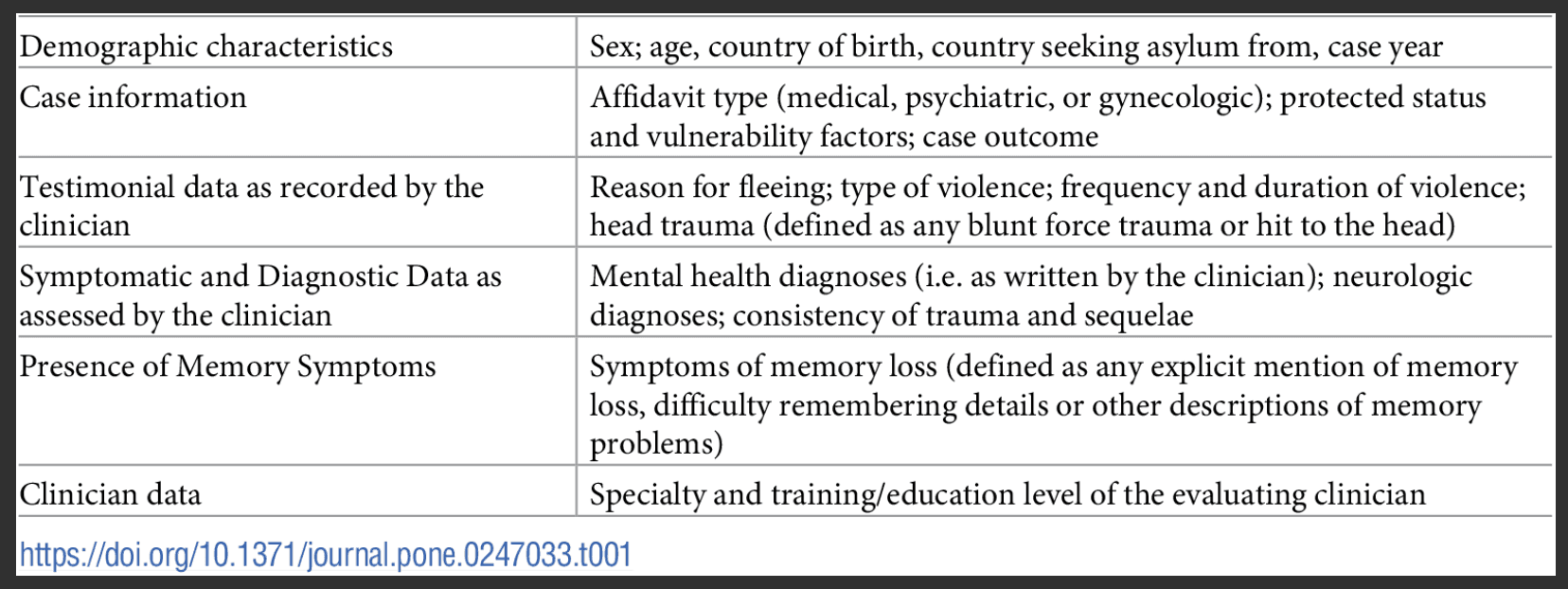
Table 1

A research assistant read each affidavit and extracted information using the coding manual. A second research assistant reviewed and checked for accuracy. Prior to data extraction, the research assistants received training, which included a careful review of the variables in the coding manual. A second researcher (MV) then reviewed the coding and checked the extraction of data for accuracy. Any discrepancies in coding were reviewed jointly and discussed to clarify any issues.

Statistical analysis

We used descriptive statistics to summarize the demographic data to describe the relationship between demographic variables, case-specific variables, and the memory deficits observed by the clinicians. Due to missing or redacted information about age, the cases included in the final analysis were less than the initial 200 (n = 193). We used multivariate logistic regression to assess the association between memory loss and (1) head trauma, (2) PTSD, and (3) depression. These neuropsychiatric disorders were chosen for the analysis because they were the most prevalent in the randomly selected affidavits. Given moderate correlation between PTSD and depression, we analyzed the associations between these diagnoses and memory loss in independent models. The other psychiatric diagnoses in the cohort included anxiety, adjustment disorder, somatization disorder, and bipolar disorder, but these were not included in the final analyses due to small numbers. We analyzed the data using Stata/SE15.1. Data was reviewed and analyzed between April and May 2020.

Qualitative analysis

We conducted a directed content analysis of the 40 affidavits that mentioned memory loss to understand the context of how memory loss is discussed in these affidavits and the diverse ways memory loss manifested. With a directed approach, analysis starts with a theory or relevant research findings as guidance for initial codes and researchers allow for themes to emerge from the data using inductive reasoning. KH read each affidavit referring to memory loss and identified common codes, informed by prior literature about the impact of trauma on memory recall. The codes were revised in an iterative fashion, resulting in a coding scheme with four categories. Theme saturation was achieved as new codes became increasingly redundant, which occurred after analysis of five affidavits. A second investigator (AS) reviewed this qualitative coding and themes were re-organized until consensus was reached.

Ethics

This study was reviewed and exempted by the University of California, Berkeley’s Institutional Review Board and by Physicians for Human Rights Ethics Review Board.

Results

The asylum applicants in this cohort (n = 193) were predominantly adult (92%, n = 178 persons > 18 years of age) and women (54%, n = 104). The asylum applicants’ ages ranged from 7 to 75 years old. They represented 90 different countries, with 13% from Guatemala (n = 24), 8% from Honduras (n = 15), and 6% from El Salvador (n = 11). There were nine or fewer applicants from any other country. The majority of affidavits (78%, n = 150) involved psychological assessments. The sociodemographic and clinical characteristics of the sample included in the final regression models are described in Table 2 (total n = 193).
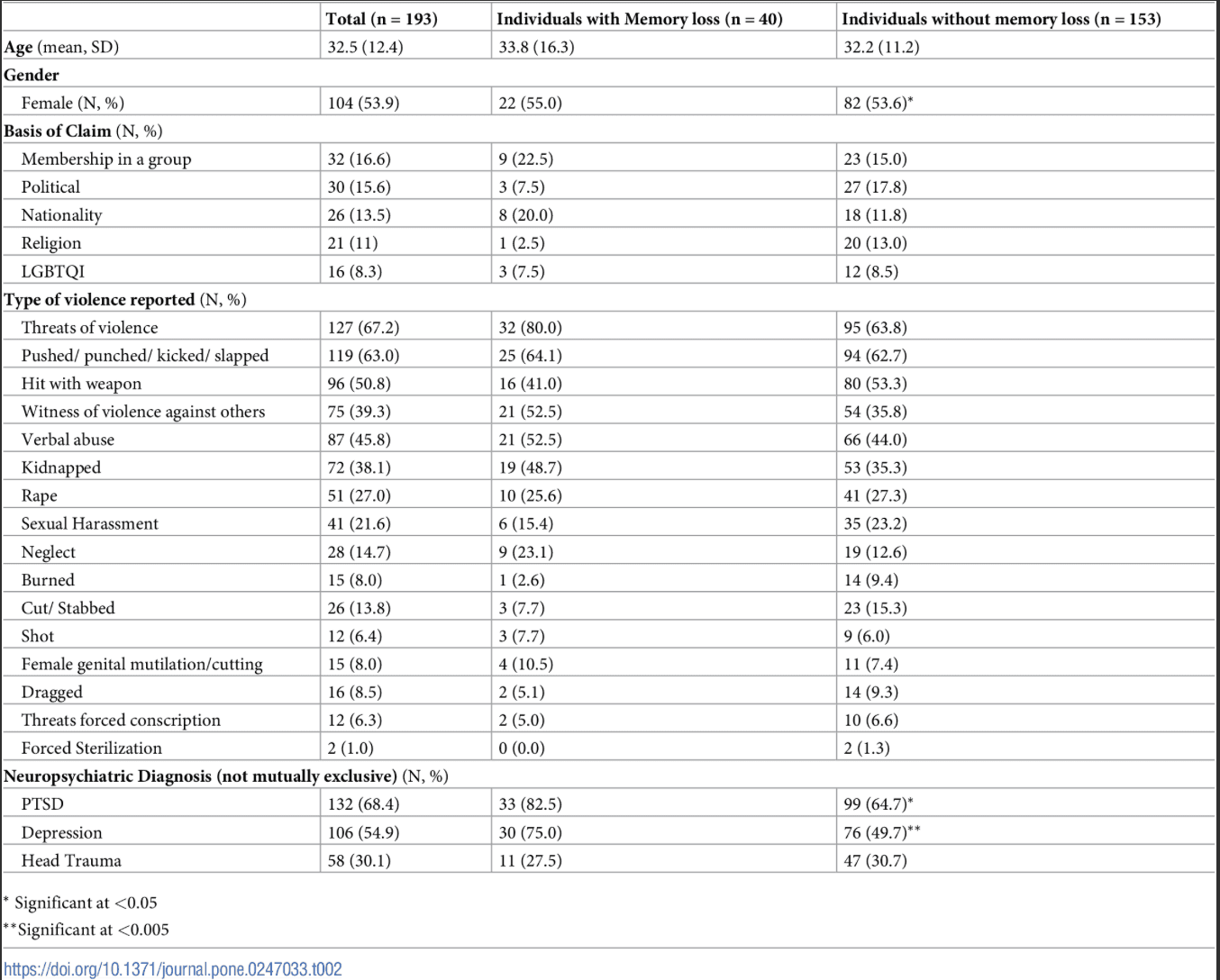
Table 2

In bivariate analysis, more women had memory loss than men (p<0.05) and individuals with a diagnosis of PTSD and depression had more memory loss than those who did not (p<0.05 and p<0.005, respectively). Given moderate correlation between PTSD and depression diagnoses (Pearson’s coefficient = 0.4), we conducted independent analyses assessing the association between PTSD and depression and memory loss (Model 1 and Model 2, respectively, Table 3), adjusting for age, gender, and head trauma. Individuals with a diagnosis of depression or PTSD had approximately three-fold higher odds of having memory issues than individuals without those diagnoses.
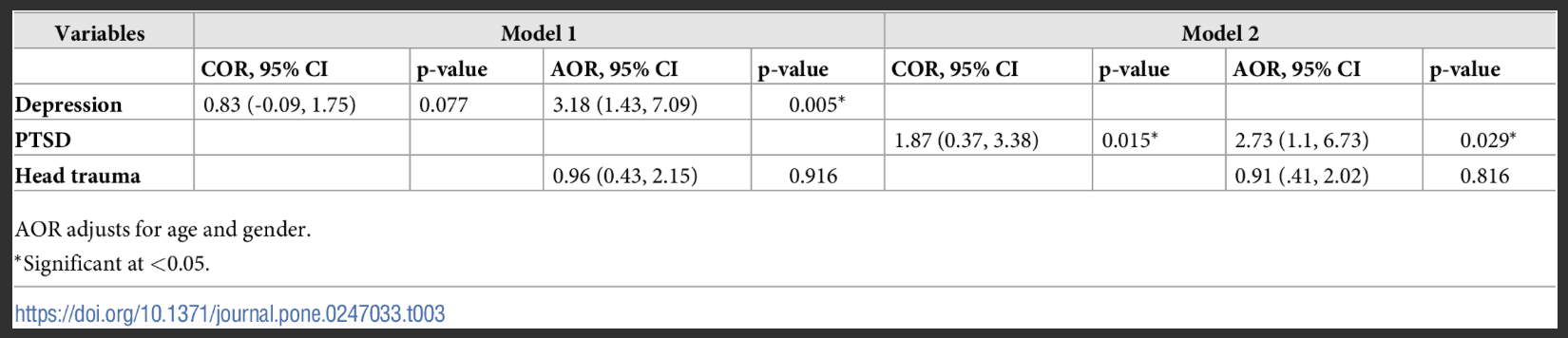
Table 3

Qualitative analysis

Memory loss was discussed by the clinicians, describing asylum seekers’ experiences in the following four ways: (1) memory gaps of the traumatic event; (2) difficulty establishing a timeline of the trauma experience; (3) memory loss as a strategy used for avoidant coping; and (4) persistent short-term memory loss interfering with daily activity. These experiences are described below using illustrative quotations presented to illustrate the range and complexity of the asylum seeker’s voices.

Memory gaps of the traumatic event

Description of memory loss ranged from complete memory loss of the traumatic event to memory gaps or incomplete memories of the traumatic and peri-traumatic events. In the case of a 36-year-old female from Myanmar: “As she was hooded, her memories were disconnected. She was injured but was not certain what was used.” In another case involving a 75-year-old male from Chile, “He reports that there were times when in the middle of relating his story he could suddenly not recall events or details of the torture. Sometimes it would just be small pieces of the events.”Clinicians conducting the assessments described significant gaps in memory spanning various forms of violence, including sexual and physical trauma: “Mr. X recalls seeing blood at his right foot but was unaware of how he was injured” (15-year-old male, Honduras).Some clinicians specifically reported dissociative amnesia, a disruption or discontinuation of memory associated with stressful and traumatic events, as the underlying mechanism for these memory gaps; one clinician evaluating a 35-year-old woman from Ethiopia observed she “had multiple episodes of dissociative behavior (prolonged staring, loss of focus, quiet and rigid body position)”. In other cases, the clinician noted that the patient dissociated, or disconnected from one’s body as a means of emotional numbing, like in this case of a 23-year-old woman from El Salvador: “she had a very difficult time answering some of our questions related to the threats aimed at her children. She disassociated several times and displayed a labile affect.”In some instances, it was difficult to ascertain whether these memory gaps were due to psychological reasons or physical reasons like head trauma, as in this case involving a 74-year-old female from Kenya: “She remembers there were many men but does not remember being attacked. The next thing she remembers is waking up in the hospital. The neighbors told her that the men attacked her, knocking her unconscious immediately.”Lastly, one affidavit discussed how awareness of these memory gaps resulted in “great fear about her upcoming hearing” for the asylum-seeker. Specifically, “She is worried that she will have trouble getting the words out even if she knows how to answer the questions… she fears that if she starts crying, she will not be able to remember anything” (61-year-old female, Indonesia).

Difficulty establishing timeline of trauma experience

Clinicians reported difficulty in establishing a detailed, “meaningful chronology” of the trauma narrative due to asylum seekers’ difficulty remembering “the dates when various events occurred” and “inconsistencies in the details provided.” In some cases, as in this case involving a 75-year-old female from the Democratic Republic of Congo, this resulted in conflation of “all the traumatic events reducing them to a relatively short period of time—i.e. a few months—almost as if they were one continuous event. In her [client’s] affidavit, these events are reported to have happened in separate episodes over a period of several years.”Despite these challenges, clinicians described the asylum assessment process as an important mechanism for asylum seekers to recall details and chronology of their traumatic experiences in a perceived safe space, such as a 58-year-old female from Malaysia: “When she talked about trying to forget but being unable to do so, she said that this interview was helping her to remember some of the details.” Clinicians mentioned that interview techniques, such as “frequent repetition and redirection,” sometimes enabled asylum seekers to piece together a more complete account.

Memory loss as strategy for avoidant coping

Asylum-seekers reported actively avoiding remembering or speaking about details of their past as a coping mechanism for dealing with the trauma they experienced. For example, one clinician wrote about a 27-year-old asylum-seeker from Guatemala: “As a part of her coping mechanisms, she has consistently avoided listening to the threats or assaults on her family and does not remember the specific details of what she heard. This helps her to avoid feeling or sharing their pain.”In another affidavit involving a different 27-year-old female from Guatemala, “she has difficulty talking about these issues and prefers to keep this information hidden. She doesn’t remember some of the details about her past and chooses not to remember.”

Persistent short-term memory loss affecting daily activity

Affidavits documented short term current memory loss among asylum-seekers making it difficult to complete everyday tasks, including functioning at the workplace or in daily interactions with family members. For example, one clinician documented regarding a 15-year-old from El Salvador: “C commonly gets distracted in conversations and frequently forgets what he is doing mid-chore. When they ask C where he has been, he cannot account for his whereabouts. On at least one occasion Mr. A gave C $40 pocket change and at the end of the day, C could not remember what happened to the money.”For one asylum-seeker, “forgetfulness was “a source of shame that prevents her from making new friends” (61-year-old female, Indonesia).In another affidavit, the clinician described the challenges experienced by a 41-year-old asylum-seeker from Bangladesh who was a dental assistant: “She reports that, although she tries hard to do her job well, her performance is affected because she tends to forget things she needs to do even though she does them every day. If her boss is critical or if he changes his demands or starts rushing her, she says “I remember my husband picking on me and I get lost.””

Discussion

This is the first study to look at the associations between neuropsychiatric diagnoses and signs and symptoms of memory loss in a sample of U.S. asylum-seekers using medico-legal affidavits. In comparison with meta-analyses of data on refugees and asylum seekers that finds prevalence of posttraumatic stress disorder (PTSD) at 31.46% and of depression at 31.5%, we found a high prevalence of PTSD and depression, in 69% and 55% of affidavits respectively. One in five were documented as a suicide risk. The population’s exposure to physical violence was also high, involving almost 70% of asylum-seekers. In this retrospective study of a randomly selected sample of medico-legal affidavits maintained in a database by the Physicians for Human Rights Asylum Network, depression and PTSD, but not head trauma, were associated with higher odds of self-reported memory loss. Medical, mental health and legal stakeholders must be cognizant of these overlapping issues among asylum seekers as they care for them, represent them and/or judge their credibility and asylum claims.

There is a large body of evidence that links memory issues with PTSD and depression ranging from impairments in overall memory functioning to difficulties specific to trauma-related cues. This was corroborated in our qualitative analysis. That we found patients reporting memory difficulties impacting their daily functioning has also been previously documente, but not specifically in an asylum-seeker population or using analysis of medico-legal affidavits. Our study highlights that asylum-seekers with PTSD or depression may be particularly vulnerable to these memory complaints and therefore represent a subset of the asylum-seeker population for whom memory issues need to be more closely assessed and attended to. Outside the legal context, clinicians should work towards promoting trauma-informed and immigration-informed models of care addressing trauma and associated cognitive complaints in their clinical work with this population. There are also important distinctions that future, ideally prospective, research can elucidate upon, such as disentangling the diverse processes that underlie the relationship between traumatic events and memory gaps like dissociative amnesia or dissociation during a trauma that were alluded to in our qualitative analyses.

Our study did not find an association between memory loss and traumatic head trauma. This is despite previous literature demonstrating an association, underscoring the importance of further research directed at exploring these associations in this vulnerable group. Another recent study of U.S. asylum-seekers found a higher prevalence of head injury than in our sample, in addition to clients with head trauma more likely to have depression. Differences from our study could be potentially explained by sample composition, differences in clinician background, and inconsistent use of validated instruments leading to an underestimate of head trauma which we outline as limitations. Further, we did not capture acquired head injury from strangulation in our sample, which future studies could consider prospectively evaluating for since this type of head injury can occur above and beyond traumatic head injury and incur neurocognitive sequelae as well.

This population is highly trauma-exposed, frequently experiencing a range of trauma and with associated high burdens of neuropsychiatric disorders such as PTSD and depression. However, the prevalence in our study is higher than previously documented. For example, one systematic review of 23 studies about violence and related health concerns among asylum seekers in high-income host countries, prevalence of torture was above 30% across all studies. One potential reason for this is that our sample represents individuals who had lawyers pre-selecting cases that may have a higher-likelihood to succeed and meriting a psychological or medical assessment to support what may appear to be stronger claims. Therefore, the pre-test probability might be higher in this group that is first evaluated and screened by a legal professional prior to referral to a clinician.

Memory loss of any kind has potentially serious implications for asylum-seekers during their legal proceedings. Inconsistency in a client narrative can undermine their credibility, negatively impact their immigration proceedings and impact the outcome of their asylum claims. The inability to give a chronological history—documented in our study via clinician documentation of client narratives—may hinder the ability of an asylum applicant to provide an accurate description of the traumatic events and persecution leading to their decision to apply for asylum. Given how common memory loss is in this trauma-exposed population, professionals in the legal and immigration enforcement sectors need to have increased recognition, understanding of, and training around this phenomenon in order to accurately assess asylum-seekers’ asylum applications. This recognition must include awareness that both PTSD and depression are associated with memory complaints.

Currently, the U.S. asylum system allows for non-adversarial asylum interviews with a trained asylum officer for those who are eligible for the affirmative asylum process, but these considerations are not uniformly present throughout the asylum process or those in defensive asylum proceedings. For example, U.S. Customs and Border Protection (CBP) officers record personal details in intake forms during short, preliminary interviews which may later be held against asylum seekers if there are any inconsistencies. Immigration judges and government prosecutors hold adversarial hearings to decide on the merits of asylum claims in brief, fast-paced contexts that do not accommodate for memory concerns that asylum-seekers may have, particularly around the context of their trauma. Navigating the legal process, such as attending attorney meetings or organizing legal documents, may itself pose a significant challenge for an asylum-seeker who has neuropsychiatric diagnoses or memory deficits. Our findings lend merit to recommendations for better training of judges, lawyers, immigration authorities, and other stakeholders in the symptoms and challenges of the intersection of trauma, memory loss and mental health, and how they affect personal narratives and testimonies.

Limitations

This study has several limitations. First, we analyzed affidavits of asylum seekers that had received a medico-legal assessment for physical or psychological trauma. These individuals may have been a pre-selected group and have a higher likelihood of having experienced significant trauma than other asylum seekers who lack legal representation. Second, while medico-legal affidavits are based on the Istanbul Protocol, there are variations in the style, focus and level of detail depending on the evaluator and their specialization that may affect what is documented and how. The focus of the affidavit is also conditioned on the legal questions and strategy, with the goal of informing the adjudicator and clarifying the applicant’s narrative, rather than a uniform documentation of health or behavioral health status. As such, we could not measure potential differences between different severity categories of memory disturbance or mental health diagnoses like depression or PTSD. Third, because this was a retrospective study, asylum seekers were not uniformly assessed for memory complaints or for head trauma using a standardized instrument and only explicit mentions of memory loss and head trauma were included. In this case, the study may underestimate the prevalence of memory deficits and head trauma. Finally, there exist confounding variables that were not captured in this dataset, such as educational status or social networks that impact cognitive function.The strength of this study remains its nationwide scope and inclusion of asylum-seekers throughout the U.S. from different countries of origin over 31 years. Most studies are based on relatively small samples and include people from a single country of origin. Future research could use a standardized methodology with validated instruments to more uniformly and precisely diagnose mental health conditions, head trauma, and characterize memory and cognitive deficits experienced by asylum-seekers.

Conclusions

U.S. asylum-seekers represent a highly trauma-exposed population who may experience memory loss interfering with recollection of their trauma as part of their legal proceedings, as well as their present daily activities. Understanding how memory loss manifests among this trauma-exposed population is essential for both the medical and legal sectors to ensure access to due process and to serve this population most effectively. Increased awareness around the impact of trauma on memory is also critical for U.S. CBP officers, USCIS Asylum Officers and immigration judges given the prevalence of trauma exposure, PTSD and memory loss in this vulnerable population.

Open Article as PDF

Abstract

Background

The U.S. immigration system mandates that persons seeking asylum prove their persecution claim is credible and their fear of returning home is well-founded. However, this population represents a highly trauma-exposed group, with neuropsychiatric symptoms consequent to prior torture or maltreatment that may interfere with cognitive function and their ability to recall their trauma. These memory lapses may be incorrectly perceived by asylum adjudicators as indicators of dishonesty and jeopardize the person’s credibility and asylum claim. Our retrospective mixed methods study seeks to present associations between trauma and memory loss in a sample of persons seeking asylum to the U.S. and describe how memory impairments manifest in this trauma-exposed population.

Methods

We randomly selected 200 medico-legal affidavits from 1346 affidavits collected in the past 30 years, as part of the Physicians for Human Rights Asylum Network connecting clinicians with legal providers for medical and/or psychiatric affidavits of U.S. asylum seekers and persons seeking other forms of humanitarian relief (hereafter, “asylum seekers”). Data was extracted from these affidavits using a coding manual informed by the Istanbul Protocol, the global standard for torture documentation. Seven affidavits were excluded due to missing age. We used multiple logistic regression to assess the association of memory loss with neuropsychiatric diagnoses: head trauma, post-traumatic stress disorder (PTSD), and depression. We supplemented these findings with a qualitative content analysis of the affidavits documenting memory loss. Memory loss presented among the asylum seekers’ affidavits in several ways: memory gaps of the traumatic event; challenges with presenting a clear chronology of the trauma, avoidance of traumatic memories, and persistent short-term memory loss interfering with daily activity.

Results

A majority of the sample received a neuropsychiatric diagnosis: 69% (n = 132) of asylum-seekers received a diagnosis of PTSD and 55% (n = 106) of depression. Head trauma was reported among 30% (n = 58) of affidavits. Further, 68% (n = 131) reported being subject to physical violence and 20% (n = 39) were documented as being at risk of suicide. Memory loss was documented among 21% (n = 40) asylum-seekers. In adjusted models, both PTSD and depression, but not head trauma, were associated with memory loss (p<0.05).

Conclusion

Stakeholders in the asylum process, spanning the medical, legal and immigration enforcement sectors, must be aware of the interplay of trauma and memory loss and how they might impact immigration proceedings for this vulnerable population.

Introduction

In recent years, the number of individuals seeking asylum in the United States has increased significantly. Most of these applicants come from El Salvador, Guatemala, and Honduras. To be granted asylum, an applicant must demonstrate a fear of persecution in their home country. This persecution must be based on one of five protected characteristics: race, religion, nationality, political opinion, or membership in a particular social group. While various types of evidence can be considered, an applicant's testimony is often the primary direct evidence supporting claims of torture, mistreatment, or fear of returning home. Physical evidence, such as photos of injuries or hospital records, is often unavailable or of poor quality. This process is similar for other humanitarian protections, like U visas, T visas, and Violence Against Women Act (VAWA) petitions, which are all referred to as "asylum" in this discussion for simplicity.

Because there is often little other evidence, assessing the truthfulness of an applicant's story, known as a credibility assessment, is very important in deciding if asylum will be granted. Those who decide asylum cases often look for inconsistencies, lack of detail, vague answers, or behavior that suggests dishonesty. Medico-legal affidavits, which are reports from health professionals documenting the physical or psychological effects of persecution, can be used as part of these credibility assessments.

There are no standard ways to conduct these assessments or to understand why an applicant's story might not be perfectly linear or consistent. The Real ID Act of 2005 allows judges more freedom to make decisions based on small inconsistencies, even if those mistakes do not relate to the core of the asylum claim. Therefore, the asylum seeker's memory and reporting of their traumatic experiences are crucial for both their claim and the assessment of their credibility.

Studies have shown that descriptions of trauma are often fragmented. They are based on sensory impressions like images, sensations, smells, or feelings, rather than a clear timeline of events. For example, a study of refugees from Kosovo and Bosnia found that inconsistencies in statements given by the same person were common.

While prior research has shown a link between trauma and memory problems, the extent of these issues among asylum applicants in the U.S. is not well understood. Memory difficulties are a symptom of post-traumatic stress disorder (PTSD) and can also occur with depression, anxiety, and head trauma. This study aims to fill this gap by reviewing medico-legal affidavits from U.S. asylum seekers evaluated through the Physicians for Human Rights (PHR) Asylum program. It also describes how memory complaints appear in these individuals who have experienced trauma.

Methods

Study Context

For over 30 years, Physicians for Human Rights (PHR) has trained medical and mental health professionals to write medico-legal affidavits for asylum seekers. These affidavits follow guidelines from the "Istanbul Protocol," which provides instructions for investigating and documenting torture. PHR's network of over 1,700 clinicians evaluates signs of torture and other trauma, documents their findings in these affidavits, and can also testify in immigration hearings. PHR maintains a database of these affidavits. For this study, cases were randomly selected from this database. All affidavits were made anonymous to the research team.

Sampling Strategy

Two hundred affidavits (15% of the total 1346) were chosen from those collected between 1987 and 2017, using a random number generator. The sample size was determined after an initial review of a smaller group of affidavits, aiming for a useful number of cases while being practical for an exploratory study. This was a purposeful random sample, not a probability random sample, meaning it may not represent all asylum seekers. Affidavits were included if they involved physical, psychological, or both types of evaluations, were conducted by any type of clinician, and involved either adults or children. If a selected number did not match an affidavit in the database, or if the affidavit was not for an asylum evaluation (for example, some were for release from detention), another number was generated.

Data Extraction

A coding manual was developed by the lead author, who has extensive experience with asylum affidavits. This manual was based on the Istanbul Protocol and adapted from a previous PHR manual. It covered demographic information, case details, narrative data from the clinician's notes, symptoms and diagnoses, any memory symptoms noted by the clinician, and information about the clinician. The manual was refined after a small pilot test to ensure all elements could be properly coded.

A research assistant extracted information from each affidavit using the coding manual. A second research assistant then checked the data for accuracy. Both assistants received training, including a thorough review of the variables in the manual. Any coding disagreements were discussed and resolved.

Statistical Analysis

Descriptive statistics were used to summarize demographic information and to show how demographic and case-specific factors related to memory issues observed by clinicians. Because some age information was missing, the final analysis included 193 cases instead of the initial 200. Multivariate logistic regression was used to examine the link between memory loss and (1) head trauma, (2) PTSD, and (3) depression. These disorders were chosen because they were the most common in the selected affidavits. Since PTSD and depression were moderately related, their associations with memory loss were analyzed in separate models. Other psychiatric diagnoses were not included due to small numbers. Data was analyzed using Stata/SE15.1 between April and May 2020.

Qualitative Analysis

A directed content analysis was performed on the 40 affidavits that mentioned memory loss. This was done to understand how memory loss was discussed and its various forms. In this approach, analysis begins with existing theories or research to guide initial codes, but themes are also allowed to emerge from the data. The first author read each affidavit mentioning memory loss and identified common codes, guided by previous research on trauma's impact on memory. The codes were refined, leading to a scheme with four categories. New codes stopped appearing after analyzing five affidavits, indicating that enough themes had been found. A second investigator reviewed the qualitative coding, and themes were reorganized until agreement was reached.

Ethics

This study was reviewed and approved for exemption by the Institutional Review Board at the University of California, Berkeley, and the Physicians for Human Rights Ethics Review Board.

Results

The asylum applicants in this study (n = 193) were mostly adults (92%, 178 individuals over 18 years old) and women (54%, 104 individuals). Their ages ranged from 7 to 75 years. They came from 90 different countries, with 13% from Guatemala (n = 24), 8% from Honduras (n = 15), and 6% from El Salvador (n = 11). No other country had more than nine applicants. Most affidavits (78%, n = 150) included psychological assessments. The social and clinical characteristics of the sample used in the final regression models are presented in Table 2 (total n = 193).

In the initial analysis comparing two groups, more women experienced memory loss than men (p<0.05). Individuals diagnosed with PTSD and depression also had more memory loss than those without these diagnoses (p<0.05 and p<0.005, respectively). Due to a moderate link between PTSD and depression diagnoses (Pearson’s coefficient = 0.4), separate analyses were conducted to assess the association between PTSD and depression and memory loss (Model 1 and Model 2, respectively, Table 3). These analyses adjusted for age, gender, and head trauma. Individuals with a diagnosis of depression or PTSD were approximately three times more likely to report memory issues compared to individuals without these diagnoses.

Qualitative Analysis

Clinicians described asylum seekers' memory loss in four main ways: (1) gaps in memory of the traumatic event, (2) difficulty creating a timeline of the trauma, (3) using memory loss as a way to avoid coping, and (4) ongoing short-term memory loss that affected daily life. These experiences are described below, using examples from the affidavits to show the range and complexity of the asylum seekers' accounts.

Memory Gaps of the Traumatic Event

Memory loss ranged from forgetting the entire traumatic event to having partial or incomplete memories of the event and the time around it. For example, a 36-year-old woman from Myanmar reported, "As she was hooded, her memories were disconnected. She was injured but was not certain what was used." A 75-year-old man from Chile stated, "He reports that there were times when in the middle of relating his story he could suddenly not recall events or details of the torture. Sometimes it would just be small pieces of the events." Clinicians noted significant gaps in memory concerning various forms of violence, including sexual and physical trauma. A 15-year-old male from Honduras recalled, "Mr. X recalls seeing blood at his right foot but was unaware of how he was injured."

Some clinicians specifically identified dissociative amnesia, which is a break in memory related to stressful and traumatic events, as the cause of these memory gaps. One clinician observed a 35-year-old woman from Ethiopia who "had multiple episodes of dissociative behavior (prolonged staring, loss of focus, quiet and rigid body position)." In other cases, clinicians noted that the patient dissociated, or disconnected from their body, as a way to numb emotions. For instance, a 23-year-old woman from El Salvador "had a very difficult time answering some of our questions related to the threats aimed at her children. She disassociated several times and displayed a labile affect."

In some situations, it was hard to tell if memory gaps were due to psychological reasons or physical injuries like head trauma. An example is a 74-year-old woman from Kenya who "remembers there were many men but does not remember being attacked. The next thing she remembers is waking up in the hospital. The neighbors told her that the men attacked her, knocking her unconscious immediately." Finally, one affidavit mentioned how being aware of these memory gaps caused "great fear about her upcoming hearing" for the asylum seeker. Specifically, a 61-year-old woman from Indonesia worried, "She is worried that she will have trouble getting the words out even if she knows how to answer the questions… she fears that if she starts crying, she will not be able to remember anything."

Difficulty Establishing Timeline of Trauma Experience

Clinicians noted that asylum seekers struggled to create a detailed or "meaningful chronology" of their trauma. They had difficulty remembering "the dates when various events occurred" and showed "inconsistencies in the details provided." In some cases, like that of a 75-year-old woman from the Democratic Republic of Congo, this led to combining "all the traumatic events reducing them to a relatively short period of time—i.e. a few months—almost as if they were one continuous event. In her [client’s] affidavit, these events are reported to have happened in separate episodes over a period of several years."

Despite these challenges, clinicians observed that the asylum assessment process, conducted in a perceived safe environment, sometimes helped asylum seekers recall details and timelines of their traumatic experiences. For example, a 58-year-old woman from Malaysia said, "When she talked about trying to forget but being unable to do so, she said that this interview was helping her to remember some of the details." Clinicians also mentioned that interview techniques, such as "frequent repetition and redirection," sometimes helped asylum seekers construct a more complete account.

Memory Loss as Strategy for Avoidant Coping

Asylum seekers reported actively avoiding remembering or discussing details of their past as a way to cope with their trauma. For instance, a clinician wrote about a 27-year-old asylum seeker from Guatemala: "As a part of her coping mechanisms, she has consistently avoided listening to the threats or assaults on her family and does not remember the specific details of what she heard. This helps her to avoid feeling or sharing their pain." In another affidavit concerning a different 27-year-old woman from Guatemala, "she has difficulty talking about these issues and prefers to keep this information hidden. She doesn’t remember some of the details about her past and chooses not to remember."

Persistent Short-Term Memory Loss Affecting Daily Activity

Affidavits documented current short-term memory loss among asylum seekers, making it difficult for them to complete everyday tasks, including functioning at work or interacting with family members. For example, a clinician wrote about a 15-year-old from El Salvador: "C commonly gets distracted in conversations and frequently forgets what he is doing mid-chore. When they ask C where he has been, he cannot account for his whereabouts. On at least one occasion Mr. A gave C $40 pocket change and at the end of the day, C could not remember what happened to the money." For one asylum seeker, "forgetfulness was 'a source of shame that prevents her from making new friends'" (61-year-old woman, Indonesia). In another affidavit, a clinician described the challenges faced by a 41-year-old dental assistant from Bangladesh: "She reports that, although she tries hard to do her job well, her performance is affected because she tends to forget things she needs to do even though she does them every day. If her boss is critical or if he changes his demands or starts rushing her, she says 'I remember my husband picking on me and I get lost.'"

Discussion

This is the first study to examine the links between neuropsychiatric diagnoses and signs of memory loss among U.S. asylum seekers, using medico-legal affidavits. Previous meta-analyses of refugees and asylum seekers found PTSD in 31.46% and depression in 31.5% of cases. In contrast, this study found a high prevalence of PTSD (69%) and depression (55%) in the affidavits reviewed. One in five individuals was documented as being at risk for suicide. Exposure to physical violence was also high, affecting almost 70% of asylum seekers. In this study of randomly selected medico-legal affidavits from the Physicians for Human Rights Asylum Network database, depression and PTSD were associated with a higher likelihood of self-reported memory loss, but head trauma was not. Medical, mental health, and legal professionals must understand these overlapping issues to provide care, representation, and fair credibility assessments for asylum seekers.

Extensive research shows a link between memory problems, PTSD, and depression, ranging from general memory issues to difficulties specific to trauma-related cues. This was also supported by the qualitative analysis in this study. Reports of memory difficulties affecting daily life have been documented before, but not specifically in an asylum-seeker population or through the analysis of medico-legal affidavits. This study highlights that asylum seekers with PTSD or depression may be particularly susceptible to these memory complaints. Therefore, memory issues in this group need to be more thoroughly assessed and addressed. Beyond legal contexts, clinicians should adopt trauma-informed and immigration-informed models of care that address trauma and related cognitive complaints when working with this population. Future research, ideally proactive studies, could clarify the different processes linking traumatic events and memory gaps, such as dissociative amnesia or dissociation during trauma, which were suggested in the qualitative analyses.

This study did not find a link between memory loss and traumatic head trauma, even though previous research has shown such an association. This highlights the need for more research on these links in this vulnerable group. Another recent study of U.S. asylum seekers found a higher rate of head injury than this study, and also that clients with head trauma were more likely to have depression. Differences between studies could be due to differences in the study population, variations in clinician background, and inconsistent use of standard assessment tools, which might lead to an underestimation of head trauma. Furthermore, this study did not capture head injuries from strangulation, which future studies could investigate, as this type of injury can lead to neurocognitive problems in addition to other traumatic head injuries.

This population has experienced high levels of trauma, often enduring various forms of abuse, and consequently has a high burden of neuropsychiatric disorders like PTSD and depression. However, the prevalence found in this study is higher than previously reported. For example, one review of 23 studies on violence and health among asylum seekers in wealthy countries found torture prevalence to be above 30% across all studies. One possible reason for the higher prevalence in this study is that the sample consisted of individuals whose lawyers likely pre-selected cases with a higher chance of success, warranting a psychological or medical assessment to support what seemed to be stronger claims. Therefore, the likelihood of these conditions might be higher in a group that has already been screened by a legal professional before being referred to a clinician.

Any type of memory loss can have serious consequences for asylum seekers during their legal proceedings. Inconsistencies in an applicant's story can weaken their credibility, negatively affect their immigration process, and impact the outcome of their asylum claim. The inability to provide a chronological history, as documented in this study through clinician notes, may hinder an asylum applicant's ability to accurately describe the traumatic events and persecution that led them to seek asylum. Given how common memory loss is in this population exposed to trauma, professionals in the legal and immigration enforcement sectors need to better recognize, understand, and receive training on this issue. This will help them accurately assess asylum seekers' applications. This recognition must include awareness that both PTSD and depression are linked to memory complaints.

Currently, the U.S. asylum system offers non-confrontational asylum interviews with trained asylum officers for those eligible for the affirmative asylum process. However, these considerations are not consistently present throughout the entire asylum process or in defensive asylum proceedings. For example, U.S. Customs and Border Protection (CBP) officers record personal details during short, initial interviews. Any inconsistencies in these records may later be used against asylum seekers. Immigration judges and government lawyers conduct adversarial hearings to decide asylum claims in brief, fast-paced settings that do not accommodate memory concerns asylum seekers may have, especially regarding their trauma. Navigating the legal process itself, such as attending lawyer meetings or organizing legal documents, can be a significant challenge for an asylum seeker with neuropsychiatric diagnoses or memory deficits. These findings support recommendations for better training for judges, lawyers, immigration authorities, and other relevant parties on the symptoms and challenges related to trauma, memory loss, and mental health, and how these factors affect personal stories and testimonies.

Limitations

This study has several limitations. First, the analysis focused on affidavits from asylum seekers who had received medico-legal assessments for physical or psychological trauma. This group might have been pre-selected and could have experienced more significant trauma than other asylum seekers who did not have legal representation. Second, while medico-legal affidavits follow the Istanbul Protocol, there are differences in style, focus, and detail depending on the evaluator and their specialization, which could affect what is documented. The affidavit's focus is also shaped by legal questions and strategy, aiming to inform the adjudicator and clarify the applicant's story, rather than providing a uniform record of health status. Therefore, the study could not measure differences in the severity of memory problems or mental health diagnoses like depression or PTSD. Third, because this was a retrospective study, asylum seekers were not consistently assessed for memory complaints or head trauma using standardized tools; only explicit mentions were included. This means the study might underestimate the true prevalence of memory deficits and head trauma. Finally, there were confounding variables not captured in this dataset, such as educational status or social networks, which can influence cognitive function.

Despite these limitations, the study's strengths include its nationwide scope and the inclusion of asylum seekers from various countries of origin across a 31-year period. Most previous studies involve relatively small samples and individuals from only one country. Future research could use a standardized methodology with validated instruments to more uniformly and precisely diagnose mental health conditions, head trauma, and characterize the memory and cognitive deficits experienced by asylum seekers.

Conclusions

U.S. asylum seekers are a population that has experienced high levels of trauma. They may experience memory loss that affects their ability to recall their trauma during legal proceedings, as well as their daily activities. Understanding how memory loss appears in this trauma-exposed population is crucial for both the medical and legal sectors. This understanding is necessary to ensure fair legal processes and to effectively serve this population. Greater awareness of how trauma affects memory is also vital for U.S. Customs and Border Protection (CBP) officers, USCIS Asylum Officers, and immigration judges, given how common trauma exposure, PTSD, and memory loss are in this vulnerable group.

Open Article as PDF

Abstract

Background

The U.S. immigration system mandates that persons seeking asylum prove their persecution claim is credible and their fear of returning home is well-founded. However, this population represents a highly trauma-exposed group, with neuropsychiatric symptoms consequent to prior torture or maltreatment that may interfere with cognitive function and their ability to recall their trauma. These memory lapses may be incorrectly perceived by asylum adjudicators as indicators of dishonesty and jeopardize the person’s credibility and asylum claim. Our retrospective mixed methods study seeks to present associations between trauma and memory loss in a sample of persons seeking asylum to the U.S. and describe how memory impairments manifest in this trauma-exposed population.

Methods

We randomly selected 200 medico-legal affidavits from 1346 affidavits collected in the past 30 years, as part of the Physicians for Human Rights Asylum Network connecting clinicians with legal providers for medical and/or psychiatric affidavits of U.S. asylum seekers and persons seeking other forms of humanitarian relief (hereafter, “asylum seekers”). Data was extracted from these affidavits using a coding manual informed by the Istanbul Protocol, the global standard for torture documentation. Seven affidavits were excluded due to missing age. We used multiple logistic regression to assess the association of memory loss with neuropsychiatric diagnoses: head trauma, post-traumatic stress disorder (PTSD), and depression. We supplemented these findings with a qualitative content analysis of the affidavits documenting memory loss. Memory loss presented among the asylum seekers’ affidavits in several ways: memory gaps of the traumatic event; challenges with presenting a clear chronology of the trauma, avoidance of traumatic memories, and persistent short-term memory loss interfering with daily activity.

Results

A majority of the sample received a neuropsychiatric diagnosis: 69% (n = 132) of asylum-seekers received a diagnosis of PTSD and 55% (n = 106) of depression. Head trauma was reported among 30% (n = 58) of affidavits. Further, 68% (n = 131) reported being subject to physical violence and 20% (n = 39) were documented as being at risk of suicide. Memory loss was documented among 21% (n = 40) asylum-seekers. In adjusted models, both PTSD and depression, but not head trauma, were associated with memory loss (p<0.05).

Conclusion

Stakeholders in the asylum process, spanning the medical, legal and immigration enforcement sectors, must be aware of the interplay of trauma and memory loss and how they might impact immigration proceedings for this vulnerable population.

Introduction

The number of people seeking asylum in the United States has greatly increased. Most of these individuals come from El Salvador, Guatemala, and Honduras in Central America. To be granted asylum in the U.S., a person must show two things: first, that they fear harm in their home country, and second, that this harm is based on their race, religion, nationality, political opinion, or membership in a specific social group.

Immigration judges and asylum officers, who decide on these cases, can look at different types of evidence. However, the applicant's own story is often the only direct proof of torture, mistreatment, or fear of returning home. Physical evidence, like photos of injuries or hospital records, is often missing or not clear enough. This process is similar for people seeking other kinds of help, such as U visas (for crime victims), T visas (for human trafficking survivors), and Violence Against Women Act (VAWA) petitions. For simplicity, this paper refers to all these as "asylum."

Because there is often no other evidence, evaluating how truthful an applicant's story is, known as a credibility assessment, is very important for deciding if asylum will be granted. Asylum officials often look for inconsistencies, lack of detail, vague answers, or behavior that suggests dishonesty. Reports from health professionals, called medico-legal affidavits, which document physical or mental effects of persecution, can be used as part of these assessments.

There are no standard ways to do these assessments or to understand why an applicant's story might not be perfectly consistent. The Real ID Act, passed in 2005, allows judges to make decisions based on small inconsistencies, even if those mistakes do not change the main point of the applicant's claim. Therefore, the asylum seeker’s memory and description of their traumatic experience are central to both the asylum claim and the assessment of their credibility.

Studies have shown that stories about trauma are often broken up and based on sensory details, such as images, feelings, smells, or emotions, rather than clear facts like dates or times. A study with refugees from Kosovo and Bosnia found that refugees often gave different statements at different times.

While previous research shows a link between trauma and memory problems, how common these issues are among asylum applicants in the U.S. is not well understood. Memory problems are part of the criteria for diagnosing post-traumatic stress disorder (PTSD), and they also appear in depression, anxiety, and head trauma. This study aims to explore this by: 1) reviewing medico-legal affidavits from U.S. asylum seekers who received psychological or medical evaluations through the Physicians for Human Rights (PHR) Asylum program, and 2) describing how memory complaints appear in these individuals who have experienced trauma.

Methods

Study Context

For over 30 years, Physicians for Human Rights (PHR) has trained doctors, psychologists, social workers, and other medical professionals to write medico-legal affidavits for asylum seekers. These reports follow the guidelines from the United Nations' Istanbul Protocol for investigating and documenting torture. PHR has a network of over 1,700 clinicians who evaluate signs of torture and trauma, document their findings in these affidavits, and provide testimony in immigration hearings. PHR keeps a database of many of these affidavits. This study randomly selected cases from this database for a retrospective study that used both quantitative (numerical) and qualitative (descriptive) methods. All affidavits used in the research were made anonymous to protect privacy.

Sampling Strategy

A total of 200 medico-legal affidavits (15%) were chosen from 1,346 records collected between 1987 and 2017. A random number generator was used to select the cases. The sample size was determined after an initial review of a small number of affidavits, aiming to find a useful number of relevant cases while keeping the research manageable. This sample was a purposeful random sample, not a probability random sample, meaning it was not intended to perfectly represent the entire population. The study included affidavits with: (1) physical, psychological, or both types of evaluations, (2) assessments by any type of clinician (mental health or medical specialists), and (3) both adult and child cases. If a selected number did not match an affidavit in the database, or if the affidavit was not for an asylum evaluation (e.g., for release from detention or other immigration applications), another number was generated.

Data Extraction

A coding manual was developed by the lead author, who has extensive experience with asylum affidavits. This manual was based on the Istanbul Protocol and adapted from a previous PHR coding manual. It covered broad categories such as demographic details, case information, the applicant's story as recorded by the clinician, symptoms and diagnoses, any memory problems noted by the clinician, and information about the clinician. The manual was refined after a small pilot test with a few affidavits to ensure all coded elements could be accurately recorded and were appropriate.

One research assistant read each affidavit and extracted information using the coding manual. A second research assistant then reviewed this extraction for accuracy. Before starting, the research assistants were trained, which included a thorough review of the variables in the coding manual. A second researcher then reviewed the coding and data extraction. Any differences in coding were discussed and clarified to reach agreement.

Statistical Analysis

Descriptive statistics were used to summarize demographic data and to show the relationships between demographic factors, case-specific factors, and memory problems observed by clinicians. Due to missing or redacted age information, the final analysis included 193 cases, fewer than the initial 200. Multivariate logistic regression was used to examine the connection between memory loss and (1) head trauma, (2) PTSD, and (3) depression. These neuropsychiatric conditions were chosen because they were the most common in the selected affidavits. Because PTSD and depression showed a moderate connection, their associations with memory loss were analyzed in separate models. Other psychiatric diagnoses, such as anxiety, adjustment disorder, somatization disorder, and bipolar disorder, were not included in the final analysis due to their small numbers. Data was analyzed using Stata/SE15.1 between April and May 2020.

Qualitative Analysis

A directed content analysis was performed on the 40 affidavits that mentioned memory loss. This was done to understand how memory loss was discussed and the different ways it appeared. In a directed approach, the analysis starts with a theory or existing research findings to guide the initial codes, but researchers also allow new themes to emerge from the data using inductive reasoning. A researcher read each affidavit referring to memory loss and identified common codes, drawing on previous research about how trauma affects memory. The codes were refined through an iterative process, resulting in a coding scheme with four categories. New codes became increasingly repetitive after analyzing five affidavits, indicating that enough themes had been found. A second investigator reviewed this qualitative coding, and themes were reorganized until agreement was reached.

Ethics

This study was reviewed and approved by the University of California, Berkeley’s Institutional Review Board and the Physicians for Human Rights Ethics Review Board as exempt from further review.

Results

The asylum applicants in this study (n = 193) were mostly adults (92%, n = 178 persons over 18 years old) and women (54%, n = 104). Their ages ranged from 7 to 75 years old. They came from 90 different countries, with 13% from Guatemala (n = 24), 8% from Honduras (n = 15), and 6% from El Salvador (n = 11). There were nine or fewer applicants from any other single country. Most affidavits (78%, n = 150) included psychological assessments. The demographic and clinical characteristics of the sample used in the final regression models are described in Table 2 (total n = 193).

In a preliminary analysis comparing two variables, more women experienced memory loss than men (p<0.05). Also, individuals diagnosed with PTSD and depression had more memory loss than those without these diagnoses (p<0.05 and p<0.005, respectively). Due to a moderate link between PTSD and depression diagnoses (Pearson’s coefficient = 0.4), separate analyses were conducted to examine the association between PTSD and depression with memory loss (Model 1 and Model 2, respectively, Table 3). These analyses adjusted for age, gender, and head trauma. Individuals with a diagnosis of depression or PTSD had about three times higher chances of experiencing memory issues compared to those without these diagnoses.

Qualitative Analysis

Clinicians discussed memory loss in asylum seekers in four main ways: (1) gaps in memory of the traumatic event, (2) difficulty in creating a timeline of the trauma, (3) memory loss used as a way to avoid coping, and (4) ongoing short-term memory loss that affects daily life. These experiences are described below, using examples to show the variety and complexity of the asylum seekers' stories.

Memory Gaps of the Traumatic Event

Descriptions of memory loss ranged from complete loss of memory for a traumatic event to partial memories or gaps in remembering traumatic and related events. For example, a 36-year-old woman from Myanmar stated: "As she was hooded, her memories were disconnected. She was injured but was not certain what was used." In another case, a 75-year-old man from Chile reported: "He reports that there were times when in the middle of relating his story he could suddenly not recall events or details of the torture. Sometimes it would just be small pieces of the events."

Clinicians performing the assessments noted significant memory gaps covering various forms of violence, including sexual and physical trauma. For instance: "Mr. X recalls seeing blood at his right foot but was unaware of how he was injured" (15-year-old male, Honduras). Some clinicians specifically pointed to dissociative amnesia, a memory disruption linked to stressful and traumatic events, as the cause of these memory gaps. One clinician evaluating a 35-year-old woman from Ethiopia observed she "had multiple episodes of dissociative behavior (prolonged staring, loss of focus, quiet and rigid body position)." In other situations, the clinician noted that the patient dissociated, or mentally separated from their body, as a way to numb emotions. An example is a 23-year-old woman from El Salvador: "she had a very difficult time answering some of our questions related to the threats aimed at her children. She disassociated several times and displayed a labile affect."

In some instances, it was unclear if these memory gaps were due to psychological reasons or physical injuries like head trauma. An example is a 74-year-old woman from Kenya: "She remembers there were many men but does not remember being attacked. The next thing she remembers is waking up in the hospital. The neighbors told her that the men attacked her, knocking her unconscious immediately." Lastly, one affidavit mentioned that awareness of these memory gaps caused "great fear about her upcoming hearing" for the asylum seeker. Specifically, "She is worried that she will have trouble getting the words out even if she knows how to answer the questions… she fears that if she starts crying, she will not be able to remember anything" (61-year-old female, Indonesia).

Difficulty Establishing Timeline of Trauma Experience

Clinicians noted that asylum seekers often struggled to create a detailed, "meaningful chronology" of their trauma. They had difficulty remembering "the dates when various events occurred" and showed "inconsistencies in the details provided." In some cases, such as with a 75-year-old woman from the Democratic Republic of Congo, this led to combining "all the traumatic events reducing them to a relatively short period of time—i.e. a few months—almost as if they were one continuous event. In her [client’s] affidavit, these events are reported to have happened in separate episodes over a period of several years."

Despite these challenges, clinicians described the asylum assessment process as an important opportunity for asylum seekers to recall details and the order of their traumatic experiences in a perceived safe environment. For example, a 58-year-old woman from Malaysia stated: "When she talked about trying to forget but being unable to do so, she said that this interview was helping her to remember some of the details." Clinicians also mentioned that interview methods, such as "frequent repetition and redirection," sometimes helped asylum seekers construct a more complete account.

Memory Loss as Strategy for Avoidant Coping

Asylum seekers reported actively avoiding remembering or discussing details of their past as a way to cope with their trauma. For instance, one clinician wrote about a 27-year-old asylum seeker from Guatemala: "As a part of her coping mechanisms, she has consistently avoided listening to the threats or assaults on her family and does not remember the specific details of what she heard. This helps her to avoid feeling or sharing their pain." In another affidavit involving a different 27-year-old woman from Guatemala, "she has difficulty talking about these issues and prefers to keep this information hidden. She doesn’t remember some of the details about her past and chooses not to remember."

Persistent Short-Term Memory Loss Affecting Daily Activity

Affidavits documented ongoing short-term memory loss among asylum seekers, making it hard to complete daily tasks, including work or interactions with family. For example, a clinician wrote about a 15-year-old from El Salvador: "C commonly gets distracted in conversations and frequently forgets what he is doing mid-chore. When they ask C where he has been, he cannot account for his whereabouts. On at least one occasion Mr. A gave C $40 pocket change and at the end of the day, C could not remember what happened to the money."

For one asylum seeker, "forgetfulness was 'a source of shame that prevents her from making new friends'" (61-year-old female, Indonesia). In another affidavit, a clinician described the challenges faced by a 41-year-old asylum seeker from Bangladesh who worked as a dental assistant: "She reports that, although she tries hard to do her job well, her performance is affected because she tends to forget things she needs to do even though she does them every day. If her boss is critical or if he changes his demands or starts rushing her, she says 'I remember my husband picking on me and I get lost.'"

Discussion

This study is the first to examine the connections between neuropsychiatric diagnoses and signs of memory loss in U.S. asylum seekers, using medico-legal affidavits. Compared to other research that shows about 31.46% of refugees and asylum seekers have posttraumatic stress disorder (PTSD) and 31.5% have depression, this study found a higher rate of PTSD (69%) and depression (55%) in the affidavits. One in five individuals was noted as being at risk for suicide. The population also had a high exposure to physical violence, affecting almost 70% of asylum seekers. In this study, depression and PTSD, but not head trauma, were linked to higher chances of reported memory loss. Medical, mental health, and legal professionals must be aware of these overlapping issues when caring for asylum seekers, representing them, or judging their credibility and asylum claims.

A large amount of evidence links memory problems with PTSD and depression. These problems range from overall memory difficulties to specific issues with trauma-related memories. This finding was supported by the qualitative analysis in this study. The finding that patients reported memory difficulties affecting their daily lives has also been documented before, but not specifically in an asylum-seeker population or through the analysis of medico-legal affidavits. This study highlights that asylum seekers with PTSD or depression may be especially vulnerable to these memory complaints. Therefore, they represent a group within the asylum-seeker population whose memory issues need more careful assessment and attention. Outside of legal contexts, clinicians should work to promote care models that are informed by trauma and immigration experiences, addressing trauma and related cognitive complaints in their work with this population. Future research, ideally looking forward in time, could clarify important distinctions, such as separating the different processes that cause the relationship between traumatic events and memory gaps, like dissociative amnesia or dissociation during a trauma, which were mentioned in the qualitative analyses.

This study did not find a link between memory loss and traumatic head trauma. This is surprising because previous research has shown such a link, emphasizing the need for more research to explore these connections in this vulnerable group. Another recent study of U.S. asylum seekers found a higher rate of head injury than in this sample, and also found that clients with head trauma were more likely to have depression. Differences from this study could be explained by the composition of the sample, differences in clinician backgrounds, and inconsistent use of standard assessment tools, which might have led to an underestimation of head trauma. Furthermore, this study did not include head injuries from strangulation, which future studies could look at, as this type of injury can happen in addition to traumatic head injury and can also cause brain-related problems.

This population has experienced a high level of trauma, often involving various types of trauma, and carries a high burden of neuropsychiatric disorders such as PTSD and depression. However, the rates found in this study are higher than previously documented. For example, a review of 23 studies on violence and health among asylum seekers in wealthy host countries found that the rate of torture was above 30% in all studies. One possible reason for this higher rate in the current study is that the sample included individuals whose lawyers had pre-selected their cases. These cases might have a higher chance of success and therefore warranted a psychological or medical assessment to support what seemed to be stronger claims. Thus, the likelihood of having these conditions might be higher in this group, as they were first evaluated and screened by a legal professional before being referred to a clinician.

Any type of memory loss can have serious consequences for asylum seekers during their legal proceedings. Inconsistencies in a client’s story can make them seem less credible, negatively affect their immigration process, and impact the outcome of their asylum claims. The inability to provide a chronological history – documented in this study through clinician notes on client stories – may prevent an asylum applicant from accurately describing the traumatic events and persecution that led them to seek asylum. Given how common memory loss is in this population exposed to trauma, professionals in the legal and immigration enforcement sectors need to have greater recognition, understanding, and training about this issue. This is crucial for accurately assessing asylum seekers’ applications. This understanding must include awareness that both PTSD and depression are linked to memory problems.

Currently, the U.S. asylum system allows for non-adversarial asylum interviews with trained asylum officers for those who qualify for the affirmative asylum process. However, these considerations are not consistently present throughout the asylum process or for those in defensive asylum proceedings. For instance, U.S. Customs and Border Protection (CBP) officers record personal details during brief, initial interviews. These details may later be used against asylum seekers if there are any inconsistencies. Immigration judges and government prosecutors conduct adversarial hearings to decide on asylum claims in short, fast-paced settings that do not accommodate for memory concerns that asylum seekers may have, especially regarding their trauma. Navigating the legal process, such as attending meetings with attorneys or organizing legal documents, can itself be a significant challenge for an asylum seeker with neuropsychiatric diagnoses or memory deficits. These findings support recommendations for better training for judges, lawyers, immigration authorities, and other relevant parties about the symptoms and challenges at the intersection of trauma, memory loss, and mental health, and how these factors affect personal stories and testimonies.

Limitations

This study has several limitations. First, it analyzed affidavits of asylum seekers who had received a medico-legal assessment for physical or psychological trauma. These individuals might represent a pre-selected group and may have experienced more significant trauma than other asylum seekers who do not have legal representation. Second, while medico-legal affidavits follow the Istanbul Protocol, there are differences in style, focus, and detail depending on the evaluator and their specialty. This can affect what is documented and how. The focus of the affidavit is also influenced by legal questions and strategy, aiming to inform the adjudicator and clarify the applicant’s story, rather than providing a uniform record of health status. Therefore, the study could not measure potential differences between various severity categories of memory disturbance or mental health diagnoses like depression or PTSD. Third, because this was a retrospective study, asylum seekers were not consistently assessed for memory complaints or head trauma using a standard tool. Only explicit mentions of memory loss and head trauma were included. This means the study might underestimate how common memory deficits and head trauma are. Finally, some confounding variables, such as educational status or social networks, which affect cognitive function, were not included in this dataset. The strength of this study lies in its nationwide scope, including asylum seekers from different countries across the U.S. over 31 years. Most studies are based on relatively small samples and include people from only one country of origin. Future research could use a standard method with proven tools to more consistently and accurately diagnose mental health conditions, head trauma, and to describe memory and cognitive problems experienced by asylum seekers.

Conclusions

U.S. asylum seekers are a population that has experienced a great deal of trauma. They may suffer from memory loss that interferes with recalling their trauma during legal proceedings, as well as affecting their daily activities. Understanding how memory loss appears in this population exposed to trauma is crucial for both medical and legal professionals. This understanding helps ensure fair legal processes and provides effective support to this group. Increased awareness about how trauma affects memory is also vital for U.S. Customs and Border Protection (CBP) officers, USCIS Asylum Officers, and immigration judges, given the high rates of trauma exposure, PTSD, and memory loss in this vulnerable population.

Open Article as PDF

Abstract

Background

The U.S. immigration system mandates that persons seeking asylum prove their persecution claim is credible and their fear of returning home is well-founded. However, this population represents a highly trauma-exposed group, with neuropsychiatric symptoms consequent to prior torture or maltreatment that may interfere with cognitive function and their ability to recall their trauma. These memory lapses may be incorrectly perceived by asylum adjudicators as indicators of dishonesty and jeopardize the person’s credibility and asylum claim. Our retrospective mixed methods study seeks to present associations between trauma and memory loss in a sample of persons seeking asylum to the U.S. and describe how memory impairments manifest in this trauma-exposed population.

Methods

We randomly selected 200 medico-legal affidavits from 1346 affidavits collected in the past 30 years, as part of the Physicians for Human Rights Asylum Network connecting clinicians with legal providers for medical and/or psychiatric affidavits of U.S. asylum seekers and persons seeking other forms of humanitarian relief (hereafter, “asylum seekers”). Data was extracted from these affidavits using a coding manual informed by the Istanbul Protocol, the global standard for torture documentation. Seven affidavits were excluded due to missing age. We used multiple logistic regression to assess the association of memory loss with neuropsychiatric diagnoses: head trauma, post-traumatic stress disorder (PTSD), and depression. We supplemented these findings with a qualitative content analysis of the affidavits documenting memory loss. Memory loss presented among the asylum seekers’ affidavits in several ways: memory gaps of the traumatic event; challenges with presenting a clear chronology of the trauma, avoidance of traumatic memories, and persistent short-term memory loss interfering with daily activity.

Results

A majority of the sample received a neuropsychiatric diagnosis: 69% (n = 132) of asylum-seekers received a diagnosis of PTSD and 55% (n = 106) of depression. Head trauma was reported among 30% (n = 58) of affidavits. Further, 68% (n = 131) reported being subject to physical violence and 20% (n = 39) were documented as being at risk of suicide. Memory loss was documented among 21% (n = 40) asylum-seekers. In adjusted models, both PTSD and depression, but not head trauma, were associated with memory loss (p<0.05).

Conclusion

Stakeholders in the asylum process, spanning the medical, legal and immigration enforcement sectors, must be aware of the interplay of trauma and memory loss and how they might impact immigration proceedings for this vulnerable population.

Introduction

The number of people seeking asylum in the United States has greatly increased in recent years. Most of these applicants come from El Salvador, Guatemala, and Honduras, which are countries in Central America. To be granted asylum, a person must show two things: first, that they fear harm in their home country, and second, that this fear is based on one of five protected reasons: their race, religion, nationality, political opinion, or membership in a particular social group.

Immigration judges and asylum officers can look at various types of evidence to decide if an applicant meets these rules. However, the applicant's own story is often the only direct proof of torture, mistreatment, or fear of harm if they had to return home. Other evidence, like photos of injuries or hospital records, is often missing or not good enough. This process is similar for people seeking other kinds of humanitarian help, such as U visas for crime victims, T visas for human trafficking survivors, and petitions under the Violence Against Women Act (VAWA). For simplicity, this document refers to all these types of help as "asylum."

Because there is often little other evidence, assessing whether an applicant's story is true, known as a credibility assessment, is very important in deciding if asylum will be granted. Those who decide asylum cases often look for inconsistencies, a lack of detail, evasive answers, or suspicious behavior that might suggest dishonesty. Reports from health professionals, called medico-legal affidavits, which document physical or psychological effects of harm, can be used as part of these credibility assessments.

There are no standard ways to perform these assessments or to understand why people might not tell a clear and consistent story within the U.S. immigration system. The Real ID Act, passed in 2005, allows judges more freedom to make decisions based on small inconsistencies, even if those mistakes do not relate to the main part of the applicant's claim. Therefore, how an asylum seeker remembers and describes their traumatic experience is key to both their asylum claim and the judgment of their credibility.

Studies have shown that descriptions of trauma are often broken up and based on sensory details, such as images, feelings, smells, or emotions, rather than full, chronological information like dates or times. For example, a study with refugees from Kosovo and Bosnia found that refugees often told different versions of their story at different times.

While previous research has shown a link between trauma and memory loss, how common these problems are among asylum applicants in the U.S. has not been fully explored. Memory problems are a symptom of post-traumatic stress disorder (PTSD), and they also appear in cases of depression, anxiety, and head trauma. This study aims to fill this knowledge gap by reviewing medico-legal affidavits from a group of U.S. asylum seekers who received psychological or medical evaluations through the Physicians for Human Rights (PHR) Asylum program. It also describes how memory complaints appear in this group of people who have experienced trauma.

Methods

Study Context

For more than 30 years, Physicians for Human Rights (PHR) has trained doctors, psychologists, social workers, and other medical professionals to write medico-legal affidavits for people seeking asylum. These affidavits follow guidelines from the "Istanbul Protocol," which describes how to effectively investigate and document torture and other cruel, inhumane, or degrading treatment. PHR has a network of over 1,700 clinicians who evaluate signs of torture and other trauma, document their findings in these affidavits, and provide testimony in immigration hearings. PHR keeps a database of many of these medico-legal affidavits, from which cases were randomly selected for this study. All identifying information was removed from the affidavits before the research team saw them.

Sampling Strategy

Two hundred medico-legal affidavits were chosen from a total of 1,346 (15%) collected between 1987 and 2017. A random number generator was used to select the cases. The sample size was determined after an initial review of a small number of affidavits to balance getting enough useful data with what was practical for an exploratory research project. The sample used in this study was a purposeful random sample, not a probability random sample, meaning it does not perfectly represent the entire population. The study included affidavits that: (1) contained either physical, psychological, or both types of evaluations, (2) were completed by all types of clinicians (mental health or medical specialists), and (3) involved both adults and children. If a selected number did not match an affidavit in the database, or if the selected affidavit was not related to an asylum evaluation (e.g., some were for release from immigration detention), another random number was generated to select a different case.

Data Extraction

A detailed coding manual was developed by the lead author, who has extensive experience with asylum affidavits. This manual was based on the Istanbul Protocol and adapted from a previous manual used by Physicians for Human Rights. The categories for coding included: personal information, case details, the applicant's story as recorded by the clinician, symptoms and diagnoses found by the clinician, any memory problems noted by the clinician, and information about the clinician themselves. The coding manual was refined after a small test with a few affidavits to make sure all elements could be properly coded.

A research assistant read each affidavit and extracted information using the coding manual. A second research assistant then checked the data for accuracy. Before starting, the research assistants received training, including a thorough review of the variables in the coding manual. A second researcher then reviewed the coding and checked the data extraction for accuracy. Any differences in coding were discussed and resolved jointly.

Statistical Analysis

Descriptive statistics were used to summarize basic information and show the relationships between personal characteristics, case details, and the memory problems observed by clinicians. Because some age information was missing, the final analysis included 193 cases instead of the initial 200. Logistic regression was used to examine the link between memory loss and (1) head trauma, (2) PTSD, and (3) depression. These conditions were chosen because they were the most common in the randomly selected affidavits. Since PTSD and depression were moderately related, their connections to memory loss were analyzed separately in different models. Other mental health diagnoses, such as anxiety, adjustment disorder, somatization disorder, and bipolar disorder, were not included in the final analyses due to their small numbers in the sample. The data was analyzed using Stata/SE15.1 between April and May 2020.

Qualitative Analysis

A directed content analysis was performed on the 40 affidavits that mentioned memory loss to understand how memory loss was discussed and how it appeared. This approach started with existing theories about trauma's impact on memory to guide initial coding, while also allowing new themes to emerge from the data. The first researcher read each affidavit about memory loss and identified common codes, drawing on previous research. The codes were refined through several steps, leading to four main categories. No new codes appeared after analyzing five affidavits, indicating that enough themes had been identified. A second investigator reviewed this qualitative coding, and themes were reorganized until everyone agreed.

Ethics

This study was reviewed and approved by the University of California, Berkeley’s Institutional Review Board and by Physicians for Human Rights Ethics Review Board. These boards determined the study met ethical standards.

Results

Most asylum applicants in this study (193 individuals) were adults (92%, 178 people over 18 years old) and women (54%, 104 people). The applicants ranged in age from 7 to 75 years old. They came from 90 different countries, with 13% from Guatemala (24 people), 8% from Honduras (15 people), and 6% from El Salvador (11 people). There were nine or fewer applicants from any other single country. Most affidavits (78%, 150) included psychological evaluations. The social and medical characteristics of the sample used in the final statistical models are described in a table (total 193 individuals).

In a basic analysis comparing two variables, more women experienced memory loss than men (a statistically significant difference). Also, individuals diagnosed with PTSD and depression had more memory loss than those without these diagnoses (also statistically significant differences). Because PTSD and depression diagnoses were moderately related, separate analyses were conducted to look at the link between each of these conditions and memory loss. These analyses adjusted for age, gender, and head trauma. Individuals with a diagnosis of depression or PTSD were about three times more likely to report memory problems compared to those without these diagnoses.

Qualitative Analysis

Clinicians discussed memory loss in asylum seekers in four main ways: (1) gaps in memory of the traumatic event, (2) difficulty creating a timeline of the trauma, (3) using memory loss as a way to avoid coping with trauma, and (4) ongoing short-term memory loss that affected daily life. The following examples show the range and complexity of these experiences.

Memory Gaps of the Traumatic Event

Memory loss was described as ranging from completely forgetting the traumatic event to having incomplete memories or gaps about the traumatic and surrounding events. For example, a 36-year-old woman from Myanmar reported: "As she was hooded, her memories were disconnected. She was injured but was not certain what was used." In another case, a 75-year-old man from Chile stated: "He reports that there were times when in the middle of relating his story he could suddenly not recall events or details of the torture. Sometimes it would just be small pieces of the events."

Clinicians conducting the evaluations noted significant memory gaps covering various types of violence, including sexual and physical trauma: "Mr. X recalls seeing blood at his right foot but was unaware of how he was injured" (15-year-old male, Honduras). Some clinicians specifically mentioned dissociative amnesia, which is a break in memory linked to stressful and traumatic events, as the reason for these memory gaps. One clinician evaluating a 35-year-old woman from Ethiopia observed she "had multiple episodes of dissociative behavior (prolonged staring, loss of focus, quiet and rigid body position)." In other cases, clinicians noted that patients would dissociate, meaning they would mentally disconnect from their body as a way to numb emotions. For example, a 23-year-old woman from El Salvador "had a very difficult time answering some of our questions related to the threats aimed at her children. She dissociated several times and displayed a labile affect."

In some situations, it was hard to tell if memory gaps were due to psychological reasons or physical injuries like head trauma. An example is a 74-year-old woman from Kenya: "She remembers there were many men but does not remember being attacked. The next thing she remembers is waking up in the hospital. The neighbors told her that the men attacked her, knocking her unconscious immediately." Lastly, one affidavit mentioned that being aware of these memory gaps caused "great fear about her upcoming hearing" for the asylum seeker. Specifically, "She is worried that she will have trouble getting the words out even if she knows how to answer the questions… she fears that if she starts crying, she will not be able to remember anything" (61-year-old woman, Indonesia).

Difficulty Establishing Timeline of Trauma Experience

Clinicians noted that it was hard to create a detailed, "meaningful chronology" of the trauma story because asylum seekers had trouble remembering "the dates when various events occurred" and showed "inconsistencies in the details provided." In some cases, like that of a 75-year-old woman from the Democratic Republic of Congo, this led to combining "all the traumatic events reducing them to a relatively short period of time—i.e. a few months—almost as if they were one continuous event. In her [client’s] affidavit, these events are reported to have happened in separate episodes over a period of several years."

Despite these challenges, clinicians described the asylum evaluation process as an important way for asylum seekers to recall details and the order of their traumatic experiences in a safe environment. For instance, a 58-year-old woman from Malaysia said: "When she talked about trying to forget but being unable to do so, she said that this interview was helping her to remember some of the details." Clinicians also mentioned that interview methods, such as "frequent repetition and redirection," sometimes helped asylum seekers put together a more complete account.

Memory Loss as Strategy for Avoidant Coping

Asylum seekers reported actively trying to avoid remembering or talking about details of their past. They used this as a coping mechanism to deal with the trauma they had experienced. For example, one clinician wrote about a 27-year-old asylum seeker from Guatemala: "As a part of her coping mechanisms, she has consistently avoided listening to the threats or assaults on her family and does not remember the specific details of what she heard. This helps her to avoid feeling or sharing their pain." In another affidavit concerning a different 27-year-old woman from Guatemala, "she has difficulty talking about these issues and prefers to keep this information hidden. She doesn’t remember some of the details about her past and chooses not to remember."

Persistent Short-Term Memory Loss Affecting Daily Activity

Affidavits documented current short-term memory loss among asylum seekers, making it difficult to complete daily tasks, including functioning at work or in interactions with family members. For example, one clinician documented regarding a 15-year-old from El Salvador: "C commonly gets distracted in conversations and frequently forgets what he is doing mid-chore. When they ask C where he has been, he cannot account for his whereabouts. On at least one occasion Mr. A gave C $40 pocket change and at the end of the day, C could not remember what happened to the money." For one asylum seeker, "forgetfulness was 'a source of shame that prevents her from making new friends'" (61-year-old female, Indonesia). In another affidavit, the clinician described the challenges experienced by a 41-year-old asylum seeker from Bangladesh who was a dental assistant: "She reports that, although she tries hard to do her job well, her performance is affected because she tends to forget things she needs to do even though she does them every day. If her boss is critical or if he changes his demands or starts rushing her, she says 'I remember my husband picking on me and I get lost.'"

Discussion

This is the first study to examine the connections between mental health diagnoses and signs of memory loss in a group of U.S. asylum seekers, using medico-legal affidavits. Previous large-scale studies of refugees and asylum seekers found about 31.46% had post-traumatic stress disorder (PTSD) and 31.5% had depression. In this study, a higher percentage of asylum seekers had PTSD (69%) and depression (55%). One in five were noted to be at risk of suicide. Exposure to physical violence was also high, affecting almost 70% of the asylum seekers. This study, which reviewed a randomly selected sample of medico-legal affidavits from the Physicians for Human Rights Asylum Network database, found that depression and PTSD, but not head trauma, were linked to a higher chance of reported memory loss. Medical, mental health, and legal professionals must be aware of these interconnected issues when caring for asylum seekers, representing them, or judging their credibility and asylum claims.

Much evidence links memory problems with PTSD and depression, ranging from general memory difficulties to specific issues with trauma-related memories. This finding was supported by the qualitative analysis. The study also found that patients reported memory problems affecting their daily lives, which has been documented before, but not specifically in an asylum-seeker population or through the analysis of medico-legal affidavits. This study emphasizes that asylum seekers with PTSD or depression may be especially vulnerable to these memory complaints. They represent a group within the asylum-seeker population for whom memory issues require closer assessment and attention. Beyond the legal context, clinicians should aim to use trauma-informed and immigration-informed models of care that address trauma and related cognitive complaints in their work with this population. Future research, ideally prospective, could clarify important distinctions, such as separating the different processes behind the link between traumatic events and memory gaps, like dissociative amnesia or dissociation during trauma, which were suggested in the qualitative analyses.

This study did not find a link between memory loss and traumatic head trauma. This is surprising, given that previous research has shown such a connection, which highlights the need for more studies to explore these links in this vulnerable group. Another recent study of U.S. asylum seekers found a higher rate of head injury than in this sample, and also found that clients with head trauma were more likely to have depression. Differences from this study could be due to the makeup of the sample, differences in clinician backgrounds, and inconsistent use of standard tools, which might lead to underestimating head trauma. Furthermore, the study did not include head injuries caused by strangulation, which future studies could consider evaluating, as this type of injury can also lead to brain problems.

This population has experienced a great deal of trauma, often enduring various forms of harm, and frequently suffers from neuropsychiatric disorders like PTSD and depression. However, the rates found in this study are higher than previously documented. For example, a review of 23 studies on violence and health among asylum seekers in wealthy host countries showed that the prevalence of torture was over 30% across all studies. One possible reason for the higher rates in this study is that the sample included individuals whose lawyers may have pre-selected cases with a higher chance of success, warranting a psychological or medical assessment to support what seemed to be stronger claims. Therefore, the likelihood of having these conditions might be higher in this group, which was first evaluated and screened by a legal professional before being referred to a clinician.

Any type of memory loss can have serious consequences for asylum seekers during their legal proceedings. Inconsistencies in a client's story can damage their credibility, negatively affect their immigration process, and impact the outcome of their asylum claims. The inability to provide a chronological history – documented in this study through clinicians' notes on client narratives – may prevent an asylum applicant from accurately describing the traumatic events and persecution that led them to seek asylum. Given how common memory loss is in this trauma-exposed population, professionals in the legal and immigration enforcement sectors need to have a greater understanding and training regarding this phenomenon to accurately assess asylum seekers' applications. This understanding must include awareness that both PTSD and depression are linked to memory problems.

Currently, the U.S. asylum system allows for non-confrontational asylum interviews with trained asylum officers for those who qualify for the affirmative asylum process. However, these considerations are not consistently present throughout the entire asylum process or for those in defensive asylum proceedings. For example, U.S. Customs and Border Protection (CBP) officers record personal details during short, initial interviews, which may later be used against asylum seekers if any inconsistencies arise. Immigration judges and government prosecutors hold confrontational hearings to decide on the merits of asylum claims in brief, fast-paced settings that do not accommodate for memory concerns that asylum seekers may have, especially regarding their trauma. Navigating the legal process, such as attending attorney meetings or organizing legal documents, can itself be a significant challenge for an asylum seeker with mental health diagnoses or memory deficits. The findings support recommendations for better training of judges, lawyers, immigration authorities, and other relevant parties on the symptoms and challenges related to trauma, memory loss, and mental health, and how these factors affect personal stories and testimonies.

Limitations

This study has several limitations. First, it analyzed affidavits from asylum seekers who had received a medical or psychological assessment for physical or psychological trauma. These individuals may represent a pre-selected group more likely to have experienced significant trauma than other asylum seekers who do not have legal representation. Second, while medico-legal affidavits are based on the Istanbul Protocol, there are differences in style, focus, and level of detail depending on the evaluator and their specialty, which may affect what is documented and how. The focus of the affidavit is also influenced by legal questions and strategy, aiming to inform the adjudicator and clarify the applicant’s story, rather than providing a standard documentation of health or mental health status. Therefore, the study could not measure potential differences between different levels of severity for memory problems or mental health diagnoses like depression or PTSD. Third, because this was a retrospective study, asylum seekers were not uniformly assessed for memory complaints or head trauma using a standardized tool; only explicit mentions of memory loss and head trauma were included. This means the study might underestimate the actual prevalence of memory deficits and head trauma. Finally, there were confounding variables not included in this dataset, such as educational status or social networks, which can affect cognitive function.

The strengths of this study include its nationwide scope, covering asylum seekers from different countries of origin across the U.S. over 31 years. Most other studies are based on relatively small samples and include people from only one country. Future research could use standardized methods and validated tools to more uniformly and precisely diagnose mental health conditions, head trauma, and describe the memory and cognitive deficits experienced by asylum seekers.

Conclusions

U.S. asylum seekers represent a population that has experienced a lot of trauma. They may suffer from memory loss that affects their ability to recall their trauma during legal proceedings, as well as their daily activities. Understanding how memory loss appears in this population is vital for both medical and legal professionals to ensure fair legal processes and to best help these individuals. Greater awareness of how trauma affects memory is also crucial for U.S. Customs and Border Protection (CBP) officers, USCIS Asylum Officers, and immigration judges, given how common trauma exposure, PTSD, and memory loss are in this vulnerable group.

Open Article as PDF

Abstract

Background

The U.S. immigration system mandates that persons seeking asylum prove their persecution claim is credible and their fear of returning home is well-founded. However, this population represents a highly trauma-exposed group, with neuropsychiatric symptoms consequent to prior torture or maltreatment that may interfere with cognitive function and their ability to recall their trauma. These memory lapses may be incorrectly perceived by asylum adjudicators as indicators of dishonesty and jeopardize the person’s credibility and asylum claim. Our retrospective mixed methods study seeks to present associations between trauma and memory loss in a sample of persons seeking asylum to the U.S. and describe how memory impairments manifest in this trauma-exposed population.

Methods

We randomly selected 200 medico-legal affidavits from 1346 affidavits collected in the past 30 years, as part of the Physicians for Human Rights Asylum Network connecting clinicians with legal providers for medical and/or psychiatric affidavits of U.S. asylum seekers and persons seeking other forms of humanitarian relief (hereafter, “asylum seekers”). Data was extracted from these affidavits using a coding manual informed by the Istanbul Protocol, the global standard for torture documentation. Seven affidavits were excluded due to missing age. We used multiple logistic regression to assess the association of memory loss with neuropsychiatric diagnoses: head trauma, post-traumatic stress disorder (PTSD), and depression. We supplemented these findings with a qualitative content analysis of the affidavits documenting memory loss. Memory loss presented among the asylum seekers’ affidavits in several ways: memory gaps of the traumatic event; challenges with presenting a clear chronology of the trauma, avoidance of traumatic memories, and persistent short-term memory loss interfering with daily activity.

Results

A majority of the sample received a neuropsychiatric diagnosis: 69% (n = 132) of asylum-seekers received a diagnosis of PTSD and 55% (n = 106) of depression. Head trauma was reported among 30% (n = 58) of affidavits. Further, 68% (n = 131) reported being subject to physical violence and 20% (n = 39) were documented as being at risk of suicide. Memory loss was documented among 21% (n = 40) asylum-seekers. In adjusted models, both PTSD and depression, but not head trauma, were associated with memory loss (p<0.05).

Conclusion

Stakeholders in the asylum process, spanning the medical, legal and immigration enforcement sectors, must be aware of the interplay of trauma and memory loss and how they might impact immigration proceedings for this vulnerable population.

Summary

More and more people are asking for safety in the United States. Many of these people come from countries like El Salvador, Guatemala, and Honduras. To get safety, a person must show they are afraid of being hurt in their home country. They must also show this fear is because of their race, religion, country, ideas, or being part of a certain group.

Sometimes, people do not have papers or pictures to prove their stories. So, their own words are often the main proof. This includes people seeking other kinds of help, like special visas for crime victims or trafficking survivors. For this paper, all these kinds of help are called "asylum."

It is important to check if a person's story is true. This is called a "credibility assessment." Judges and officers look for things that do not match up, missing details, or if a person seems dishonest. Doctors and health experts can write reports about a person's physical or mental health problems from being hurt. These reports can help show a person's story is true.

There are no clear rules on how to do these checks. A law passed in 2005 lets judges decide based on small mistakes, even if those mistakes do not change the main part of the story. So, what a person remembers and says about their painful experiences is very important.

Studies show that when people talk about painful events, their stories are often broken up. They might remember feelings, smells, or quick pictures, but not always when things happened. Past studies have found that bad events can cause memory problems. But we do not know how common these problems are for people seeking safety in the U.S. This study looked at health reports of people seeking safety to see how memory problems show up in those who have lived through painful events.

How the Study Was Done

Study background

For over 30 years, a group called Physicians for Human Rights (PHR) has taught doctors and other health workers how to write reports for people seeking safety. These reports follow special rules about checking for signs of torture or other harm. PHR has many health workers who check for signs of harm, write reports, and speak in court. PHR keeps a list of these reports. This study looked at some of these reports. All names and identifying details were removed from the reports.

How cases were chosen

The study picked 200 reports by chance from 1346 reports made between 1987 and 2017. The number of reports chosen was based on how many could be looked at for this study. The reports included:

  1. Checks for physical or mental health, or both.

  2. Checks done by any type of health worker.

  3. Reports for both grown-ups and children.

If a chosen report was not for someone seeking safety, another report was picked.

How information was taken out

A main writer with much experience created a guide for taking information from the reports. This guide was based on rules for checking for torture. The guide looked at things like:

  • Details about the person.

  • Information about their case.

  • The story as written by the health worker.

  • Signs of sickness and diagnoses.

  • Memory problems noted by the health worker.

  • Details about the health worker.

Two people read each report and took out information using the guide. A second person checked their work. If there were any differences, they talked about them until they agreed.

How numbers were checked

The study used numbers to show details about the people and how their memory problems were linked to other things. Some age information was missing, so 193 reports were used for this part. The study looked at if memory loss was linked to:

  1. Head injuries.

  2. PTSD (a type of stress disorder).

  3. Depression (feeling very sad or hopeless).

These problems were chosen because they were most common. The study looked at PTSD and depression separately because they often happen together.

How stories were checked

The study looked closely at the 40 reports that talked about memory loss. This was to understand how memory loss was described. A researcher read each report and found common ideas, based on what is known about how painful events affect memory. Another researcher checked this work, and they changed the ideas until they agreed.

Rules for the study

The study was checked and approved by ethics boards at a university and by Physicians for Human Rights.

What the Study Found

Most of the people seeking safety in this study (193 people) were adults (92%) and women (54%). Their ages were from 7 to 75 years old. They came from 90 different countries. Most were from Guatemala (13%), Honduras (8%), and El Salvador (6%). Most reports (78%) included mental health checks.

More women had memory loss than men. People with PTSD or depression had more memory loss than those who did not. The study found that people with depression or PTSD were about three times more likely to have memory problems. This was true even after considering age, gender, and head injuries.

Looking closely at stories

Health workers described memory loss in these four ways:

  1. Missing parts of painful events: People sometimes forgot parts of what happened, or did not remember everything clearly. For example, one woman remembered being hurt but was not sure what was used. Another man could not recall details of being hurt while telling his story.

  2. Hard to put events in order: People had trouble remembering when things happened. Sometimes, many painful events that happened over years were remembered as if they happened in a short time. However, some people felt safer talking in these interviews, which helped them remember more details.

  3. Forgetting as a way to cope: Some people actively tried not to remember or talk about painful parts of their past. This helped them deal with the pain. For example, one woman avoided listening to threats against her family so she would not feel their pain.

  4. Ongoing short-term memory problems: Some people had trouble remembering things that just happened. This made it hard to do daily tasks at work or with family. One teen forgot what he was doing in the middle of a chore. Another woman felt shame because her forgetfulness made it hard to make friends.

What This Means

This study is the first to look at memory loss and mental health problems in people seeking safety in the U.S. It used health reports. The study found high rates of PTSD (69%) and depression (55%) in these reports. Almost 70% of people had been through physical violence. About one in five people were at risk of suicide.

The study showed that depression and PTSD were linked to more reports of memory loss. This means doctors, mental health workers, and lawyers need to know about these problems when helping people seeking safety.

Many studies already show that memory problems are linked to PTSD and depression. This study found that people seeking safety also had memory problems that affected their daily lives. This means people with PTSD or depression might be more likely to have memory problems and need special care. Health workers should use ways of helping that understand both painful events and immigration issues.

This study did not find a link between memory loss and head injuries, even though other studies have. More research is needed to understand this better. It might be because of how the study was done or how head injuries were recorded.

Many people seeking safety have lived through very painful events. The rates of PTSD and depression in this study were higher than in some other studies. This could be because the people in this study might have had lawyers choose them for the health checks because their cases seemed stronger.

Any kind of memory loss can make things very hard for people seeking safety in their legal process. If a story has parts that do not match, it can make judges think the person is not telling the truth. It can also make it hard to tell a clear story about why they need safety. Because memory loss is common in people who have lived through painful events, everyone involved in the legal process needs to understand this better. They need to know that both PTSD and depression can cause memory problems.

Right now, some people seeking safety get interviews with special officers who are trained to be fair. But this is not always true for everyone going through the process. For example, border officers take notes during quick talks that can be used against a person later if there are small differences in their story. Judges and lawyers have quick meetings that do not allow for memory problems. It can even be hard for someone with memory problems to go to meetings or organize papers. This study suggests that judges, lawyers, and border officers need better training on how painful events, memory loss, and mental health affect a person's story.

Things to remember about this study

This study has some limits:

  • It only looked at people who had a health check for physical or mental harm. These people might have had more painful experiences than others seeking safety.

  • The health reports were written by different people in different ways. This means some details might have been recorded differently.

  • Memory problems or head injuries were only included if they were clearly written in the reports. So, the study might not have counted all cases of memory problems or head injuries.

  • Other things that affect memory, like how much schooling a person had, were not included.

But this study is strong because it looked at people from all over the U.S. and from many different countries, over 31 years. Most studies are smaller and only look at people from one country. Future studies could use clearer ways to check for mental health problems, head injuries, and memory issues.

Closing Thoughts

People seeking safety in the U.S. have often lived through many painful events. They may have memory loss that makes it hard to remember their stories for legal reasons. It can also affect their daily lives. It is important for doctors and legal workers to understand how memory loss shows up in this group. This helps make sure people get fair treatment and the best help. Everyone, including border officers, asylum officers, and judges, needs to know about how painful events, PTSD, and memory loss affect these vulnerable people.

Open Article as PDF

Footnotes and Citation

Cite

Saadi, A., Hampton, K., Vassimon de Assis, M., Mishori, R., Habbach, H., & Haar, R. J. (2021). Associations between memory loss and trauma in US asylum seekers: A retrospective review of medico-legal affidavits. PLOS ONE, 16(3), e0247033. https://doi.org/10.1371/journal.pone.0247033

    Highlights