Assessing HIV and Overdose Risks for People Who Use Drugs Exposed to Compulsory Drug Abstinence Programs (CDAP): A Systematic Review and Meta-analysis
Anh T Vo
Christopher Magana
Matthew Hickman
Annick Borquez
Leo Beletsky
SimpleOriginal

Summary

This systematic review finds little evidence that compulsory drug abstinence programs (CDAP) reduce HIV or overdose risk. Instead, CDAP is often linked to higher HIV prevalence and non-fatal overdose, raising public health concerns.

2021

Assessing HIV and Overdose Risks for People Who Use Drugs Exposed to Compulsory Drug Abstinence Programs (CDAP): A Systematic Review and Meta-analysis

Keywords Compulsory drug abstinence programs; overdose; medications for opioid use disorder; harm reduction; injection drug use; systematic review

Abstract

Background: Evidence supports integrating drug use treatment, harm reduction, and HIV prevention services to address dual epidemics of drug use disorders and HIV. These dual epidemics have spurred a rise in legally-enforced compulsory drug abstinence programs (CDAP), despite limited evidence on its effectiveness. We conducted a systematic review and meta-analysis evaluating the association between CDAP exposure and HIV and overdose-related risk.

Methods: We searched PubMed, EBSCOhost and Sociological Abstracts for studies that contained an individual-level association between CDAP exposure and related HIV or overdose risks, with no date restrictions. Meta-analyses were conducted on data abstracted from eligible studies, using pooled random-effects models and I-squared statistics. We assessed quality of the studies across 14 criteria for observational studies.

Results: Out of 2,226 abstracts screened, we included 8 studies (5253 individuals/776 events) across China, Mexico, Thailand, Norway, and the United States. All but two were cross-sectional analyses, limiting strength of observed associations. In the two studies that reported association between CDAP and HIV seropositivity or receptive syringe sharing, findings were inconsistent and did not indicate that those with exposure to CDAP had increased odds of HIV or syringe sharing. However, we found the odds of experiencing non-fatal overdose in lifetime and in the last 6–12 months were 2.02 (95% CI 0.22 – 18.86, p = 0.16) to 3.67 times higher (95% CI 0.21 – 62.88, p = 0.39), respectively, among those with CDAP exposure than those without.

Conclusion: Research assessing HIV risk associated with CDAP is scant and inconclusive, while evidence of robust associations between CDAP and overdose risk continues to mount. More rigorous, longitudinal studies are needed to evaluate the causal relationships between CDAP and these health outcomes. Aside from the growing evidence base on collateral harms, ethical considerations dictate that voluntary, evidence-based drug treatment should be prioritized to address the drivers of excess morbidity and mortality among people who use drugs.

INTRODUCTION

Globally, health outcomes associated with drug use, such as HIV, hepatitis C virus (HCV), and overdose constitute significant sources of morbidity and mortality facing people who use drugs (PWUD), (Mathers et al., 2013). There are an estimated 15.6 million people who inject drugs (PWID) globally, among whom 17.8% are estimated to be living with HIV and 53% are HCV-antibody positive (Degenhardt et al., 2017). Injection drug use (IDU) has been identified as a primary driver of HIV epidemics in numerous settings, with drug overdose contributing to competing mortality risks for these groups (El-Bassel, Shaw, Dasgupta, & Strathdee, 2014; Gilbert et al., 2013; Mathers et al., 2013; Mathers et al., 2008; Peters et al., 2016). Access to and retention in evidence based pharmacological drug treatment, such as methadone or buprenorphine-based treatment, has been found to substantially reduce the risk of overdose mortality and HIV and HCV acquisition (Bahji, Cheng, Gray, & Stuart, 2019; Ma et al., 2019; MacArthur et al., 2012; Platt et al., 2017; Sordo et al., 2017). In addition, numerous empirical and modeling studies have found synergistic outcomes when evidence-based drug treatments are integrated with the provision of HIV treatment and prevention services (Cepeda et al., 2020; Cepeda et al., 2018; Karki, Shrestha, Huedo-Medina, & Copenhaver, 2016; Low et al., 2016; Mlunde et al., 2016; Stone et al., 2021 (in press)). A 2016 systematic review and meta-analysis by Low and colleagues found that the provision of medications for opioid use disorder (MOUD) increased recruitment, coverage, and adherence to antiretroviral therapy (ART) and increased the odds of achieving viral suppression (Low et al., 2016). Recent systematic reviews have found positive associations between MOUD and ART initiation, retention, and HIV testing (Mlunde et al., 2016).

Despite numerous potential benefits, evidence-based drug treatment is not universally available nor publicly accepted in many countries with significant populations of PWID (Degenhardt et al., 2019; Eibl, Morin, Leinonen, & Marsh, 2017; Mendelevich, 2011; Wakeman & Rich, 2018; Zelenev, 2018). Instead, in many settings, compulsory drug abstinence programs (CDAP, often referred to as compulsory/mandatory/involuntary/forced/coerced drug treatment), are increasingly implemented to address drug use (Sinha, Messinger, & Beletsky, 2020; Thomson, 2010). In addition to limited evidence on its effectiveness in reducing drug use (Werb et al., 2016), substantial concerns over potential human rights violations occurring within CDAP have subsequently been raised (Amon, Pearshouse, Cohen, & Schleifer, 2013; International Labour et al., 2012; Open Society Foundation, 2011; Sinha et al., 2020).

The characteristics of CDAP and their implementation across settings are highly variable (Werb et al., 2016). For example, over the past several decades, the United States has expanded the number of states with “civil commitment for substance abuse” statutes (Christopher, Pinals, Stayton, Sanders, & Blumberg, 2015). These statutes have been deployed through “treatment facilities”, where an individual who uses drugs can be involuntarily detained for drug use upon request from family members, clinicians, prosecutors, or a judge’s order, upon sufficient evidence that the individual poses a threat to themselves or others due to their drug use (Christopher et al., 2015). These facilities range from residential treatment centers to repurposed jail spaces, some of which are operated by the states’ Departments of Corrections (Beletsky & Tomasini-Joshi, 2019). CDAP are also implemented widely in southeast Asia, such as Thailand, China, Vietnam, Laos and Cambodia, where detainee estimates range from 2,000 in Laos to 170,000 in China (Kamarulzaman & McBrayer, 2015). Concern about these facilities have been raised by human rights organizations due to reported instances of forced labor, physical and sexual abuse, as well as a lack of access to evidence-based treatment (Agence, 2017; Amon et al., 2013; Human Rights Watch, 2010; Jacobs, 2010; Open Society Foundation, 2011). In Sweden, compulsory drug treatment is part of country’s more punitive and prohibitionist approach to drug use relative to other European Union countries (Hallam, 2010; Levy, 2017; Palm & Stenius, 2002). Mexico has a legal framework for the implementation of involuntary drug treatment programs in which these programs are certified by the Mexican government. They include the provision of medically-based care by a physician, and involuntary admissions require a judge’s approval (Rafful et al., 2020). However, most CDAP are privately operated, utilize approaches found ineffective when applied to opioid use and other substance use disorders, such as 12-step models based on Alcoholic Anonymous, and operate with little government oversight (Rafful et al., 2020). Involuntary admissions to these programs often occur extrajudicially with individuals typically forced into the programs by family members or law enforcement (Rafful et al., 2020).

There is a robust body of evidence that incarcerated PWUD face an elevated risk of overdose immediately following release from prison (Binswanger, Blatchford, Mueller, & Stern, 2013; Bukten et al., 2017; Merrall et al., 2010), as well as significant HIV and HCV-related risks post-release (Adams et al., 2011; Adams et al., 2013) specifically among PWID. However, studies also have shown that this substantial excess mortality risk in the month following prison release is removed if MOUD is provided in prison (Degenhardt et al., 2014; Green et al., 2018; Marsden et al., 2017). The similarities between CDAP and carceral settings indicate that PWUD could face aggravated health risks after release from CDAP. Yet, evidence on the effects of CDAP on HIV and overdose remains sparse. Previous systematic reviews of the effectiveness of CDAP have focused primarily on societal harms (e.g., incarceration, recidivism), finding limited effectiveness (Werb et al., 2016). Systematic, quantitative findings of the effect of CDAP on HIV and overdose outcomes are lacking. The objective of this analysis was to conduct a systematic review and meta-analysis of the association between exposure to CDAP and HIV and overdose-related risks among PWUD.

METHODS

Definition of CDAP and non-CDAP exposure

We defined exposure to CDAP among PWUD as ever experiencing legal or extrajudicial coercion and detention in a facility whose primary function is to manage a persons’ drug use predominantly by enforced detoxification to achieve abstinence. The conditions individuals experience in CDAP vary widely, spanning a spectrum that includes facilities that closely resemble carceral settings to those that operate with voluntary inpatient drug treatment programs (Cramer & Freyer, 2017; Csete et al., 2011; Pasareanu, Vederhus, Opsal, Kristensen, & Clausen, 2016). Despite the heterogeneity in the quality of conditions within CDAP, the involuntary physical confinement of the admitted individuals is a consistent feature. Comparison groups were PWUD who reported no history of detention in CDAP. This could include PWUD who were receiving or who had received MOUD or other voluntary addiction treatment, such as methadone maintenance therapy, as well as PWUD in the community who were not in drug treatment programs with no history of drug use treatment.

Systematic Literature Review

We utilized the Preferred Reporting Items for Systematic Reviews and Meta-Analyses (PRISMA) guidelines to accomplish the literature review aims (Moher et al., 2009). We conducted two searches with CDAP as the main exposure, one search focusing on HIV or injection-related outcomes and the second search focusing on overdose-related outcomes. We searched three bibliographic databases: PubMed, Sociological Abstracts and EBSCO Host that encompass both health and sociological literature. Inclusion of articles in the review was dependent on the study reporting a quantitative association between CDAP and HIV risk and overdose-related outcomes following PICO (patient, intervention, control/comparison, outcome) guidelines (Methley, Campbell, Chew-Graham, McNally, & Cheraghi-Sohi, 2014). The patient population was defined as PWUD or PWID and our review was not limited to just people with opioid use disorder). The intervention was exposure to CDAP while the control/comparison group had no history of CDAP. We specified two primary outcomes: 1) HIV incidence/seroprevalence and 2) fatal/non-fatal drug overdose. As secondary outcomes, we considered several injection-related behaviors, such as receptive syringe or needle sharing. Inclusion criteria were reporting (1) primary, individual-level quantitative data, not based on estimated outputs from modeling or cost- effectiveness analyses, and (2) participants reporting prior exposure or current detainment in a CDAP (no restrictions on timeframe of exposure). Studies were excluded if they only presented qualitative data, did not report primary data (e.g., systematic review), or did not use PWUD or PWID as the unit of analysis (e.g., ecological study).

The first search focused on identifying studies which documented an association between HIV-related outcomes and exposure to CDAP. The second search focused on identifying literature which documented an association between CDAP and risk of fatal/non-fatal overdose. AV and CM screened the abstracts independently and then cross-checked approximately 10% of abstracts to determine the agreement in abstracts selected for full text review. The reviewers agreed on approximately 90% of abstracts that were cross-checked, and a senior team member adjudicated any conflicts.

For all eligible studies, we utilized coding forms adapted from a previous systematic review (Baker et al., 2020) and abstracted HIV-outcome data (seroprevalence and injection risk behaviors) and overdose data (nonfatal or fatal, irrespective of time period) stratified by exposure to CDAP (irrespective of time period). Reported frequencies and analytic sample sizes from the papers were used to calculate unadjusted odds ratios for HIV-related and overdose outcomes based on exposure to CDAP with unexposed, defined as no experience with CDAP, as the referent group.

To assess the quality and potential biases of the eligible studies we used the NHLBI Quality Assessment Tool for Observational Cohort and Cross-Sectional Studies form for each eligible study (National Heart Lung and Blood Institute). Each study was reviewed and scored independently by two reviewers (AV and CM) across 14 criteria and given an overall rating of good, fair or poor (additional details provided in supplement).

Meta-analysis

We conducted meta-analyses with relevant data across included studies when possible, using the R package “meta” (Harrer, Cuijpers, Furukawa, & Ebert, 2019; “meta: General Package for Meta-Analysis,”). Our analyses utilized the Mantel-Haenszel method for random-effects model to obtain the pooled estimates of receptive syringe sharing, HIV seroprevalence and overdose outcomes associated with CDAP. We applied the Hartung-Knapp-Sidik-Jonkman method for estimators for tau-squared, which results in more conservative measures of variance and is recommended when conducting pooling a small number of studies or studies with substantial heterogeneity (Harrer et al., 2019). Forest plots for each pooled analysis were presented. However, due to inconsistent time frames of published HIV outcomes and the heterogeneity of the samples for overdose outcomes, we only conducted the meta-analysis for CDAP exposure and HIV seroprevalence, receptive syringe sharing, and non-fatal overdose.

RESULTS

Search results

Our first search on CDAP and HIV outcomes returned a total of 904 references. After screening abstracts and removing ineligible papers and duplicates, 46 articles remained for full-text review. We included 3 articles with relevant data (Figure 1), excluding 31 studies with no control group or valid association (per inclusion criteria) between HIV seroprevalence or syringe sharing and CDAP, 8 with ineligible study types, and 6 that only reported qualitative data.

Figure 1.

PRISMA Charts for HIV & CDAP (left) and Overdose & CDAP (right) literature systematic review
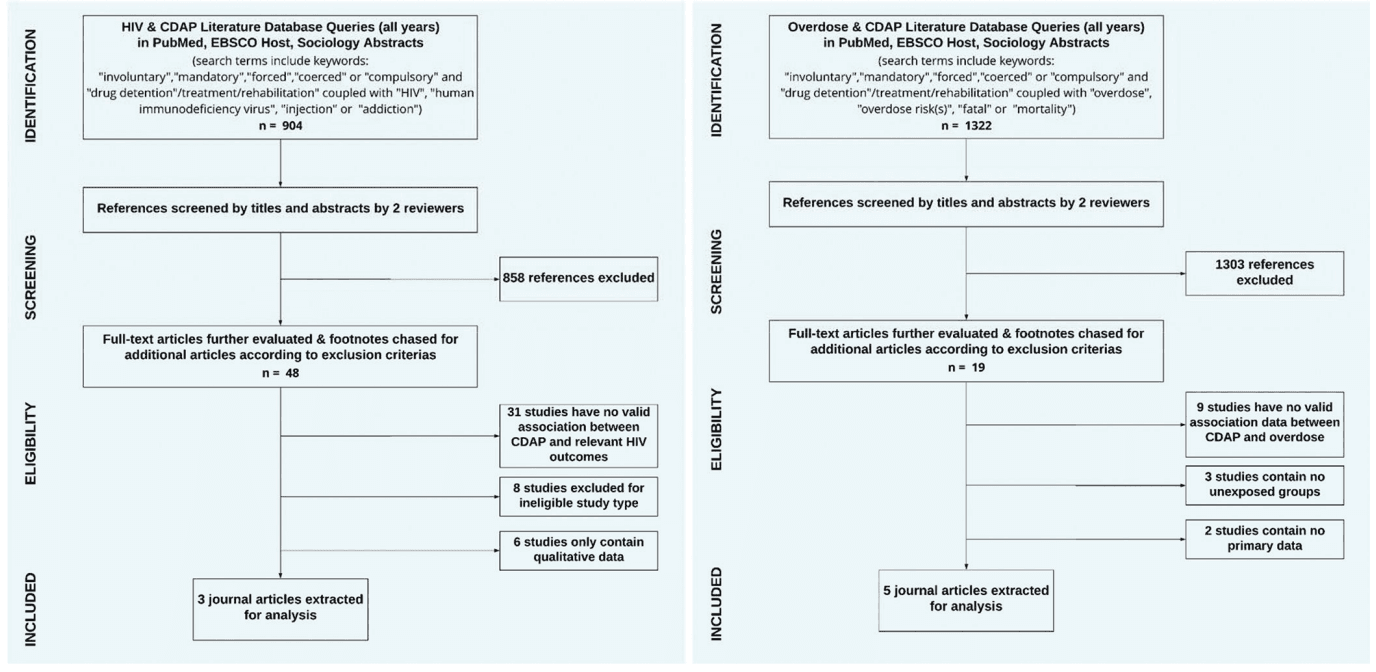
Fig 1

In the second search on CDAP and overdose outcomes, there were a total of 1322 references returned. Following the title and abstract review, 19 papers were selected for full text review, of which 14 were determined to be ineligible for data abstraction. Of the fourteen deemed ineligible, 9 did not report overdose data, three did not have an unexposed comparison group, and two were review papers that did not report primary data. Five eligible articles providing data on CDAP and overdose risks were included in the final analysis.

Quality of included studies

Using the NHLBI Quality Assessment Tool for Observational Cohort and Cross-Sectional Studies, we determined that all 3 included studies with relevant HIV outcomes were of poor quality, while four of five studies with overdose outcomes received a poor quality ratings and one earned a fair rating. Reasons for the poor quality ratings included reliance on self-report for exposure and outcome measures, lack of adjustments for key potential confounders in multivariable models, and cross-sectional study designs which lacked measures of exposure prior to measures of outcomes.

HIV seroprevalence, receptive syringe sharing, and CDAP exposure

A summary of the characteristics of the three studies is found in Table 1. No studies identified in our review measured HIV incidence. All studies were published after 2010 with data typically collected 3–4 years prior to publication. Of the three studies, two were conducted in China (Lin et al., 2012; Wang et al., 2011), with an additional study conducted in Mexico (Borquez et al., 2018). Two of the three studies consisted of cross-sectional analyses, while one was longitudinal. The reported time frames for HIV seroprevalence and receptive syringe sharing varied between “at time of survey,” “last 6 months” or “ever.” Similarly, the time frames for CDAP varied, with participants either having any history of being in CDAP or having been in CDAP within the last 6 months or at the time of survey.

Table 1.

Characteristics of Included CDAP-HIV Risk Outcome Studies
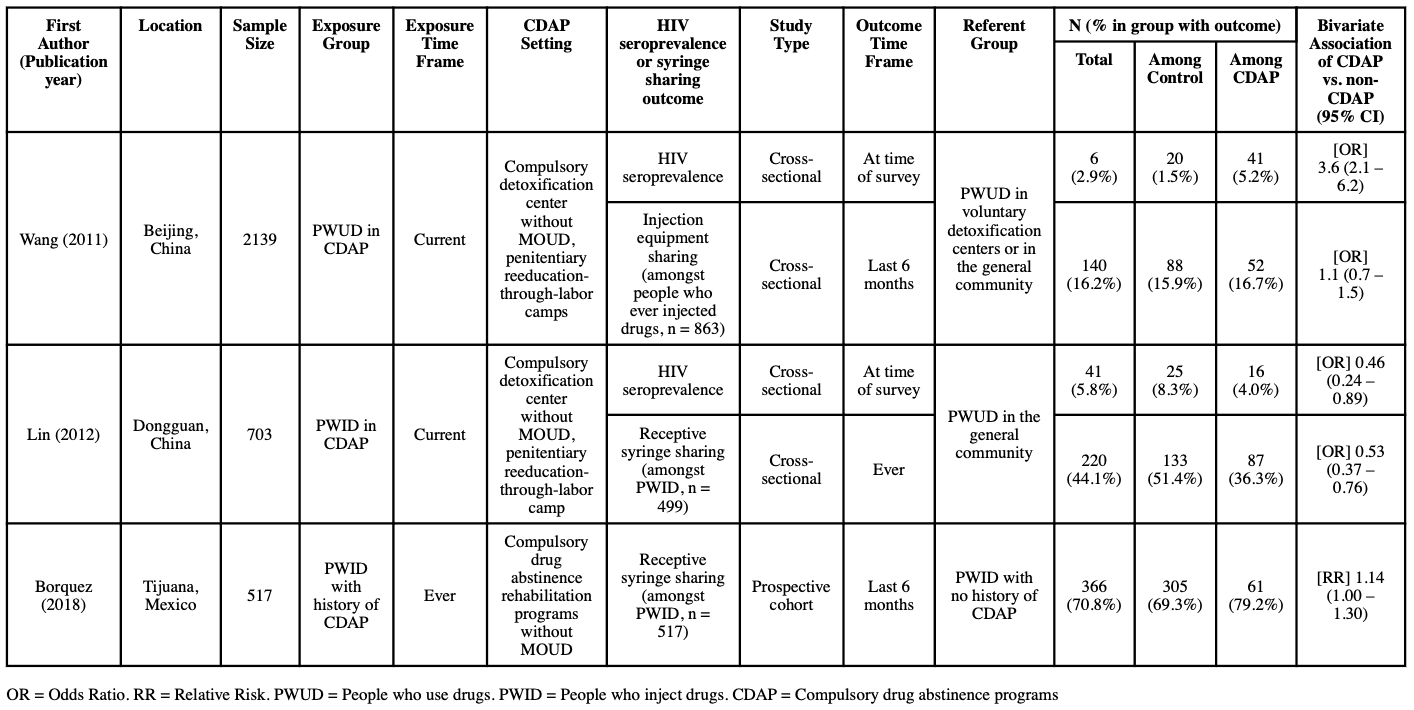
Table 1

Two studies measured the associations between CDAP exposure and HIV seroprevalence via blood testing at the time of data collection, with conflicting results (Lin et al., 2012; Wang et al., 2011). Wang et al. conducted a cross- sectional survey of PWUD at three settings in China: mandatory detoxification centers, and either voluntary detoxification centers or the general community. The study found that 5.2% of those in CDAP were seropositive for HIV, compared to only 1% testing positive among those not in CDAP, with bivariate analyses indicating the odds of being HIV positive were 3.6 times higher for those in CDAP than those who were not exposed (OR: 3.6; 95% CI: 2.1 – 6.2). By contrast, a cross-sectional survey comparing PWUD in a compulsory detoxification center in Dongguan, China and PWUD in the community found that only 4% of PWUD in CDAP were HIV seropositive, compared to 8.3% of PWUD in the community. Overall, the bivariate analysis found a lower odds of HIV seropositivity (OR: 0.46; 95% CI: 0.24 – 0.89) among those exposed to CDAP than PWUD in the general community.

Three studies reported receptive syringe sharing as an outcome variable, with two studies measuring syringe sharing in the last 6 months (Borquez et al., 2018; Wang et al., 2011) and one study measuring any history of syringe sharing (Lin et al., 2012). Results from Wang et al showed that among those in CDAP who also ever injected drugs, 16.7% (n=52) reported having shared injection equipment over the last 6 months, compared to 15% among those who were in voluntary detoxification or community-based programs. For this study, there was no clear association between exposure to CDAP and injection equipment sharing (OR: 1.1 [95% CI: 0.7 – 1.5]). Lin et al also compared syringe sharing among PWID in CDAP and those in voluntary treatment, finding that 4% of those in CDAP reported any history of sharing syringe compared to 8% of those in voluntary treatment (OR: 0.53; 95% CI: 0.37 – 0.76). Borquez et al, utilized data from 517 PWID in Mexico, comparing 77 who had been in CDAP during their most recent rehabilitation experience to 440 who had either never received treatment/rehabilitation or who had done it voluntarily. They found that 79% of those who had ever been in CDAP had also reported receptive syringe sharing in the last 6 months, while 69% of those not exposed to CDAP had reported the same (RR: 1.14; 95% CI: 1.0 – 1.3).

Due to inconsistent time frames for receptive syringe sharing outcomes in Lin et al and Borquez et al, and the differing outcome definition of “injection equipment sharing” in Wang et al compared to the other two studies, we did not calculate a pooled estimate for the association between CDAP and receptive syringe sharing. The pooled analysis of HIV seroprevalence from Lin et al and Wang et al indicated those in CDAP were approximately 30% more likely to have HIV at the time of study than those who were not in CDAP, however this was not statistically significant (p=0.84) (Figure 2) and had high heterogeneity (I2 = 96%, τ2 = 1.95, p < 0.01).

Figure 2.

Summary analysis of CDAP associations with HIV seroprevalence (upper) and receptive syringe sharing risk (lower)
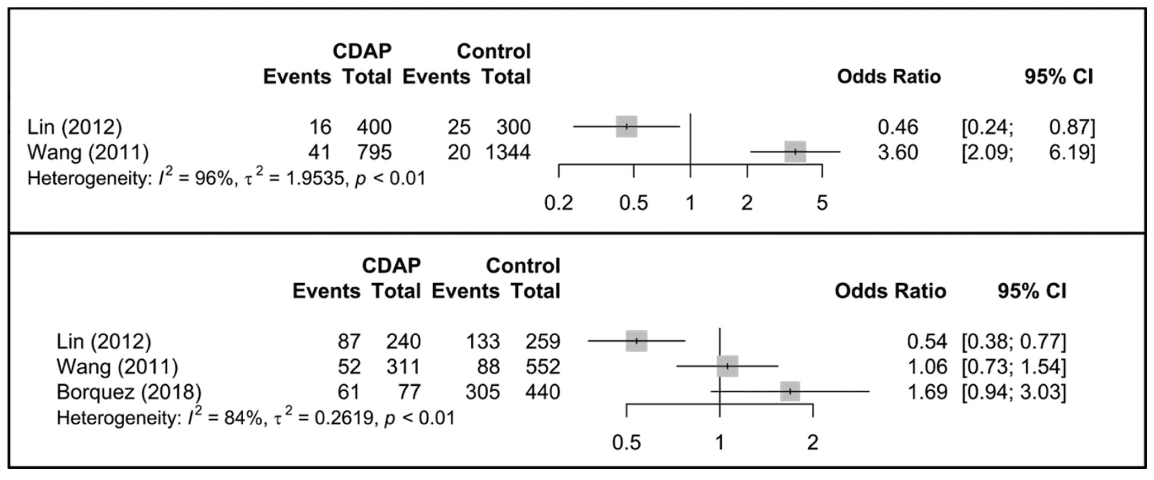
Fig 2

Overdose-related outcomes and CDAP exposure

An overview of the five eligible articles for the overdose-related outcomes is found in Table 2. Despite the limited number of eligible articles, the data abstracted represented a geographically diverse sample, with two studies from Asia (Csete et al., 2011; Zhou, Luo, Cao, Zhang, & Wu, 2016), two from North America (Christopher, Anderson, & Stein, 2018; Rafful et al., 2018), and one from Europe (Pasareanu et al., 2016). Among the overdose data reported in the five eligible articles, four presented data on any non-fatal overdose (Christopher et al., 2018; Csete et al., 2011; Pasareanu et al., 2016; Rafful et al., 2018) while the fifth presented data on incidence of non-fatal heroin overdose (Zhou et al., 2016).

Table 2.

Characteristics of Included CDAP-Overdose Studies
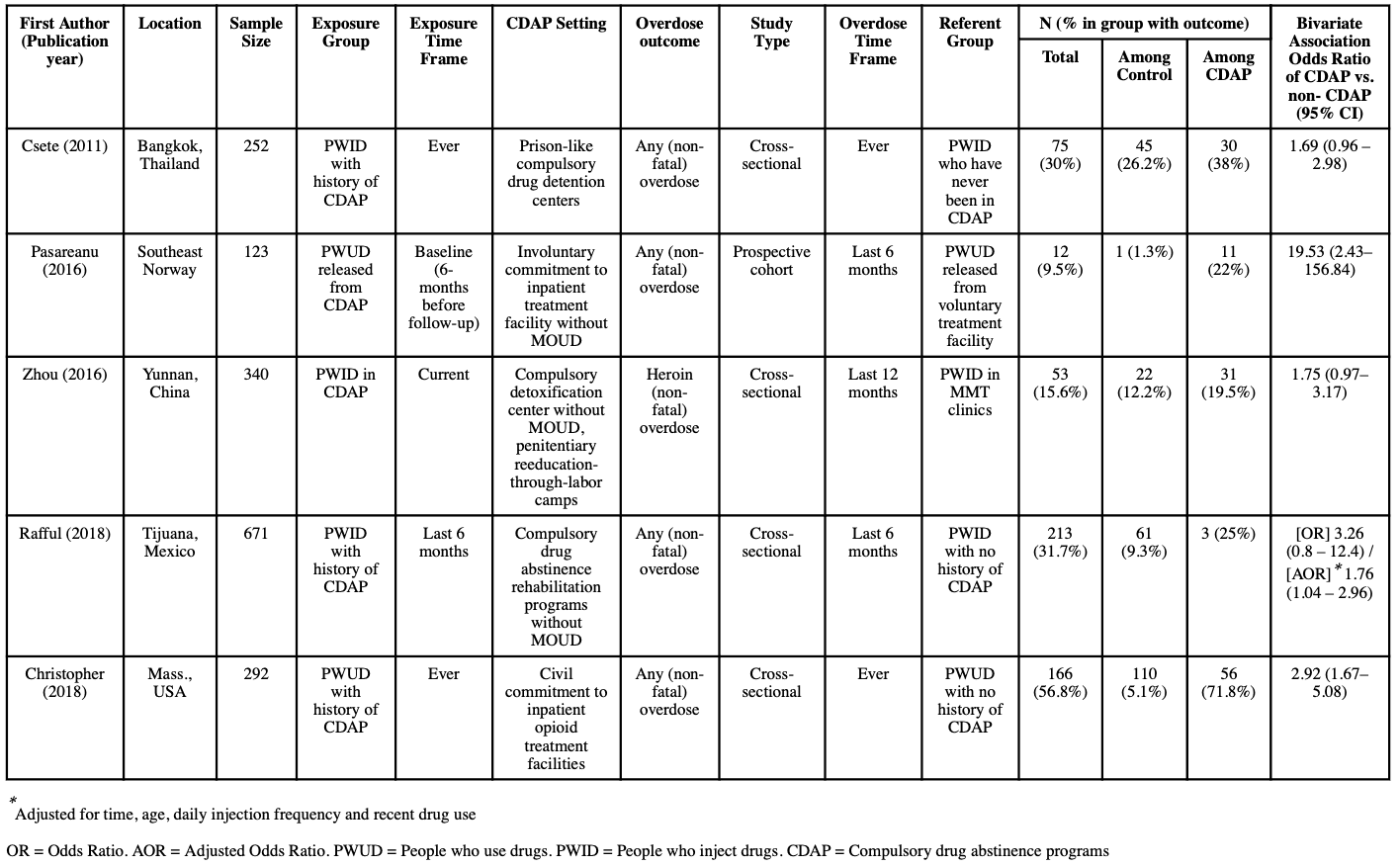
Table 2

Two studies reported associations between CDAP exposure and non-fatal overdose events both within the 6 months prior to data collection (Pasareanu et al., 2016; Rafful et al., 2018). A prospective cohort study conducted in Norway (Pasareanu et al., 2016) surveyed patients upon their release from either a voluntary or compulsory stay at an inpatient drug treatment facility and again at a 6 month follow-up visit. At follow-up, 11 of 51 participants (22%) from the compulsorily admitted group reported a non-fatal drug overdose during the 6 months follow-up period, compared to only one reported non-fatal overdose over the same period among the 72 patients (1%) in the voluntarily admitted group. Based on these estimates, we calculated an unadjusted odds ratio between participants released from CDAP at baseline and non- fatal overdose in the 6-month follow-up period of 19.5 (95% CI: 2.4–156.8) compared to those who were voluntarily admitted. Rafful et al. examined a longitudinal study of 671 PWID in Tijuana, Mexico, also finding a statistically significant increase in risk of non-fatal overdose in the past 6 months among those with past CDAP exposure compared to no exposure (AOR: 1.76; 95% CI: 1.04–2.96).

One study assessed association between current CDAP exposure and non-fatal heroin overdose in the previous year (Zhou et al., 2016). Zhou et al presented cross-sectional survey data for participants in two compulsory drug rehabilitation centers and four methadone maintenance treatment (MMT) clinics in Yunnan, China. The study found that 53 patients (15.6%) reported having an overdose, as opposed to 12.2% of those in MMT. The calculated odds ratio based on these estimates was 1.75 (95% CI: 0.97 – 3.17).

Two studies reported associations between CDAP and ever experiencing a non-fatal overdose, and both reported increased odds of non-fatal overdose among those with exposure to CDAP (Christopher et al., 2018; Csete et al., 2011). Csete et al. investigated CDAP experiences of PWID in Bangkok, Thailand. Of the 252 participants, 80 (37%) reported a history of detention in CDAP. Among those ever detained in CDAP, 38% (n=30) reported ever experiencing an overdose, compared to 27% among those who did not report a history of compulsory drug detention. Based on these reported frequencies, we calculated that exposure to CDAP was associated with 69% higher odds (95% CI: 0.96 – 2.98) of ever experiencing a non-fatal overdose compared to those with no history. Christopher et al. examined the experiences of PWUD with a history of CDAP exposure in Massachusetts, United States by surveying 292 PWUD, among whom 78 had a history of CDAP detention. Among those who were exposed to CDAP, 56 (72%) had ever experienced a non-fatal overdose compared to 110 (51.4%) of the 214 who had no experience with CDAP through the form of civil commitment, resulting in an unadjusted odds ratio of 2.41 (95% CI: 1.37–4.22).

We pooled the data from Pasaraenu et al, Zhou et al, and Rafful et al to provide an estimate of non-fatal overdose risk within the last 6–12 months as associated with CDAP exposure (Figure 3). A pooled estimate of lifetime non-fatal overdose risk associated with CDAP was also calculated accordingly using data from Csete et al and Christopher et al (Figure 3). Both pooled estimates did not reach statistical significance, resulting in an OR of 3.67 (95% CI: 0.21 – 62.88) for past 6–12 months non-fatal overdose risk with substantial heterogeneity between studies (I2 = 61%, τ2 = 0.93, p = 0.08), and an OR of 2.02 (95% CI: 0.22 – 18.86) for lifetime non-fatal overdose risk with low heterogeneity between studies (I2 = 0%, τ2 = 0.02, p = 0.39) .

Figure 3:

Summary analysis of CDAP associations with non-fatal overdose risk in last 6 months (upper) and in lifetime non-fatal overdose risk (lower)
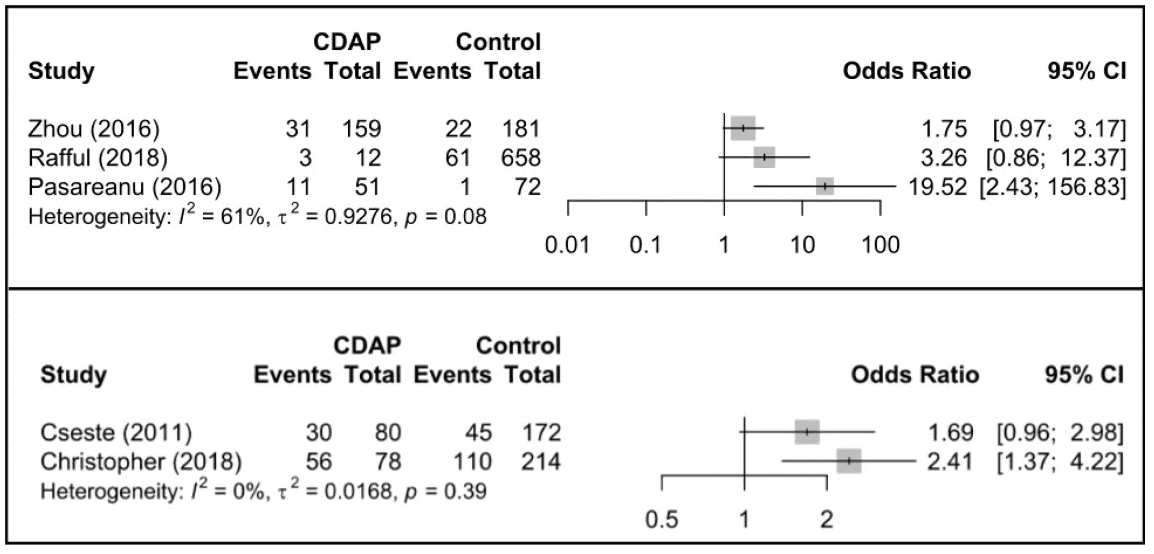
Fig 3

DISCUSSION

Given the associations between incarceration (settings typically characterized by forced abstinence similar to CDAP) and HIV and overdose related outcomes (Merrall et al., 2010; Stone et al., 2018), we hypothesized that CDAP exposure would also be associated with these outcomes. Despite the increasing utilization of CDAP, we found few quantitative evaluations of HIV and overdose risk post release. We identified mostly cross-sectional studies which relied on self-reported exposure and outcome measures. Most were assessed to be of poor/fair quality and subject to bias and confounding. Data in most of the eligible studies on HIV outcomes indicated an increased HIV prevalence and injection risk behaviors associated with CDAP. However, heterogeneity between studies precluded us from pooling the majority of the results. In addition, most studies were cross-sectional, several of which were conducted while participants were detained in a CDAP facility. Thus, participants might have seroconverted prior to their admission into CDAP. The exception to this trend was the study by Lin et al. which reported a 0.48 odds of prevalent HIV infection among those exposed to CDAP compared to unexposed (Lin et al., 2012). However, we noted significant differences between the two exposure groups that could explain this finding. For example, individuals in the non-CDAP group were older and more likely to share syringes (Lin et al., 2012), which likely confounded the association between CDAP and HIV. Additional evidence from a study conducted in Guangxi Province, China, which was excluded from our analysis due to an inconsistent exposure group, found no association between the number of times participants had been in CDAP in the past and needle/syringe sharing, but did find a positive association the number of CDAP admissions and general injection equipment sharing (cooker, cotton, rinse water, or drug solution sharing) (Chen et al., 2013). Nonetheless, our results indicated a lack of support for the role of CDAP in reducing potential injection risk behaviors.

Our search also identified studies presenting data on CDAP and other HIV treatment outcomes, finding PWID in CDAP were more likely to have avoided healthcare (Kerr et al., 2014), more likely to have received an HIV test (Wegman et al., 2017), less likely to have received ART treatment (Hayashi et al., 2015) compared to those in non-CDAP settings. These studies were excluded from this review as they did not meet eligibility criteria but nonetheless indicate a potential deleterious effect of CDAP on PWID at risk or living with HIV. In contrast, integrating ART with MOUD is associated with a 45% increase in the odds of viral suppression compared to those not in MOUD, 54% increase in ART coverage (Low et al., 2016), and a 54% reduction in risk of HIV transmission (MacArthur et al., 2012). Thus, HIV-related injection risks amongst PWID should be addressed with voluntary evidence-based treatment.

Regarding non-fatal overdose, data from two of the five studies identified in our review resulted in a statistically significant association between exposure to CDAP and non-fatal overdose. Although they did not reach statistical significance, calculated odds ratios from the remaining three studies indicated a similar magnitude of overdose risk associated with CDAP exposure. After pooling the estimates, those exposed to CDAP had 2.02 (lifetime) to 3.67 (past 6– 12 months) higher odds of non-fatal overdose compared to those with no CDAP exposure. Findings from the overdose review indicate, at a minimum, that it is unlikely CDAP reduces the risk of overdose for PWUD and PWID post-release. In addition, the one study (Pasareanu et al., 2016) from our overdose review in which exposure to CDAP clearly and immediately preceded overdose outcome measures had the strongest association between CDAP exposure and non-fatal overdose. This result is consistent with evidence of the significantly higher risks of overdose for PWUD following incarceration or dropping out of drug treatment (Degenhardt et al., 2019; Hickman et al., 2018; Mital, Wolff, & Carroll, 2020).

As of 2016, 37 U.S. states and the District of Columbia have enacted laws allowing involuntary commitment for individuals diagnosed with drug use disorders and alcoholism, with varying degrees of enforcement (Christopher et al., 2015). In Massachusetts, where civil commitment (i.e. “Section 35”) is actively enforced, there has been a substantial increase in the number of commitments since 2014 (Messinger & Beletsky, 2021). Data from a 2016 report by the Massachusetts Office of Health and Human Services also showed that those in involuntary treatment had a higher risk of fatal overdose in the 1–3 years after the treatment, compared to those who sought treatment voluntarily (RR 2.22, 95% CI 1.85–2.66, p<0.001) (Executive Office of & Human Services Department of Public, 2016). Although we did not include this estimate in our main analysis as we did not systematically review the grey literature, this report is consistent with findings by Christopher et al. that a history of civil commitment of people who use opioids is associated with increased non-fatal overdose risk (2018). This study also reported that only 19.5% of those committed received any medication treatment for their opioid use, and only 7.7% received medication treatment following their release from civil commitment (Christopher et al., 2018). These low rates of medication access during detention, compounded by lack of care continuation post-detention likely contribute to elevated overdose and other health risk (Sinha et al., 2020). Civil commitment facilities in Massachusetts, where men are primarily housed in settings managed by the Department of Corrections, have also become COVID-19 hot spots. This highlights additional health risks imposed by congregate detention in the name of drug treatment (Messinger & Beletsky, 2021). Drawing on evidence of harm, legal advocacy efforts in Massachusetts, including lawsuits and proposed legislation, have forced prisons, jails and other detention settings to allow the use of MOUD (Sinha et al., 2020). Similar efforts have also sought to completely bar the use of correctional facilities to house civil commitment patients (Becker, 2020). In other countries including Cambodia, China, Indonesia, Lao PDR, Malaysia, Myanmar, Philippines, Thailand, and Vietnam, as well as in Mexico, access to primary healthcare services in CDAPs has been shown to be limited, if available, and reports of medical negligence and physical harm further highlight the urgent need to transition to integrated health and voluntary evidence-based drug treatment services (Rafful et al., 2020; Tanguay et al., 2015; Thomson, 2010). In addition, the lack of facilities offering evidence- based treatment for PWUD, particularly in LMIC, highlights the need for the integration of evidence-based drug treatment, such as MOUD into other health programs such as ART. The integration of ART and MOUD can be a means of expanding access to pharmacological therapies for PWUD in underserved areas (Cepeda et al., 2020; Karki et al., 2016; Low et al., 2016; Mlunde et al., 2016)

This review also highlights the diversity in CDAP with respect to geography and characteristics of these institutions. In China, CDAP operate under the jurisdiction of public security agencies and detainment occurs in penitentiary-like conditions (Wang et al., 2011). Non-CDAP settings in China differ locally, ranging from community- based treatment programs to voluntary drug detoxification in similar centers (Lin et al., 2012; Wang et al., 2011; Zhang, Tan, Hao, & Deng, 2017). In Southeast Asia, compulsory drug abstinence programs often operate within detention institutions specifically for drug abstinence, while non-compulsory programs include voluntary residential treatment centers and community-based programs including MOUD (Csete et al., 2011; Hayashi et al., 2015; Kerr et al., 2014; Vuong et al., 2017; Wegman et al., 2017). Given the higher propensity of enforcement of CDAP in these settings, especially China, there is an urgent need to better link CDAP custodial and discharge data with post-release HIV and overdose outcomes.

The diverse implementation of CDAP is reflected by the varying results and the localized risks of HIV and overdose within these settings. This prompts the need for future work to harmonize data collection and establish more uniform definitions and guidelines when studying the impact of CDAP. Our review differentiated between carceral settings and CDAP facilities, but as discussed previously, CDAP and traditional carceral settings share significant characteristics and post-release risks encountered by PWUD. Conceptual frameworks have been developed to guide research investigating the risk environments facing PWUD post-release from carceral settings (Joudrey et al., 2019) and similar frameworks should be developed to guide research on PWUD released from CDAP.

Given the grave health and human rights concerns raised by many of the studies we reviewed, there is a pernicious gap between empirical evidence and practice in the realm of CDAP. Positive changes to improve CDAPs or shrink their footprint have been anemic. This warrants increasing collaboration with legal and human rights groups, while thinking beyond traditional translational efforts. Such measures may include lawsuits anchored in national and international legal norms, legislative advocacy invoking the clout of professional medical organizations, and other intersectional efforts designed to catalyze and accelerate change in this troubling realm of substance use treatment (Sinha et al., 2020).

LIMITATIONS

Our search strategy utilized key terms (e.g. coerced, involuntary, forced) to identify studies that included CDAP as an exposure variable. However, some studies may not have included information on coercive/involuntary elements of the program studied, characterizing them only as ‘drug treatment’ facilities, leading to their omission from our search. This is of particular concern in countries (e.g. China) where CDAPs represent a significant proportion of ‘drug treatment’ facilities. Most eligible studies were cross-sectional and could not provide strong evidence of causation (i.e. cannot rule out reverse causation). In addition, several cross-sectional studies included in our review had exposure and outcome chronology reversed including studies measuring outcomes with participants currently detained. This lack of causal evidence combined with inconsistent and insufficient control for confounding factors, lack of consideration of selection biases between intervention and comparison groups, as well as reliance on self-reports for outcome measures (especially overdose outcomes), limits our ability to make strong inferences on the temporality and causality between CDAP exposure and the evaluated outcomes. There were no trials and no natural experiments or use of linked data sets that could seek to emulate a trial. Depending on standard of care for treatment for opioid use disorder, it could be unethical to conduct a controlled study that randomizes individuals to CDAP or voluntary MOUD (if available), the gold-standard treatment for opioid use disorder.

Thus, it is possible that the relationship between CDAP and these outcomes could be affected by selection bias and confounded by other unmeasured factors, such as more frequent engagement of high-risk behaviors among those exposed to CDAP compared to lower risk individuals not exposed to CDAP. Other possible confounders could include that individuals detained in CDAP may experience greater structural determinants of health, such as homelessness, poverty, unemployment or have less social support. Usually with small poorly controlled observational studies there is a bias towards publishing “positive findings”. We did not find this in our review. Nonetheless, the findings from our review and meta-analysis suggest no significant protective effects of CDAP regarding HIV and overdose risks. Most studies identified also utilized self-reported measures which could be imprecise and lack rigor. However, we identified associations between exposure to CDAP and HIV seroprevalence data collected via blood draw, rather than self-report. We also identified high heterogeneity which could be due to differences in study design, differences in measures of temporality (e.g. ever overdosed vs overdose in the last 6 months), and small sample size. Another possible source of heterogeneity may be differences in overdose risk between people with opioid use disorders and people with other, non- opioid, substance use disorders (e.g. alcohol use disorder or stimulant use disorder) Lastly, non-fatal overdose events were also self-reported and subjected to the same limitations. However, mortality data based on death certificates collected by the state of Massachusetts and Sweden indicated associations between exposure to CDAP and elevated mortality rates due to drug overdose (Bukten et al., 2017; Hallam, 2010; Levy, 2017; Palm & Stenius, 2002). Even though these studies were not eligible for data abstraction due to the lack of an unexposed comparison group, they offer further potential research directions to examine elevated overdose risk or other related mortality risks among those in CDAP.

CONCLUSION

We found no evidence to suggest that CDAP significantly reduces injection drug related and overdose risks. Rather, the results of our systematic review and meta-analysis indicate that CDAP might be associated with increased HIV-related injection and overdose risks. Available evidence is limited, and further research is needed to assess these relationships more rigorously. Given ethical concerns presented by a controlled trial of compulsory abstinence, future research should utilize longitudinal designs and leverage natural experiments. Additional empirical, longitudinal research examining the health outcomes of individuals during and after CDAP is needed. Despite its limited nature, the current body evidence suggests at a minimum, CDAP is not associated with reduced post-release HIV, HCV, and overdose risks. In addition to their limited effectiveness, these programs present serious human rights concerns. Policymakers should direct resources towards evidence-based harm reduction programs such as voluntary MOUD which has a robust evidence- base indicating multiple benefits with respect to preventing HIV and HCV transmission, HIV treatment outcomes, and reducing overdose risks. In settings where CDAPs persist, collection of observational data on health outcomes is warranted along with greater harmonization, such as reporting outcome data to national health agencies to monitor effectiveness. This could improve program transparency, allowing for regulatory agencies as well as human rights monitoring and legal advocacy groups to respond to potential abuses.

Acknowledgements

This study was supported by funding from the National Institute on Drug Abuse (K01DA043421), Fogarty International Center, NIAID/NIDA (R01 AI147490), and UCSD Center for AIDS Research (P30 AI036214). AB acknowledges support from NIDA (DP2 DA049295). LB also acknowledges funding by Open Society Foundations’ Public Health Program grant. The funders had no role in the design of the study, data collection, analysis, interpretation of findings, writing of the manuscript, or submission of the paper for publication.

Open Article as PDF

Abstract

Background: Evidence supports integrating drug use treatment, harm reduction, and HIV prevention services to address dual epidemics of drug use disorders and HIV. These dual epidemics have spurred a rise in legally-enforced compulsory drug abstinence programs (CDAP), despite limited evidence on its effectiveness. We conducted a systematic review and meta-analysis evaluating the association between CDAP exposure and HIV and overdose-related risk.

Methods: We searched PubMed, EBSCOhost and Sociological Abstracts for studies that contained an individual-level association between CDAP exposure and related HIV or overdose risks, with no date restrictions. Meta-analyses were conducted on data abstracted from eligible studies, using pooled random-effects models and I-squared statistics. We assessed quality of the studies across 14 criteria for observational studies.

Results: Out of 2,226 abstracts screened, we included 8 studies (5253 individuals/776 events) across China, Mexico, Thailand, Norway, and the United States. All but two were cross-sectional analyses, limiting strength of observed associations. In the two studies that reported association between CDAP and HIV seropositivity or receptive syringe sharing, findings were inconsistent and did not indicate that those with exposure to CDAP had increased odds of HIV or syringe sharing. However, we found the odds of experiencing non-fatal overdose in lifetime and in the last 6–12 months were 2.02 (95% CI 0.22 – 18.86, p = 0.16) to 3.67 times higher (95% CI 0.21 – 62.88, p = 0.39), respectively, among those with CDAP exposure than those without.

Conclusion: Research assessing HIV risk associated with CDAP is scant and inconclusive, while evidence of robust associations between CDAP and overdose risk continues to mount. More rigorous, longitudinal studies are needed to evaluate the causal relationships between CDAP and these health outcomes. Aside from the growing evidence base on collateral harms, ethical considerations dictate that voluntary, evidence-based drug treatment should be prioritized to address the drivers of excess morbidity and mortality among people who use drugs.

INTRODUCTION

Around the world, health problems linked to drug use, such as HIV, hepatitis C virus (HCV), and overdose, cause significant illness and death among people who use drugs. It is estimated that 15.6 million people inject drugs globally. Of these, about 17.8% live with HIV, and 53% are positive for HCV antibodies. Injecting drugs has been a main cause of HIV epidemics in many places, and drug overdose is a competing risk for death in these groups. Access to and continued use of proven drug treatments, such as methadone or buprenorphine, can greatly lower the risk of overdose death and getting HIV or HCV. Studies also show better results when these drug treatments are combined with HIV treatment and prevention services. For example, providing medications for opioid use disorder (MOUD) has been found to improve how people enroll in, stay on, and take antiretroviral therapy (ART), and it also increases the chances of controlling the virus.

Despite these potential benefits, proven drug treatment is not widely available or accepted in many countries with large populations of people who inject drugs. Instead, many places are increasingly using compulsory drug abstinence programs (CDAP), also called mandatory or involuntary drug treatment, to deal with drug use. There is limited evidence that these programs effectively reduce drug use, and serious concerns have been raised about potential human rights violations within CDAP.

The features of CDAP and how they are implemented vary greatly across different places. For instance, over the past decades, the United States has expanded laws allowing "civil commitment for substance use." Under these laws, a person who uses drugs can be held against their will in a "treatment facility" if family members, doctors, prosecutors, or a judge decide there is enough evidence that the person poses a threat to themselves or others due to drug use. These facilities range from residential treatment centers to converted jail spaces, with some run by state correctional departments. CDAP are also common in Southeast Asia, including Thailand, China, Vietnam, Laos, and Cambodia, where the number of detainees can range from 2,000 to 170,000. Human rights groups have expressed concern about these facilities due to reports of forced labor, physical and sexual abuse, and a lack of access to proven treatment.

In Sweden, compulsory drug treatment is part of a stricter and more prohibitionist approach to drug use compared to other European Union countries. Mexico has a legal system for involuntary drug treatment programs that are certified by the government. These programs include medical care from a doctor, and involuntary admissions require a judge's approval. However, most CDAP in Mexico are privately run, use methods proven ineffective for opioid and other substance use disorders, such as 12-step models, and have little government oversight. Involuntary admissions often happen outside legal processes, with individuals typically forced into programs by family members or law enforcement.

Much evidence shows that people who use drugs and are incarcerated face a higher risk of overdose immediately after release from prison, as well as significant HIV and HCV-related risks, especially among people who inject drugs. However, studies have also shown that this greatly increased risk of death in the month after prison release is removed if MOUD is provided in prison. The similarities between CDAP and jail settings suggest that people who use drugs might face increased health risks after release from CDAP. Yet, there is little evidence on how CDAP affects HIV and overdose. Previous reviews of CDAP effectiveness have mainly focused on societal harms like incarceration, finding limited effectiveness. This analysis aimed to systematically review and combine quantitative findings on the link between CDAP exposure and HIV and overdose-related risks among people who use drugs.

METHODS

This study defined exposure to compulsory drug abstinence programs (CDAP) as ever experiencing legal or unofficial pressure and being held in a facility primarily designed to manage a person's drug use, mostly through forced detoxification to achieve abstinence. The conditions in CDAP vary widely, from facilities that are very similar to jails to those that operate like voluntary inpatient drug treatment programs. Despite these differences, involuntary physical confinement of individuals is a constant feature. Comparison groups included people who use drugs who reported no history of being held in CDAP. This could involve those who were receiving or had received MOUD or other voluntary addiction treatment, such as methadone maintenance, as well as people who use drugs in the community who were not in drug treatment programs and had no history of drug treatment.

The review followed the Preferred Reporting Items for Systematic Reviews and Meta-Analyses (PRISMA) guidelines. Two separate searches were conducted with CDAP as the main focus: one for HIV or injection-related outcomes and a second for overdose-related outcomes. Searches were performed in PubMed, Sociological Abstracts, and EBSCO Host to cover both health and sociological literature. Articles were included if they reported a quantitative link between CDAP and HIV or overdose outcomes, following PICO guidelines (patient, intervention, control/comparison, outcome). The patient group was people who use drugs or people who inject drugs, not limited to opioid use disorder. The intervention was exposure to CDAP, and the comparison group had no CDAP history. Primary outcomes were HIV incidence/prevalence and fatal/non-fatal drug overdose. Secondary outcomes included injection-related behaviors like sharing syringes.

Inclusion criteria required reporting primary, individual-level quantitative data, not estimates from modeling or cost-effectiveness analyses. Participants needed to report past or current exposure to CDAP, with no time restrictions. Studies were excluded if they presented only qualitative data, were not primary data reports (e.g., systematic reviews), or did not use people who use drugs or people who inject drugs as the unit of analysis. Two reviewers independently screened abstracts and then cross-checked about 10% for agreement, with a senior team member resolving any conflicts.

For all eligible studies, coding forms were used to extract HIV outcome data (seroprevalence and injection risk behaviors) and overdose data (nonfatal or fatal, regardless of time period), separated by CDAP exposure. Frequencies and sample sizes from the papers were used to calculate unadjusted odds ratios for HIV-related and overdose outcomes based on CDAP exposure, with the unexposed group as the reference. To assess study quality and potential biases, the NHLBI Quality Assessment Tool for Observational Cohort and Cross-Sectional Studies was used for each eligible study. Each study was independently reviewed and scored by two reviewers across 14 criteria, receiving an overall rating of good, fair, or poor.

Meta-analyses were performed using the R package "meta" where data allowed. The Mantel-Haenszel method was applied for a random-effects model to get pooled estimates for receptive syringe sharing, HIV seroprevalence, and overdose outcomes linked to CDAP. The Hartung-Knapp-Sidik-Jonkman method was used for variance estimators, which provides more conservative measures and is recommended for a small number of studies or studies with significant differences. Forest plots were presented for each pooled analysis. However, due to inconsistent time frames for published HIV outcomes and varying samples for overdose outcomes, the meta-analysis was only conducted for CDAP exposure and HIV seroprevalence, receptive syringe sharing, and non-fatal overdose.

RESULTS

The first search on CDAP and HIV outcomes yielded 904 references. After screening abstracts and removing ineligible papers and duplicates, 46 articles remained for full-text review. Ultimately, 3 articles with relevant data were included. Reasons for exclusion included 31 studies with no control group or valid association, 8 with ineligible study types, and 6 that reported only qualitative data. For the second search on CDAP and overdose outcomes, 1322 references were initially found. After title and abstract review, 19 papers were selected for full-text review, and 14 were deemed ineligible because they did not report overdose data (9), lacked an unexposed comparison group (3), or were review papers (2). Five eligible articles providing data on CDAP and overdose risks were included in the final analysis.

Using the NHLBI Quality Assessment Tool, all 3 included studies with HIV outcomes were rated as poor quality. Among the overdose outcome studies, four out of five received poor quality ratings, and one earned a fair rating. The reasons for these low quality ratings included reliance on self-reported exposure and outcome measures, a lack of adjustments for important potential confounding factors in multivariable models, and cross-sectional study designs that did not measure exposure before outcomes.

Regarding HIV seroprevalence and receptive syringe sharing, no studies identified in this review measured HIV incidence. All studies were published after 2010, with data typically collected 3–4 years before publication. Two studies were conducted in China, and one in Mexico. Two of the three studies used cross-sectional designs, while one was longitudinal. Reported time frames for HIV seroprevalence and receptive syringe sharing varied, as did the time frames for CDAP exposure. Two studies measured the link between CDAP exposure and HIV seroprevalence through blood testing at data collection, with conflicting results. One study found that 5.2% in CDAP were HIV positive, compared to 1% not in CDAP, indicating 3.6 times higher odds in CDAP. Conversely, another study found that only 4% in CDAP were HIV positive compared to 8.3% in the community, suggesting lower odds of HIV seropositivity (OR 0.46) among those exposed to CDAP.

Three studies reported receptive syringe sharing as an outcome. Results varied, with one study showing no clear association between CDAP exposure and injection equipment sharing (OR 1.1). Another study found that 4% in CDAP reported any history of syringe sharing compared to 8% in voluntary treatment (OR 0.53). A third study found that 79% of those in CDAP had reported receptive syringe sharing in the last 6 months, while 69% not exposed to CDAP reported the same (RR 1.14). Due to inconsistent time frames and differing outcome definitions, a pooled estimate for the association between CDAP and receptive syringe sharing was not calculated. A pooled analysis of HIV seroprevalence from two studies indicated that those in CDAP were about 30% more likely to have HIV at the time of the study than those not in CDAP, but this was not statistically significant and showed high heterogeneity.

For overdose-related outcomes, five eligible articles provided data from diverse geographical samples, including Asia, North America, and Europe. Four studies reported data on any non-fatal overdose, while one focused on the incidence of non-fatal heroin overdose. Two studies reported statistically significant increases in the risk of non-fatal overdose in the 6 months prior to data collection among those with CDAP exposure compared to no exposure (OR 19.5, AOR 1.76). Another study found that 15.6% of patients in compulsory rehabilitation centers reported an overdose in the previous year, compared to 12.2% in methadone maintenance treatment, with a calculated odds ratio of 1.75. Two studies assessed the association between CDAP and ever experiencing a non-fatal overdose, both reporting increased odds (OR 1.69, OR 2.41) among those with CDAP exposure. Pooled estimates for non-fatal overdose risk within the last 6–12 months (OR 3.67) and lifetime non-fatal overdose risk (OR 2.02) did not reach statistical significance, with varying levels of heterogeneity between studies.

DISCUSSION

Given the connections between incarceration, which often involves forced abstinence similar to CDAP, and health outcomes like HIV and overdose, it was hypothesized that CDAP exposure would also be linked to these outcomes. Despite the growing use of CDAP, only a few quantitative evaluations of HIV and overdose risk after release were found. Most identified studies were cross-sectional and relied on self-reported exposure and outcomes. The majority were assessed as poor or fair quality and were likely subject to bias and confounding. Data in most eligible studies on HIV outcomes indicated an increased HIV prevalence and injection risk behaviors associated with CDAP. However, significant differences between studies prevented the pooling of most results. Many studies were cross-sectional, and several were conducted while participants were still detained in a CDAP facility, meaning some participants might have become infected with HIV before their admission. The results generally suggest that CDAP does not reduce potential injection risk behaviors.

Regarding non-fatal overdose, data from two of the five studies identified in this review showed a statistically significant link between CDAP exposure and non-fatal overdose. Although not statistically significant, calculated odds ratios from the remaining three studies indicated a similar level of overdose risk associated with CDAP exposure. After pooling the estimates, those exposed to CDAP had 2.02 (lifetime) to 3.67 (past 6–12 months) times higher odds of non-fatal overdose compared to those without CDAP exposure. The overdose review findings suggest, at a minimum, that CDAP is unlikely to reduce the risk of overdose for people who use drugs after release. This is consistent with evidence of significantly higher overdose risks for people who use drugs after incarceration or dropping out of drug treatment.

As of 2016, many U.S. states have laws allowing involuntary commitment for individuals diagnosed with drug use disorders, with varied enforcement. In Massachusetts, where civil commitment is actively enforced, commitments have substantially increased. Data from a 2016 report showed that those in involuntary treatment had a higher risk of fatal overdose in the 1–3 years after treatment compared to those who sought treatment voluntarily. This report aligns with findings that a history of civil commitment is linked to increased non-fatal overdose risk. The low rates of medication access during detention, combined with a lack of continued care after detention, likely contribute to elevated overdose and other health risks. In other countries, including those in Southeast Asia and Mexico, access to primary healthcare in CDAPs is limited, and reports of medical negligence and physical harm highlight the urgent need to shift towards integrated health and voluntary, evidence-based drug treatment services. The lack of facilities offering evidence-based treatment for people who use drugs, especially in low- and middle-income countries, highlights the need to integrate such treatments into other health programs.

This review also highlights the variety of CDAP in terms of geography and the characteristics of these institutions. In China, CDAP operate under public security agencies, with detention occurring in jail-like conditions. Non-CDAP settings in China differ locally, ranging from community-based programs to voluntary detoxification centers. In Southeast Asia, compulsory drug abstinence programs often operate within detention institutions specifically for drug abstinence, while non-compulsory programs include voluntary residential treatment and community-based programs like MOUD. Given the higher likelihood of CDAP enforcement in these areas, particularly China, there is an urgent need to better link CDAP detention and discharge data with post-release HIV and overdose outcomes. The diverse ways CDAP are implemented lead to varying results and localized risks of HIV and overdose within these settings. This suggests that future work needs to standardize data collection and establish more uniform definitions when studying the impact of CDAP. This review differentiated between jail settings and CDAP facilities, but they share significant characteristics and post-release risks for people who use drugs.

Considering the serious health and human rights concerns raised by many of the reviewed studies, there is a clear gap between scientific evidence and actual practice in the area of CDAP. Positive changes to improve CDAP or reduce their prevalence have been slow. This calls for increased collaboration with legal and human rights groups and approaches beyond traditional efforts. Such actions may include lawsuits based on national and international legal standards, legislative advocacy supported by professional medical organizations, and other combined efforts designed to promote and accelerate change in this problematic area of substance use treatment.

LIMITATIONS

The search strategy used specific terms to identify studies involving compulsory drug abstinence programs (CDAP). However, some studies might not have explicitly mentioned the coercive aspects of the programs they examined, describing them only as 'drug treatment' facilities, which could have led to their exclusion from the search. This is particularly concerning in countries where CDAPs make up a significant portion of 'drug treatment' facilities. Most eligible studies were cross-sectional, meaning they could not provide strong evidence of cause and effect and could not rule out reverse causation. Additionally, several cross-sectional studies included in this review had the timing of exposure and outcome reversed, including studies that measured outcomes in participants who were currently detained. This lack of causal evidence, combined with inconsistent and insufficient control for confounding factors, inadequate consideration of selection biases between intervention and comparison groups, and reliance on self-reports for outcome measures, limits the ability to draw strong conclusions about the timing and causal relationship between CDAP exposure and the evaluated outcomes.

No trials or natural experiments using linked datasets that could mimic a trial were found. Depending on the standard of care for opioid use disorder, it could be considered unethical to conduct a controlled study that randomly assigns individuals to CDAP or voluntary MOUD, which is the gold-standard treatment. It is therefore possible that the relationship between CDAP and these outcomes could be affected by selection bias and confounded by other unmeasured factors, such as people exposed to CDAP engaging in high-risk behaviors more frequently than lower-risk individuals not exposed to CDAP. Other potential confounding factors could include that individuals detained in CDAP may experience greater structural determinants of health, such as homelessness, poverty, unemployment, or have less social support. Usually, small, poorly controlled observational studies have a bias towards publishing "positive findings," but this was not observed in this review. Nonetheless, the findings from this review and meta-analysis suggest no significant protective effects of CDAP regarding HIV and overdose risks.

Most identified studies also used self-reported measures, which can be imprecise and lack rigor. However, associations between CDAP exposure and HIV seroprevalence data collected via blood draw, rather than self-report, were identified. High variability across studies was also noted, which could be due to differences in study design, variations in how time was measured (e.g., ever overdosed vs. overdose in the last 6 months), and small sample sizes. Another possible source of variability may be differences in overdose risk between people with opioid use disorders and those with other, non-opioid, substance use disorders.

Finally, non-fatal overdose events were also self-reported and subject to similar limitations. However, mortality data based on death certificates collected by the state of Massachusetts and Sweden indicated links between CDAP exposure and elevated death rates due to drug overdose. While these studies were not eligible for data abstraction due to the lack of an unexposed comparison group, they offer further potential research directions to examine elevated overdose risk or other related mortality risks among those in CDAP.

In summary, the limitations of this review include reliance on self-report, limited control for confounding factors, and cross-sectional study designs, which prevent strong conclusions about cause and effect.

CONCLUSION

No evidence was found to suggest that compulsory drug abstinence programs (CDAP) significantly reduce risks related to injection drug use and overdose. Instead, the results of this systematic review and meta-analysis indicate that CDAP might be associated with increased HIV-related injection and overdose risks. The available evidence is limited, and more rigorous research is needed to assess these relationships. Given the ethical concerns of a controlled trial for compulsory abstinence, future research should use longitudinal designs and leverage natural experiments. Additional empirical, longitudinal research examining the health outcomes of individuals during and after CDAP is necessary.

Despite its limited nature, the current body of evidence suggests, at a minimum, that CDAP is not associated with reduced post-release HIV, HCV, and overdose risks. In addition to their limited effectiveness, these programs present serious human rights concerns. Policymakers should direct resources towards evidence-based harm reduction programs, such as voluntary medications for opioid use disorder (MOUD), which have strong evidence of multiple benefits in preventing HIV and HCV transmission, improving HIV treatment outcomes, and reducing overdose risks.

In settings where CDAPs continue to exist, the collection of observational data on health outcomes is warranted, along with greater standardization, such as reporting outcome data to national health agencies to monitor effectiveness. This could improve program transparency, allowing regulatory agencies, human rights monitoring, and legal advocacy groups to respond to potential abuses.

Open Article as PDF

Abstract

Background: Evidence supports integrating drug use treatment, harm reduction, and HIV prevention services to address dual epidemics of drug use disorders and HIV. These dual epidemics have spurred a rise in legally-enforced compulsory drug abstinence programs (CDAP), despite limited evidence on its effectiveness. We conducted a systematic review and meta-analysis evaluating the association between CDAP exposure and HIV and overdose-related risk.

Methods: We searched PubMed, EBSCOhost and Sociological Abstracts for studies that contained an individual-level association between CDAP exposure and related HIV or overdose risks, with no date restrictions. Meta-analyses were conducted on data abstracted from eligible studies, using pooled random-effects models and I-squared statistics. We assessed quality of the studies across 14 criteria for observational studies.

Results: Out of 2,226 abstracts screened, we included 8 studies (5253 individuals/776 events) across China, Mexico, Thailand, Norway, and the United States. All but two were cross-sectional analyses, limiting strength of observed associations. In the two studies that reported association between CDAP and HIV seropositivity or receptive syringe sharing, findings were inconsistent and did not indicate that those with exposure to CDAP had increased odds of HIV or syringe sharing. However, we found the odds of experiencing non-fatal overdose in lifetime and in the last 6–12 months were 2.02 (95% CI 0.22 – 18.86, p = 0.16) to 3.67 times higher (95% CI 0.21 – 62.88, p = 0.39), respectively, among those with CDAP exposure than those without.

Conclusion: Research assessing HIV risk associated with CDAP is scant and inconclusive, while evidence of robust associations between CDAP and overdose risk continues to mount. More rigorous, longitudinal studies are needed to evaluate the causal relationships between CDAP and these health outcomes. Aside from the growing evidence base on collateral harms, ethical considerations dictate that voluntary, evidence-based drug treatment should be prioritized to address the drivers of excess morbidity and mortality among people who use drugs.

Introduction

Globally, health issues linked to drug use, such as HIV, hepatitis C virus (HCV), and overdose, are major causes of illness and death for adults who use drugs. Studies indicate that medication-based drug treatment, like methadone or buprenorphine, significantly lowers the risk of overdose deaths and getting HIV or HCV. When these treatments are combined with HIV prevention and care services, the benefits are even greater. For example, providing medications for opioid use disorder has been shown to improve how people start, stay with, and respond to HIV treatment.

Despite these potential benefits, effective medication-based drug treatment is not widely available or accepted in many countries with large populations of people who inject drugs. Instead, "forced drug treatment programs," often called compulsory or involuntary, are increasingly used. There is limited evidence that these programs effectively reduce drug use, and many concerns have been raised about potential human rights violations within them.

Forced drug treatment programs vary greatly in their characteristics and how they are implemented. In the United States, for instance, some states have laws allowing individuals to be involuntarily detained for drug use if they are deemed a threat. These facilities can range from residential treatment centers to repurposed jail spaces, some managed by corrections departments. In Southeast Asia (e.g., Thailand, China, Vietnam), hundreds of thousands are detained, with reports of forced labor, physical and sexual abuse, and lack of access to proper medical care. Even in countries with legal frameworks for involuntary treatment, such as Mexico, many programs are privately run, use approaches proven ineffective for opioid use disorder, and operate with little government oversight. People are often forced into these programs by family members or law enforcement outside of formal legal processes.

People who use drugs and are released from jail-like settings face a significantly higher risk of overdose immediately afterward, along with substantial HIV and HCV-related risks. However, research indicates that providing medication-based treatment in prison can eliminate this increased overdose risk after release. Forced drug treatment programs share similarities with jail-like environments, suggesting that people released from them might also face aggravated health risks. Yet, there is limited research on how these programs affect HIV and overdose rates. This analysis aimed to systematically review and combine quantitative findings on the link between forced drug treatment programs and HIV and overdose risks among people who use drugs.

Methods

Defining Forced Drug Treatment Programs

Exposure to forced drug treatment programs was defined as any experience involving legal or informal pressure and detention in a facility primarily intended to manage a person's drug use, mostly through enforced detoxification to achieve abstinence. While the conditions in these programs vary widely, ranging from jail-like settings to voluntary inpatient treatment, the involuntary physical confinement of individuals is a consistent feature. Comparison groups included people who use drugs who reported no history of detention in these programs, which could mean they received voluntary addiction treatment or were not in any drug treatment programs.

Reviewing the Literature

A systematic review of existing research was conducted following established guidelines. Two separate searches were performed, one focused on HIV or injection-related outcomes and the second on overdose-related outcomes, across three major academic databases. Studies were included if they reported original, individual-level quantitative data on the association between forced drug treatment exposure and HIV risk or overdose-related outcomes among people who use or inject drugs. Primary outcomes were HIV infection rates and fatal or non-fatal drug overdose, with secondary outcomes including injection behaviors like receptive syringe sharing. Studies were excluded if they only presented qualitative data or did not report primary data. Two reviewers independently screened abstracts and full texts. Data from eligible studies were extracted, and unadjusted odds ratios for HIV-related and overdose outcomes were calculated, using those without forced drug treatment exposure as the reference group. The quality and potential biases of each study were assessed using a specific tool for observational studies, with each study rated as good, fair, or poor.

Combining Study Data

When possible, data from relevant studies were combined using meta-analysis techniques to obtain overall estimates. A random-effects model was used, which is appropriate for diverse studies. Due to inconsistent timeframes for reported HIV outcomes and varied samples for overdose outcomes, meta-analyses were only conducted for forced drug treatment exposure and HIV infection rates, receptive syringe sharing, and non-fatal overdose.

Results

Search Results

The systematic search for studies on forced drug treatment and HIV outcomes initially identified 904 references, eventually leading to the inclusion of 3 relevant articles after rigorous screening. For overdose outcomes, a search of 1322 references resulted in 5 eligible articles for final analysis. (Figure 1 in the original document details these search processes.)

Study Quality

The quality of the included studies was generally low. All three studies on HIV outcomes were rated as poor, and four out of five studies on overdose outcomes also received a poor rating, with only one rated as fair. This was primarily due to reliance on self-reported data, insufficient adjustment for other influencing factors, and cross-sectional designs that made it difficult to determine the timing of exposure and outcomes.

HIV Infection and Syringe Sharing

Three studies examined the link between forced drug treatment and HIV outcomes, none measuring new HIV infections directly. Findings on HIV infection rates were conflicting: one study in China found those in forced programs were 3.6 times more likely to be HIV positive, while another Chinese study reported lower odds of HIV infection (0.46 times) for those exposed. For receptive syringe sharing (using a used syringe), results were also inconsistent; one study found no clear link, another reported lower odds of sharing, but a third in Mexico found a higher risk among those with a history of forced drug treatment. Due to these inconsistencies and varying timeframes, a combined estimate for syringe sharing was not possible. A combined analysis for HIV infection rates suggested a 30% higher likelihood of HIV among those in forced treatment, but this was not statistically significant and showed high variability between studies. (Table 1 and Figure 2 in the original document provided detailed study characteristics and pooled analysis.)

Overdose Outcomes

Five studies investigated the association between forced drug treatment and overdose, covering various geographic regions. Two studies focused on non-fatal overdose in the past six months: one in Norway found a 19.5 times higher odds of overdose for those released from forced treatment, and another in Mexico reported a significant 76% increased risk. A third study found 1.75 times higher odds of non-fatal heroin overdose in the previous year among those in forced rehabilitation. Two additional studies looking at "ever" experiencing a non-fatal overdose also reported increased odds (69% and 2.41 times higher, respectively) for those with a history of forced drug treatment. When available data were combined, the pooled estimates suggested that those exposed to forced drug treatment had 2.02 (lifetime) to 3.67 (past 6–12 months) times higher odds of non-fatal overdose. While these pooled results were not statistically significant, they consistently indicated an increased overdose risk. (Table 2 and Figure 3 in the original document presented detailed study characteristics and pooled analyses.)

Discussion

It was hypothesized that forced drug treatment programs would be linked to HIV and overdose risks, similar to what is seen after incarceration. However, limited quantitative research was found on these health risks after release from such programs. Most studies were cross-sectional, relying on self-reported data, and rated as poor or fair quality, making them susceptible to bias and confounding. While most studies suggested an increased HIV prevalence and injection risks linked to forced drug treatment, high variability between studies prevented combining many results. Studies conducted while participants were detained also made it unclear if HIV infection occurred before or during detention. An outlier study showing lower HIV odds among those in forced treatment likely had confounding factors. Overall, there is little support for the idea that forced drug treatment reduces risky injection behaviors.

Other research, though not included in the main analysis, also indicates that people who inject drugs in forced programs may avoid healthcare and be less likely to receive HIV treatment. This suggests that forced drug treatment could negatively affect people living with or at risk of HIV. In contrast, integrating HIV treatment with medication-based treatment for opioid use disorder is known to significantly improve HIV treatment outcomes and reduce HIV transmission risks. Voluntary, evidence-based treatment remains the recommended approach to address HIV-related injection risks.

For non-fatal overdose, two of the five identified studies showed a statistically significant link between forced drug treatment exposure and overdose, and the others indicated similar increased risks. When combined, the results suggest those exposed to forced drug treatment had 2 to 3.67 times higher odds of non-fatal overdose compared to those without exposure. This strongly implies that forced drug treatment is unlikely to reduce overdose risk after release, which aligns with evidence showing significantly higher overdose risks for people who use drugs after incarceration or discontinuing drug treatment.

Globally, the implementation of forced drug treatment programs varies widely. In the United States, for example, involuntary commitment laws for substance use disorders are expanding, yet data from places like Massachusetts show a higher risk of fatal overdose after involuntary treatment compared to voluntary care. Very few individuals committed involuntarily receive medication for opioid use disorder during or after their detention, contributing to elevated overdose risks. These detention settings also pose additional health risks, such as COVID-19 outbreaks. Elsewhere, in countries like China and those in Southeast Asia, these programs often operate under jail-like conditions with limited healthcare access and reports of medical neglect. This highlights the urgent need to transition to integrated, voluntary, and evidence-based drug treatment services, especially in underserved areas, by combining medication-based treatment with other health programs like HIV treatment.

Given the severe health and human rights concerns, there is a significant gap between research evidence and current practices in forced drug treatment programs. Progress in improving or reducing these programs has been slow. This situation calls for increased collaboration with legal and human rights groups, including using lawsuits based on national and international laws, advocating for legislation with support from medical organizations, and other combined efforts to drive faster change in this problematic area of substance use treatment.

Limitations

The search strategy might have missed some relevant studies if they did not explicitly mention coercive or involuntary elements in their program descriptions. Most included studies were cross-sectional, meaning they provided only a snapshot in time and could not definitively prove cause and effect. It was difficult to determine if exposure to forced drug treatment happened before the health outcomes, and several studies even measured outcomes while participants were currently detained. This lack of causal evidence, along with inconsistent control for confounding factors, possible selection biases between groups, and reliance on self-reports for outcomes (especially overdose), limits the ability to draw strong conclusions about the relationship between forced drug treatment exposure and the evaluated health outcomes.

It is possible that the link between forced drug treatment and these outcomes could be influenced by other unmeasured factors, such as higher-risk behaviors or greater structural disadvantages (like homelessness or unemployment) among those exposed to these programs. Despite these limitations, the findings suggest no significant protective effects of forced drug treatment programs regarding HIV and overdose risks. While many measures were self-reported, which can be imprecise, some studies did use blood tests for HIV infection. High variability among studies also limited the ability to combine results and may be due to differences in study design or outcome definitions. However, other mortality data from Massachusetts and Sweden, though not included in this meta-analysis, support the idea of elevated overdose death rates after exposure to forced drug treatment.

Conclusion

This review found no evidence suggesting that forced drug treatment programs significantly reduce injection drug-related or overdose risks. Instead, the results of this systematic review and meta-analysis indicate that such programs might be associated with increased HIV-related injection and overdose risks. The available evidence is limited, often of poor quality, and more rigorous research is needed to fully understand these relationships. Given the ethical concerns of controlled trials, future research should use longitudinal designs and examine natural experiments. Despite its limitations, the current evidence strongly suggests that forced drug treatment programs are not linked to reduced HIV, hepatitis C, and overdose risks after release. In addition to their limited effectiveness, these programs often raise serious human rights concerns.

Policymakers should therefore prioritize resources toward evidence-based harm reduction programs, such as voluntary medication-based treatment for opioid use disorder. These programs have a robust evidence base demonstrating significant benefits in preventing HIV and hepatitis C transmission, improving HIV treatment outcomes, and reducing overdose risks. In settings where forced drug treatment programs continue to exist, it is crucial to collect observational data on health outcomes and standardize reporting to national health agencies. This would improve program transparency, allowing regulatory bodies, human rights monitors, and legal advocacy groups to address potential abuses effectively.

Acknowledgements

This study received funding from the National Institute on Drug Abuse (K01DA043421), Fogarty International Center, NIAID/NIDA (R01 AI147490), and UCSD Center for AIDS Research (P30 AI036214). Additional support was provided by NIDA (DP2 DA049295) and a grant from Open Society Foundations’ Public Health Program. The funders played no role in the study's design, data collection, analysis, interpretation of findings, writing of the manuscript, or submission for publication.

Open Article as PDF

Abstract

Background: Evidence supports integrating drug use treatment, harm reduction, and HIV prevention services to address dual epidemics of drug use disorders and HIV. These dual epidemics have spurred a rise in legally-enforced compulsory drug abstinence programs (CDAP), despite limited evidence on its effectiveness. We conducted a systematic review and meta-analysis evaluating the association between CDAP exposure and HIV and overdose-related risk.

Methods: We searched PubMed, EBSCOhost and Sociological Abstracts for studies that contained an individual-level association between CDAP exposure and related HIV or overdose risks, with no date restrictions. Meta-analyses were conducted on data abstracted from eligible studies, using pooled random-effects models and I-squared statistics. We assessed quality of the studies across 14 criteria for observational studies.

Results: Out of 2,226 abstracts screened, we included 8 studies (5253 individuals/776 events) across China, Mexico, Thailand, Norway, and the United States. All but two were cross-sectional analyses, limiting strength of observed associations. In the two studies that reported association between CDAP and HIV seropositivity or receptive syringe sharing, findings were inconsistent and did not indicate that those with exposure to CDAP had increased odds of HIV or syringe sharing. However, we found the odds of experiencing non-fatal overdose in lifetime and in the last 6–12 months were 2.02 (95% CI 0.22 – 18.86, p = 0.16) to 3.67 times higher (95% CI 0.21 – 62.88, p = 0.39), respectively, among those with CDAP exposure than those without.

Conclusion: Research assessing HIV risk associated with CDAP is scant and inconclusive, while evidence of robust associations between CDAP and overdose risk continues to mount. More rigorous, longitudinal studies are needed to evaluate the causal relationships between CDAP and these health outcomes. Aside from the growing evidence base on collateral harms, ethical considerations dictate that voluntary, evidence-based drug treatment should be prioritized to address the drivers of excess morbidity and mortality among people who use drugs.

INTRODUCTION

Globally, health issues linked to drug use, such as HIV, hepatitis C virus (HCV), and overdose, are major causes of illness and death for people who use drugs. It is estimated that 15.6 million people worldwide inject drugs. Among these individuals, about 17.8% live with HIV, and 53% have tested positive for HCV. Injecting drugs has been a main reason for HIV epidemics in many places, and drug overdose is another serious threat to life for these groups.

Access to and continued use of proven drug treatments, like those based on methadone or buprenorphine, significantly lower the risk of death from overdose and acquiring HIV and HCV. Studies have also shown that combining these effective drug treatments with HIV treatment and prevention services leads to better results. For instance, providing medications for opioid use disorder (MOUD) has been found to improve how many people start, stay on, and stick to antiretroviral therapy (ART) for HIV, and it increases the chances of controlling the virus.

Despite these benefits, effective drug treatment is not widely available or accepted in many countries where large numbers of people inject drugs. Instead, many places are increasingly using compulsory drug abstinence programs (CDAP), also known as forced drug treatment, to deal with drug use. These programs have little evidence to show they are effective in reducing drug use and have raised serious concerns about human rights violations.

The nature and operation of CDAP vary widely. For example, the United States has expanded laws allowing "civil commitment for substance use." Under these laws, a person who uses drugs can be held against their will in a "treatment facility" if a family member, clinician, prosecutor, or judge believes the person is a danger to themselves or others due to their drug use. These facilities can range from residential centers to repurposed jail spaces, some managed by correctional departments. CDAP are also common in Southeast Asia (like Thailand, China, Vietnam), with reports of forced labor, abuse, and a lack of proven treatment. Even in countries like Mexico, where programs are government-certified and require a judge's approval for forced admissions, many CDAP are privately run with little oversight and use methods not proven effective for opioid use disorder.

Research shows that people who use drugs and are released from prison face a much higher risk of overdose and HIV/HCV problems. However, this high risk of death after prison is removed if medications for opioid use disorder (MOUD) are provided while in prison. Since CDAP are similar to correctional settings, people released from CDAP could also face increased health risks. There is little research on how CDAP affect HIV and overdose. This study aimed to systematically review existing research to find any links between CDAP exposure and HIV and overdose-related risks for people who use drugs.

METHODS

Definition of CDAP and non-CDAP exposure

Exposure to Compulsory Drug Abstinence Programs (CDAP) was defined as having experienced legal or informal force and being held in a facility whose main goal is to manage a person's drug use, mostly through forced detoxification to achieve abstinence. The conditions in CDAP vary widely, from facilities that resemble prisons to those that operate like voluntary inpatient drug treatment programs. Despite these differences, a consistent feature is the involuntary physical confinement of the people admitted. For comparison, groups of people who use drugs and had no history of being held in CDAP were used. These groups could include people receiving or who had received voluntary addiction treatment, such as methadone, or people in the community not in any drug treatment programs.

Systematic Literature Review

The review followed standard guidelines for systematic literature reviews. Researchers conducted two separate searches focusing on CDAP as the main exposure: one for HIV or injection-related outcomes and another for overdose-related outcomes. Three major databases (PubMed, Sociological Abstracts, and EBSCO Host) were searched, covering both health and social sciences literature.

Articles were included if they reported a measurable link between CDAP and HIV risk or overdose-related outcomes. The studies had to focus on people who use drugs or inject drugs. The "intervention" was exposure to CDAP, and the "control" group had no history of CDAP. The main outcomes were new HIV infections or existing HIV infections, and fatal or non-fatal drug overdoses. Secondary outcomes included injection-related behaviors like sharing syringes. Studies were excluded if they only presented qualitative information, were not primary research, or did not analyze individuals who use drugs.

Two reviewers independently screened abstracts, and about 10% were cross-checked to ensure agreement. Any disagreements were resolved by a senior team member. For all eligible studies, data was collected on HIV outcomes (existing infections and injection risk behaviors) and overdose data (non-fatal or fatal), separated by whether participants had been exposed to CDAP. Frequencies and sample sizes from the papers were used to calculate initial odds ratios for HIV-related and overdose outcomes when comparing those exposed to CDAP with those who were not. The quality and potential biases of the eligible studies were assessed using a tool from the National Heart Lung and Blood Institute (NHLBI). Each study received an overall rating of good, fair, or poor.

Meta-analysis

Meta-analyses were performed using relevant data from the included studies whenever possible. This involved using statistical methods to combine the results from multiple studies. The analysis focused on pooled estimates for receptive syringe sharing, existing HIV infections, and non-fatal overdose outcomes linked to CDAP. However, due to differences in how HIV outcomes were reported over time and the varied groups studied for overdose outcomes, the meta-analysis only combined data for CDAP exposure with existing HIV infections, receptive syringe sharing, and non-fatal overdose.

RESULTS

Search results

The first search, which looked for studies on CDAP and HIV outcomes, found 904 references. After carefully reviewing these and removing duplicate or ineligible papers, three articles were included for full review. For the second search, focusing on CDAP and overdose outcomes, 1322 references were found. After reviewing titles and abstracts, five eligible articles were included in the final analysis.

Quality of included studies

Using the NHLBI Quality Assessment Tool, all three studies that looked at HIV outcomes were rated as poor quality. For the overdose outcomes, four out of five studies received a poor-quality rating, and one was rated fair. The main reasons for these low-quality ratings included relying on people to report their own experiences, not adjusting for important influencing factors in the analyses, and using study designs that did not track people over time, making it hard to determine if CDAP caused the outcomes.

HIV seroprevalence, receptive syringe sharing, and CDAP exposure

None of the studies found measured new HIV infections. The three included studies were published after 2010, with data typically collected a few years before publication. Two studies were from China, and one was from Mexico. Two studies used a snapshot-in-time design, while one tracked participants over time. The timeframes for reporting existing HIV infections and syringe sharing varied, as did the definition of CDAP exposure (e.g., any history of CDAP vs. CDAP in the last 6 months).

Two studies looked at the link between CDAP exposure and existing HIV infections, but their results were conflicting. One study in China found that 5.2% of those in CDAP had HIV, compared to 1% of those not in CDAP, suggesting that people in CDAP were 3.6 times more likely to have HIV. In contrast, another study in China found that only 4% of people in CDAP had HIV, compared to 8.3% of those in the community, suggesting that those exposed to CDAP were less likely (0.46 times) to have HIV.

Three studies reported on receptive syringe sharing. Results were inconsistent: one found no clear link between CDAP and sharing, another found less sharing among those in CDAP compared to voluntary treatment, and a third found that those who had been in CDAP were 1.14 times more likely to have shared syringes in the last six months. Due to these inconsistencies, a combined estimate for CDAP and receptive syringe sharing was not calculated.

When data from two studies on existing HIV infections were combined, it suggested that people in CDAP were about 30% more likely to have HIV than those not in CDAP. However, this finding was not statistically significant and showed high variability between the studies.

Overdose-related outcomes and CDAP exposure

Five studies provided data on CDAP and overdose. These studies covered various regions, including Asia, North America, and Europe. Four studies reported on any non-fatal overdose, while one focused on non-fatal heroin overdose.

Two studies reported a link between CDAP exposure and non-fatal overdose events within the six months before data collection. One study from Norway found that people released from compulsory treatment were 19.5 times more likely to report a non-fatal overdose in the next six months compared to those from voluntary treatment. Another study in Mexico found that people with past CDAP exposure had a 1.76 times increased risk of non-fatal overdose in the past six months.

One study in China found that people currently in compulsory drug rehabilitation centers were 1.75 times more likely to have experienced a non-fatal heroin overdose in the previous year compared to those in methadone maintenance treatment clinics.

Two studies reported an increased likelihood of ever experiencing a non-fatal overdose among those with CDAP exposure. One study in Thailand found that those with a history of CDAP were 69% more likely to have ever experienced an overdose. Another study in Massachusetts, USA, found that people with a history of civil commitment (a form of CDAP) were 2.41 times more likely to have ever experienced a non-fatal overdose.

When combining the data, people exposed to CDAP had between 2.02 (lifetime) and 3.67 (past 6-12 months) times higher odds of non-fatal overdose compared to those with no CDAP exposure. However, these combined estimates were not statistically significant, and the results showed significant variability between studies.

DISCUSSION

Given the known links between incarceration (which often involves forced abstinence, similar to CDAP) and health issues like HIV and overdose, it was expected that CDAP exposure would also be connected to these outcomes. However, despite the increasing use of CDAP, only a few studies have quantitatively evaluated the risks of HIV and overdose after release from these programs. Most of these studies were snapshot-in-time analyses, relied on self-reported information, and were considered to be of poor or fair quality, making them prone to bias and inaccuracies.

Data from most of the relevant studies on HIV outcomes indicated a higher prevalence of HIV and risky injection behaviors among those exposed to CDAP. However, the differences between studies made it difficult to combine most of the results. Also, because many studies were cross-sectional, it is possible that participants had HIV before entering CDAP. Overall, the results did not support the idea that CDAP help reduce risky injection behaviors. Other research, not included in this review, also suggests that CDAP may have harmful effects on people living with HIV, as participants were more likely to avoid healthcare and less likely to receive HIV treatment. This is in contrast to evidence-based treatments like combining ART with MOUD, which significantly improve HIV outcomes and reduce transmission.

Regarding non-fatal overdose, data from some studies in this review showed a significant link between CDAP exposure and non-fatal overdose. While not all combined estimates reached statistical significance, the calculated odds suggested that those exposed to CDAP had 2 to 3.67 times higher odds of experiencing a non-fatal overdose compared to those without CDAP exposure. These findings indicate that CDAP is unlikely to reduce the risk of overdose after release. This aligns with other evidence showing significantly higher overdose risks for people who use drugs after being released from prison or dropping out of drug treatment.

The varying ways CDAP are implemented around the world are reflected in the differing results and localized risks for HIV and overdose. For example, in China, CDAP operate under public security agencies in prison-like conditions, while in the US, civil commitment for substance use is actively enforced, sometimes leading to higher fatal overdose risks for those involved. In many countries, access to primary healthcare in CDAP is limited, and there are reports of abuse. This highlights an urgent need to shift towards integrated health services and voluntary, evidence-based drug treatment. Given the proven benefits of MOUD, its integration with other health programs like ART could expand access to effective treatments, especially in underserved areas.

This review also underscores the need for better data collection and more consistent definitions when studying the impact of CDAP. Since CDAP and traditional correctional settings share many characteristics and pose similar post-release risks, frameworks developed for prison release should also guide research on people released from CDAP. The lack of positive changes and the ongoing human rights concerns related to CDAP highlight the urgent need for collaboration with legal and human rights groups, along with advocacy efforts, to bring about change in this challenging area of substance use treatment.

LIMITATIONS

This review might not have included all relevant studies, as some might not have used terms like "coerced" or "involuntary" to describe their programs. Most of the included studies were based on a single snapshot in time, which means they cannot definitively prove that CDAP caused the outcomes. For example, people might have had HIV before entering CDAP. There was also a lack of control for other factors that could influence the results, as well as potential biases in how participants were selected for the studies. Many studies relied on self-reported information, which can be inaccurate. Additionally, there was high variability between studies due to differences in their design, how outcomes were measured (e.g., "ever overdosed" versus "overdose in the last 6 months"), and small sample sizes. There could also be differences in overdose risk between people with opioid use disorders and those with other types of substance use disorders.

CONCLUSION

This study found no evidence to suggest that compulsory drug abstinence programs (CDAP) significantly reduce risks related to injecting drugs or overdose. Instead, the results suggest that CDAP might be linked to increased risks of HIV-related injection behaviors and overdose. The available evidence is limited, and more rigorous research is needed to better understand these relationships. Given the ethical concerns of conducting controlled trials for forced abstinence, future research should use methods that track individuals over time or study natural changes in policy or practice.

Despite its limitations, the current evidence indicates that CDAP, at best, do not reduce post-release risks for HIV, HCV, and overdose. In addition to their questionable effectiveness, these programs raise serious human rights concerns. Policymakers should direct resources towards proven harm reduction programs, such as voluntary medications for opioid use disorder (MOUD), which have strong evidence showing many benefits for preventing HIV and HCV transmission, improving HIV treatment outcomes, and reducing overdose risks. In places where CDAP continue to exist, it is important to collect observational data on health outcomes and improve transparency. This would allow regulatory agencies, human rights organizations, and legal groups to monitor effectiveness and address potential abuses.

Open Article as PDF

Abstract

Background: Evidence supports integrating drug use treatment, harm reduction, and HIV prevention services to address dual epidemics of drug use disorders and HIV. These dual epidemics have spurred a rise in legally-enforced compulsory drug abstinence programs (CDAP), despite limited evidence on its effectiveness. We conducted a systematic review and meta-analysis evaluating the association between CDAP exposure and HIV and overdose-related risk.

Methods: We searched PubMed, EBSCOhost and Sociological Abstracts for studies that contained an individual-level association between CDAP exposure and related HIV or overdose risks, with no date restrictions. Meta-analyses were conducted on data abstracted from eligible studies, using pooled random-effects models and I-squared statistics. We assessed quality of the studies across 14 criteria for observational studies.

Results: Out of 2,226 abstracts screened, we included 8 studies (5253 individuals/776 events) across China, Mexico, Thailand, Norway, and the United States. All but two were cross-sectional analyses, limiting strength of observed associations. In the two studies that reported association between CDAP and HIV seropositivity or receptive syringe sharing, findings were inconsistent and did not indicate that those with exposure to CDAP had increased odds of HIV or syringe sharing. However, we found the odds of experiencing non-fatal overdose in lifetime and in the last 6–12 months were 2.02 (95% CI 0.22 – 18.86, p = 0.16) to 3.67 times higher (95% CI 0.21 – 62.88, p = 0.39), respectively, among those with CDAP exposure than those without.

Conclusion: Research assessing HIV risk associated with CDAP is scant and inconclusive, while evidence of robust associations between CDAP and overdose risk continues to mount. More rigorous, longitudinal studies are needed to evaluate the causal relationships between CDAP and these health outcomes. Aside from the growing evidence base on collateral harms, ethical considerations dictate that voluntary, evidence-based drug treatment should be prioritized to address the drivers of excess morbidity and mortality among people who use drugs.

INTRODUCTION

Many people who use drugs face serious health problems and death. These problems can include HIV, hepatitis C (HCV), and overdose. Around the world, about 15.6 million people inject drugs. Of these, about 18 out of 100 have HIV, and over half have HCV.

Injecting drugs is a major reason why HIV spreads in many places. Overdose is also a big risk for these groups. Good medical treatments for drug use, like methadone, can greatly lower the chance of overdose, getting HIV, or getting HCV. Studies show that combining good drug treatments with HIV care works even better. It helps people start and keep taking their HIV medicine and lowers the amount of virus in their body.

However, good drug treatment is not available everywhere. Many people and places do not fully accept it. Instead, "forced drug programs" are used more and more to deal with drug use. These programs, sometimes called "compulsory drug abstinence programs" (CDAP), often lack proof that they work to reduce drug use. There are also big worries about human rights being harmed in these programs.

Forced drug programs are different depending on the country. In the United States, some states have laws that allow people to be held against their will for drug use. This can happen if family members, doctors, or judges say the person is a danger to themselves or others because of their drug use. These places can range from special treatment centers to old jail spaces. In Southeast Asia, like in China and Thailand, many people are held in similar programs. Human rights groups have reported problems like forced labor, physical abuse, and no access to good treatment in these places. Mexico also has laws for forced drug treatment, but many programs are private and not watched closely by the government.

People who use drugs and are released from prison are at a much higher risk of overdose, HIV, and HCV. Studies show that if these people get good drug treatment while in prison, this high risk goes away. Because forced drug programs are similar to jails, people released from them might face similar health risks. This study looked at what past research says about how forced drug programs affect the risk of HIV and overdose for people who use drugs.

METHODS

To understand how forced drug programs affect health, researchers looked at many studies. A forced drug program (CDAP) means a person who uses drugs is held against their will in a place that tries to make them stop using drugs. These places mainly focus on stopping drug use, often by forcing people to go through detox. Even though conditions in these places can be different, people are always kept there unwillingly. The studies then compared these people to others who use drugs but were not held in such programs. This comparison group might have been getting voluntary drug treatment, or no treatment at all.

Researchers followed specific steps to find and review studies. They searched three large online databases for studies about CDAP and HIV or overdose. The studies needed to show a clear link between being in a CDAP and outcomes like getting HIV or having an overdose. Only studies that shared real numbers about individuals were included. Studies that only talked about ideas, were reviews of other studies, or did not focus on people who use drugs were left out.

Two separate searches were done: one for HIV and one for overdose. After finding many possible studies, two researchers checked them carefully. For all studies that were included, important details were written down, such as how many people had HIV or had overdosed, and if they had been in a CDAP. Simple math was used to compare the risks in the CDAP group to the group that had not been in CDAP. Each study was also checked to see how well it was done and if there were any issues that might make the results less trustworthy. Most of the studies were found to be of "poor" or "fair" quality.

When possible, the findings from similar studies were combined using special computer tools. This helped get a bigger picture of how CDAP affects the chance of sharing needles, having HIV, and having a non-fatal overdose. However, combining all results was not always possible because the studies were sometimes too different.

RESULTS

After searching for studies, researchers found a total of 904 papers about CDAP and HIV. Only 3 of these had the right kind of information for this review. For CDAP and overdose, 1322 papers were found, but only 5 were useful for the final study.

Most of the studies that were included were rated as "poor" quality. This was because they often asked people to remember past events (which can be tricky), did not account for other important factors that could change the results, or only looked at a single point in time instead of following people over time.

For HIV, no studies looked at new infections. The three studies were published after 2010. Two were from China, and one was from Mexico. One study from China found that people in CDAP were about 3.6 times more likely to have HIV than those not in CDAP. However, another study from China found that people in CDAP were less likely to have HIV than those outside of CDAP. This shows that the results were not clear or consistent. For needle sharing, the findings were also mixed. Some studies found no clear link, while others found either more or less sharing among people in CDAP. Because the results were so different, a clear overall number could not be found for needle sharing. For HIV, when studies were combined, people in CDAP were about 30% more likely to have HIV, but this finding was not very strong.

For overdose, five studies were included. They came from Asia, North America, and Europe. Two studies looked at non-fatal overdose in the last 6 months. One study from Norway found that people released from CDAP were about 19.5 times more likely to overdose in the next 6 months than those who left voluntary treatment. Another study from Mexico also found a higher risk of non-fatal overdose after someone had been in a CDAP. One study from China found that people in CDAP were more likely to have had a non-fatal heroin overdose in the past year than those in good medical treatment. Two other studies found that people with a history of CDAP were more likely to have ever had a non-fatal overdose. When the overdose results were combined, people who had been in CDAP had a 2 to 3.67 times higher chance of a non-fatal overdose. However, these combined findings were also not very strong or clear.

DISCUSSION

People leaving jail for drug use often face high risks of HIV and overdose. Because forced drug programs (CDAP) are like jail settings, researchers thought CDAP might also lead to similar risks. However, there were only a few studies on this, and most were not very strong.

The information on HIV risks after CDAP was mixed. Some studies showed more HIV, others less. One study showed fewer people in CDAP had HIV, but those outside CDAP were older and shared needles more, which could explain the difference. Overall, there was no strong proof that CDAP helps lower the risk of sharing needles or getting HIV. Other research not included in this study showed that people in CDAP might avoid healthcare and be less likely to get HIV medicine. This is concerning, as combining HIV medicine with good drug treatment works very well to control HIV.

For overdose, two studies clearly showed a higher risk of non-fatal overdose after someone was in a CDAP. When all the overdose studies were combined, people who had been in CDAP had a 2 to 3.67 times higher chance of a non-fatal overdose. This suggests that CDAP probably does not lower the risk of overdose after people are released. This finding matches what is known about people leaving jails or stopping drug treatment; they face higher overdose risks.

Many states in the U.S. have laws that allow people to be forced into drug treatment. In Massachusetts, those forced into treatment had a higher risk of deadly overdose years later. Only a small number of people in these forced programs get proper medication for their drug use. This lack of good care likely leads to higher overdose and other health risks. In many other countries, access to basic healthcare in CDAPs is also poor. This highlights the need for good, proven drug treatments to be part of other health programs, like HIV care, especially where resources are limited.

CDAP programs are very different around the world. These differences make it hard to compare results and fully understand their impact. More research is needed to track people's health during and after CDAP. Given the serious health and human rights concerns, there is a big problem: what the research shows is not what is being done. Working with human rights groups and using legal actions can help push for changes in these drug treatment practices.

LIMITATIONS

This study had some limits. Researchers looked for studies using words like "forced" or "involuntary" treatment. It is possible that some CDAP studies were missed if they did not use these specific words. Most of the studies found only looked at people at one time, which means they could not show if CDAP directly caused health problems later. Also, some studies measured health problems before checking if someone had been in a CDAP, which makes it hard to know what caused what.

It was also hard to compare the CDAP groups with other groups fairly. People forced into treatment might already have more health risks or less support than those not in CDAP. Many of the results came from what people said, which might not always be exact. However, some HIV results were based on blood tests, which are more reliable. The studies were also very different from each other in how they were designed and what they measured. This made it difficult to combine all the results in a strong way.

Despite these issues, this review found no strong proof that CDAP protects against HIV or overdose risks. Instead, the findings suggest these programs might not help, and could even make risks worse. More research is needed, especially studies that follow people over time and use good health records, to get clearer answers.

CONCLUSION

This study found no evidence that forced drug programs (CDAP) significantly lower the risks of HIV or overdose for people who inject drugs. In fact, the results suggest that CDAP might even lead to higher risks for HIV and overdose. More good research is needed to study these links carefully.

Beyond their questionable effectiveness, these programs also raise serious concerns about human rights. Decision-makers should put money into proven, voluntary programs that help people with drug use, such as medication-assisted treatment. These treatments have strong evidence that they help prevent HIV and hepatitis C, improve HIV care, and lower overdose risks. If forced drug programs continue, they should be closely watched and report their health results. This would make them more open and allow health and human rights groups to address any problems.

Acknowledgements

This study received money from the National Institute on Drug Abuse and other health groups.

Open Article as PDF

Footnotes and Citation

Cite

Vo, A. T., Magana, C., Hickman, M., Borquez, A., Beletsky, L., Martin, N. K., & Cepeda, J. A. (2021). Assessing HIV and overdose risks for people who use drugs exposed to compulsory drug abstinence programs (CDAP): A systematic review and meta-analysis. The International journal on drug policy, 96, 103401. https://doi.org/10.1016/j.drugpo.2021.103401

    Highlights