An Overview of Systematic Reviews on Mental Health Promotion, Prevention, and Treatment of Common Mental Disorders for Refugees, Asylum Seekers, and Internally Displaced Persons
Eleonora Uphoff
Lindsay Robertson
Baltica Cabieses
SimpleOriginal

Summary

Overview of reviews on mental health interventions for refugees, asylum seekers, and IDPs finds evidence gaps, focus on PTSD treatments, limited attention to prevention, children, IDPs, and variable review quality.

2020

An Overview of Systematic Reviews on Mental Health Promotion, Prevention, and Treatment of Common Mental Disorders for Refugees, Asylum Seekers, and Internally Displaced Persons

Keywords refugees; asylum seekers; IDP; PTSD

Abstract

Background Migrants who have been forced to leave their home, such as refugees, asylum seekers, and internally displaced persons (IDP), are likely to experience stressors which may lead to mental health problems. The efficacy of interventions for mental health promotion, prevention, and treatment may differ in this population. Objectives With this overview of systematic reviews, we will map the characteristics and methodological quality of existing systematic reviews and registered systematic review protocols on the promotion of mental health and prevention and treatment of common mental disorders among refugees, asylum seekers, and IDPs. The findings from this overview will be used to prioritise and inform future Cochrane reviews on the mental health of involuntary migrants. Methods We searched Ovid MEDLINE (1945 onwards), Ovid Embase (1974 onwards), Ovid PsycINFO, ProQuest PTSDpubs, Web of Science Core Collection, Cochrane Database of Systematic Reviews, NIHR Journals Library, CRD databases (archived), DoPHER, Epistemonikos, Health Evidence, 3ie International Initiative for Impact Evaluation, and PROSPERO, to identify systematic reviews of mental health interventions for involuntary migrants. We did not apply any restrictions on date, language, or publication status to the searches. We included systematic reviews or protocols for systematic reviews of interventions aimed at refugees, asylum seekers, and internally displaced persons. Interventions must have been aimed at mental health promotion (for example, classroom‐based well‐being interventions for children), prevention of mental health problems (for example, trauma‐focussed Cognitive Behavioural Therapy to prevent post‐traumatic stress disorder), or treatment of common mental disorders and symptoms (for example, narrative exposure therapy to treat symptoms of trauma). After screening abstracts and full‐text manuscripts in duplicate, we extracted data on the characteristics of the reviews, the interventions examined in reviews, and the number of primary studies included in each review. Methodological quality of the included systematic reviews was assessed using AMSTAR 2. Main results The overview includes 23 systematic reviews and 15 registered systematic review protocols. Of the 23 published systematic reviews, meta‐analyses were conducted in eight reviews. It was more common for the search strategy or inclusion criteria of the reviews to state that studies involving refugees were eligible for inclusion (23/23), than for asylum seekers (14/23) or IDPs (7/23) to be explicitly mentioned. In most reviews, study eligiblity was either not restricted by participant age (9/23), or restricted to adults (10/23). Reviews commonly reported on studies of diagnosis or symptoms of post‐traumatic stress disorder or trauma (11/23) and were less likely to report on depression or anxiety (6/23). In 15 reviews the intervention of interest was focused on/ specific to psychological therapy. Across all 23 reviews, the interventions most commonly identified from primary studies were general Cognitive Behavioural Therapy, Narrative Exposure Therapy, and a range of different integrative and interpersonal therapies. Even though many reviews included studies of participants without a diagnosis of a mental health problem, they often assessed mental health treatments and did not usually distinguish between promotion, prevention, and treatment in the review aims. Together the 23 systematic reviews included 336 references, of which 175 were unique primary studies. Limitations to the methodological quality of reviews most commonly related to reporting of selection criteria (21/23), absence of a protocol (19/23), reporting of study design (20/23), search strategy (22/23), and funding sources of primary studies (19/23). Authors' conclusions Gaps exist in the evidence on mental health interventions for refugees, asylum seekers, and internally displaced persons. Most reviews do not specify that internally displaced persons are included in the selection criteria, even though they make up the majority of involuntary migrants worldwide. Reviews specific to mental health promotion and prevention of common mental disorders are missing, and there is more evidence available for adults or mixed populations than for children. The literature is focused on post‐traumatic stress disorder and trauma‐related symptoms, with less attention for depression and anxiety disorders. Better quality systematic reviews and better report of review design and methods would help those who may use these reviews to inform implementation of mental health interventions.

Plain language summary

An overview of systematic reviews on mental health interventions for involuntary migrants

Refugees, asylum seekers, and internally displaced persons are involuntary migrants, who have often experienced distress when forced to leave their home, on the journey, and in the process of settling in a host country or new environment. Mental health promotion, prevention, and treatments for mental health problems such as depression, anxiety, and post‐traumatic stress disorder may work differently in these groups of people than for the general population. This overview of systematic reviews summarises the characteristics of reviews available on this topic, to help us determine which research questions are the most important to address in future Cochrane reviews.

We searched for systematic reviews and protocols of systematic reviews on mental health promotion, prevention, and treatment of mental health problems for refugees, asylum seekers, and internally displaced persons. Mental health promotion may, for example, involve a classroom‐based well‐being intervention for children. An example of prevention is trauma‐focused therapy to prevent post‐traumatic stress disorder. Treatment may, for example, include psychological therapy for depression. We found 23 systematic reviews and 15 protocols of reviews in progress. Together the 23 published systematic reviews included 336 references, 175 of which were unique studies. Reviews more commonly included refugees and asylum seekers than internally displaced persons, and were more frequently focused on adults than children. There was more attention on the treatment of post‐traumatic stress disorder than there was for mental health promotion or prevention, or for the treatment of depression or anxiety. Studies of Cognitive Behavioural Therapy, Narrative Exposure Therapy, and integrative and interpersonal therapies were most likely to be included in reviews.

The quality of reviews was limited by a range of issues, many of which related to poor reporting of the review methodology.

The evidence available from systematic reviews may not match the need for evidence‐based interventions for the mental health of involuntary migrants. Review authors should consider relevant groups such as internally displaced persons, children, and people with depression or anxiety, and relevant interventions such as those for mental health promotion or prevention, and treatments other than psychological therapy.

Background

The United Nations estimates there are around 40 million internally displaced persons (IDPs), 25 million refugees, and three million asylum seekers worldwide, and their numbers are growing (UNHCR 2019). While most research on involuntary migrants takes place in high‐income countries, most live in low‐ and middle‐income countries (Wainberg 2017). In addition to experiences in the country of settlement, the circumstances in which people are forced to leave their homes are likely to be extremely stressful and often unsafe. A large priority setting exercise by the World Health Organization (WHO) Global Forum for Health Research identified people exposed to violence or trauma as a top priority for intervention in global mental health (Sharan 2009).

Compared to the general population, migrants who were forced to leave their home are more likely to experience common mental disorders. The efficacy of psychological therapies (talking therapies) may be different in this population. Apart from language and cultural barriers, the availability of treatment and access to treatment may be additionally restricted, depending on the host country. Even in the UK, a high‐income country with a National Health Service, refugees and asylum seekers may, for example, face organisational and logistic as well as cultural, or language barriers to care. For example, the lack of a permanent home address might make it difficult for migrants to register with a general practitioner (GP) and receive notification letters of medical appointments and subsequent results (Fassil 2015).

The Cochrane Global Mental Health Satellite aims to support the production, dissemination, and implementation of systematic reviews relevant to mental health in low‐ and middle‐income countries (Barbui 2017). This includes reviews on the effectiveness of mental health promotion and the prevention and treatment of common mental disorders for refugees, asylum seekers, and internally displaced persons. To ensure that Cochrane Reviews on this topic fill important gaps in the literature, we undertook an overview of systematic reviews, sometimes called a scoping review or review of reviews, to produce a map of the evidence that is currently available. Rather than synthesising data on the effectiveness of interventions from individual studies, in this overview of systematic reviews we describe the characteristics of systematic reviews, published or ongoing (including registered protocols), on mental health promotion, prevention, and treatment of common mental disorders for refugees, asylum seekers, and internally displaced persons. The resulting evidence map highlights the breadth and depth of the evidence and helps to identify priority research questions and inform the development of Cochrane Reviews on this topic.

Description of the condition

Common mental disorders considered in this review include all depressive and anxiety disorders, including post‐traumatic stress disorder (PTSD). We are furthermore interested in mental health promotion and prevention of these conditions, as well as symptoms of mental health problems without a formal diagnosis.

Major depressive disorder is characterised by a period of at least two weeks of depressed mood, and is nearly always accompanied by a persistent loss of interest or pleasure in activities which were previously considered enjoyable (APA 2013). A range of symptoms may accompany these key features of depression, including weight loss or weight gain, insomnia or hypersomnia, psychomotor agitation or retardation, fatigue, loss of energy, feelings of excessive guilt and worthlessness, diminished concentration, and recurrent thoughts of death (APA 2013). Other depressive disorders listed in the Diagnostic and Statistical Manual of Mental Disorders, Fifth Edition (DSM‐5) include those which occur in specific situations (for example, premenstrual dysphoric disorder), disruptive mood dysregulation disorder in children, and persistent depressive disorder (previously also called dysthymia; symptoms last at least two years). Bipolar disorder is not categorised as one of the depressive disorders, although depressive episodes occur as part of bipolar disorder.

Symptoms of depression and anxiety may be present simultaneously (APA 2013). Anxiety disorders, such as generalised anxiety disorder, and trauma‐related disorders, such as PTSD, are treated as separate types of disorders in DSM‐5 (APA 2013). For this review, we considered anxiety disorders (including phobias and panic disorder) and trauma‐ and stressor‐related disorders (reactive attachment disorder, disinhibited social engagement disorder, PTSD, acute stress disorder, and adjustment disorder).

Anxiety disorders share symptoms of excessive fear, worry, and anxiety, and related behavioural changes. Fear is the emotional response to a perceived imminent threat, which may be real or not, whereas anxiety is the anticipation of a threat in the future. Fear is often associated with immediate and quick responses and behaviours, including panic attacks, whereas anxiety is associated with tension, stress, and behaviours of caution and avoidance. Depending on the type of anxiety disorder and varying between patients, other symptoms may include fatigue, restlessness, irritability, difficulty sleeping, and impaired concentration. Generalised anxiety disorder and PTSD may co‐occur (APA 2013).

PTSD can develop after experiencing a traumatic event, or recurring or chronic traumatic experiences. These include experiences or events witnessed first‐hand, as well as contact with others exposed to trauma. PTSD may develop immediately, shortly after the trauma occurs, or more than six months after the traumatic event (delayed‐onset) (APA 2013). PTSD symptoms include: re‐experiencing traumatic events or moments (nightmares, memories, feelings, reactions); avoidance (of people, places, conversations, feelings); hyperarousal (insomnia, irritability, poor concentration); and negative thoughts and feelings (less positive feelings, loss of interest in pleasurable activities, feeling distant from others) (APA 2013).

Even though their circumstances and experiences will differ, all refugees and asylum seekers have left their country of origin because of a well‐founded fear of persecution, conflict, violence, or other dangerous circumstances (UNHCR 2019). All are likely to have experienced adverse circumstances and insecurity in their home country, challenges associated with the migration journey, and challenges upon arrival and through resettlement processes in a new country. A review of Afghan refugees resettled in industrialised countries identified a range of common adverse experiences that impact on mental health, such as witnessing atrocities, losing family members, stressful escape and transit experiences, living in refugee camps, cultural and language barriers, mental health stigma, unemployment, financial hardship, and loss of status, culture, and identity (Alemi 2014).

Studies on prevalence rates of mental illness among migrants, including refugees and asylum seekers, report widely varying estimates. A review of refugees and labour migrants reported pooled prevalence estimates of 44% depression and 40% anxiety among refugees, compared to 20% and 21% respectively among labour migrants (Lindert 2009). A review including 17 studies of adult refugees resettled in Western countries found a prevalence rate of PTSD of around 9% (Fazel 2005). A recent study of 1000 Syrian refugee children and adolescents living in Lebanon and Jordan found that 46% had developed PTSD (Khamis 2019).

People who are internally displaced have been forced to leave their homes over serious safety concerns, and are staying elsewhere but within their country of origin. Prevalence rates of PTSD reported for this group include 54% of adult internally displaced persons in northern Uganda (Roberts 2008), and 56% for people who fled from the aftermath of a tsunami in Sri Lanka (Ranasinghe 2007).

Description of the interventions

This overview of systematic reviews includes interventions relating to mental health promotion, prevention of common mental disorders, and treatment of common mental disorders.

Mental health promotion

Mental health promotion usually targets the entire population (universal), but may target high‐risk populations such as refugees, asylum seekers, and internally displaced persons (selected health promotion). It considers outcomes related to positive aspects of functioning and well‐being rather than ill health, and in this way it is assumed to lower the risk of developing mental disorders (Tol 2015). Mental health promotion interventions include those delivered at an individual level or in a group‐based format. For example, activities to encourage good mental health and development for children may take place in the classroom or in refugee camps. Programmes might be delivered in villages or neighbourhoods, for example in low‐ and middle‐income countries affected by humanitarian crises.

Prevention of common mental disorders

Prevention may be universal, selective (focused on vulnerable individuals or groups), or indicated prevention (for those with symptoms but no diagnosis of mental health problems) (Tol 2015). Whereas mental health promotion interventions are likely to encourage good general mental health, prevention can either be focused on general mental health or on specific common mental disorders. Children may receive trauma‐focused cognitive behavioural therapy (CBT) for the prevention of PTSD, which can be delivered in groups in the case of a large‐scale shared trauma (NICE 2018). An often used prevention intervention is single‐session psychologically‐focused debriefing; however, this is not recommended for the prevention of PTSD in adults or children as it may increase rather than decrease the risk of PTSD and depression (Rose 2002).

Treatment of common mental disorders

Many interventions aimed at improving symptoms of common mental disorders are available. This overview may identify many different interventions for the treatment of depression, anxiety, and PTSD. We therefore briefly summarise the most commonly used interventions, and courses of treatment recommended by the UK National Institute for Health and Care Excellence (NICE).

Cognitive Behavioural Therapy (CBT)

Certain types of CBT may apply specifically to this population, such as Narrative Exposure Therapy (NET), trauma‐focused CBT, stress inoculation therapy or training, and culturally sensitive CBT. Trauma‐focused CBT can be used for those diagnosed with PTSD, or those with PTSD symptoms, while NET is most often used for those with complex or multiple traumas.

Other psychotherapy

Therapies for common mental disorders, depending on the severity of symptoms and specific diagnosis, range in intensity from active monitoring, psychoeducation and low‐intensity psychological interventions (relaxation exercises, counselling/non‐directive supportive therapy, self‐help, behavioural activation) to high‐intensity psychological interventions (interpersonal therapy, psychodynamic therapy) (Kendrick 2012). Patients with PTSD may be offered Eye Movement Desensitization and Reprocessing therapy (EMDR). Some argue that arts‐based programmes and expressive and creative therapies (music, drawing, play) may increase accessibility and reduce social stigma among refugee children (McDonald 2017). Creative writing and 'writing for recovery' approaches are used for adults and children in the treatment of PTSD (Baker 2018).

Treatment may be delivered to individuals, couples, or groups. In low‐ and middle‐income countries or settings with limited resources, task‐shifting and multi‐agency collaborative treatments may be more appropriate than one‐to‐one therapy led by highly trained mental health professionals (Silove 2017). Lay counsellors or health workers who have undertaken a short training programme may deliver counselling, behavioural therapy, or social community interventions. Task‐shifting of the delivery of interventions to less specialised workers makes it more feasible to deliver mental health treatments in low‐resource settings, and may increase sustainability of implemented programmes in such settings over time.

Transdiagnostic approaches

Over the last few years, experts in global mental health have called for a move away from the traditional system of categorising patients and treatments according to diagnosis, to a more integrated 'transdiagnostic approach' of treatment according to similarity in symptoms. In low‐ and middle‐income countries in particular; this approach may allow for a better use of limited resources in the treatment of patients with a range of symptoms and comorbid mental health conditions (McEvoy 2009). Two examples implemented and evaluated in low‐ and middle‐income countries are Problem Management Plus (Dawson 2015) and the Common Elements Treatment Approach (CETA) (Murray 2014).

Medication

Antidepressants might be used for depression and anxiety for children and adolescents when first‐line talking therapies have not worked or in the case of severe symptoms or where talking therapies are not available (NICE 2019). For adults, medication may be indicated, particularly for more severe forms of PTSD, anxiety and depression, and if someone has a preference for drug treatment. For adults with PTSD, antipsychotics may be prescribed to treat disabling psychotic symptoms or psychotic symptoms unresponsive to other treatments in PTSD (NICE 2018).

How the intervention might work

As the types of interventions identified may vary widely, we describe below the hypothesised working mechanisms of the psychological and pharmacological interventions most commonly used to treat anxiety, depression, and PTSD.

Cognitive Behavioural Therapy (CBT)

CBT for depression, anxiety, and PTSD addresses patterns of thought, particularly negative thoughts and beliefs, and aims to change this way of thinking as well as changing behaviours that may accompany negative patterns of thought (Beck 1979).

In NET, a type of CBT, the patient is guided through the construction of an autobiographical narrative, with a focus on traumatic experiences (Schauer 2011). The creation of a coherent, chronological timeline of personal events is thought to help process the traumatic event (Robjant 2010; Schauer 2011). This is a form of exposure therapy, in which a therapist exposes a patient to a traumatic situation, event, or memory. Exposure may be gradual or all at once, and may be aided by images or virtual reality. When a fear is activated by facing it, this fear can then be reprocessed as the patient becomes used to the exposure (habituation), and symptoms are reduced (Foa 2016). Stress inoculation therapy is an example of non‐trauma focused therapy, derived from CBT, and was designed to help people cope with stress.

Trauma‐focused CBT was originally developed for children and adolescents who suffered from sexual abuse and is now used for children, adolescents, and adults (Cohen 2012). It differs from generic CBT in that it is recognises the influence of the child's family, it addresses problems (cognitive, behavioural, somatic, relational) relating to the trauma, and it is adaptable and mindful of family and community values and culture. Components of the intervention, such as engagement with the narrative of the exposure and education on trauma, can be adapted to the age of the patient.

Transdiagnostic CBT is designed for multiple mental disorders, and for people with multiple mental disorders, to target the common elements of multiple and co‐occurring illnesses. It is based on the idea that certain cognitive and behavioural elements are shared across a range of mental health problems and diagnoses (Mansell 2009). Transdiagnostic CBT is both a type of CBT and a 'transdiagnostic approach', but is considered part of the 'CBT' category in this overview.

Other psychotherapy

Third‐wave CBT and behavioural approaches

Third‐wave CBT approaches differ from the original, traditional model of CBT. They target the individual's relationship with cognitions and emotions, and focus on the function of cognition such as thought suppression or experiential avoidance (an attempt or desire to suppress unwanted internal experiences, such as emotions, thoughts and bodily sensations) (Hofmann 2008). Strategies used to change thinking processes include acceptance and commitment therapy, compassionate mind training, mindfulness‐based therapy, and dialectic behaviour therapy.

Behavioural therapies, for example behavioural activation, seek to achieve change in behavioural patterns and activities rather than cognitive patterns (Kanter 2012).

EMDR

EMDR involves treatment in which the therapist instructs the patient to focus on associations with trauma through images, memories, emotions, and thoughts, while simultaneously using visual (rapid eye movements), auditory, or tactile stimuli. This bilateral stimulation is hypothesised to facilitate reprocessing of the disturbing information associated with traumatic memories after which symptoms reduce (Shapiro 2017). There is an ongoing discussion as to whether the bilateral stimulation is an active ingredient of the therapy and a variety of working mechanisms have been proposed. Some argue that relaxation in response to a stimulus in the absence of danger leads to positive mental and physiological changes, while others argue that traumatic images are made less vivid and emotional as the working memory is used for tasks performed simultaneously during EMDR (Landin‐Romero 2018).

Social skills and assertiveness

The social interactions in different contexts are the focus of social skills training and assertiveness training for anxiety and depression (Jackson 1985).

Psychodynamic therapies

Grounded in psychoanalytic theory (Freud 1949), psychodynamic therapy uses the therapeutic relationship to explore and resolve unconscious conflict through the redirection of emotions to the therapist (transference) and interpretation, with relief of symptoms as an indirect outcome.

Creative therapies

Creative therapies may use writing, music, arts, dance/ movement, or drama to recall traumatic memories and process trauma associated with PTSD in a non‐verbal way. Mechanisms of action are thought to include relaxation, activation and expression of memories and emotions, facilitating a sense of control and empowerment resulting from creating art, exposure through symbolic art, and rebuilding of self‐esteem (Baker 2018).

Interpersonal, cognitive analytic, humanistic, and other integrative therapies

Humanistic therapies focus on the therapeutic relationship, and therapist values of empathy, genuiness, and unconditional positive regard are hypothesised to facilitate patient insight and change in symptoms (Rogers 1951). Integrative therapies, including counselling, interpersonal therapy, and cognitive analytic therapy, form a group of therapies that combine components of different psychological therapy models, for example from CBT, psychodynamic therapy, and person‐centered approaches (Stiles 2008).

Transdiagnostic approaches

Transdiagnostic approaches vary in terms of their key mechanisms of action and may borrow from and combine different treatment approaches. Examples of transdiagnostic approaches implemented in low‐ and middle‐income countries in the last few years include Problem Management Plus and CETA (Common Elements Treatment Approach).

Problem Management Plus combines psychoeducation, motivational interviewing, problem‐solving therapy and behavioural techniques. Problem‐solving therapy and behavioural therapy helps people to manage the day‐to‐day practical problems (such as work, relationships) associated with mental illness. Psychoeducation educates patients both on the effects of adversities on mental health and the rationale of the treatment, while motivational interviewing is used to promote engagement with the treatment (Dawson 2015).

CETA was developed to be delivered by people who are not mental health specialists, in settings with limited resources. Elements of CETA include encouraging engagement with the intervention, psychoeducation on symptoms and the intervention, relaxation strategies, behavioural activation to encourage participation in rewarding activities, coping with emotions, and exposure therapy (Murray 2014). These elements can be delivered in different combinations to address various symptoms.

Medication

Antidepressants affect the activity of neurotransmitters such as serotonin and noradrenaline, which in turn is hypothesised to affect the regulation of mood and emotions. Selective Serotonin Reuptake Inhibitors (SSRIs) reduce the reabsorption of serotonin by the brain, which can increase positive feelings. Serotonin and Noradrenaline Reuptake Inhibitors (SNRIs) block the reabsorption of serotonin and noradrenaline. Tricyclic antidepressants (TCAs) are an older class of antidepressants which are no longer commonly used. Most TCAs work by preventing the reuptake of serotonin or noradrenaline, or both (Feighner 1999).

Why it is important to do this overview

Refugees, asylum seekers, and internally displaced persons are a large and vulnerable group of people, who are more likely than the general population to suffer from a common mental disorder. At present, no Cochrane Review exists on interventions for the promotion of mental health, or the prevention or treatment of common mental disorders in this population. Future Cochrane Reviews may focus on mental health promotion, prevention or treatment, across several common mental disorders, for a wide range of interventions, in different age groups and populations, across different settings. This overview provides an evidence map of systematic reviews conducted on this topic, to identify priority research questions and inform the development of Cochrane Reviews.

Objectives

To map the characteristics and methodological quality of existing systematic reviews and registered review protocols on the promotion of mental health and prevention and treatment of common mental disorders among refugees, asylum seekers, and internally displaced persons.

Characteristics of interest are:

  • the type of systematic review (Cochrane, non‐Cochrane, meta‐analysis, narrative synthesis);

  • population (refugees, asylum seekers, internally displaced persons, age, mental health diagnosis);

  • setting (country of origin and study setting);

  • types of studies (randomised controlled trials, other designs);

  • types of interventions (promotion, prevention, treatment; CBT, other psychotherapy, transdiagnostic, medication);

  • types of comparators (no treatment, placebo, waiting list, treatment‐as‐usual, other treatment);

  • intervention provider (professional, lay health worker);

  • review characteristics (included primary studies, review quality).

Whereas a systematic review would normally seek to answer questions related to the effectiveness or efficacy results of included studies, this overview of systematic reviews provides a description of the depth and breadth of the literature available and does not answer questions of effectiveness. Data on study characteristics were extracted to give an overview of systematic reviews, ongoing or published, on this topic.

This overview is part of a Cochrane Global Mental Health satellite project to identify priorities for Cochrane Reviews in global mental health. We will produce an evidence map and a lay summary of literature identified in the overview, to provide a basis to engage with stakeholders within and outside of academia to prioritise Cochrane Reviews of mental health of refugees, asylum seekers and internally displaced persons. This will ensure that the Cochrane Global Mental Health Satellite takes forward research questions seen as a priority by stakeholders to promote a strong evidence base in global mental health.

Methods

Our overview summarises systematic reviews that include a wide range of participants, interventions, comparators, and outcomes. We followed general principles for conducting an overview of reviews, for example in the search strategy, screening of reviews, and appraisal of the methodological quality of included reviews. Other methods, however, such as the appraisal of primary studies and synthesis of results, are not relevant to the objectives of this overview. The methodology used for this overview therefore also draws on guidance from the Campbell Collaboration on evidence and gap maps (Campbell 2019), methodological guidance published by O’Leary and colleagues (O'Leary 2017), and a review of evidence maps (Miake‐Lye 2016). The protocol is based on the Cochrane systematic review protocol format, as specified in the Cochrane Handbook for Systematic Reviews of Interventions (Higgins 2011). Reporting follows PRISMA and PRISMA‐P guidance where applicable (Moher 2009; Shamseer 2015).

Criteria for considering reviews for inclusion

Types of studies

Systematic reviews and protocols of systematic reviews registered in the PROSPERO online database were eligible for inclusion. Reviews had to be clearly identified by the authors as a ‘systematic review’ or ‘meta‐analysis’ in either the title or abstract of the review; and the authors had to present evidence of a systematic search including a search strategy. Cochrane reviews and systematic reviews with and without a meta‐analysis were eligible for inclusion. We included systematic reviews regardless of the study design and methodology of the primary studies. To be included, reviews had to address the evaluation of one or multiple relevant interventions. Systematic reviews were included regardless of the number or breadth of databases searched.

Types of participants

We included reviews of studies involving refugees, asylum seekers, and internally displaced persons of all ages. We adopted the following definitions of the UN Refugee Agency (UNHCR), which are derived from the 1951 Convention on the Status of Refugees (UNHCR 2019).

  • Refugee: a person who, owing to a well‐founded fear of being persecuted for reasons of race, religion, nationality, membership of a particular social group, or political opinion, is outside the country of his nationality, and is unable to or, owing to such fear, is unwilling to avail himself of the protection of that country.

  • Asylum seeker: an individual who is seeking asylum, but whose claim has not yet been finally decided on.

  • Internally displaced persons: persons or groups of persons who have been forced or obliged to flee or to leave their homes or places of habitual residence, in particular as a result of, or in order to avoid the effects of, armed conflict, situations of generalised violence, violations of human rights or natural or human‐made disasters, and who have not crossed an internationally recognised border.

Depending on the type of intervention (promotion of mental health, prevention, treatment), participants may have been either diagnosed with depression, anxiety, or PTSD, or experience symptoms associated with one or more of these disorders, or not have any reported symptoms. Although treatment would be expected to be primarily given to participants with a diagnosed common mental disorder, we accepted reviews of treatment interventions with participants without a diagnosis or with elevated symptoms only.

Only systematic reviews including studies with the above population groups were eligible. If samples were mixed, for example including studies conducted in disaster zones and including internally displaced persons, the review was not eligible for inclusion in our overview.

Types of interventions

All interventions to promote mental health, or to prevent or treat common mental disorders, were eligible for inclusion. We considered common mental disorders to include anxiety disorders, including PTSD, and depressive disorders, as described in the Description of the condition section above. Eligible interventions included psychotherapies and medication, individual or group treatments, as well as interventions delivered by professionals and lay health workers. We categorised interventions as follows, according to the classification presented in the Description of the interventions section.

  • Mental health promotion

  • Prevention of common mental disorders

  • Treatment of common mental disorders: CBT, other psychotherapy, transdiagnostic approaches, medication.

We planned to adapt this classification if interventions were identified that would not fit any category.

We included only interventions aimed at the promotion of mental health, or the prevention or treatment of common mental disorders, or a combination of these approaches. For example, we excluded reviews of studies evaluating the effects of nutrition or physical activity on mental health outcomes unless the main aim of the intervention was to promote or improve mental health. Interventions were included whether they were targeted at specific groups within the population of refugees, asylum seekers, and internally displaced persons or not, but interventions not aimed at this population were excluded.

We included systematic reviews focussing on general mental health or wellbeing without specifying particular mental health conditions eligible for inclusion.

Comparator

All types of comparators were eligible for inclusion. This included any other type of intervention including those part of 'treatment‐as‐usual', no intervention (including waiting list), and any type of placebo.

Types of outcome measures

Reviews that reported any mental health‐related outcomes were eligible, irrespective of the measure used or length of follow‐up. This included outcomes relating to symptoms (e.g. severity of anxiety symptoms), diagnosis (e.g. recurrence of depression), functioning, disability, quality of life, and adverse events (for example, hospitalisation or suicidal attempts). Reviews reporting on outcomes relating to constructs of positive psychological constructs, such as wellbeing, were also eligible for inclusion.

Search methods for identification of reviews

Information sources

We searched the following bibliographic databases using key terms relating to the population (refugees, asylum seekers or internally displaced persons; and mental health, including depression, anxiety, PTSD), together with a filter for systematic reviews (Appendix 1).

  • Ovid MEDLINE (1946 onwards);

  • Ovid Embase (1974 onwards);

  • Ovid PsycINFO (all years);

  • ProQuest PTSDpubs (all years);

  • Web of Science Core Collection (Science and Social Science Indices) (all years).

We supplemented this with a search of the following review databases (all available years).

  • Cochrane Database of Systematic Reviews (CDSR) (www.cochranelibrary.com);

  • NIHR Journals Library – Health Technology Assessment (www.journalslibrary.nihr.ac.uk/HTA/#/);

  • Centre for Reviews and Dissemination (CRD) Databases (archived) (www.crd.york.ac.uk/crdweb);

  • DoPHER (Database of Promoting Health Effectiveness Reviews) (eppi.ioe.ac.uk/webdatabases4/Intro.aspx?ID=9);

  • Epistemonikos (www.epistemonikos.org);

  • Health Evidence (www.healthevidence.org);

  • 3ie International Initiative for Impact Evaluation (www.3ieimpact.org/en/evidence/systematic‐reviews/);

  • PROSPERO (www.crd.york.ac.uk/prospero).

We checked the reference lists of included systematic reviews to identify additional evidence which may have been missed by the searches.

Data collection and analysis

We de‐duplicated, uploaded and screened records in Covidence software (Covidence 2020).

Selection of reviews

Two review authors (EU, BC) independently screened titles and abstracts against inclusion criteria. We obtained full‐text manuscripts for all titles that were selected during this process, contacting study authors if necessary. Full‐text articles were screened by two review authors (EU, BC) independently, and we resolved disagreements through discussion, with a third review author (RC) to arbitrate if necessary. We recorded reasons for excluding full‐text articles, and present a 'Table 1: Characteristics of excluded studies'. We collated multiple reports of the same systematic review.

1. Excluded studies.

First author

Date

Reason for exclusion

Albane

2019

Wrong population

Aly

2017

Wrong population

Demazure

2018

Not a systematic review/systematic review protocol

Esala

2018

Not a systematic review/systematic review protocol

Hassan

2019

Wrong population

Ho

2018

No interventions

Koesters

2018

Not a systematic review/systematic review protocol

Liem

2019

Wrong population

Logan

2018

Wrong population

Murray

2010

Not a systematic review/systematic review protocol

Nicholl

2004

Not a systematic review/systematic review protocol

Purgato

2019

Wrong population

Quosh

2013

Not a systematic review/systematic review protocol

Sijbrandij

2018

Not a systematic review/systematic review protocol

Slobodin

2015

Wrong population

Slobodin

2015a

Not a systematic review/systematic review protocol

Sullivan

2016

Wrong population

Wood

2018

Not a systematic review/systematic review protocol

We based selection of reviews on the inclusion and exclusion criteria relating to types of studies, participants, and interventions. We included systematic reviews regardless of reported outcomes, date and language of publication, and study quality.

For the NIHR Journals Library, PROSPERO, and Epistemonikos, abstracts could not be downloaded and imported in to Covidence. Results from these searches were screened by one reviewer (EU) on the website and, if relevant, records were added to Covidence for full‐text screening in duplicate (see Differences between protocol and review).

Data extraction and management

We created a data extraction sheet in Microsoft Excel to collect data from included systematic reviews, and two authors piloted the data extraction sheet by entering data from the first three included systematic reviews, making adjustments if necessary.

We recorded the following information:

  • Publication information: first author, year of publication, research group;

  • Type of review: Cochrane or non‐Cochrane, published protocol (yes/no), meta‐analyses (yes/no);

  • Population of interest at review level: involuntary migrant population (refugees, asylum seekers, internally displaced person), age (adult/child/mix), mental health diagnosis (PTSD, anxiety, depression, mix, other);

  • Countries of primary studies eligible for inclusion in the review: included countries/regions of origin, included study settings;

  • Intervention type (psychological, pharmaceutical, other) eligible for inclusion in the review, specific interventions identified in the review (see Description of the interventions);

  • Comparators eligible for inclusion at review level (no treatment, placebo, waiting list, treatment‐as‐usual, other treatment);

  • Intervention provider at review level (professional, lay worker, mix, other including non‐specialist from a non‐governmental organisation);

  • Types of primary studies (RCTs, other designs);

  • References of included primary studies.

A separate spreadsheet was used to record the methodological quality of the included systematic reviews. For protocols of systematic reviews not yet completed, we collected as much of this information as possible.

We developed a guidance document with an explanation of each of the data extraction items and their categories for all authors taking part in data extraction, to ensure that authors extracted the same data using the same categories for the different variables of interest.

We did not extract data on the effects of interventions from the included systematic reviews or their included primary studies, because the aim of the overview was to map review characteristics.

We planned to extract references of the included primary studies from each systematic review so that we could create a matrix of primary studies in included systematic reviews or order to assess overlap in the primary studies reported by various reviews. We did not plan to extract information from the primary studies, because for this overview we were interested in characteristics of the reviews rather than the primary studies included in the reviews.

Data extraction was performed in duplicate by two reviewers (EU, BC, LR, and FVJ), and we resolved any disagreements through discussion, with the involvement of a third author if required (MP, CB, RC).

Since this overview does not report outcome data, we did not include a 'Summary of findings' table.

Assessment of methodological quality of included reviews

We used AMSTAR 2 to critically appraise included systematic reviews (Shea 2017). This tool is suitable for reviews including randomised and non‐randomised studies. It includes 16 domains relating to the research question, review design, search strategy, study selection, data extraction, justification for excluded studies, description of included studies, risk of bias, sources of funding, meta‐analysis, heterogeneity, publication bias, and conflicts of interest.

AMSTAR guidance for the following domains is particularly relevant to the interpretation of our assessment findings.

  • Literature searches: A comprehensive search strategy includes a search conducted within 24 months of completing the review, expert consultation, and searching of reference lists of included studies, trial registries, and grey literature if relevant.

  • Study selection: Screening and selection of studies should be performed in duplicate, or with a sample performed in duplicate with good agreement between the reviewers.

  • Data extraction: Data extraction should be performed in duplicate by two reviewers, or with a sample performed in duplicate and good agreement between reviewers.

  • Meta‐analysis: If no meta‐analyses are performed, authors are still expected to discuss any potential heterogeneity in the results and how this may affect the conclusions of the review.

For many of the AMSTAR 2 domains, a positive response is only possible if the required information is reported in the review paper or protocol. The quality rating of the design and conduct of a review therefore depends heavily on the quality of the reporting of a review. We contacted authors in case of missing information and used this information to inform the quality assessment. For protocols of reviews not yet completed, we did not perform a quality assessment.

We used findings from the AMSTAR 2 critical appraisal to understand the certainty of the evidence base of systematic reviews, which in turn informs what future systematic reviews and primary research is needed.

Our approach deviates from the AMSTAR 2 guidance as we only used the individual domains and we did not produce ratings of overall confidence in the findings of each review. Since our overview did not extract data on the findings of reviews, we did not deem ratings in the confidence of review findings appropriate.

In the discussion section of this review, we specifically consider the characteristics of two high‐quality systematic reviews included in our overview. We did not prespecify criteria for high quality reviews. The two highlighted reviews received the highest quality assessment rating for the majority of AMSTAR 2 domains (see Differences between protocol and review).

Data synthesis

We reported results as a narrative synthesis of the characteristics of included systematic reviews.

We included the following.

  • A table of all characteristics of included systematic reviews specified in the 'Data extraction and management' section.

  • A description of ongoing reviews with study characteristics based on registered or published review protocols.

  • An inventory of all interventions and comparators included in the identified systematic reviews.

  • An assessment of overlap in primary studies included in the selected reviews.

  • A figure of the evidence and gaps in the evidence.

Results

Searches were conducted on the 4th of September 2019. Two authors (EU and BC) screened titles and abstracts of 4613 records and 63 were included for full‐text screening (EU, BC) (Figure 1). The most common reasons for exclusion were that the review included the wrong population (N = 8), for example, migrants instead of refugees, asylum seekers, and internally displaced persons only, and that the review was not a systematic review or systematic review protocol (N = 8). All excluded studies with reasons for exclusion are listed in the excluded studies table (Table 1). For three studies, we could not include findings because no full text could be obtained (Anders 2016; Khan 2018; Piegenschke 2019). Reviews and protocols were published in English, except for two reviews in German (Anders 2016; Piegenschke 2019), and one review in Chinese (Liu 2009a).

Study Flow Diagram

Description of included reviews

We included 23 published systematic reviews including one review of systematic reviews, and 15 protocols of additional ongoing or planned systematic reviews registered in PROSPERO (https://www.crd.york.ac.uk/prospero/). In this section we first describe the registered protocols and then the published reviews.

Registered protocols of ongoing systematic reviews

We found fifteen protocols of systematic reviews registered in PROSPERO, which were planned or still ongoing. One of these is an unpublished Cochrane review protocol in progress (Soltan 2018). Twelve protocols specified plans to conduct meta‐analyses; seven of these included only RCTs (Alzaghoul 2019; Jaroudy 2018; Lindert 2016; Miyazaki 2018; Nosè 2016; Turrini 2019a; Wright 2019).

In this section, we summarise the review questions and eligibility criteria of registered review protocols. If protocols did not specify certain aspects of inclusion and exclusion criteria, we assumed these criteria were not used to select studies. For example, if trial setting was not specified, we assumed trials conducted in any setting were included.

An overview of all included protocols can be found in Table 2.

2. Registered protocols of planned/ongoing systematic reviews.

Author

Date of registration

Status

Scope and selection criteria

Region/ country of origin

Study setting

Study design

Population

Intervention

Comparator

Alzaghoul 2019

Jul‐19

unknown

Low‐income countries Middle East

Middle East low‐income countries

RCTs

1

children and adult refugees and displaced people with PTSD

2

any

any except pharmacological

Aslam 2018

Aug‐18

to be published

any

any

quantitative and qualitative

refugees and asylum seekers of any age without diagnosis

community‐based psychological interventions delivered by lay workers

no intervention, usual care, or care limited to information provision or signposting

Danmole 2017

Jun‐17

not published

any

Europe

RCTs, cohort studies, case‐control studies published after 2000

refugees and asylum seekers of any age without diagnosis

all preventative interventions

any

Hameed 2017

May‐17

will not be completed

any

any

any

refugees and asylum seekers of any age with PTSD

medication, psychological therapy, social interventions

no intervention, treatment‐as‐usual, or waiting list

Jaroudy 2018

Jul‐18

unknown

any

low‐ and middle‐income countries

RCTs

adult refugees or IDPs

3

who have been exposed to conflict with anxiety, PTSD, or depression

any

any

Kobayashi 2018

Jan‐18

ongoing

any

any

unclear

refugees, asylum seekers, and IDPs of any age

(Participatory) Action Research

any

Lawton 2019

Jan‐19

to be published

any

any

any

child asylum seekers and refugees with PTSD, depression, anxiety, or psychological distress

CBT

4

any

Lindert 2016

Jan‐16

ongoing

any

any

RCTs

asylum seekers and refugees

psychological

any

Meinhart 2017

Jun‐17

unknown

Syria

any

any

adult refugees

any

any

Miyazaki 2018

Jan‐18

unknown

any

any

RCTs

internally and internationally displaced children with any mental health diagnosis or symptoms

low‐intensity psychological therapies

no treatment, treatment‐as‐usual, standard care, same class of therapy

Nosè 2016

Oct‐16

ongoing

any

any

RCTs

asylum seekers and refugees with trauma‐related disorders including PTSD

NET

5

any

Phillips 2017

Mar‐17

to be published

any

any

quantitative studies with comparator group and qualitative studies

asylum seekers and refugees with any mental health symptoms or diagnosis

any visual or tactile arts‐based therapy

any

Soltan 2018

Jun‐18

ongoing

any

high‐income countries

RCTs for effectiveness

children and adolescent refugees and asylum seekers with any mental health symptoms or diagnosis

community‐based intervention

any

Turrini 2019a

Mar‐19

ongoing

any

any

RCTs

adult asylum seekers and refugees with PTSD

any psychological or social or rehabilitation intervention

any

Wright 2019

Feb‐19

to be published

any

high‐income countries

RCTs

adult refugees and asylum seekers with trauma

NET

any

CBT = cognitive behavioural therapy IDP = internally displaced person NET = narrative exposure therapy PTSD = post‐traumatic stress disorder RCT = Randomised Controlled Trial

Scope and selection criteria

Most of the protocols stated that primary studies in any setting would be eligible for inclusion (10/15). One review planned to include studies from Europe (Danmole 2017), two planned to include studies conducted in high‐income countries (Soltan 2018; Wright 2019), one to include studies from low‐ and middle‐income countries (Jaroudy 2018), and according to one protocol studies from low‐income countries in the Middle East were eligible for inclusion (Alzaghoul 2019).

Study participants

All fifteen review protocols specified that primary studies of refugees were eligible for inclusion. Twelve specified that asylum seekers were included, and four reviews listed internally displaced persons as participants eligible for inclusion (Alzaghoul 2019; Jaroudy 2018; Kobayashi 2018; Miyazaki 2018). Protocols included participants of all ages (8/15), children or children and adolescents only (Lawton 2019; Miyazaki 2018; Soltan 2018), or adults only (Jaroudy 2018; Meinhart 2017; Turrini 2019a; Wright 2019).

Some of the review protocols focussed on participants with a specific diagnosis, such as PTSD or trauma‐related illness (5/15), or a range of diagnoses, such as depression, anxiety, and PTSD (Jaroudy 2018; Lawton 2019). Other review protocols included any mental health problem or diagnosis (4/15) or measured mental health outcomes in participants who did not necessarily have a mental health condition (4/15).

Interventions and comparators

While in some review protocols any interventions were eligible for inclusion (4/15), others focused on specific or several types of therapy (NET, CBT, arts‐based, low‐intensity) (6/15), or a broad range of interventions (3/15). One review protocol focused on preventative interventions, and included only community‐based interventions (Soltan 2018). Another review protocol was of community‐based interventions delivered by lay workers (Aslam 2018). All other review protocols did not specify the intervention provider eligible for inclusion.

For most review protocols, any comparator was eligible for inclusion (11/15), while for four review protocols eligible comparators were specified. One review protocol included any comparator except pharmacological treatment (Alzaghoul 2019); the other three included a range of comparators such as no intervention, treatment‐as‐usual, waiting list, or other therapy (Aslam 2018; Hameed 2017; Miyazaki 2018).

Review status

In November 2019, we contacted authors of all review protocols registered in PROSPERO to enquire about the status of the review. Three authors did not respond (Danmole 2017; Jaroudy 2018; Miyazaki 2018). The author of one protocol indicated that their review would not be completed or published (Hameed 2017). Five reviews were ongoing at the time of our enquiry and five reviews were either nearing submission for publication or under review with a journal.

Completed (published) systematic reviews

None of the published systematic reviews were Cochrane reviews. All were published in the last ten years, between 2009 and 2019. Meta‐analyses were conducted in eight reviews, four of which included only RCTs (Crumlish 2010; Lambert 2015; Morina 2019; Turrini 2017). Published reviews included in this overview are summarised in Table 3.

3. Included systematic reviews.

Author

Date

Meta‐analyses

Scope and selection criteria

No. included studies

Region/country of origin

Study setting

Study design

Population

Interventions

Comparators

Alfadhli 2016

2016

N

1

developing countries

any

unclear

Refugees of conflict and IDPs

4

Psychological support

any

60

Crumlish 2010

2010

N

any

any

RCTs

3

Refugees, asylum seekers, and IDPs with PTSD

5

pharmacological and psychological

placebo or active comparator (pharmacological), any (psychological)

10

Eberle‐Sejari 2015

2015

Y

2

any

any

primary research with ≥5 participants

Child refugees, asylum seekers, and IDPs with PTSD

any treatment

any

10

Gwozdziewycz 2013

2013

Y

any

any

quantitative

Refugees who experienced trauma

NET

any

7

Lambert 2015

2015

Y

any

any

RCTs

Adult refugees who experienced, trauma or have PTSD or depression

psychological

any

12

Liu 2009a

2009

N

any

any

primary research

Involuntary migrants

any prevention and treatment

any

35

Mitra 2019

2019

N

any

any

observational

Unaccompanied child refugees and asylum seekers

psychotherapeutic

any

4

Morina 2019

2017

Y

any

any

RCTs with ≥ 10 participants

Refugees and IDPs with PTSD or depression (any age but only findings for children reported)

psychological

any

8

Nakeyar 2016

2016

N

Syria, Iraq, Iran (Kurdish)

developed countries

primary research or literature review published from 2011

Refugees with PTSD

psychological

any

2

Naseh 2019

2019

N

any

any

RCTs

Adult refugees with PTSD

psychological

any

11

Nickerson 2011

2011

N

any

any

any except case studies

Adult refugees and asylum seekers with PTSD

psychological

any

19

Nocon 2017

2017

Y

any

any

primary research

Child refugees and IDPs with trauma‐related disorders

any

any

23

Nosè 2017

2017

Y

any

high‐income countries

RCTs and controlled clinical trials

Adult refugees and asylum seekers with PTSD

psychological

any except psychological intervention

14

Palic 2011

2011

N

any

any

RCTs, controlled clinical trials, pre‐post studies

Tortured or traumatised adult refugees, asylum seekers, and IDPs with PTSD, anxiety, or depression

psychological

any

25

Sims 2017

2017

N

any

any

any

Adult refugees and asylum seekers who experienced trauma

any

any

3

Sonne 2017

2017

N

any

any

any

Adult refugees with PTSD or depression

pharmacological

any

15

Thompson 2018

2018

Y

any

any

RCTs

Adult refugees and asylum seekers with PTSD

psychological

any

16

Tribe 2019

2017

N

any

any

any except case studies and < 10 participants

Traumatised adult refugees and asylum seekers with PTSD, depression, or anxiety

psychological

any

40

Turrini 2017

2017

Y

any

any

RCTs

Refugees and asylum seekers with diagnosis or symptoms of PTSD, depression, or anxiety

any psychological or social or rehabilitation intervention

any

26

Turrini 2019

2019

N

any

any

systematic reviews

Refugees and asylum seekers with a mental health disorder

psychological and pharmacological

any

14

Tyrer 2014

2014

N

any

any

all controlled studies

Child and adolescent refugees, asylum seekers, and IDPs

community‐based

any

21

Van Wyk 2014

2014

N

any

any

any except clinical trials and > 10 participants

Adult refugees and asylum seekers

any

none

7

IDP = internally displaced person N = no PTSD = post‐traumatic stress disorder RCT = Randomised Controlled Trial Y = yes

Scope and selection criteria

Reviews mostly included studies from any setting. Two reviews included only studies from high‐income countries (Nosè 2017) or developed countries (Nakeyar 2016).

Study participants

Refugees were explicitly included in the search strategy or selection criteria of all reviews, asylum seekers in 14 out of 23 reviews, and internally displaced persons in seven out of 23 reviews. Reviews included study participants of any age (9/23), children or children and adolescents only (4/23), or adults only (10/23). Reviews most commonly focused on a diagnosis or symptoms of PTSD or trauma (11/23). Others included various disorders such as PTSD, anxiety, and depression (5/23), or measured mental health in general or included any mental health problem (7/23). Figure 2 shows the number of systematic reviews identified by type of mental health condition, participant age group, and category of refugee.
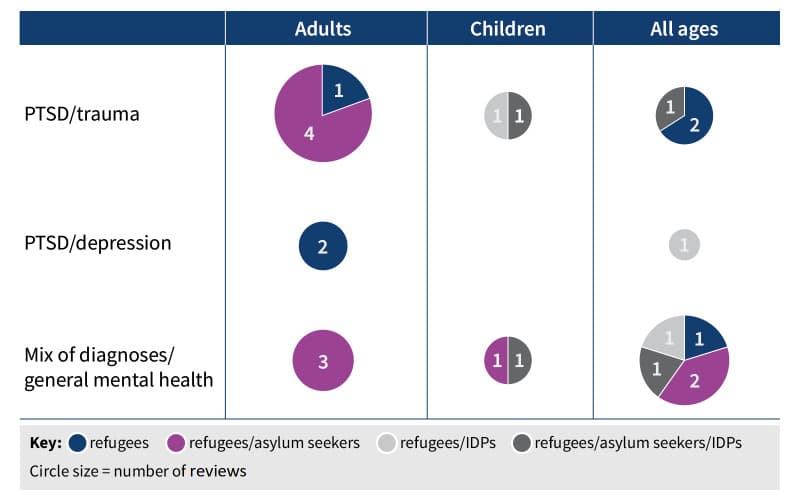
Evidence and Gap Map
nterventions and comparators

Most reviews were focussed on psychological interventions, sometimes called psychosocial interventions by review authors, or psychotherapy (15/23), and two of these reviews also included pharmacological treatments (Crumlish 2010; Turrini 2019). One review included only studies of pharmacological interventions (Sonne 2017), two focused on community‐based interventions (Tyrer 2014; Williams 2011), and five included any intervention (Eberle‐Sejari 2015; Liu 2009a; Nocon 2017; Sims 2017; Van Wyk 2014). Although many reviews included studies of participants who had not been diagnosed with a mental health condition, none of these focused on mental health promotion or prevention interventions. Given the nature of the interventions, it appeared these reviews focussed on treatment of mental health conditions or symptoms rather than prevention.

Most reviews included any type of comparator (21/23). One considered active comparators or placebo for pharmacological interventions, and any comparator for psychological interventions (Crumlish 2010). One review did not include any comparators as it was a review of studies without a control group (Van Wyk 2014).

Included studies within completed systematic reviews
Number of included studies and unique studies

In total, the 23 systematic reviews included in this overview comprised 336 references to primary studies, of which 175 were unique primary studies (see Appendix 2). A large number of studies was included in only one of the systematic reviews (N = 113), while the two most frequently included RCTs were included in nine systematic reviews (Neuner 2008; Neuner 2010).

Interventions and comparators identified

Included reviews largely focused on interventions designed to treat patients with a common mental disorder, or to treat symptoms of a mental health problem. Only one review explicitly included interventions aimed at preventing common mental disorders (Liu 2009a).

Table 4 shows categories of interventions identified in reviews. Across all 23 reviews, the most commonly identified interventions were CBT approaches including general CBT (15/23), NET (17/23), and trauma‐focused CBT (6/23), third‐wave CBT and behavioural approaches (5/23), integrative and interpersonal therapies (30/23), trauma therapies including EMDR (9/23), other trauma‐focused therapy (5/23), and testimony therapy (5/23), transdiagnostic therapy (2/23), psychodynamic therapy (5/23), creative therapies (8/23), education (3/23), medication (4/23), and medication in combination with psychological therapy (1/23).

4. Interventions in primary studies.

Type of intervention

Specific intervention

Number of reviews

CBT

CBT1 (unspecified/general)

15

NET2 (including KIDNET3)

17

Trauma‐focused CBT

6

Third‐wave CBT and behavioural approaches

Stress Inoculation Training

2

Cognitive Processing Therapy

1

Biofeedback‐based CBT

1

Behavioural therapy

1

Integrative and interpersonal therapies

Interpersonal therapy

7

Counseling

6

Multimodal therapy

6

Bespoke/unspecified therapy

11

Trauma therapies

EMDR4

9

Trauma‐focused therapy

5

Testimony therapy

5

Transdiagnostic therapy (CETA5)

2

Psychodynamic therapy

5

Creative therapy (arts, Writing for Recovery, play‐based)

8

Education (of parents, patients, teachers)

3

Medication

Medication alone

4

Medication in combination with psychotherapy

1

Methodological quality of included reviews

We assessed the methodological quality of all included systematic reviews in duplicate using AMSTAR 2. Assessments of all reviews per AMSTAR 2 domain are shown in Figure 3.
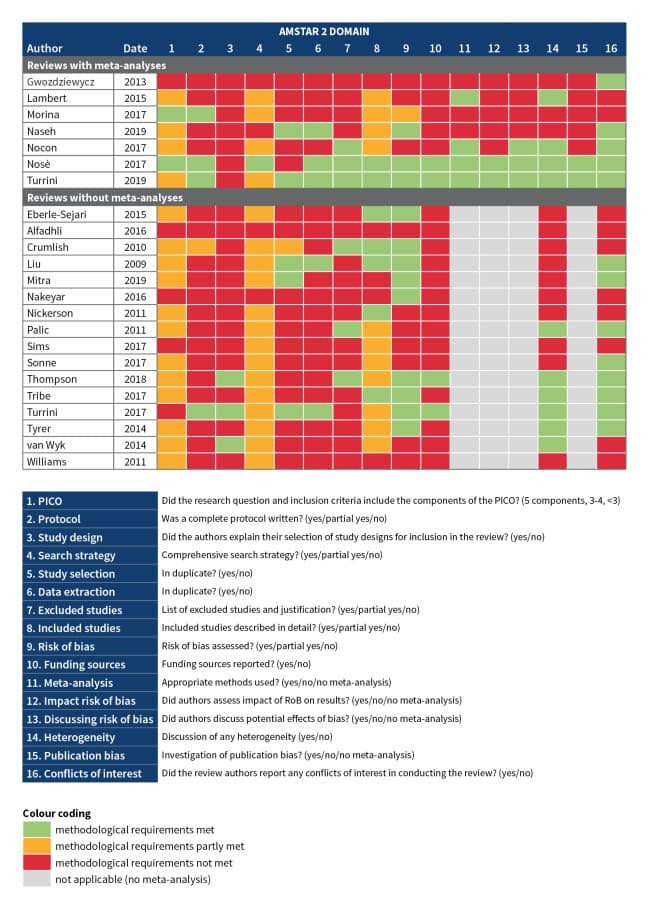
Quality assessment AMSTAR 2.

Protocol

Four reviews reported a complete protocol containing the main elements and key decisions of a systematic review (Morina 2019; Nosè 2017; Turrini 2017; Turrini 2019), one review had a protocol with some elements missing (Crumlish 2010), and the other 18 reviews had no registered or published protocol.

Search strategy

One review described a comprehensive search strategy (Nosè 2017), 18 reviews met some of the requirements, and four were missing several key elements (Alfadhli 2016; Gwozdziewycz 2013; Nakeyar 2016; Naseh 2019).

Study selection

Study screening and selection was performed in duplicate, or partly in duplicate with good agreement between reviewers, for five reviews (Liu 2009a; Mitra 2019; Naseh 2019; Turrini 2017; Turrini 2019). Four reviews did not comprehensively describe all included studies (Alfadhli 2016; Mitra 2019; Nakeyar 2016; Williams 2011) and, for 17 reviews, no list of excluded studies with reasons for exclusion was provided.

Data extraction

Data extraction was performed in duplicate for five reviews (Liu 2009a; Naseh 2019; Nosè 2017; Turrini 2017; Turrini 2019). In the other 18 reviews, data extraction was not done in duplicate.

Risk of bias

Risk of bias was not assessed in all reviews. Eleven reviews reported on the key criteria for RCTs (generation of the allocation sequence, selection bias) or non‐RCTs (methods, selection bias). Four reviews also reported on funding sources of included studies (Nosè 2017; Thompson 2018; Turrini 2017; Turrini 2019).

Meta‐analysis

Fifteen reviews did not perform meta‐analyses, and various domains of AMSTAR 2, therefore, do not apply to these reviews. Three reviews performed meta‐analyses but did not use appropriate methods, for example without a justification for combining studies (Gwozdziewycz 2013; Morina 2019; Naseh 2019).

Of the eight reviews in which meta‐analyses were reported, in three reviews the impact of potential biases on the results was discussed (Nocon 2017; Nosè 2017; Turrini 2019). Two reviews with meta‐analyses assessed the risk of publication bias (Nosè 2017; Turrini 2019).

Out of the 15 reviews for which no meta‐analyses were carried out, ten included a discussion of the potential impacts of heterogeneity of the evidence.

Conflicts of interest

Thirteen reviews either reported any conflicts of interest or reported that the authors had no conflicts of interest.

Characteristics of high‐quality systematic reviews

Two systematic reviews with meta‐analyses received the highest quality assessment rating for 14 out of 16 domains (Nosè 2017) and 13 out of 16 domains (Turrini 2019). These reviews were conducted by authors from the same institution, with overlap in the author team. Their inclusion criteria specified either RCTs only (Turrini 2019) or RCTs and non‐randomised trials with a control group (Nosè 2017). Both specified in their eligibility criteria that refugees and asylum seekers were included, either adults only (Nosè 2017) or of all ages (Turrini 2019). Together these reviews covered primary studies of psychological, social, or rehabilitation interventions for PTSD (Nosè 2017) and diagnoses or symptoms of PTSD, depression, and anxiety (Turrini 2019). Any comparators were eligible for inclusion. Out of the 40 references included in these two reviews, there were 28 unique primary studies.

Effect of interventions

In this overview of systematic reviews, we did not report on the effectiveness of interventions in the included reviews.

Discussion

Summary of main results

This overview of systematic reviews included 23 completed reviews and 15 protocols of reviews registered in PROSPERO, which were planned and/or ongoing.

The 23 included systematic reviews comprised 336 references, of which 175 were unique primary studies. All were published between 2009 and 2019. Four systematic reviews included RCTs only. Reviews included studies from any setting, except for one review of studies from high‐income countries and one review of studies from developed countries. As for the population, inclusion criteria were more often specific in their stated inclusion of refugees than asylum seekers or internally displaced persons (Figure 2).

Most reviews focused on psychological therapies, and there was more evidence on interventions for the treatment of PTSD or trauma‐related symptoms from reviews of any age or adults only than there was for children, people with depression or anxiety, or prevention or mental health promotion (Figure 2). Pharmacological treatments were considered in only two reviews. Interventions most frequently reported in reviews included CBT‐based approaches, integrative and interpersonal therapies, trauma therapies (including testimony therapy), and creative therapies. Less evidence was available for transdiagnostic therapy, psychodynamic therapy, education, and medication. Review elements compromising the methodological quality of the reviews included the absence of reference to a review protocol, the lack of a comprehensive search strategy, and single screening and/or data extraction of studies included in the review.

Most of the 15 review protocols of ongoing systematic reviews included studies from any setting on interventions for the treatment of common mental disorders. Specific settings included Europe, high‐income countries, low‐ and middle‐income countries and low‐income countries in the Middle East. Study participant eligibility criteria specified refugees, or refugees and asylum seekers, but only four out of 15 protocols listed internally displaced persons as participants eligible for inclusion. Interventions were most often aimed at treating (symptoms of) PTSD or trauma, or the reviews focussed on interventions for mental health in general. Where interventions eligible for inclusion in the reviews were specified, these included various types of psychological therapy, preventative interventions, and community‐based interventions. For the majority of protocols, any comparator was eligible for inclusion.

Overall completeness and applicability of evidence

A wide range of research questions could be asked in relation to mental health promotion, prevention, and treatment of common mental disorders for refugees, asylum seekers, and internally displaced persons. This overview of systematic reviews shows that some of these questions have received limited attention in reviews published to date. We did not identify many reviews seeking to assess the efficacy of treatments for children or for depression and anxiety (Figure 2). Inclusion criteria of reviews often did not include internally displaced persons, and few of the included primary studies evaluated pharmacological treatments. The difference between mental health promotion, prevention, and treatment of common mental disorders was usually not explicitly made by review authors, but most reviews included interventions typically delivered as treatment, although some can and are used as preventive interventions.

These gaps in the evidence partly reflect the availability of primary data and partly reflect decisions made in the design of the reviews. For example, the greater availability of data on therapies for the treatment of PTSD rather than anxiety or depression appears to be influenced by a greater evidence base for PTSD in this population. The absence of internally displaced persons from many reviews however is likely to be due to the restricted selection criteria and search terms applied by review authors, which often did not include all three groups of involuntary migrants and instead focussed on refugees.

Most systematic reviews included primary research not limited to RCTs. Although the literature appears to include many non‐randomised and uncontrolled study designs, it is unlikely that robust conclusions on the effectiveness of treatments can be drawn from these studies.

We assessed the quality of the reviews using AMSTAR 2. For many of the AMSTAR 2 domains, reviews can only achieve a high rating if review design and methods are clearly reported. A review scoring lower on this quality assessment may therefore either be of poorer methodological quality, suffer from substandard reporting, or both. Although we did not report on the findings from the reviews, it is clear that the majority of included reviews were lacking both in methodological quality and the transparancy of reporting of the review findings. This would hinder any application of the evidence in practice. For example, without evidence of a comprehensive search strategy, it is unclear whether all relevant primary studies have been included. The lack of reporting on conflicts of interest of review authors makes it difficult to assess the risk of bias affecting review findings.

Quality of the evidence

Most reviews did not register or publish a protocol. This made it difficult to appraise the methodology of the reviews. For most reviews, participants, interventions, comparators, and outcomes (PICO) were not made explicit, the study design was not fully explained, and the search strategy was not comprehensive (Figure 3). Most author teams did not perform study selection and screening in duplicate. Excluded studies were not usually reported, and included studies were not always described in sufficient detail. For reviews in which a meta‐analysis was performed, there was evidence that methods applied were not appropriate in three out of eight reviews. In most reviews, potential limitations of primary studies were discussed, but formal 'Risk of bias' assessments, including reporting of primary study funding sources, were not carried out. For ten out of 23 reviews, no conflict of interest statement was included.

Two systematic reviews were ranked as high‐quality across the majority of the assessed domains and may therefore be more informative to future research on this topic (Nosè 2017;Turrini 2019). In line with other reviews included in this overview, these two reviews focussed on refugees and asylum seekers, and included either adults or participants of all ages. One review covered interventions for PTSD only, while the other included diagnoses or symptoms of PTSD, depression, and anxiety.

Potential biases in the overview process

It is possible that we did not identify all relevant reviews and review protocols. Protocols were only searched through the PROSPERO website, while authors may have registered review protocols on other online platforms. Reviews were only included if the title or abstract specified that a 'systematic review' was conducted and if there was evidence of a systematic search including a search strategy. Reviews on a slightly different population, for example, of studies conducted with people living in settings of humanitarian crises, could be informative for the population of involuntary migrants. We did not include such reviews unless it was made explicit that participants were refugees, asylum seekers, or internally displaced persons.

The list of primary studies from the included reviews is not a comprehensive overview of the literature. Other relevant studies will have been published that were not included in reviews. This overview of systematic reviews will guide the development of new Cochrane reviews, to identify these primary studies.

A limitation of our overview is that we could not obtain a full‐text manuscript for three reviews which were eligible for inclusion in the overview (Anders 2016; Khan 2018; Piegenschke 2019).

Some of the primary studies in the systematic reviews that were included may not be relevant to the topic of this overview. We selected reviews based on the eligibility of the review and review methods, rather than assessing the eligibility of primary studies. For example, some of the studies may discuss mental health of our target population without evaluating an intervention. Also, there may be multiple reports of the same primary study using different manuscript titles among the 175 unique references we identified.

Two of our authors (MP, CB) are also co‐authors for some of the included reviews and review protocols registered in PROSPERO (Nosè 2016; Nosè 2017; Turrini 2017; Turrini 2019; Turrini 2019a). In line with Cochrane guidance, these authors were not involved in any of the data extraction or quality assessments of reviews in this overview. We therefore do not expect the involvement of these authors in the overview to bias our findings.

Agreements and disagreements with other studies or reviews

In 2017, researchers including two of our co‐authors (MP, CB) published a review of systematic reviews on the prevalence and treatment of common mental disorders in asylum seekers and refugees (Turrini 2017). This umbrella review is included in our overview and comprises 14 systematic reviews on the efficacy of mental health interventions. We identified the same reviews, but excluded six reviews because they were not specifically of involuntary migrant populations. We included eight of the same reviews and 15 additional reviews, including those published after April 2017.

Turrini 2017 reported predominantly on reviews of NET and different types of CBT, and included fewer studies of other interventions such as EMDR, trauma‐focused therapy, testimony therapy, and antidepressants. Primary studies on PTSD were more frequently included in their reviews than studies on depression and anxiety, despite their finding that depression and anxiety were at least as frequent as PTSD among refugees and asylum seekers. These gaps in the evidence are lin line with our findings.

Authors' conclusions

Implications for practice.

This overview did not focus on the efficacy of interventions and therefore cannot inform practice directly. It does indicate, however, that the evidence available to decision‐makers in clinical practice and policy is predominantly of limited quality. Only two systematic reviews, reporting on interventions for common mental disorders in refugees and asylum seekers (Turrini 2017) and PTSD for refugees and asylum seekers in high‐income countries (Nosè 2017), achieved a high‐quality rating across most domains.

Most systematic reviews included primary studies other than RCTs, which would make it difficult to draw conclusions on the effectiveness of interventions. For meta‐analyses conducted in reviews with severe methodological limitations, the produced effect estimates may give the impression of evidence readily applicable to practice, while these findings may be biased.

For evidence to inform practice, the evidence base should provide information for populations, settings, and interventions relevant to practice. Our overview shows that important groups such as internally displaced persons, children, and people with depression and anxiety are less likely to be considered in systematic reviews. Evidence on mental health promotion and the prevention of mental health problems, which could be an important avenue for early intervention after resettlement, is largely absent.

Implications for research.

Many of the 23 included systematic reviews, and the registered review protocols, focused on similar interventions for similar populations. This is illustrated by our finding of 175 unique primary studies among 336 references identified in reviews. Meanwhile, several relevant groups were underrepresented in reviews, leading to gaps in the evidence. Based on the evidence identified in this overview, we see potential for future reviews to address the following research questions for the population of involuntary migrants.

1. What is the efficacy of prevention and treatment of common mental disorders other than PTSD?

Treatment for (symptoms of) PTSD was included in two high‐quality reviews and may therefore not require further evidence synthesis at this time. However, since PTSD is by no means the only mental health problem facing involuntary migrants, reviews of interventions for anxiety and depressive disorders as well as transdiagnostic approaches are required. For established therapies such as CBT and NET, several reviews including a range of primary study designs were identified. To answers questions on the efficacy of interventions, systematic reviews of RCTs would be most useful.

2. What is the efficacy of mental health promotion and prevention and treatment of common mental disorders for children?

Most reviews we identified did not focus on children (Figure 2), even though different interventions are available and appropriate for children as well as adults and the efficacy of interventions may differ between children and adults.

3. What is the acceptability of interventions for involuntary migrants?

Systematic review authors may wish to consider outcomes such as dropout rates, cultural appropriateness, and cost‐effectiveness. Many of the interventions identified in this overview were not developed for involuntary migrants, which raises unanswered questions about the appropriateness of interventions for this population. Particularly where there are indications of limited efficacy of interventions, measures of acceptability may indicate whether adaptations of interventions to the population or setting are required. Most involuntary migrants live in low‐ and middle‐income countries, where resources are limited and transdiagnostic or task‐shifting approaches may be more appropriate than traditional, resource‐heavy psychological therapies.

To answer any of these research questions, we suggest two ways to strengthen the existing evidence base. Firstly, systematic review authors should consider the explicit inclusion of refugees, asylum seekers, and internally displaced persons in their objectives, selection criteria, and search terms. Internally displaced persons form the largest group of involuntary migrants globally, yet were often not explicitly included in systematic reviews. Secondly, high quality reviews with transparant and complete reporting of review design and methods would aid anyone using these reviews to inform decisions on the implementation of new and existing mental health interventions in practice. For example, the online registration or publication of a review protocol, a description of selection criteria, and an assessment of the quality or risk of bias of included studies are key review elements which should not be missing from any systematic review.

Abstract

Background Migrants who have been forced to leave their home, such as refugees, asylum seekers, and internally displaced persons (IDP), are likely to experience stressors which may lead to mental health problems. The efficacy of interventions for mental health promotion, prevention, and treatment may differ in this population. Objectives With this overview of systematic reviews, we will map the characteristics and methodological quality of existing systematic reviews and registered systematic review protocols on the promotion of mental health and prevention and treatment of common mental disorders among refugees, asylum seekers, and IDPs. The findings from this overview will be used to prioritise and inform future Cochrane reviews on the mental health of involuntary migrants. Methods We searched Ovid MEDLINE (1945 onwards), Ovid Embase (1974 onwards), Ovid PsycINFO, ProQuest PTSDpubs, Web of Science Core Collection, Cochrane Database of Systematic Reviews, NIHR Journals Library, CRD databases (archived), DoPHER, Epistemonikos, Health Evidence, 3ie International Initiative for Impact Evaluation, and PROSPERO, to identify systematic reviews of mental health interventions for involuntary migrants. We did not apply any restrictions on date, language, or publication status to the searches. We included systematic reviews or protocols for systematic reviews of interventions aimed at refugees, asylum seekers, and internally displaced persons. Interventions must have been aimed at mental health promotion (for example, classroom‐based well‐being interventions for children), prevention of mental health problems (for example, trauma‐focussed Cognitive Behavioural Therapy to prevent post‐traumatic stress disorder), or treatment of common mental disorders and symptoms (for example, narrative exposure therapy to treat symptoms of trauma). After screening abstracts and full‐text manuscripts in duplicate, we extracted data on the characteristics of the reviews, the interventions examined in reviews, and the number of primary studies included in each review. Methodological quality of the included systematic reviews was assessed using AMSTAR 2. Main results The overview includes 23 systematic reviews and 15 registered systematic review protocols. Of the 23 published systematic reviews, meta‐analyses were conducted in eight reviews. It was more common for the search strategy or inclusion criteria of the reviews to state that studies involving refugees were eligible for inclusion (23/23), than for asylum seekers (14/23) or IDPs (7/23) to be explicitly mentioned. In most reviews, study eligiblity was either not restricted by participant age (9/23), or restricted to adults (10/23). Reviews commonly reported on studies of diagnosis or symptoms of post‐traumatic stress disorder or trauma (11/23) and were less likely to report on depression or anxiety (6/23). In 15 reviews the intervention of interest was focused on/ specific to psychological therapy. Across all 23 reviews, the interventions most commonly identified from primary studies were general Cognitive Behavioural Therapy, Narrative Exposure Therapy, and a range of different integrative and interpersonal therapies. Even though many reviews included studies of participants without a diagnosis of a mental health problem, they often assessed mental health treatments and did not usually distinguish between promotion, prevention, and treatment in the review aims. Together the 23 systematic reviews included 336 references, of which 175 were unique primary studies. Limitations to the methodological quality of reviews most commonly related to reporting of selection criteria (21/23), absence of a protocol (19/23), reporting of study design (20/23), search strategy (22/23), and funding sources of primary studies (19/23). Authors' conclusions Gaps exist in the evidence on mental health interventions for refugees, asylum seekers, and internally displaced persons. Most reviews do not specify that internally displaced persons are included in the selection criteria, even though they make up the majority of involuntary migrants worldwide. Reviews specific to mental health promotion and prevention of common mental disorders are missing, and there is more evidence available for adults or mixed populations than for children. The literature is focused on post‐traumatic stress disorder and trauma‐related symptoms, with less attention for depression and anxiety disorders. Better quality systematic reviews and better report of review design and methods would help those who may use these reviews to inform implementation of mental health interventions.

Summary

This document provides an overview of existing systematic reviews on mental health support for people who are forced to leave their homes. These individuals, known as involuntary migrants (refugees, asylum seekers, and internally displaced persons), often experience significant stress and mental health challenges due to their experiences before, during, and after migration. Mental health services, including efforts to promote good mental health, prevent problems, and treat conditions like depression, anxiety, and post-traumatic stress disorder (PTSD), may need different approaches for these groups compared to the general population.

The purpose of this overview is to identify the characteristics of available systematic reviews on this topic. This helps researchers understand which areas need more study in future comprehensive reviews.

Researchers looked for systematic reviews and plans for future reviews that cover mental health promotion, prevention, and treatment for involuntary migrants. Examples include classroom programs for children's well-being (promotion), specific therapies to prevent PTSD (prevention), and psychological therapy for depression (treatment).

The search identified 23 completed systematic reviews and 15 plans for reviews that are currently in progress. The 23 published reviews included information from 336 studies, with 175 of these being unique studies. These reviews more often included refugees and asylum seekers than internally displaced persons. They also focused more on adults than children. Treatment for PTSD received more attention than mental health promotion, prevention, or treatment for depression or anxiety. Studies of Cognitive Behavioral Therapy (CBT), Narrative Exposure Therapy (NET), and therapies that combine different approaches were most commonly found in these reviews.

The quality of these reviews was often limited. Many issues were related to poor reporting of the methods used in the review process.

The existing evidence from systematic reviews may not fully address the need for effective mental health interventions for involuntary migrants. Future review authors should consider including important groups like internally displaced persons, children, and individuals with depression or anxiety. They should also explore interventions related to mental health promotion, prevention, and treatments beyond psychological therapies.

Background

Many people around the world are forced to leave their homes. The United Nations estimates there are about 40 million internally displaced persons (people forced to move within their own country), 25 million refugees, and three million asylum seekers globally. These numbers are growing. While much research on involuntary migrants happens in wealthy countries, most of these individuals live in lower-income countries.

Leaving home under duress is often extremely stressful and dangerous, in addition to challenges faced in new environments. The World Health Organization (WHO) has identified people affected by violence or trauma as a top priority for global mental health interventions.

Individuals forced to migrate are more likely to experience common mental health conditions compared to the general population. The effectiveness of talking therapies (psychological therapies) might be different for this group. Factors like language barriers, cultural differences, and limited access to and availability of treatment can pose additional challenges depending on the host country. Even in wealthy countries with public healthcare systems, refugees and asylum seekers can face organizational, logistical, cultural, and language barriers to care. For example, not having a permanent address can make it hard to register with a doctor and receive important appointment letters.

The Cochrane Global Mental Health Satellite aims to support the creation, sharing, and use of systematic reviews on mental health in lower-income countries. This includes reviews on how well mental health promotion, prevention, and treatment work for refugees, asylum seekers, and internally displaced persons. To ensure that these reviews address important gaps, this overview of systematic reviews was conducted. This type of review, sometimes called a scoping review or a review of reviews, helps to map out the available evidence. Instead of combining data on intervention effectiveness from individual studies, this overview describes the characteristics of existing (published or in-progress) systematic reviews on mental health promotion, prevention, and treatment for involuntary migrants. The resulting map of evidence highlights what research exists and helps identify key questions for future Cochrane Reviews.

Description of Mental Health Conditions

This review covers common mental disorders, including all types of depressive disorders, anxiety disorders, and post-traumatic stress disorder (PTSD). It also examines mental health promotion and prevention of these conditions, as well as symptoms of mental health problems even without a formal diagnosis.

Major depressive disorder involves at least two weeks of low mood and a consistent loss of interest or pleasure in activities. Other symptoms can include changes in weight or sleep, fatigue, feelings of guilt or worthlessness, difficulty concentrating, and thoughts of death. Other depressive disorders include those specific to certain situations, childhood mood disorders, and persistent depressive disorder (dysthymia), which lasts for at least two years. Bipolar disorder, while involving depressive episodes, is classified separately.

Depression and anxiety symptoms can occur at the same time. Anxiety disorders, such as generalized anxiety disorder, and trauma-related disorders like PTSD, are distinct in diagnostic manuals. This review considered anxiety disorders (including phobias and panic disorder) and trauma- and stressor-related disorders (reactive attachment disorder, disinhibited social engagement disorder, PTSD, acute stress disorder, and adjustment disorder).

Anxiety disorders are characterized by excessive fear, worry, and anxiety, along with related behavioral changes. Fear is an immediate emotional response to a perceived threat, while anxiety is the anticipation of a future threat. Fear often leads to quick responses like panic attacks, while anxiety is linked to tension, stress, and cautious or avoidant behaviors. Other symptoms can include fatigue, restlessness, irritability, sleep problems, and poor concentration. Generalized anxiety disorder and PTSD can occur together.

PTSD can develop after experiencing single, repeated, or chronic traumatic events. This includes events witnessed firsthand or through others' exposure to trauma. PTSD can start immediately, soon after the trauma, or more than six months later. Symptoms include: reliving traumatic events (nightmares, memories); avoiding reminders of the trauma (people, places, conversations); being overly alert (insomnia, irritability, poor concentration); and negative thoughts and feelings (less positive emotions, loss of interest, feeling distant from others).

All refugees and asylum seekers have left their home countries due to a well-founded fear of persecution, conflict, violence, or other dangerous situations. They are likely to have experienced difficult circumstances and insecurity in their home country, challenges during their migration journey, and difficulties upon arrival and during resettlement. A review of Afghan refugees resettled in industrialized countries identified common adverse experiences impacting mental health, such as witnessing atrocities, losing family members, stressful escapes, living in refugee camps, cultural and language barriers, mental health stigma, unemployment, financial hardship, and loss of status, culture, and identity.

Studies on mental illness rates among migrants, including refugees and asylum seekers, report varying estimates. A review of refugees and labor migrants found that 44% of refugees experienced depression and 40% anxiety, compared to 20% and 21% respectively among labor migrants. Another review of 17 studies of adult refugees in Western countries reported a PTSD prevalence rate of about 9%. A recent study of 1,000 Syrian refugee children and adolescents in Lebanon and Jordan found that 46% had developed PTSD.

Internally displaced persons have been forced to leave their homes due to serious safety concerns but remain within their own country. Reported PTSD rates for this group include 54% for adults in northern Uganda and 56% for people who fled a tsunami in Sri Lanka.

Description of Interventions

This overview of systematic reviews covers interventions designed to promote mental health, prevent common mental disorders, and treat these conditions.

Mental Health Promotion

Mental health promotion efforts usually target everyone (universal programs) but can also focus on high-risk groups like refugees, asylum seekers, and internally displaced persons (selected promotion). These interventions aim for positive functioning and well-being rather than just addressing illness, which is believed to reduce the risk of developing mental disorders. Mental health promotion can involve individual or group activities. For example, programs to support children's mental health and development might take place in classrooms or refugee camps. Programs might also be delivered in villages or neighborhoods, especially in lower-income countries affected by humanitarian crises.

Prevention of Common Mental Disorders

Prevention can be universal (for everyone), selective (for vulnerable individuals or groups), or indicated (for those with symptoms but no diagnosis). While mental health promotion often focuses on general well-being, prevention can target general mental health or specific disorders. For instance, children might receive trauma-focused cognitive behavioral therapy (CBT) to prevent PTSD, which can be done in groups after a shared traumatic event. A common prevention method, single-session psychological debriefing, is not recommended for preventing PTSD in adults or children, as it may increase rather than decrease risk.

Treatment of Common Mental Disorders

Many interventions are available to improve symptoms of common mental disorders. This overview may identify various treatments for depression, anxiety, and PTSD. Below are summaries of the most common interventions and recommended treatments.

Cognitive Behavioral Therapy (CBT)

Certain types of CBT are particularly relevant to this population, such as Narrative Exposure Therapy (NET), trauma-focused CBT, stress inoculation therapy, and culturally sensitive CBT. Trauma-focused CBT is used for individuals with a PTSD diagnosis or symptoms, while NET is often used for those with complex or multiple traumas.

Other Psychotherapy

Therapies for common mental disorders vary in intensity based on symptom severity and diagnosis. They range from active monitoring, psychoeducation, and low-intensity interventions (relaxation, counseling, self-help, behavioral activation) to high-intensity psychological interventions (interpersonal therapy, psychodynamic therapy). Patients with PTSD may be offered Eye Movement Desensitization and Reprocessing (EMDR) therapy. Some argue that arts-based, expressive, and creative therapies (music, drawing, play) can improve access and reduce stigma among refugee children. Creative writing and "writing for recovery" approaches are used for adults and children in PTSD treatment.

Treatment can be delivered to individuals, couples, or groups. In lower-income countries or areas with limited resources, task-shifting (where less specialized workers deliver care) and multi-agency treatments may be more practical than one-on-one therapy by highly trained professionals. Lay counselors or health workers with brief training can provide counseling, behavioral therapy, or community interventions. Shifting delivery to less specialized workers makes mental health treatment more feasible and sustainable in low-resource settings.

Transdiagnostic Approaches

Recently, global mental health experts have advocated moving away from traditional diagnosis-specific treatments toward integrated "transdiagnostic approaches" that treat symptoms based on similarities across different conditions. This approach can make better use of limited resources, especially in lower-income countries, for patients with diverse symptoms and co-occurring mental health conditions. Examples implemented in lower-income countries include Problem Management Plus and the Common Elements Treatment Approach (CETA).

Medication

Antidepressants may be used for depression and anxiety in children and adolescents when initial talking therapies are ineffective, for severe symptoms, or when talking therapies are unavailable. For adults, medication may be indicated, especially for more severe PTSD, anxiety, and depression, or if a person prefers drug treatment. For adults with PTSD, antipsychotics may be prescribed for disabling psychotic symptoms or those not responding to other treatments.

How Interventions Might Work

Since many types of interventions may be identified, the hypothesized mechanisms of action for common psychological and pharmacological treatments for anxiety, depression, and PTSD are described below.

Cognitive Behavioral Therapy (CBT)

CBT for depression, anxiety, and PTSD targets thought patterns, especially negative thoughts and beliefs. It aims to change these ways of thinking and associated behaviors.

Narrative Exposure Therapy (NET), a type of CBT, guides patients in creating a life story focused on traumatic experiences. Building a clear, chronological timeline of personal events is believed to help process the trauma. This is a form of exposure therapy, where a therapist exposes a patient to a traumatic situation, event, or memory. Exposure can be gradual or immediate, sometimes with images or virtual reality. Facing a fear activates it, allowing it to be reprocessed as the patient becomes accustomed to the exposure (habituation), which reduces symptoms. Stress inoculation therapy, derived from CBT, is a non-trauma-focused therapy designed to help people cope with stress.

Trauma-focused CBT was initially developed for children and adolescents who experienced sexual abuse and is now used for all ages. It differs from general CBT by recognizing the family's influence, addressing trauma-related problems (cognitive, behavioral, physical, relational), and adapting to family and community values and culture. Components like engaging with the trauma narrative and trauma education can be adjusted for the patient's age.

Transdiagnostic CBT is designed for multiple mental disorders or for people with several disorders, targeting common elements across various mental health problems. It is based on the idea that certain cognitive and behavioral aspects are shared across different conditions and diagnoses. Transdiagnostic CBT is both a type of CBT and a "transdiagnostic approach," but is categorized under "CBT" in this overview.

Other Psychotherapy

Third-Wave CBT and Behavioral Approaches

Third-wave CBT approaches differ from traditional CBT. They focus on an individual's relationship with thoughts and emotions, and the function of cognitions like thought suppression or avoidance of internal experiences (emotions, thoughts, sensations). Strategies used to change thinking processes include acceptance and commitment therapy, compassionate mind training, mindfulness-based therapy, and dialectic behavior therapy.

Behavioral therapies, such as behavioral activation, aim to change behavioral patterns and activities rather than cognitive patterns.

EMDR

EMDR involves a therapist directing a patient to focus on trauma-related associations (images, memories, emotions, thoughts) while simultaneously using visual (rapid eye movements), auditory, or tactile stimuli. This bilateral stimulation is thought to help reprocess disturbing information linked to traumatic memories, thereby reducing symptoms. There is ongoing discussion about whether bilateral stimulation is the active ingredient and various mechanisms are proposed. Some believe relaxation in the absence of danger leads to positive mental and physiological changes, while others suggest that traumatic images become less vivid and emotional as working memory is used for tasks during EMDR.

Social Skills and Assertiveness

Social skills training and assertiveness training for anxiety and depression focus on social interactions in different contexts.

Psychodynamic Therapies

Based on psychoanalytic theory, psychodynamic therapy uses the therapeutic relationship to explore and resolve unconscious conflicts through redirecting emotions to the therapist (transference) and interpretation, indirectly leading to symptom relief.

Creative Therapies

Creative therapies use writing, music, art, dance/movement, or drama to recall and non-verbally process traumatic memories associated with PTSD. Proposed mechanisms include relaxation, activation and expression of memories and emotions, fostering a sense of control and empowerment through art creation, exposure through symbolic art, and rebuilding self-esteem.

Interpersonal, Cognitive Analytic, Humanistic, and Other Integrative Therapies

Humanistic therapies emphasize the therapeutic relationship, where therapist qualities like empathy, genuineness, and unconditional positive regard are thought to facilitate patient insight and symptom change. Integrative therapies, including counseling, interpersonal therapy, and cognitive analytic therapy, combine elements from different psychological models, such as CBT, psychodynamic therapy, and person-centered approaches.

Transdiagnostic Approaches

Transdiagnostic approaches have varying mechanisms and can combine different treatment methods. Examples implemented in lower-income countries include Problem Management Plus and the Common Elements Treatment Approach (CETA).

Problem Management Plus combines psychoeducation, motivational interviewing, problem-solving therapy, and behavioral techniques. Problem-solving therapy and behavioral therapy help people manage daily practical problems (work, relationships) linked to mental illness. Psychoeducation informs patients about how adversity affects mental health and explains the treatment, while motivational interviewing encourages engagement with the treatment.

CETA was developed for delivery by non-mental health specialists in resource-limited settings. Its elements include promoting engagement, psychoeducation on symptoms and the intervention, relaxation strategies, behavioral activation for rewarding activities, emotion coping, and exposure therapy. These elements can be combined to address various symptoms.

Medication

Antidepressants affect neurotransmitter activity (like serotonin and noradrenaline), which is thought to influence mood and emotion regulation. Selective Serotonin Reuptake Inhibitors (SSRIs) reduce serotonin reabsorption, potentially increasing positive feelings. Serotonin and Noradrenaline Reuptake Inhibitors (SNRIs) block both serotonin and noradrenaline reabsorption. Tricyclic antidepressants (TCAs) are older medications that generally prevent the reuptake of serotonin or noradrenaline, or both.

Importance of This Overview

Refugees, asylum seekers, and internally displaced persons are a large and vulnerable group, more likely to experience common mental disorders than the general population. Currently, no comprehensive Cochrane Review exists on interventions for mental health promotion, prevention, or treatment of common mental disorders in this group. Future Cochrane Reviews could focus on these areas across various disorders, interventions, age groups, populations, and settings. This overview provides a map of existing systematic reviews on this topic, identifying key research questions and guiding the development of future Cochrane Reviews.

Objectives

The aim is to map the characteristics and quality of existing systematic reviews and registered review plans concerning mental health promotion, prevention, and treatment of common mental disorders among refugees, asylum seekers, and internally displaced persons.

Key characteristics examined include:

  • The type of systematic review (Cochrane, non-Cochrane, meta-analysis, narrative synthesis).

  • The population studied (refugees, asylum seekers, internally displaced persons, age, mental health diagnosis).

  • The setting (country of origin and study location).

  • The types of studies included (randomized controlled trials, other designs).

  • The types of interventions (promotion, prevention, treatment; CBT, other psychotherapy, transdiagnostic, medication).

  • The types of comparisons made (no treatment, placebo, waiting list, usual care, other treatment).

  • The intervention provider (professional, lay health worker).

  • Review details (included primary studies, review quality).

Unlike a typical systematic review that answers questions about intervention effectiveness, this overview describes the scope and depth of available literature without assessing effectiveness. Data on study characteristics were extracted to provide an overview of both ongoing and published systematic reviews.

This overview is part of a Cochrane Global Mental Health satellite project to identify priorities for Cochrane Reviews in global mental health. It will produce an evidence map and a plain language summary to engage stakeholders in prioritizing future reviews, ensuring that the Cochrane Global Mental Health Satellite focuses on research questions considered important by stakeholders to build a strong evidence base.

Methods

This overview summarizes systematic reviews covering a wide range of participants, interventions, comparisons, and outcomes. Researchers followed general principles for conducting an overview of reviews, including strategies for searching, screening, and assessing the quality of included reviews. However, certain methods, such as appraising individual studies or combining results, were not relevant to this overview's goals. Therefore, the methods also drew on guidance for evidence and gap maps and reviews of evidence maps. The plan for this overview follows the Cochrane systematic review protocol format, and reporting adheres to PRISMA and PRISMA-P guidelines where applicable.

Criteria for Including Reviews

Types of Studies

Systematic reviews and protocols (plans) for systematic reviews registered in the PROSPERO database were eligible. Reviews had to be clearly identified as "systematic review" or "meta-analysis" in their title or abstract, and authors needed to provide evidence of a systematic search, including a search strategy. Cochrane reviews and systematic reviews with or without a meta-analysis were included. The review included systematic reviews regardless of the design and methods of their primary studies. To be included, reviews had to evaluate one or more relevant interventions. Systematic reviews were included regardless of the number or breadth of databases searched.

Types of Participants

Reviews of studies involving refugees, asylum seekers, and internally displaced persons of all ages were included. The definitions from the UN Refugee Agency (UNHCR), based on the 1951 Refugee Convention, were used:

  • Refugee: A person outside their home country due to a well-founded fear of persecution (based on race, religion, nationality, social group, or political opinion) who cannot or will not seek their country's protection.

  • Asylum seeker: An individual seeking asylum whose claim has not yet been finalized.

  • Internally displaced persons: People forced to flee or leave their homes within their own country, often due to armed conflict, violence, human rights violations, or disasters, without crossing an international border.

Depending on the intervention (mental health promotion, prevention, treatment), participants could have been diagnosed with depression, anxiety, or PTSD, experienced symptoms, or had no reported symptoms. While treatment is typically for diagnosed conditions, reviews of treatment interventions with participants without a diagnosis or with elevated symptoms were accepted.

Only systematic reviews that included studies with these population groups were eligible. Reviews with mixed samples (e.g., including studies from disaster zones with internally displaced persons) were excluded if they were not specifically about involuntary migrants.

Types of Interventions

All interventions to promote mental health or prevent or treat common mental disorders were eligible. Common mental disorders include anxiety disorders (with PTSD) and depressive disorders. Eligible interventions included psychotherapies and medication, individual or group treatments, and interventions delivered by professionals or lay health workers. Interventions were categorized as:

  • Mental health promotion

  • Prevention of common mental disorders

  • Treatment of common mental disorders: CBT, other psychotherapy, transdiagnostic approaches, medication.

This classification was adaptable if new intervention types were found.

Only interventions aimed at mental health promotion, prevention, or treatment of common mental disorders, or a combination, were included. For example, reviews of studies on nutrition or physical activity were excluded unless their primary goal was mental health improvement. Interventions were included whether they targeted specific subgroups of involuntary migrants or not, but interventions not aimed at this population were excluded.

Systematic reviews focusing on general mental health or well-being without specifying particular mental health conditions were eligible.

Comparators

All types of comparisons were eligible, including other interventions (e.g., "treatment-as-usual"), no intervention (e.g., waiting list), and any type of placebo.

Types of Outcome Measures

Reviews that reported any mental health-related outcomes were eligible, regardless of the measure used or follow-up duration. This included symptom outcomes (e.g., anxiety severity), diagnosis (e.g., depression recurrence), functioning, disability, quality of life, and adverse events (e.g., hospitalization, suicide attempts). Reviews reporting on positive psychological constructs, such as well-being, were also included.

Search Methods

Information Sources

Researchers searched several bibliographic databases using keywords related to the population (refugees, asylum seekers, internally displaced persons; mental health, including depression, anxiety, PTSD) and a filter for systematic reviews. These databases included Ovid MEDLINE, Ovid Embase, Ovid PsycINFO, ProQuest PTSDpubs, and Web of Science Core Collection.

Additionally, several review databases were searched: Cochrane Database of Systematic Reviews (CDSR), NIHR Journals Library – Health Technology Assessment, Centre for Reviews and Dissemination (CRD) Databases (archived), DoPHER, Epistemonikos, Health Evidence, 3ie International Initiative for Impact Evaluation, and PROSPERO.

Reference lists of included systematic reviews were also checked for additional evidence.

Data Collection and Analysis

Records were de-duplicated, uploaded, and screened using Covidence software.

Selection of Reviews

Two review authors independently screened titles and abstracts. Full-text manuscripts were obtained for all selected titles, with authors contacted if necessary. Full-text articles were independently screened by two review authors, and disagreements were resolved through discussion, with a third author arbitrating if needed. Reasons for excluding full-text articles were recorded and presented in a table. Multiple reports of the same systematic review were combined.

Review selection was based on criteria for study types, participants, and interventions. Systematic reviews were included regardless of reported outcomes, publication date, language, or study quality.

For some databases (NIHR Journals Library, PROSPERO, Epistemonikos), abstracts could not be downloaded. Results from these searches were screened by one reviewer on the website, and relevant records were added to Covidence for duplicate full-text screening.

Data Extraction and Management

A data extraction sheet was created in Microsoft Excel. Two authors piloted the sheet with the first three included reviews and made adjustments.

The following information was recorded:

  • Publication details: first author, year, research group.

  • Review type: Cochrane or non-Cochrane, published protocol (yes/no), meta-analyses (yes/no).

  • Population of interest: involuntary migrant population (refugees, asylum seekers, internally displaced person), age (adult/child/mixed), mental health diagnosis (PTSD, anxiety, depression, mixed, other).

  • Countries of primary studies: included countries/regions of origin, included study settings.

  • Intervention type: psychological, pharmaceutical, other; specific interventions identified.

  • Comparators: no treatment, placebo, waiting list, treatment-as-usual, other treatment.

  • Intervention provider: professional, lay worker, mixed, other (e.g., non-specialist from NGO).

  • Types of primary studies: RCTs, other designs.

  • References of included primary studies.

A separate spreadsheet recorded the methodological quality of the included systematic reviews. For protocols of incomplete reviews, as much information as possible was collected.

A guidance document explained each data extraction item and its categories to ensure consistent data extraction by all authors.

Data on intervention effects were not extracted, as the overview's goal was to map review characteristics.

References of included primary studies were planned to be extracted to identify overlap among reviews. Information from primary studies was not extracted, as the focus was on review characteristics.

Data extraction was performed in duplicate by two reviewers, with disagreements resolved through discussion and a third author if needed.

No "Summary of findings" table was included, as this overview does not report outcome data.

Assessment of Methodological Quality

AMSTAR 2 was used to critically appraise the methodological quality of included systematic reviews. This tool is suitable for reviews including randomized and non-randomized studies. It has 16 domains covering research questions, review design, search strategy, study selection, data extraction, justification for excluded studies, description of included studies, risk of bias, funding sources, meta-analysis, heterogeneity, publication bias, and conflicts of interest.

Key AMSTAR 2 domains and their interpretation:

  • Literature searches: A comprehensive search includes recent searches, expert consultation, checking reference lists, trial registries, and grey literature.

  • Study selection: Screening and selection should be done in duplicate or with a duplicated sample showing good agreement.

  • Data extraction: Data extraction should be done in duplicate or with a duplicated sample showing good agreement.

  • Meta-analysis: If no meta-analyses are performed, authors should still discuss potential heterogeneity and its impact on conclusions.

For many AMSTAR 2 domains, a positive response requires the information to be reported in the review or protocol. Therefore, quality ratings depend heavily on reporting quality. Authors were contacted for missing information. Quality assessment was not performed for incomplete review protocols.

AMSTAR 2 findings were used to understand the certainty of the evidence base from systematic reviews, informing future research needs.

This approach deviated from AMSTAR 2 guidance by using individual domains without producing overall confidence ratings, as this overview did not extract data on review findings.

The discussion section specifically examines two high-quality systematic reviews, which received the highest quality assessment ratings for most AMSTAR 2 domains.

Data Synthesis

Results were presented as a narrative summary of the characteristics of included systematic reviews.

This included:

  • A table of all characteristics of included systematic reviews.

  • A description of ongoing reviews based on registered protocols.

  • An inventory of all interventions and comparators found in the reviews.

  • An assessment of overlap in primary studies across reviews.

  • A figure illustrating the evidence and existing gaps.

Results

Searches were completed on September 4, 2019. Two authors screened 4,613 titles and abstracts, identifying 63 for full-text screening. The main reasons for exclusion were reviews including the wrong population (e.g., general migrants instead of only refugees, asylum seekers, and internally displaced persons) or not being a systematic review or protocol. All excluded studies and reasons are listed in a table. Full texts could not be obtained for three studies. Reviews and protocols were published in English, except for two in German and one in Chinese.

Description of Included Reviews

The overview included 23 published systematic reviews (one of which was a review of systematic reviews) and 15 protocols for additional ongoing or planned systematic reviews registered in PROSPERO. This section first describes the registered protocols, then the published reviews.

Registered Protocols of Ongoing Systematic Reviews

Fifteen systematic review protocols registered in PROSPERO were found, either planned or ongoing. One was an unpublished Cochrane review protocol. Twelve protocols indicated plans for meta-analyses; seven of these included only randomized controlled trials (RCTs).

This section summarizes the review questions and eligibility criteria of these protocols. If specific inclusion/exclusion criteria were not stated, it was assumed that studies meeting general criteria were included.

An overview of all included protocols is provided in a table.

Scope and Selection Criteria

Most protocols (10/15) stated that primary studies from any setting would be eligible. One review planned to include studies from Europe, two from high-income countries, one from low- and middle-income countries, and one from low-income countries in the Middle East.

Study Participants

All fifteen protocols specified that primary studies of refugees were eligible. Twelve included asylum seekers, and four included internally displaced persons. Protocols covered participants of all ages (8/15), only children or children and adolescents, or only adults.

Some protocols focused on participants with specific diagnoses, such as PTSD or trauma-related illness (5/15), or a range of diagnoses like depression, anxiety, and PTSD. Others included any mental health problem or diagnosis (4/15) or measured mental health outcomes in participants who did not necessarily have a mental health condition (4/15).

Interventions and Comparators

While some protocols included any interventions (4/15), others focused on specific types of therapy (e.g., NET, CBT, arts-based, low-intensity) (6/15) or a broad range of interventions (3/15). One protocol focused on preventative, community-based interventions, and another on community-based interventions delivered by lay workers. Other protocols did not specify the intervention provider.

For most protocols, any comparator was eligible (11/15). Four protocols specified eligible comparators: one excluded pharmacological treatment, and three included various comparisons like no intervention, usual care, waiting list, or other therapy.

Review Status

In November 2019, authors of all PROSPERO-registered protocols were contacted regarding their review status. Three did not respond. One author indicated their review would not be completed. Five reviews were ongoing, and five were nearing submission or under journal review.

Completed (Published) Systematic Reviews

None of the published systematic reviews were Cochrane reviews. All were published between 2009 and 2019. Meta-analyses were conducted in eight reviews, four of which included only RCTs. Published reviews included in this overview are summarized in a table.

Scope and Selection Criteria

Most reviews included studies from any setting. Two reviews included studies only from high-income or developed countries.

Study Participants

Refugees were explicitly included in the search or selection criteria of all reviews, asylum seekers in 14 out of 23, and internally displaced persons in seven out of 23 reviews. Reviews covered participants of any age (9/23), only children or children and adolescents (4/23), or only adults (10/23). Reviews most often focused on a diagnosis or symptoms of PTSD or trauma (11/23). Others included various disorders like PTSD, anxiety, and depression (5/23), or measured general mental health or any mental health problem (7/23). A figure shows the number of systematic reviews by mental health condition, participant age, and refugee category.

Interventions and Comparators

Most reviews focused on psychological interventions (15/23), with two also including pharmacological treatments. One review focused only on pharmacological interventions, two on community-based interventions, and five on any intervention. Although many reviews included studies of participants without a mental health diagnosis, none explicitly focused on mental health promotion or prevention. Based on the intervention types, these reviews appeared to focus on treating mental health conditions or symptoms rather than prevention.

Most reviews included any type of comparator (21/23). One considered active comparators or placebo for pharmacological interventions, and any comparator for psychological interventions. One review, which examined studies without a control group, did not include comparators.

Included Studies within Completed Systematic Reviews
Number of Included Studies and Unique Studies

In total, the 23 systematic reviews included 336 references to primary studies, with 175 being unique. A large number of studies (113) were included in only one systematic review. The two most frequently included RCTs appeared in nine systematic reviews.

Interventions and Comparators Identified

Included reviews largely focused on interventions designed to treat patients with a common mental disorder or to treat mental health symptoms. Only one review explicitly included interventions aimed at preventing common mental disorders.

A table shows categories of interventions identified in reviews. Across all 23 reviews, the most common interventions were CBT approaches (including general CBT, NET, and trauma-focused CBT), third-wave CBT and behavioral approaches, integrative and interpersonal therapies, trauma therapies (including EMDR, other trauma-focused therapy, and testimony therapy), transdiagnostic therapy, psychodynamic therapy, creative therapies, education, medication, and medication combined with psychological therapy.

Methodological Quality of Included Reviews

The methodological quality of all included systematic reviews was assessed in duplicate using AMSTAR 2. Assessments for each review per AMSTAR 2 domain are shown in a figure.

Protocol

Four reviews reported a complete protocol, while one had a protocol with some missing elements. The other 18 reviews had no registered or published protocol.

Search Strategy

One review described a comprehensive search strategy, 18 reviews met some requirements, and four were missing several key elements.

Study Selection

Study screening and selection was performed in duplicate, or partly in duplicate with good agreement, for five reviews. Four reviews did not fully describe all included studies, and 17 reviews did not provide a list of excluded studies with reasons.

Data Extraction

Data extraction was performed in duplicate for five reviews. In the other 18 reviews, data extraction was not done in duplicate.

Risk of Bias

Risk of bias was not assessed in all reviews. Eleven reviews reported on key criteria for RCTs or non-RCTs. Four reviews also reported on funding sources of included studies.

Meta-Analysis

Fifteen reviews did not perform meta-analyses, so certain AMSTAR 2 domains did not apply. Three reviews performed meta-analyses but did not use appropriate methods, for example, without justifying combining studies.

Of the eight reviews with meta-analyses, three discussed the impact of potential biases on results. Two reviews with meta-analyses assessed the risk of publication bias.

Among the 15 reviews without meta-analyses, ten included a discussion of the potential impacts of evidence heterogeneity.

Conflicts of Interest

Thirteen reviews reported conflicts of interest or stated that authors had none.

Characteristics of High-Quality Systematic Reviews

Two systematic reviews with meta-analyses received the highest quality assessment rating for most domains (14/16 and 13/16 domains respectively). These reviews were conducted by authors from the same institution, with some author overlap. Their inclusion criteria specified either only RCTs or RCTs and non-randomized trials with a control group. Both specified that refugees and asylum seekers were included, either adults only or all ages. Together, these reviews covered primary studies of psychological, social, or rehabilitation interventions for PTSD and diagnoses or symptoms of PTSD, depression, and anxiety. Any comparators were eligible. Out of the 40 references in these two reviews, there were 28 unique primary studies.

Effect of Interventions

This overview of systematic reviews did not report on the effectiveness of interventions from the included reviews.

Discussion

Summary of Main Results

This overview of systematic reviews included 23 completed reviews and 15 protocols for reviews registered in PROSPERO that were planned or ongoing.

The 23 completed systematic reviews contained 336 references, with 175 unique primary studies. All were published between 2009 and 2019. Four systematic reviews included only randomized controlled trials (RCTs). Most reviews included studies from any setting, except for one focusing on high-income countries and another on developed countries. Regarding the population, inclusion criteria more often specified refugees than asylum seekers or internally displaced persons.

Most reviews focused on psychological therapies. There was more evidence on interventions for treating PTSD or trauma-related symptoms, from reviews of any age group or adults only, compared to evidence for children, people with depression or anxiety, or mental health promotion and prevention. Pharmacological treatments were considered in only two reviews. Interventions most frequently reported in reviews included CBT-based approaches, integrative and interpersonal therapies, trauma therapies (including testimony therapy), and creative therapies. Less evidence was available for transdiagnostic therapy, psychodynamic therapy, education, and medication. Methodological quality issues in the reviews included the absence of a review protocol, insufficient search strategies, and single screening and/or data extraction of studies.

Most of the 15 protocols for ongoing systematic reviews included studies from any setting focusing on interventions for common mental disorders. Specific settings mentioned included Europe, high-income countries, low- and middle-income countries, and low-income countries in the Middle East. Eligibility criteria for study participants specified refugees, or refugees and asylum seekers, but only four out of 15 protocols explicitly included internally displaced persons. Interventions often aimed to treat PTSD or trauma symptoms, or focused on general mental health. When interventions were specified, they included various psychological therapies, preventative interventions, and community-based interventions. For most protocols, any comparator was eligible.

Overall Completeness and Applicability of Evidence

A wide range of research questions could be asked about mental health promotion, prevention, and treatment for refugees, asylum seekers, and internally displaced persons. This overview of systematic reviews shows that some of these questions have received limited attention in published reviews. Few reviews assessed the effectiveness of treatments for children, or for depression and anxiety. Inclusion criteria often did not include internally displaced persons, and few primary studies evaluated pharmacological treatments. Review authors usually did not clearly distinguish between mental health promotion, prevention, and treatment, but most reviews included interventions typically used for treatment, even if some could also be preventive.

These evidence gaps partly reflect the availability of primary data and partly the decisions made in review design. For example, more data on therapies for PTSD compared to anxiety or depression seems to be due to a stronger evidence base for PTSD in this population. However, the exclusion of internally displaced persons from many reviews is likely due to restrictive selection criteria and search terms that often did not cover all three groups of involuntary migrants.

Most systematic reviews included primary research beyond just RCTs. While the literature contains many non-randomized and uncontrolled study designs, it is unlikely that strong conclusions about treatment effectiveness can be drawn from these studies.

The quality of reviews was assessed using AMSTAR 2. Many AMSTAR 2 domains require clear reporting of review design and methods for a high rating. A lower quality score might indicate poor methodology, substandard reporting, or both. Although the findings of the reviews were not reported, it is clear that most included reviews lacked both methodological quality and transparent reporting, which would hinder applying the evidence in practice. For instance, without evidence of a comprehensive search strategy, it is unclear if all relevant primary studies were included. The lack of reporting on authors' conflicts of interest makes it difficult to assess potential bias.

Quality of the Evidence

Most reviews did not register or publish a protocol, making it difficult to appraise their methodology. For many reviews, the participants, interventions, comparators, and outcomes (PICO) were not clearly defined, the study design was not fully explained, and the search strategy was not comprehensive. Most author teams did not perform study selection and screening in duplicate. Excluded studies were usually not reported, and included studies were not always described in enough detail. For reviews with meta-analyses, methods applied were inappropriate in three out of eight cases.

In most reviews, potential limitations of primary studies were discussed, but formal "Risk of bias" assessments, including reporting of primary study funding sources, were not conducted. Ten out of 23 reviews did not include a conflict of interest statement.

Two systematic reviews with meta-analyses were rated as high-quality across most domains, and thus may be more informative for future research. Consistent with other reviews in this overview, these two reviews focused on refugees and asylum seekers, and included either adults or participants of all ages. One review covered interventions for PTSD only, while the other included diagnoses or symptoms of PTSD, depression, and anxiety.

Potential Biases in the Overview Process

It is possible that not all relevant reviews and review protocols were identified. Protocols were only searched through the PROSPERO website, though others might exist on different platforms. Reviews were included only if their title or abstract specified "systematic review" and if evidence of a systematic search was present. Reviews on slightly different populations, such as people in humanitarian crises, were not included unless participants were explicitly identified as refugees, asylum seekers, or internally displaced persons, even though such reviews could be informative.

The list of primary studies from included reviews is not a complete overview of the literature. Other relevant studies may have been published but not included in these reviews. This overview will guide the development of new Cochrane reviews to identify these primary studies.

A limitation is that full-text manuscripts could not be obtained for three eligible reviews.

Some primary studies within the included systematic reviews may not be directly relevant to this overview's topic. Reviews were selected based on their eligibility and methods, not by assessing the eligibility of their primary studies. For example, some studies might discuss the mental health of the target population without evaluating an intervention. Also, there could be multiple reports of the same primary study under different titles among the 175 unique references identified.

Two co-authors of this overview are also co-authors on some included reviews and PROSPERO-registered protocols. In line with Cochrane guidance, these authors were not involved in data extraction or quality assessments for those specific reviews, aiming to prevent bias in the findings.

Agreements and Disagreements with Other Studies or Reviews

In 2017, researchers, including two co-authors of this overview, published an umbrella review on the prevalence and treatment of common mental disorders in asylum seekers and refugees. This umbrella review is included in the current overview and comprises 14 systematic reviews on mental health intervention efficacy. The current study identified the same reviews, but excluded six because they did not specifically focus on involuntary migrant populations. Eight of the same reviews were included, along with 15 additional reviews published after April 2017.

The 2017 review predominantly reported on reviews of NET and different types of CBT, and fewer studies on other interventions like EMDR, trauma-focused therapy, testimony therapy, and antidepressants. Primary studies on PTSD were more frequently included than studies on depression and anxiety, despite the finding that depression and anxiety were at least as common as PTSD among refugees and asylum seekers. These evidence gaps are consistent with the findings of the current overview.

Authors' Conclusions

Implications for Practice

This overview did not focus on intervention effectiveness and therefore cannot directly guide practice. However, it indicates that the available evidence for decision-makers in clinical practice and policy is largely of limited quality. Only two systematic reviews, covering interventions for common mental disorders in refugees and asylum seekers and PTSD for refugees and asylum seekers in high-income countries, achieved a high-quality rating across most domains.

Most systematic reviews included primary studies other than RCTs, making it difficult to draw firm conclusions about intervention effectiveness. For meta-analyses conducted in reviews with severe methodological limitations, the reported effect estimates might create a false impression of readily applicable evidence, while these findings could be biased.

For evidence to be useful in practice, it must provide information relevant to specific populations, settings, and interventions. This overview shows that important groups like internally displaced persons, children, and people with depression and anxiety are less often considered in systematic reviews. Evidence on mental health promotion and the prevention of mental health problems, which could be crucial for early intervention after resettlement, is largely absent.

Implications for Research

Many of the 23 included systematic reviews and the registered review protocols focused on similar interventions for similar populations. This is shown by the finding of 175 unique primary studies among 336 references identified in reviews. At the same time, several relevant groups were underrepresented in reviews, leading to evidence gaps. Based on the identified evidence, future reviews could address the following research questions for involuntary migrants:

  1. What is the effectiveness of preventing and treating common mental disorders other than PTSD? Treatment for PTSD symptoms has been covered by two high-quality reviews, so extensive further synthesis may not be immediately needed for this condition. However, since PTSD is not the only mental health problem for involuntary migrants, reviews on interventions for anxiety and depressive disorders, as well as transdiagnostic approaches, are necessary. For established therapies like CBT and NET, several reviews with various primary study designs were identified. To answer questions about intervention effectiveness, systematic reviews of RCTs would be most valuable.

  2. What is the effectiveness of mental health promotion, prevention, and treatment of common mental disorders for children? Most identified reviews did not focus on children, even though different interventions are available and appropriate for children, and their effectiveness may differ from adults.

  3. What is the acceptability of interventions for involuntary migrants? Systematic review authors should consider outcomes such as dropout rates, cultural appropriateness, and cost-effectiveness. Many identified interventions were not developed specifically for involuntary migrants, raising questions about their suitability for this population. Especially when intervention effectiveness is limited, measures of acceptability can indicate whether adaptations are needed for the population or setting. Most involuntary migrants live in low- and middle-income countries, where resources are limited, and transdiagnostic or task-shifting approaches may be more suitable than traditional, resource-intensive psychological therapies.

To answer any of these research questions, two ways to strengthen the existing evidence base are suggested. Firstly, systematic review authors should explicitly include refugees, asylum seekers, and internally displaced persons in their objectives, selection criteria, and search terms. Internally displaced persons represent the largest group of involuntary migrants globally, yet they were often not explicitly included in systematic reviews. Secondly, high-quality reviews with transparent and complete reporting of review design and methods would greatly help anyone using these reviews to make decisions about implementing new and existing mental health interventions. For example, online registration or publication of a review protocol, clear description of selection criteria, and assessment of the quality or risk of bias of included studies are key review elements that should always be present in a systematic review.

Abstract

Background Migrants who have been forced to leave their home, such as refugees, asylum seekers, and internally displaced persons (IDP), are likely to experience stressors which may lead to mental health problems. The efficacy of interventions for mental health promotion, prevention, and treatment may differ in this population. Objectives With this overview of systematic reviews, we will map the characteristics and methodological quality of existing systematic reviews and registered systematic review protocols on the promotion of mental health and prevention and treatment of common mental disorders among refugees, asylum seekers, and IDPs. The findings from this overview will be used to prioritise and inform future Cochrane reviews on the mental health of involuntary migrants. Methods We searched Ovid MEDLINE (1945 onwards), Ovid Embase (1974 onwards), Ovid PsycINFO, ProQuest PTSDpubs, Web of Science Core Collection, Cochrane Database of Systematic Reviews, NIHR Journals Library, CRD databases (archived), DoPHER, Epistemonikos, Health Evidence, 3ie International Initiative for Impact Evaluation, and PROSPERO, to identify systematic reviews of mental health interventions for involuntary migrants. We did not apply any restrictions on date, language, or publication status to the searches. We included systematic reviews or protocols for systematic reviews of interventions aimed at refugees, asylum seekers, and internally displaced persons. Interventions must have been aimed at mental health promotion (for example, classroom‐based well‐being interventions for children), prevention of mental health problems (for example, trauma‐focussed Cognitive Behavioural Therapy to prevent post‐traumatic stress disorder), or treatment of common mental disorders and symptoms (for example, narrative exposure therapy to treat symptoms of trauma). After screening abstracts and full‐text manuscripts in duplicate, we extracted data on the characteristics of the reviews, the interventions examined in reviews, and the number of primary studies included in each review. Methodological quality of the included systematic reviews was assessed using AMSTAR 2. Main results The overview includes 23 systematic reviews and 15 registered systematic review protocols. Of the 23 published systematic reviews, meta‐analyses were conducted in eight reviews. It was more common for the search strategy or inclusion criteria of the reviews to state that studies involving refugees were eligible for inclusion (23/23), than for asylum seekers (14/23) or IDPs (7/23) to be explicitly mentioned. In most reviews, study eligiblity was either not restricted by participant age (9/23), or restricted to adults (10/23). Reviews commonly reported on studies of diagnosis or symptoms of post‐traumatic stress disorder or trauma (11/23) and were less likely to report on depression or anxiety (6/23). In 15 reviews the intervention of interest was focused on/ specific to psychological therapy. Across all 23 reviews, the interventions most commonly identified from primary studies were general Cognitive Behavioural Therapy, Narrative Exposure Therapy, and a range of different integrative and interpersonal therapies. Even though many reviews included studies of participants without a diagnosis of a mental health problem, they often assessed mental health treatments and did not usually distinguish between promotion, prevention, and treatment in the review aims. Together the 23 systematic reviews included 336 references, of which 175 were unique primary studies. Limitations to the methodological quality of reviews most commonly related to reporting of selection criteria (21/23), absence of a protocol (19/23), reporting of study design (20/23), search strategy (22/23), and funding sources of primary studies (19/23). Authors' conclusions Gaps exist in the evidence on mental health interventions for refugees, asylum seekers, and internally displaced persons. Most reviews do not specify that internally displaced persons are included in the selection criteria, even though they make up the majority of involuntary migrants worldwide. Reviews specific to mental health promotion and prevention of common mental disorders are missing, and there is more evidence available for adults or mixed populations than for children. The literature is focused on post‐traumatic stress disorder and trauma‐related symptoms, with less attention for depression and anxiety disorders. Better quality systematic reviews and better report of review design and methods would help those who may use these reviews to inform implementation of mental health interventions.

Summary

This overview summarizes systematic reviews on mental health support for involuntary migrants, such as refugees, asylum seekers, and internally displaced persons. These individuals often face significant distress from displacement, the journey, and resettlement. Mental health support, including ways to promote, prevent, and treat issues like depression, anxiety, and post-traumatic stress disorder (PTSD), may need different approaches for this group compared to the general population. This summary helps identify important research questions for future systematic reviews by looking at the characteristics of existing reviews.

A search was conducted for systematic reviews and plans for reviews (protocols) focusing on mental health promotion, prevention, and treatment for refugees, asylum seekers, and internally displaced persons. Mental health promotion could involve classroom activities for children's well-being. Prevention might include trauma-focused therapy to stop PTSD from developing. Treatment could involve psychological therapy for depression. Twenty-three published systematic reviews and 15 ongoing review protocols were found. The published reviews included 336 references, with 175 unique studies. Reviews more often included refugees and asylum seekers than internally displaced persons, and adults more frequently than children. There was more focus on treating PTSD than on mental health promotion, prevention, or the treatment of depression or anxiety. Studies on Cognitive Behavioral Therapy (CBT), Narrative Exposure Therapy (NET), and integrative and interpersonal therapies were most common in these reviews.

The quality of the reviews was limited by various problems, often related to poor reporting of the review methods.

The available evidence from systematic reviews may not fully address the need for evidence-based mental health support for involuntary migrants. Review authors should consider groups like internally displaced persons and children, as well as those with depression or anxiety. They should also focus on interventions for mental health promotion, prevention, and treatments beyond just psychological therapy.

Background

Globally, the number of internally displaced persons (IDPs), refugees, and asylum seekers is increasing. While much research on involuntary migrants occurs in high-income countries, most of these individuals live in low- and middle-income countries. The circumstances forcing people to leave their homes are often extremely stressful and unsafe. The World Health Organization (WHO) has identified people exposed to violence or trauma as a top priority for global mental health interventions.

Individuals forced to leave their homes are more likely to experience common mental health disorders compared to the general population. The effectiveness of psychological therapies may differ in this population due to language and cultural barriers, and limitations in access to and availability of treatment in host countries. Even in high-income countries, migrants may face organizational, logistical, cultural, and language barriers to care.

The Cochrane Global Mental Health Satellite aims to support the creation and use of systematic reviews relevant to mental health in low- and middle-income countries. This includes reviews on the effectiveness of mental health promotion, prevention, and treatment of common mental disorders for refugees, asylum seekers, and internally displaced persons. To ensure these reviews address important gaps, an overview of existing systematic reviews was conducted. This overview maps the available evidence and helps identify priority research questions for future Cochrane Reviews.

Description of the Condition

Common mental disorders included in this review are all depressive and anxiety disorders, including post-traumatic stress disorder (PTSD). There is also interest in mental health promotion and prevention of these conditions, as well as symptoms of mental health problems without a formal diagnosis.

Major depressive disorder involves at least two weeks of depressed mood and a persistent loss of interest or pleasure. Other symptoms may include changes in weight, sleep, movement, fatigue, guilt, poor concentration, and thoughts of death. Other depressive disorders include those specific to certain situations or persistent symptoms over at least two years. Bipolar disorder is distinct but includes depressive episodes.

Symptoms of depression and anxiety often appear together. Anxiety disorders, such as generalized anxiety disorder, and trauma-related disorders like PTSD, are distinct in diagnostic manuals. This review considered various anxiety disorders and trauma- and stressor-related disorders.

Anxiety disorders share symptoms of excessive fear, worry, and anxiety, along with related behavioral changes. Fear is an immediate response to a perceived threat, while anxiety is the anticipation of a future threat. Symptoms can include fatigue, restlessness, irritability, sleep difficulties, and impaired concentration. Generalized anxiety disorder and PTSD can occur together.

PTSD can develop after experiencing single, recurring, or chronic traumatic events, including direct experience or witnessing trauma. Symptoms can appear immediately or be delayed. PTSD symptoms include re-experiencing trauma (nightmares, flashbacks), avoidance (of people, places, thoughts), hyperarousal (insomnia, irritability), and negative thoughts and feelings (less positive emotions, loss of interest, feeling distant).

All refugees and asylum seekers leave their homes due to well-founded fears of persecution, conflict, violence, or other dangers. They likely experience adverse conditions in their home country, during migration, and during resettlement. Common adverse experiences affecting mental health include witnessing atrocities, losing family, stressful journeys, living in camps, cultural and language barriers, stigma, unemployment, financial hardship, and loss of status, culture, and identity.

Studies on mental illness prevalence among migrants show varied estimates. One review reported depression rates of 44% and anxiety rates of 40% among refugees. Another found a PTSD prevalence rate of about 9% among adult refugees resettled in Western countries. A recent study of Syrian refugee children found 46% had developed PTSD.

Internally displaced persons are forced from their homes due to safety concerns but remain within their country. Reported PTSD prevalence rates for this group include 54% in northern Uganda and 56% in Sri Lanka following a tsunami.

Description of the Interventions

This overview includes interventions for mental health promotion, prevention of common mental disorders, and treatment of common mental disorders.

Mental health promotion

Mental health promotion aims to improve positive aspects of functioning and well-being, potentially reducing the risk of mental disorders. It often targets the general population but can also focus on high-risk groups like involuntary migrants. Interventions can be individual or group-based, such as activities for children's mental health in classrooms or refugee camps, or programs in villages affected by humanitarian crises.

Prevention of common mental disorders

Prevention can be universal (for everyone), selective (for vulnerable groups), or indicated (for those with symptoms but no diagnosis). It can focus on general mental health or specific disorders. For example, children might receive trauma-focused cognitive behavioral therapy (CBT) to prevent PTSD, often in group settings after a shared trauma. However, single-session psychological debriefing is not recommended for PTSD prevention as it may increase risk.

Treatment of common mental disorders

Many interventions exist to improve symptoms of common mental disorders. This overview might identify various treatments for depression, anxiety, and PTSD. The most common interventions and those recommended by the UK National Institute for Health and Care Excellence (NICE) are summarized.

Cognitive Behavioral Therapy (CBT)

Specific types of CBT, such as Narrative Exposure Therapy (NET), trauma-focused CBT, stress inoculation therapy, and culturally sensitive CBT, may be relevant for this population. Trauma-focused CBT is used for those with PTSD or symptoms, while NET is often for complex or multiple traumas.

Other psychotherapy

Therapies for common mental disorders vary in intensity and type, from active monitoring and psychoeducation to high-intensity interventions like interpersonal therapy. Eye Movement Desensitization and Reprocessing (EMDR) therapy may be offered for PTSD. Arts-based and creative therapies (music, drawing, play) may improve accessibility and reduce stigma, especially for refugee children. Creative writing is also used for PTSD treatment.

Treatment can be delivered to individuals, couples, or groups. In low-resource settings, task-shifting and multi-agency treatments, where less specialized workers or lay counselors deliver therapy, can be more practical and sustainable.

Transdiagnostic approaches

Experts in global mental health advocate for "transdiagnostic approaches" that focus on common symptoms across different diagnoses, rather than just on specific disorders. This approach can make better use of limited resources, particularly in low- and middle-income countries. Examples include Problem Management Plus and the Common Elements Treatment Approach (CETA).

Medication

Antidepressants may be used for depression and anxiety in children and adolescents when talking therapies are ineffective or unavailable, or for severe symptoms. For adults, medication may be indicated for more severe PTSD, anxiety, and depression, or if preferred. Antipsychotics may be prescribed for disabling psychotic symptoms in PTSD unresponsive to other treatments.

How the Intervention Might Work

The working mechanisms of commonly used psychological and pharmacological interventions for anxiety, depression, and PTSD are described below.

Cognitive Behavioral Therapy (CBT)

CBT for depression, anxiety, and PTSD targets negative thought patterns and beliefs, aiming to change these thought processes and associated behaviors.

Narrative Exposure Therapy (NET), a form of CBT, guides patients to create an autobiographical narrative focusing on traumatic experiences. This chronological timeline helps process traumatic events. It is a type of exposure therapy where patients confront traumatic situations or memories, leading to habituation and symptom reduction. Stress inoculation therapy is a non-trauma focused CBT derivative designed for stress coping.

Trauma-focused CBT, originally for children with sexual abuse, is now used for all ages. It acknowledges family influence, addresses trauma-related problems, and adapts to family and community values. Its components can be adjusted for patient age.

Transdiagnostic CBT targets common cognitive and behavioral elements across multiple mental disorders, based on the idea that these elements are shared. It is a type of CBT within this overview.

Other Psychotherapy

Third-wave CBT and behavioral approaches

Third-wave CBT approaches differ from traditional CBT by focusing on the individual's relationship with thoughts and emotions, particularly the function of cognitions like thought suppression. Strategies include acceptance and commitment therapy, compassionate mind training, mindfulness-based therapy, and dialectic behavior therapy. Behavioral therapies, such as behavioral activation, focus on changing behavioral patterns rather than cognitive ones.

EMDR

EMDR involves patients focusing on trauma associations (images, memories, emotions, thoughts) while simultaneously receiving bilateral stimulation (eye movements, sounds, touch). This is thought to help reprocess traumatic memories and reduce symptoms. The exact mechanism of bilateral stimulation is debated, with some suggesting it reduces vividness of traumatic images.

Social skills and assertiveness

Social skills training and assertiveness training for anxiety and depression focus on improving social interactions in various contexts.

Psychodynamic therapies

Based on psychoanalytic theory, psychodynamic therapy uses the therapeutic relationship to explore and resolve unconscious conflicts, leading to symptom relief.

Creative therapies

Creative therapies (writing, music, arts, dance, drama) use non-verbal means to recall and process traumatic memories associated with PTSD. Proposed mechanisms include relaxation, expression of emotions, fostering control and empowerment, symbolic exposure, and rebuilding self-esteem.

Interpersonal, cognitive analytic, humanistic, and other integrative therapies

Humanistic therapies emphasize the therapeutic relationship, with empathy and positive regard facilitating patient insight and symptom change. Integrative therapies, including counseling, interpersonal therapy, and cognitive analytic therapy, combine elements from different psychological models, such as CBT, psychodynamic therapy, and person-centered approaches.

Transdiagnostic approaches

Transdiagnostic approaches combine various treatment strategies and mechanisms. Examples implemented in low- and middle-income countries include Problem Management Plus and the Common Elements Treatment Approach (CETA).

Problem Management Plus integrates psychoeducation, motivational interviewing, problem-solving therapy, and behavioral techniques. It helps manage daily practical problems related to mental illness, educates on adversity's effects, and promotes treatment engagement.

CETA is designed for delivery by non-specialists in limited-resource settings. Its elements include engagement, psychoeducation, relaxation, behavioral activation, emotion coping, and exposure therapy, which can be combined to address various symptoms.

Medication

Antidepressants affect neurotransmitter activity (e.g., serotonin, noradrenaline), which is thought to regulate mood and emotions. Selective Serotonin Reuptake Inhibitors (SSRIs) increase serotonin, while Serotonin and Noradrenaline Reuptake Inhibitors (SNRIs) block the reabsorption of both. Tricyclic antidepressants (TCAs), an older class, also prevent reuptake of serotonin and/or noradrenaline.

Why it is Important to Do This Overview

Refugees, asylum seekers, and internally displaced persons are a large and vulnerable group more prone to common mental disorders. Currently, there are no Cochrane Reviews on interventions for mental health promotion, prevention, or treatment of common mental disorders in this population. Future Cochrane Reviews could focus on these areas across various disorders, age groups, populations, and settings. This overview provides a map of existing systematic reviews to identify priority research questions and guide the development of future Cochrane Reviews.

Objectives

The goal is to map the characteristics and methodological quality of existing systematic reviews and registered review protocols concerning mental health promotion, prevention, and treatment of common mental disorders among refugees, asylum seekers, and internally displaced persons.

Key characteristics of interest include:

  • The type of systematic review (e.g., Cochrane, non-Cochrane, meta-analysis, narrative synthesis).

  • The population studied (refugees, asylum seekers, internally displaced persons, age, mental health diagnosis).

  • The setting (country of origin and study location).

  • The types of studies included (e.g., randomized controlled trials, other designs).

  • The types of interventions (promotion, prevention, treatment; CBT, other psychotherapy, transdiagnostic, medication).

  • The types of comparators (no treatment, placebo, waiting list, treatment-as-usual, other treatment).

  • The intervention provider (professional, lay health worker).

  • Review characteristics (included primary studies, review quality).

Unlike a typical systematic review that assesses intervention effectiveness, this overview describes the breadth and depth of available systematic review literature. It does not evaluate intervention effectiveness. Data on study characteristics were extracted to provide a comprehensive overview of both published and ongoing systematic reviews on this topic.

This overview is part of a Cochrane Global Mental Health satellite project to identify priorities for Cochrane Reviews in global mental health. The resulting evidence map and a summary will be used to engage stakeholders in prioritizing Cochrane Reviews for the mental health of involuntary migrants, ensuring future research addresses their most pressing needs.

Methods

This overview summarizes systematic reviews covering a wide range of participants, interventions, comparators, and outcomes. The approach follows general principles for overviews, including search strategy, screening, and methodological quality appraisal of included reviews. However, certain methods, such as appraising primary studies and synthesizing their results, are not relevant to this overview's objectives. Therefore, the methodology also draws on guidance from the Campbell Collaboration on evidence and gap maps, and published guidance on evidence maps. The protocol is based on the Cochrane systematic review protocol format, and reporting follows PRISMA and PRISMA-P guidelines where applicable.

Criteria for Considering Reviews for Inclusion

Types of studies

Systematic reviews and their protocols registered in the PROSPERO database were eligible. Reviews needed to be clearly identified as a "systematic review" or "meta-analysis" in the title or abstract, and authors had to show evidence of a systematic search including a search strategy. Cochrane reviews and systematic reviews with or without meta-analysis were included, regardless of the study design of their primary studies. Reviews had to evaluate one or more relevant interventions. The number or breadth of databases searched by the original reviews did not affect inclusion.

Types of participants

Reviews of studies involving refugees, asylum seekers, and internally displaced persons of all ages were included. The definitions used for these groups followed those from the UN Refugee Agency (UNHCR), based on the 1951 Convention on the Status of Refugees.

  • Refugee: A person who has a well-founded fear of persecution based on race, religion, nationality, social group membership, or political opinion, is outside their country of nationality, and cannot or will not seek protection from that country.

  • Asylum seeker: An individual seeking asylum whose claim has not yet been decided.

  • Internally displaced persons: Individuals forced to flee their homes within their own country due to armed conflict, violence, human rights violations, or natural disasters, without crossing an internationally recognized border.

Depending on the intervention type (mental health promotion, prevention, treatment), participants might have been diagnosed with depression, anxiety, or PTSD; experienced associated symptoms; or had no reported symptoms. While treatment would typically be for diagnosed conditions, reviews of treatment interventions with participants showing elevated symptoms or no diagnosis were accepted.

Only systematic reviews that included these specific population groups were eligible. Reviews with mixed samples, such as those including studies from disaster zones with internally displaced persons but also other groups, were excluded if the focus was not explicitly on involuntary migrants.

Types of interventions

All interventions designed to promote mental health or prevent or treat common mental disorders were eligible. Common mental disorders include anxiety disorders (including PTSD) and depressive disorders. Eligible interventions included psychotherapies and medication, individual or group treatments, and interventions delivered by professionals or lay health workers. Interventions were categorized as: mental health promotion, prevention of common mental disorders, and treatment of common mental disorders (CBT, other psychotherapy, transdiagnostic approaches, medication). This classification could be adapted if new intervention types were identified.

Only interventions aimed at mental health promotion, prevention, or treatment of common mental disorders, or a combination, were included. Reviews evaluating the effects of nutrition or physical activity on mental health were excluded unless the main goal was mental health promotion or improvement. Interventions could be targeted at specific subgroups of involuntary migrants or not, but interventions not aimed at this population were excluded.

Systematic reviews focusing on general mental health or well-being without specifying particular mental health conditions were eligible.

Comparator

All types of comparators were eligible, including any other intervention (e.g., treatment-as-usual), no intervention (e.g., waiting list), and placebo.

Types of outcome measures

Reviews reporting any mental health-related outcomes were eligible, regardless of the measure or follow-up length. This included outcomes related to symptoms (e.g., anxiety severity), diagnosis (e.g., depression recurrence), functioning, disability, quality of life, and adverse events (e.g., hospitalization, suicidal attempts). Reviews reporting on positive psychological constructs, such as well-being, were also included.

Search Methods for Identification of Reviews

Information sources

Bibliographic databases were searched using terms related to the population (refugees, asylum seekers, internally displaced persons) and mental health (depression, anxiety, PTSD), combined with a systematic review filter.

  • Ovid MEDLINE (1946 onwards);

  • Ovid Embase (1974 onwards);

  • Ovid PsycINFO (all years);

  • ProQuest PTSDpubs (all years);

  • Web of Science Core Collection (Science and Social Science Indices) (all years).

This was supplemented by searches in various review databases for all available years:

  • Cochrane Database of Systematic Reviews (CDSR);

  • NIHR Journals Library – Health Technology Assessment;

  • Centre for Reviews and Dissemination (CRD) Databases (archived);

  • DoPHER (Database of Promoting Health Effectiveness Reviews);

  • Epistemonikos;

  • Health Evidence;

  • 3ie International Initiative for Impact Evaluation;

  • PROSPERO.

Reference lists of included systematic reviews were also checked for additional evidence.

Data Collection and Analysis

Records were de-duplicated, uploaded, and screened using Covidence software.

Selection of reviews

Two review authors independently screened titles and abstracts against inclusion criteria. Full-text manuscripts were obtained for selected titles, with authors contacted if necessary. Full-text articles were screened independently by two review authors, and disagreements were resolved through discussion, with a third author arbitrating if needed. Reasons for excluding full-text articles were recorded. Multiple reports of the same systematic review were combined.

Review selection was based on criteria for study types, participants, and interventions. Systematic reviews were included regardless of reported outcomes, publication date, language, or study quality.

For NIHR Journals Library, PROSPERO, and Epistemonikos, abstracts could not be directly imported into Covidence. Results from these searches were screened by one reviewer on the website, and relevant records were then added to Covidence for duplicate full-text screening.

Data extraction and management

A data extraction sheet was created in Microsoft Excel. Two authors piloted the sheet with the first three systematic reviews and made adjustments.

The following information was recorded:

  • Publication information: first author, year of publication, research group.

  • Type of review: Cochrane or non-Cochrane, published protocol (yes/no), meta-analyses (yes/no).

  • Population of interest at review level: involuntary migrant population (refugees, asylum seekers, internally displaced persons), age (adult/child/mix), mental health diagnosis (PTSD, anxiety, depression, mix, other).

  • Countries of primary studies eligible for inclusion in the review: included countries/regions of origin, included study settings.

  • Intervention type (psychological, pharmaceutical, other) eligible for inclusion in the review, specific interventions identified in the review.

  • Comparators eligible for inclusion at review level (no treatment, placebo, waiting list, treatment-as-usual, other treatment).

  • Intervention provider at review level (professional, lay worker, mix, other including non-specialist from a non-governmental organization).

  • Types of primary studies (RCTs, other designs).

  • References of included primary studies.

A separate spreadsheet was used for methodological quality. For incomplete review protocols, as much information as possible was collected.

A guidance document explained each data extraction item and its categories to ensure consistent data extraction.

Data on intervention effects from included reviews or their primary studies were not extracted, as the overview's aim was to map review characteristics.

References of included primary studies were extracted to create a matrix to assess overlap among reviews. Information from primary studies themselves was not extracted.

Data extraction was performed in duplicate by two reviewers, with disagreements resolved through discussion or with a third author.

A 'Summary of findings' table was not included, as this overview does not report outcome data.

Assessment of methodological quality of included reviews

AMSTAR 2 was used to critically appraise included systematic reviews. This tool is suitable for reviews with randomized and non-randomized studies and includes 16 domains related to research questions, design, search strategy, study selection, data extraction, excluded studies, included studies, risk of bias, funding, meta-analysis, heterogeneity, publication bias, and conflicts of interest.

Key AMSTAR 2 domains and their interpretation:

  • Literature searches: A comprehensive search includes recent searches, expert consultation, and checking reference lists, trial registries, and grey literature.

  • Study selection: Screening and selection should be done in duplicate, or with a sample done in duplicate with high agreement.

  • Data extraction: Data extraction should be done in duplicate by two reviewers, or with a sample done in duplicate with high agreement.

  • Meta-analysis: If no meta-analyses are performed, heterogeneity and its potential impact on conclusions should still be discussed.

A positive response for many AMSTAR 2 domains depends on clear reporting in the review or protocol. The quality rating reflects both the design/conduct and the quality of reporting. Authors were contacted for missing information. Quality assessment was not performed for incomplete review protocols.

AMSTAR 2 findings were used to understand the certainty of the systematic review evidence base, guiding future systematic and primary research needs.

The approach deviated from AMSTAR 2 guidance by using individual domains rather than producing overall confidence ratings, as outcome data were not extracted.

Characteristics of two high-quality systematic reviews were specifically considered in the discussion. High quality was not pre-specified; these reviews received the highest ratings across most AMSTAR 2 domains.

Data synthesis

Results were presented as a narrative synthesis of included systematic review characteristics, including:

  • A table of all specified characteristics of included systematic reviews.

  • A description of ongoing reviews based on registered protocols.

  • An inventory of all interventions and comparators found in reviews.

  • An assessment of overlap in primary studies across selected reviews.

  • A figure illustrating evidence and gaps.

Results

Searches were conducted on September 4, 2019. Two authors screened 4613 records, and 63 were selected for full-text screening. Common exclusion reasons included incorrect population (e.g., general migrants instead of specific involuntary migrant groups) or not being a systematic review/protocol. Reasons for all excluded studies were recorded. Full texts could not be obtained for three studies. Reviews and protocols were in English, except for two in German and one in Chinese.

Description of Included Reviews

Twenty-three published systematic reviews (including one review of systematic reviews) and 15 protocols of ongoing/planned systematic reviews registered in PROSPERO were included. This section describes the registered protocols first, then the published reviews.

Registered protocols of ongoing systematic reviews

Fifteen PROSPERO-registered protocols for planned or ongoing systematic reviews were found. One was an unpublished Cochrane review protocol. Twelve protocols planned meta-analyses, with seven focusing solely on Randomized Controlled Trials (RCTs).

This section summarizes the review questions and eligibility criteria from these protocols. If protocols did not specify certain inclusion/exclusion criteria, it was assumed those criteria were not used. For example, unspecified trial settings implied inclusion of any setting.

A summary of all included protocols is provided in Table 2.

Scope and selection criteria

Most protocols (10/15) stated eligibility for primary studies in any setting. One planned to include studies from Europe, two from high-income countries, one from low- and middle-income countries, and one from low-income countries in the Middle East.

Study participants

All 15 protocols specified refugees as eligible participants. Twelve included asylum seekers, and four included internally displaced persons. Protocols included participants of all ages (8/15), children/adolescents only (3/15), or adults only (4/15).

Some protocols focused on specific diagnoses like PTSD or trauma-related illness (5/15), or a range of diagnoses like depression, anxiety, and PTSD (2/15). Others included any mental health problem (4/15) or measured mental health outcomes in participants not necessarily diagnosed with a condition (4/15).

Interventions and comparators

While some protocols allowed any interventions (4/15), others focused on specific therapies (e.g., NET, CBT, arts-based, low-intensity) (6/15) or a broad range (3/15). One protocol focused on preventative, community-based interventions, and another on community-based interventions by lay workers. Most protocols did not specify the intervention provider.

Most protocols (11/15) allowed any comparator. Four specified eligible comparators, with one excluding pharmacological treatment and three including a range like no intervention, treatment-as-usual, waiting list, or other therapy.

Review status

In November 2019, authors of all PROSPERO-registered protocols were contacted. Three did not respond. One author indicated their review would not be completed. Five reviews were ongoing, and five were nearing submission or under journal review.

Completed (published) systematic reviews

None of the published systematic reviews were Cochrane reviews. All were published between 2009 and 2019. Meta-analyses were conducted in eight reviews, four of which included only RCTs. Published reviews included in this overview are summarized in Table 3.

Scope and selection criteria

Most reviews included studies from any setting. Two limited studies to high-income or developed countries.

Study participants

Refugees were explicitly included in all reviews' search strategies or criteria. Asylum seekers were included in 14 of 23 reviews, and internally displaced persons in 7 of 23. Reviews included participants of any age (9/23), children/adolescents only (4/23), or adults only (10/23). Most reviews focused on PTSD or trauma diagnosis/symptoms (11/23). Others included various disorders (5/23) or general mental health issues (7/23). Figure 2 shows the number of systematic reviews by mental health condition, age, and refugee category.

Interventions and comparators

Most reviews focused on psychological or psychosocial interventions (15/23), with two also including pharmacological treatments. One review focused solely on pharmacological interventions. Two focused on community-based interventions, and five included any intervention. Although many reviews included studies of participants without a mental health diagnosis, none focused on mental health promotion or prevention; these appeared to focus on treatment.

Most reviews (21/23) included any type of comparator. One considered active comparators or placebo for pharmacological interventions, and any comparator for psychological interventions. One review, which examined studies without a control group, did not include comparators.

Included studies within completed systematic reviews
Number of included studies and unique studies

The 23 systematic reviews included 336 primary study references, with 175 unique primary studies. Many studies (113) appeared in only one review, while the two most frequently included RCTs were found in nine reviews.

Interventions and comparators identified

Included reviews primarily focused on interventions for treating common mental disorders or their symptoms. Only one review explicitly included interventions for preventing common mental disorders.

Table 4 shows intervention categories. Most common were CBT approaches (general CBT, NET, trauma-focused CBT), third-wave CBT and behavioral approaches, integrative and interpersonal therapies, trauma therapies (including EMDR, testimony therapy), transdiagnostic therapy, psychodynamic therapy, creative therapies, education, medication, and medication combined with psychological therapy.

Methodological Quality of Included Reviews

The methodological quality of all included systematic reviews was assessed using AMSTAR 2. Figure 3 shows assessments per AMSTAR 2 domain.

Protocol

Four reviews reported complete protocols, one had a partial protocol, and 18 had no registered or published protocol.

Search strategy

One review described a comprehensive search strategy, 18 met some requirements, and four lacked several key elements.

Study selection

Study screening and selection were performed in duplicate, or partly in duplicate with good agreement, for five reviews. Four reviews did not fully describe all included studies, and 17 did not provide a list of excluded studies with reasons.

Data extraction

Data extraction was performed in duplicate for five reviews; for the other 18, it was not.

Risk of bias

Risk of bias was not assessed in all reviews. Eleven reported on key criteria for RCTs or non-RCTs. Four also reported on funding sources of included studies.

Meta-analysis

Fifteen reviews did not perform meta-analyses. Of the eight that did, three did not use appropriate methods.

Of the eight reviews with meta-analyses, three discussed the impact of potential biases on results, and two assessed publication bias risk.

Of the 15 reviews without meta-analyses, ten discussed the potential impacts of evidence heterogeneity.

Conflicts of interest

Thirteen reviews reported conflicts of interest or stated none existed.

Characteristics of High-Quality Systematic Reviews

Two systematic reviews with meta-analyses received the highest quality assessment rating for most domains (14/16 and 13/16). These reviews were from the same institution with overlapping author teams. Their inclusion criteria specified only RCTs or RCTs and non-randomized trials with a control group. Both included refugees and asylum seekers, focusing on adults only or all ages. Together, they covered psychological, social, or rehabilitation interventions for PTSD, or diagnoses/symptoms of PTSD, depression, and anxiety. Any comparators were eligible. Out of 40 references in these two reviews, 28 were unique primary studies.

Effect of Interventions

This overview did not report on the effectiveness of interventions from the included reviews.

Discussion

Summary of main results

This overview included 23 completed systematic reviews and 15 registered protocols of ongoing reviews.

The 23 systematic reviews contained 336 references, with 175 unique primary studies, all published between 2009 and 2019. Four reviews included only RCTs. Most reviews included studies from any setting, with some exceptions for high-income or developed countries. Reviews more frequently specified refugees than asylum seekers or internally displaced persons in their inclusion criteria.

Most reviews focused on psychological therapies, with more evidence for treating PTSD or trauma-related symptoms in adults or all-age groups than for children, individuals with depression or anxiety, or mental health promotion/prevention. Pharmacological treatments were considered in only two reviews. Commonly reported interventions included CBT-based approaches, integrative and interpersonal therapies, trauma therapies (including testimony therapy), and creative therapies. Less evidence was available for transdiagnostic therapy, psychodynamic therapy, education, and medication. Methodological quality issues included missing protocols, incomplete search strategies, and single screening/data extraction.

Most of the 15 ongoing review protocols included studies from any setting focusing on common mental disorder treatments. Specific settings included Europe, high-income countries, and low-/middle-income countries. Participant eligibility usually specified refugees or refugees and asylum seekers, but only four protocols included internally displaced persons. Interventions typically aimed at treating PTSD/trauma symptoms or general mental health, encompassing various psychological therapies, preventative interventions, and community-based interventions. Most protocols allowed any comparator.

Overall completeness and applicability of evidence

Many research questions exist regarding mental health support for involuntary migrants. This overview indicates that some questions have received limited attention. Few reviews assessed treatment efficacy for children or for depression and anxiety. Internally displaced persons were often excluded from review inclusion criteria, and few primary studies evaluated pharmacological treatments. The distinction between mental health promotion, prevention, and treatment was often unclear in reviews, though most focused on interventions typically used for treatment.

These evidence gaps partly reflect limited primary data and partly decisions made in review design. For example, more data on PTSD therapies may be due to a larger evidence base for PTSD in this population. However, the absence of internally displaced persons in many reviews likely stems from restrictive selection criteria and search terms that focused only on refugees.

Most systematic reviews included non-RCTs. Robust conclusions on treatment effectiveness are difficult to draw from such studies.

Review quality was assessed using AMSTAR 2. Low scores could indicate poor methodological quality, poor reporting, or both. Although intervention effectiveness was not reported, it is clear that most included reviews lacked both methodological quality and transparent reporting, hindering practical application of findings. For example, without a comprehensive search strategy, it is uncertain if all relevant primary studies were included. Lack of conflict of interest reporting makes it difficult to assess bias risk.

Quality of the evidence

Most reviews did not register or publish a protocol, making methodological appraisal difficult. For most, PICO elements were unclear, study design was not fully explained, and search strategies were not comprehensive. Most authors did not perform duplicate study selection and screening. Excluded studies were rarely reported, and included studies were often insufficiently described. Among reviews with meta-analyses, three of eight used inappropriate methods.

Of the eight reviews with meta-analyses, three discussed the impact of potential biases on results, and two assessed publication bias risk.

Of the 15 reviews without meta-analyses, ten included a discussion of potential impacts of evidence heterogeneity.

Thirteen reviews reported conflicts of interest or stated none existed.

Two systematic reviews were rated as high-quality across most assessed domains, providing more informative insights for future research. Consistent with other reviews, these focused on refugees and asylum seekers, including adults or all ages. One covered only PTSD interventions, while the other included PTSD, depression, and anxiety diagnoses/symptoms.

Potential biases in the overview process

It is possible that not all relevant reviews and protocols were identified. Protocols were only searched via PROSPERO, missing other platforms. Reviews were included only if they explicitly identified as "systematic reviews" in title/abstract and provided evidence of a systematic search. Reviews on slightly different populations, such as those in humanitarian crises not explicitly involving involuntary migrants, were excluded, even if potentially informative.

The list of primary studies is not exhaustive, as other relevant published studies may not have been included in the reviews. This overview guides the development of new Cochrane reviews to identify such primary studies.

A limitation is the inability to obtain full-text manuscripts for three eligible reviews.

Some primary studies within included systematic reviews may not be directly relevant to this overview's topic. Reviews were selected based on their own eligibility and methods, not the eligibility of their primary studies. For instance, some studies might discuss mental health without evaluating an intervention. Also, multiple reports of the same primary study could exist among the 175 unique references.

Two of the authors are co-authors on some included reviews and protocols. In accordance with Cochrane guidance, these authors were not involved in data extraction or quality assessment for this overview, so their involvement is not expected to bias findings.

Agreements and disagreements with other studies or reviews

In 2017, researchers, including two co-authors of this overview, published a review of systematic reviews on the prevalence and treatment of common mental disorders in asylum seekers and refugees. That umbrella review is included in this overview. While it comprised 14 systematic reviews on intervention efficacy, six were excluded from the current overview because they did not specifically focus on involuntary migrant populations. This overview included eight of the same reviews plus 15 additional reviews, including those published after April 2017.

The 2017 review predominantly reported on NET and various CBT types, with fewer studies on other interventions like EMDR, trauma-focused therapy, testimony therapy, and antidepressants. Primary studies on PTSD were more frequently included than those on depression and anxiety, despite depression and anxiety being at least as common. These evidence gaps align with the findings of the current overview.

Authors' Conclusions

Implications for practice

This overview did not focus on intervention efficacy, so it cannot directly inform practice. However, it indicates that the evidence available to clinicians and policymakers is generally of limited quality. Only two systematic reviews, covering interventions for common mental disorders in refugees and asylum seekers and PTSD in high-income countries, achieved a high-quality rating across most domains.

Most systematic reviews included primary studies other than RCTs, making it difficult to draw firm conclusions on intervention effectiveness. For meta-analyses with significant methodological flaws, the reported effect estimates might create a misleading impression of readily applicable evidence, despite potential bias.

For evidence to be useful in practice, it must be relevant to the populations, settings, and interventions encountered in real-world scenarios. This overview shows that important groups like internally displaced persons, children, and individuals with depression and anxiety are often overlooked in systematic reviews. Evidence on mental health promotion and prevention, crucial for early intervention after resettlement, is largely absent.

Implications for research

Many of the 23 included systematic reviews and registered protocols focused on similar interventions for similar populations. This is demonstrated by 175 unique primary studies identified from 336 references across reviews. Meanwhile, several relevant groups were underrepresented, leading to evidence gaps. Based on this overview, future reviews could address the following research questions for involuntary migrants:

  1. What is the efficacy of prevention and treatment of common mental disorders other than PTSD? Treatment for PTSD was covered by two high-quality reviews, so further evidence synthesis in this area may not be immediately needed. However, since PTSD is not the only mental health challenge for involuntary migrants, reviews on interventions for anxiety and depressive disorders, as well as transdiagnostic approaches, are necessary. For established therapies like CBT and NET, several reviews using various primary study designs were identified. To answer questions about intervention efficacy, systematic reviews of RCTs would be most valuable.

  2. What is the efficacy of mental health promotion and prevention and treatment of common mental disorders for children? Most identified reviews did not focus on children, despite the availability of appropriate interventions for children and potential differences in efficacy between age groups.

  3. What is the acceptability of interventions for involuntary migrants? Systematic review authors should consider outcomes such as dropout rates, cultural appropriateness, and cost-effectiveness. Many identified interventions were not developed for involuntary migrants, raising questions about their suitability for this population. Especially when efficacy is limited, measures of acceptability can indicate whether intervention adaptations are needed for the population or setting. Most involuntary migrants live in low- and middle-income countries, where resources are limited, making transdiagnostic or task-shifting approaches potentially more appropriate than traditional, resource-intensive psychological therapies.

To address these research questions, two ways to strengthen the existing evidence base are suggested. First, systematic review authors should explicitly include refugees, asylum seekers, and internally displaced persons in their objectives, selection criteria, and search terms. Internally displaced persons represent the largest group of involuntary migrants globally but were often not explicitly included in systematic reviews. Second, high-quality reviews with transparent and complete reporting of design and methods are crucial for anyone using these reviews to inform decisions on implementing mental health interventions. Key elements that should always be included are online registration or publication of a review protocol, a clear description of selection criteria, and an assessment of the quality or risk of bias of included studies.

Abstract

Background Migrants who have been forced to leave their home, such as refugees, asylum seekers, and internally displaced persons (IDP), are likely to experience stressors which may lead to mental health problems. The efficacy of interventions for mental health promotion, prevention, and treatment may differ in this population. Objectives With this overview of systematic reviews, we will map the characteristics and methodological quality of existing systematic reviews and registered systematic review protocols on the promotion of mental health and prevention and treatment of common mental disorders among refugees, asylum seekers, and IDPs. The findings from this overview will be used to prioritise and inform future Cochrane reviews on the mental health of involuntary migrants. Methods We searched Ovid MEDLINE (1945 onwards), Ovid Embase (1974 onwards), Ovid PsycINFO, ProQuest PTSDpubs, Web of Science Core Collection, Cochrane Database of Systematic Reviews, NIHR Journals Library, CRD databases (archived), DoPHER, Epistemonikos, Health Evidence, 3ie International Initiative for Impact Evaluation, and PROSPERO, to identify systematic reviews of mental health interventions for involuntary migrants. We did not apply any restrictions on date, language, or publication status to the searches. We included systematic reviews or protocols for systematic reviews of interventions aimed at refugees, asylum seekers, and internally displaced persons. Interventions must have been aimed at mental health promotion (for example, classroom‐based well‐being interventions for children), prevention of mental health problems (for example, trauma‐focussed Cognitive Behavioural Therapy to prevent post‐traumatic stress disorder), or treatment of common mental disorders and symptoms (for example, narrative exposure therapy to treat symptoms of trauma). After screening abstracts and full‐text manuscripts in duplicate, we extracted data on the characteristics of the reviews, the interventions examined in reviews, and the number of primary studies included in each review. Methodological quality of the included systematic reviews was assessed using AMSTAR 2. Main results The overview includes 23 systematic reviews and 15 registered systematic review protocols. Of the 23 published systematic reviews, meta‐analyses were conducted in eight reviews. It was more common for the search strategy or inclusion criteria of the reviews to state that studies involving refugees were eligible for inclusion (23/23), than for asylum seekers (14/23) or IDPs (7/23) to be explicitly mentioned. In most reviews, study eligiblity was either not restricted by participant age (9/23), or restricted to adults (10/23). Reviews commonly reported on studies of diagnosis or symptoms of post‐traumatic stress disorder or trauma (11/23) and were less likely to report on depression or anxiety (6/23). In 15 reviews the intervention of interest was focused on/ specific to psychological therapy. Across all 23 reviews, the interventions most commonly identified from primary studies were general Cognitive Behavioural Therapy, Narrative Exposure Therapy, and a range of different integrative and interpersonal therapies. Even though many reviews included studies of participants without a diagnosis of a mental health problem, they often assessed mental health treatments and did not usually distinguish between promotion, prevention, and treatment in the review aims. Together the 23 systematic reviews included 336 references, of which 175 were unique primary studies. Limitations to the methodological quality of reviews most commonly related to reporting of selection criteria (21/23), absence of a protocol (19/23), reporting of study design (20/23), search strategy (22/23), and funding sources of primary studies (19/23). Authors' conclusions Gaps exist in the evidence on mental health interventions for refugees, asylum seekers, and internally displaced persons. Most reviews do not specify that internally displaced persons are included in the selection criteria, even though they make up the majority of involuntary migrants worldwide. Reviews specific to mental health promotion and prevention of common mental disorders are missing, and there is more evidence available for adults or mixed populations than for children. The literature is focused on post‐traumatic stress disorder and trauma‐related symptoms, with less attention for depression and anxiety disorders. Better quality systematic reviews and better report of review design and methods would help those who may use these reviews to inform implementation of mental health interventions.

Summary

This overview examined systematic reviews about mental health support for people who have been forced to leave their homes. These include refugees, asylum seekers, and internally displaced persons. These individuals often experience significant stress from leaving their homes, during their journey, and while settling into a new place. Mental health interventions, such as those for depression, anxiety, and post-traumatic stress disorder (PTSD), might affect these groups differently than the general population. The purpose of this overview was to understand the types of existing research to help decide what future research is most needed.

Researchers searched for systematic reviews and plans for future reviews on mental health promotion, prevention, and treatment for these groups. Mental health promotion could include classroom activities for children’s well-being. Prevention might involve trauma-focused therapy to stop PTSD. Treatment could be psychological therapy for depression. The search found 23 completed systematic reviews and 15 plans for reviews currently in progress. The 23 published reviews included 336 individual research papers, with 175 being unique studies. Reviews more commonly focused on refugees and asylum seekers than on internally displaced persons, and more often on adults than children. There was more attention on treating PTSD than on promoting or preventing mental health problems, or treating depression or anxiety. Studies of Cognitive Behavioral Therapy (CBT), Narrative Exposure Therapy (NET), and combined or interpersonal therapies were most often included in the reviews.

The quality of these reviews was often limited by various issues, many related to poor reporting of how the reviews were conducted.

The available evidence from systematic reviews might not fully address the need for effective mental health interventions for people who have been forced to migrate. Future review authors should consider focusing on important groups such as internally displaced persons, children, and individuals with depression or anxiety. They should also consider interventions for mental health promotion or prevention, and treatments beyond psychological therapy.

Background

The United Nations estimates there are about 40 million internally displaced persons, 25 million refugees, and three million asylum seekers globally, and these numbers are increasing. While most research on these groups occurs in wealthier nations, most of these individuals live in lower-income countries. Besides challenges in the host country, the conditions that force people to leave their homes are often extremely stressful and unsafe. A major project by the World Health Organization (WHO) identified people exposed to violence or trauma as a top priority for mental health interventions worldwide.

Compared to the general population, people forced to migrate are more likely to experience common mental health conditions. Psychological therapies might work differently for this population. Beyond language and cultural barriers, the availability and access to treatment can be limited depending on the host country. Even in a wealthy country like the UK with its National Health Service, refugees and asylum seekers can face organizational, logistical, cultural, or language obstacles to care. For example, not having a permanent address can make it hard for migrants to register with a doctor and receive appointment notifications.

The Cochrane Global Mental Health Satellite aims to support the creation, sharing, and use of systematic reviews relevant to mental health in lower-income countries. This includes reviews on how well mental health promotion, prevention, and treatment of common mental disorders work for refugees, asylum seekers, and internally displaced persons. To ensure that Cochrane Reviews in this area address important gaps in knowledge, researchers conducted an overview of systematic reviews. This overview, sometimes called a scoping review, creates a map of the currently available evidence. Instead of combining data on how well interventions work from individual studies, this overview describes the features of systematic reviews, both published and in progress, related to mental health support for these populations. The resulting map of evidence highlights the scope and depth of existing research, helping to pinpoint key research questions and guide the development of future Cochrane Reviews.

Description of the Condition

Common mental disorders considered in this review include all types of depression and anxiety, as well as post-traumatic stress disorder (PTSD). Researchers also focused on promoting mental health and preventing these conditions, along with symptoms of mental health problems even without a formal diagnosis.

Major depressive disorder involves a period of at least two weeks of depressed mood, almost always with a lasting loss of interest or pleasure in previously enjoyable activities. Many symptoms can accompany these main features of depression, such as weight changes, sleep problems, restlessness or slowness, tiredness, lack of energy, feelings of excessive guilt and worthlessness, difficulty concentrating, and repeated thoughts of death. Other depressive disorders include those that occur in specific situations, disruptive mood dysregulation disorder in children, and persistent depressive disorder (which lasts at least two years). Bipolar disorder is not classified as a depressive disorder, although depressive episodes are part of it.

Symptoms of depression and anxiety can occur at the same time. Anxiety disorders, like generalized anxiety disorder, and trauma-related disorders, like PTSD, are treated as separate types of disorders. For this review, anxiety disorders (including phobias and panic disorder) and trauma- and stress-related disorders (reactive attachment disorder, disinhibited social engagement disorder, PTSD, acute stress disorder, and adjustment disorder) were considered.

Anxiety disorders share symptoms of excessive fear, worry, and anxiety, and related changes in behavior. Fear is an emotional response to an immediate perceived threat, which may or may not be real, while anxiety is the anticipation of a future threat. Fear is often linked to immediate, quick responses and behaviors, including panic attacks, while anxiety is associated with tension, stress, and cautious or avoidant behaviors. Depending on the type of anxiety disorder and varying among individuals, other symptoms can include fatigue, restlessness, irritability, sleep difficulties, and impaired concentration. Generalized anxiety disorder and PTSD can occur together.

PTSD can develop after experiencing a traumatic event, or repeated or long-term traumatic experiences. This includes experiences witnessed firsthand, as well as contact with others exposed to trauma. PTSD can develop immediately, soon after the trauma, or more than six months later (delayed-onset). Symptoms of PTSD include: reliving traumatic events (nightmares, memories, feelings, reactions); avoidance (of people, places, conversations, feelings); heightened alertness (insomnia, irritability, poor concentration); and negative thoughts and feelings (fewer positive feelings, loss of interest in enjoyable activities, feeling distant from others).

Even though their situations and experiences vary, all refugees and asylum seekers have left their home country due to a well-founded fear of persecution, conflict, violence, or other dangerous circumstances. All likely experienced difficult situations and insecurity in their home country, challenges during migration, and difficulties upon arrival and throughout resettlement in a new country. A review of Afghan refugees resettled in industrialized countries identified several common negative experiences that affect mental health. These included witnessing atrocities, losing family members, stressful escape and transit experiences, living in refugee camps, cultural and language barriers, mental health stigma, unemployment, financial hardship, and loss of status, culture, and identity.

Studies on how common mental illness is among migrants, including refugees and asylum seekers, report widely differing estimates. A review of refugees and labor migrants found combined estimates of 44% depression and 40% anxiety among refugees, compared to 20% and 21% respectively among labor migrants. A review of 17 studies of adult refugees resettled in Western countries found a PTSD rate of about 9%. A recent study of 1000 Syrian refugee children and adolescents in Lebanon and Jordan found that 46% had developed PTSD.

Internally displaced persons have been forced to leave their homes due to serious safety concerns but remain within their country. Reported PTSD rates for this group include 54% of adult internally displaced persons in northern Uganda, and 56% for people who fled after a tsunami in Sri Lanka.

Description of the Interventions

This overview of systematic reviews includes interventions related to promoting mental health, preventing common mental disorders, and treating common mental disorders.

Mental health promotion

Mental health promotion usually targets everyone, but can also focus on high-risk groups like refugees, asylum seekers, and internally displaced persons. It looks at positive aspects of functioning and well-being rather than illness, aiming to reduce the risk of mental disorders. Mental health promotion interventions can be for individuals or groups. For example, activities to support children's mental health and development might take place in classrooms or refugee camps. Programs could be delivered in villages or neighborhoods, especially in lower-income countries affected by humanitarian crises.

Prevention of common mental disorders

Prevention can be universal (for everyone), selective (for vulnerable individuals or groups), or indicated (for those with symptoms but no diagnosis). While mental health promotion encourages general mental well-being, prevention can focus on general mental health or specific common mental disorders. Children might receive trauma-focused cognitive behavioral therapy (CBT) to prevent PTSD, which can be delivered in groups after a shared large-scale trauma. A common prevention intervention, single-session psychologically-focused debriefing, is not recommended for preventing PTSD in adults or children, as it might increase rather than decrease the risk of PTSD and depression.

Treatment of common mental disorders

Many interventions are available to improve symptoms of common mental disorders. This overview might identify many different treatments for depression, anxiety, and PTSD. The most commonly used interventions and treatments recommended by the UK National Institute for Health and Care Excellence (NICE) are briefly summarized.

Cognitive Behavioral Therapy (CBT)

Certain types of CBT may be particularly relevant for this population, such as Narrative Exposure Therapy (NET), trauma-focused CBT, stress inoculation therapy or training, and culturally sensitive CBT. Trauma-focused CBT can be used for individuals diagnosed with PTSD or those with PTSD symptoms, while NET is most often used for those with complex or multiple traumas.

Other psychotherapy

Therapies for common mental disorders, depending on symptom severity and specific diagnosis, range from active monitoring, education, and low-intensity psychological interventions (relaxation, counseling, self-help, behavioral activation) to high-intensity psychological interventions (interpersonal therapy, psychodynamic therapy). Patients with PTSD might be offered Eye Movement Desensitization and Reprocessing (EMDR) therapy. Some argue that arts-based programs and expressive therapies (music, drawing, play) can increase accessibility and reduce stigma among refugee children. Creative writing and "writing for recovery" approaches are used for adults and children in PTSD treatment.

Treatment can be delivered to individuals, couples, or groups. In lower-income countries or areas with limited resources, task-shifting and multi-agency collaborative treatments might be more suitable than one-on-one therapy led by highly trained mental health professionals. Lay counselors or health workers with short training can provide counseling, behavioral therapy, or community social interventions. Shifting intervention delivery to less specialized workers makes mental health treatments more feasible in low-resource settings and can increase the long-term sustainability of such programs.

Transdiagnostic approaches

In recent years, global mental health experts have called for a shift from the traditional system of categorizing patients and treatments by diagnosis. Instead, they advocate for a more integrated "transdiagnostic approach" that treats based on symptom similarities. This approach, especially in lower-income countries, may allow for better use of limited resources in treating patients with a range of symptoms and co-occurring mental health conditions. Two examples implemented and evaluated in lower-income countries are Problem Management Plus and the Common Elements Treatment Approach (CETA).

Medication

Antidepressants might be used for depression and anxiety in children and adolescents when initial talking therapies have not worked, when symptoms are severe, or when talking therapies are unavailable. For adults, medication may be appropriate, especially for more severe forms of PTSD, anxiety, and depression, or if an individual prefers drug treatment. For adults with PTSD, antipsychotics might be prescribed to treat severe psychotic symptoms or psychotic symptoms that do not respond to other treatments.

How the Intervention Might Work

Since the identified interventions can vary widely, the presumed ways that the most common psychological and pharmacological treatments for anxiety, depression, and PTSD work are described below.

Cognitive Behavioral Therapy (CBT)

CBT for depression, anxiety, and PTSD addresses thought patterns, especially negative thoughts and beliefs. It aims to change these ways of thinking and the behaviors that often accompany negative thought patterns.

In NET, a type of CBT, a patient is guided to create a narrative of their life, focusing on traumatic experiences. Building a clear, chronological timeline of personal events is believed to help process the traumatic event. This is a form of exposure therapy, where a therapist helps a patient confront a traumatic situation, event, or memory. Exposure can be gradual or sudden, sometimes with images or virtual reality. When fear is activated by facing it, this fear can then be reprocessed as the patient becomes accustomed to the exposure, and symptoms lessen. Stress inoculation therapy is a non-trauma-focused therapy, derived from CBT, designed to help people cope with stress.

Trauma-focused CBT was originally developed for children and adolescents who experienced sexual abuse and is now used for children, adolescents, and adults. It differs from general CBT because it recognizes the influence of the child's family, addresses problems (cognitive, behavioral, physical, relational) related to the trauma, and can be adapted to family and community values and culture. Components of the intervention, such as engaging with the trauma narrative and trauma education, can be adjusted for the patient's age.

Transdiagnostic CBT is designed for multiple mental disorders, and for people with multiple mental disorders, to target shared elements of various co-occurring illnesses. It is based on the idea that certain cognitive and behavioral elements are common across different mental health problems and diagnoses. Transdiagnostic CBT is both a type of CBT and a "transdiagnostic approach," but is considered part of the "CBT" category in this overview.

Other Psychotherapy

Third-wave CBT and behavioral approaches

Third-wave CBT approaches differ from traditional CBT models. They focus on an individual's relationship with thoughts and emotions, and emphasize the function of cognitions like thought suppression or experiential avoidance (trying to suppress unwanted internal experiences, such as emotions, thoughts, and bodily sensations). Strategies used to change thinking processes include acceptance and commitment therapy, compassionate mind training, mindfulness-based therapy, and dialectic behavior therapy.

Behavioral therapies, such as behavioral activation, aim to change behavior patterns and activities rather than cognitive patterns.

EMDR

EMDR involves treatment where the therapist guides the patient to focus on trauma-related associations—images, memories, emotions, and thoughts—while simultaneously using visual (rapid eye movements), auditory, or tactile stimulation. This bilateral stimulation is hypothesized to help reprocess disturbing information associated with traumatic memories, leading to a reduction in symptoms. There is ongoing debate about whether bilateral stimulation is an active ingredient of the therapy, and various working mechanisms have been proposed. Some argue that relaxation in response to a stimulus in the absence of danger leads to positive mental and physical changes, while others suggest that traumatic images become less vivid and emotional as working memory is used for tasks performed simultaneously during EMDR.

Social skills and assertiveness

Social skills training and assertiveness training for anxiety and depression focus on social interactions in different contexts.

Psychodynamic therapies

Based on psychoanalytic theory, psychodynamic therapy uses the therapeutic relationship to explore and resolve unconscious conflicts through redirecting emotions to the therapist (transference) and interpretation, with symptom relief as an indirect result.

Creative therapies

Creative therapies can use writing, music, arts, dance/movement, or drama to recall traumatic memories and process trauma related to PTSD in a non-verbal way. The mechanisms of action are thought to include relaxation, activation and expression of memories and emotions, fostering a sense of control and empowerment from creating art, exposure through symbolic art, and rebuilding self-esteem.

Interpersonal, cognitive analytic, humanistic, and other integrative therapies

Humanistic therapies focus on the therapeutic relationship, and therapist values of empathy, genuineness, and unconditional positive regard are believed to help patients gain insight and change symptoms. Integrative therapies, including counseling, interpersonal therapy, and cognitive analytic therapy, combine elements from different psychological therapy models, such as CBT, psychodynamic therapy, and person-centered approaches.

Transdiagnostic approaches

Transdiagnostic approaches vary in their main mechanisms of action and can draw from and combine different treatment methods. Examples of transdiagnostic approaches implemented in lower-income countries in recent years include Problem Management Plus and CETA (Common Elements Treatment Approach).

Problem Management Plus combines psychoeducation, motivational interviewing, problem-solving therapy, and behavioral techniques. Problem-solving therapy and behavioral therapy help people manage daily practical problems (like work, relationships) linked to mental illness. Psychoeducation teaches patients about how adversity affects mental health and why the treatment works, while motivational interviewing encourages engagement with the treatment.

CETA was developed to be delivered by individuals who are not mental health specialists, in settings with limited resources. Elements of CETA include encouraging participation in the intervention, education on symptoms and the intervention, relaxation strategies, behavioral activation to encourage engaging in rewarding activities, coping with emotions, and exposure therapy. These elements can be combined in different ways to address various symptoms.

Medication

Antidepressants influence the activity of neurotransmitters like serotonin and noradrenaline, which is thought to affect mood and emotion regulation. Selective Serotonin Reuptake Inhibitors (SSRIs) reduce the brain's reabsorption of serotonin, which can increase positive feelings. Serotonin and Noradrenaline Reuptake Inhibitors (SNRIs) block the reabsorption of both serotonin and noradrenaline. Tricyclic antidepressants (TCAs) are an older class of antidepressants not commonly used today. Most TCAs work by preventing the reuptake of serotonin, noradrenaline, or both.

Why It is Important to Do This Overview

Refugees, asylum seekers, and internally displaced persons represent a large and vulnerable population group, who are more likely than the general population to experience common mental disorders. Currently, no Cochrane Review specifically addresses interventions for mental health promotion, or the prevention or treatment of common mental disorders in this population. Future Cochrane Reviews may focus on mental health promotion, prevention, or treatment, covering several common mental disorders, a wide range of interventions, different age groups and populations, and various settings. This overview provides a map of the existing systematic reviews on this topic, aiming to identify priority research questions and guide the development of future Cochrane Reviews.

Objectives

The goal was to map the characteristics and methodological quality of existing systematic reviews and registered review plans concerning mental health promotion, prevention, and treatment of common mental disorders among refugees, asylum seekers, and internally displaced persons.

Key characteristics of interest included:

  • The type of systematic review (Cochrane, non-Cochrane, meta-analysis, narrative synthesis);

  • The population studied (refugees, asylum seekers, internally displaced persons, age, mental health diagnosis);

  • The setting (country of origin and study location);

  • The types of studies included (randomized controlled trials, other designs);

  • The types of interventions (promotion, prevention, treatment; CBT, other psychotherapy, transdiagnostic, medication);

  • The types of comparisons used (no treatment, placebo, waiting list, usual care, other treatment);

  • The intervention provider (professional, lay health worker);

  • Review characteristics (included primary studies, review quality).

While a typical systematic review aims to answer questions about the effectiveness of interventions from included studies, this overview of systematic reviews describes the scope and depth of available literature and does not assess effectiveness. Data on study characteristics were extracted to provide an overview of systematic reviews, both ongoing and published, on this topic.

This overview is part of a Cochrane Global Mental Health satellite project to identify priorities for Cochrane Reviews in global mental health. Researchers will create an evidence map and a plain language summary of the identified literature. This will provide a basis to engage with various stakeholders, both within and outside academia, to prioritize Cochrane Reviews on the mental health of refugees, asylum seekers, and internally displaced persons. This process will ensure that the Cochrane Global Mental Health Satellite focuses on research questions deemed most important by stakeholders to build a strong evidence base in global mental health.

Methods

This overview summarizes systematic reviews covering a wide range of participants, interventions, comparisons, and outcomes. Researchers followed general principles for conducting an overview of reviews, such as in the search strategy, screening reviews, and assessing the methodological quality of included reviews. Other methods, like appraising primary studies and combining results, were not relevant to this overview's goals. The methodology for this overview also drew on guidance from the Campbell Collaboration on evidence and gap maps, methodological guidance published by O’Leary and colleagues, and a review of evidence maps. The protocol is based on the Cochrane systematic review protocol format. Reporting follows PRISMA and PRISMA-P guidance where applicable.

Criteria for Considering Reviews for Inclusion

Types of studies

Systematic reviews and plans for systematic reviews registered in the PROSPERO online database were eligible. Reviews had to be clearly identified by their authors as a "systematic review" or "meta-analysis" in the title or abstract. Authors also had to show evidence of a systematic search, including a search strategy. Cochrane reviews and systematic reviews, with or without a meta-analysis, were eligible. Researchers included systematic reviews regardless of the study design and methods of the original research. To be included, reviews had to evaluate one or more relevant interventions. Systematic reviews were included regardless of the number or breadth of databases searched.

Types of participants

Reviews of studies involving refugees, asylum seekers, and internally displaced persons of all ages were included. The definitions from the UN Refugee Agency (UNHCR), derived from the 1951 Convention on the Status of Refugees, were adopted.

  • Refugee: an individual who is outside their country of nationality and, due to a well-founded fear of persecution for reasons of race, religion, nationality, membership of a particular social group, or political opinion, is unable or unwilling to seek protection from that country.

  • Asylum seeker: an individual seeking asylum whose claim has not yet been finalized.

  • Internally displaced persons: individuals or groups forced to flee or leave their homes or usual residence, often due to armed conflict, generalized violence, human rights violations, or natural or human-made disasters, who have not crossed an internationally recognized border.

Depending on the type of intervention (mental health promotion, prevention, treatment), participants may have had a diagnosis of depression, anxiety, or PTSD, experienced symptoms associated with one or more of these disorders, or had no reported symptoms. Although treatment would primarily be given to participants with a diagnosed common mental disorder, reviews of treatment interventions with participants without a diagnosis or with only elevated symptoms were accepted.

Only systematic reviews that included studies with the above population groups were eligible. If samples were mixed, for example, including studies conducted in disaster zones and also including internally displaced persons, the review was not eligible for this overview.

Types of interventions

All interventions to promote mental health, or to prevent or treat common mental disorders, were eligible. Common mental disorders included anxiety disorders, including PTSD, and depressive disorders, as described previously. Eligible interventions included psychotherapies and medication, individual or group treatments, and interventions delivered by professionals and lay health workers. Interventions were categorized as follows, based on the earlier description:

  • Mental health promotion

  • Prevention of common mental disorders

  • Treatment of common mental disorders: CBT, other psychotherapy, transdiagnostic approaches, medication.

This classification was planned to be adjusted if new intervention types were identified that did not fit any category.

Only interventions aimed at promoting mental health, or preventing or treating common mental disorders, or a combination of these approaches, were included. For example, reviews of studies evaluating the effects of nutrition or physical activity on mental health were excluded unless the main goal of the intervention was to promote or improve mental health. Interventions were included whether they targeted specific subgroups of refugees, asylum seekers, and internally displaced persons or not, but interventions not aimed at this population were excluded.

Systematic reviews focusing on general mental health or well-being without specifying particular mental health conditions were eligible.

Comparator

All types of comparators were eligible. This included any other type of intervention, including those part of "treatment-as-usual," no intervention (including waiting list), and any type of placebo.

Types of outcome measures

Reviews reporting any mental health-related outcomes were eligible, regardless of the measure used or follow-up duration. This included outcomes related to symptoms (e.g., severity of anxiety symptoms), diagnosis (e.g., recurrence of depression), functioning, disability, quality of life, and adverse events (e.g., hospitalization or suicidal attempts). Reviews reporting on outcomes related to positive psychological concepts, such as well-being, were also eligible.

Search Methods for Identification of Reviews

Information sources

Researchers searched the following bibliographic databases using keywords related to the population (refugees, asylum seekers, or internally displaced persons; and mental health, including depression, anxiety, PTSD), along with a filter for systematic reviews.

  • Ovid MEDLINE (from 1946);

  • Ovid Embase (from 1974);

  • Ovid PsycINFO (all years);

  • ProQuest PTSDpubs (all years);

  • Web of Science Core Collection (Science and Social Science Indices) (all years).

This was supplemented by a search of the following review databases (all available years).

  • Cochrane Database of Systematic Reviews (CDSR);

  • NIHR Journals Library – Health Technology Assessment;

  • Centre for Reviews and Dissemination (CRD) Databases (archived);

  • DoPHER (Database of Promoting Health Effectiveness Reviews);

  • Epistemonikos;

  • Health Evidence;

  • 3ie International Initiative for Impact Evaluation;

  • PROSPERO.

The reference lists of included systematic reviews were checked to identify additional evidence that might have been missed by the searches.

Data Collection and Analysis

Records were deduplicated, uploaded, and screened in Covidence software.

Selection of reviews

Two review authors independently screened titles and abstracts against inclusion criteria. Full-text manuscripts were obtained for all selected titles, contacting study authors if needed. Full-text articles were screened independently by two review authors, and disagreements were resolved through discussion, with a third review author acting as an arbitrator if necessary. Reasons for excluding full-text articles were recorded and presented in a table. Multiple reports of the same systematic review were combined.

Selection of reviews was based on inclusion and exclusion criteria related to types of studies, participants, and interventions. Systematic reviews were included regardless of reported outcomes, publication date, language, and study quality.

For the NIHR Journals Library, PROSPERO, and Epistemonikos, abstracts could not be downloaded into Covidence. Results from these searches were screened by one reviewer on the website, and if relevant, records were added to Covidence for full-text screening by two reviewers.

Data extraction and management

A data extraction sheet was created in Microsoft Excel to collect data from included systematic reviews. Two authors piloted the sheet by entering data from the first three included reviews, making adjustments as needed.

The following information was recorded:

  • Publication information: first author, year of publication, research group;

  • Type of review: Cochrane or non-Cochrane, published protocol (yes/no), meta-analyses (yes/no);

  • Population of interest at the review level: involuntary migrant population (refugees, asylum seekers, internally displaced person), age (adult/child/mix), mental health diagnosis (PTSD, anxiety, depression, mix, other);

  • Countries of primary studies eligible for inclusion in the review: included countries/regions of origin, included study settings;

  • Intervention type (psychological, pharmaceutical, other) eligible for inclusion in the review, specific interventions identified in the review;

  • Comparators eligible for inclusion at the review level (no treatment, placebo, waiting list, treatment-as-usual, other treatment);

  • Intervention provider at the review level (professional, lay worker, mix, other including non-specialist from a non-governmental organization);

  • Types of primary studies (RCTs, other designs);

  • References of included primary studies.

A separate spreadsheet recorded the methodological quality of the included systematic reviews. For protocols of systematic reviews not yet completed, as much of this information as possible was collected.

A guidance document was developed with explanations for each data extraction item and its categories for all authors involved in data extraction. This ensured that authors extracted the same data using consistent categories for different variables.

Data on the effects of interventions from the included systematic reviews or their primary studies were not extracted, as the overview aimed to map review characteristics.

Researchers planned to extract references of the included primary studies from each systematic review to create a matrix of primary studies in included systematic reviews. This would assess overlap in primary studies reported by various reviews. Information from the primary studies themselves was not planned for extraction, as this overview focused on characteristics of the reviews rather than the primary studies within them.

Data extraction was performed by two reviewers, and any disagreements were resolved through discussion, with a third author involved if needed.

Since this overview does not report outcome data, a "Summary of findings" table was not included.

Assessment of methodological quality of included reviews

AMSTAR 2 was used to critically appraise included systematic reviews. This tool is suitable for reviews including randomized and non-randomized studies. It covers 16 areas related to the research question, review design, search strategy, study selection, data extraction, justification for excluded studies, description of included studies, risk of bias, funding sources, meta-analysis, heterogeneity, publication bias, and conflicts of interest.

AMSTAR guidance for specific areas is particularly relevant to interpreting the assessment findings:

  • Literature searches: A comprehensive search strategy includes a search conducted within 24 months of completing the review, expert consultation, and searching reference lists of included studies, trial registries, and relevant grey literature.

  • Study selection: Screening and selection of studies should be performed by two reviewers, or a sample should be screened by two reviewers with good agreement.

  • Data extraction: Data extraction should be performed by two reviewers, or a sample should be extracted by two reviewers with good agreement.

  • Meta-analysis: If no meta-analyses are performed, authors are still expected to discuss any potential differences in results and how this might affect the review's conclusions.

For many AMSTAR 2 areas, a positive response is only possible if the required information is reported in the review paper or protocol. Therefore, the quality rating of a review's design and conduct heavily depends on the quality of its reporting. Authors were contacted for missing information, which was used to inform the quality assessment. For protocols of reviews not yet completed, a quality assessment was not performed.

Findings from the AMSTAR 2 critical appraisal helped understand the certainty of the evidence base of systematic reviews, which in turn informs what future systematic reviews and primary research are needed.

This approach differs from AMSTAR 2 guidance as only individual areas were used, and no overall confidence ratings for each review's findings were produced. Since this overview did not extract data on review findings, confidence ratings for review findings were not considered appropriate.

In the discussion section, the characteristics of two high-quality systematic reviews included in this overview are specifically considered. Criteria for high-quality reviews were not prespecified. The two highlighted reviews received the highest quality assessment rating for most AMSTAR 2 areas.

Data synthesis

Results were reported as a narrative summary of the characteristics of included systematic reviews.

This included:

  • A table of all characteristics of included systematic reviews as specified in the 'Data extraction and management' section.

  • A description of ongoing reviews with study characteristics based on registered or published review protocols.

  • An inventory of all interventions and comparators included in the identified systematic reviews.

  • An assessment of overlap in primary studies included in the selected reviews.

  • A figure showing the evidence and gaps in the evidence.

Results

Searches were conducted on September 4, 2019. Two authors screened titles and abstracts of 4613 records, and 63 were selected for full-text screening. The most common reasons for exclusion were that the review included the wrong population (e.g., migrants instead of only refugees, asylum seekers, and internally displaced persons) and that the review was not a systematic review or systematic review protocol. All excluded studies with reasons for exclusion are listed in the excluded studies table. Findings could not be included for three studies because full text could not be obtained. Reviews and protocols were published in English, except for two reviews in German and one in Chinese.

Description of Included Reviews

Twenty-three published systematic reviews, including one review of systematic reviews, and 15 protocols of additional ongoing or planned systematic reviews registered in PROSPERO were included. This section first describes the registered protocols and then the published reviews.

Registered protocols of ongoing systematic reviews

Fifteen protocols of systematic reviews registered in PROSPERO were found, which were planned or still in progress. One of these is an unpublished Cochrane review protocol in progress. Twelve protocols specified plans to conduct meta-analyses; seven of these included only randomized controlled trials (RCTs).

This section summarizes the review questions and eligibility criteria of registered review protocols. If protocols did not specify certain aspects of inclusion and exclusion criteria, it was assumed these criteria were not used to select studies. For example, if trial setting was not specified, it was assumed trials conducted in any setting were included.

An overview of all included protocols can be found in Table 2 (not provided in this re-write).

Scope and selection criteria

Most protocols stated that primary studies in any setting would be eligible for inclusion (10 out of 15). One review planned to include studies from Europe, two from high-income countries, one from low- and middle-income countries, and one protocol included studies from low-income countries in the Middle East.

Study participants

All fifteen review protocols specified that primary studies of refugees were eligible. Twelve specified that asylum seekers were included, and four listed internally displaced persons as eligible participants. Protocols included participants of all ages (8 out of 15), children or children and adolescents only, or adults only.

Some review protocols focused on participants with a specific diagnosis, such as PTSD or trauma-related illness (5 out of 15), or a range of diagnoses, such as depression, anxiety, and PTSD. Other review protocols included any mental health problem or diagnosis (4 out of 15) or measured mental health outcomes in participants who did not necessarily have a mental health condition (4 out of 15).

Interventions and comparators

While some review protocols considered any interventions eligible (4 out of 15), others focused on specific or several types of therapy (NET, CBT, arts-based, low-intensity) (6 out of 15), or a broad range of interventions (3 out of 15). One review protocol focused on preventative interventions and included only community-based interventions. Another review protocol concerned community-based interventions delivered by lay workers. All other review protocols did not specify the eligible intervention provider.

For most review protocols, any comparator was eligible (11 out of 15), while for four, eligible comparators were specified. One review protocol included any comparator except pharmacological treatment; the other three included a range of comparators such as no intervention, usual care, waiting list, or other therapy.

Review status

In November 2019, authors of all review protocols registered in PROSPERO were contacted to inquire about the review's status. Three authors did not respond. The author of one protocol indicated their review would not be completed or published. Five reviews were ongoing at the time of inquiry, and five were either nearing submission for publication or under review with a journal.

Completed (published) systematic reviews

None of the published systematic reviews were Cochrane reviews. All were published in the last ten years, between 2009 and 2019. Meta-analyses were conducted in eight reviews, four of which included only RCTs. Published reviews included in this overview are summarized in Table 3 (not provided in this re-write).

Scope and selection criteria

Reviews mostly included studies from any setting. Two reviews included only studies from high-income countries or developed countries.

Study participants

Refugees were explicitly included in the search strategy or selection criteria of all reviews. Asylum seekers were included in 14 out of 23 reviews, and internally displaced persons in 7 out of 23 reviews. Reviews included study participants of any age (9 out of 23), children or children and adolescents only (4 out of 23), or adults only (10 out of 23). Reviews most commonly focused on a diagnosis or symptoms of PTSD or trauma (11 out of 23). Others included various disorders such as PTSD, anxiety, and depression (5 out of 23), or measured mental health in general or included any mental health problem (7 out of 23). Figure 2 (not provided in this re-write) shows the number of systematic reviews identified by type of mental health condition, participant age group, and category of refugee.

Interventions and comparators

Most reviews focused on psychological interventions, sometimes called psychosocial interventions by review authors, or psychotherapy (15 out of 23). Two of these reviews also included pharmacological treatments. One review included only studies of pharmacological interventions, two focused on community-based interventions, and five included any intervention. Although many reviews included studies of participants who had not been diagnosed with a mental health condition, none of these focused on mental health promotion or prevention interventions. Given the nature of the interventions, it appeared these reviews focused on treating mental health conditions or symptoms rather than prevention.

Most reviews included any type of comparator (21 out of 23). One considered active comparators or placebo for pharmacological interventions, and any comparator for psychological interventions. One review did not include any comparators as it reviewed studies without a control group.

Included studies within completed systematic reviews
Number of included studies and unique studies

In total, the 23 systematic reviews included in this overview comprised 336 references to primary studies, of which 175 were unique primary studies. A large number of studies were included in only one of the systematic reviews (113), while the two most frequently included RCTs were included in nine systematic reviews.

Interventions and comparators identified

Included reviews largely focused on interventions designed to treat patients with a common mental disorder or to treat symptoms of a mental health problem. Only one review explicitly included interventions aimed at preventing common mental disorders.

Table 4 (not provided in this re-write) shows categories of interventions identified in reviews. Across all 23 reviews, the most commonly identified interventions were CBT approaches, including general CBT (15 out of 23), NET (17 out of 23), and trauma-focused CBT (6 out of 23), third-wave CBT and behavioral approaches (5 out of 23), integrative and interpersonal therapies (30 out of 23), trauma therapies including EMDR (9 out of 23), other trauma-focused therapy (5 out of 23), and testimony therapy (5 out of 23), transdiagnostic therapy (2 out of 23), psychodynamic therapy (5 out of 23), creative therapies (8 out of 23), education (3 out of 23), medication (4 out of 23), and medication combined with psychological therapy (1 out of 23).

Methodological Quality of Included Reviews

The methodological quality of all included systematic reviews was assessed in duplicate using AMSTAR 2. Assessments of all reviews per AMSTAR 2 domain are shown in Figure 3 (not provided in this re-write).

Protocol

Four reviews reported a complete protocol containing the main elements and key decisions of a systematic review. One review had a protocol with some elements missing, and the other 18 reviews had no registered or published protocol.

Search Strategy

One review described a comprehensive search strategy, 18 reviews met some of the requirements, and four were missing several key elements.

Study Selection

Study screening and selection was performed by two reviewers, or partly by two reviewers with good agreement, for five reviews. Four reviews did not comprehensively describe all included studies, and for 17 reviews, no list of excluded studies with reasons for exclusion was provided.

Data Extraction

Data extraction was performed by two reviewers for five reviews. In the other 18 reviews, data extraction was not done by two reviewers.

Risk of Bias

Risk of bias was not assessed in all reviews. Eleven reviews reported on the key criteria for RCTs (generation of the allocation sequence, selection bias) or non-RCTs (methods, selection bias). Four reviews also reported on funding sources of included studies.

Meta-analysis

Fifteen reviews did not perform meta-analyses, so various AMSTAR 2 domains do not apply to them. Three reviews performed meta-analyses but did not use appropriate methods, for example, without justifying combining studies.

Of the eight reviews where meta-analyses were reported, three discussed the impact of potential biases on the results. Two reviews with meta-analyses assessed the risk of publication bias.

Out of the 15 reviews for which no meta-analyses were carried out, ten included a discussion of the potential impacts of differences in the evidence.

Conflicts of Interest

Thirteen reviews either reported any conflicts of interest or stated that the authors had no conflicts of interest.

Characteristics of High-Quality Systematic Reviews

Two systematic reviews with meta-analyses received the highest quality assessment rating for 14 out of 16 domains and 13 out of 16 domains, respectively. These reviews were conducted by authors from the same institution, with some overlap in the author team. Their inclusion criteria specified either only RCTs or RCTs and non-randomized trials with a control group. Both specified in their eligibility criteria that refugees and asylum seekers were included, either adults only or participants of all ages. Together, these reviews covered primary studies of psychological, social, or rehabilitation interventions for PTSD and diagnoses or symptoms of PTSD, depression, and anxiety. Any comparators were eligible for inclusion. Out of the 40 references included in these two reviews, there were 28 unique primary studies.

Effect of Interventions

This overview of systematic reviews did not report on how effective the interventions were in the included reviews.

Discussion

Summary of Main Results

This overview of systematic reviews included 23 completed reviews and 15 protocols of reviews registered in PROSPERO, which were either planned or ongoing.

The 23 included systematic reviews contained 336 references, with 175 unique primary studies. All were published between 2009 and 2019. Four systematic reviews included only randomized controlled trials (RCTs). Reviews included studies from any setting, except for one review of studies from high-income countries and one from developed countries. Regarding the population, inclusion criteria more often specified refugees than asylum seekers or internally displaced persons.

Most reviews focused on psychological therapies, and more evidence existed for interventions treating PTSD or trauma-related symptoms in any age group or adults only, compared to children, individuals with depression or anxiety, or mental health prevention or promotion. Pharmacological treatments were considered in only two reviews. Interventions most frequently reported in reviews included CBT-based approaches, integrative and interpersonal therapies, trauma therapies (including testimony therapy), and creative therapies. Less evidence was available for transdiagnostic therapy, psychodynamic therapy, education, and medication. Methodological quality issues in the reviews included the absence of a review protocol, a lack of comprehensive search strategies, and single screening and/or data extraction of included studies.

Most of the 15 review protocols for ongoing systematic reviews included studies from any setting on interventions for common mental disorders. Specific settings included Europe, high-income countries, low- and middle-income countries, and low-income countries in the Middle East. Participant eligibility criteria specified refugees, or refugees and asylum seekers, but only four out of 15 protocols listed internally displaced persons as eligible participants. Interventions were most often aimed at treating (symptoms of) PTSD or trauma, or the reviews focused on general mental health interventions. Where eligible interventions were specified, they included various types of psychological therapy, preventative interventions, and community-based interventions. For most protocols, any comparator was eligible for inclusion.

Overall Completeness and Applicability of Evidence

A wide range of research questions could be asked about mental health promotion, prevention, and treatment of common mental disorders for refugees, asylum seekers, and internally displaced persons. This overview of systematic reviews shows that some of these questions have received limited attention in published reviews to date. Researchers did not find many reviews assessing the effectiveness of treatments for children or for depression and anxiety. Inclusion criteria for reviews often did not include internally displaced persons, and few included primary studies evaluated pharmacological treatments. Review authors usually did not explicitly distinguish between mental health promotion, prevention, and treatment of common mental disorders. However, most reviews included interventions typically delivered as treatment, although some can also be used as preventive interventions.

These evidence gaps partly reflect the availability of original data and partly reflect decisions made in designing the reviews. For example, the greater availability of data on therapies for PTSD treatment, rather than anxiety or depression, seems to be influenced by a larger existing evidence base for PTSD in this population. However, the absence of internally displaced persons from many reviews is likely due to the limited selection criteria and search terms applied by review authors, which often did not include all three groups of involuntary migrants and instead focused on refugees.

Most systematic reviews included original research not limited to RCTs. Although the literature appears to include many non-randomized and uncontrolled study designs, it is unlikely that strong conclusions on the effectiveness of treatments can be drawn from these studies.

The quality of the reviews was assessed using AMSTAR 2. For many AMSTAR 2 areas, reviews can only achieve a high rating if their design and methods are clearly reported. A review scoring lower on this quality assessment might therefore have poorer methodological quality, substandard reporting, or both. Although the findings from the reviews were not reported, it is clear that most included reviews lacked both methodological quality and transparency in reporting their findings. This would hinder any practical application of the evidence. For example, without evidence of a comprehensive search strategy, it is unclear whether all relevant original studies were included. The lack of reporting on conflicts of interest among review authors makes it difficult to assess the risk of bias affecting review findings.

Quality of the Evidence

Most reviews did not register or publish a protocol, making it difficult to assess their methods. For most reviews, the participants, interventions, comparators, and outcomes (PICO) were not explicitly stated, the study design was not fully explained, and the search strategy was not comprehensive. Most author teams did not perform study selection and screening by two reviewers. Excluded studies were not usually reported, and included studies were not always described in enough detail. For reviews that included a meta-analysis, evidence suggested that the methods used were not appropriate in three out of eight reviews. In most reviews, potential limitations of original studies were discussed, but formal "Risk of bias" assessments, including reporting original study funding sources, were not carried out. For ten out of 23 reviews, no conflict of interest statement was included.

Two systematic reviews were ranked as high-quality across most assessed areas and may therefore be more informative for future research on this topic. In line with other reviews in this overview, these two reviews focused on refugees and asylum seekers and included either adults or participants of all ages. One review covered interventions for PTSD only, while the other included diagnoses or symptoms of PTSD, depression, and anxiety.

Potential Biases in the Overview Process

It is possible that not all relevant reviews and review protocols were identified. Protocols were only searched through the PROSPERO website, but authors may have registered review protocols on other online platforms. Reviews were only included if the title or abstract specified that a "systematic review" was conducted and if there was evidence of a systematic search including a search strategy. Reviews on a slightly different population, for example, studies conducted with people living in humanitarian crises, could provide useful information for involuntary migrants. Such reviews were not included unless it was explicitly stated that participants were refugees, asylum seekers, or internally displaced persons.

The list of primary studies from the included reviews is not a complete overview of the literature. Other relevant studies may have been published that were not included in the reviews. This overview of systematic reviews will guide the development of new Cochrane reviews to identify these primary studies.

A limitation of this overview is that full-text manuscripts could not be obtained for three reviews that were eligible for inclusion.

Some of the primary studies in the included systematic reviews may not be directly relevant to the topic of this overview. Reviews were selected based on their eligibility and methods, rather than assessing the eligibility of primary studies. For example, some studies might discuss the mental health of the target population without evaluating an intervention. Also, there may be multiple reports of the same primary study using different manuscript titles among the 175 unique references identified.

Two of the authors are also co-authors for some of the included reviews and review protocols registered in PROSPERO. In line with Cochrane guidance, these authors were not involved in any of the data extraction or quality assessments of reviews in this overview. Therefore, their involvement is not expected to bias the findings.

Agreements and Disagreements with Other Studies or Reviews

In 2017, researchers, including two of the co-authors, published a review of systematic reviews on the prevalence and treatment of common mental disorders in asylum seekers and refugees. This umbrella review is included in the current overview and comprises 14 systematic reviews on the efficacy of mental health interventions. The same reviews were identified, but six were excluded because they did not specifically focus on involuntary migrant populations. Eight of the same reviews were included, along with 15 additional reviews, including those published after April 2017.

The 2017 review predominantly reported on reviews of NET and different types of CBT, and included fewer studies of other interventions such as EMDR, trauma-focused therapy, testimony therapy, and antidepressants. Primary studies on PTSD were more frequently included in their reviews than studies on depression and anxiety, despite their finding that depression and anxiety were at least as frequent as PTSD among refugees and asylum seekers. These evidence gaps align with the current findings.

Authors' Conclusions

Implications for Practice

This overview did not focus on how effective interventions were, so it cannot directly inform practice. However, it indicates that the evidence available to decision-makers in clinical practice and policy is largely of limited quality. Only two systematic reviews, reporting on interventions for common mental disorders in refugees and asylum seekers, and PTSD for refugees and asylum seekers in high-income countries, achieved a high-quality rating across most areas.

Most systematic reviews included original studies other than randomized controlled trials, making it difficult to draw conclusions about the effectiveness of interventions. For meta-analyses conducted in reviews with severe methodological limitations, the resulting estimates of effects might suggest evidence that is readily applicable to practice, even though these findings may be biased.

For evidence to inform practice, it should provide information for populations, settings, and interventions relevant to practice. This overview shows that important groups such as internally displaced persons, children, and individuals with depression and anxiety are less likely to be considered in systematic reviews. Evidence on mental health promotion and the prevention of mental health problems, which could be an important avenue for early intervention after resettlement, is largely missing.

Implications for Research

Many of the 23 included systematic reviews and the registered review protocols focused on similar interventions for similar populations. This is demonstrated by finding 175 unique primary studies among 336 references identified in reviews. Meanwhile, several relevant groups were underrepresented in reviews, leading to gaps in the evidence. Based on the evidence identified in this overview, future reviews could address the following research questions for involuntary migrants:

  1. What is the effectiveness of prevention and treatment for common mental disorders other than PTSD?

Treatment for (symptoms of) PTSD was included in two high-quality reviews, suggesting that further evidence synthesis might not be immediately needed for this topic. However, since PTSD is not the only mental health problem involuntary migrants face, reviews of interventions for anxiety and depressive disorders, as well as transdiagnostic approaches, are needed. For established therapies like CBT and NET, several reviews including a range of primary study designs were identified. To answer questions about intervention effectiveness, systematic reviews of randomized controlled trials would be most useful.

  1. What is the effectiveness of mental health promotion and prevention and treatment of common mental disorders for children?

Most identified reviews did not focus on children, even though different interventions are available and appropriate for children as well as adults, and the effectiveness of interventions can differ between children and adults.

  1. What is the acceptability of interventions for involuntary migrants?

Systematic review authors might consider outcomes such as dropout rates, cultural appropriateness, and cost-effectiveness. Many of the interventions identified in this overview were not developed for involuntary migrants, raising unanswered questions about their suitability for this population. Especially when there are indications of limited intervention effectiveness, measures of acceptability might suggest whether adaptations to interventions are needed for the specific population or setting. Most involuntary migrants live in low- and middle-income countries, where resources are limited, and transdiagnostic or task-shifting approaches might be more appropriate than traditional, resource-intensive psychological therapies.

To answer any of these research questions, two ways to strengthen the existing evidence base are suggested. Firstly, systematic review authors should consider explicitly including refugees, asylum seekers, and internally displaced persons in their objectives, selection criteria, and search terms. Internally displaced persons represent the largest group of involuntary migrants globally, yet they were often not explicitly included in systematic reviews. Secondly, high-quality reviews with transparent and complete reporting of review design and methods would help anyone using these reviews to make informed decisions about implementing new and existing mental health interventions in practice. For example, online registration or publication of a review protocol, a description of selection criteria, and an assessment of the quality or risk of bias of included studies are key review elements that should be present in any systematic review.

Abstract

Background Migrants who have been forced to leave their home, such as refugees, asylum seekers, and internally displaced persons (IDP), are likely to experience stressors which may lead to mental health problems. The efficacy of interventions for mental health promotion, prevention, and treatment may differ in this population. Objectives With this overview of systematic reviews, we will map the characteristics and methodological quality of existing systematic reviews and registered systematic review protocols on the promotion of mental health and prevention and treatment of common mental disorders among refugees, asylum seekers, and IDPs. The findings from this overview will be used to prioritise and inform future Cochrane reviews on the mental health of involuntary migrants. Methods We searched Ovid MEDLINE (1945 onwards), Ovid Embase (1974 onwards), Ovid PsycINFO, ProQuest PTSDpubs, Web of Science Core Collection, Cochrane Database of Systematic Reviews, NIHR Journals Library, CRD databases (archived), DoPHER, Epistemonikos, Health Evidence, 3ie International Initiative for Impact Evaluation, and PROSPERO, to identify systematic reviews of mental health interventions for involuntary migrants. We did not apply any restrictions on date, language, or publication status to the searches. We included systematic reviews or protocols for systematic reviews of interventions aimed at refugees, asylum seekers, and internally displaced persons. Interventions must have been aimed at mental health promotion (for example, classroom‐based well‐being interventions for children), prevention of mental health problems (for example, trauma‐focussed Cognitive Behavioural Therapy to prevent post‐traumatic stress disorder), or treatment of common mental disorders and symptoms (for example, narrative exposure therapy to treat symptoms of trauma). After screening abstracts and full‐text manuscripts in duplicate, we extracted data on the characteristics of the reviews, the interventions examined in reviews, and the number of primary studies included in each review. Methodological quality of the included systematic reviews was assessed using AMSTAR 2. Main results The overview includes 23 systematic reviews and 15 registered systematic review protocols. Of the 23 published systematic reviews, meta‐analyses were conducted in eight reviews. It was more common for the search strategy or inclusion criteria of the reviews to state that studies involving refugees were eligible for inclusion (23/23), than for asylum seekers (14/23) or IDPs (7/23) to be explicitly mentioned. In most reviews, study eligiblity was either not restricted by participant age (9/23), or restricted to adults (10/23). Reviews commonly reported on studies of diagnosis or symptoms of post‐traumatic stress disorder or trauma (11/23) and were less likely to report on depression or anxiety (6/23). In 15 reviews the intervention of interest was focused on/ specific to psychological therapy. Across all 23 reviews, the interventions most commonly identified from primary studies were general Cognitive Behavioural Therapy, Narrative Exposure Therapy, and a range of different integrative and interpersonal therapies. Even though many reviews included studies of participants without a diagnosis of a mental health problem, they often assessed mental health treatments and did not usually distinguish between promotion, prevention, and treatment in the review aims. Together the 23 systematic reviews included 336 references, of which 175 were unique primary studies. Limitations to the methodological quality of reviews most commonly related to reporting of selection criteria (21/23), absence of a protocol (19/23), reporting of study design (20/23), search strategy (22/23), and funding sources of primary studies (19/23). Authors' conclusions Gaps exist in the evidence on mental health interventions for refugees, asylum seekers, and internally displaced persons. Most reviews do not specify that internally displaced persons are included in the selection criteria, even though they make up the majority of involuntary migrants worldwide. Reviews specific to mental health promotion and prevention of common mental disorders are missing, and there is more evidence available for adults or mixed populations than for children. The literature is focused on post‐traumatic stress disorder and trauma‐related symptoms, with less attention for depression and anxiety disorders. Better quality systematic reviews and better report of review design and methods would help those who may use these reviews to inform implementation of mental health interventions.

Summary

Many people are forced to leave their homes due to bad situations. They are called involuntary migrants, like refugees and asylum seekers. These people often feel sad or worried, or have other mental health problems. Helping them feel better might need different kinds of support than what is usually given to others.

This paper looked at many studies about mental health help for involuntary migrants. The goal was to find out what research has already been done. It helps show what questions still need to be answered in future studies.

Researchers looked for studies about ways to help mental health. This included preventing problems or treating them, like for sadness, worry, or trauma. They found 23 completed studies and 15 plans for new studies. These 23 studies looked at 336 smaller studies. Only 175 of these smaller studies were truly new.

Most studies looked at refugees and asylum seekers more than people who moved within their own country. More studies focused on adults than on children. Also, there was more focus on treating trauma than on preventing mental health problems or treating sadness or worry. Types of help often studied were talk therapies like CBT and Narrative Exposure Therapy.

The quality of these studies was not always good. Many did not clearly explain how they did their work. This makes it hard to trust their results fully.

This means that the information we have might not fully meet the needs of involuntary migrants. Future studies should focus on groups not often studied, like children or people who moved within their own country. Also, more studies are needed on preventing problems and treating sadness or worry, not just trauma.

Background

Many millions of people around the world are forced to leave their homes. They are called internally displaced persons, refugees, or asylum seekers. Their numbers are growing. While most research on these groups happens in rich countries, most of these people actually live in poorer countries. Being forced to leave home is often very stressful and unsafe. A big study by the World Health Organization found that helping people who have faced violence or trauma is a top need for mental health around the world.

People who are forced to leave their homes are more likely to have common mental health problems than other people. Talk therapies might work differently for them. There can also be problems like language differences, cultural differences, or simply not enough help available. Even in rich countries, these migrants might find it hard to get care. For example, not having a permanent home can make it hard to sign up with a doctor.

A group called Cochrane Global Mental Health Satellite wants to support studies on mental health in poorer countries. This includes looking at how to make mental health better, prevent problems, and treat common mental health issues for refugees, asylum seekers, and internally displaced persons. To make sure new Cochrane studies focus on important areas, researchers looked at past studies to see what information is already out there. This helps them find out what questions are most important to answer next.

What Mental Health Problems Are Included

This review looked at common mental health problems like sadness (depression), worry (anxiety), and post-traumatic stress disorder (PTSD). It also looked at ways to make mental health better and prevent these problems. It included feelings of mental health problems even without a doctor's diagnosis.

Major depression means feeling sad for at least two weeks and losing interest in things one used to enjoy. Other signs can be changes in weight or sleep, feeling restless or slow, feeling tired, feeling too guilty, trouble focusing, and thoughts of death. Other types of depression include those that happen in certain situations or last a long time.

Sadness and worry can happen at the same time. Anxiety problems like general anxiety and trauma-related problems like PTSD are separate types. This review looked at various anxiety problems (like fears and panic attacks) and trauma-related problems (like PTSD and stress disorder).

Anxiety problems include feeling too much fear or worry. Fear is when there is an immediate threat, while anxiety is about a future threat. Fear often leads to quick reactions, like panic. Anxiety often causes tension, stress, and avoiding things. Other signs can be tiredness, restlessness, feeling annoyed, trouble sleeping, and trouble focusing. General anxiety and PTSD can happen together.

PTSD can happen after a very bad or repeated traumatic event. This includes seeing or hearing about terrible things. PTSD can start right after the event or much later. Signs of PTSD include reliving the event (nightmares, memories), avoiding things (people, places), being easily startled (trouble sleeping, feeling annoyed), and negative thoughts and feelings (less happy feelings, feeling distant from others).

All refugees and asylum seekers have left their home country because they were afraid of danger. They likely faced bad times at home, during their journey, and when settling in a new place. Studies of refugees have shown many difficult experiences that affect mental health. These include seeing terrible things, losing family, hard journeys, living in camps, language problems, not having a job, and losing their sense of self.

Studies show that many migrants have mental health problems. One study found that about 44% of refugees had depression and 40% had anxiety. Another study found about 9% of adult refugees had PTSD. A recent study of Syrian children found that 46% had PTSD.

People who move within their own country also face high rates of PTSD. For example, 54% of adults who moved within Uganda due to conflict, and 56% of people who fled a tsunami in Sri Lanka, had PTSD.

What Kinds of Help Were Included

This overview looked at help that makes mental health better, prevents common mental health problems, and treats them.

Making Mental Health Better

This kind of help often tries to improve well-being for everyone. It can also focus on groups like refugees who are at higher risk. The goal is to make people feel better and possibly lower their chances of developing mental problems. This help can be for one person or a group. For example, activities to help children in classrooms or camps. Programs might also be offered in villages or neighborhoods, especially in poorer countries facing crises.

Preventing Common Mental Health Problems

Prevention can be for everyone, for those who are at risk, or for those who have some signs but no diagnosis yet. While making mental health better focuses on general well-being, prevention can focus on general mental health or specific problems. Children might get special talk therapy to prevent PTSD, especially after a shared bad event. One type of quick therapy is not advised because it might actually make PTSD worse.

Treating Common Mental Health Problems

There are many ways to treat signs of common mental health problems. This overview might find many different treatments for sadness, worry, and PTSD. Here are some common ones that doctors often suggest.

Cognitive Behavioral Therapy (CBT)

Some types of CBT are made for this group. These include Narrative Exposure Therapy (NET), trauma-focused CBT, stress reduction training, and CBT that understands different cultures. Trauma-focused CBT helps those with PTSD. NET is often for those who have been through many bad traumas.

Other Talk Therapies

Therapies for common mental problems can range from simple checks, learning about mental health, and easy talking therapies (like relaxing, counseling, self-help) to more intense therapies. People with PTSD might try Eye Movement Desensitization and Reprocessing (EMDR). Some think that art, music, drawing, or play can help refugee children by making therapy easier and less shameful. Writing about feelings can also help adults and children with PTSD.

Treatment can be for one person, couples, or groups. In poorer countries or places with few resources, it might be better to have many helpers working together, rather than just highly trained mental health experts. People with less special training, like community health workers, can offer counseling or group help. This makes mental health care more possible in places without many resources.

Different Ways to Treat Many Problems at Once

Recently, experts in mental health have started to suggest treating problems based on similar signs, rather than on specific diagnoses. This is called a "transdiagnostic approach." It can be very helpful in poorer countries where there are limited resources, especially for people who have many different mental health problems. Two examples of this approach are Problem Management Plus and the Common Elements Treatment Approach (CETA).

Medicine

Doctors might give medicines for sadness and worry to children and teenagers if talk therapy hasn't worked, if their problems are severe, or if talk therapy isn't available. For adults, medicine might be used for more severe PTSD, worry, and sadness, or if they prefer medicine. For adults with PTSD, other medicines might be given for very severe problems that don't respond to other treatments.

How the Help Might Work

Because there are many types of help, this section explains how the most common talk therapies and medicines might work for worry, sadness, and PTSD.

Cognitive Behavioral Therapy (CBT)

CBT for sadness, worry, and PTSD helps people change their thoughts, especially negative ones, and change behaviors that come with these thoughts.

In NET, a type of CBT, a person is guided to tell their life story, focusing on bad experiences. Creating a clear timeline of events is thought to help people deal with trauma. This is a type of exposure therapy, where a therapist helps a person face a traumatic situation or memory. Facing fears can help people get used to them, and then their signs get better. Stress inoculation therapy is another type of CBT that helps people handle stress.

Trauma-focused CBT was first made for children who had been abused and is now used for children, teenagers, and adults. It's different from regular CBT because it considers the child's family and deals with problems related to the trauma. It can be changed to fit family and cultural values. Parts of the therapy, like telling the trauma story, can be changed for different ages.

Transdiagnostic CBT is made for people with many mental problems. It focuses on thoughts and behaviors that are common across different mental health issues. It is a type of CBT but is also considered a "transdiagnostic approach" in this overview.

Other Talk Therapies

Newer CBT and Behavior Approaches

These types of CBT are different from the first kind. They focus on how a person relates to their thoughts and feelings, and try to help them stop trying to push away unwanted feelings or thoughts. These methods include acceptance and commitment therapy, compassionate mind training, mindfulness, and dialectic behavior therapy.

Behavioral therapies, like behavioral activation, aim to change what a person does and their actions, rather than just their thoughts.

EMDR

In EMDR, a therapist guides a person to focus on thoughts, memories, and feelings about trauma. At the same time, the person follows a moving light or sound, or taps their body. This back-and-forth action is thought to help the brain reprocess bad memories, which then reduces symptoms. There is still discussion about exactly how this works. Some think it helps people relax in the absence of danger, while others think it makes traumatic images less vivid by using the brain's working memory at the same time.

Social Skills

Social skills training and assertiveness training for worry and sadness focus on how people act in social situations.

Psychodynamic Therapies

These therapies, based on older ideas, use the relationship with the therapist to explore hidden problems from the past. This can indirectly help with symptoms.

Creative Therapies

Creative therapies use writing, music, art, dance, or drama to help people remember and process trauma from PTSD without using words. It's thought to help people relax, express emotions, feel more in control, and rebuild self-worth.

Other Integrated Therapies

Humanistic therapies focus on the relationship with the therapist, using empathy and understanding to help the person gain insight and change. Integrated therapies, like counseling or interpersonal therapy, mix ideas from different types of talk therapy, such as CBT and psychodynamic therapy.

Different Ways to Treat Many Problems at Once

Transdiagnostic approaches have different ways of working and often combine ideas from other therapies. Examples used in poorer countries are Problem Management Plus and CETA.

Problem Management Plus combines learning about mental health, talking to motivate change, solving problems, and behavioral techniques. Problem-solving helps people deal with daily issues related to mental illness. Learning about mental health helps patients understand how bad experiences affect their minds and how the treatment works. Talking to motivate change helps people engage with the treatment.

CETA was made for people who are not mental health experts to use in places with limited resources. CETA includes helping people get involved, teaching about symptoms and the therapy, relaxation methods, doing enjoyable activities, coping with emotions, and exposure therapy. These parts can be mixed and matched to help with different problems.

Medicine

Antidepressants change how certain chemicals in the brain work, which is thought to help control mood and feelings. Some medicines reduce how much serotonin the brain takes back, which can make people feel better. Others block the reabsorption of both serotonin and another chemical called noradrenaline. Older types of antidepressants also worked this way but are not used as much now.

Why This Overview Is Important

Refugees, asylum seekers, and internally displaced persons are a large group of people who are more likely to have common mental health problems. Right now, there is no single Cochrane study that looks at all the ways to make mental health better, prevent, or treat common mental problems for these groups. Future Cochrane studies might focus on different types of help, for various age groups and populations, in different places. This overview shows what studies have already been done, to help decide what new Cochrane studies are most needed.

Goals

To understand the features and quality of existing studies and study plans about making mental health better, and preventing and treating common mental problems for refugees, asylum seekers, and internally displaced persons.

Important features to look at include:

  • What kind of study it is (Cochrane, other, combined numbers, written summary).

  • The people studied (refugees, asylum seekers, internally displaced persons, age, mental health diagnosis).

  • Where the study happened (home country and study location).

  • What types of smaller studies were included (randomized controlled trials, other designs).

  • What kinds of help were given (making mental health better, prevention, treatment; CBT, other talk therapy, combined approaches, medicine).

  • What the help was compared to (no treatment, fake treatment, waiting, usual care, other treatment).

  • Who gave the help (professional, community worker).

  • Information about the study (smaller studies included, quality of the study).

Usually, a study like this would look at how well treatments worked. But this overview just describes the existing studies. It does not say how effective the treatments were. It maps out what information is available.

This overview is part of a bigger project to find important areas for Cochrane studies in global mental health. The results will help researchers and others decide which mental health studies for refugees, asylum seekers, and internally displaced persons are most important to do next. This will help make sure there is strong evidence for mental health care around the world.

How the Study Was Done

This overview looked at many kinds of studies with different people, types of help, comparisons, and results. Researchers followed general rules for doing an overview of studies, like how to search for studies and check their quality. However, some steps, like looking closely at small studies or combining results, were not needed for this overview. The way this study was done also used ideas from other guides on mapping out evidence. The plan for this study followed Cochrane rules. The report also followed guidelines for clear reporting.

Rules for Including Studies

Types of Studies

Studies that were called a "systematic review" or "meta-analysis" in their title or summary were included. They also had to show they used a clear search plan. This included Cochrane reviews and other systematic reviews, whether they combined numbers or just wrote summaries. Reviews were included no matter how the smaller studies in them were designed or how many databases were searched.

Types of Participants

This review included studies about refugees, asylum seekers, and internally displaced persons of all ages. The definitions used for these groups came from the UN.

  • Refugee: Someone who is afraid of being hurt because of their race, religion, country, group, or beliefs, and has left their country. They cannot or will not get help from their own country.

  • Asylum seeker: Someone who is asking for protection but has not yet been given a final answer.

  • Internally displaced persons: People forced to leave their homes inside their own country because of fighting, violence, human rights issues, or disasters.

Depending on the type of help (making mental health better, preventing, treating), the people in the studies might have been diagnosed with sadness, worry, or PTSD, or just had symptoms, or no symptoms at all. Even though treatment is usually for people with a diagnosis, reviews of treatments for people with symptoms but no diagnosis were also accepted.

Only reviews that included studies with the groups mentioned above were eligible. If a study mixed these groups with others, it was not included.

Types of Help

All types of help aimed at making mental health better, or preventing or treating common mental problems, were included. Common mental problems included worry, PTSD, and sadness. Eligible help included talk therapies and medicines, for individuals or groups, given by professionals or community workers. Help was sorted into these groups:

  • Making mental health better

  • Preventing common mental problems

  • Treating common mental problems: CBT, other talk therapy, combined approaches, medicine.

If new types of help were found that didn't fit these groups, the list would be updated.

Only help focused on improving mental health or treating common mental problems was included. For example, studies about food or exercise were only included if their main goal was mental health. Help was included whether it focused on specific groups of migrants or not, but help not for these groups was excluded.

Reviews that focused on general mental health or well-being without naming specific mental problems were also included.

Comparison

Any type of comparison was allowed. This included other treatments (like "usual care"), no help (like waiting lists), or fake treatments.

What Was Measured

Reviews that reported any mental health outcomes were included, no matter how they were measured or for how long. This included things like how severe symptoms were, whether a problem came back, how well people functioned, disability, quality of life, and bad effects (like going to the hospital or trying to harm oneself). Reviews that looked at positive feelings like well-being were also included.

How Studies Were Found

Where Information Was Found

Researchers searched several large online databases using keywords about the people (refugees, asylum seekers, internally displaced persons; and mental health, including sadness, worry, PTSD) and a filter for systematic reviews.

These databases included medical, psychology, and science journals.

They also searched special databases that list reviews:

  • Cochrane Database of Systematic Reviews

  • NIHR Journals Library – Health Technology Assessment

  • Centre for Reviews and Dissemination (archived)

  • DoPHER (Database of Promoting Health Effectiveness Reviews)

  • Epistemonikos

  • Health Evidence

  • 3ie International Initiative for Impact Evaluation

  • PROSPERO (for plans of studies)

Researchers also looked at the lists of references in the included studies to find more evidence.

Collecting and Analyzing Information

Records were checked for duplicates, uploaded, and screened using a special software.

Choosing Studies

Two researchers independently checked the titles and summaries of studies. Full papers were gotten for all chosen titles. If needed, authors of the studies were contacted. Full papers were checked by two researchers independently. Any disagreements were talked about, and a third researcher helped decide if needed. Reasons for not including full papers were written down. Multiple reports of the same study were grouped together.

Studies were chosen based on rules about types of studies, participants, and help. Reviews were included no matter their results, date, language, or study quality.

For some databases, summaries could not be directly downloaded. Results from these were checked by one researcher on the website, and if relevant, added for full-paper checking by two people.

Taking Out Information and Keeping It Organized

A special sheet was made to collect information from the chosen studies. Two authors tested this sheet by filling it out for the first three studies and made changes if needed.

The following information was recorded:

  • Who published the study: main author, year, research group.

  • Type of study: Cochrane or not, published plan (yes/no), combined numbers (yes/no).

  • The people the study looked at: involuntary migrant group (refugees, asylum seekers, internally displaced person), age (adult/child/mixed), mental health diagnosis (PTSD, anxiety, depression, mixed, other).

  • Countries of smaller studies in the review: countries of origin, study locations.

  • Type of help included in the review (talk therapy, medicine, other), specific types of help found in the review.

  • Comparisons allowed in the review (no treatment, fake treatment, waiting, usual care, other treatment).

  • Who gave the help in the review (professional, community worker, mixed, other).

  • Types of smaller studies (randomized controlled trials, other designs).

  • References of the smaller studies included.

A separate sheet was used to rate the quality of the included studies. For plans of studies not yet finished, as much information as possible was collected.

A guide was made to explain each item and its groups for all researchers taking part, to make sure everyone collected the same data in the same way.

Researchers did not take out information about how well the treatments worked from the studies, because the goal was only to describe the studies.

Researchers planned to list the smaller studies from each review to see if the same smaller studies were included in many reviews. They did not plan to get information from the smaller studies themselves, as this overview focused on the reviews.

Information was taken out by two researchers independently. Any disagreements were talked about, with a third researcher helping if needed.

Because this overview did not report how well treatments worked, there was no "Summary of findings" table.

Checking the Quality of Included Studies

A tool called AMSTAR 2 was used to carefully check the quality of the included studies. This tool works for reviews that include both randomized and non-randomized studies. It has 16 areas about the research question, study design, search method, choosing studies, taking out data, explaining why studies were not included, describing included studies, risk of bias, funding, combining numbers, differences between studies, publication bias, and conflicts of interest.

AMSTAR guidance for some areas was especially important:

  • Searching for studies: A good search includes a recent search, asking experts, and checking reference lists, study registries, and less formal reports if needed.

  • Choosing studies: Checking and choosing studies should be done by two people, or a sample should be checked by two people with good agreement.

  • Taking out data: Data should be taken out by two people, or a sample should be taken out by two people with good agreement.

  • Combining numbers: If no numbers are combined, authors should still talk about any differences between studies and how this might affect the results.

For many AMSTAR 2 areas, a positive answer is only possible if the needed information is written in the study paper or plan. So, the quality rating depends a lot on how well the study is reported. Authors were contacted if information was missing, and this information was used for the quality check. For study plans not yet finished, no quality check was done.

The results from the AMSTAR 2 check helped understand how sure the evidence was from the systematic reviews. This then helps decide what future studies are needed.

This study changed the AMSTAR 2 rules a bit by only using the separate areas and not giving an overall rating of confidence in the findings of each review. Since this overview did not take out data about the findings of reviews, rating the confidence in those findings was not appropriate.

In the discussion part of this review, researchers specifically looked at two high-quality studies. They did not set rules for "high quality" beforehand. The two highlighted studies got the highest quality rating for most AMSTAR 2 areas.

Combining the Information

The results were described by writing about the features of the included studies.

This included:

  • A table of all features of the included studies mentioned above.

  • A description of studies that are still being planned or worked on, based on their registered plans.

  • A list of all types of help and comparisons found in the studies.

  • A check to see if the same smaller studies were included in many reviews.

  • A picture showing what evidence exists and what is missing.

Results

Searches were done on September 4, 2019. Two researchers checked the titles and summaries of 4613 records, and 63 were chosen for full-paper checking. The most common reasons for not including studies were that they looked at the wrong group of people (for example, just migrants instead of only refugees, asylum seekers, and internally displaced persons) or that they were not systematic reviews or study plans. All studies not included, with reasons, are listed in a table. For three studies, the full paper could not be found. Most studies and plans were in English, except for two in German and one in Chinese.

What Was Found in the Included Studies

Researchers included 23 completed systematic reviews (one was a review of other reviews) and 15 plans for new studies that were registered. None of the published systematic reviews were Cochrane reviews. All were published in the last ten years, between 2009 and 2019. Eight reviews combined numbers from smaller studies, and four of these only included randomized controlled trials. A table shows the included published reviews.

Plans for New Studies

Fifteen plans for systematic reviews were found. One of these was a Cochrane plan that had not been published yet. Twelve plans said they would combine numbers from smaller studies; seven of these only included randomized controlled trials.

This section summarizes what these study plans aimed to do and who they planned to include. If a plan did not mention certain things, researchers assumed those things were not used to choose studies. For example, if the study location was not mentioned, they assumed studies from any location could be included.

A table shows all the included plans.

What the Studies Covered and Who They Included

Most plans said they would include smaller studies from any location (10 out of 15). One plan would only include studies from Europe, two from rich countries, one from poorer countries, and one from poorer countries in the Middle East.

Study Participants

All fifteen plans said they would include smaller studies of refugees. Twelve said they would include asylum seekers, and four listed internally displaced persons. Plans included people of all ages (8 out of 15), only children or children and teenagers (3 out of 15), or only adults (4 out of 15).

Some plans focused on people with a specific diagnosis, like PTSD or trauma-related problems (5 out of 15), or a range of diagnoses like sadness, worry, and PTSD (2 out of 15). Other plans included any mental health problem or diagnosis (4 out of 15) or looked at mental health in people who did not necessarily have a mental health condition (4 out of 15).

Types of Help and Comparisons

While some plans included any type of help (4 out of 15), others focused on specific types of talk therapy (like NET, CBT, art-based, or less intense therapy) (6 out of 15), or a broad range of help (3 out of 15). One plan focused on help that prevents problems and only included community-based help. Another plan looked at community-based help given by community workers. All other plans did not say who would give the help.

For most plans, any comparison was allowed (11 out of 15). For four plans, the allowed comparisons were specified. One plan included any comparison except medicine; the other three included things like no help, usual care, waiting lists, or other talk therapy.

Study Status

In November 2019, authors of all study plans were contacted to ask about their study's status. Three did not reply. One author said their study would not be finished or published. Five studies were still ongoing, and five were almost ready to be sent for publication or were being reviewed by a journal.

Completed (Published) Systematic Reviews

None of the published systematic reviews were Cochrane reviews. All were published in the last ten years. Eight reviews combined numbers from smaller studies, and four of these only included randomized controlled trials. A table summarizes the published reviews included in this overview.

What the Studies Covered and Who They Included

Reviews mostly included studies from any location. Two reviews only included studies from rich countries.

Study Participants

Refugees were clearly included in the search or selection rules of all reviews. Asylum seekers were included in 14 out of 23 reviews, and internally displaced persons in 7 out of 23 reviews. Reviews included people of any age (9 out of 23), only children or children and teenagers (4 out of 23), or only adults (10 out of 23). Reviews most often focused on a diagnosis or symptoms of PTSD or trauma (11 out of 23). Others included various problems like PTSD, worry, and sadness (5 out of 23), or looked at mental health in general or included any mental health problem (7 out of 23). A figure shows the number of systematic reviews by type of mental health problem, age group, and type of migrant.

Types of Help and Comparisons

Most reviews focused on talk therapies, sometimes called psychosocial therapies by the authors (15 out of 23), and two of these also included medicines. One review only included studies of medicines, two focused on community-based help, and five included any type of help. Although many reviews included studies of people who had not been diagnosed with a mental health problem, none of these focused on making mental health better or preventing problems. It seemed these reviews focused on treating mental health conditions or symptoms, rather than preventing them.

Most reviews included any type of comparison (21 out of 23). One considered active comparisons or fake treatments for medicines, and any comparison for talk therapies. One review did not include any comparisons because it looked at studies without a control group.

Studies Included Within Completed Systematic Reviews
Number of Included Studies

In total, the 23 systematic reviews included in this overview had 336 references to smaller studies. Out of these, 175 were truly unique smaller studies. Many studies were only in one systematic review (113). The two most commonly included randomized controlled trials were in nine systematic reviews.

Types of Help and Comparisons Found

The included reviews mostly focused on help designed to treat people with a common mental problem, or to treat symptoms of a mental health problem. Only one review clearly included help aimed at preventing common mental problems.

A table shows the types of help found in the reviews. Across all 23 reviews, the most common types of help found were CBT approaches (including general CBT, NET, and trauma-focused CBT), newer CBT and behavior approaches, integrated and interpersonal therapies, trauma therapies (including EMDR, other trauma-focused therapy, and testimony therapy), transdiagnostic therapy, psychodynamic therapy, creative therapies, education, medicine, and medicine combined with talk therapy.

Quality of the Included Reviews

The quality of all included systematic reviews was checked by two researchers using AMSTAR 2. A figure shows the quality checks for all reviews for each AMSTAR 2 area.

Plan

Four reviews reported a full plan that included the main parts and key decisions of a systematic review. One review had a plan with some missing parts, and the other 18 reviews had no registered or published plan.

Search Method

One review described a thorough search method. Eighteen reviews met some of the requirements, and four were missing several key parts.

Choosing Studies

Checking and choosing studies was done by two people, or partly by two people with good agreement, for five reviews. Four reviews did not fully describe all included studies, and for 17 reviews, no list of excluded studies with reasons was given.

Taking Out Information

Taking out information was done by two people for five reviews. In the other 18 reviews, it was not done by two people.

Risk of Bias

Risk of bias was not checked in all reviews. Eleven reviews reported on key points for randomized controlled trials (like how people were chosen) or non-randomized trials (methods, selection bias). Four reviews also reported on where the included smaller studies got their money.

Combining Numbers

Fifteen reviews did not combine numbers, so certain AMSTAR 2 areas do not apply to them. Three reviews combined numbers but did not use the right methods, for example, without a good reason for combining studies.

Out of the eight reviews that combined numbers, three discussed how possible biases might affect the results. Two reviews that combined numbers also checked for publication bias (when studies with positive results are more likely to be published).

Out of the 15 reviews that did not combine numbers, ten discussed how differences between the evidence might affect the results.

Conflicts of Interest

Thirteen reviews either said they had conflicts of interest or said they had no conflicts of interest.

Features of High-Quality Systematic Reviews

Two systematic reviews that combined numbers got the highest quality rating for most areas (14 out of 16 for one, and 13 out of 16 for the other). These reviews were done by authors from the same place, and some authors worked on both. Their rules for including studies said they would only take randomized controlled trials (one review) or randomized controlled trials and non-randomized trials with a control group (the other review). Both reviews clearly said they included refugees and asylum seekers, either only adults or people of all ages. Together, these reviews covered smaller studies of talk, social, or rehabilitation help for PTSD, and diagnoses or symptoms of PTSD, sadness, and worry. Any comparisons were allowed. Out of the 40 references in these two reviews, there were 28 unique smaller studies.

Effect of Help

This overview did not report on how well the treatments worked in the included reviews.

Discussion

Main Results

This overview of systematic reviews included 23 finished studies and 15 plans for studies.

The 23 included studies had 336 references, but only 175 were unique smaller studies. All were published between 2009 and 2019. Four studies only included randomized controlled trials. Reviews included studies from any location, except for one that only included studies from rich countries. For the people studied, inclusion rules more often mentioned refugees than asylum seekers or internally displaced persons.

Most reviews focused on talk therapies. There was more information on help for treating PTSD or trauma symptoms for any age or adults only, than for children, people with sadness or worry, or for prevention or making mental health better. Medicine was only looked at in two reviews. The types of help most often found in reviews included CBT-based approaches, integrated and interpersonal therapies, trauma therapies, and creative therapies. Less information was available for transdiagnostic therapy, psychodynamic therapy, education, and medicine. Problems with the quality of the reviews included not having a plan, not having a thorough search method, and only one person checking studies or taking out information.

Most of the 15 plans for new studies included studies from any location about help for common mental problems. Specific locations included Europe, rich countries, poorer countries, and poorer countries in the Middle East. Rules for who could be in the studies mentioned refugees, or refugees and asylum seekers, but only four out of 15 plans listed internally displaced persons. Help was most often aimed at treating PTSD or trauma symptoms, or the reviews focused on mental health in general. When the help included in the reviews was specified, it included different types of talk therapy, preventative help, and community-based help. For most plans, any comparison was allowed.

How Complete and Useful the Evidence Is

Many research questions could be asked about making mental health better, preventing, and treating common mental problems for refugees, asylum seekers, and internally displaced persons. This overview shows that some of these questions have not been looked at much in past studies. Not many reviews were found that looked at how well treatments worked for children or for sadness and worry. Rules for including studies often did not include internally displaced persons, and few of the smaller studies looked at medicines. The difference between making mental health better, preventing, and treating common mental problems was usually not clearly stated by the review authors. However, most reviews included help typically given as treatment, even though some can also be used to prevent problems.

These gaps in the evidence partly come from what smaller studies are available and partly from decisions made when designing the reviews. For example, there is more information on therapies for PTSD than for worry or sadness because more studies have been done on PTSD in these groups. However, the absence of internally displaced persons from many reviews is likely because review authors limited their selection rules and search terms, often focusing only on refugees instead of all three groups of involuntary migrants.

Most systematic reviews included smaller studies that were not just randomized controlled trials. Even though there seem to be many studies that are not randomized or don't have control groups, it is unlikely that strong conclusions about how well treatments work can be made from these studies.

The quality of the reviews was checked using AMSTAR 2. For many AMSTAR 2 areas, reviews can only get a high rating if their design and methods are clearly reported. A review that scores lower might have poorer methods, poor reporting, or both. Although the findings from the reviews were not reported, it is clear that most included reviews were lacking in both good methods and clear reporting. This would make it hard to use the information in real life. For example, without a clear search plan, it is not certain if all important smaller studies were included. Not reporting conflicts of interest for review authors makes it hard to know if the review findings might be biased.

Quality of the Evidence

Most reviews did not register or publish a plan. This made it hard to check their methods. For most reviews, who was studied, what help was given, what it was compared to, and what was measured (PICO) were not clearly stated. The study design was not fully explained, and the search plan was not thorough. Most teams of authors did not have two people do study selection and checking. Studies that were not included were usually not reported, and included studies were not always described in enough detail. For reviews that combined numbers, there was evidence that the methods used were not right in three out of eight reviews. In most reviews, possible weaknesses of the smaller studies were discussed, but formal "Risk of bias" checks, including reporting where the smaller studies got their money, were not done. For ten out of 23 reviews, no statement about conflicts of interest was included.

Two systematic reviews were rated as high quality in most areas and may therefore be more helpful for future research on this topic. Like other reviews in this overview, these two reviews focused on refugees and asylum seekers, and included either adults or people of all ages. One review covered help for PTSD only, while the other included diagnoses or symptoms of PTSD, sadness, and worry.

Possible Problems with This Overview

It is possible that not all relevant reviews and study plans were found. Plans were only searched through one website, but authors might have registered them on other sites. Reviews were only included if their title or summary said "systematic review" and if there was proof of a clear search method. Reviews about slightly different groups, like people in humanitarian crises, could be helpful for involuntary migrants. These were not included unless it was clearly stated that the participants were refugees, asylum seekers, or internally displaced persons.

The list of smaller studies from the included reviews is not a complete list of all published information. Other relevant studies might have been published but not included in reviews. This overview will help guide the creation of new Cochrane reviews to find those smaller studies.

A problem with this overview is that full papers could not be found for three reviews that should have been included.

Some of the smaller studies in the included systematic reviews might not be directly relevant to this overview. Reviews were chosen based on whether they met the rules for a review, rather than checking every smaller study. For example, some studies might talk about mental health in the target group without looking at how well a treatment worked. Also, there might be many reports of the same smaller study using different titles among the 175 unique references found.

Two of the authors of this overview also worked on some of the included reviews and study plans. Following Cochrane rules, these authors were not involved in taking out information or checking the quality of reviews in this overview. So, their involvement is not expected to bias the findings.

Agreements and Disagreements with Other Studies

In 2017, researchers, including two of the authors of this overview, published a review of systematic reviews on mental problems and their treatment in asylum seekers and refugees. This review is included in this overview and looked at 14 systematic reviews on how well mental health help worked. The same reviews were found, but six were not included because they were not specifically about involuntary migrants. Eight of the same reviews were included, plus 15 more, including some published after April 2017.

That 2017 review mostly reported on talk therapies like NET and different types of CBT. It included fewer studies of other help like EMDR, trauma-focused therapy, and medicines. Smaller studies on PTSD were more often included than studies on sadness and worry, even though sadness and worry were found to be just as common as PTSD among refugees and asylum seekers. These gaps in the evidence match what was found in this overview.

Authors' Conclusions

What This Means for Practice

This overview did not focus on how well treatments worked, so it cannot directly tell doctors or policymakers what to do. However, it does show that the information available to them is mostly of limited quality. Only two systematic reviews, which looked at help for common mental problems in refugees and asylum seekers (one review) and PTSD in refugees and asylum seekers in rich countries (the other review), were rated as high quality in most areas.

Most systematic reviews included smaller studies that were not randomized controlled trials, which makes it hard to say for sure how well treatments worked. For reviews that combined numbers but had serious problems with their methods, the results might make it seem like there is clear evidence that can be used in practice, but these findings might be wrong.

For evidence to be useful in practice, it should give information for the people, places, and types of help that are relevant. This overview shows that important groups like internally displaced persons, children, and people with sadness and worry are less often looked at in systematic reviews. Information on making mental health better and preventing mental problems, which could be important for early help after moving to a new place, is largely missing.

What This Means for Research

Many of the 23 included systematic reviews and the registered study plans focused on similar types of help for similar groups of people. This is shown by finding only 175 unique smaller studies among 336 references in the reviews. At the same time, several important groups were not well represented in the reviews, leading to gaps in what we know. Based on the information found in this overview, future reviews could look at these research questions for involuntary migrants:

  1. How well do ways to prevent and treat common mental problems, other than PTSD, work?

Help for PTSD symptoms was covered in two high-quality reviews, so more studies on this specific topic might not be needed right now. However, since PTSD is not the only mental health problem for involuntary migrants, reviews on help for worry and sadness, as well as combined approaches for many problems, are needed. For known therapies like CBT and NET, several reviews with different types of smaller studies were found. To answer questions about how well help works, systematic reviews that only include randomized controlled trials would be most useful.

  1. How well do ways to make mental health better, and prevent and treat common mental problems, work for children?

Most reviews found did not focus on children, even though different types of help are available and right for children, and how well help works might be different for children and adults.

  1. Is the help acceptable to involuntary migrants?

Systematic review authors might want to look at things like how many people drop out, if the help fits the culture, and if it is worth the cost. Many of the types of help found in this overview were not made for involuntary migrants. This brings up questions about whether the help is right for this group. Especially when help seems to work only a little, looking at how acceptable it is might show if the help needs to be changed to fit the people or the place. Most involuntary migrants live in poorer countries, where there are few resources. So, combined approaches for many problems or approaches where less trained people give the help might be better than traditional, resource-heavy talk therapies.

To answer any of these research questions, two ways to make the existing information stronger are suggested. First, systematic review authors should clearly include refugees, asylum seekers, and internally displaced persons in their goals, selection rules, and search terms. Internally displaced persons are the largest group of involuntary migrants, but were often not clearly included in systematic reviews. Second, high-quality reviews that clearly and fully report their design and methods would help anyone using these reviews to make decisions about using new and existing mental health help in real life. For example, registering or publishing a review plan online, describing the selection rules, and checking the quality or risk of bias of included studies are key parts of a review that should always be there.

Footnotes and Citation

Cite

Uphoff, E., Robertson, L., Cabieses, B., Villalón, F. J., Purgato, M., Churchill, R., & Barbui, C. (2020). An overview of systematic reviews on mental health promotion, prevention, and treatment of common mental disorders for refugees, asylum seekers, and internally displaced persons. The Cochrane database of systematic reviews, 9(9), CD013458. https://doi.org/10.1002/14651858.CD013458.pub2

    Highlights