A Systematic Review of Evidence-Based Family Interventions for Trauma-Affected Refugees
Chansophal Mak
Elizabeth Wieling
SimpleOriginal

Summary

Systematic review examines evidence-based family interventions for newly resettled refugees, highlighting limited rigorous trials, barriers to RCTs, and the need for culturally adapted, relational approaches.

2022

A Systematic Review of Evidence-Based Family Interventions for Trauma-Affected Refugees

Keywords family; mental health; refugees; traumatic stress; culture; displacement; intervention

Abstract

Family connections are crucial for trauma-affected refugees from collectivistic cultures. Evidence-based family interventions are consistently promoted to support a host of mental and relational health needs of families exposed to traumatic stressors; however, there is still limited research focused on cultural adaptation and the testing of the effectiveness of these interventions on some of the most disenfranchised populations in the aftermath of forced displacement. This systematic review was conducted to examine the reach of existing evidence-based family interventions implemented with newly resettled refugees globally. Studies included in this review include those testing the effectiveness of a systemic treatment with pre and post intervention evaluation, studies with or without control groups, and studies that include at least one family member in addition to the target participants. Twelve studies met the inclusion criteria. Barriers to conducting randomized control trials with displaced refugee populations are discussed. Recommendations are made for future studies to include a focus on scientifically rigorous multi-method designs, specific cultural adaptation frameworks, and the integration of relational aspects rather than focusing only on individual adjustment. Global displacement continues to rise; therefore, it is imperative that the mental health and wellbeing of displaced populations be treated with a comprehensive, multi-level framework.

1. Introduction

Forced displacement estimates exceeded 89.3 million people globally by end of 2021 and is expected to be even higher in the future with new and ongoing global conflicts [1]. The full impact of the COVID-19 pandemic on displacement is yet to be determined. United Nations High Commissioner for Refugees (UNHCR) data showed that arrivals of new refugees and asylum-seekers were sharply down in most regions, which is likely a reflection of how many people were stranded as a result of the pandemic. Forcibly displaced and stateless people are among the most adversely affected groups around the world and continue to face increased food and economic insecurity as well as challenges in accessing health and protection services [1]. Climate change is also driving displacement and increasing the vulnerability of these populations [2]. Many are living in climate “hotspots” where they typically lack the resources to adapt to an increasingly inhospitable environment. The dynamics of poverty, food insecurity, climate change, conflict, and displacement are increasingly interconnected and mutually reinforcing, driving an increasing number of people to search for safety and security [3]. It is also important to note that children account for an estimated 41 per cent of all forcibly displaced people [1].

Forced displacement disrupts the entire community and family structure of migrant and refugee populations [4]. Exposure to multiple traumatic stressors and life adversities are often unavoidable before and during the process of migration [4]. After resettlement in a new country, cumulative daily stressors, additional exposures to traumatic stress over time, poverty, and acculturation stress place refugee families at risk for serious negative mental health outcomes and relational challenges [5,6,7]. The overwhelming consequences of exposure to displacement and traumatic stressors demand multilevel systemic interventions that are culturally responsive while also addressing individual, family relational, and community health needs [8].

Most refugees belong to collectivistic societies that value family connection and interdependence [9]. Family unity and cohesion represent an important indicator of individual mental and relational health in collectivistic cultures [8]. Where there is forced displacement because of human rights violations, organized violence, natural disasters, and climate change in their home countries, refugee families are stripped from their natural contexts and resources and face multiple and enduring losses [8].

The COVID-19 pandemic further exacerbated existing mental and relational health issues; specifically, it created more barriers for refugee families to stay connected when they were geographically separated [10]. Resettlement communities around the world have a sociopolitical and moral responsibility to create infrastructures to support these families. Most importantly, mental health professionals have a critical role in developing and testing interventions to effectively address the mental and relational health of various refugee populations. Despite the overwhelming challenges to survival, these communities have tremendous resilience, and we know historically that when families are provided with opportunities to heal, they recover and thrive in their new countries of resettlement [8].

In 2015, Slobodin and de Jong published a systematic review of family interventions for refugees [4]. This work documented the impact of traumatic stress on individual mental health, the need to interrupt the intergenerational transmission of psychopathology and violence related to trauma exposure, and the need to support family and community healing [4]. Slobodin and de Jong’s study [4] reported that only six experimental studies met their inclusion criteria of family-based interventions, with four being school-based interventions and two being multifamily support groups. They went on to underscore the shortage of research in this area and discussed the challenges of drawing clear conclusions regarding the effectiveness of family interventions for trauma-affected immigrants and refugees. They also called for future trials to go beyond individual-level Post traumatic Stress Disorder (PTSD) treatments and called for a greater focus on family-level processes that incorporate relationships, communication, and resilience. With the increased crisis of global displacement, the focus of this paper is to return to the literature and conduct a follow-up systematic review to further examine studies that test the effectiveness of evidence-based family interventions among trauma-affected refugees globally, as well as to examine cultural adaptation processes and implementation and dissemination strategies utilized across empirical studies. Our purpose was to raise awareness and create a call to action in support of prevention and intervention studies focused on supporting refugee families after resettlement. It is important to evaluate the effectiveness of these family-based programs in terms of scientific rigor and cultural fit for various refugee communities. Specifically, to evaluate the effectiveness of an evidence-based intervention, in addition to measuring clinical outcomes, it is important to examine program implementation and dissemination outcomes to see if there is evidence of promoting or protecting health and preventing ill health in a particular population [11].

1.1. Working with Displaced and Minoritized Refugee Families

Displacement can be life threatening for refugee families. Three common stages of migration (i.e., premigration, during, and post migration) are often linked with the development of cumulative traumatic stress among forcibly displaced communities [4,12] often resulting in deleterious mental health and relational maladjustments [13,14]. In premigration, severe traumatic events such as political turmoil leading to mass violence, wars, genocide, human rights violations, as well as natural disasters and climate change have forced people to migrate and seek safety [2,15,16]. During migration, refugees often continue to be exposed to traumatic events through forced displacements both inside and outside their home countries for years [3]. Refugees continue to live in harsh conditions in refugee camps and have to deal with uncertainty and the ambiguity of hope during migration. In post migration, refugees arrive in resettled countries with additional stressors such as family separation, a lack of social support, a lack of employment and language skills, transportation difficulties [17], and limited support from local authorities [14,18]. Additional migration experiences include acculturation stress, severe poverty, living in high crime neighborhoods, and most importantly, living with untreated mental health after exposure to severe adversities before and during their resettlement [19,20,21]. Cumulative traumatic stress at premigration, during, and post migration is associated with psychological and relational consequences such as depression, anxiety disorders, adjustment disorders, PTSD, complicated grief, psychosis, suicide [5,6,7,13,20,22,23,24,25,26,27], the comorbidity of mental health disorders [13,14], the comorbidity of mental health and physical health issues, substance abuse, the disruption of family functioning (e.g., the disruption of couple relationships and parent–child relationships) [6,17,25,28,29,30,31], and the intergenerational transmission of traumatic stress among refugee families [32,33,34].

Mental health professionals working with refugees need to be aware that refugees encounter multiple stressors across all system levels (i.e., individual, family, and community) over prolonged periods of time [8] and suffer from mental health complications due to their comorbid nature [6,13,14,17,25,28,31,35]. At the individual subsystem, exposure to traumatic events during migration leads to extreme stress responses in the brain of affected refugees [36,37,38,39,40]. The amygdala dominates brain functioning and leads to the fragmentation of memory systems as the brain is wired to activate the implicit sensory, physiological, cognitive, and emotional aspects of the traumatic events (associated with the amygdala) without connecting those memories to the context, time, space, and chronology of the events (associated with the hippocampus) that are processed in the prefrontal cortex of the brain [36,37,38]. This fragmentation of memory systems often results in posttraumatic stress symptoms. Individual symptoms of PTSD include re-experiencing, arousal, avoidance, and negative cognitive and affective changes after experiencing life-threatening events or witnessing the life-threatening events of significant others [41]. Trauma-affected individuals tend to isolate themselves, be on guard and hypervigilant, and utilize fear-based coping and avoidance in their daily functioning and relationships [42]. Moreover, trauma survivors may continue to be impaired emotionally, behaviorally, cognitively, biologically, and spiritually long after experiencing the traumatic events [43].

At the family subsystem, exposure to trauma and prolonged family separation during migration disrupts refugees’ family processes [44,45]. Traumatic stress affects not only individuals, but also their families and communities [46,47,48]. The adversities experienced in one system level affects all others as they are interrelated in an ecosystem [8]. These horrifying experiences often impair the individual’s ability to maintain healthy relationships with their family, especially with people who are close to them such as their partners and children [48].

In couple relationships, traumatic stress affects the intimacy and marital satisfaction of trauma-affected individuals. The inability to control one’s emotional and behavioral reactions in response to traumatic memories can lead to anger outbursts [42,49] and all forms of family violence [50,51,52,53]. Specifically, anger outbursts experienced by trauma-affected partners frequently result in intimate partner violence [42,49,54]. This violence is harmful to their relationship as a couple and can be transmitted to subsequent generations as well [55].

In parent–child relationships, trauma-affected parents may employ corporal punishment as a form of child discipline; however, they may not be able to differentiate between punishment as discipline and punishment resulting from their inability to control their anger outbursts [56]. These relational patterns between parent and child are pathways to the intergenerational transmission of traumatic stress among refugee families [32,33,34,44,51,55,57,58]. Having limited to no access to trauma treatment and parenting supports, trauma-affected parents cannot perform their parenting roles adequately [58,59]. As a result, their children are at risk of adverse mental health and relationship consequences such as aggression, low self-esteem, low emotional adjustment, and impulsivity [56,60,61,62], as well as poor school performance, poor peer relationships, violence and delinquency, substance abuse, anxiety, depression, and PTSD [51,52,53,63]. This intergenerational transmission continues to pass on if there are no proper interventions to disrupt its cycle.

Notably, not only do family members, and particularly parents, children, and spouses, influence each other through their adverse experiences; they also influence each other through their strengths and resilience [46,63,64]. Family bonding, a form of family resilience through shared values and interdependence, is a powerful resource for trauma treatment [65]. Moreover, fostering resilience at multi-system levels (i.e., individual, family, and community) is crucial in trauma treatment since resilience in one level affects the other levels too [66,67]. Thus, involving family members in individual and relational trauma treatment is strongly recommended [46,47,48,68].

At the community subsystem level, the resources and support offered by resettlement countries define how fast refugee individuals and their families recover from adversities and cumulative traumatic stress [14]. Local authorities usually fail to provide multi-systemic mental health support to newly resettled refugees [14,18]. Specifically, schools, the main social organizations that work directly with refugee children, often underestimate the complexity of daily stressors that affect their ability to learn and acquire knowledge [69]. At home, witnessing harsh labor conditions, poverty, emotional dysregulation, anger outbursts, and domestic violence between their parents and other family members disrupts the development of refugee children. Child labor is also very common among refugee children and youth, because their labor is often necessary to sustain family functioning. At school, refugee children are prone to being victims of and/or a part of gang violence and delinquency, experiencing discrimination, substance abuse, and a lack of study motivation, and have a lack of educational role models and supports [8,52,69]. All these factors underscore the need for specific systemic interventions to be effectively developed and deployed across all system levels within resettled refugee communities.

1.2. Family Interventions Implemented with Trauma-Affected Refugees

A few notable evidence-based family interventions have been adapted for implementation with trauma-affected displaced populations. The interventions have focused on parenting [59,70,71,72,73], multifamily groups [74,75,76,77], and school-based approaches [78,79,80,81,82]. Family-based interventions have proven to be effective in treating traumatic stress and disrupting the intergenerational transmission of traumatic stress among various contexts, but it is difficult to track broad-based effectiveness among refugee populations due to the paucity of family interventions [4]. Most importantly, there is still a lack of culturally adapted or tailored interventions for different ethnic minority refugee populations since most of the evidence-based interventions are based on western and white Euro-American populations [43,47,83].

2. Materials and Methods

2.1. Search Strategy

We followed the guidelines for systematic reviews suggested by the Preferred Reporting Items for Systematic Review and Meta-Analyses (PRISMA) to identify the studies for inclusion in our systematic review [84]. Our review was registered through PROSPERO as a systematic review with the registration number CRD42022316665. Consistent with the previous systematic review on this topic [4], we also tried to search the Cochrane Central Register of Controlled Trials (CENTRAL), CINAHL, EMBASE, ERIC, Entrez-Pubmed, APA PsycArticles, APA PsycInfo, and the Psychology and Behavioral Sciences Collection. However, because the University of Georgia Library does not have access to EMBASE and Entrez-Pubmed, we replaced EMBASE with the Social Sciences Citation Index and Entrez-Pubmed with PubMed after consulting with the university librarian. As a result, our systematic search sources were APA PsycArticles, APA PsycInfo, the Social Sciences Citation Index, the Psychology and Behavioral Sciences Collection, CINAHL, ERIC, and PubMed. We searched for keywords such as traumatic stress/PTSD, family, prevention/intervention, culture/refugees/immigrants, and displacement/resettlement. Additionally, we incorporated studies included in a previous review article with a similar focus [4]. The search started in June 2013 (when the previous review paused their search) and ended in February 2022.

2.2. Criteria for Inclusion and Exclusion

The initial search was conducted by collapsing all of our key terms in each database thus producing a very limited number of articles with the additional limiters of academic peer review, English language, and publication date June 2013 to February 2022. This first search generated 69 articles for screening: four from APA PsycArticles, fifteen from APA PsycInfo, five from the Psychology and Behavioral Science Collection, four from CINAHL, three from PubMed, zero from ERIC, and thirty-eight from the Social Sciences Citation Index. The hand search recommended by the second author who is the expert in the field including the six articles of the previous review by Slobodin and de Jong in 2015 resulted in eleven studies. Table 1 is a brief description of the search procedures.

Table 1. Description of search procedures.
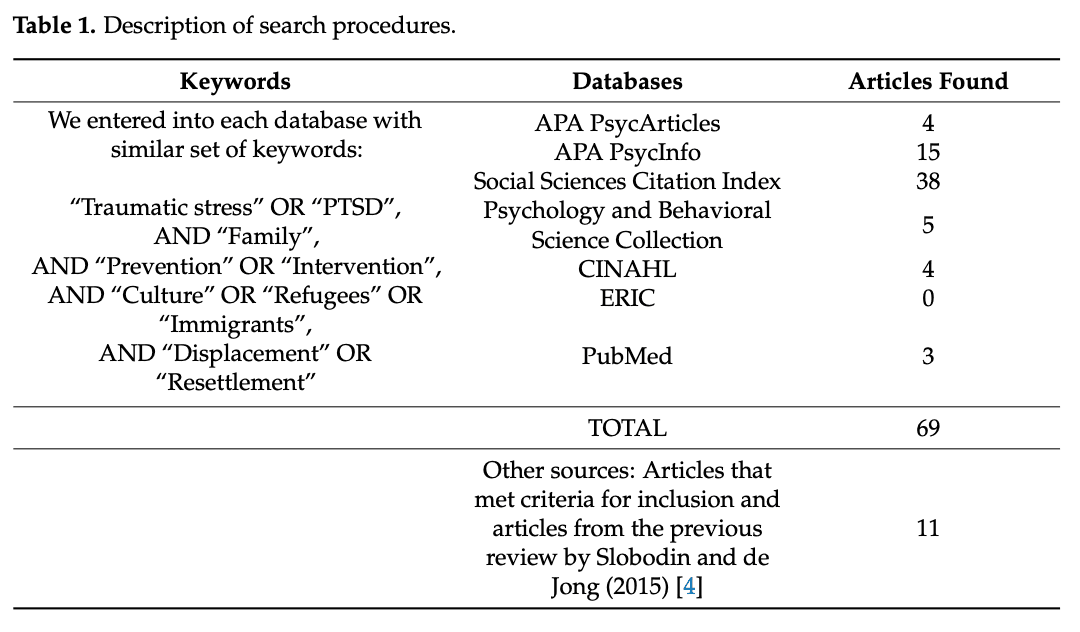
Table 1. Description of search procedures.

Because the purpose of this review was to examine the effectiveness of evidence-based family interventions to address traumatic stress among refugee families worldwide, we developed inclusion and exclusion criteria. Our inclusion criteria were: (1) studies that described family-based interventions designed to address individual and relational functioning after trauma exposure and displacement, including pre and post intervention assessments; (2) studies that used Randomized Control Treatment (RCT) designs, non-experimental designs, and feasibility studies that prepared the stage for RCTs; (3) studies that involved more than one family member during the intervention (i.e., not just the target participants); (4) studies that targeted refugees who were affected by traumatic stress (not necessary meeting the PTSD criteria) prior to, during, and after migration; (5) studies that included refugees of all ages; and (6) studies that included interventions that were delivered both in community settings (e.g., refugee camps, schools) and clinical settings (e.g., mental health agencies, hospitals).

The exclusion criteria were: (1) studies that did not target the treatment of traumatic stress symptoms; (2) studies that addressed traumatic stress symptoms among refugee children and youth, but did not involve their caregivers (e.g., parents, grandparents, older siblings, and other family members) during the treatment; and (3) studies that did not examine the effectiveness of a relational intervention, did not address traumatic stress symptoms, or did not intervene at a family level.

3. Results

3.1. Study Selection

The initial search resulted in eighty articles, but only twelve met the full inclusion criteria, including the six articles from the previous systematic review conducted by Slobodin and de Jong (2015). Figure 1 is the summary of our study selection process following PRISMA (2020) guidelines.
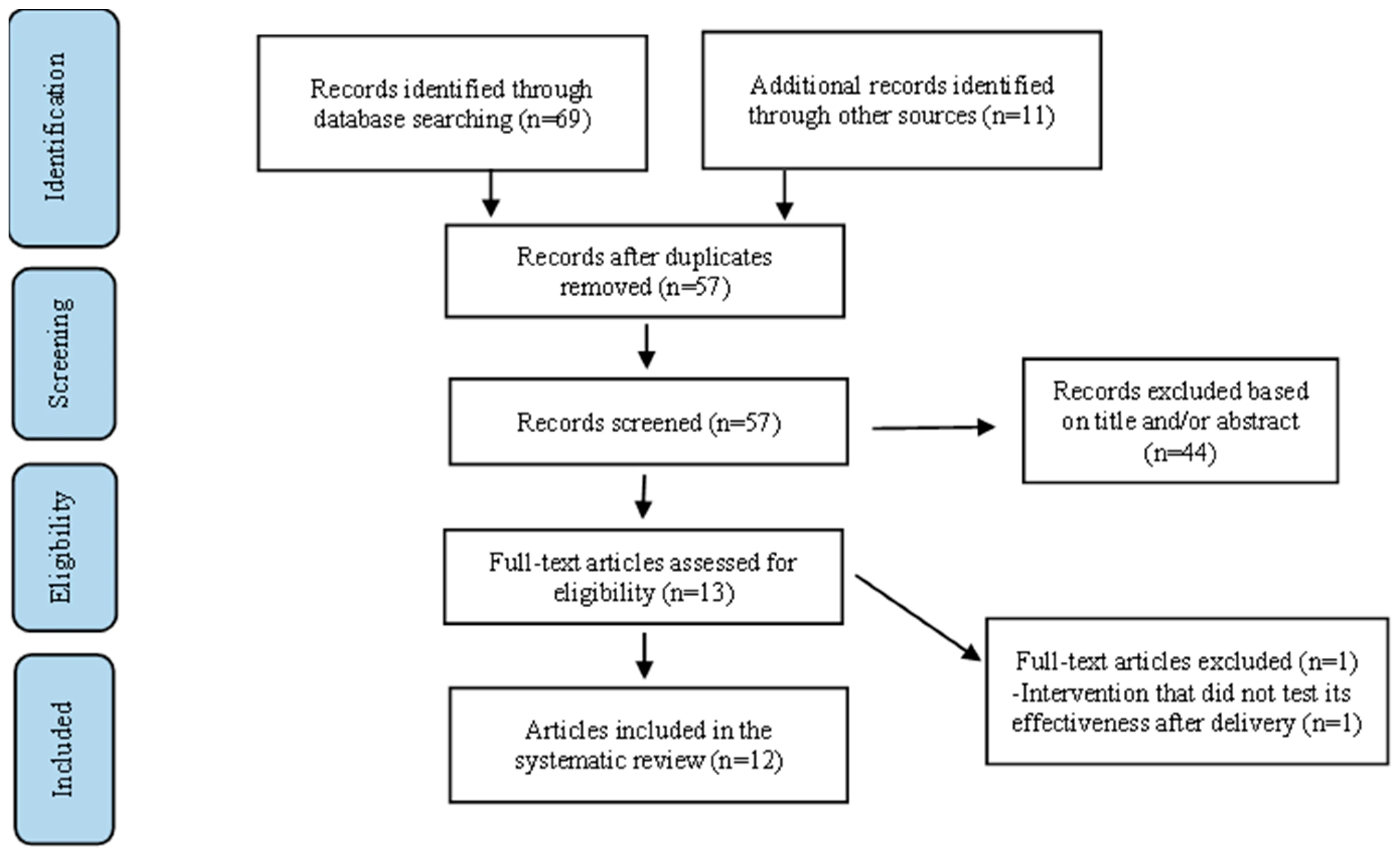
Figure 1. Study Selection Flow Diagram

Figure 1. Study Selection Flow Diagram.

3.2. Study Designs

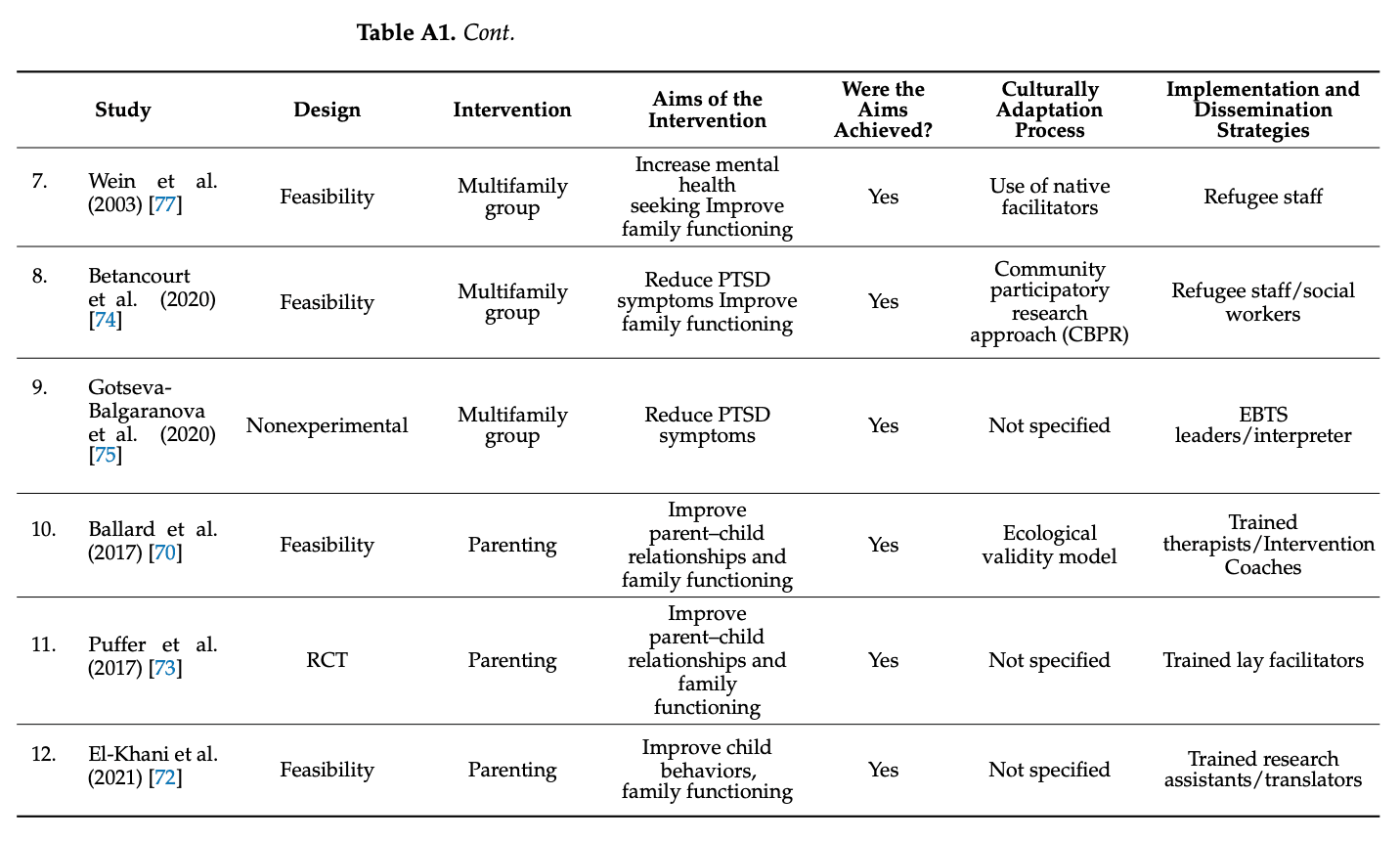
Four studies were identified as being in the feasibility testing phase and included assessments and/or qualitative interviews at both baseline and post intervention stages [70,72,74,77]. Five studies were non-experimental and included evaluations at baseline and post intervention without a control group [75,78,79,80]. Three studies were experimental and included assessments at pre and post intervention, and a control group [73,76,81]. One study used a quasi-experimental design by including a control group along with pre and post intervention evaluations [82]. Appendix A demonstrates. Table A1 is a summary description of studies included in this review.

3.3. Types of Interventions

3.3.1. Parenting Interventions

Three studies used parenting interventions [70,72,73]. The first study was part of a working group that adapted GenerationPMTO for the context of traumatic stress. The first feasibility study of this adapted parenting intervention was conducted with trauma-affected Acholi mothers in Northern Uganda and demonstrated both acceptability, usability, and limited effectiveness within that population [59]. The working group adapted the intervention for feasibility testing with Karen refugees (from the country of Myanmar) in the U.S. This intervention was grounded in the human ecological model, the social interaction learning theory, and social justice principles [70,71]. GenerationPMTO is an evidence-based parenting intervention adapted in the context of traumatic stress among displaced populations to assist parents in managing their children’s misbehavior. The intervention included nine parenting group sessions for mothers of children ages 5–13. Assessments were conducted with parents and children at pre intervention, post intervention, and at a 3-month follow-up.

The second study used a brief parenting intervention program called Strong Family with the purpose of improving mothers’ parenting skills, mothers’ perceptions of their children, and child behavior [72]. Strong Family is a brief family intervention that consists of three sessions. The total participation time is no more than five hours. In the first week, a one-hour pre group session was conducted among 10–12 caregivers. In the second and third weeks, caregivers and their children first attended separate groups (i.e., a parent’s group and a children’s group) for one hour. Immediately after that, both caregivers and children attended one hour of a family group to conclude the program. The intervention was conducted among 25 Afghanistan refugee families (twenty mothers and five fathers of participating children whose age was between 8–15 years) resettled in Serbia. Assessments were conducted at pre test (t1 at baseline), post test (t2 two weeks after), and follow-up (t3 six weeks after completion) to evaluate the effectiveness of the intervention.

The third study used a parenting and family skills training intervention called Happy Families, adapted from the Strengthening Families Program [73]. The intervention was conducted among 479 Burmese migrant families (i.e., 513 caregivers and 479 children aged 7–15) in 20 communities in Thailand. Happy Families consisted of 12 group sessions. Each session lasted 2.5 h. Caregivers and children attended parallel group sessions followed by joint family sessions. Standardized assessments were conducted at pre and post intervention to evaluate the effectiveness of the intervention through parent–child relationships and family functioning. The follow-up assessments were conducted a month after the intervention for both control and treatment groups, and again six months after the intervention for treatment groups only.

3.3.2. Multifamily Interventions

Four studies employed multifamily group interventions [74,75,76,77]. In 2003 and 2008, Weine and colleagues conducted two studies using multifamily group interventions (i.e., TAFES: Tea and Family Education and Support and CAFES: Coffee and Family Education and Support) that included therapy, psychoeducation, and coping skills for individual and family members in the context of Post Traumatic Stress Disorder among 42 Kosovar refugee families [77] and among 197 Bosnian refugee families resettled in Chicago [76]. Both interventions consisted of nine sessions over 16 weeks. The interventions were grounded in family strength and resilience approaches. The purpose was to assess the effectiveness of the intervention in increasing access to mental health services and decreasing depression. Standardized assessments were conducted prior to and 3 months following the interventions [77], while similar standardized assessments were conducted four times in the 2008 study (at baseline, 6 months, 12 months, and 18 months) [76].

A recent study conducted by Betancourt et al. used a home visiting intervention, the Family Strengthening Intervention for Refugees (FSI-R), that included ten 90-min weekly home-visit sessions among 40 Somali Bantu and 40 Bhutanese refugee families [74]. Similar to the two studies of Wein et al. [76,77], the invention used family strength and resilience approaches grounded in ecological and systemic theories. Standardized assessments were conducted at pre and post intervention to examine the traumatic stress reaction and depression symptoms in children as well as family functioning.

Another recent study conducted by Gotseva-Balgaranova et al. utilized an Evidence-Based Trauma Stabilization (EBTS) that included five psychodrama sessions with children and parent dyads (i.e., 15 children and 16 parents), and four psychoeducation sessions for parents about traumatic stress symptoms and their impact on child development [75]. This study was conducted among seven Iraqi, three Afghan, and five Syrian refugees resettled in Germany and Bulgaria. Psychological assessments were conducted at pre and post intervention to examine the effectiveness of the intervention in reducing PTSD symptoms and depression in both parents and children.

3.3.3. School-Based Interventions

Five studies employed school-based interventions that included caregiver group sessions prior to or/and along with children and youth’s individual and group sessions [78,79,80,81,82]. The first study used the Cultural Adjustment and Trauma Services (CATS) intervention that included relationship building between classroom teachers and CATS staff, outreach services involving cultural brokers as assessors for mental health issues, and clinical services involving psychoeducation, therapy, and family services [78]. CATS is grounded in the Family, Adult, and Child Engagement Services model [79] designed for trauma-affected refugee children and funded by National Child Traumatic Stress Network. The study was conducted among 1049 multiethnic refugee children (only 894 received outreach services, and 149 enrolled in clinical services) from 29 countries resettled in New Jersey in the U.S. Two standardized assessments were conducted at baseline and every 3 months during a three-year period to examine the effectiveness of the intervention in decreasing the symptoms of PTSD and improving functioning.

The second study used International Family, Adult, and Child Enhancement Services (FACES) that included mental health assessment, therapy (individual, group, family), psychiatric services, and support services (e.g., translation/interpretation, travel/transportation) [79]. FACES was initially developed in 1976, and specifically designed for Southeast Asian refugees fleeing Vietnam. The study was conducted with mixed groups of refugee children and youth resettled in the U.S. At the beginning, 97 children and youth participated and only 68 remained at the end of the program, which was conducted over a three-year period. Standardized assessments were conducted longitudinally from December 2003 to August 2005.

The third study used the Trauma Healing Club (THC) intervention adapted from the evidence-based Cognitive Behavioral Interventions for Trauma in Schools (CBITS) [80]. The THC included 12 sessions (i.e., ten CBITS sessions and two drumming sessions in response to the cultural values of African refugees) along with psychoeducation about adverse childhood experiences and their impact on child development for parents and students throughout the intervention implementation. The study was conducted among 88 students and their caregivers who were African refugees resettled in the U.S. Standardized assessments were conducted at pre and post intervention to examine the effectiveness of the intervention in decreasing trauma-related symptoms and increasing coping skills and school performance outcomes.

The fourth study used the Mental Health for Immigrants Program (MHIP) that included eight CBT group sessions for children and youth, two multifamily group sessions for parents along with a child-based intervention, and training about the symptoms and effects of trauma on immigrant children for classroom teachers [81]. The study was conducted among 198 Latinx immigrant children from the third to eighth grade who were diagnosed with trauma-related depression and/or PTSD symptoms. Standardized assessments were conducted at pre and post intervention, and at a 3-month follow-up to evaluate the improvement of PTSD and depressive symptoms.

The fifth study used a multimodal program that included psychoeducation for parents, creative techniques (painting, playing, acting), and relaxation techniques in individual, family and group sessions [82]. The program consisted of twelve sessions over 12 weeks: two information sessions, two diagnostic sessions, six group sessions, two to four individual sessions, and one family session. The study was conducted among 10 Kosovar refugee youth and their parents resettled in Germany. Standardized assessments were conducted at pre and post intervention to examine the effectiveness of the intervention in reducing emotional distress and improving psychosocial functioning among trauma-affected refugee children and adolescents.

We would also like to note an important study that did not meet our inclusion criteria but is directly related to our systematic review. Erdemir conducted a Preschool Education Program (PEP) with the aim of promoting holistic development and boosting school readiness skills before starting primary school among Syrian refugee children resettled in Turkey [85]. The program operated for nine weeks in two schools. The findings showed an improvement in mother–child relationships, positive changes in child behaviors and the mothers’ concepts of their children, as well as positive parenting practices at the end of the program, based on the interviews with the mothers.

3.4. Effectiveness of the Interventions/Results of the Studies

Not all interventions in this systematic review measured the same outcomes of PTSD among refugee populations. Six studies reported a reduction in PTSD symptoms (i.e., intrusion, arousal, depression, dissociation, traumatic stress reaction) in children/youth and caregivers at post intervention [74,75,78,80,81,82] in comparison to a control group [80]. Four studies reported the improvement in social functioning among the participants at post intervention [78,79,80,82]. Two studies reported an increase in mental-health-seeking behaviors among participants after completing the program [76,77]. Four studies included family variables (i.e., family hardiness, family problem solving, family comfort in discussing trauma, family arguing, family functioning, and family communication) and they reported positive changes in all family variables [73,74,76,77]. Three studies reported more positive parent–child relationships, especially in parent–child relationship quality, discipline practices (i.e., teaching, directions, emotional regulation, child compliance), and family functioning among participants at post intervention [70,72,73].

3.5. Cultural Adaptation Processes

Cultural adaptation is referred to as a process that enhances the fit between the intervention and the target population through the modification, tailoring, and adaptation of intervention elements, while still following the guidelines that contribute to the fidelity and effectiveness of the intervention [86]. There are numerous frameworks to guide the cultural adaptation of an intervention, but these frameworks usually fall into two main categories: (1) the adaptation of intervention content (what to adapt?), and (2) the adaptation process (how/when to adapt, and who should be involved in decision making?). Among the thirteen studies included in this review, only two studies employed cultural adaptation frameworks. The first study, conducted by Ballard et al. [70], used the ecological validity cultural adaptation model developed by Bernal et al. [87]. The cultural adaptation of the evidence-based parenting intervention, GenerationPMTO, also included qualitative needs assessments among stakeholders in the community, intervention development and adaptation focusing on eight ecological dimensions (i.e., language, persons, metaphors, content, concepts, goals, methods, and context), and intervention delivery conducted by trained therapists, intervention coaches, and trained Karen interpreters.

The second study was conducted by Elswick et al. [80], and it used the three steps of cultural adaptation of the intervention (THC) from the original CBITS in response to the needs and cultural values of African refugee families resettled in the U.S. First, African drumming was added into each session to offer emotional regulation during the sessions. Second, the researchers added a pyramid mentoring process developed to foster cultural socialization, cultural identity, and cognitive development through modeling and social support. Third, the original 10-session CBITS was extended to the 12-session THC to ensure the fidelity of the evidence-based intervention despite the additional cultural value of drumming.

Seven studies included in this review did not reference any specific model for the cultural adaptation of the intervention, but focused on different aspects of the relevant culture such as the use of cultural brokers, interpreters, and facilitators who were bilingual and members of immigrant populations [76,77,78,82], observations in their natural setting by program staff to tackle the need for mental health services among refugee children and youth [79], the use of a community-based participatory research approach (CBPR) [77], and the use of initial qualitative interviews to inform the adaptation of the intervention [73].

Three studies did not employ any specific model for the cultural adaptation of the intervention, nor any aspects of the relevant culture. The studies focused on the involvement of parents and teachers in addition to group sessions among students [81], the involvement of parents in four psychoeducation sessions about trauma and five parent–child interaction sessions [75], and the claim that the intervention was already culturally adapted among the population [72].

3.6. Implementation and Dissemination Strategies

Implementation science is referred to as methods that help to ensure the accurate translation of research findings and evidence-based practices into community settings with the purpose of improving the quality of health care (i.e., effectiveness, reliability, safety, appropriateness, equity, efficacy) [88]. In other words, implementation science focuses on moving research into practice by incorporating contextual factors and by using multisystemic perspectives. Therefore, implementation and dissemination strategies consider factors that affect the adoption, implementation, and sustainability of a specific intervention in normal settings. According to Fixen et al., the core components of implementations are: (1) staff selection, (2) preservice and in-service training, (3) ongoing coaching and consultation, (4) staff performance assessment, (5) decision-supporting data systems, (6) facilitative administrative supports, and (7) systems interventions [89].

All twelve studies in this review incorporated most of the main components of implementation described by Fixen et al. [89]. Specifically, seven studies conducted preservice training, ongoing consultation and supervision, and regular performance evaluations. For example, the first study, conducted by Ballard et al., included interventionists who were culturally informed intervention coaches and trained therapists committed to working with war-affected and displaced populations [70]. The interventionists adapted the intervention core elements and protocol in response to the needs of the ethnic minority population they worked with by incorporating their cultural values, language, and meaning-making process in the context of displacement. The second study, by Betancourt et al., had a highly trained intervention team consisting of experts in the field (i.e., research assistants, interventionists, licensed clinical social workers, clinical supervisors) and trained staff from two refugee communities [74].

In the third study, by Puffer et al., the intervention team consisted of 40 lay facilitators including staff and non-staff from the implementation organization [73]. The facilitators worked in pairs (one staff and one non-staff), and received an 11-day training. During implementation, staff conducted observation sessions to supervise non-staff. Observers used standardized checklists to evaluate facilitation skills and to determine how much supervision non-staff needed.

In the fourth and fifth studies, led by Weine et al., the intervention team were members of the immigrant populations [76,77]. They received 20 h of implementation training, weekly group and individual supervision, and monthly videotaping of the TAFES and CAFES sessions by an experienced family therapist. In the sixth study, conducted by Birman et al., the intervention team was composed of program assistants who were trained by scale developers, clinicians composed of a doctoral or master level psychologist, an art therapist, a dance therapist, an occupational therapist, a child psychiatrist, and practicum students supervised by licensed staff [79]. Lastly, in the seventh study, by Kataoka et al., the intervention team was composed of school clinicians, educators, and researchers who received 16 h of MHIP intervention training, 2 h of weekly supervision with a psychologist, and 1 h of weekly supervision from an onsite clinical supervisor [80].

Two studies included preservice and in-service training, but did not say much about on-going supervision and performance evaluation during the process of intervention implementation. For example, Beehler et al. developed an intervention team that relied on refugee resettlement staff who were trained in mental health treatments, and CATS clinicians who were bilingual and trained by intervention developers [78]. In the study conducted by El-Khani et al., the intervention team involved two research assistants who were trained by the program developers, and interpreters who were community members [72].

Three studies did not include the delivery of preservice and in-service training among their interventionist team. For example, in the study conducted by Elswick et al., the intervention team was composed of researchers and a clinician, and no other details were provided [80]. In the study conducted by Mohlen et al., the intervention team consisted of a child psychiatrist who led a diagnostic session, a trained medical student who provided therapy, and a Kosovo-Albanian interpreter [82]. Lastly, in the study by Gotseva-Balgarannova et al., the intervention team consisted of trained researchers, EBTS leaders, and an interpreter [75].

4. Discussion

This systematic review identified twelve studies that tested the effectiveness of evidence-based family interventions for displaced and trauma-affected refugees. Three studies examined parenting interventions; four studies examined multifamily group interventions; and five studies examined school-based interventions. In terms of study design, only three studies were RCTs and the remaining were non-experimental (i.e., four nonexperimental, one quasi-experimental, and four feasibility studies). No studies compared the effectiveness between individual-based and family-based treatments. Most importantly, only two studies specified the cultural adaptation frameworks they employed while the others simply referred to incorporating exploratory qualitative interviews, cultural brokers, bilingual research teams, and interpreters. The lack of elaboration on cultural adaptation/tailoring and specific dissemination and implementation approaches to target displaced populations points to a shortage of scientifically rigorous and culturally responsive research designs to support individual and relational health among displaced refugees of an ethnic minority.

We would like to frame this discussion as a call to action for those in the mental health field regarding the serious dearth of relational interventions designed and tested to promote healing among refugees following trauma exposure and displacement. It is concerning that despite the knowledge that we face alarming and growing rates of global displacement, we as a prevention and intervention field have not ethically and responsively addressed the mental and relational health of refugee communities. In 2010, the National Institutes of Health assembled a panel to conduct an extensive Delphi study to identify grand challenges in global mental health [90].

The report advanced the following goals: (a) identify root causes, risks, and protective factors; (b) advance the prevention and implementation of early interventions; (c) improve treatments and expand access to care; (d) raise awareness of the global burden; (e) build human resource capacity; and (f) transform health systems and policy responses. Effectively meeting these goals would simultaneously expedite the mental health treatment of refugee communities around the globe. Over a decade has passed since that report was released, yet sustained evidence of growth across those targeted goal areas is missing. We continue to struggle to address the needs of one of the most vulnerable segments of the global population, forcibly displaced refugees.

Known Barriers to Advancing Mental Health and Systemic Treatments

Design challenges have been pervasive in developing and testing both individual and relational treatments within displaced communities. Gold standards inherent in RCT designs (e.g., control groups, recruitment, blind assignment, statistical power, retention/attrition, dose levels), also create challenges to the effectiveness and superiority of trials and often slow behavioral-based translational sciences. There have been increasing calls to expand our conceptualization of the scientific process to encompass more critical and ethically informed frames that also include deep collaboration with members of the targeted communities [91]. For example, Critical Participatory Action Research (PAR) models specifically incorporate social justice, empowerment, and liberation as part of the scientific endeavor [91,92,93]. The adoption of culturally tailored multi-informant and multi-method research (quantitative, qualitative, and mixed-method approaches) would expand our capacity for developing, implementing, and testing interventions with greater potential for uptake and sustainability within displaced refugee communities [94,95,96,97]. Key researchers in this review also recommended including qualitative studies such as case study methods [79], ethnographic methods [76,77], and community-based participatory research methods [74] along with RCT designs in future research to enhance the effectiveness of family interventions that address mental health and family functioning among diverse displaced refugee families.

Another barrier is the poor resettlement infrastructure in host countries. Considering that the largest percentages of displaced people (86 percent of refugees worldwide) resettled into middle- and low-income countries, limited and often inadequate public and mental health institutions are available to support the resettlement process [3]. Similarly, inadequate infrastructure is also part of the refugee experience in high-income countries [43]. A lack of state policies to systematically assess mental health needs and provide support to resettled families significantly compromises successful family adjustment. For example, a national study conducted by Shannon et al. in the U.S. with 44 refugee health coordinators exploring the mental health training of refugee health coordinators and the systematic screening of refugee mental health reported that they believed it was possible to administer a brief mental health screening during early resettlement meetings; however, only half of the coordinators had received any mental health training [98]. These coordinators identified PTSD and major depression as their top concerns related to refugee mental health and requested training on the mental health needs of arriving refugees. They linked mental health screening with positive referral outcomes for refugee populations. Similarly, a lack of training and awareness of professionals in primary and secondary educational institutions, along with a lack of trained mental health professionals and community health workers, exacerbates concerns and a lack of healing post resettlement. Among the studies reviewed in this paper, Mohlen et al. also highlighted the need to train professionals (i.e., social workers and teachers) who work directly with refugees [82] while Puffer et al. suggested training lay providers who are community members to ensure the sustainability of intervention implementation [73]. Beyond individual assessment and mental health, other studies [59,60,71] documented the broad need for parental support post resettlement as parents feel poorly equipped to navigate new legal, educational, and labor systems.

In addition to the need for greater emphasis on both evidence-based and practice-based interventions for resettled refugee communities (e.g., parenting groups, relational health, peer support), an emphasis on institutional programs that enhance professional capacity, the trauma-focused training of health providers, and community-based refugee centers would go a long way in promoting successful adjustment [99]. Slobodin and de Jong highlighted the need for the implementation of intervention in community settings such as schools, women’s health clinics, or primary care clinics, rather than solely clinical settings, in order to increase the accessibility and cultural responsiveness of mental health services among trauma-affected and displaced refugee families [4].

Most studies in traumatic stress treatment have primarily focused on symptom reduction rather than other aspects of human relationships, such as parent–child relationships, couple relationships, sibling relationships, and both familial and community relationships. Specifically, trauma-affected refugees experience complicated grief and other comorbidities related to mental and relational issues [43], so we advocate for trauma treatments that incorporate multiple systemic factors (i.e., relationship, identity, meaning-making, and community supports) that affect refugee families during resettlement [100]. Several key researchers in this review suggested the inclusion of additional variables in future research in the area of family intervention implementation science: (1) family mental health and functioning along with individual treatment [72]; (2) the cultural components of specific ethnic minority refugees [80]; and (3) timing (e.g., developmental time, family life cycle, time since exposure to trauma, and time of resettlement) [76].

5. Conclusions

All studies included in this systematic review report that their programs are somewhat effective in either improving family functioning or reducing PTSD symptoms by comparing the intervention groups and control group or by comparing the pre and post test of the intervention groups. Findings also highlight that culturally adapted, evidence-based family interventions are needed for specific ethnic minority refugee populations to provide multi-systemic support after resettlement. These treatments should also incorporate the specific refugee histories of displacement, traumatic experiences, cultural values, and ethnic identities as part of a broader culturally responsive agenda for resettlement.

Appendix A

Table A1. Description of studies included in the review.
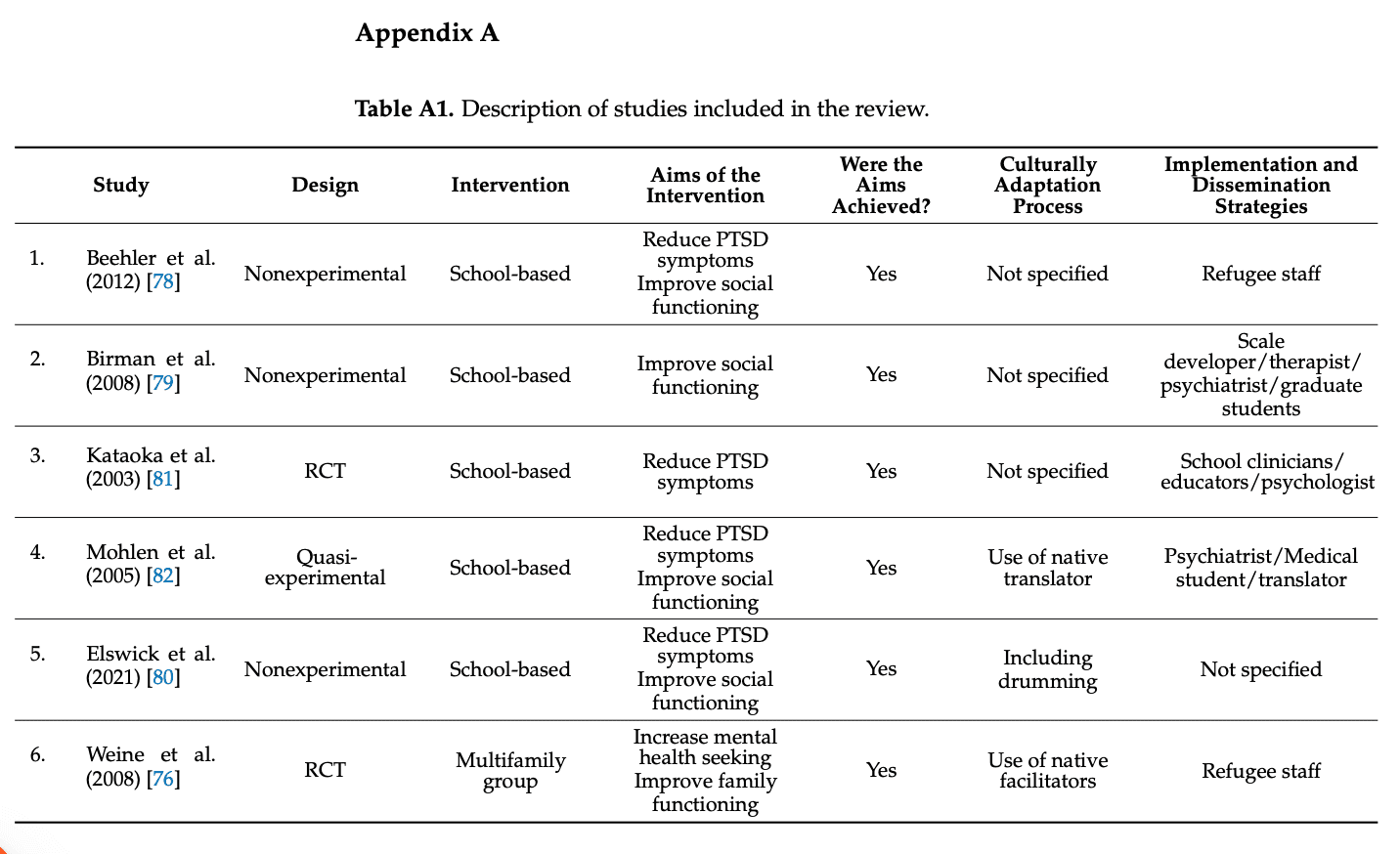
Table A1. Description of studies included in the review.Table A1. Description of studies included in the review.
Open Article as PDF

Abstract

Family connections are crucial for trauma-affected refugees from collectivistic cultures. Evidence-based family interventions are consistently promoted to support a host of mental and relational health needs of families exposed to traumatic stressors; however, there is still limited research focused on cultural adaptation and the testing of the effectiveness of these interventions on some of the most disenfranchised populations in the aftermath of forced displacement. This systematic review was conducted to examine the reach of existing evidence-based family interventions implemented with newly resettled refugees globally. Studies included in this review include those testing the effectiveness of a systemic treatment with pre and post intervention evaluation, studies with or without control groups, and studies that include at least one family member in addition to the target participants. Twelve studies met the inclusion criteria. Barriers to conducting randomized control trials with displaced refugee populations are discussed. Recommendations are made for future studies to include a focus on scientifically rigorous multi-method designs, specific cultural adaptation frameworks, and the integration of relational aspects rather than focusing only on individual adjustment. Global displacement continues to rise; therefore, it is imperative that the mental health and wellbeing of displaced populations be treated with a comprehensive, multi-level framework.

Introduction

The number of people forced to leave their homes globally reached over 89.3 million by the end of 2021, and this figure is expected to grow due to ongoing conflicts. The full impact of the COVID-19 pandemic on displacement remains unclear, though data from the United Nations High Commissioner for Refugees (UNHCR) showed a drop in new refugee and asylum-seeker arrivals, likely due to pandemic-related travel restrictions. Displaced and stateless people face severe challenges, including food and economic insecurity, as well as limited access to health and protection services. Climate change also contributes to displacement, increasing the vulnerability of these communities, many of whom live in areas highly affected by climate change and lack resources to adapt. The complex issues of poverty, food insecurity, climate change, conflict, and displacement are deeply connected, forcing more people to seek safety. Children represent about 41 percent of all forcibly displaced individuals.

Forced displacement profoundly disrupts the entire community and family structures of migrant and refugee populations. People often face multiple traumatic stressors and difficult life events before and during their migration journey. After settling in a new country, daily challenges, ongoing exposure to trauma, poverty, and the stress of adapting to a new culture put refugee families at risk for serious mental health problems and relationship difficulties. Given these overwhelming consequences, there is a clear need for comprehensive, culturally sensitive interventions that address individual, family, and community health needs. Many refugee populations come from cultures that highly value family connection and interdependence. For these groups, family unity and strong relationships are important for individual mental health and well-being. When displacement occurs due to human rights abuses, violence, or natural disasters, refugee families are torn from their familiar surroundings and support systems, enduring deep and lasting losses.

The COVID-19 pandemic made existing mental and relational health issues worse, particularly by creating more barriers for geographically separated refugee families to stay connected. Resettlement communities worldwide have a social and moral responsibility to create systems that support these families. Mental health professionals play a crucial role in developing and testing effective interventions for various refugee populations. Despite immense challenges, these communities show great resilience. History demonstrates that with opportunities for healing, families can recover and thrive in their new countries.

The stages of migration—premigration, during migration, and post-migration—are often linked to cumulative traumatic stress among displaced communities, leading to negative mental health and relationship adjustments. Before migration, severe events like political unrest, violence, genocide, human rights violations, and natural disasters force people to flee. During migration, refugees often continue to experience traumatic events, sometimes for years, living in harsh conditions in camps with great uncertainty. After migration, new stressors arise in resettlement countries, such as family separation, lack of social support, unemployment, language barriers, transportation issues, and limited support from local authorities. Other post-migration challenges include cultural adjustment stress, severe poverty, living in high-crime areas, and untreated mental health issues from past adversities. This cumulative trauma can result in various psychological and relational issues, including depression, anxiety, PTSD, complicated grief, substance use, and disruption of family functioning (e.g., couple and parent-child relationships), potentially leading to the intergenerational transmission of trauma.

Mental health professionals assisting refugees must recognize that these individuals experience multiple, prolonged stressors across individual, family, and community levels, often resulting in complex mental health complications. This systematic review aims to update previous research by examining studies on the effectiveness of evidence-based family interventions for trauma-affected refugees globally. The review also explores cultural adaptation processes and implementation strategies used in these studies. The goal is to raise awareness and encourage more prevention and intervention studies focused on supporting refugee families after resettlement. It is important to evaluate these family-based programs for both scientific rigor and cultural appropriateness for different refugee communities. Effective evaluation of an evidence-based intervention requires measuring not only clinical outcomes but also implementation and dissemination outcomes to assess its ability to promote health and prevent illness in a specific population.

Materials and Methods

The guidelines for systematic reviews from the Preferred Reporting Items for Systematic Review and Meta-Analyses (PRISMA) were followed to identify studies for inclusion in this review. The review was registered with PROSPERO under registration number CRD42022316665. Consistent with a prior review on this topic, a systematic search was conducted across multiple databases: APA PsycArticles, APA PsycInfo, Social Sciences Citation Index, Psychology and Behavioral Sciences Collection, CINAHL, ERIC, and PubMed. Keywords used included "traumatic stress/PTSD," "family," "prevention/intervention," "culture/refugees/immigrants," and "displacement/resettlement." Studies from a similar previous review were also incorporated. The search timeframe began in June 2013, where the previous review concluded, and ended in February 2022.

Specific inclusion and exclusion criteria were developed to ensure the relevance of identified studies. Inclusion criteria required studies to: (1) describe family-based interventions designed to address individual and relational functioning following trauma exposure and displacement, including pre- and post-intervention assessments; (2) utilize various study designs such as Randomized Controlled Treatment (RCT) designs, non-experimental designs, or feasibility studies; (3) involve more than one family member during the intervention; (4) target refugees affected by traumatic stress before, during, or after migration; (5) include refugees of all ages; and (6) involve interventions delivered in both community and clinical settings. Exclusion criteria encompassed studies that: (1) did not focus on treating traumatic stress symptoms; (2) addressed trauma symptoms in children or youth without involving their caregivers; or (3) did not examine the effectiveness of a relational intervention, address traumatic stress, or intervene at a family level. The initial database search yielded 69 articles, with an additional eleven studies identified through expert recommendation and the previous review.

Results

The initial search identified 80 articles, but only twelve met the full inclusion criteria, including six studies from the previous systematic review conducted by Slobodin and de Jong in 2015. Regarding study designs, four studies were in the feasibility testing phase, including assessments or qualitative interviews at baseline and post-intervention. Five studies used non-experimental designs, with evaluations at baseline and post-intervention but without a control group. Three studies were experimental, featuring pre- and post-intervention assessments and a control group. One study used a quasi-experimental design, which also included a control group alongside pre- and post-intervention evaluations.

The identified interventions fell into three main categories. Three studies focused on parenting interventions, such as GenerationPMTO, Strong Family, and Happy Families, which aimed to improve parenting skills, parental perceptions of children, child behavior, and overall family functioning. Four studies employed multifamily group interventions, including TAFES, CAFES, the Family Strengthening Intervention for Refugees (FSI-R), and Evidence-Based Trauma Stabilization (EBTS). These interventions generally incorporated therapy, psychoeducation, and coping skills for individual and family members, often grounded in family strength and resilience approaches. Five studies used school-based interventions, which included caregiver group sessions alongside children's individual and group sessions. Examples include the Cultural Adjustment and Trauma Services (CATS) intervention, International Family, Adult, and Child Enhancement Services (FACES), the Trauma Healing Club (THC), the Mental Health for Immigrants Program (MHIP), and a multimodal program. These school-based approaches typically focused on mental health assessment, therapy, psychoeducation for parents and students, and support services.

The interventions in this review measured various outcomes related to trauma and family well-being. Six studies reported a reduction in PTSD symptoms (such as intrusion, arousal, depression, dissociation, and traumatic stress reactions) in both children/youth and caregivers after the intervention, with some comparing favorably to control groups. Four studies observed improvements in participants' social functioning post-intervention. Two studies noted an increase in mental health-seeking behaviors among participants after completing the programs. Regarding family variables, four studies reported positive changes in family hardiness, problem-solving abilities, comfort in discussing trauma, reductions in family arguments, and overall family functioning and communication. Additionally, three studies indicated more positive parent-child relationships, specifically improved relationship quality, better discipline practices (teaching, directions, emotional regulation, child compliance), and enhanced family functioning among participants after the intervention.

Cultural Adaptation Processes

Cultural adaptation involves modifying interventions to better fit the target population, ensuring fidelity and effectiveness. While frameworks exist to guide this process, typically focusing on "what to adapt" (content) and "how/when to adapt" (process and involvement), only two of the thirteen studies in this review explicitly mentioned using specific cultural adaptation frameworks. One study used Bernal et al.'s ecological validity cultural adaptation model to adjust a parenting intervention, GenerationPMTO, for Karen refugees, involving qualitative needs assessments and focusing on eight ecological dimensions (e.g., language, metaphors, content, methods). Another study used a three-step cultural adaptation process to modify the CBITS intervention into the Trauma Healing Club (THC) for African refugee families, adding elements like African drumming for emotional regulation and a pyramid mentoring process to foster cultural socialization and identity.

Many other studies, though not referencing a specific model, incorporated cultural considerations. These often included using cultural brokers, interpreters, and bilingual facilitators who were also members of immigrant communities. Some studies used observations in natural settings by program staff to identify mental health needs or employed community-based participatory research approaches. Others used initial qualitative interviews to guide the adaptation of interventions. However, three studies did not specify any particular model or extensive cultural adaptation methods, merely focusing on involving parents and teachers, conducting psychoeducation, or stating that the intervention was already culturally adapted for the population.

Implementation and Dissemination Strategies

Implementation science focuses on ensuring that research findings and evidence-based practices are accurately translated into community settings to improve healthcare quality. This involves considering contextual factors and using multi-systemic perspectives to facilitate the adoption, implementation, and sustainability of interventions in real-world settings. According to Fixen et al., key components of effective implementation include staff selection, initial and ongoing training, continuous coaching and consultation, staff performance assessment, data systems for decision support, supportive administration, and systemic interventions.

All twelve studies in this review incorporated most of these core implementation components. Specifically, seven studies featured initial training, ongoing consultation and supervision, and regular performance evaluations. For example, one study involved culturally informed intervention coaches and trained therapists committed to working with displaced populations, who adapted core intervention elements to meet the needs and cultural values of ethnic minority communities. Another study utilized a highly trained intervention team comprising experts, research assistants, clinical social workers, supervisors, and trained staff from refugee communities. A third study trained 40 lay facilitators, including staff and non-staff community members, and provided supervision through observation sessions and standardized checklists. Other studies relied on intervention teams composed of immigrant community members who received implementation training, weekly supervision, and regular video recordings of sessions. Some teams included program assistants trained by scale developers, clinicians with advanced degrees, and practicum students supervised by licensed staff, or school clinicians, educators, and researchers receiving extensive training and weekly supervision.

However, some variations in implementation detail were noted. Two studies mentioned preservice and in-service training but provided limited information about ongoing supervision and performance evaluation during intervention delivery. For instance, one study's team included refugee resettlement staff trained in mental health treatments and bilingual clinicians trained by intervention developers, but specifics on ongoing oversight were less emphasized. Another study's team involved two research assistants trained by program developers and community-member interpreters. Three studies provided minimal details on the training of their intervention teams. One study's team comprised researchers and a clinician without further elaboration. Another included a child psychiatrist, a trained medical student providing therapy, and an interpreter. The third featured trained researchers, intervention leaders, and an interpreter, but specifics on comprehensive training were not provided.

Discussion

This systematic review identified twelve studies that assessed the effectiveness of evidence-based family interventions for displaced and trauma-affected refugees. These studies included parenting interventions, multifamily group interventions, and school-based interventions, with varied research designs. A significant concern is the limited number of rigorous, culturally responsive relational interventions designed and tested to support healing among refugee communities. This highlights a critical gap in the mental health field's ethical and responsive efforts to address the growing global displacement crisis.

Challenges in research design have hindered the development and testing of treatments within displaced communities. Traditional Randomized Controlled Trial (RCT) designs, with their requirements for control groups, recruitment, blind assignment, and retention, can slow the progress of behavioral-based translational sciences. There is a growing call to broaden our understanding of the scientific process to include more critical and ethically informed frameworks. This includes deep collaboration with community members, such as through Critical Participatory Action Research models, which integrate social justice, empowerment, and liberation into the scientific endeavor. Adopting culturally tailored, multi-informant, and multi-method research (quantitative, qualitative, and mixed-method approaches) would enhance the capacity to develop, implement, and test interventions that are more likely to be adopted and sustained within displaced refugee communities. Researchers in this review also recommended incorporating qualitative studies, like case studies and ethnographic methods, and community-based participatory research alongside RCT designs to improve the effectiveness of family interventions addressing mental health and family functioning among diverse refugee families.

Another significant barrier is the inadequate resettlement infrastructure in host countries. A large majority (86 percent) of displaced people settle in middle- and low-income countries, where public and mental health institutions often lack the resources to support the resettlement process. Even in high-income countries, infrastructure can be insufficient. The absence of systematic state policies for assessing mental health needs and providing support severely compromises successful family adjustment. For example, a study in the U.S. found that while refugee health coordinators believed brief mental health screenings were feasible during early resettlement, only half had received mental health training. They identified PTSD and major depression as top concerns and sought training, linking screening to positive referral outcomes. Similarly, a lack of training and awareness among professionals in educational institutions, alongside a shortage of trained mental health and community health workers, worsens the healing process post-resettlement. Some studies in this review emphasized the need to train social workers, teachers, and lay providers who directly work with refugees to ensure intervention sustainability.

Beyond the need for more evidence-based and practice-based interventions for resettled refugees (such as parenting groups, relational health, and peer support), there is an emphasis on institutional programs that build professional capacity, provide trauma-focused training for health providers, and establish community-based refugee centers. These efforts would significantly promote successful adjustment. Prior research suggested implementing interventions in community settings like schools, women’s health clinics, or primary care clinics, rather than only clinical settings, to increase accessibility and cultural responsiveness of mental health services for trauma-affected refugee families. Most traumatic stress treatments have focused on symptom reduction, neglecting other crucial aspects of human relationships (parent-child, couple, sibling, family, and community). Given that trauma-affected refugees often experience complicated grief and other co-occurring mental and relational issues, trauma treatments should integrate multiple systemic factors, including relationships, identity, meaning-making, and community supports, that affect refugee families during resettlement. Future research should consider variables such as family mental health and functioning, cultural components of specific ethnic minority refugees, and critical timing factors (e.g., developmental stage, family life cycle, time since trauma exposure, and time of resettlement).

Conclusions

All studies included in this systematic review reported some effectiveness in improving family functioning or reducing PTSD symptoms, either through comparisons with control groups or pre- and post-intervention assessments. The findings highlight a critical need for culturally adapted, evidence-based family interventions specifically designed for diverse ethnic minority refugee populations to provide comprehensive, multi-systemic support after resettlement. These treatments should integrate the specific histories of displacement, traumatic experiences, cultural values, and ethnic identities of refugees as part of a broader, culturally responsive agenda for successful resettlement.

Open Article as PDF

Abstract

Family connections are crucial for trauma-affected refugees from collectivistic cultures. Evidence-based family interventions are consistently promoted to support a host of mental and relational health needs of families exposed to traumatic stressors; however, there is still limited research focused on cultural adaptation and the testing of the effectiveness of these interventions on some of the most disenfranchised populations in the aftermath of forced displacement. This systematic review was conducted to examine the reach of existing evidence-based family interventions implemented with newly resettled refugees globally. Studies included in this review include those testing the effectiveness of a systemic treatment with pre and post intervention evaluation, studies with or without control groups, and studies that include at least one family member in addition to the target participants. Twelve studies met the inclusion criteria. Barriers to conducting randomized control trials with displaced refugee populations are discussed. Recommendations are made for future studies to include a focus on scientifically rigorous multi-method designs, specific cultural adaptation frameworks, and the integration of relational aspects rather than focusing only on individual adjustment. Global displacement continues to rise; therefore, it is imperative that the mental health and wellbeing of displaced populations be treated with a comprehensive, multi-level framework.

Introduction

Over 89 million people worldwide experienced forced displacement by the end of 2021, a number expected to grow due to ongoing global conflicts. The full impact of the COVID-19 pandemic on this issue remains unclear, though initial data showed a sharp decline in refugee and asylum-seeker arrivals, likely due to travel restrictions. Forcibly displaced individuals and stateless people are among the most vulnerable groups globally, facing increased food and economic insecurity, as well as limited access to health and protection services. Climate change also contributes to displacement, increasing the fragility of these populations, many of whom reside in climate "hotspots" without adequate resources to adapt. The complex interplay of poverty, food insecurity, climate change, conflict, and displacement is intensifying, compelling more individuals to seek safety. Children represent a significant portion, an estimated 41%, of all forcibly displaced people.

Forced displacement profoundly disrupts the community and family structures of migrant and refugee populations. Individuals often face unavoidable traumatic stressors and hardships both before and during migration. Upon resettlement in a new country, daily challenges, additional traumatic exposures, poverty, and acculturation stress place refugee families at a heightened risk for severe negative mental health outcomes and relational difficulties. The extensive consequences of displacement and trauma necessitate comprehensive, culturally sensitive interventions that address individual, family, and community health needs. Most refugees come from collectivistic societies that value strong family connections, making family unity and cohesion crucial indicators of individual and relational well-being within these cultures. When families are forcibly displaced due to human rights violations, violence, or natural disasters, they are severed from their natural support systems and endure multiple, lasting losses.

The COVID-19 pandemic further aggravated existing mental and relational health issues, creating additional barriers for geographically separated refugee families to maintain connections. Resettlement communities globally bear a societal and moral responsibility to establish support systems for these families. Mental health professionals play a vital role in developing and evaluating effective interventions for diverse refugee populations. Despite immense challenges, these communities demonstrate remarkable resilience. Historical evidence shows that with opportunities for healing, families can recover and thrive in their new countries of resettlement.

A 2015 systematic review by Slobodin and de Jong on family interventions for refugees highlighted the impact of traumatic stress on individual mental health, the need to prevent the intergenerational transmission of trauma-related issues, and the importance of supporting family and community healing. That review found only six experimental studies on family-based interventions, emphasizing a significant research shortage and the difficulty in drawing firm conclusions about their effectiveness. It called for future research to move beyond individual Post-Traumatic Stress Disorder (PTSD) treatments and focus more on family-level processes, including relationships, communication, and resilience. Given the escalating global displacement crisis, the current study aimed to conduct a follow-up systematic review. The goal was to further examine studies testing the effectiveness of evidence-based family interventions for trauma-affected refugees worldwide, as well as to investigate cultural adaptation processes and implementation strategies used in empirical studies. The purpose was to increase awareness and advocate for prevention and intervention studies focused on supporting refugee families after resettlement, rigorously evaluating their scientific merit and cultural appropriateness.

Working with Displaced and Minoritized Refugee Families

Displacement poses significant threats to refugee families. The three common stages of migration—premigration, during migration, and post-migration—are often associated with cumulative traumatic stress among forcibly displaced communities, leading to detrimental mental health and relational challenges. Before migration, severe traumatic events such as political instability, mass violence, war, human rights violations, natural disasters, and climate change force people to seek safety. During migration, refugees often continue to face traumatic events through prolonged displacements both within and outside their home countries, living in harsh conditions in refugee camps and contending with uncertainty. In the post-migration phase, refugees arrive in resettled countries confronting additional stressors, including family separation, lack of social support, unemployment, language barriers, transportation difficulties, and limited assistance from local authorities. Further migration experiences include acculturation stress, severe poverty, living in high-crime areas, and enduring untreated mental health issues stemming from pre- and during-migration adversities. Cumulative traumatic stress across these stages is linked to a range of psychological and relational consequences such as depression, anxiety, adjustment disorders, PTSD, complicated grief, psychosis, suicide, and comorbidity of mental and physical health issues. It also disrupts family functioning, affecting couple and parent-child relationships, and contributes to the intergenerational transmission of traumatic stress.

Mental health professionals working with refugees must recognize that these individuals experience multiple, prolonged stressors at individual, family, and community levels, leading to complex mental health complications. At the individual level, exposure to traumatic events during migration triggers extreme stress responses in the brain. The amygdala, responsible for fear processing, often dominates brain function, causing fragmented memories where sensory, physiological, cognitive, and emotional aspects of trauma are activated without being properly connected to the context, time, or chronology of events (a function of the hippocampus and prefrontal cortex). This fragmentation frequently results in post-traumatic stress symptoms, including re-experiencing, arousal, avoidance, and negative changes in cognition and mood. Trauma-affected individuals may isolate themselves, exhibit hypervigilance, and rely on fear-based coping and avoidance in their daily lives and relationships. The emotional, behavioral, cognitive, biological, and spiritual well-being of trauma survivors can remain impaired long after the traumatic events.

At the family level, trauma exposure and prolonged family separation disrupt refugee family dynamics. Traumatic stress impacts not only individuals but also their families and communities, with adversities in one system level affecting all others in an interconnected ecosystem. These profound experiences often hinder an individual's ability to maintain healthy relationships, especially with partners and children. In couple relationships, traumatic stress can diminish intimacy and marital satisfaction. Difficulty controlling emotional and behavioral reactions to traumatic memories may lead to anger outbursts and various forms of family violence, including intimate partner violence, which can transmit across generations. In parent-child relationships, trauma-affected parents might use corporal punishment, struggling to distinguish between discipline and uncontrolled anger. These relational patterns contribute to the intergenerational transmission of traumatic stress among refugee families. Limited access to trauma treatment and parenting support can impede parents' ability to fulfill their roles, placing children at risk for adverse mental health and relational consequences such such as aggression, low self-esteem, poor emotional adjustment, impulsivity, poor school performance, strained peer relationships, violence, substance use, anxiety, depression, and PTSD. This cycle of intergenerational transmission persists without appropriate interventions. However, family members also influence each other through their strengths and resilience. Family bonding, rooted in shared values and interdependence, serves as a powerful resource for trauma treatment. Fostering resilience across individual, family, and community levels is crucial, as resilience in one area positively influences others. Therefore, involving family members in individual and relational trauma treatment is highly recommended.

At the community level, the resources and support provided by resettlement countries significantly influence the recovery of refugee individuals and families from adversities and cumulative traumatic stress. Local authorities often fail to offer comprehensive mental health support to newly resettled refugees. Schools, key social institutions for refugee children, frequently underestimate the complex daily stressors affecting their learning and knowledge acquisition. At home, children may witness harsh labor conditions, poverty, emotional dysregulation, anger, and domestic violence, which disrupt their development. Child labor is also common among refugee children and youth, often necessary for family survival. In school, refugee children are susceptible to gang violence, discrimination, substance use, and may lack motivation or educational role models. All these factors underscore the urgent need for targeted systemic interventions effectively developed and deployed across all system levels within resettled refugee communities.

Family Interventions Implemented with Trauma-Affected Refugees

Some notable evidence-based family interventions have been adapted for displaced, trauma-affected populations, focusing on parenting, multifamily groups, and school-based approaches. While family-based interventions have proven effective in treating traumatic stress and preventing its intergenerational transmission in various contexts, it is challenging to gauge their broad effectiveness among refugee populations due to a scarcity of such interventions. Crucially, there remains a lack of culturally adapted or tailored interventions for different ethnic minority refugee groups, as most evidence-based interventions originate from Western, Euro-American populations.

Materials and Methods

This systematic review followed the Preferred Reporting Items for Systematic Review and Meta-Analyses (PRISMA) guidelines to identify studies for inclusion, and was registered with PROSPERO (CRD42022316665). The search, spanning June 2013 to February 2022, used several databases including APA PsycArticles, APA PsycInfo, the Social Sciences Citation Index, the Psychology and Behavioral Sciences Collection, CINAHL, ERIC, and PubMed. Keywords such as traumatic stress/PTSD, family, prevention/intervention, culture/refugees/immigrants, and displacement/resettlement were used. Studies from a previous 2015 review by Slobodin and de Jong with a similar focus were also incorporated. Inclusion criteria required studies to: describe family-based interventions addressing individual and relational functioning after trauma and displacement with pre- and post-intervention assessments; utilize Randomized Control Treatment (RCT) designs, non-experimental designs, or feasibility studies; involve more than one family member during the intervention; target refugees affected by traumatic stress (not necessarily meeting PTSD criteria); include refugees of all ages; and involve interventions delivered in both community and clinical settings. Exclusion criteria omitted studies that did not target traumatic stress symptoms, did not involve caregivers in treatments for refugee children/youth, or did not examine the effectiveness of a relational intervention at a family level.

Results

The initial search yielded eighty articles, but only twelve met all inclusion criteria, including the six articles from the 2015 systematic review by Slobodin and de Jong. Among these studies, four were in the feasibility testing phase, five were non-experimental, three were experimental, and one used a quasi-experimental design. The identified interventions fell into three categories: parenting interventions (three studies), multifamily interventions (four studies), and school-based interventions (five studies). The parenting interventions aimed to improve parenting skills, maternal perceptions of children, and child behavior, often adapting established programs for trauma-affected populations. Multifamily interventions typically incorporated therapy, psychoeducation, and coping skills, grounded in family strength and resilience approaches. School-based interventions often included caregiver group sessions alongside individual and group sessions for children and youth, sometimes involving teacher training and culturally specific activities.

Across the twelve studies, various positive outcomes were reported. Six studies indicated a reduction in PTSD symptoms (e.g., intrusion, arousal, depression, dissociation, traumatic stress reaction) in children, youth, and caregivers after intervention, with some showing improvement compared to control groups. Four studies reported improved social functioning among participants. Two studies observed an increase in mental health-seeking behaviors following program completion. Four studies noted positive changes in family variables such as family hardiness, problem-solving, comfort in discussing trauma, reduced arguing, improved family functioning, and better communication. Three studies specifically highlighted more positive parent-child relationships, encompassing relationship quality, discipline practices, emotional regulation, and child compliance. Regarding cultural adaptation, only two studies explicitly used specific frameworks. Most others referred to incorporating cultural brokers, interpreters, bilingual staff, or initial qualitative interviews to inform adaptation. Three studies did not mention any specific model or cultural aspects, focusing on parent/teacher involvement or claiming prior cultural adaptation. In terms of implementation, all studies integrated most core components of implementation science, such as staff selection, training, and performance assessment, though some provided more detail on ongoing supervision and evaluation than others.

Discussion

This systematic review identified only twelve studies examining the effectiveness of evidence-based family interventions for displaced and trauma-affected refugees. These studies included parenting, multifamily group, and school-based interventions. A notable finding was the scarcity of rigorous study designs, with only three identified as Randomized Control Trials (RCTs). Furthermore, only two studies explicitly utilized cultural adaptation frameworks, while others vaguely referred to incorporating qualitative interviews, cultural brokers, or bilingual research teams. This highlights a critical shortage of scientifically rigorous and culturally responsive research designs aimed at promoting individual and relational health among displaced ethnic minority refugees.

The findings serve as a call to action for the mental health field, emphasizing the serious lack of relational interventions designed and tested to foster healing among refugees following trauma and displacement. Despite alarming and increasing global displacement rates, the prevention and intervention fields have not adequately addressed the mental and relational health needs of refugee communities. Goals set by the National Institutes of Health over a decade ago for global mental health, including identifying root causes, advancing prevention, improving treatments, raising awareness, building capacity, and transforming health systems, have yet to see sustained evidence of growth in this area. The field continues to struggle to meet the needs of one of the world's most vulnerable populations.

Significant barriers impede progress in advancing mental health and systemic treatments for refugees. Traditional RCT designs, with their stringent requirements (e.g., control groups, blind assignment, high retention rates), often present challenges that can slow the development of behavioral-based translational sciences. There is a growing call to broaden the scientific process to include more critical and ethically informed approaches, such as Critical Participatory Action Research (PAR) models, which integrate social justice, empowerment, and liberation into scientific inquiry. Adopting culturally tailored, multi-informant, and mixed-method research (quantitative and qualitative) could enhance the capacity to develop, implement, and evaluate interventions with greater potential for acceptance and sustainability within displaced refugee communities. Researchers in this review also advocated for qualitative studies, such as case studies, ethnographic methods, and community-based participatory research, alongside RCT designs to improve the effectiveness of family interventions addressing mental health and family functioning in diverse refugee families.

Another major barrier is the inadequate resettlement infrastructure in host countries. A large majority of displaced individuals (86% of refugees worldwide) resettle in middle- and low-income countries, which often have limited or insufficient public and mental health institutions to support the resettlement process. Even in high-income countries, infrastructure can be inadequate. The absence of state policies to systematically assess mental health needs and provide support significantly compromises successful family adjustment. For instance, a U.S. national study revealed that while refugee health coordinators believed brief mental health screenings were feasible during early resettlement, only half had received mental health training. They identified PTSD and major depression as top concerns and requested training, linking screenings to positive referral outcomes. Similarly, a lack of training and awareness among professionals in educational institutions, coupled with a shortage of trained mental health professionals and community health workers, exacerbates healing challenges post-resettlement. Some studies highlighted the need to train professionals (e.g., social workers, teachers) directly working with refugees and to train lay providers from the community to ensure intervention sustainability. Beyond individual mental health, there is a broad need for parental support post-resettlement, as parents often feel unprepared to navigate new legal, educational, and labor systems.

In addition to emphasizing both evidence-based and practice-based interventions for resettled refugee communities (e.g., parenting groups, relational health, peer support), a focus on institutional programs that enhance professional capacity, trauma-focused training for health providers, and community-based refugee centers would significantly promote successful adjustment. Interventions should be implemented in community settings like schools, women's health clinics, or primary care clinics, rather than solely clinical settings, to increase accessibility and cultural responsiveness of mental health services for trauma-affected and displaced refugee families. Most traumatic stress treatment studies have primarily focused on symptom reduction, often neglecting other crucial aspects of human relationships, such as parent-child, couple, sibling, and broader familial and community relationships. Given that trauma-affected refugees often experience complicated grief and other comorbidities related to mental and relational issues, trauma treatments should incorporate multiple systemic factors—including relationships, identity, meaning-making, and community supports—that influence refugee families during resettlement. Key researchers in this review suggested including additional variables in future research on family intervention implementation science: family mental health and functioning alongside individual treatment, the specific cultural components of ethnic minority refugees, and various timing considerations (e.g., developmental stage, family life cycle, time since trauma exposure, and time of resettlement).

Conclusions

All studies included in this systematic review reported some level of program effectiveness, demonstrating improvements in family functioning or reductions in PTSD symptoms when comparing intervention groups to control groups, or by evaluating pre- and post-intervention outcomes. The findings underscore the critical need for culturally adapted, evidence-based family interventions specifically designed for ethnic minority refugee populations. These interventions must provide multi-systemic support after resettlement, integrating specific refugee histories of displacement, traumatic experiences, cultural values, and ethnic identities as integral components of a comprehensive and culturally responsive resettlement agenda.

Open Article as PDF

Abstract

Family connections are crucial for trauma-affected refugees from collectivistic cultures. Evidence-based family interventions are consistently promoted to support a host of mental and relational health needs of families exposed to traumatic stressors; however, there is still limited research focused on cultural adaptation and the testing of the effectiveness of these interventions on some of the most disenfranchised populations in the aftermath of forced displacement. This systematic review was conducted to examine the reach of existing evidence-based family interventions implemented with newly resettled refugees globally. Studies included in this review include those testing the effectiveness of a systemic treatment with pre and post intervention evaluation, studies with or without control groups, and studies that include at least one family member in addition to the target participants. Twelve studies met the inclusion criteria. Barriers to conducting randomized control trials with displaced refugee populations are discussed. Recommendations are made for future studies to include a focus on scientifically rigorous multi-method designs, specific cultural adaptation frameworks, and the integration of relational aspects rather than focusing only on individual adjustment. Global displacement continues to rise; therefore, it is imperative that the mental health and wellbeing of displaced populations be treated with a comprehensive, multi-level framework.

Introduction

More than 89.3 million people worldwide were forced from their homes by the end of 2021. This number is expected to grow due to new and ongoing global conflicts. The full effects of the COVID-19 pandemic on forced migration are still unknown. Data from the United Nations High Commissioner for Refugees (UNHCR) showed a sharp decrease in new refugee and asylum-seeker arrivals in most areas, likely because many people were stranded by the pandemic. People forced from their homes or those without a country face severe hardships globally. They experience more food shortages, financial difficulties, and problems getting health and safety services. Climate change also contributes to displacement, making these groups even more vulnerable. Many live in areas highly affected by climate change, often without the resources to adapt to harsher environments. Poverty, food insecurity, climate change, conflict, and displacement are all linked, pushing more and more people to seek safety. Children make up an estimated 41% of all forcibly displaced individuals.

Being forced to leave home deeply affects the community and family life of migrants and refugees. People often experience many traumatic events and hardships before and during their migration. Even after settling in a new country, daily stresses, ongoing exposure to trauma, poverty, and the stress of adapting to a new culture put refugee families at risk for serious mental health problems and relationship difficulties. The severe effects of displacement and trauma require multi-level support systems that respect their culture and address the health needs of individuals, families, and communities.

Most refugees come from cultures where strong family connections and relying on each other are highly valued. In these cultures, family unity and closeness are important signs of an individual's mental health and ability to form healthy relationships. When families are forced to leave their home countries due to human rights abuses, violence, natural disasters, or climate change, they lose their familiar surroundings and support systems, facing many lasting losses.

The COVID-19 pandemic made existing mental and relationship health problems worse. It especially made it harder for refugee families to stay in touch when they were separated by distance. Communities that resettle refugees have a social, political, and moral duty to build systems that support these families. Mental health professionals are crucial in creating and testing programs that effectively help the mental and relationship health of different refugee groups. Despite immense survival challenges, these communities show great strength. History shows that when families get chances to heal, they recover and succeed in their new homes.

In 2015, a detailed review by Slobodin and de Jong looked at family support programs for refugees. This review highlighted how traumatic stress affects individual mental health, the need to stop mental health problems and violence related to trauma from being passed down through generations, and the importance of helping families and communities heal. Their study found only six experimental studies on family-based programs that met their criteria, with most being school-based or multi-family support groups. The authors emphasized the lack of research in this area and the difficulty of drawing clear conclusions about how effective family programs are for trauma-affected immigrants and refugees. They also urged future research to look beyond individual treatments for Post-Traumatic Stress Disorder (PTSD) and focus more on family dynamics, including relationships, communication, and resilience. With the growing crisis of global displacement, this paper aims to revisit the existing research. It conducts a follow-up review to further examine studies on effective family interventions for trauma-affected refugees worldwide, and to look at how these programs are culturally adapted and put into practice. The goal is to raise awareness and call for action to support programs that help refugee families after resettlement. Evaluating these family-based programs for their scientific quality and cultural suitability for different refugee communities is crucial. To truly assess an effective program, it is important to measure not only clinical results but also how well the program is put into action and shared, to see if it genuinely promotes health and prevents illness in a specific group.

Working with Displaced and Minoritized Refugee Families

Being displaced can be life-threatening for refugee families. The migration process typically involves three stages: before migration, during migration, and after migration. Each stage often involves ongoing traumatic stress, leading to harmful mental health and relationship problems. Before migration, severe events like political unrest, violence, wars, human rights abuses, natural disasters, and climate change force people to seek safety. During migration, refugees often continue to face traumatic events and harsh living conditions in camps, dealing with great uncertainty. After migration, in new countries, they encounter added stresses like family separation, lack of social support, difficulty finding jobs or learning new languages, transportation problems, and limited help from authorities. Other post-migration challenges include cultural adjustment stress, severe poverty, high-crime neighborhoods, and untreated mental health issues from past adversities. The continuous traumatic stress from all three stages can lead to psychological and relational issues such as depression, anxiety, PTSD, complex grief, psychosis, and suicide, along with multiple mental and physical health problems, substance use, and disrupted family functioning (e.g., strained couple and parent-child relationships). This trauma can also be passed down through generations.

Mental health professionals working with refugees should understand that refugees face many stresses at individual, family, and community levels over long periods, often suffering from multiple, co-occurring mental health complications. At an individual level, traumatic events during migration cause extreme stress responses in the brain. The amygdala, involved in emotions like fear, often dominates, leading to fragmented memories where sensory, physical, mental, and emotional aspects of trauma are activated without being linked to the context, time, or sequence of events. This fragmentation often causes post-traumatic stress symptoms like reliving the event, heightened arousal, avoidance, and negative changes in thoughts and feelings. Individuals affected by trauma may isolate themselves, become extremely watchful, and rely on fear-based coping. Trauma survivors can continue to experience emotional, behavioral, mental, physical, and spiritual difficulties long after the events. Within the family, trauma exposure and long periods of separation during migration disrupt family functioning. Traumatic stress impacts not just individuals, but also their families and communities, as problems at one level affect all others in an interconnected system. These horrifying experiences can harm a person's ability to maintain healthy relationships, especially with close family members.

In romantic relationships, traumatic stress affects closeness and satisfaction. The inability to control emotional and behavioral reactions to traumatic memories can lead to angry outbursts and various forms of family violence, including intimate partner violence. This violence harms the couple's relationship and can also be passed down. In parent-child relationships, trauma-affected parents may use physical punishment as discipline, but might struggle to distinguish it from punishment stemming from uncontrolled anger. These relational patterns contribute to traumatic stress being passed down through generations in refugee families. Without access to trauma treatment and parenting support, parents may struggle to fulfill their roles. Consequently, children face risks of aggression, low self-esteem, poor emotional adjustment, impulsivity, poor school performance, difficult peer relationships, violence, delinquency, substance use, anxiety, depression, and PTSD. This cycle of intergenerational transmission continues without proper intervention.

Despite these challenges, family members, including parents, children, and spouses, influence each other through their strengths and resilience. Family bonding, through shared values and mutual support, is a powerful resource for trauma treatment. Fostering resilience at individual, family, and community levels is crucial, as strength in one area affects others. Therefore, involving family members in both individual and relationship-focused trauma treatment is highly recommended. At the community level, the resources and support offered by resettlement countries greatly determine how quickly refugee individuals and families recover. Often, local authorities fail to provide multi-level mental health support to newly resettled refugees. Schools, which are key organizations working with refugee children, often underestimate the complex daily stresses affecting children's learning. At home, children witness harsh labor conditions, poverty, emotional problems, anger, and domestic violence. Child labor is also common. At school, refugee children may face gang violence, discrimination, substance use, and a lack of motivation or educational support. All these factors highlight the need for specific, comprehensive programs across all levels within resettled refugee communities.

Family Interventions Implemented with Trauma-Affected Refugees

Several effective family programs have been adjusted for displaced people affected by trauma. These programs have focused on parenting, multi-family groups, and school-based strategies. Family-focused programs have shown success in treating traumatic stress and stopping it from being passed down through generations in various settings. However, it is hard to measure their overall effectiveness among refugee populations due to the limited number of such programs. Crucially, there is still a need for programs that are specifically adapted to the cultures of different ethnic minority refugee groups, as most existing effective programs are based on Western, Euro-American populations.

Materials and Methods

Search Strategy

The guidelines for systematic reviews from the Preferred Reporting Items for Systematic Review and Meta-Analyses (PRISMA) were followed to find studies for this review. The review was registered through PROSPERO under the number CRD42022316665. Similar to a previous review on this topic, attempts were made to search several databases, including Cochrane Central Register of Controlled Trials (CENTRAL), CINAHL, EMBASE, ERIC, Entrez-Pubmed, APA PsycArticles, APA PsycInfo, and the Psychology and Behavioral Sciences Collection. Since access to EMBASE and Entrez-Pubmed was not available through the University of Georgia Library, these were replaced with the Social Sciences Citation Index and PubMed, respectively, after consulting with the university librarian. Therefore, the search sources included APA PsycArticles, APA PsycInfo, the Social Sciences Citation Index, the Psychology and Behavioral Sciences Collection, CINAHL, ERIC, and PubMed. Keywords used for the search included traumatic stress/PTSD, family, prevention/intervention, culture/refugees/immigrants, and displacement/resettlement. Studies from a previous review with a similar focus were also included. The search covered studies published between June 2013, when the previous review ended its search, and February 2022.

Criteria for Inclusion and Exclusion

The initial search combined all key terms in each database, resulting in a limited number of articles. Additional filters were applied for academic peer review, English language, and a publication date range from June 2013 to February 2022. This first search yielded 69 articles for review. An additional manual search, which included six articles from the previous Slobodin and de Jong review in 2015, added eleven studies, bringing the total to eighty studies initially found. (A table outlining the search procedures was provided in the original document).

To fulfill the review's goal of examining the effectiveness of family interventions for traumatic stress in refugee families worldwide, specific inclusion and exclusion criteria were established. Studies were included if they: (1) described family-based programs aimed at improving individual and relationship functioning after trauma and displacement, with assessments before and after the program; (2) used Randomized Control Treatment (RCT) designs, non-experimental designs, or feasibility studies that set the stage for RCTs; (3) involved more than one family member in the program (not just the main participants); (4) focused on refugees affected by traumatic stress (not necessarily meeting full PTSD criteria) before, during, or after migration; (5) included refugees of all ages; and (6) involved programs delivered in both community settings (like refugee camps, schools) and clinical settings (like mental health agencies, hospitals). Studies were excluded if they: (1) did not aim to treat traumatic stress symptoms; (2) addressed traumatic stress in refugee children and youth but did not involve their caregivers (parents, grandparents, older siblings, or other family members) in the treatment; or (3) did not evaluate the effectiveness of a relationship-focused program, did not address traumatic stress symptoms, or did not work at a family level.

Results

Study Selection

The initial search found eighty articles, but only twelve met all the inclusion criteria. These twelve included the six articles from the earlier review by Slobodin and de Jong (2015). (A diagram summarizing the study selection process, following PRISMA guidelines, was provided in the original document).

Study Designs

Four studies were in the early testing phase, called feasibility studies. These included evaluations or interviews before and after the program. Five studies were non-experimental, meaning they included evaluations before and after the program but did not have a comparison group. Three studies were experimental, with evaluations before and after the program, and they also used a control group for comparison. One study used a quasi-experimental design, which included a control group and evaluations before and after the program. (A table in Appendix A provided a detailed summary of the studies).

Types of Interventions

Studies in this review focused on three main types of family interventions:

Parenting Interventions Three studies used parenting programs. The first study involved adapting the GenerationPMTO program for traumatic stress. An initial feasibility study of this adapted parenting program was done with Acholi mothers in Northern Uganda, showing it was acceptable, usable, and had some effectiveness. The program was then adapted again for Karen refugees from Myanmar living in the U.S. This program was based on models of human environment, social learning theory, and social justice. GenerationPMTO is an evidence-based parenting program adjusted for displaced populations affected by trauma, helping parents manage children's misbehavior. It involved nine group sessions for mothers of children aged 5–13. Parents and children were assessed before the program, after it, and again three months later.

The second study used a short parenting program called Strong Family, aiming to improve mothers' parenting skills, their views of their children, and children's behavior. Strong Family is a brief, three-session program lasting no more than five hours in total. In the first week, a one-hour session for 10–12 caregivers was held before the group. In weeks two and three, caregivers and their children first attended separate one-hour groups. Immediately afterward, both groups met for a one-hour family session to complete the program. This program was conducted with 25 Afghan refugee families (20 mothers and 5 fathers of children aged 8–15) resettled in Serbia. Assessments were done before the program, two weeks after, and six weeks after completion to check its effectiveness.

The third study used a parenting and family skills training program called Happy Families, which was adapted from the Strengthening Families Program. This program involved 479 Burmese migrant families (513 caregivers and 479 children aged 7–15) in 20 communities in Thailand. Happy Families included 12 group sessions, each lasting 2.5 hours. Caregivers and children attended separate sessions, followed by joint family sessions. Standardized assessments were conducted before and after the program to evaluate its effectiveness on parent-child relationships and family functioning. Follow-up assessments were done one month after the program for both control and treatment groups, and again six months after for only the treatment groups.

Multifamily Interventions Four studies used multi-family group programs. In 2003 and 2008, Weine and colleagues conducted two studies using programs called TAFES (Tea and Family Education and Support) and CAFES (Coffee and Family Education and Support). These programs offered therapy, education, and coping skills for individuals and families affected by Post-Traumatic Stress Disorder (PTSD). One study involved 42 Kosovar refugee families, and the other involved 197 Bosnian refugee families resettled in Chicago. Both programs had nine sessions over 16 weeks. They were based on approaches that highlight family strengths and resilience. The goal was to see if the programs increased access to mental health services and reduced depression. Standardized assessments were conducted prior to and 3 months following the interventions in the first study, while the 2008 study conducted assessments four times (at the start, 6 months, 12 months, and 18 months).

A recent study by Betancourt et al. used a home-visiting program called the Family Strengthening Intervention for Refugees (FSI-R). This program included ten weekly 90-minute home visits for 40 Somali Bantu and 40 Bhutanese refugee families. Similar to Weine et al.'s studies, this intervention also used approaches focused on family strength and resilience, based on ecological and systemic theories. Standardized assessments were conducted before and after the program to examine traumatic stress reactions and depression symptoms in children, as well as overall family functioning.

Another recent study by Gotseva-Balgaranova et al. used an Evidence-Based Trauma Stabilization (EBTS) program. This program included five psychodrama sessions for children and their parents (15 children and 16 parents), and four educational sessions for parents about traumatic stress symptoms and their impact on child development. This study involved seven Iraqi, three Afghan, and five Syrian refugees resettled in Germany and Bulgaria. Psychological assessments were conducted before and after the program to check its effectiveness in reducing PTSD symptoms and depression in both parents and children.

School-Based Interventions Five studies used school-based programs that included group sessions for caregivers, either before or alongside individual and group sessions for children and youth. The first study used the Cultural Adjustment and Trauma Services (CATS) program. This program focused on building relationships between teachers and CATS staff, providing outreach services using cultural advisors to assess mental health issues, and offering clinical services like education, therapy, and family support. CATS is based on the Family, Adult, and Child Engagement Services model, designed for trauma-affected refugee children and funded by the National Child Traumatic Stress Network. This study involved 1049 multiethnic refugee children (894 received outreach services, 149 clinical services) from 29 countries resettled in New Jersey, U.S. Two standardized assessments were done at the start and every three months for three years to see if the program reduced PTSD symptoms and improved functioning.

The second study used International Family, Adult, and Child Enhancement Services (FACES). This program offered mental health assessments, therapy (individual, group, family), psychiatric services, and support services (like translation/interpretation and transportation). FACES was first developed in 1976 for Southeast Asian refugees fleeing Vietnam. The study included mixed groups of refugee children and youth resettled in the U.S. Initially, 97 children and youth participated, with 68 remaining by the end of the three-year program. Standardized assessments were conducted over time from December 2003 to August 2005.

The third study used the Trauma Healing Club (THC) program, adapted from the Cognitive Behavioral Interventions for Trauma in Schools (CBITS). The THC included 12 sessions (ten CBITS sessions and two drumming sessions, added to reflect African refugee cultural values). It also provided education for parents and students throughout the program about adverse childhood experiences and their impact on child development. This study involved 88 African refugee students and their caregivers resettled in the U.S. Standardized assessments were done before and after the program to see if it reduced trauma-related symptoms and improved coping skills and school performance.

The fourth study used the Mental Health for Immigrants Program (MHIP). This program included eight CBT (Cognitive Behavioral Therapy) group sessions for children and youth, two multi-family group sessions for parents along with child-focused activities, and training for classroom teachers on the symptoms and effects of trauma in immigrant children. The study involved 198 Latinx immigrant children from third to eighth grade who had been diagnosed with trauma-related depression or PTSD symptoms. Standardized assessments were conducted before the program, after it, and at a three-month follow-up to evaluate improvements in PTSD and depressive symptoms.

The fifth study used a multi-approach program. It included education for parents, creative activities (painting, playing, acting), and relaxation techniques in individual, family, and group sessions. The program had twelve sessions over 12 weeks: two information sessions, two diagnostic sessions, six group sessions, two to four individual sessions, and one family session. This study involved 10 Kosovar refugee youth and their parents resettled in Germany. Standardized assessments were done before and after the program to examine its effectiveness in reducing emotional distress and improving social and emotional well-being among trauma-affected refugee children and teenagers.

An additional study by Erdemir, while not meeting all inclusion criteria, is worth noting as it relates to this review. It involved a Preschool Education Program (PEP) for Syrian refugee children in Turkey, aiming to boost their overall development and school readiness. The program ran for nine weeks in two schools. Interviews with mothers at the end showed improvements in mother-child relationships, positive changes in child behaviors and mothers' perceptions of their children, and better parenting practices.

Effectiveness of the Interventions

Not all programs in this review measured the same outcomes for PTSD among refugees. Six studies reported a decrease in PTSD symptoms (like intrusive thoughts, heightened alertness, depression, dissociation, and traumatic stress reactions) in children, youth, and caregivers after the program, compared to a control group in one of those studies. Four studies noted improved social functioning among participants after the program. Two studies found that participants were more likely to seek mental health help after completing the program. Four studies looked at family factors such as family resilience, problem-solving, comfort in discussing trauma, arguments, functioning, and communication, reporting positive changes in all these areas. Three studies observed more positive parent-child relationships after the program, specifically in terms of relationship quality, discipline practices (like teaching, giving directions, emotional regulation, and child cooperation), and overall family functioning.

Cultural Adaptation Processes

Cultural adaptation is the process of changing a program to better suit a specific group, making sure the program's core purpose and effectiveness are maintained. There are many ways to adapt programs, generally focusing on two areas: what parts of the program to change and how and when to make those changes, including who should be involved. Out of the thirteen studies in this review, only two specifically used known frameworks for cultural adaptation. The first study, by Ballard et al., used the ecological validity cultural adaptation model. This involved assessing community needs, developing and adapting the program based on eight ecological factors (language, people involved, metaphors, content, ideas, goals, methods, and setting), and having trained therapists, coaches, and Karen interpreters deliver the program.

The second study, by Elswick et al., adapted their program (THC) from the original CBITS in three steps to meet the needs and cultural values of African refugee families in the U.S. First, African drumming was added into each session to help with emotional regulation. Second, a pyramid mentoring process was introduced to help with cultural socialization, identity, and mental development through role modeling and social support. Third, the original 10-session CBITS was extended to 12 sessions for the THC, ensuring the program's consistency despite the new cultural additions.

Seven studies in this review did not mention using a specific model for cultural adaptation. Instead, they focused on various cultural aspects, such as using cultural brokers, interpreters, and facilitators who were bilingual and from immigrant communities. Some studies observed families in their natural settings to understand mental health needs in refugee children and youth. Others used a community-based participatory research approach and initial interviews to guide program adaptations.

Three studies did not use a specific model for cultural adaptation or focus on specific cultural aspects. They involved parents and teachers in addition to student group sessions, included parents in four educational sessions about trauma and five parent-child interaction sessions, or simply stated that the program was already culturally adapted for the population.

Implementation and Dissemination Strategies

Implementation science involves methods that ensure research findings and effective practices are correctly put into use in real-world community settings. The goal is to improve the quality of healthcare in terms of how effective, reliable, safe, appropriate, fair, and successful it is. Essentially, this field focuses on moving research into practice by considering various factors in the specific setting and using a multi-level view. Therefore, strategies for putting programs into action and sharing them look at what influences whether a program is adopted, used, and sustained in everyday situations. According to Fixen et al., key parts of successful implementation include: (1) choosing the right staff, (2) providing initial and ongoing training, (3) offering continuous coaching and advice, (4) evaluating staff performance, (5) using data systems to support decisions, (6) providing helpful administrative support, and (7) making changes to overall systems.

All twelve studies in this review incorporated most of these key implementation components. Specifically, seven studies provided initial training, ongoing consultation and supervision, and regular performance evaluations. For instance, in the first study by Ballard et al., the program staff included culturally informed coaches and trained therapists who were dedicated to working with populations affected by war and displacement. These staff members adjusted the core parts and plan of the program to fit the needs of the ethnic minority group they served, by including their cultural values, language, and ways of understanding experiences during displacement. The second study, by Betancourt et al., had a highly trained team of experts, including research assistants, program staff, licensed clinical social workers, clinical supervisors, and trained staff from two refugee communities.

In the third study, by Puffer et al., the program team consisted of 40 community facilitators, including both paid staff and volunteers from the organization running the program. These facilitators worked in pairs (one staff and one non-staff), and received an 11-day training. During the program, staff observed sessions to supervise the non-staff. Observers used standard checklists to evaluate facilitation skills and to determine how much supervision was needed for non-staff.

In the fourth and fifth studies, led by Weine et al., the program team members were from immigrant communities. They received 20 hours of training, weekly group and individual supervision, and monthly video recordings of the TAFES and CAFES sessions reviewed by an experienced family therapist. In the sixth study by Birman et al., the program team included program assistants trained by the assessment developers, clinicians (such as a psychologist with a doctorate or master's degree, an art therapist, a dance therapist, an occupational therapist, a child psychiatrist), and student interns supervised by licensed staff. Finally, in the seventh study by Kataoka et al., the program team was made up of school clinicians, educators, and researchers. They received 16 hours of MHIP program training, 2 hours of weekly supervision with a psychologist, and 1 hour of weekly supervision from an on-site clinical supervisor.

Two studies mentioned initial and ongoing training but provided limited details about continuous supervision and performance evaluation during the program. For example, Beehler et al. developed a program team that used refugee resettlement staff trained in mental health treatments, and CATS clinicians who were bilingual and trained by the program creators. In the study by El-Khani et al., the program team included two research assistants trained by the program developers, and interpreters who were community members.

Three studies did not mention providing initial or ongoing training for their program teams. For instance, in the study by Elswick et al., the team included researchers and a clinician, with no further details provided. In the study by Mohlen et al., the team consisted of a child psychiatrist who led diagnostic sessions, a trained medical student who provided therapy, and a Kosovo-Albanian interpreter. Lastly, in the study by Gotseva-Balgarannova et al., the program team was made up of trained researchers, EBTS leaders, and an interpreter.

Discussion

This detailed review identified twelve studies that looked at how effective family-based programs are for refugees who have been displaced and affected by trauma. Three studies focused on parenting programs, four on multi-family group programs, and five on school-based programs. Regarding the study methods, only three were Randomized Control Trials (RCTs), considered the "gold standard" of research. The others were non-experimental (four non-experimental, one quasi-experimental, and four early-stage feasibility studies). No studies compared the effectiveness of individual-focused treatments versus family-focused treatments. A significant finding was that only two studies clearly stated the cultural adaptation methods they used. The others simply mentioned using exploratory interviews, cultural advisors, bilingual research teams, and interpreters. This lack of detail on cultural adaptation and specific methods for sharing and implementing programs for displaced groups shows a need for more scientifically sound and culturally sensitive research to support the individual and relationship health of ethnic minority refugees.

This discussion aims to serve as a call to action for mental health professionals, highlighting the severe lack of relationship-focused programs designed and tested to help refugees heal after experiencing trauma and displacement. It is concerning that despite knowing the alarming and increasing rates of global displacement, the field of prevention and intervention has not adequately and ethically addressed the mental and relationship health of refugee communities. In 2010, the National Institutes of Health brought together experts for a thorough survey (Delphi study) to identify major challenges in global mental health. That report set out the following goals: (a) pinpointing root causes, risks, and protective factors; (b) promoting prevention and early intervention programs; (c) improving treatments and making care more accessible; (d) increasing awareness of the global impact; (e) building up human resources; and (f) changing health systems and policy responses. Achieving these goals would also speed up mental health treatment for refugee communities worldwide. More than ten years have passed since that report, but consistent progress in those goal areas is still largely absent. The struggle continues to address the needs of one of the world's most vulnerable groups: forcibly displaced refugees.

Known Barriers to Advancing Mental Health and Systemic Treatments

Designing studies has been a constant challenge when creating and testing both individual and relationship-focused treatments within displaced communities. The high standards of Randomized Control Trial (RCT) designs (which include elements like control groups, how participants are found, blind assignments, statistical power, keeping participants in the study, and dosage levels) can make it difficult to prove the effectiveness and superiority of trials. These standards often slow down the process of applying behavioral research to real-world situations. There have been growing calls to broaden how the scientific process is understood, to include more critical and ethical approaches that involve deep collaboration with members of the communities being studied. For instance, Critical Participatory Action Research (PAR) methods specifically include social justice, empowerment, and liberation as part of the scientific effort. Using culturally tailored research that gathers information from many sources and uses various methods (quantitative, qualitative, and mixed approaches) would improve the ability to develop, implement, and test programs that are more likely to be adopted and sustained within displaced refugee communities. Important researchers in this review also suggested including qualitative studies, such as case studies, ethnographic methods (studying people and cultures), and community-based participatory research methods alongside RCT designs in future research. This would help to make family programs more effective in addressing mental health and family functioning among diverse displaced refugee families.

Another obstacle is the poor infrastructure for resettlement in host countries. Most displaced people (86% of refugees worldwide) settle in middle- and low-income countries, where there are limited and often insufficient public and mental health services to support the resettlement process. Even in high-income countries, the infrastructure for refugees can be inadequate. A lack of government policies to consistently assess mental health needs and provide support to resettled families greatly hinders successful family adjustment. For example, a U.S. study with 44 refugee health coordinators found that while they believed a brief mental health screening could be done during early resettlement meetings, only half of them had received any mental health training. These coordinators identified PTSD and major depression as their main concerns for refugee mental health and asked for more training. They also linked mental health screening to better referral outcomes for refugees. Similarly, a lack of training and awareness among professionals in schools, along with a shortage of trained mental health professionals and community health workers, worsens problems and limits healing after resettlement. Among the studies reviewed, Mohlen et al. also stressed the need to train professionals like social workers and teachers who work directly with refugees, while Puffer et al. suggested training community members (lay providers) to ensure programs can be sustained. Beyond individual mental health assessment, other studies have shown a broad need for parental support after resettlement, as parents often feel unprepared to navigate new legal, educational, and work systems.

Beyond focusing more on effective, evidence-based and practical programs for resettled refugees (like parenting groups, relationship health support, and peer support), greater attention should be given to institutional programs. These would build the skills of professionals, provide trauma-focused training for health providers, and establish community-based refugee centers, all of which would greatly help with successful adjustment. Slobodin and de Jong emphasized that programs should be implemented in community settings such as schools, women’s health clinics, or primary care clinics, rather than only in clinical settings. This approach would make mental health services more accessible and culturally sensitive for refugee families affected by trauma and displacement.

Most studies on traumatic stress treatment have mainly focused on reducing symptoms, rather than other important aspects of human relationships, such as parent-child, couple, sibling, family, and community relationships. Refugees affected by trauma often experience complex grief and other related mental and relationship problems. Therefore, trauma treatments that include multiple factors (like relationships, identity, making sense of experiences, and community support) that impact refugee families during resettlement are encouraged. Several key researchers in this review suggested including additional factors in future research on family programs: (1) family mental health and functioning alongside individual treatment; (2) the cultural aspects of specific ethnic minority refugees; and (3) timing (such as developmental stage, family life cycle, time since trauma exposure, and time of resettlement).

Conclusions

All studies included in this detailed review report that their programs show some effectiveness in either improving family functioning or reducing PTSD symptoms. This was found by comparing groups that received the program to control groups, or by comparing results before and after the program in the same groups. The findings also emphasize the need for culturally adapted, effective family programs specifically designed for various ethnic minority refugee groups. These programs would offer support at multiple levels after resettlement. Such treatments should also consider the refugees' unique histories of displacement, traumatic experiences, cultural values, and ethnic identities as part of a wider, culturally sensitive plan for resettlement.

Appendix A

Table A1. Description of studies included in the review.

Open Article as PDF

Abstract

Family connections are crucial for trauma-affected refugees from collectivistic cultures. Evidence-based family interventions are consistently promoted to support a host of mental and relational health needs of families exposed to traumatic stressors; however, there is still limited research focused on cultural adaptation and the testing of the effectiveness of these interventions on some of the most disenfranchised populations in the aftermath of forced displacement. This systematic review was conducted to examine the reach of existing evidence-based family interventions implemented with newly resettled refugees globally. Studies included in this review include those testing the effectiveness of a systemic treatment with pre and post intervention evaluation, studies with or without control groups, and studies that include at least one family member in addition to the target participants. Twelve studies met the inclusion criteria. Barriers to conducting randomized control trials with displaced refugee populations are discussed. Recommendations are made for future studies to include a focus on scientifically rigorous multi-method designs, specific cultural adaptation frameworks, and the integration of relational aspects rather than focusing only on individual adjustment. Global displacement continues to rise; therefore, it is imperative that the mental health and wellbeing of displaced populations be treated with a comprehensive, multi-level framework.

Introduction

Millions of people worldwide have been forced to leave their homes, a number expected to grow due to conflicts and global issues. The COVID-19 pandemic also affected these numbers, making it harder for new refugees to arrive in some places. People forced to move, or those without a country, often face serious problems like not enough food, money, or access to doctors and safety. Climate change also makes life harder for many. All these problems—poverty, lack of food, climate change, and fighting—are linked and make more people look for safety. About four out of ten displaced people are children.

Being forced to leave home can break apart families and communities. People often go through terrible experiences before and during their journeys. After settling in a new country, daily stress, more bad experiences, poverty, and the challenge of fitting into a new culture can cause serious mental health problems and difficulties within families. Help is needed in many ways, considering the needs of individuals, families, and communities, while respecting their different cultures.

Many refugee families come from cultures where strong family ties and helping each other are very important. When families are forced to flee from violence, disasters, or climate change, they lose their usual support systems and suffer many losses. The COVID-19 pandemic made these mental health and family problems even worse, especially for families separated by distance. Countries that welcome refugees have a duty to build systems that support these families. Mental health experts play a key role in finding and testing ways to help refugees heal and get better.

Over the years, studies have looked at programs designed to help refugee families. One major review in 2015 found that hard experiences affect mental health, and there is a need to stop problems from being passed down through families. This review also found that few family programs were studied well enough to show how effective they were. It called for more research focusing on how families work together, communicate, and build strength, rather than just treating individual problems.

It is important for mental health workers to know that refugees face many challenges at different levels – as individuals, within their families, and in their new communities. These problems often last a long time and can lead to many health issues. For example, stressful events can change how a person's brain works, leading to symptoms like constantly reliving bad memories, feeling jumpy, or avoiding things. These symptoms can make people want to be alone, be overly watchful, and rely on fear to cope, which harms their relationships.

Materials and Methods

The way this study was done followed strict rules for looking at many research papers. It was officially registered. Researchers searched several large online libraries for articles. They used key words like "bad stress," "family," "help programs," "culture," "refugees," and "moving to a new place." They also looked at studies from a previous report on this topic. The search included articles published between June 2013 and February 2022.

The first search found 69 relevant articles. An expert also pointed to 11 more studies, including 6 from an earlier review paper. All together, these studies helped form the basis of this review. The goal was to understand how well family-based programs worked to help refugee families deal with stress around the world.

To be included, studies had to meet certain requirements. These included: (1) describing family-based programs that helped with individual and family problems after trauma and displacement, with checks done before and after the program; (2) using different types of study plans, from early tests to more formal ones; (3) involving more than one family member in the program; (4) focusing on refugees affected by bad stress (not just a specific mental health diagnosis) at any stage of their journey; (5) including refugees of all ages; and (6) offering programs in places like refugee camps, schools, or clinics. Studies were not included if they did not focus on treating trauma, did not involve caregivers when helping children, or did not test how well a family-level program worked.

Results

From an initial search of many articles, 12 studies were chosen that met all the specific requirements. These included some studies from an earlier review. These chosen studies varied in how they were designed. Some were early tests to see if a program was workable, others observed changes over time without a comparison group, and a few were more formal experiments with groups that received help and groups that did not.

The studies looked at different types of family programs. Three studies focused on parenting skills, aiming to help mothers manage children's behavior and improve family life. Four studies used group sessions for several families together, offering therapy and lessons on coping with stress. Five studies used programs based in schools, which often included sessions for caregivers as well as children and young people.

Across these programs, many positive results were seen. Six studies showed that people had fewer symptoms of trauma, like bad memories or feeling worried, after the programs. Four studies reported that people got better at interacting with others. Two studies noted that more people sought mental health help after the programs. Four studies found improvements in family life, like families talking better and solving problems together. Three studies showed better parent-child relationships, including how parents disciplined their children.

It was also noted how programs were adjusted for different cultures. Only two studies clearly explained how they changed their programs to fit the specific culture of the refugees they were helping. Other studies mentioned using people who understood the culture, interpreters, or talking to community members to help with changes, but did not follow a specific plan. For putting these programs into action, most studies mentioned training their staff, supervising them, and checking their work to make sure the programs were carried out correctly.

Discussion

This review looked at 12 studies that tested family programs for refugees affected by trauma and displacement. These programs included help with parenting, group support for many families, and school-based activities. Most of these studies were not set up as formal experiments, and only a few clearly explained how they changed their programs to fit different cultures. This shows a big need for more strong research that respects culture when helping refugees with their mental and family health.

This paper acts as a call to action for people in the mental health field. Even though the world sees a growing number of people forced to move, not enough has been done to help these refugee communities with their mental and relationship health. Years ago, experts set goals for global mental health, like finding causes of problems, preventing them, making treatments better, and teaching more people. Still, many of these goals have not been fully met, leaving vulnerable refugees without enough support.

One major problem is how hard it is to create and test helpful programs for displaced communities. The strict rules often used for scientific studies, like having a control group or not letting people know who gets help, can make it slow to get aid to those who need it. Many now believe that science should be done in more ethical ways, working closely with the communities to be helped. For example, some research focuses on fairness and helping people feel stronger. Using different ways to gather information, like surveys and interviews, could lead to better programs that are more likely to be used and to last in refugee communities.

Another issue is the lack of good support systems in countries that welcome refugees. Most refugees settle in poorer countries where there aren't many public health or mental health services. Even richer countries often don't have enough support. Without clear government plans to check mental health needs and provide help to families, it is very hard for them to adjust. For example, a study showed that many staff who work with refugees needed more training on mental health. There's also a lack of trained staff in schools and healthcare, which makes healing harder after people settle.

Beyond needing more proven family programs, there is a strong need for larger efforts to train more professionals, teach health workers about trauma, and build community centers for refugees. These steps would greatly help people adjust successfully. Programs should also be offered in community places like schools or local clinics, not just hospitals, to make them easier for refugees to access and feel more comfortable with. It is important that treatments for trauma look at the whole person and their relationships, not just their symptoms. This means considering family ties, cultural background, how they find meaning in life, and the support they get from their community.

Conclusions

All the studies in this review found that their programs helped somewhat. They either made family life better or lessened symptoms of trauma. This was shown by comparing groups who got help to those who didn't, or by looking at people's progress before and after the programs.

The findings also make it clear that family programs need to be changed to fit the specific cultures of different refugee groups. These programs should offer support at many levels after people move to a new country. They should also consider each refugee's unique journey, their past hard experiences, their cultural beliefs, and who they are, as part of a bigger plan to give helpful and culturally respectful care during resettlement.

Open Article as PDF

Footnotes and Citation

Cite

Mak, C., & Wieling, E. (2022). A systematic review of evidence-based family interventions for trauma-affected refugees. International journal of environmental research and public health, 19(15), 9361. https://doi.org/10.3390/ijerph19159361

    Highlights